A&P Chapter 12 Notes
 Call Kai
 Learn
Learn Practice Test
 Spaced Repetition
 Match
Match Flashcards
 Knowt Play
1/20

There's no tags or description
Looks like no tags are added yet.
Name | Mastery | Learn | Test | Matching | Spaced | Call with Kai |
|---|
No analytics yet
Send a link to your students to track their progress
21 Terms
What Are Principle Parts Of The Brain?
brainstem
medulla oblongata
pons
midbrain
reticular activating system (RAS)
diencephalon
hypothalamus
epithalamus
thalamus
cerebellum
cerebrum
What Is The Cerebrum Composed Of?
cerebral cortex = outer layer
gyrus = bumps (hills)
sulcus = grooves (valleys)
corpus callosum = bridge connecting left & right sides (white matter)
lateralization
left side = logic (scientific)
right side = creativity (artistic)
for lateralization, think left side = logic
What Are the Different Cerebral Cortex Lobes?
Frontal, parietal, temporal, occipital
Frontal Lobe
pre-central gyrus = primary motor area (helps move body)
broca’s area = primary motor speech (helps you talk)
Parietal Lobe
post-central gyrus = primary somatosensory (feels touch)
gustatory area = primary taste center
Temporal Lobe
hearing area
olfactory area (smell)
Occipital Lobe
visual area
Thalamus
sends messages to/between the brain
basic crude awareness (sensory)
helps move memories from short to long term
Hypothalamus
controls autonomic nervous system (like heartbeat/sweating)
controls pituitary gland (boss of hormones)
regulates hunger and thirst
controls body temperature
Epithalamus
known as the pineal gland
makes melatonin
controls your sleep clock (when you feel sleepy)
What Is The Anatomy Of The Cerebellum?
has 2 hemispheres
has arbor vitae = white matter
What Is The Function Of The Cerebellum?
coordinates muscles (skeletal)
helps posture and balance
Medulla Oblongata
associated with the VGVAH nerves
cardiovascular center (heart/blood vessels)
breathing center
control center for reflexes like
vomiting
coughing
sneezing
hiccuping
Pons
associated with the TAFV nerves
helps medulla oblongata with breathing
Midbrain
associated with the OT nerves
responsible for visual reflexes (look at things)
responsible for hearing reflexes (turns towards sounds)
Reticular Activating System (RAS)
responsible for alerting and arousal
responsible for waking you up
What Are The Protective Coverings In The Brain?
missing the epidural space
contains blood brain barrier (BBB) = made of astrocytes and tight junctions
keeps the bad stuff out
What Is Cerebral Spinal Fluid And Its Function?
responsible for choroid plexus and ependymal formation
houses 4 ventricles
function
mechanical and chemical protection
What Are The Meningie Spinal Cord Coverings?
epidural space = adipose
dura mater = tough outer blanket (most superficial)
arachnoid matter = web like middle
subarachnoid space = contains cerebral spinal fluid
pia matter = thin layer hugging the spinal cord
they are made up of connective tissue!
What Is The External Anatomy Of The Spinal Cord?
cauda equina = looks like a horse tail (inferior nerves)
posterior and anterior root = branches (nerves coming out)
posterior root ganglion = swelling or bulge (nerve hub)
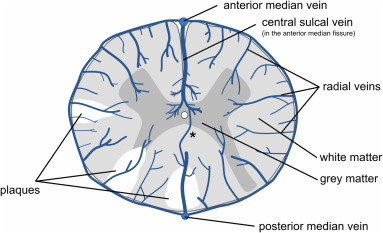
What Is The Internal Anatomy Of The Spinal Cord?
white matter = message highways
up = sensory tracts
down = motor tracts
gray matter = processing center
posterior/anterior horns
central canal
contains cerebral spinal fluid
anterior fissure
big crack in front of spinal cord