Graphs for Research Methods Exam 1
 Call Kai
 Learn
Learn Practice Test
 Spaced Repetition
 Match
Match Flashcards
 Knowt Play
1/80

There's no tags or description
Looks like no tags are added yet.
Name | Mastery | Learn | Test | Matching | Spaced | Call with Kai |
|---|
No analytics yet
Send a link to your students to track their progress
81 Terms
withdrawal/reversal
What type of SCRD is this?
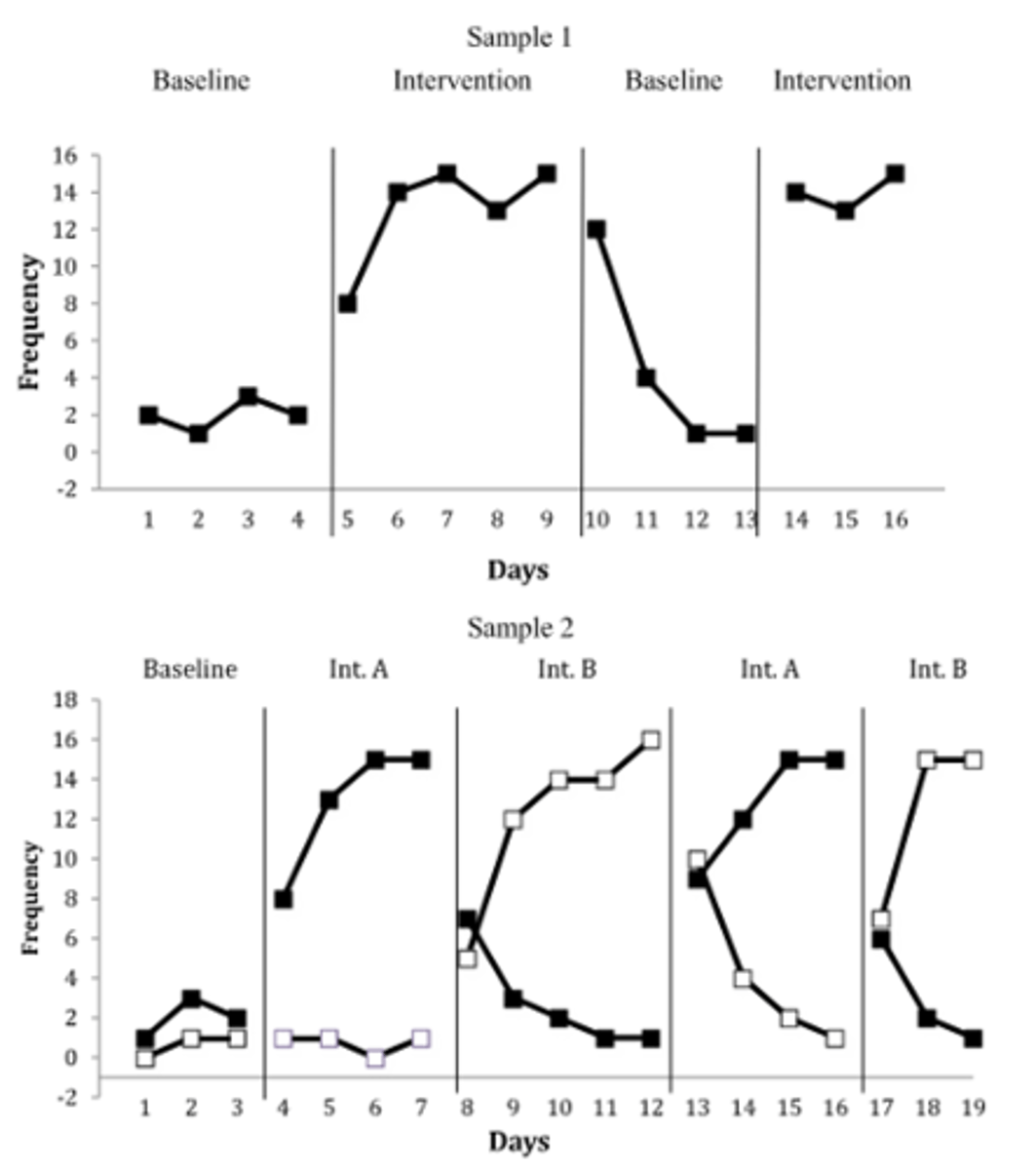
withdrawal/reversal
What type of SCRD is this?
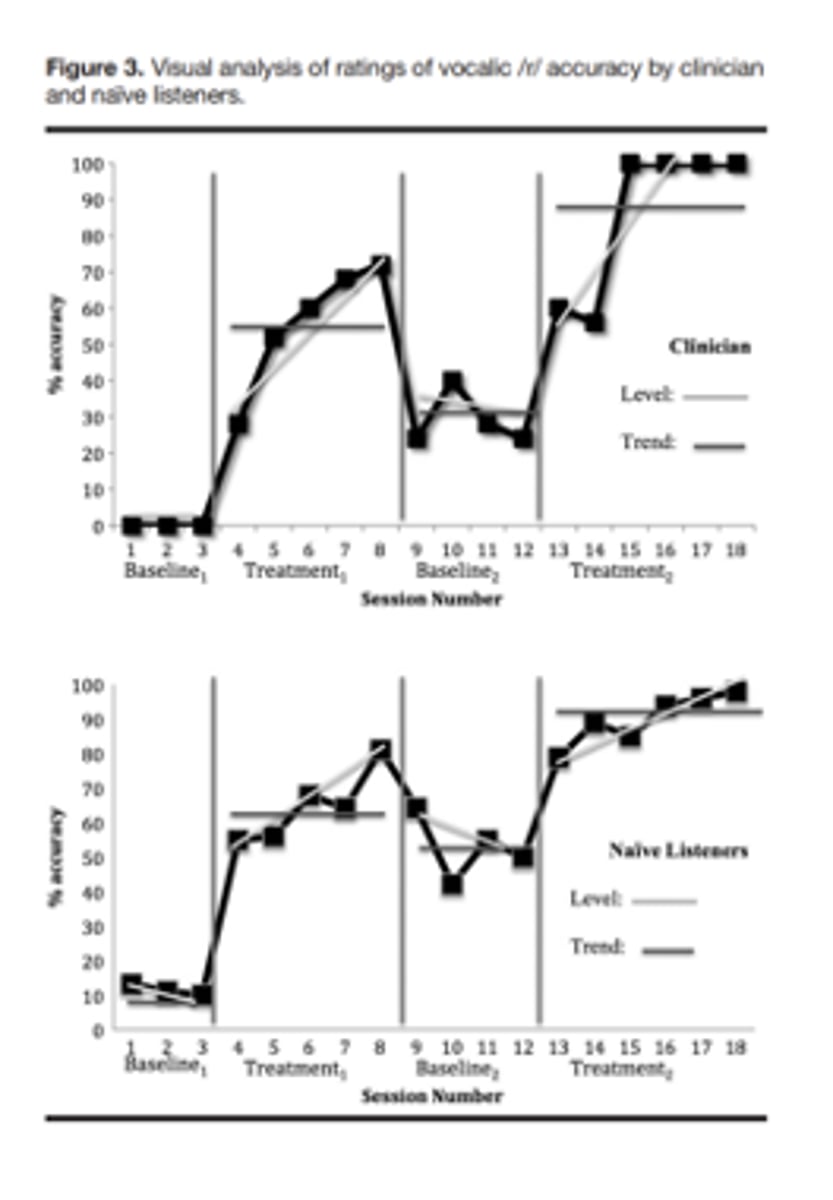
withdrawal/reversal
What type of SCRD is this?
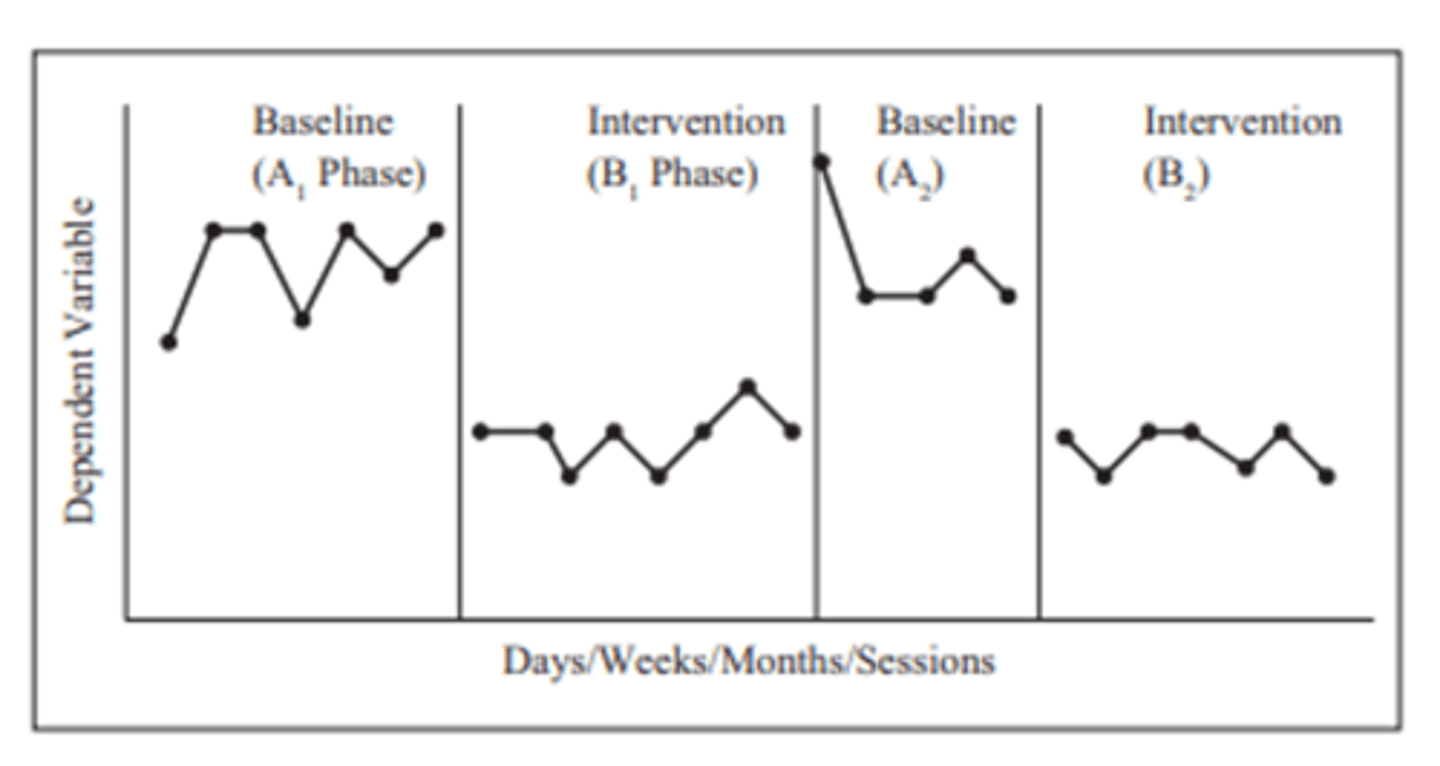
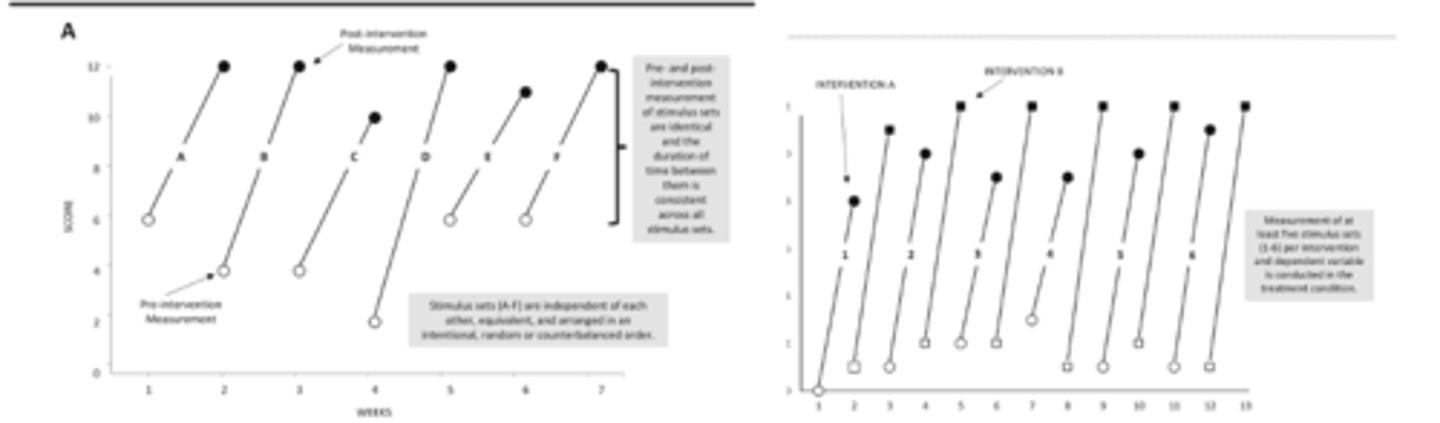
repeated acquisition design (RAD)
What type of SCRD is this?
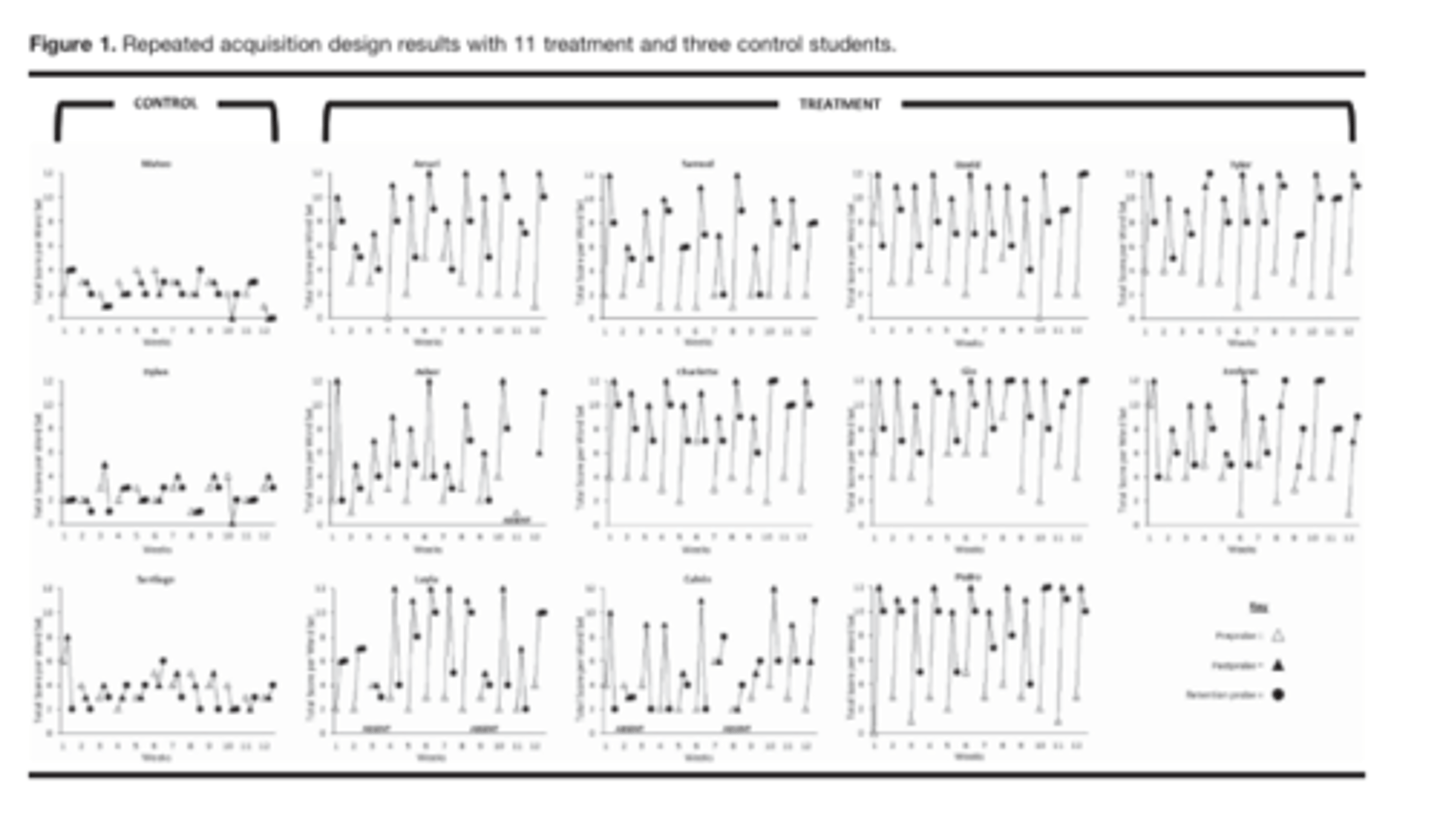
repeated acquisition design (RAD)
What type of SCRD is this?
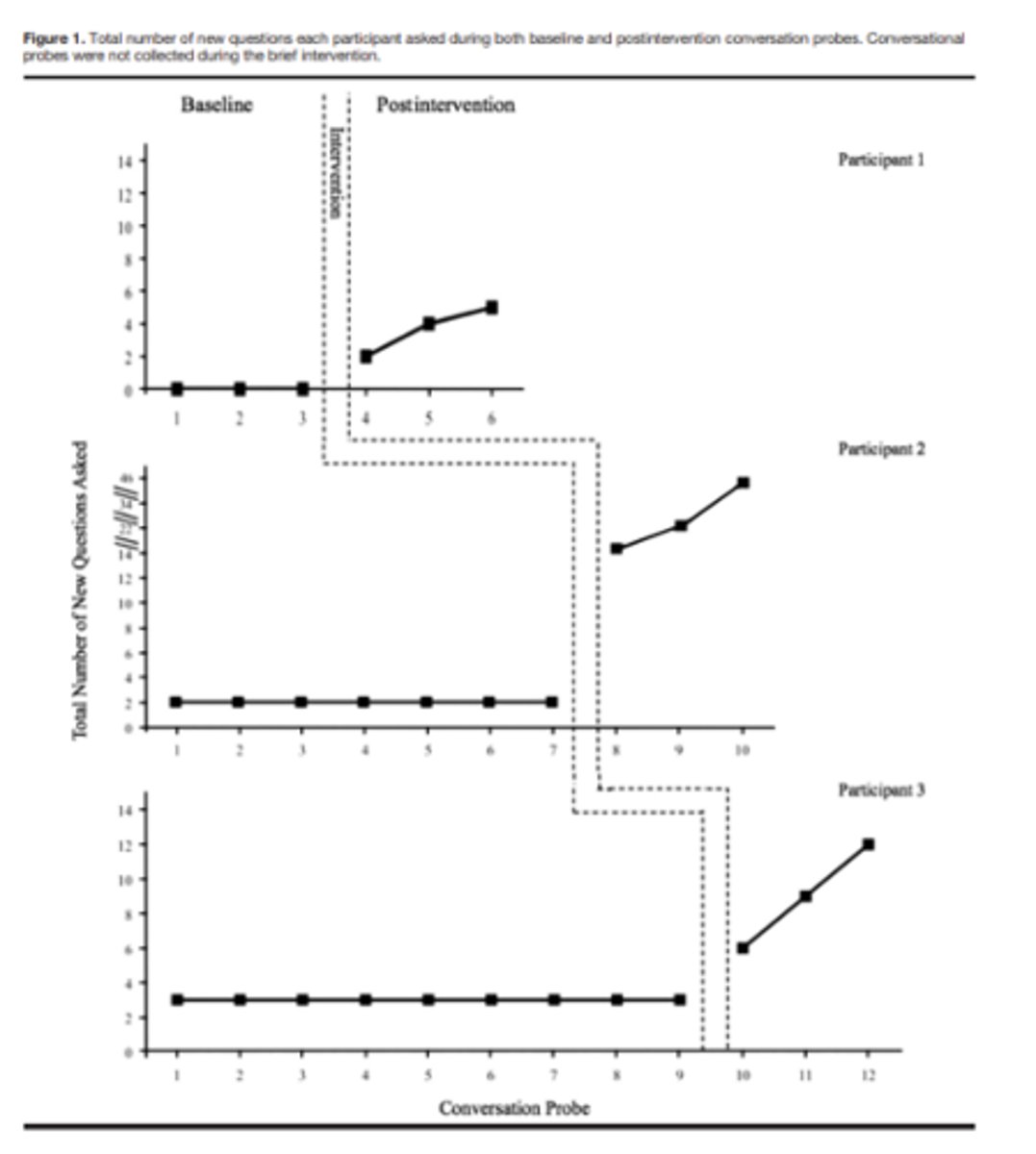
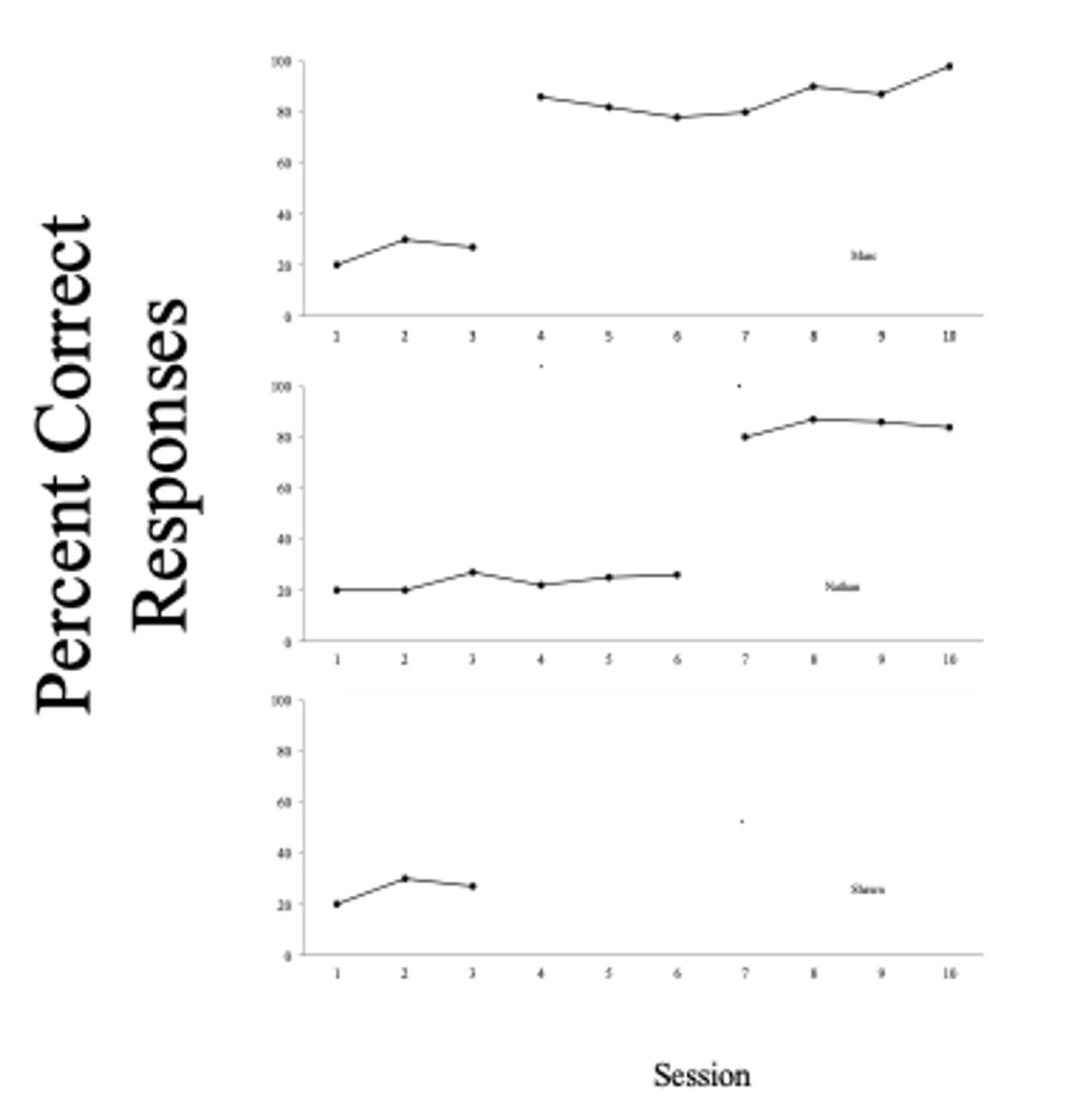
multiple baseline design
What type of SCRD is this?
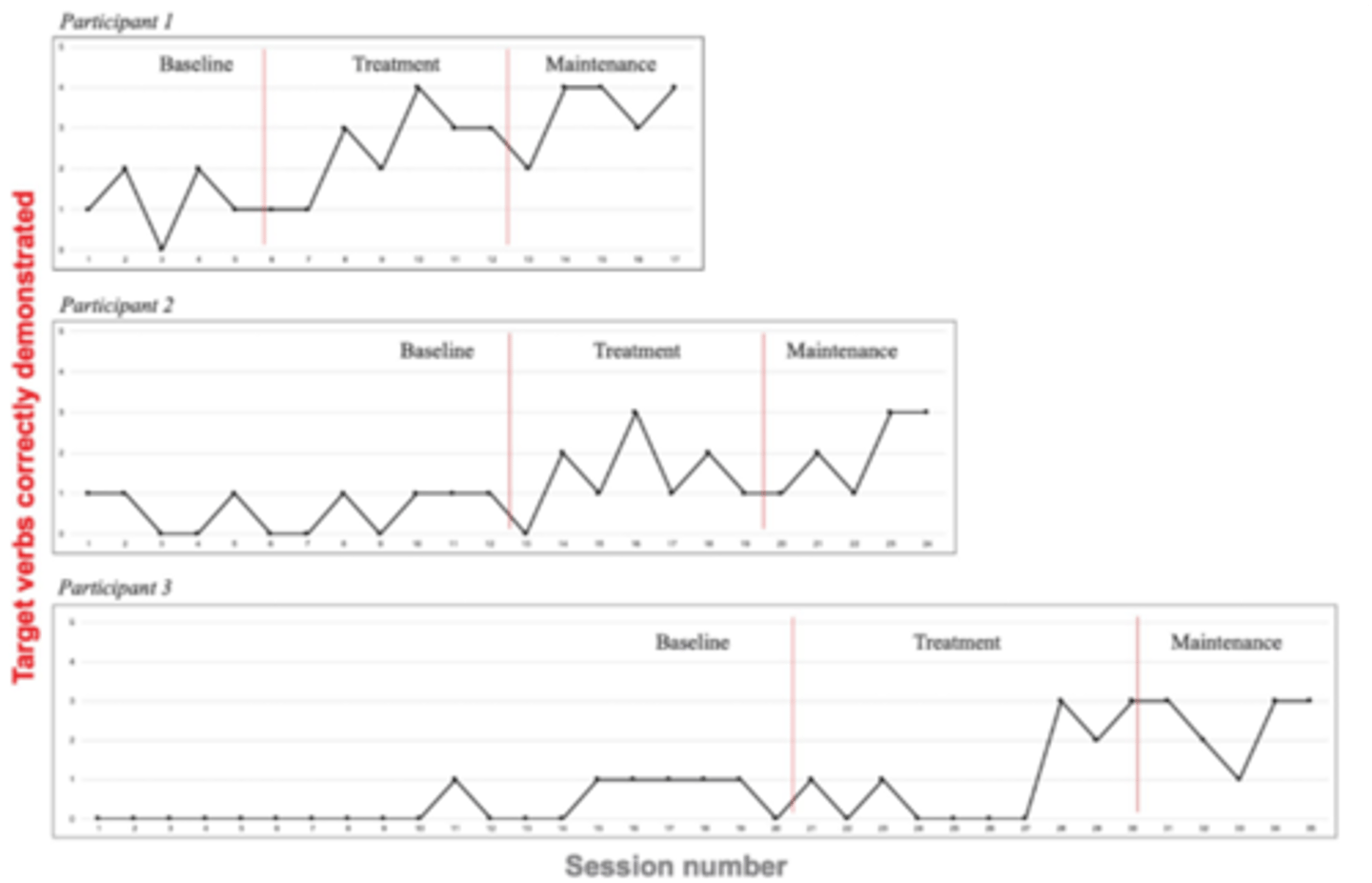
multiple baseline design
What type of SCRD is this?
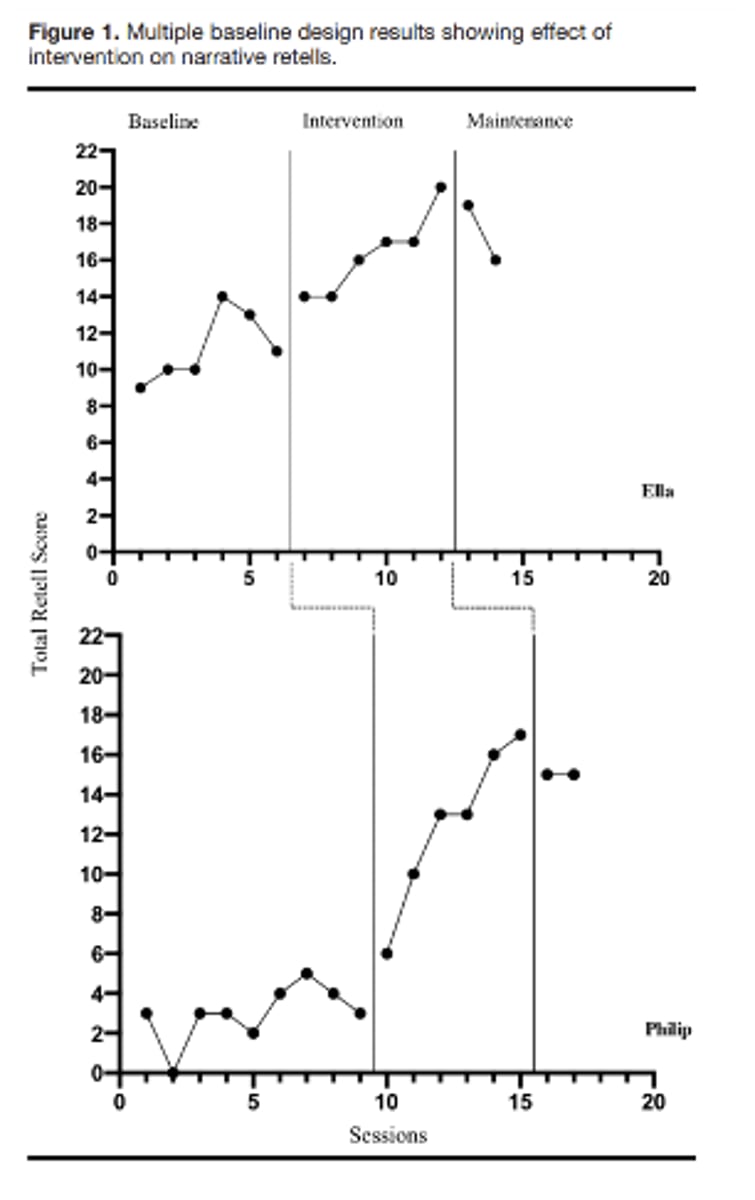
multiple baseline design
What type of SCRD is this?
adapted alternating treatment design (AATD)
What type of SCRD is this?
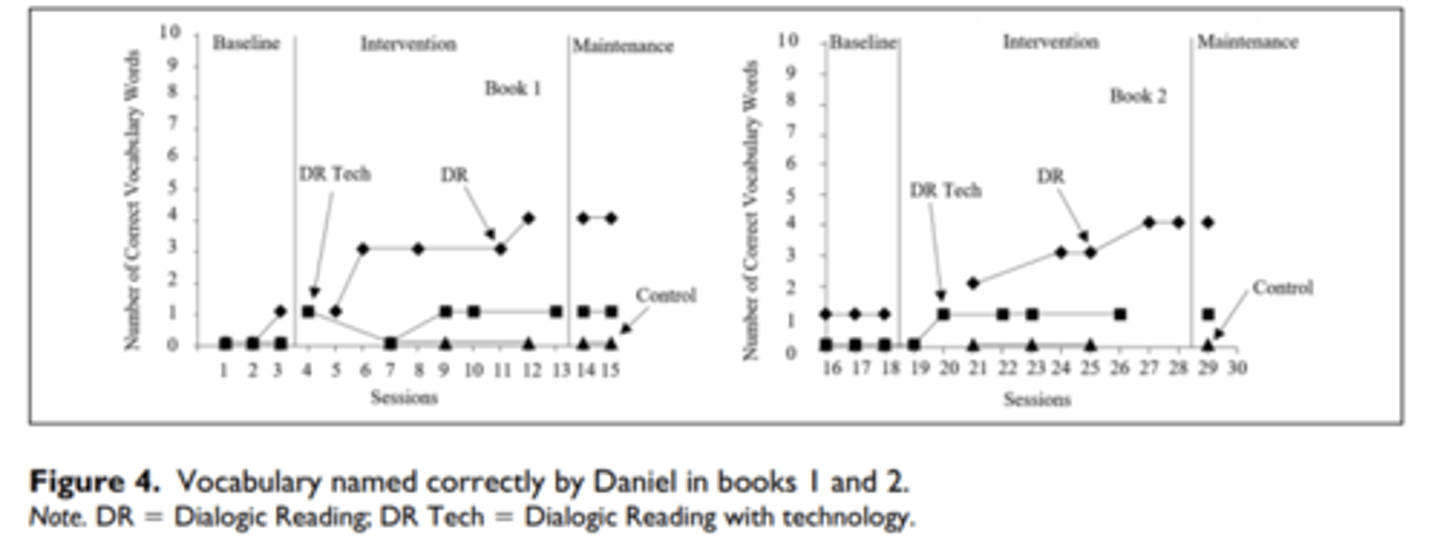
adapted alternating treatment design (AATD)
What type of SCRD is this?
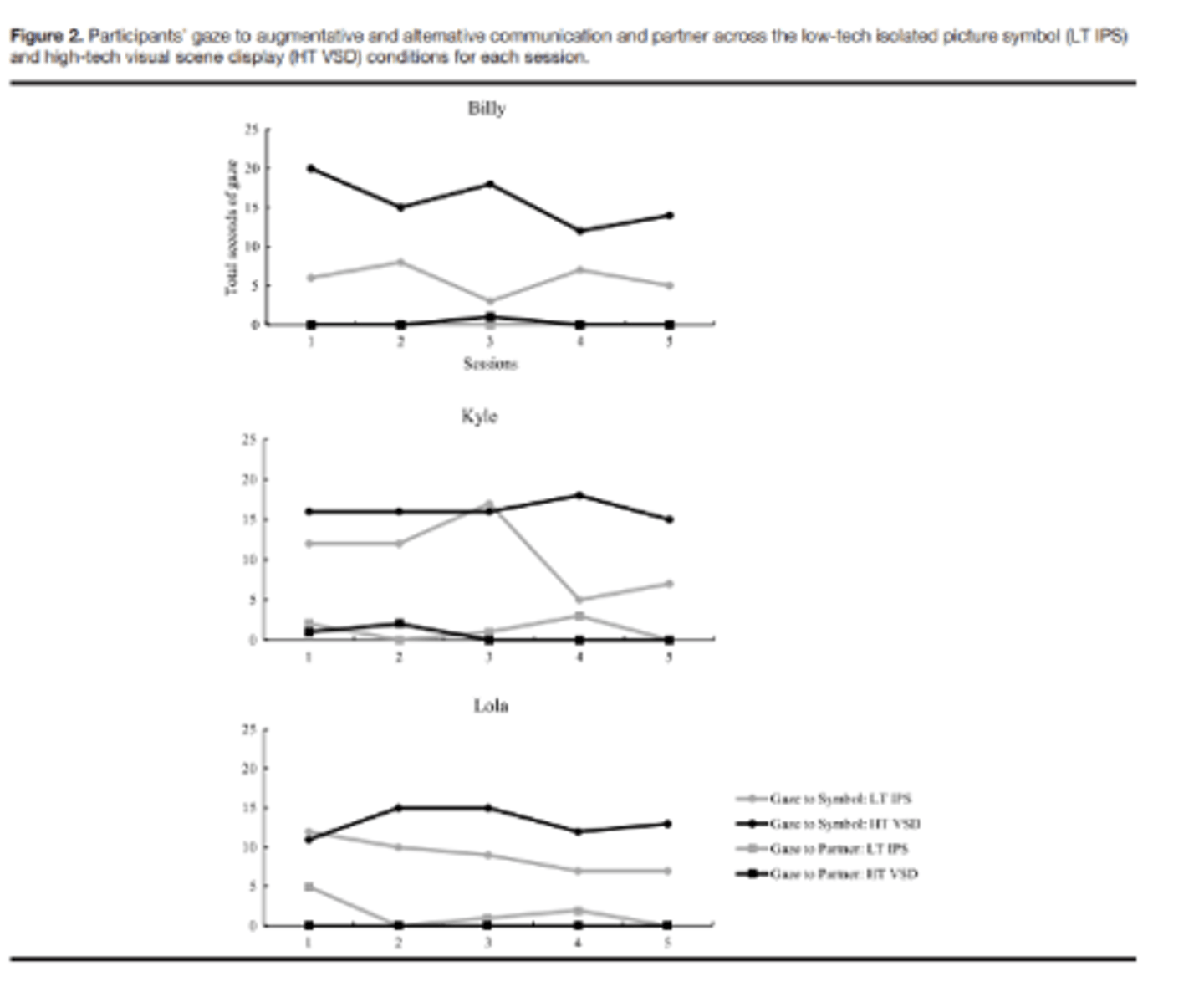
adapted alternating treatment design (AATD)
What type of SCRD is this?
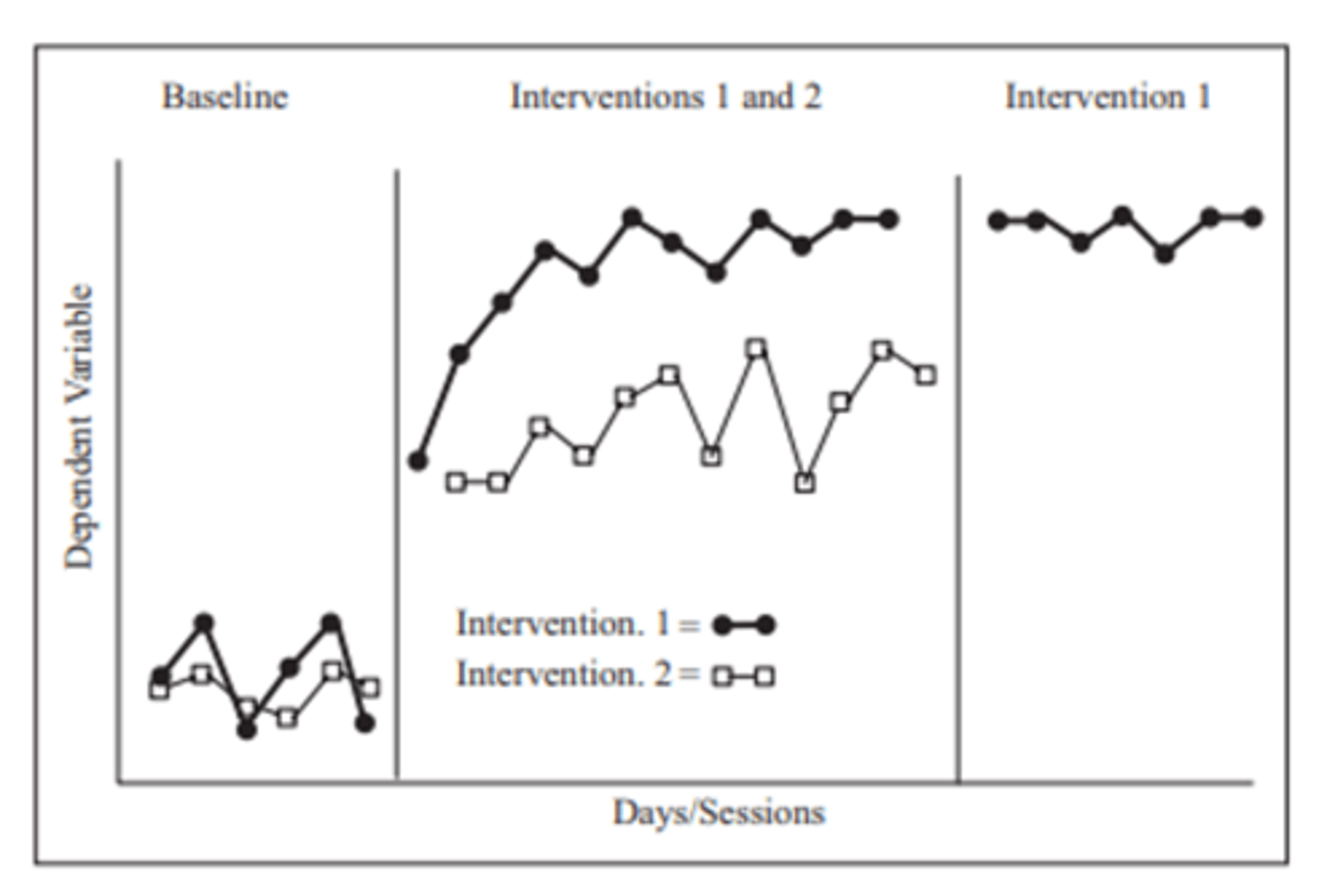
adapted alternating treatment design (AATD)
What type of SCRD is this?
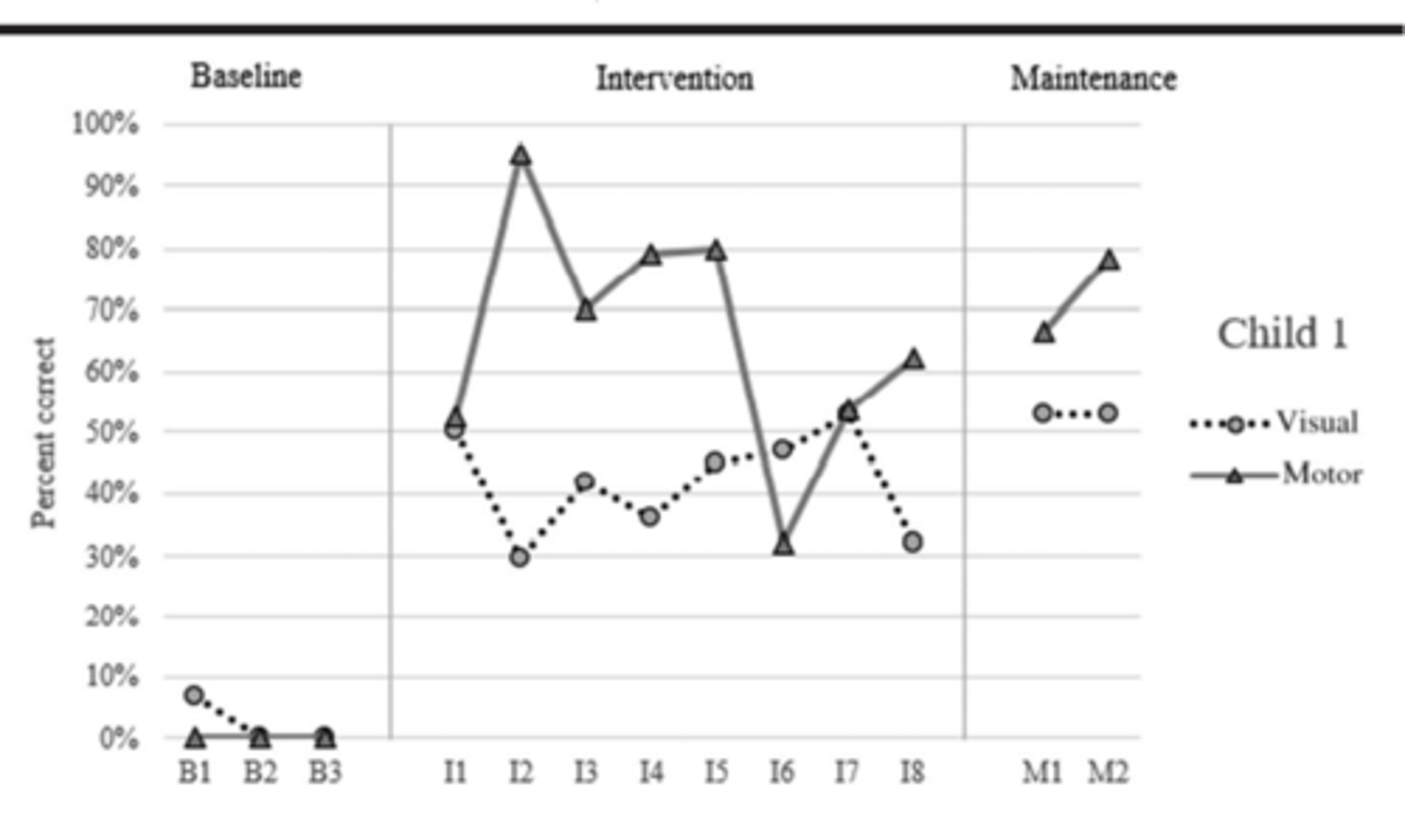
variability
What does this show?
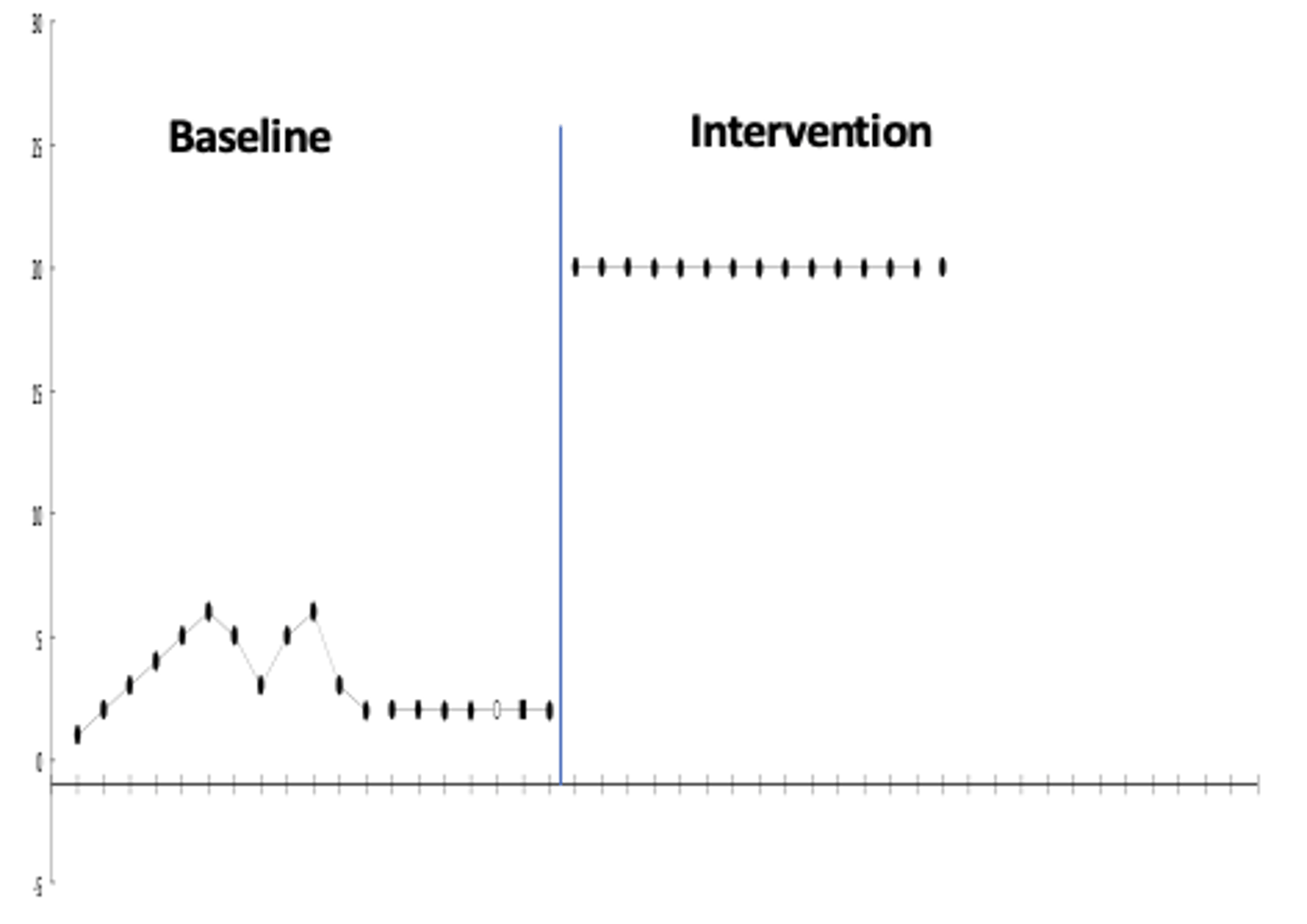
trend
What does this show?
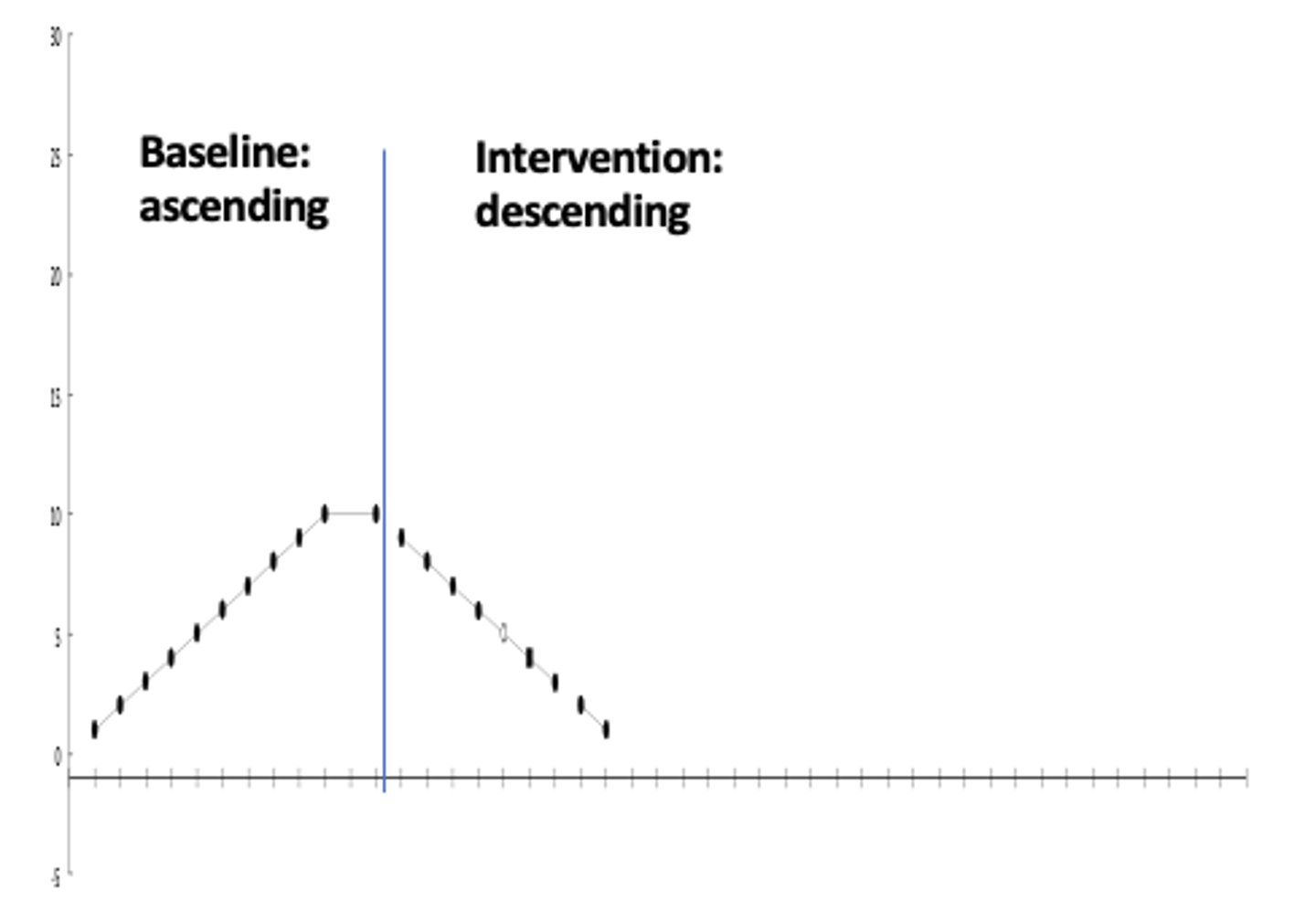
treatment infidelity
What does this show?
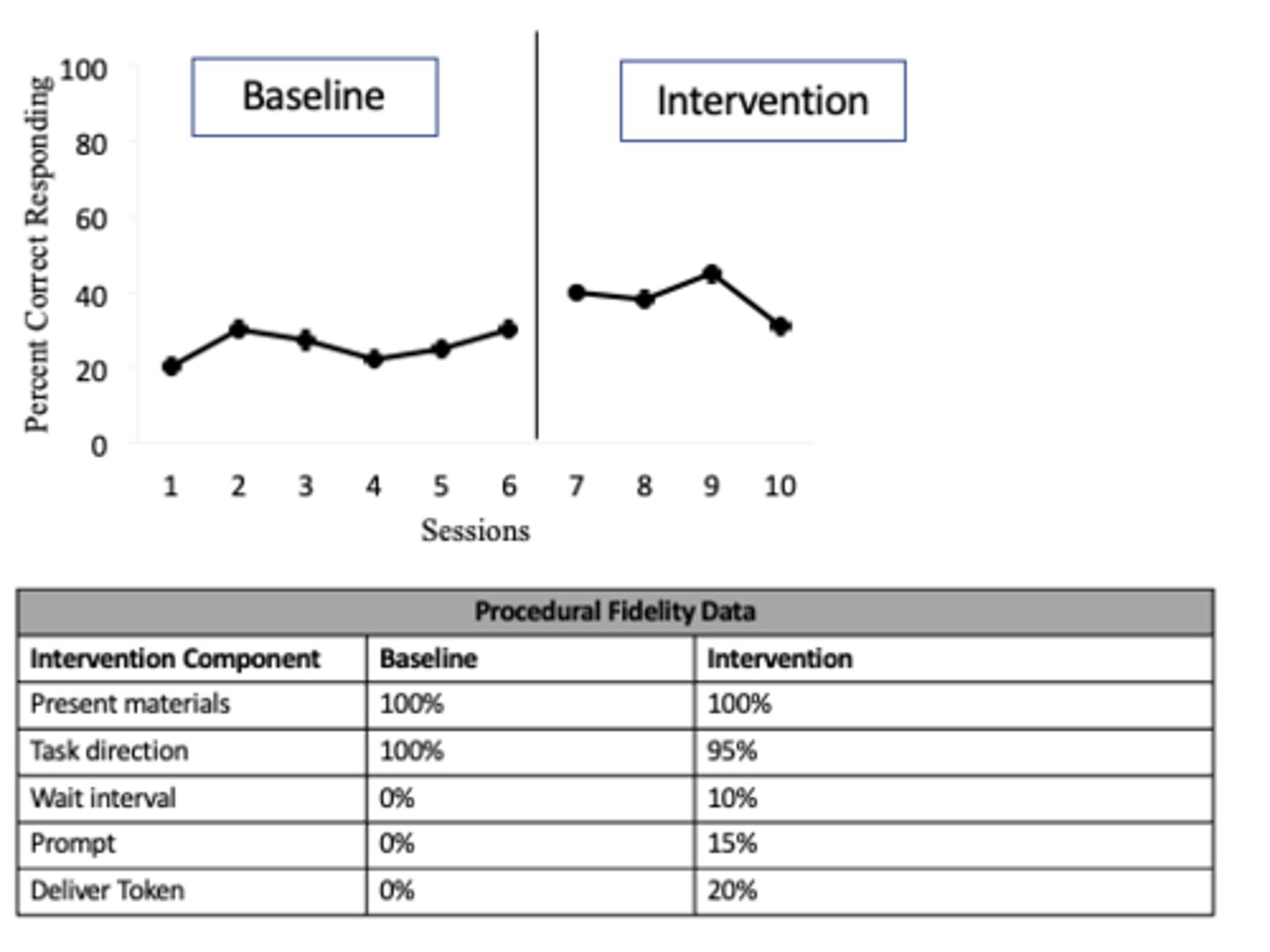
testing error
What does this show?
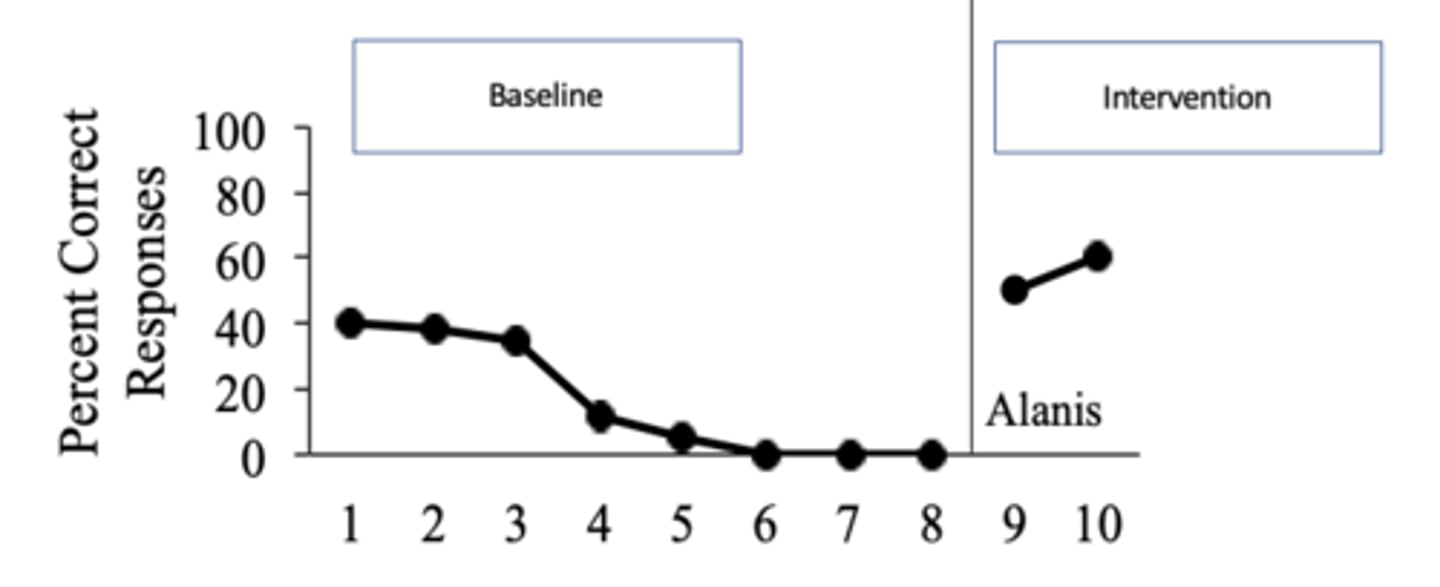
overlap
What does this show?
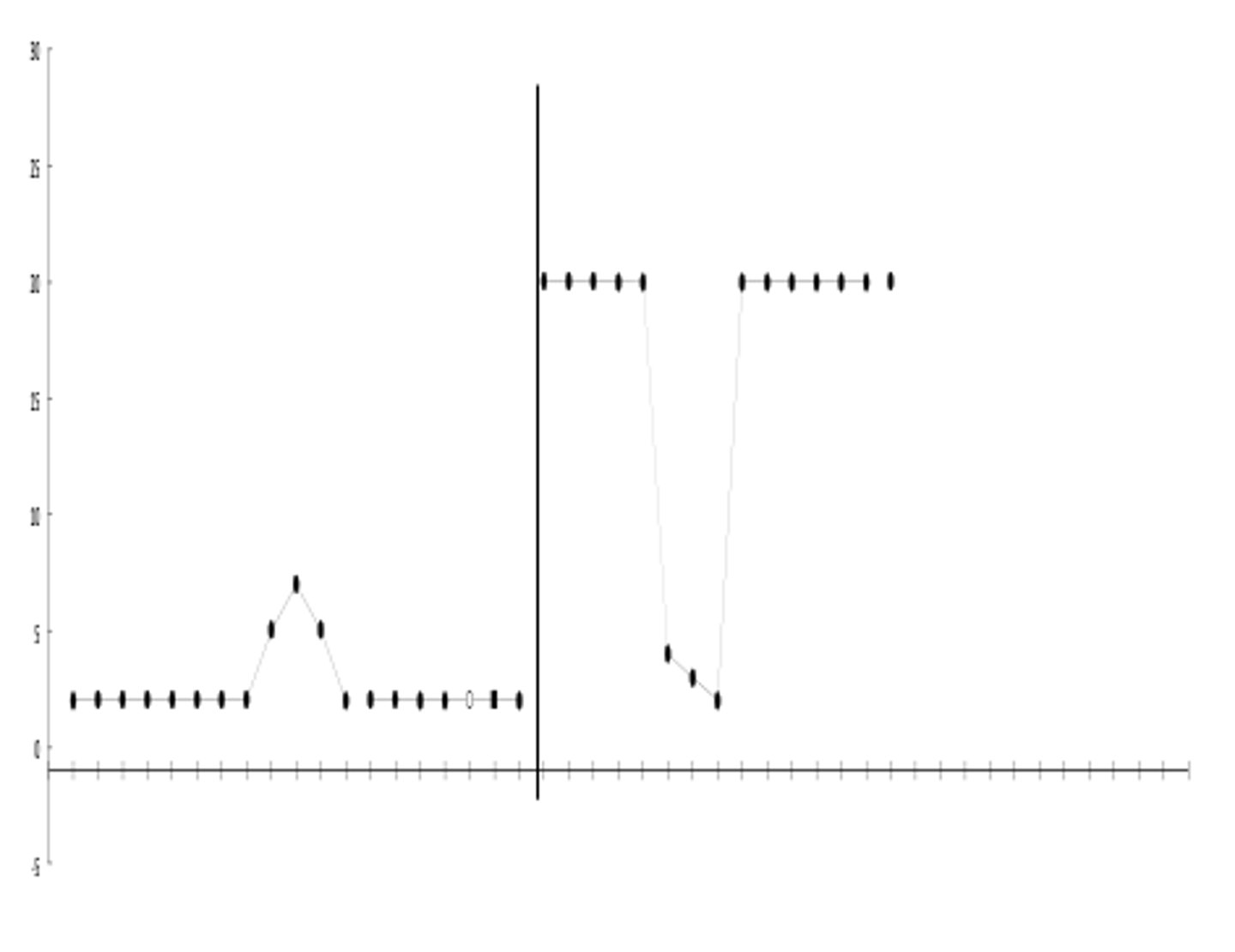
maturation (attrition)
What does this show?
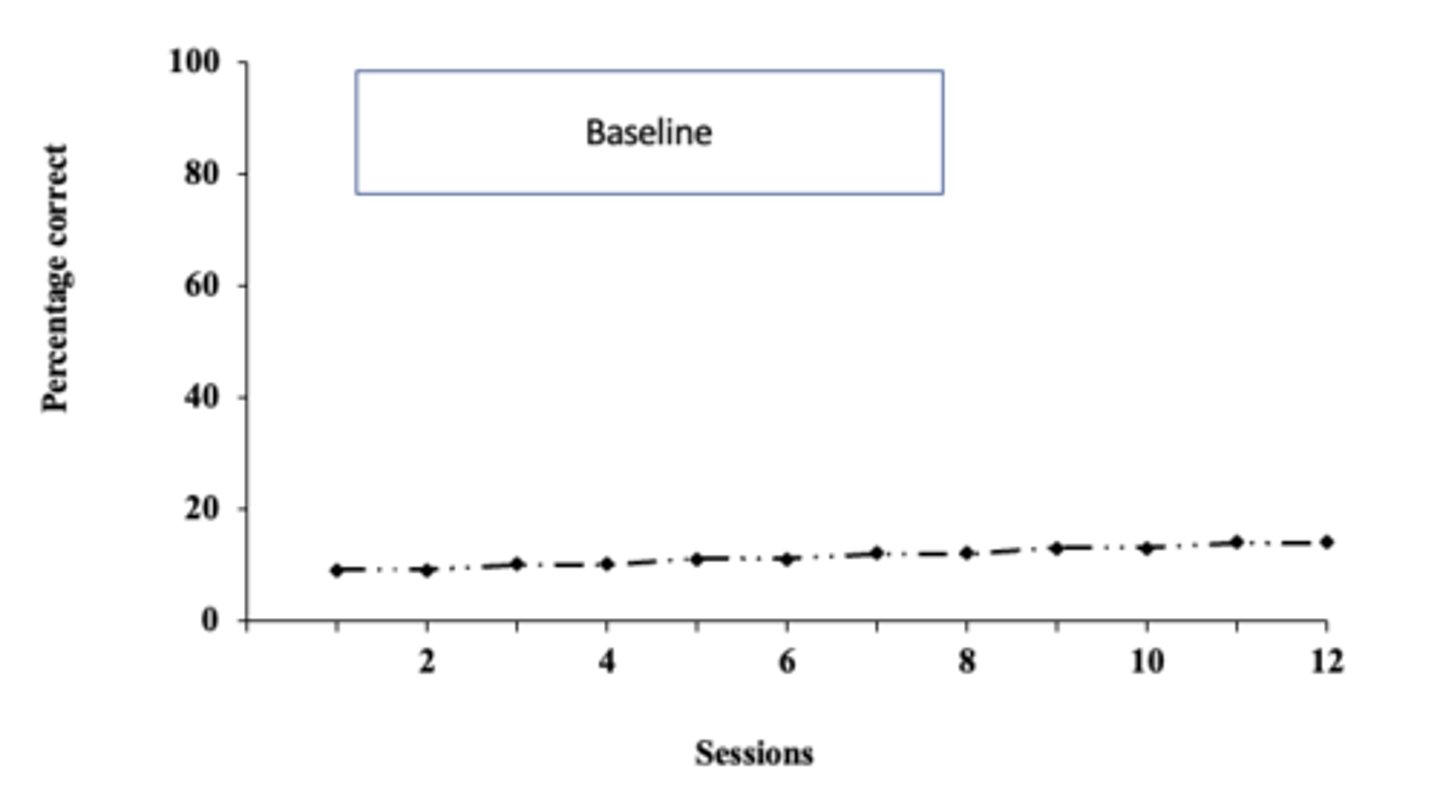
level
What does this show?
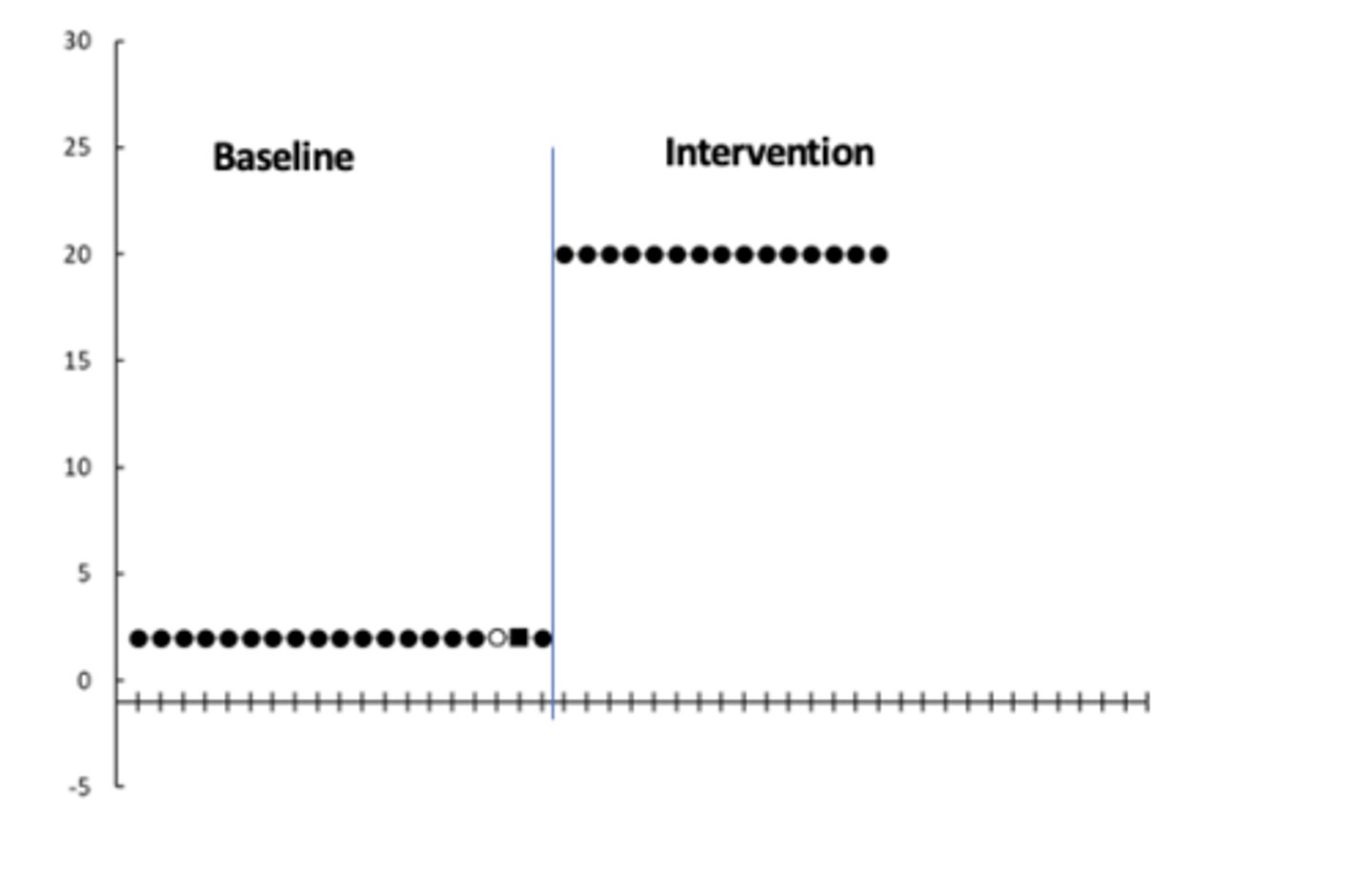
intervening when change is likely
What does this show?
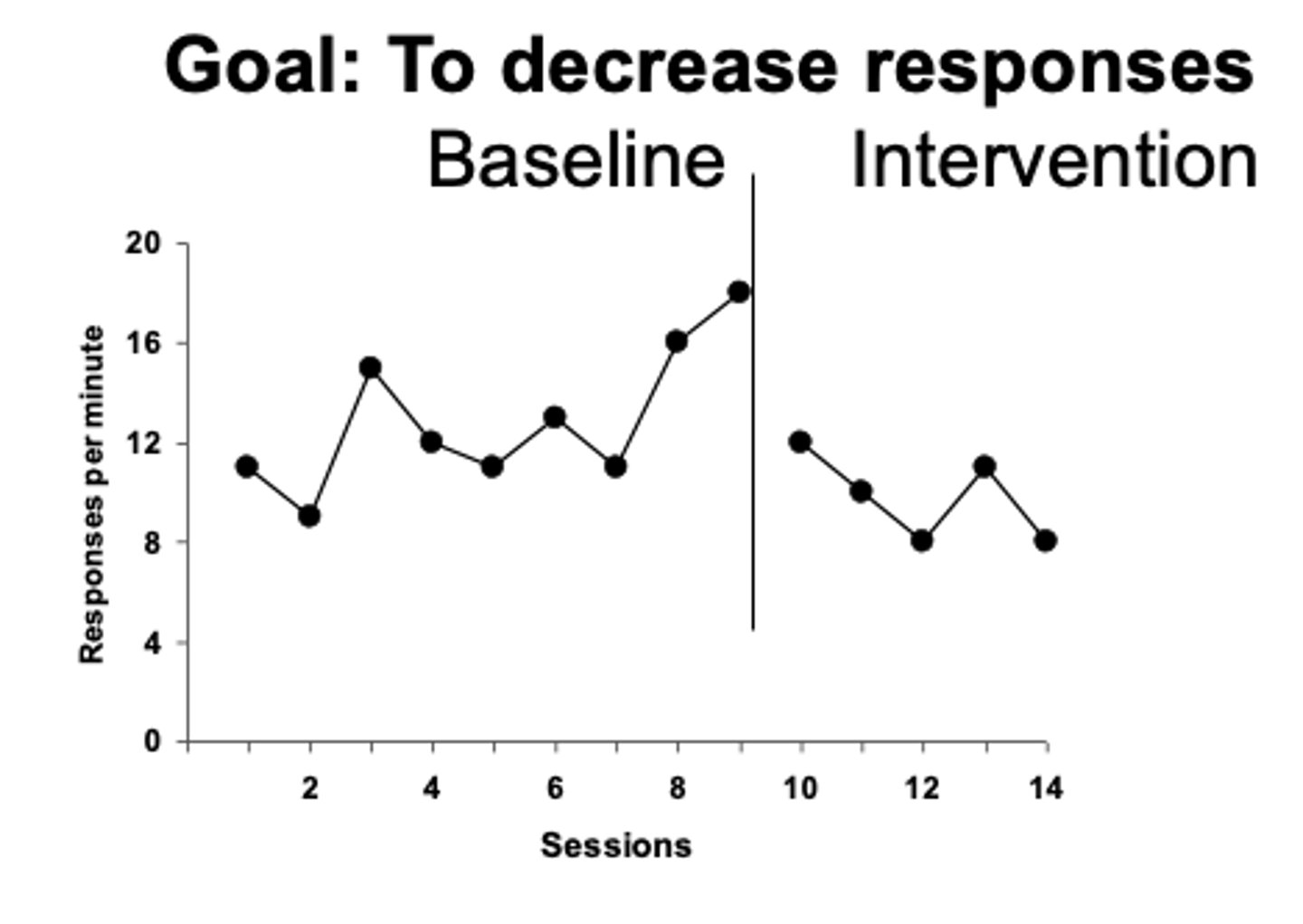
instrumentation
What does this show?
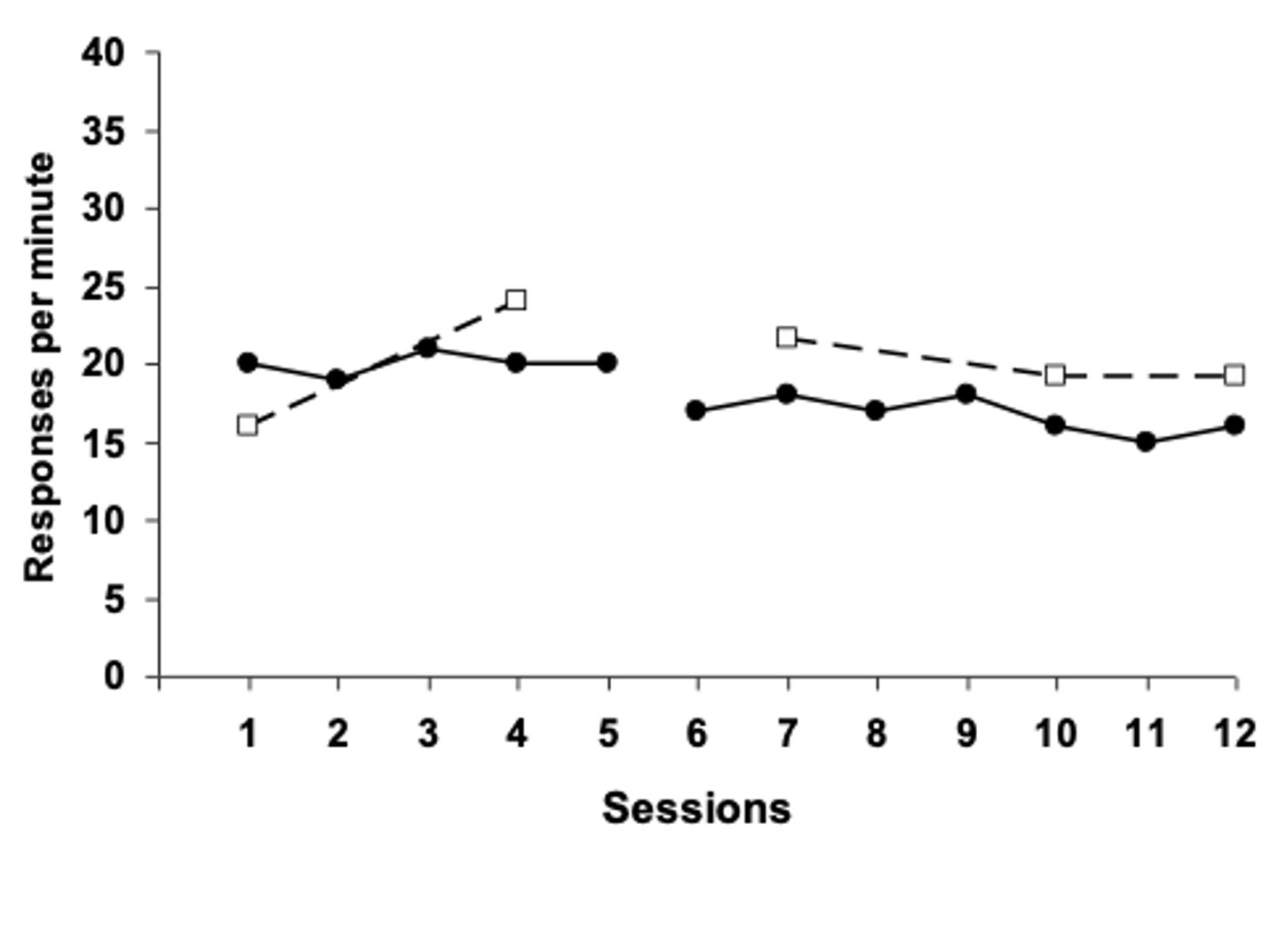
instrumentation
What does this show?
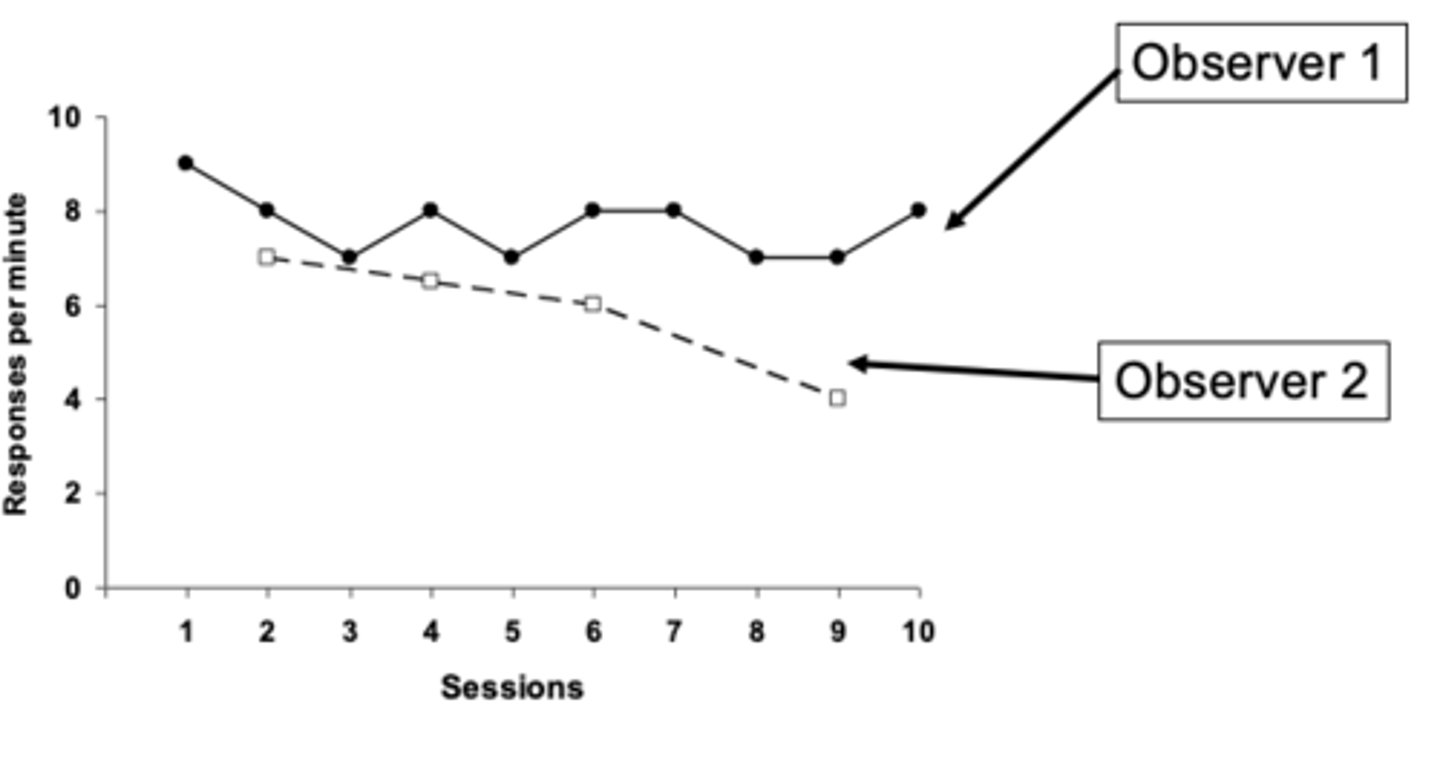
immediacy of effect
What does this show?
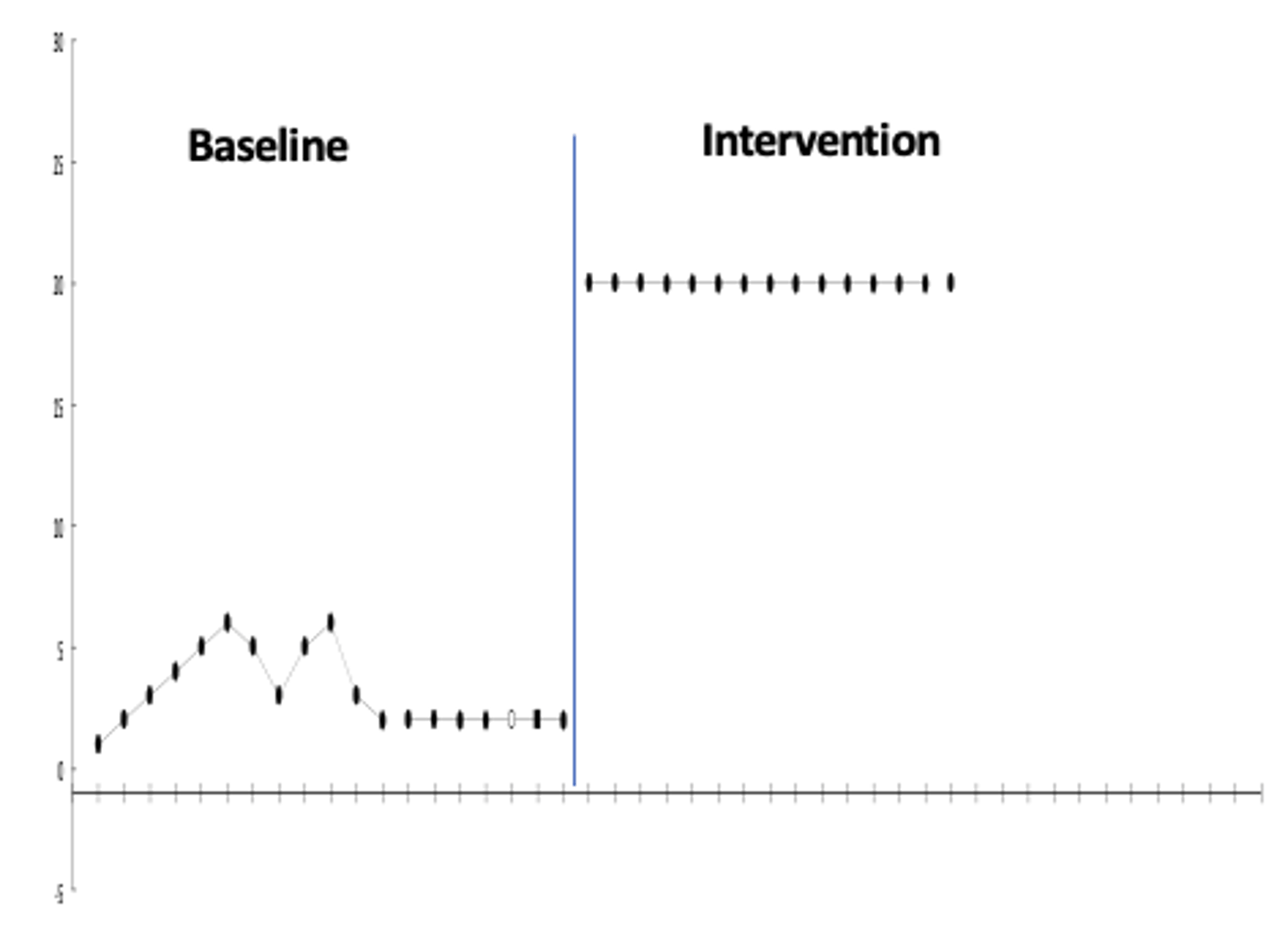
history
What does this show?
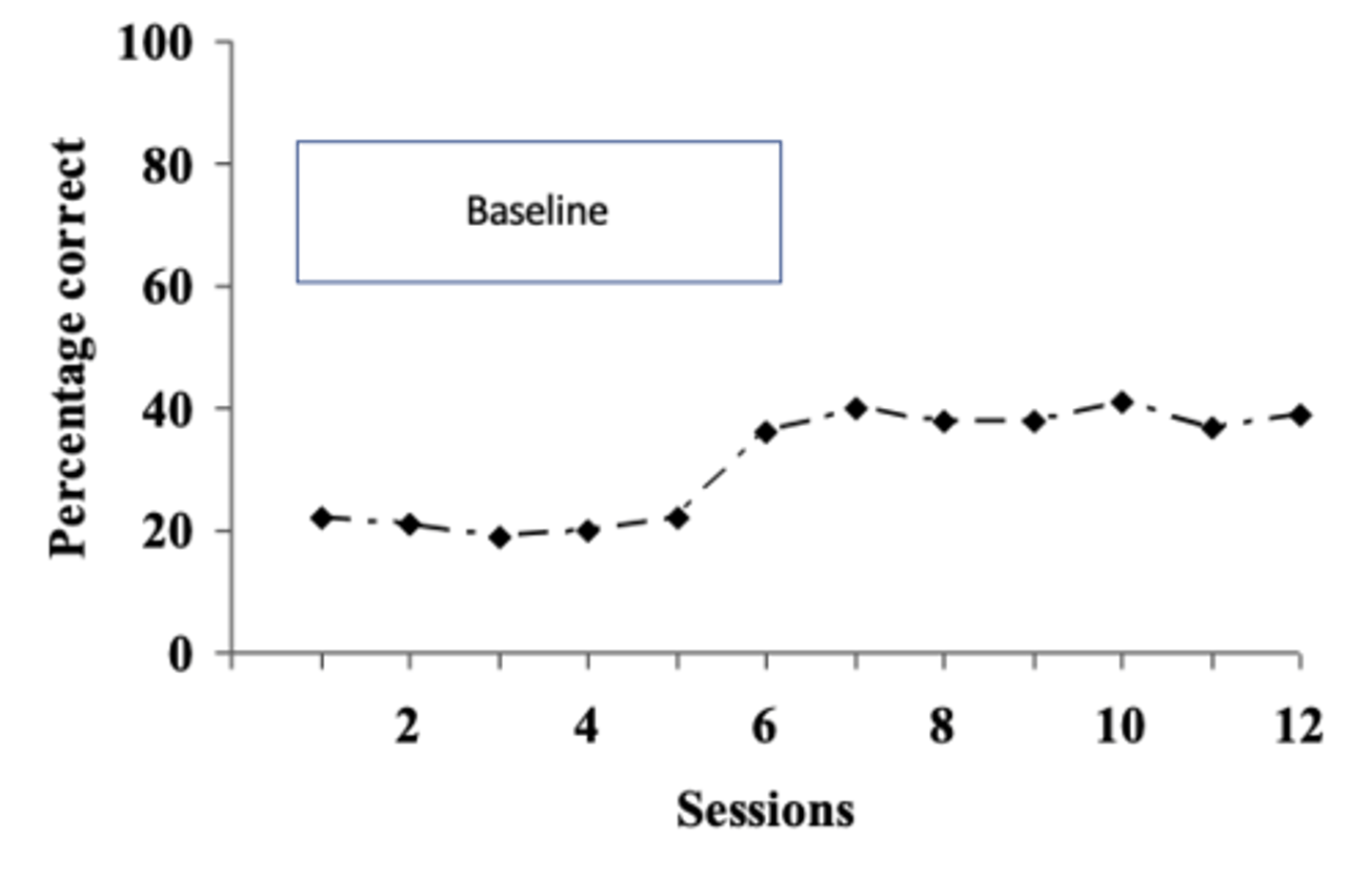
attrition
What does this show?
Dependent variable
The dependent variable is the outcome measured in an experiment or study, which is influenced by changes in the independent variable.
Are dependent variables irreversible or reversible?
Can be either
Are vocabulary words a reversible or irreversible behavior?
Irreversible
What is a reversible behavior?
A reversible behavior is a behavior that can be undone or reversed, meaning that it can return to its original state after a change or intervention has occurred.
What is an independent variable?
An independent variable is a factor or condition that is manipulated or changed in an experiment to observe its effect on a dependent variable. It is not influenced by other variables in the study. It is the intervention
Regarding visual analysis, what three things analyze within the condition?
Level, Trend, Variability
Regarding visual analysis, what three things analyze between the condition?
Immediacy of effect, overlap, consistency
What is level?
The height on the y axis. How high or low are the data points?
What are the ways to describe level?
-Low and stable
-Immediate and dramatic increase in level
-No change in level
Is the intervention working is there is a change in level between the baseline and intervention conditions?
YES
Trend
Has to do with the movement o the date whether up or down. You need at least three data points to determine the trend.
What are the ways to describe trend?
-Zero-celerating trend
-Increasing/ascending trend
-Decreasing/descending trend
-Variable increasing trend
Is the intervention effective if the trend is going in the direction that you want in the intervention conditon?
YES
What is the best type of trend to have in the baseline?
Zero-celerating
Variability
Has to do with the amount of up and down movement in the data. Are the data roaring waves or a calm sea?
What are some ways to describe variability?
-Low variability
-High variability
-Stability envelope
What is a stability envelope?
Looks at a range of data points on the y axis around a certain level and you can count if the points are inside (more stable )or outside (less stable) of the envelope.
Is it ideal to have a low variability int he baseline?
YES
Immediacy of effect
Look at whether there is an immediate change upon introduction of the intervention. There is a change in level by the THIRD session in the intervention condition compared to the last three sessions in the baseline condtion.
Is it ideal to have a dramatic and immediate change between baseline and intervention conditions?
YES - it shows that the intervention is working
Overlap
How many data points are in the same range between conditions
How do you calculate percent non-overlapping?
-Do not look or count any of the data points in the baseline condition
-Count the number of data points that do not overlap with of the points in the baseline condition
-Do non-overlapping divided by total number of points in the intervention (EX: 12/15 = 80%)
Consistency of data patterns across similar condtions
Shows that the intervention is effective
Is it ideal to have consistency across different people or phases?
YES
What is the main goal of interventions?
To show that there is a demonstration of effect
Does there need to be a huge change to be evidence of a demonstration of effect?
NO
What does sufficient demonstrations of effect show?
That there is a functional relation between the intervention and the dependent variable
How many demonstrations of effect are necessary to show a functional relation in a withdrawal design?
3
What are the different types of single case research designs?
-Multiple baseline designs
-Withdrawal/reversal designs
-Adapted alternating treatments designs
-Repeated Acquisition designs
Why are SCRD experimental research designs?
Because they have experimental control
What does experimental control show?
That an intervention is really having an effect on the dependent variable
Are designs with experimental control more or less reliable?
More
What types of SCRD demonstrate that the intervention worls?
Multiple baseline, withdrawal/reversal, and repeated acquisition design
What types of SCRD compares the interventions?
Adapted alternating treatments design, alternating treatments designs, repeated acquisition design, multitreatment design
Multiple baseline graph
Baseline
what the client can do prior to treatment and are important for experimental control. To tell trend of a baseline, we need 3-5 points
Do we want the baseline to be flat and low?
YES
Multiple baseline graphs
Also called demonstration design
Has different tiers
Need a irreversible behavior
Want stability and consistency
Need three demonstrations of effect (change in three people, three behaviors, three settings…)
Needs to be a staggered baseline
Withdrawal design/reversal
Type of demonstration design
Starts with the baseline, then has the intervention, then the intervention is “withdrawn”, and then you have another phase of intervention
Need a reversible behavior (have to be able to take the behavior away so that you can withdraw the intervention)
Have to have three demonstrations of effect
Adapted alternating treatments design (AATD)
Is a comparable design (comparing two different interventions)
A way to establish experimental control in AATD is to rapidly alternate between two interventions
Need a irreversible behavior
Use equivalent sets for each intervention condition (2)
Randomize or counterbalance treatment schedule
consider multi-treatment interference (b/c there is two interventions)
Good to have a control set
Multi-treatment interference
One intervention may be helping to improve what you are teaching in the other intervention
You can check by using a control set
Repeated acquisiton design
Can compare two independent variables OR demonstrate effectiveness of one independent variable
Multiple control sets or a pretest/posttest
Need to have at least 5 sets of pretests and posttests
Need a irreversible behavior
Multiple and equivalent behavior sets
Experimental control mechanisms
Baselines
Replication- within study, across studies
Withdrawal/reinstatement (in withdrawal designs)
Rapid alternations between treatments (in AATD and RAD)
External validity
Generalizabiltiy to other clients
You can generalize to similiar children/adults to the current study
Replication is needed
Internal validity
Certainty in the causal effect of your intervention on your dependent variable
Why is external validity no great for SCRD?
Dealing with a much smaller amount of participants and you can increase external validity by replicating the design across more participants
Threats to internal validity
You might not be able to change the threat, but you can overcome or you might need to stay in baseline longer or start your experiment over again.
Maturation/testing
History
Intervening when change is likley
Mortality/attrition
Treatment infidelity
Instrumentation
Why is Maturation/testing a threat to internal validity?
Maturation: Participants are getting older and learning the skills over time
Testing: the participants are getting used to the test or are losing motivation
Why is history a threat to internal validity?
Having outside therapy impacting your study
Why is intervening when change is likely a threat to internal validity?
Don’t move to intervention from baseline if the data is already improving
Wait until the baseline is stable again
Why is mortality/attrition a threat to internal validity?
Participants drop out of the study
Why is treatment infidelity a threat to internal validity?
Not doing your treatment as planned
Why is instrumentation a threat to internal validity?
Not measuring your dependent variable as planned
Treatment infidelity
Not following your treatment as planned
Reliabilty
How carefully you are measuring your dependent variable
Calculating reliability
Look at the + and -
Do the + over the - to calculate