7. Roaring 20's, Great Depression, and New Deal
 Call Kai
 Learn
Learn Practice Test
 Spaced Repetition
 Match
Match Flashcards
 Knowt Play
1/31

There's no tags or description
Looks like no tags are added yet.
Name | Mastery | Learn | Test | Matching | Spaced | Call with Kai |
|---|
No analytics yet
Send a link to your students to track their progress
32 Terms
Court Packing
Attempt by Roosevelt to appoint one new Supreme Court justice for every sitting justice over the age of 70 who have been there for at least 10 years. Wanted to prevent justices of the Supreme Court from dismantling the agencies of the New Deal.
Social Security Act
(FDR) 1935, guaranteed retirement payments for enrolled workers beginning at age 65; set up federal-state system of unemployment insurance and care for dependent mothers and children, the handicapped, and public health
100 Days
Period from March to June 1933 when Congress passed major legislation submitted by Roosevelt to deal with the Depression. The first 100 days of Roosevelt's administration.
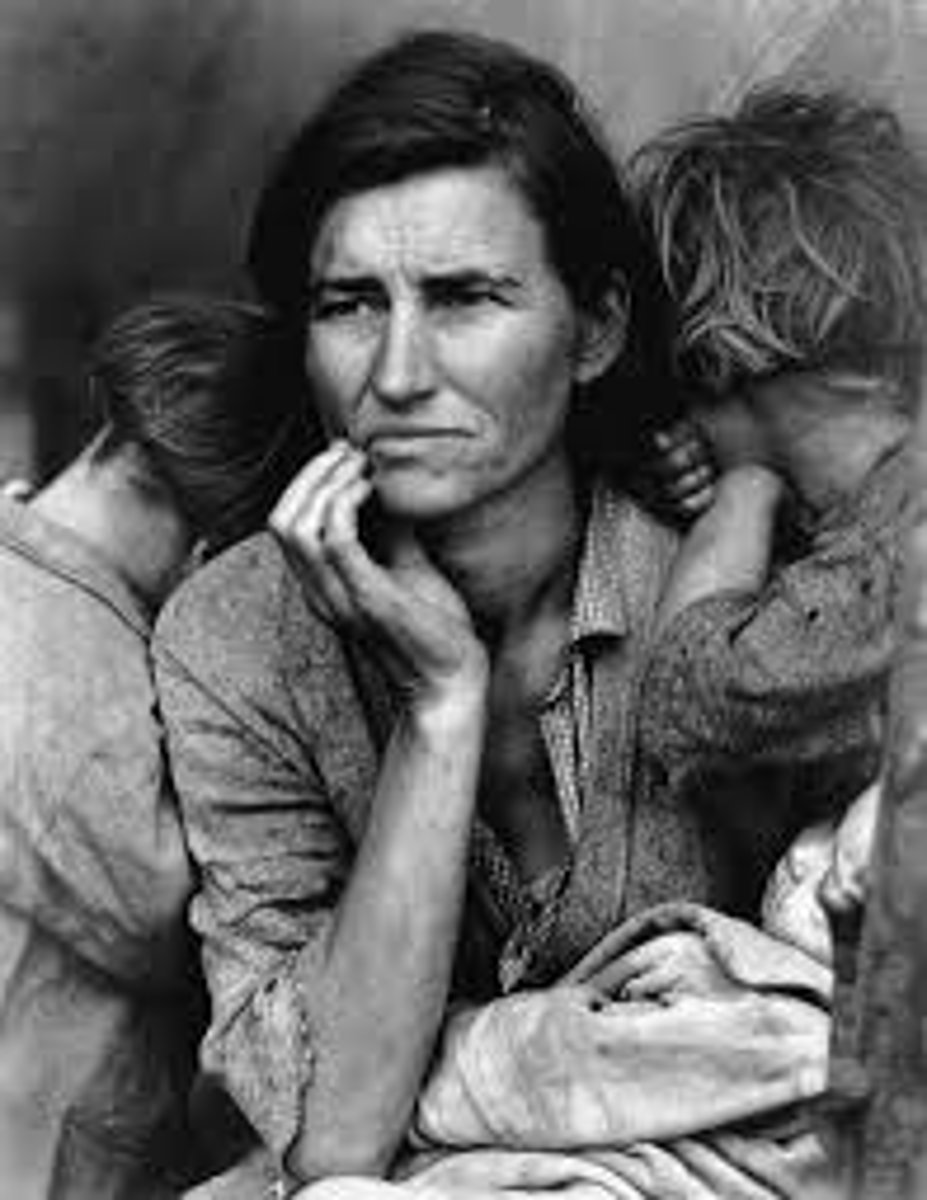
Dorthea Lange
American photographer who recorded the Great Depression by taking pictures of the unemployed and rural poor. Most famous image was the Migrant Mother.
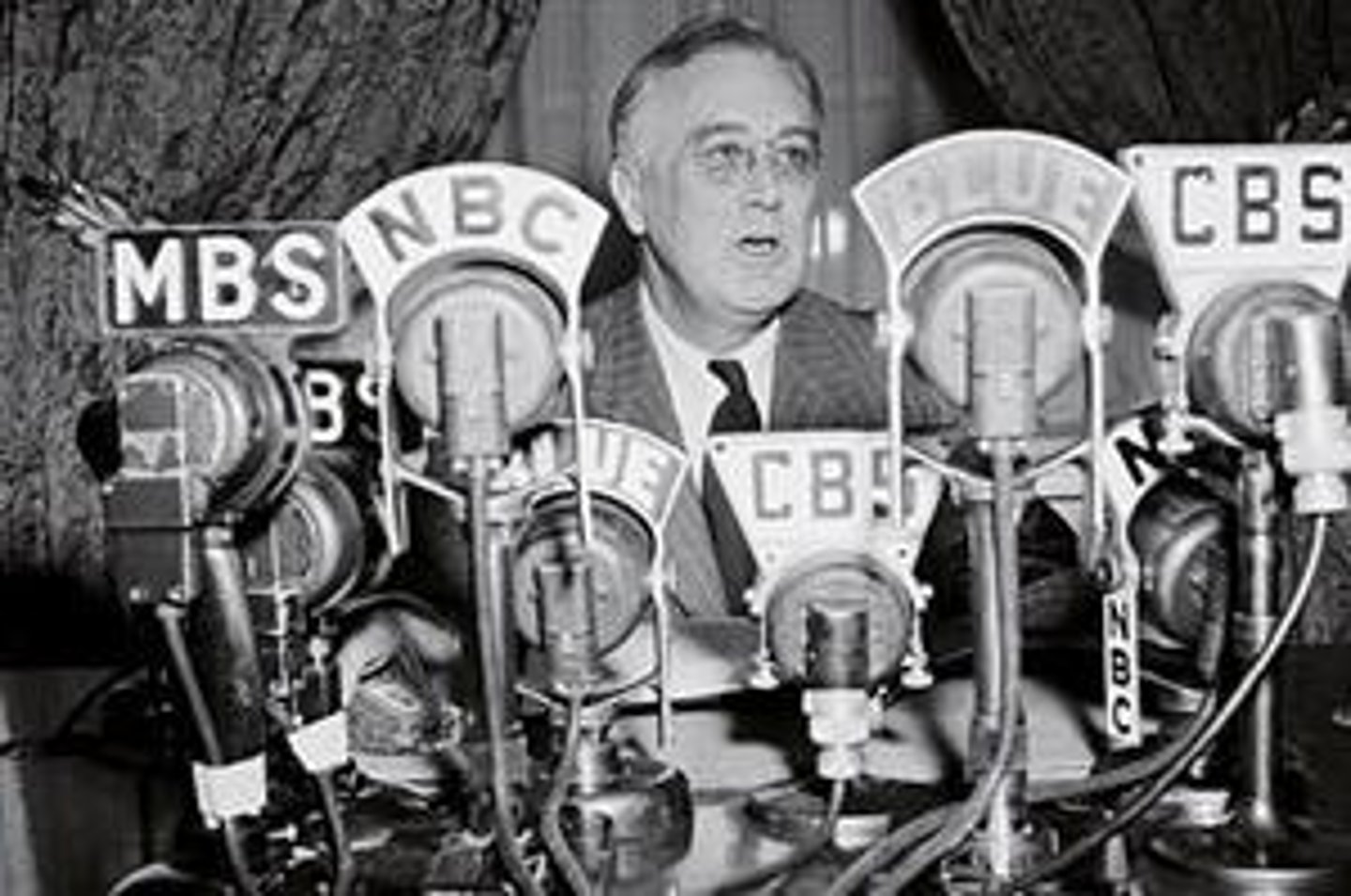
Fireside Chats
The informal radio conversations Roosevelt had with the people to keep spirits up. It was a means of communicating with the people on how he would take on the depression.
Alphabet Agencies
Term for the numerous agencies that FDR created during the New Deal to pull America out of the Great Depression. All of the agencies were referred to by an acronym.
Bank Holiday
FDR ordered all the banks to close until new laws could be passed. An emergency banking law was rushed through Congress. The Law set up new ways for the federal government to funnel money to troubled banks It also required the Treasury Department to inspect banks before they could re-open.
public works projects
Publicly used facilities, such as schools and highways, built by federal, state, or local governments with public money
New Deal
A series of reforms enacted by the Franklin Roosevelt administration between 1933 and 1942 with the goal of ending the Great Depression. Focused on the 3 R's (relief, recovery, reform)
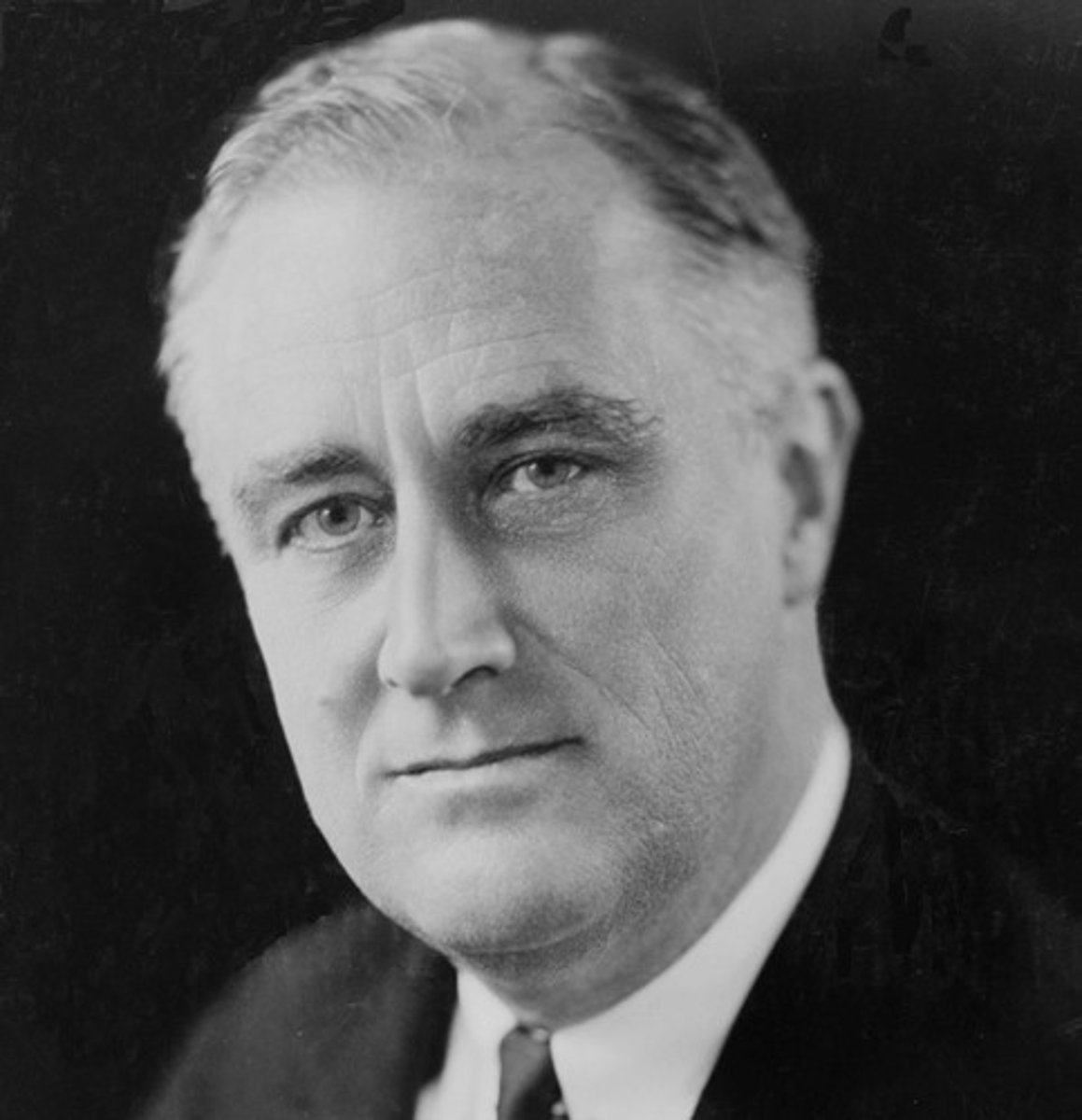
FDR
32nd president of the United States. He was president from 1933 until his death in 1945 during both the Great Depression and World War II. He was a Democrat.
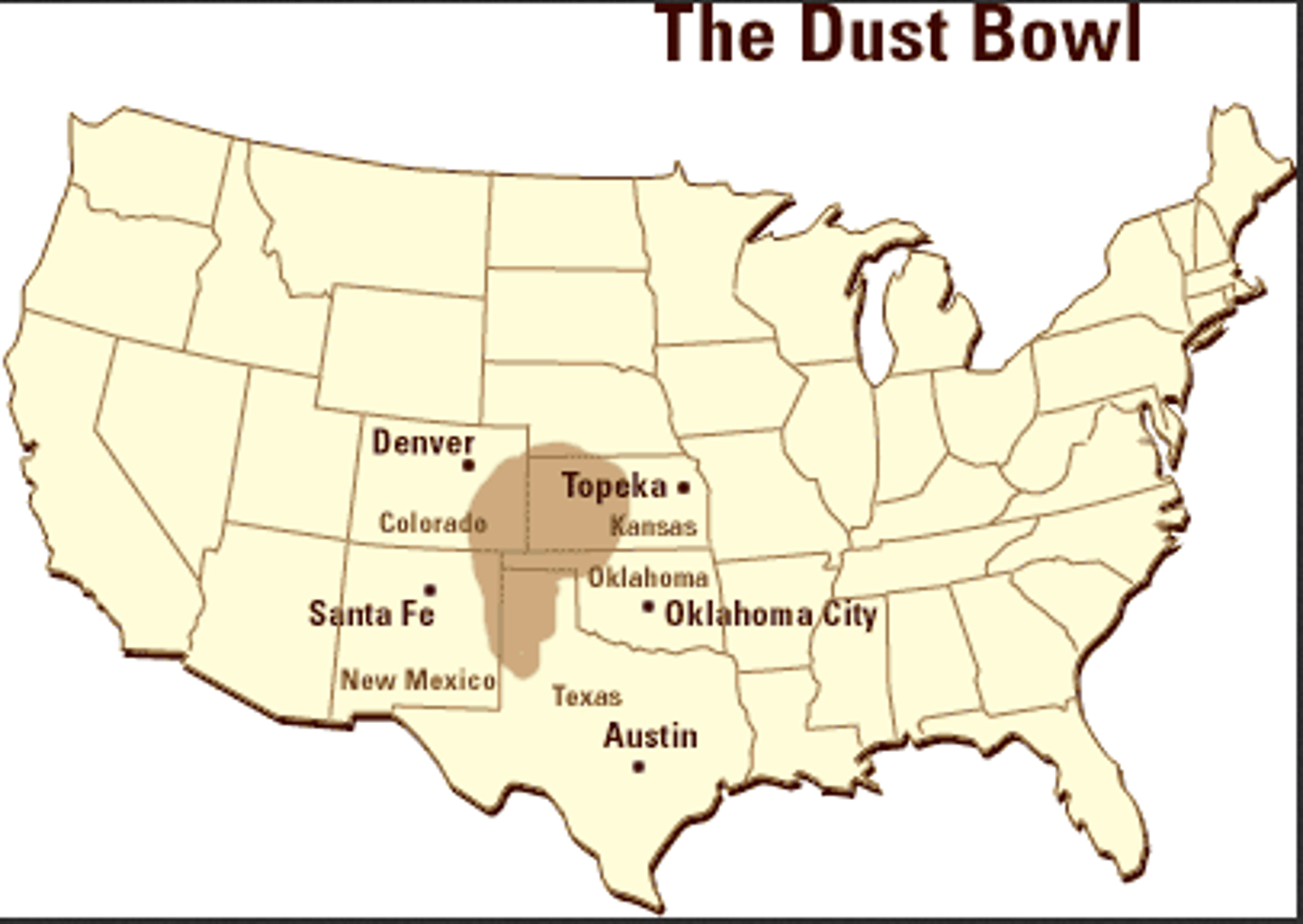
Dust Bowl
Region of the Great Plains that experienced a drought in 1930 lasting for a decade, leaving many farmers without work or substantial wages. Also caused by poor farming practices.
Rugged Individualism
Herbert Hoover's belief that people must be self-reliant and not depend upon the federal government for assistance.
Hoovervilles
Shantytowns built by unemployed and destitute people during the Great Depression of the early 1930s. The name given to them shows that the people blamed Hoover directly for the Depression.
Bonus Army March
Group of World War I veterans who marched on Washington, D.C., in 1932 (during the Great Depression) to demand the immediate payment of their pension bonuses that they were promised. Hoover refused.
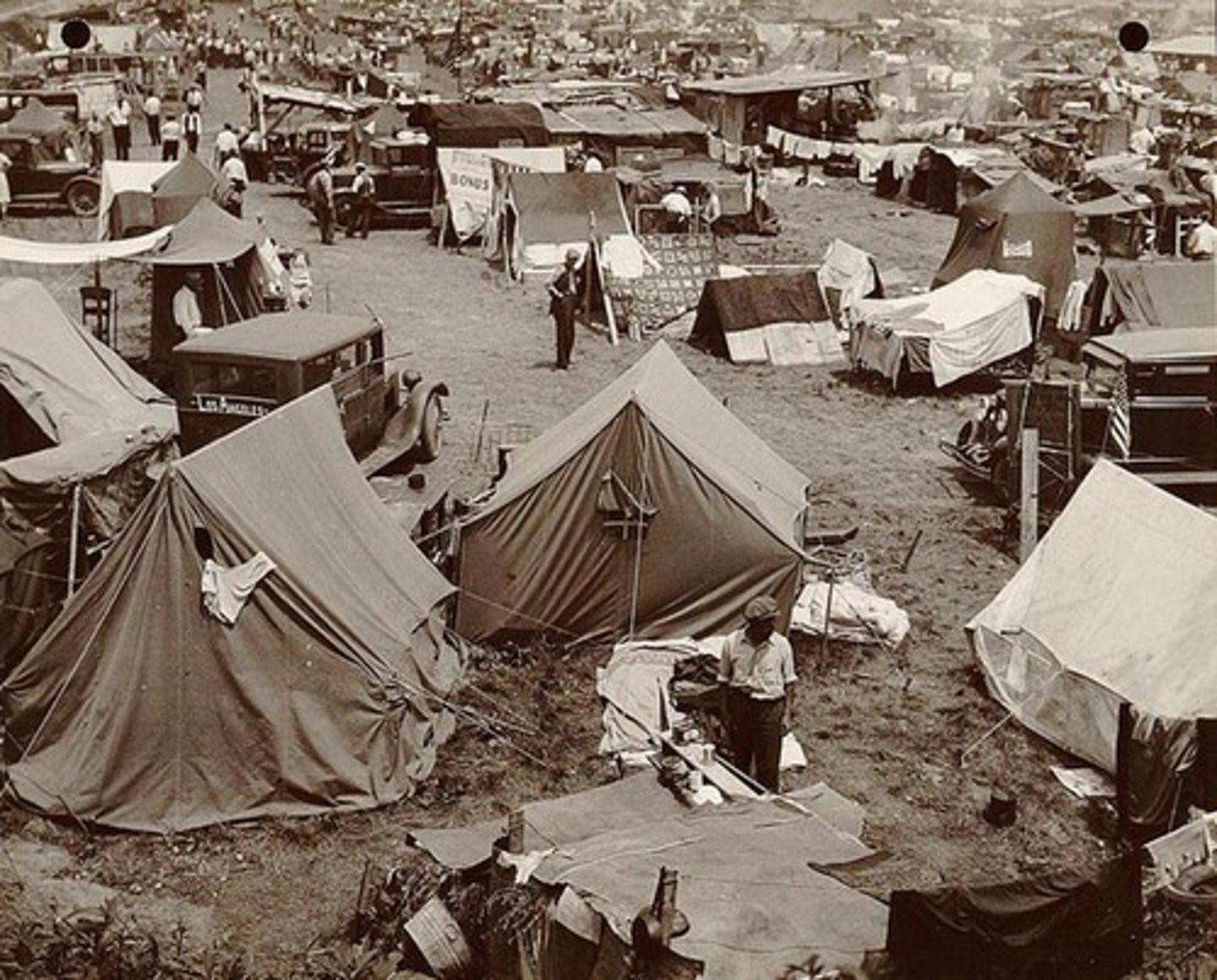
Keynesian economics
Theory based on the principles of John Maynard Keynes, stating that government spending should increase during business slumps and be curbed during booms. Also referred to as pump priming and was used by FDR. Opposite of what Coolidge and Hoover did.
"trickle down" economics
Hoover's strategy battling the Great Depression in which the money is given to the big corporations and eventually they will pay their workers more, and then the workers will spend their money and save the economy. AKA supply side economics and Reaganomics.
Black Tuesday
October 29, 1929; date of the worst stock-market crash in American history and beginning of the Great Depression.
Creeping Socialism
Conservatives believed that many of the New Deal programs were beginning to resemble socialist programs. Especially the, federal, Tennessee Valley Authority which gave electricity and jobs to rural Appalachia. Called creeping socialism because the gov't was in direct competition with private electricity businesses.
18th Amendment
Prohibited the manufacture, sale, and distribution of alcoholic beverages. Repealed by the 21st Amendment.
Bootlegging and speakeasies
the act of making or transporting alcoholic liquor for sale illegally
buying on margin
Purchasing stock with a little money down with the promise of paying the balance sometime in the future.
Flapper
carefree young women with short, "bobbed" hair, heavy makeup, and short skirts. The flapper symbolized the new "liberated" woman of the 1920s. Many people saw the bold, boyish look and shocking behavior of flappers as a sign of changing morals. Though hardly typical of American women, the flapper image reinforced the idea that women now had more freedom.

Harlem Renaissance
A period in the 1920s when African-American achievements in art and music and literature flourished. Also referred to as the Jazz Age.
Installment buying
A consumer buys a product by promising to pay small, regular amounts over a period of time. Similar to buying on credit.
Nye Committee
Senate committee to investigate why America became involved in WWI. Theory that big business (JP Morgan) had conspired to have America enter WWI so that they could make money through the selling of war materials and loans. Called bankers and arms producers "merchants of death."
racketeer
A person who engages in dishonest and fraudulent business dealings. Al Capone (gangster of the 20's) is an example of a racketeer.
Scopes Trial
"Monkey Trial." 1925 Tennessee trial where teacher John Scopes was charged with teaching evolution. He broke the Butler Act which was a law in Tennessee that prohibited the teaching of evolution in public schools. This Tennessee case demonstrated a clash between religious fundamentalism (creationism) vs. evolution.
speakeasies
Bars that operated illegally during the time of Prohibition
speculation
An involvement in risky business transactions in an effort to make a quick or large profit.
Volstead Act
Bill passed by Congress to enforce the language of the 18th Amendment. This bill made the manufacture and distribution of alcohol illegal within the borders of the United States.
Writers and Musicians of the Roaring 20's
F. Scott Fitzgerald, Ernest Hemingway, Langston Hughes, Zora Neale Hurston, Eugene O'Neill, Edith Wharton
disillusionment
A feeling of disappointment resulting from the discovery that something is not as good as one believed it to be. This was the feeling after WWI.