ib design and tech - topic 10
 View linked note
 Call Kai
 Learn
Learn Practice Test
 Spaced Repetition
 Match
Match Flashcards
 Knowt Play
1/42

There's no tags or description
Looks like no tags are added yet.
Name | Mastery | Learn | Test | Matching | Spaced | Call with Kai | Chat |
|---|
No analytics yet
Send a link to your students to track their progress
43 Terms
just in case focuses on..
creating products in anticipation of market demand to reduce costs using economies of scale
3 JIC advantages
always able to respond to market demand
higher reliability
timely distribution of parts
3 JIC disadvantages
large inventory must be managed
high capital costs - space for inventory
higher wastage due to spoilage
just in time is…
a production strategy that aims to reduce inventory costs by receiving goods only when they are needed in the production process
3 JIT advantages
highly flexible manufacturing
low waste as there isn’t over-production
lower costs as there’s no inventory
3 JIT disadvantages
greater risk of manufacturing delays
delay between customer’s orders and delivery
cannot benefit from economies of scale
lean production aims to..
eliminate waste and maximise the value of a product based on the perspective of the consumer
3 advantages of lean production
increased productivity (focus on kaizen and waste reduction)
increased quality (focus on improvement and reduction of defects)
reduced environmental impact (reduction of waste materials)
3 disadvantages of lean production
high initial costs (need to invest in new systems)
difficult to introduce to an existing workforce
no inventory is difficult if there’s a sudden increase in demand
3 characteristics of lean produciton
highly trained, multi-skilled workforce
quality control and continuous improvement
zero defects
4 principles of lean production
doing it right the first time
taking every customer complaint seriously
empowering workers
eliminate all waste
values stream mapping focuses on…
identifying areas for improvement to optimise the overall process
workflow analysis focuses on…
the sequences, tools and worker movements to ensure the highest efficiency in the system

kaizen is a…
philosophy of continual improvement
kaizen emphasises the workforce as the…
most valuable component of a manufacturing system
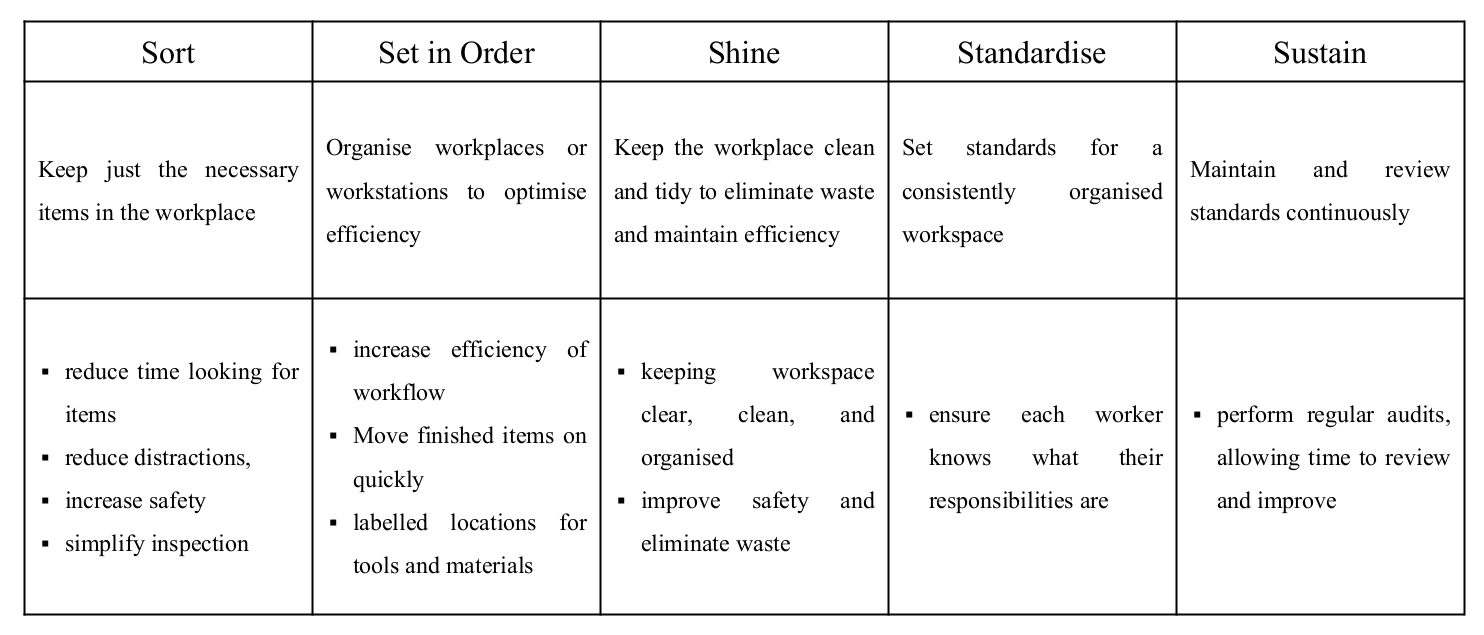
the 5 “S’s” are a method for…
organising the workplace with the goal of improving efficiency of production
name all of the 5 “S’s”
sort
set in order
shine
standardise
sustain
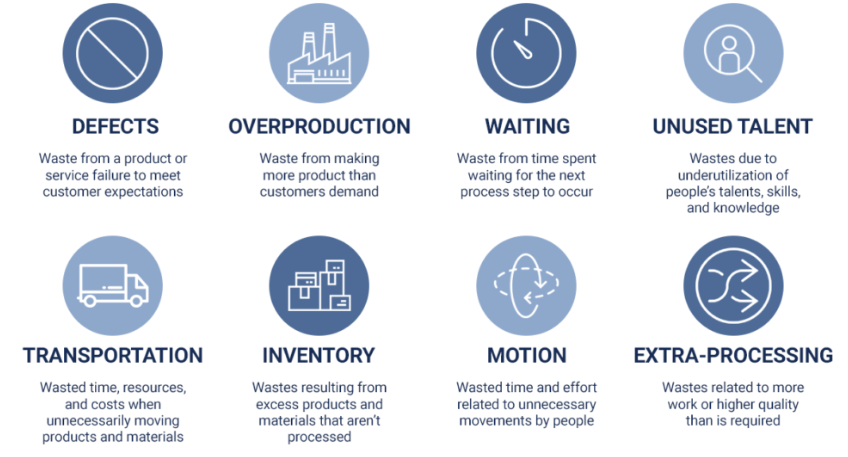
how many of the 8 wastes in lean manufacturing can you name?
defects
over-production
waiting
unused talent
transportation
inventory
motion
extra-processing
computer integrated manufacturing uses computers to…
automatically monitor and control the entire production of a product
the 7 elements of computer integrated manufacturing
design
planning
purchasing
manufacturing
cost accounting
inventory control
distribution
why is CIM not suitable for small scale production?
there’s a high initial cost of investment and low economy of scale
give 3 pros and cons for using CIM in mass/batch production
pros
efficient production lowers costs
high quality of product
shorter lead time
cons
high initial cost of investment
high cost of training workers
job losses due to automation
give 3 pros and cons for using CIM in mass customisation production
pros
greater choice for client
easier to meet unique clients needs
efficient production
cons
high initial cost of investment
high cost of training workers
job losses due to automation
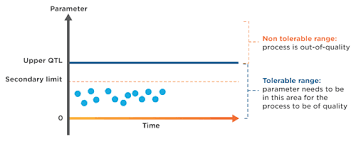
tolerance
the allowable amount of variation within a particular quality
inspection
the checking of qualities at different stages throughout the production process
destructive testing
testing a product or part that destroys or physically alters the part
non-destructive testing
testing a product or part that measures physical properties
quality control
a product-oriented approach that involves regularly inspecting and testing the final product to identify and fix defects
statistical process control (SPC)
the use of statistical tools to monitor, control, and improve the quality of a manufacturing process by identifying variations and maintaining consistency
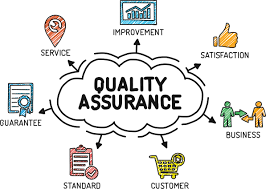
quality assurance
a process-orientated approach that focuses on preventing defects by ensuring that every step in the production process meets defined quality standards
cost effectiveness
focuses on strategies that minimise the cost of producing a product
value for money
the balance between the price and quality of a product, where the user feels they are getting fair worth for the amount they paid
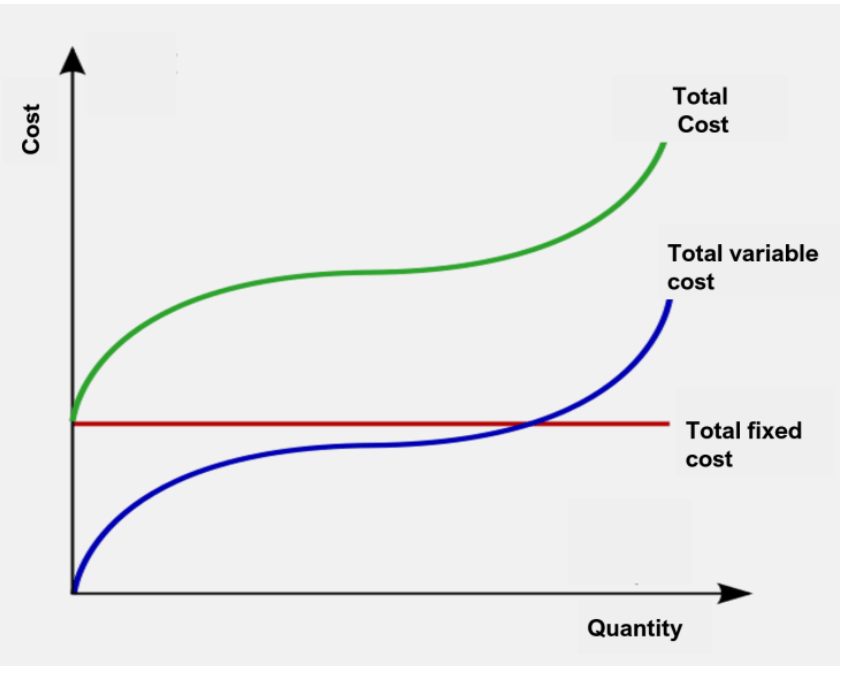
variable costs
costs that change with the level of production
how are total costs calculated?
by adding together the fixed and variable costs
cost analysis
a tool used to determine the feasibility of producing a product
price-minus
manufacturers determine a price consumers are willing and able to pay through market research
retail price
the price the manufacturer suggests the product be sold at
wholesale price
the cost of the product sold by a wholesaler
typical manufacturing price
the price the manufacturer sells the product at
target costs
the final cost determined before manufacturing

return on investment (ROI)
the profit made from the product
unit cost
the total cost to produce, store and sell one product

sales volume
the number of products sold within a specific timeframe