FINAL
 Call Kai
 Learn
Learn Practice Test
 Spaced Repetition
 Match
Match Flashcards
 Knowt Play
1/70

There's no tags or description
Looks like no tags are added yet.
Name | Mastery | Learn | Test | Matching | Spaced | Call with Kai |
|---|
No analytics yet
Send a link to your students to track their progress
71 Terms
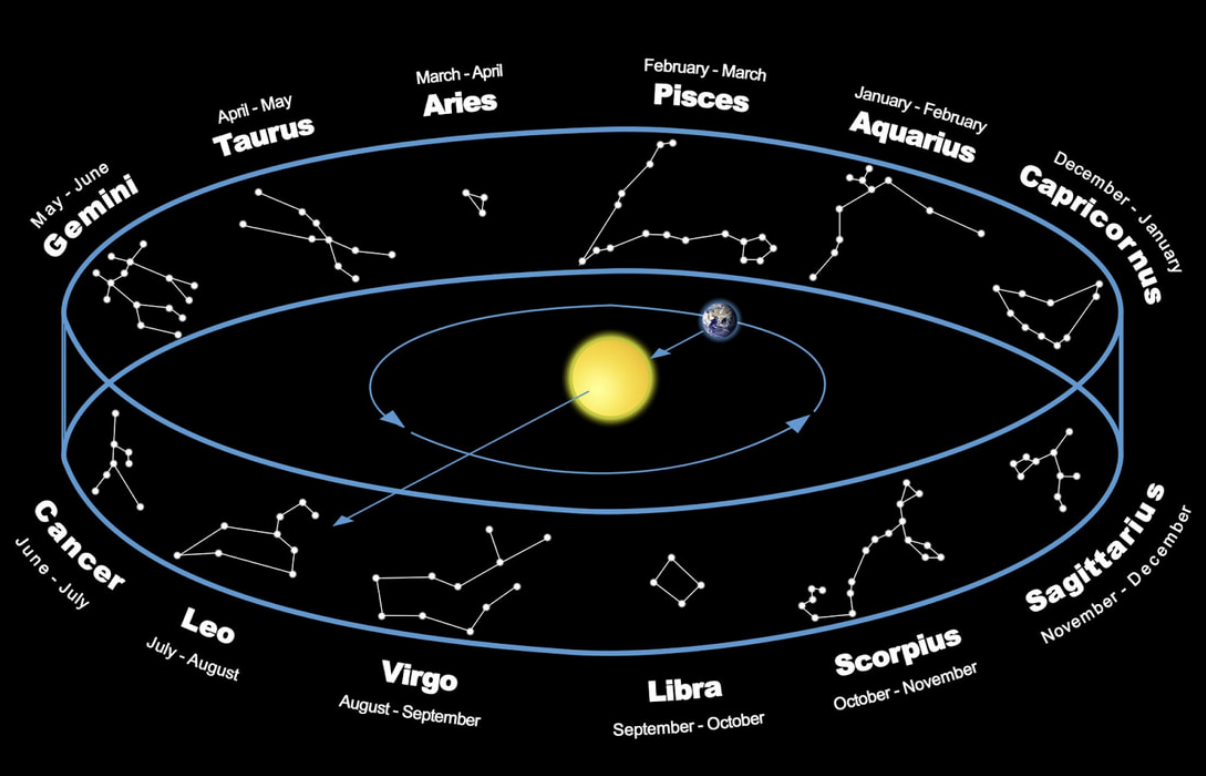
The sun sweeps around the ecliptic in 1 year, spending about a month in each zodiac sign, it moves around 1 degree per day (360 degrees in a circle 365 days in a year)
Why do stars rise and set?
All objects in the sky appear to rise in the east and set in the west due to the Earth’s west-to-east rotation.
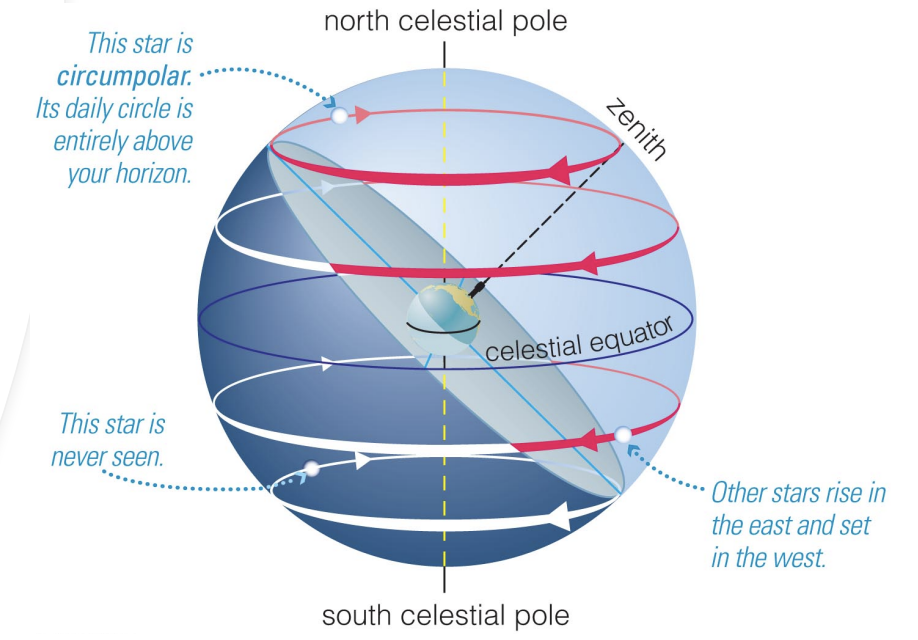
Circumpolar stars
Stars that are close enough to the celestial poles to appear to circle around the pole instead of rising and setting (depends on your latitude)
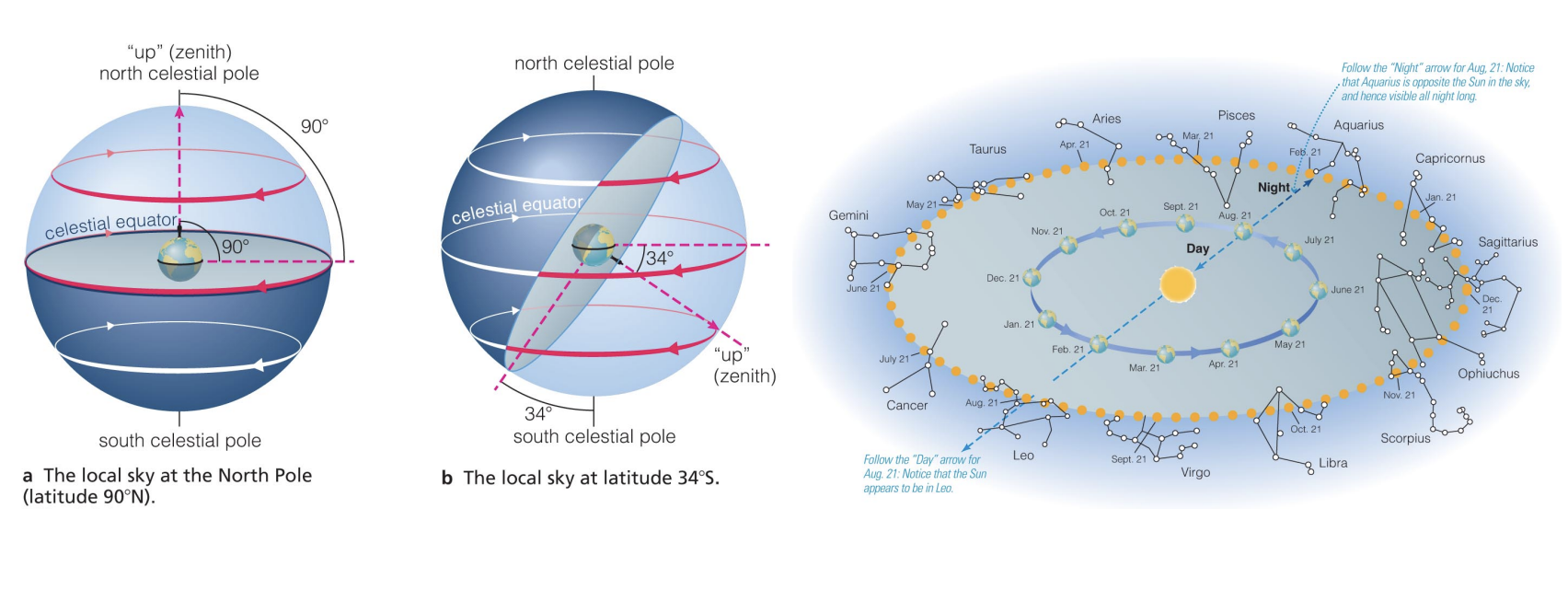
Relationship between altitude of North Star and latitude
Your latitude on Earth is equal to the altitude of the North Star (Polaris) above the horizon
EX: Polaris appears 30° above the horizon, you are at 30° north latitude; if it is at the zenith (90°), you are at the North Pole.
Latitude and time of year?
The stars we see at night depend on our latitude because that determines which stars are above or below the horizon.
They depend on time of year as Earth orbit’s the Sun, we look outward (away from the Sun) in different directions over each year.
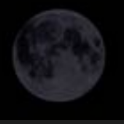
New Moon
Rises at sunrise
Sets at sunset
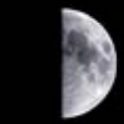
First Quarter
Rises at noon
Sets at midnight
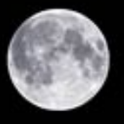
Full Moon
Rises at sunset
Sets at sunrise
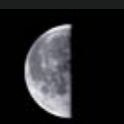
Third (Last) Quarter
Rises at midnight
Sets at noon
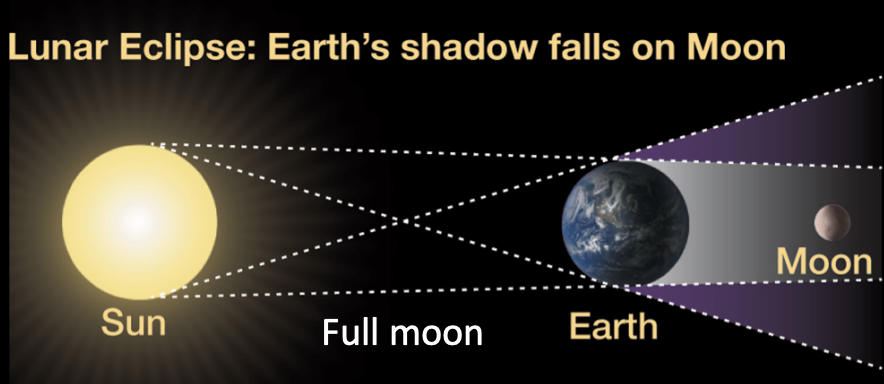
Lunar Eclipse
Full moon
Earth is between the Sun and the Moon
Earth’s shadow falls on the Moon
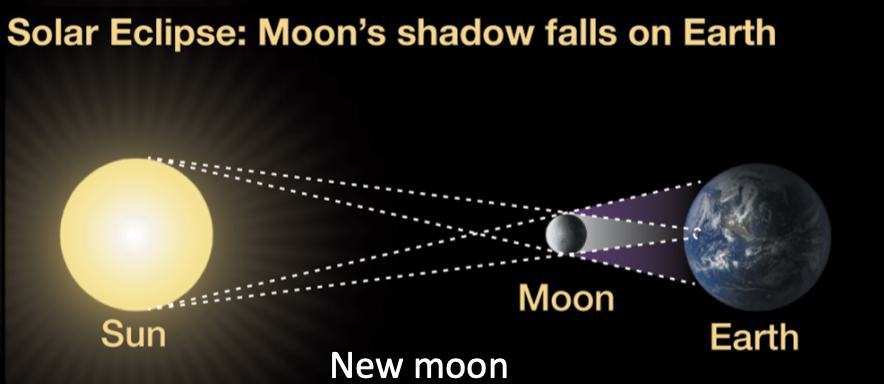
Solar Eclipse
New Moon
The Moon is between the Sun and Earth
The Moon blocks the Sun from our view
Retrograde planetary motion
An apparent backward motion that happens when Earth overtakes another planet in its orbit, creating an optical illusion.
Planets usually move eastward relative to the background stars.
Sometimes they appear to move westward for a few weeks called apparent retrograde motion
The planet is still moving forward in its orbit the entire time; it only appears to go backward from our moving viewpoint.
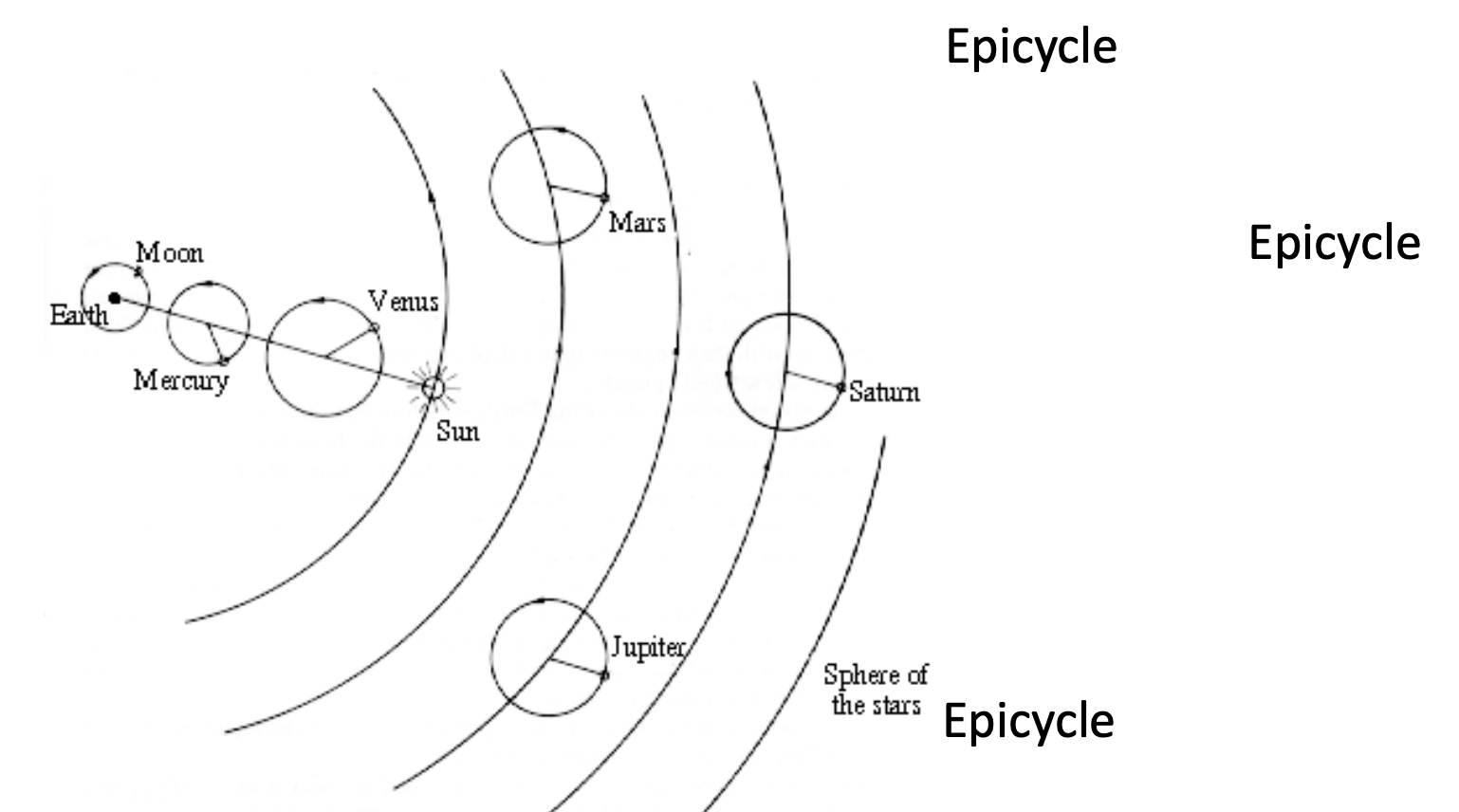
Ptolemaic model
Helped explain retrograde planetary motion from the Geocentric model by adding epicycles. (planet moves in its own little circular path), this way, planets really do go backward in this model!
The most sophisticated geocentric model and sufficiently accurate to remain in use for 1,500 years! (A.D. 100–170)
The geocentric model struggled to naturally explain retrograde planetary motion, requiring complex epicycles.The wrong model was so successful because of Many tunable parameters
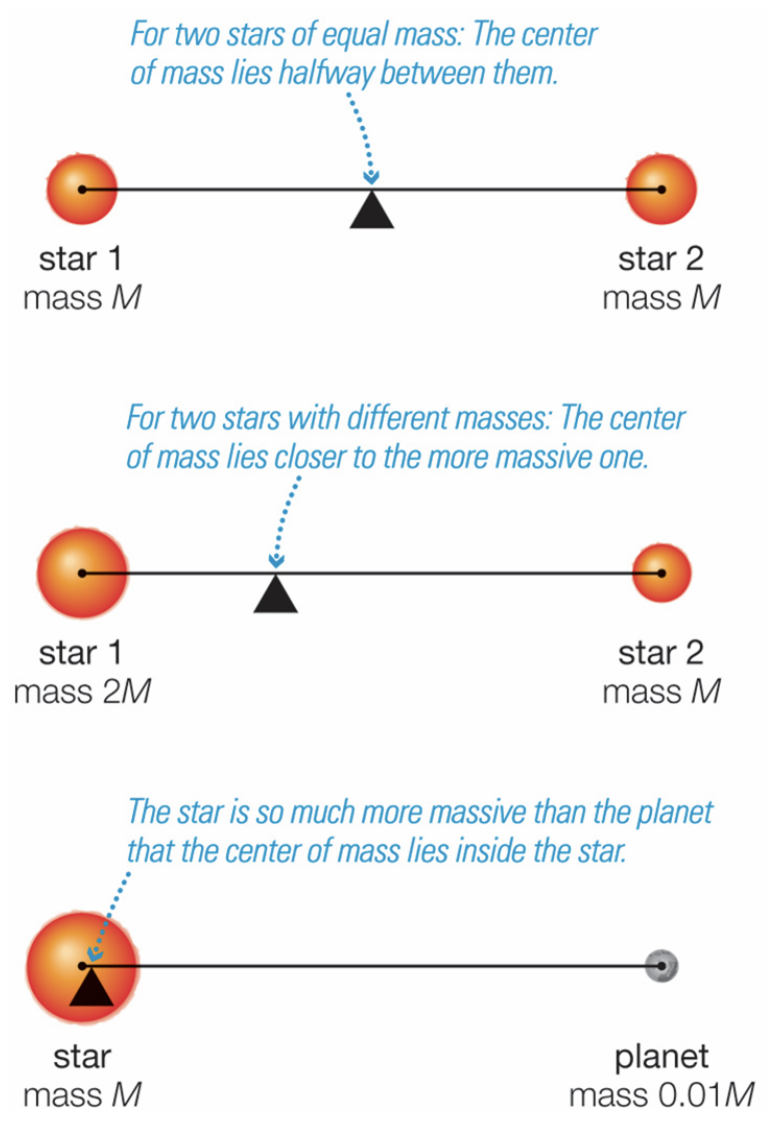
Center of Mass
Orbiting objects move around a system’s center of mass, which is the common balance point of the system.
There doesn’t have to be an object located at that point
EX: a star cluster may have no star sitting exactly at its center of mass.
Escape Velocity
Escape velocity: The minimum speed an object needs to have to break free of a planet (or star’s) gravitational pull
For Earth: vesc = 11km/s (40,000 km/hr)
Escape velocity of black hole is speed of light
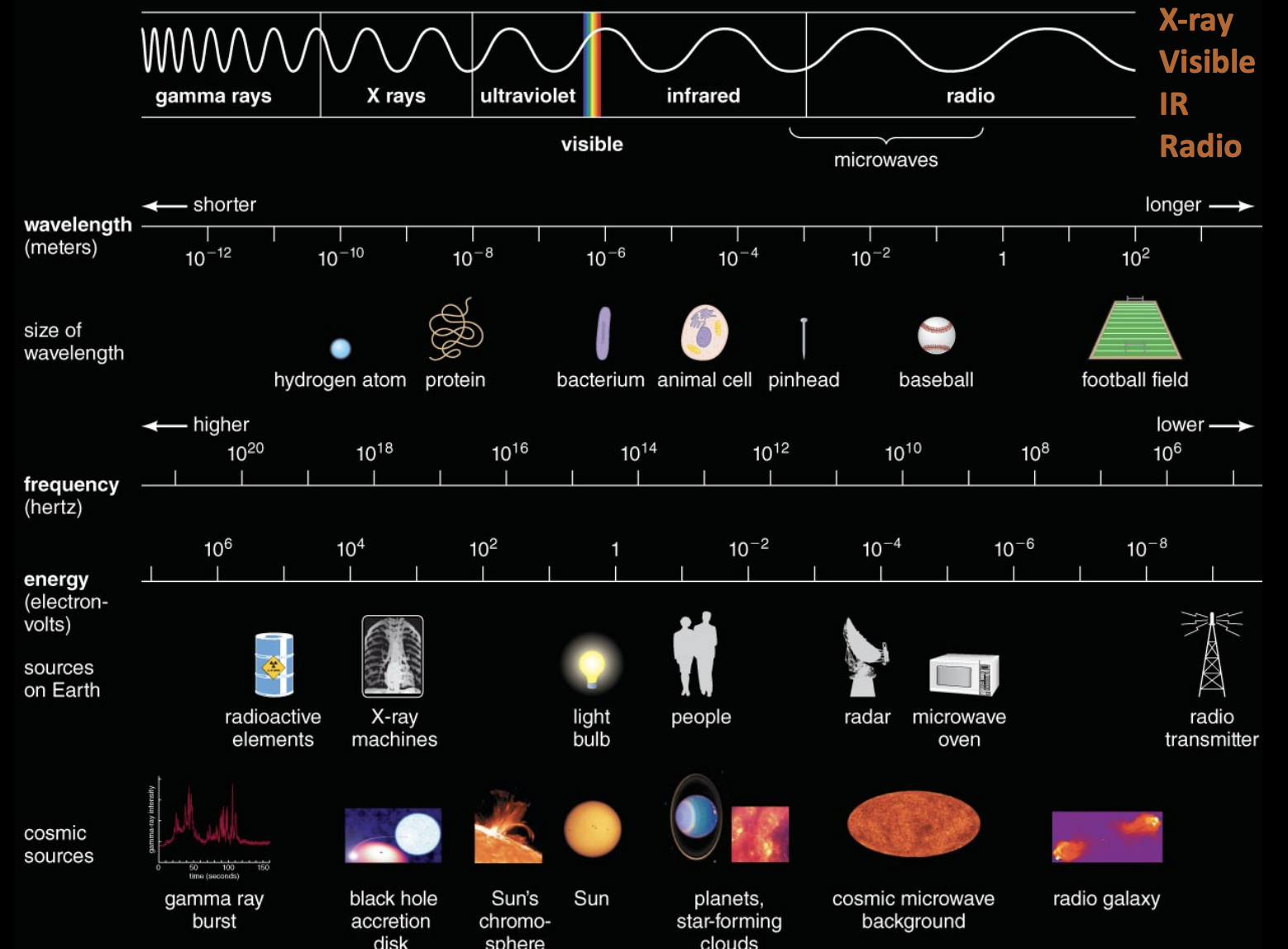
The Spectrum of Electromagnetic Waves (highest to lowest)
Gamma Ray→ X-ray → Ultra Violet → Visible → Infrared (IR) → Radio
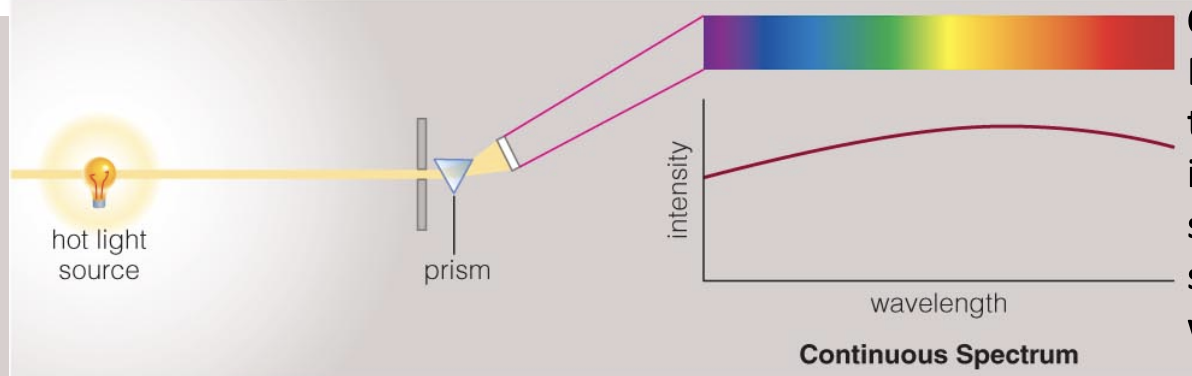
Continuous Spectrum
Every dense object with a temperature greater than its surroundings emits a spectrum that smoothly spans a broad range of wavelengths.
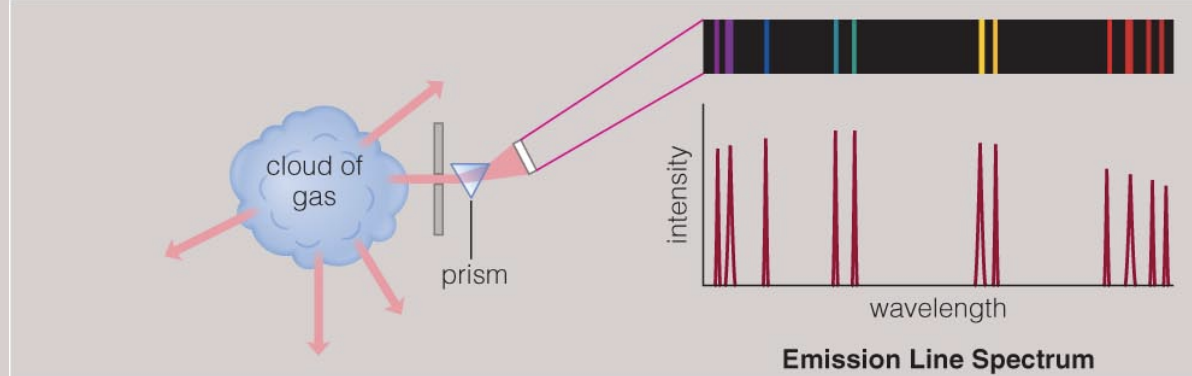
Emission Line Spectrum
A cloud of gas which is hotter than its surroundings emits only specific wavelengths (colors) of light.
Produced by a hot, low-density gas emiting light at specific wavelengths only, creating bright lines.
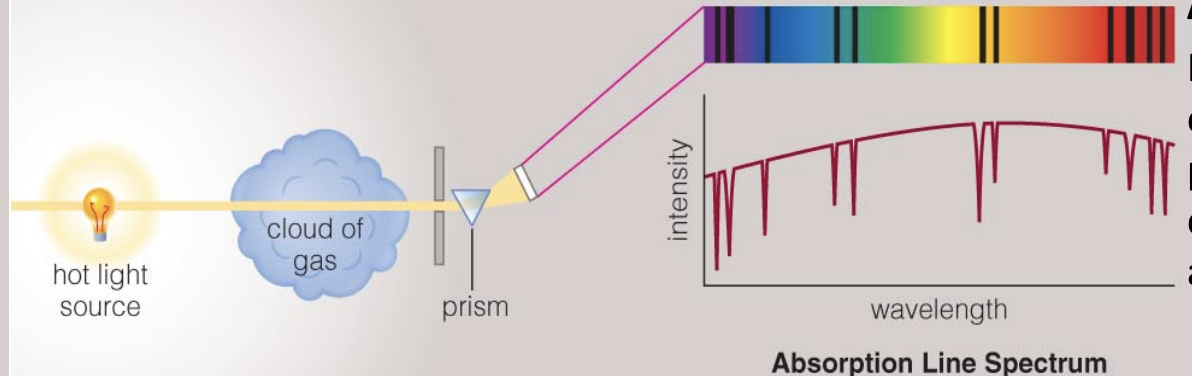
Absorption Line Spectrum
A hotter objects continuous spectrum of light passes through a cooler cloud of gas,
hot, dense object (like a star) makes a continuous spectrum → all colors/wavelengths.
If that light then passes through a cooler, thin gas cloud, the gas absorbs specific wavelengths.
The cooler gas absorbs specific wavelengths, creating dark lines in the spectrum.
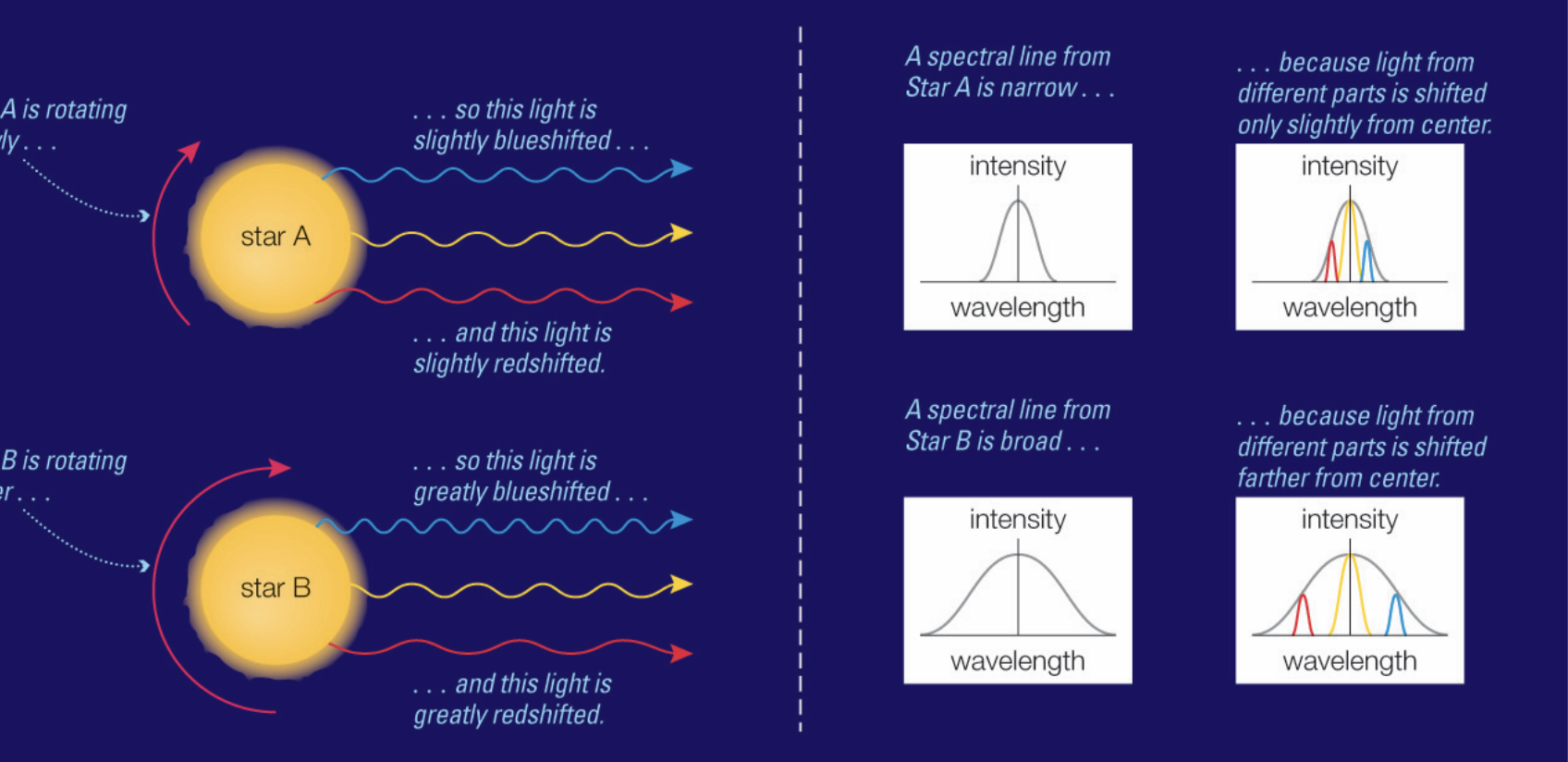
Spectrum of a Rotating Object
• Different Doppler shifts from different sides of a rotating object spread out its spectral lines.
• Spectral lines are wider when an object rotates faster.
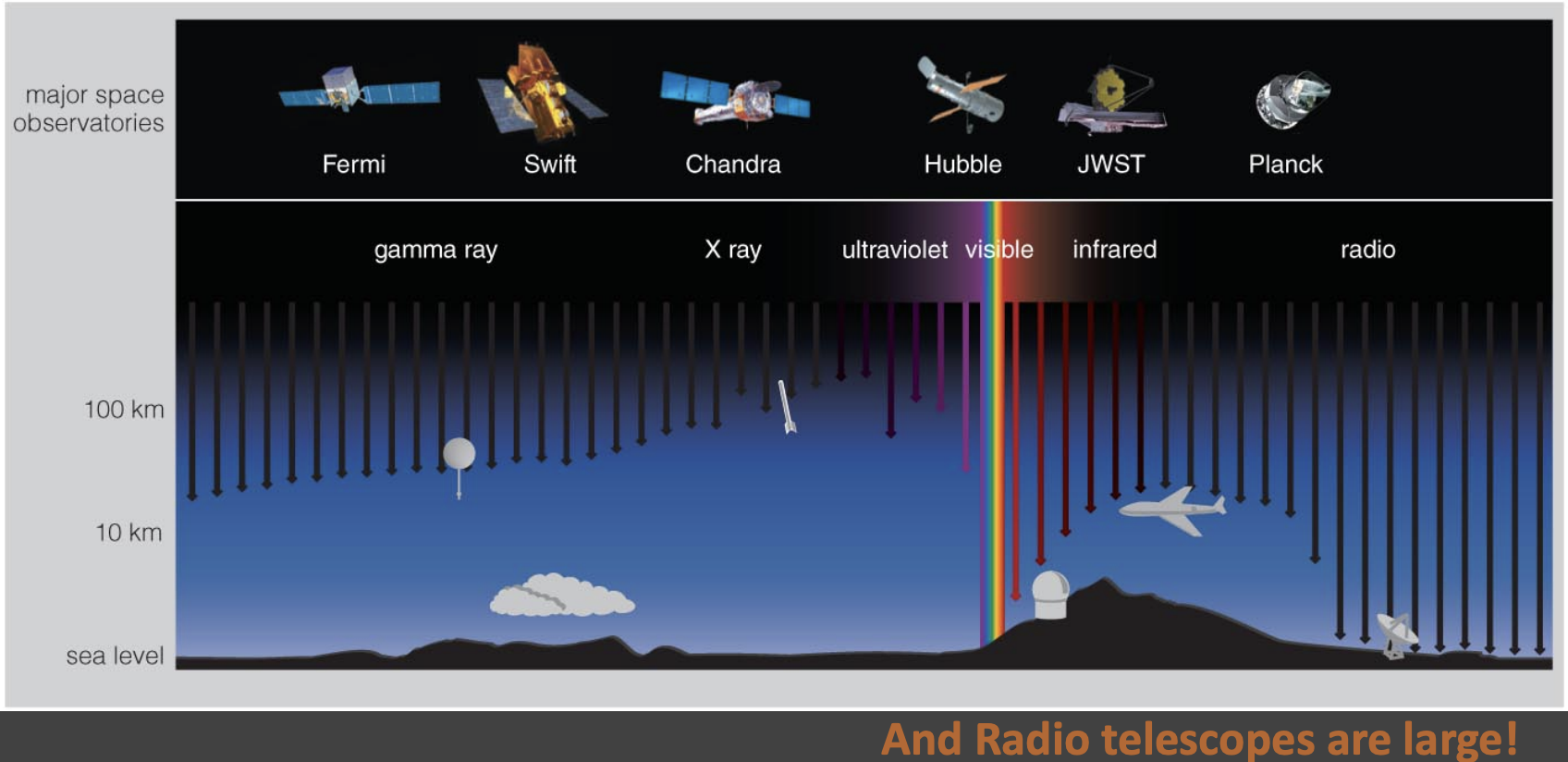
Why do we put telescopes into space?
We need telescopes in space to observe other forms and our atmosphere also bends light rays (turbulence)
In space: gamma-ray, X-ray, ultraviolet, infrared
- Earth’s atmosphere absorbs or blocks these types of light, so telescopes must be placed above the atmosphere to detect themOn Earth: visible, radio
-Visible light and radio waves can pass easily through Earth's atmosphere and reach the ground, allowing telescopes to operate effectively from Earth’s surface
Terrestrial planets
Made of solid materials like rock and metal
Have solid surfaces
Relatively small
Closer to the Sun
Warmer
Do not have rings
A spaceship could land on them
Gas giant (Jovian) planets
Made mostly of gas (mainly hydrogen)
No solid surface
Very large
Farther from the Sun
Cooler
Have rings
A spaceship cannot land (it would crash through the atmosphere)
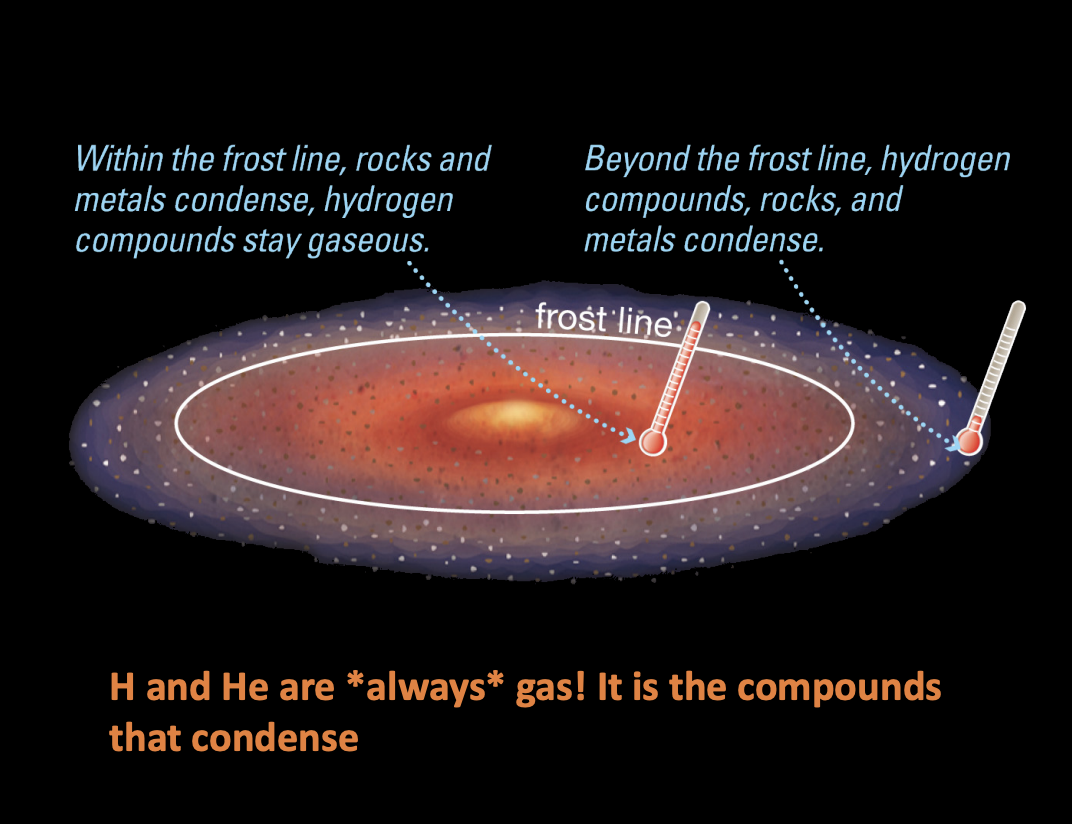
The Frost Line
The distance from the Sun where temperatures are cold enough for ices to form (H compounds). Making large icy rocky cores to gravitationally attract gas
Inside the frost line
Only rock and metal could condense
Planets stayed small because small rocky cores that can’t grab surrounding hydrogen/ helium gas.
Outside the frost line
Ice + rock + metal could condense
Ices add mass quickly
This allowed planets to build large icy/rocky cores
These cores could gravitationally attract large amounts of gas
Gas giants formed outside the frost line.
Direct Imaging
Only direct method and we have to block out the central star
Taking actual pictures of planets
Very difficult because stars are much brighter than planets
Radial Velocity (Doppler Shift) Method
We see the star wobble and it tells us there is a planet nearby ‘messing’ with its gravity
A planet’s gravity causes the star to wobble slightly
This motion causes Doppler shifts in the star’s light
Astronomers measure these shifts to detect planets
Transit Method
We observe dip in the stars brightness when the planet goes in front
A planet passes in front of its star (transit)
This causes a small dip in the star’s brightness
Repeated dips indicate a planet orbiting the star
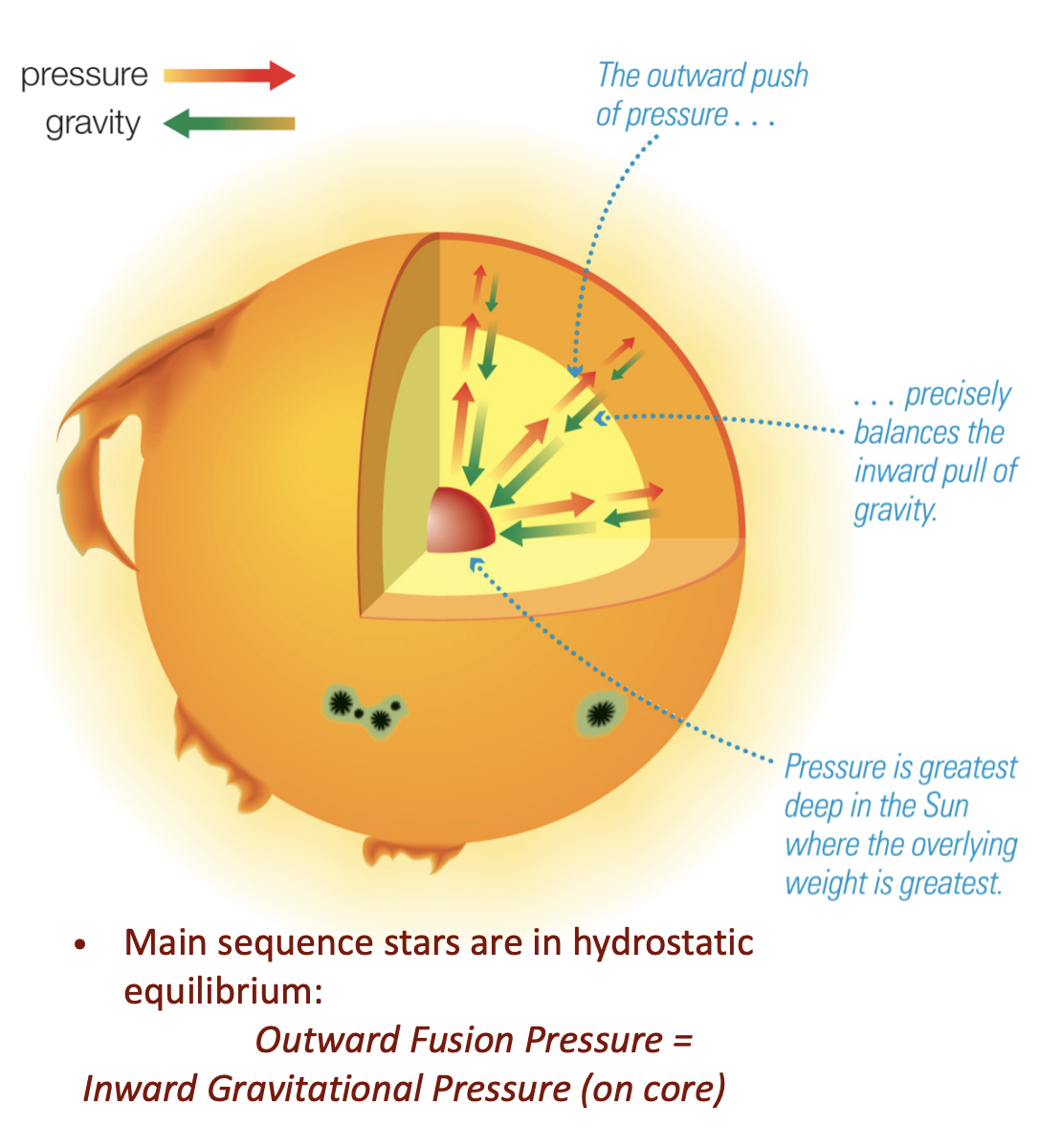
Gravitational equilibrium
Energy supplied by fusion maintains the outward pressure that balances the inward crush of gravity
Outward pressure force from nuclear fusion balances with Inward gravitational force
This balance keeps the Sun stable and not collapsing or exploding.
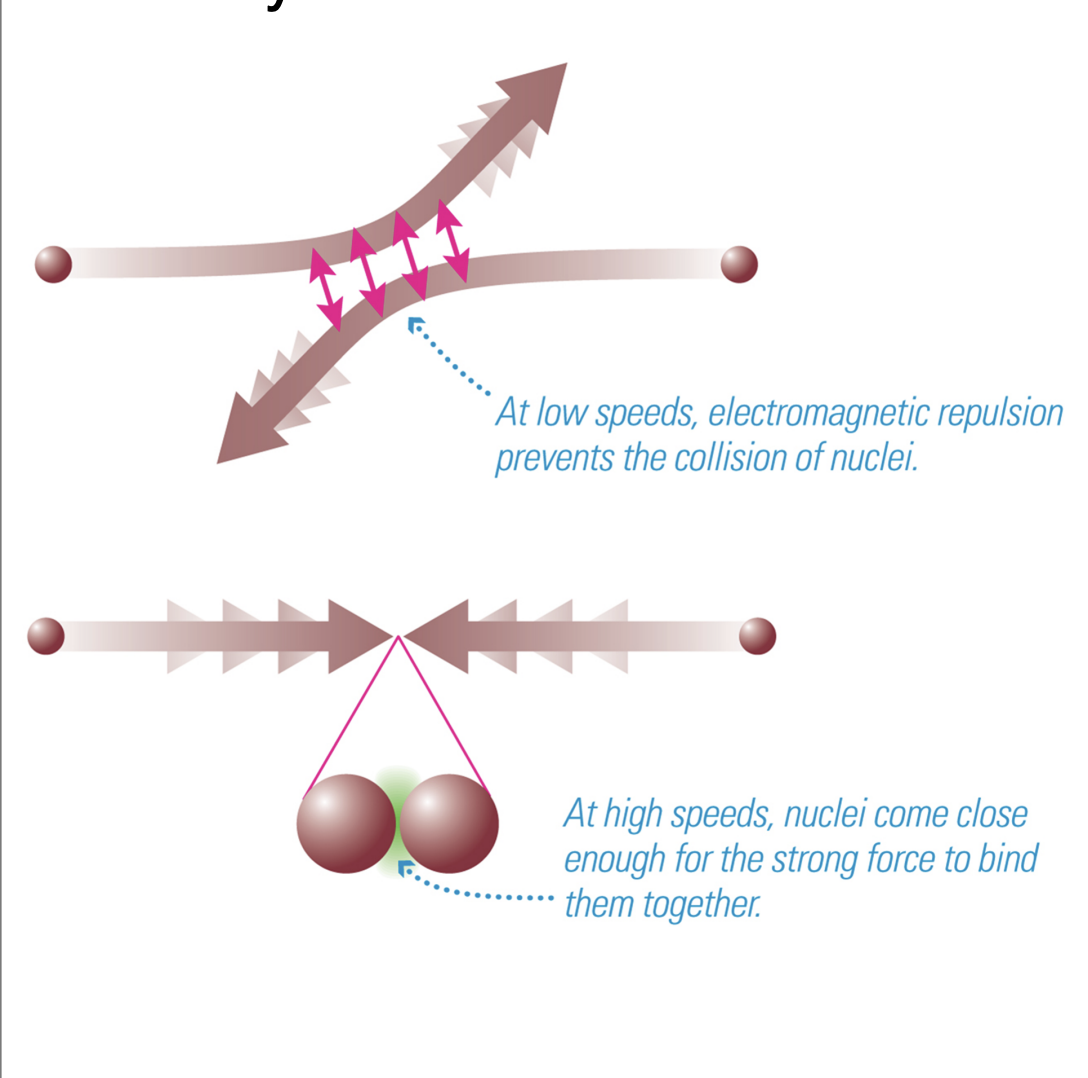
Nuclear Fusion
High temperatures enable nuclear fusion to happen in the core (Need T~108K)
Higher temp = faster fusion rates
Meaning hotter stars fuse fuel much faster (This is why massive stars live shorter)
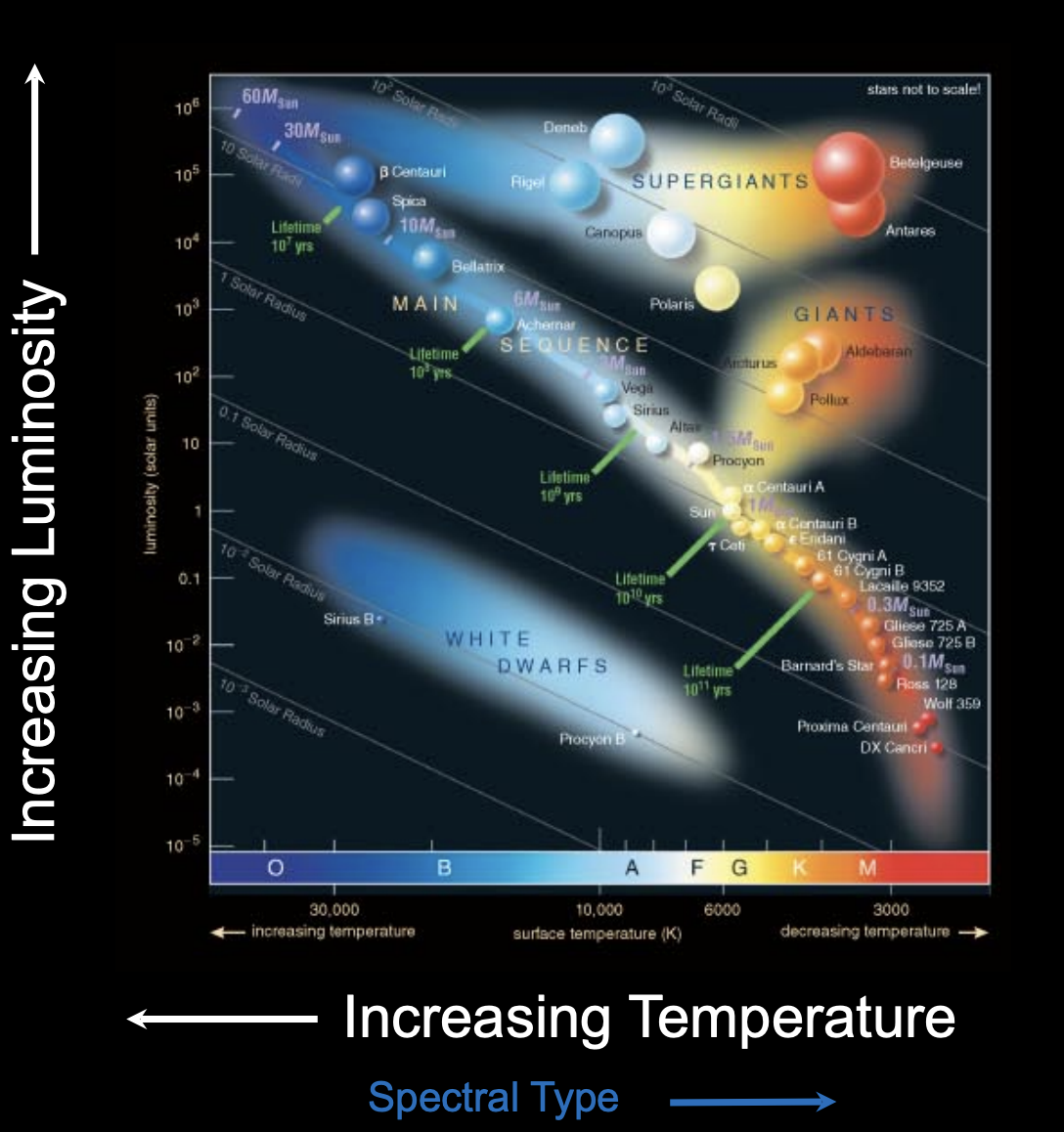
The Hertzsprung-Russell (H-R) diagram
Star luminosity vs surface temperature
General regions:
Main Sequence – most stars
Red Giants / Supergiants – upper right
White Dwarfs – lower left
When stars leave the main sequence:
They move up and to the right toward the red giant region.
Stars on the main sequence are actively fusing Hydrogen into Helium in their cores
Stellar classification spectral types
Based on temperature
Blue stars are hotter
Red stars are cooler
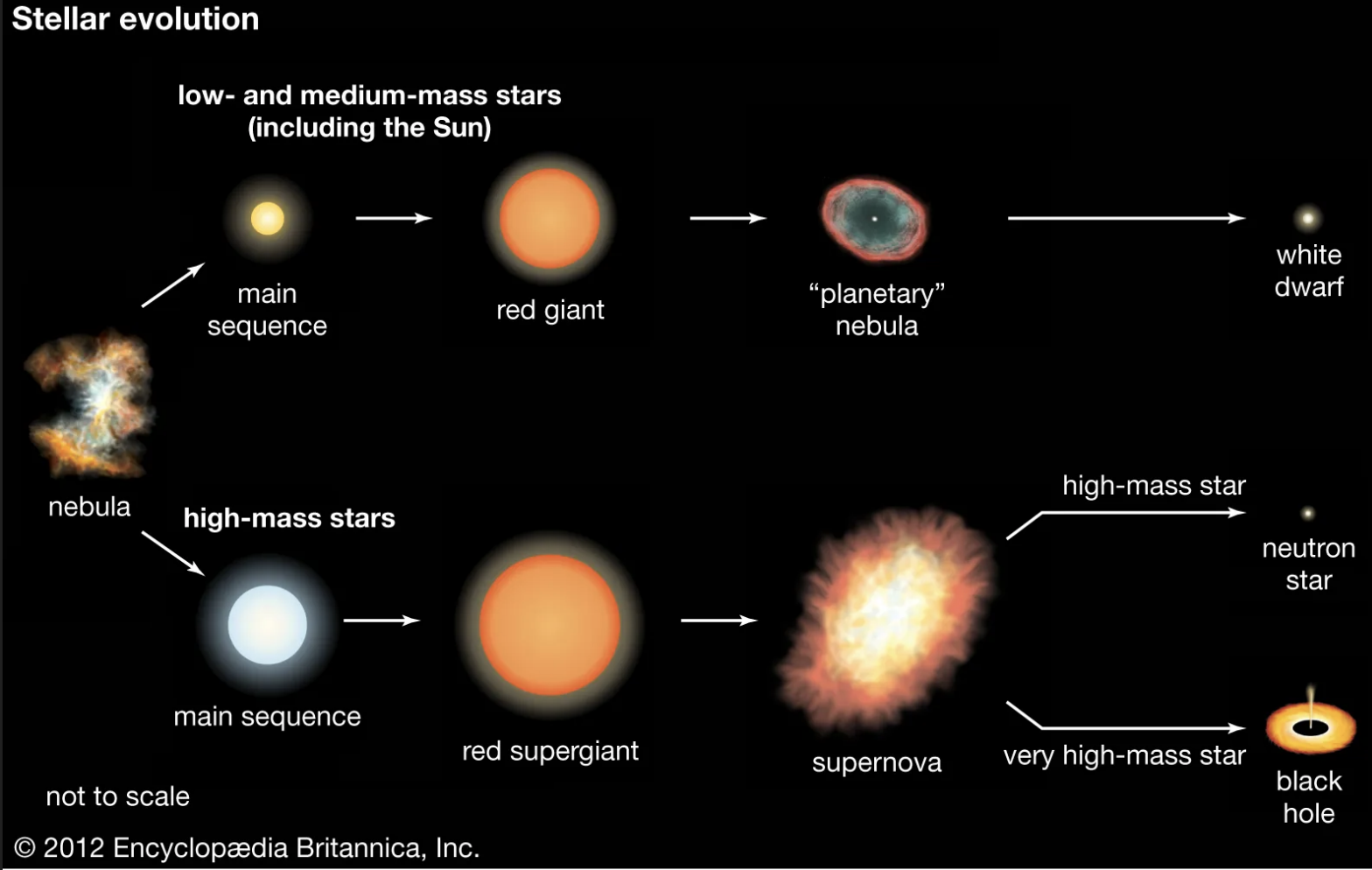
Life track of a low mass star
Main sequence
Red giant
Planetary nebula
White dwarf
They do NOT become supernovae.
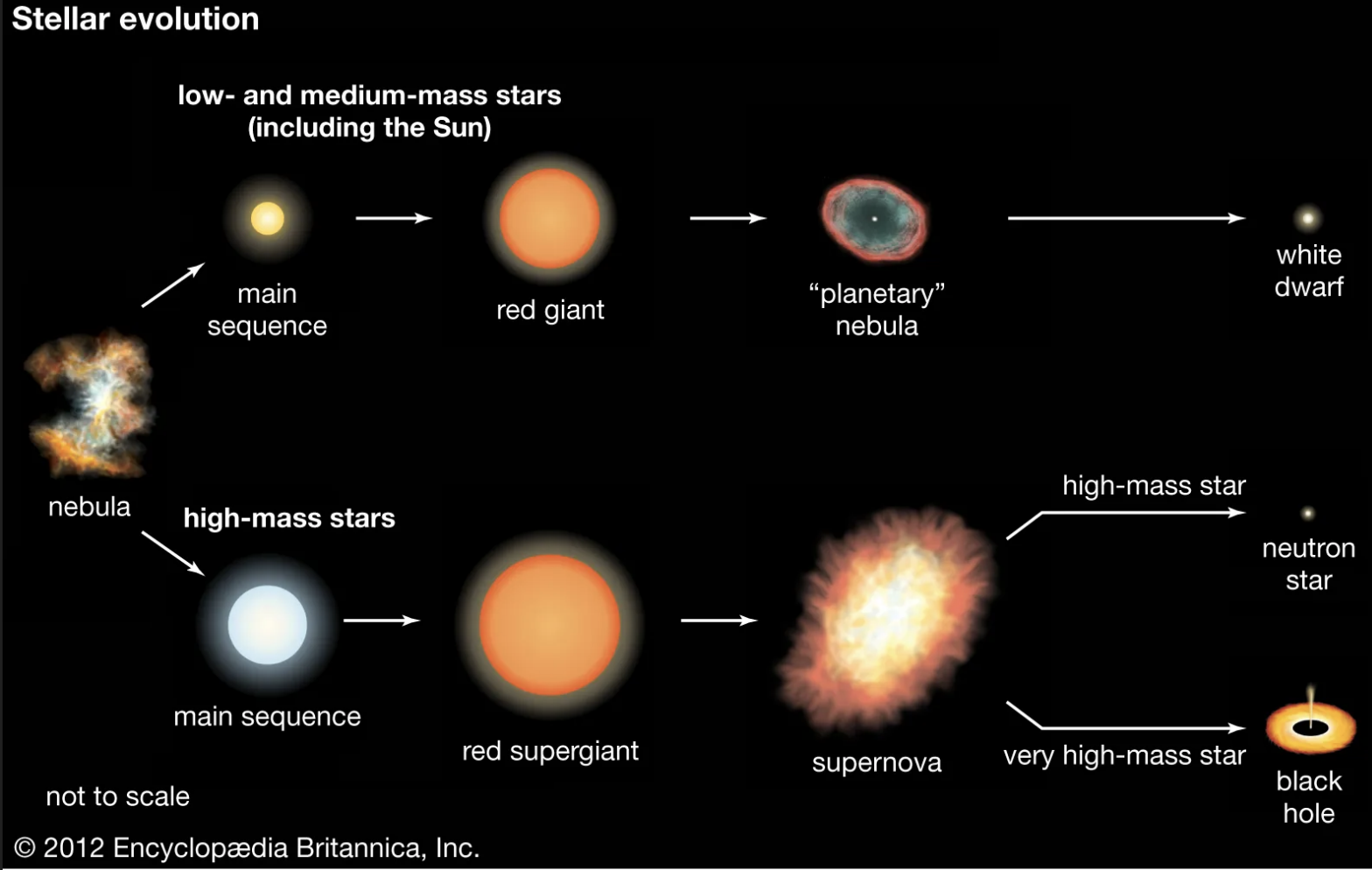
Life track of a high mass star
Main sequence
Red Supergiant
Supernova explosion
Remnant becomes either:
High mass star: Neutron star
Super High mass star: Black hole
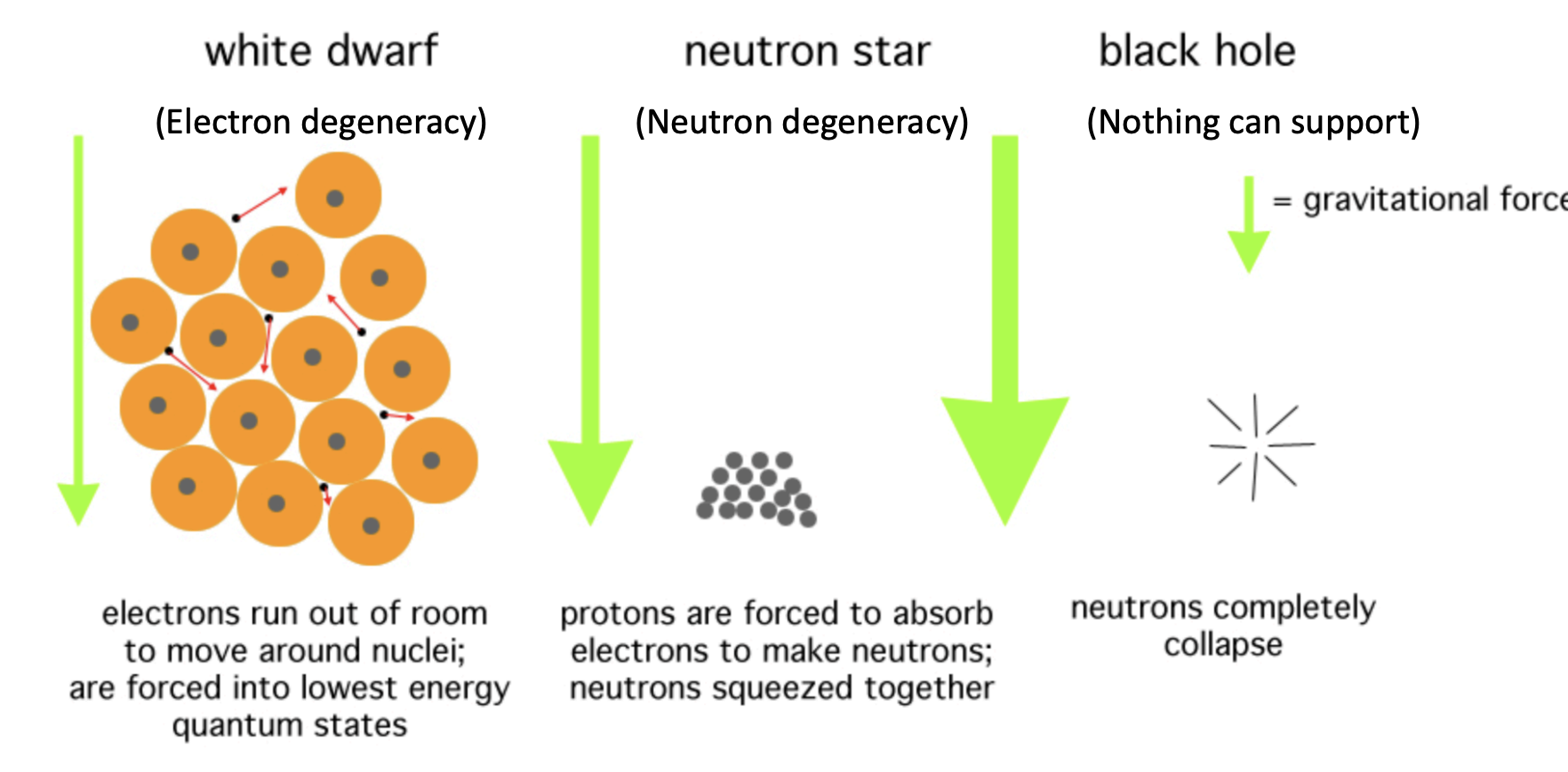
The Pauli exclusion principle
States that no two electrons can occupy the same quantum state.When matter is extremely compressed (as in a stellar core after fusion stops), the electrons are squeezed so close together that their quantum mechanical motion creates a pressure independent of temperature.
Degeneracy Pressure- A quantum mechanical pressure that prevents stars from collapsing.
White dwarfs
Formed after a low-mass star sheds outer layers
Supported by electron degeneracy pressure
Neutron stars
Formed after a supernova of a high-mass star
Supported by neutron degeneracy pressure
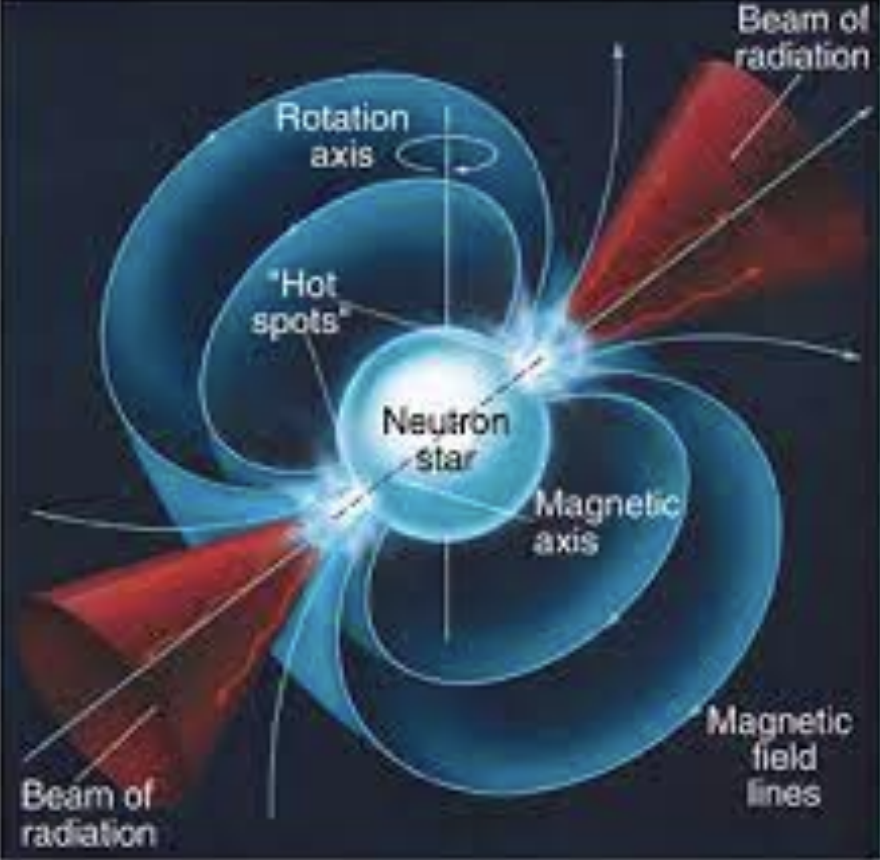
Pulsars
a special type of neutron star with collimated magnetic radiation that rotates and sweeps around
Massive star (Type II) supernova:
Iron core of a massive star reaches the Chandrasekhar limit and collapses into a neutron star, causing total explosion in star’s outer layers.
White dwarf (Type Ia) supernova:
Carbon fusion suddenly and rapidly begins as a white dwarf in close binary system reaches Chandrasekhar limit, causing total explosion of the entire white dwarf.
Binary System
Consists of two astronomical objects, typically stars, orbiting a common center of mass due to their mutual gravitational attraction
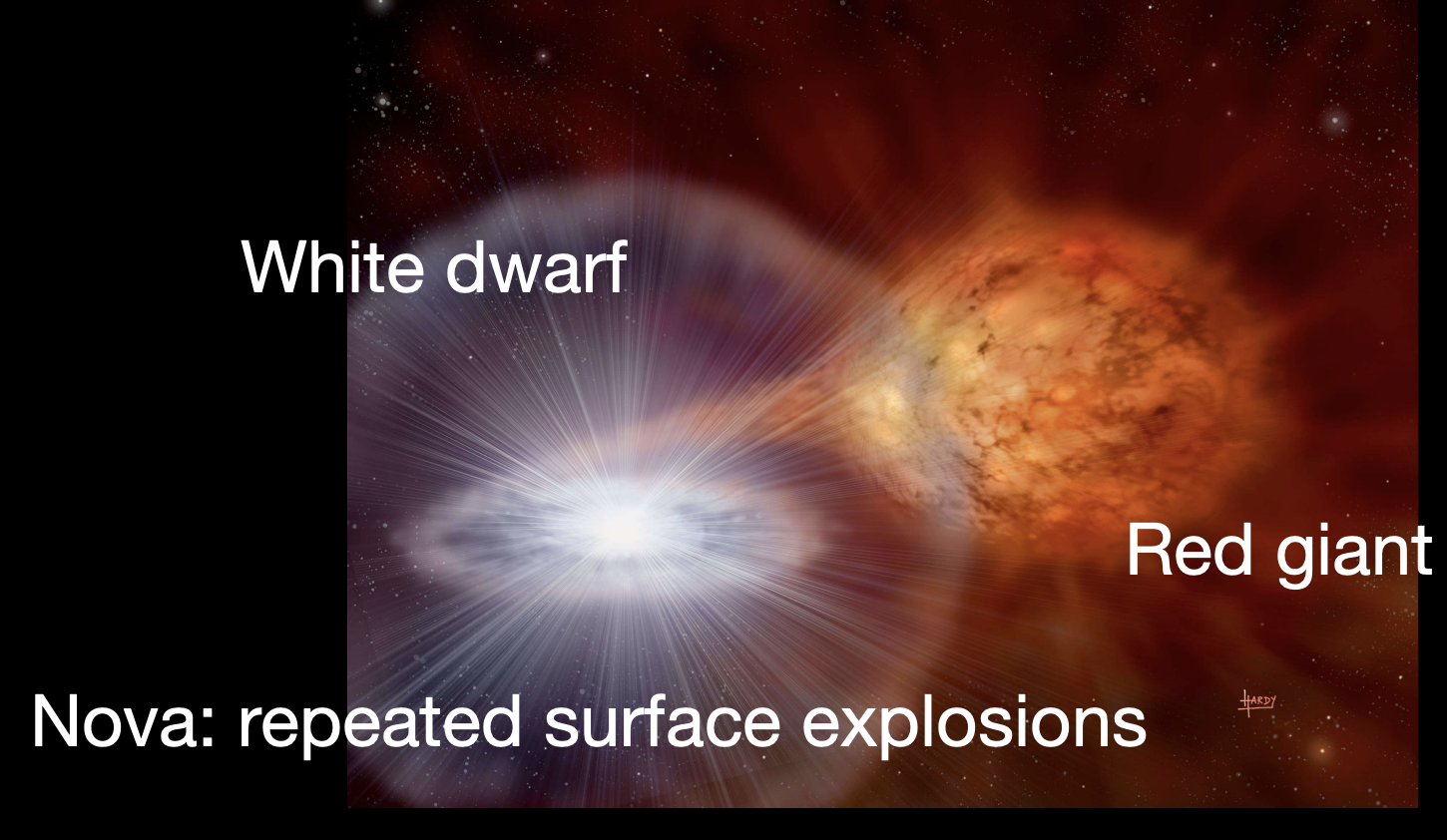
Also: Nova’s are repeated surface explosions on white dwarfs from hydrogen burning when steadily pulling in material
Solar systems and stars
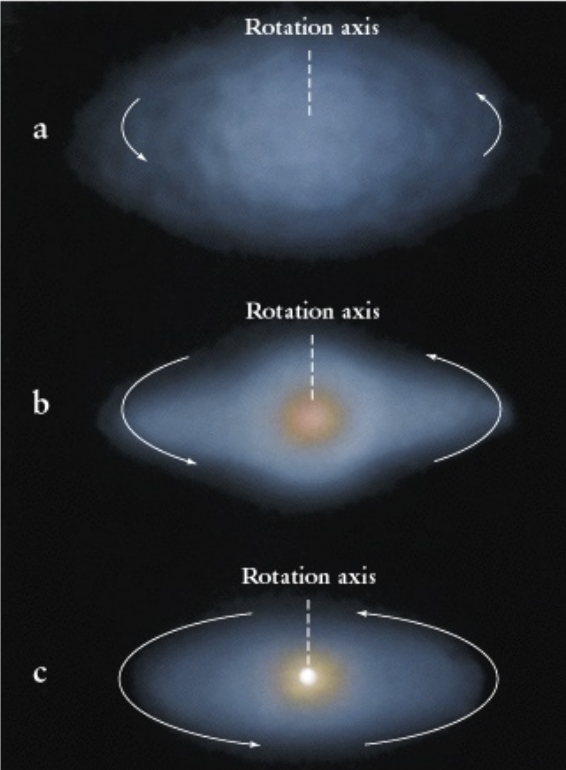
Born from the collapse of gas clouds
Due to conservation of angular momentum they collapse (shrink in size) and start spinning faster
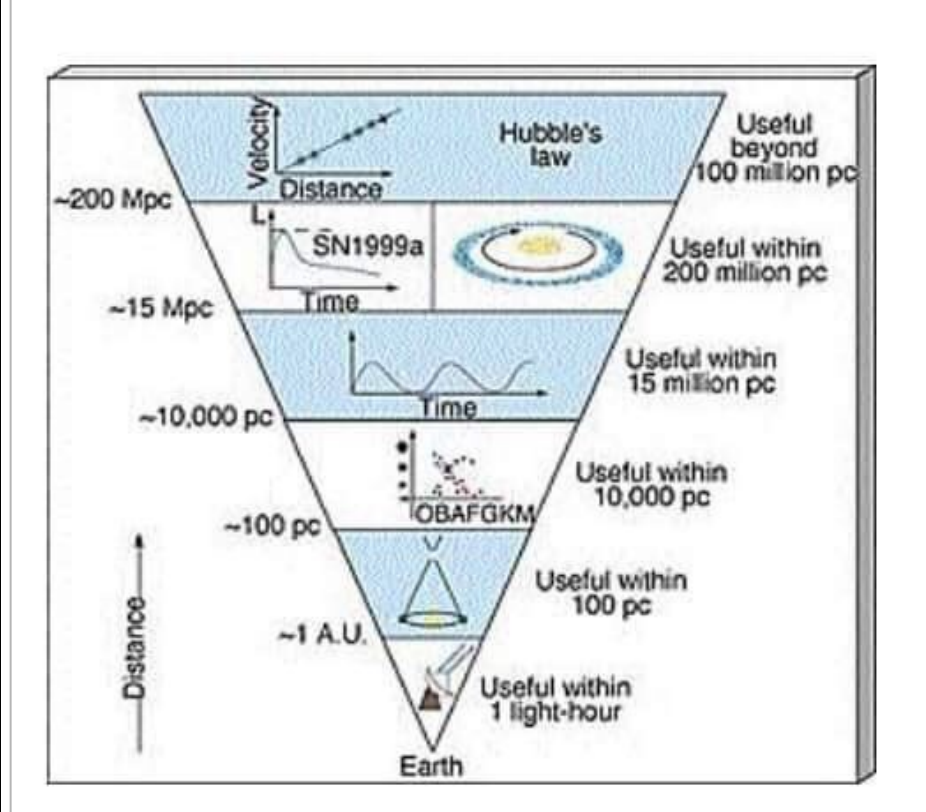
The cosmic distance ladder
Astronomers use different methods to calculate distances to different objects- we do not have a single uniform method to get distances to ALL astronomical objects
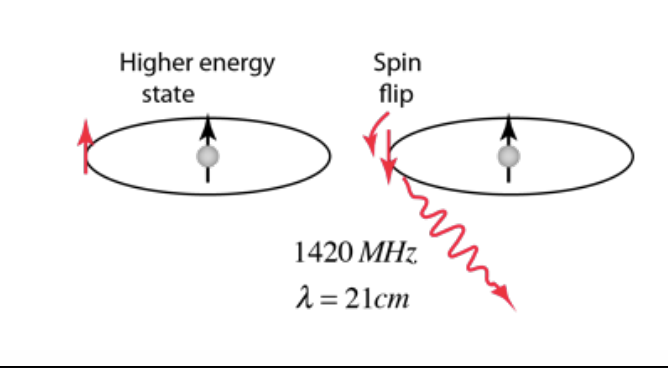
How do we know what our galaxy looks like from the outside?
21cm lines= neutral atomic hydrogen cloud mapping
3 main components
Bulge, Disk, Halo
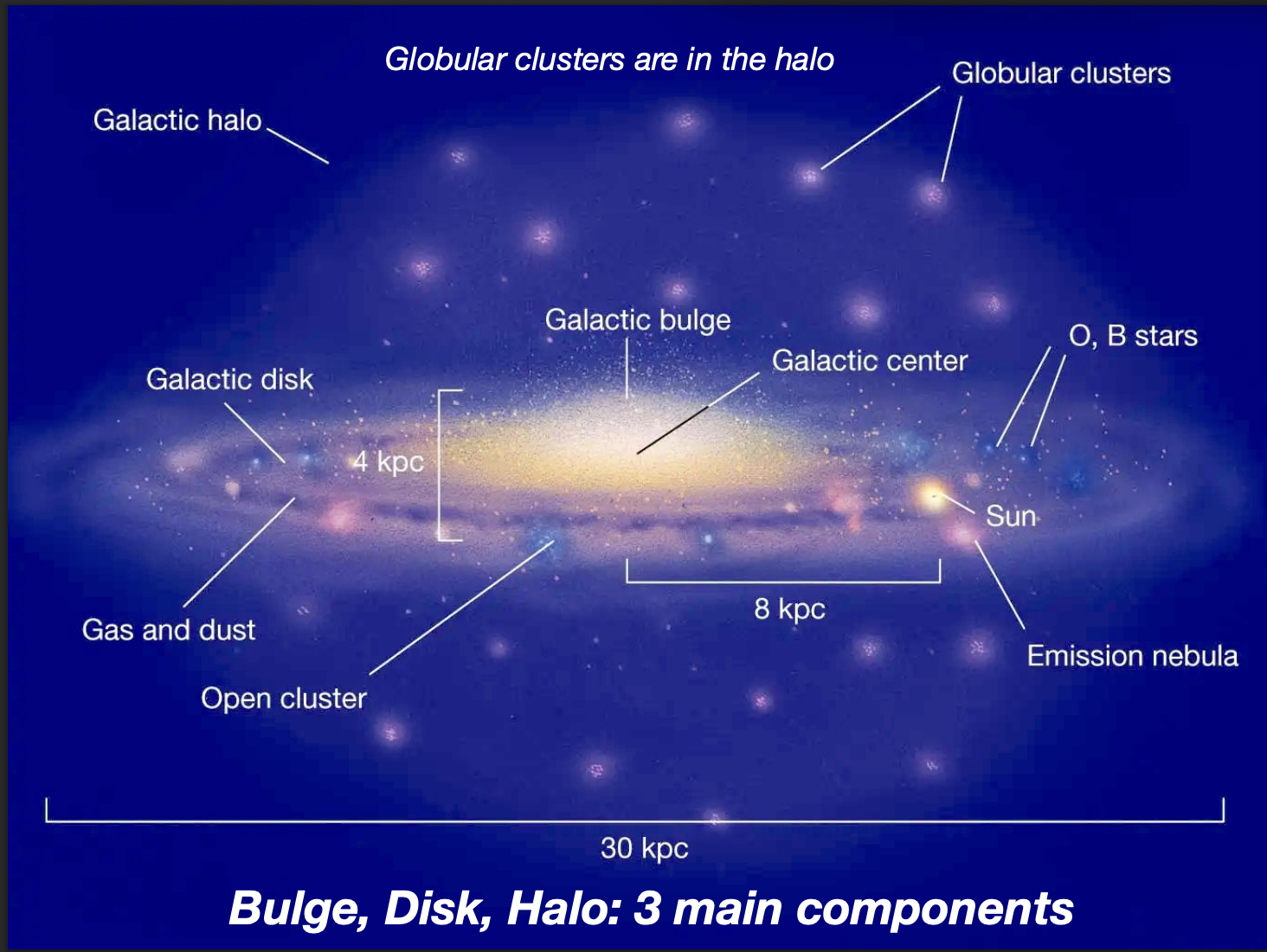
Halo
Contains globular clusters
Have random more circular 3-D motions
Old Stars
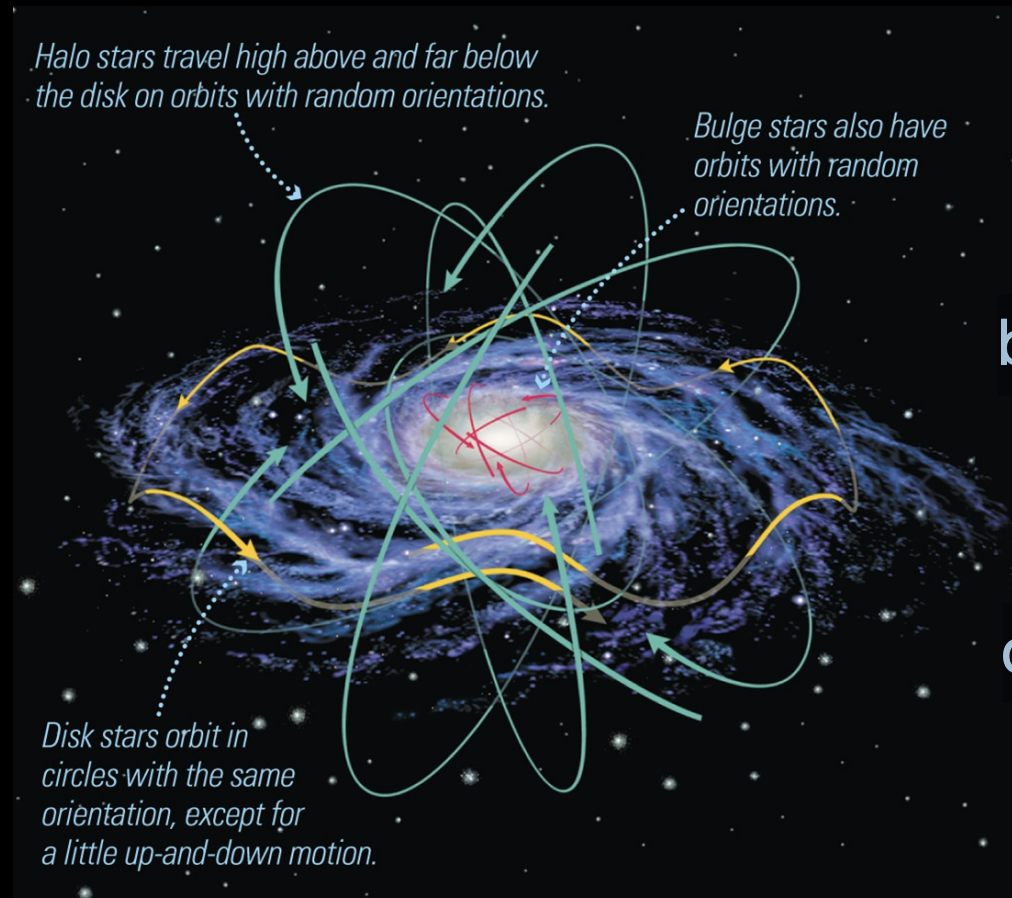
Disk (flat part)
Younger stars, gas, and dust
Stars in the disk all orbit in the same direction (Rotate flat like a pancake)
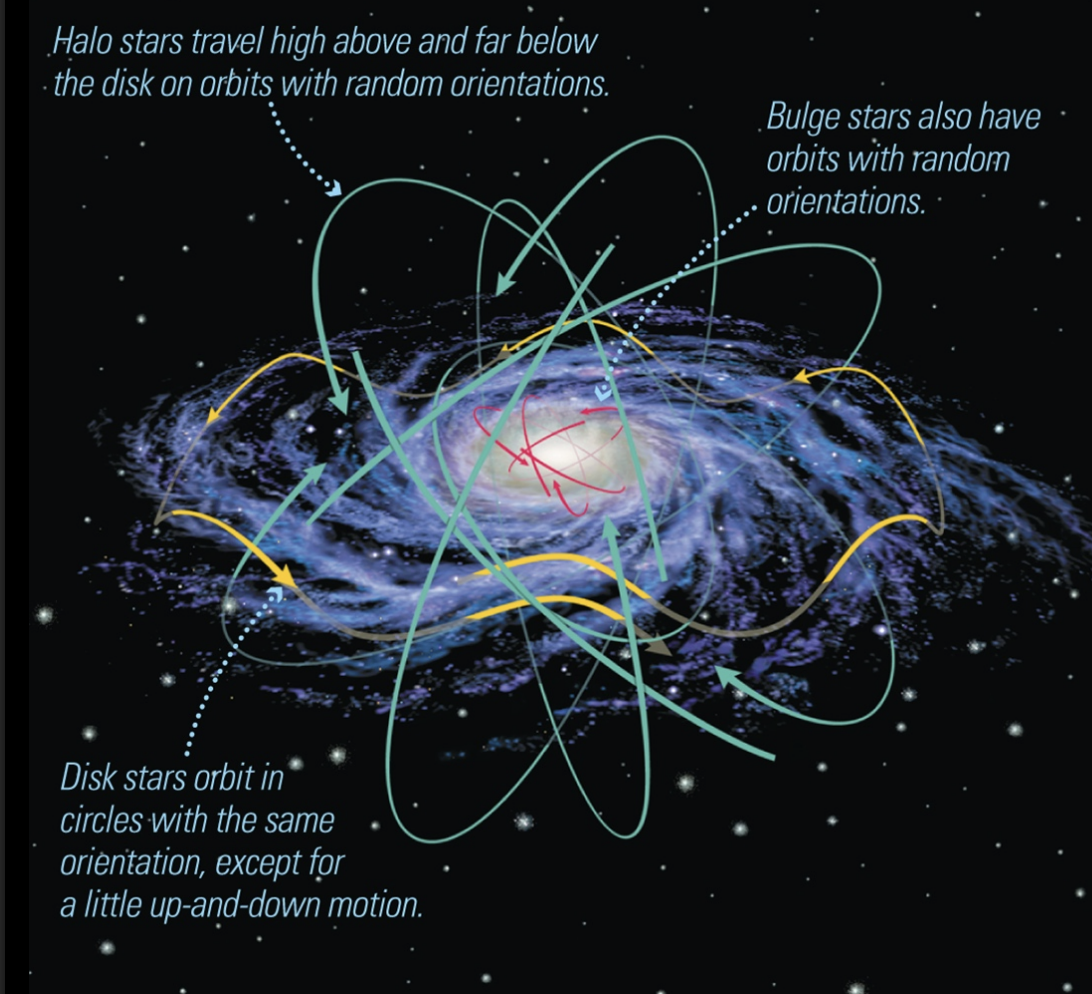
Bulge (center of the galaxy)
A dense, spherical (3D) region at the galaxy’s core
Contains old stars
Stars move in random directions
Often includes globular clusters (tight groups of old stars)
Summary of Galactic Recycling (star-gas cycle)
1. Stars make new elements by fusion.
2. Dying stars expel gas and new elements, producing hot bubbles (~106K)
3. Hot gas cools, allowing atomic hydrogen clouds (HI regions) to form (~100–10,000 Kelvin).
4. Further cooling permits molecules to form, making molecular clouds (~30 Kelvin).
5. Gravity forms new stars (and planets) in molecular clouds.
Stars form from COLD DENSE gas, as the cycle continues gas cools
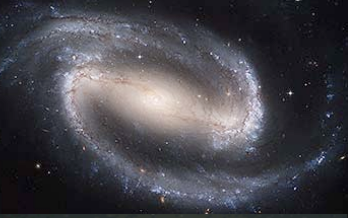
Spirals
Have disks, spiral arms, and ongoing star formation
Flattened with a central bulge and arms, and gas; they are bluer
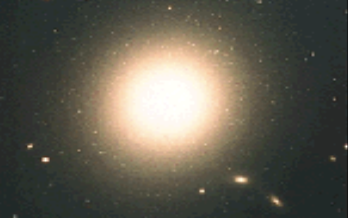
Ellipticals
Smooth, featureless, and contain older stars
Have 3-D shapes and little gas or star formation; they are red
Irregulars
Lack a defined shape
Chaotic and asymmetric, with lots of gas and new stars forming; they are blue
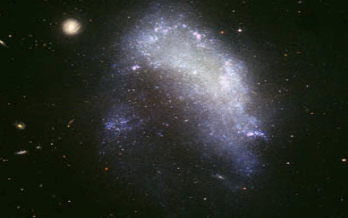
Why does a blue looking galaxy indicate active/recent ongoing star formation?
Hot blue stars tell us a galaxy is actively undergoing star formation because these hot blue stars are MASSIVE i.e. they are short-lived
Galaxies with active star formation appear blue due to young, hot stars.
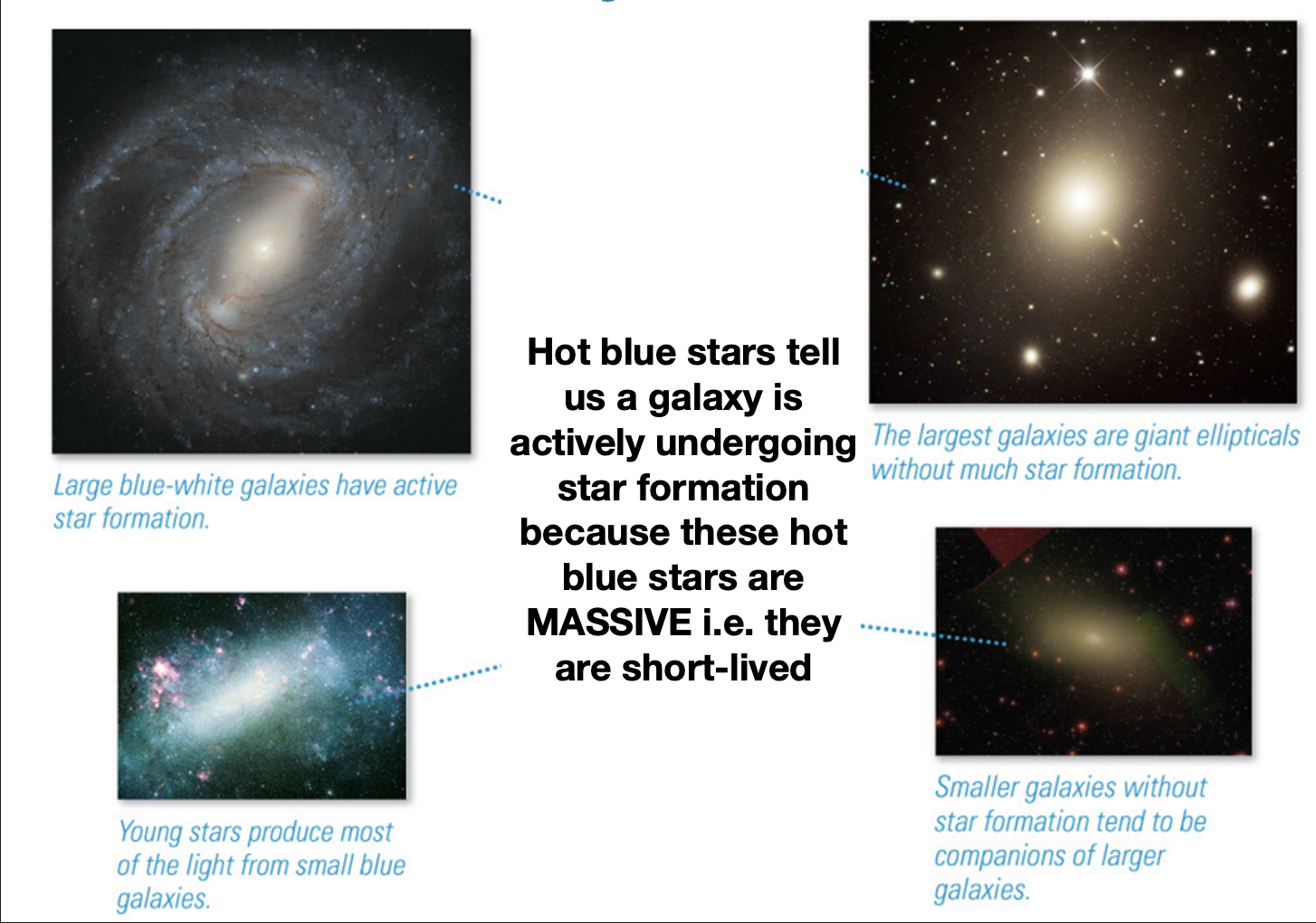
Galaxy Groupings
• Spiral galaxies are often found in groups of galaxies (up to a few dozen galaxies): Suburbs
• Elliptical galaxies are much more common in huge clusters of galaxies (hundreds to thousands of galaxies): Big Cities
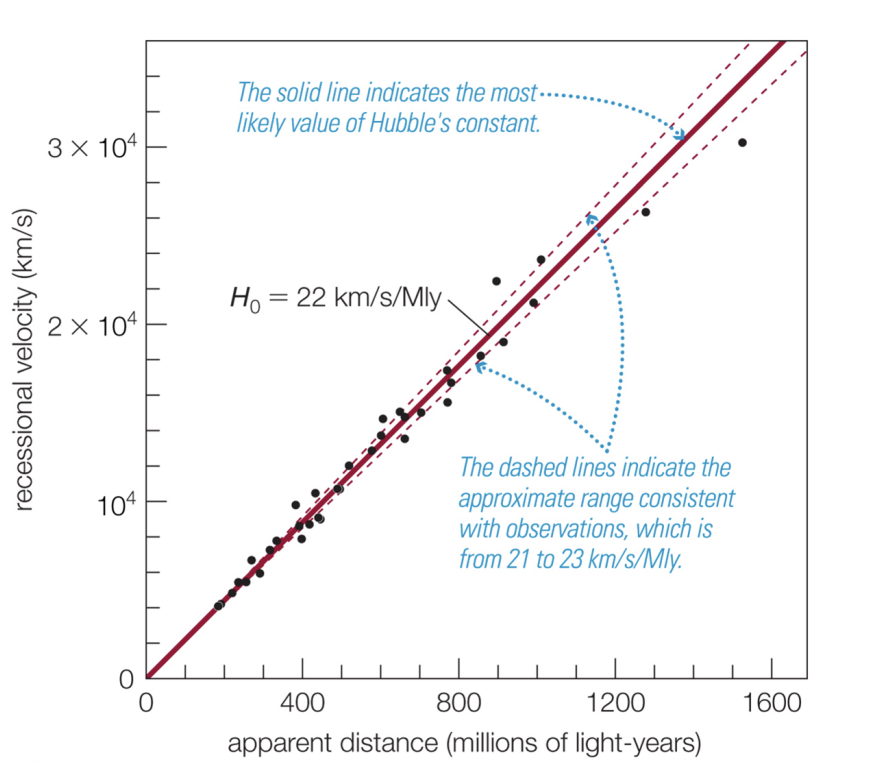
What Is Hubble's Law?
0 Velocity Distance H = • Hubble’s law tells us that the further a galaxy is from us, the faster it is moving away from us.
• Since the Milky Way doesn’t occupy a special place, the conclusion is the universe is expanding!
• Hubble's law: Velocity = H0 × Distance
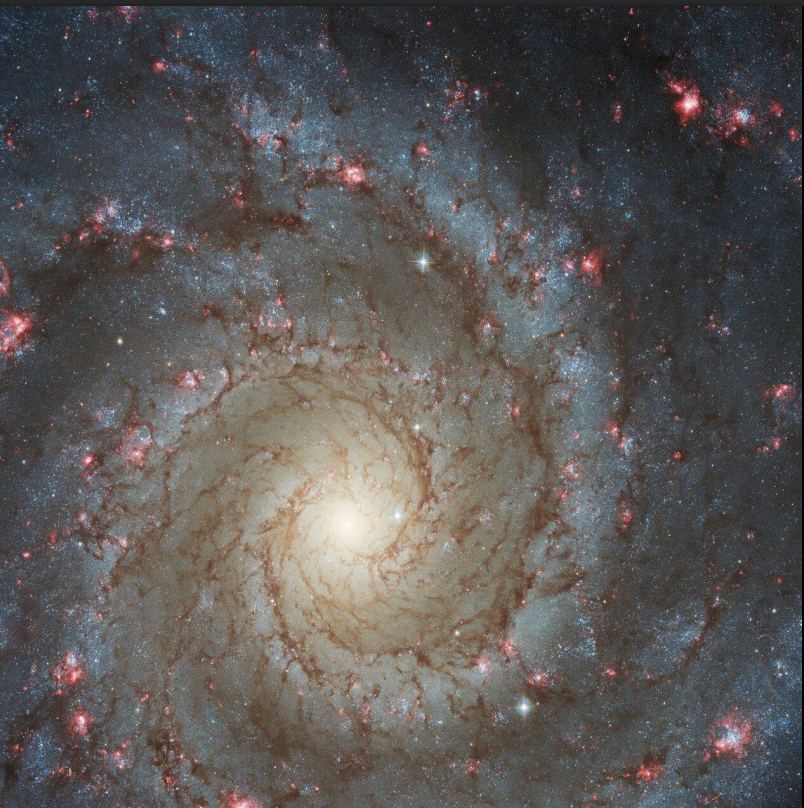
HII regions (ionization regions)
When pink from massive stars emitting high energy photons and ionizing neutral hydrogen in its surroundings
Indicates recent star formation
The blue light is coming from the massive stars themselves, the pink light is coming from what the massive stars DO to their surroundings!
Major mergers
Occurs between galaxies of similar size.
Ex: Two large spirals come together to form elliptical
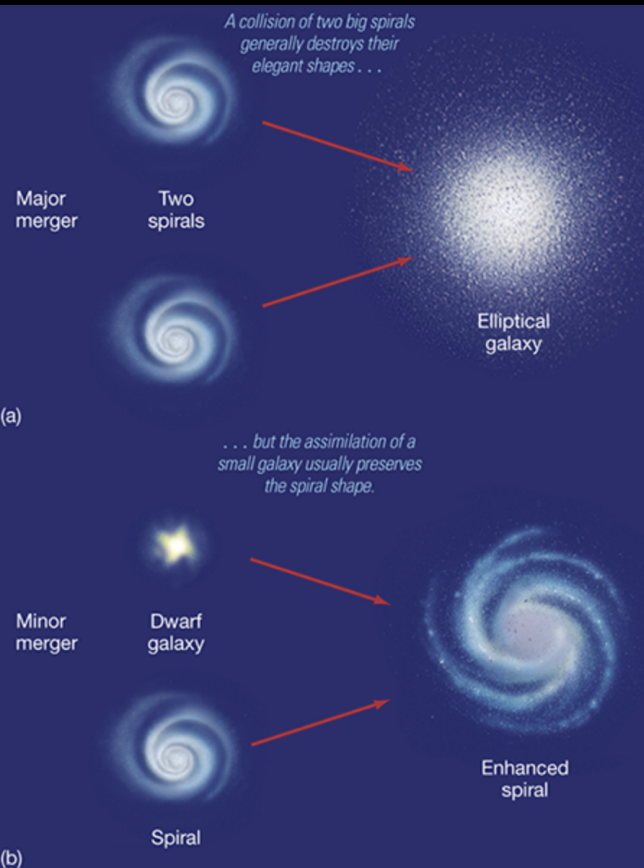
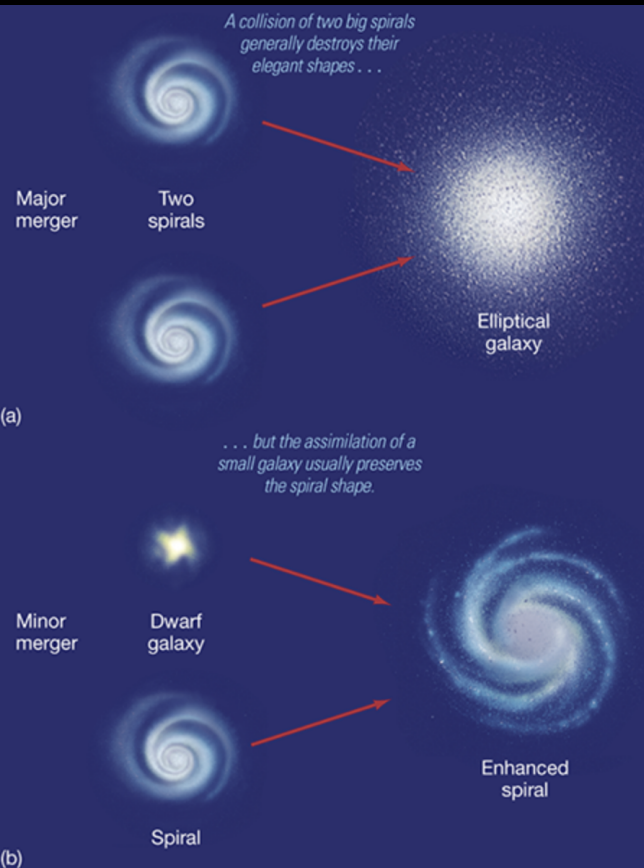
Minor mergers
Involves a large galaxy and a much smaller one merging to make one large spiral (these probably happened early on very frequently)
Ex: what's happening between the Milky Way and the SMC
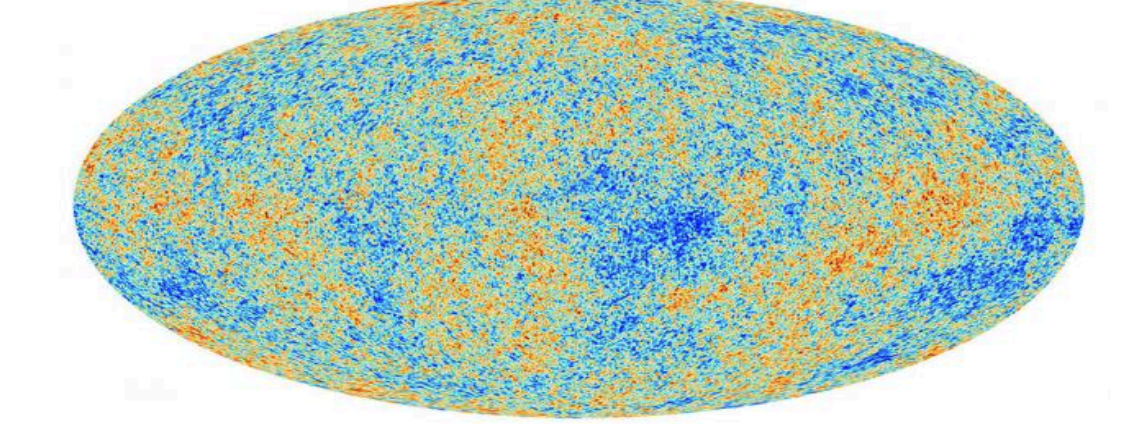
Our Universe’s baby picture (400,000 years old)
temperature variations: 1 part in 10^5 and shows large-scale structure
2.7249 K to 2.7251 K Same temp across CMB with precision range out to 5 decimal points!!!!
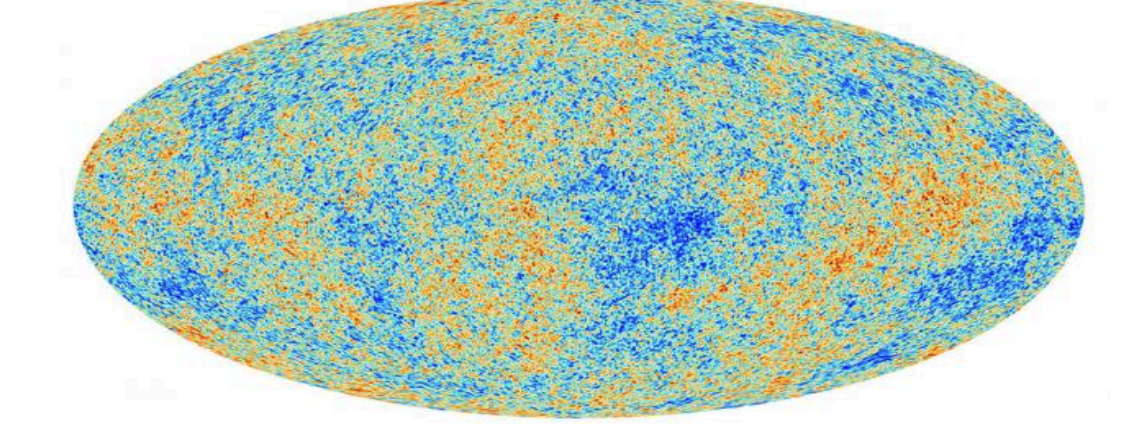
What is the Cosmic Microwave Background (CMB)
Photons from the early Universe (about 400,000 years old)
universal background radiation
remnant from when universe was hot/dense
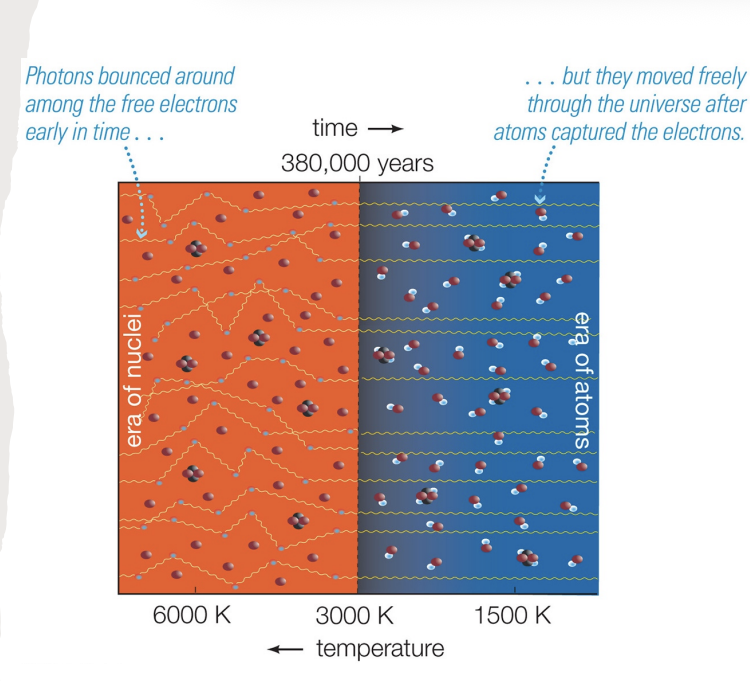
Originally, when the Universe was hot and dense, photons and particles were “coupled” → photon energies kept breaking bonds of atoms that tried to form
During this time, photons were not traveling out into the universe since they were constantly interacting with matter, so we can’t see what the universe looked like at this time
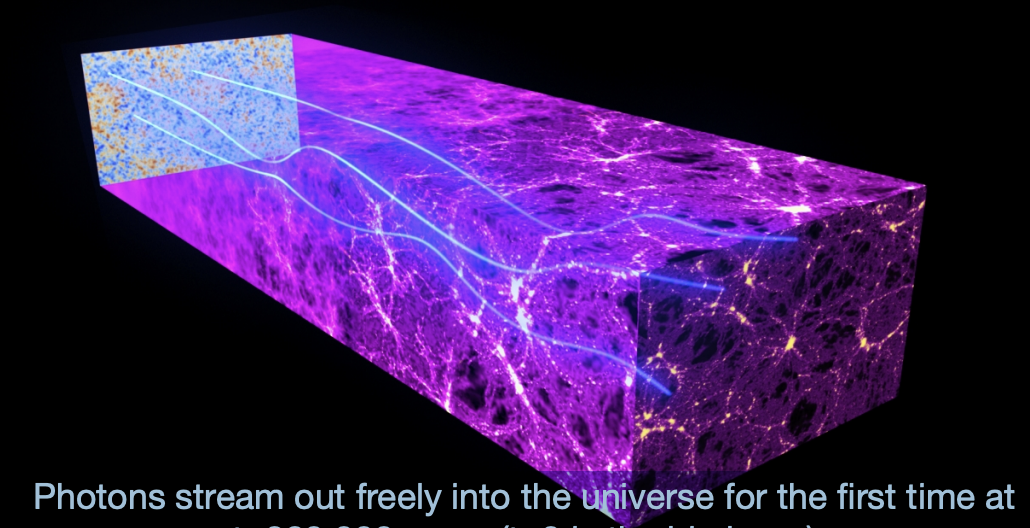
Universe was so dense that photons would just bounce around from particle to particle without moving ‘freely’ anywhere
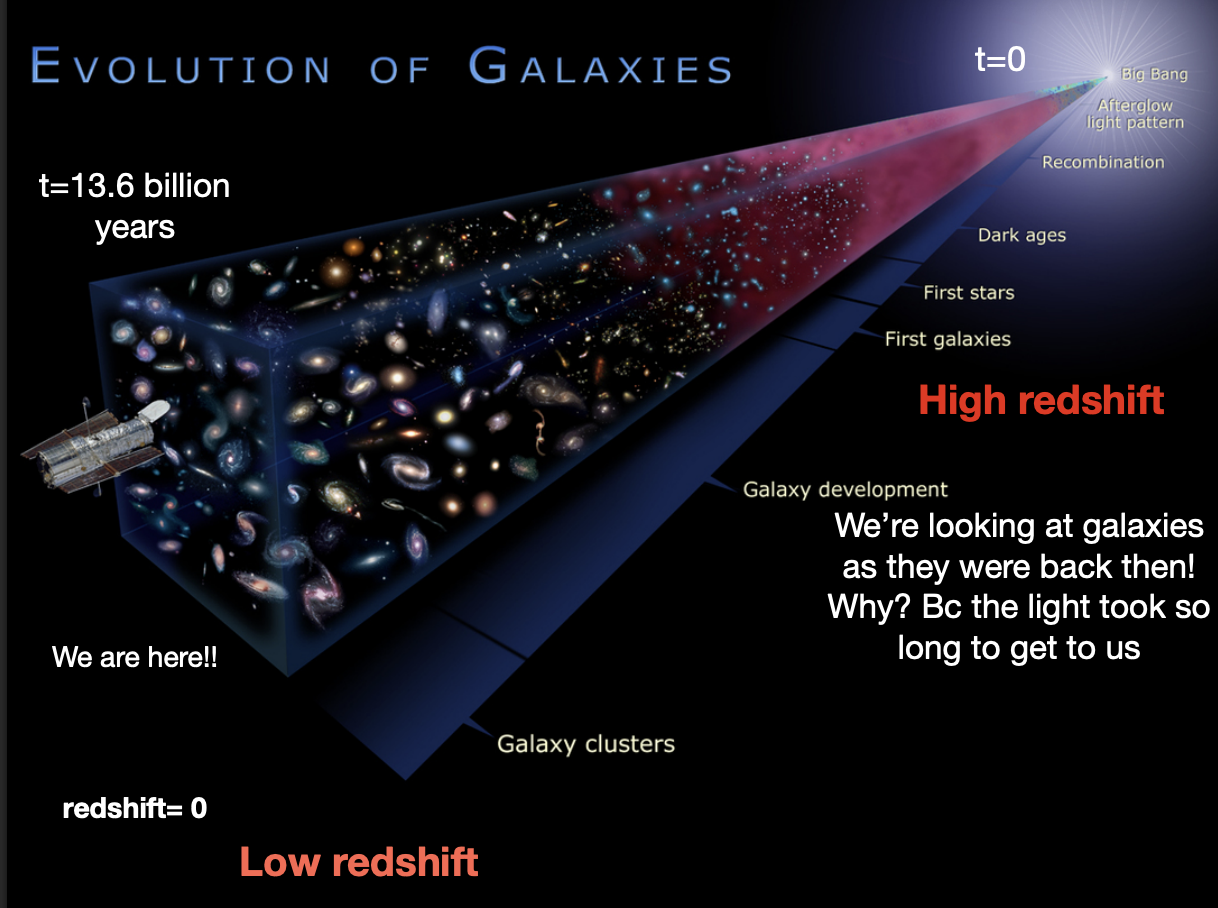
Photons stream out freely into the universe for the first time at t=380,000 years (t=0 is the big bang)
Cosmic Microwave Background
• Background radiation from the Big Bang has been freely streaming across the universe since atoms formed at temperature ~3000 K: visible/IR.
• Cosmological redshift has stretched the visible light into microwaves today.
Contents of Universe
"Ordinary" matter: ~5%
• Ordinary matter inside stars and galaxies: ~0.5%
• Ordinary matter outside stars and galaxies (intergalactic gas): ~4.5%
Dark matter: ~27%
Dark energy: ~ 68%
• We don’t observe 95% of the mass-energy of the universe!
Dark matter
A form of mass that does not interact with light (electromagnetic waves), but whose existence we infer from its gravitational influence on normal matter (stars and galaxies)
matter that does not emit light but exerts gravitational effects
Dark energy
A form of energy that seems to be the source of a negative pressure causing the expansion of the universe to accelerate (pulling the universe apart)
responsible for the accelerated expansion of the universe
Evidence for Dark Matter
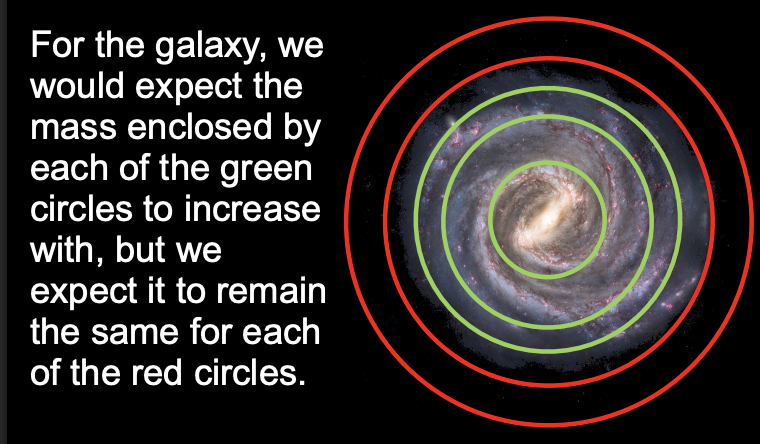
Galaxy rotation curves remain flat at large radii, indicating unseen mass.
• The rotation curve increases at first since more mass (stars) are enclosed at a greater distance.
• But that doesn’t explain why it stays flat beyond the majority of stars!
• Mass in the Milky Way must then be spread out over a larger region than its stars.
• Most of the Milky Way's mass seems to be dark matter extending out into the halo!
For the galaxy, we would expect the mass enclosed by each of the green circles to increase with, but we expect it to remain the same for each of the red circles
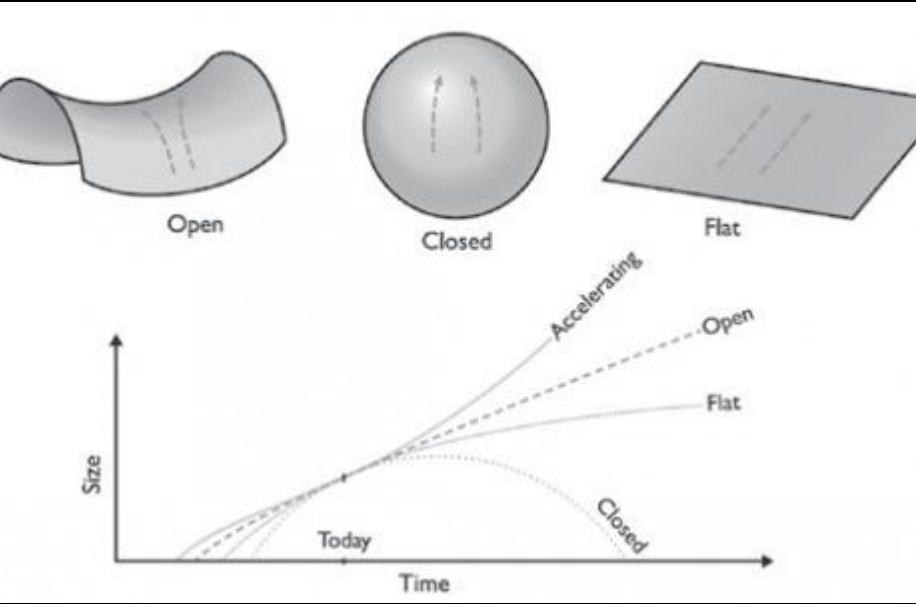
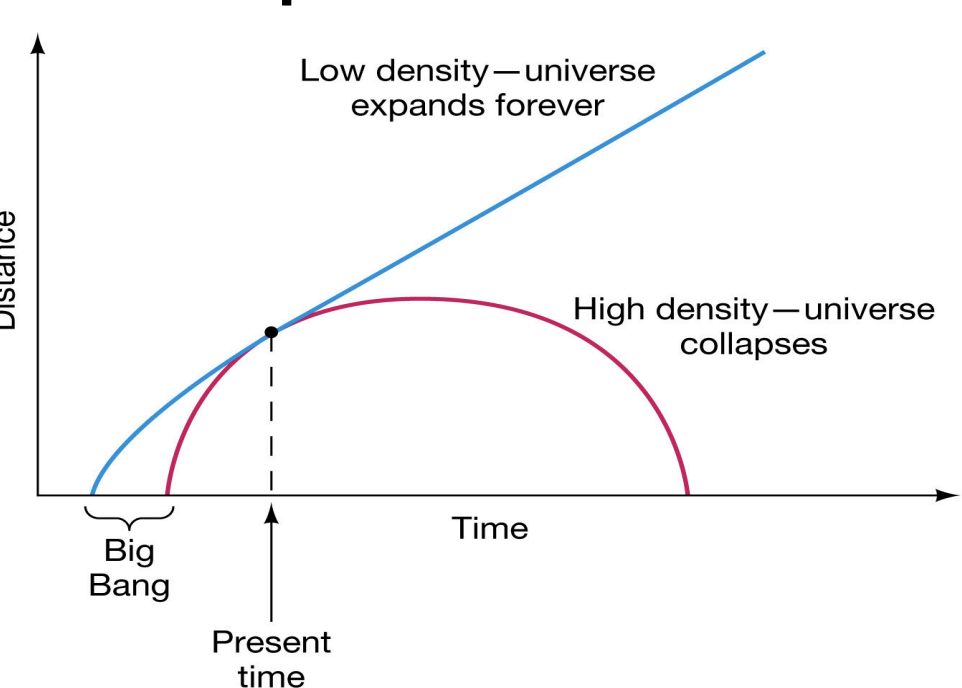
High density universe
(with enough matter) means that expansion will slow and reverse
If density is greater than critical, the universe may collapse
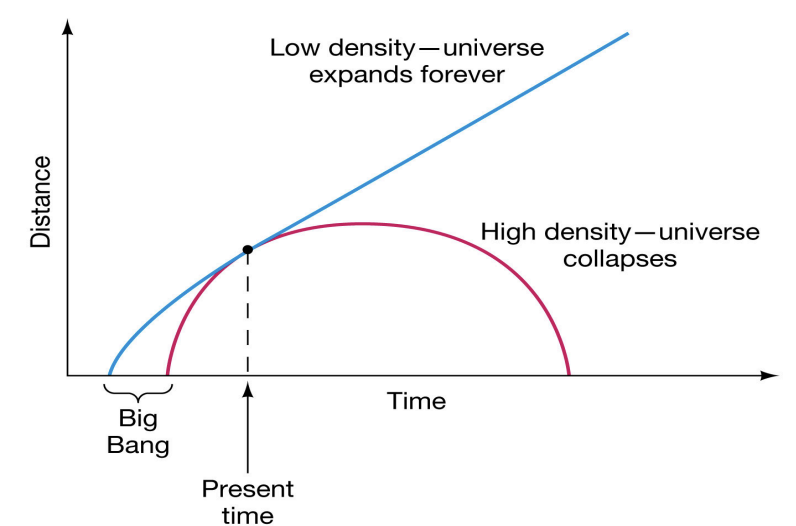
Low density universe
(not enough matter) means that expansion will continue
If less than critical, it expands forever.
Flat
Density= Critical Density
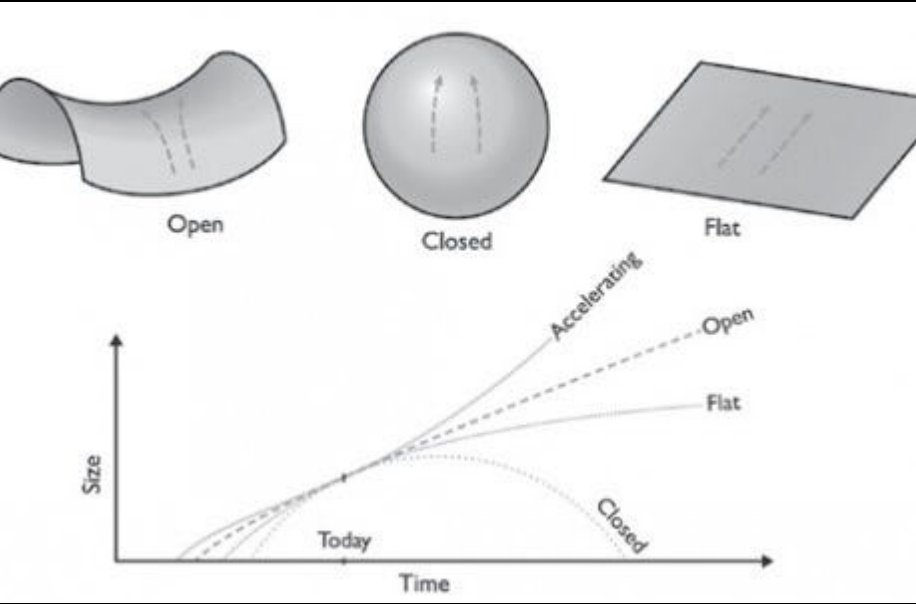
Open
Density is less than Critical Density
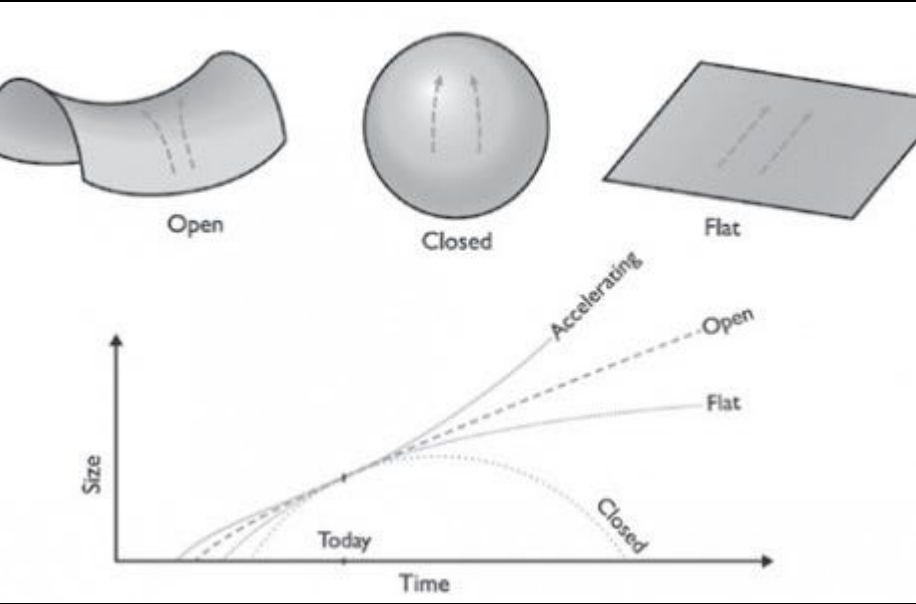
Closed
Density is greater than Critical Density