Voice
 Call Kai
 Learn
Learn Practice Test
 Spaced Repetition
 Match
Match Flashcards
 Knowt Play
1/39

Earn XP
Description and Tags
Name | Mastery | Learn | Test | Matching | Spaced | Call with Kai |
|---|
No analytics yet
Send a link to your students to track their progress
40 Terms
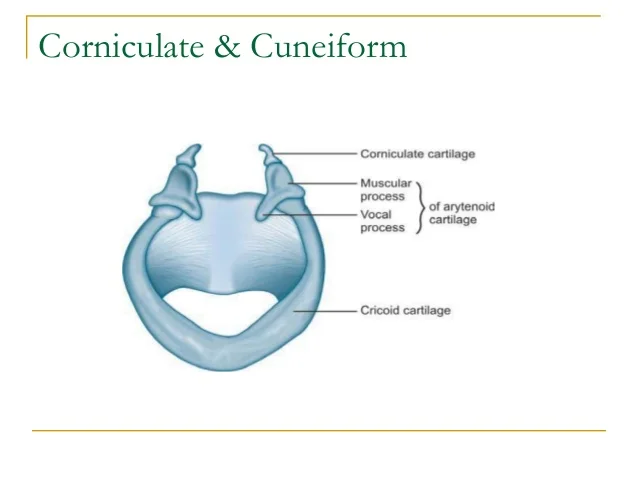
corniculate cartilages
small cartilages on top of arytenoids
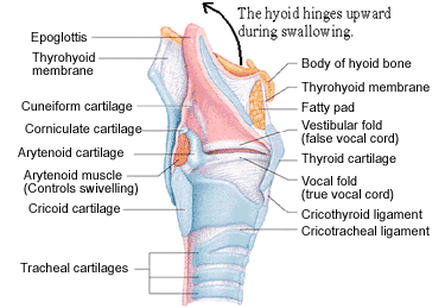
cuneiform cartilages
located within the aryepiglottic folds
healthy vocal folds are...
straight
pearly white
move symmetrically
obtain complete closure during phonation
intact mucosal wave during phonation
voice disorder
a voice disorder is characterized by the abnormal production and/or absence of vocal quality, pitch, loudness, resonance, and/or duration, which is appropriate for an individual’s age and/or sex (ASHA definition)
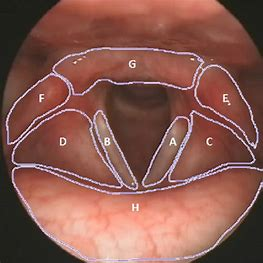
true vocal folds
vibrate and are straight, pearly white, moist (A, B)
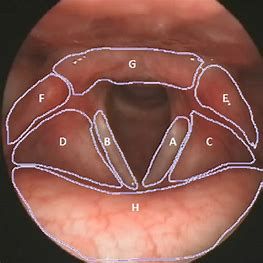
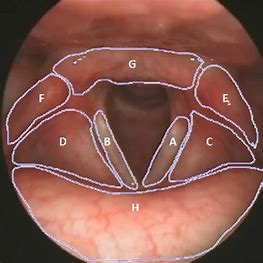
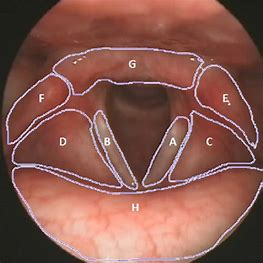
false vocal folds
don’t vibrate and are not white, help support phonation (C, D)
mucosal wave
pattern that cover of vocal folds goes through
Body-Cover Model (Hirano, 1974)
cover = portion of vocal folds that vibrate, outermost layers of vocal folds
body = muscular portion of vocal folds, deeper layers of vocal folds, bulk of vocal folds
functional voice disorder
inefficient use of an intact vocal mechanism, can cause an organic voice disorder
organic voice disorder
anatomic/physiologic basis
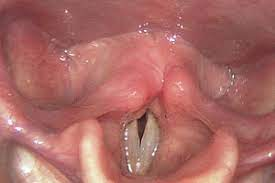
muscle tension dysphonia (MTD)
functional voice disorder
excessive muscle tension
mutational falsetto (puberphonia)
functional voice disorder
high-pitched voice in males after puberty
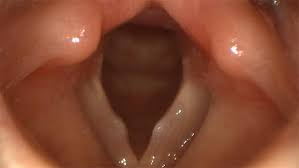
vocal fold nodules
organic, structural
bilateral callous-like bumps
form over time
vocal fold polyp
organic, structural
unilateral fluid-filled bump, like a blister
can form in one moment of voice use
voice isn’t clear, it’s breathy and there’s too much airflow
higher pitches are more difficult to produce
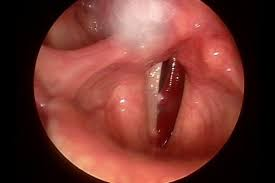
vocal fold hemorrhage
organic, structural
bruise, broken blood vessels
can form in one moment of voice use
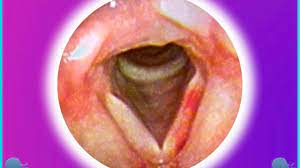
vocal fold cyst
organic, structural
fluid-filled sac within the vocal folds
could be congenital or develop over time
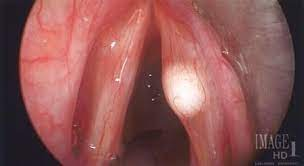
structural voice disorder
physical changes in the vocal mechanism, organic
granuloma
organic, structural
inflammatory mass that forms following irritation or trauma
intubation, laryngopharyngeal reflux (LPR)
form on posterior third of the vocal folds (near arytenoid cartilages)
causes person to not be able to build up the needed subglottal air pressure
difficulty with swallowing and aspiration
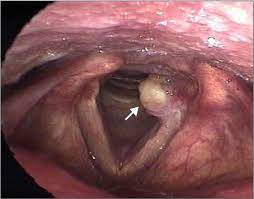
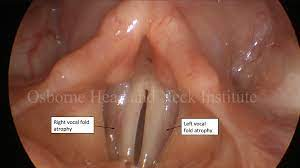
vocal fold atrophy
organic, structural
thinning and bowing of the vocal folds
often age-related
posterior gap causes a spindle vibrating pattern
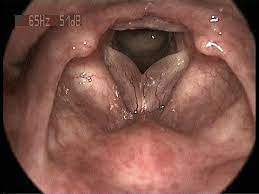
Reinke’s edema
swelling of the vocal folds
“Smoker’s voice”
related to smoking
requires surgical intervention (drain the fluid)
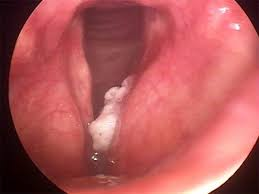
laryngeal cancer
organic, structural
cancerous tissue that develops in the larynx
often requires both radiation and surgical intervention
not diagnosed by SLP’s, if you see something off you need to let them know that they need to get evaluated
a lot of time people with laryngeal cancer will end up with an electro larynx
neurological voice disorder
change in CNS or PNS that affect innervation of vocal mechanism, organic
essential tremor
involuntary movement of the larynx during all phonation
usually part of a disease process
ex. Parkinson’s, Huntington’s
vocal fold paralysis
no movement
often results after surgery or stroke
unilateral paralysis is more of a concern for voice
bilateral paralysis is more of a concern for breathing
from nerve damage, usually cranial nerves
sometimes comes back, sometimes doesn’t
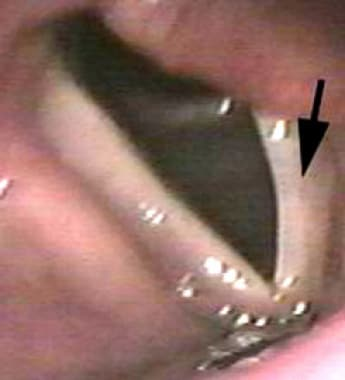
vocal fold paresis
organic, neurological
weakness, sluggish moving vocal folds
can occur after a viral infection (post-viral vagal neuropathy)
vagal nerve damage after virus
vagal innervates pharynx, vocal folds, larynx
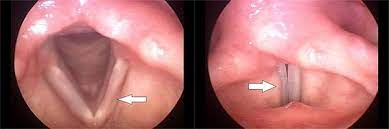
adductor spasmodic dysphonia
vocal folds spasm closed during phonation
can sustain a vowel and sing
main treatment is Botox injections to weaken the muscles in spasm
can’t breathe for a moment, can’t talk
can be due to exercise intolerance
abductor spasmodic dysphonia
vocal folds spasm open during phonation
can sustain a vowel and sing
main treatment is Botox injections to weaken the muscles in spasm
aphonic, but can breathe
can be due to exercise intolerance
psychogenic voice disorders
rare, result of psychological stress
no structural or neurological pathology
loss of volitional control of phonation as a psychological basis (anxiety, depression, conversion disorder, personality disorder)
shoulders are held up too high because of anxiety (etc.), muscles around larynx tighten and larynx is raised up too high
conversion disorder
loss of one or more bodily functions after stressful/traumatic event (blindness, inability to speak, numbness, paralysis)
person thinks they have something wrong with them, nothing points to why, it’s because of a traumatic/psychological event
dysphonia
dys = bad, difficult
phonia = sound
hyperfunction
strain
too much muscle (pressure), not enough airflow
ex. muscle tension dysphonia
hypofunction
breathy
not enough muscle (pressure), too much airflow
ex. vocal fold lesion, paralysis, paresis, etc.
vocal quality
how the voice sounds, often discussed using perceptual terms
breathy
vocal folds do not close completely during phonation, glottal insufficiency
harsh or rough
irregular or inconsistent vibration of vocal folds
hoarse
combination of breathy and harsh, commonly used umbrella term to qualify a disordered, dysphonic voice
videostroboscopy
uses a light attached to an endoscopic camera that allows you to visualize the vocal folds during phonation
rigid videostroboscopy goes through mouth
flexible videostroboscopy goes through nose
stimulability
someone’s ability to respond to cues you give them
integrated implicit-explicit approach to voice therapy
implicit = auditory component; use of facilitators
facilitator example would be having client say “uh-oh” to get the closure they need, then follow up with a word, ex. “uh-oh dog,” slowly work up to conversation
explicit = instruction in the anatomy and physiology of vocal mechanisms; teach them how things work
integration = use both together to best facilitate learning
hierarchy (for voice therapy)
facilitator
words
phrases
sentences
reading
spontaneous conversation