1020 cellular biology + some embryology
 Call Kai
 Learn
Learn Practice Test
 Spaced Repetition
 Match
Match Flashcards
 Knowt Play
1/89

There's no tags or description
Looks like no tags are added yet.
Name | Mastery | Learn | Test | Matching | Spaced | Call with Kai |
|---|
No analytics yet
Send a link to your students to track their progress
90 Terms
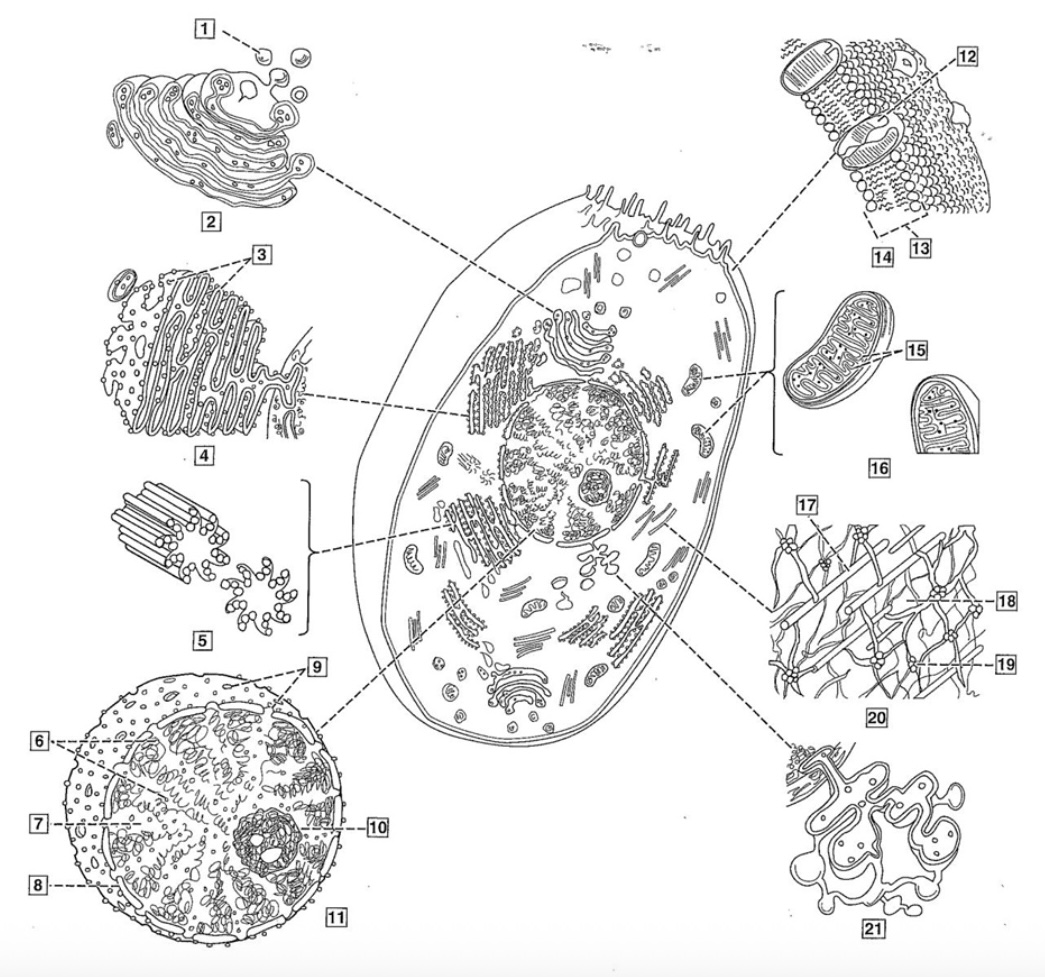
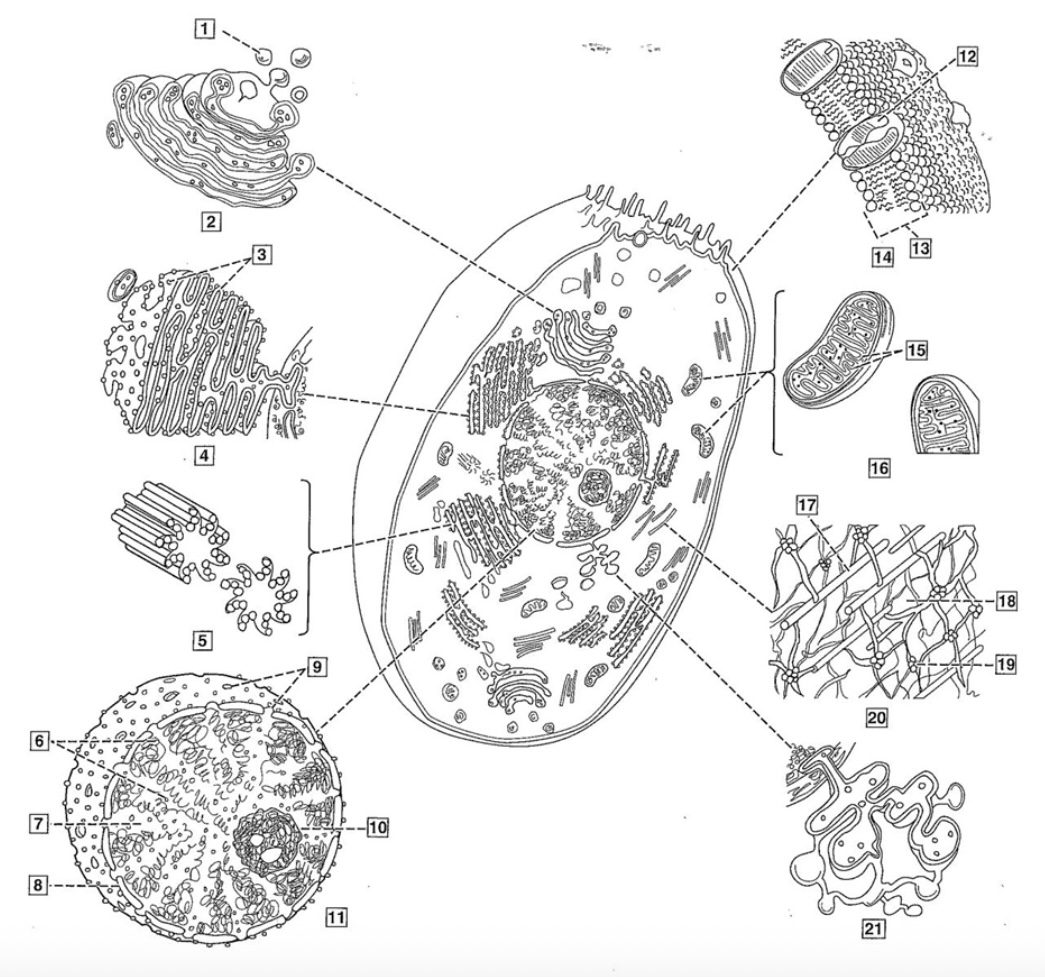
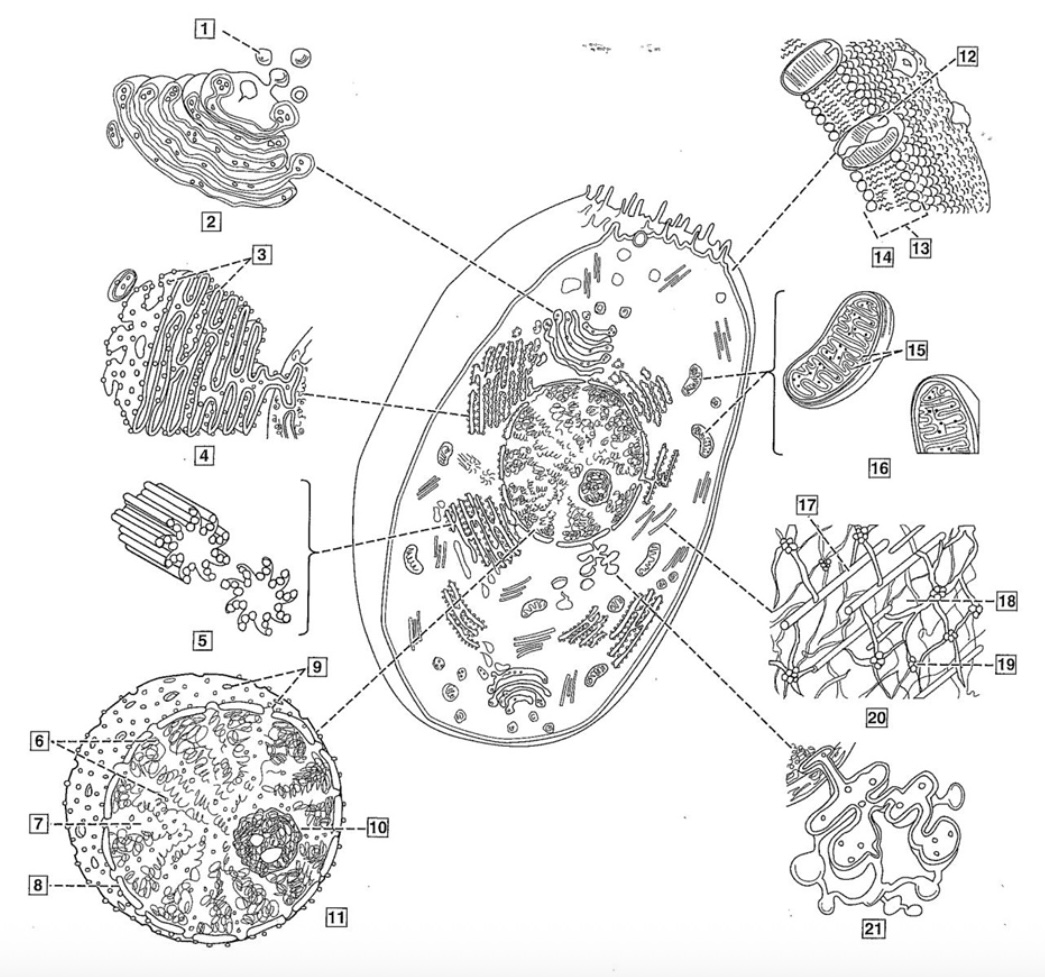
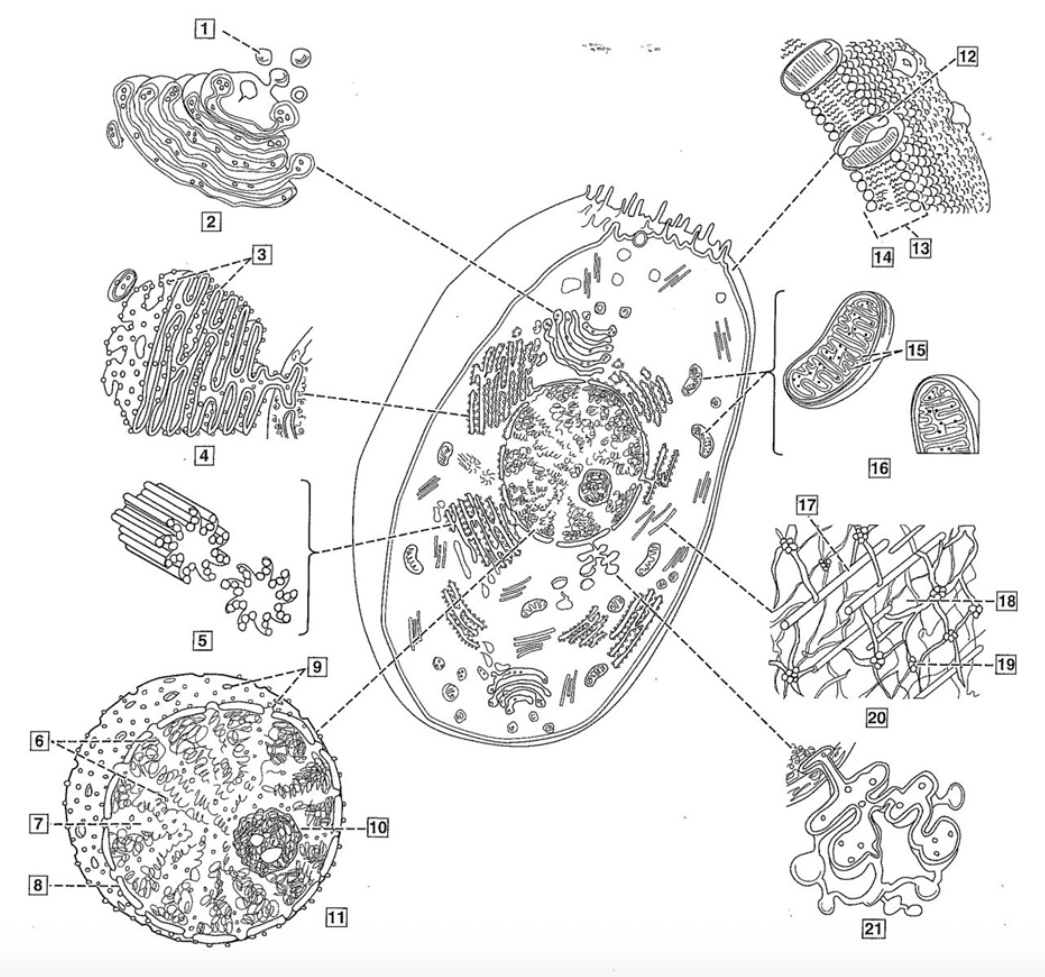
what are 1 and 2
lysosome and golgi complex
what are 3 and 4
ribosomes and rough endoplasmic reticulum
what’s 5
centrioles of centrosome
what are 6, 7, 8
chromatin, nucleoplasm, nuclear envelope
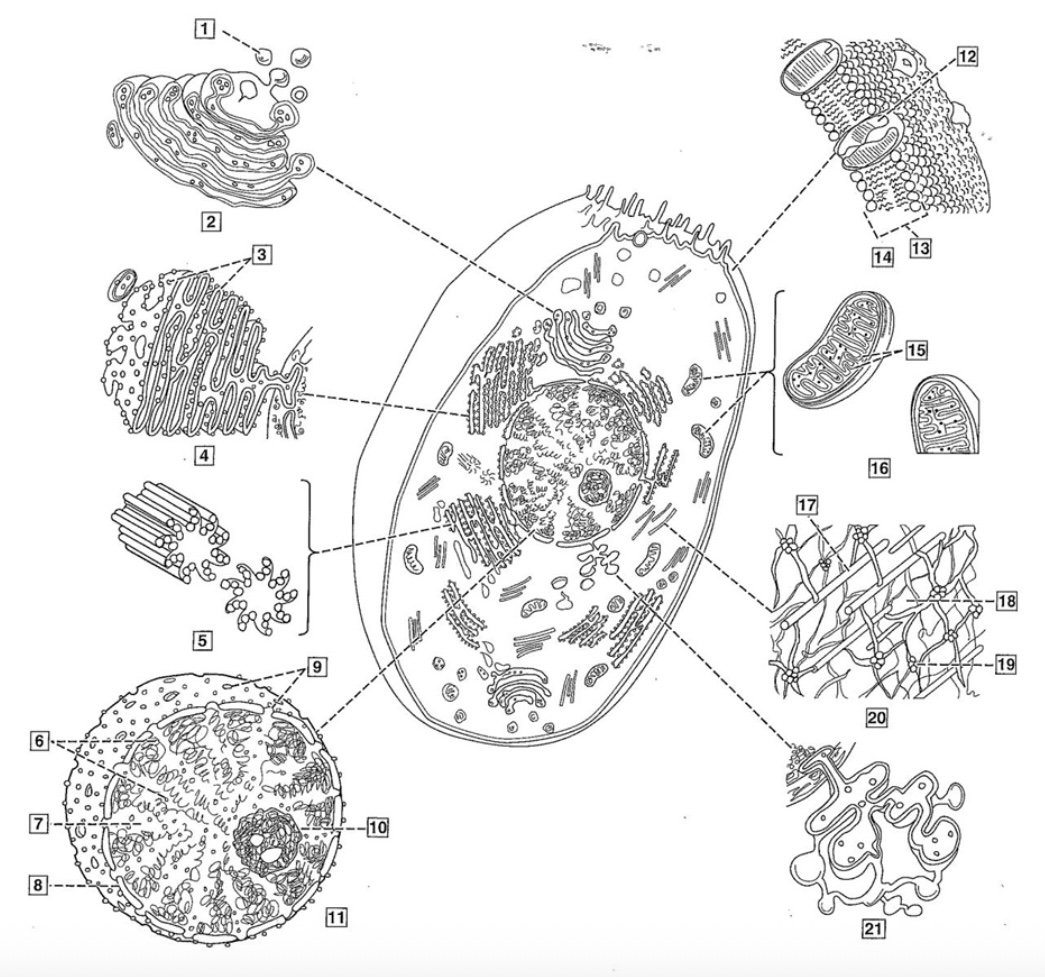
what are 9, 10, 11
nuclear pore, nucleolus, nucleus
what are 12 and 21
protein and smooth endoplasmic reticulum
what are 13 and 14
phospholipid bilayer and cell membrane
what are 15 and 16
cristae and mitochondria
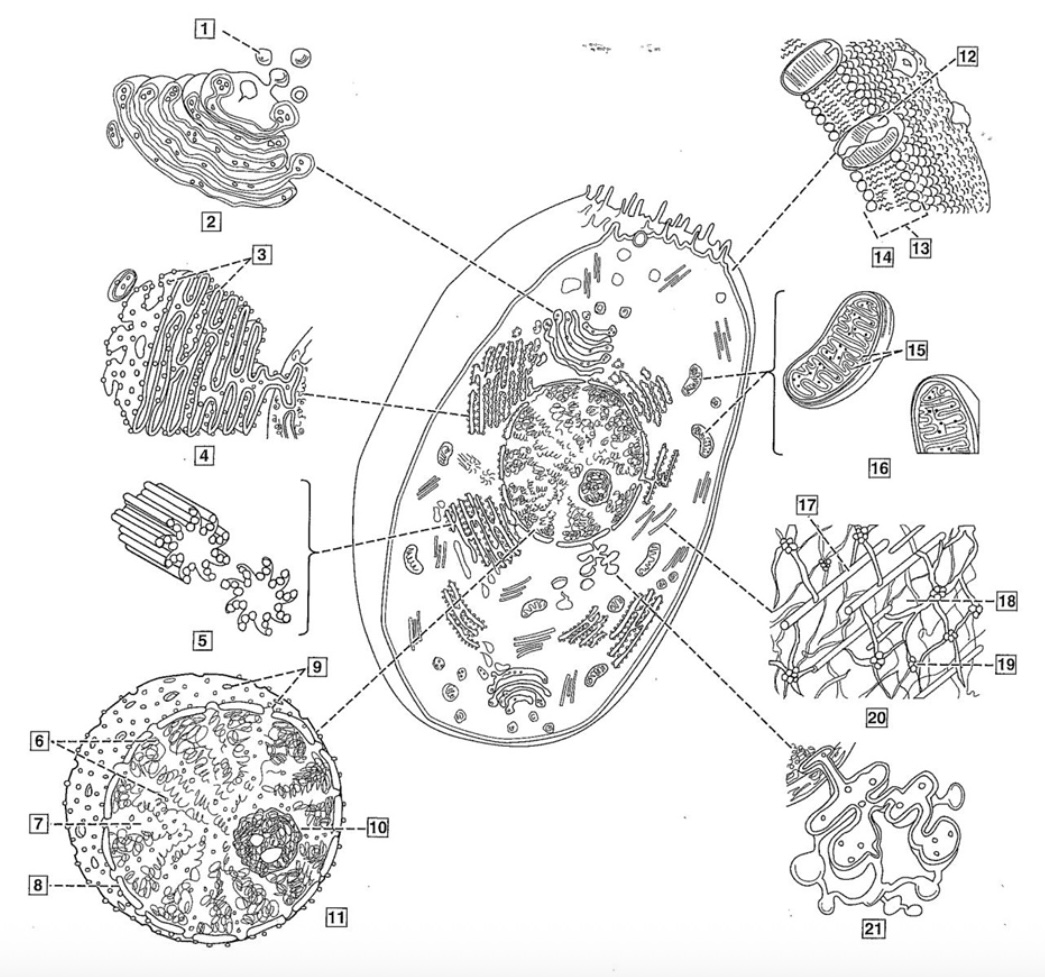
what are 17 and 19
microtubule and microfilament
what are 18 and 20
cytoplasm and cytoskeleton
contains a variety of acid hydrolases, which function in breaking down substances both inside and outside the cell
Lysosome
Where carbohydrate side chains of glycoproteins are formed, packages proteins into membrane-bound vesicles for secretion, made up of succules
golgi complex
Particles that translate genetic codes for proteins and activate mechanisms for their
production. Has 2 subunits
Ribosome
function in synthesis of secretory protein and ribosomes attach to this
rough endoplasmic reticulum
Either of two sort cylinders appearing near the nucleus that migrate to opposite poles of the cell during cell division
Centrioles of centrosome
A DNA/protein complex that forms chromosomes
Chromatin
the protoplasm of the nucleus
nuceloplasm
Membrane bounding the nucleus, composed of two phospholipid layers
nuclear envelope
Openings in the nuclear envelope associated with the endoplasmic reticulum that forms at the end of each cell division
Nuclear pore
A round vacuole-like achromatic body rich in RNA
nucleolus
A spheroid body within a cell, containing the genetic matter DNA, organelles, nucleoli, chromatin, linin, and nucleoplasm. It has a thin nuclear membrane vital to protein synthesis. Coordinates the cell’s activities
nucleus
workhorse macromolecules of the cell and are as diverse as the functions they serve
protein
A thin polar membrane made of two layers of lipid molecules.
phospholipid bilayer
Encloses the cells contents, and regulates the passage of molecules across it
cell membrane
folded structures that create more space to allow for a faster production of energy. They are key to the process that helps release energy during cellular respiration
cristae
membrane-bound structure lying free in the cytoplasm and present in all cells. generates ATP
mitochondria
Small tubular structures found in the cytoplasm and composed of the protein tubulin. They are cylindrical and hollow
microtubule
Protoplasm of a cell located in the area surrounding the nucleus
cytoplasm
They are long, thin and stringy proteins (mainly actin). Work with another organelle to form the structure that allows a cell to hold its shape, move itself, and move its organelles
microfilament
A complex network of filaments and tubules with multiple functions including structural strength, cell signalling and transport, and cell motility.
cytoskeleton
Involved in the synthesis of lipids which are used in the production of new cellular membrane. Not associated with ribosomes.
smooth endoplasmic reticulum
briefly describe lysosome
contains acid hydrolasers, breaks down substances inside and outside of cell
briefly describe golgi apparatus
made of saccules, forms glycoprotein carbohydrate side chains, packages proteins
briefly describe ribosomes
translates genetic code for proteins, 2 subunits joined together with the smaller subunit reading mRNA and larger subunit joining amino acids to make polypeptides/proteins
briefly describe rough endoplasmic reticulum
ribosomes attached, functions in synthesis of secretory protein
briefly describe centrioles of centrosome
migrates to opposite poles during cell division, found near the nucleus
briefly describe nuclear pore
associated with the endoplasmic reticulum that forms at the end of each cell division
briefly describe chromatin
DNA/protein complex that forms chromosomes
briefly describe nucleoplasm
protoplasm of the nucleus
briefly describe nuclear envelope
composed of 2 phospholipid bilayers, similar to plasma membrane but has pores, vital to protein synthesis
briefly describe nucleolus
round, vacuole-like and rich in RNA
briefly describe nucleus
contains DNA and small organelles, coordinates the cell’s activities
briefly describe protein
determines cell health and function, workhouse macromolecules, responsible for almost every part of cellular life
briefly describe cell membrane
encloses cell contents and regulates passage of molecules across the cell
what does phospholipid bilayer do
allows for selective permeability in and out of the cell
briefly describe cristae
folded structures within mitochondria, allows for more space and therefore increased energy production, key for energy release in cellular respiration
briefly describe mitochondria
generates ATP, membrane-bound but free in the cytoplasm
briefly describe microtubules
composed of the protein tubulin, hollow, works with microfilaments to maintain cell shape/strength and move/transport organelles
briefly describe cytoplasm
protoplasm of the cell (outside nucleus)
briefly describe microfilament
proteins, works with microtubule to maintain cell shape/strength and move/transport organelles
briefly describe function of cytoskeleton
many functions such as structural strength, cell signalling and transport, cell motility
briefly describe smooth endoplasmic reticulum
involved in synthesis of lipids such as phospholipids and cholesterol
which feature is NOT shared by all cells
DNA in nucleus
how is DNA different in prokaryotes compared to eukaryotes
in prokaryotes the DNA is concentrated in nucleoid. In eukaryotes the DNA is in the double membrane bound nucleus
what type of cells have a variety of membrane-bound organelles in the cytosol
eukaryotes
whats genome
genetic material of an organism or virus
whats a chromosome
cellular structure consisting of one DNA molecule and associated protein molecules
(SUPER brief) what happens during prophase
chromosomes coil to shape
(SUPER brief) what happens during metaphase
chromosomes align and attach
(SUPER brief) what happens during anaphase
chromosomes divide and drag
(SUPER brief) what happens during telophase
chromosomes uncoil and expand
(SUPER brief) what happens during cytokinesis
chromosomes are separated
meiosis or mitosis: Number of chromosome sets are conserved
mitosis
meiosis or mitosis: Chromosome ‘sets’ are reduced from diploid to haploid
meiosis
meiosis or mitosis: Produces daughter cells genetically identical to each other and parent cells
mitosis
meiosis or mitosis: Each cell produced is unique from parent cells and each other
meiosis
which is NOT a process unique to meiosis I
two diploid daughter cells produced
the ____ number in humans is 46
diploid
the ____ number in humans is 23
haploid
what are cells that have 2 pairs of chromosomes and typically found throughout the body tissues called
germ cells
what are the cells with one set of chromosomes found in the reproductive organs called
somatic cells
during meiosis, chromosomes split into daughter cells randomly, making each gamete unique. this is called…
genetic diversity
what phase of meiosis: homologous chromosomes pair up, crossing over occurs at chiasmata, spindle begins to form
prophase I
what phase of meiosis: chromosomes line up, both chromatids of each homologue chromosome attached to kinetochore microtubules
metaphase I
what phase of meiosis: two homologous chromosomes of each pair separate but sister chromatids still connected at centromere
anaphase I
what phase of meiosis: each chromosome has two sister chromatids- one or both include regions of non-sister chromatid DNA
telophase I
what phase of meiosis: two haploid daughter cells formed
cytokinesis
what phase of meiosis: chromosomes positioned at metaphase plate, random alignment and separation of chromosomes (AKA independant assortment)
metaphase II
what phase of meiosis: sister chromatids separate as proteins holding them break down, spindles shorten and move chromatids to opposite poles
anaphase II
what phase of meiosis: nuclei form, chromosomes start decondensing
telophase II
at what phase of meiosis do 4 genetically distinct daughter cells form
cytokinesis
which pharyngeal arch is innervated by cranial nerve V and forms muscles of mastication
1st arch
which pharyngeal arch is AKA mandibular arch
1st arch
which pharyngeal arch forms Meckel’s cartilage
1st arch
which pharyngeal arch is innervated by cranial nerve VII and forms muscles of mastication
2nd arch
which pharyngeal arch is AKA hyoid arch
2nd arch
which pharyngeal arch forms Reichert’s cartilage
2nd arch
which pharyngeal arch is innervated by cranial nerve IX and forms stylopharyngeus muscle
3rd arch
which pharyngeal arch is innervated by cranial nerve X and forms pharyngeal and laryngeal muscles and contributes to tongue
4th arch
which pharyngeal arch is innervated by cranial nerve X and forms pharyngeal and laryngeal muscles
6th arch