MCB114 Midterm 3
 Call Kai
 Learn
Learn Practice Test
 Spaced Repetition
 Match
Match Flashcards
 Knowt Play
1/77

There's no tags or description
Looks like no tags are added yet.
Name | Mastery | Learn | Test | Matching | Spaced | Call with Kai |
|---|
No analytics yet
Send a link to your students to track their progress
78 Terms
Retroviruses are ____ RNA viruses that are not immediately translated, and must encode their own machinery for converting the RNA genome into dsDNA and for integrating the virus
Positive-sense
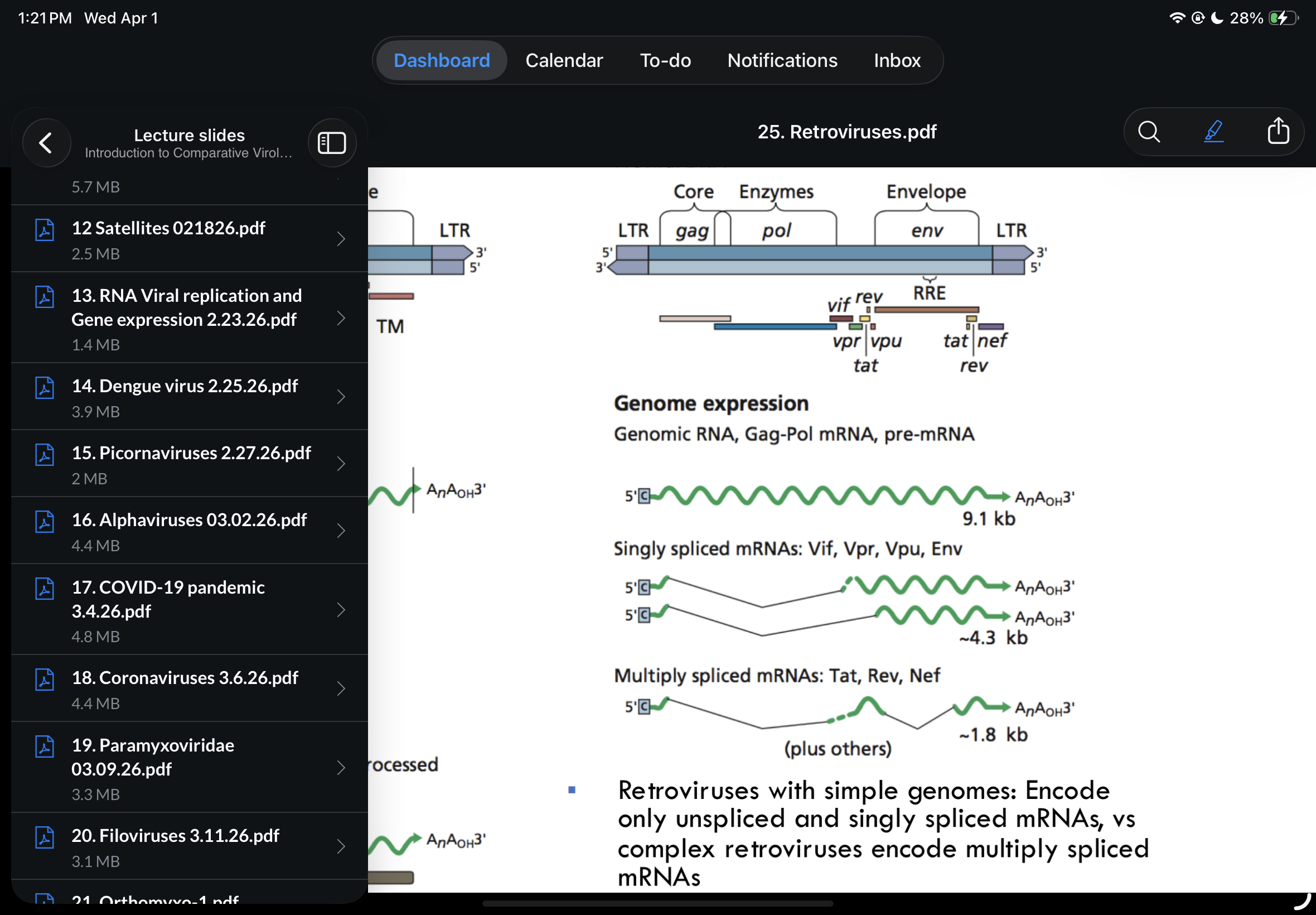
Retroviruses with simple genomes…
Encode only unspliced and single spliced mRNA
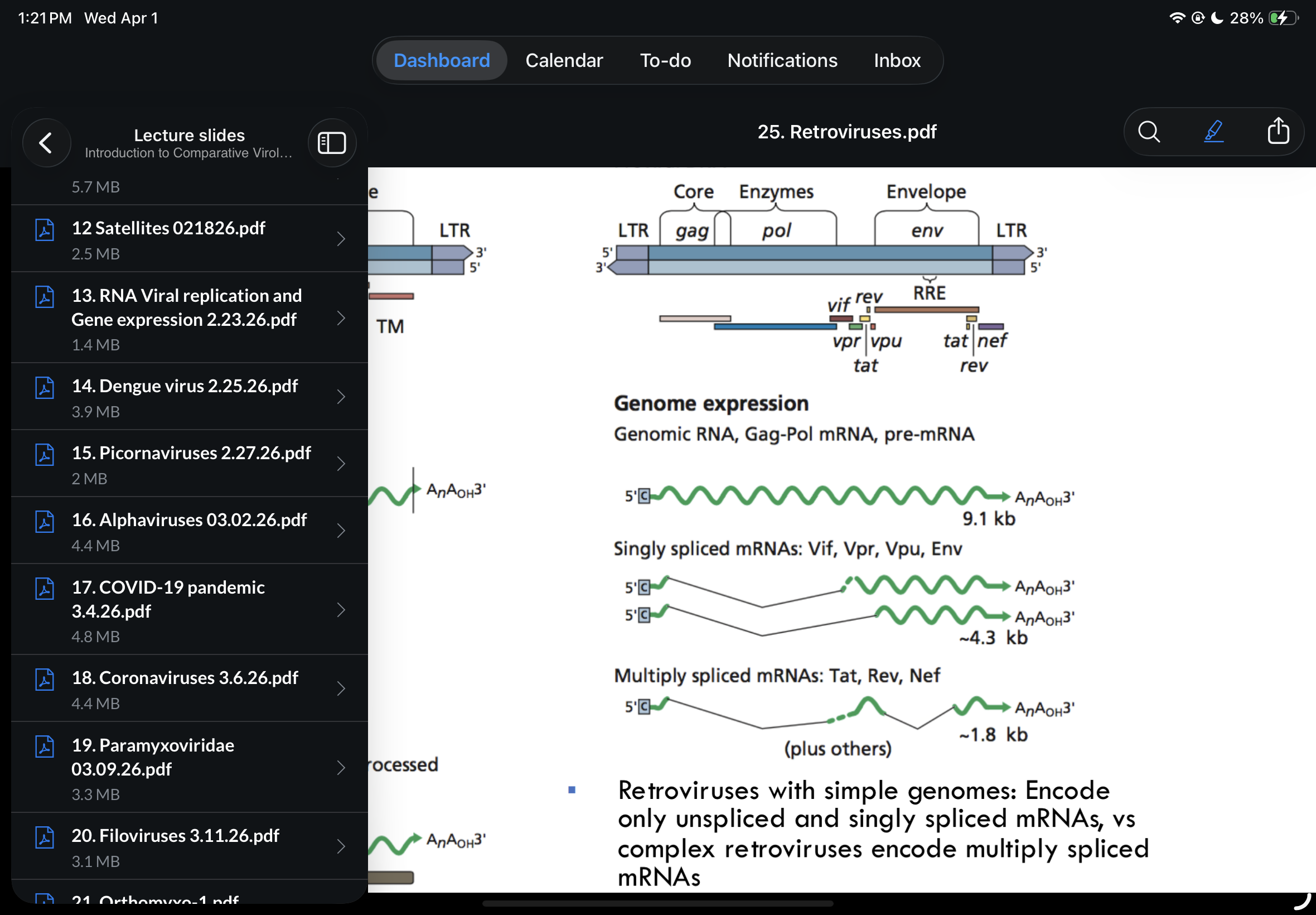
Retroviruses with complex genomes…
Encode multiply spliced mRNA
What are the two major enzyme activities of retrovirus reverse transcriptase?
Polymerase
RNase H
For reverse transcriptase, the primer and template strand it reads can be…
RNA or DNA
What is the key difference between packaged viral RNA and viral mRNA?
Packaged genomic viral RNA will be associated with a tRNA as a primer for the future and will be dimerized
What is the steps for entry of HIV?
HIV infects CD4+ T cell
Gp120 binds to the CD4 receptor
CCr5 coreceptors binding to Gp41 leads to fusion
How is HIV transmitted?
blood-blood contact
Vertical transmission
Sexually transmitted
Needles
How does HIV infection of CD4+ cells affect the immune system?
CD4+ cells present antigens
antigen-presenting cells will kill the T cells
APCs initiate inflammation and stimulate B cells
APCs wiped out, can’t eliminate T cells
What is the difference between a provirus and a virus?
A provirus is already integrated into the host’s cellular DNA and can access the cellular machinery required for transcription/translation
What are the 3 subfamilies of herpesvirus and what disease do they cause?
Alpha-HV: HSV1/2, cold sores and genital herpes
Beta-HV: CMV, mono, birth defects
Gamma-HV: EBV, cancer, MS
Why do you get cold sores in the same spot?
Herpesvirus have a circular episome, establishing lifelong latency and travel down the same axon from the infected neuron to your cold sore
Poxviruses inhibit superinfection by blocking cell receptors by viral proteins at the cell surface that form ____
Actin tails
Why are RNA genomes constrained/small?
highly error-prone without proofreading machinery (other than CoV) and a larger genome would result in too many mutations
How are RNA viruses able to express multiple genes from one genome?
polyproteins: one large ORF is cleaved into many proteins
Suppressor tRNA: RNA structure stalls the ribosome over stop codon, mismatched tRNA binds
Ribosomal frameshifting: slip back of ribosome on RNA pseudoknot on stop codon creates multiple ORFs
Subgenomic RNA/polar attenuation: transcribe shorter than genome length encodes different genes
Splicing: spliceosomes
What viruses use suppressor tRNA?
Retroviruses
What viruses use ribosomal frameshifting?
Coronaviruses, retroviruses, orthomyxoviruses, flaviviruses
What viruses use polyprotein?
Coronaviruses, retroviruses, flaviviruses, alphaviruses, picornaviruses
What viruses use subgenomic RNAs?
Coronaviruses
What viruses use splicing?
all DNA viruses (except poxviruses)
Some RNA viruses (retroviruses, orthomyxoviruses)
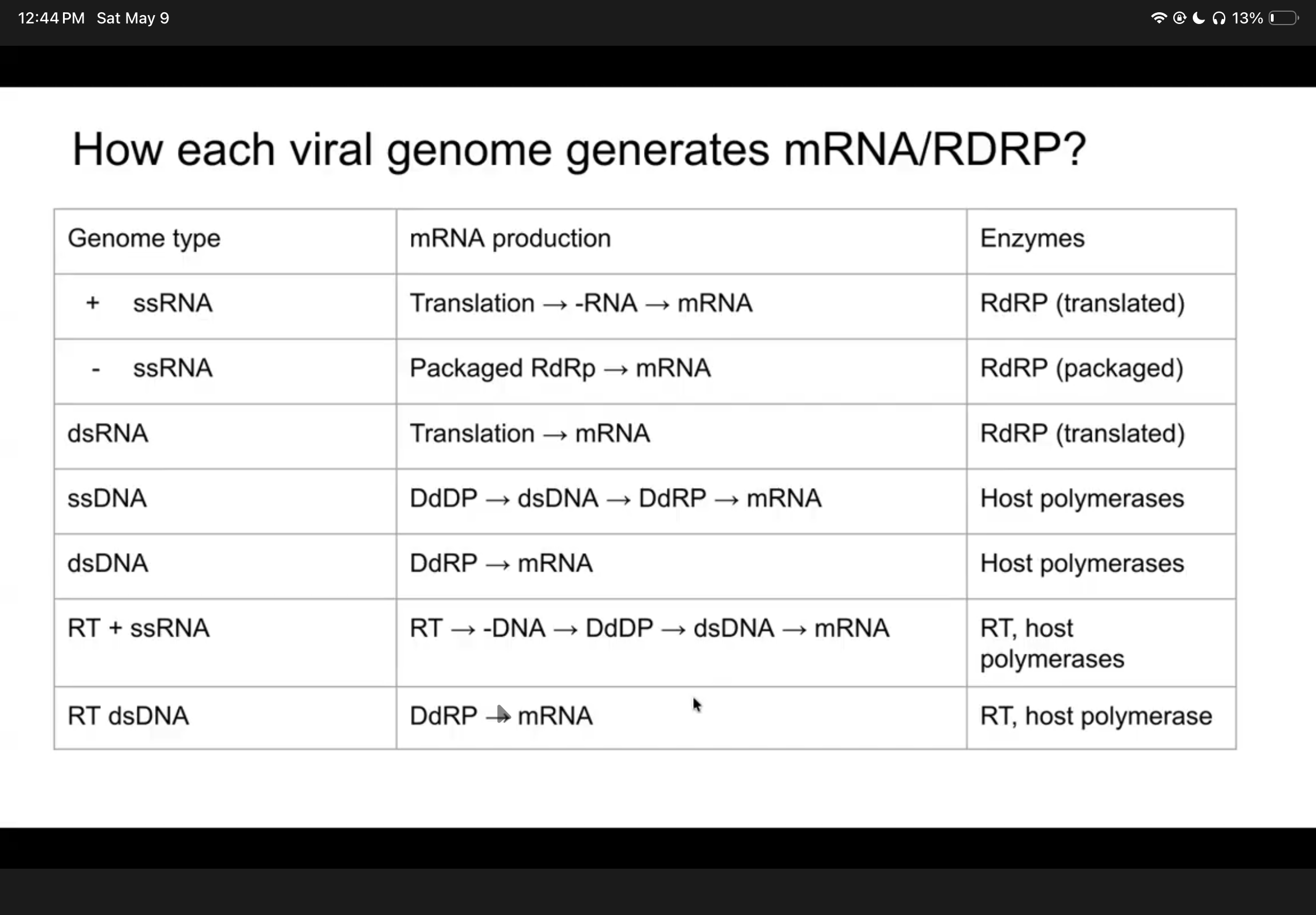
How does each viral genome produce mRNA?
+ssRNA → -ssRNA → mRNA
-ssRNA → packaged RdRp → +ssRNA → mRNA
DsRNA → -ssRNA → mRNA
SsDNA → DdDp → dsDNA → DdRp → mRNA
RT +ssRNA → RT → -DNA → DdDp → dsDNA → mRNA
RT dsDNA → DdRp → mRNA
Once HSV, rabies, or flu enter the cell how do they move rapidly across the cell cytosol?
After entry, they use the microtubules to get to the nucleus
Once baculoviruses or poxviruses enter the cell, how do they rapidly move across the cell cytosol?
Actin polymerization
How do plant viruses like TMV transmit to plant cells? List 2 ways.
Cell wall abrasion
Insect vectors
What are viral movement proteins?
plant viruses use movement proteins to move cell to cell and increase the size exclusion limit of the plasmodesmata to enter cells
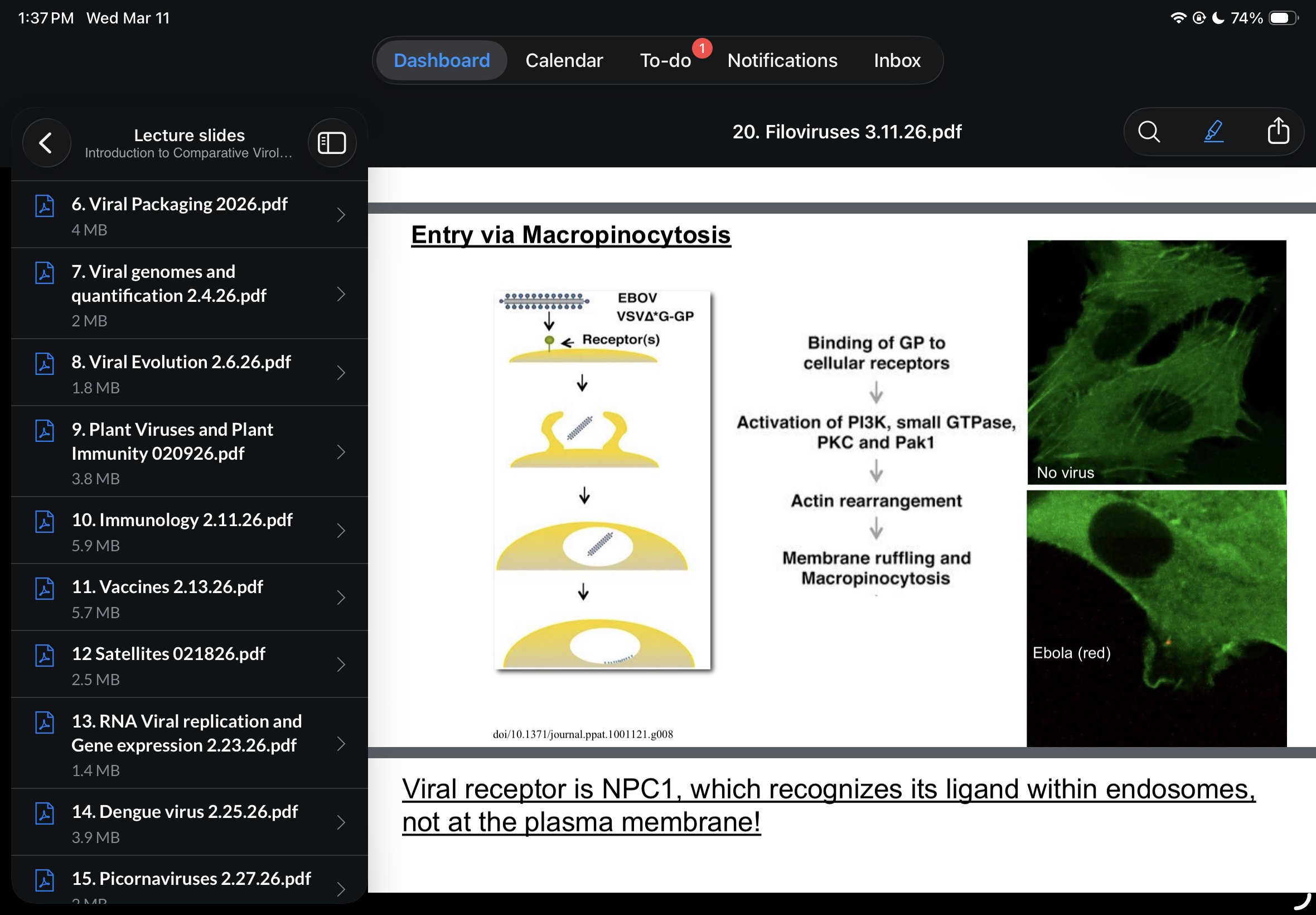
Describe how Ebola virus enters the cell?
Non-specific binding of GP1 causes cell to take virus via macropinocytosis
Late endosome NPC1 binds to GP2 for EBOV and allows cytosolic release
Why does SV40 traffic through the ER before entering the nucleus?
VP1 capsid molecules have disulfide cross-linked, very stable
utilizes ER-associated degradation pathway to loosen capsid
disguise itself as a misfolded protein
What is a satellite virus and can it replicate/create viral particles on its own?
Satellite viruses are a virus of a virus, can’t replicate without a helper virus, genome is not derived from the helper virus but uses its components to replicate
What is immune amnesia and which virus that we learned about causes it?
Immune amnesia is caused by measles, infects memory cells and kills them which makes the person more susceptible to previously protected pathogens
What is a special feature of the arenavirus genome?
there is both + and -ssRNA in it’s genome; segmented ambisense genomes
Small and large RNA
Is reassortment of viral genome segments considered genetic drift or shift?
Shift; reassortment causes a large change in the genome that could lead to species jumping
What is an advantage of phages creating a nucleus-like shell for genome replication and transcription?
Immune evasion; protects the phage genome from immune sensors and works like an actual nucleus where replication happens inside shell and translation outside in the cytosol
What is an example of what the tegument factors do in herpesvirus?
ex. VHS is a protein that helps degrade mRNA from the host’s cytoplasm to reduce competition for ribosomes
VP16 is an essential protein to herpesvirus latency in the nucleus, what is it’s function?
It circularizes the linear dsDNA to make an episome, activates immediate early viral genes using RNAPII
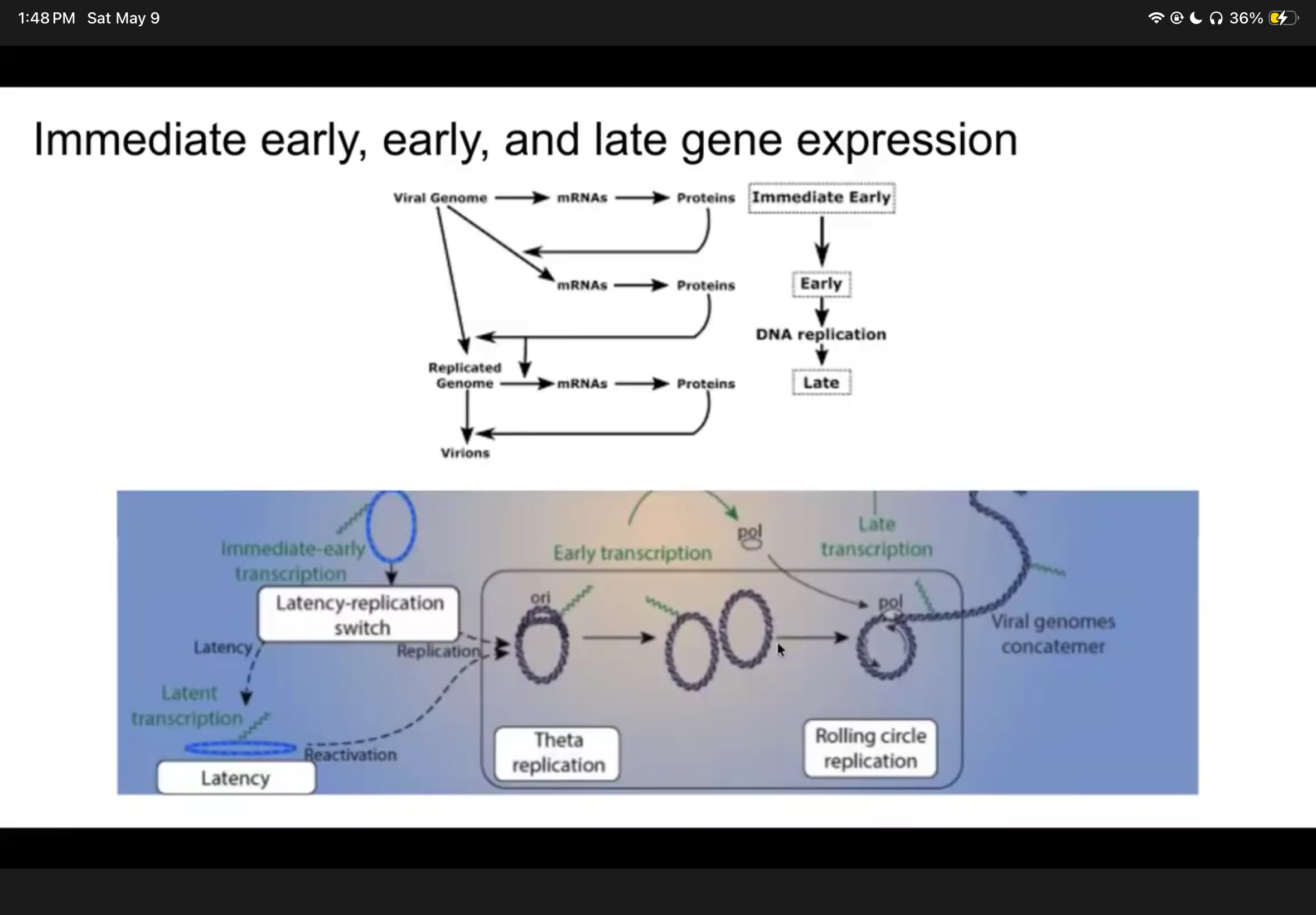
What is immediate early, early, and late gene expression doing in HV?
immediate early genes establish latency
Early genes replicate the viral form and end latency
Late genes trigger budding and release of virus
In beta- and gamma-HV, late gene transcription is coordinated by a protein that mimics what cellular protein? Why?
TBP (TATA-box protein) to be more actively replicated
Herpesvirus must disrupt the nuclear lamina to escape into the cytoplasm to…
Capture the tegument and endosomal release
Unlike small DNA viruses, herpesviruses block which stage of the cell cycle?
G phase
What is the T cell signal that the LMP1 protein mimics in EBV infection?
CD40L; drive naive B cells to become memory B cells without a T cell
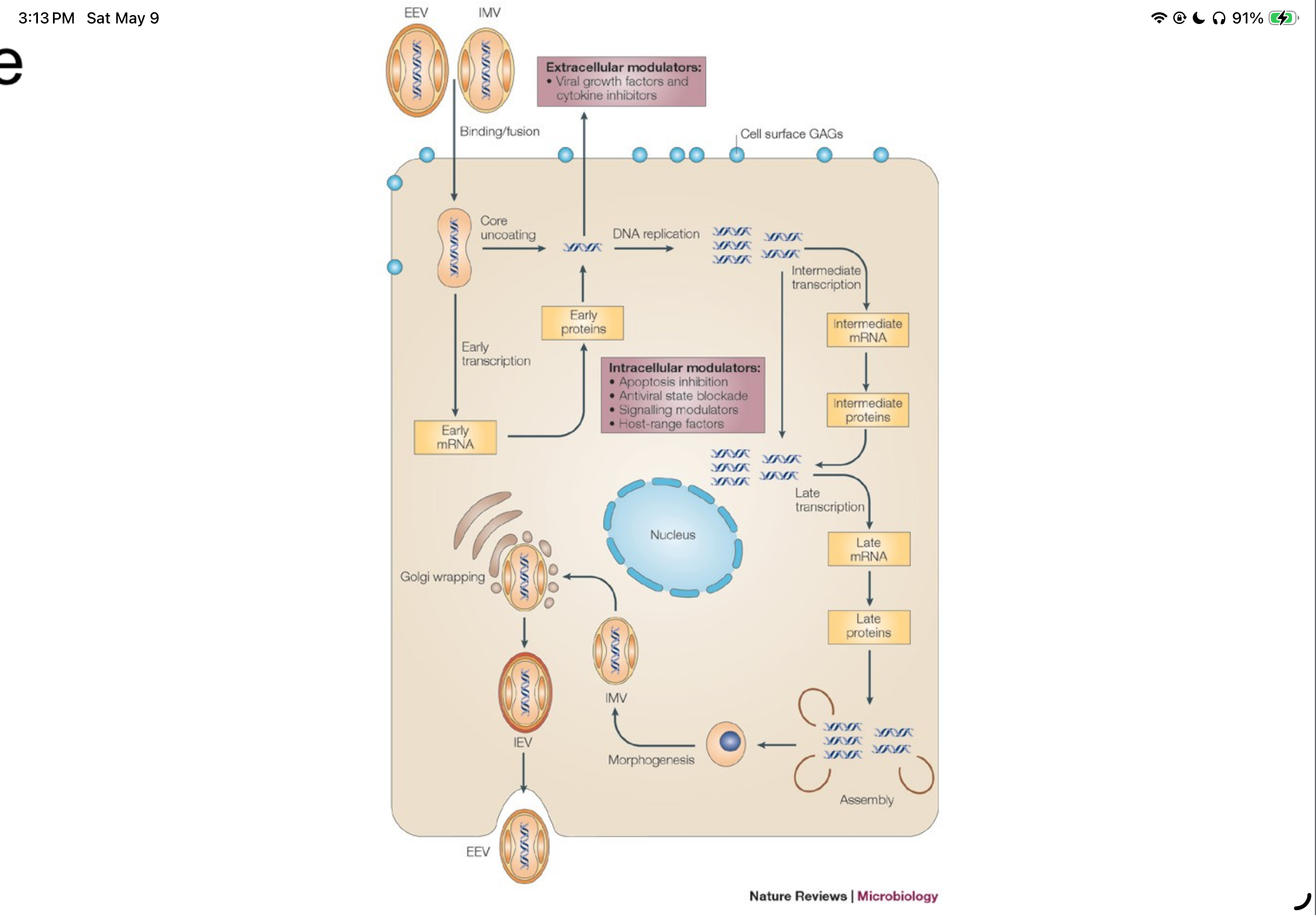
Which type of virus has this life cycle?
Poxviruses
What is the unique tegument layer in herpes virions?
The tegument layer is the layer between the envelope and the capsid, inside are proteins that help with transcribing immediate early genes
Ex. VHS that helps degrade cellular mRNA to reduce ribosome competition in the host cell.
Ex. VP16 that increases transcription of immediate early genes
Describe the entry of herpes viruses and include the names and functions of the different proteins.
Binds gD to the cell receptor
Then gD binds to gH/gL and shift gB into fusogenic state
gB inserts into the host plasma membrane inducing fusion
What is a PML body, and why do they matter for herpes virus infection?
PML bodies are antiviral proteins that help transcriptionally repress viral genes by heterochromatin, herpesviruses have to prevent PML bodies from doing this to continue infection
What is the difference between cell cycle control for herpes viruses and small DNA viruses, and what is the reason for the difference?
Most small DNA viruses stall in S phase to replicate indefinitely, however Herpesviruses stall in G1 phase because they replicate with their own cell machinery but not yet known why
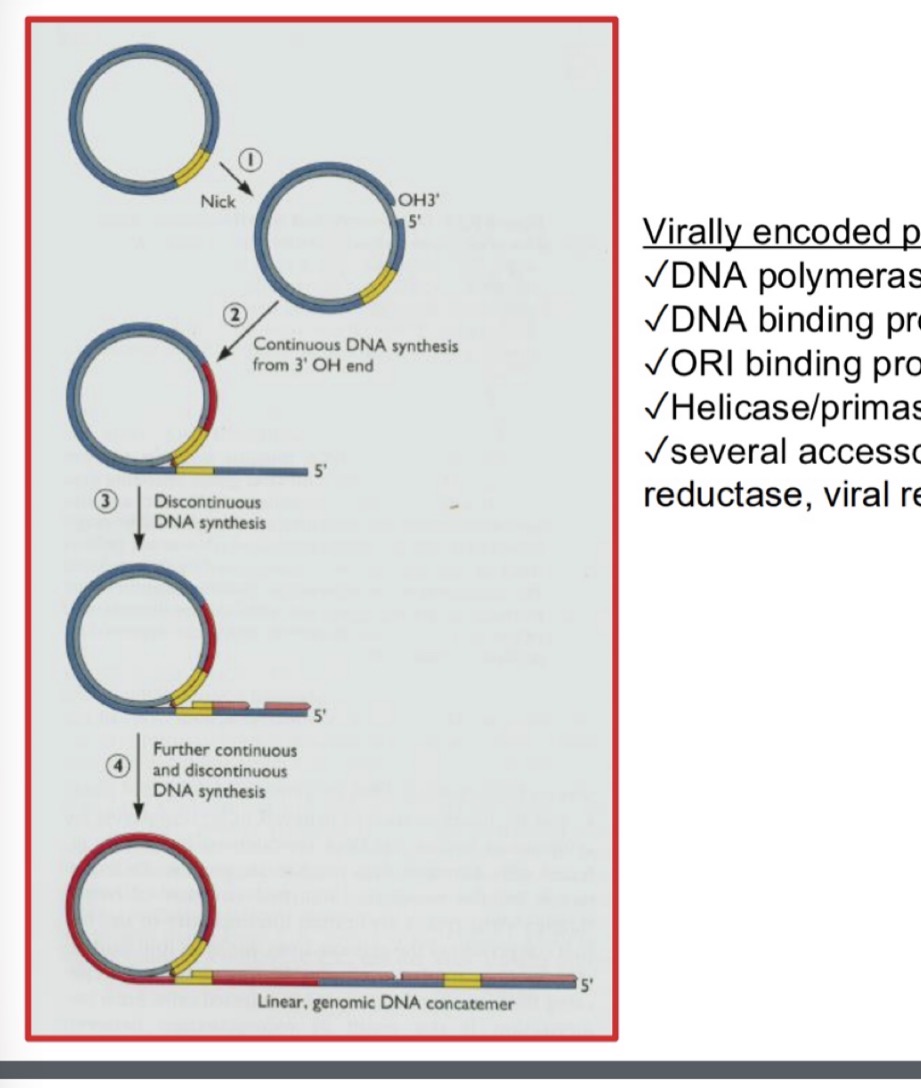
What is rolling circle replication?
Rolling circle replication proceeds similarly to canonical DNA replication
A nickase can make a nick in the DNA, allowing continuous replication from the 3’ OH end
There is discontinuous replication of the lagging strand
How is late gene transcription regulated in beta- and gamma herpes viruses?
Late gene transcription is regulated in beta- and gamma-HV by ORF24 which mimics the TATA-box protein (TBP) and activates transcription of the viral genome using host’s RNAPII
In what cell types do alpha-HV establish latency?
Sensory neurons
In what cell types do gamma-HV establish latency in?
B cells
What is the advantage of establishing latency in B cells?
Infection of naive B cells is advantageous since upon activation, they will divide at a rapid speed and thereby produce lots of infected cells. Additionally, some B cells will differentiate into long-lived memory B cells which harbor a latent Herpesvirus genome. Others will terminally differentiate into plasmablasts which will produce lots of proteins and viruses.
What is the mechanism EBV uses to transform B cells?
EBV establishes latency in B cells by infecting naive B cells, driving B cell proliferation, and then establishing stable latency in memory B cells as a non-integrated episome.
EBV will drive B cell proliferation through its specific viral proteins, forcing germinal center reactions without exposure to any antigen by directing B cells to germinal centers.
These B cells do not need T cells during EBV establishing latency as they usually do, because EBV LMP1 mimics CD40L which bypasses the need for CD4+ T cell help. LMP1 self-aggregates on the B cell plasma membrane, mimicking CD40 proteins aggregating together.
EBV reactivates the lytic cycle when…
The B cell receptor binds to an antigen
Why have poxviruses been eradicated?
Humans are the only known host
Vaccine is highly effective against multiple strains
Vaccine is easily stored
What is the natural host of baculoviruses and what can they be used for?
Baculoviruses infect insects and can be used as pesticides for agricultural industries
HBV has 4 overlapping genes, what are they?
ORF pre S2
ORF X
ORF P
ORF core
What is leaky scanning and why does HBV do it?
HBV has suboptimal start codons that causes the ribosome to keep scanning the DNA, this helps expand coding capacity
What is a direct repeat? What similar sequence can be found in HIV?
A direct repeat is the 5’end of the dsDNA and is similar to the LTR of HIV because they allow the template switching during RT and circularization of the genome
What is the genome organization of HBV?
Hepatitis B (HBV) is a DNA virus that is partially double-stranded
What is the genome organization of Arenaviruses?
Ambisense, bi-segmented RNA genome with enveloped virus
What is the genome organization of Reoviruses?
Linear dsDNA virus with double-layered capsid
What is the genome organization of Flaviviruses?
(+)ssRNA
What is the function of NSP4 in Rotaviruses?
NSP4 is an enterotoxin or a protein that causes gastrointestinal distress symptoms. It disrupts cell-cell junctions in intestinal villi or hair-like projections made of epithelial cells, by inducing a calcium signaling pathway that secretes chloride
State the leading hypothesis for how Epstein-Barr virus contributes to the development of multiple sclerosis.
EBV is the hypothesized precursor of MS because it induces autoantibodies (cross react w/ EBNA1 and myelin)
What event in the DNA viral lifecycle is generally required for expression of the gene(s) encoding capsid proteins and why?
Viral DNA replication; capsids are expressed as late genes which require genome replication
List 2 advantages of poxviruses entering cells by macropinocytosis.
Immune evasion
Broadens tropism
Why might antibiotic treatment of some bacterial infections actually make symptoms worse?
Phage lysogenic conversion can trigger activation through stressors like antibiotics and produce toxins
What is the most common trigger for capsid self-assembly in an infected cell?
Negatively charged viral genome
Name a strategy commonly used by viruses to evade neutralizing antibodies
Mutate surface receptors
Which of these viruses would you NOT expect to deposit their genome directly into the cytoplasm after entry and why: rotavirus, Zika virus, adenovirus, coronavirus? Select all correct answers.
Rotavirus (dsRNA)
Adenovirus (dsDNA)
Phage satellite viruses often inhibit the replication of their helper phage. State or briefly describe one of these interference mechanisms.
steal capsid protein to form their own capsids
Inhibit phage packaging terminase
Reduce transcription from helper virus
Define cap snatching and name a virus that uses cap snatching.
The virus cuts off the 5’ cap ( and a small stretch of sequence at 5’ end) of cellular mRNAs, and uses this to prime viral mRNA synthesis i.e. Influenza A
Name two mechanisms by which DNA viruses can avoid the “5’ end problem” (gradual loss of sequence during sequential rounds of replication). List a virus that uses each of your listed strategies.
Circular genome with no free ends (polyomaviruses)
Protein primer (adenovirus, HBV)
Copy-back mechanism (poxviruses)
Which gene expression strategy is this: multiple viral proteins are produced at equal abundance from a single mRNA
Polyprotein
Which gene expression strategy is this: Viral mRNA is transcribed at the highest abundance from the left end of the genome and with gradually decreasing abundance from genes positioned towards the right end of the genome
Subgenomic RNAs/polar attentuation
Which gene expression strategy is this: Multiple viral proteins are produced from the same mRNA, but those at the 5’ end are more abundant than those near the 3’ end
Ribosomal frameshifting
At what stage of the RNA viral lifecycle does the matrix protein usually function?
Assembly
Which virus reverse transcribes its genome at the end of the viral lifecycle?
HBV
Name a feature of an Arenavirus, such as Lassa fever virus, that make it more like negative sense ssRNA viruses than positive sense ssRNA virus.
genome is coated in nucleoproteins
Packaged RdRp
Describe the key property and the role of the polypurinetract (ppt) in HIV replication.
PPT is not degraded by RNAseH and acts as a primer for DNA synthesis