Psych Extra Review
 Call Kai
 Learn
Learn Practice Test
 Spaced Repetition
 Match
Match Flashcards
 Knowt Play
1/186

There's no tags or description
Looks like no tags are added yet.
Name | Mastery | Learn | Test | Matching | Spaced | Call with Kai |
|---|
No analytics yet
Send a link to your students to track their progress
187 Terms
What is personality?
A unique and relatively stable pattern of thoughts, feelings, and actions.
Why do psychologists study personality?
To understand why people are different and explore how they conduct their lives.
What are the major theories of personality?
Psychoanalytic, Social Cognitive, Humanistic, and Trait Theories.
Who founded the psychoanalytic movement in psychology?
Sigmund Freud.
What is a central premise of Freud's psychoanalytic theory?
Unconscious forces, such as wishes, desires, and hidden memories, determine personality.
What does Freud's iceberg analogy represent?
The three levels of the mind: conscious, preconscious, and unconscious.
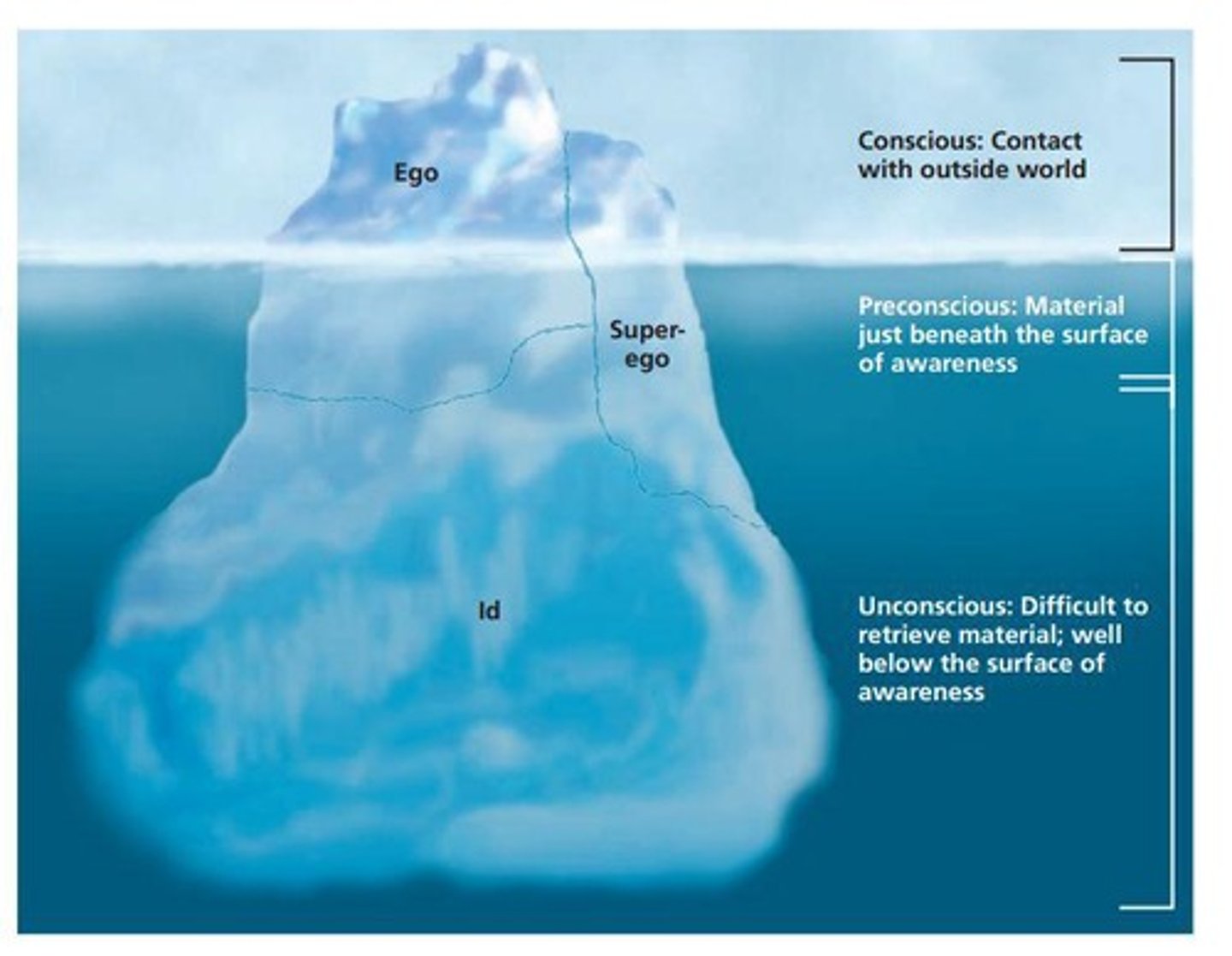
What are the three parts of Freud's personality structure?
The id, ego, and superego.
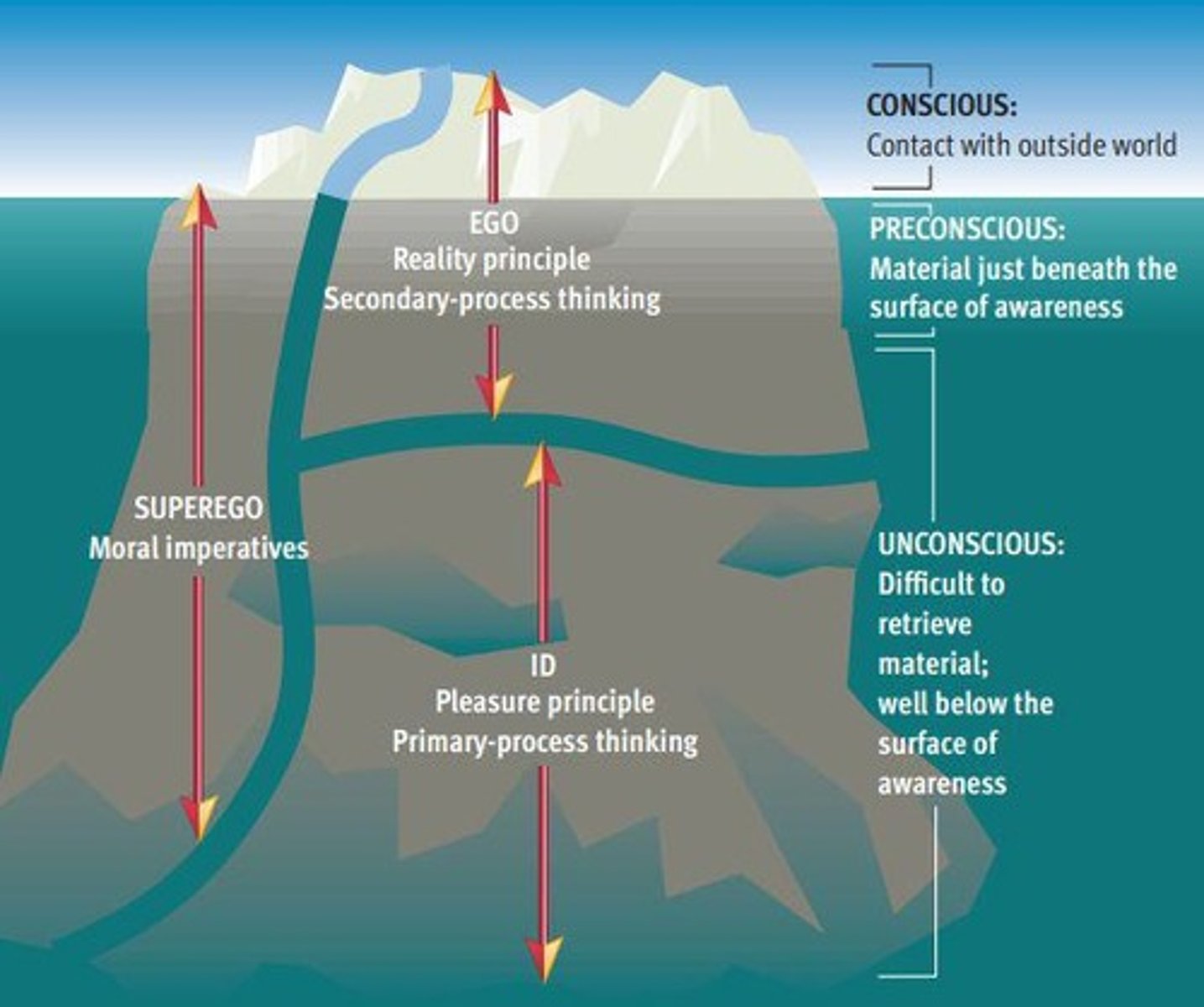
What is the id according to Freud?
A completely unconscious, pleasure-seeking, amoral part of personality.
What principle does the id operate on?
The pleasure principle.
What is the role of the ego in Freud's theory?
Responsible for planning, problem solving, and controlling the id.
What principle does the ego operate on?
The reality principle.
What is the superego?
The moral component of personality that incorporates social standards of right and wrong.
What are defense mechanisms?
Unconscious mental strategies that protect the mind from distress.
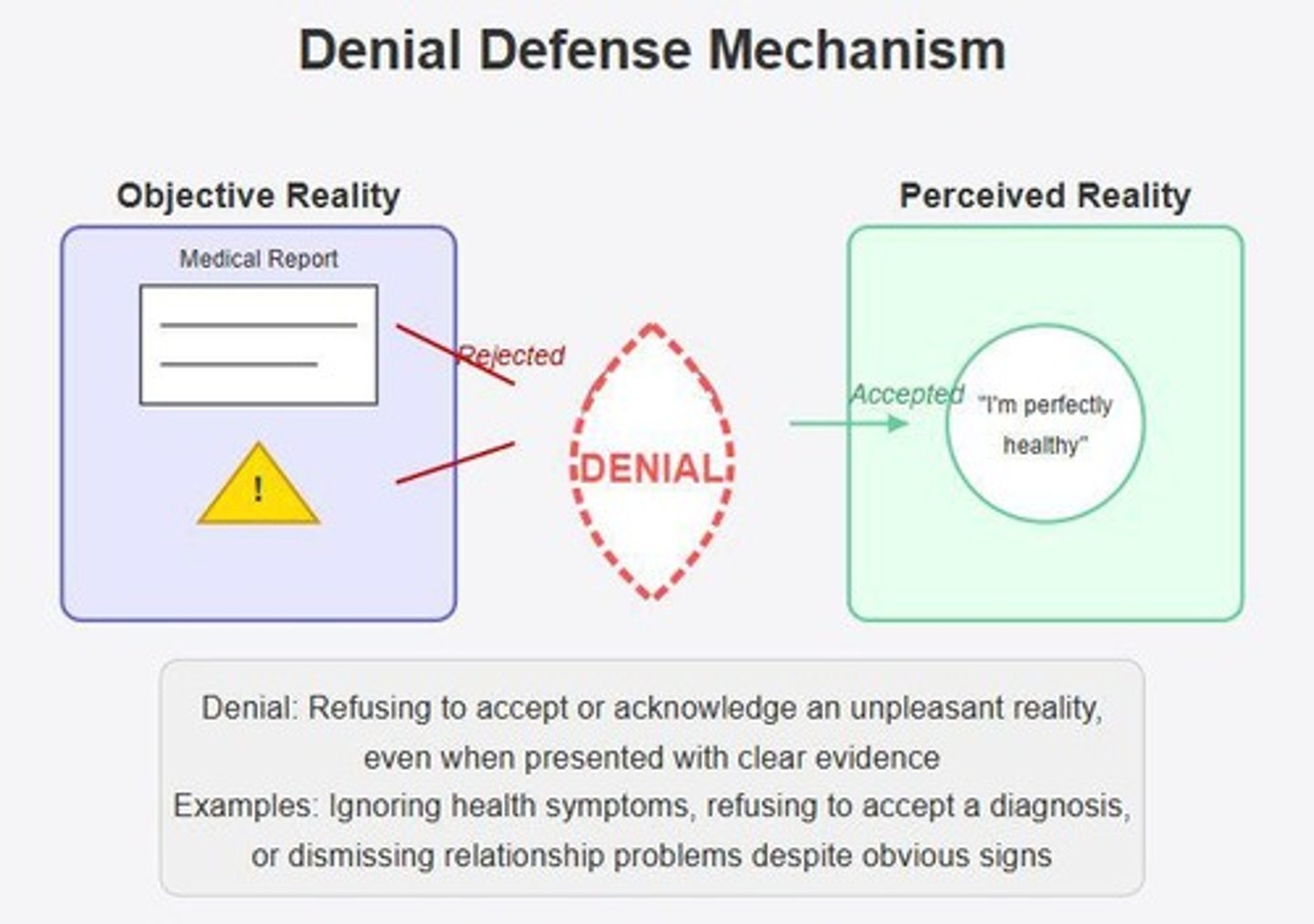
What is denial as a defense mechanism?
The unconscious refusal to acknowledge or accept reality.
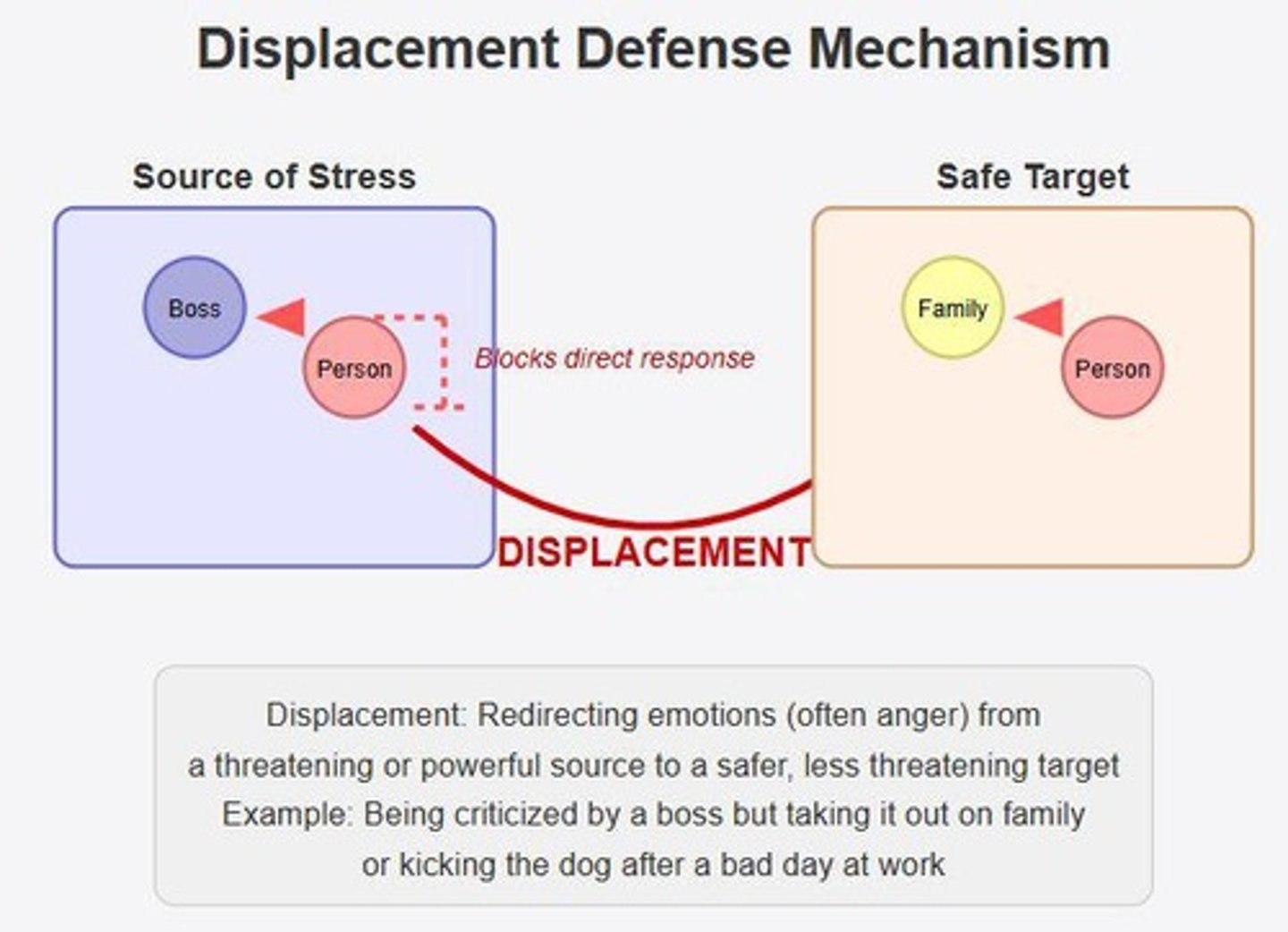
What is displacement in terms of defense mechanisms?
Redirecting impulses or emotions from the original source to a safer target.
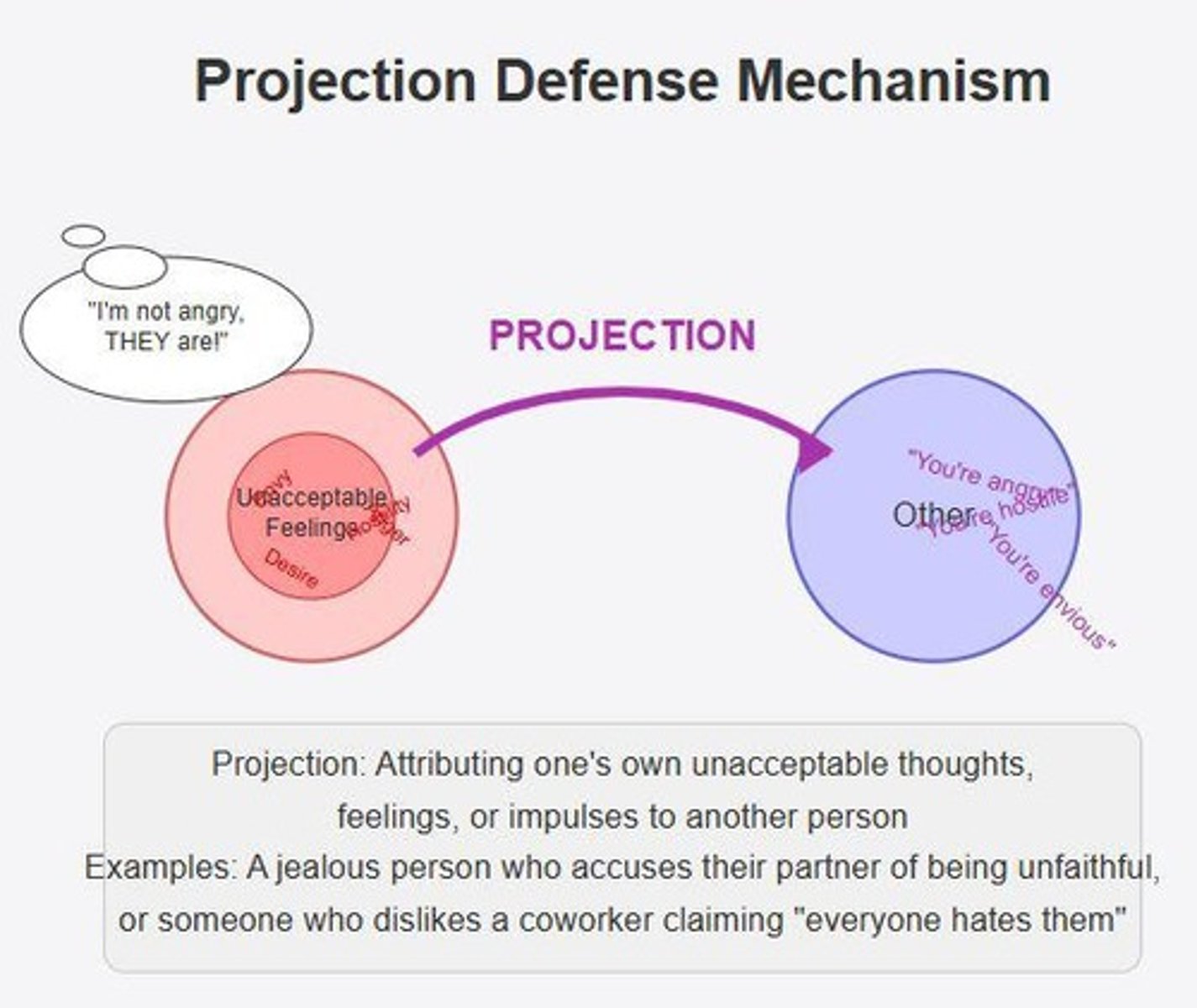
What does projection involve?
Attributing one's own thoughts or feelings to another person.
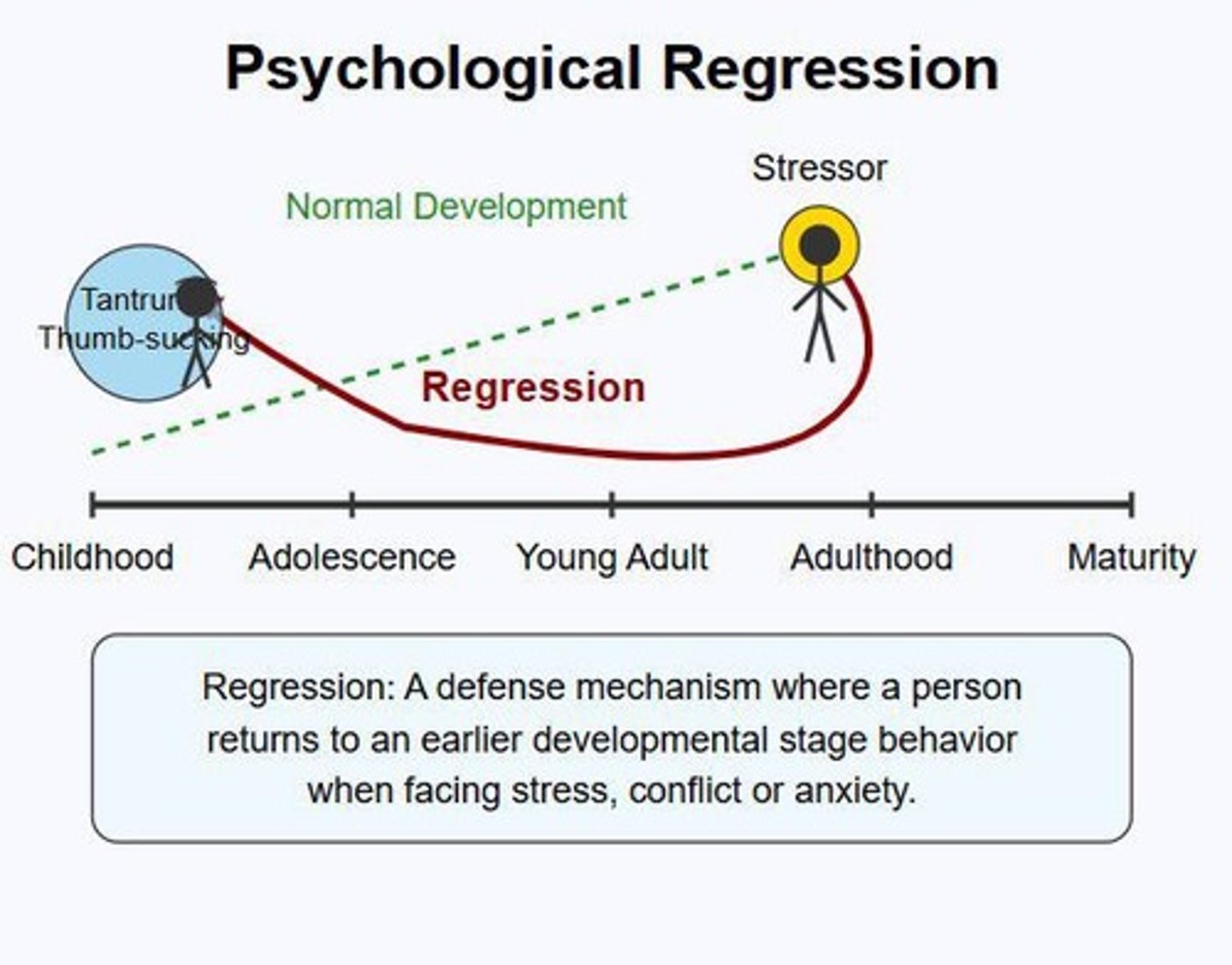
What is regression?
Reverting to immature behavior in response to stress.
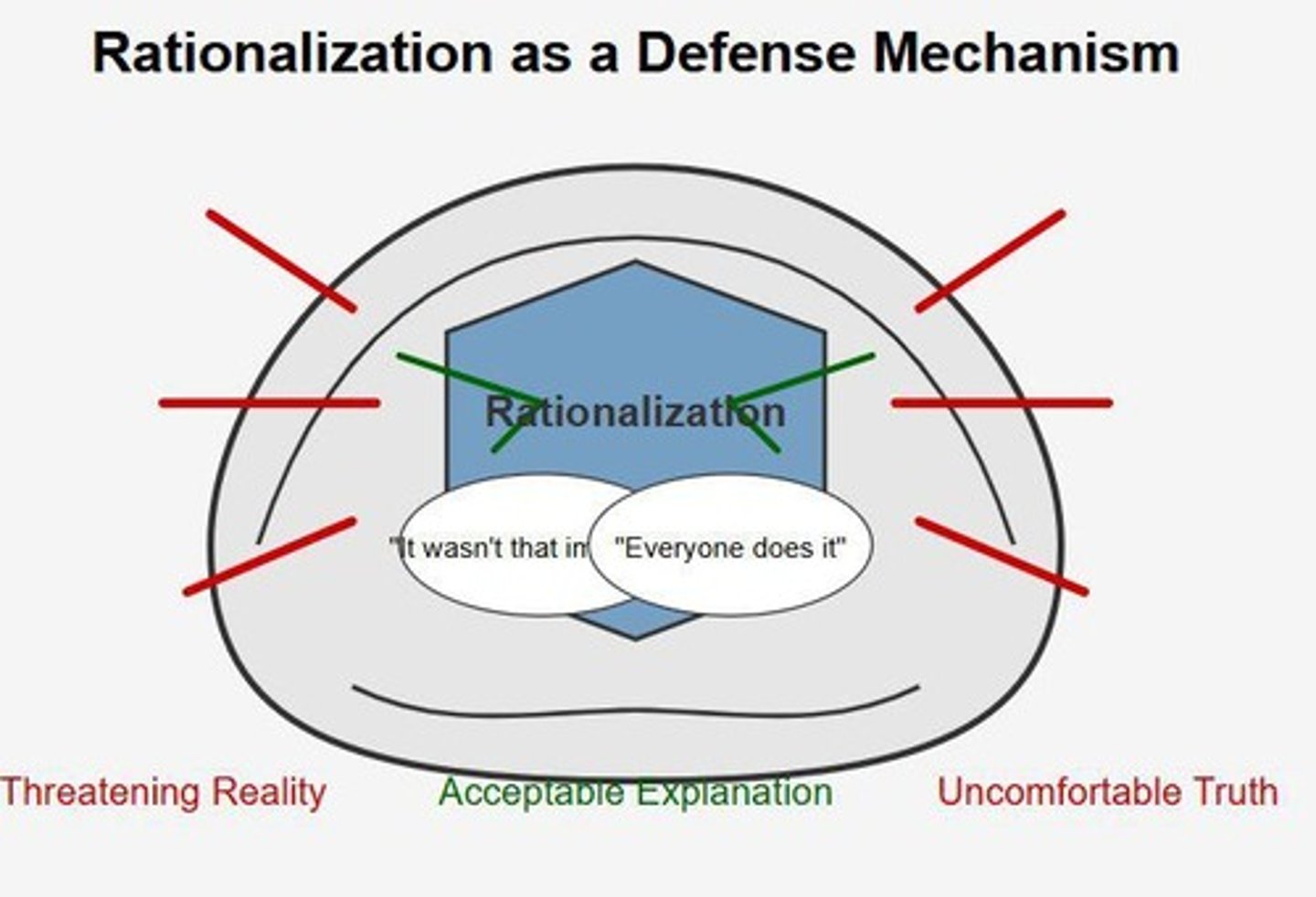
What is rationalization?
Justifying or explaining away unacceptable thoughts or behaviors to reduce anxiety or guilt.
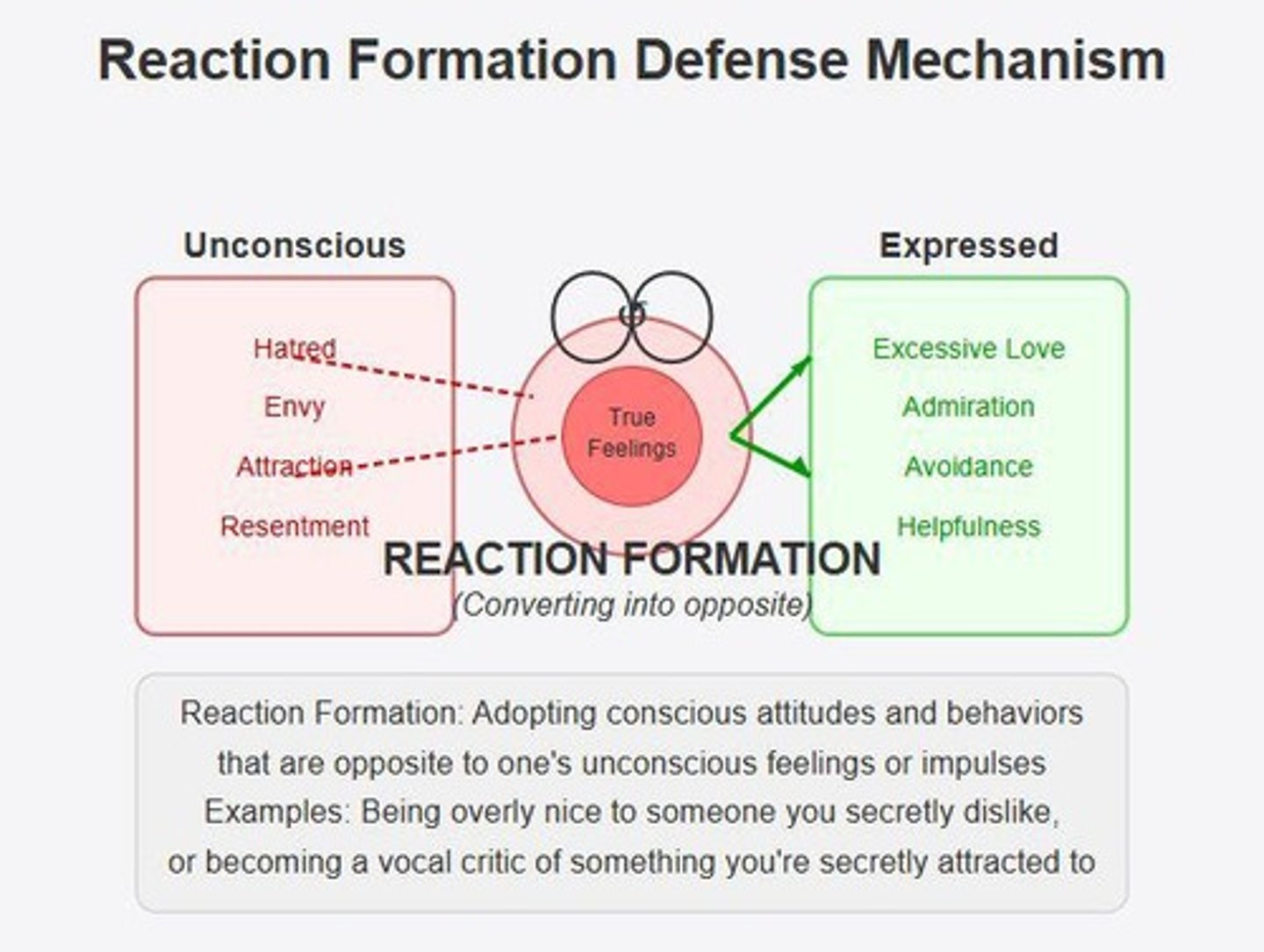
What is reaction formation?
Acting in the exact opposite of one's true feelings.
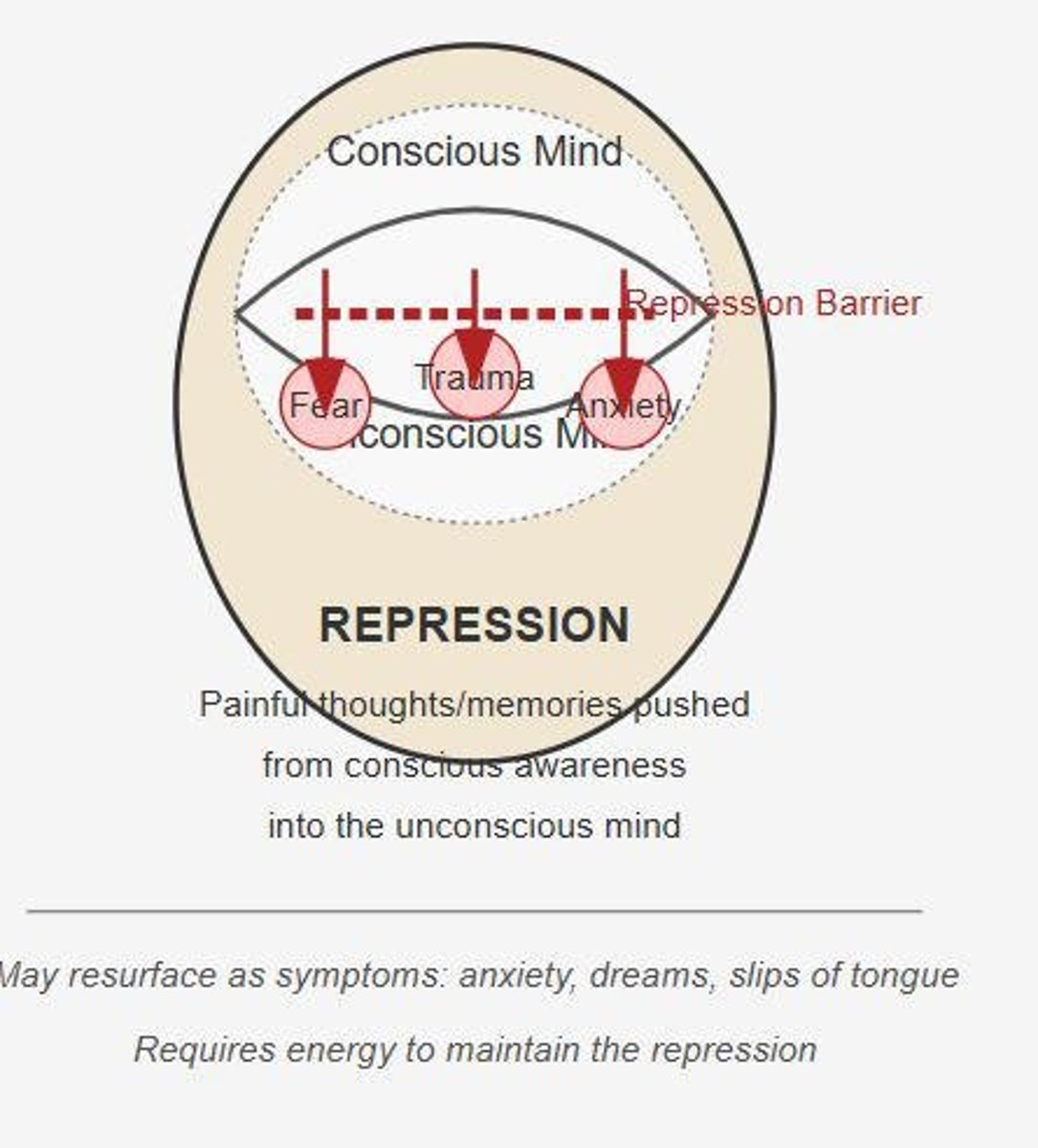
What does repression mean?
Keeping distressing feelings buried in the unconscious.
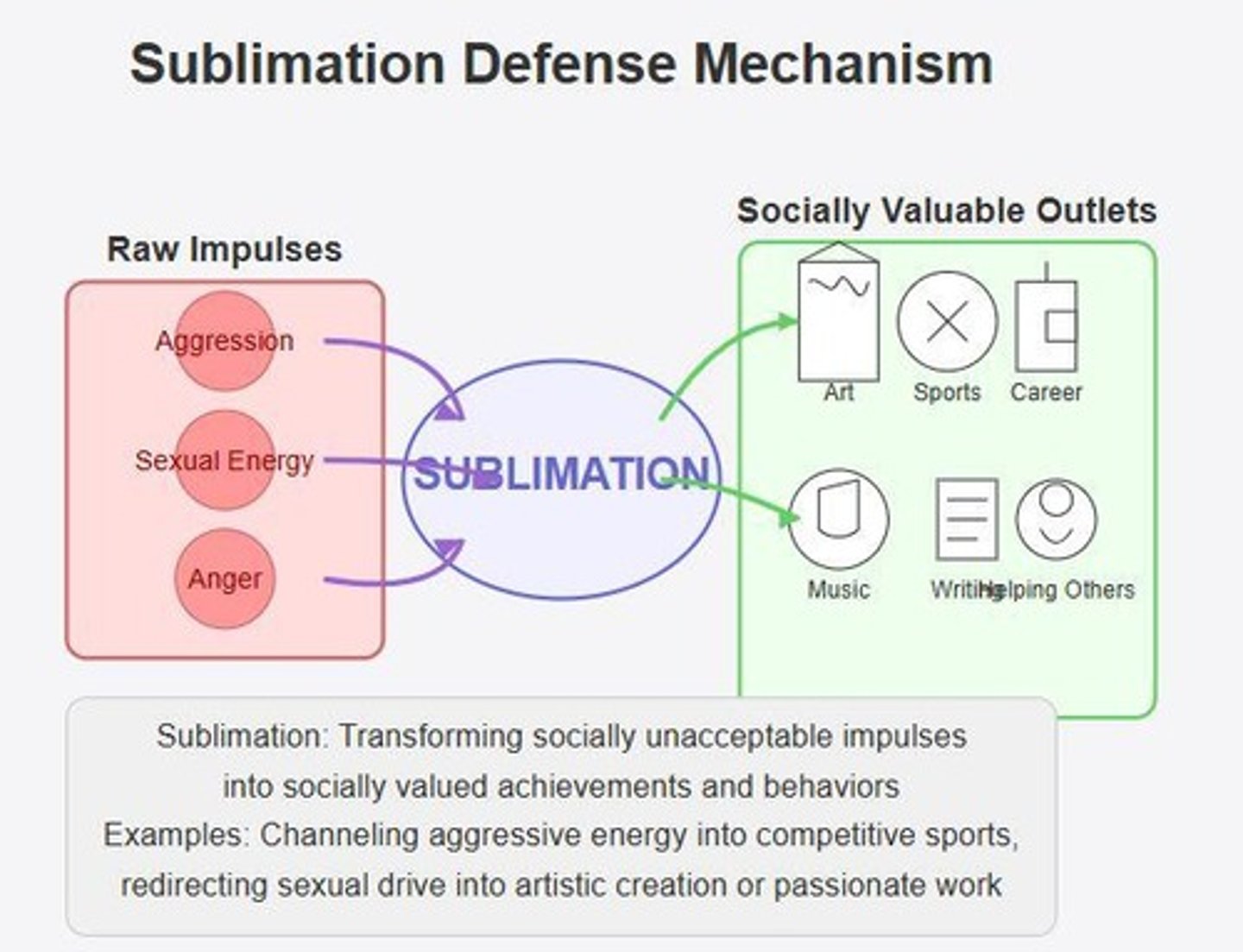
What is sublimation?
Channeling unacceptable impulses into socially acceptable activities.
James-Lange Theory
The experience of emotion is a person's physiological response to a stimulus. When a person experiences an event or stimulus it causes their nervous system and body to be alerted, which causes a person to experience different emotions
Cannon-Bard Theory
A person's physiological response to a stimulus and their emotion response happen at the same time. The physiological response does not cause the emotion, they occur together
Schachter Two-Factor Theory
Emotions occur from physiological and cognitive awareness to a stimulus. A person encounters a stimulus which triggers them to become physiologically aroused, which then engages their cognitive system. Which results in an emotional experience
Joseph LeDoux's Theory
Emotions can take a direct path to the amygdala and skip the cortex. This causes a person to have an immediate emotional response without a person being immediately aware of what is happening
Appraisal Theory
When a person encounters a stimuli, experience, or event, they assess the situation and come to a conclusion that the experience is harmless or dangerous. This happens without a person being immediately aware of it.
Mary Ainsworth
Studied attachment in infants using the "strange situation" model. Label infants "secure", "insecure" (etc.) in attachment
Solomon Asch
Conducted famous conformity experiment that required subjects to match lines.
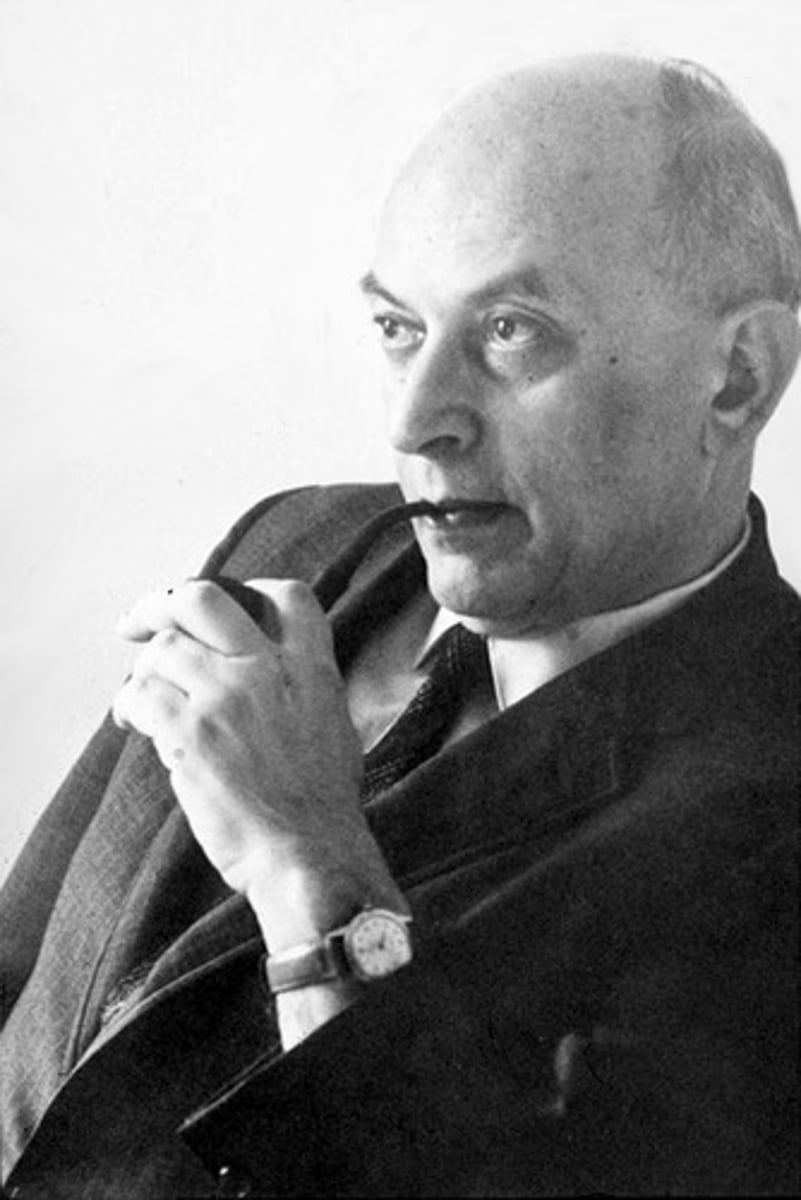
Albert Bandura
Famous for the Bobo Doll experiments on observational learning & influence in the Socio-Cognitive Perspective
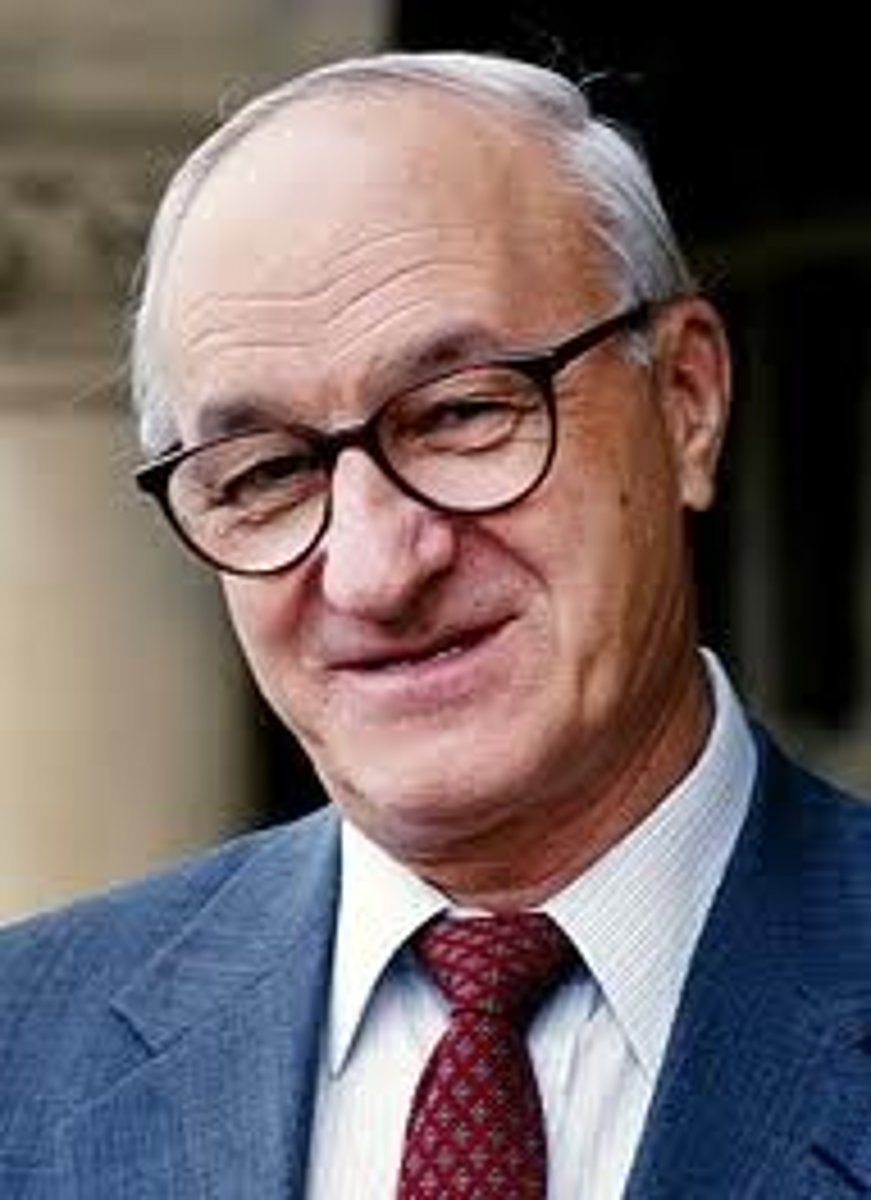
Alfred Binet
Created first intelligence test for Parisian school children
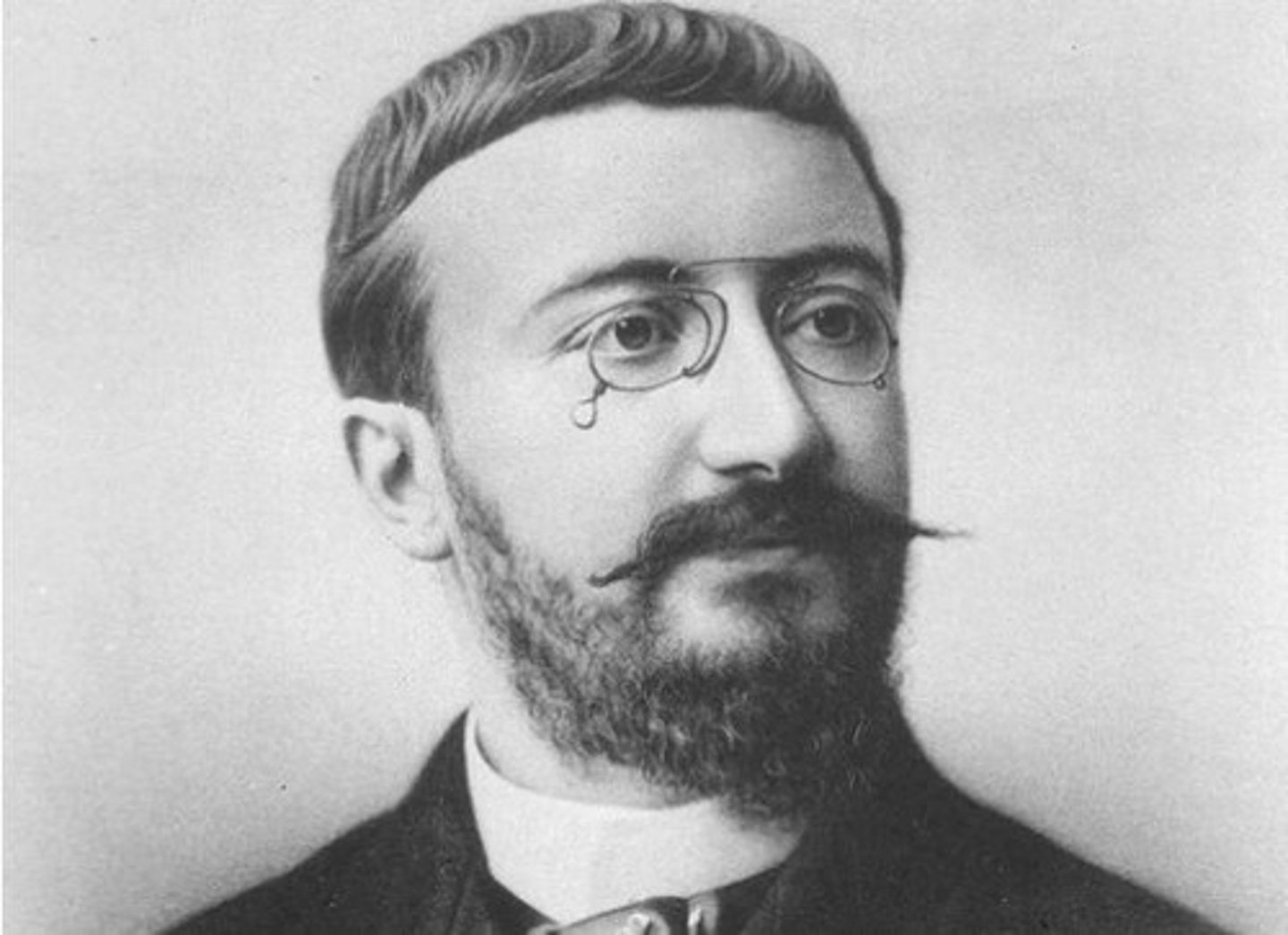
Noam Chomsky
Created concept of "universal grammar"
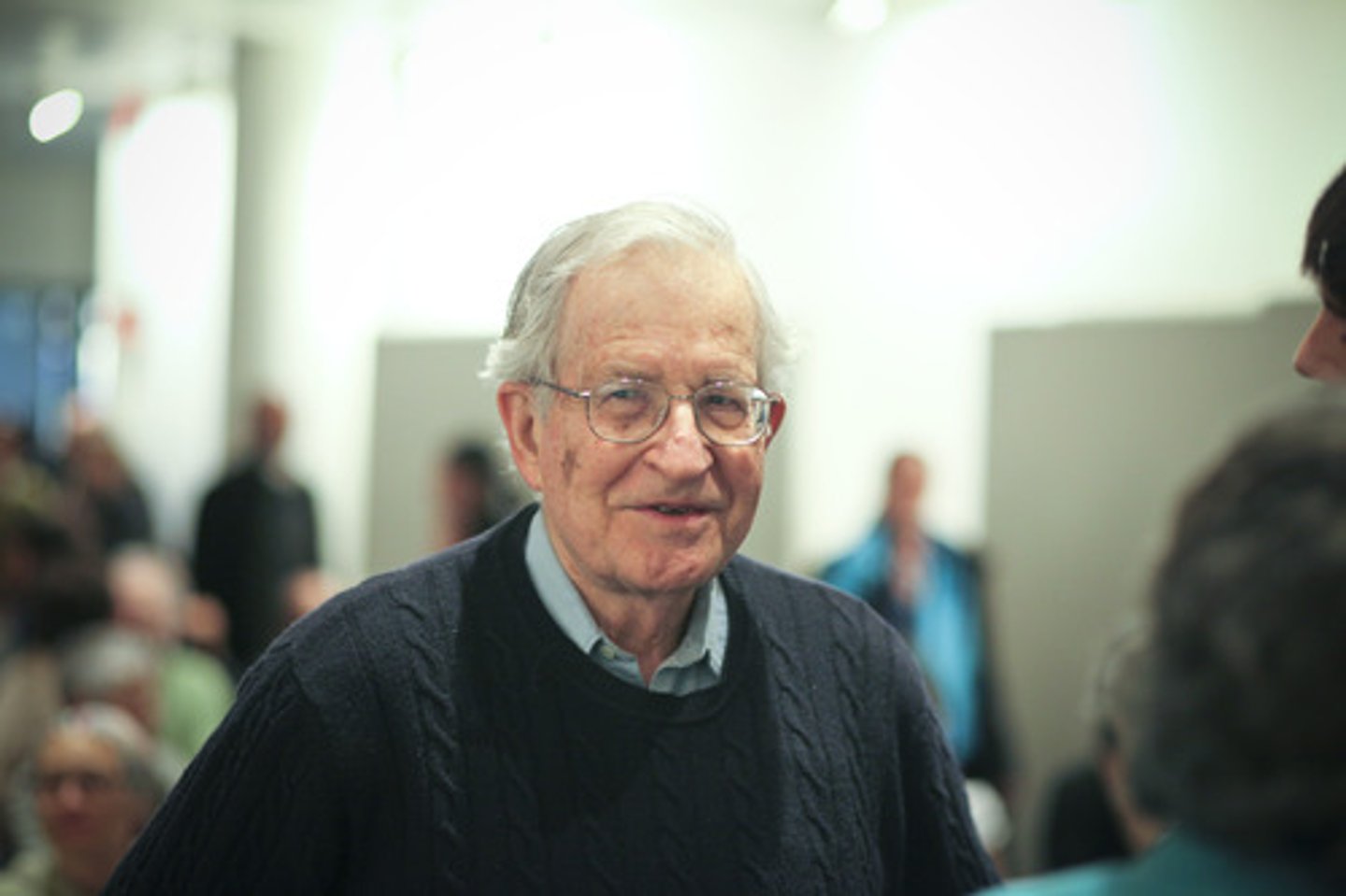
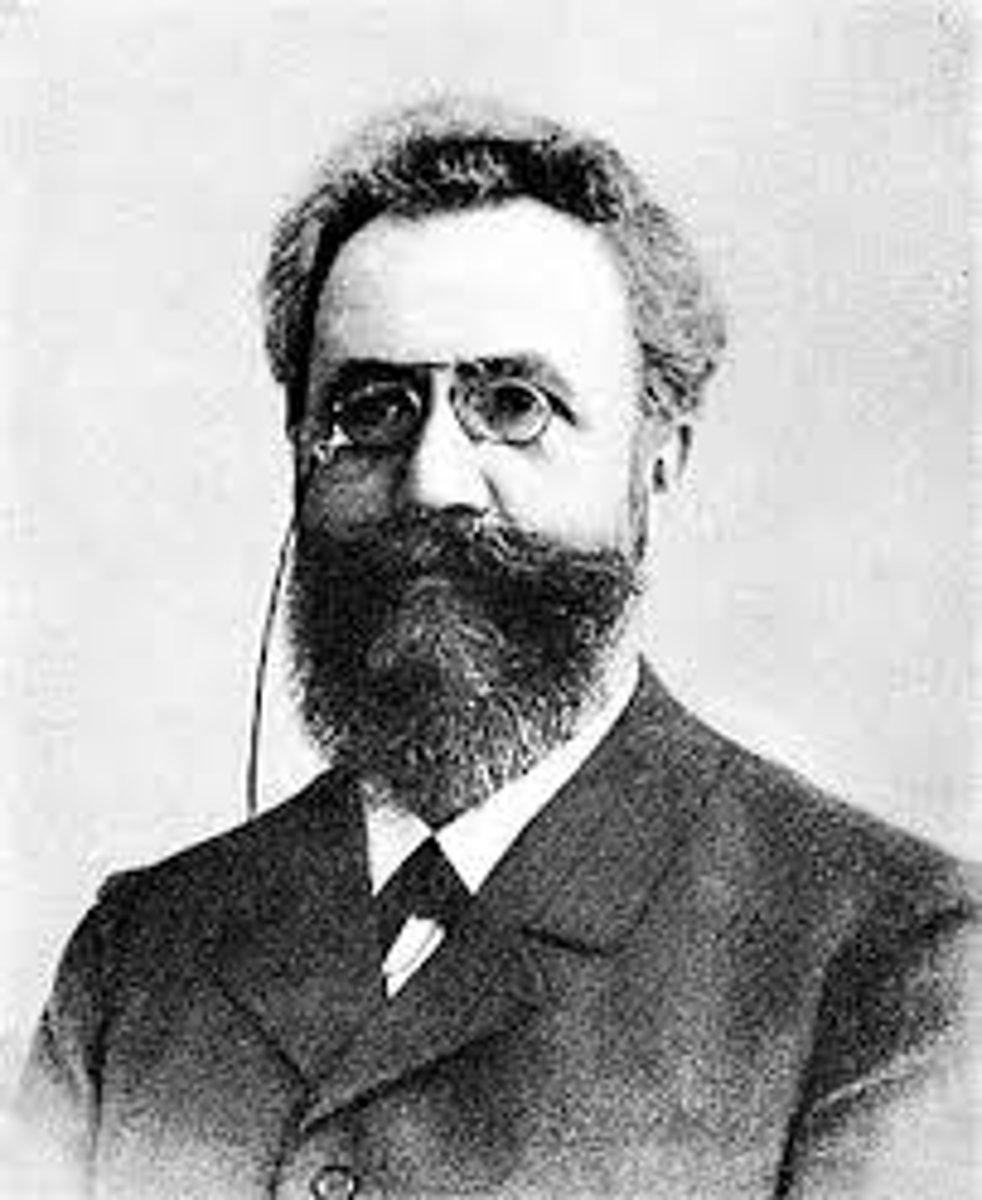
Hermann Ebbinghaus
Memorized nonsense syllables in early study on human memory
Erik Erikson
Known for his 8-stage theory of Psychosocial Development
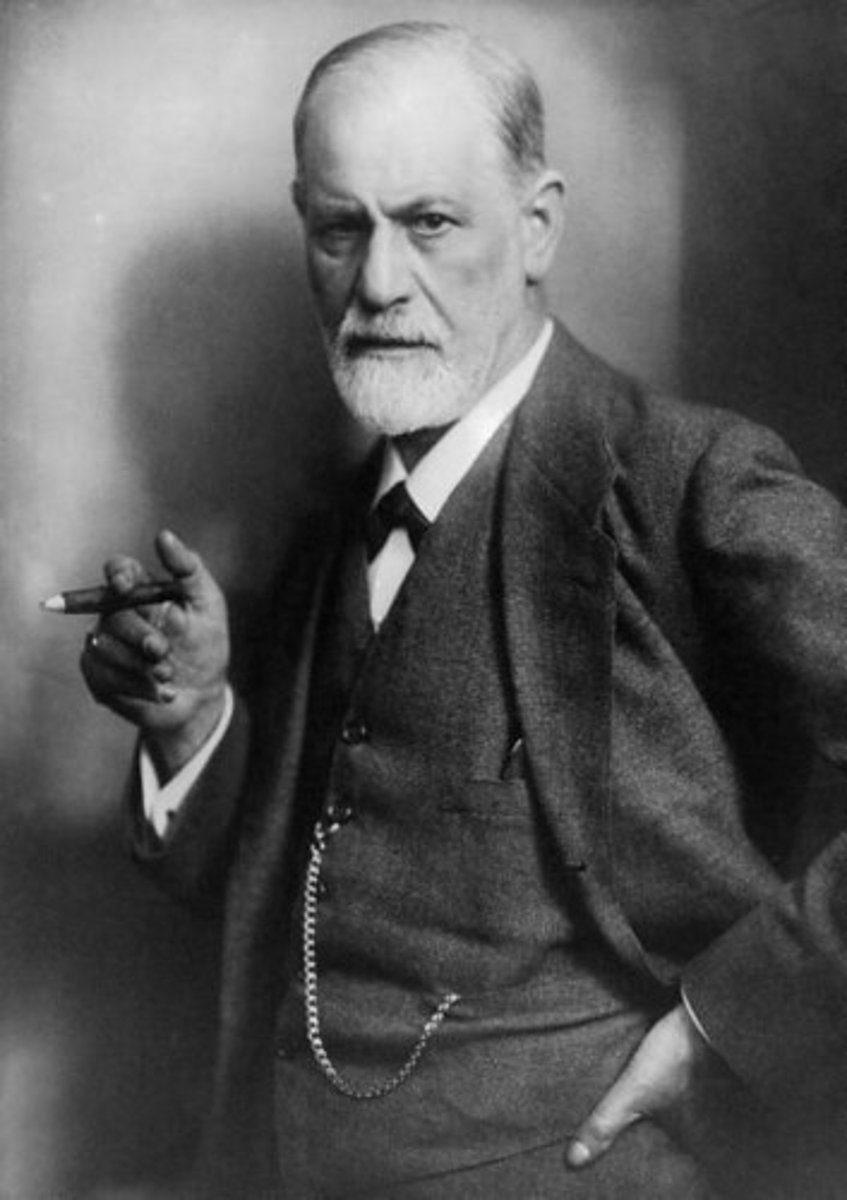
Sigmund Freud
Developed psychoanalysis; considered to be "father of modern psychiatry"
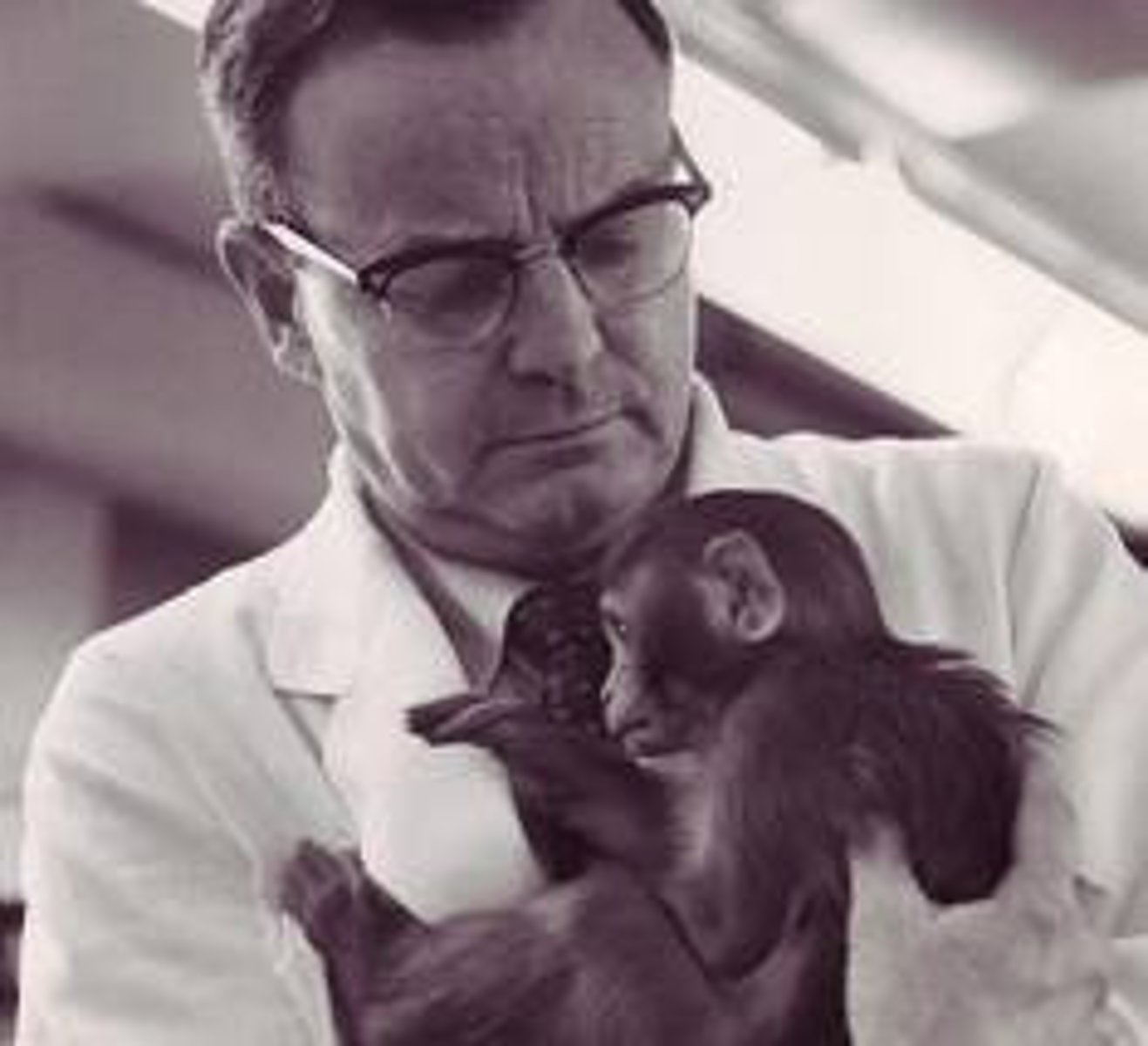
Harry Harlow
Studied attachment in monkeys with artificial mothers
William James
created Functionalist school of thought; early American psychology teacher/philosopher
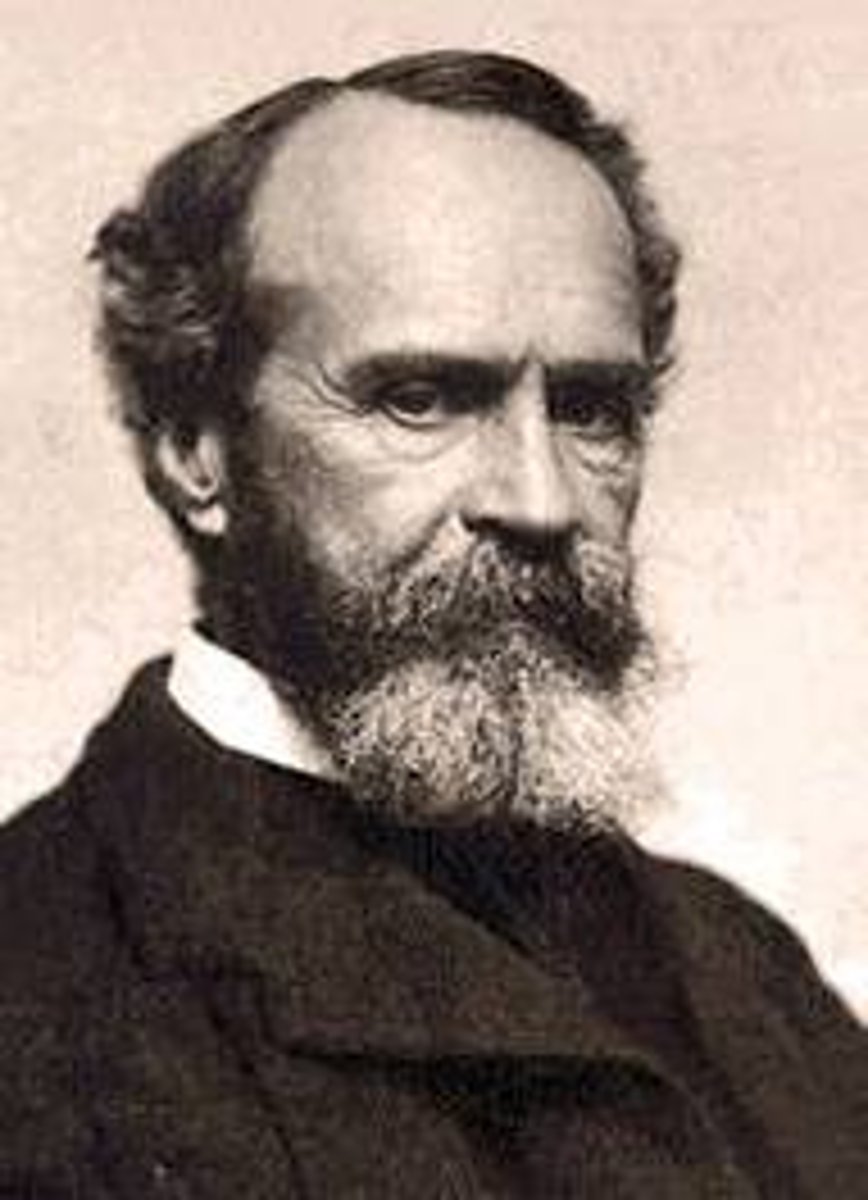
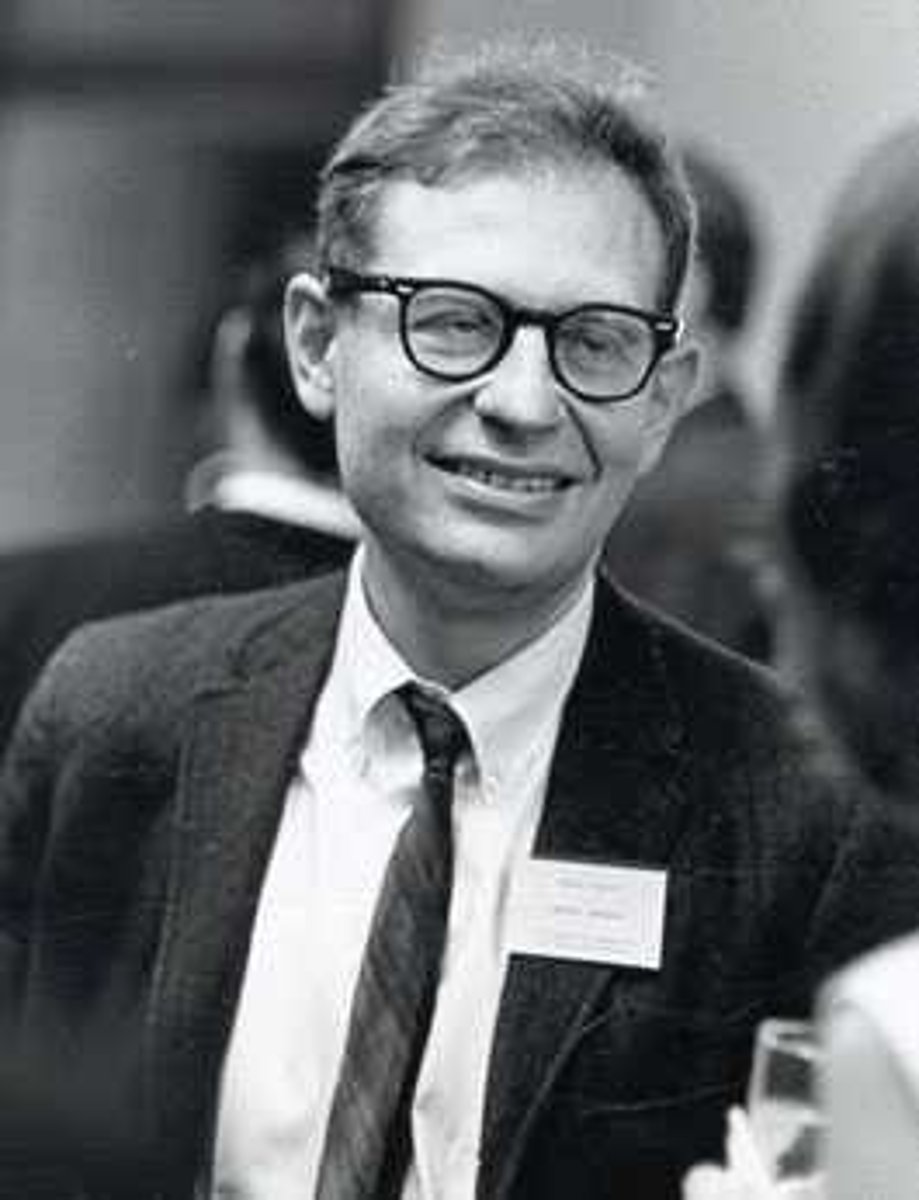
Lawrence Kohlberg
Famous for his theory of moral development in children; made use of moral dilemmas in assessment
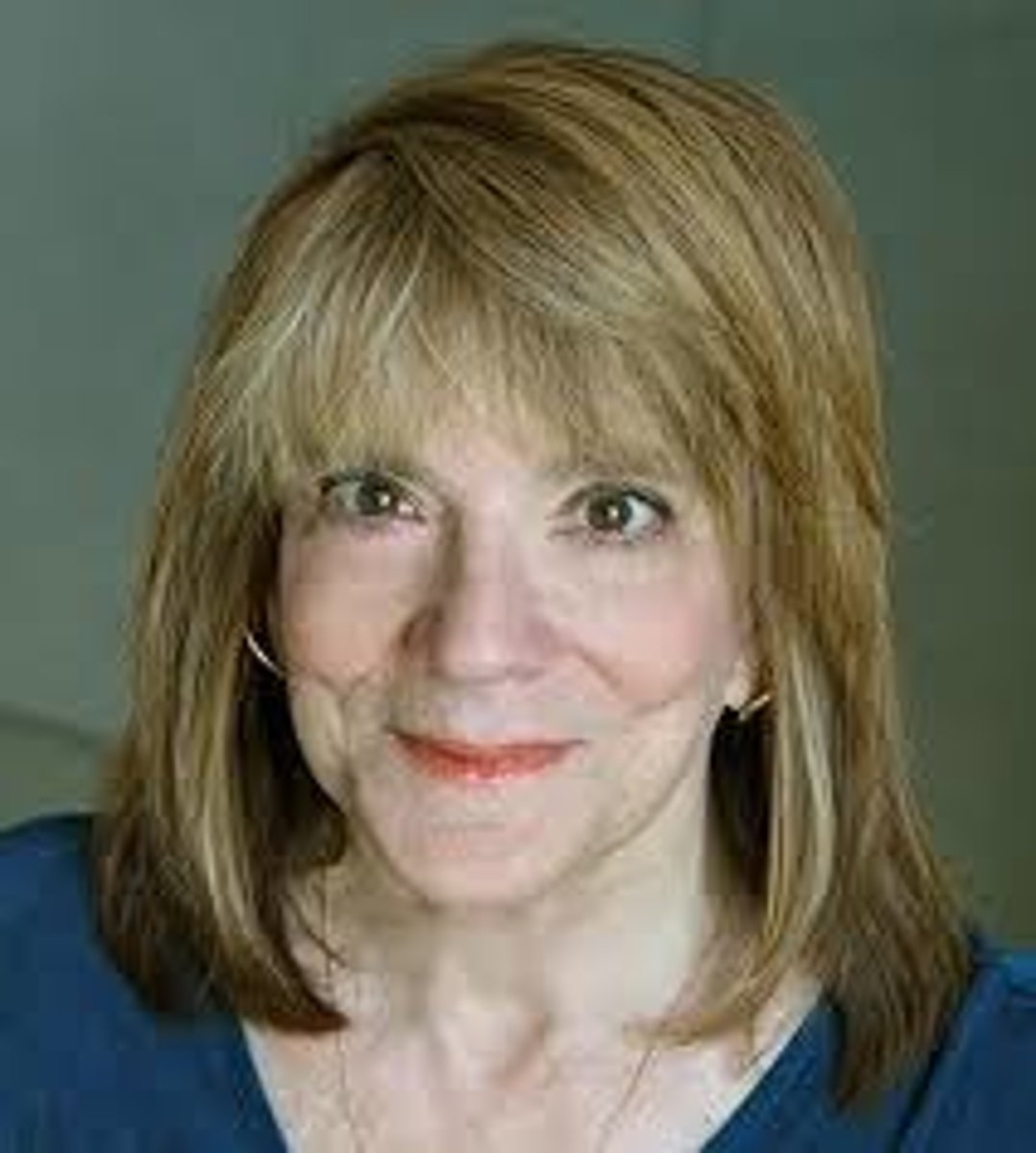
Elizabeth Loftus
Her research on memory construction and the misinformation effect created doubts about the accuracy of eye-witness testimony
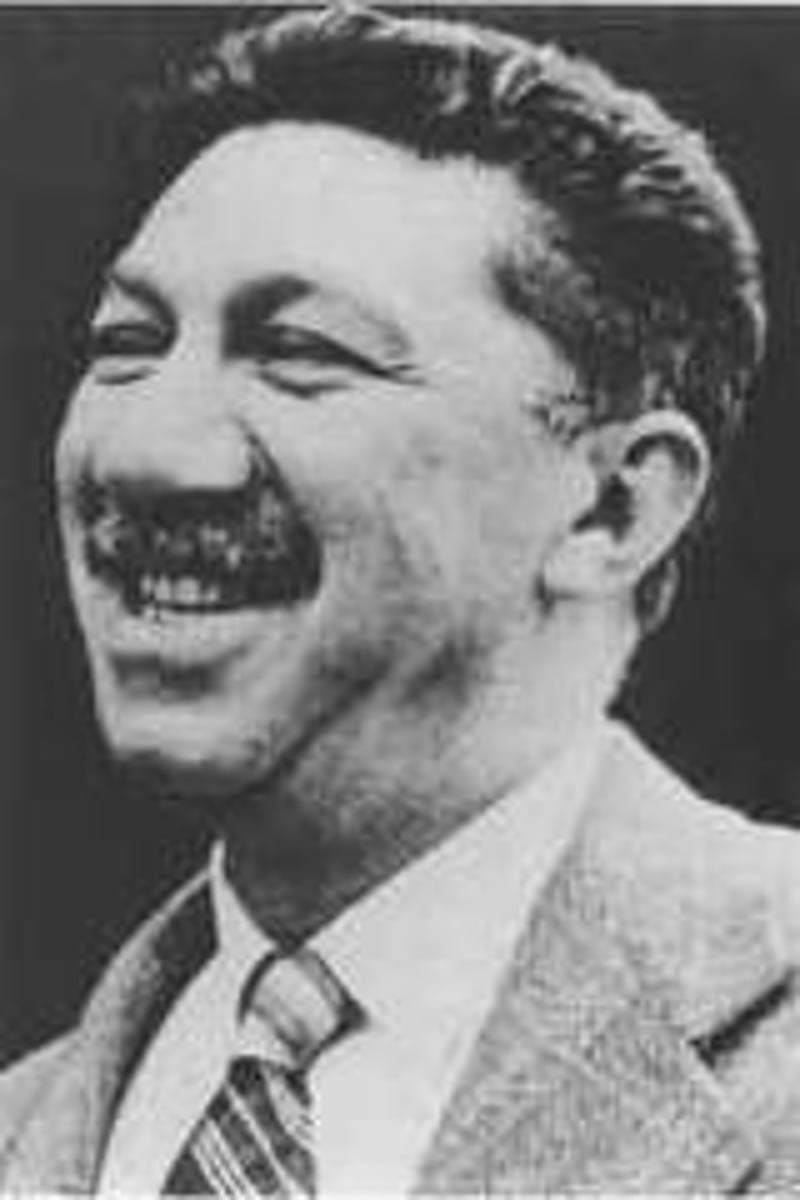
Abraham Maslow
Humanistic psychologist known for his "Hierarchy of Needs" and the concept of "self-actualization"
Stanley Milgram
Conducted "shocking" (Ha!) experiments on obedience
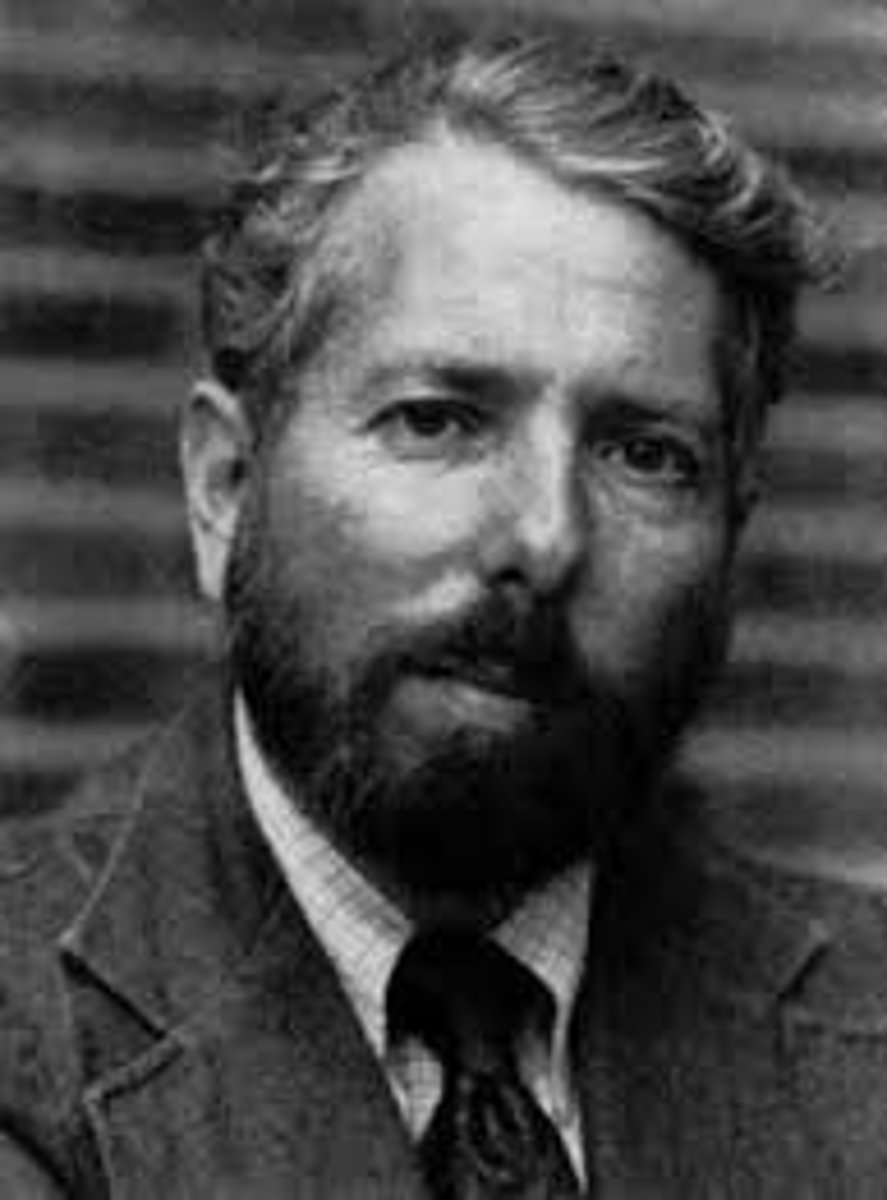
Ivan Pavlov
Described process of classical conditioning after famous experiments with dogs
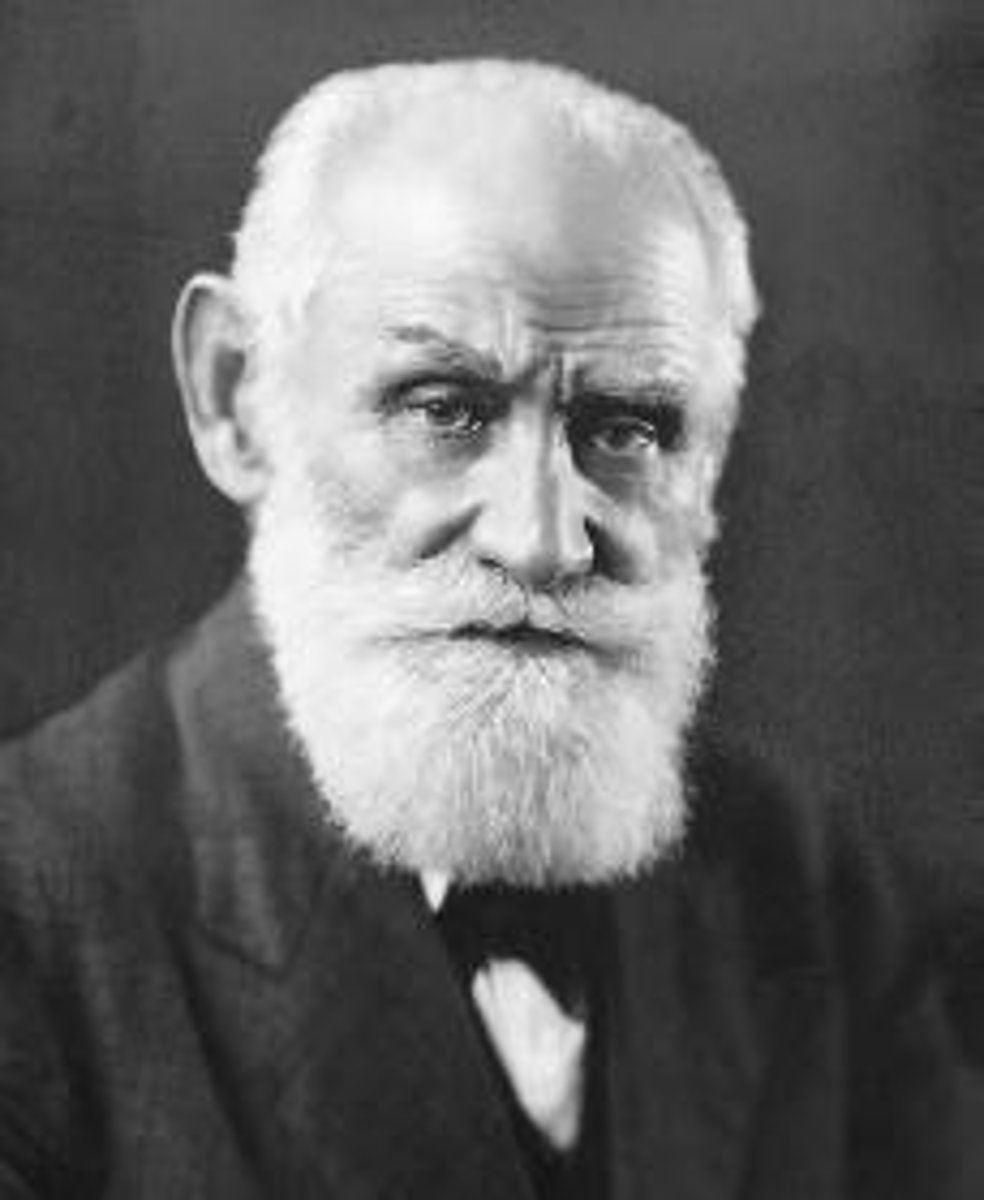
Jean Piaget
Known for his theory of cognitive development in children
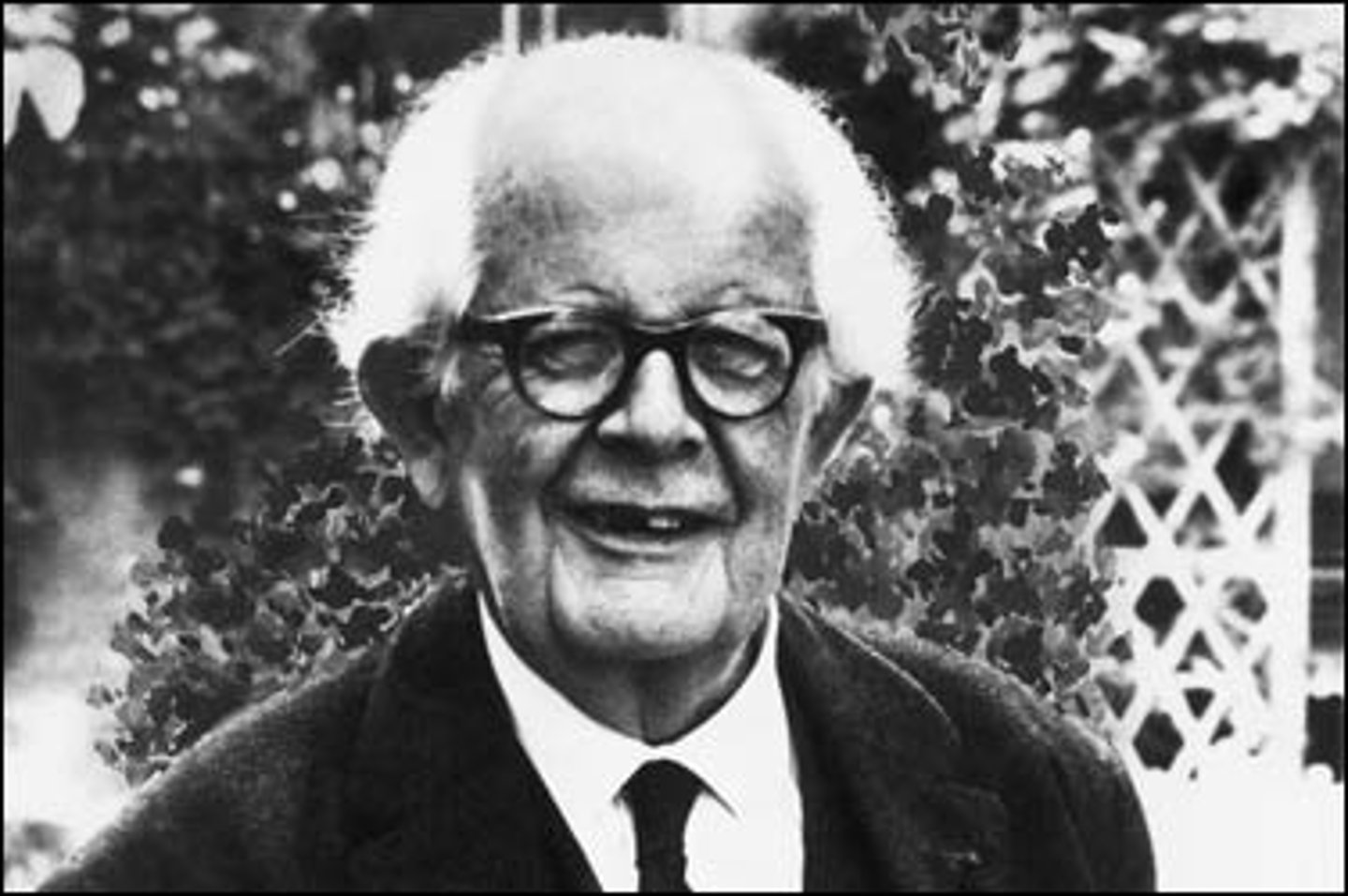
Carl Rogers
Developed "client-centered" therapy
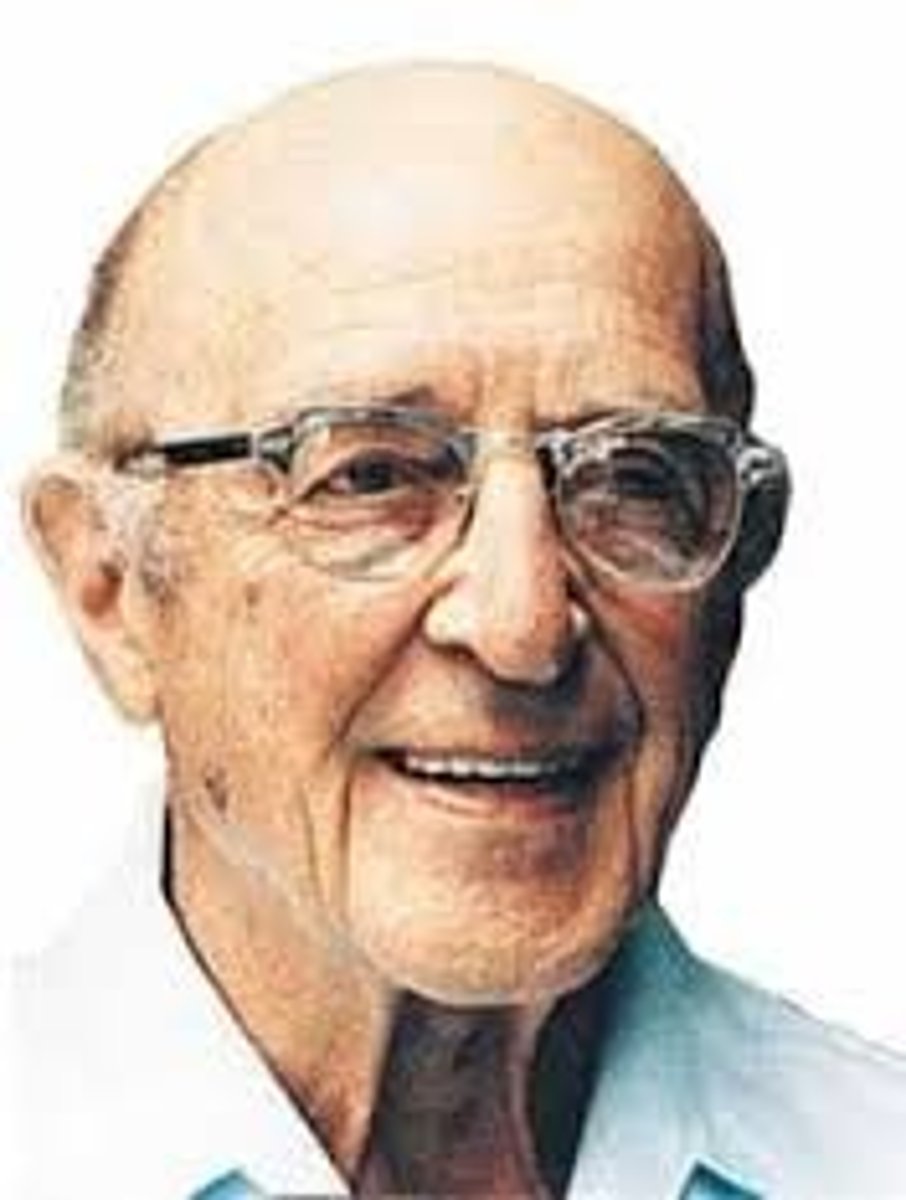
Stanley Schachter
Developed "Two-Factor" theory of emotion; experiments on spillover effect
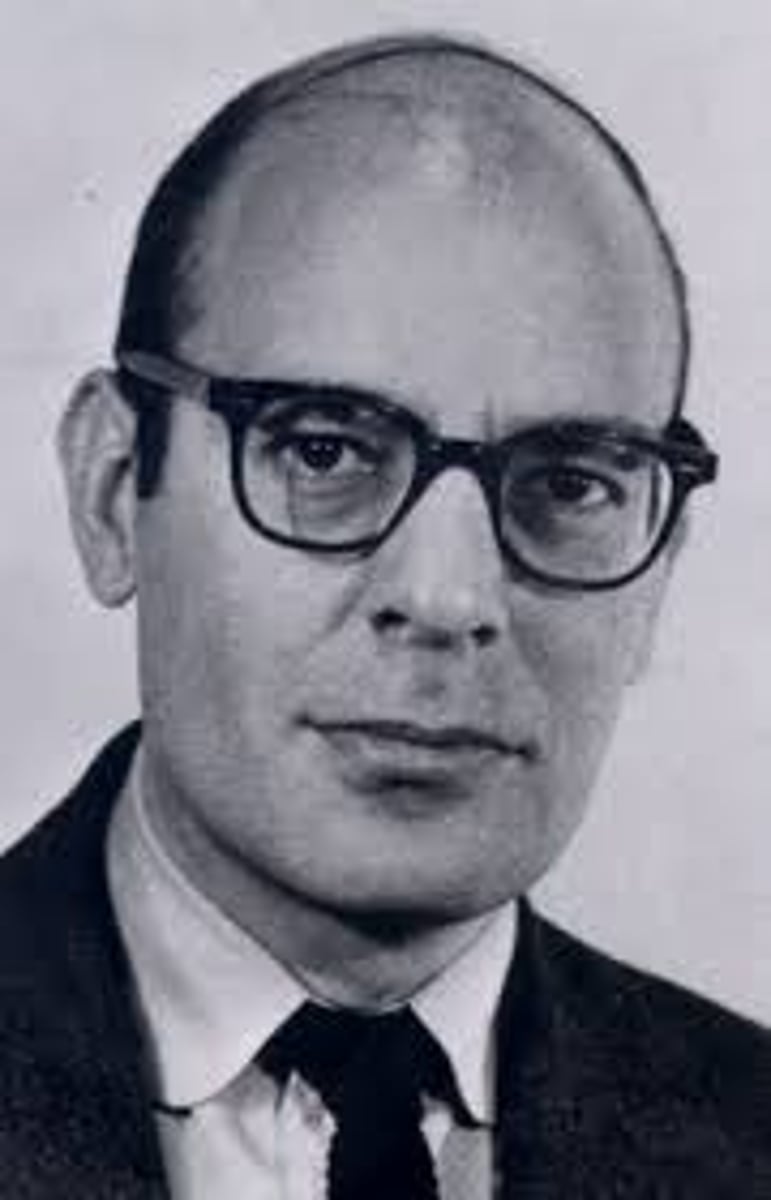
B.F. Skinner
Described process of operant conditioning
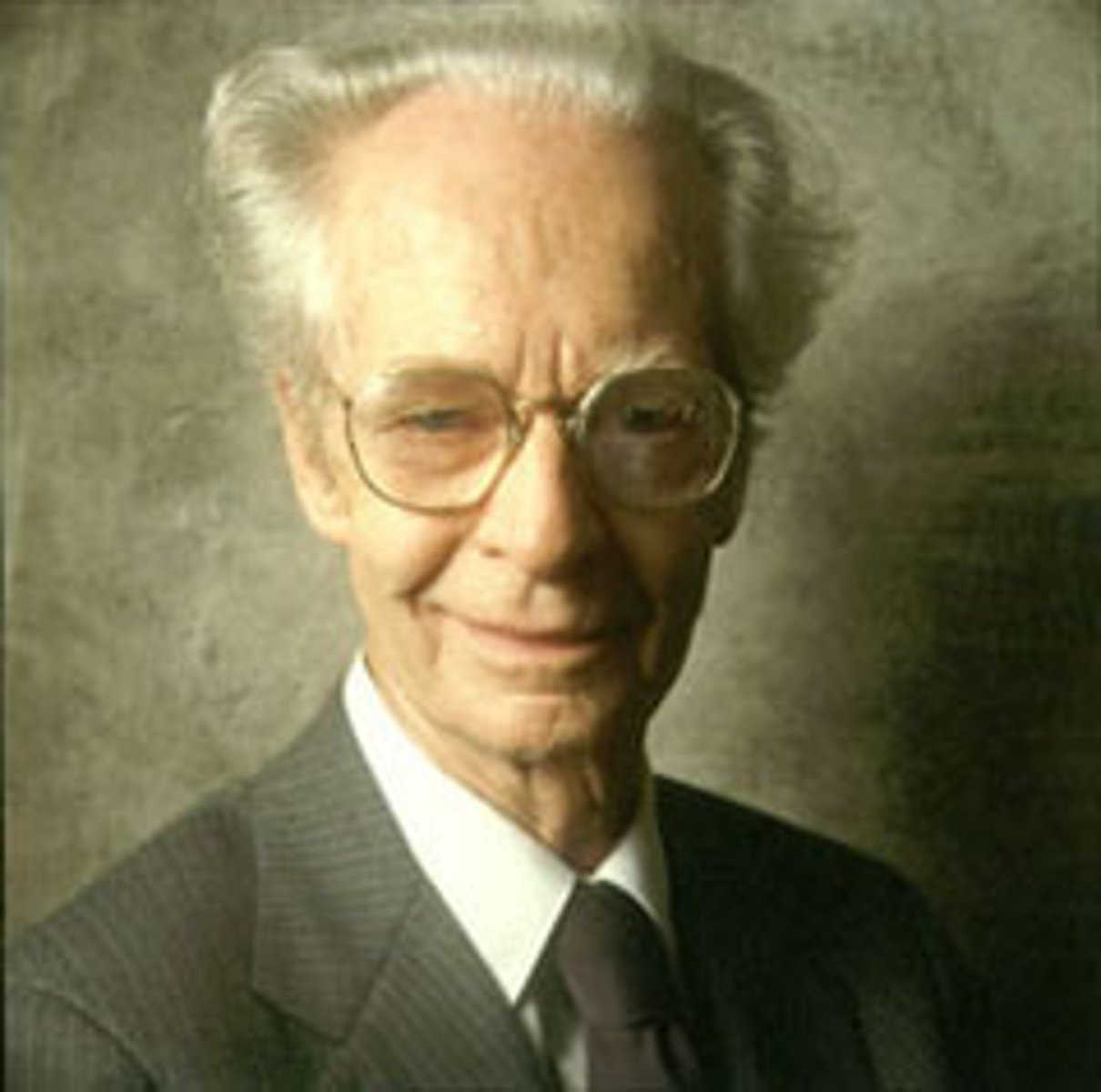
Edward Thorndike
Famous for "law of effect" and research on cats in "puzzle boxes"
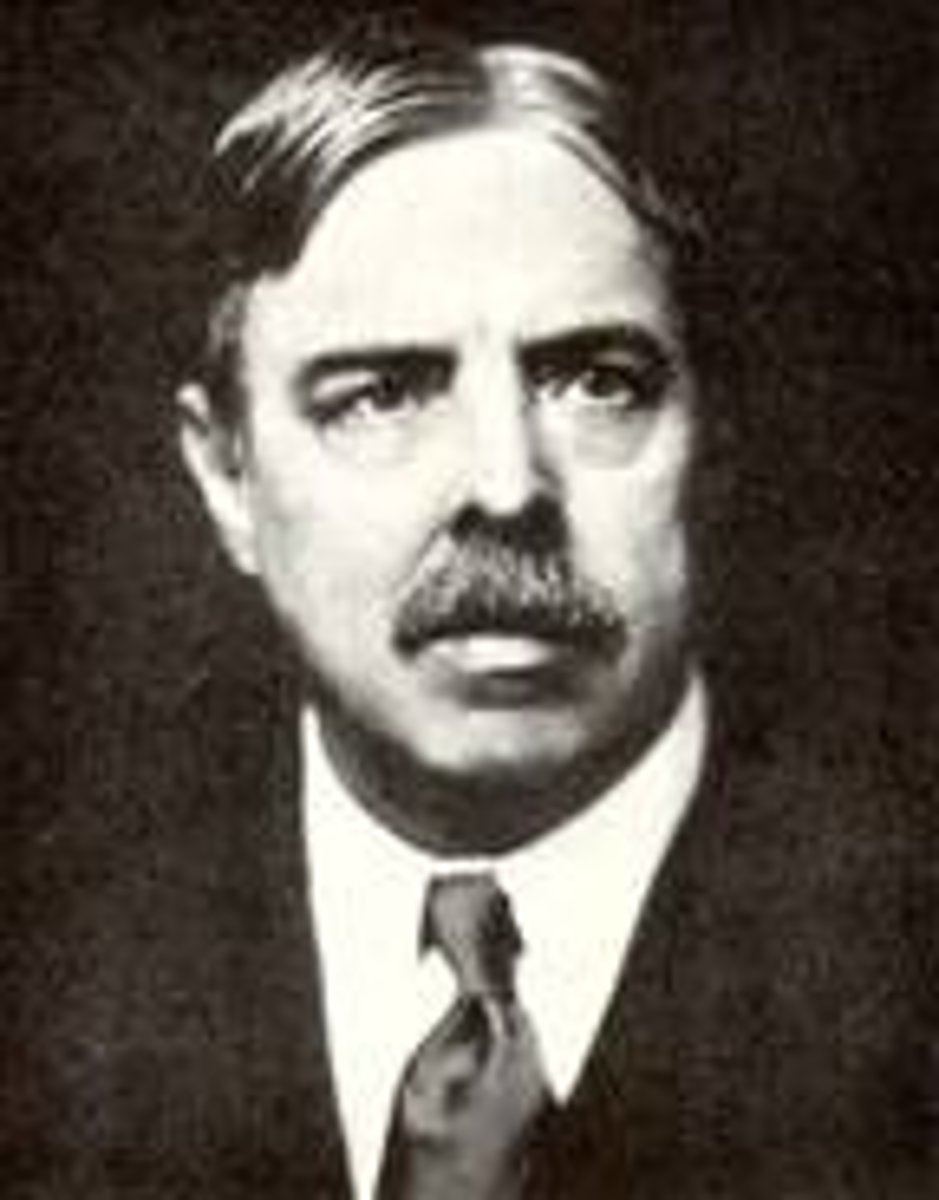
John Watson
Early behaviorist; famous for the "Little Albert" experiments on fear conditioning
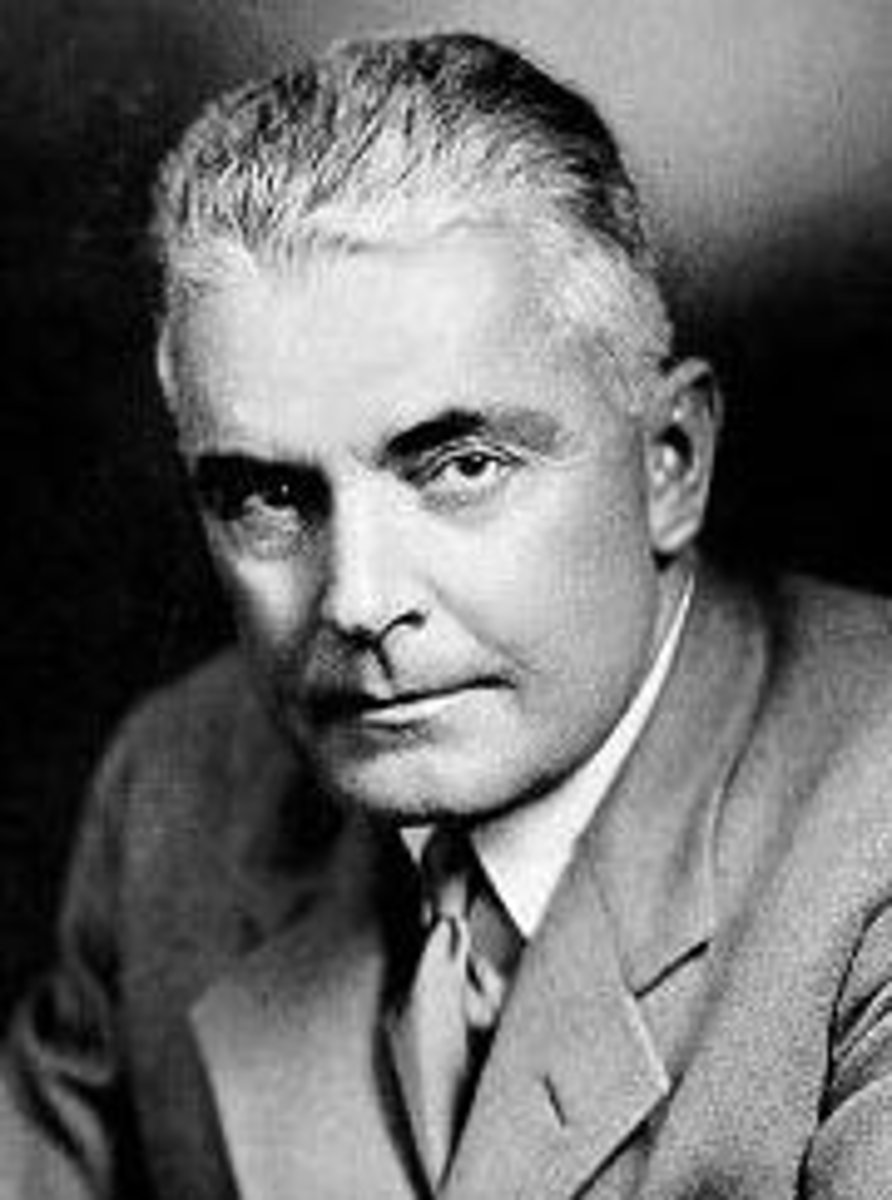
Benjamin Lee Whorf
Famous for describing concept of "liguistic determinism"
William Wundt
Conducted first psychology experiments in first psych laboratory
Philip Zimbardo
Conducted Stanford Prison experiment
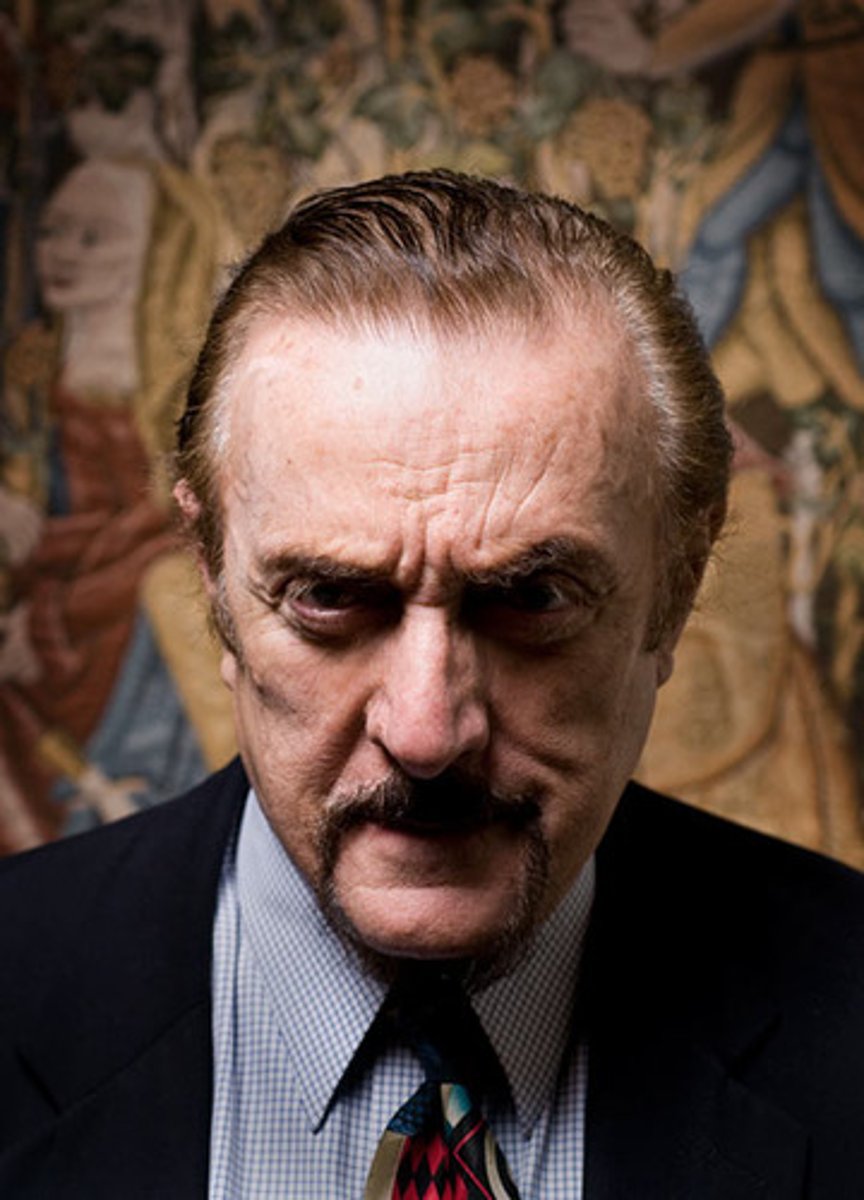
Hans Selye
Described General Adaptation Syndrome (GAS)
Karen Horney
Neo-Freudian; offered feminist critique of Freud's theory
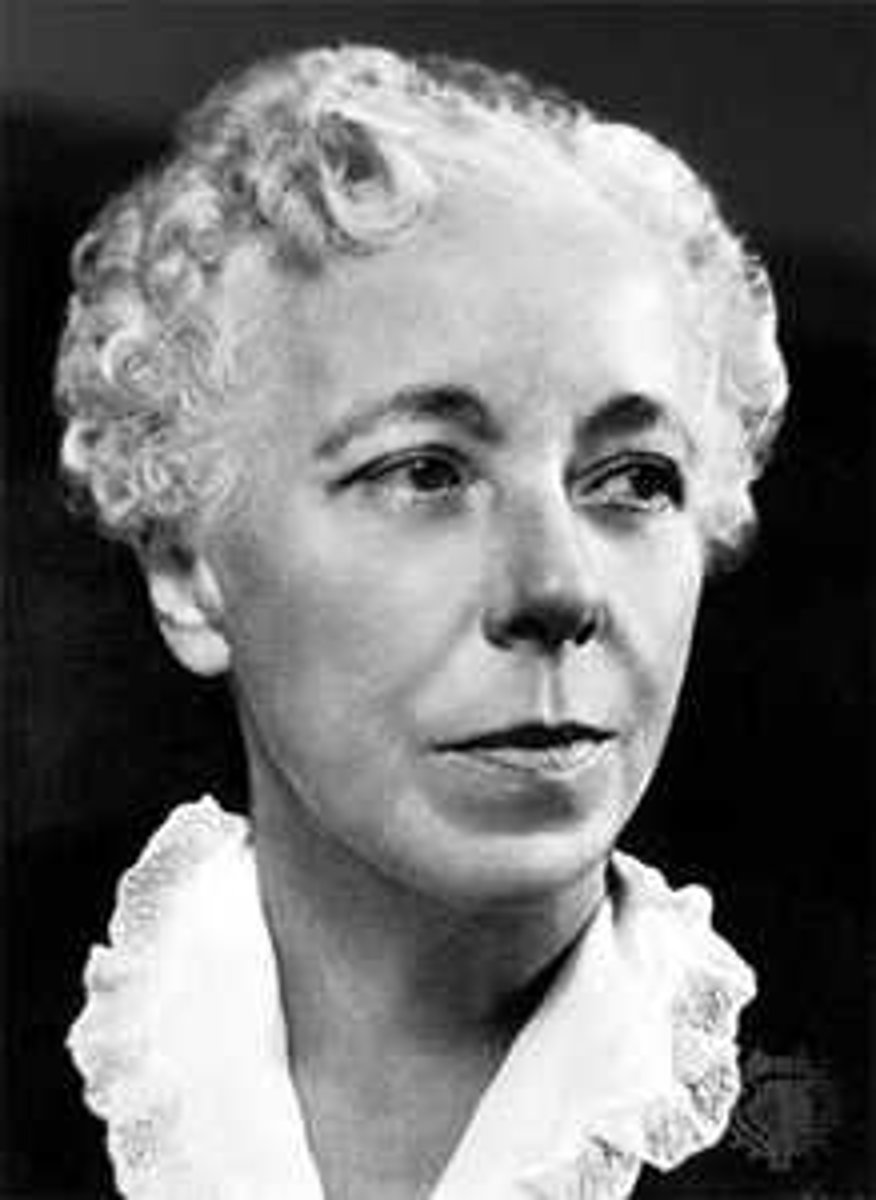
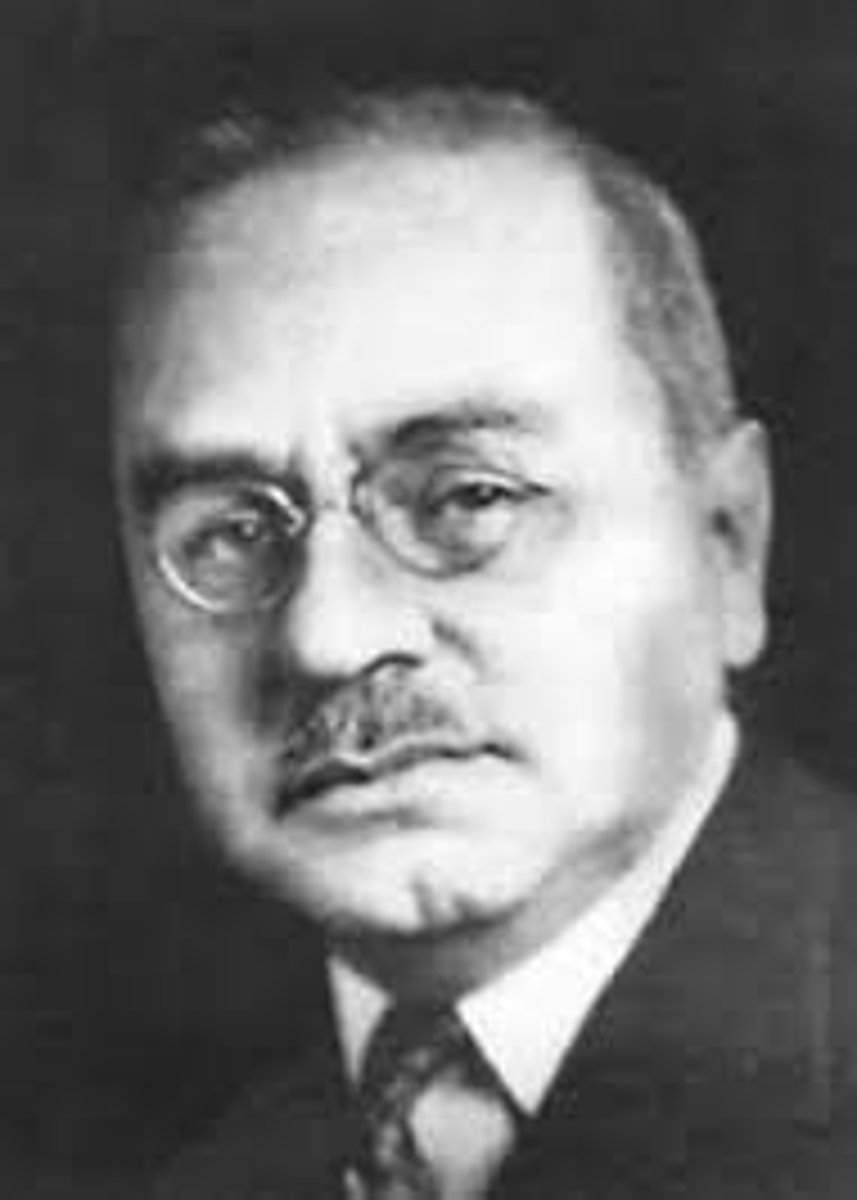
Alfred Adler
Neo-Freudian; introduced concept of "inferiority complex" and stressed the importance of birth order
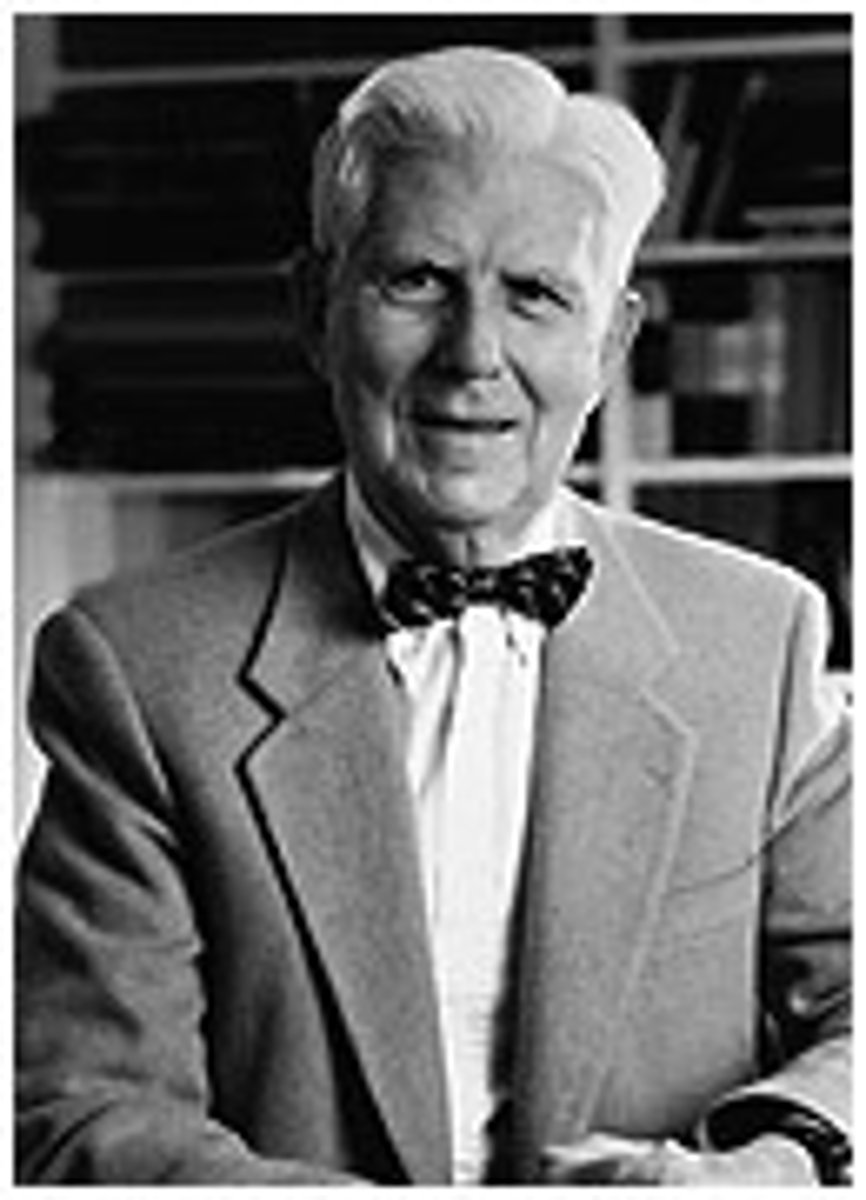
Aaron Beck
Developed cognitive-behavior therapy, created a "depression inventory" test
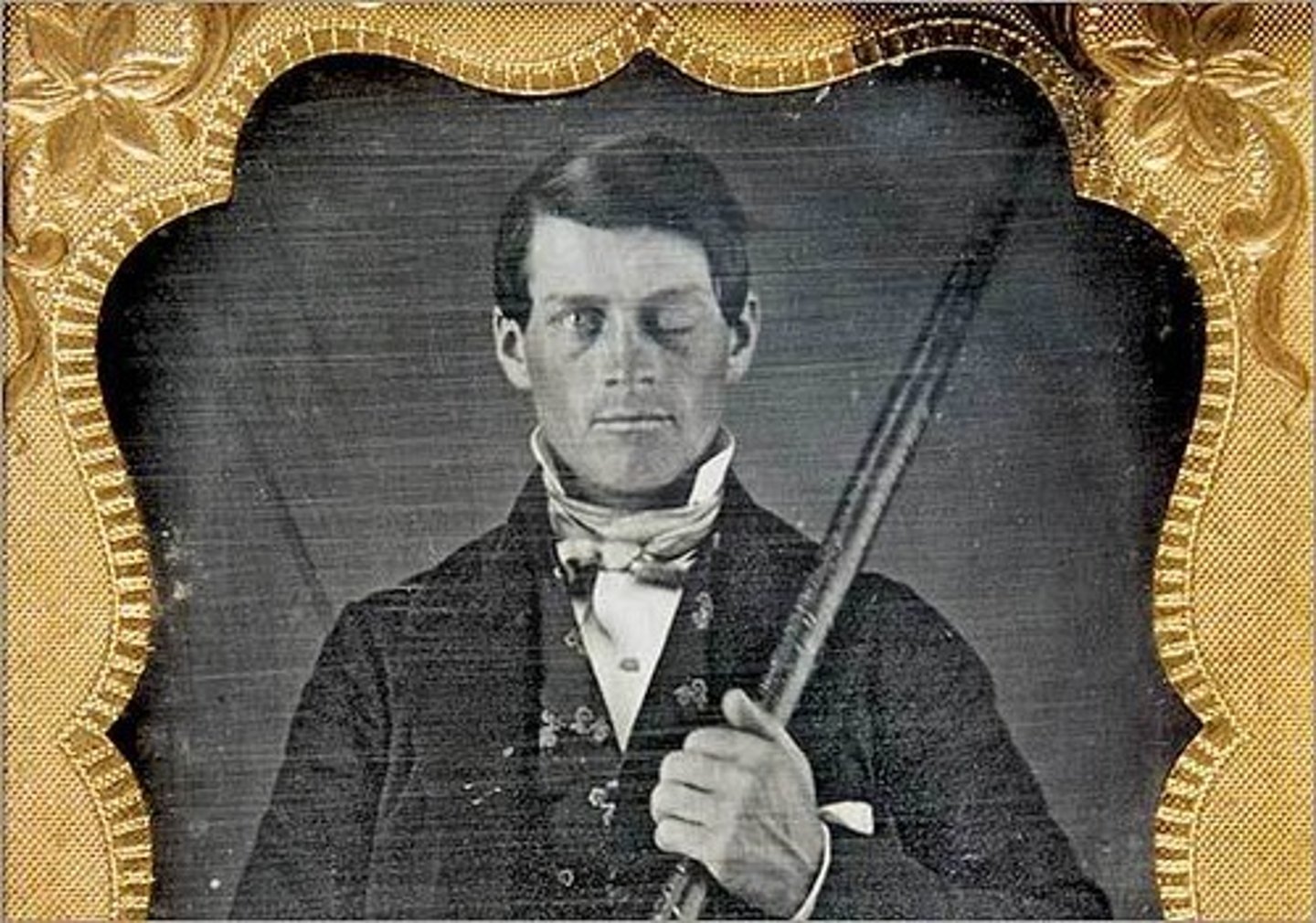
Phineas Gage
his survival of a horrible industrial accident taught us about the role of the frontal lobes (okay, he's not really a psychologist...)
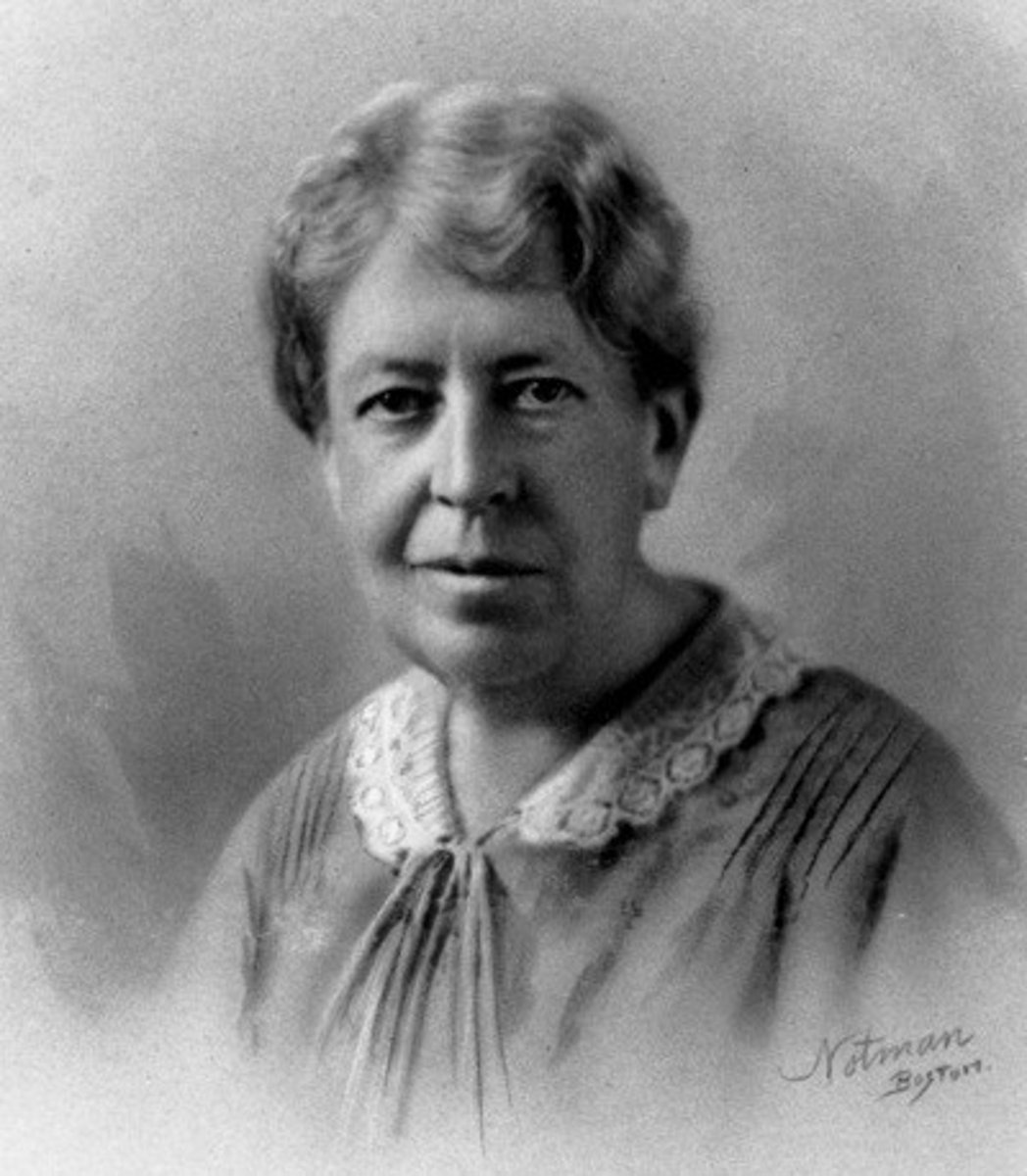
Mary Whiton Calkins
first female president of the APA (1905); a student of William James; denied the PhD she earned from Harvard because of her sex (later, posthumously, it was granted to her)
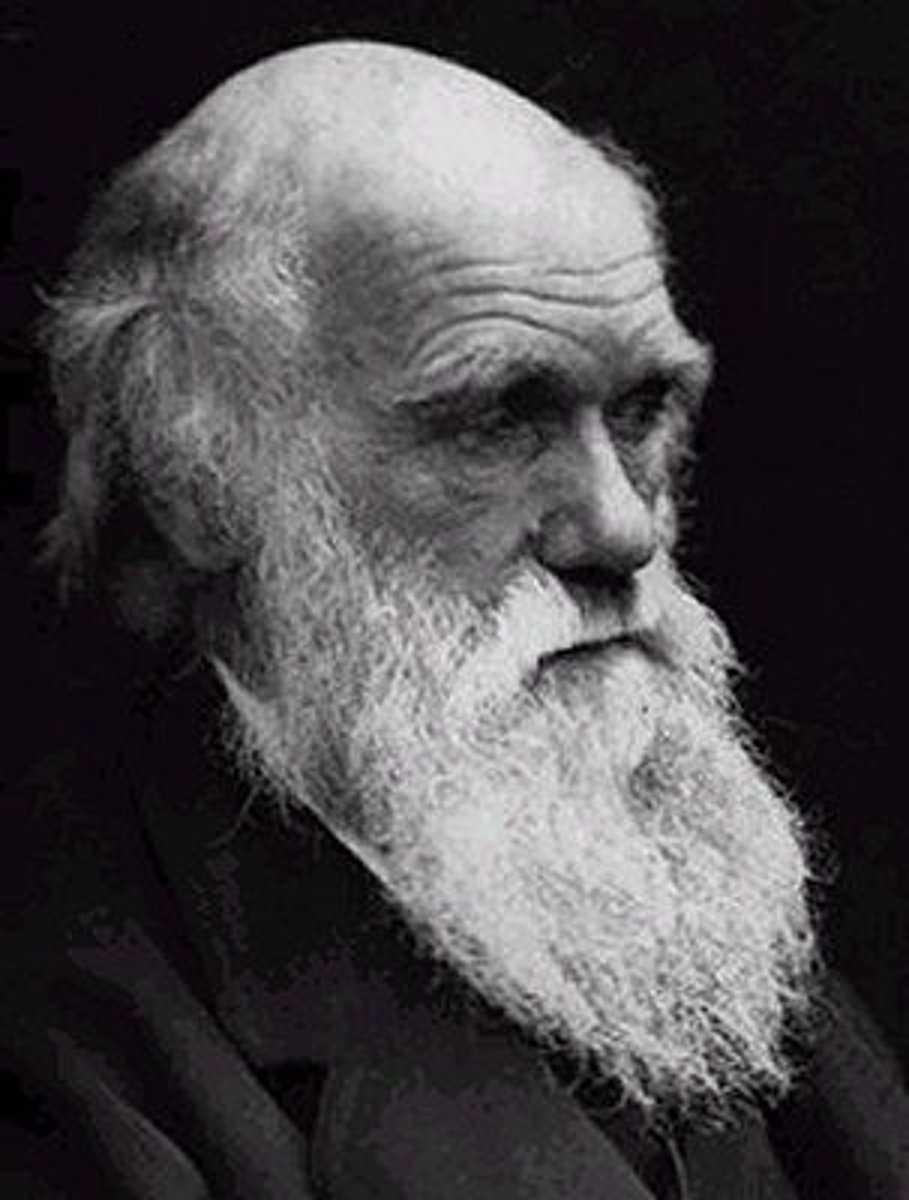
Charles Darwin
his idea, that the genetic composition of a species can be altered through natural selection, has had a lasting impact on psychology through the evolutionary perspective
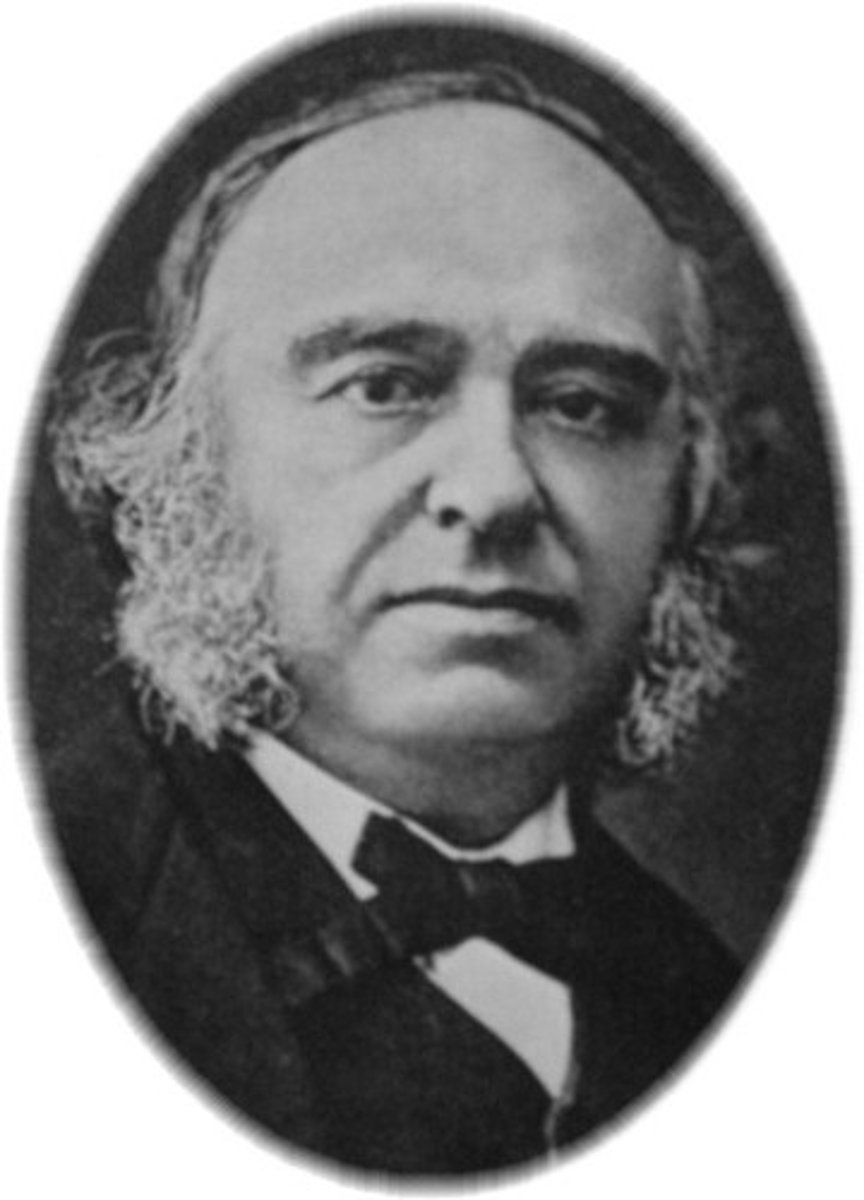
Paul Broca
the part of the brain responsible for coordinating muscles involved in speech was named for him, because he first identified it
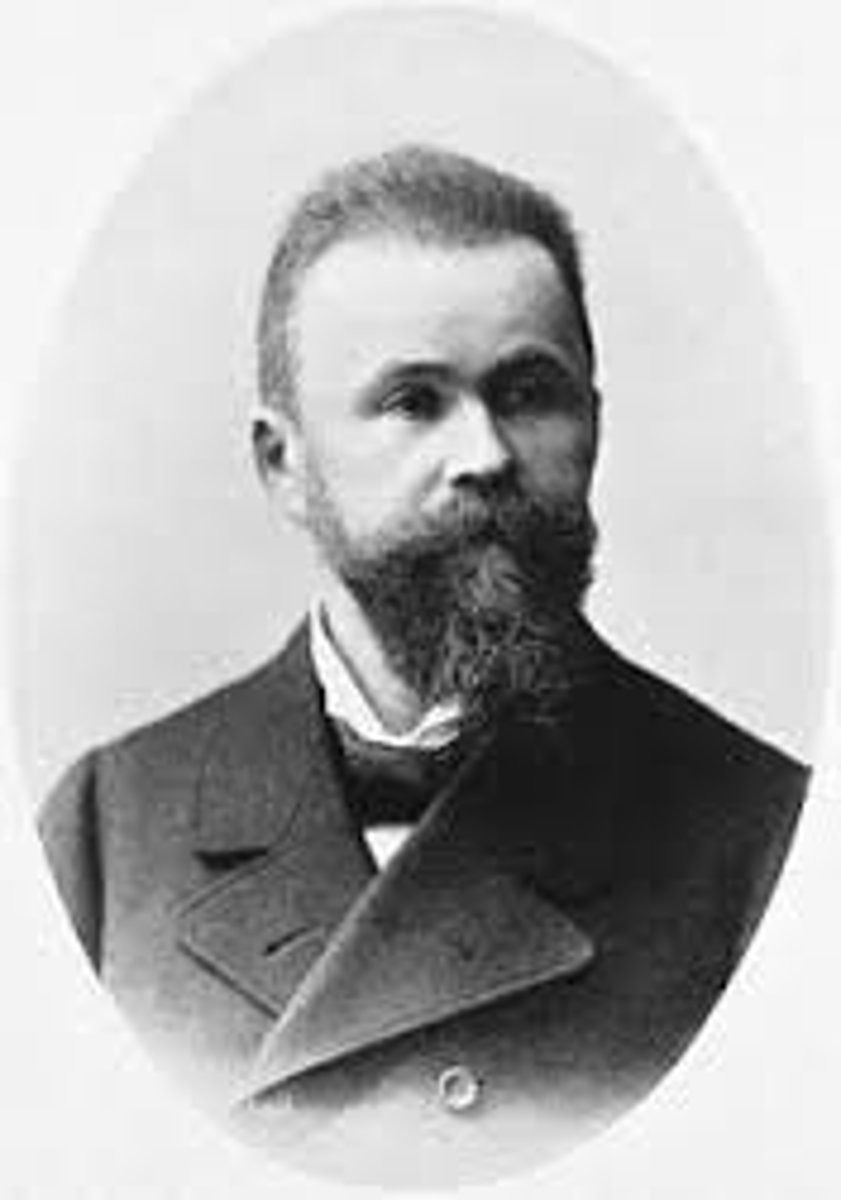
Carl Wernicke
an area of the brain (in the left temporal lobe) involved in language comprehension and expression was named for him because he discovered it
Michael Gazzaniga
Conducted the "HE-ART" experiments with split brain patients
Ernst Weber
best known for "________'s Law" (last name), the notion that the JND magnitude is proportional to the stimulus magnitude
Robert Rescorla
researched classical conditioning; found subjects learn the predictability of an event through trials (cognitive element)
Edward Tolman
researched rats' use of "cognitive maps"
Wolfgang Kohler
considered to be the founder of Gestalt Psychology
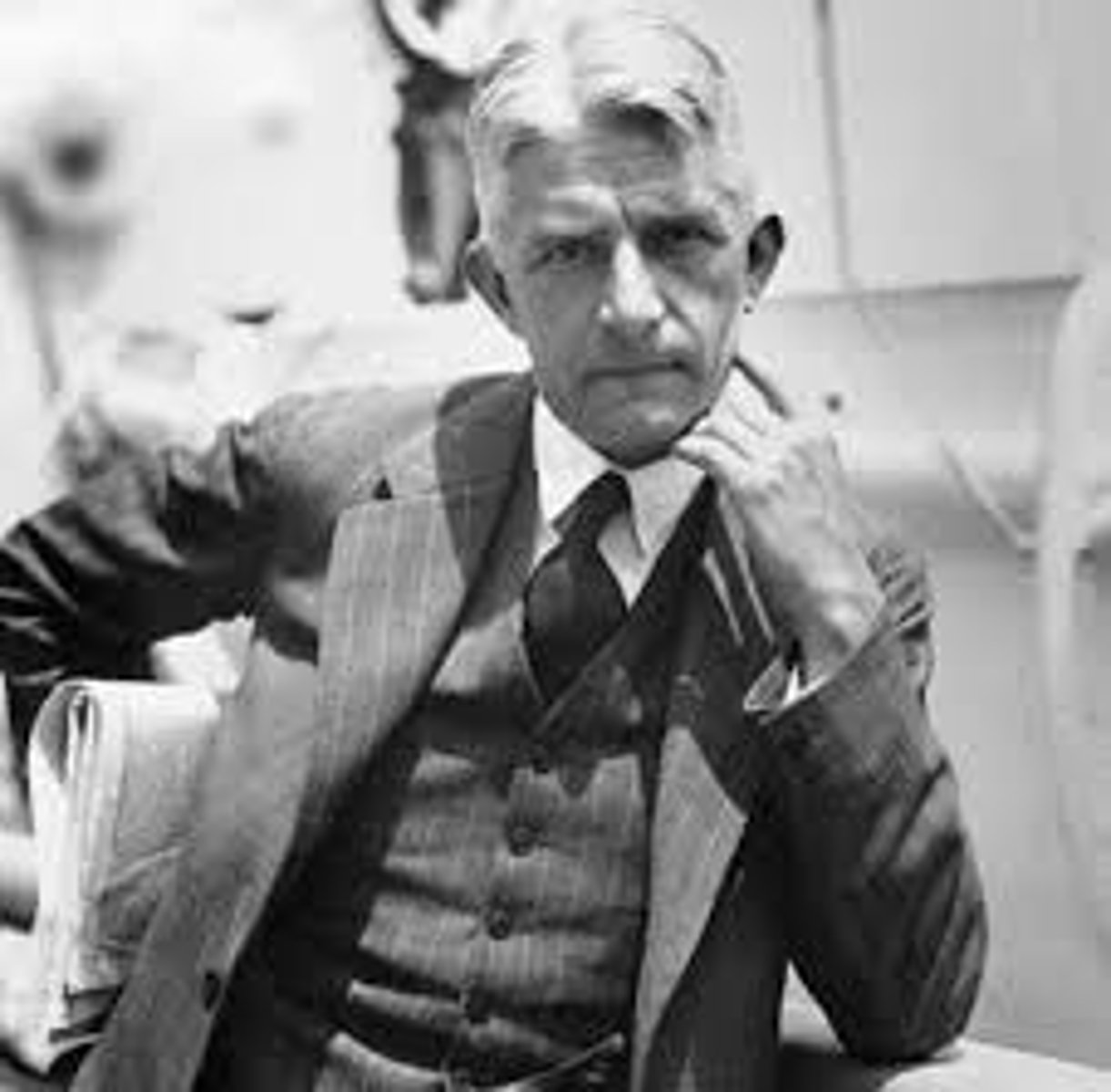
Alfred Kinsey
his research described human sexual behavior and was controversial (for its methodology & findings)
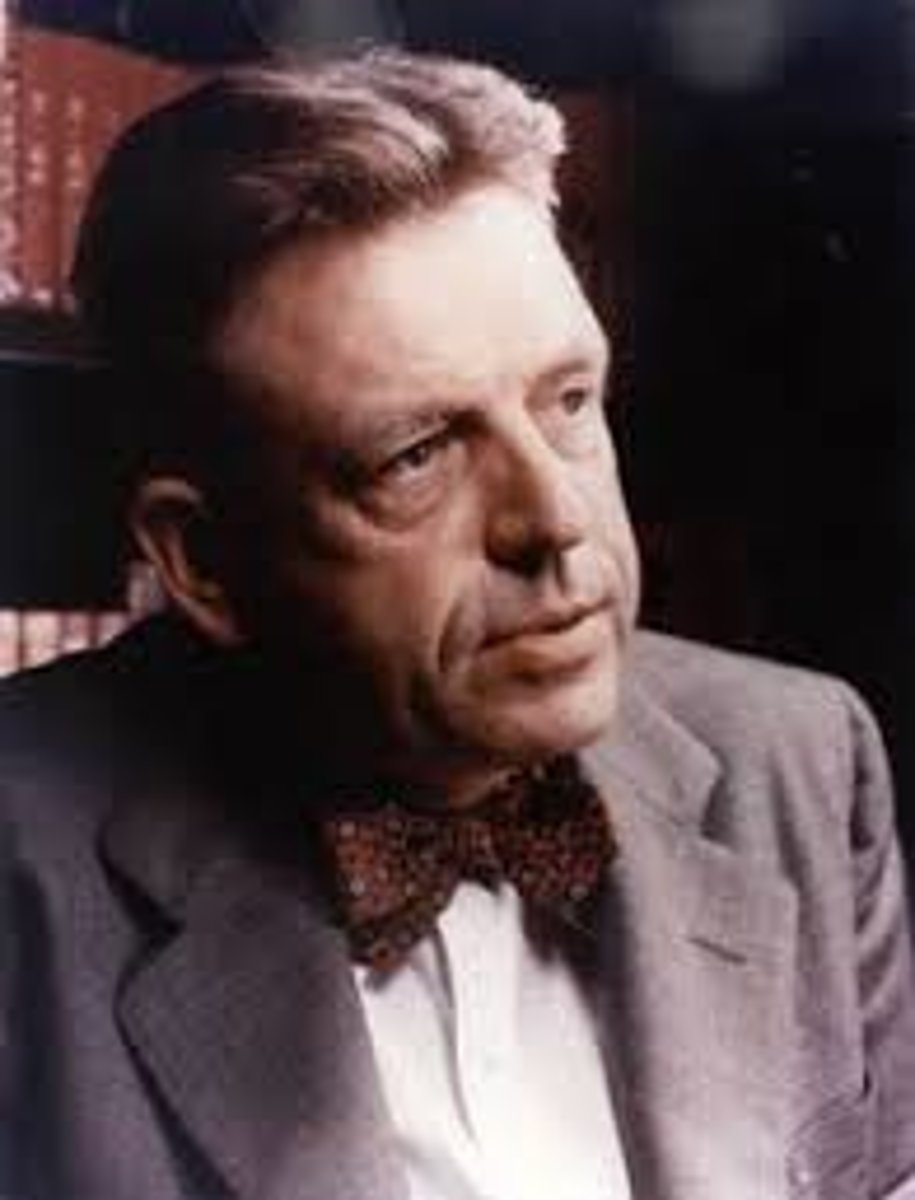
Lev Vygotsky
founder of "Social Development Theory" (note: not "social learning theory" OR "psychosocial" development...); emphasizes importace of More Knowledge Others (MKO) and the Zone of Proximal Development
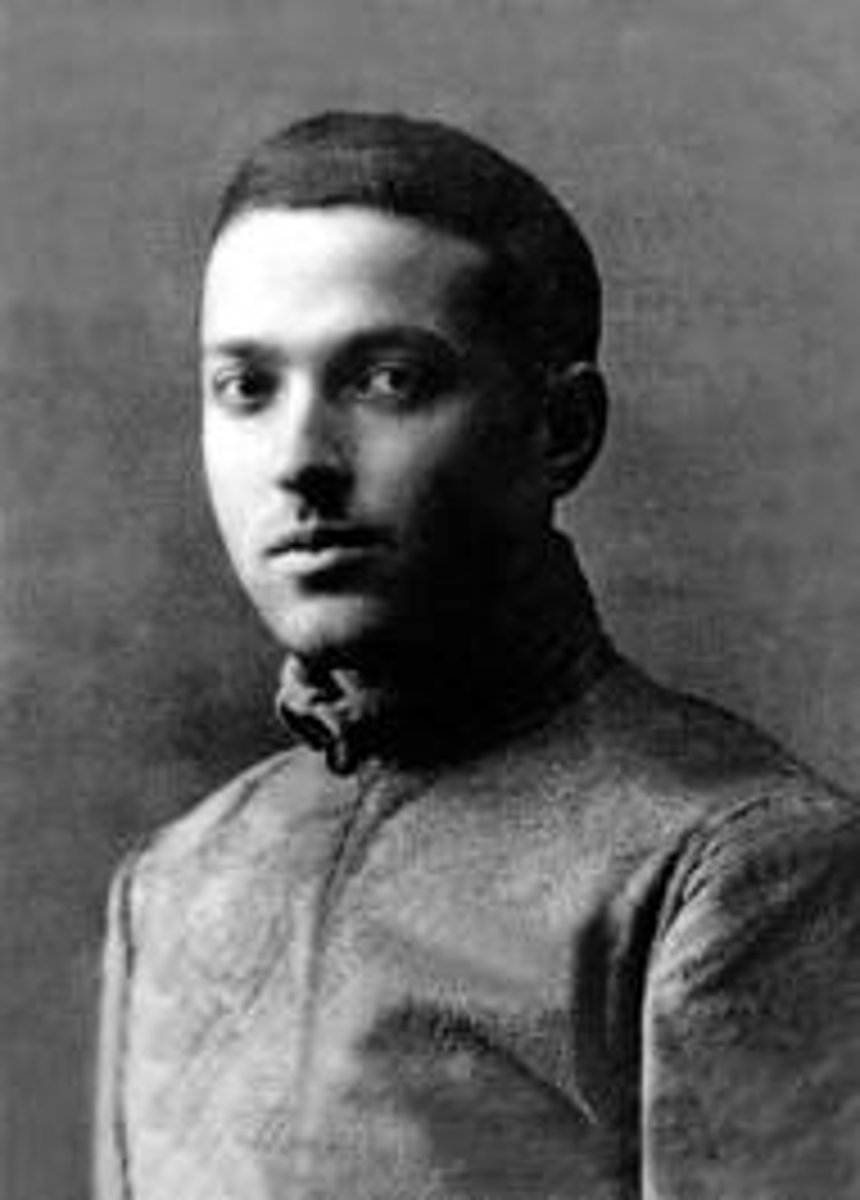
Carl Jung
neo-Freudian who created concept of "collective unconscious" and wrote books on dream interpretation
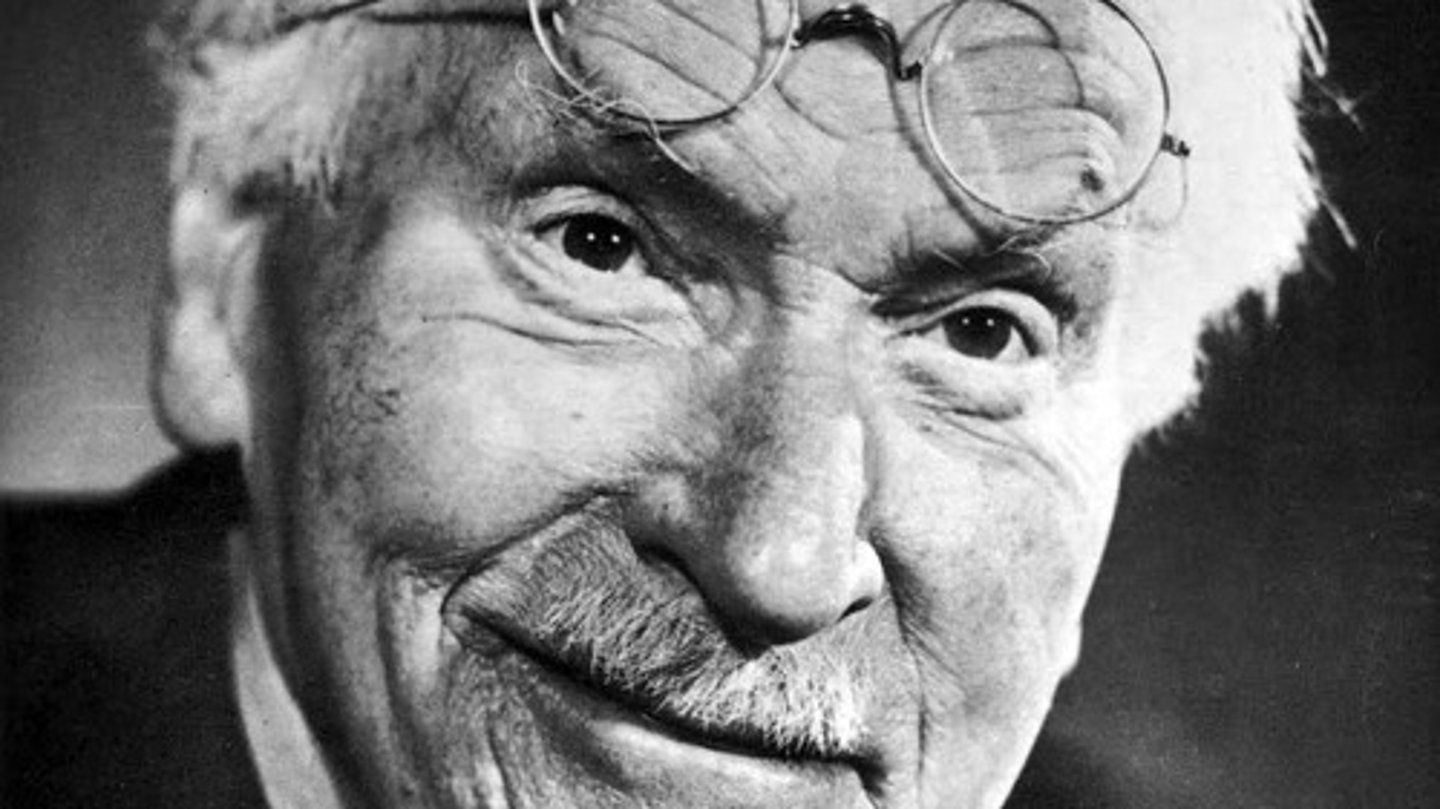
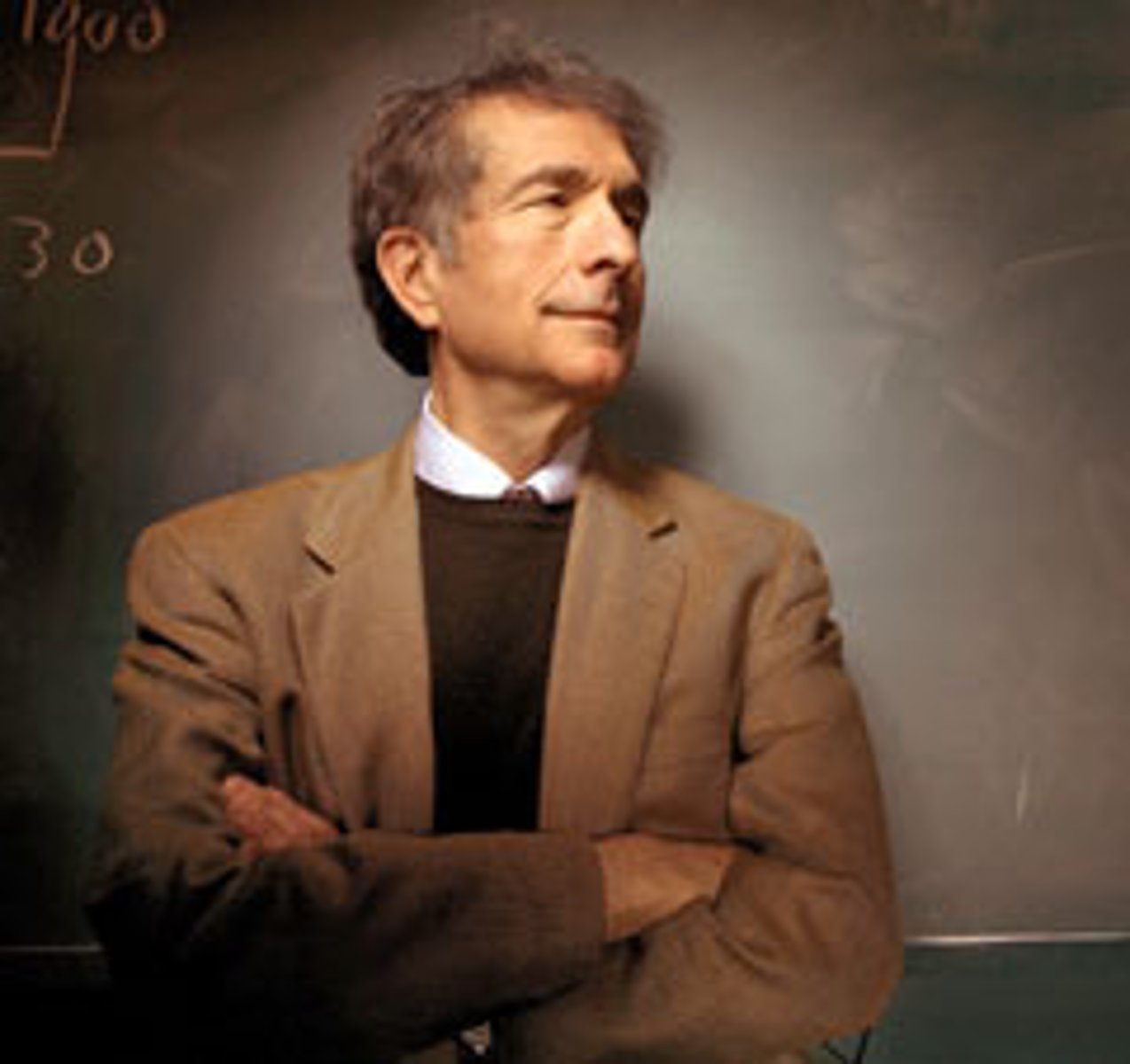
Howard Gardner
best known for his theory of "multiple intelligences"
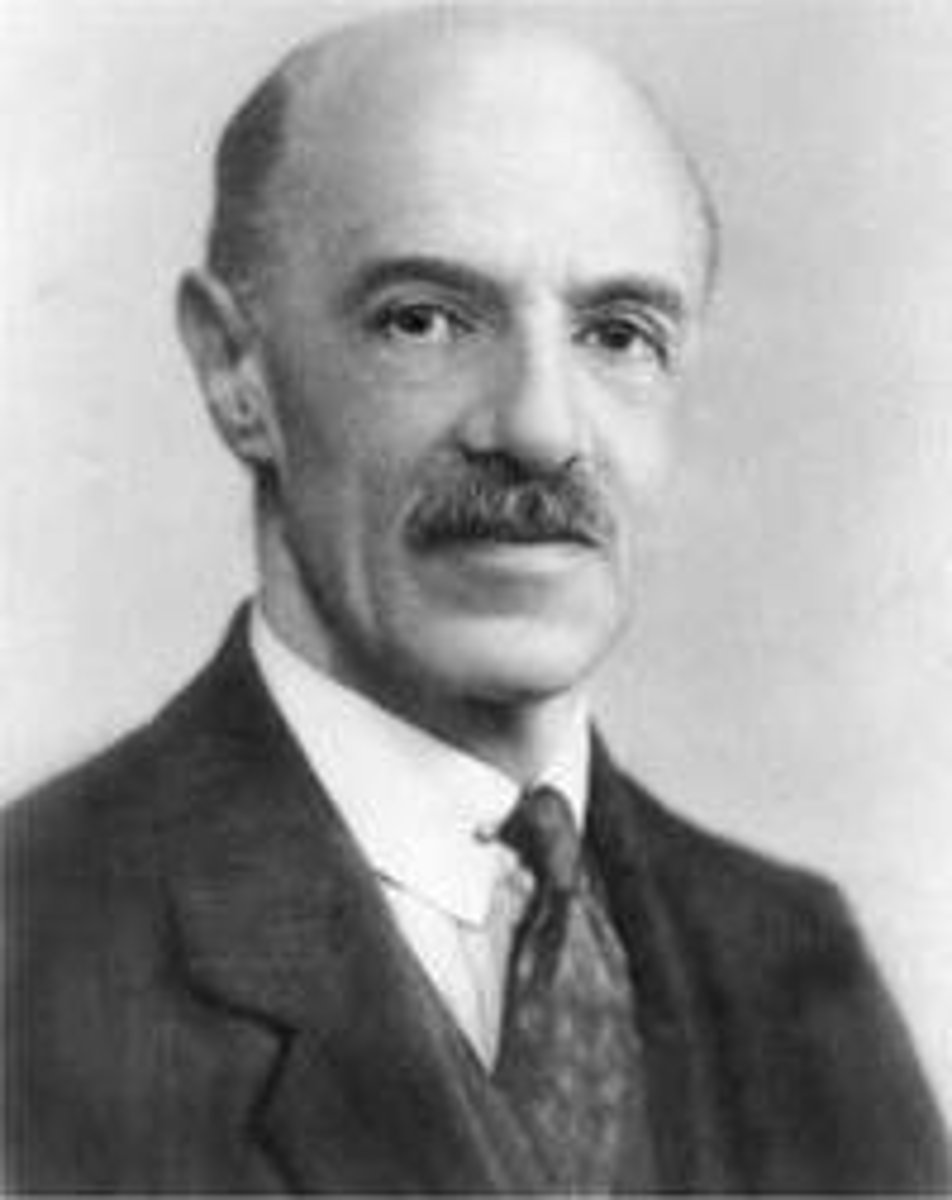
Charles Spearman
creator of "g-factor", or general intelligence, concept
Robert Sternberg
creator of "successful intelligence" theory (3 types)
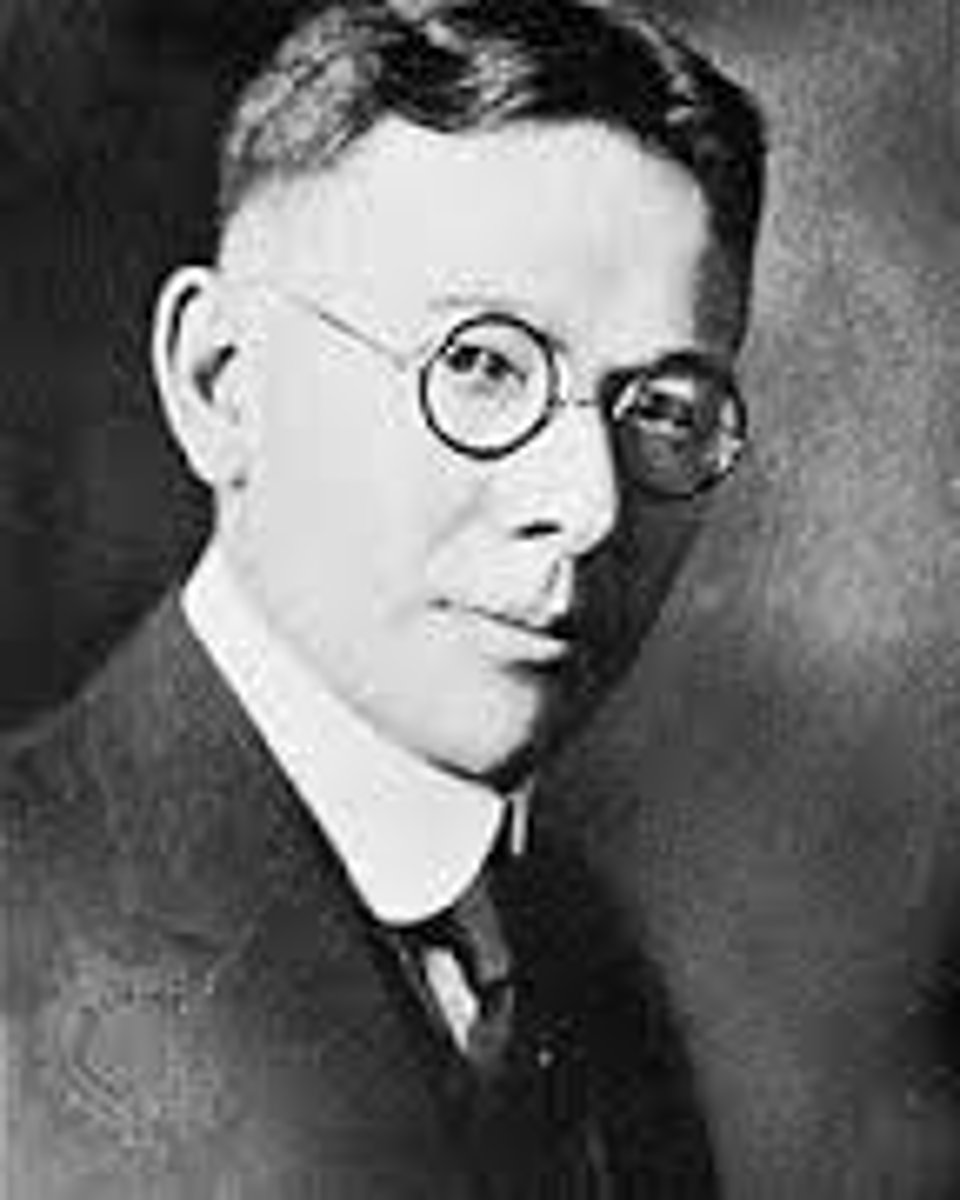
Lewis Terman
advocate of intelligence testing in US; developed Standford-Binet test and oversaw army's use of intelligence testing during WWI
David Weschler
Developer of WAIS and WISC intelligence tests
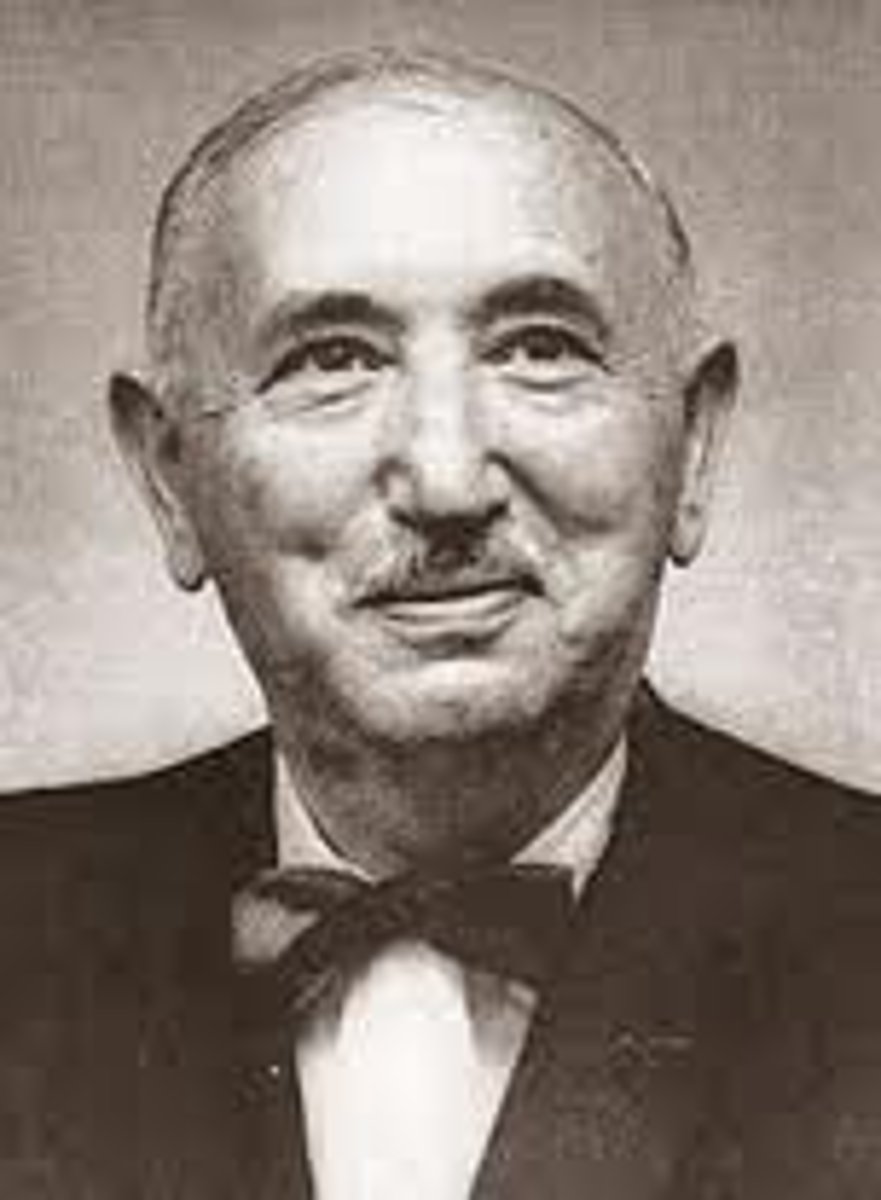
Paul Ekman
Interested in the universality of facial expressions: facial expressions carry same meaning regardless of culture, context, or language. Use of microexpressions to detect lying.
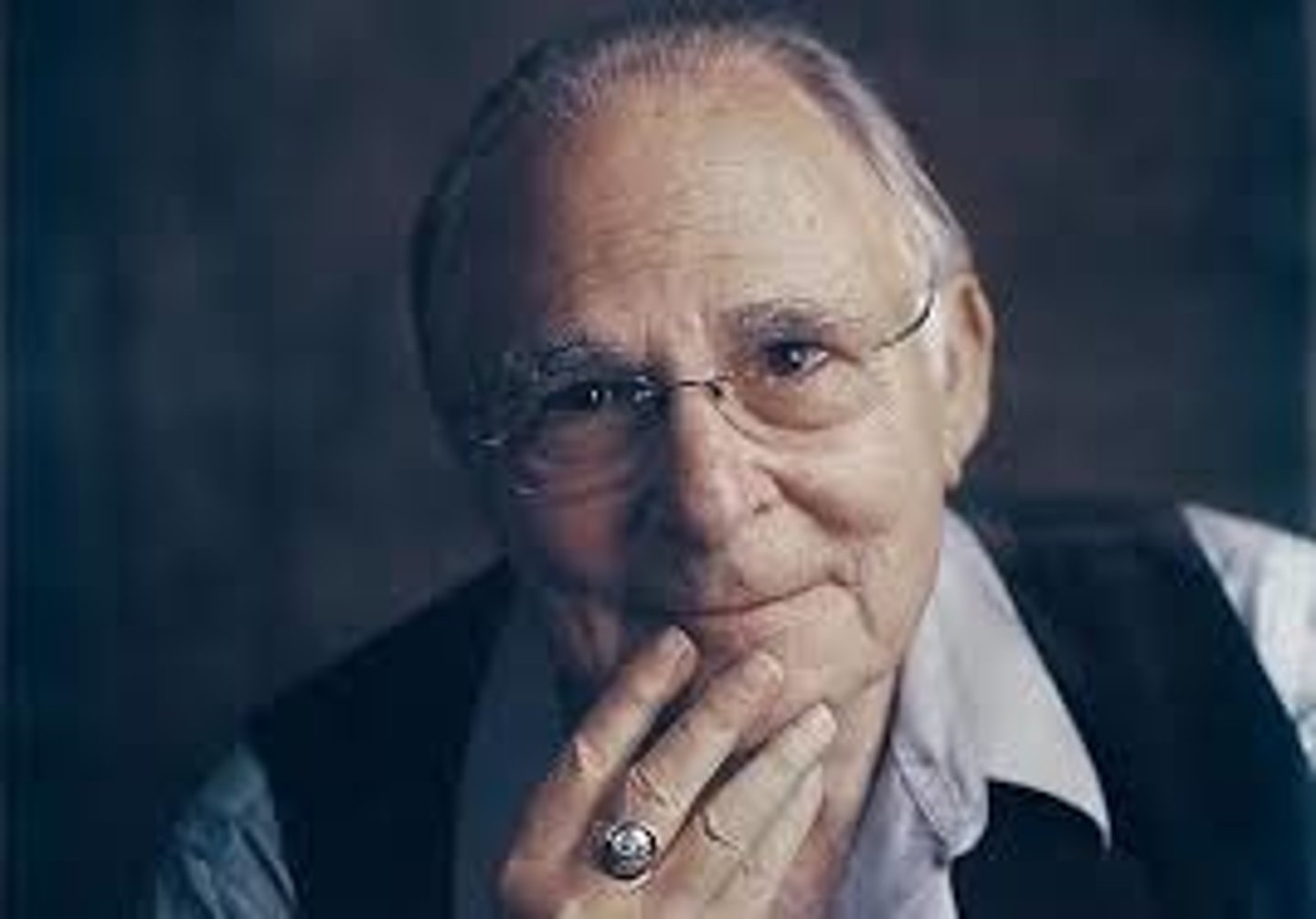
William Masters & Virginia Johnson
Used direct observation and experimentation to study sexual response cycle (4 stages)
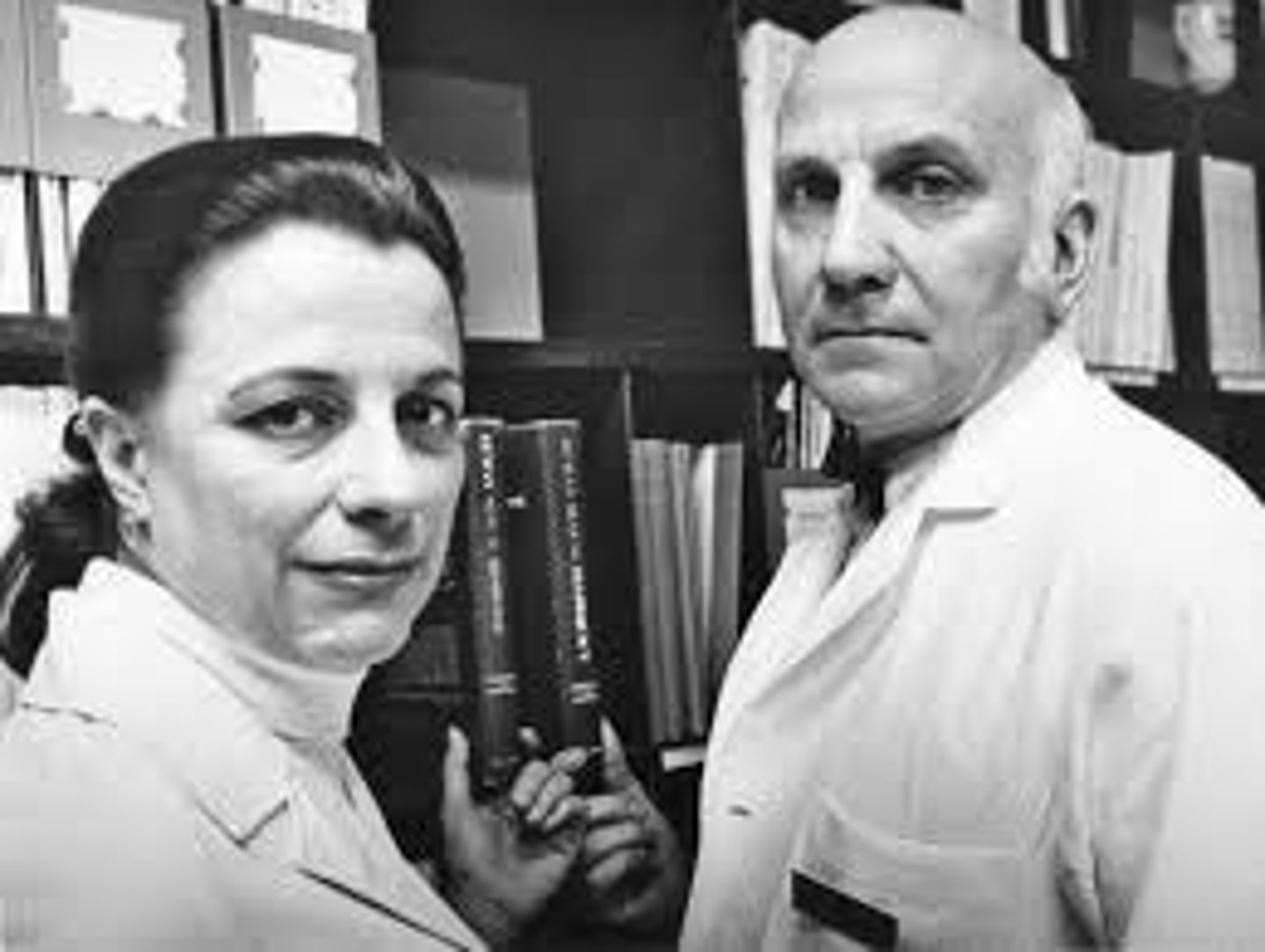
Raymond Cattell
Intelligence: fluid & crystal intelligence; personality testing: 16 Personality Factors (16PF personality test)
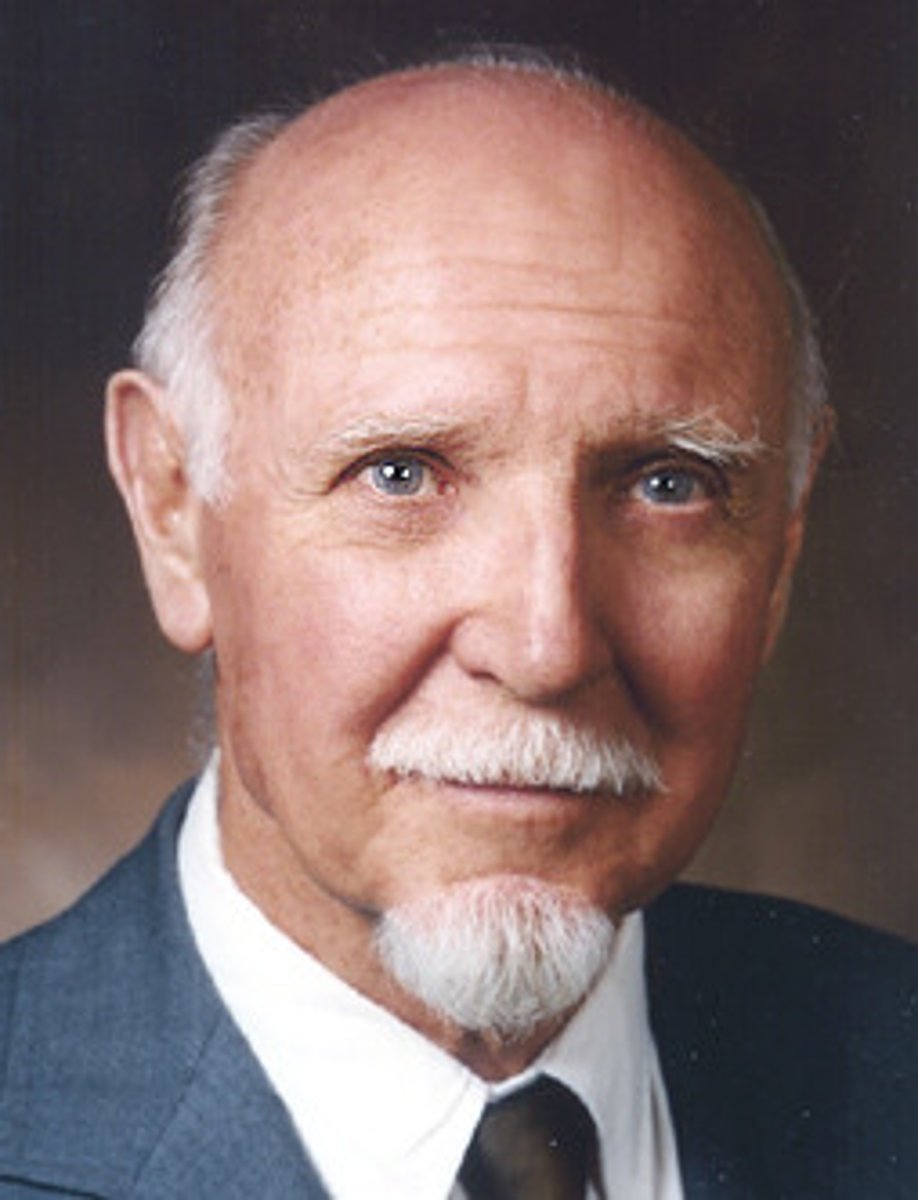
Edward Bradford Titchener
Student of Wundt and founder of structuralism. Used introspection to search for the mind's structural elements.
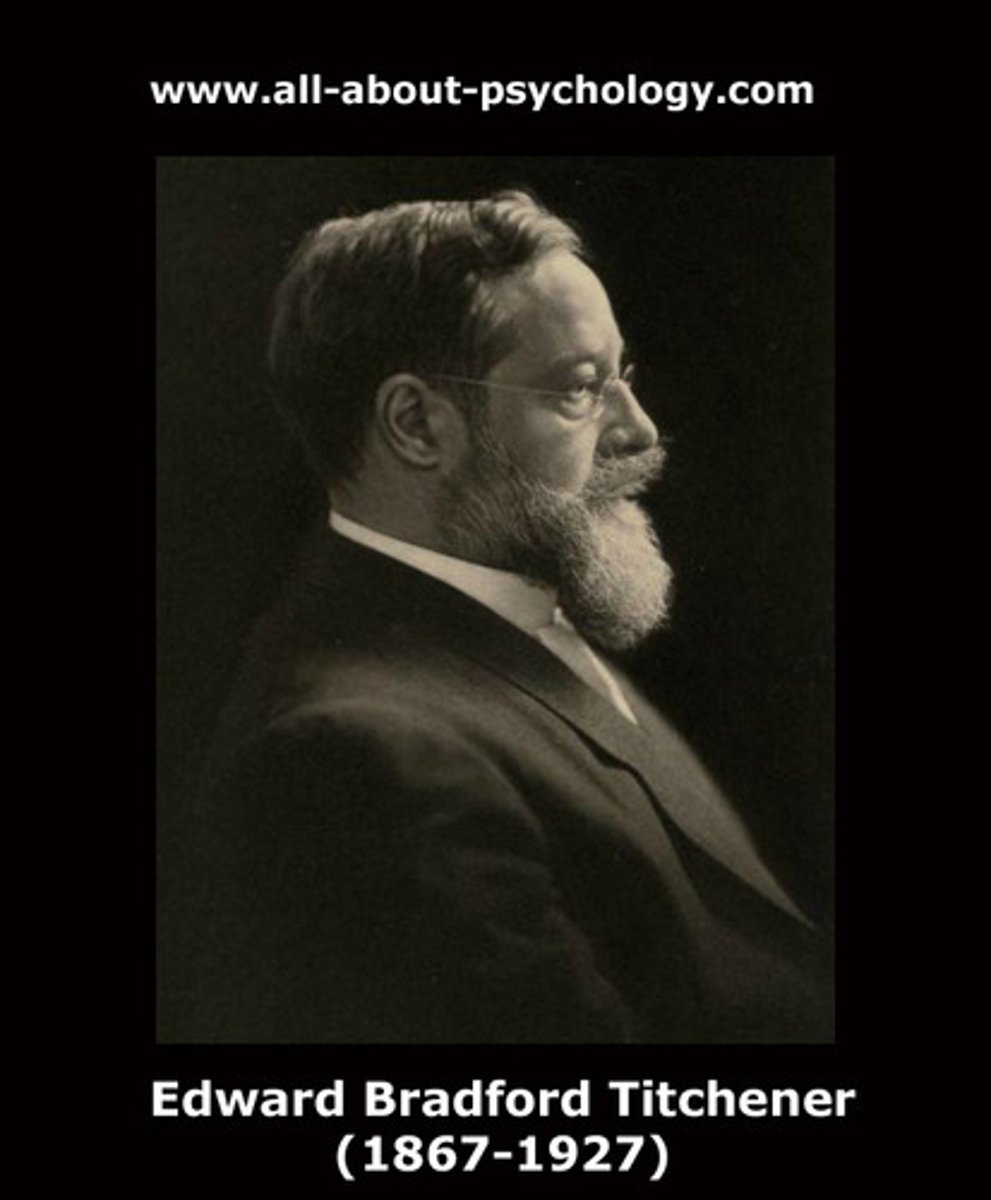
Outer Ear
the outermost part of the ear, collects sound waves and sends them to the ear drum
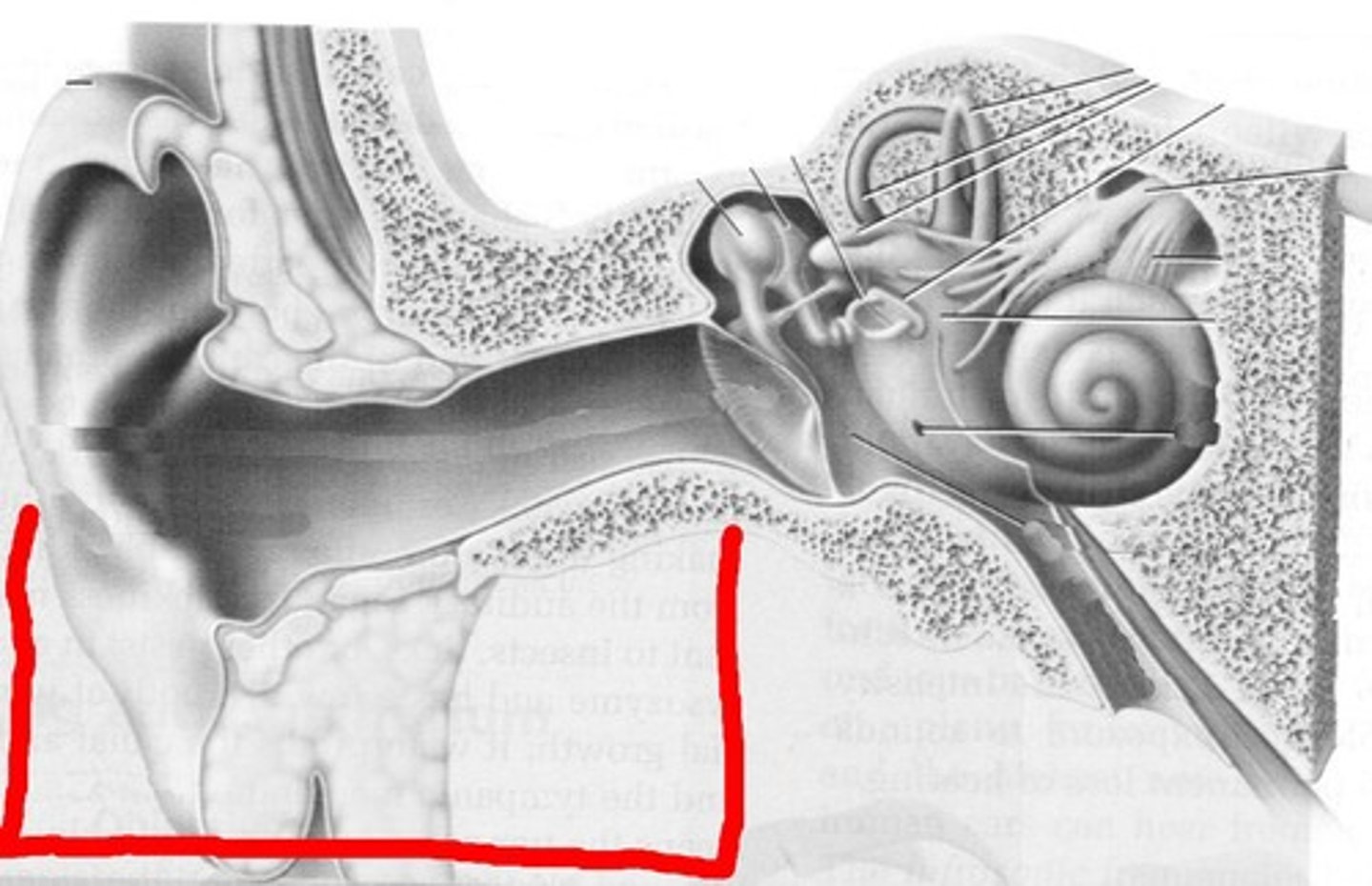
Middle Ear
the chamber between the eardrum and cochlea containing three tiny bones (hammer, anvil, and stirrup) that concentrate the vibrations of the eardrum on the cochlea's oval window
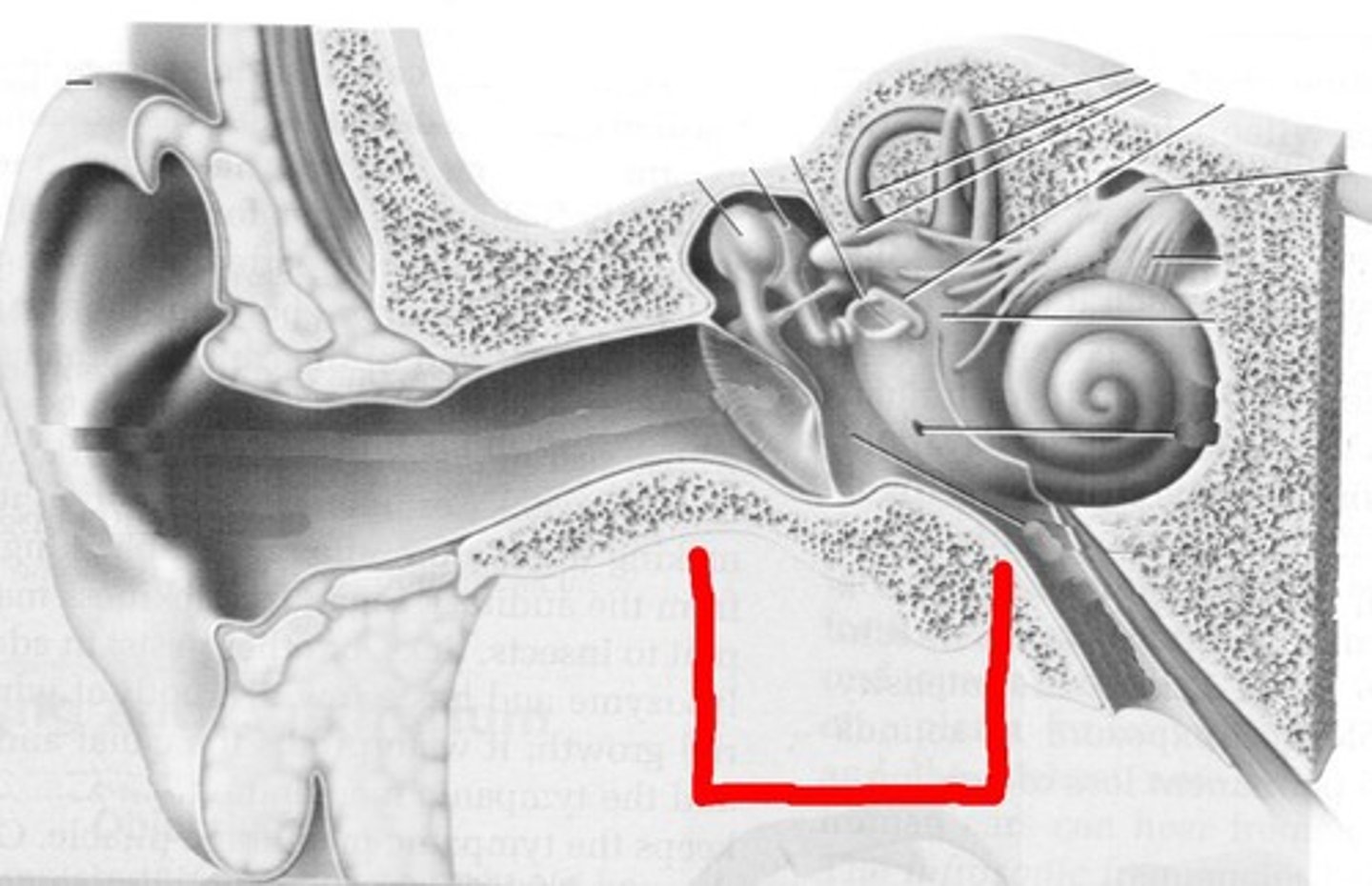
Inner Ear
the innermost part of the ear, containing the cochlea, semicircular canals, and vestibular sacs
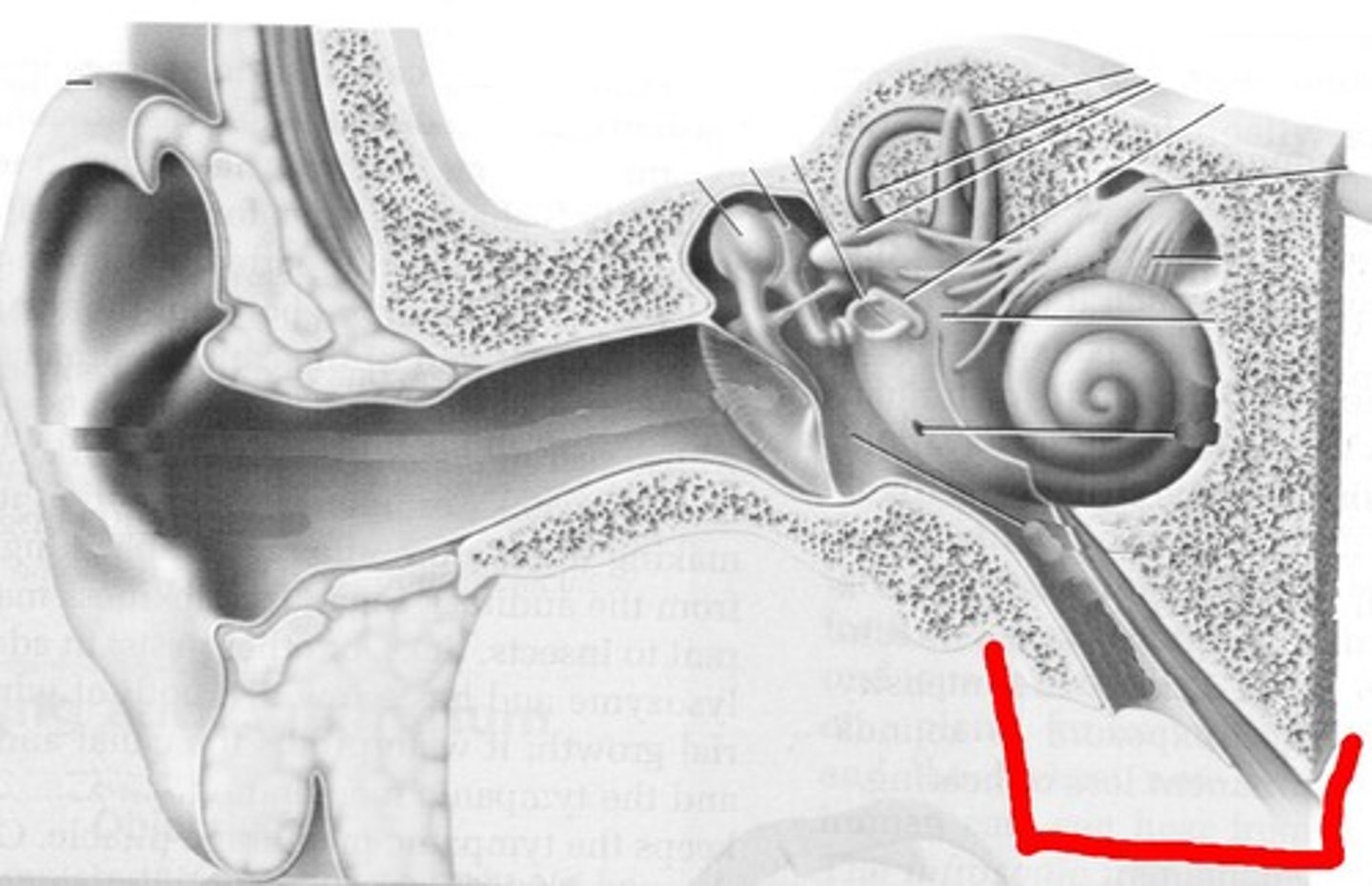
Auditory canal
the area that sound waves pass through to reach the eardrum
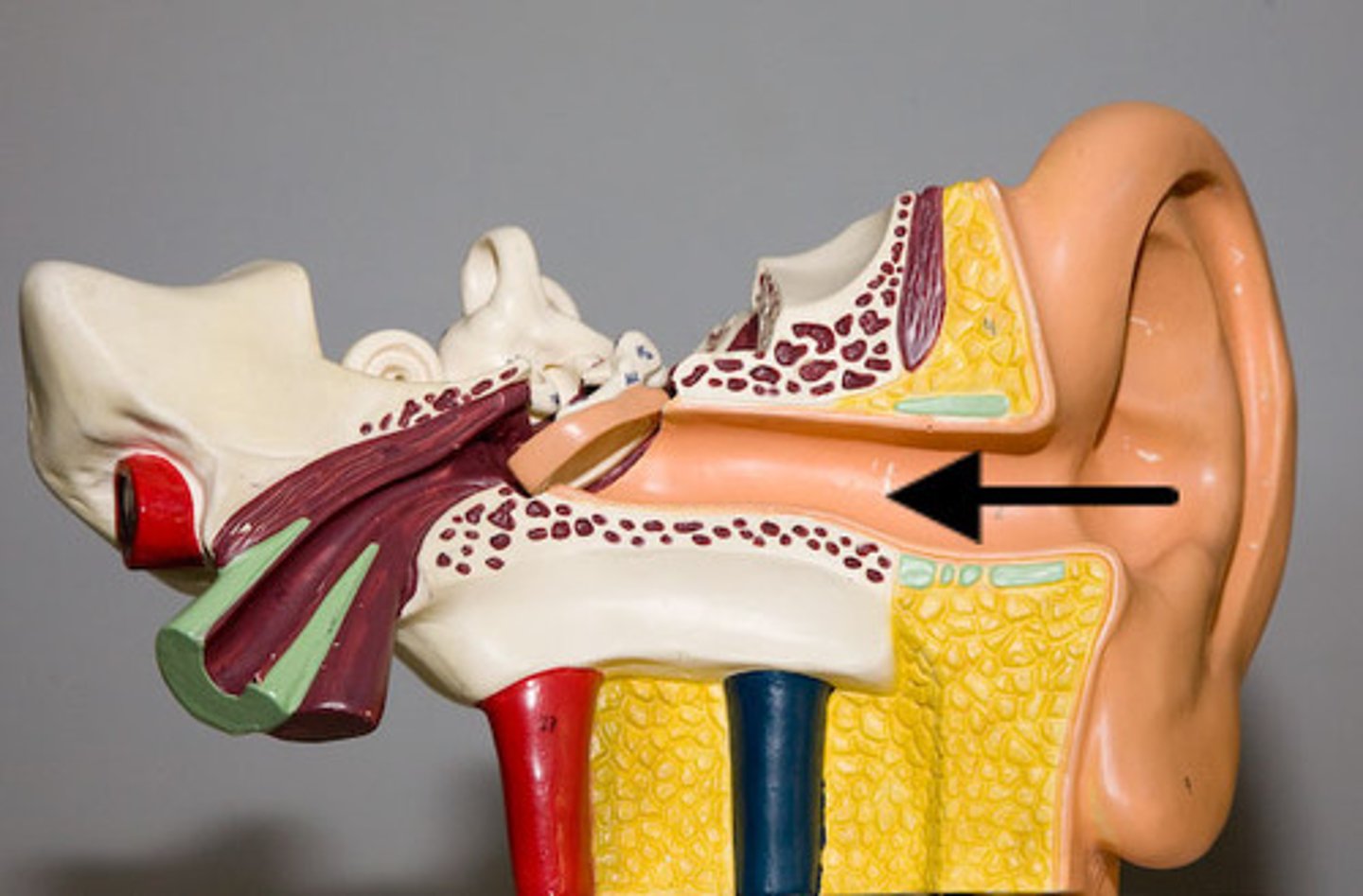
eardrum
a thin membrane that marks the beginning of the middle ear; sound waves cause it to vibrate
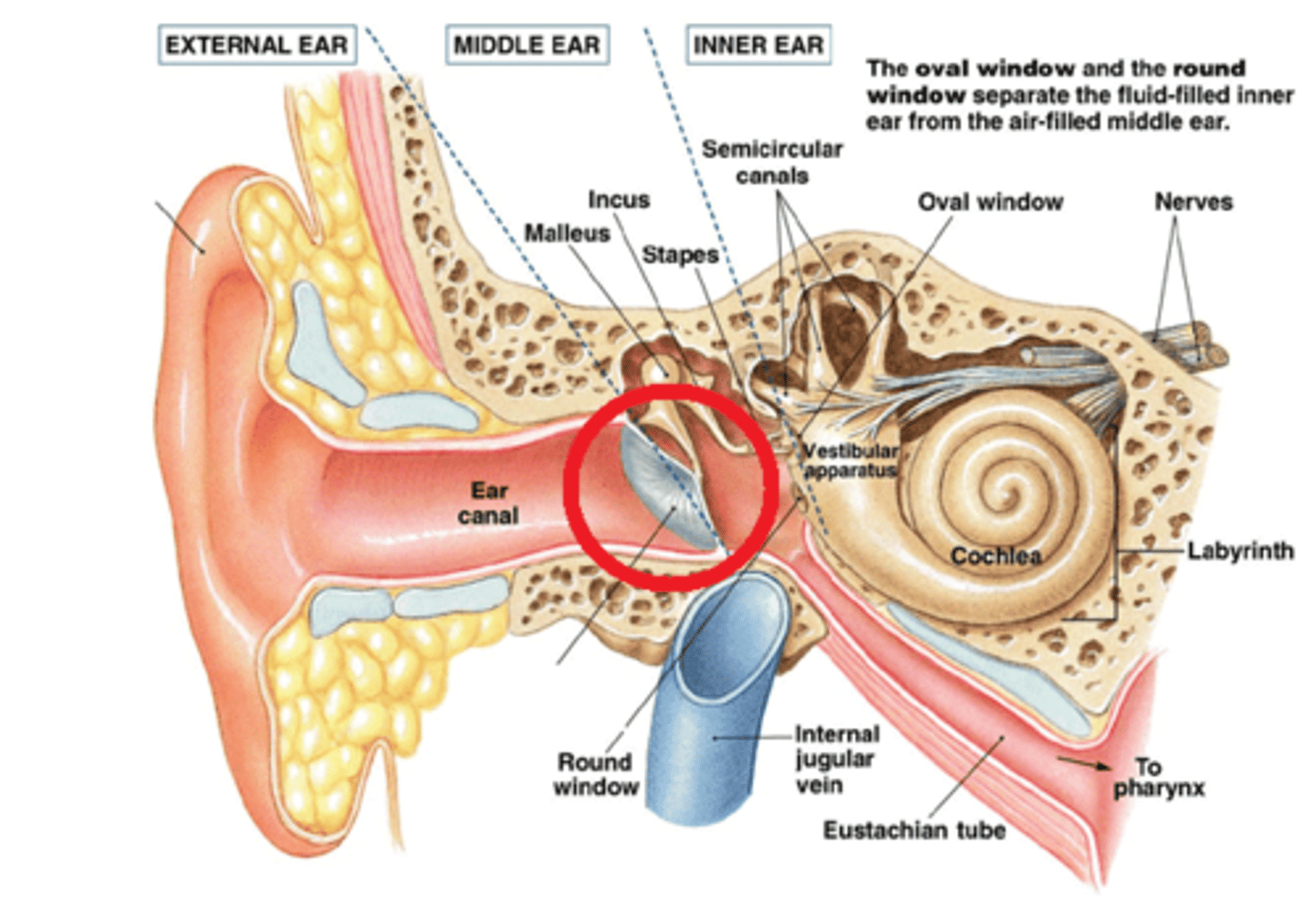
Hammer (malleus)
A tiny bone that passes vibrations from the eardrum to the anvil
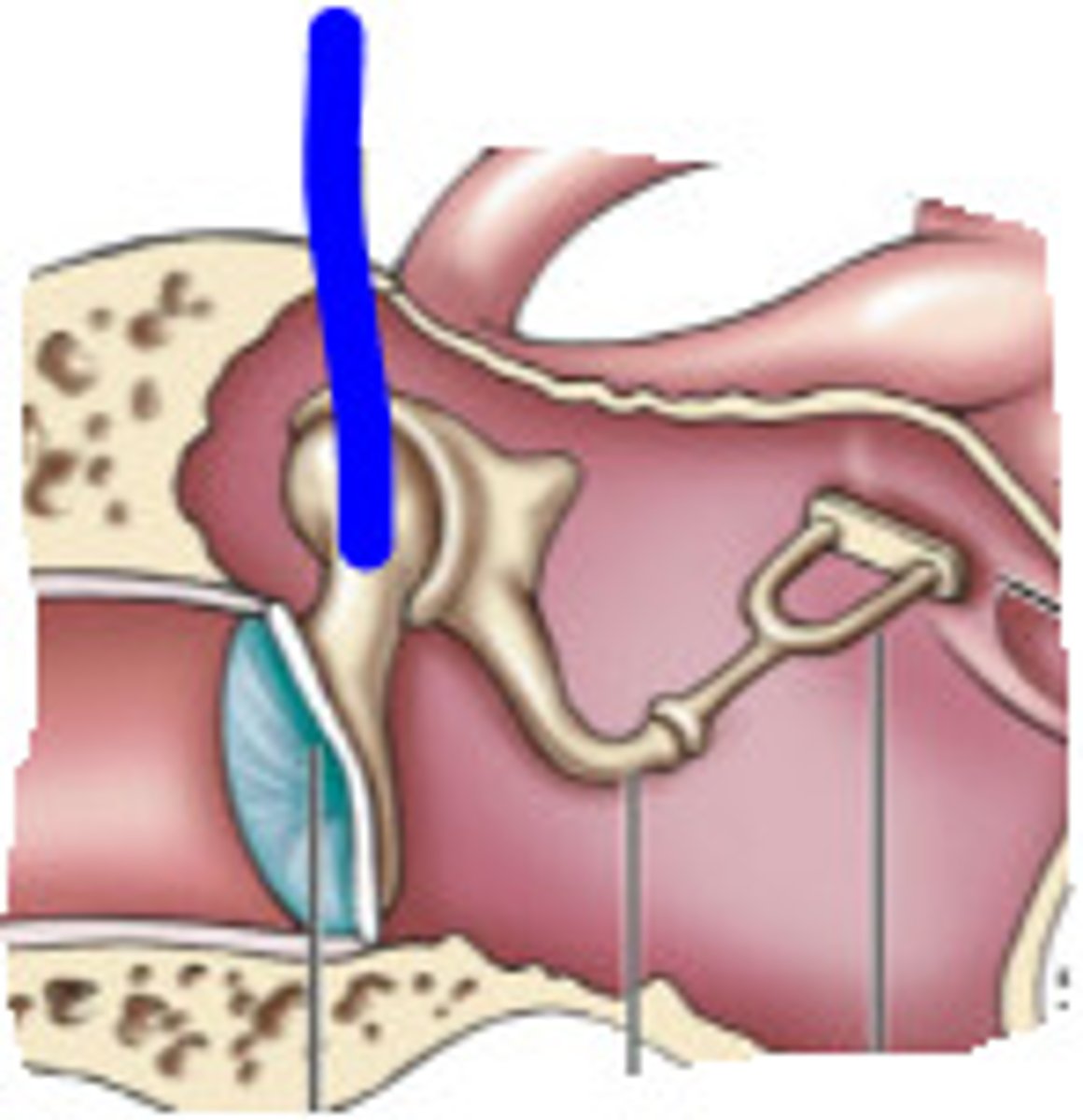
Anvil (incus)
A tiny bone that passes vibrations from the hammer to the stirrup
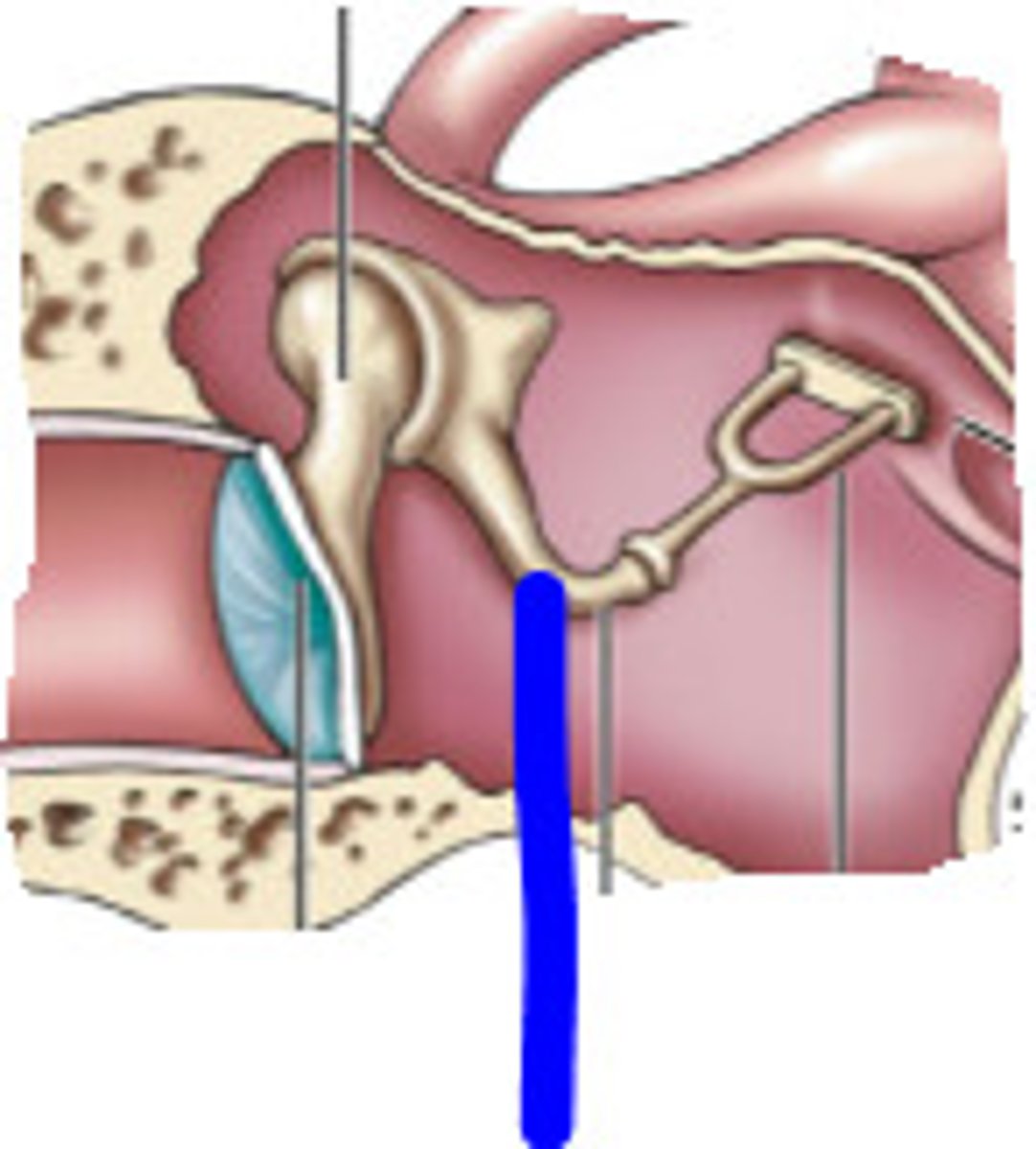
Stirrup (stapes)
presses on the oval window of the inner ear
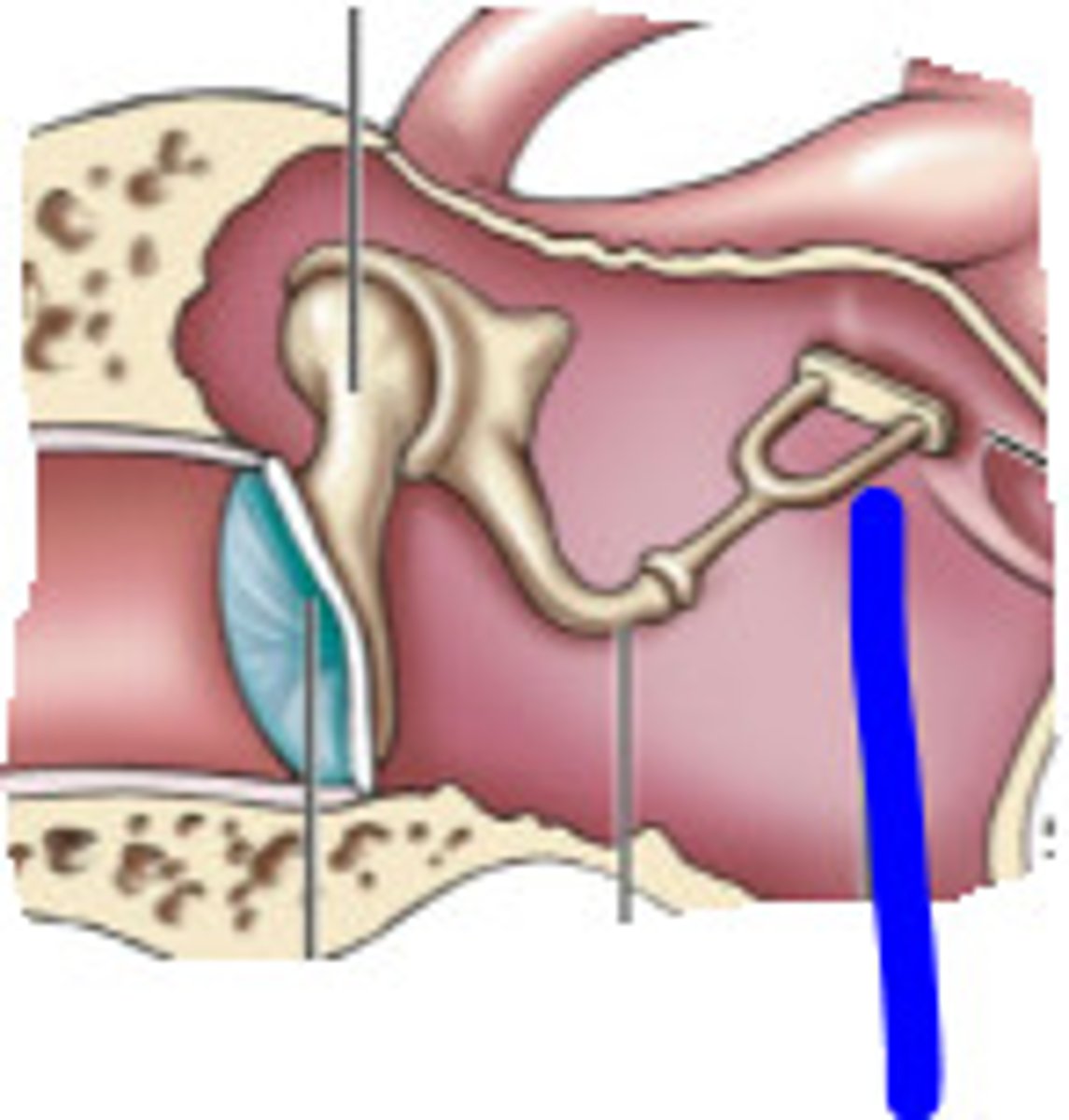
oval window
membrane at the enterance to the cochlea through which the ossicles transmit vibrations
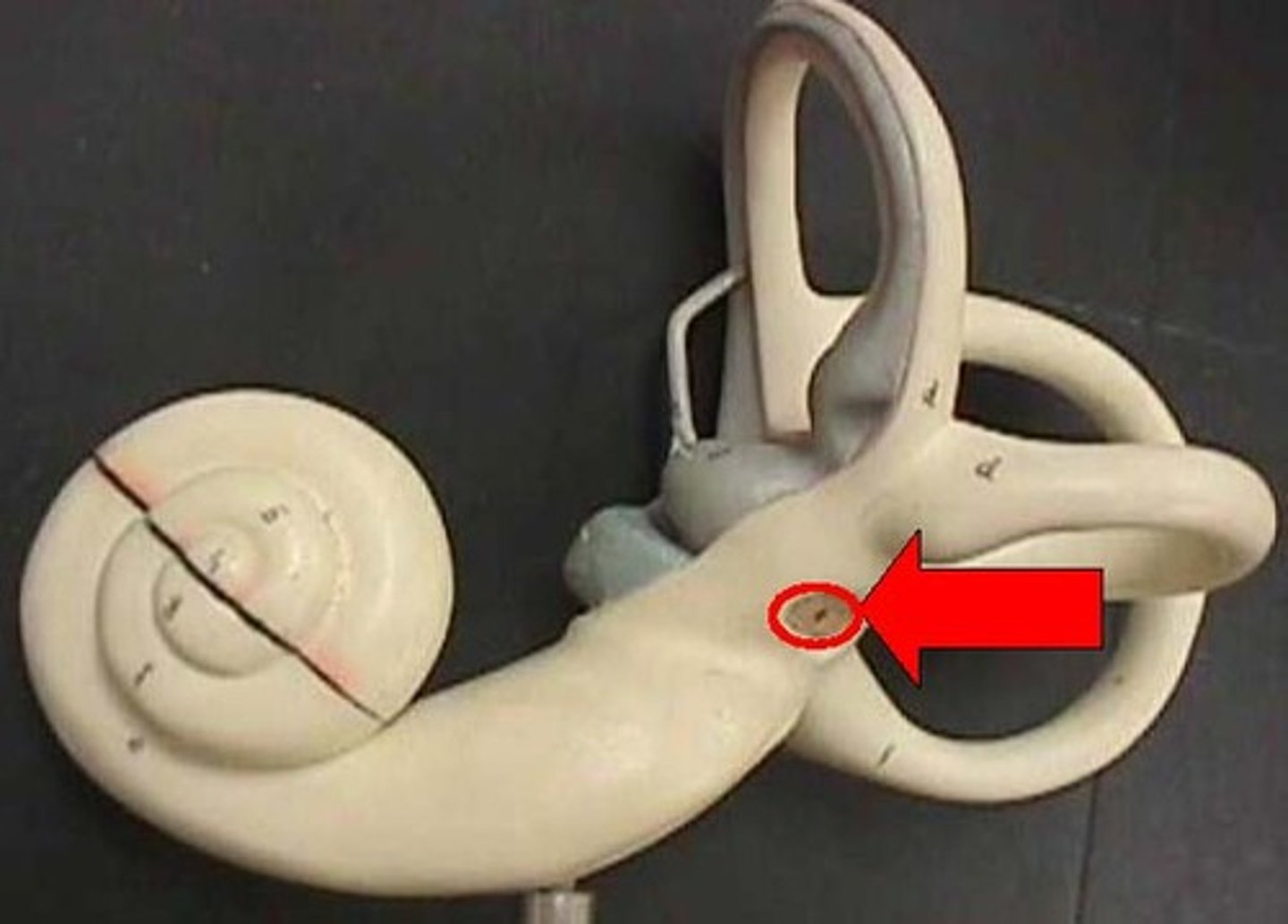
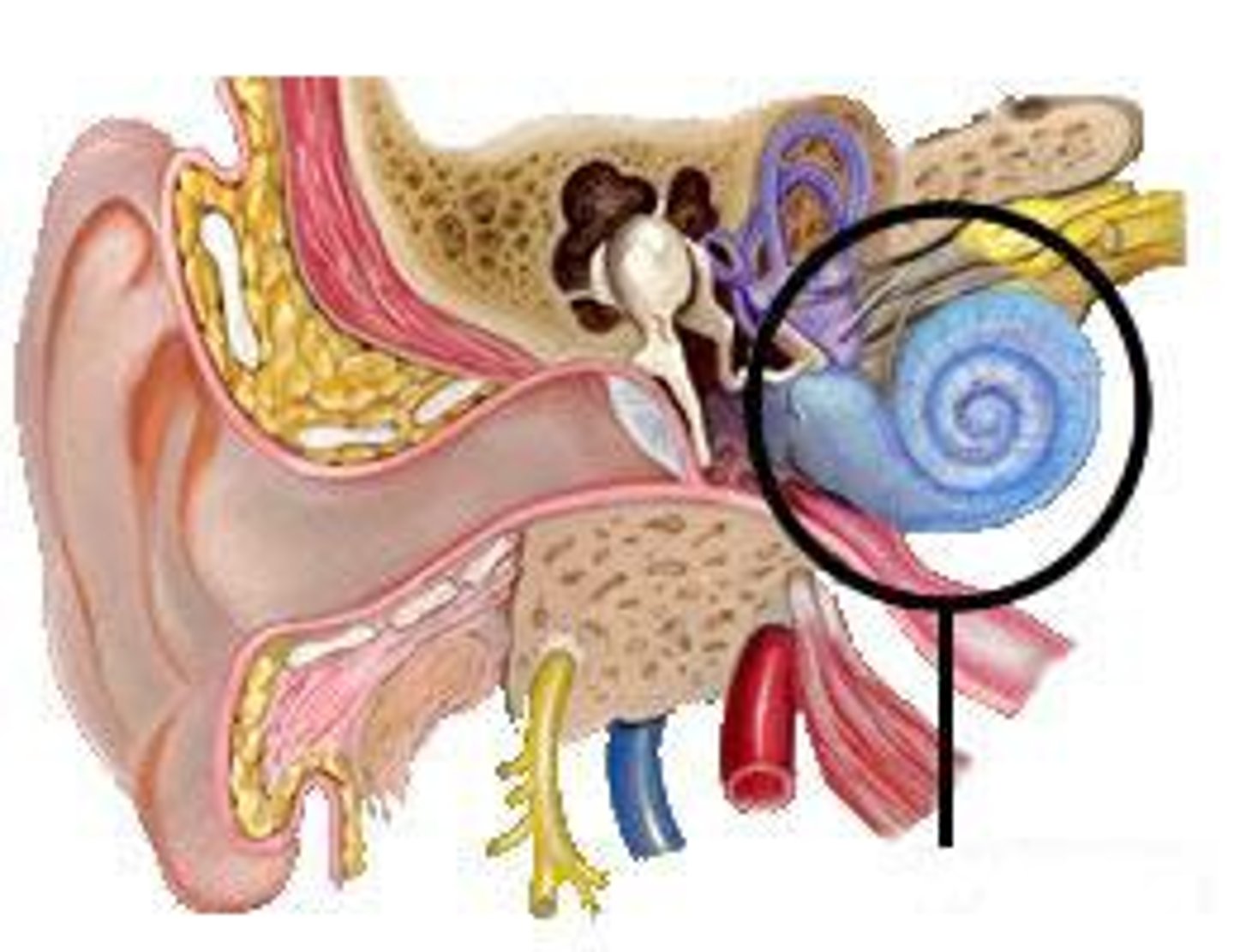
cochlea
a coiled, bony, fluid-filled tube in the inner ear through which sound waves trigger nerve impulses
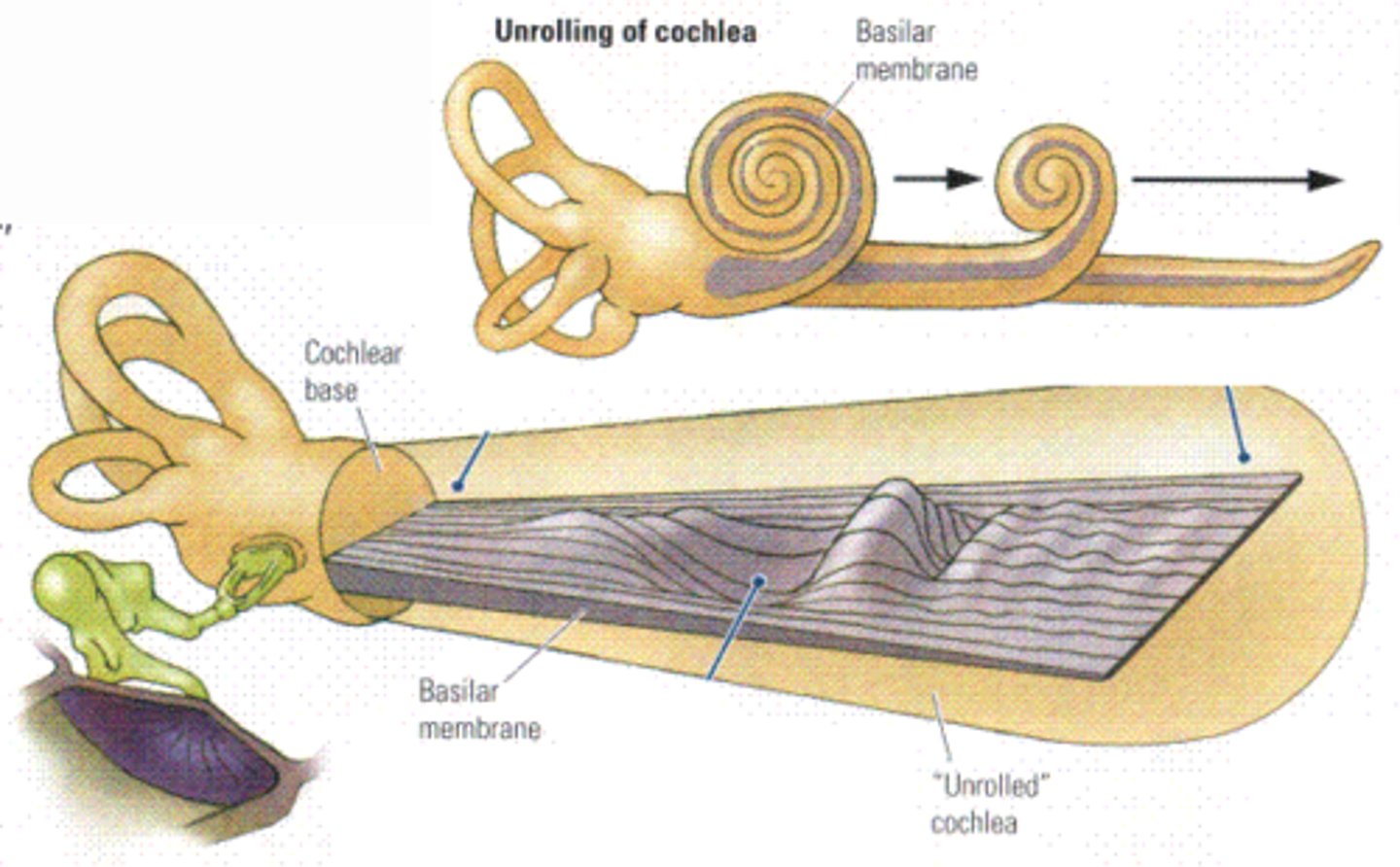
basilar membrane
A structure that runs the length of the cochlea in the inner ear and holds the auditory receptors, called hair cells.
hair cells/ nerve fibers
in the cochlea, detects sound vibrations
auditory nerve
the nerve that carries impulses from the inner ear to the brain, resulting in the perception of sound
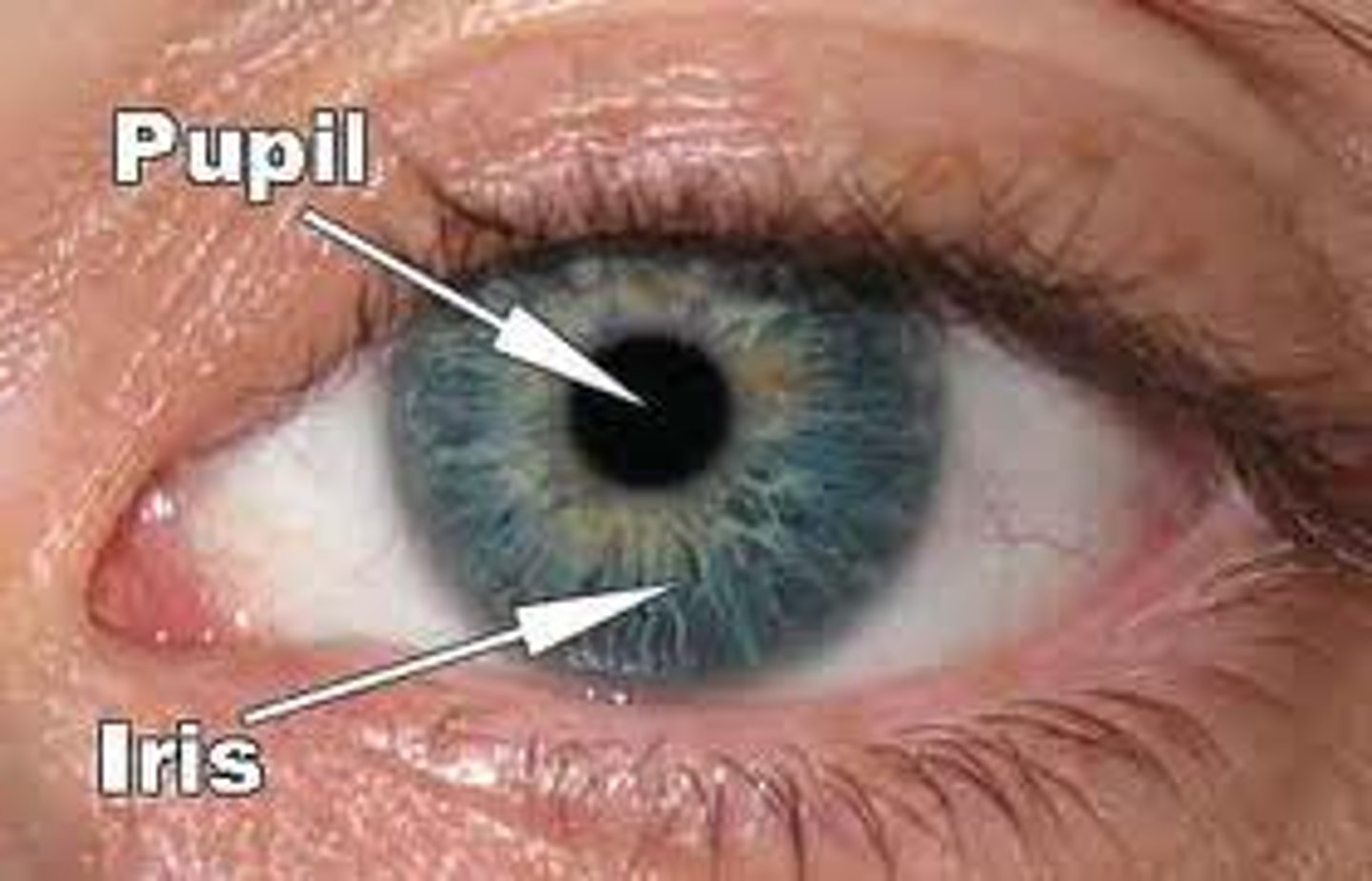
iris
a ring of muscle tissue that forms the colored portion of the eye around the pupil and controls the size of the pupil opening
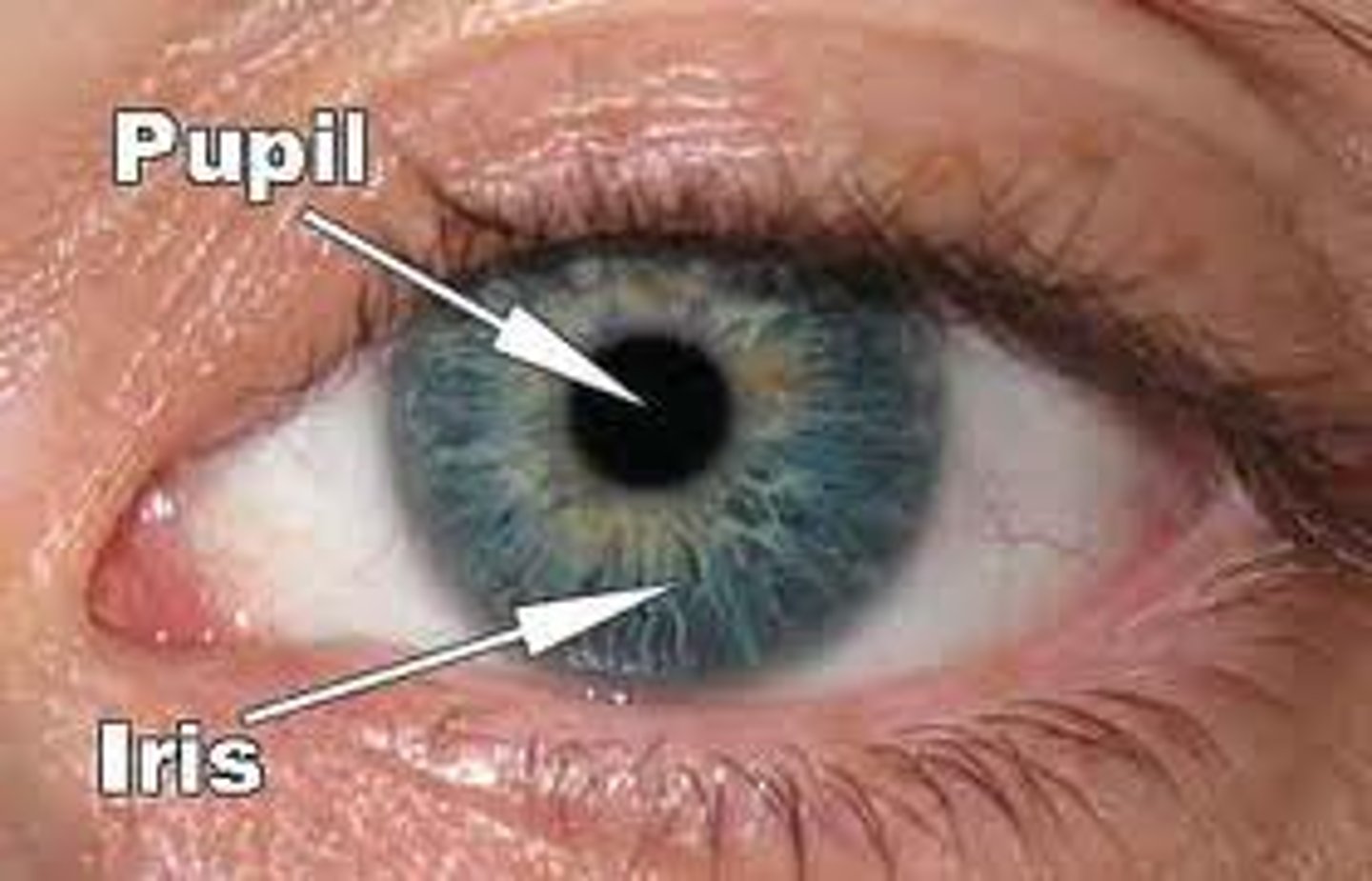
pupil
the adjustable opening in the center of the eye through which light enters
lens
the transparent structure behind the pupil that changes shape to help focus images on the retina
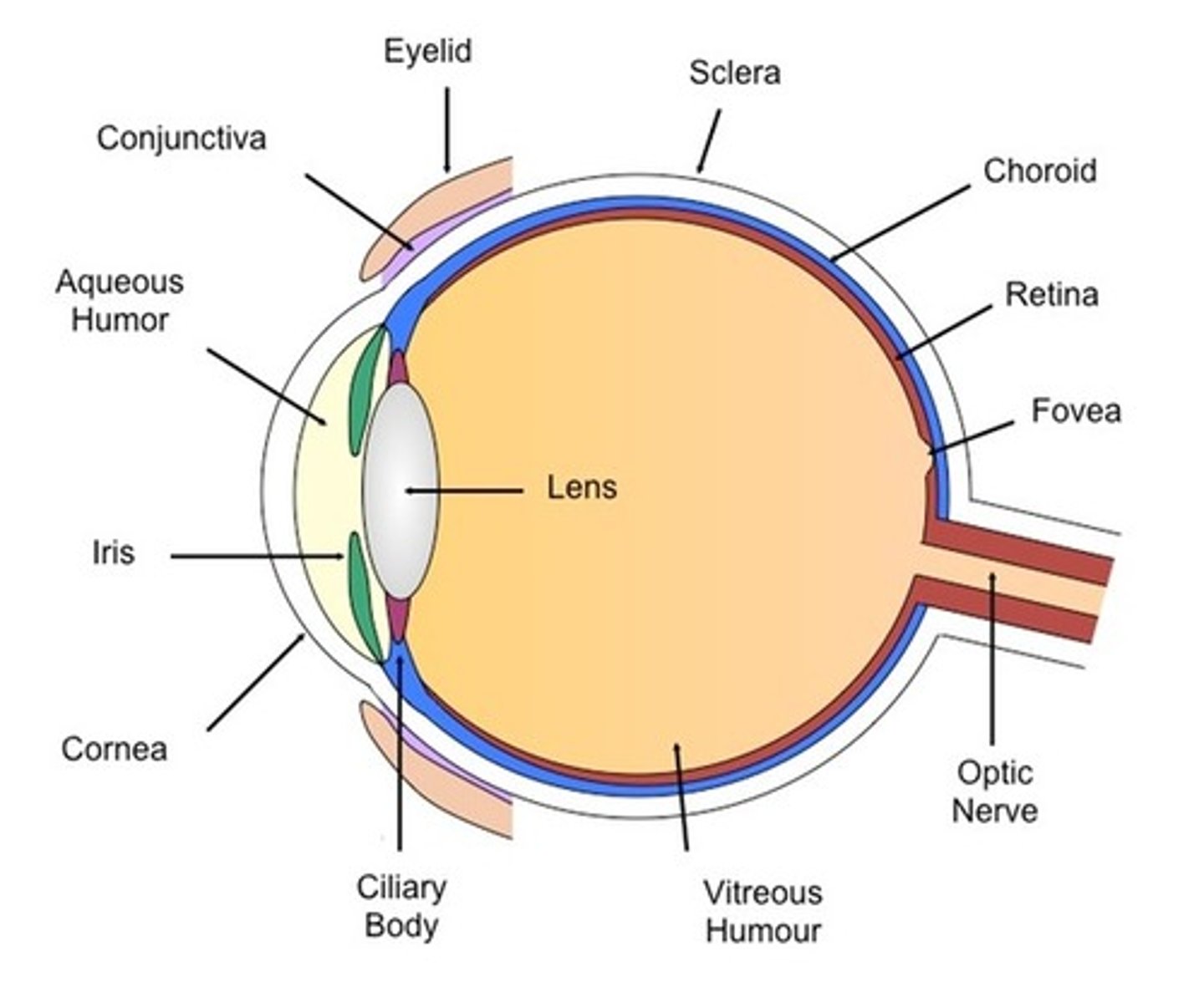
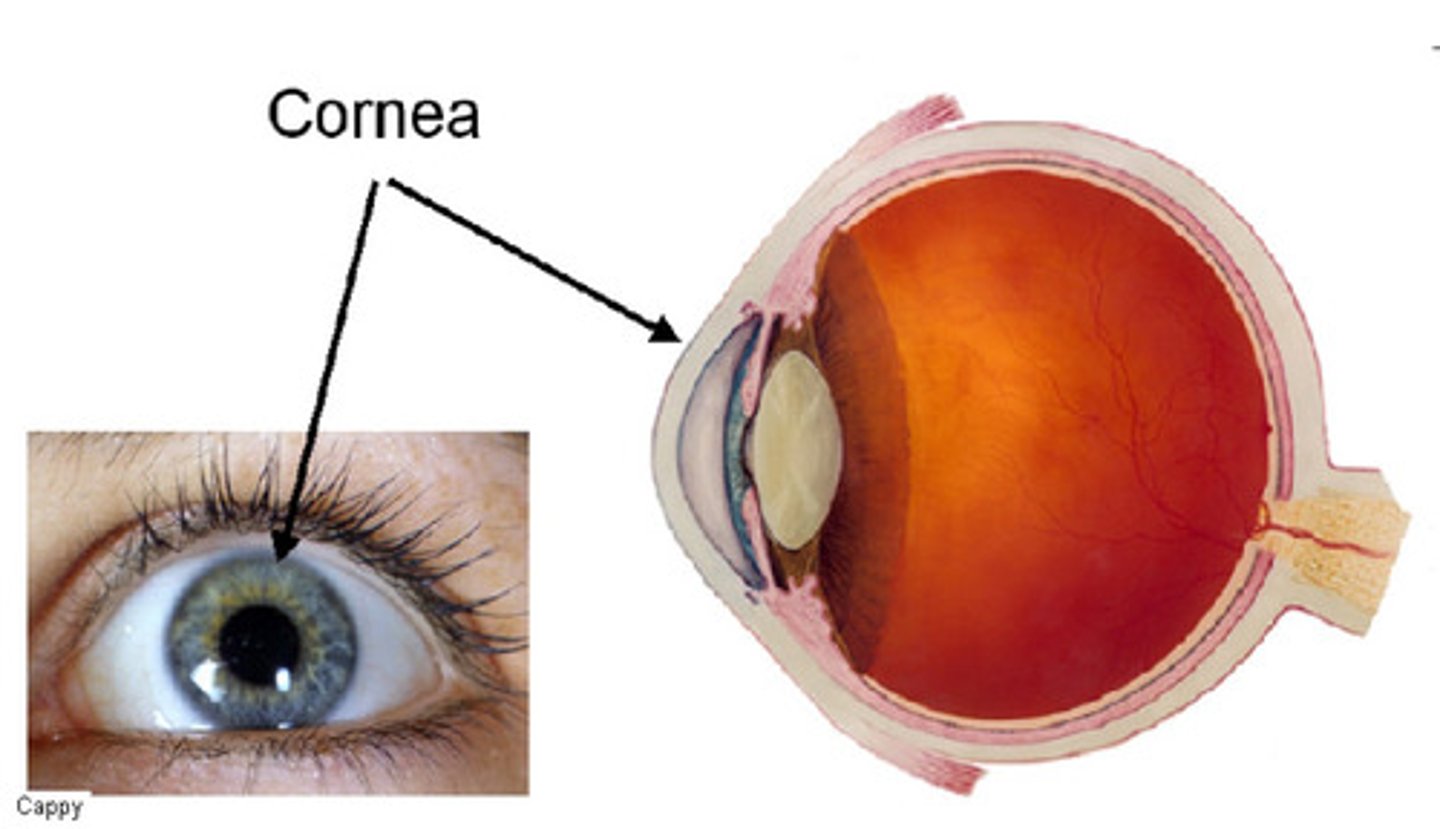
cornea
The clear tissue that covers the front of the eye
retina
the light-sensitive inner surface of the eye, containing the receptor rods and cones plus layers of neurons that begin the processing of visual information
fovea
the central focal point in the retina, around which the eye's cones cluster
optic nerve
the nerve that carries neural impulses from the eye to the brain
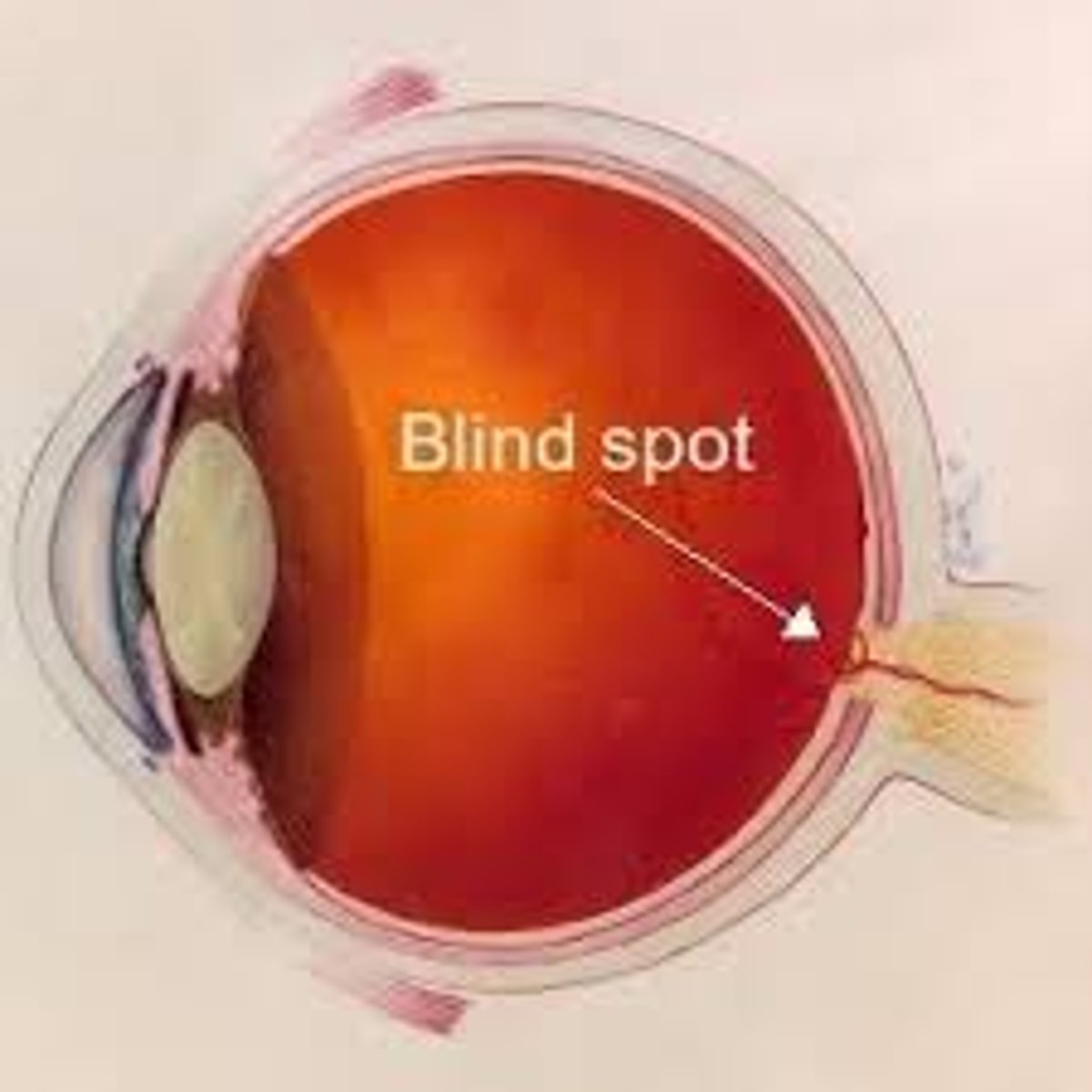
blind spot
the point at which the optic nerve leaves the eye, creating a "blind" spot because no receptor cells are located there
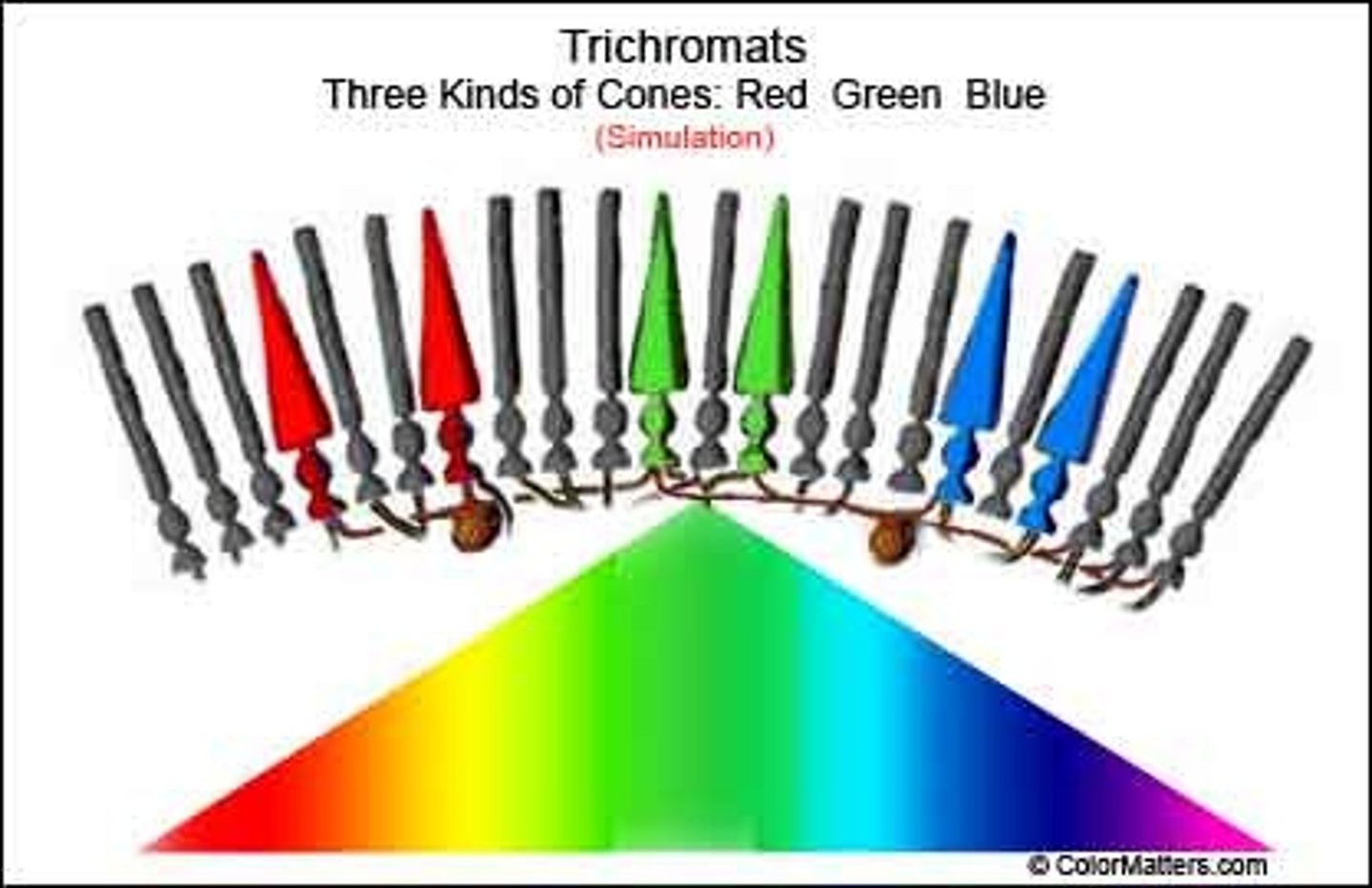
cones
color vision
rods
retinal receptors that detect black, white, and gray; necessary for peripheral and twilight vision, when cones don't respond
bipolar cells
eye neurons that receive information from the retinal cells and distribute information to the ganglion cells