Physics Quiz - Wave Categories, Anatomy, and Velocity
 Call Kai
 Learn
Learn Practice Test
 Spaced Repetition
 Match
Match Flashcards
 Knowt Play
1/32

Earn XP
Description and Tags
Name | Mastery | Learn | Test | Matching | Spaced | Call with Kai |
|---|
No analytics yet
Send a link to your students to track their progress
33 Terms
periodic (slowly) (repeated) motion:
period (T) - the time for one complete repeated pattern
frequency (f) (rapidly)
number of complete patterns per second (measured in Hz)
wave
vibration created by an initial disturbance that travels through a medium or a field
medium
the material a mechanical wave is traveling through
wave categories:
mechanical vs electromagnetic (gravitational)
pulse vs. periodic
Longitudinal vs. Transverse
waves transfer energy without…
waves transder energy without transferring matter
mechanical vs. electromagnetic: mechanical
needs a medium to travel through
mechanical vs. electromagnetic: electromagnetic
vibrares electric and magnetic fields, can travel through a vacuum (empty space)
Longitudinal vs. Transverse: longitudinal
the medium vibrates parallel to the direction the wave is traveling (Ex: sound)
Longitudinal vs. Transverse: transverse
the medium vibrates perpendicular to the direction the wave is traveling (Ex: light waves)
pulse vs. periodic: pulse
not repeated (becomes difficult to identify frequency or wavelength)
pulse vs. periodic: periodic (wave)
continouse wave train, with clear repeated patterns
wave ingredients: something that will vibrate
this determines wave type and wave speed
wave ingredients: an initial disturbance
this determines the wave anatomy (amplitude, wavelength, frequency and period)
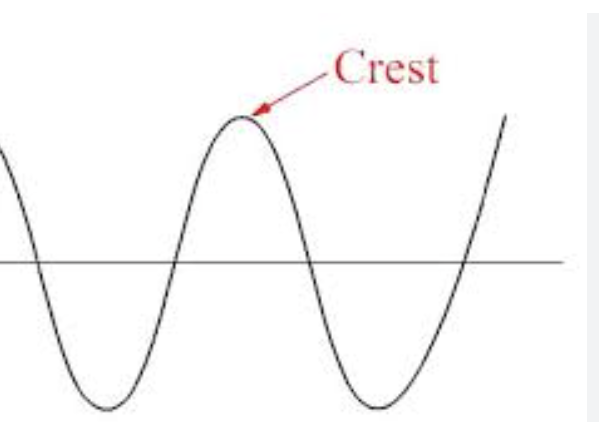
physical measurments: crest
absolute highest point
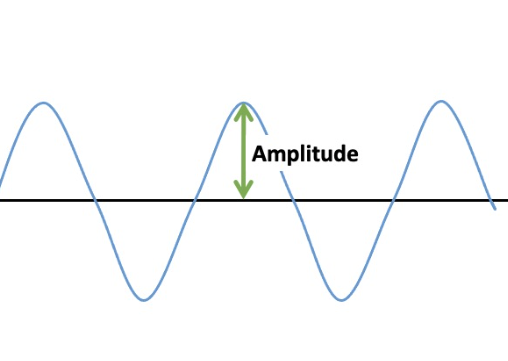
physical measurments: amplitude
height measured from equilibrium
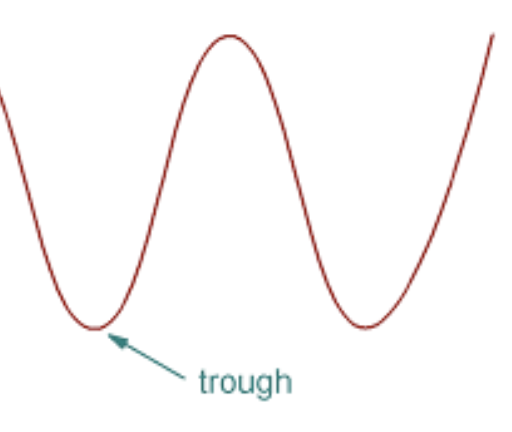
physical measurments: trough
the absolute lowest point of a wave
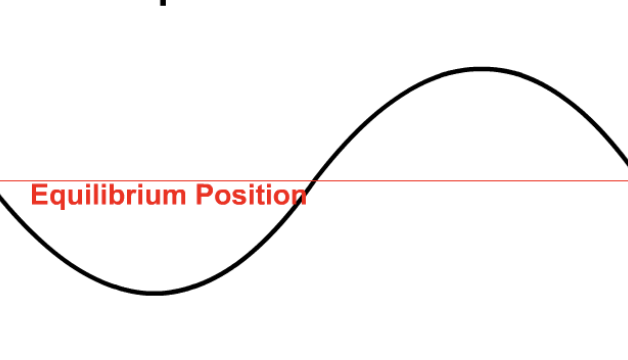
physical measurments: equilibrium
the resting, undisturbed state of the medium before a wave passes through it.
physical measurments: wavelength
length of one complete wave (Symbol: λ)
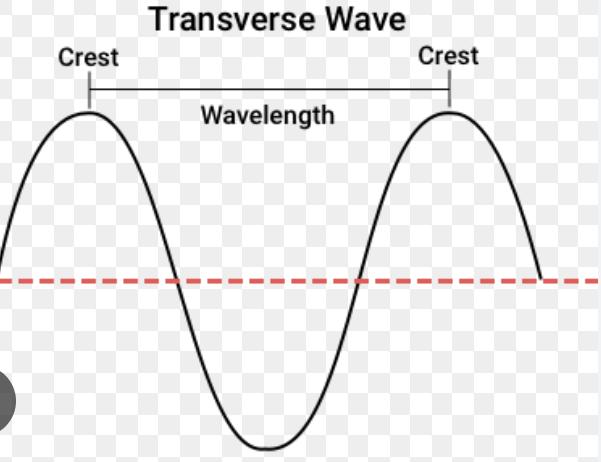
time based measurements: frequency
frequency (f): number of waves per second (Hz)
frequency = wave/sec
time based measurements: period
period (T): the time for one wave cycle to pass (s)
period = sec/wave
time based measurements: velocity
velocity (v): speed the wave travels (m/s)
resonance
when multiples of ½ wavelength fit into the size of the object you get large amplitude vibrations
only changing the MEDIUM can ….
only changing the MEDIUM can change the wave velocity
V=λf makes it look like frequency increases velocity, but this isn’t true becuase..
V=λf makes it look like frequency increases velocity, but velocity is actually the constant
speed of sound
in air: about 342m/s (Exact depends on temp)
speed of electromagnetic waves
in vacuum (or air): 3×10^8 m/s
T=
T= sec/wave
f=
f = wave/sec
the speed of the wave refers to
how far a given point (ex: crest) on the wave travels per unit of time
two equations that can be used to detmine speed of a wave
v=d/t and v=fλ
the velocity of a given type of wave is determined by
the velocity of a given type of wave is determined by the medium
in the equation v=wavelentght (f) what happens
frequency increases, wavelength decreases and
frequency decreases, wavelength increases