3. breast cancer: Scranton 2026

0.0(0)
Studied by 0 people
call kaiCall Kai
learnLearn
examPractice Test
spaced repetitionSpaced Repetition
heart puzzleMatch
flashcardsFlashcards
GameKnowt Play
Card Sorting

1/32

encourage image

There's no tags or description

Looks like no tags are added yet.

Last updated 12:58 AM on 5/18/26
Name
Mastery
Learn
Test
Matching
Spaced
Call with Kai

No analytics yet

Send a link to your students to track their progress

33 Terms

1
New cards

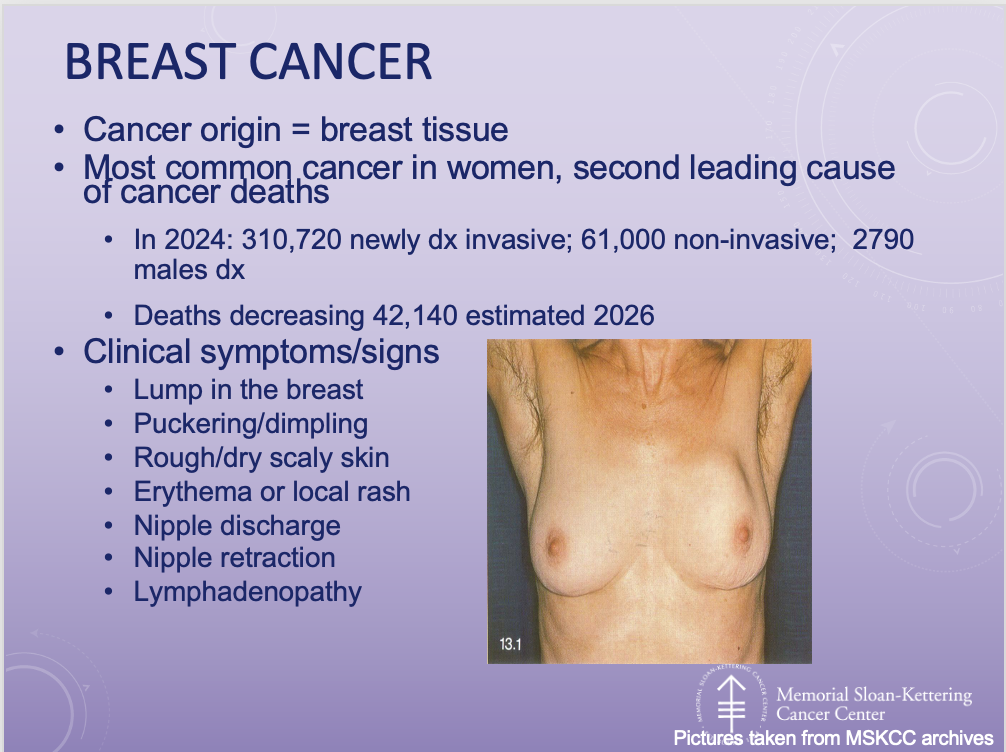
what is the second leading cause of cancer deaths

breast cancer

2
New cards

breast cancer: cancer origin; clinical signs/symptoms

Primary Bone Disease

Curative

Primary Goal: Tumor Control

Secondary Goal: Functional Outcome

Metastatic Bone Disease

Impending pathological fracture

Existing pathological fracture

Restore skeletal strength

Pain management

Limb salvage versus amputation

BIPHOSPHONATES: a group of drugs often used to treat osteoporosis.  These drugs have the ability to block the progression of tumor cells in the bone, leading to dramatically fewer bone lesions and bone fractures in patients with bone cancer who take them.  In the bones, the osteoclast cell is stimulated by the cancer to break down and resorb bone matrix and calcium, leading to pain and fractures.  These drugs block the osteoclast cells and keep the bones strong.  Bisphosphonates tend to work well with osteolytic metastases.  They don't work as well for treating osteoblastic metastases.

Rehab Implications:

Reinforce WB’ing precautions  Gait   Bed mobility and *transfers (trapeze, bedrails)

Monitor for radicular/neurological symptoms  Monitor  weakness due to compression of spinal cord or nerve roots

(summary of ortho)…Exact surgical procedure: Know what muscles, nerves, and vascular supplies were affected. Know your anatomy! Ex. Excision included resection of part of obturator nerve- ↓ ability to contract adductors.  Needed to teach compensatory mechanisms (leg lifter). ↓ sensation medial thigh

Pt may have skin grafts, pedicle muscle flaps, bone grafting, or hardware placement for soft tissue/bony defects.

WB status: Mrs. F. Soft tissue resection- reconstruction performed with gastroc. NWB, since any type of WB would cause disruption to the reconstructed site.

Communication: Mrs. E- calcaneal tumor excision.  Ortho saying ok to transfer bed-chair, but plastics requesting a specific dangling protocol first to ensure integrity of the flap.

Monitoring for sites of infection especially important for patients that are receiving Chemo/RT.

There are several surgical procedures we will discuss.  The goals of surgery are to remove the primary tumor, achieve clean margins meaning at least 2-3 cm approx. 1” of tissue surrounding tissue is removed, and to maximize functional status.  Sometimes it is necessary to have wide margins meaning more than 1” of surrounding tissue is removed.

Remove tumor

Achieve clean margins

Pain control

Maximize functional status
<p style="text-align: left;"></p><p style="text-align: left;"><span>Primary Bone Disease</span></p><p style="text-align: left;"><span>Curative</span></p><p style="text-align: left;"><span>Primary Goal: Tumor Control</span></p><p style="text-align: left;"><span>Secondary Goal: Functional Outcome</span></p><p style="text-align: left;"></p><p style="text-align: left;"><span>Metastatic Bone Disease</span></p><p style="text-align: left;"><span>Impending pathological fracture</span></p><p style="text-align: left;"><span>Existing pathological fracture</span></p><p style="text-align: left;"><span>Restore skeletal strength</span></p><p style="text-align: left;"><span>Pain management</span></p><p style="text-align: left;"></p><p style="text-align: left;"><span>Limb salvage versus amputation</span></p><p style="text-align: left;"></p><p style="text-align: left;"></p><p style="text-align: left;"><span><strong>BIPHOSPHONATES: </strong>a group of drugs often used to treat osteoporosis.&nbsp; These drugs have the ability to block the progression of tumor cells in the bone, leading to dramatically fewer bone lesions and bone fractures in patients with bone cancer who take them.&nbsp; In the bones, the osteoclast cell is stimulated by the cancer to break down and resorb bone matrix and calcium, leading to pain and fractures.&nbsp; These drugs block the osteoclast cells and keep the bones strong.&nbsp; Bisphosphonates tend to work well with osteolytic metastases.&nbsp; They don't work as well for treating osteoblastic metastases.</span></p><p style="text-align: left;"><span><strong>Rehab Implications:</strong></span></p><p style="text-align: left;"><span>Reinforce WB’ing precautions&nbsp; <em>Gait&nbsp;&nbsp; </em>Bed mobility and *transfers (trapeze, bedrails)</span></p><p style="text-align: left;"><span>Monitor for radicular/neurological symptoms&nbsp; Monitor&nbsp; weakness due to compression of spinal cord or nerve roots</span></p><p style="text-align: left;"></p><p style="text-align: left;"><span>(summary of ortho)…Exact surgical procedure: Know what muscles, nerves, and vascular supplies were affected. <strong>Know your anatomy! </strong>Ex. Excision included resection of part of obturator nerve- ↓ ability to contract adductors.&nbsp; Needed to teach compensatory mechanisms (leg lifter). ↓ sensation medial thigh</span></p><p style="text-align: left;"><span>Pt may have skin grafts, pedicle muscle flaps, bone grafting, or hardware placement for soft tissue/bony defects.</span></p><p style="text-align: left;"><span>WB status: Mrs. F. Soft tissue resection- reconstruction performed with gastroc. NWB, since any type of WB would cause disruption to the reconstructed site.</span></p><p style="text-align: left;"><span>Communication: Mrs. E- calcaneal tumor excision.&nbsp; Ortho saying ok to transfer bed-chair, but plastics requesting a specific dangling protocol first to ensure integrity of the flap.</span></p><p style="text-align: left;"></p><p style="text-align: left;"><span>Monitoring for sites of infection especially important for patients that are receiving Chemo/RT.</span></p><p style="text-align: left;"><span>There are several surgical procedures we will discuss.&nbsp; The goals of surgery are to remove the primary tumor, achieve clean margins meaning at least 2-3 cm approx. 1” of tissue surrounding tissue is removed, and to maximize functional status.&nbsp; Sometimes it is necessary to have wide margins meaning more than 1” of surrounding tissue is removed.</span></p><p style="text-align: left;"></p><p style="text-align: left;"></p><p style="text-align: left;"><span>Remove tumor</span></p><p style="text-align: left;"><span>Achieve clean margins</span></p><p style="text-align: left;"><span>Pain control</span></p><p style="text-align: left;"><span>Maximize functional status</span></p>
3
New cards

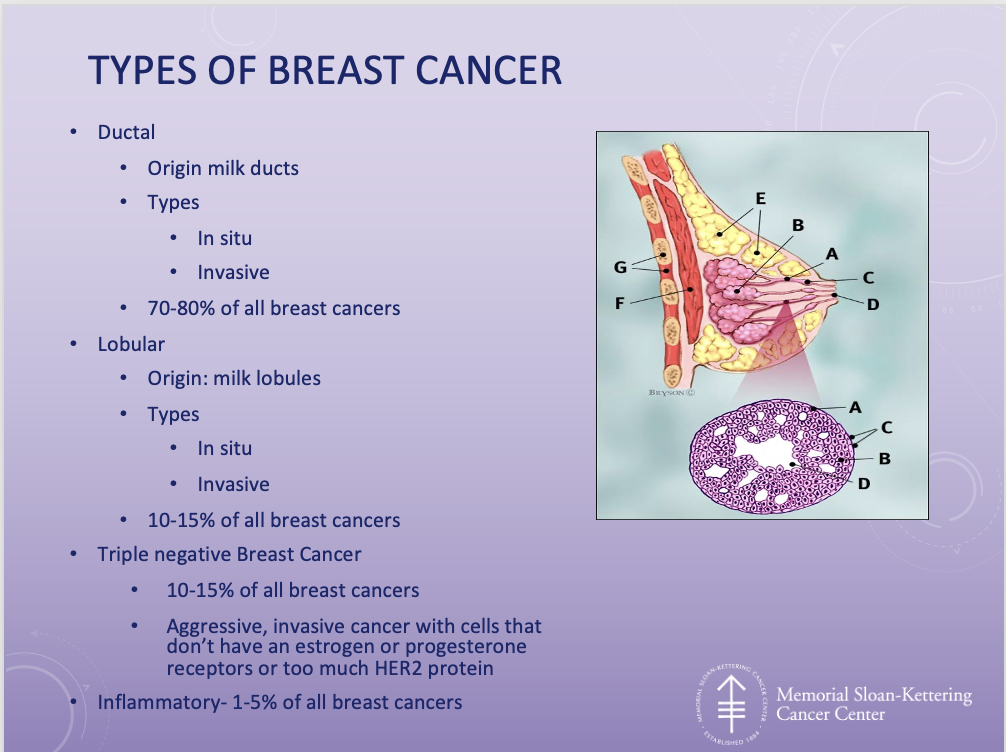
most aggressive and worst prognosis

Triple negative Breast Cancer

4
New cards

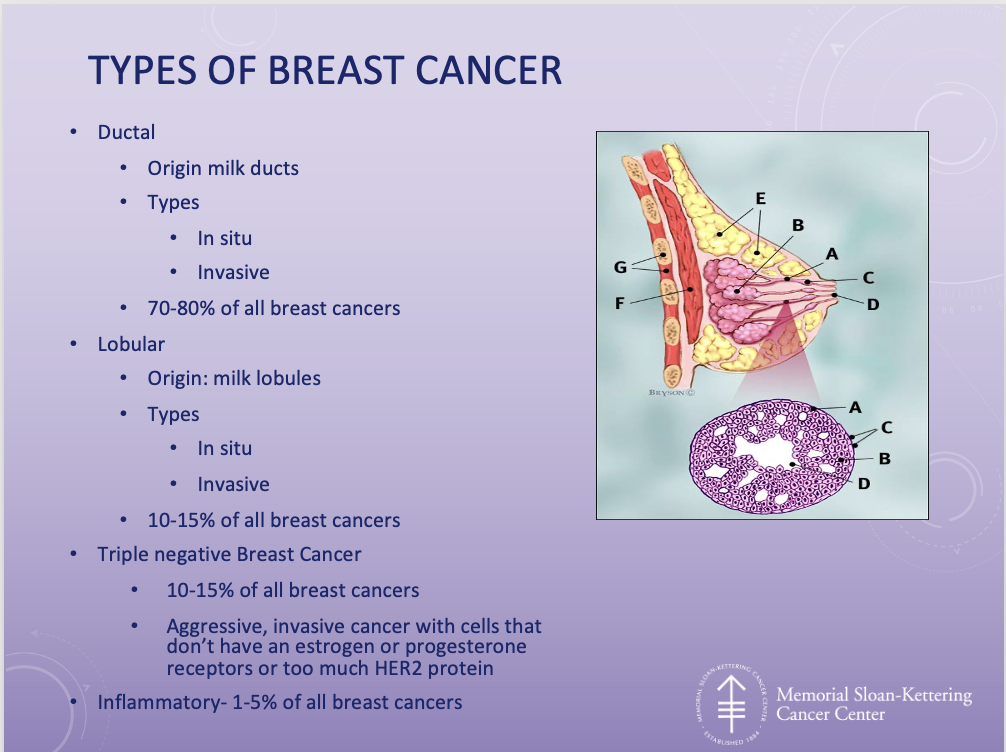
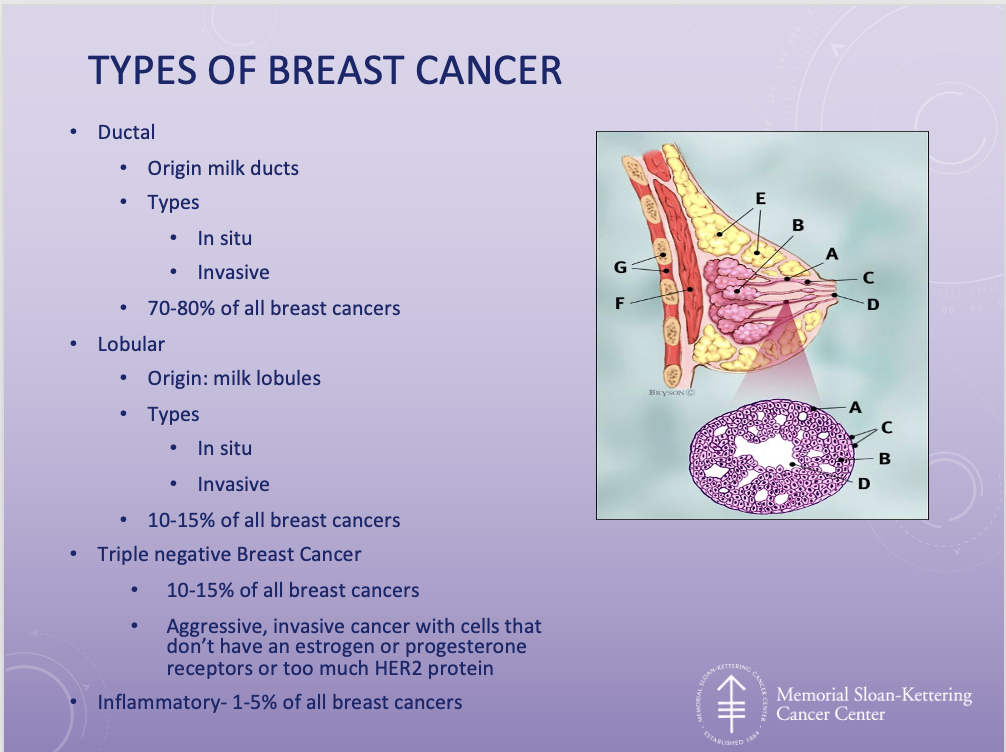
types of breast cancer:

knowt flashcard image
5
New cards

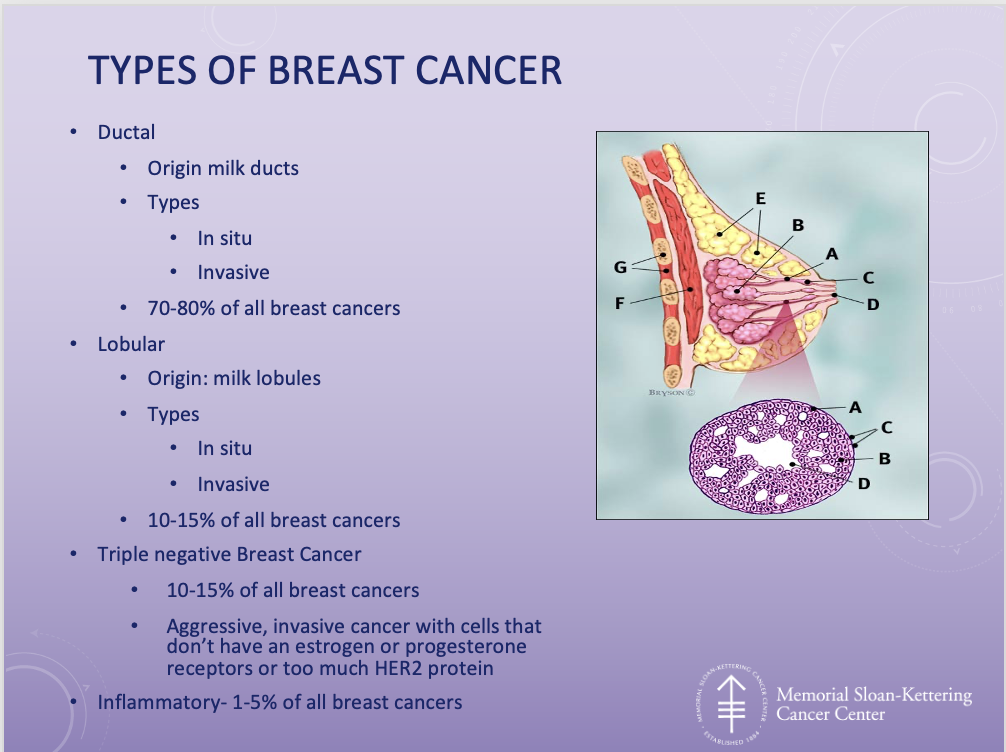
ductal breast cancer (origin, types, percent)
knowt flashcard image
6
New cards

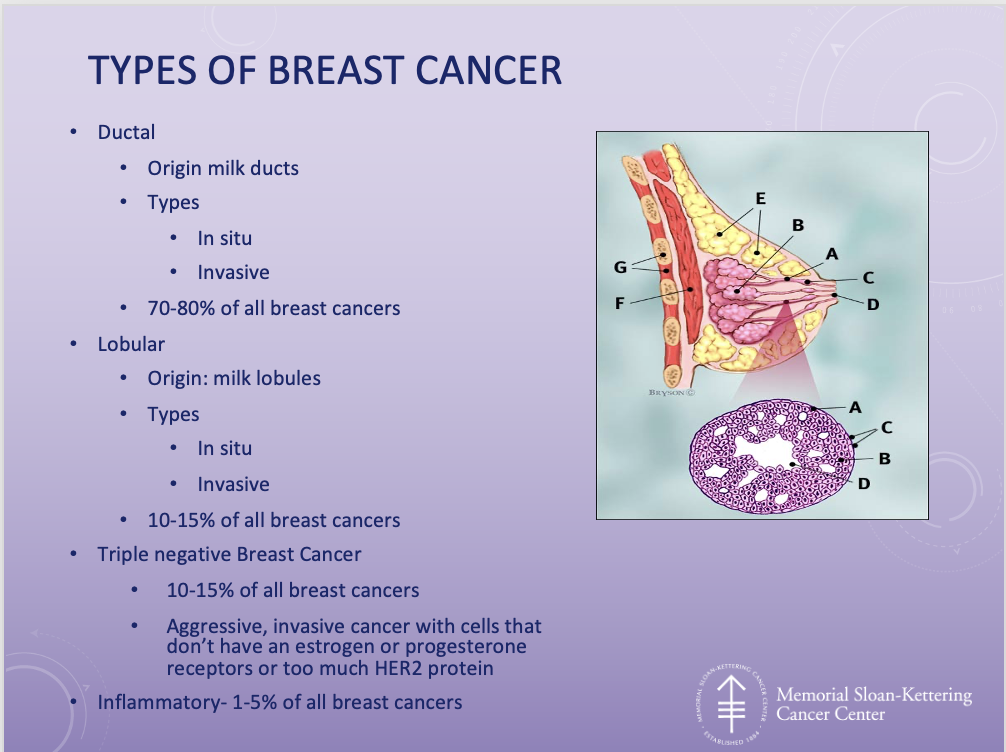
lobular breast cancer (origin, types, percent)
knowt flashcard image
7
New cards

triple negative breast cancer (tell me about it; percent)
knowt flashcard image
8
New cards

inflammatory breast cancer (percent)

knowt flashcard image
9
New cards

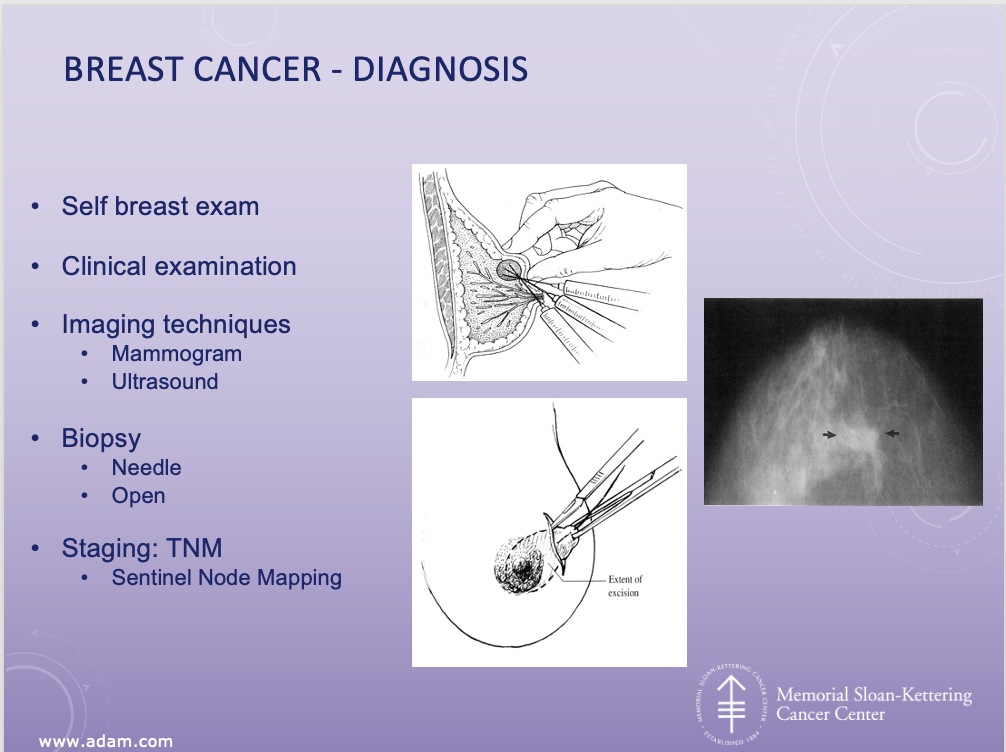
breast cancer diagnosis

knowt flashcard image
10
New cards

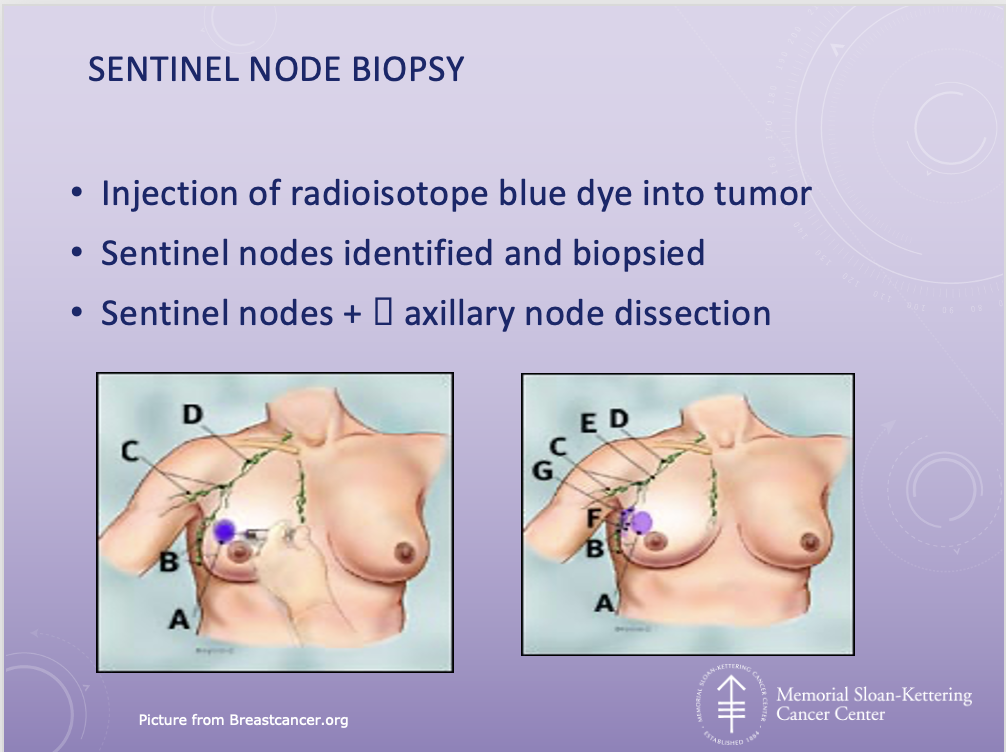
sentinel node biopsy

With the dye, the first couple that it touches are the sentinel nodes
<p><span>With the dye, the first couple that it touches are the sentinel nodes</span></p>
11
New cards

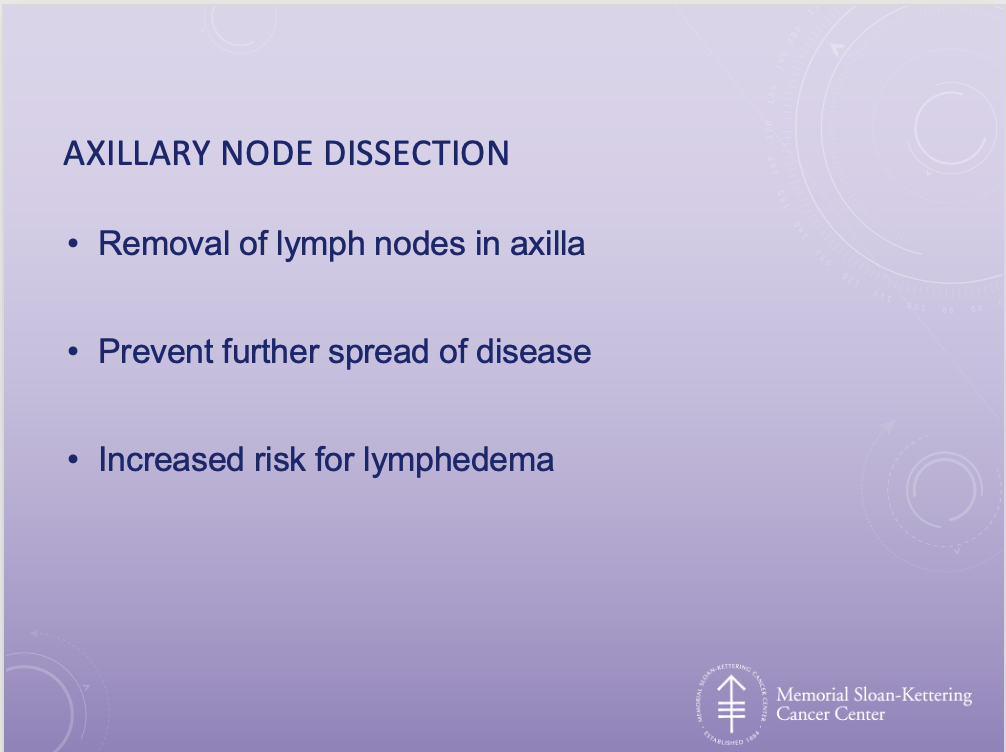
axillary node dissection

knowt flashcard image
12
New cards

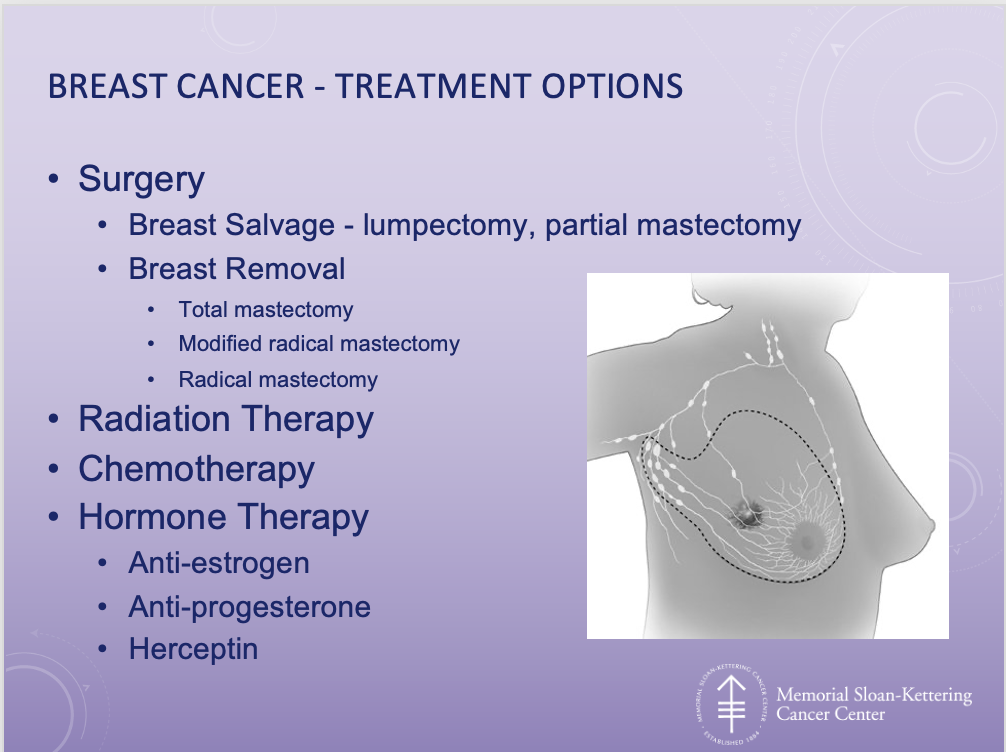
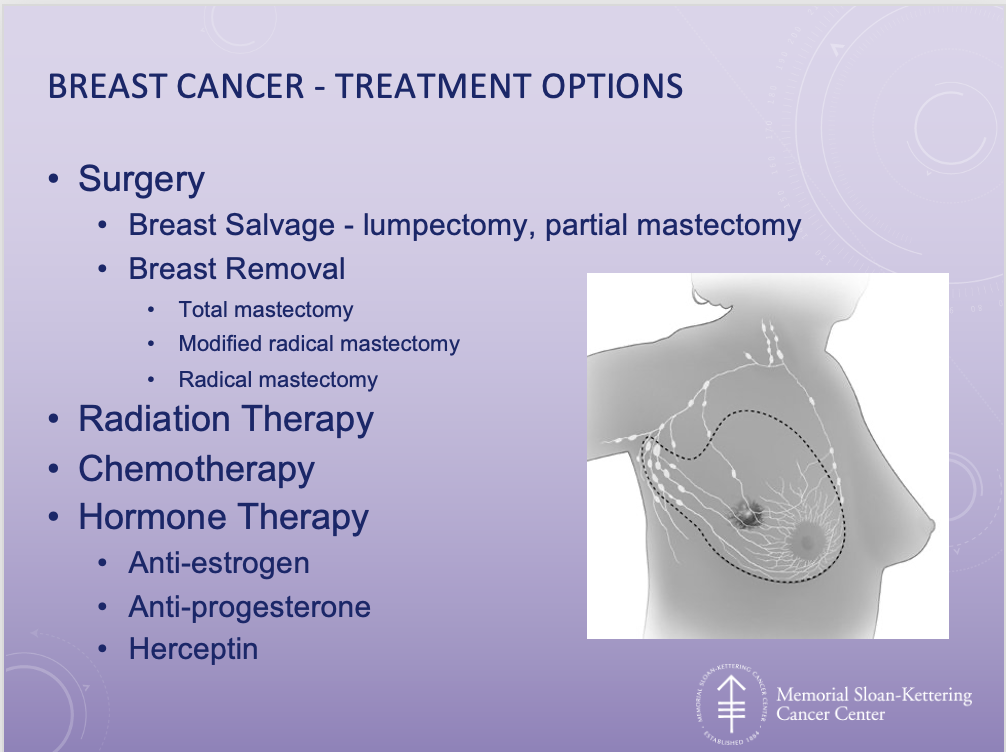
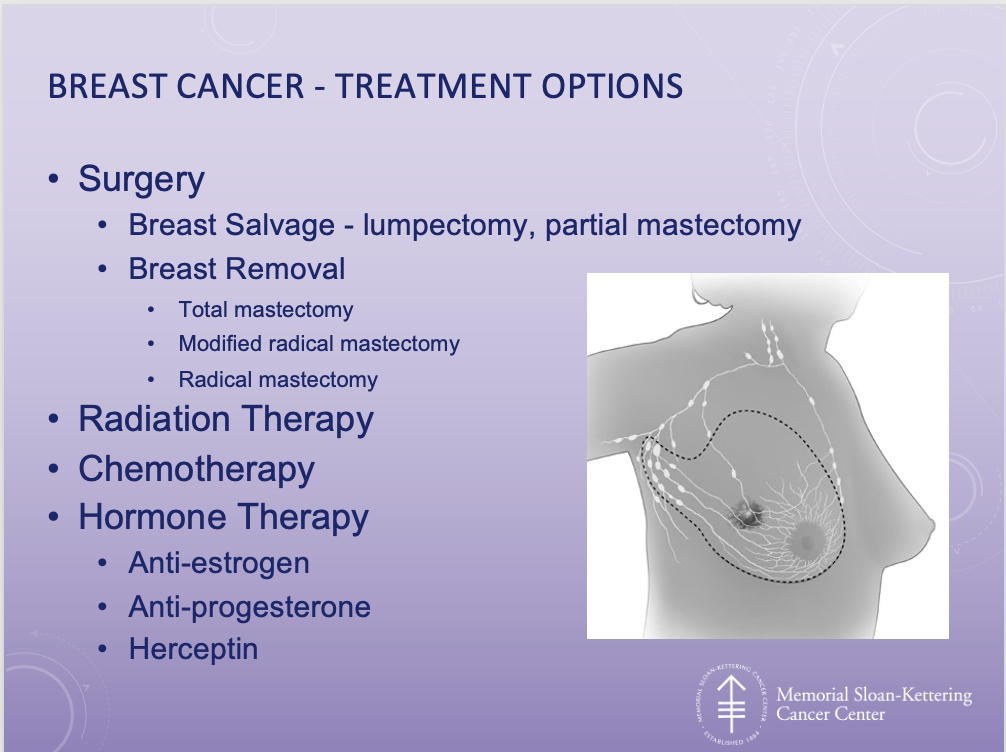
breast cancer treatment options:

knowt flashcard image
13
New cards

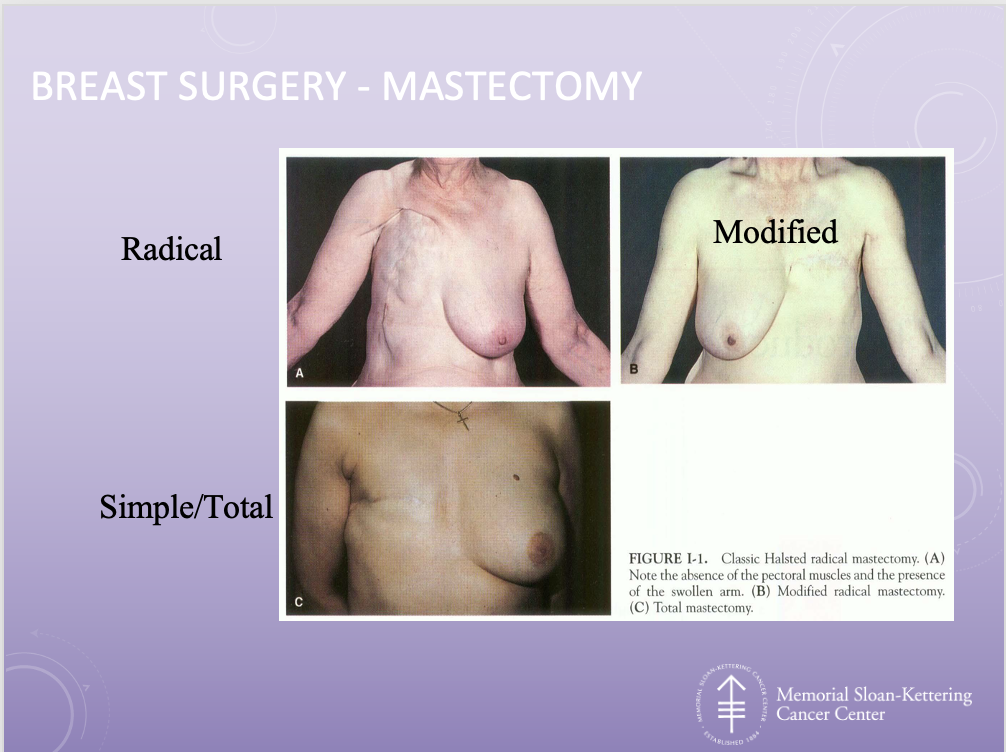
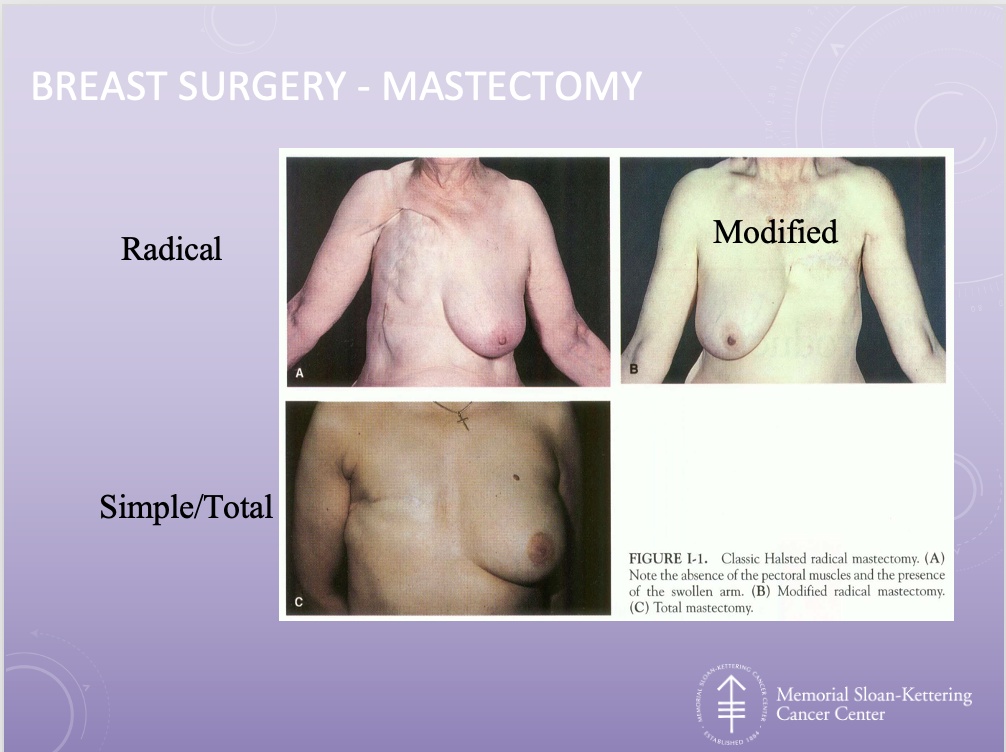
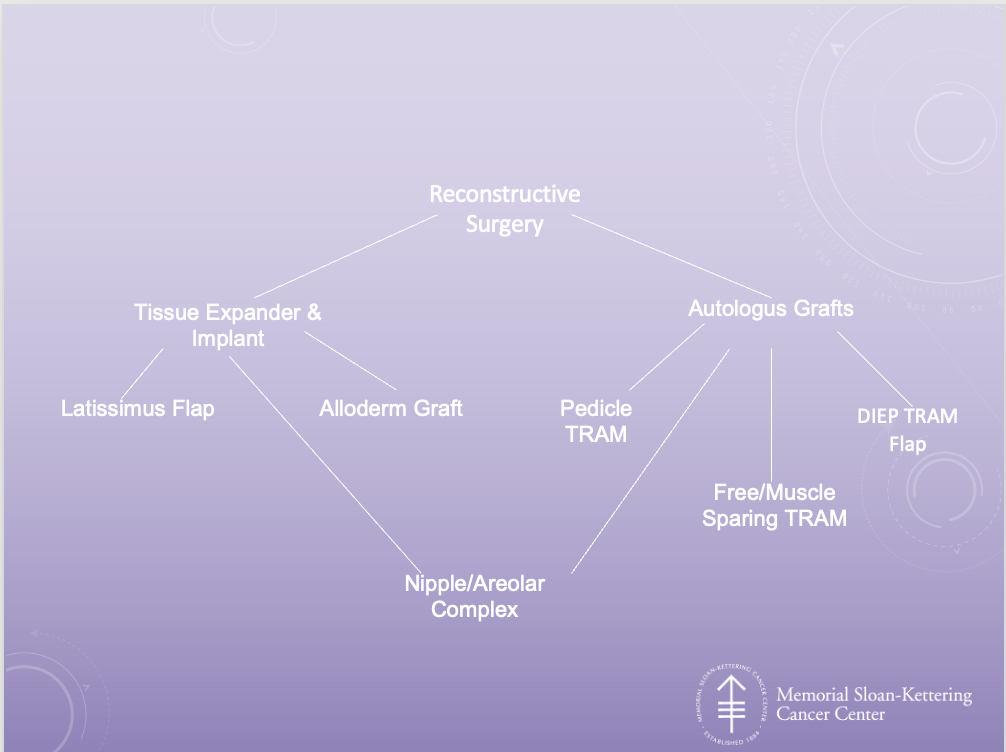
types of breast cancer surgery

knowt flashcard image
14
New cards

types of hormone therapy for breast cancer
knowt flashcard image
15
New cards
term image
knowt flashcard image
16
New cards
term image

A forequarter amputation is removal of entire upper extremity, scapula, and clavicle.  It is indicated for lesions of shoulder girdle and proximal humerus.  OT will be involved in creating a shoulder prosthesis for cosmetic purposes.  PT treatment will focus on safety with mobility particularly balance since there is a change in body weight distributi

Indications: lesions of the scapula and proximal UE with involvement of neurovascular bundles and/or chest wall

on. MENTION PROSTHESIS
<p><span>A forequarter amputation is removal of entire upper extremity, scapula, and clavicle.&nbsp; It is indicated for lesions of shoulder girdle and proximal humerus.&nbsp; OT will be involved in creating a shoulder prosthesis for cosmetic purposes.&nbsp; PT treatment will focus on safety with mobility particularly balance since there is a change in body weight distributi</span></p><p style="text-align: left;"></p><p style="text-align: left;"><span>Indications: lesions of the scapula and proximal UE with involvement of neurovascular bundles and/or chest wall</span></p><p><span>on.&nbsp;MENTION PROSTHESIS</span></p>
17
New cards

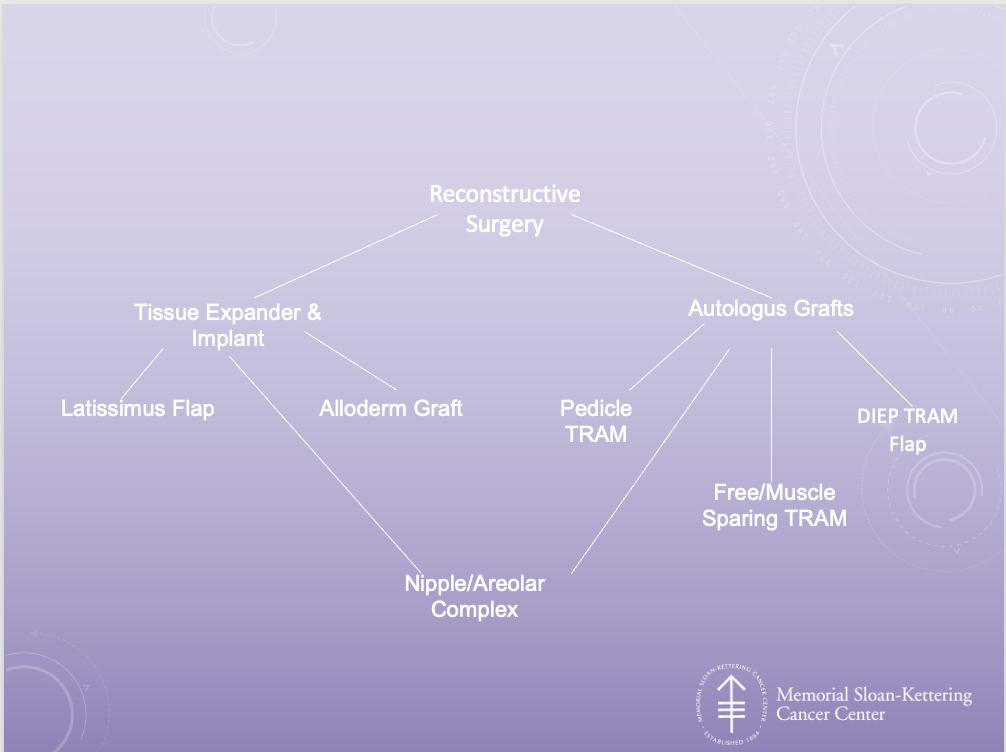
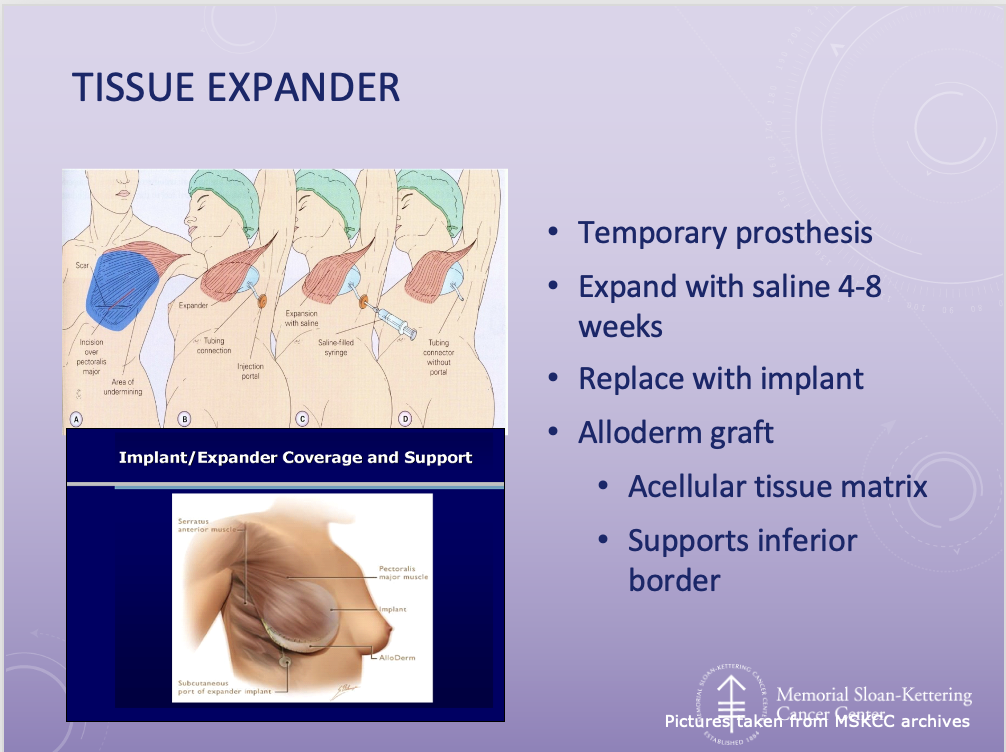
tissue expander (what is it, type of graft)

Rotationplasty is another limb salvage procedure.  This is performed with tumors of distal femur whose skeletal growth is not yet complete.  The femur is amputated at the proximal growth plate.  The tibia is then rotated 180 degrees and then fused to the femural stump.

❑Indications

❑Tumors of the distal femur

❑Age of patient

❑Procedure

❑Amputation of limb at distal femur

❑Rotate tibia and reinsert to residual limb
<p><span>Rotationplasty is another limb salvage procedure.&nbsp; This is performed with tumors of distal femur whose skeletal growth is not yet complete.&nbsp; The femur is amputated at the proximal growth plate.&nbsp; The tibia is then rotated 180 degrees and then fused to the femural stump.</span></p><p style="text-align: left;"></p><p><span>❑Indications</span></p><p><span>❑Tumors of the distal femur</span></p><p><span>❑Age of patient</span></p><p style="text-align: left;"></p><p style="text-align: left;"></p><p style="text-align: left;"></p><p><span>❑Procedure</span></p><p><span>❑Amputation of limb at distal femur</span></p><p><span>❑Rotate tibia and reinsert to residual limb</span></p>
18
New cards

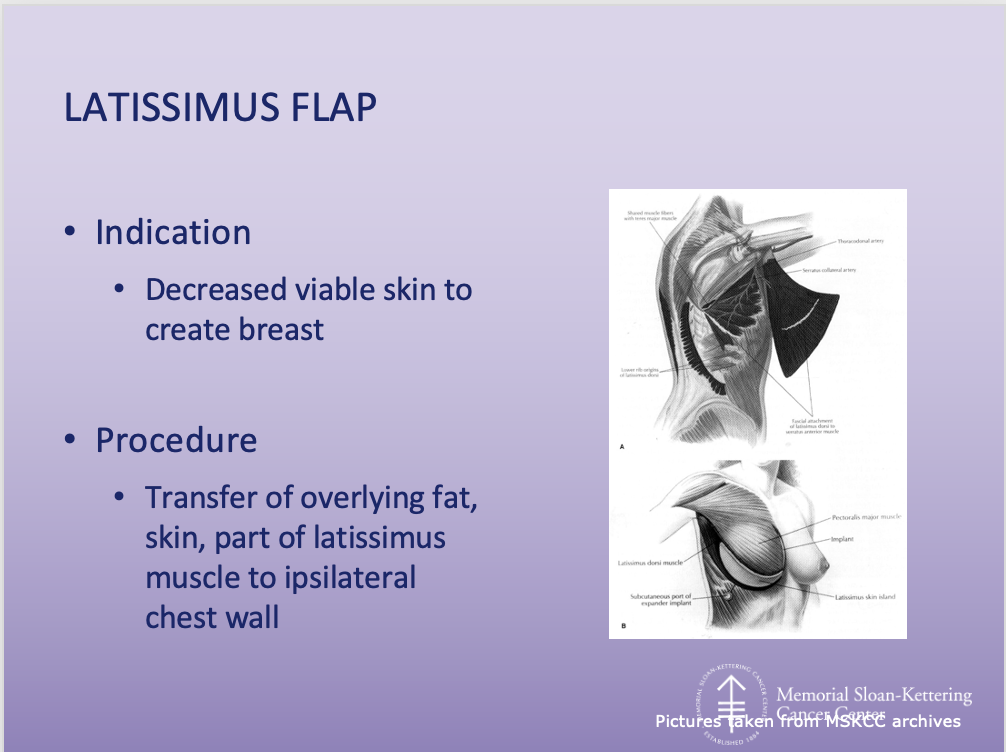
latissimus flap (indication and procedure)
knowt flashcard image
19
New cards

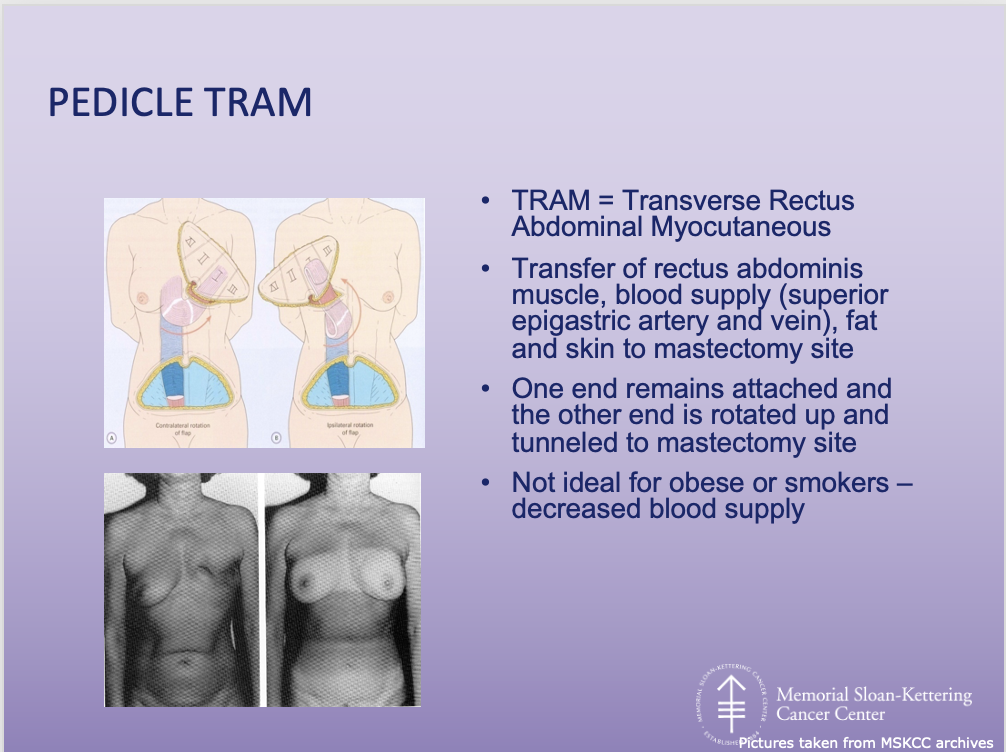
Pedicle Tram

knowt flashcard image
20
New cards

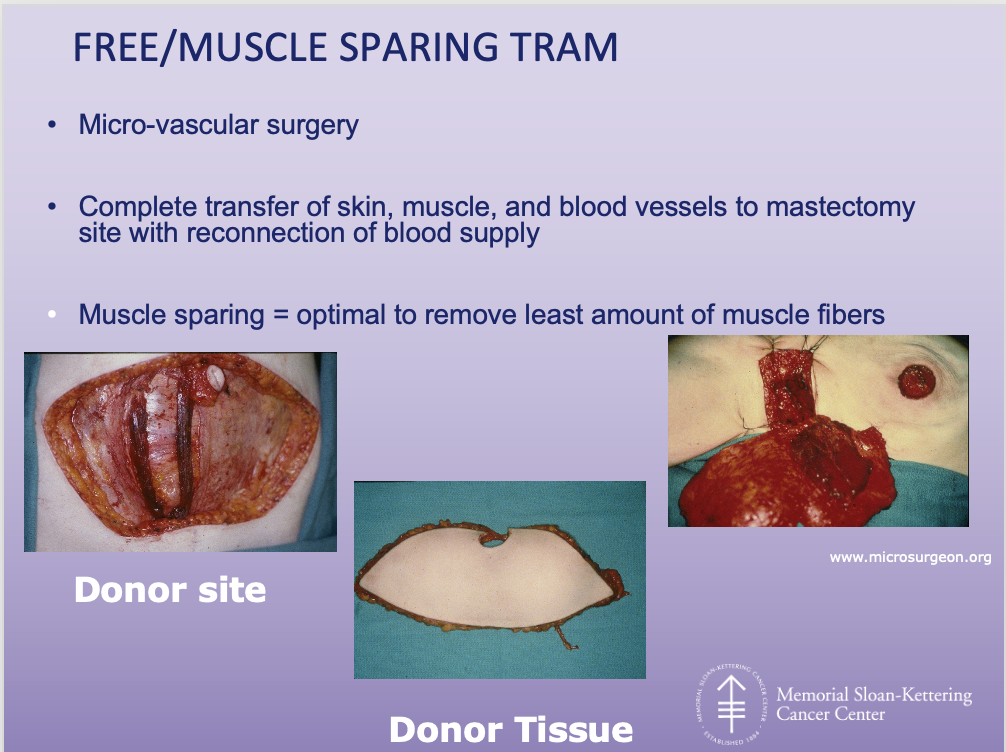
free/muscle sparing tram

knowt flashcard image
21
New cards

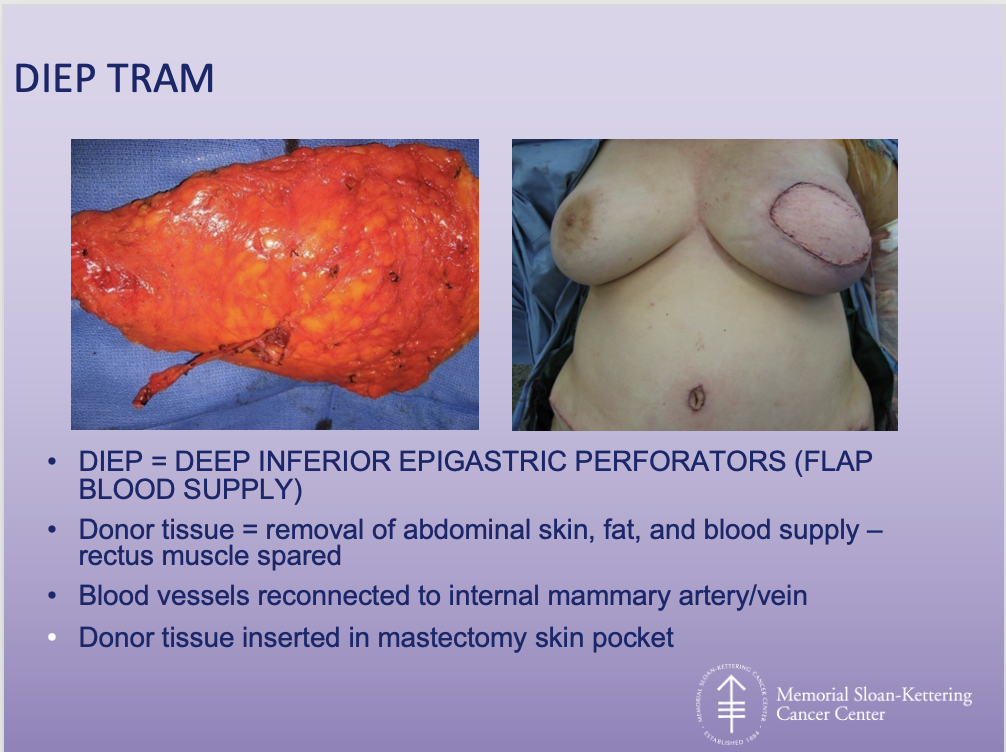
DIEP tram

knowt flashcard image
22
New cards

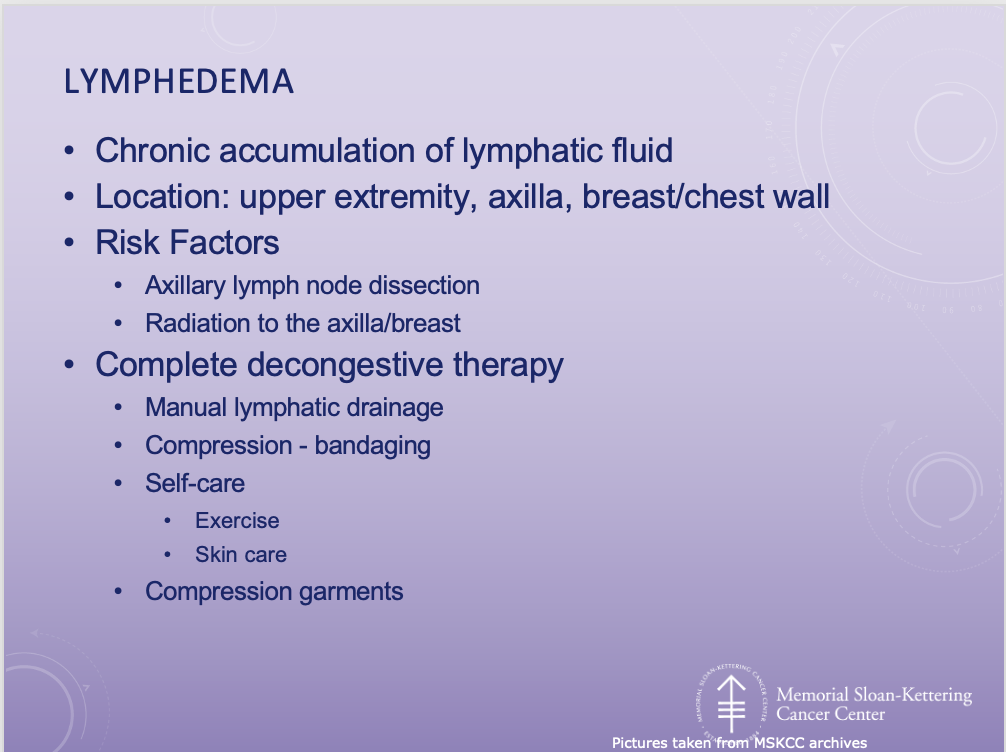
lymphedema: what is it; location

knowt flashcard image
23
New cards

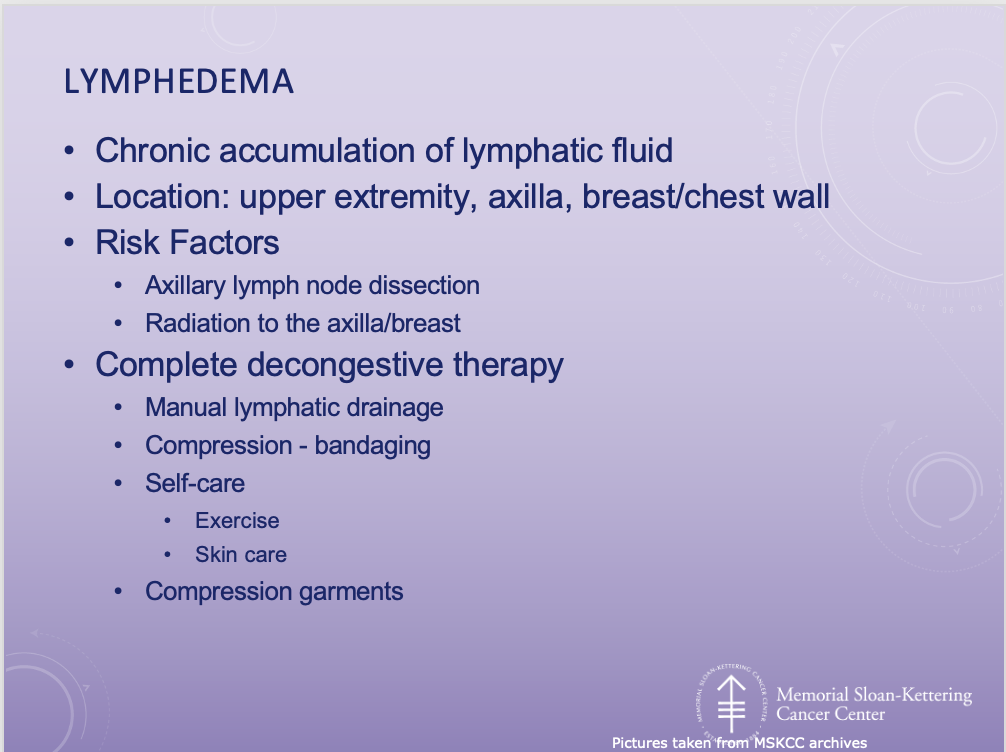
lymphedema risk factors

knowt flashcard image
24
New cards

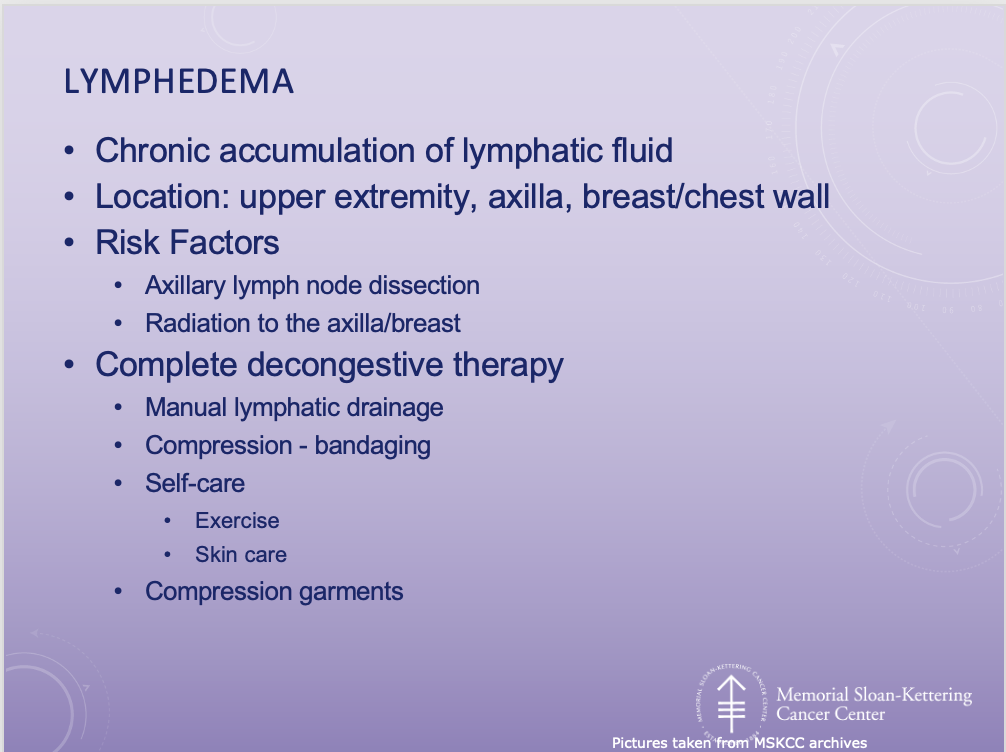
lymphedema: complete decongestive therapy
knowt flashcard image
25
New cards

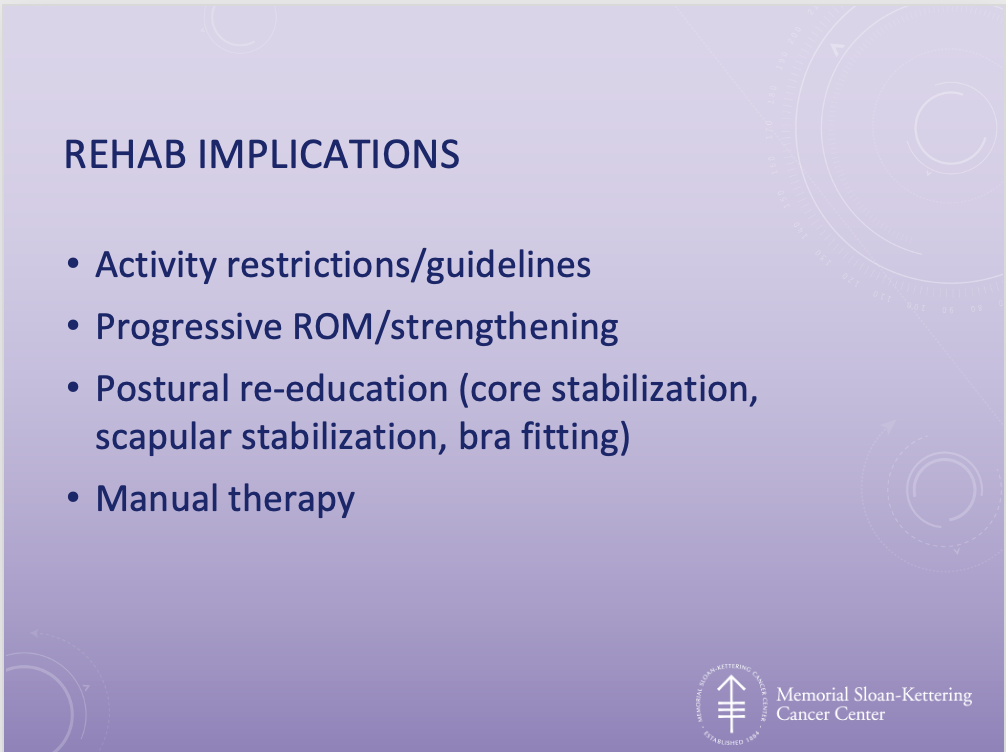
rehab implications

knowt flashcard image
26
New cards

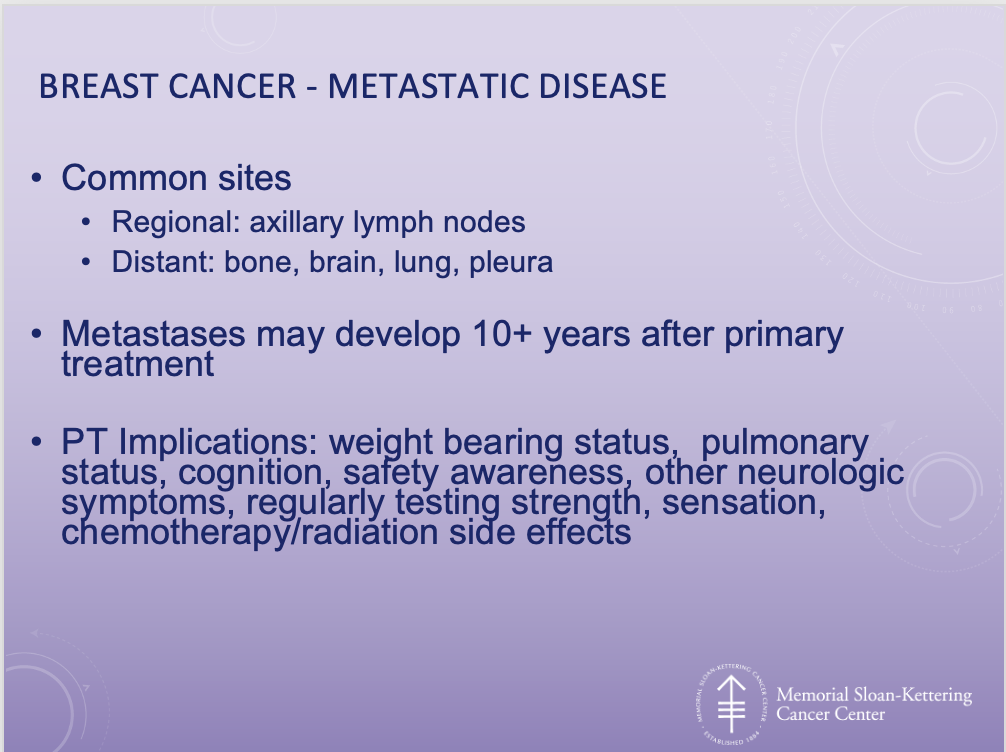
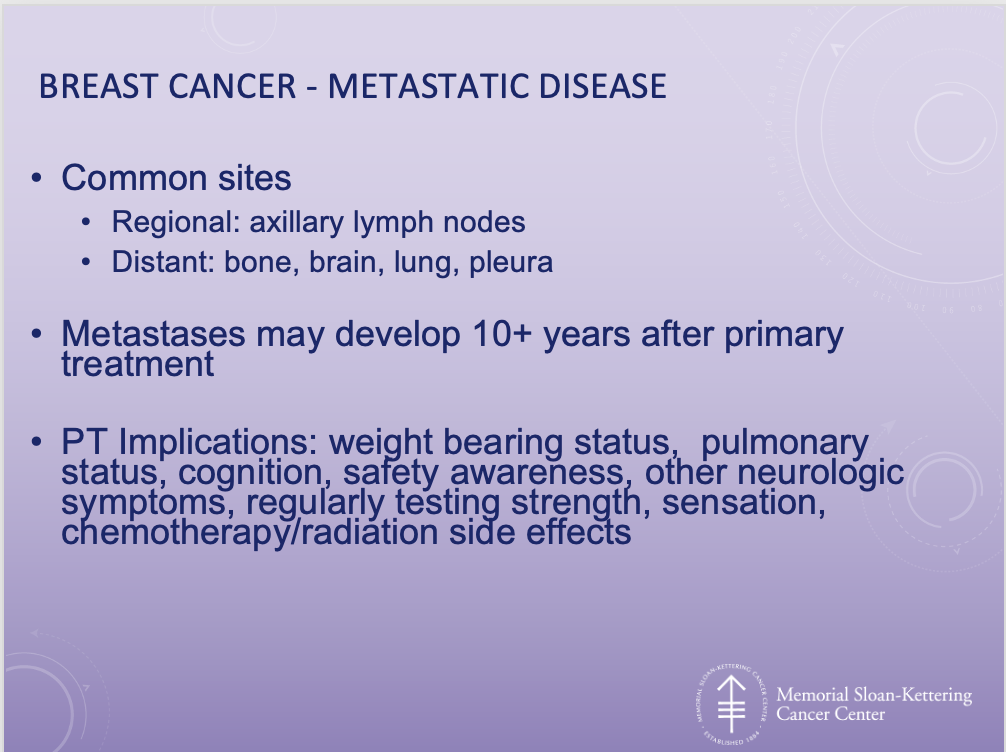
breast cancer: metastatic disease: common sites, when it may develop
knowt flashcard image
27
New cards

breast cancer: metastatic disease: PT implications
knowt flashcard image
28
New cards
term image

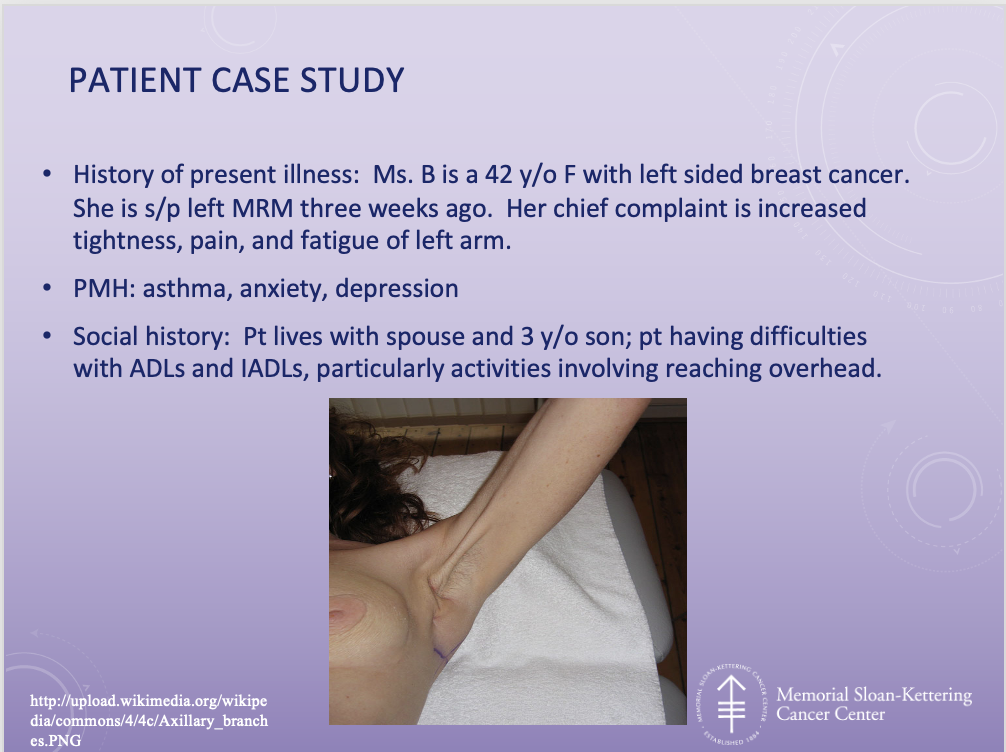
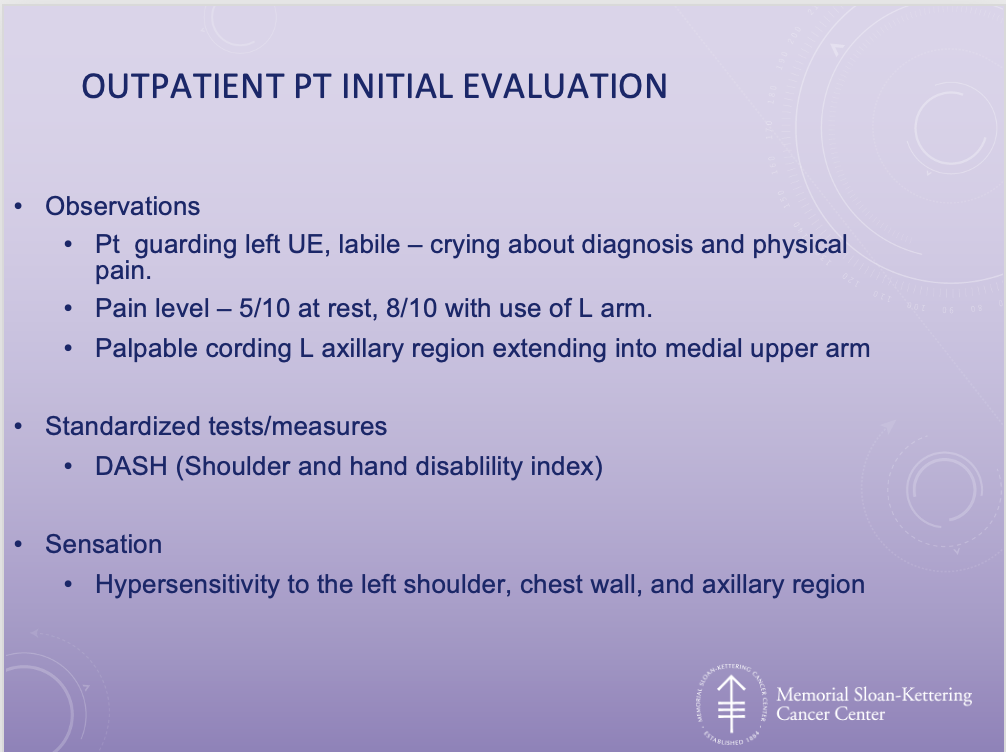
Tight cord in axilla: axillary cord syndrome (fibrosis of something) – shell have pain with movements, shes also newly diagnosed so she may be emotional

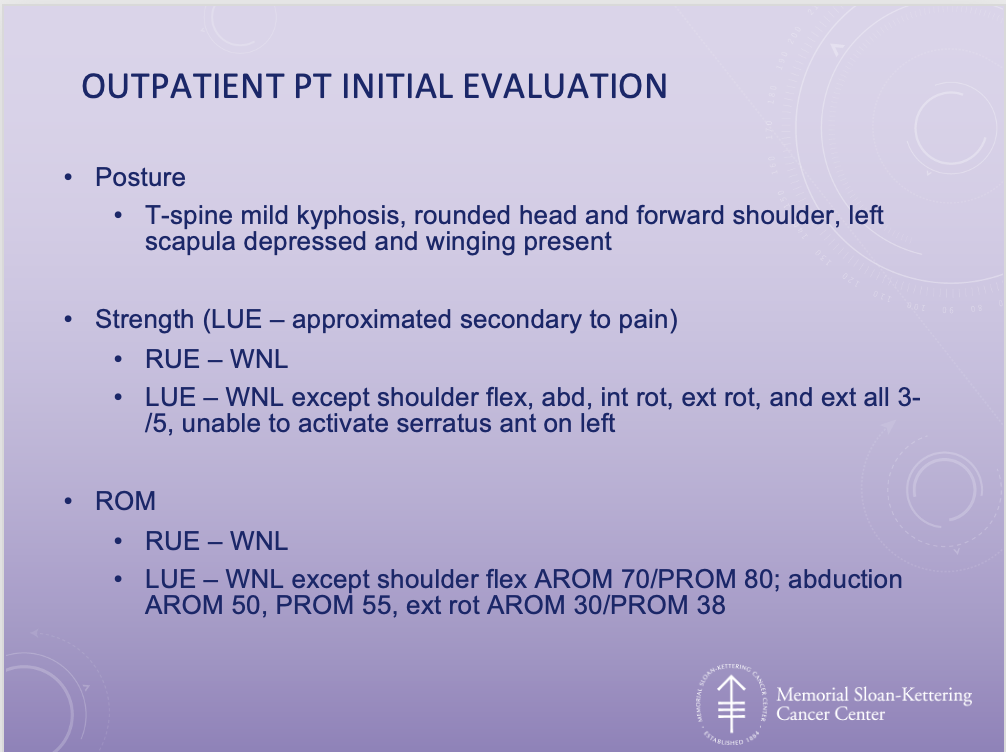
Measure ROM, strength in arm, do DASH, think about sensation

29
New cards

outpatient PT initial evaluation based on case study
knowt flashcard image
30
New cards
  1. outpatient PT initial evaluation based on case study
knowt flashcard image
31
New cards

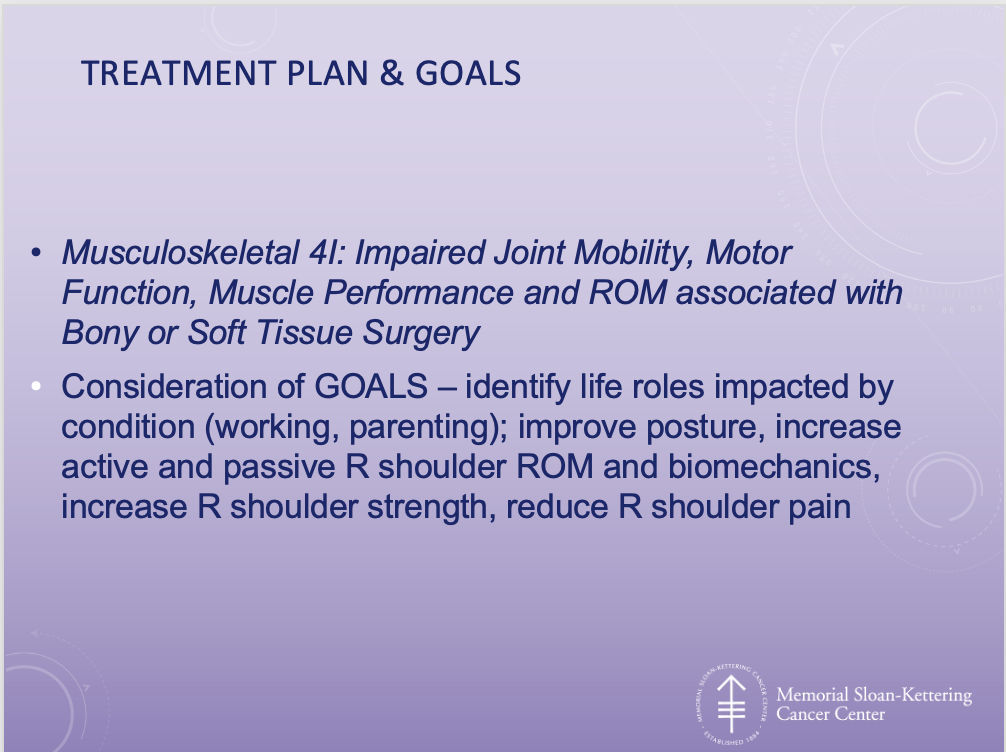
treatment plan and goals

This is where we would be practicing

goal sessionL: what shes impaired doing, life goals at home and as a parent, improving posture and biomechanics
<p><span>This is where we would be practicing</span></p><p style="text-align: left;"></p><p style="text-align: left;"><span>goal sessionL: what shes impaired doing, life goals at home and as a parent, improving posture and biomechanics</span></p>
32
New cards

treatment plan

In 4 weeks patient will have a verbal decrese in pain by 3 points – with PT it would be with the treatment of PT – can do some desensitixationtechniques, also just increase in strength and ROM will help

In 2 weeks patient will improve AROM and PROM by 10 degrees in order to promote increase functional independence

Increase in strength in scapulat: serratus anterior
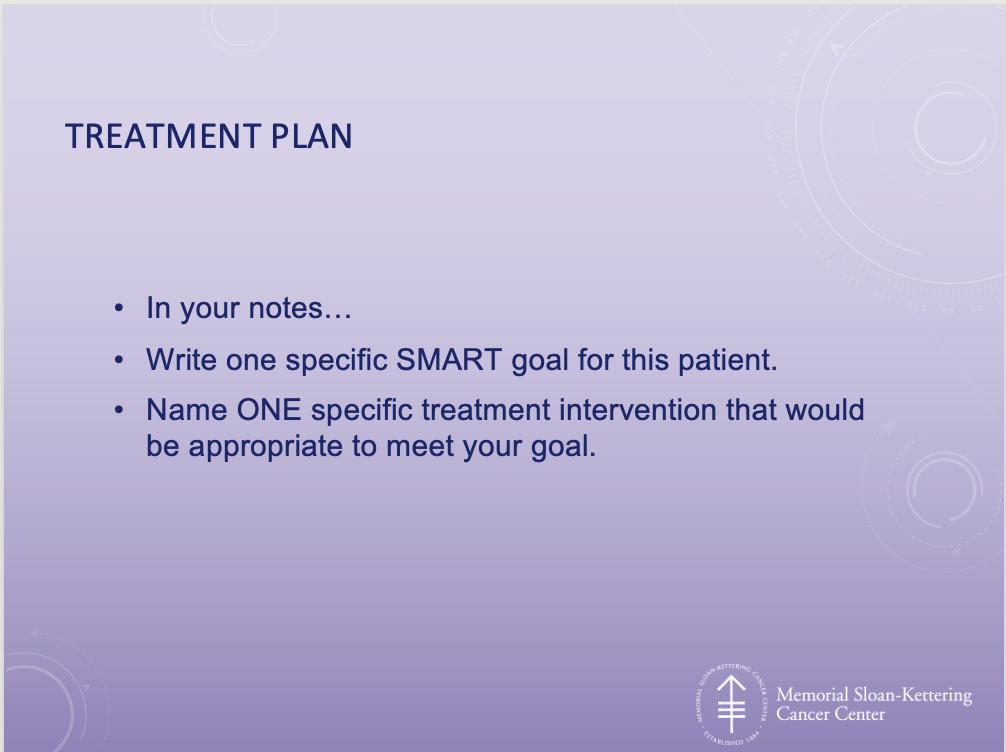
<p><span>In 4 weeks patient will have a verbal decrese in pain by 3 points – with PT it would be with the treatment of PT – can do some desensitixationtechniques, also just increase in strength and ROM will help</span></p><p style="text-align: left;"><span>In 2 weeks patient will improve AROM and PROM by 10 degrees in order to promote increase functional independence</span></p><p style="text-align: left;"><span>Increase in strength in scapulat: serratus anterior</span></p>
33
New cards
term image

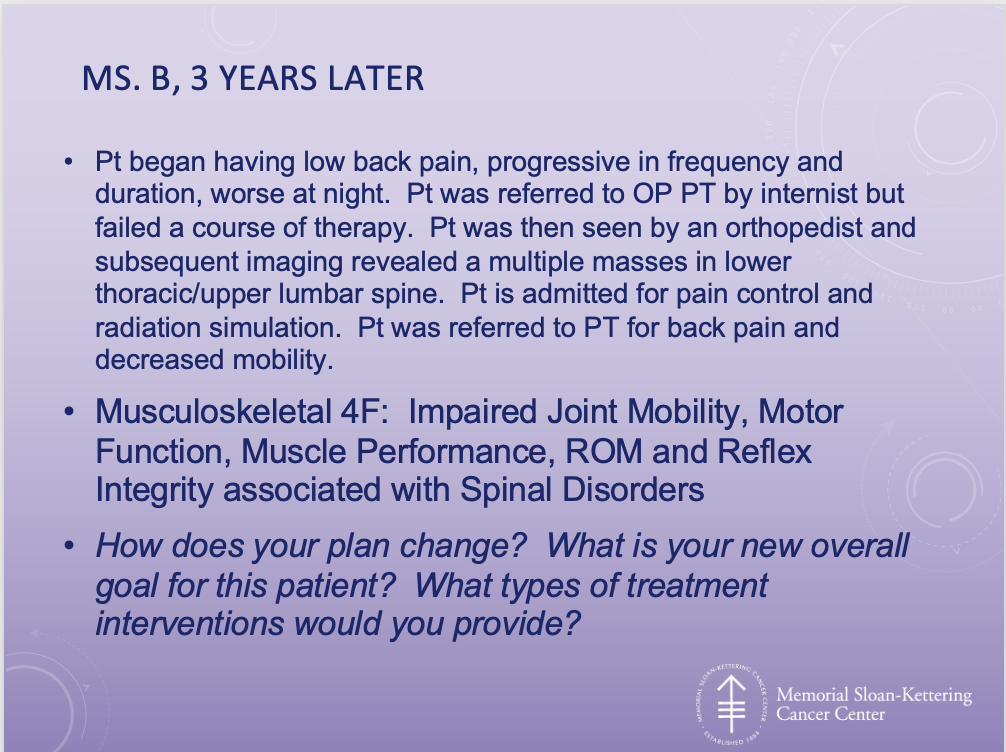
We think that there was a development of metastasis (usually worse at night (more fluid retention at night) , gets worse instead of better)

If you aren’t treating her arm, we are now treating the back pain (teaching spine precautions, log rolling techniques, function, maybe using a walker for better posture and give her most support)
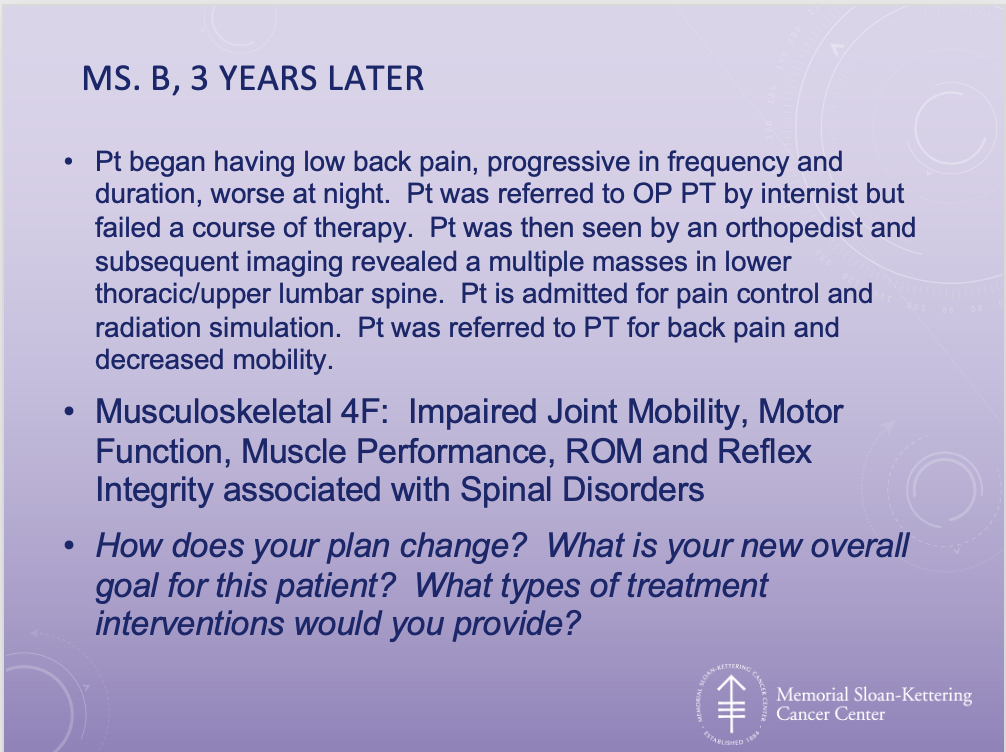
<p><span>We think that there was a development of metastasis (usually worse at night (more fluid retention at night) , gets worse instead of better)</span></p><p style="text-align: left;"></p><p style="text-align: left;"><span>If you aren’t treating her arm, we are now treating the back pain (teaching spine precautions, log rolling techniques, function, maybe using a walker for better posture and give her most support)</span></p>