germ cell development (lecture 1)
 View linked note
 Call Kai
 Learn
Learn Practice Test
 Spaced Repetition
 Match
Match Flashcards
 Knowt Play
1/27

There's no tags or description
Looks like no tags are added yet.
Name | Mastery | Learn | Test | Matching | Spaced | Call with Kai | Chat |
|---|
No analytics yet
Send a link to your students to track their progress
28 Terms
where is the overview for the class?
developmental biology
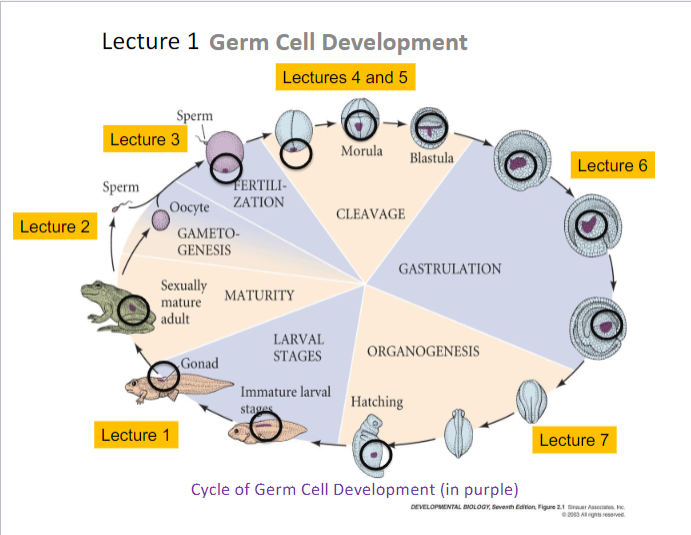
what we learning in this lecture?
how germ cells develop
what are germ cells and what do they develop into?
germ cells are reproductive cells that develop into sperm and egg.
what are you supposed to know after this lecture?
-germ cells vs somatic cells
-origin of germ cells in different animals
-“Primordial” Germ Cell Development and Migration to the Gonads
Development of Primary and Secondary Sex Organs: A Collaboration of Germ and Somatic Cells
Chromosomal Sex Determination: Role of Sex Chromosomes and the Sry Gene in Mammals
Environmental Sex Determination: Example of Control by Temperature
gonad
an organ that produces gametes; a testis or ovary.
gametes
Gametes are an organism's reproductive cells. They are also referred to as sex cells.
Female gametes are called ova or egg cells, and male gametes are called sperm. Gametes are haploid cells, and each cell carries only one copy of each chromosome.
what are male gametes called?
sperm
what are female gametes called?
eggs/ ovules
Key Differences Between Germ Cells and Somatic Cells (slide 6)
these are facts and are not part of the puzzle
germ cells
reproductive cells that develop into sperm and eggs
somatic cells
any cell of a living organism other than the reproductive cells.
which cells produce the current and next generation?
somatic cells produce the current generation
germ cells product the next generation
in terms of mitosis and meiosis, germ cells and somatic cells undergo which?
germ cells undergo both mitosis and meiosis
somatic cells only undergo mitosis
Meiosis is a specialized cell division process that occurs in sexually reproducing organisms, resulting in the production of gametes (sperm or egg cells)
Mitosis is the process by which a cell replicates its chromosomes and then segregates them, producing two identical nuclei in preparation for cell division
which cells, somatic and germ, are haploid and diploid?
Haploid refers to the presence of a single set of chromosomes in an organism's cells. Sexually reproducing organisms are diploid (having two sets of chromosomes, one from each parent).
Germ cells can be 1n (hapoloid) or 2n (diploid), whereas somatic cells are usually 2n (but can be 3n or 4n in some cases)
Germ cells can make more germ cells, which ultimately become male or female gametes in the reproductive organs, or somatic cells. They produce the next generation.
• Somatic cells can only make somatic cells (and not germ cells), which become the cells of differentiated tissues and organs (except germ cells) in the current generation
(slide 7) germ cell development occurs in three stages. what is the first stage?
Developmental Origin in the Previous Generation
this makes sense, because germ cells must first originate
(slide 7) germ cell development occurs in three stages, what is the second stage?
migration to gonads as “primordial” germ cells in the current generation
(slide 7) germ cell development occurs in three stages, what is the third stage?
differentiation into sperm or eggs (sex determination) in the current generation
where does germ cell development occur?
Germ Cell Development occurs in the embryo along with somatic development
what are the two ways that germ cells are able to develop? what is the difference between the two ways?
(part of the puzzle because we are looking at germ cell development in different animals)
Germ cells can develop autonomously (using information from inside the precursor cells themselves) or non-autonomously (using information obtained by signaling from other cells)
what are the two animals that autonomous germ cell development occurs in?
insects and frogs
what is the type of animal that non-autonomous germ cell development occurs in?
mammals
all the small bumps are somatic cells
from the shape of the egg, we can see the anterior pole and the posterior pole
if you have the granules, it becomes a germ cell
if you don’t have the granules, it becomes a somatic cell.
SUMMARY (puzzle built from notebook)
what are the facts you need to know from lecture 1?
-the differences between somatic and germ cells (slide 6) which I already put in the flashcards above
-germ cell development slide that fits into the rest of the puzzle (slide 8)
overview of puzzle
the three stages of germ cell development
developmental origin in previous generation
migration to gonads as primoradial germ cells in the current generation
differentiation in sperm or eggs (sex determination) in current generation
once you reach sperm and eggs, aka sex determination, you have completed germ cell development
WHERE does germ cell DEVELOPMENT occur?
embryo (along with somatic cell development)