Political Parties
 Call Kai
 Learn
Learn Practice Test
 Spaced Repetition
 Match
Match Flashcards
 Knowt Play
1/24

There's no tags or description
Looks like no tags are added yet.
Name | Mastery | Learn | Test | Matching | Spaced | Call with Kai |
|---|
No analytics yet
Send a link to your students to track their progress
25 Terms
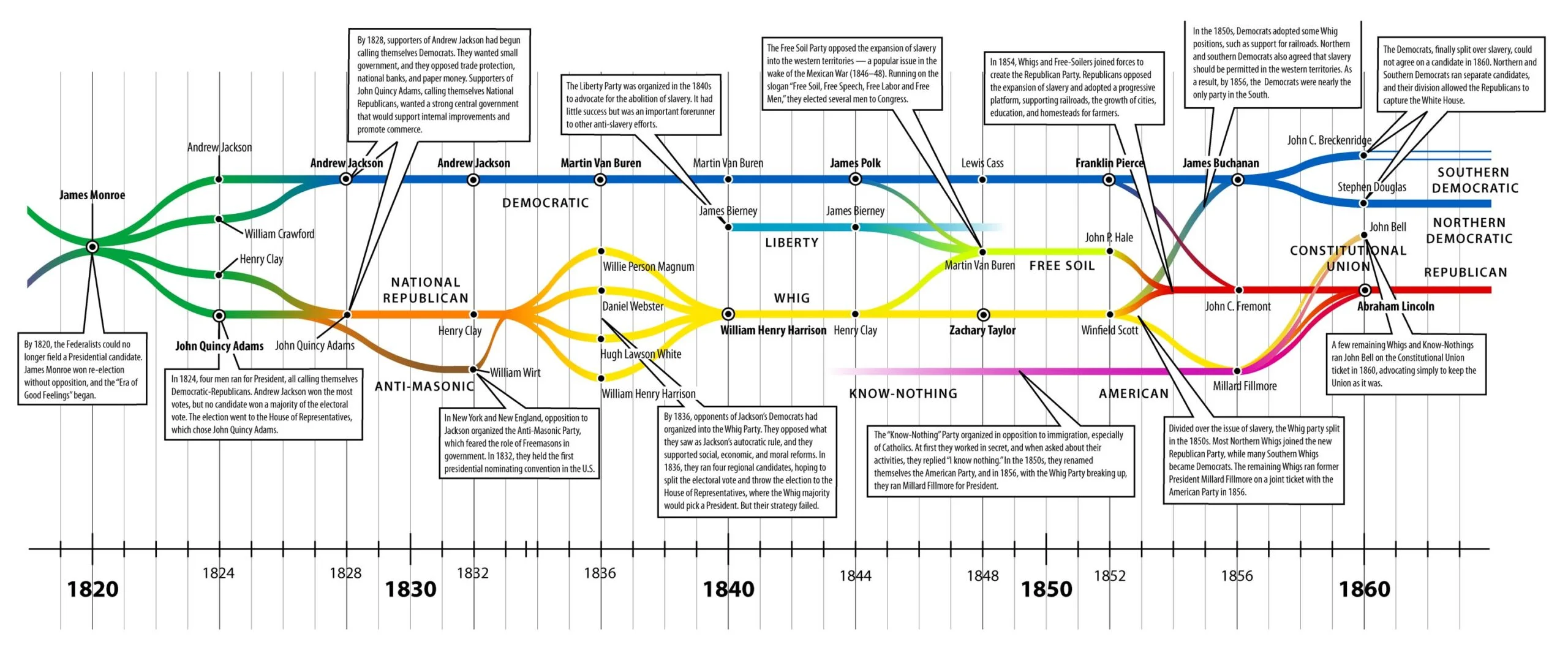
First Party System
1790s-1820s, Federalists vs Democratic-Republicans
Federalist Party
Led by Alexander Hamilton
Strong central government
Industry
Pro-Britain
Democratic-Republican Party
Led by Thomas Jefferson and James Madison
States' rights
Agrarian economy
Pro-France
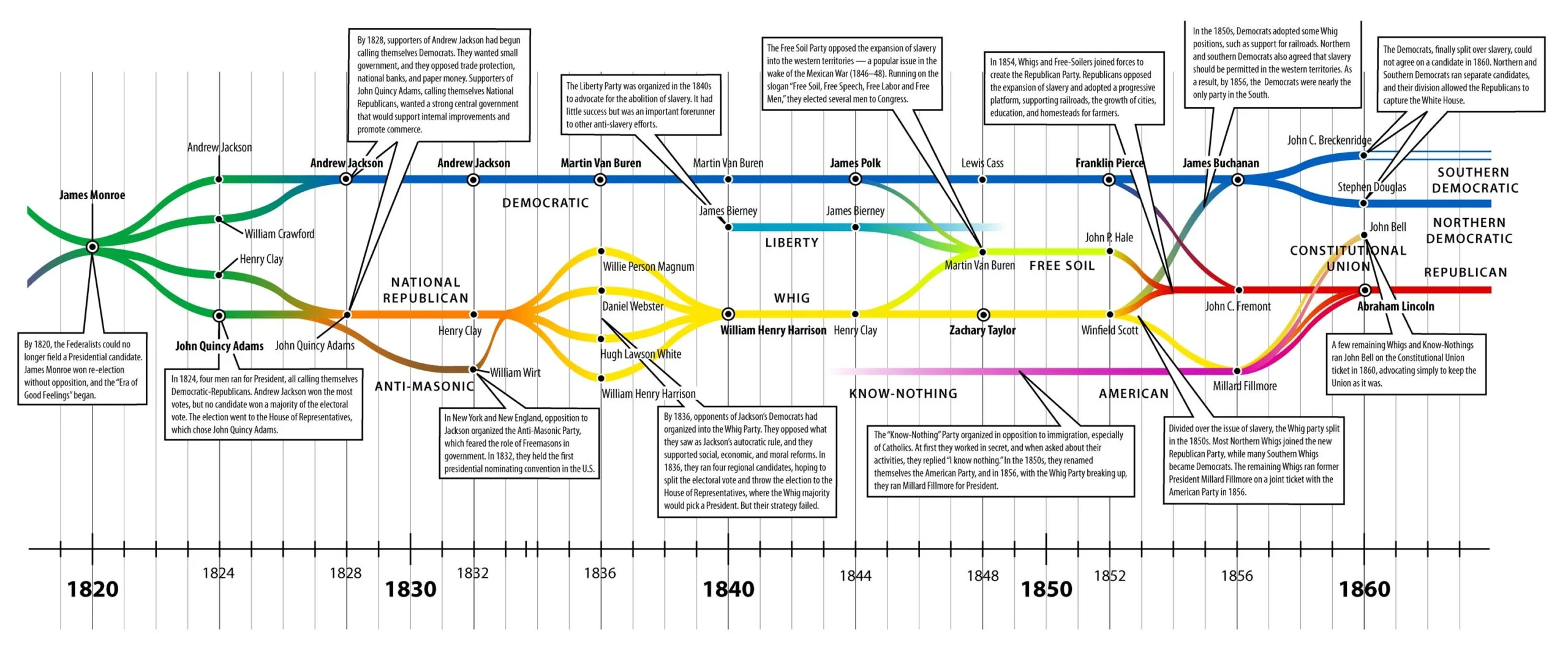
Second Party System
Political party framework in the United States from the 1820s to the 1850s, characterized primarily by the rivalry between the Democratic Party and the Whig Party.
Democratic-Republicans split into these two parties
Federalists dissolved after the Hartford Convention during the war of 1812
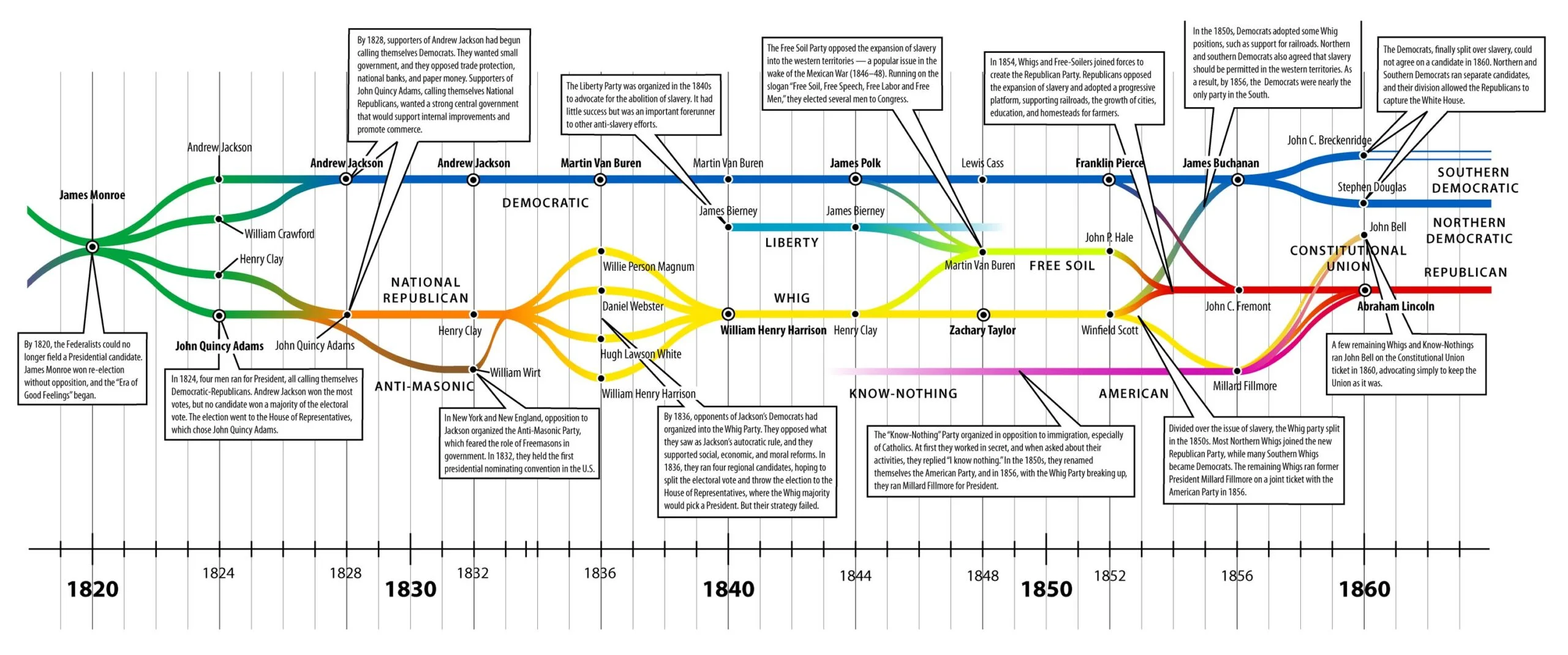
Democratic Party
Led by Andrew Jackson, 1828–1854
Common man democracy
Agrarian interests
States' rights
Limited federal government
No national bank/against it
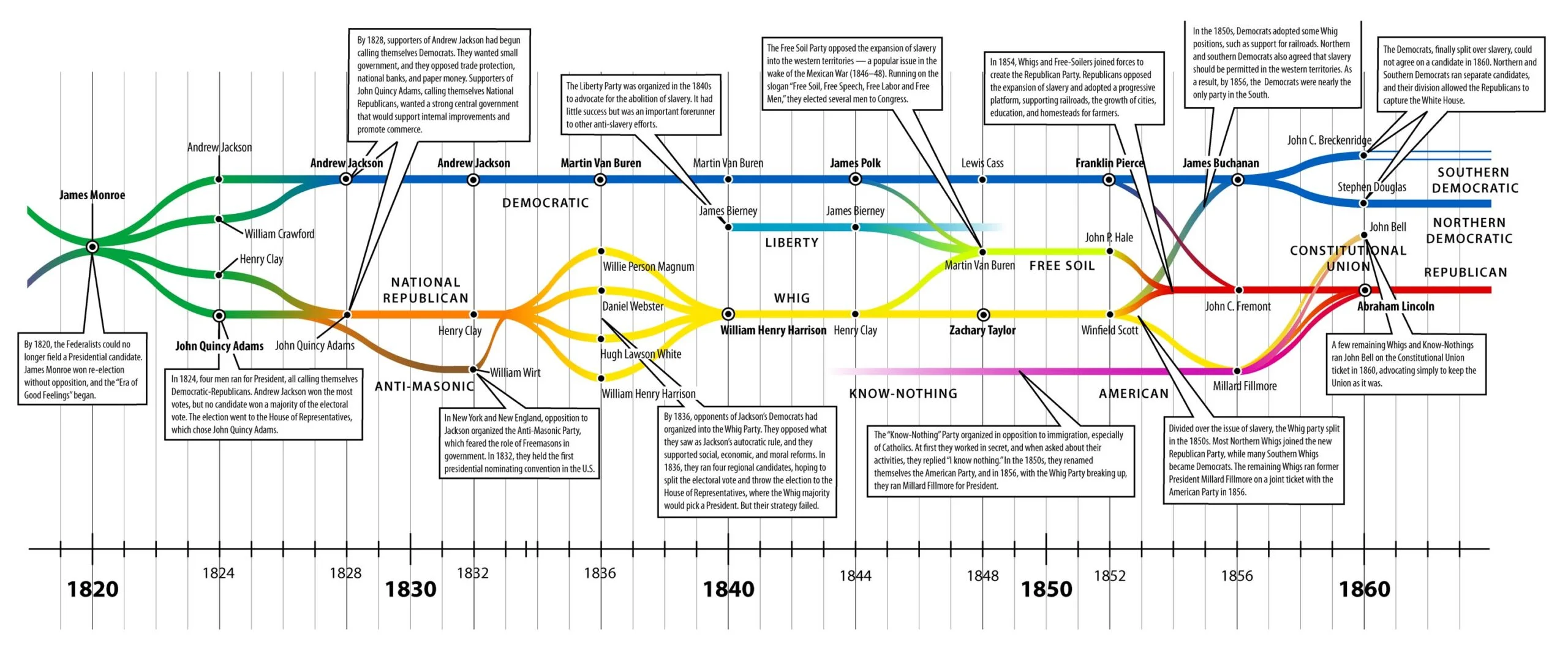
National Republicans
Led by Henry Clay and John Quincy Adams. Approx. 1824–1834, short-lived US political party formed from the anti-Jackson faction of the Democratic-Republican Party.
Strong federal government
The American System (tariffs, national bank, internal improvements)
Closer ties with old Federalist ideals.
Became the Whig Party
Anti-Masonic Party
America's first significant third party (late 1820s-1830s)
opposed the secret fraternal order of Freemasons viewing them as an anti-democratic, elitist group controlling politics
Merged into the Whig party later on
⇢Who were freemasons? (Not a political party)
Members of the world's oldest and largest fraternal organization, evolving from medieval stonemasons' guilds into a society focused on self-improvement, morality, and fellowship, using symbols and rituals to teach lessons, attracting men from all walks of life, including famous figures like George Washington, Mozart, and Winston Churchill, and emphasizing belief in a Supreme Being while remaining non-religious and inclusive of diverse faiths.
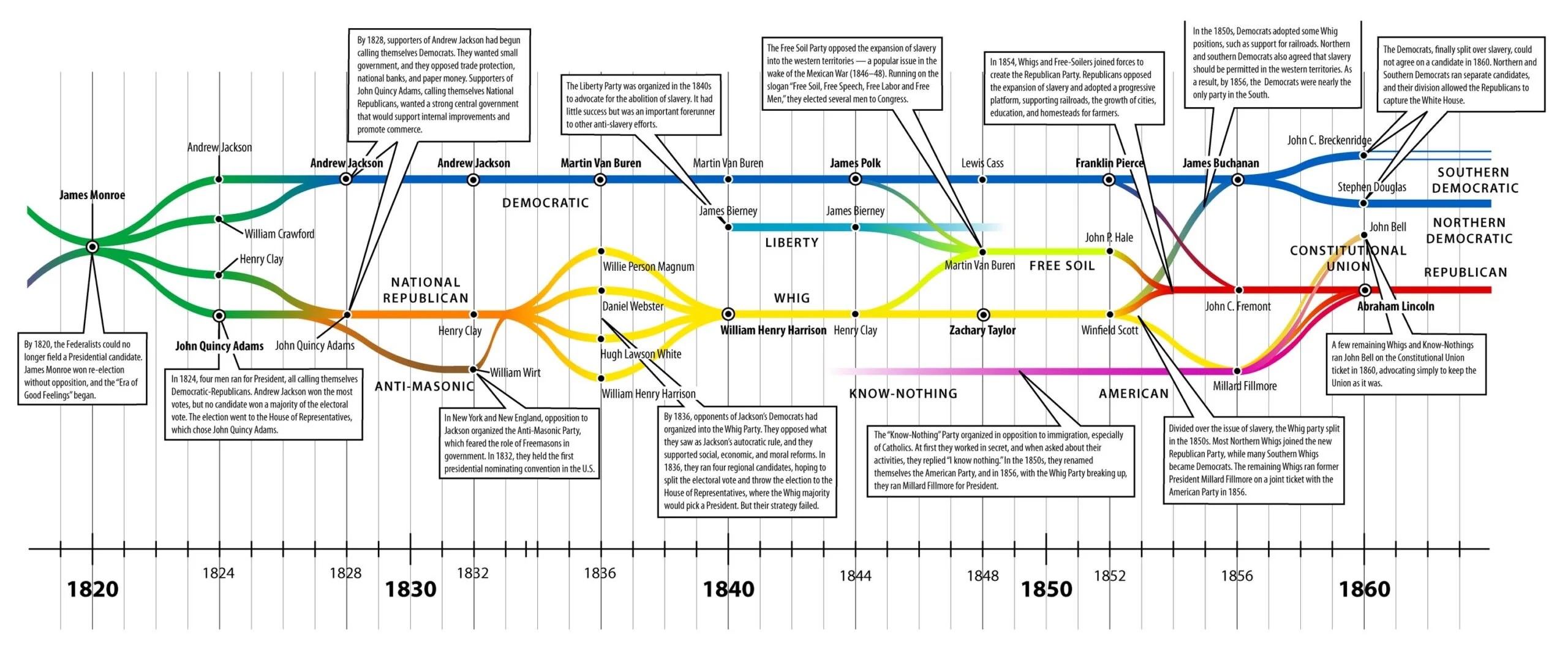
Whig Party
Led popularly by Henry Clay and Daniel Webster, 1834-1853
Based off-of Englands Whig Party
Strong National Bank
American System (Henry Clay)
Strong Congress
Industrial Developement
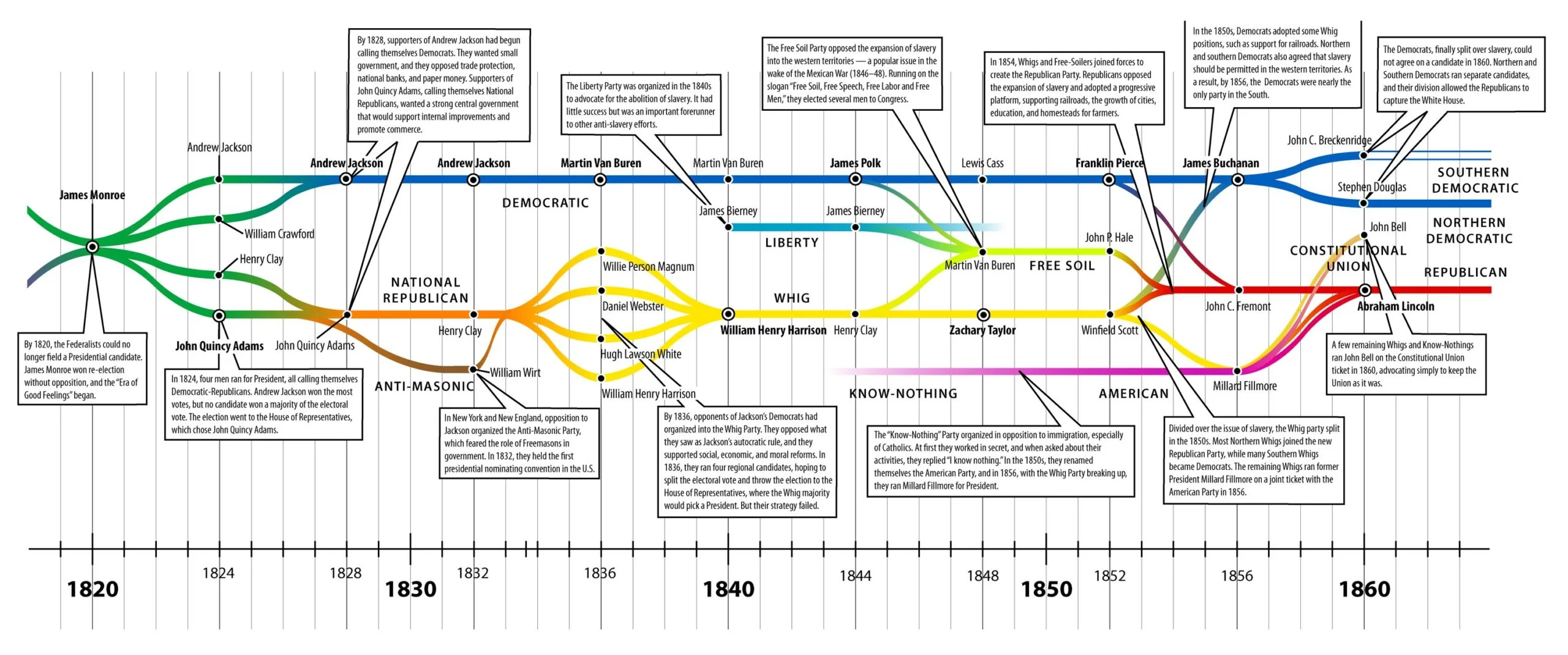
Liberty Party
Formed by anti-slavery advocates like James G. Birney who rejected moral suasion for political action. The first national political party dedicated to abolitionism, Later influenced:
Free Soil
Republican parties
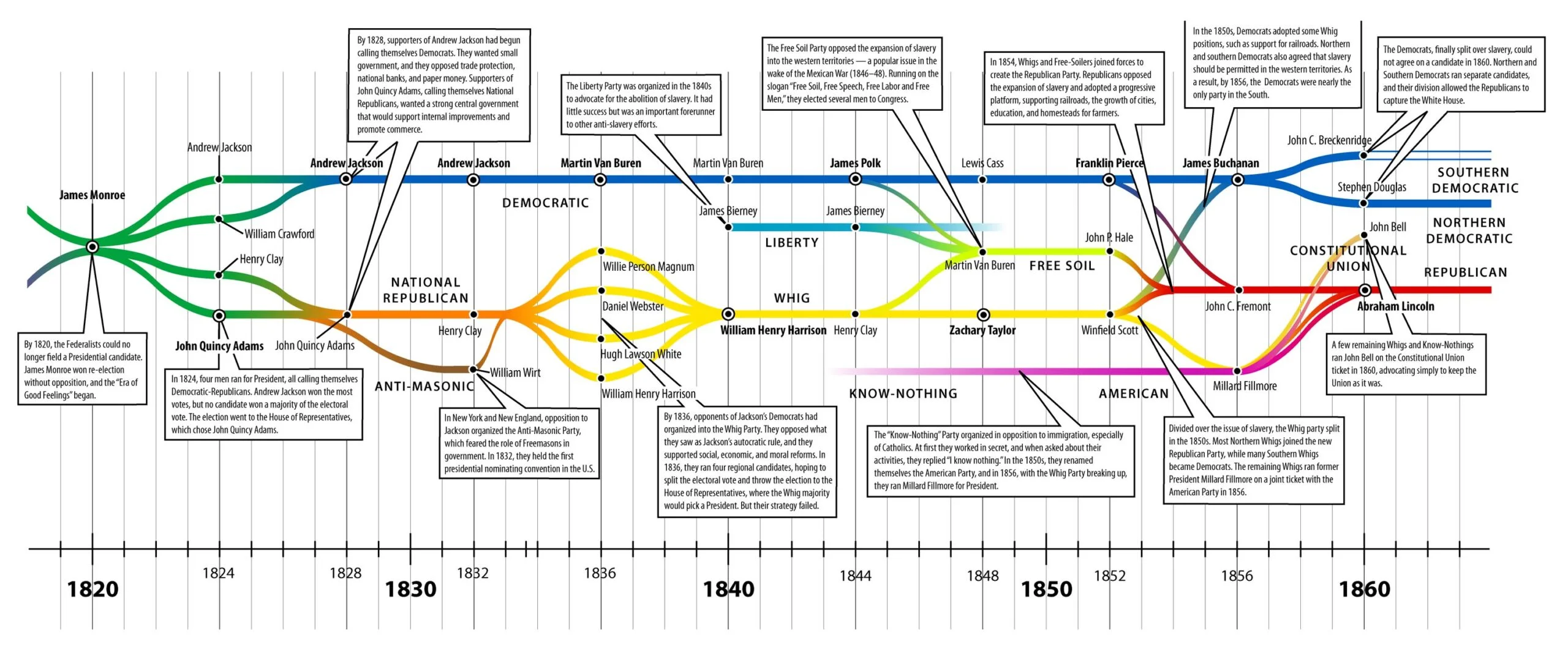
Free-Soil Party
Founded by anti-slavery Whigs, Democrats, and Liberty Party members, a short-lived US political party (1848–1854). Branched off of the Whig Party.
Opposing the expansion of slavery into Western territories (Mexican-American war era)
"Free Soil, Free Speech, Free Labor, and Free Men"
1848 election, influencing the rise of the Republican Party.
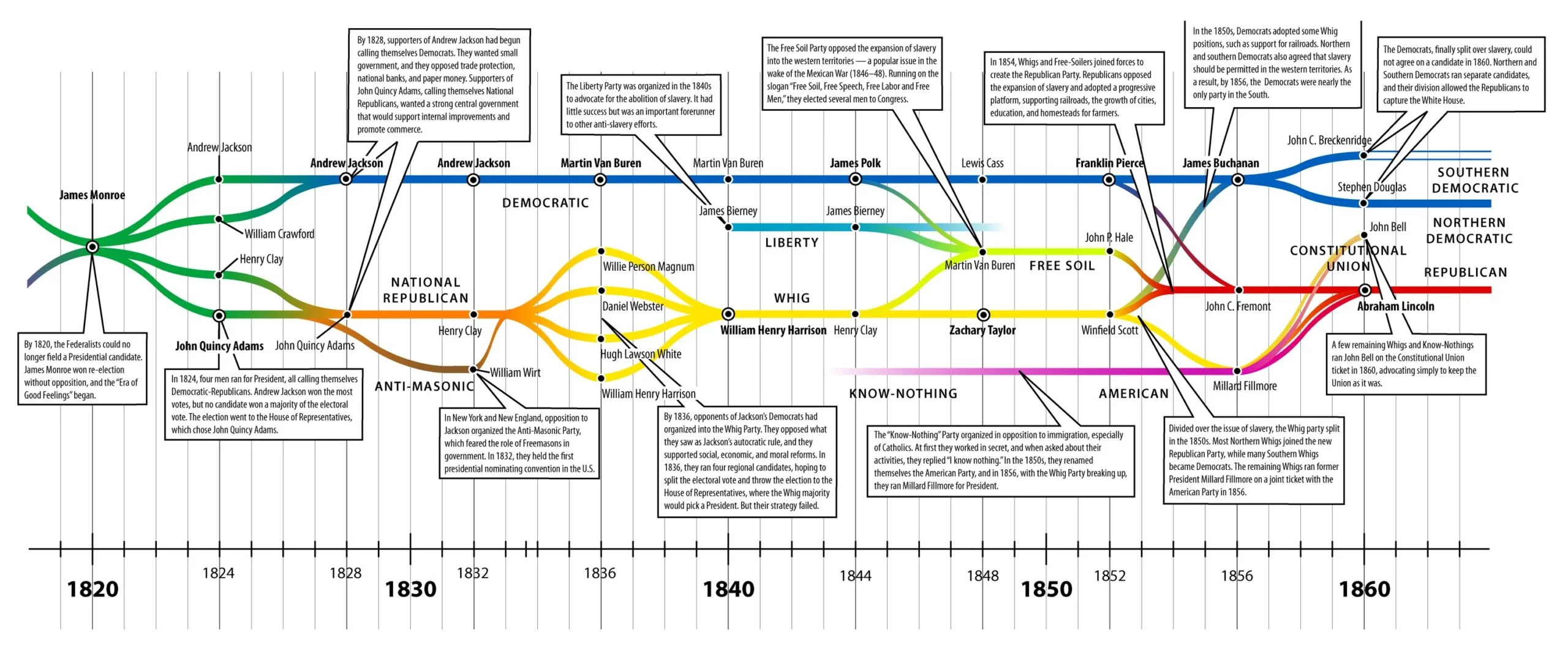
Know-Nothing Party
(officially the “American Party”) was a prominent 1850s American nativist political movement, 1852–1856. Came from the "Order of the Star-Spangled Banner," members answered questions with "I know nothing,".
Sought to restrict immigration (Nativists)
Decease Roman Catholic influence, were Protestants
Extend naturalization (in citizenship terms) waiting periods
Fractured over slavery
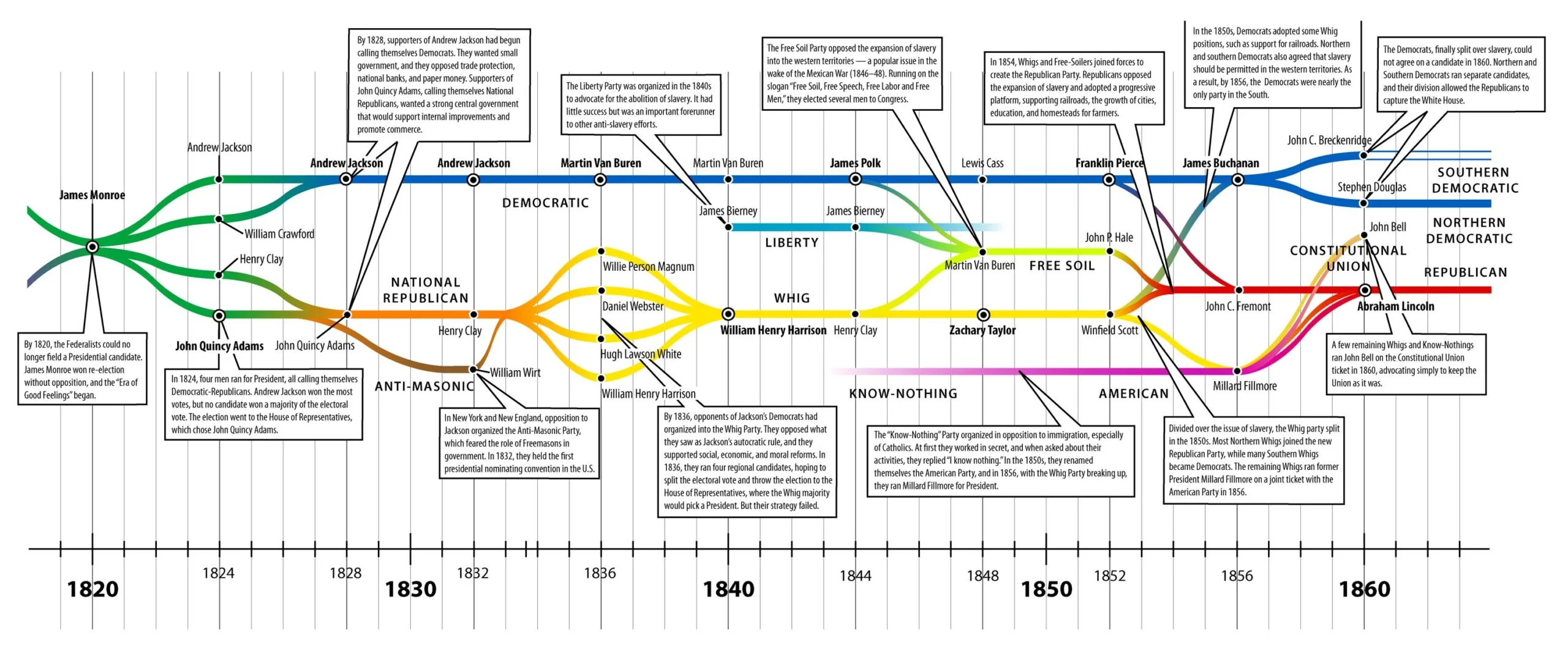
Third-Party System
Defined by the intense rise of the Republican Party and the Democratic Party, replacing the Whigs (roughly 1860–1896).It was marked by sectionalism (North vs. South), intense voter loyalty, and industrialization.
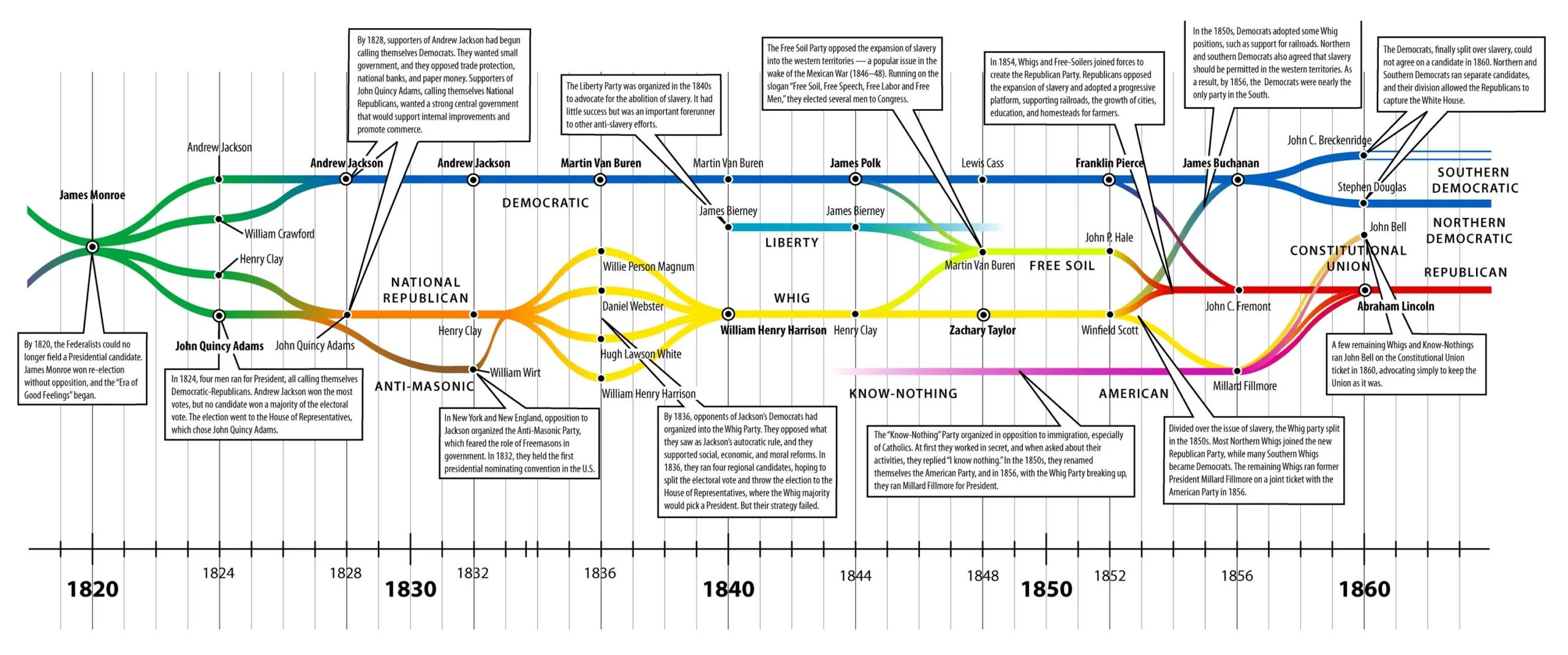
Republican Party
Formed from American, Whig & Freesoil. A coalition opposing the expansion of slavery into Western territories, following the collapse of the Whig Party.
Came from anti-Nebraska coalition
Primary opposition to the Democrats
Free labor
Northern industrial growth
Federal power
Electing Abraham Lincoln in 1860
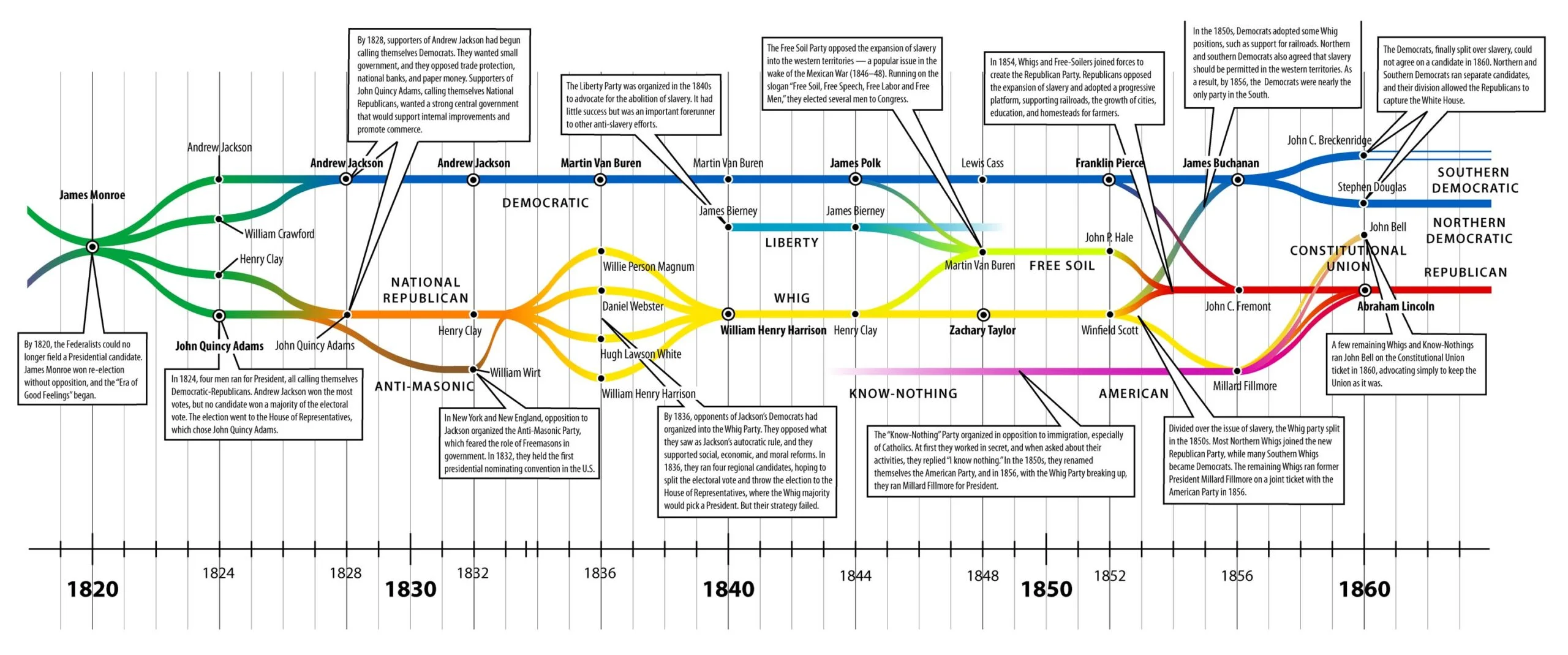
Constitutional Union Party
Ran John Bell as 1860 candidate. A short-lived, conservative third party in the 1860 election.
Formed by former Whigs and Know-Nothings
Preserving the Union, the Constitution, and the Laws
Deliberately avoiding the slavery question to appeal to both North and South
Preventing secession
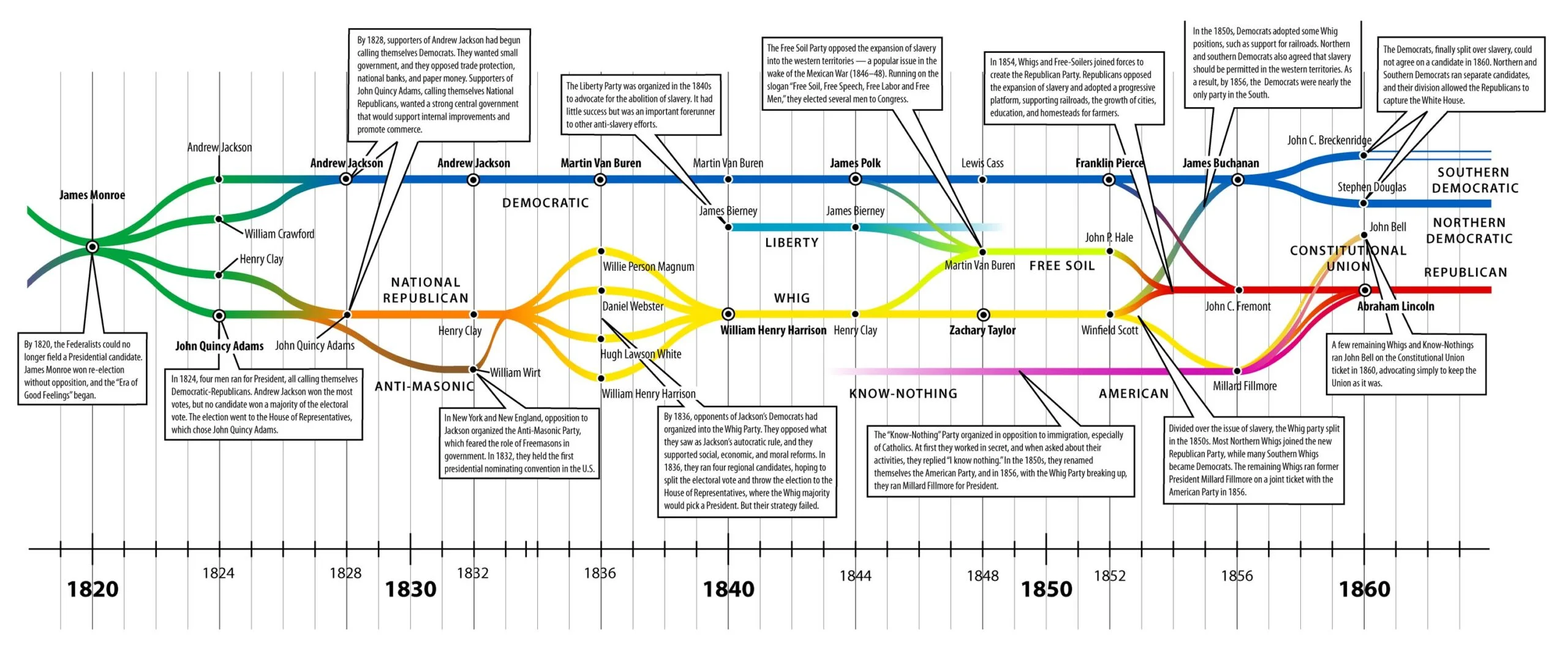
Democratic Party Split
Split over Slavery during the 1860 election into the:
Northern Democrats - Stephen A. Douglas, Popular Sovereignty
Southern Democrats - John C. Breckenridge, Slave Codes
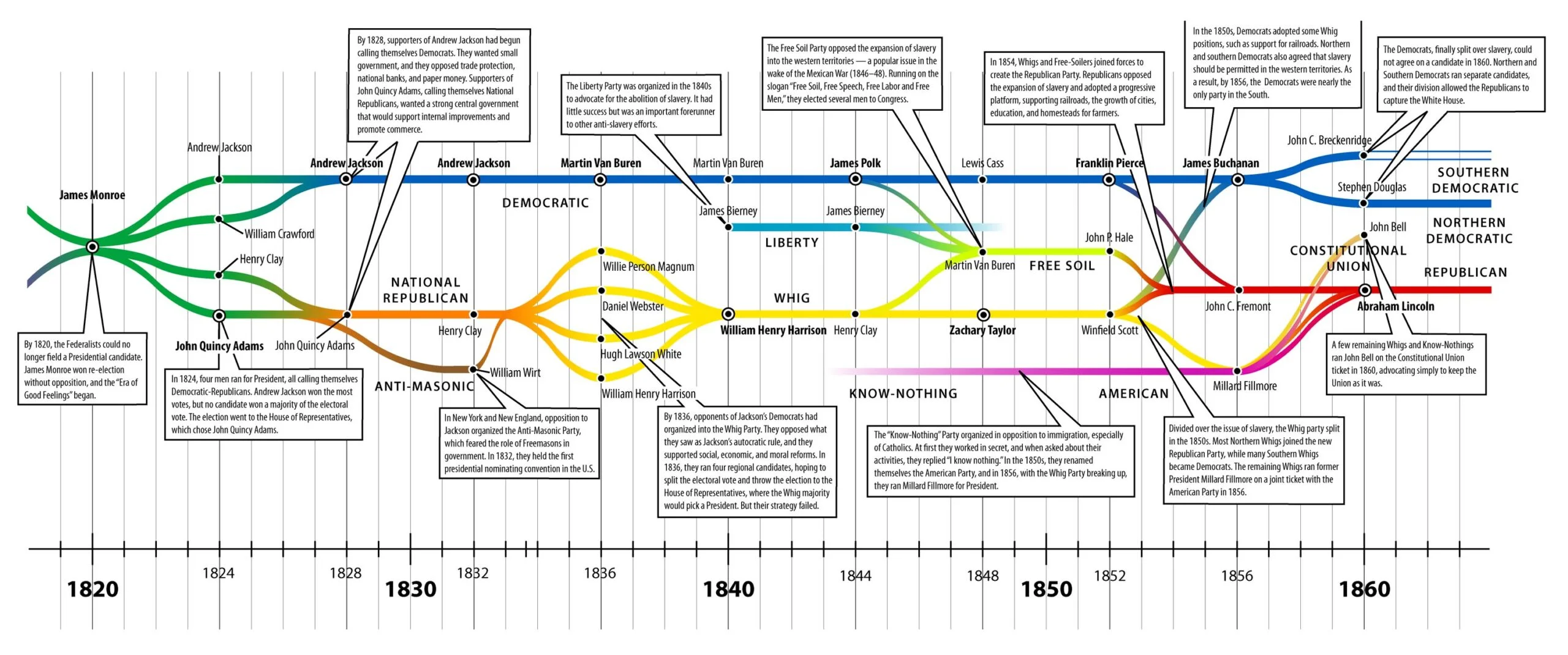
Northern Democrats
Chose Stephen A. Douglas
Focusing on popular sovereignty to decide slavery in territories
Adhering to Supreme Court decisions (Dred Scott)
Supporting a Pacific railroad
Favoring westward expansion, including Cuba
Southern Democrats
Chose John C. Breckenridge
Dominant from the post-Reconstruction era (1877) to 1964
Upheld white supremacy, segregation, and conservative policies in the South
Created a "Solid South" voting bloc
Opposed federal intervention in civil rights
Split from the national party over racial issues.
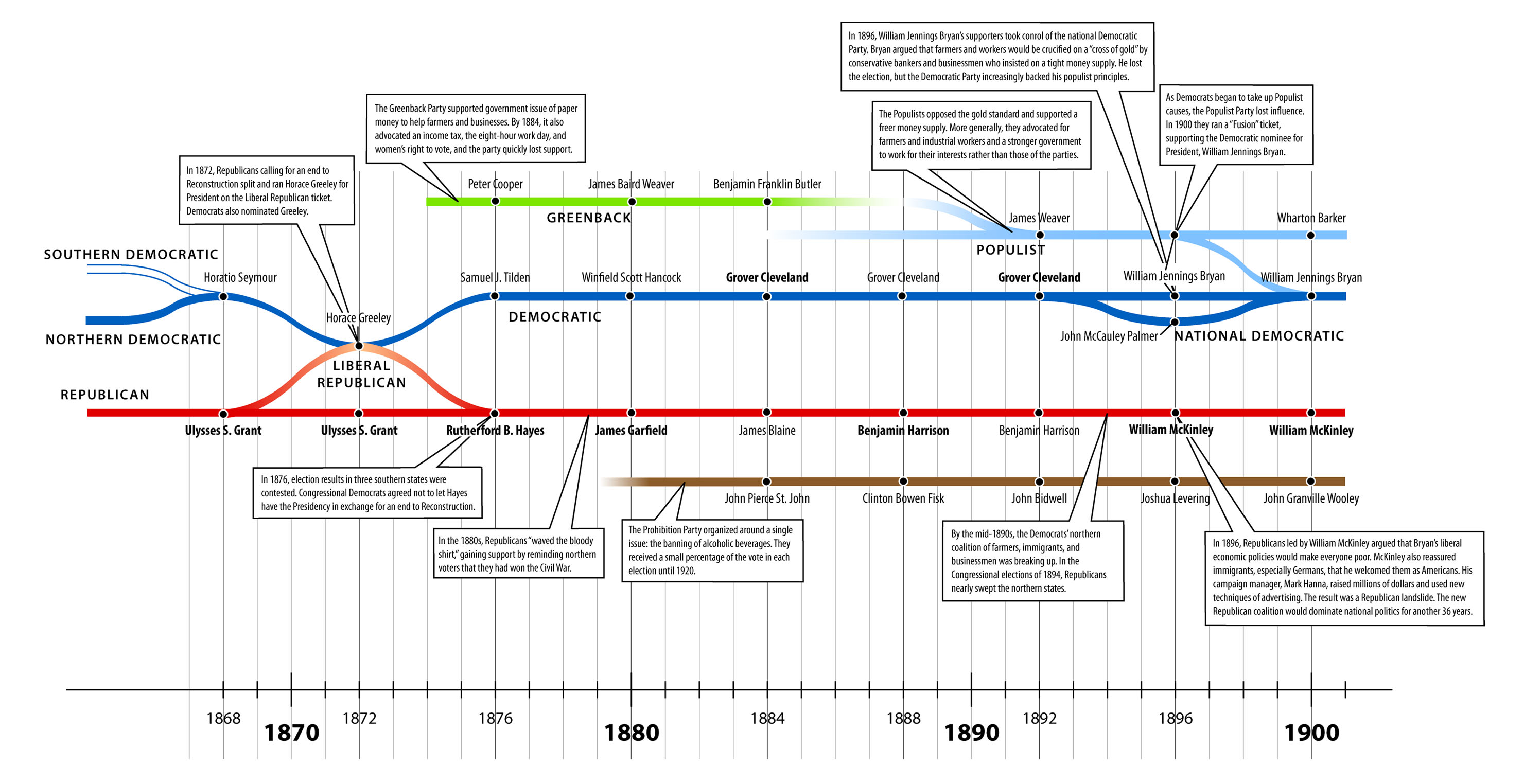
Liberal Republican Party
After the rejoining of the North & South Democrats, both Democrats and Republicans ran Horace Greeley for the 1872. A short-lived US political movement formed in 1870–1872 by Republicans opposing President Ulysses S. Grant's re-election, corruption, and Reconstruction policies.
Advocating for civil service reform, lower tariffs, and local self-government
Reduce federal power
Greeley lost, end of party
Still a Democratic & Republican party at the same time
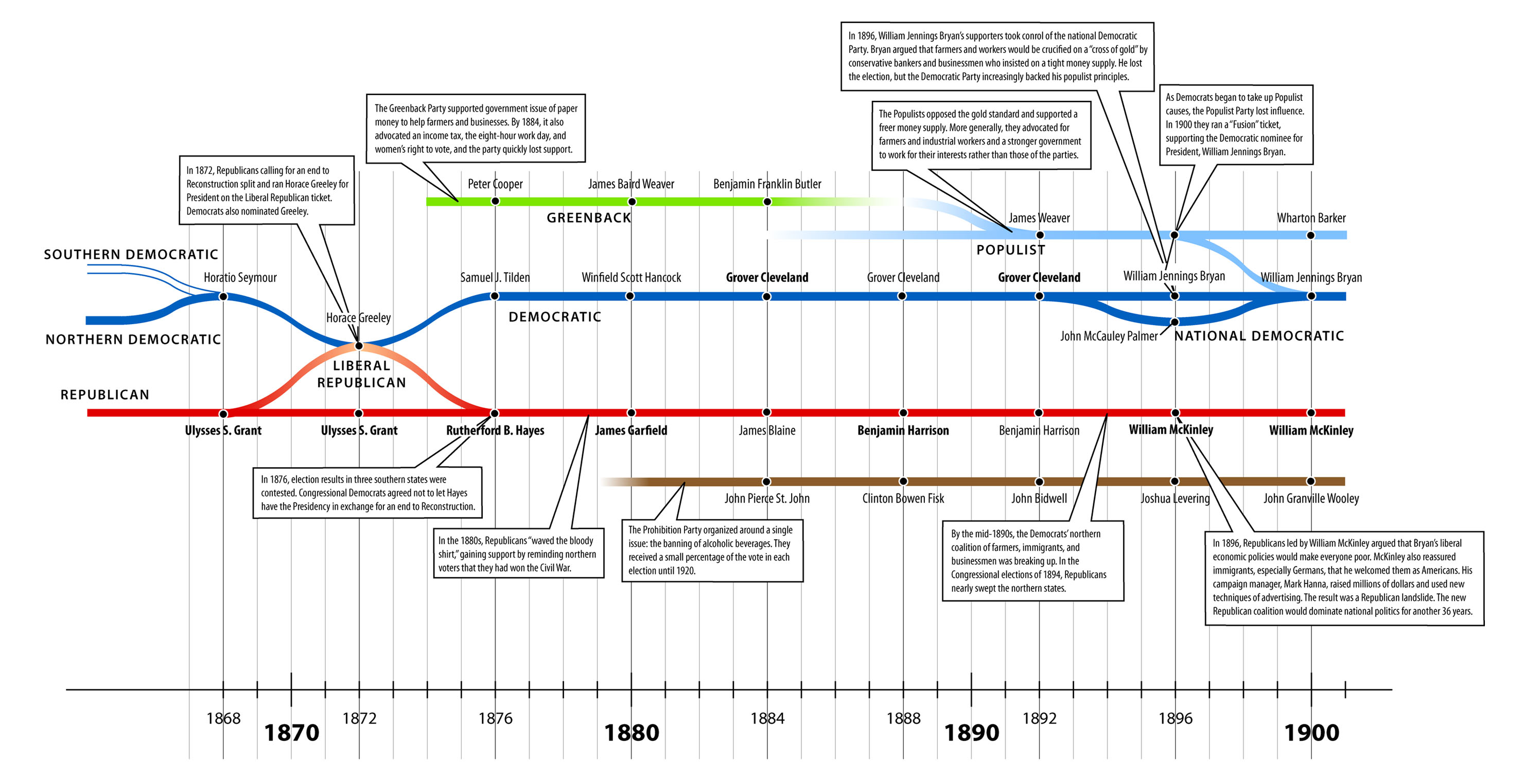
Greenback Party
Emerging from agrarian unrest after the Panic of 1873, a late 19th-century U.S. political movement (active 1874-1889).
Increasing the supply of paper money ("greenbacks") not backed by gold (against mercantilism, in a way. Soft Money vs. Hard Money)
Help farmers and laborers by causing inflation
Debts easier to pay
Decreasing the power of banks and railroads
Supported progressive causes like labor reform and women's suffrage
Influencing the later Populist movement
Declined & eventually disappeared after 1884 election
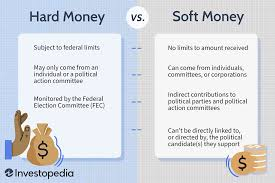
⇢Soft money vs hard money
Hard money:
physical coins (specie) or currency backed by gold/silver, favored by creditors, while
Soft money
Refers to paper currency (like Greenbacks)
Debtors, especially farmers, wanted for inflation to ease debt repayment
Clashing during the Bank Wars and currency debates, with hard money also meaning regulated campaign donations and soft money meaning unregulated party funds in later political contexts.
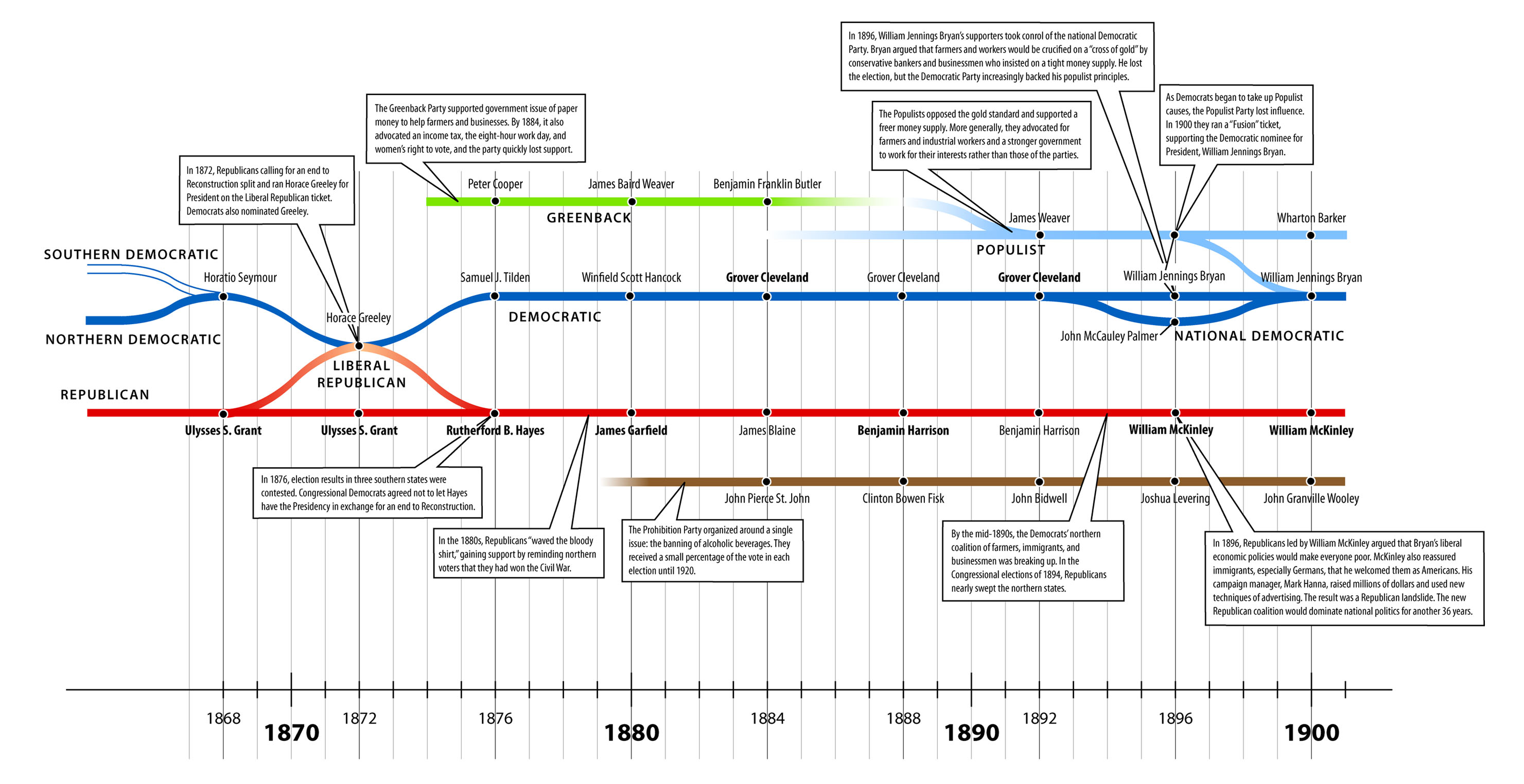
⇢Populist Movement/Party
Called the People's Party, formed with the help/decline of Greenbacks.
Left-wing agrarian reform coalition
Targeted corporate power, falling prices, and financial elite
Reached peak influence around 1892–1896.
Key platforms included free silver, graduated income tax, government ownership of railroads/utilities, and direct election of senators.
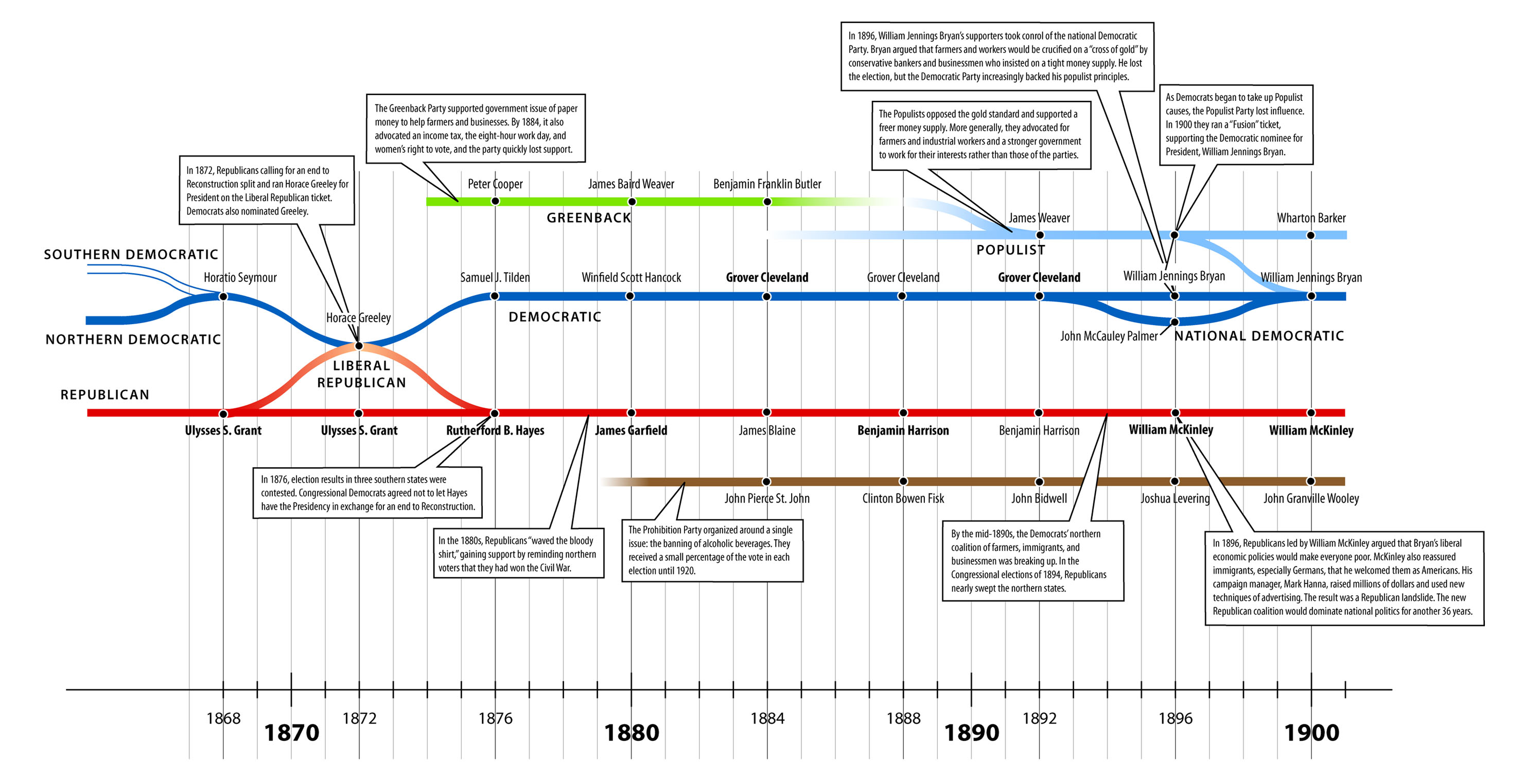
⇢Prohibition Party/Movement
Founded in 1869 in Chicago, driven by evangelical Protestants and social reformers.
Political side of 1870s temperance movement
Aiming to ban alcohol through legislation rather than just moral persuasion
Advocated for the legal prohibition of manufacturing, transporting, and selling alcohol
Supported Women’s Suffrage
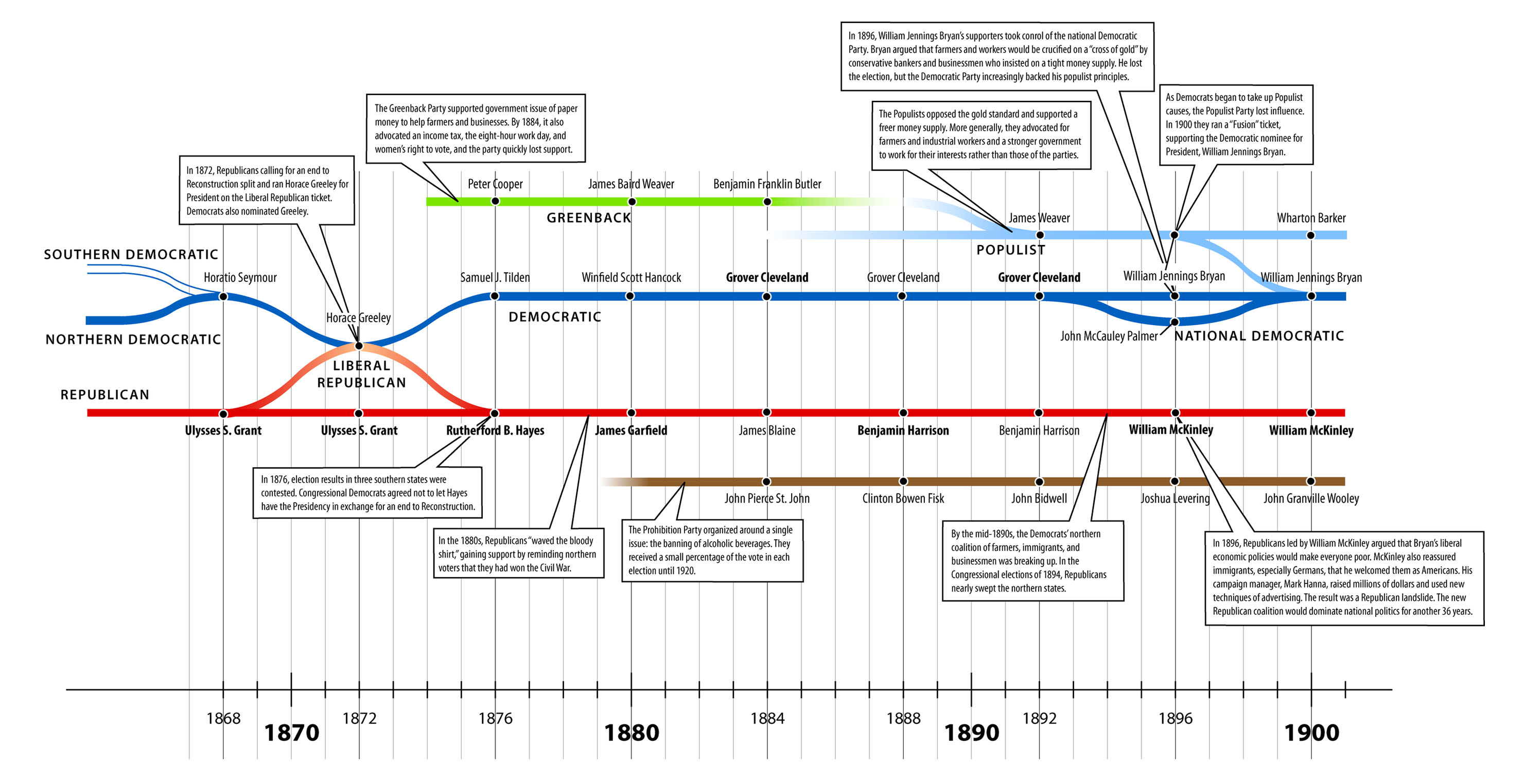
National Democratic
In the 1870s, the National Democratic Party, recovering from Civil War divisions, acted as the primary opposition to the Republican-dominated Gilded Age, fighting for limited federal power, states' rights, and the end of Reconstruction. They gained strength by opposing high tariffs, championing "soft money" (greenbacks), and forming a coalition of Southern whites, northern city immigrants, and laborers.
Peoples Party