Economics: Allocation
 Call Kai
 Learn
Learn Practice Test
 Spaced Repetition
 Match
Match Flashcards
 Knowt Play
1/31

There's no tags or description
Looks like no tags are added yet.
Name | Mastery | Learn | Test | Matching | Spaced | Call with Kai |
|---|
No analytics yet
Send a link to your students to track their progress
32 Terms
Dismal Science
T.R.Malthus:
A prediction that the population would always grow faster than food - therefore humanity would never escape poverty.
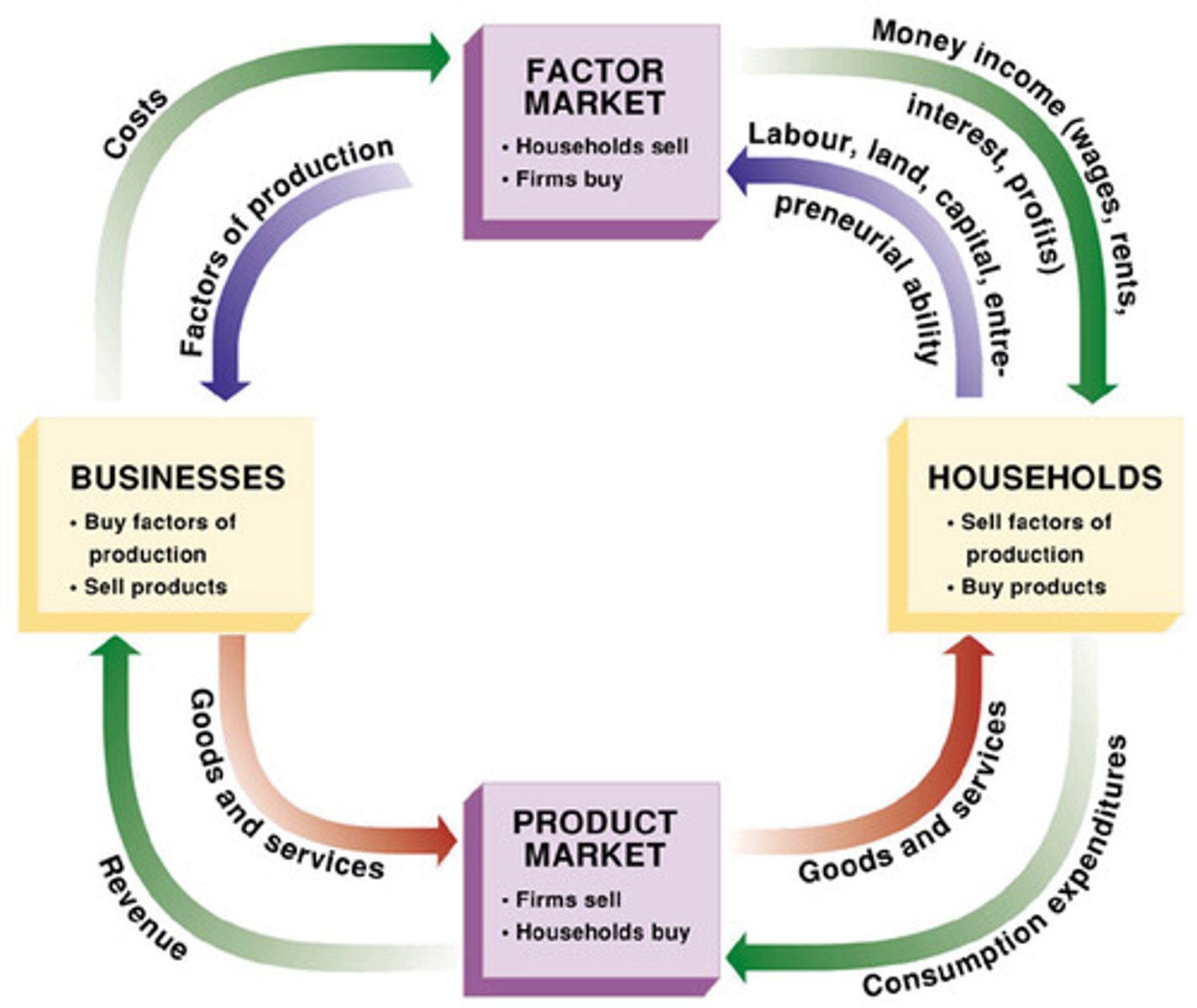
Circular Flow Model
A visual model of the economy that shows how capital flow through markets among households and firms.
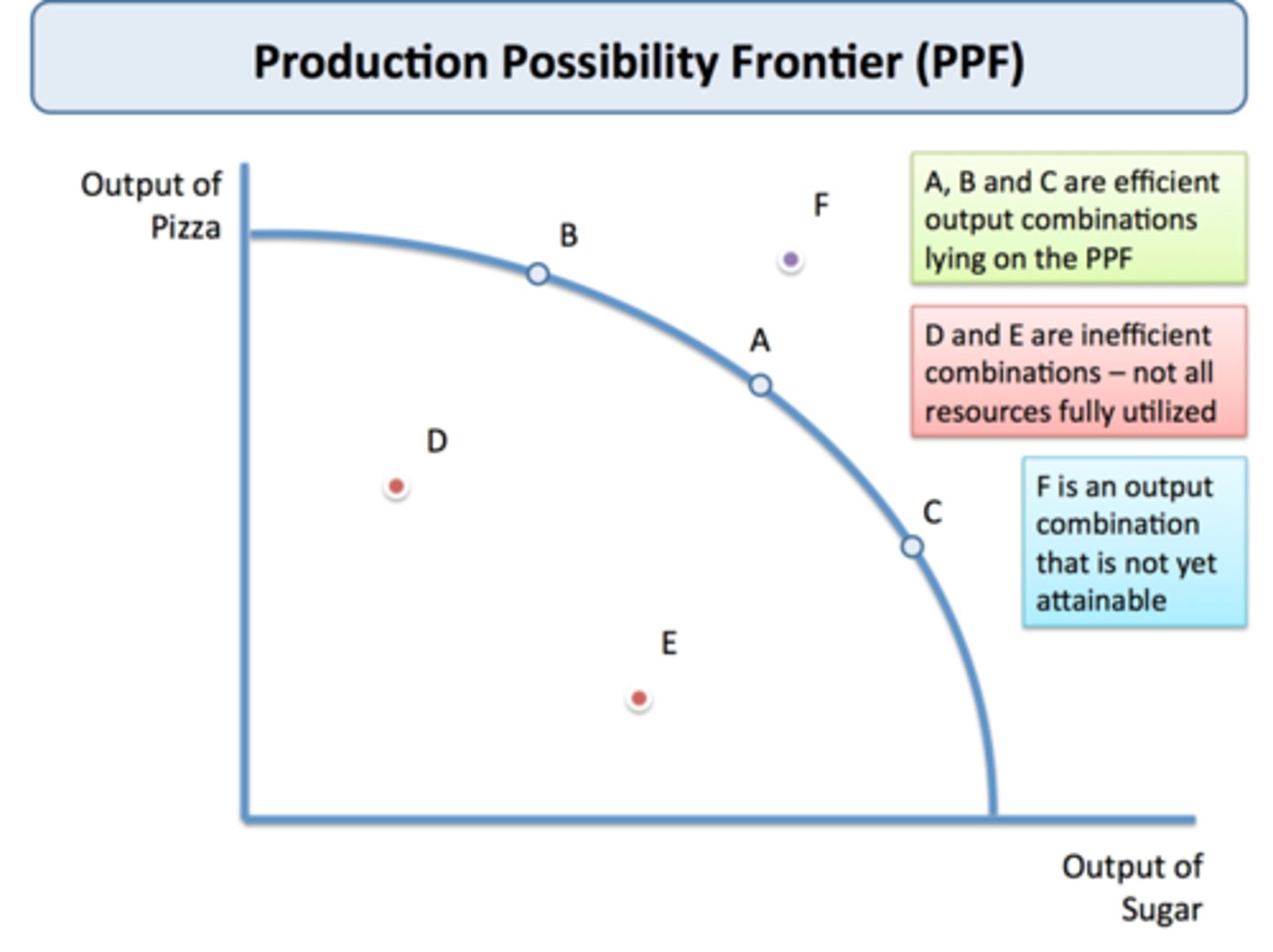
Production possibilities frontier (PPF)
Shows the maximum possible output combinations of goods/services an economy can achieve when all its resources are completely and efficiently employed (ceteris paribus).
Product efficiency
The point where highest production output is achieved at the lowest possible cost of the combination of inputs.
(Point A, B & C)
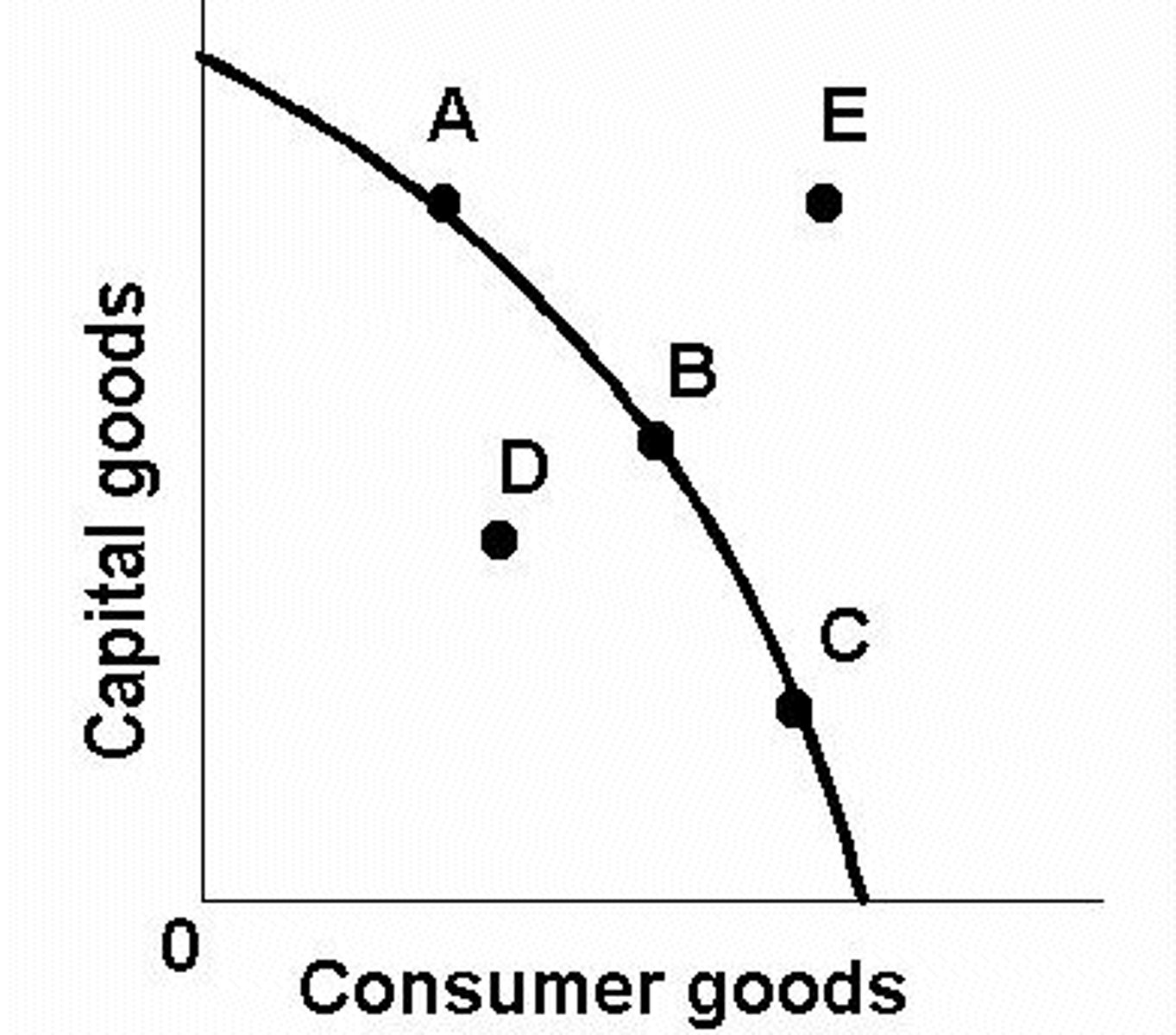
Opportunity cost
The highest-valued alternative forgone.
what is sacrificed / what is gained
Allocative efficiency
The point where the distribution of goods & services produced match consumer preferences.
- Social welfare is maximised
Marginal cost
The opportunity cost of producing one more unit.
Δ total cost / Δ quantity
Marginal benefit
The benefit received from consuming one more unit.
Δ total benefit / Δ quantity
Pareto efficiency
The point where it is impossible to make one party better off without making another worse off.
Economic growth
The expansion of production possibilities.
- Increases standard of living
- Does not decrease scarcity
- Does not avoid opportunity costs
Causes PPF curve to pivot
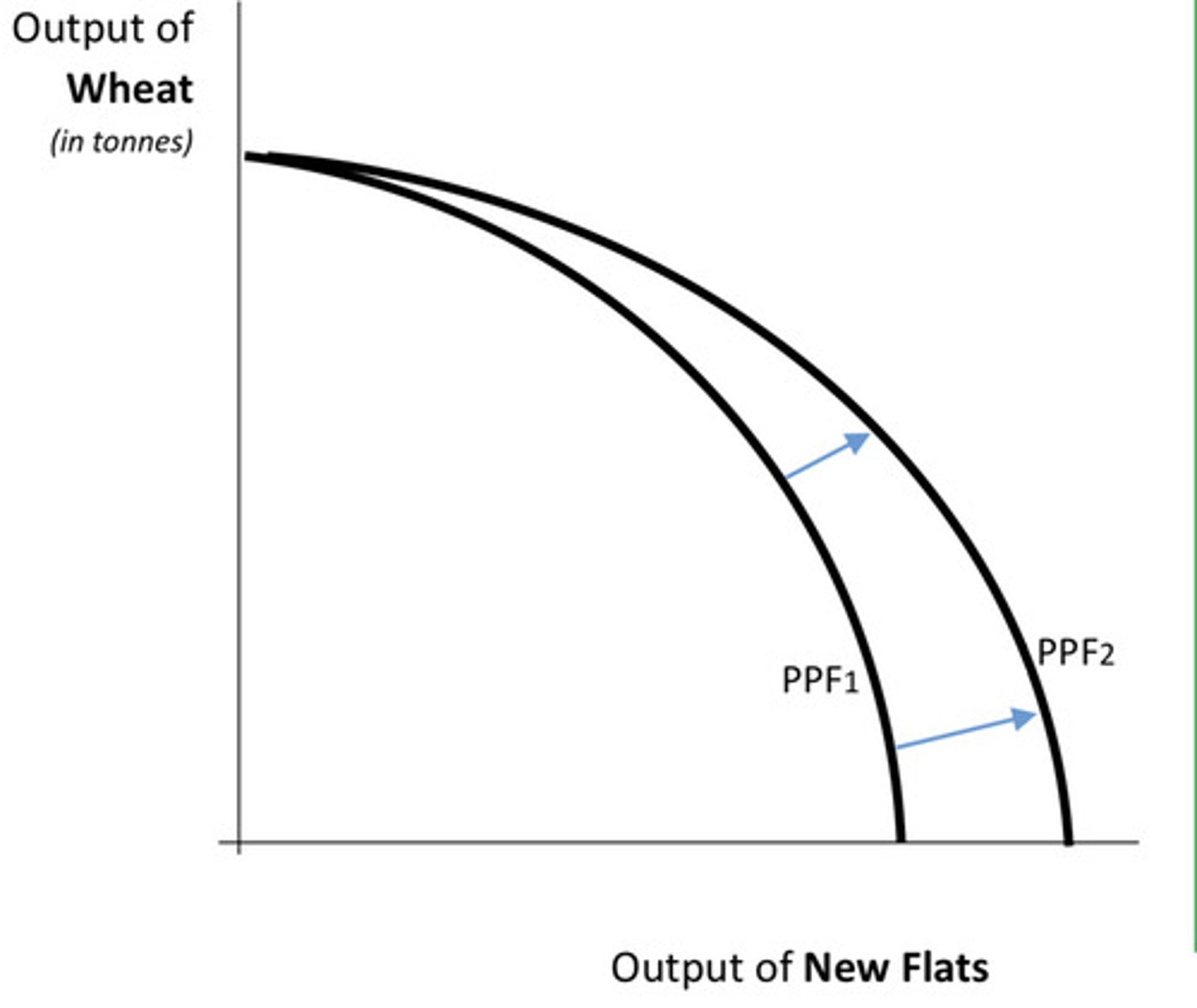
Technological change
The development of new goods/services and better methods of productions.
Capital accumulation
Growth of capital resources.
Gains from trade
Businesses have the choice of producing a variety of goods/services or specialise in only producing one.
Comparative advantage
When someone performs an activity at a lower opportunity cost to another.
- Arise from differences in individual abilities & characteristics of other resources
Absolute advantage
When someone is more productive than another.
Scarcity & wants
There is not an infinite number of resources, so it must be decided how best to distribute what is available.
Resource allocation method: market price
People who are willing and able to pay and receive the resource.
Resource allocation method: command system
Allocates resources by order of authority.
Resource allocation method: majority rule
Allocates resources via a majority vote.
Resource allocation method: contest
Allocates resources to a winner.
Resource allocation method: first-come, first served
Allocates resources to those first in a queue.
Resource allocation method: lottery
Allocates resources to those who pick the winning number - based on luck.
Resource allocation method: personal characteristics
Allocating resources based on the characteristics of individuals.
Resource allocation method: force
The most powerful force controls allocation.
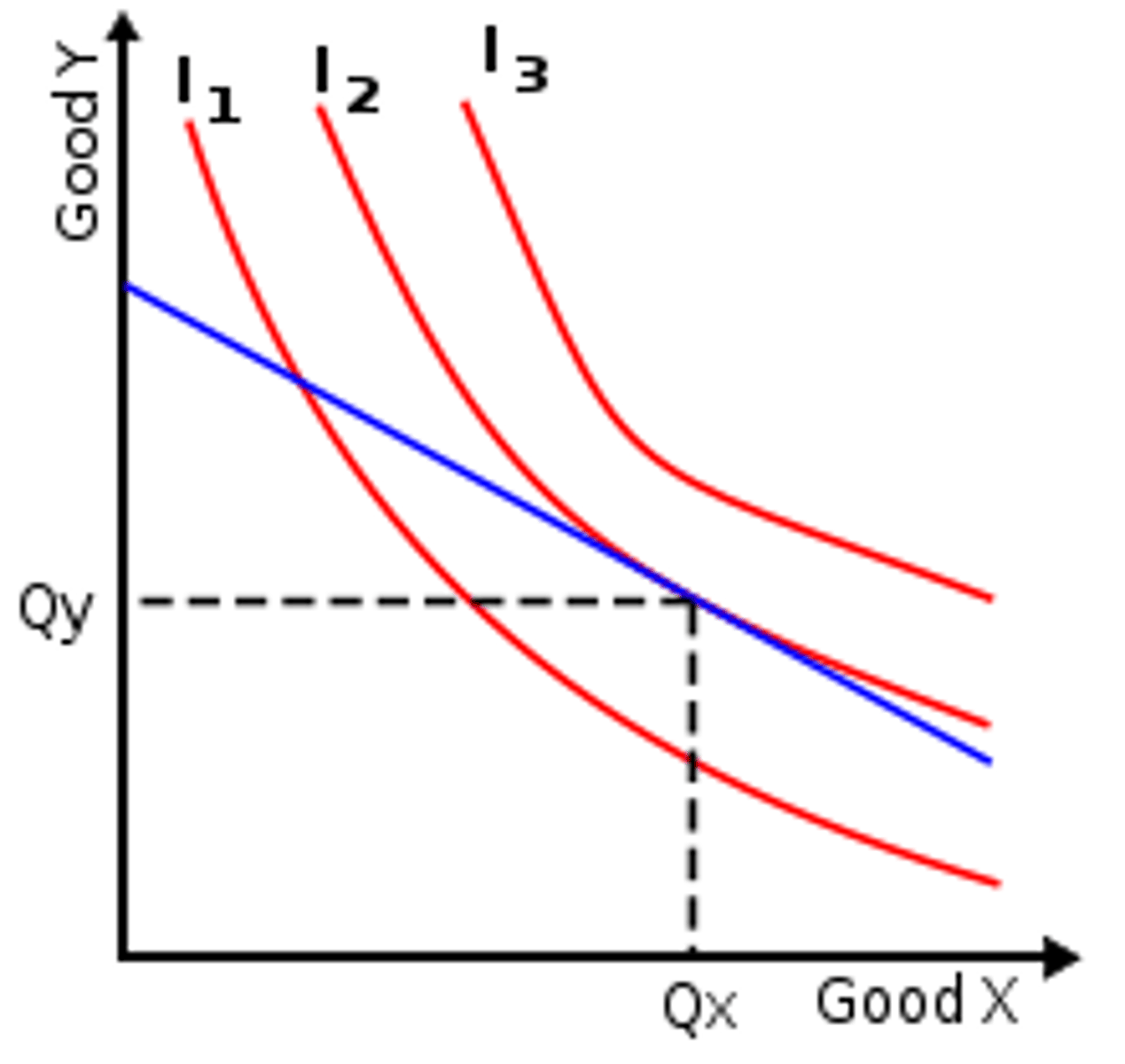
Indifference curve
Shows all combinations of goods that provide the consumer with the same utility.
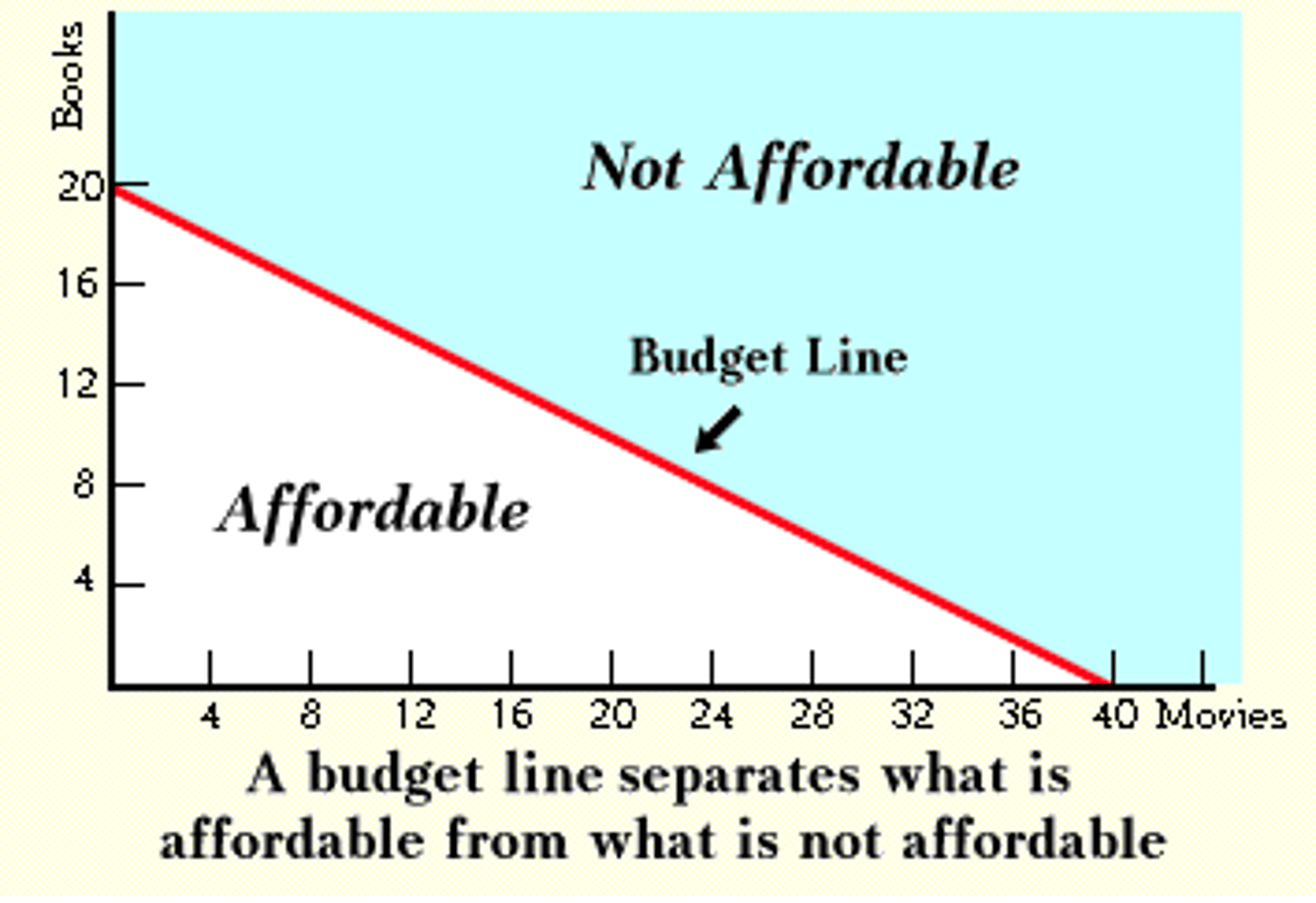
Budget constraint
The limited amount of income available to consumers to spend on goods and services.
Nominal income
The amount of money income received in a given time period, measured in current pounds.
Real income
The amount of goods and services that can be purchased with nominal income during some period of time; nominal income adjusted for inflation.
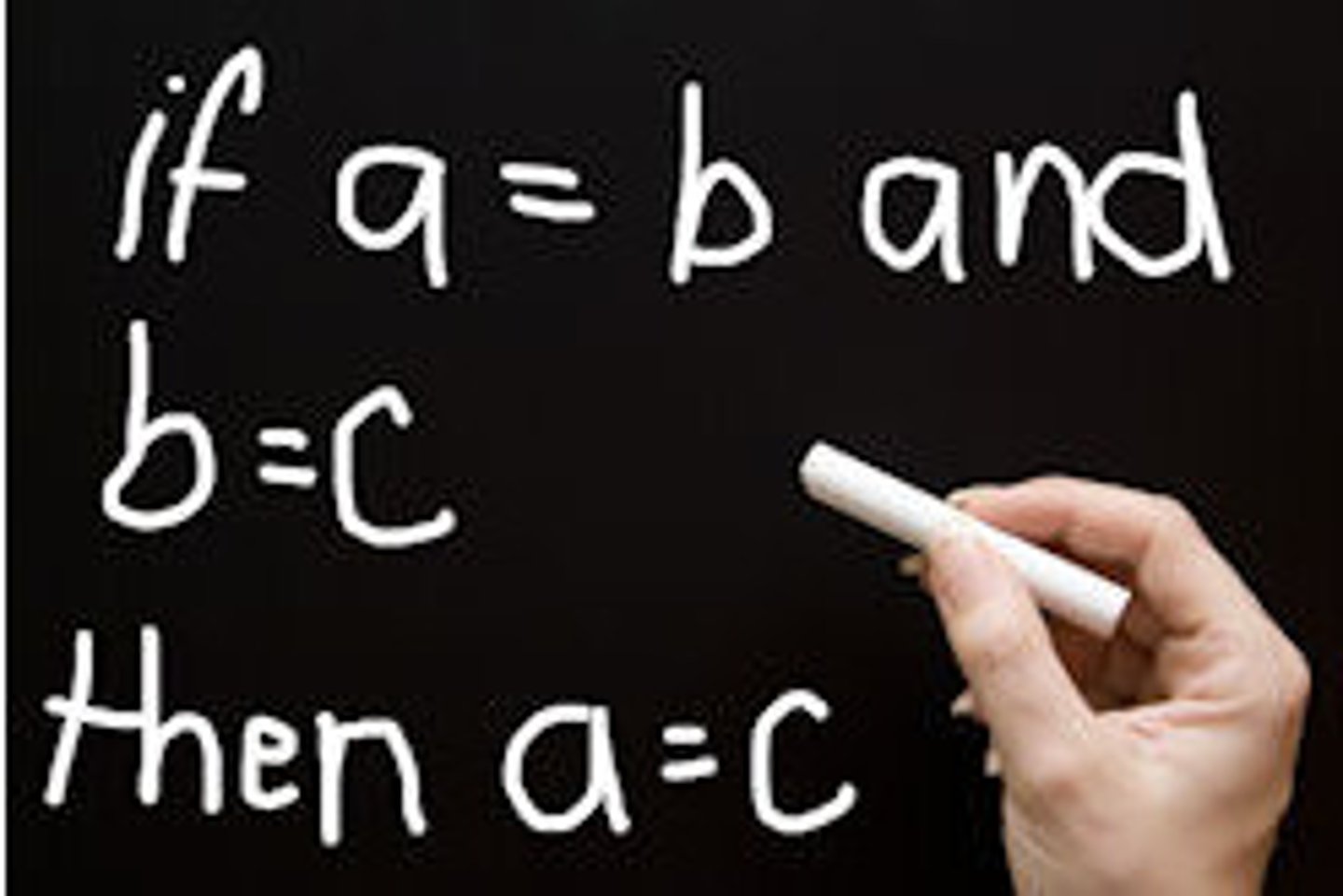
The Law of Transitivity
If a relation holds between a first and second object, then a relation also holds between the second and third object
Crossing of indifference curves
Indifference curves cannot cross:
- Intersection would force a point to be on both a higher and lower utility curve simultaneously
- The Law of Transitivity
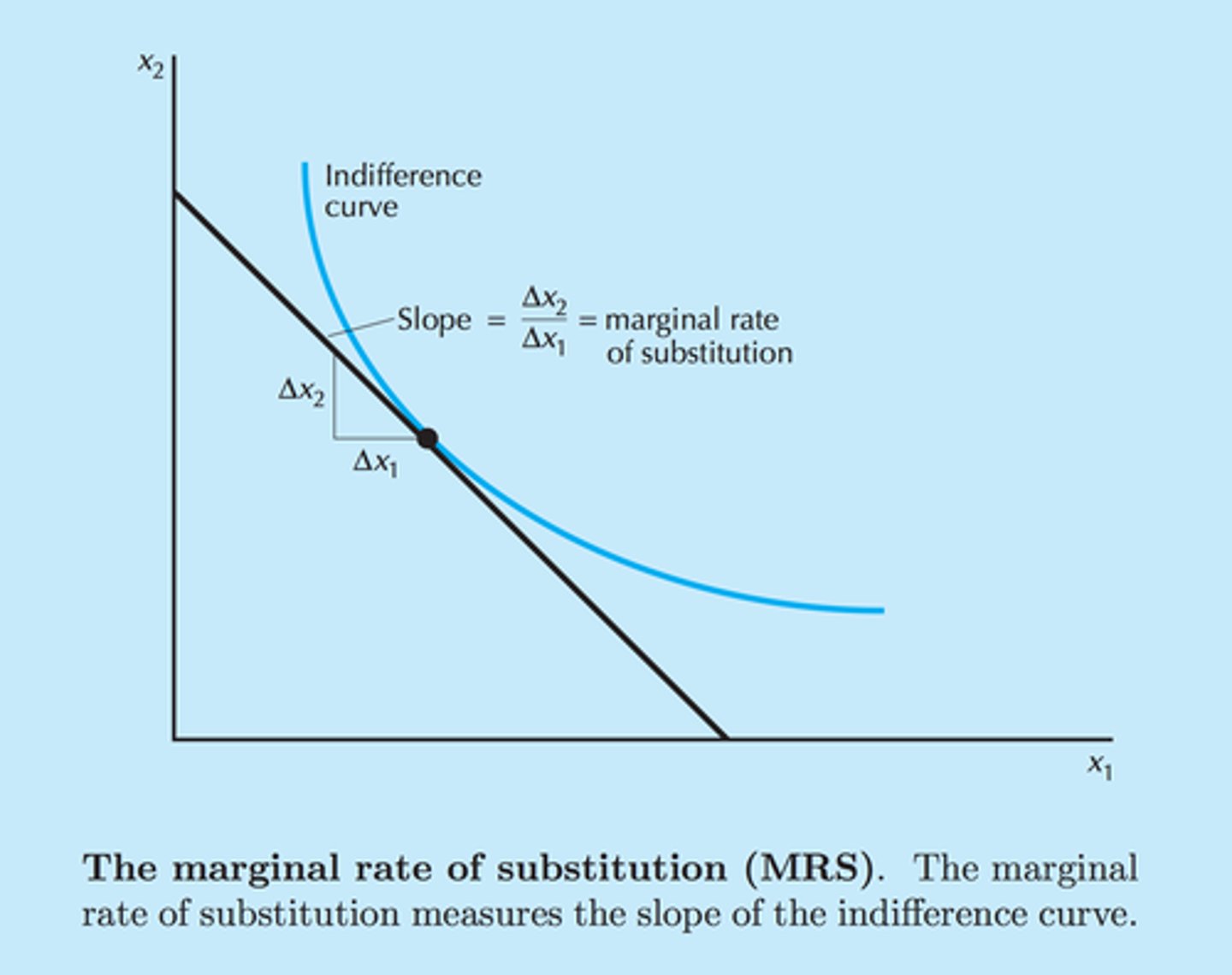
Marginal Rate of Substitution (MRS)
The rate at which a consumer would be willing to trade off one good for another.
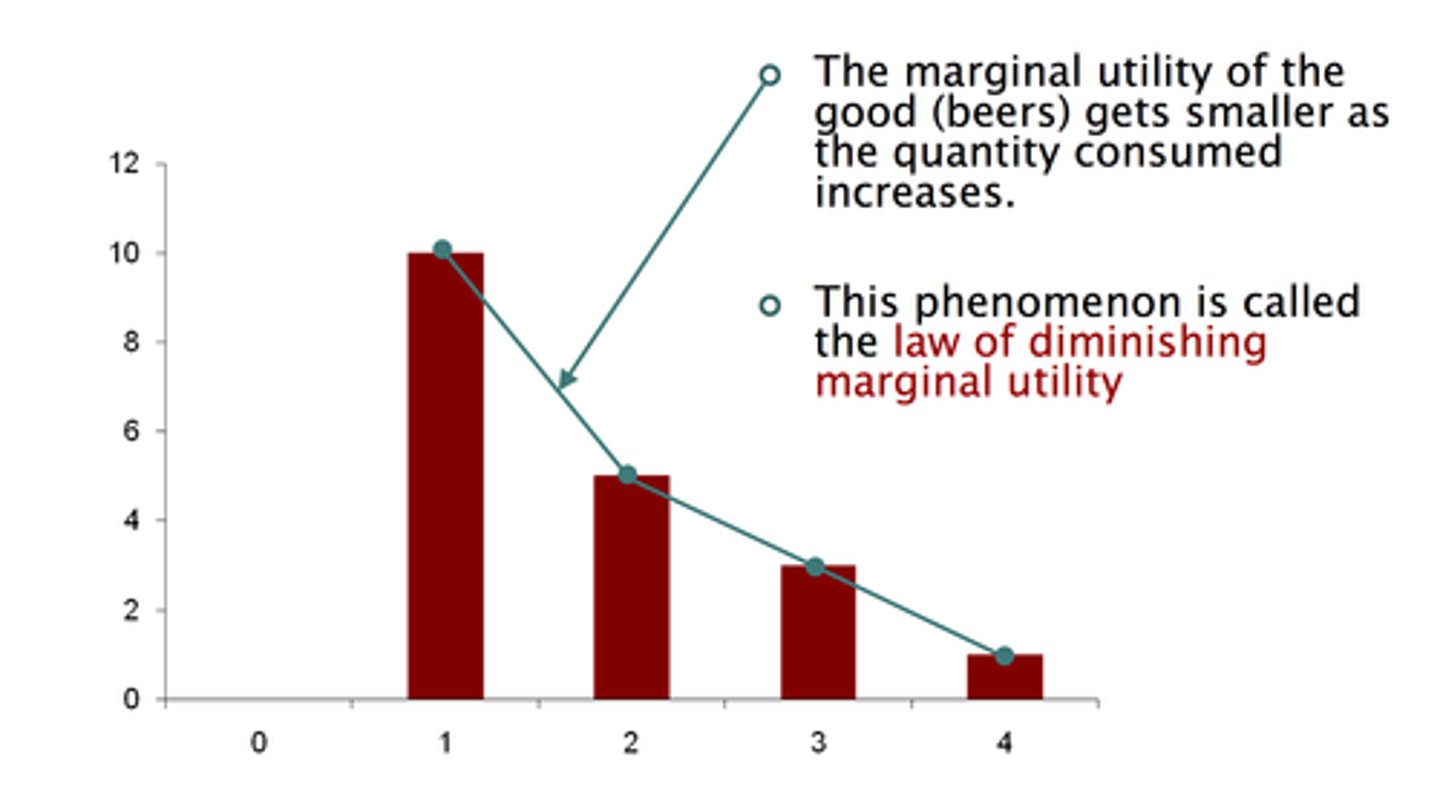
Law of diminishing marginal utility
The principle that consumers experience diminishing additional satisfaction as they consume more of a good/service during a given period of time.