Classical conditioning - Chapter 6
 Call Kai
 Learn
Learn Practice Test
 Spaced Repetition
 Match
Match Flashcards
 Knowt Play
1/16

There's no tags or description
Looks like no tags are added yet.
Name | Mastery | Learn | Test | Matching | Spaced | Call with Kai |
|---|
No analytics yet
Send a link to your students to track their progress
17 Terms
What is classical conditioning
A type of learning in which a NEUTRAL stimulus acquires the capacity to evoke a response that was originally evoked by ANOTHER stimulus
Classical conditioning was first described and demonstrated experimentally by WHO in WHAT year
Classical conditioning was first described and demonstrated experimentally by IVAN PAVLOV in 1903
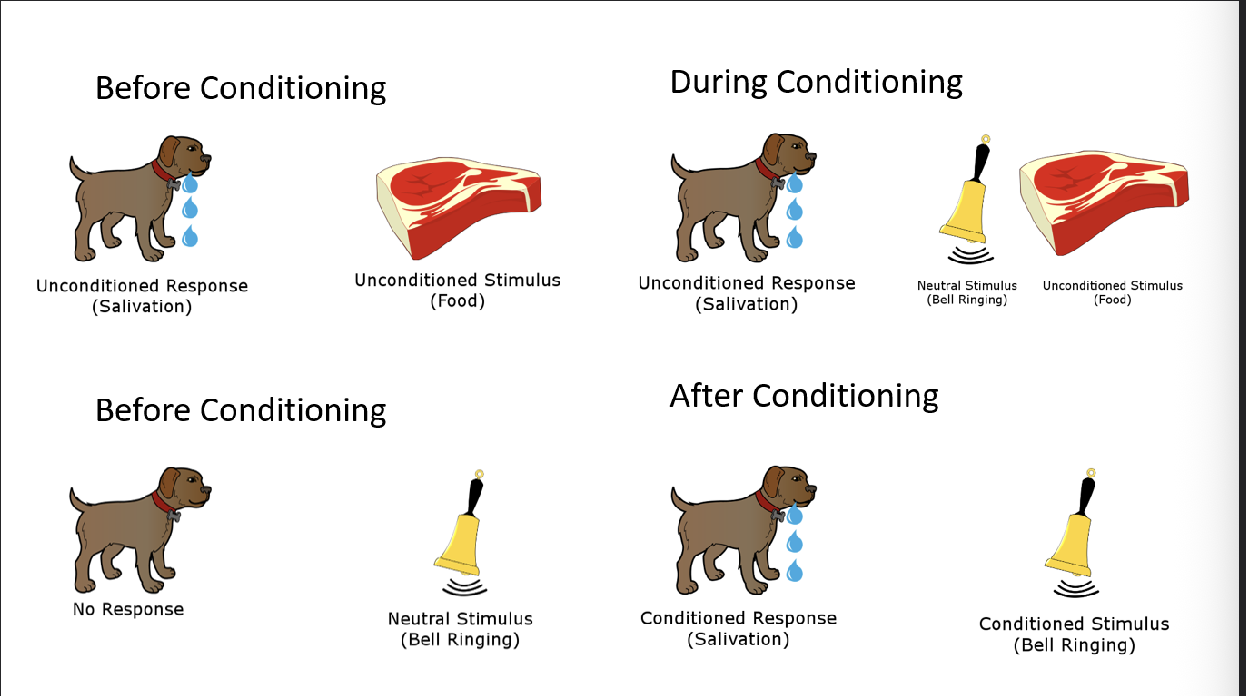
Process of classical conditioning
WHAT response and a WHAT stimulus
WHAT response and a WHAT stimulus
WHAT response and a WHAT stimulus
WHAT response and a WHAT stimulus
Process of classical conditioning
UNCONDITIONED response and a UNCONDITIONED stimulus
NO response and a NEUTRAL stimulus
UNCONDITIONED response and a NEUTRAL and UNCONDITIONED stimulus
CONDITIONED response and a CONDITIONED stimulus
Unconditional stimulus (US)
A stimulus that has the ability to produce a specified response before conditioning begins (food)
Unconditioned response (UR)
The response produced by the unconditioned stimulus (salivation is produced by food)
Conditioned stimulus (CS)
An initially neutral stimulus that comes to produce a new response because it is associated with the UNCONDITIONED STIMULUS (bell)
Conditioned response (CR)
The response produced by the conditioned stimulus (salivation produced by the bell)
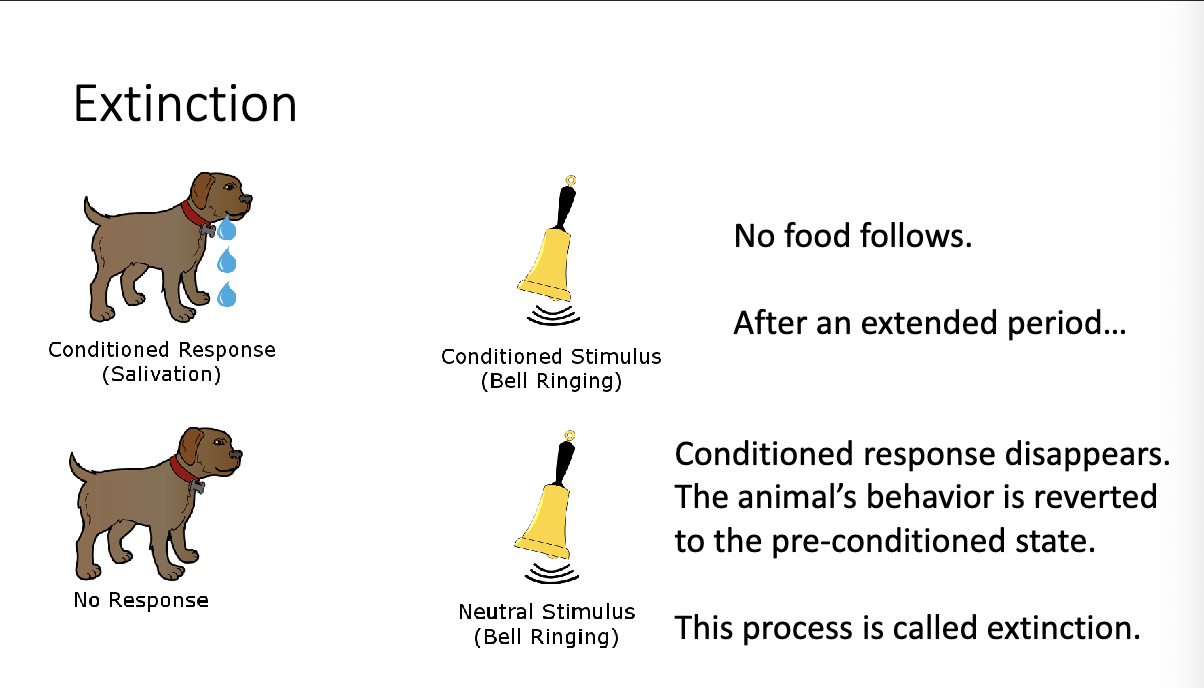
What is extinction
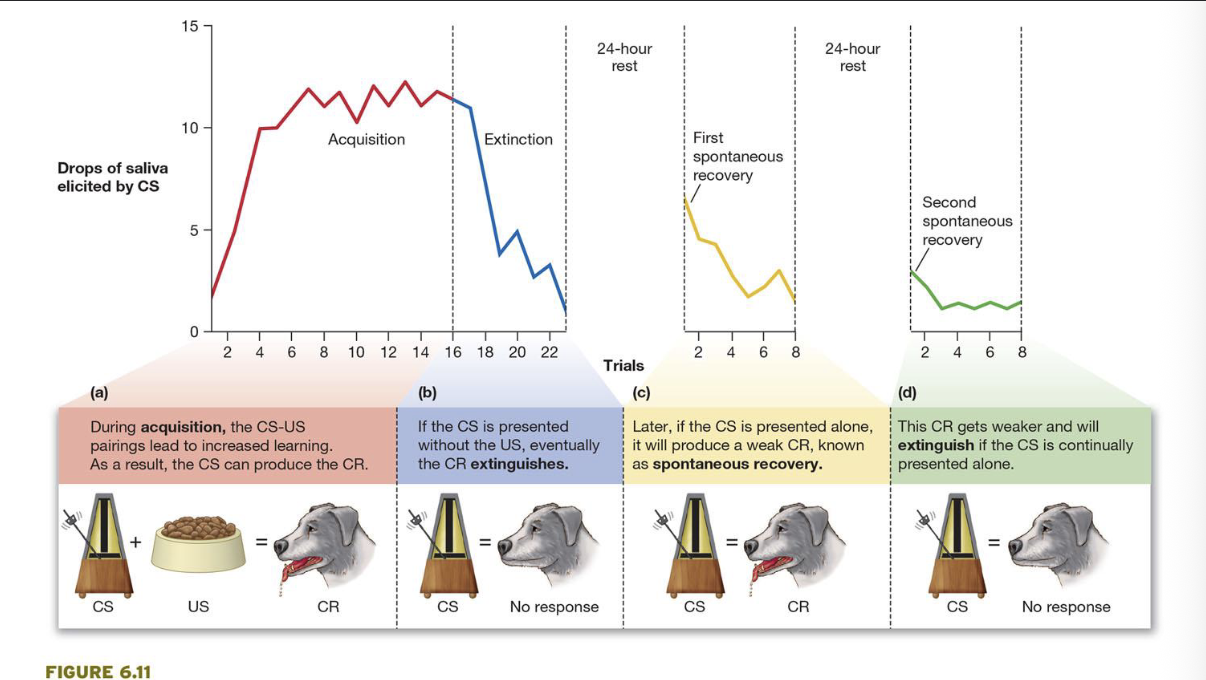
Conditioned response disappears. The animal’s behaviour is reverted back to the pre-conditioned state
What is acquisition
The conditioned stimulus and the unconditioned stimulus pairings lead to increased learning. As a result, the conditioned stimulus can produce the conditioned response
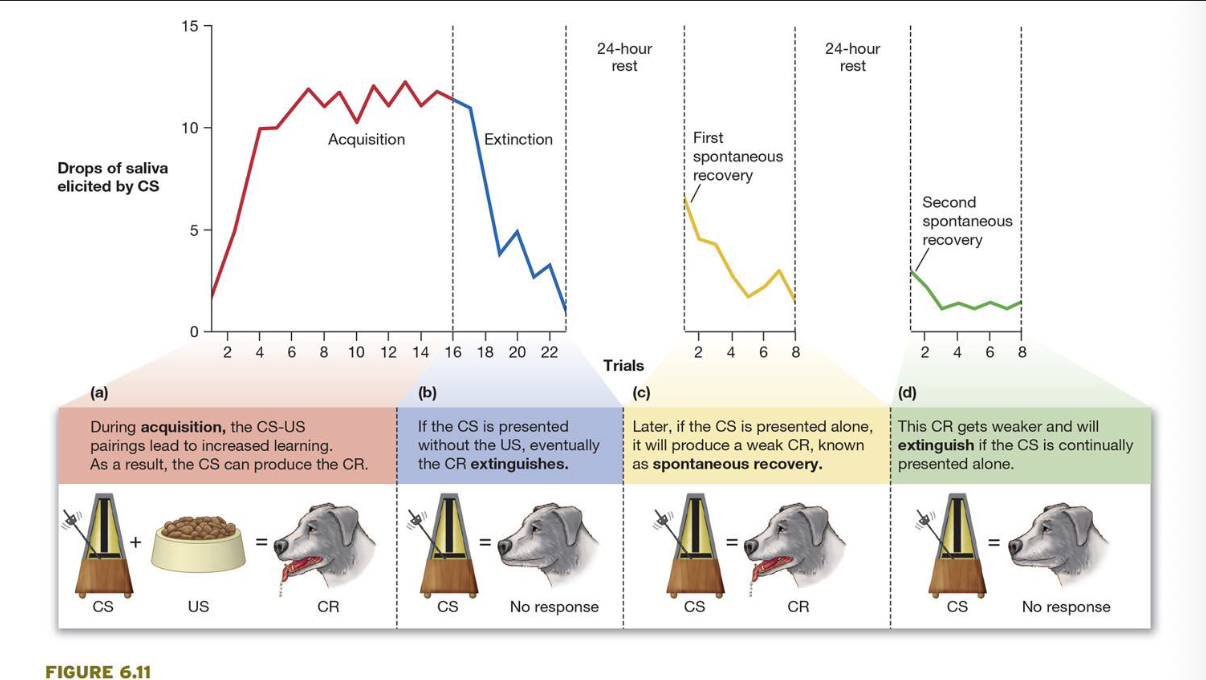
If the conditioned stimulus is presented without the unconditioned stimulus, eventually the conditioned response WHAT
If the conditioned stimulus is presented without the unconditioned stimulus, eventually the conditioned response EXTINGUISHES
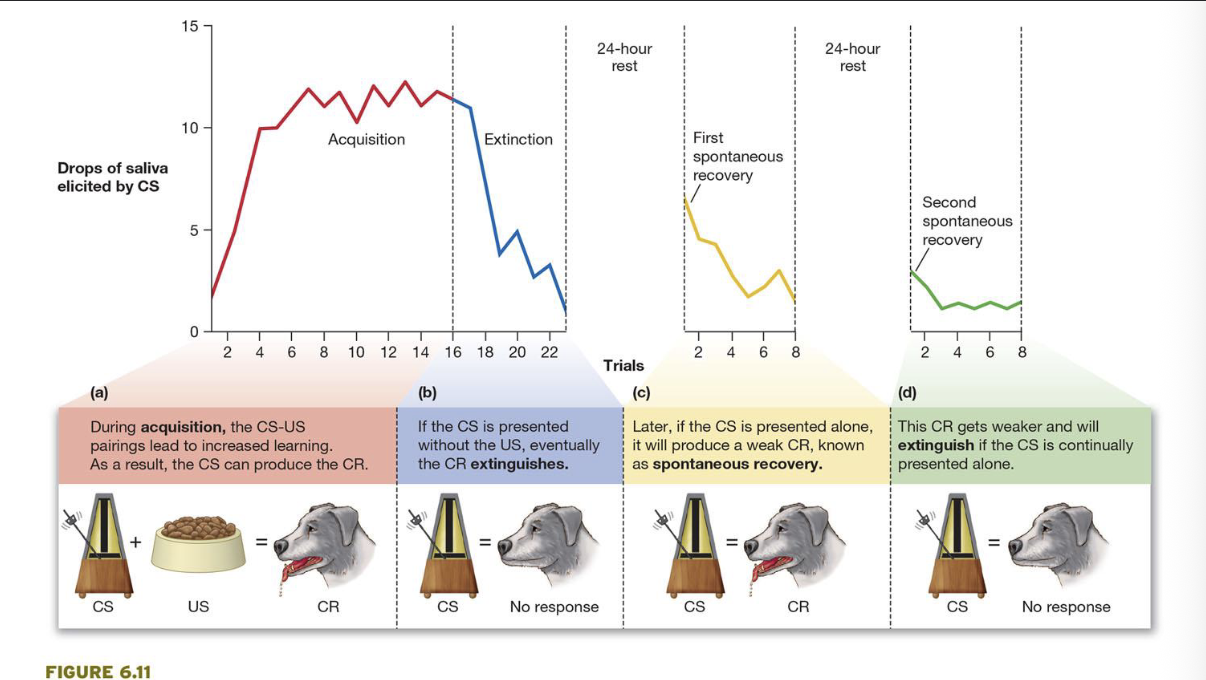
After 24 hours, if the conditioned stimulus is presented alone, it will produce a WHAT conditioned response, known as WHAT
After 24 hours, if the conditioned stimulus is presented alone, it will produce a WEAK conditioned response, known as SPONTANEOUS RECOVERY
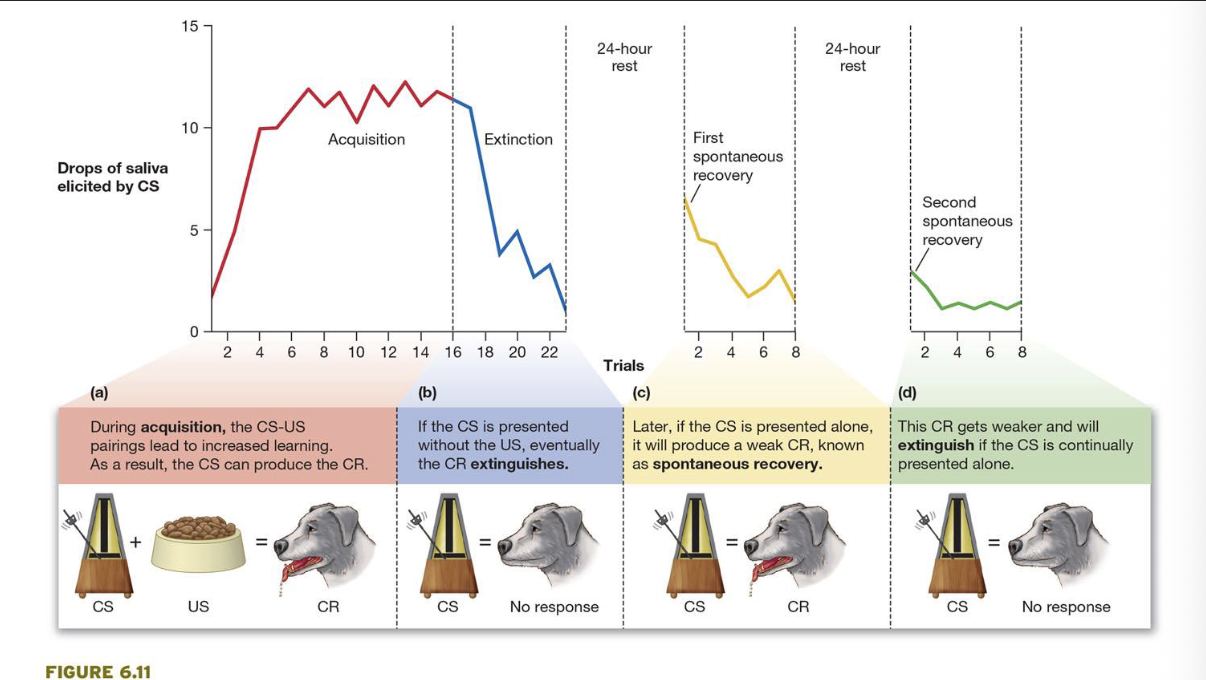
The conditioned response gets weaker and will WHAT if the conditioned stimulus is continually presented alone
The conditioned response gets weaker and will EXTINGUISH if the conditioned stimulus is continually presented alone
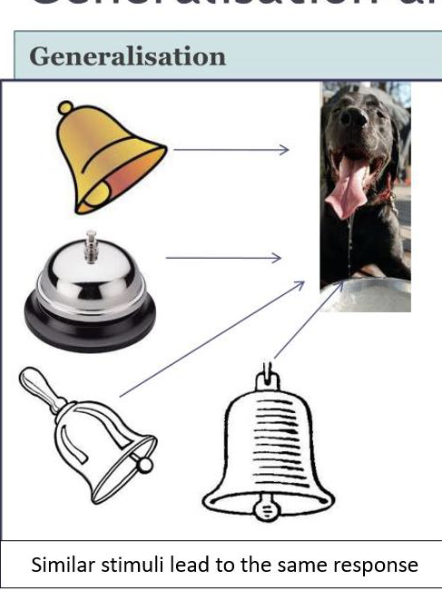
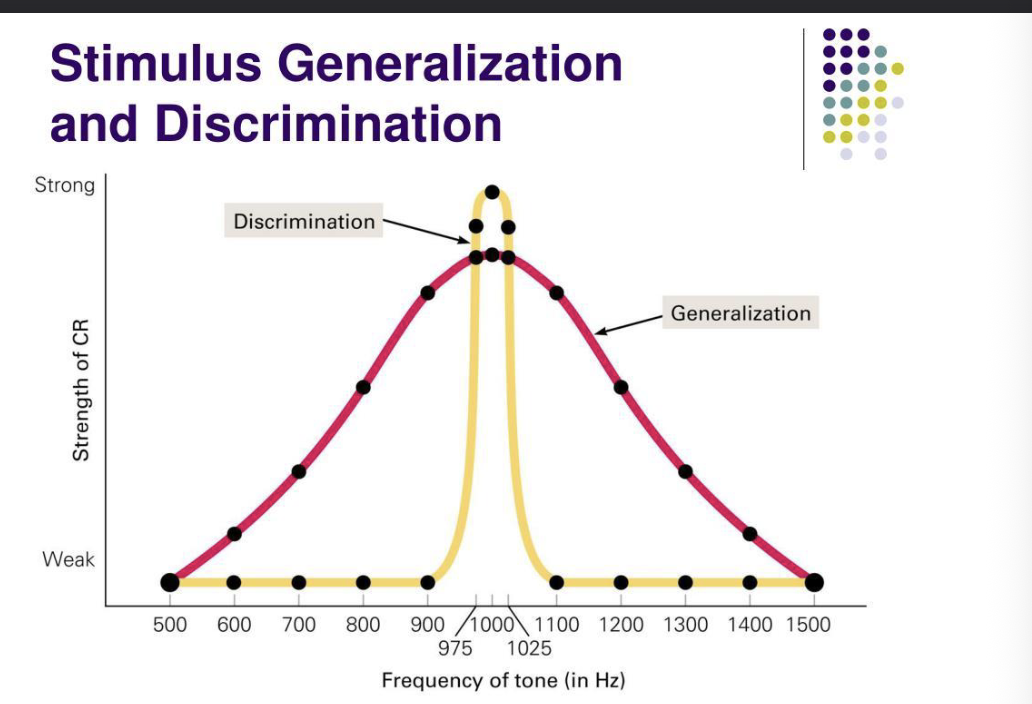
Generalisation
Similar stimuli lead to the SAME response
Discrimination
Similar stimuli DON’T lead to a response
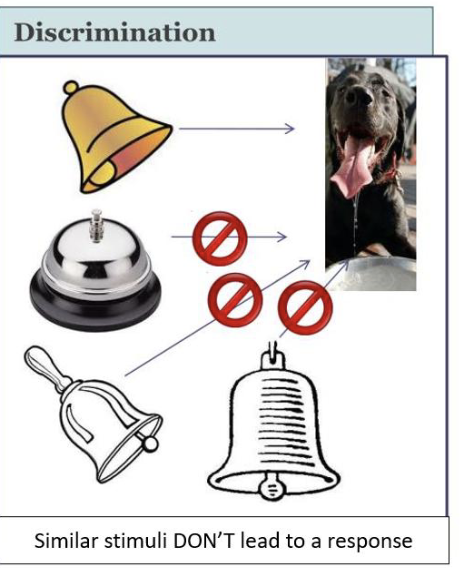
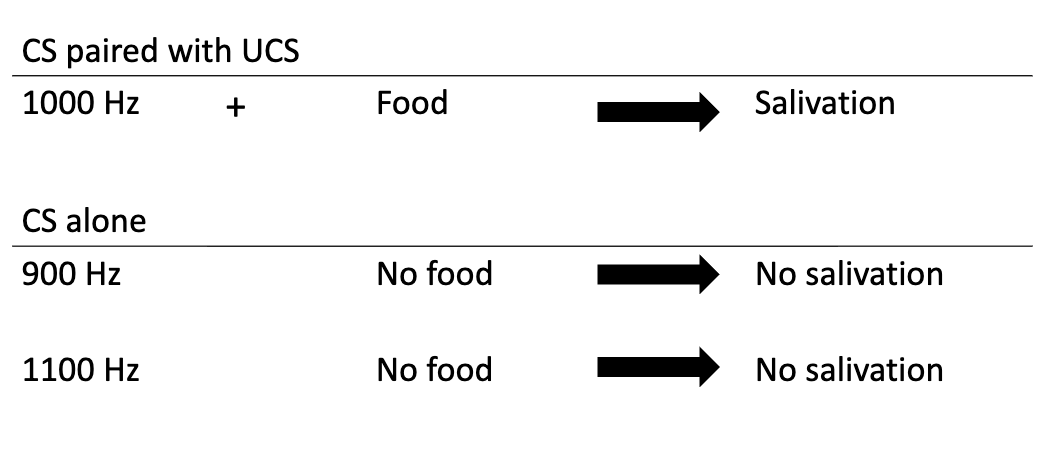
What is discrimination training
When you want the conditioned reaction to only occur to a certain frequency of bell, you only present that bell (neutral stimuli) with the unconditioned stimuli (food), and then present other bell noises (neutral stimuli) without the unconditioned stimuli (food)
Graph of stimulus generalization vs discrimination
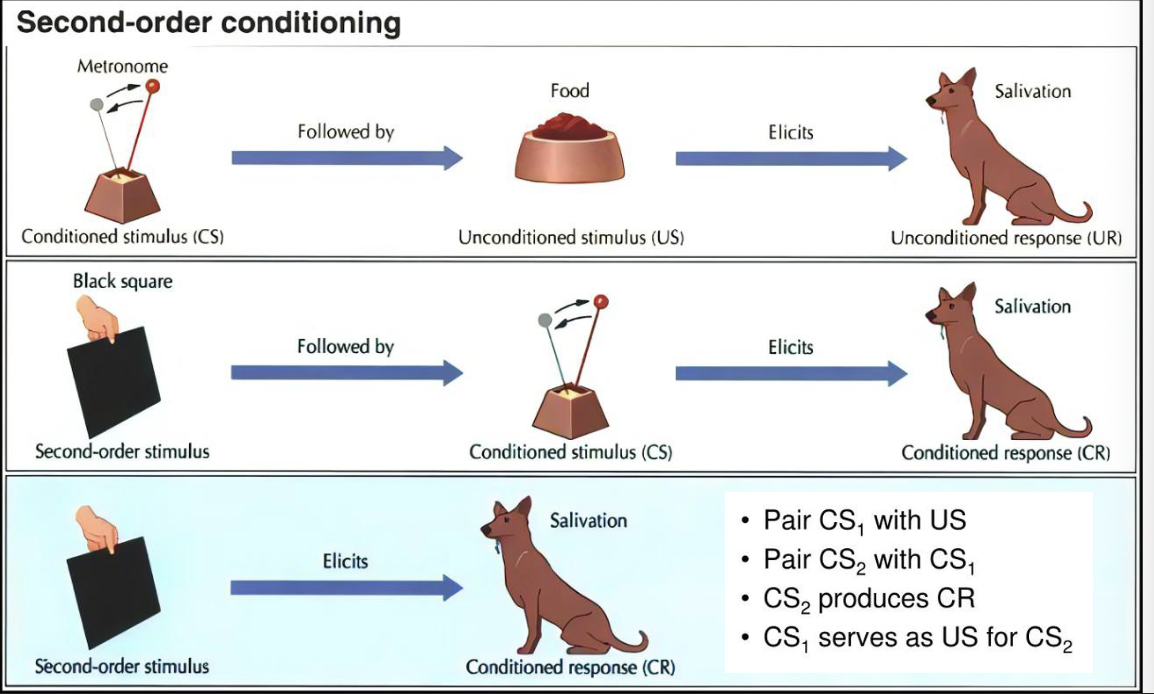
How does second-order conditioning work
Pair WHAT with WHAT
pair WHAT with WHAT
Condition stimulus 2 produces WHAT
Conditioned stimulus 1 serves as WHAT for conditioned stimulus 2
How does second-order conditioning work
Pair CONDITIONED STIMULUS 1 with UNCONDITIONED STIMULUS
pair CONDITIONED STIMULUS 2 with CONDITIONED STIMULUS 1
Condition stimulus 2 produces UNCONDITIONED RESPONSE
Conditioned stimulus 1 serves as UNCONDITIONED STIMULUS for conditioned stimulus 2