topic 3 bio catchup
 Call Kai
 Learn
Learn Practice Test
 Spaced Repetition
 Match
Match Flashcards
 Knowt Play
1/13

There's no tags or description
Looks like no tags are added yet.
Name | Mastery | Learn | Test | Matching | Spaced | Call with Kai |
|---|
No analytics yet
Send a link to your students to track their progress
14 Terms
What is tissue fluid
Formed from water and dissolved substances from the blood plasma and surrounds cells in tissues, formed when the left ventricle contracts producing high hydrostatic pressure
The formation of tissue fluid
When the left ventricle contracts it creates a high hydrostatic pressure which is greater than osmotic pressure at the arteriole end of the capillary. High hydrostatic pressure means that water and dissolved substances are forced out the blood plasma. So glucose, water and oxygen move out the capillary and surrounds tissues where they can be absorbed by cells. Large molecules like plasma proteins cannot leave the capillary as they are too big so remain in the capillary.
This is a type of ultrafiltration
Return of tissue fluid to circulatory system
Osmotic pressure is greater than hydrostatic pressure at venule end of capillary. Plasma proteins remaining in blood lowers the water potential of the blood and so water in tissue fluids moves back into blood plasma by osmosis, taking waste products of the cell.
Excess tissue fluids moves returns to circulatory system by lymph system
What happens to excess tissue fluids
Reabsorber into the circulatory system via lymphatic system. The excess water of the tissue fluids moves enters lymphatic system via lymphatic capillaries. This transports water of tissue fluids to the veins near the right side of the heart and excess water of tissue fluids moves enters is drained back into the blood stream
Role of the heart in the formation of tissue fluid
Contraction of left ventricle produces high hydrostatic pressure which forces water and dissolved substances like glucose and amino acids and oxygen out of the blood capillaries
How could blockage in lymphatic system cause swelling
Excess tissue fluid cannot be reabsorbed so builds up
structure of the phloem
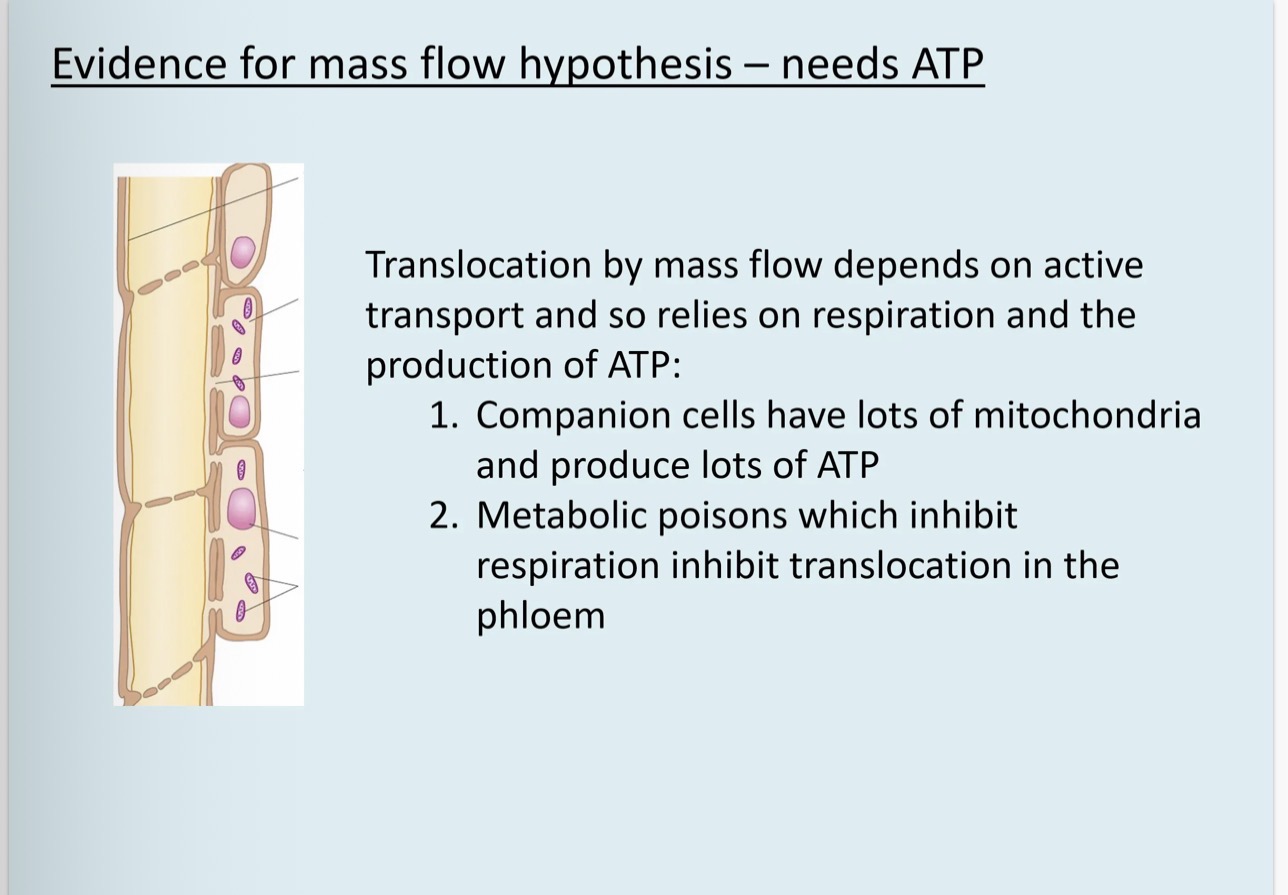
Phloem is made up of two living cells. Sieve tube and companion cell.
Sieves tube allows movement of organic molecules like sucrose and ions up and down the plant. Therefore it has thin cytoplasm to maximise lumen space and end walls are perforated to make sieve plates making a continuous column
Companion cells carry out metabolic processes for sieve tube cell and load up sieve tube with substances to be transported, provide ATP for mass flow hypothesis. Therefore it has dense cytoplasm with lots of mitochondria producing ATP for active transport, and ribosomes for making carrier proteins
What is translocation
Movement of solutes from a source where there is a high conc of solutes to sink where there is a low conc of solutes.
How do enzymes maintain conc gradient from source to sink
Break down solutes at the sink so there’s always a lower conc of solutes at the sink
What are the 4 types of evidence for mass flow hypothesis
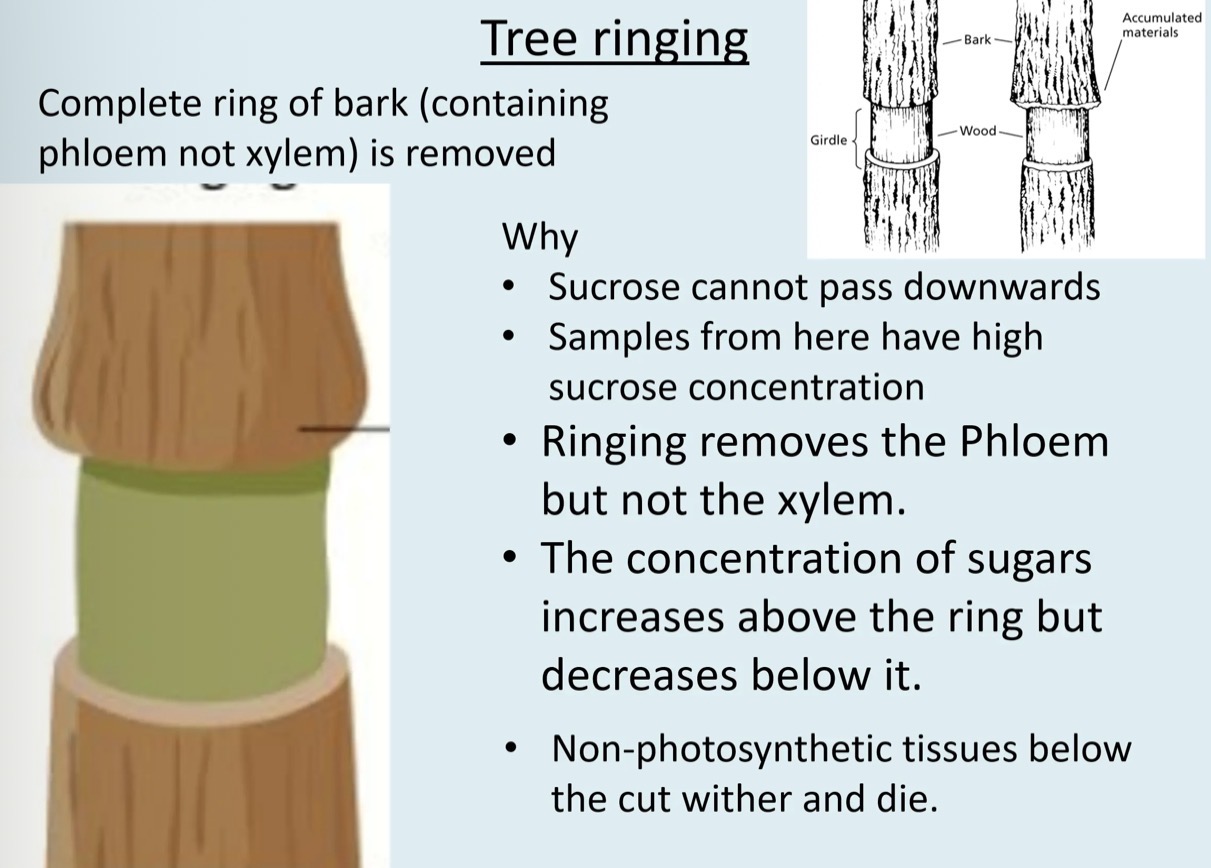
Tree ringing
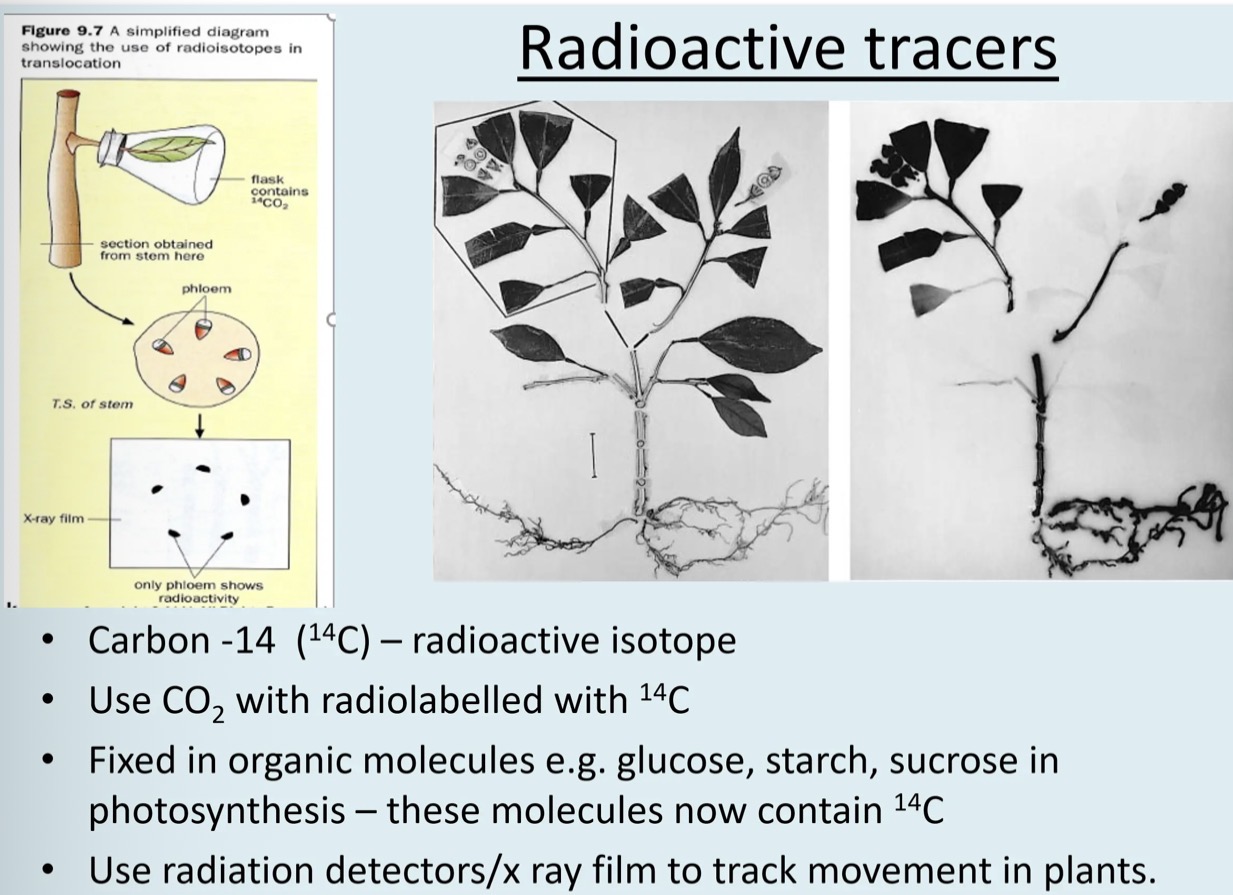
Radioactive tracers
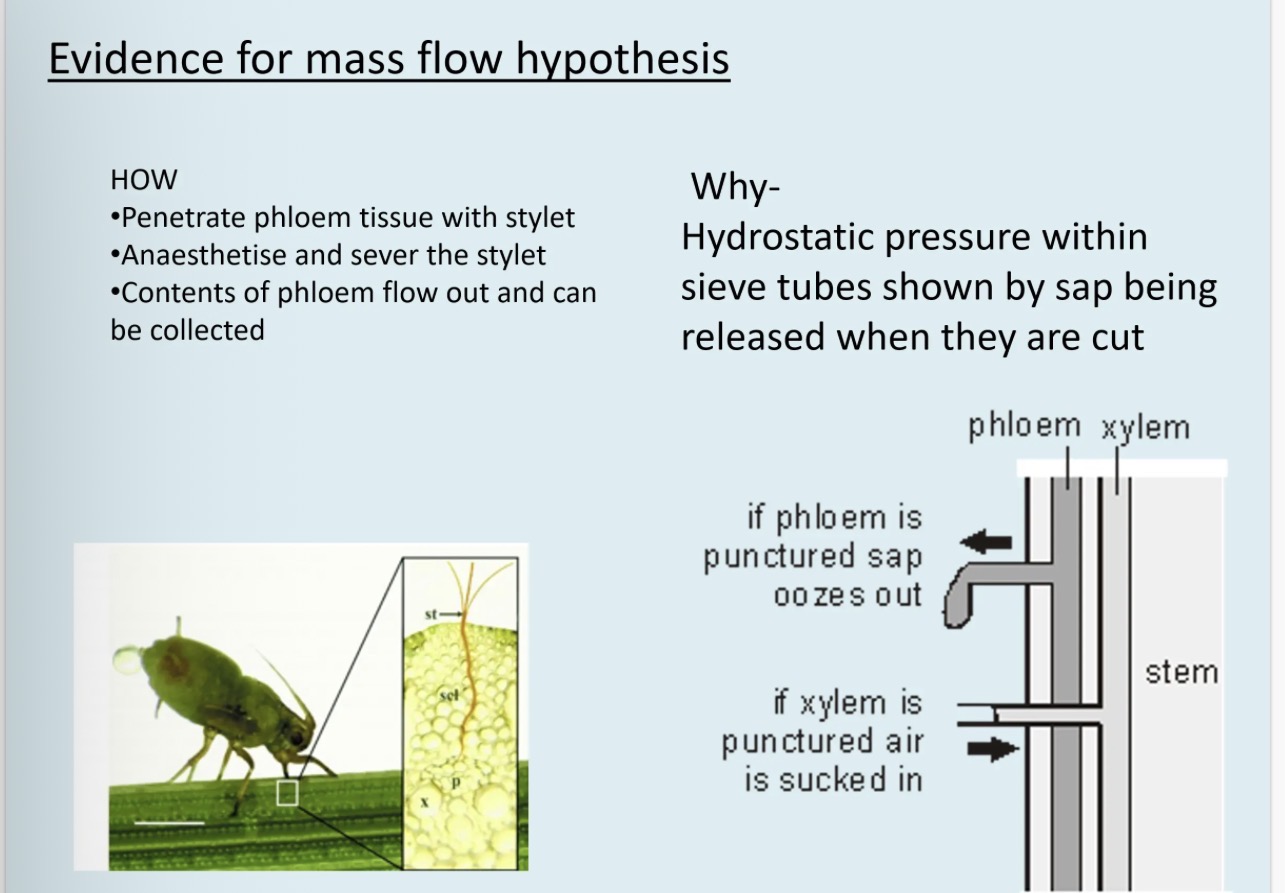
Sap flow
Requires ATP
Tree ringing
Radioactive tracers
Sap flow
Requires ATP