BIOL 4100 Mehari Exam 1
 Call Kai
 Learn
Learn Practice Test
 Spaced Repetition
 Match
Match Flashcards
 Knowt Play
1/244

There's no tags or description
Looks like no tags are added yet.
Name | Mastery | Learn | Test | Matching | Spaced | Call with Kai |
|---|
No analytics yet
Send a link to your students to track their progress
245 Terms
Explain in at least three sentences, not more than 6 sentences, the relationship between cells, chromosomes, DNA, RNA, and proteins.
1. The central dogma states that the transfer of information flows from DNA to RNA to proteins.
2. Chromosomes are comprised of DNA (genetic material)
3. DNA, through the process of transcription, creates a complementary RNA strand.
4. The RNA strand, through the process of translation, creates proteins.
5. Proteins are responsible for the majority of the cell's functions, structures, and movement capabilities, providing the link between chromosomes and the greater mass of the cell.
The cytoskeleton of eukaryotic cells are responsible for directed cell movements. Which of the following make up the cytoskeleton?
Intermediate filaments
Actin filaments
Microtubules
Which of the following statements are TRUE of chloroplasts?
Chloroplasts absorb light and generate oxygen and electrons
Chloroplasts are thought to have originated from bacteria
Chloroplasts contain their own DNA
There are all the reasons why arabidopsis has been chosen as a model plant EXCEPT
Has one of the largest genome in plant kingdom
Mitochondria are thought to have evolved from engulfed aerobic bacteria. Which of the following are evidences that supported the theory of endosymbioisis in eukaryotic cells?
Mitochondria possess ribosomes similar in size to bacterial ribosomes
Mitochondria contains double membranes resembling that of a bacterial double membrane
Mitochondria contains DNA arranged in circular chromosomes
Mitochondria are essentially the same in all eukaryotes, including plants, animals, and fungi.
True
Eukaryotic cells engage in continual endocytosis and exocytosis across their plasma membrane. Why do cells engage in endocytosis?
To import extracellular materials
Within a developed multicellular organism, NOT all cells have the ability to divide
True
All of the following are advantages of using electron microscope when compared to light microscope EXCEPT
They are used to study live cells
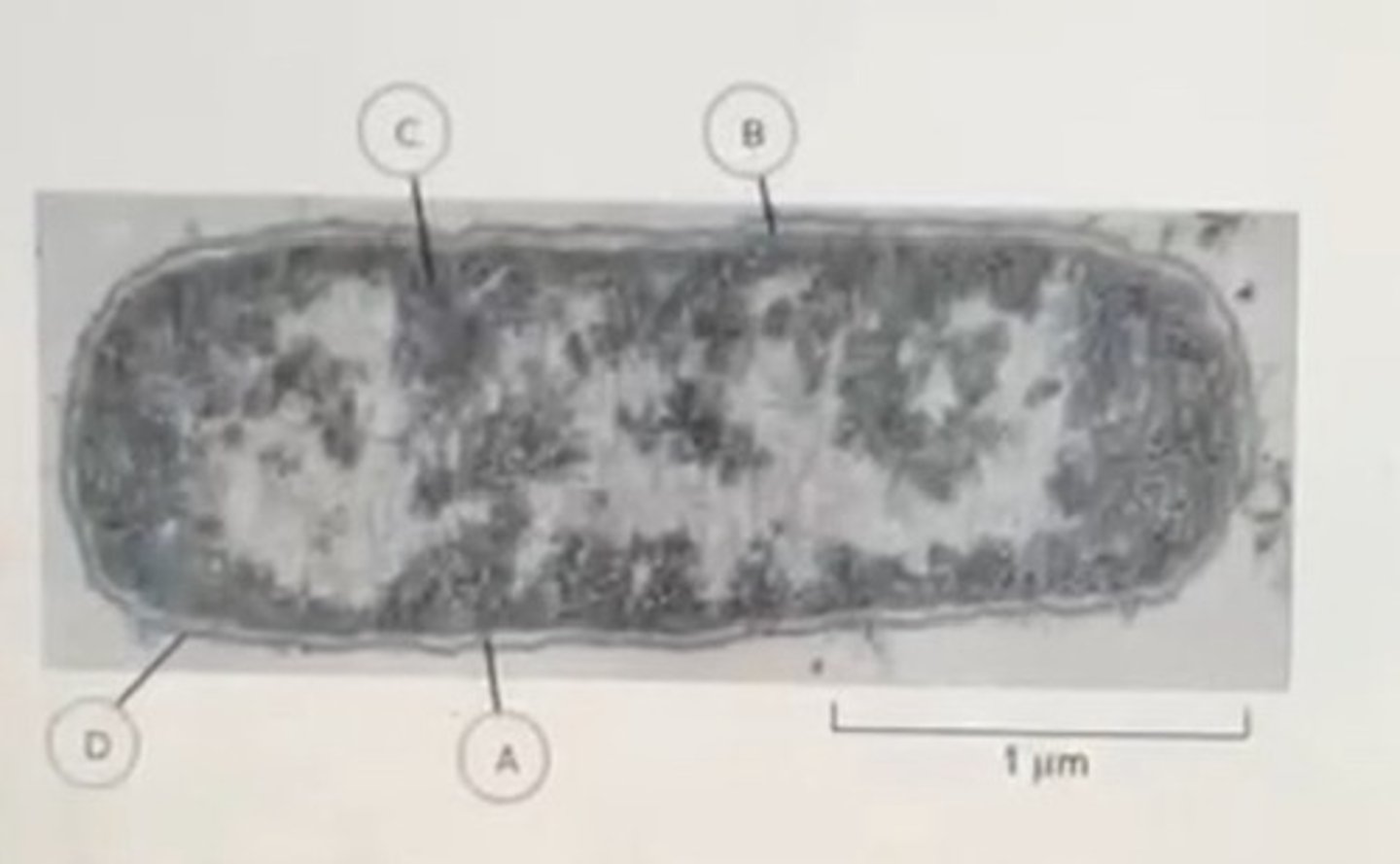
In the electron micrograph below, identify the bacterial cell features labeled A to D respectively.
Cell wall, inner membrane, cytoplasm, outer membrane
The delta G of a reaction is -350 kCal/mol. Which of the following can be deduced about this reaction?
The reaction will proceed spontaneously under standard conditions
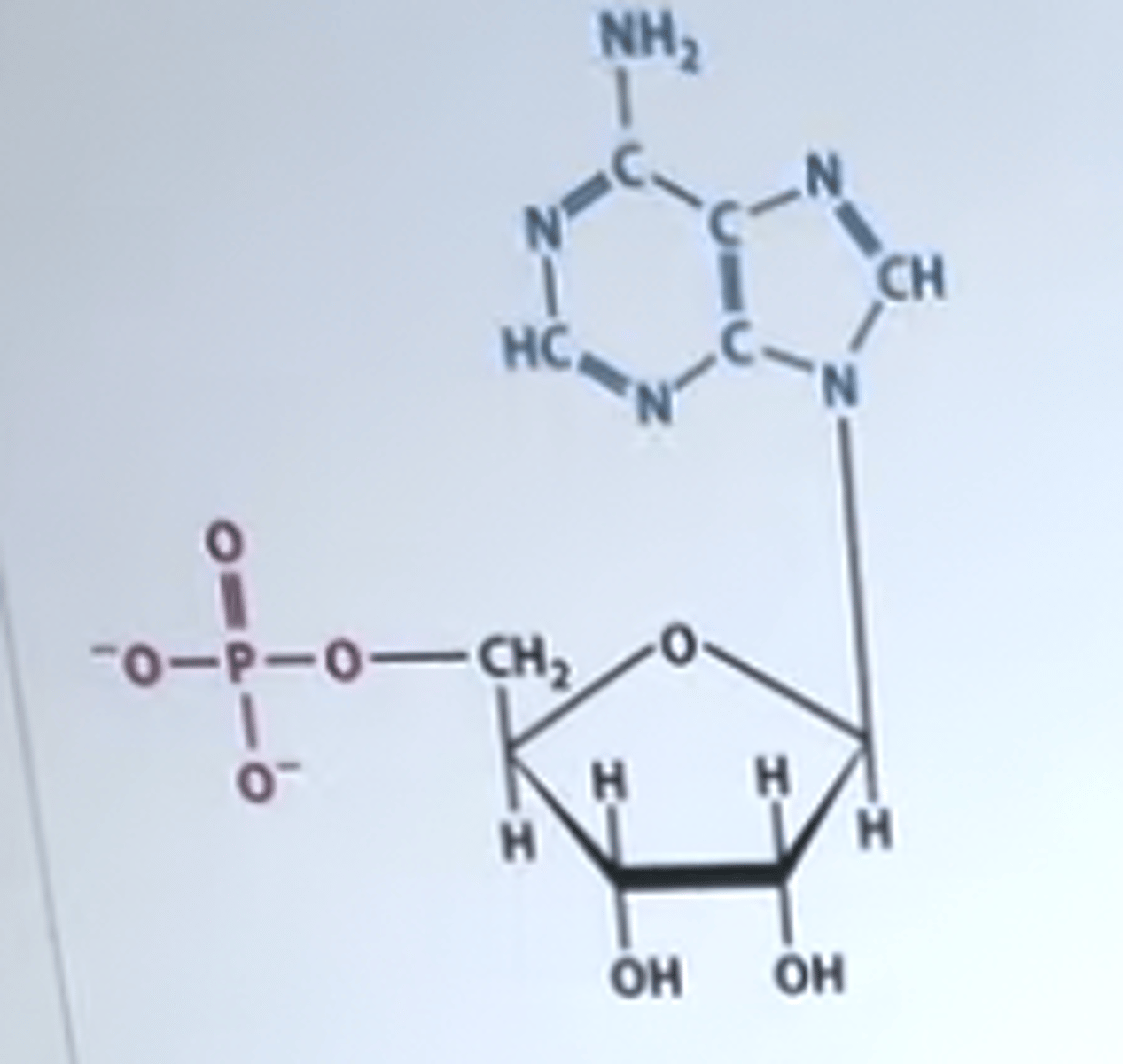
What can be said about the molecule presented below?
It belongs to RNA
It is a nucleotide
Which of the following are types of interactions that help bring molecules together in cells?
Covalent bond
van der Waals attraction
Hydrogen bond
Ionic bond
Which of the following is NOT a characteristic of yeast that make them useful model organisms?
Unlike other eukaryotes, yeast do not have membrane bound nucleus
Peptide bond formation between the amino group of one amino acid and the carboxyl group of another results in
Release of water molecules
When comparing liver cells and kidney cells within the same organism, which of the following is the same between the two cells?
DNA
You feed 2 glucose molecules to a yeast. Saccharamyces cervisae. How many total number of ATP will you expect to recover if the cell decided to ferment the sugars?
4
Which of the following is NOT correct with respect to the redox pair NAD+/NADH?
NADH can accept electrons from an electron transport system
Which of the following statements about NADPH and/or NADH is NOT true?
NADPH is used primarily by plants
Which of the following is NOT true of chemiosmosis?
It requires oxygen
ATP synthesis by chemiosmosis is similar in bacteria, mitochondria, and chloroplasts?
True
The TCA cycle is capable of generating all the following products from oxidation of each acetyl-CoA molecule EXCEPT
2 water molecules
The enzyme pyruvate kinase catalyzes the conversion of PEP to pyruvate. The phosphate group is transferred to ADP to form ATP. This reaction is an example of
ATP synthesis through substrate level phosphorylation
In brown fat of bears, the following transmembrane proteins are used to produce heat during cold season
Uncoupling proteins (UCPs)
Photosynthesis utilizes an electron transport system while fermentation does not utilize an electron transport system.
True
Fermentation produces more energy than anaerobic respiration
False
Production of ATP by ATP synthase directly depends on which of the following factors?
Proton motive force
What is the main purpose of malate-aspartate shuttle to cells
Transfer of electrons from cytosolic NADH across the inner mitochondrial membrane
Which of the following statements is TRUE to both FADH2 and NADH?
Both are electron carriers that power the electron transport system
Both have the ability to produce similar amount of ATP
Both are products of TCA
Which of the following allows the one way movement of electrons from one complex to the next in ETS?
Increase in reduction potential from NADH to O2
Oxygen is always required for the regeneration of NAD from NADH
False
Which of the following is NOT a method for controlling protein activity
Proteolysis
Which of the following does NOT represent covalent interactions?
Hydrogen-bonding between peptide bonds in adjacent strands in a beta sheet
Mutations in the nucleic acid sequence of a gene can sometimes direct the substitution of one amino acid for another in the encoded protein. Which amino acid substitution would be most likely to severely disrupt the normal structure of a protein?
Tyrosine to Tryptophan
Which of the following is NOT TRUE about the enzyme lysozyme?
It involves removal of water molecules
Which of the following is NOT a characteristic of a hemoglobin molecule
It is made of one large protein subunit
Which of the following determines how a protein will fold?
Amino acid sequence
A competitive inhibitor bound to an enzyme can be overcome by increasing the substrate concentration
True
Which parts of amino acids are involved in a peptide bond?
Amino group of one amino acid and carboxyl group of the other
Beta sheets of proteins
Are strands of poylpeptide chains that are held together by hydrogen bonding between peptide bonds in adjacent strands
Which statement is TRUE about the removal of a terminal phosphate from ATP?
The reaction is associated with a negative change in deltaG
Which of the following is NOT a function of an enzyme
Speed up reactions by increasing the activation energy
What determines the specificity an antibody has for its antigen?
Polypeptide loops in its variable domains
Which of the following technique would you use to separate two proteins with the same size but different isoelectric point
Two-dimensional PAGE
You purified a protein complex with multiple subunits bound together by a disulfide bond. Which of the following chemicals would you use to separate the subunits before loading it to polyacrylamide gel electrophoresis?
Mercaptoethanol
Which of the following can be used for separating different proteins within a sample?
Liquid chromatography
SDS-PAGE
You are running an experiment to mutate an enzyme in order to increase the enzyme's ability to bind its substrate. Using the graph as a comparison, what affect would the mutant version of the enzyme likely have on the Km?
The Km would move to the left (decrease)
Rate the following events in chronological order based on the figure below
A. eukaryotes and archaea diverged
B. Eukaryotes acquired chloroplasts
C. Bacteria and archaea diverged
D. Eukaryotes acquired mitochondria
C A D B
Explain, in at least 3 sentences but not more than 6, how regulatory GTP-binding proteins can be responsible for human cancer.
List your explanation by number or bullet points
Mention at least one example of a protein regulated by GTP binding
1. Regulatory GTP-binding proteins (like Ras) act as molecular "on/off switches" for cell signaling pathways that control cell growth and division.
2. When they bind GTP, they become active and send signals that promote proliferation; when they hydrolyze GTP to GDP, they normally switch off.
3. Mutations can lock these proteins in the GTP-bound active state, causing continuous signaling even without growth factors.
4. This constant "grow" signal can lead to uncontrolled cell division, a key feature of cancer.
Fundamentals of cells
Cells vary enormously in appearance and function
Living cells all have a similar basic chemistry
Living cells are self-replicating collections of catalysts
Living cells have apparently evolved from the same ancestral cell
Instructions for the form, function, and behavior of cells are organisms are stored in genes
In all living cells, genetic information flows from
DNA to RNA to protein
Light microscopes
Led to the discovery of cells
Reveal some of a cell's components
Electron microscopy
Reveals the fine structures of a cell
Prokaryotes
Most diverse and numerous cells on earth
Divided into two domains: bacteria and archaea
Some bacteria are photosynthetic
Eukaryotes
Possess nucleus and organelles
Mitochondria, chloroplasts, cytoskeleton
Mitochondria
Generate usable energy from food molecules
Thought to have evolved from engulfed bacteria
Chloroplasts
Capture energy from sunlight
Almost certainly evolved from engulfed photosynthetic bacteria
Cytoskeleton
Responsible for directed cell movements
Made of actin filaments, microtubules, and intermediate filaments
Network of protein filaments that can be seen crisscrossing the cytoplasm of eukaryotic cells
Rank the following events in chronological order.
a) eukaryote and archaea diverged
b) bacteria and archaea diverged
c) eukaryotes acquired chloroplasts
d) eukaryotes acquired mitochondria
B -> A -> D -> C
Internal membranes
Create intracellular compartments with different functions
Continual endocytosis and exocytosis
Eukaryotic cells use this- importing extracellular materials by endocytosis and secreting intracellular materials by exocytosis
Endocytosed material is first delivered to membrane-enclosed organelles called endosomes
Endosomes
Membrane-enclosed organelles that receives endocytosed material
Cytosol
Contained by cell membrane
Concentrated aqueous gel of large and small molecules
Intermediate filaments
Not found in cytoplasm of cells with cell walls, such as plant cells
Microtubules
Help segregate the chromosomes in a dividing animal cell
Chromosomes are pulled apart into separate daughter cells by the spindle microtubules
Eukaryotic cells may have originated as
predators
Eukaryotes have genomes that are _____ of DNA that was transferred horizontally across domain boundaries
chimeric mixes
E. coli
Molecular biologists have focused on this
Easy to grow and grows fast (G= 20 min)
Contains most of bacterial structures
Easy to manipulate, can accept foreign DNA
Single circular chromosome, may have some plasmids
Pathogenic, non-pathogenic or a commensal
Growth with oxygen or without oxygen
Saccharomyces cerevisiae
Brewer's yeast is a simple eukaryote
Model organism for studying activities of all eukaryotic cells, especially the cell cycle and secretion
Exists as both diploid and haploid
Can reproduce sexually or asexually
They share many of the more than 6000 proteins with most eukaryotic cells
Cell cycle, protein secretion
Mutations in yeast
Led to the identification of key cell cycle proteins
Most of these yeast cell cycle genes are found in human cells as well, and they encoded proteins have similar amino acid sequences
Subsequent studies showed that mutations in many yeast cell cycle proteins that allow uncontrolled cell growth also frequently occur in human cancers
Cell division cycle proteins
Very similar amino acid sequences in yeasts and humans
Cdc2
Human cell that is a cell cycle-regulated protein kinase that induces entry into mitosis
Drosophila melanogaster
Provided a key to the understanding of how all animals develop
Four stages: embryo, larva, pupa, adult
Rapid generation time, around 10 days
Used to discover chromosome theory of heredity
Caenorhabditis elegans
C. elegans is a small nematode worm that normally lives in the soil
C. elegans was the first multicellular organism to have its complete genome sequences
C. elegans mode of inbreeding by the self-fertilizing hermaphrodite combined with the ability to cross hermaphrodites with males
"C. elegans provides the researcher with the ideal compromise between complexity and tractability"
Zebrafish
Popular models for studies of vertebrate development
Small, hardy, tropical fish are easy and cheap to breed and maintain
Ideal for developmental studies, as their transparent embryos develop outside the mother; making it easy to observe cells moving and changing their characters in the living organism as it develops
Mouse model
Both have defects in the same gene (called Kit), which is required for the normal development, migration, and maintenance of some skin pigment cells
Useful because they share mammalian features with humans
Hela cells
The first immortal human cell
Moore v. Regents of the University of California
One of the judges "he had no property rights to his cells"
Cal Supreme court "hospital patient's discarded blood and tissue samples are not his personal property and that individuals.."
Common Rule
label given to the federal policy for the protection of human subjects
Arabidopsis
Model plant
Short generation time and ability to self-fertilize (selfing)
Small genome ~114.5 Mb
Genetically well characterized due to the volume of work being focused on this plant
Comparing genome sequences
Reveals life's common heritage
Covalent bonds
Two atoms share a pair of electrons in a molecular orbital
Strong enough to survive the conditions inside cells
Sharing of electrons most generally occurs in the outermost orbitals of atoms
Chemical bonds that hold together amino acids in proteins
Ionic bonds
Form by the gain and loss of electrons
Interaction between the two occurs because opposite charges attract one another
Hydrogen bonds
Important noncovalent bonds for many biological molecules
Commonly form between molecules that contain an Oxygen or Nitrogen
Hydrogen bonds between base pairs form the double helical structure of DNA
In proteins, B sheets and a helices are held together by hydrogen bonds
van der Waals
Noncovalent attraction bonds
Maintain membrane fluidity
The longer the hydrocarbon tail, the greater the strength of van der Waals forces
Cells are made of
relatively few types of atoms
Nucleus
Dense, positively charged and contains nearly all of atom's mass
Electrons occupy space around the nucleus
Isotopes
Proton number stays the same, but neutron number is different
Valence electrons
Electrons found in outermost orbitals of an atom
Hydrophobic force
Tendency of nonpolar substances to aggregate in an aqueous solution
Crucial for structure of cell membranes
Hydrocarbon chains in fatty acids
Have non-polar covalent bonds
Electrons are still moving around the atoms in the fatty acids, creating short-lived regions with slight negative charges
These are attracted to slight positive regions in another atom
The kinks in the fatty acids caused by double bonds reduces tightness between the molecules, causing a lower melting point
A cell is formed from
Carbon compounds
Contain four major families of small organic molecules
Sugars
Both energy sources and subunits of polysaccharides
Can form polysaccharides, glycogen, and starch (in plants)
Fatty acid chains
Primary components of cell membranes
Fats and membrane lipids
amino acids
Subunits of proteins
Held together by peptide bonds
C1 of one amno acid and N2 of another
Nucleotides
Subunits of DNA and RNA
Form nucleic acids
A chain of DNA molecule is formed by linking nucleotides with a phosphodiester bonds
5' end free phosphate group with the 3' free hydroxyl group
Energy is gained by hydrolysis of phosphate group
Disaccharide
Two monosaccharides linked by a covalent glycosidic bond
Condensation reaction
Two molecules join as a result of loss of water molecule
Requires an input of energy
Hydrolysis reaction
Water is added and separate the two molecules apart
Release of energy
Lipid bilayer
Made of amphipathic phospholipids
Hydrophilic heads of the phospholipid molecules are on the outside, facing the aqueous environment
Hydrophobic tails are on the inside, where water is excluded
Formed by fatty acids linked to G3P via ester bonds