Lecture 11: New horizons in Plant Biotechnology
 Call Kai
 Learn
Learn Practice Test
 Spaced Repetition
 Match
Match Flashcards
 Knowt Play
1/42

There's no tags or description
Looks like no tags are added yet.
Name | Mastery | Learn | Test | Matching | Spaced | Call with Kai |
|---|
No analytics yet
Send a link to your students to track their progress
43 Terms
what are the three major techniques to modify native gene expression in crops: pros and cons?
1. Antisense inhibition- reduces synthesis of selected proteins (via antisense mRNA)
2. RNA interference (RNAi)- reduces synthesis of selected proteins: one of the first methods that worked very well woth non animal species- works through inhibiting the mRNA that is expressed from a certain gene- thus lowering how much protein can be translated- this method can be extremely effective of how much the protein synthesis can be lowered
3. CRISPR / Cas9- various forms of gene editing
Pros and cons: Each genetic technique for altering gene expression and protein content in plants has advantages and disadvantages
what is antisense inhibition in short
Transform a copy of the selected gene in the antisense orientation into the plant genome
- Expresses an antisense mRNA with complementary sequence to the normal ”sense” mRNA produced from the native gene
- Single-stranded antisense mRNA can anneal to single-stranded sense mRNA —> mRNA duplex
- Inhibits / blocks translation of sense mRNA (decreases protein content)
Antisense technique represses protein levels by a percentage, but not normally to 100% (c.f. gene mutation): useful for genes encoding essential proteins
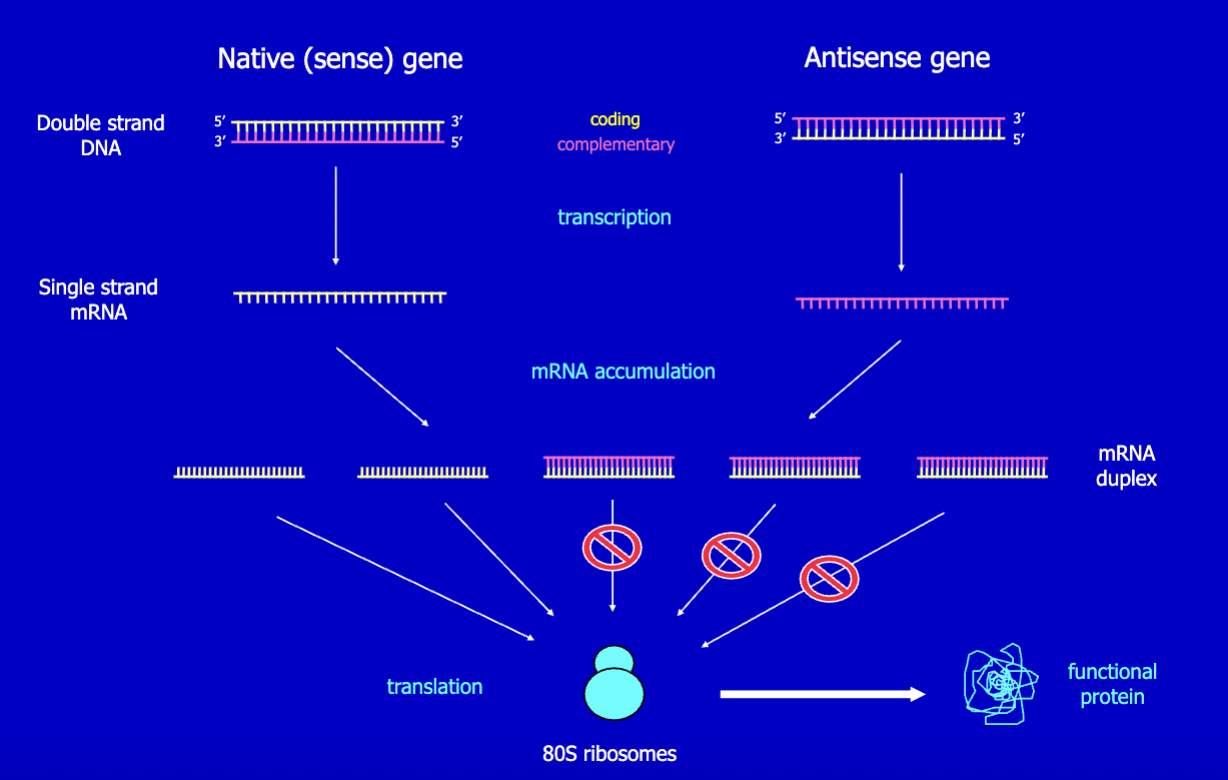
explain how antisense inhibition works.
Aim: inhibit the amount of a certain protein
the protein is encoded by a specific gene- like any gene- it is a piece of dsDNA of witch one strand is the coding strand from with the mRNA will be transcribed from, and the other is a complementary- the mRNA from the transcription of the encoding DNA strand is called the senseRNA
with antisense we transform an extra copy of the gene X, but turn the gene “upside down” —> when this antisense DNA strand is transcribed it will make antisense mRNA which will be complementary to the sense mRNA.
The antisense mRNA and the sense mRNA will anneal and form a ds mRNA (duplex of mRNA)- and block translation from the sense mRNA to occur.
this naturally occur when plants are infected by viruses. Ds mRNA cannot bind to ribosomes and go through translation- is tied up in the duplex to the antisense mRNA—> the sense mRNA becomes unavailable to translation.
- Summary: antisense gene is the “reverse” of the native (“sense”) gene. Whe mRNA is transcribed from both of these DNA strands encoding strands- ssmRNA is produced and accumulated- since the sense and antisense mRNA strands are complementare they will bind and form mRNA duplexes and inhibit binding to ribosomes and thus translation to proteins.
why is antisense good for research as opposed to gene knockouts?
it is not lika a mutation where all gene expression become halted but rather cause an inhibition to a certain extent. If the gene encoding for a knocked out protein also has a vital function in the plant you cannot perform any research other than being able to establish that the function of the protein being vital in the cell- with antisense RNA some expression of the gene will still occur allowing for research.
what happens to the RNA duplex (from antisense inhibition) after formation
- RNA duplexes are unusual is the plant cell and recognized as foreign- enzymes (RNases) target and degrade the ds mRNA duplexes and rapdily degrade them.
name two advantages with antisense inhibition
Partial suppression of gene expression / protein content: important if gene of interest is essential – mutant is lethal!- but with expression to a certain degree still occuring- the plant can still function
Useful for genes in multigene families: co-suppress homologous genes simultaneously. If gene X is in a multigene family (along with several other genes in a multigene family- very common in plants) and you want to know the function of only gene X and its family- you can only knock out 1 or two genes of the multigene family- this will lead to no significant impact on the plant and is ineffective since the other genes still will function- hard to make multiple mutations- however with antisenseRNA it is enough to transform a copy of only a part of each gene- (does not need to be the entire gene sequence) so long as annealing occur it will inhibit the translation succesfully- if you find a region present in all the genes in the multigene family (often have similar sequences) the constructed antisenseDNA will produce antisenseRNA that can anneal and inhibit expression of the entire multigene family- and hence the function of that family can more easily be identified and researched)- normally each gene in the multigenefamily will encode for slightly different versions of the same protein which all carry out similar functions- knockouts of genes in plants is not efficient for multi gene families due to the inability to knockout entire families of genes through mutations
name two disadvantages with antisense inhibition
1. Suppression is highly variable (20-95%): can vary from plant to plant, generation to generation- when you transform the antisense construct- it is engineered through testing and screening after succesful results- the seeds from successful saplings will most likely inherit the inhibition of the transformed parent plant, however it is not guaranteed and the seeds thus need to be screened, selected and replicated as well- very time consuming. However this could also be a positive- if the screenings show a “roof” of inhibition degree of proteins- this will be an indication of the inhibited protein being vital to the plants survival- if protein is not essential you will almost certainly acquire a wide range of inhibition up to almost 100% at most- if not- maybe the plants with a higher degree of inhibition have not survived due to the target protein being essential
2. Need to study 2-3 independent lines showing similar phenotype to minimise the possibility of a phenotype being caused by the loss of a native gene function, due to the insertion of the antisense construct. Make sense because if only one would be enough- maybe the aquired result could be from the insertion of the transformation splitting an innate gene and hence inhibiting the expression of that gene in question- and thus not having anything to do with the antisense mRNA but rather the insertion of the antisenseDNA having had unexpected effects of the plant (which is mostly random and cannot be successfully replicated)
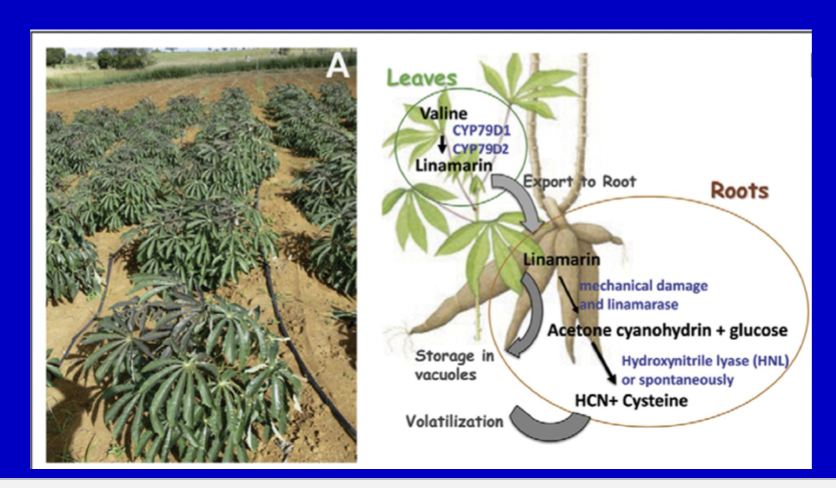
how can low cyanogenic cassave be made
Selective inhibition of CYP79D1/D2 gene expression by antisense technology (The enzymes encoded for by the genes catalyze the first step in cyanogen synthesis)
- Inhibition of the two genes´ expression in leaves leads to 99% reduction in root cyanogen levels
what is ethylene (C2H4)?
- Simple gaseous hydrocarbon
- Not required for normal vegetative growth
- Synthesized primarily during stress and in tissues undergoing senescence or ripening
- Acts as plant hormone in certain plants, such as accelerates fruit ripening, Stimulates leaf and fruit abscission, Inhibit cell expansion
- It is the hormone that causes fruits to ripen- not important for fruit development itself- however essential for fruit ripening
- Increased C2H4 synthesis precedes fruit ripening: Initiates the ripening process
what agricultural significance does ethylene have
- Great agricultural importance: Promote or delay fruit ripening—> enable long exports of fruits- if the fruit normally ripen after they are harvested- it is possible to successfully delay ripening through the abscence of ethylene during transportation (all synthesised ethylene that the fruit excrete during transportation is rapidly removed through strong ventilation out of the container. Ethylene addition can later on rapidly initiate the ripening right before displaying in the supermarkets.
- e.g. Tomatoes are picked green and stored in the absence of C2H4 until just before marketing- induces ripening
Storage of Fruits & Vegetables: Exporters and supermarkets store fruits and vegetables in refrigerated facilities that remove ethylene slows the ripening process
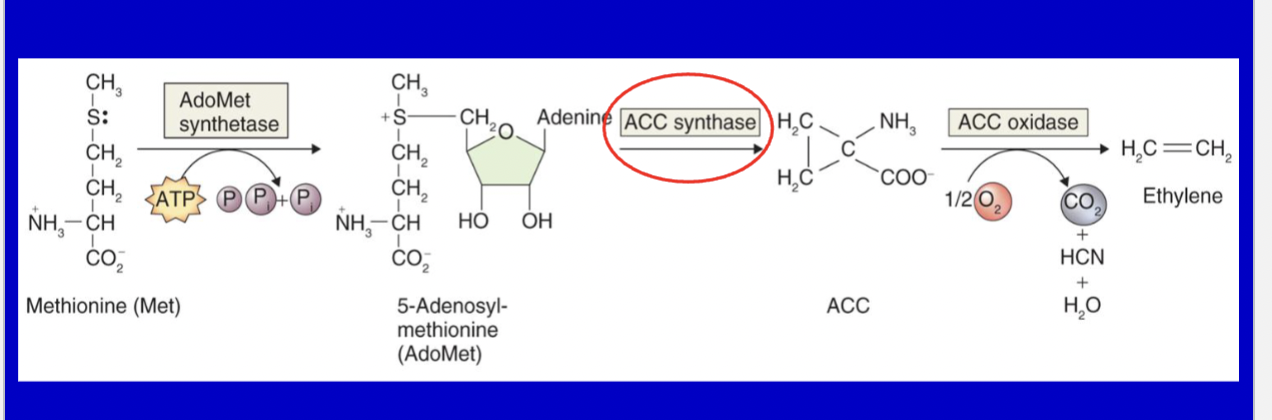
explain ethylenes biosynthetic pathway
- Biosynthetic pathway: Synthesised from the aminoacid Methionine through three enzyme steps. The ACC enzyme (ACC synthase) catalyzes the rate limiting step—> the rate of this enzyme hence determine the rate of ethylane synthesis.
how could food waste be reduced with ethylene related transformations
Around one-third of all food produced is wasted, mostly from over-ripening or other forms of spoiling
- One approach for delaying ripening in fruits is repressing gene expression of ethylene biosynthetic enzymes by antisense repression (of ACC synthase)- lead to the suppression of endogeneous synthesis of ethylene and hence inhibition of the fruits/vegetables operripening/going bad.
—> The initial ripening (going from completely unripe to ripe) can be induced by exogeneous exposure to ethylene- By the initial addition of athmospheric ethylene wil cause the fruit to become ripe (to a good degree of ripeness) however after that initial exposure to ethylene, the fruit will not synthesise any ethylene on its own hence keeping them from rotting, thus potentially decreasing food waste.
Ripening of transgenic tomatoes: Exogenous ethylene can be used to ripen transgenic tomatos lacking endogenous ethylene synthesis
”Tomatos that don’t ripen” were sold openly in USA markets for years
- Transgenic tomatoes supposedly tasted better
- Were less moldy and developed fewer cracks both in the field and in markets
what are some names for RNAi
RNAi technology: the use of RNA interference
RNAi = RNA interference (RNA-induced gene silencing)
Several names:
- post-transcriptional gene silencing (PTGS - plants)
- quelling (fungi)
- RNA interference (RNAi - animals)
what is RNAi- explain how it works naturally
RNAi is a naturally evolved defensive mechanism against viral pathogens:
Most plant viruses have single-stranded RNA genome that forms dsRNA upon replication
RNAi is a phenomena in all eukaryotic cells as a defence system to defend against certain viruses
the virus inject genome with infection- integrate, is translated and expressed in host cells- cause production of more viruses- however the viral genome is often ssRNA. When they inject this- the first thing the RNA genome does is to replicate- in this process an intermediate dsRNA structure is formed- the RNAi target this dsRNA and can hence inhibit the viral infection.
what are the two approaches to inducing RNAi
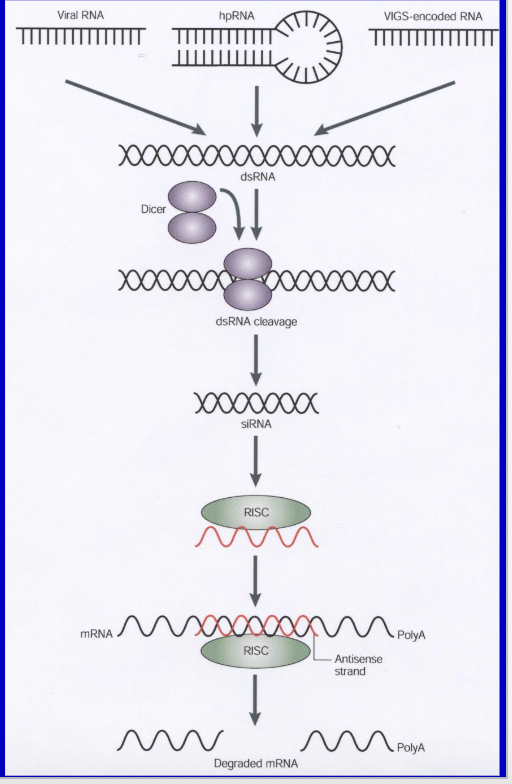
by transforming (using agrobacterium) with selective gene coding for complementary sequences—> Resulting mRNA forms hair-pins (hpRNA)
Modified viruses can be used to deliver selected RNA sequence via infection- Virus-induced gene silencing (VIGS)
what is the hairpin sequence? (RNAi)
- The construct you insert contains the same sequence of gene X twice — once forward, once in reverse, connected by a small spacer in the middle. When this is transcribed into mRNA, the two complementary ends fold back and bind to each other, forming a hairpin (hpRNA) — which is essentially a dsRNA structure. This is the key trigger for the RNAi machinery
explain the RNAi technology process (through selective gene coding for complementary sequences) step by step
1. Your construct is inserted into the plant via Agrobacterium transformation: the construct contain genes that will produce dsRNA with sequence similarity to the target mRNA
2. It gets transcribed into mRNA that folds into a hairpin/dsRNA structure
3. The dsRNA structure induces a sequence specific RNA degredation mechanism that detects this dsRNA, and an enzyme called "Dicer" chops the dsRNA into small fragments of 21-25 nucleotides — these are called siRNA (small interfering RNA)
4. The siRNA fragments are loaded into a protein complex called RISC (RNA-induced silencing complex)
5. RISC separates the siRNA into single strands and uses them as a "search guide" — scanning the cell for any mRNA with a matching complementary sequence
6. When RISC finds the matching mRNA (gene X's mRNA), it binds and cleaves it
7. The mRNA is degraded and gene X is silenced — no protein is produced (specifically- the mRNA of geneX is degraded at the site of duplex)
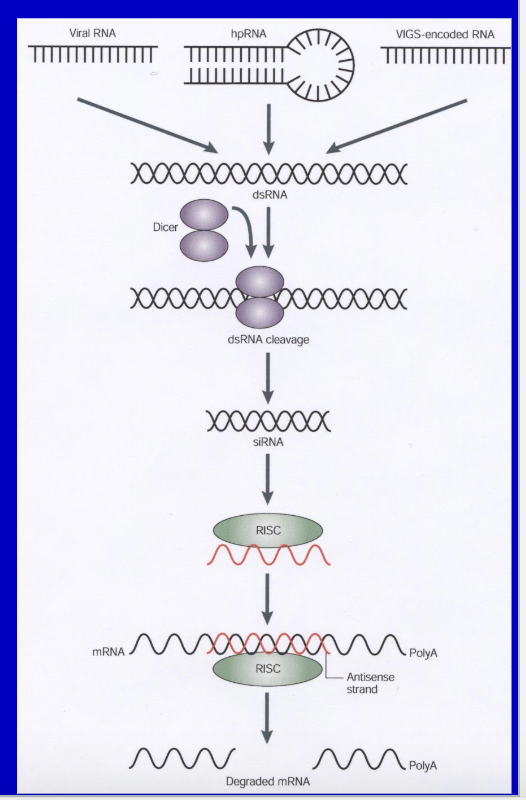
summarise the RNAi technology process inside the plant cell (through selective gene coding for complementary sequences)
- The RNAi is sensed as foreign- Dicer enzyme that degrade RNA, has evolved to recognize dsRNA- the dicer recognize and bind at various sites along the entire dsRNA region and cut the RNA- produces small interfering RNA (short pieces of dsmRNA) These are in turn recognized by a complex called RISC and separate them into individual strands of RNA
- construct with hairpin loop will have the sequence that is complementary to the sense DNA- the small pieces of small interfering RNA will anneal to the complementary sequences of mRNA from the target gene and be degraded.- inhibiting expression
- Plants are transformed with a construct that will produce double-stranded RNA (dsRNA) with sequence similarity to targeted mRNA
- Induces a sequence-specific RNA degradation mechanism (21-25 nucleotides long) (siRNA – small interfering RNA) –Degradation by RNase III-like enzyme = “Dicer”
- siRNA associate with protein complex called RISC (RNA-induced silencing complex)
- siRNA separate into single strands on the RISC complexes and anneal to complementary mRNA
- mRNA is specifically degraded at site of duplex
explain the RNAi VIGS approach
VIGS approach can work short term- will not lead to inhibition in offspring etc
- In regular RNAi (via Agrobacterium), the construct is permanently integrated into the plant's genome in every cell — so when the plant reproduces, the transgene is inherited by offspring just like any other gene.
VIGS is different because it uses a modified virus to deliver the silencing RNA sequence. The virus infects the plant and spreads through its tissues, triggering RNAi — but crucially, the viral RNA never integrates into the plant's chromosomal DNA. It stays separate, replicates on its own, and eventually gets cleared or diluted out.
What are 2 advantages and 2 disadvantages of RNAi
Advantages
1. Partial suppression of gene expression / protein content (important if gene of interest is essential – mutant is lethal!)
2. Useful for genes in multigene families (co-suppress homologous genes simultaneously)
Disadvantages
1. Lack of stable heritability of a phenotype if using VIGS approach
2. Variable levels of suppression (similar problem as with antisense)
3. Need to study 2-3 independent lines showing similar phenotype if using inserted construct producing hpRNA
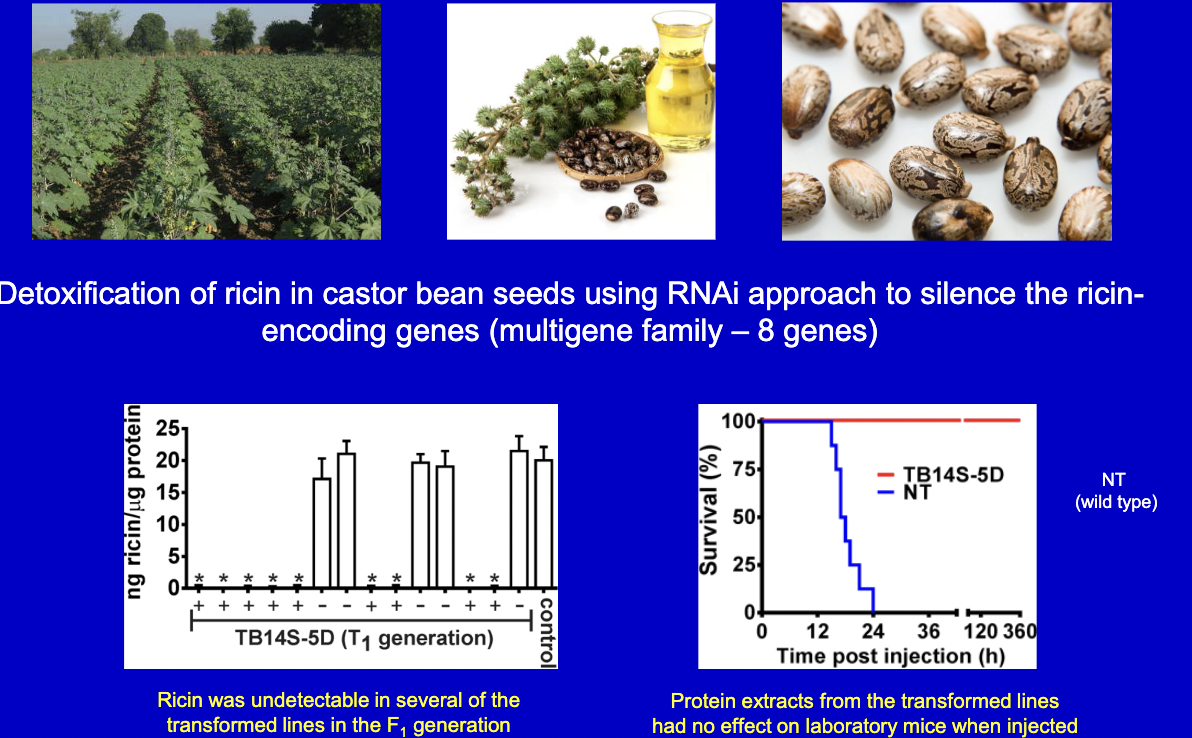
talk about detoxification of ricin in castor bean through RNAi
using RNAi approach to silence the ricin encoding genes (multigene family – 8 genes)—> successful suppression of ricin
- Inhibit the synthesis of ricin. The mutation approach to knockout a multigene family of eight would be almost impossible- however where able to find a conserved region in all the genes that could hence be successfully used to construct transformation and inhibition through RNAi
talk about the “innate potato”
Designed to resist blackspot bruising, browning and to contain less of the amino acid asparagine that turns into acrylamide during the frying of potatoes (first generation) —> five different varieties
- Modifications addressed three problems:
1. black spots in potatoes occur when there has been mechanical damage to the potato- cause cells to rupture and enzymes to oxidize all the damaged cells- forming black spots.
2. Browning of cut potato due to cell rupture and oxidation.
3. Frying of potatoes cause convertion of the amino acid asparagine to acrylamide (a very dangerous chemical- in higher dosages)- they made five varieties of potatoes
talk about the innate potato gen 1
Transformed with RNAi constructs to supress expression of four genes
- polyphenol oxidase 5 (ppo5) – lowers the conversion of o-diphenols to o- quinones, reduces coloration of oxidized plant tissues (blackspot / browning): this gene encode the enzyme responsible for oxidation that occur with both black spots bruising and browning of cut potatoes. The first RNA construct inhibit the mRNA of this enzyme
- asparagine synthetase 1 (asn1) – reduction of asparagine lowers the potential for acrylamide formation during frying process
- starch / α-glucan phosphorylase (PhL) and starch-related R1 protein – reduce sugar accumulation and further lower the potential for acrylamide formation
why is the “innate” labeling smart?
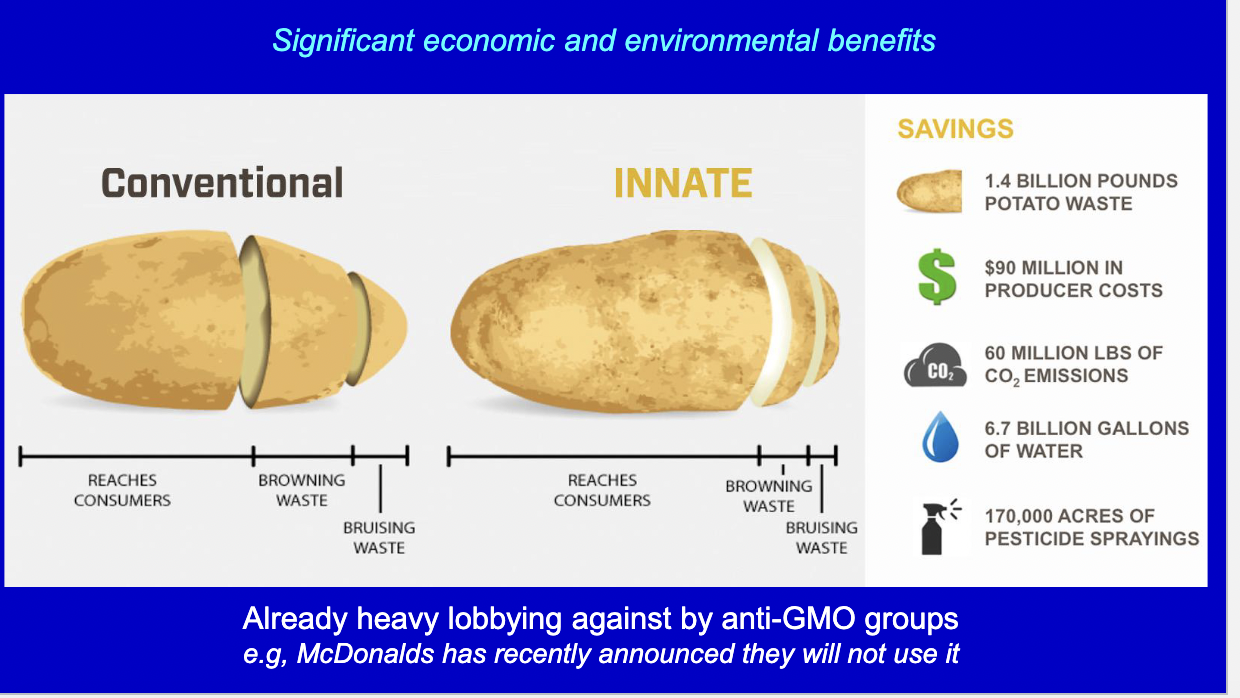
Advantages: “Innate” labeling – no genes from foreign species: all constructs came from genes innate to potatoes- however still an artificial construct transformed into the plant. —> however it worked, and was approved
- (more acceptable to consumers??)
- Significant economic and environmental benefits- less food waste- hence more efficient to companies, supermarkets and farmers
- Already heavy lobbying against by anti-GMO groups e.g, McDonalds has recently announced they will not use i
t
talk about the innate potato gen 2
Innate Generation 2: The second generation of the Innate potato has all the traits of the first generation, plus resistance to late blight (fungal pathogen causing big yield loss- blight resistance gen comes from the original wild type species of potato- hence keeping the “innate” title)
- 2014 potato growing field trial: Conventional potatoes and Innate® Gen 2 plants were inoculated with late blight—> Conventional potatoes show clear signs of disease, while Innate Gen 2 plants have healthy foliage
- No late blight fungicides were used in this trial
- EPA and FDA approval in 2017
explain th edifference between RNAi and antisense RNA
- Antisense Inhibition You insert a construct that produces a single-stranded RNA that is complementary (antisense) to the target mRNA. When this antisense RNA meets the target mRNA in the cell they bind together forming a double strand, which physically blocks the ribosome from translating it and also marks it for degradation. It's a relatively simple and direct mechanism but less efficient — not all target mRNA gets blocked and the effect can be incomplete.
- RNAi uses a double-stranded hairpin RNA to trigger the cell's own Dicer → siRNA → RISC machinery, which actively seeks and destroys all matching mRNA in the cell. Because RISC can be reused multiple times after cleaving one mRNA it moves on to find another, it's a catalytic process making it far more powerful and specific than antisense.
what is genome editing technology, advantages?
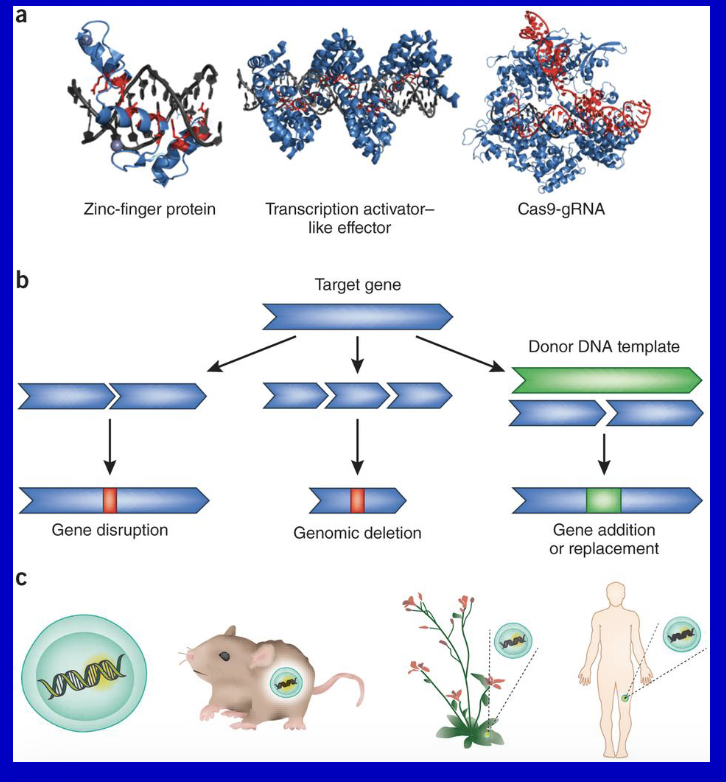
- Edit genomic sequences in various ways: flexible system
- Suitable for many different organisms: Been successful with an increasing number of plant species
- Flexibility high: what types of modification that can be done- in theory any modification can be made with this technology down to single nucleotide changes- eg mutations causing diseases can be replaced by the non mutated nucleotides- however in reality it is not that easy
- You can knock out specific genes or add extra ones.
- Seems to work in all eucaryotes: RNAi does that as well, however not hugely successful in humans- which CRISPR/Cas9 is
give examples of genome editing technology
New techniques for precise modification of genomic regions: Originally four types (basically variations of the same thing):
Meganucleases
zinc finger nucleases (ZFNs)
TALENs
CRISPR-Cas9
what is CRISPR/Cas9- naturally derived from? purpose naturally?
- CRISPR= Clustered regularly interspaced short palindromic repeats
- Cas9 = a nuclease (enzyme) associated with CRISPRs (type II) (CRISPR-associated protein 9)- will cut dsDNA
- Quickly becoming the most popular technique for gene editing!
- Originates from the adaptive immune system in eubacteria and archaea: Detects and degrades invasive DNA from bacteriophages
- CRISPR sequences found in many different bacteria (50% eubacteria, 90% archae)- Variation in the associated Cas proteins
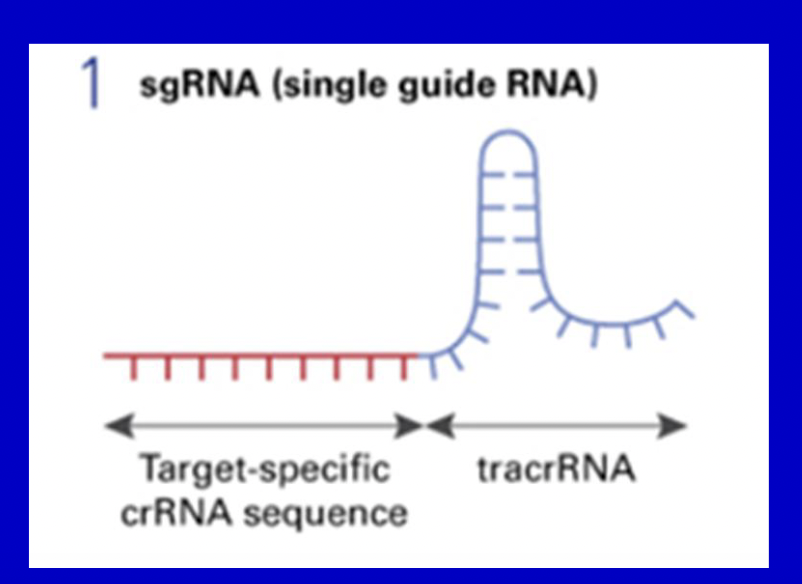
- crRNA and tracrRNA sequences can be combined into the single-guide RNA (sgRNA)
- Different modifications can be made to the target sequence depending on the repair mechanism
- CRISPR/Cas9 system has now been successfully applied to many plant species
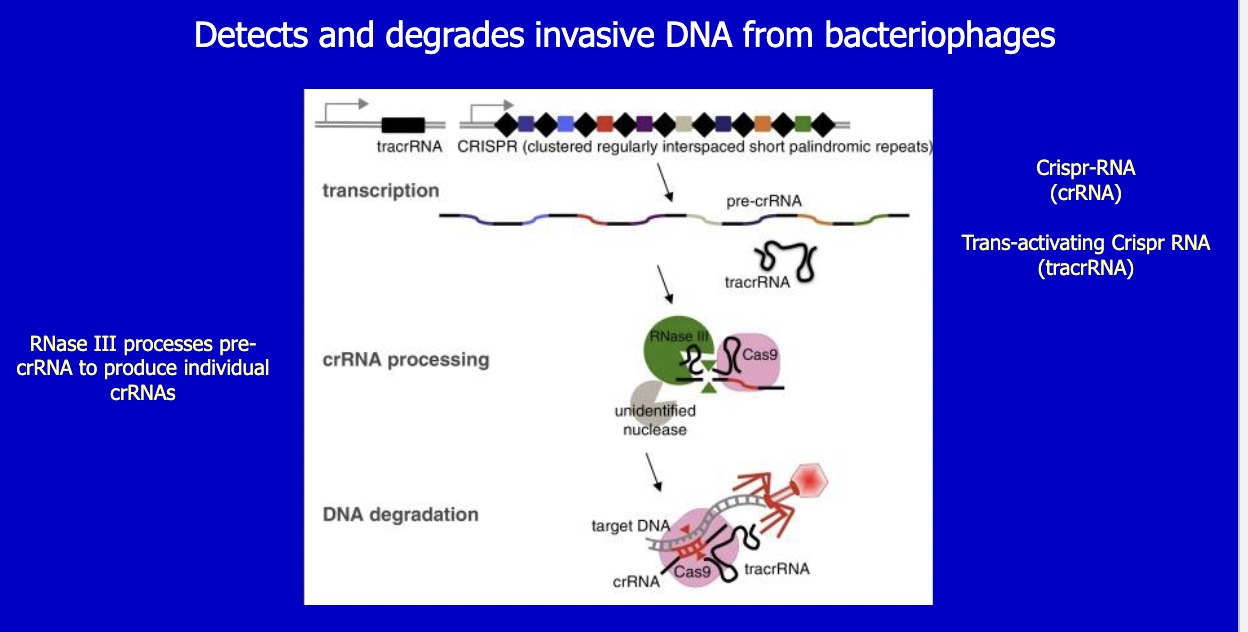
explain how CRISPR naturally work
it is a naturally occuring phenomena: occur in almost all bacteria- it is an adaptive immune system in bacteria: a system that protect bacteria from viruses (bacteriophages).
CRISPR is how bacteria learn from previous infections and build up future defence against that same bacteriophage.
CRISPR is a bacterial immunological memory system
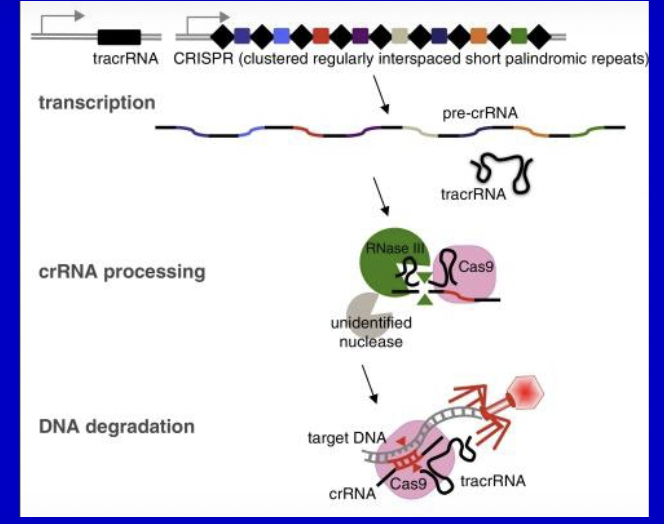
CRISPR= long piece of DNA, containing copies of the genomes of the bacteriophages that have previously infected the bacterium: Every time a bacteriophage infects a bacterium and the bacterium survives, a small piece of that phage's DNA sequence gets copied and inserted into the bacterium's own CRISPR region in the genome. These stored viral sequences are called spacers, and they are separated from each other by identical repeated palindromic sequences—> the CRISPR region is essentially an archive of past infections.
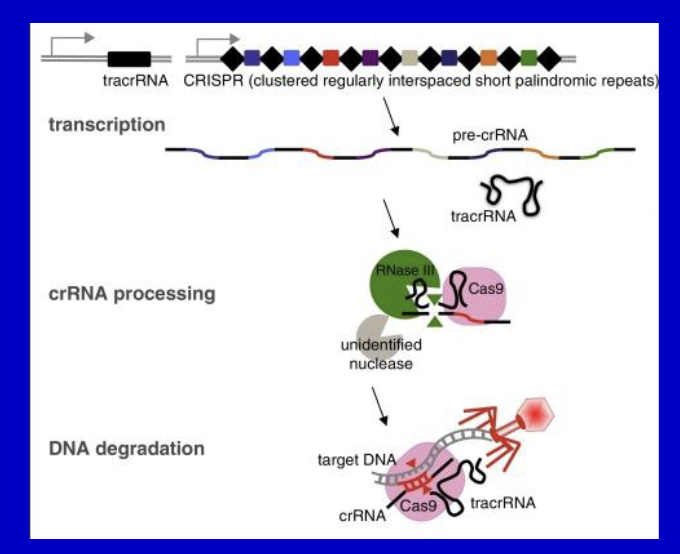
clarify how CRISPR works naturally
A form of defence against bacteriophages- the phage inject genome which replicate and spread- CRISPR works by integrating/copying a sequence from the viral genome into the bacterial genome (CRISPR region)- results in a “register” of previous bacteriophage infections- interspaced by short repeat sequences that – The whole sequence is expressed as one long mRNA—> precursor CRISPR RNA (pre crRNA)- a form of an operon, with individual markers for each bacteriophage genome sequence.
- The CRISPR region is transcribed into a long RNA molecule (pre-crRNA)
- This gets processed by RNase III (together with tracrRNA and Cas9) into individual short crRNA fragments — one for each stored viral sequence
- Each crRNA loads onto a Cas9 protein, guided by a tracrRNA
- This complex patrols the cell — if the same phage infects again, the crRNA recognizes the matching DNA sequence in the viral genome
- Cas9 (endonuclease) then cuts and degrades that DNA, neutralizing the infection
CRISPR— the storage region in the bacterial DNA containing alternating palindromic repeats and viral spacer sequences. This is the "memory bank" of past infections.
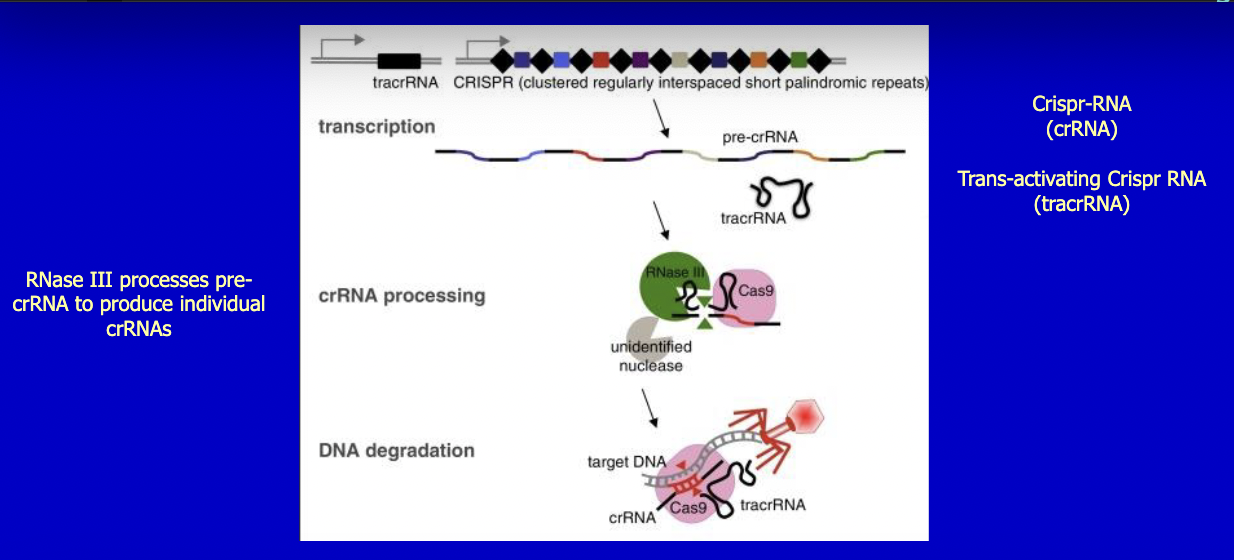
clarify what each RNA component in the CRISPR system does: pre crRNA, tracrRNA, crRNA
- pre-crRNA — the initial long RNA transcript produced when the entire CRISPR array is transcribed. It contains all the stored viral sequences and needs to be processed into individual units.
- crRNA (CRISPR RNA) — the individual short RNA guides produced after processing of the pre-crRNA. Each one contains a single viral sequence and acts as the "search term" — it tells Cas9 exactly which DNA sequence to look for and cut.
- tracrRNA (trans-activating CRISPR RNA) — a separate small RNA that serves two purposes: it helps process the pre-crRNA into individual crRNAs, and it acts as a scaffold that links the crRNA to Cas9. In modern biotechnology these two are often fused into a single "guide RNA" (gRNA) for simplicity.
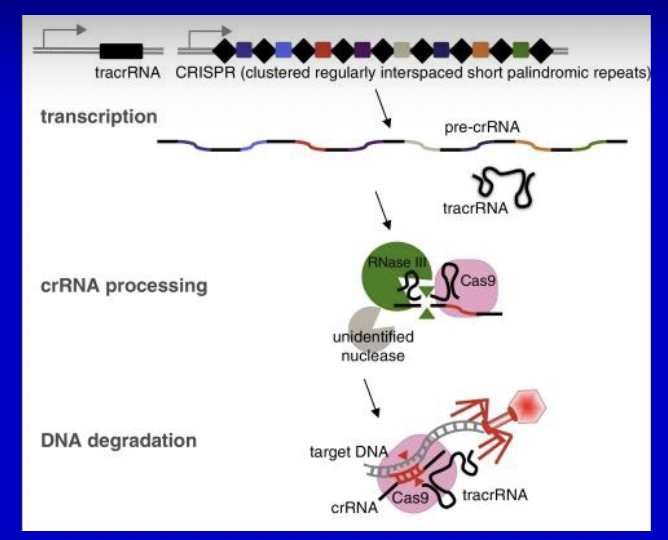
explain what Cas9 and RNase III do in CRISPR
- Cas9 — the actual molecular scissors. It's a nuclease enzyme that does the physical cutting of DNA. It only cuts when guided to the right location by the crRNA/tracrRNA complex, making it very precise. It cuts both strands of the DNA double helix, creating what's called a double-strand break. —> When annealing happens it allow Cas9 to cleave the genome and thus inhibiting the expression of the bacteriophage genome
- RNase III — the enzyme responsible for processing the pre-crRNA into individual crRNAs, working together with tracrRNA and Cas9.
what is the first step in CRISPR/Cas9
Designing the sgRNA (single guideRNA): The sgRNA consists of two fused RNA components: 1) the crRNA (CRISPR RNA), which contains a target-specific sequence derived from the gene you want to modify (ie contains a short sequence of the target gene- where you want the cas 9 to cleave- the cas9 will cut the genome at the site of this sequence), and 2) the tracrRNA (trans-activating crRNA), which binds to and directs the Cas9 protein.
By merging these two sequences, we create a single guide RNA that directs Cas9 to cut only the intended DNA target
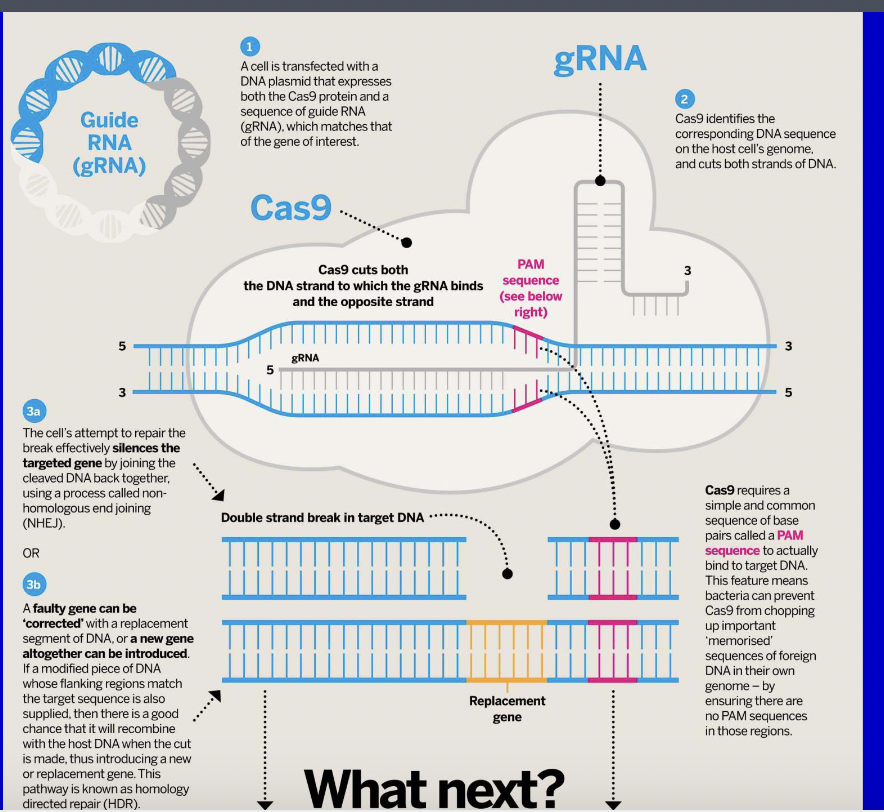
the sgRNA sequence targeting our gene of interest is then cloned into a plasmid — a circular piece of DNA that serves as a delivery vehicle.
We also clone the Cas9 gene (encoding the Cas9 cutting enzyme) into the same plasmid.
—> This plasmid is then introduced into plant cells via Agrobacterium-mediated transformation or other methods.
what type of vector is used in crisprcas9, how come crisprs is not GMO
A transient vector/ suicide vector= a plasmid which can not integrate into the plants genome and cannot replicate inside the plant cell- as soon as it is transformed it will only exist inside the cell for a shorter period of time- its defence system will eventually break down the plasmid when recognized as foreign—> therefore CRISPR is not classified as a GMO- since it is only shortlived and inherited, but rather only active and existing inside of the plant cell for a short period of time.
explain what the sgRNA does when plasmid is released inside plant cell- what sequence is needed
sgRNA will bind to the cas9 creating a complex.
—> In order for cas9 to be able to create a stable bond and cleave the DNA it must identify a short three nucleotide sequence- PAM sequence-
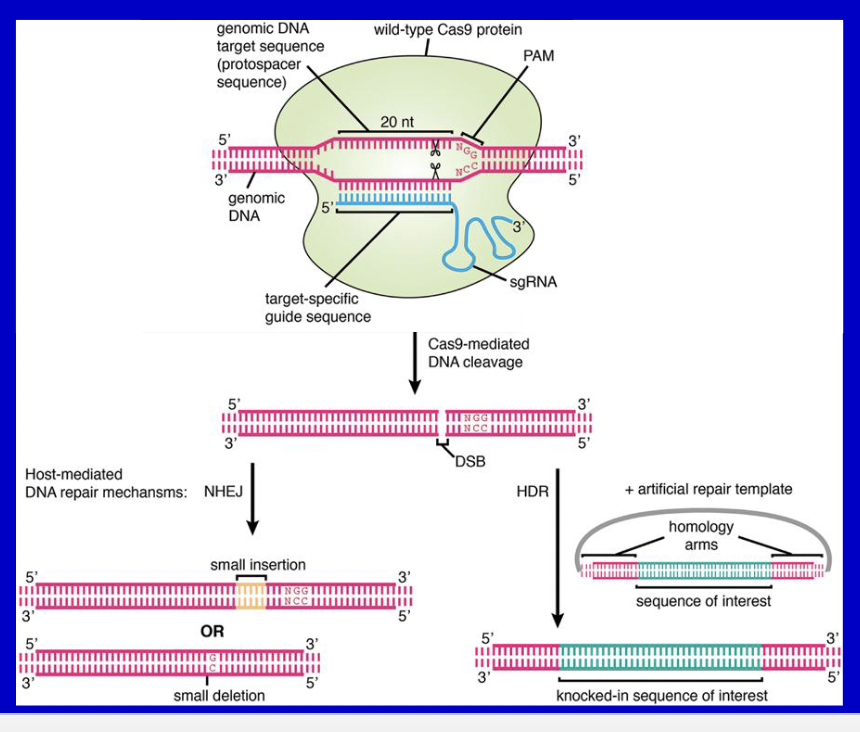
The Cas9 will bind to the PAM sequence and the sgRNA will anneal the dsDNA strands upstream from the PAM sequence and if complementary (=the target gene is found) the cas 9 cleave the DNA - causes a dsDNA break swhich then allow for editing
after the cas9 cuts the genome in CRISPR cas, what happens next?
Then the editing occurs: depending on how the cut is repaired.- when the DNA is cut the cell will try to repair it as soon as possible- how the ends are repaired determine editing
- Non homologous end joining: both ends are reattached but not in the same exact ways- one or a few nucleotides are either added or lost- minor editing. Quite random- both the cut and the editing/re joining. There is a range of various types of editing that might occur—> afterwards you have to screen for the desired result. – one type of editing when using CRISPR where the ends are joined
- Homology directed repair: you can insert or delete a much larger piece of DNA- you need an extra gene added to you construct. Eg you want to completely eliminate a gene- you engineere a third gene into the plasmid The sgRNA (target sequence in gene X), the extra gene encode for mRNA that has a certain amount of sequnces identical to sequences adjacent(/flanked) to the target gene (gene x) that we want to delete. We will also include a selectable marker. When sgRNA anneal the cas9 will cut (ds break) somewhere close to the region- when we have the cut gene X, we have an extra piece of RNA with identical sequences for the regions next to both sides of the cut gene sequence- crossing over occurs- essentially the two regions will swap and bring in the selectable marker from the construct and eliminate the innate gene x region (gene x is replaced by the region that was flanked in the construct). We are adding/removing a permanent and inheritable change.
name advantages with CRISPR Cas9
1. Offers a wide range of modifications- almost any type of editing is possible with CRISPR, and is applicable in most cells:
- Targeted gene knockouts (specific mutants) – most common today- removing genes
- Gene knock-ins (replacement): where you add genes using the same principle as the gene knock out
- Gene editing (modify single bases or domains): removing or adding nucleotides in the gene
- Transcription regulation
2. Simple and robust system
3. Modifications are very accurate: not 100% successful, however relatively accurate in most cases
4. Most types of CRISPR modifications are not technically GMO
what are disadvantages with CRISPR cas9
Disadvantages:
1. Gene additions remain a challenge
2. Off-target mutations can occur (appears less frequent in plants)
3. CRISPR-modified plant now classified as GMO by the EU (2018)
what is citrus canker
= one of the most destructive diseases to Citrus species globally caused by the bacterium Xanthomonas citri subsp citri (Xcc)
- (oranges, limes, grapefruit, lemons)
- Causes a disease called canker-
- causes early leaf and fruit drop, blemishes fruit- spread throughout the entire plant and usually it is handled by burning down the entire plant- in order to minimize the spread to other plants as well- Severe loss in crop yield
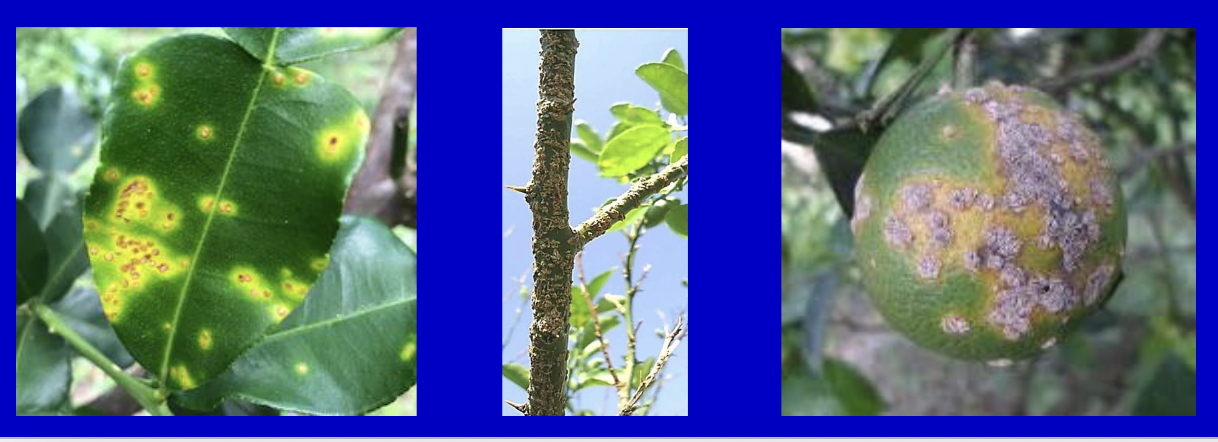
what is the challenges in creating canker- resistant oranges
- Molecular breeding programs have failed to produce canker-resistant citrus due mainly to lack of identified resistance genes
- However, the susceptibility gene in citrus species for citrus canker has been identified- Lateral Organ Boundaries 1 (CsLOB1): Plays a critical role in promoting pathogen growth and erumpent pustule formation
- CsLOB1 belongs to the LBD (LOB Domain) family of proteins, which are key regulators of plant organ development- knocking the gene out would be lethal to the plant—> Hence mutating CsLOB1 is not an option for producing canker resistant citrus
explain what gene is responsible for citrus canker and why you can not knock it out, what is the solution
CsLOB1 that makes the plants vulnerable to the bacterial pathogen: normally encode transcription factors important for normal growth and development and plant
the bacteria change the expression of the gene in an abnormal mannor- causing the leasons and the canker to occur.
Since it is essential however you can not knock out the LOB1 gene.
However they found an extra regulatory element (enhancer element/effector) upstreams to the gene- which regulate the normal expression of the gene- this is the target for the bacterial pathogen- and ultimately cause the change in gene expression- in the infection the bacteria transfer a protein that alters the expression of the EBEPthA4 effector.
Aim: alter the effector sequence and make it “resistant” to the binding of the bacterial pathogen protein PthA4 that cause the altered expression of the CsLOB1 gene and disease- using CRISPR.
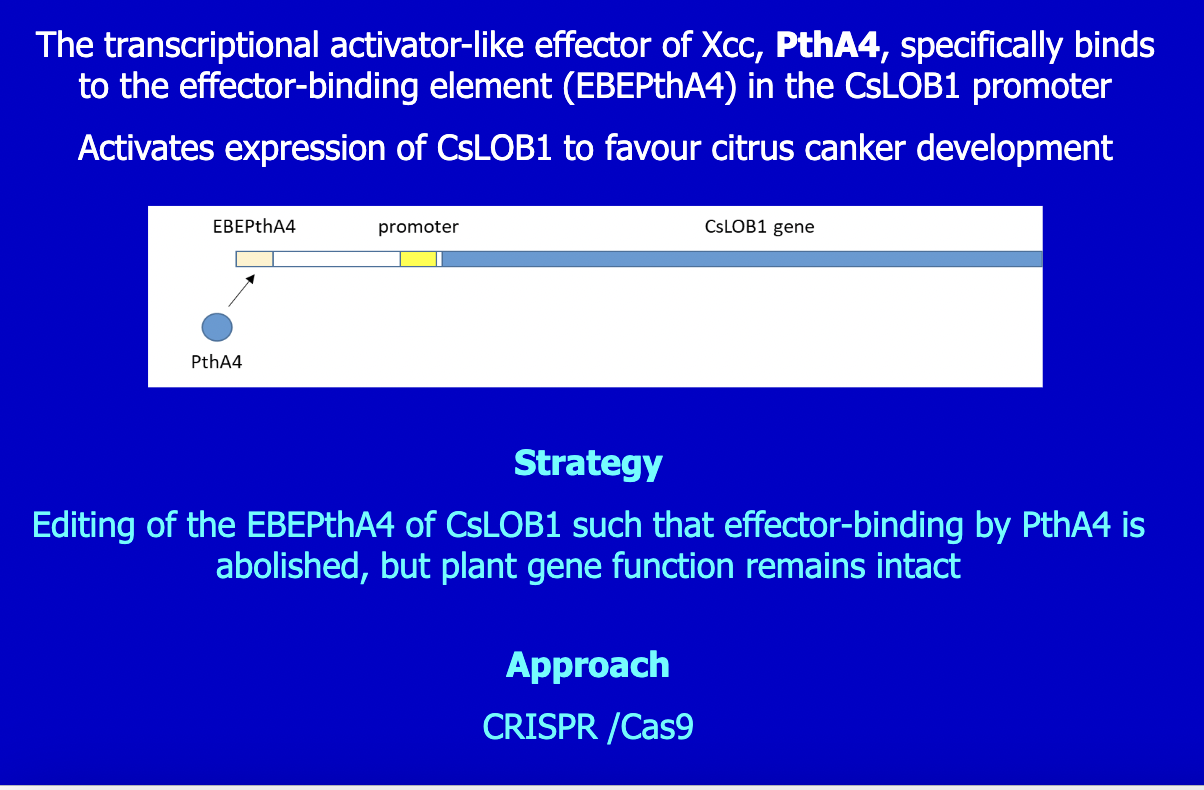
summarise how canker resistant oranges where made
- Used the CRISPR / Cas9 approach to edit the effector-binding element (EBEPthA4) in the CsLOB1 promoter region
- A range of mutant plants were obtained with varying degrees of editing within the effector-binding element
- Greatest resistance to Xcc infection was obtained from deletion of the EBEPthA4 element (line S2-6)