Urinary system review
 Call Kai
 Learn
Learn Practice Test
 Spaced Repetition
 Match
Match Flashcards
 Knowt Play
1/54

There's no tags or description
Looks like no tags are added yet.
Name | Mastery | Learn | Test | Matching | Spaced | Call with Kai | Chat |
|---|
No analytics yet
Send a link to your students to track their progress
55 Terms
The major organ of the urinary system. It removes toxins from the blood.
kidney
minor calyces come together to form
major calyces
The tough outer shell of the kidney
renal capsule
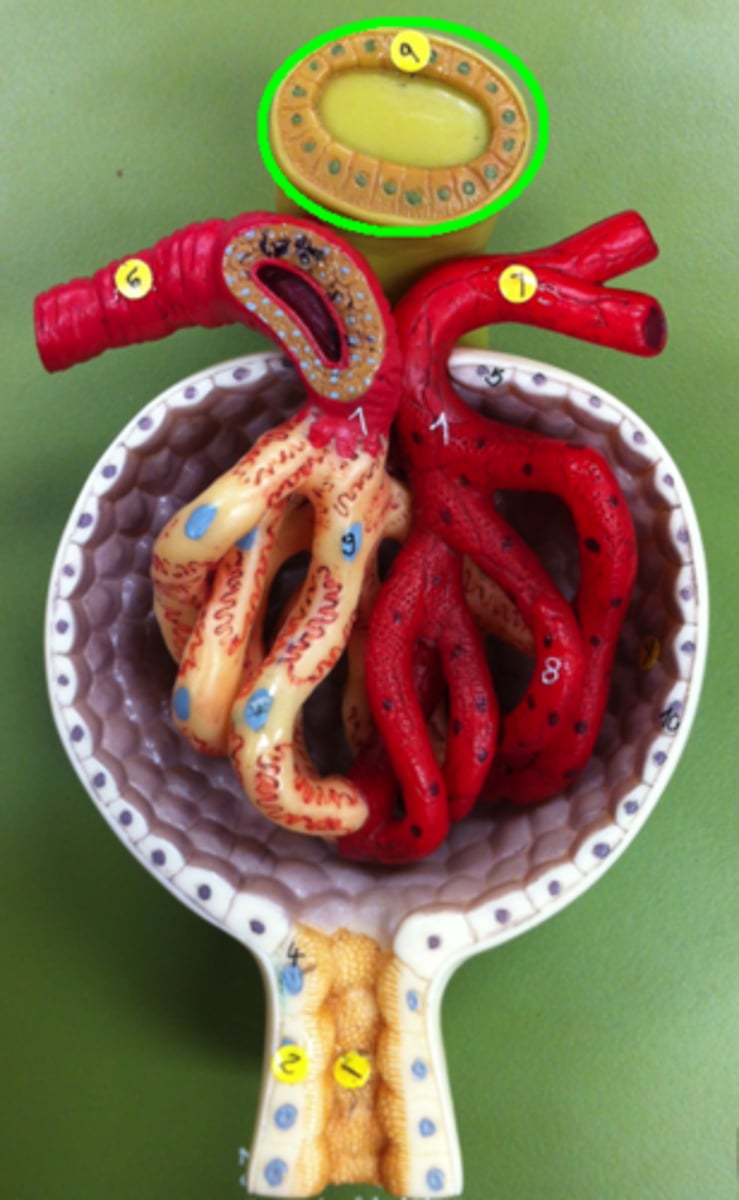
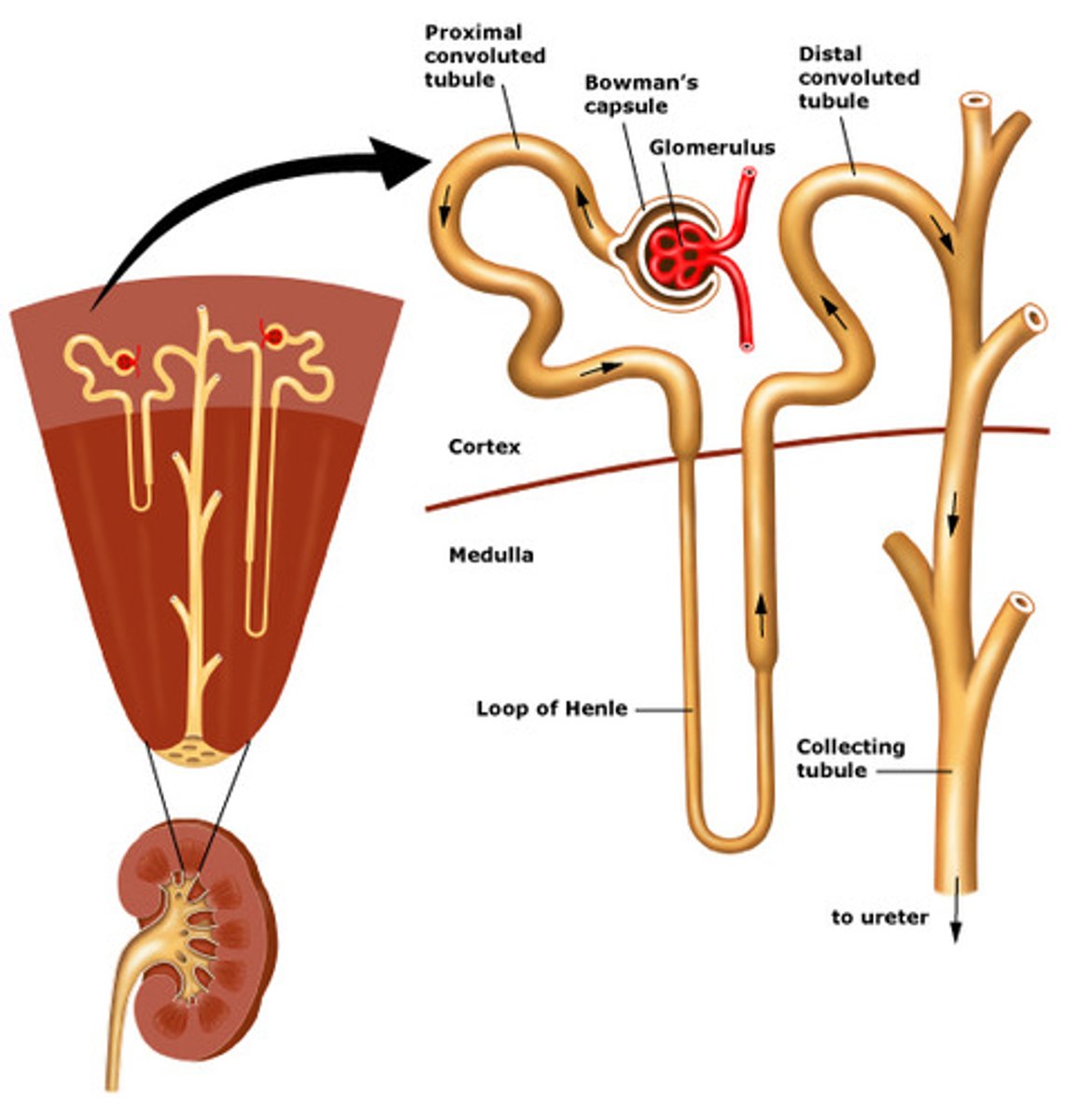
Pathway of urine through nephron
glomerulurs, bowmans capsule, proximal tubule, loop of Henle, distal tubule, collecting duct
the functional unit of the kidey
nephron
Outer portion of the kidney
renal cortex
Middle layer of the kidney
renal medulla
2 parts of the renal medulla
renal pyramids and renal columns
Kidney stones are also known as
renal calculi
Kidney stones are made of
calcium
urinary tract infections are caused be
micooraganisms such as bacteria
upper urinary tract infections would impact what two organs
urerter and kidney
lower urinary tract infection would impact what 2 organs
bladder and urethra
order of urine through kidney (after nephron)
minor calyx, major calyx, renal pelvis, ureter, bladder, urethra
This organ stores urine until ready to be disposed of
urinary bladder
Muscles that compose urinary bladder are known as the
detrusor muscles
The process of expelling urine
micturition
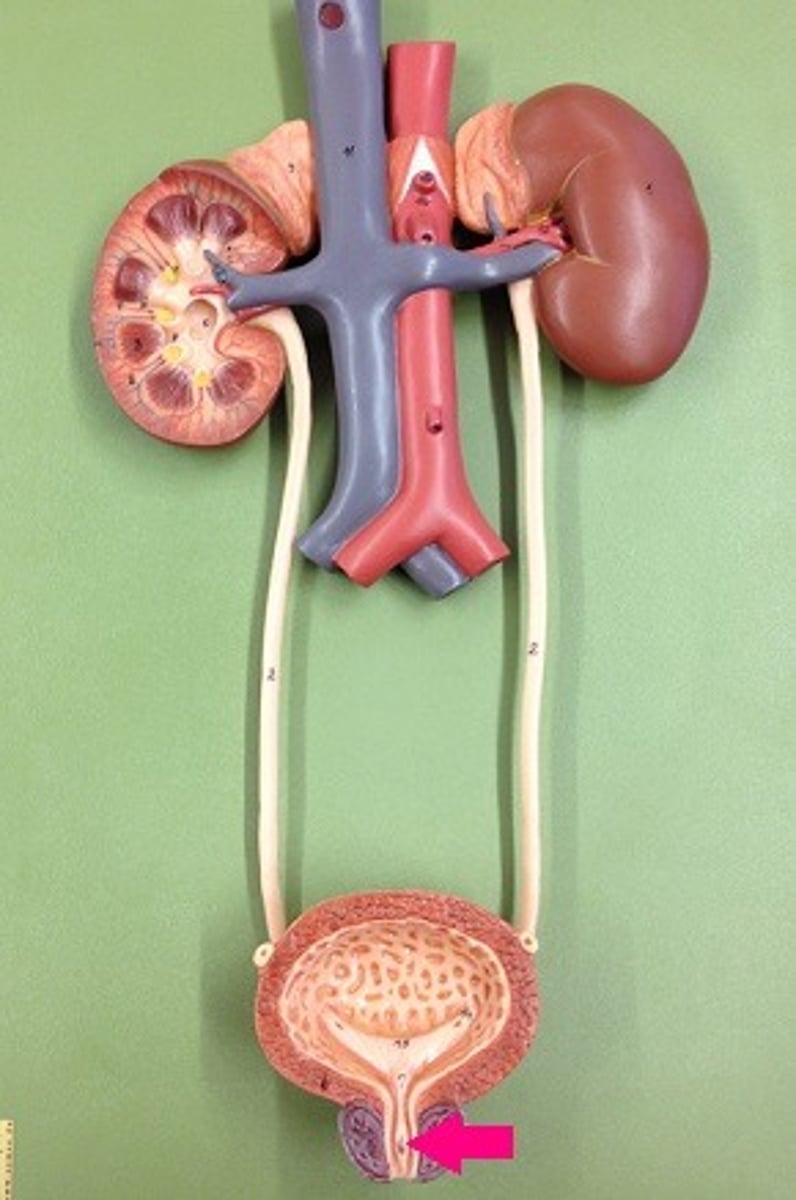
urethra
Tube that takes urine from the bladder to outside the body
the entrance to the kidney
hilum
the expanded end of the ureter
renal pelvis
Tube that connects the kidney to the bladder
ureter
A hormone that controls urine production
ADH (antidiuretic hormone)
root word that means kidney
renal
urine is mostly
water
One of the major differences of the urinary system between males and females is the length of the
urethra
machine that filters blood
diaylsis
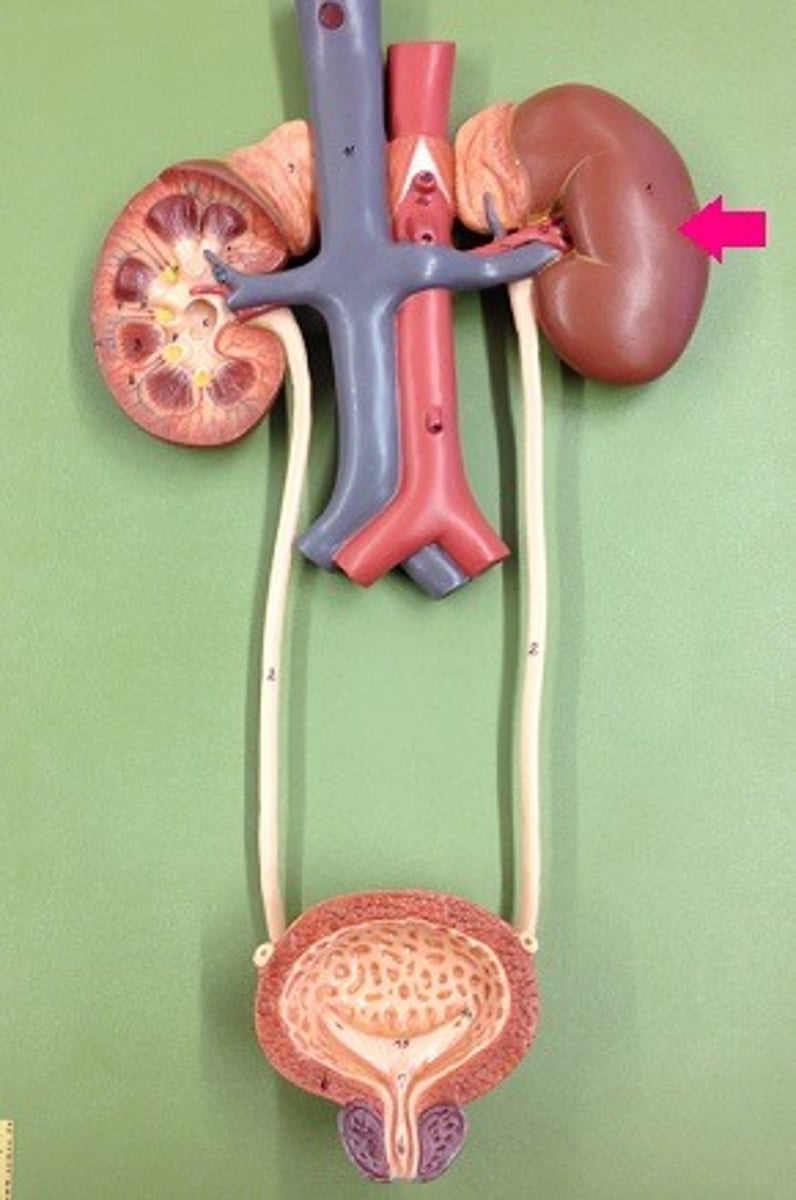
kidney
Identify the organ.
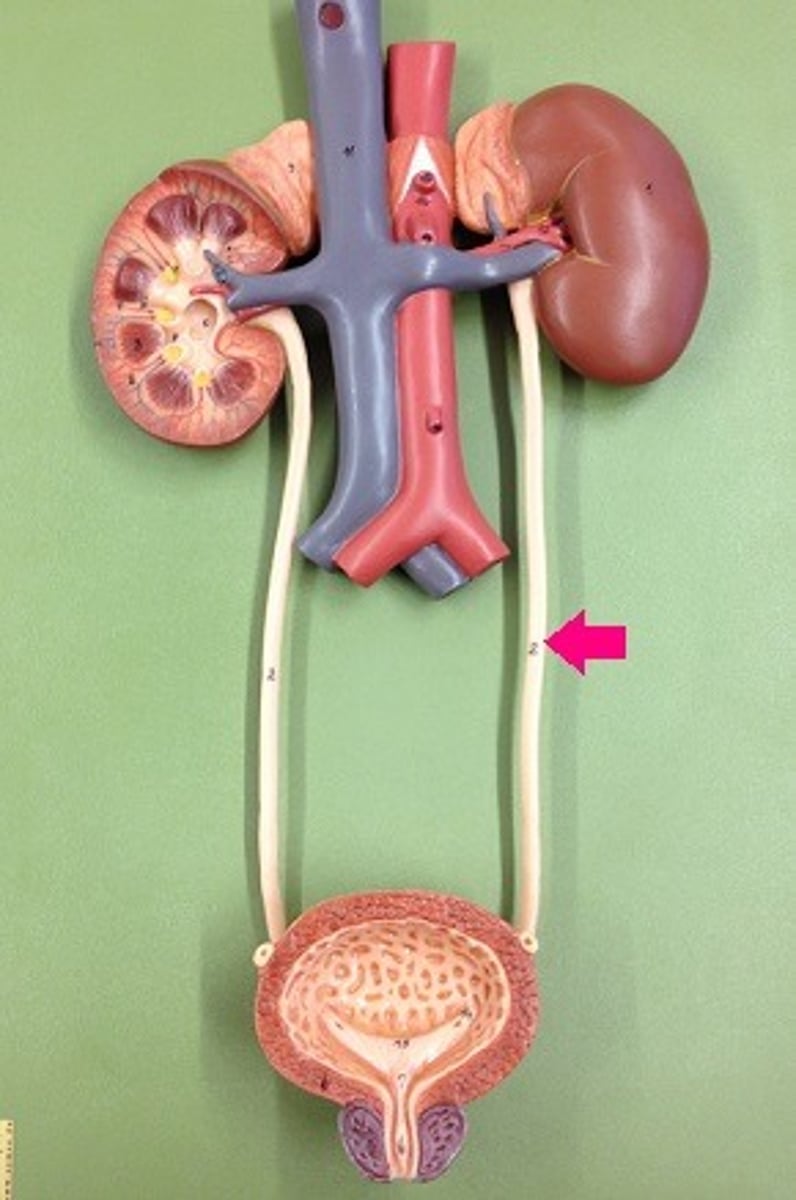
ureter
Identify the passageway.
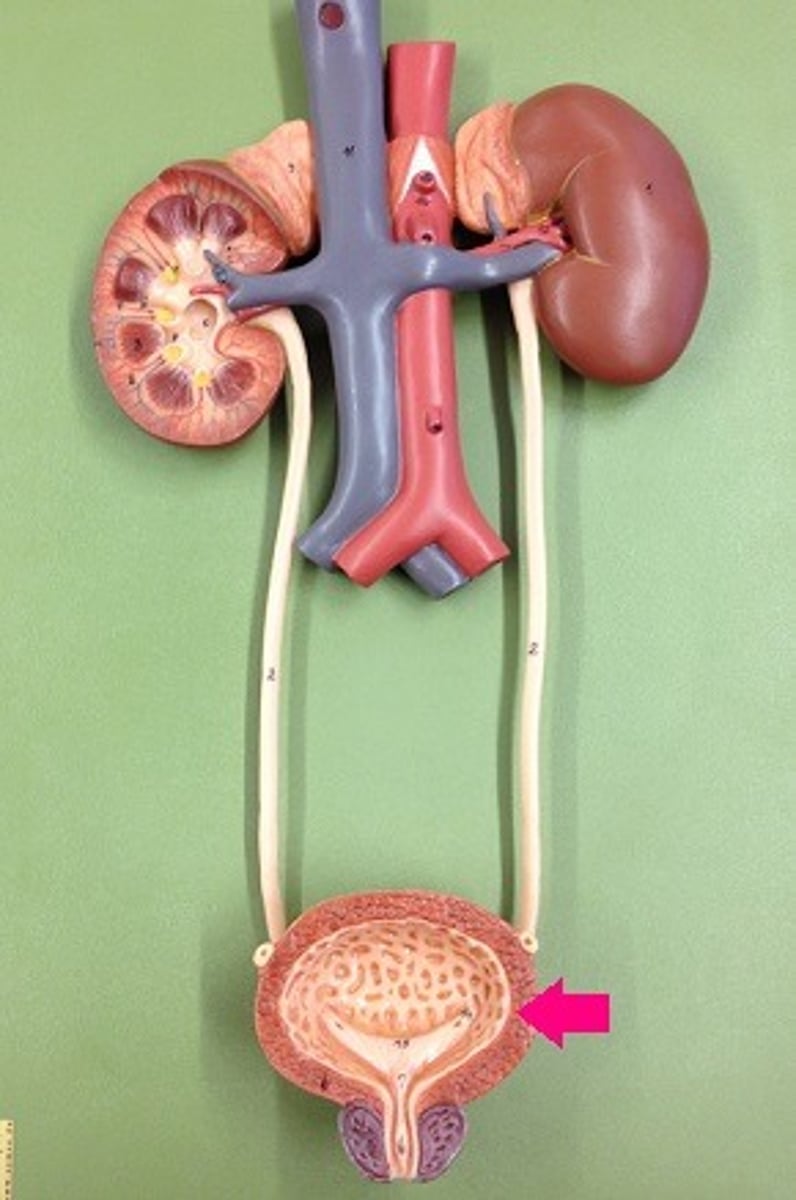
urinary bladder
Identify the organ.
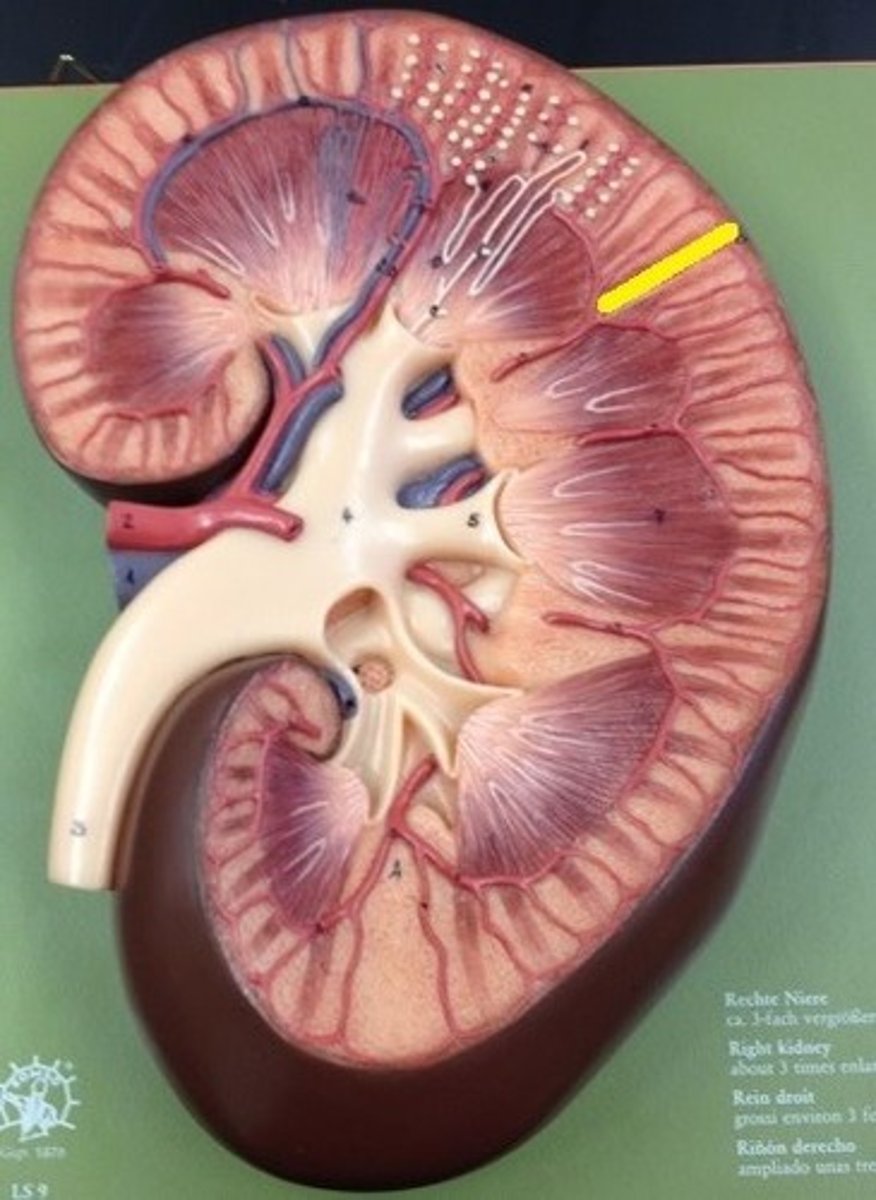
renal cortex
outermost layer of the kidney
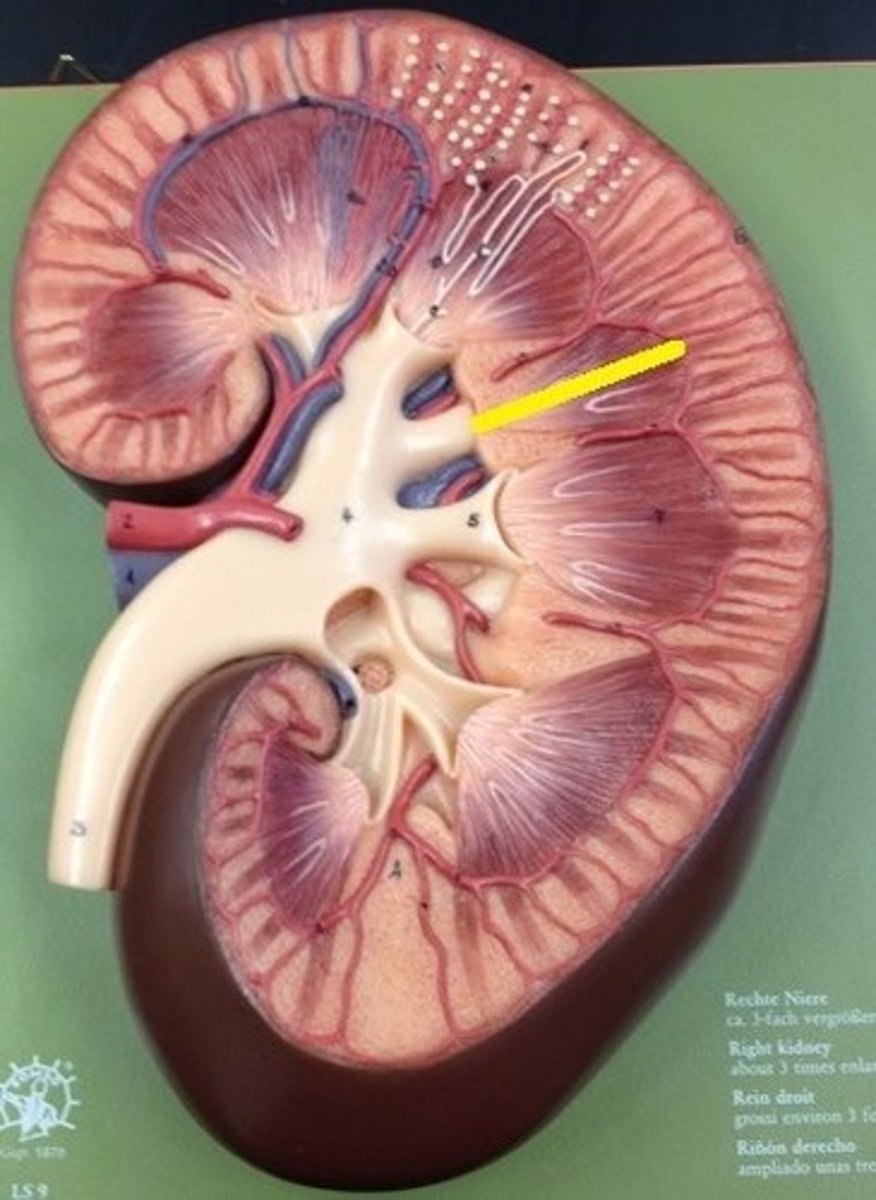
renal medulla
middle layer of the kidney
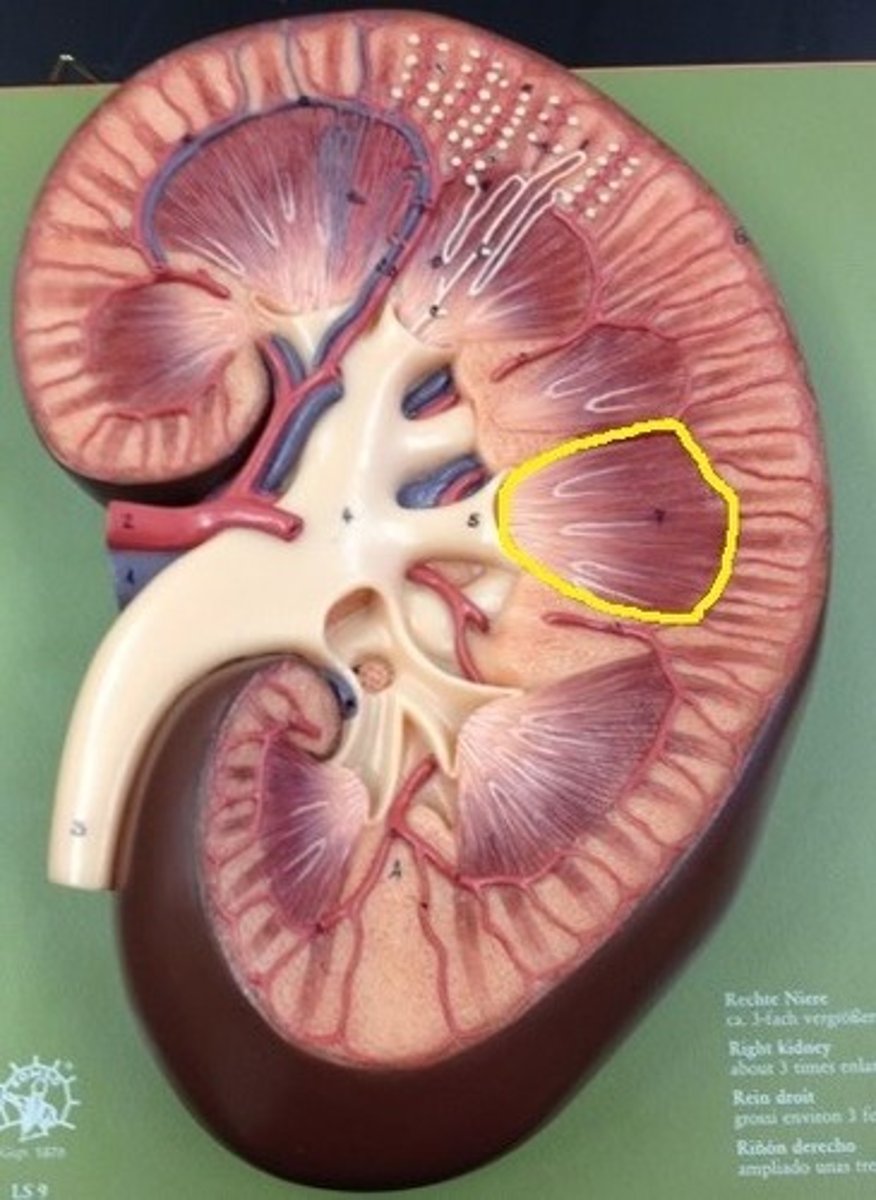
renal pyramid
cone shaped structures inside the renal medulla
renal pelvis
expanded end of ureter
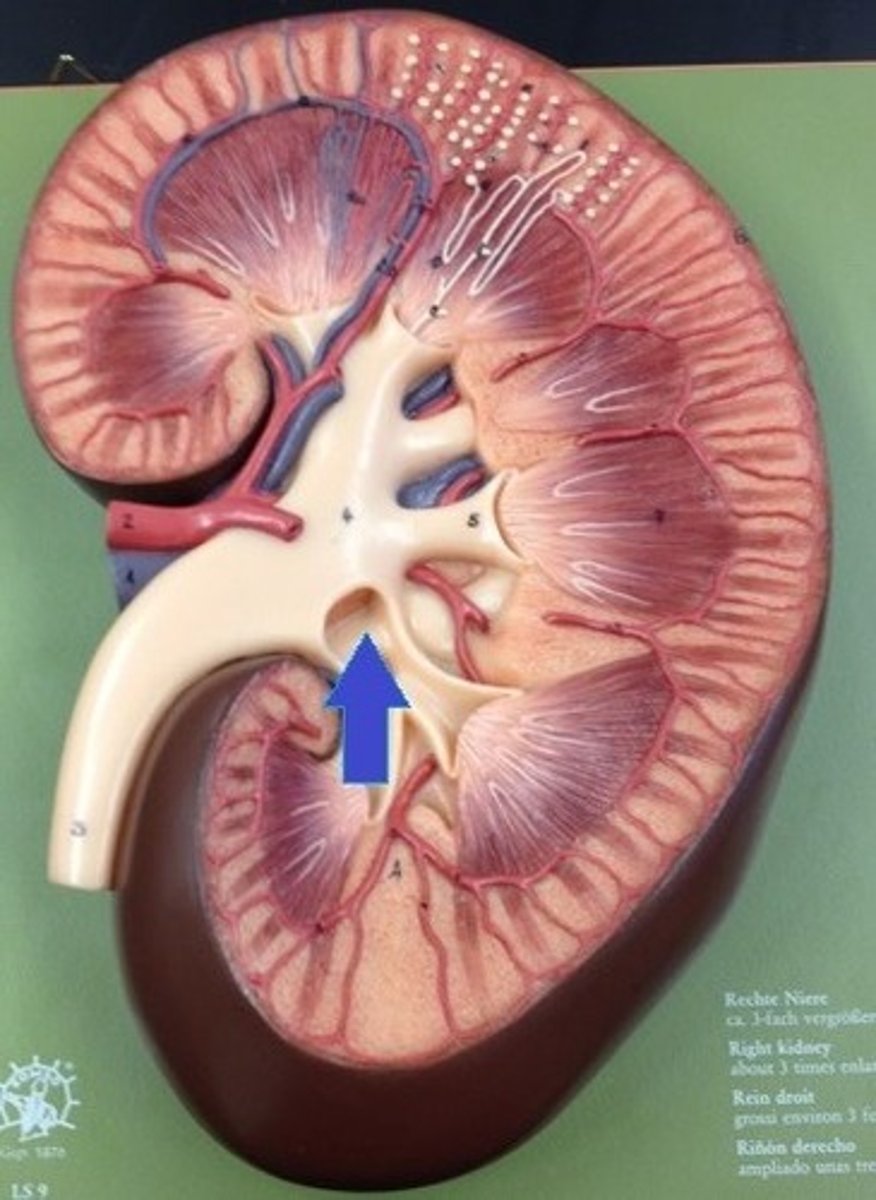
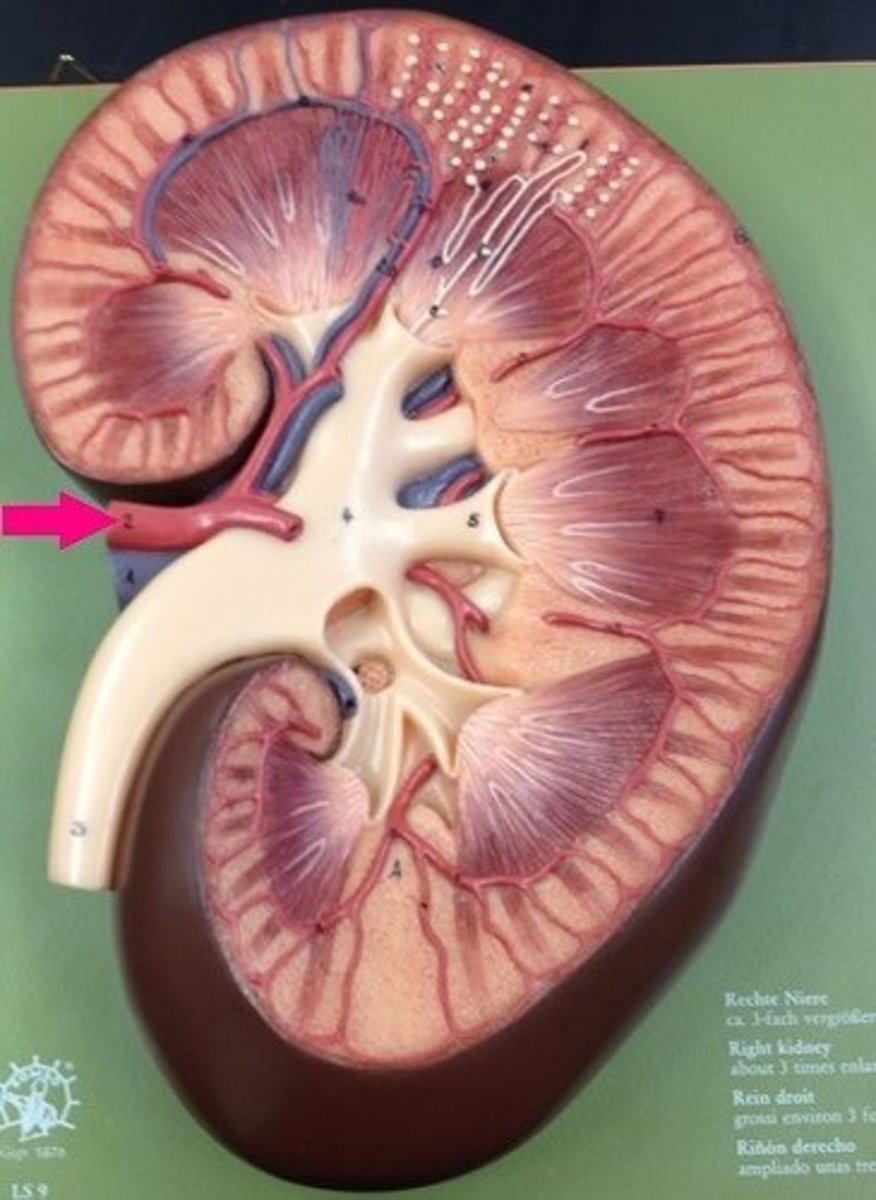
renal artery
Identify the blood vessel.
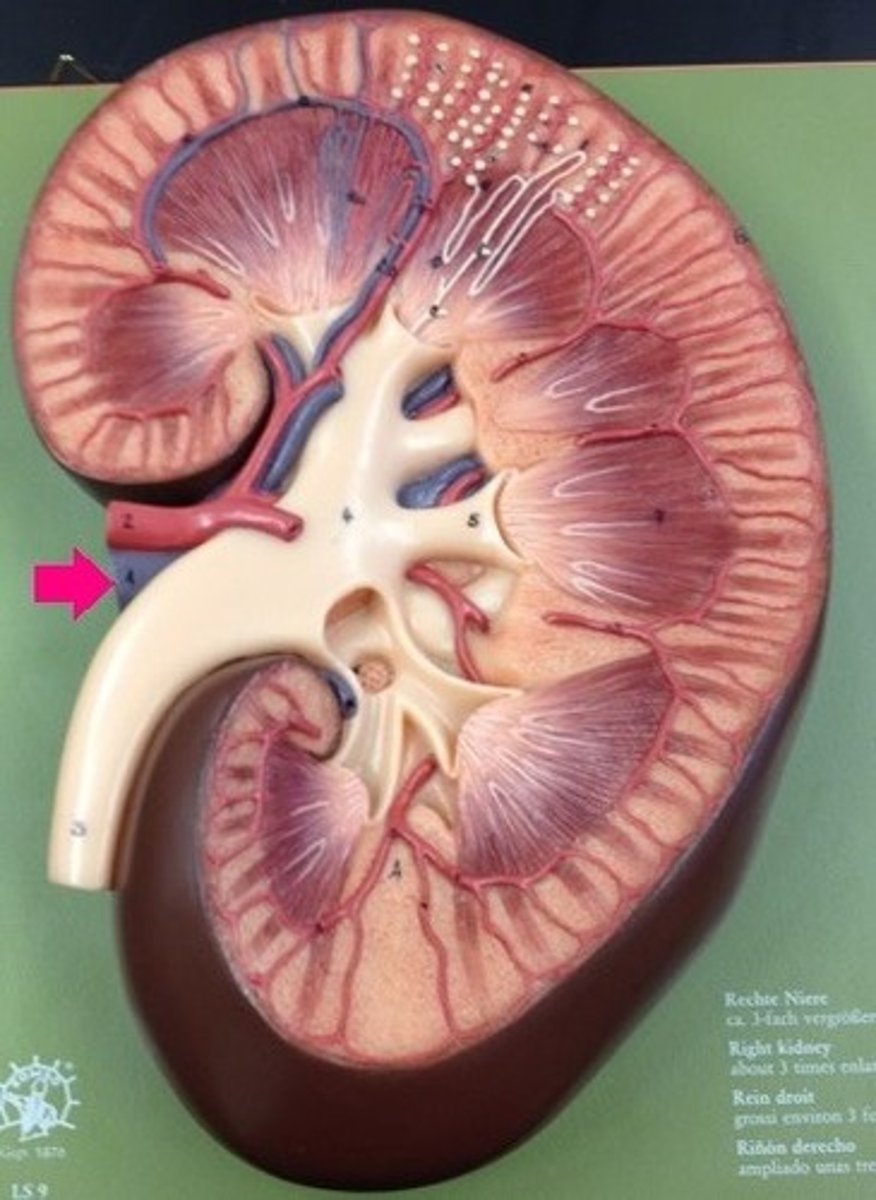
renal vein
Identify the blood vessel.
major calyx
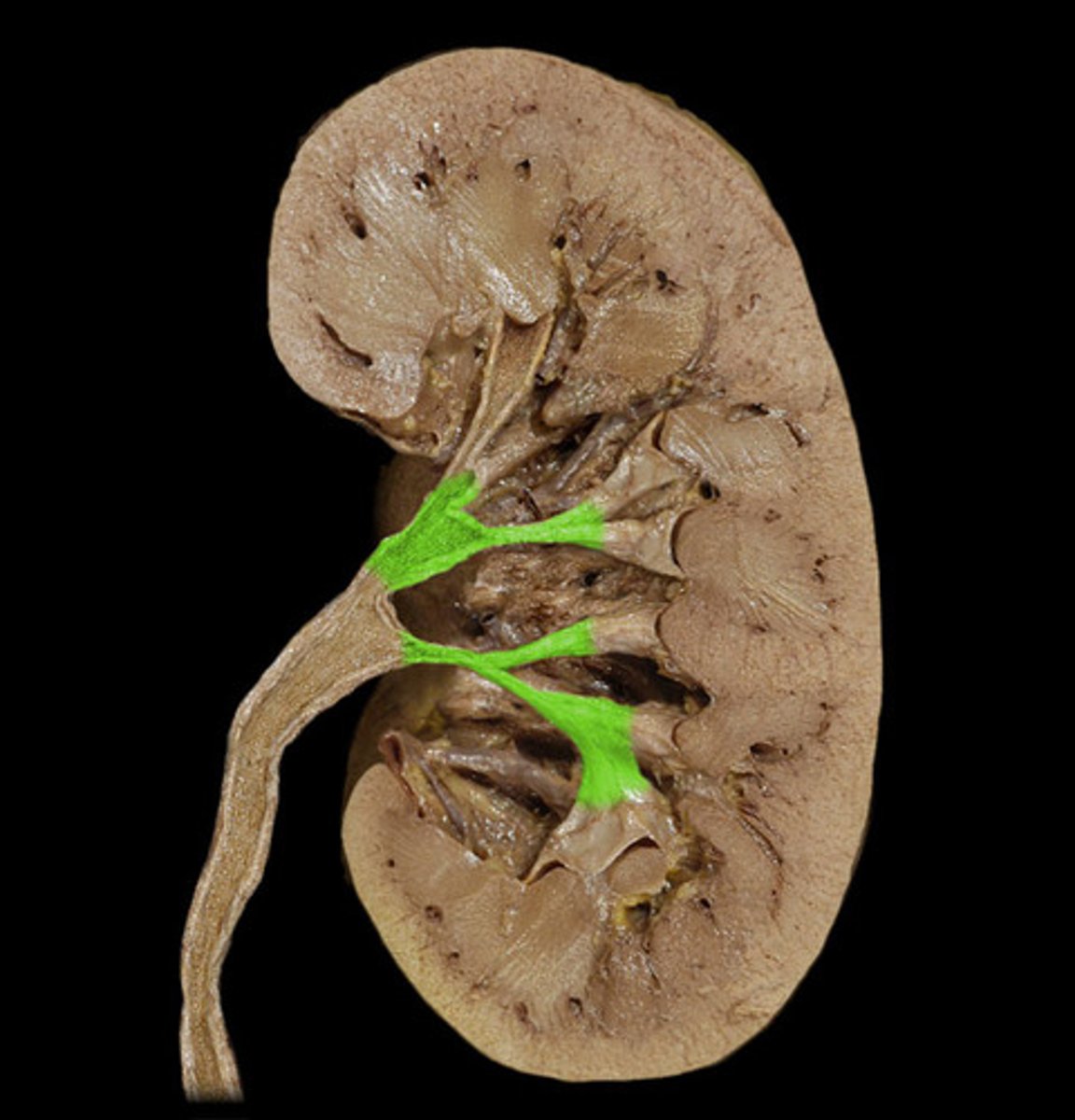
minor calyx
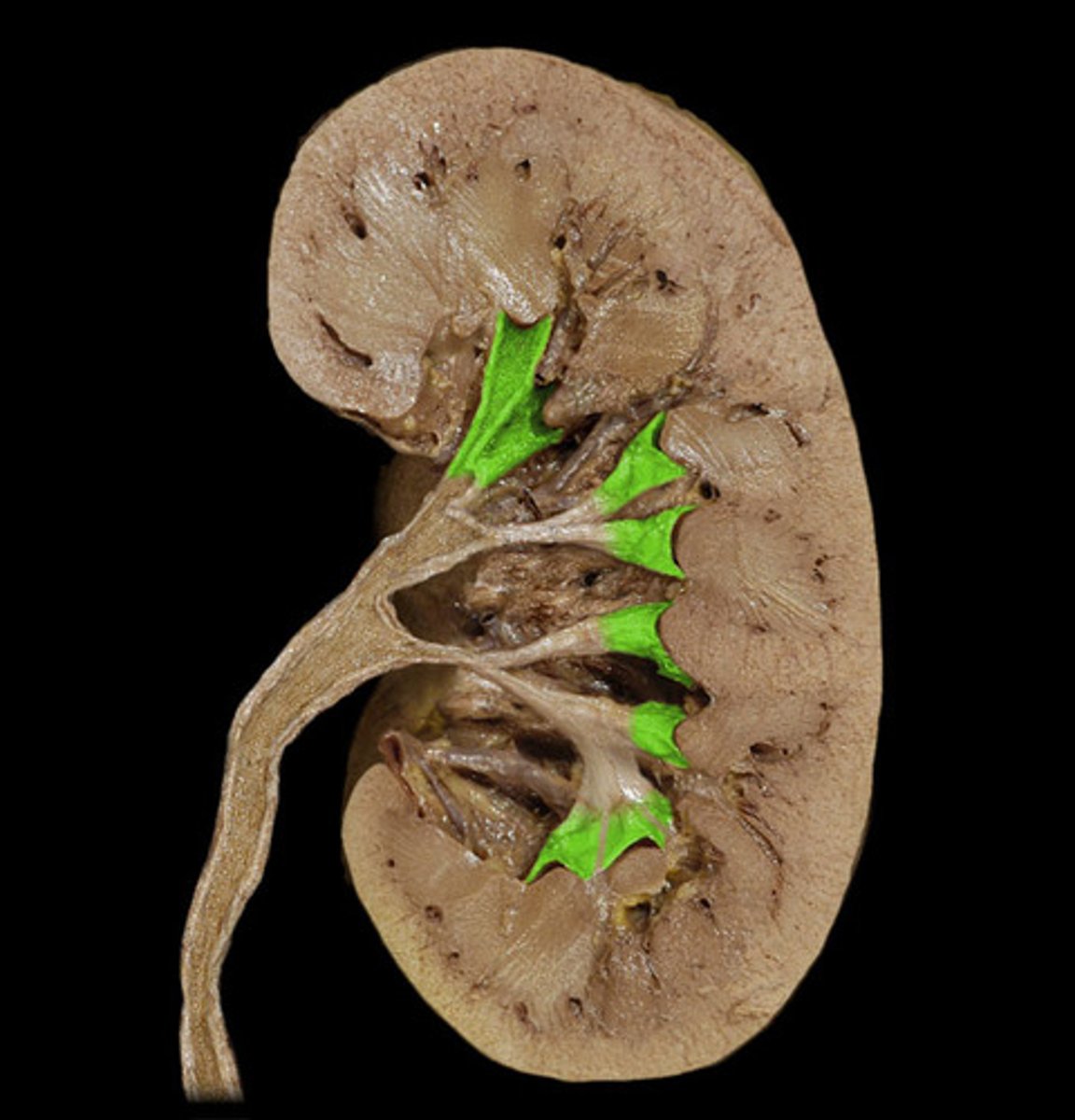
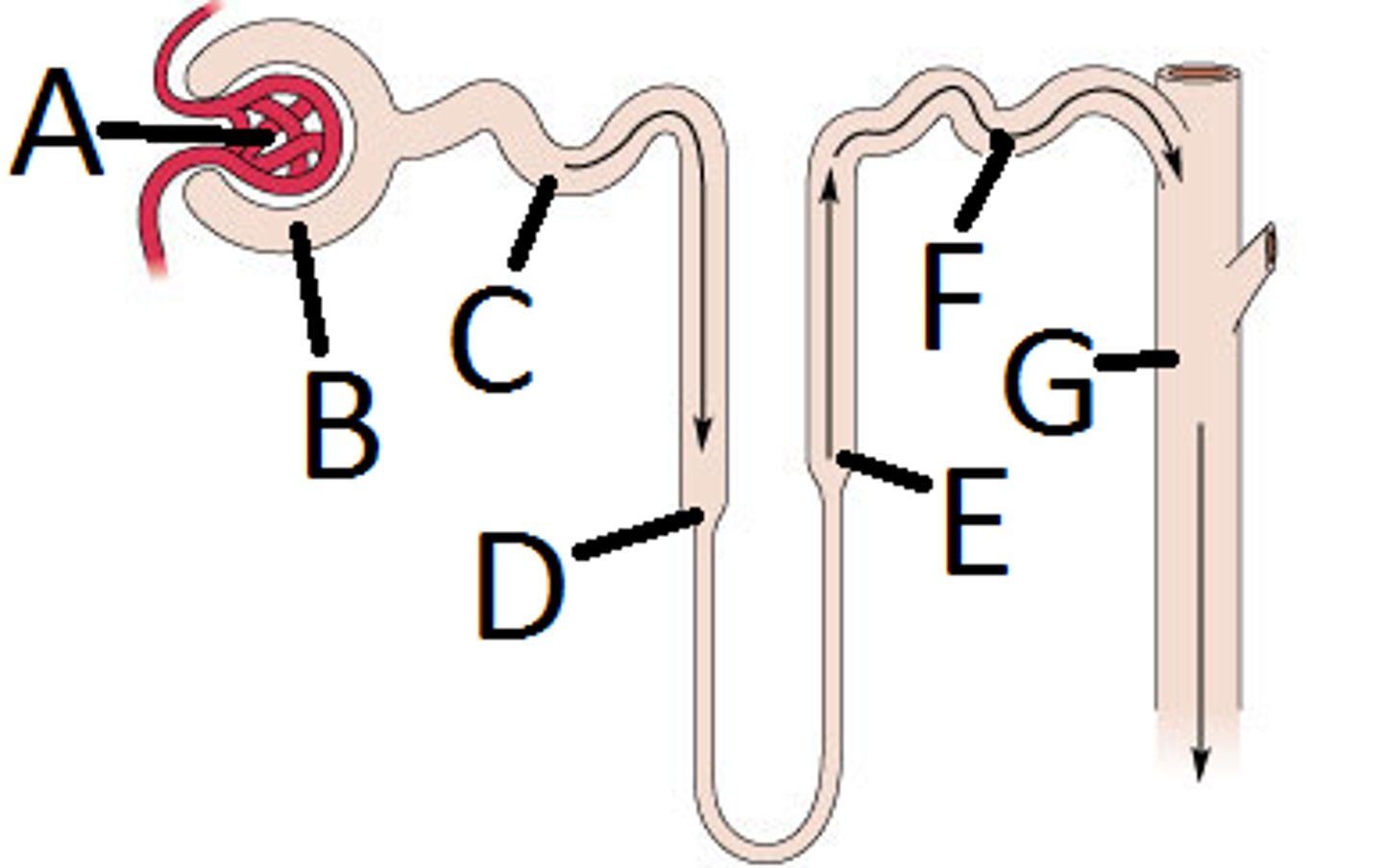
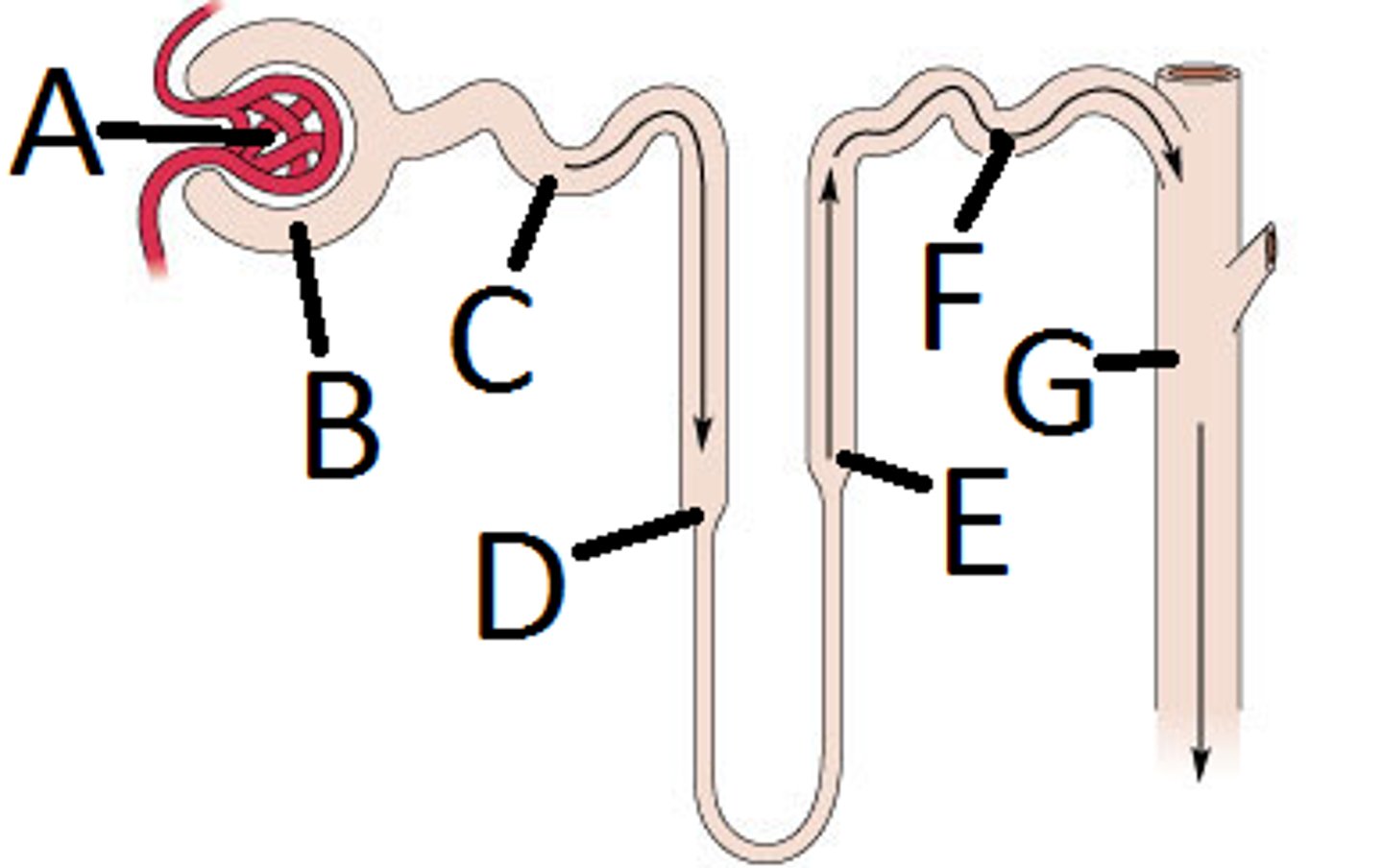
nephron
functional unit of kidney
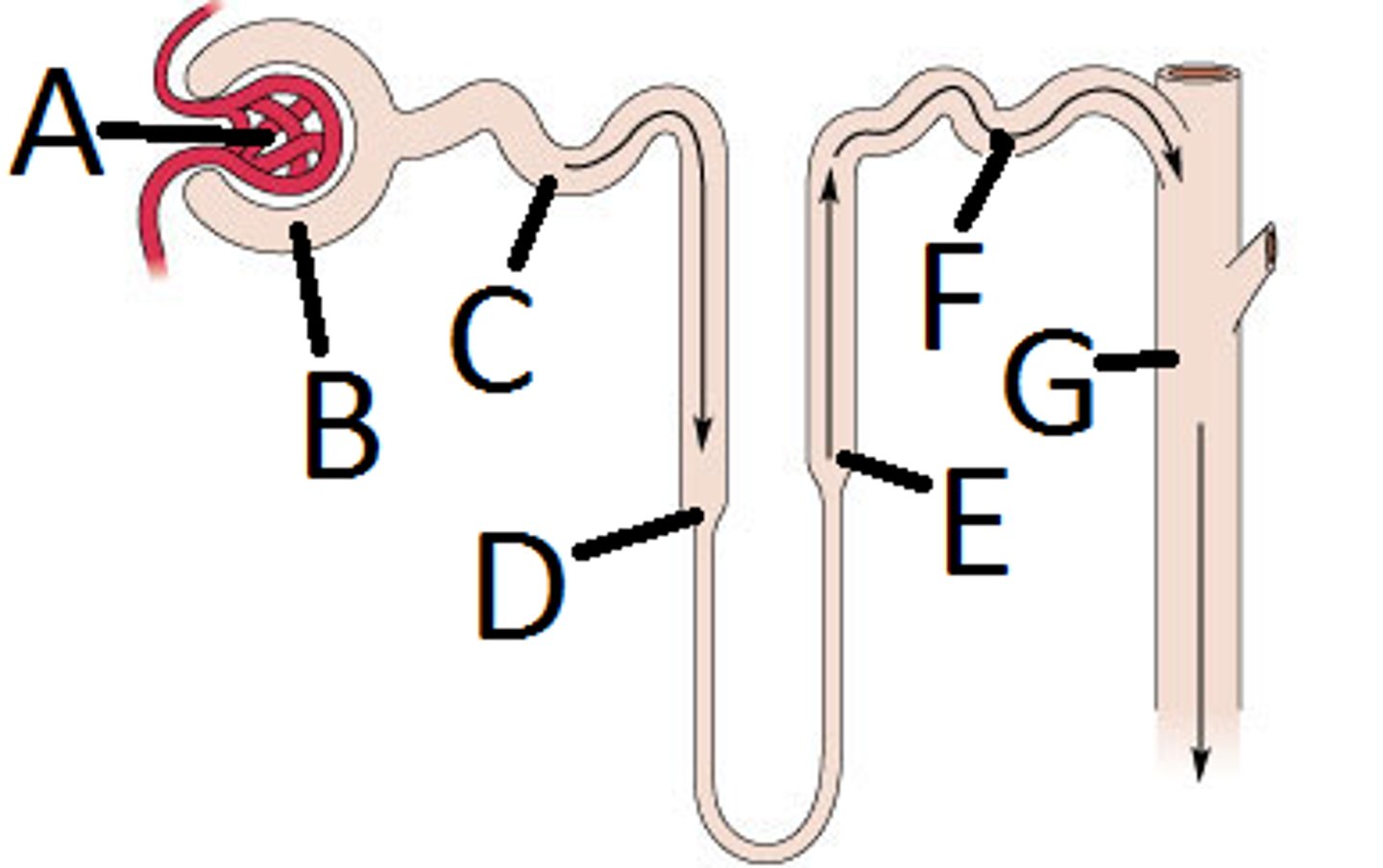
proximal convoluted tube
letter c
distal convoluted tube
letter f
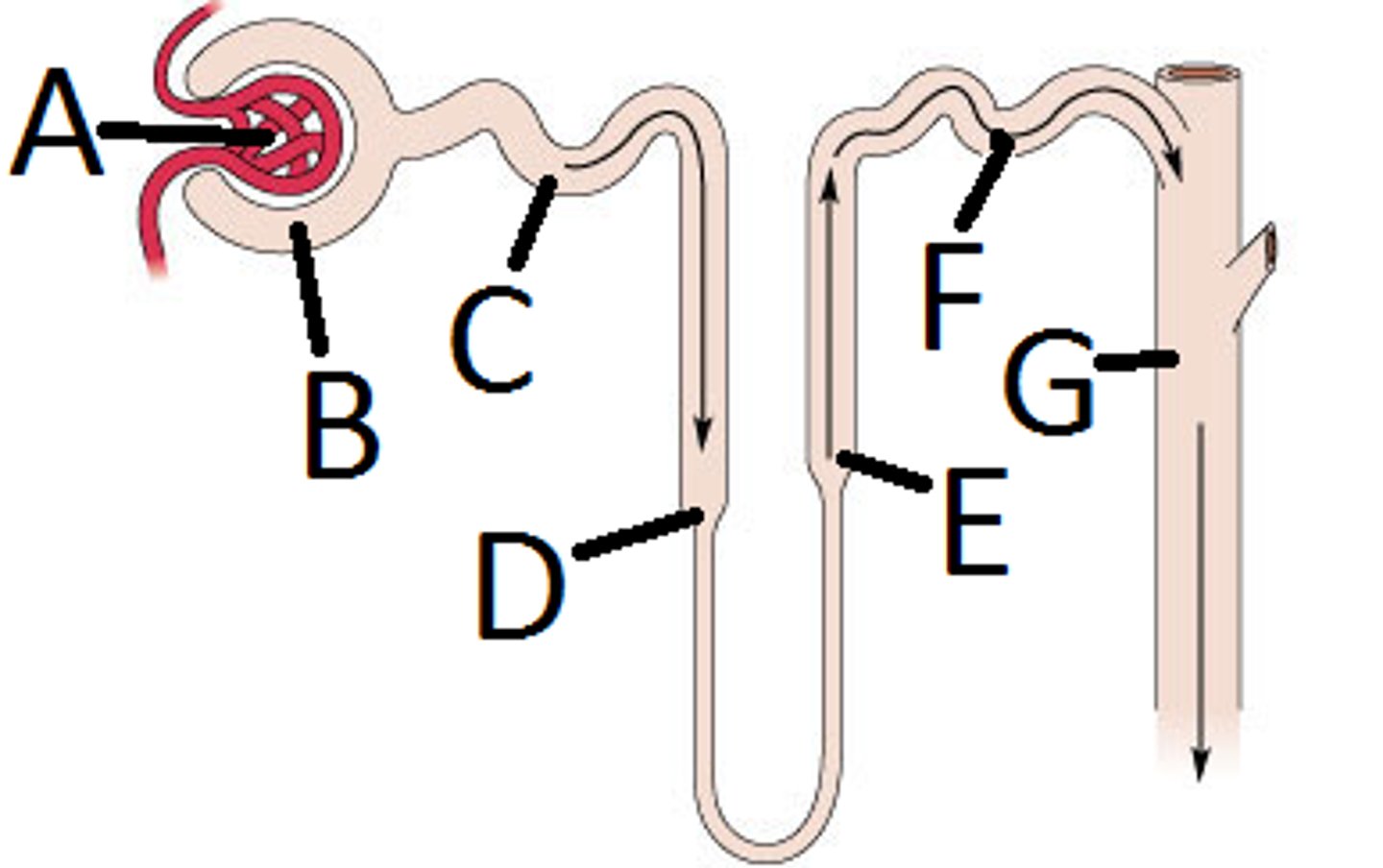
loop of henle
letters D & E
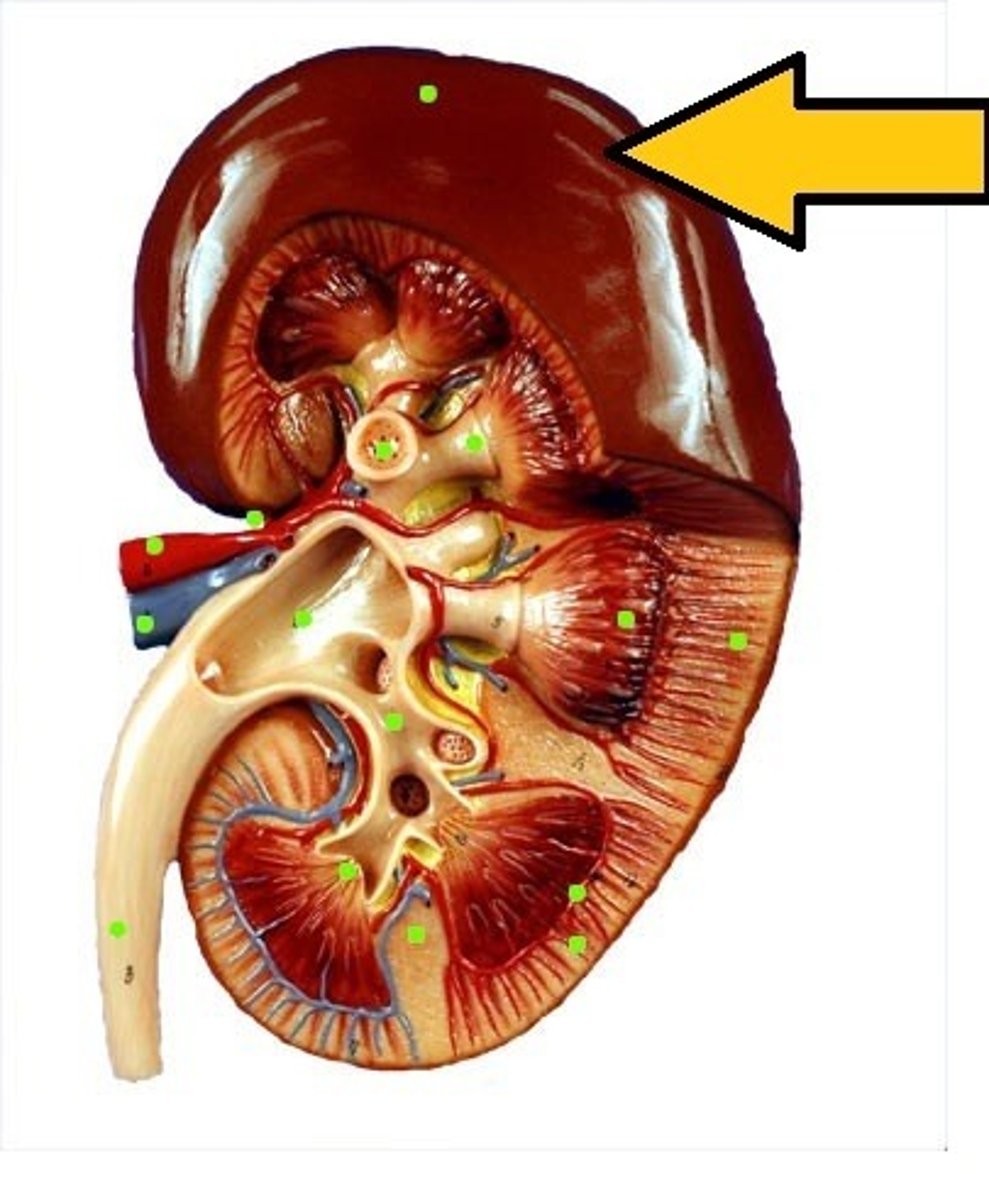
renal capsule
outside of kidney
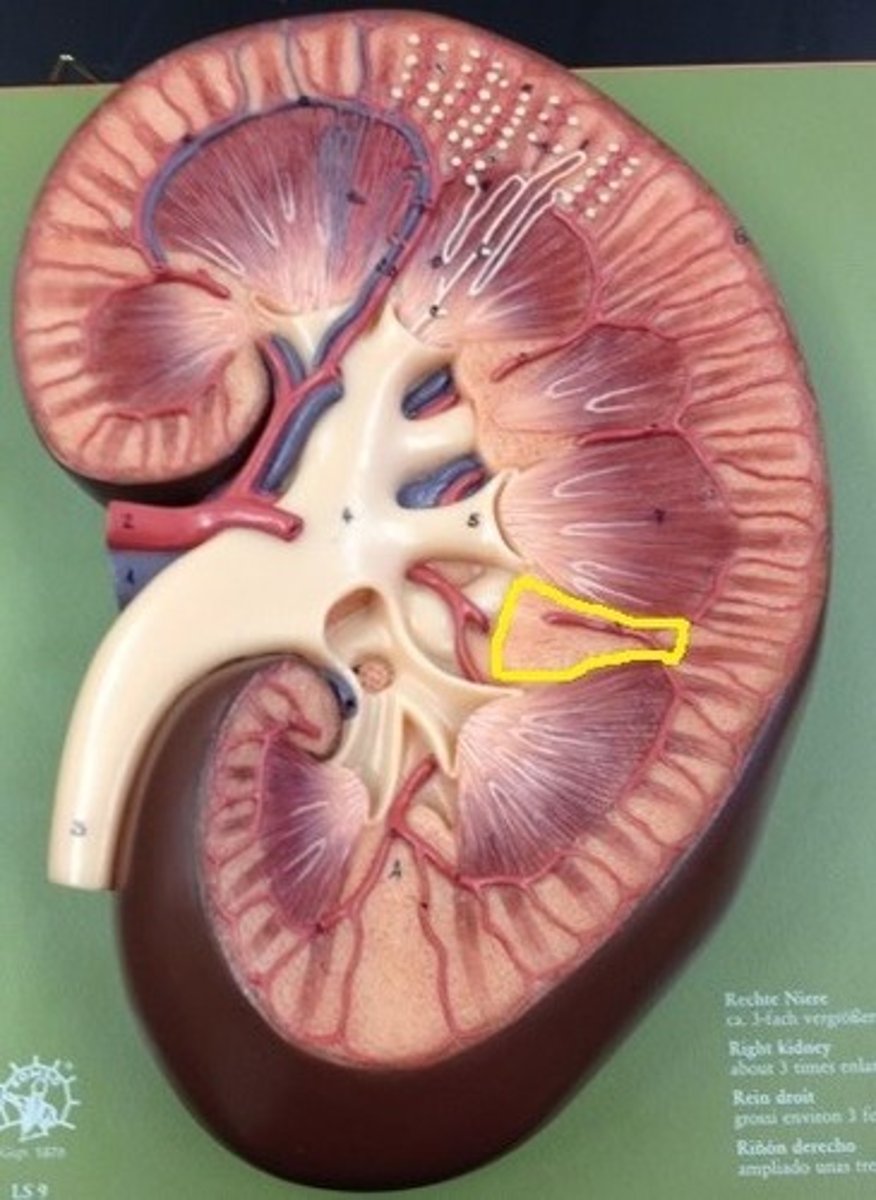
renal column
area between renal pyramids
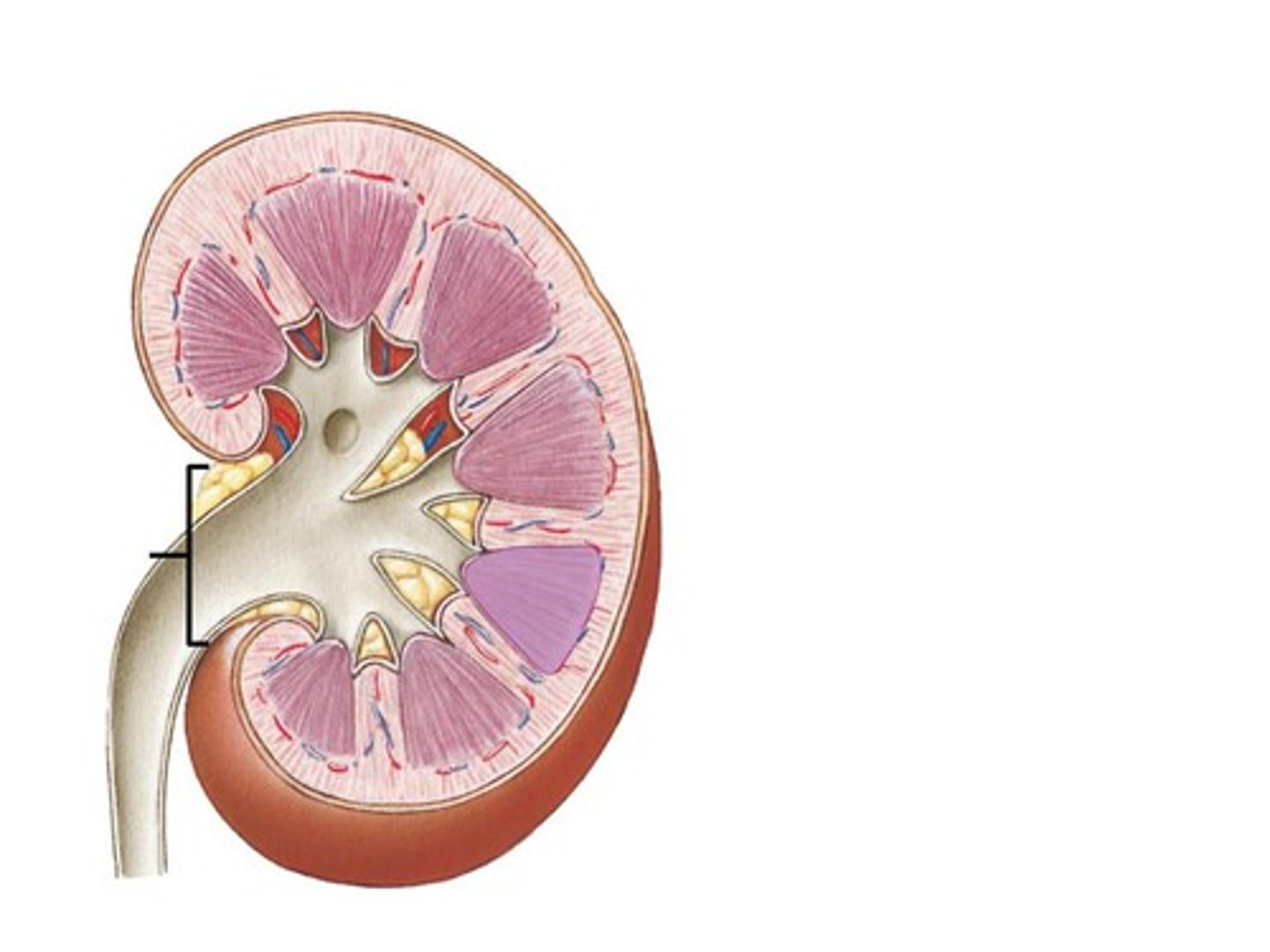
renal hilum
opening into kidney
glomerulus
letter A
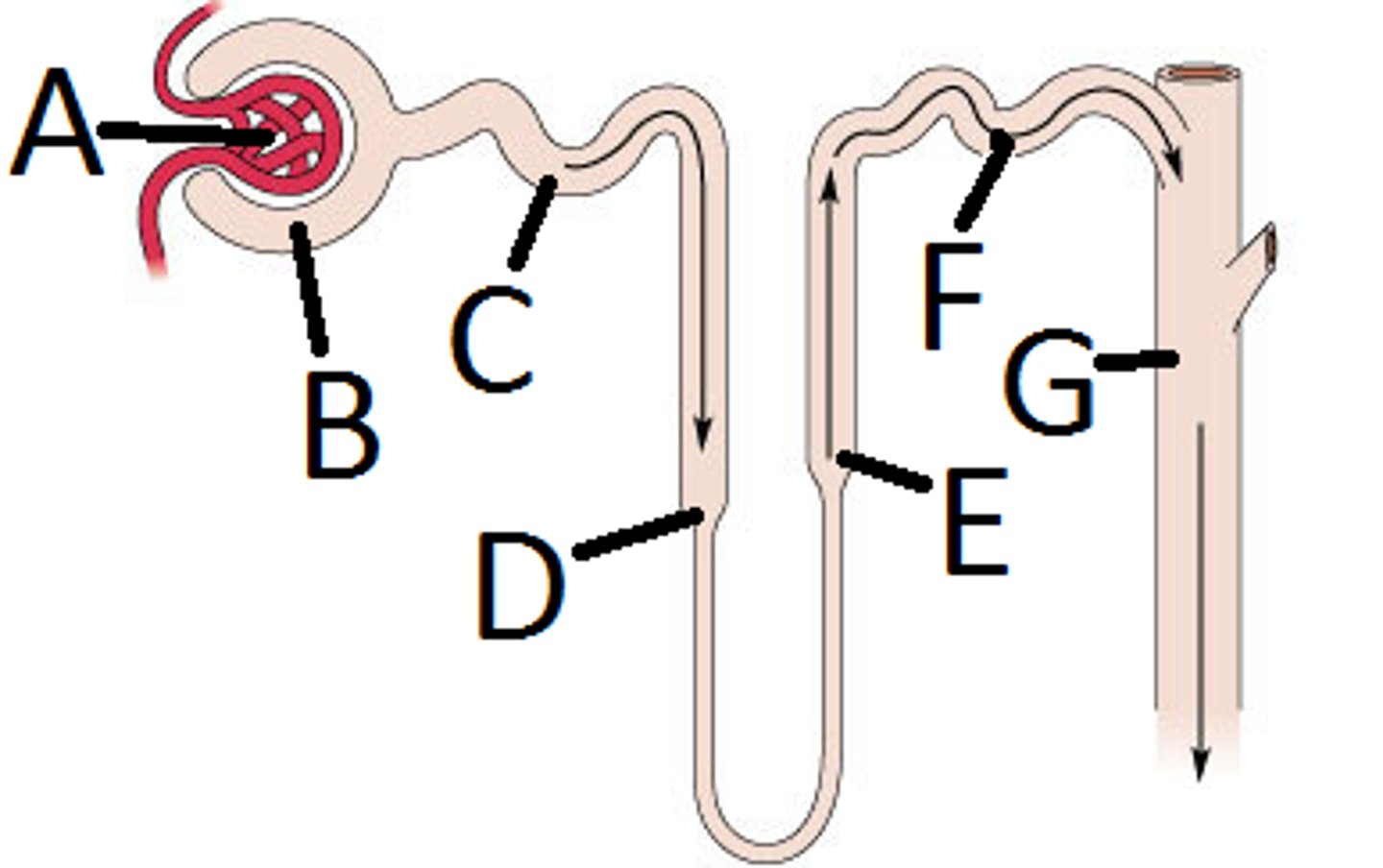
Bowman's capsule
letter b
RAAS system
Renin is produced by the kidneys in response to impaired blood flow & tissue perfusion, and converts angiotensinogen in the blood to angiotensin I; ACE converts angiotensin I to angiotensin II in the lungs. Angiotensin II then vasoconstricts and stimulates the release of aldosterone. Aldosterone then promotes Na and water retention as well as K excretion.
Aldosterone
"salt-retaining hormone" which promotes the retention of Na+ by the kidneys. na+ retention promotes water retention, which promotes a higher blood volume and pressure
Renin
hormone secreted by the kidney that raises blood pressure
antidiuretic hormone (ADH)
promotes retention of water by kidneys
Calcitriol (Vitamin D)
necessary for calcium absorption in the intestines
Erythropoietin
A hormone produced and released by the kidney that stimulates the production of red blood cells by the bone marrow.
ANP (atrial natriuretic peptide)
-Produce by atria
-Target: kidneys
-Effect: blocks effect of aldosterone, decreases sodium reabsorption, lowers blood pressure
juxtaglomerular apparatus
in the nephron, the complex of cells from the distal tubule and the afferent arteriole which helps regulate blood pressure by secreting renin in response to blood pressure changes in the kidney; located near the glomerulus
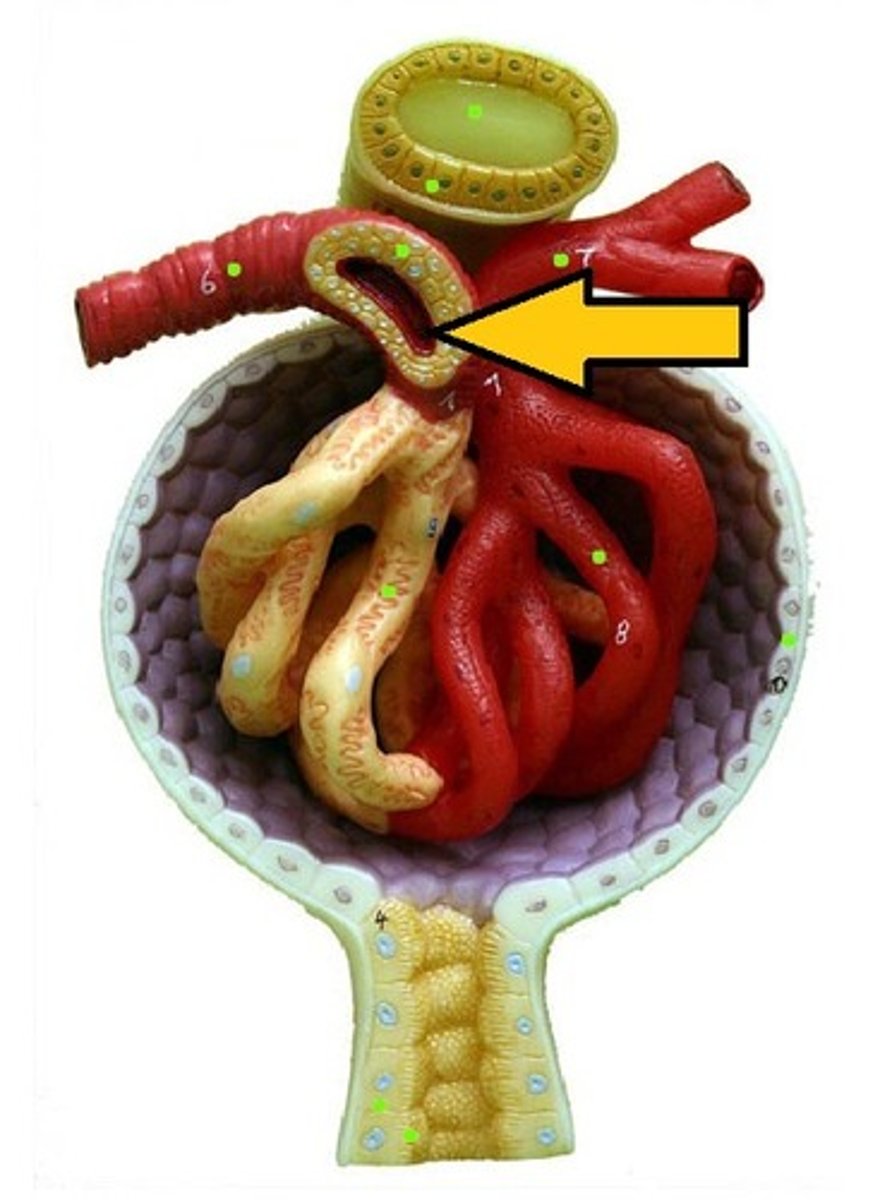
macula densa
The cells of the distal tubule at the juxtaglomerular apparatus. They are receptors that monitor filtrate osmolarity as a means of regulatin filtration rate.