FIVS 215 FINAL (NEW MATERIAL)
 Call Kai
 Learn
Learn Practice Test
 Spaced Repetition
 Match
Match Flashcards
 Knowt Play
1/153

There's no tags or description
Looks like no tags are added yet.
Name | Mastery | Learn | Test | Matching | Spaced | Call with Kai |
|---|
No analytics yet
Send a link to your students to track their progress
154 Terms
Locard Exchange Principle
Objects or Surfaces Which Come Into Contact Always Exchange Trace Evidence
Paul Kirk
" ... more laboratory failures are due to inadequate collection of existing evidence than to the failure of the laboratory to examine evidence properly"
Passive documentation
- No real insight into the circumstances of the incident
- Investigator guessing at what might be important
Active documentation
- Uses the scientific method
- Allows investigators to focus on important evidence
Evidence must be collected in a fashion that what?
- Maintains the integrity of the evidence
- Is safe (for any and all that must encounter it)
Maintaining the integrity of the evidence
- The evidence must be sealed
- It must be packaged so as to preserve it
- It must be free of potential contamination.
Is safe (for any and all that must encounter it)
- Firearms should be unloaded.
- Sharp objects should be in special containers
- Appropriate cautions should be taken with explosives and toxic materials.
- Appropriate cautions should be taken with biohazards.
Which one is the cuticle?
A
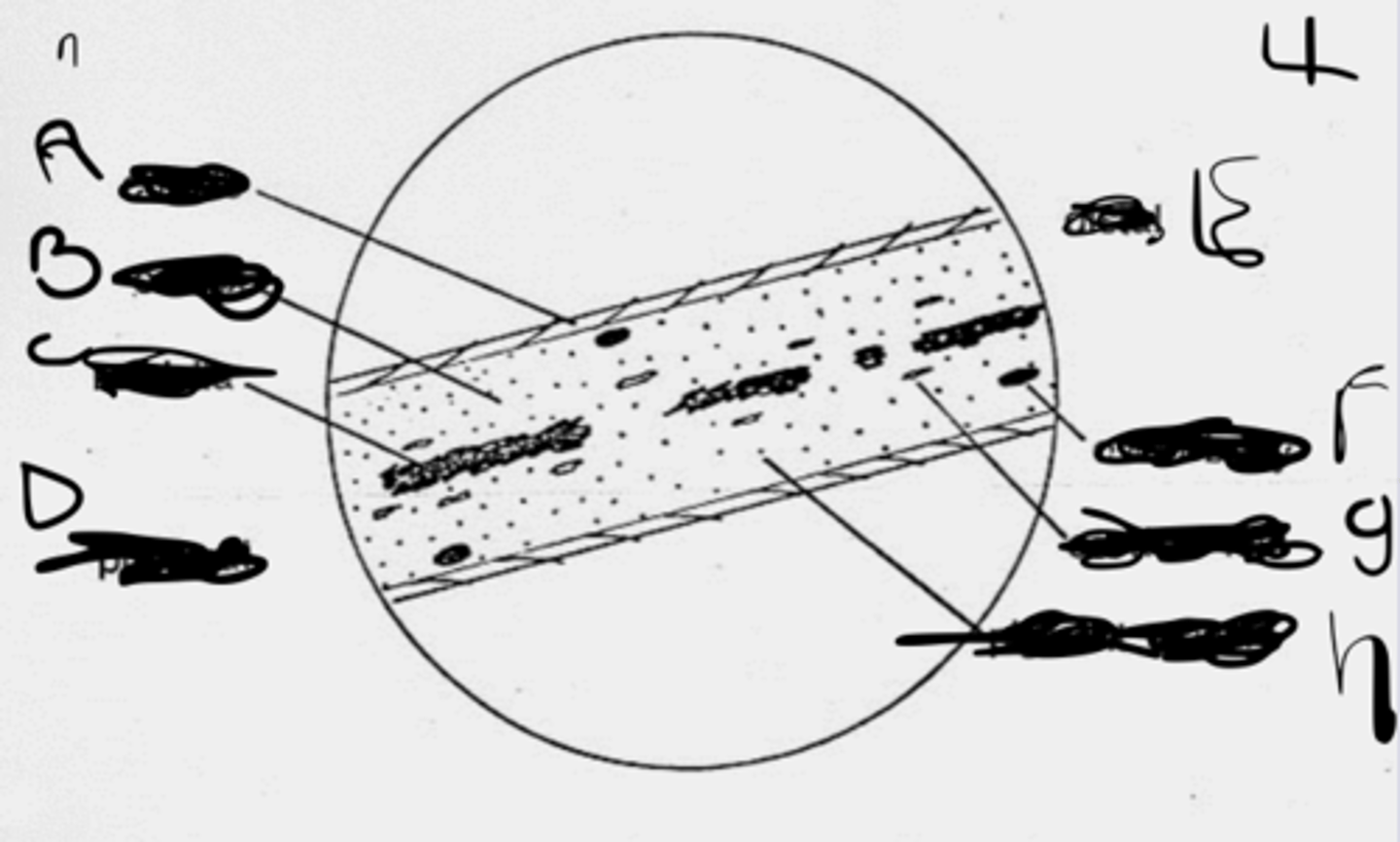
Which one is the cortex?
B
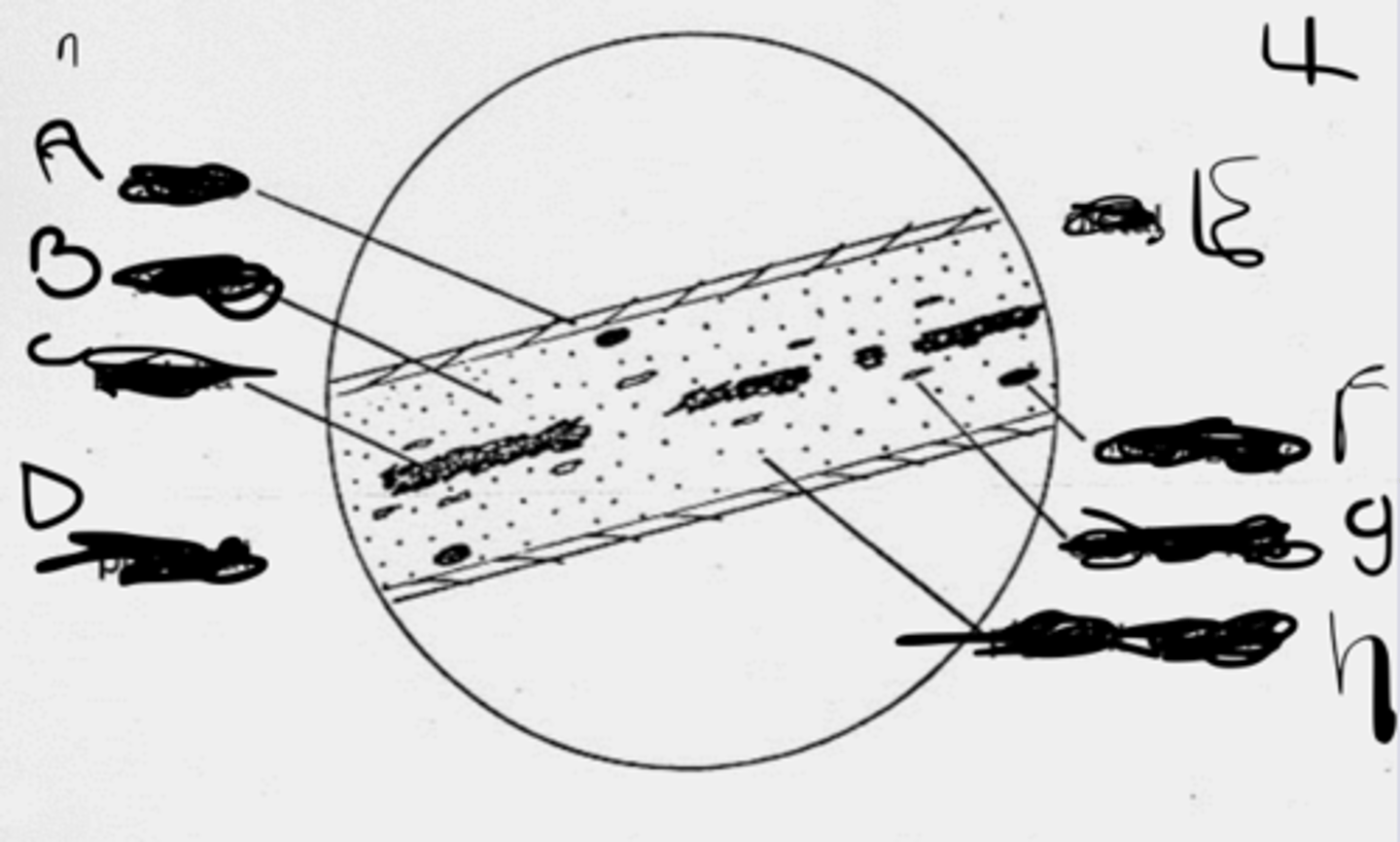
Which one is the medulla?
C
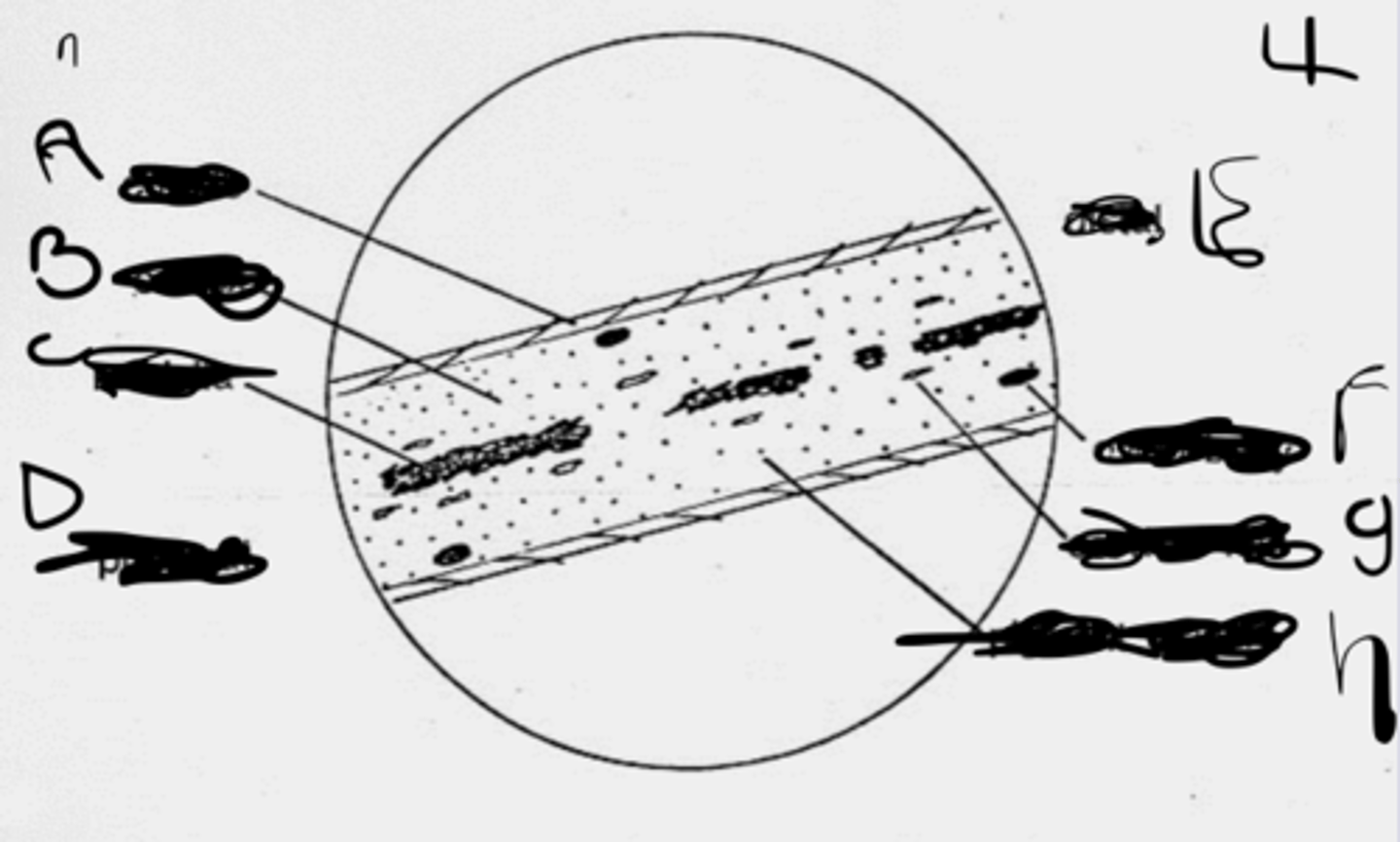
Which side is proximal, D or E?
D
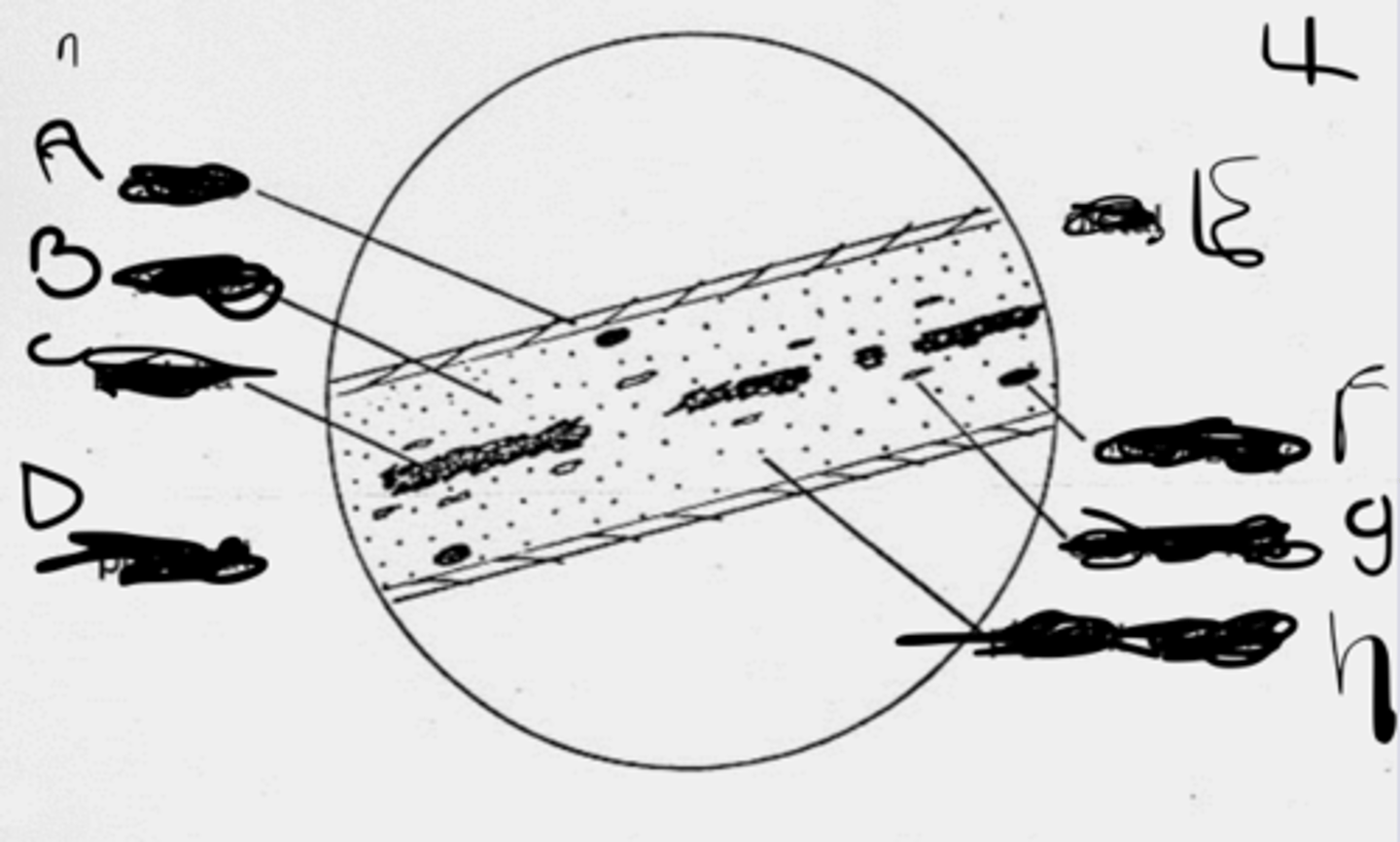
Which side is distal, D or E?
E
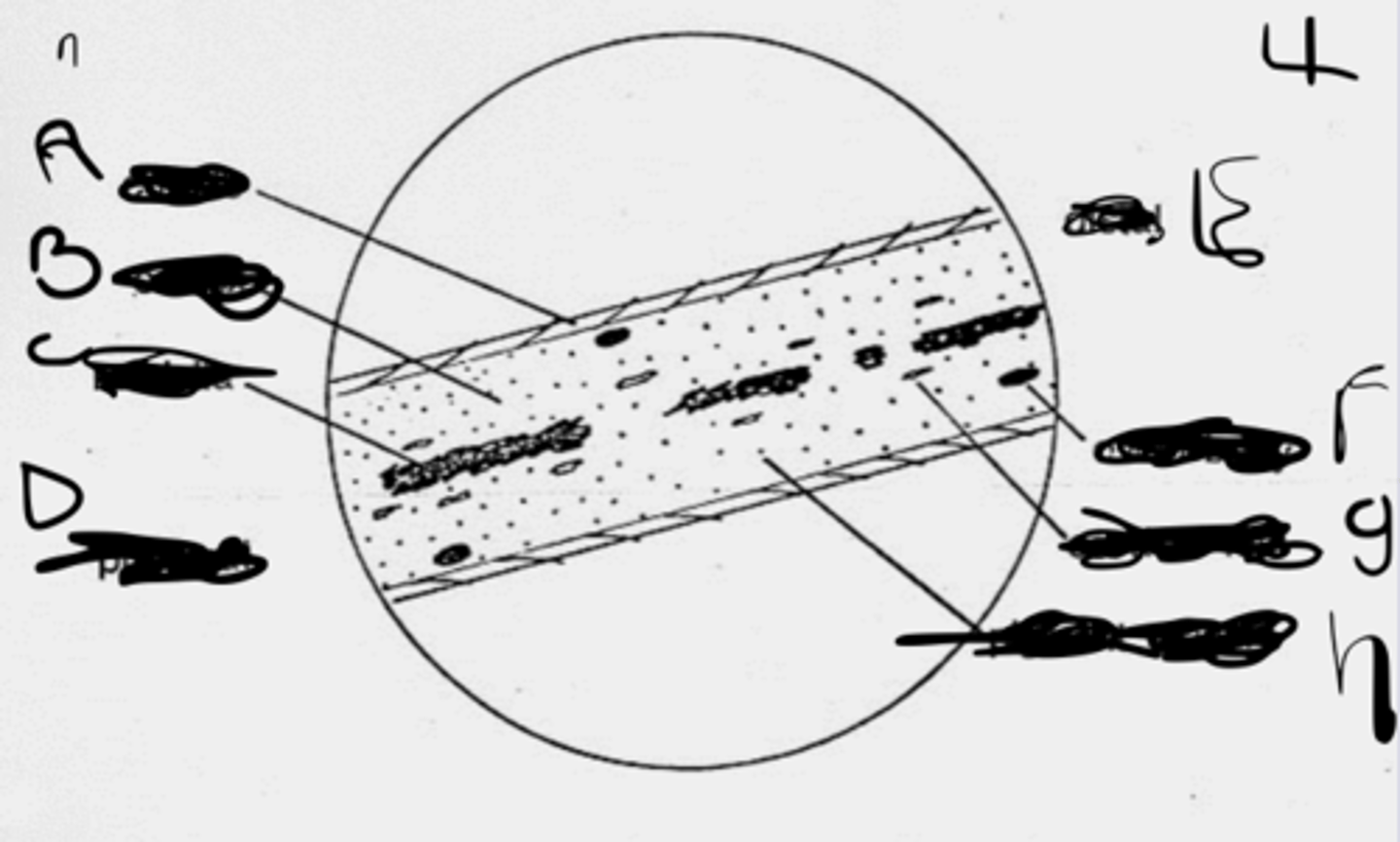
Which one is the ovoid body?
F
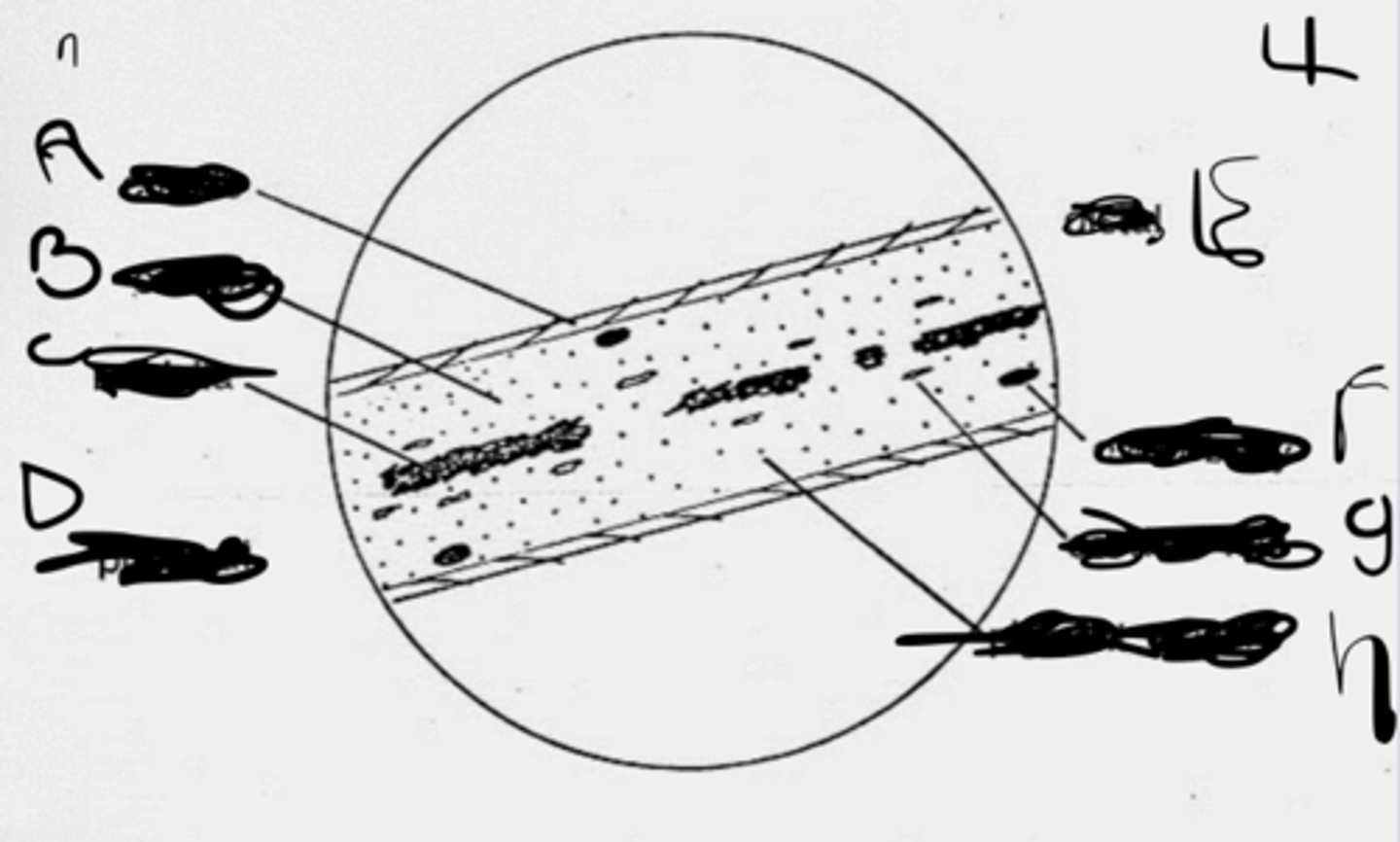
Which one is the cortical fusi?
G
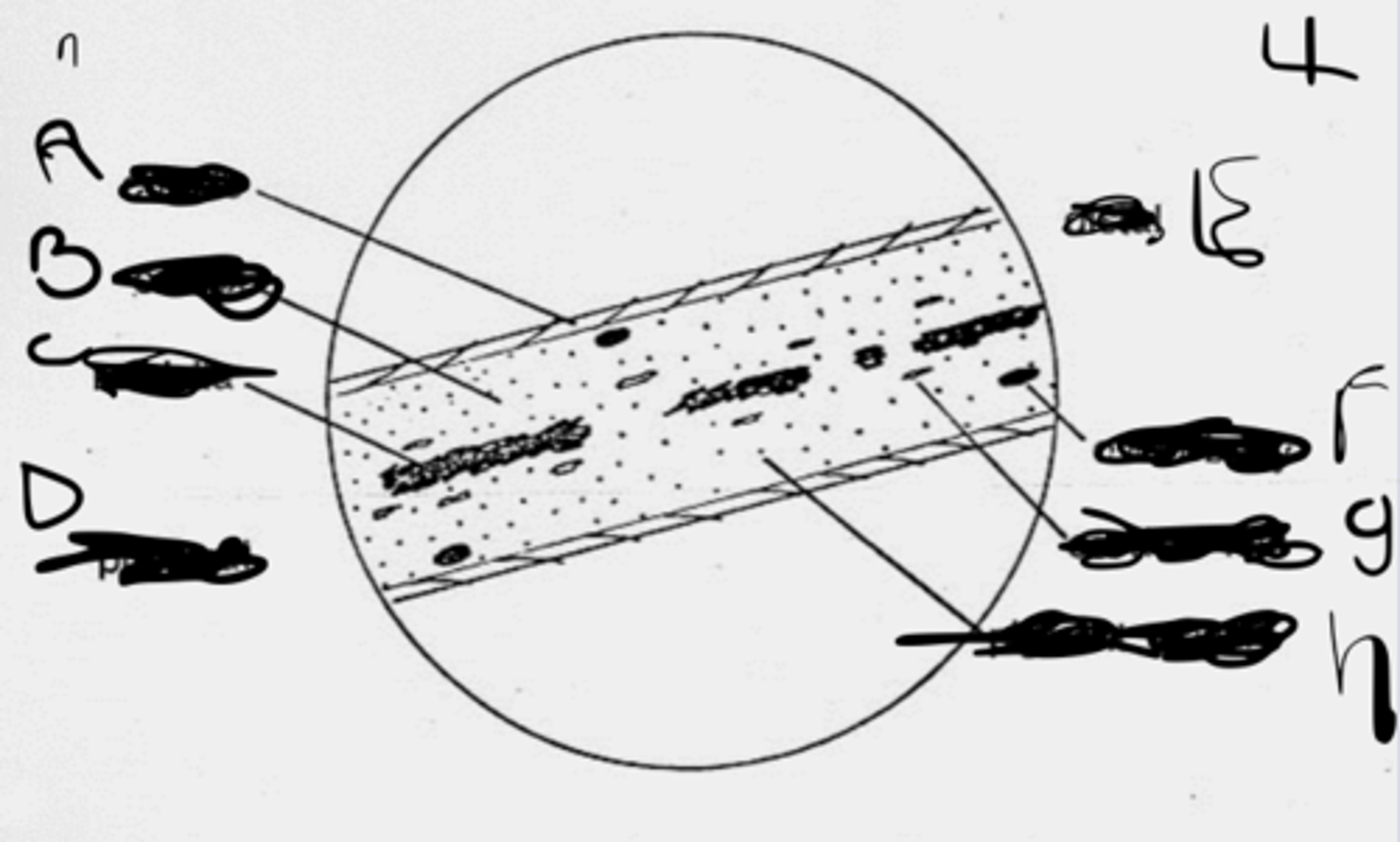
Which one is the pigment granule?
H
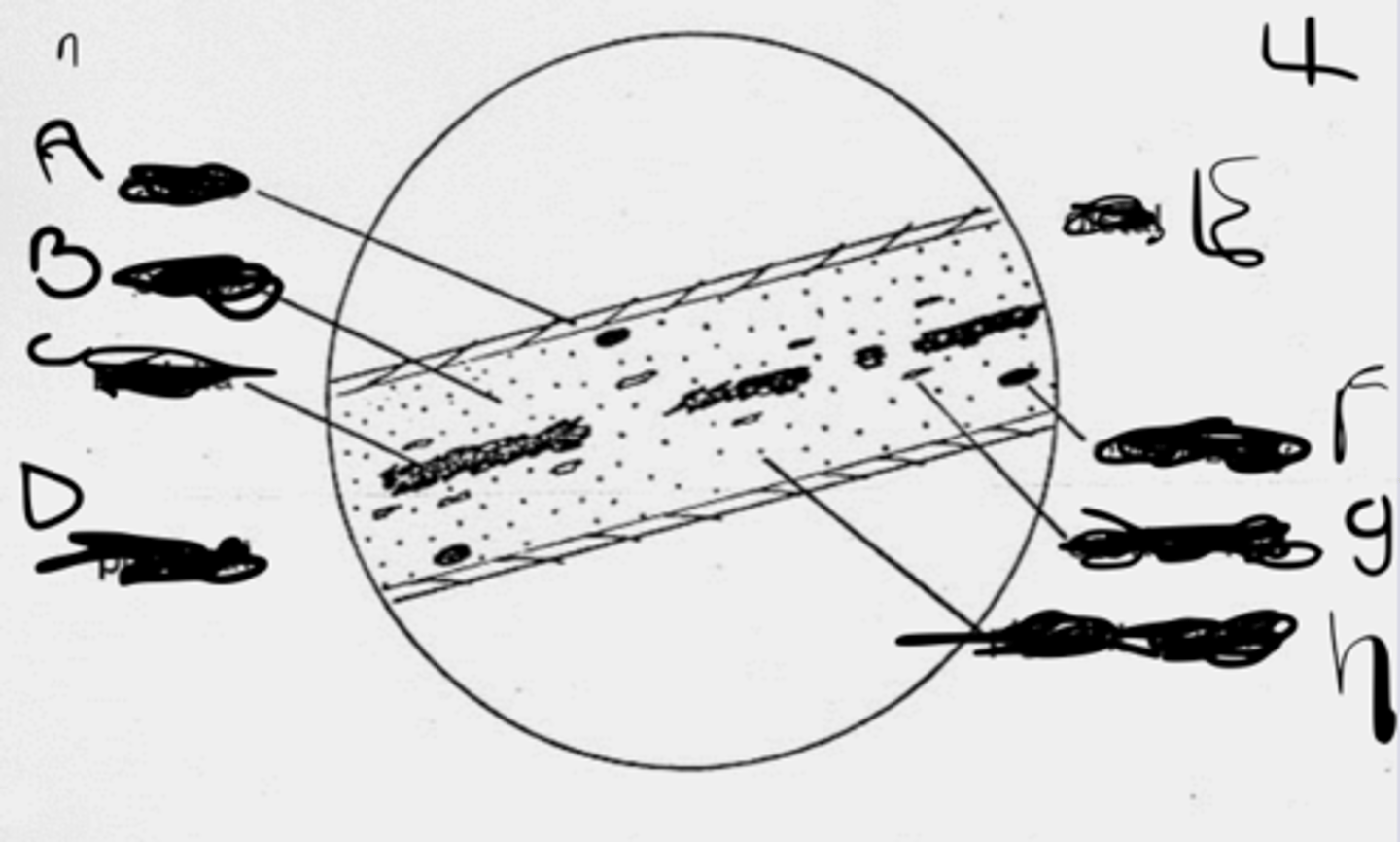
Melanin granules are formed in the follicle by specialized cells called what?
Melanocytes
The medulla originates from matrix cells closest to the what?
Dermal papilla
The Anagen Phase (Growing)
(80-90% of the hair follicles)- the follicle is actively producing hair.
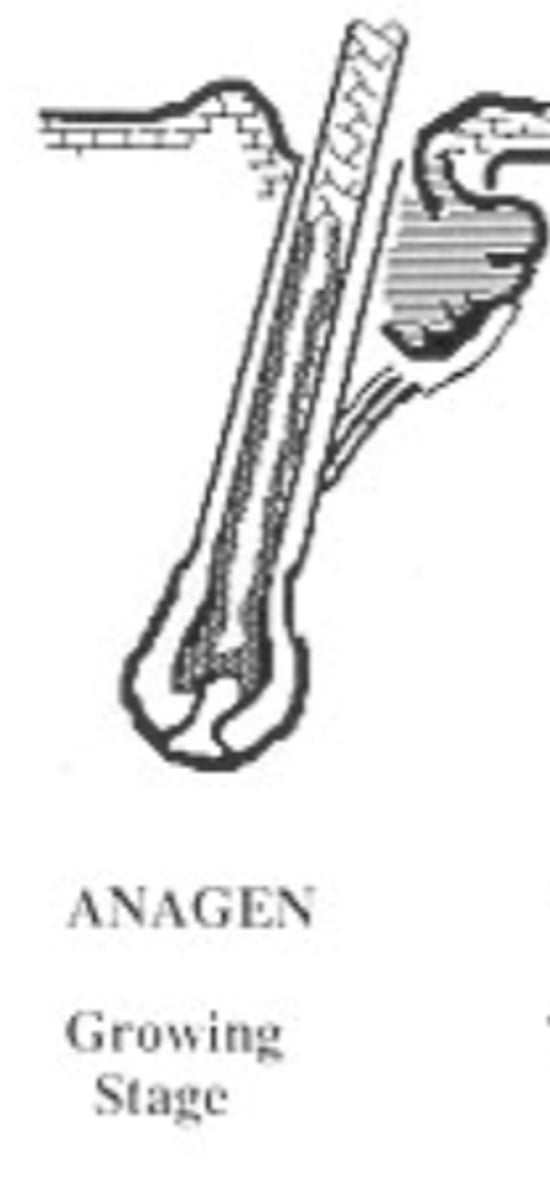
The Catagen Phase (Transition)
(2% of the hair follicles)- - the transition period from the anagen to the telogen phase. The melanocytes in the follicle contract and cease to produce and distribute pigment granules.
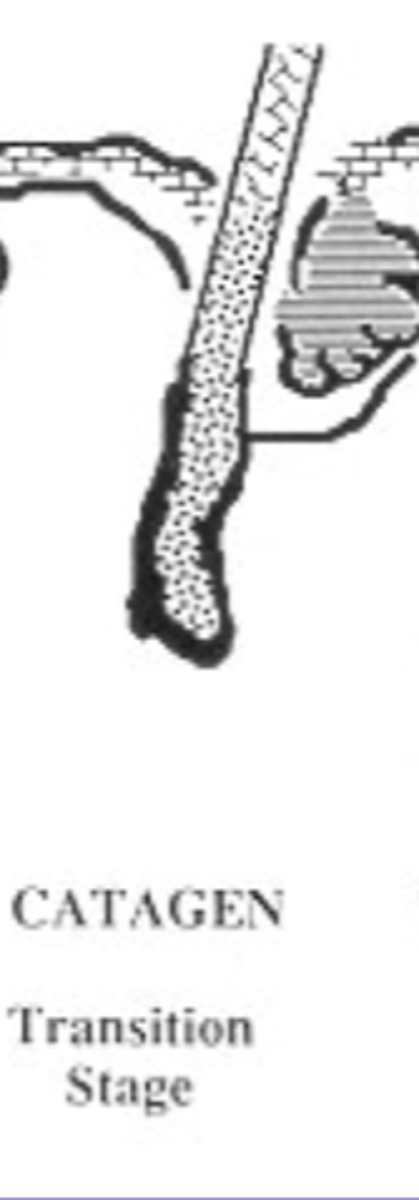
The Telogen Phase (Resting)
(10-18% of the hair follicles)- the follicle is mature, dormant or resting stage.
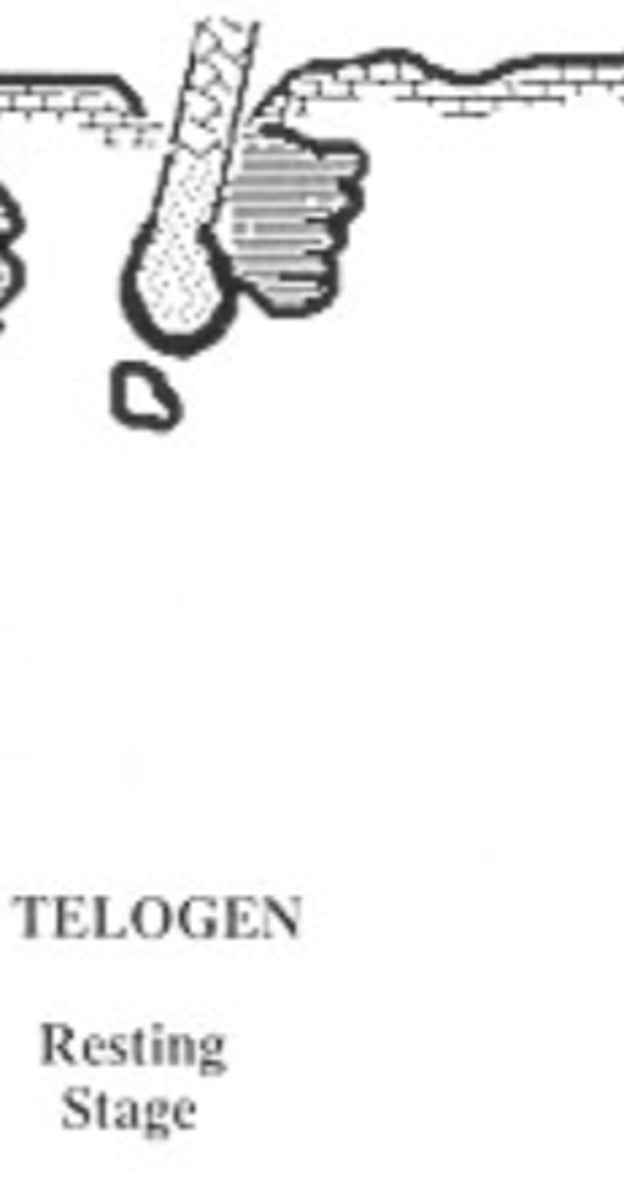
What is the hair growth rate?
1/2 Inch/Month
What is the racial characteristics of Negroid?
Diameter: 60-90 um
Cross section: flat
Pigmentation: dense and clumped
Cuticle: ------
Undulation: prevalent
What is the racial characteristics of Caucasoid?
Diameter: 70-100 um
Cross section: oval
Pigmentation: evenly distributed
Cuticle: medium
Undulation: uncommon
What is the racial characteristics of Mongoloid?
Diameter: 90-120 um
Cross section: round
Pigmentation: dense auburn
Cuticle: thick
Undulation: never
Somatic Origin: Scalp
head hair, 100-1000mm long, 25-125μm diameter; 0.4mm/day growth; small root; apered tip, little diameter variation; various medullation; often with cut tips; may be artificially treated
Somatic Origin: Pubic
pudendal; 10-60mm long; coarse diameter and prominent diameter variation and buckling; broad medulla; follicular tags common; asymmetrical cross section twisted and constricted; may be straight , curved or spirally tufted.
Somatic Origin: Vulvar
secondary pubic hair; finer and shorter than pubic hair, maybe abraided.
Somatic Origin: Chest
pectoral; moderate to considerable diameter variation; long fine arch-like tip; usuallylonger than pubic hair
Somatic Origin: Beard
facial hair, very coarse, 50-300 mm long; large root, irregular structure; often triangular cross-section; complex medullation; blunted or razor cut tip; grows 40mm/ day.
Somatic Origin: Axillary
arm pit; 10-50mm long, grows .30mm/day; coarse; blunt tip, abraided or frayed;usually straighter than pubic hair; many cortical fusi; sometimes yellowed and bleached.
Somatic Origin: Eyebrow
supercilary; 1cm long; .16 mm/day growth; curved; relatively coarse for length; smooth curve with punctate tip and large medulla.
Somatic Origin: Eyelash
cilary; less than 1cm long; short curved pointed hair.
Somatic Origin: Limb
leg and arm hair: 3-6 mm long, fine tips, irregularly medullated; often indistinctly and slightly pigmented
Somatic Origin: Ear
tragic, pinnae; downy
Somatic Origin: Buttocks
anal hair, short blunted and abraided hair
Somatic Origin: Nose
similar to facial hair
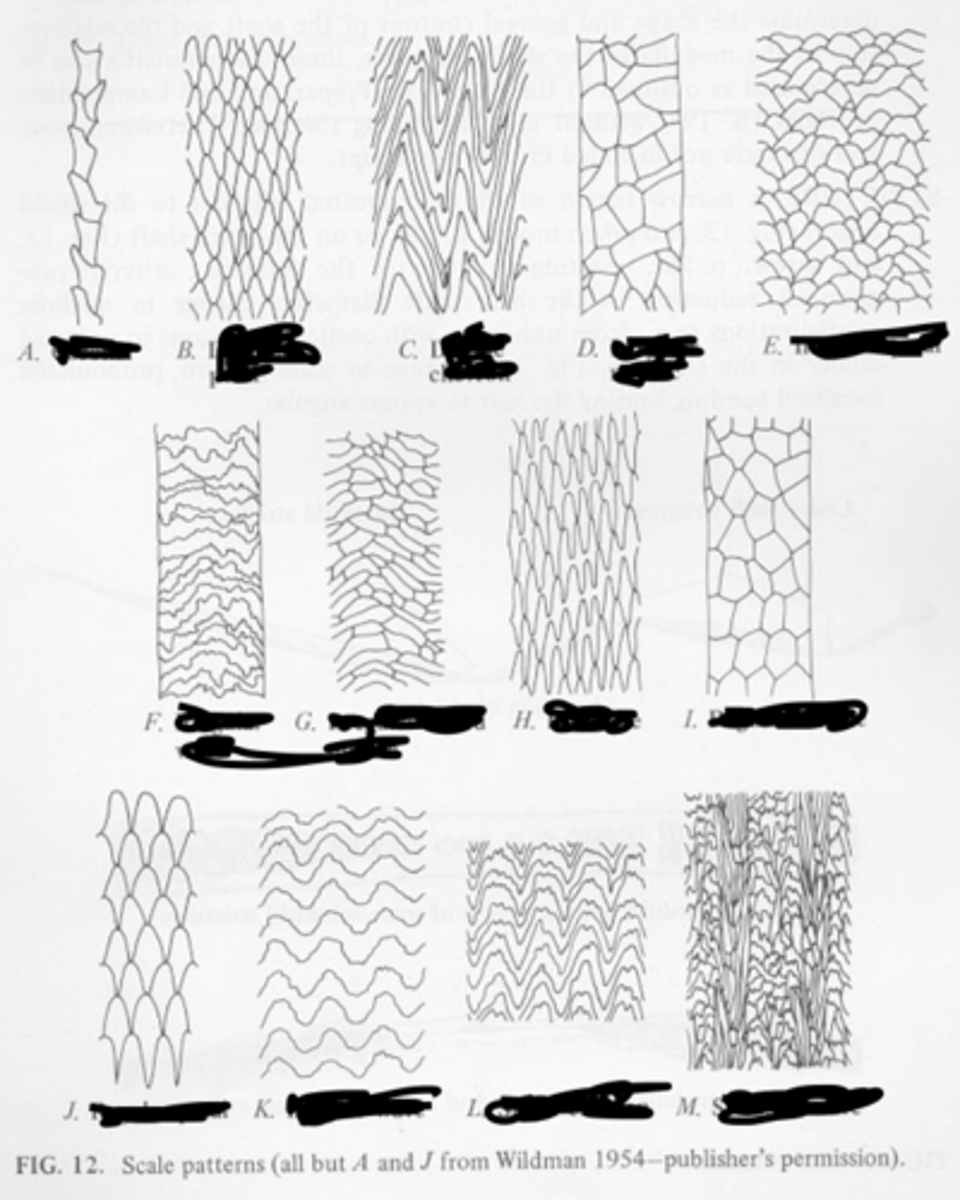
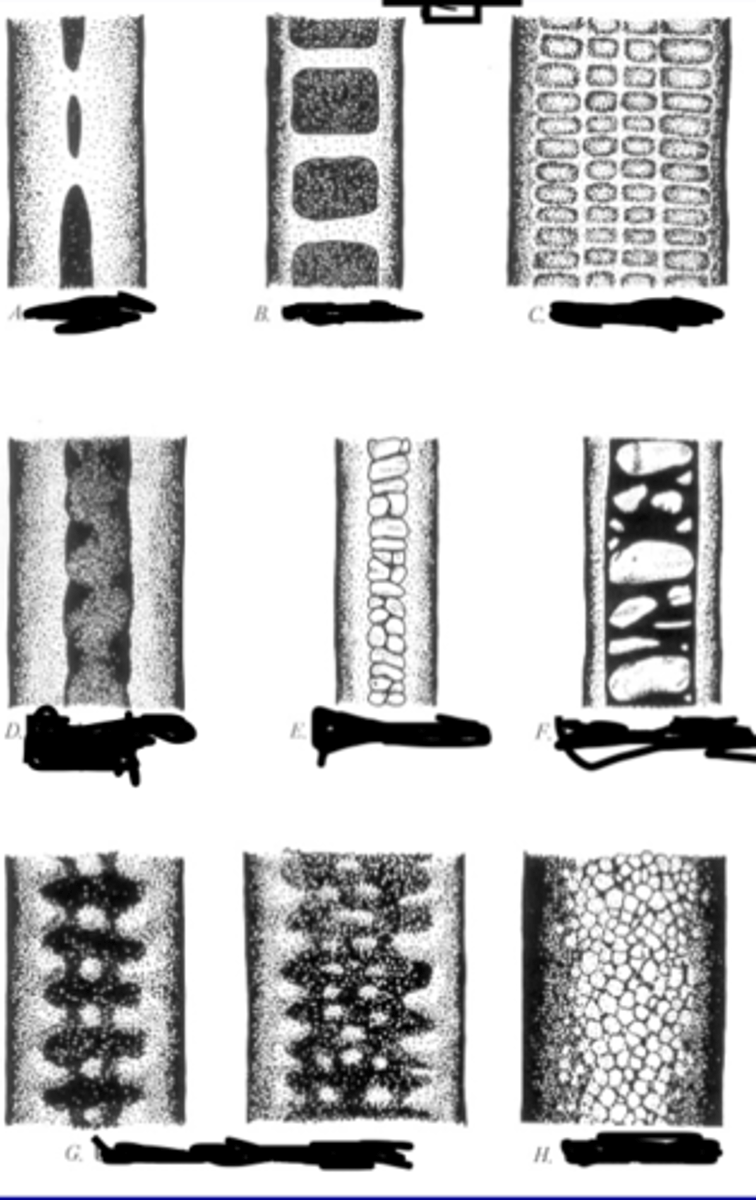
Which one is a double chevron?
C
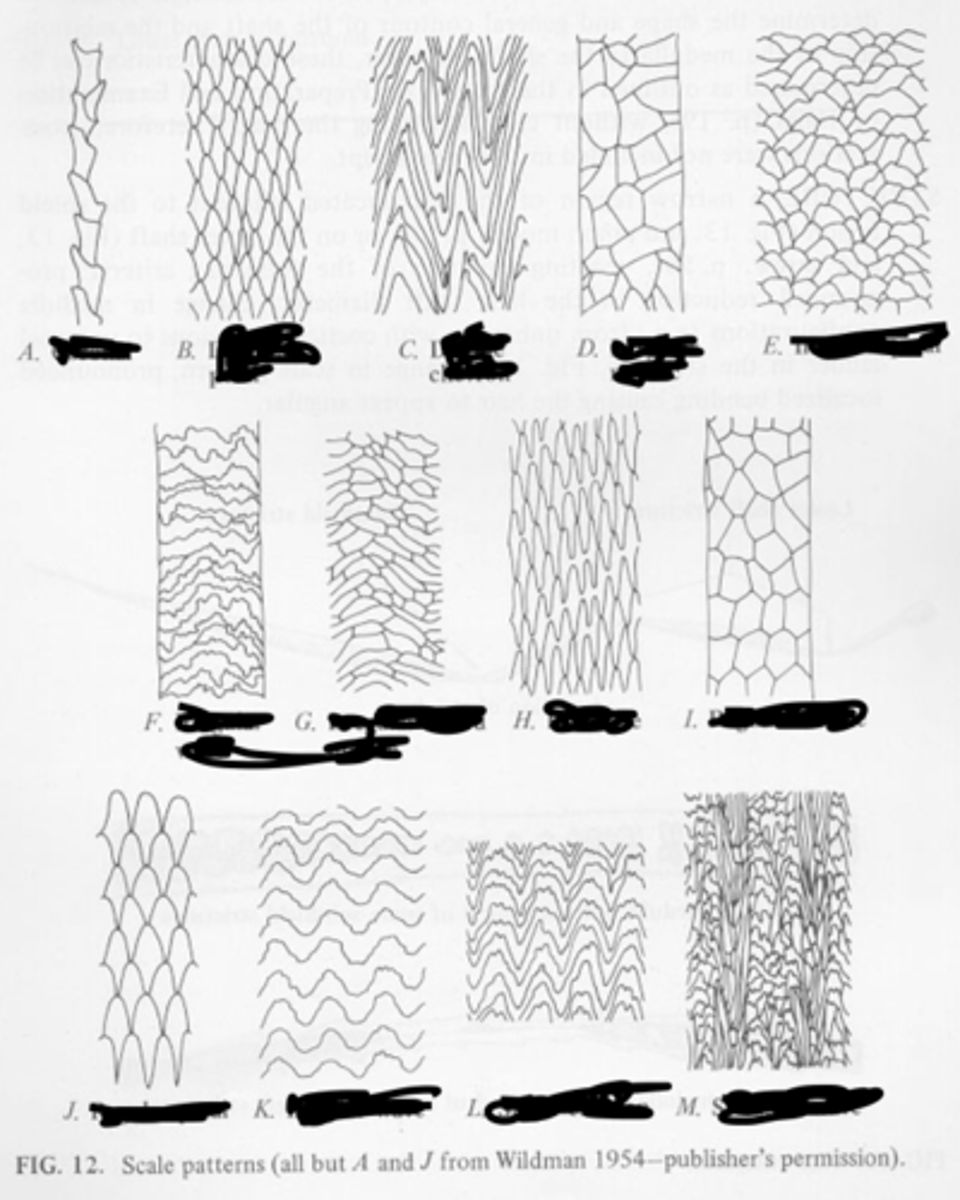
Which one is a regular mosaic?
I
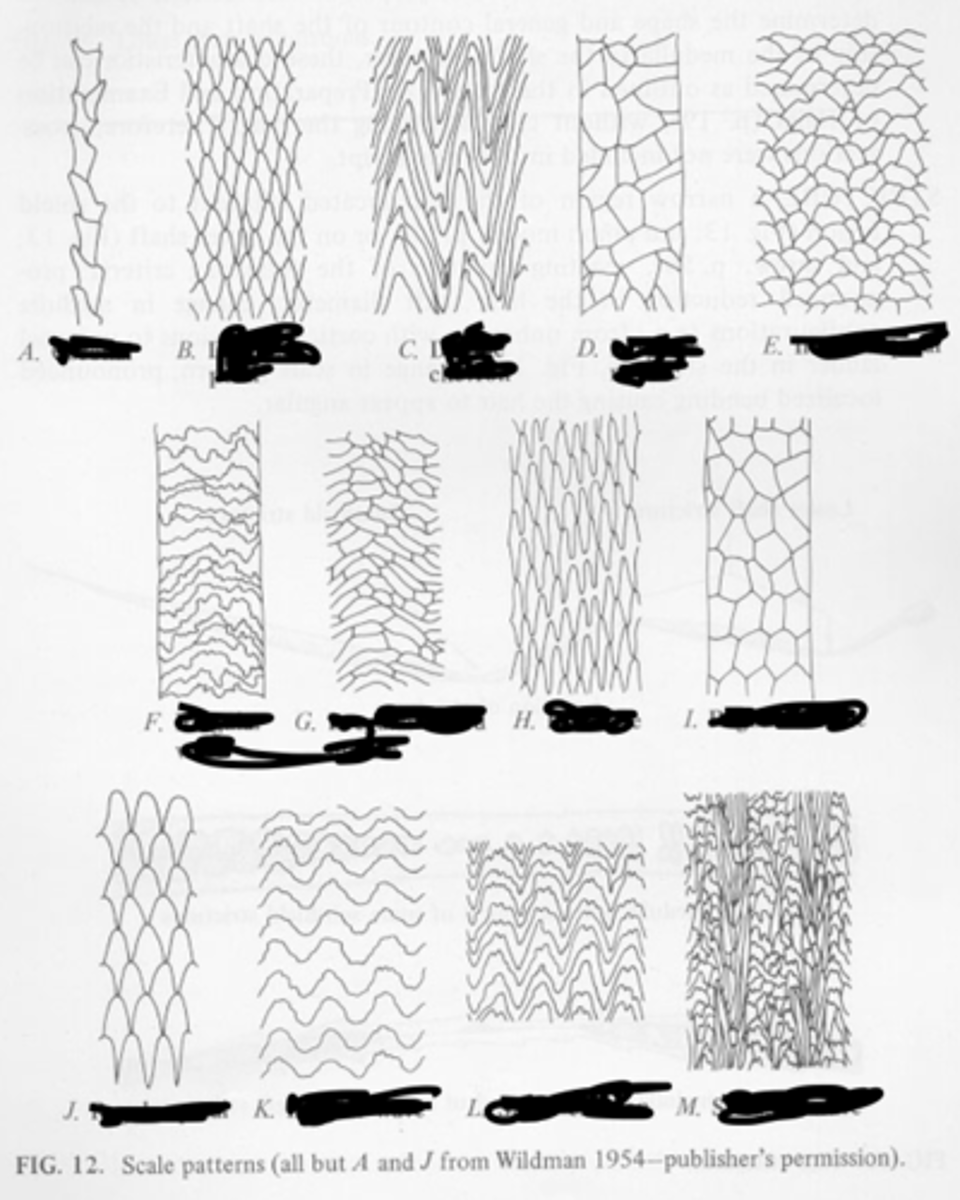
Which one is an irregular mosaic?
D
Which one is an irregular wave?
F
Which one is a diamond petal?
B
Which one is a irregular petal?
E
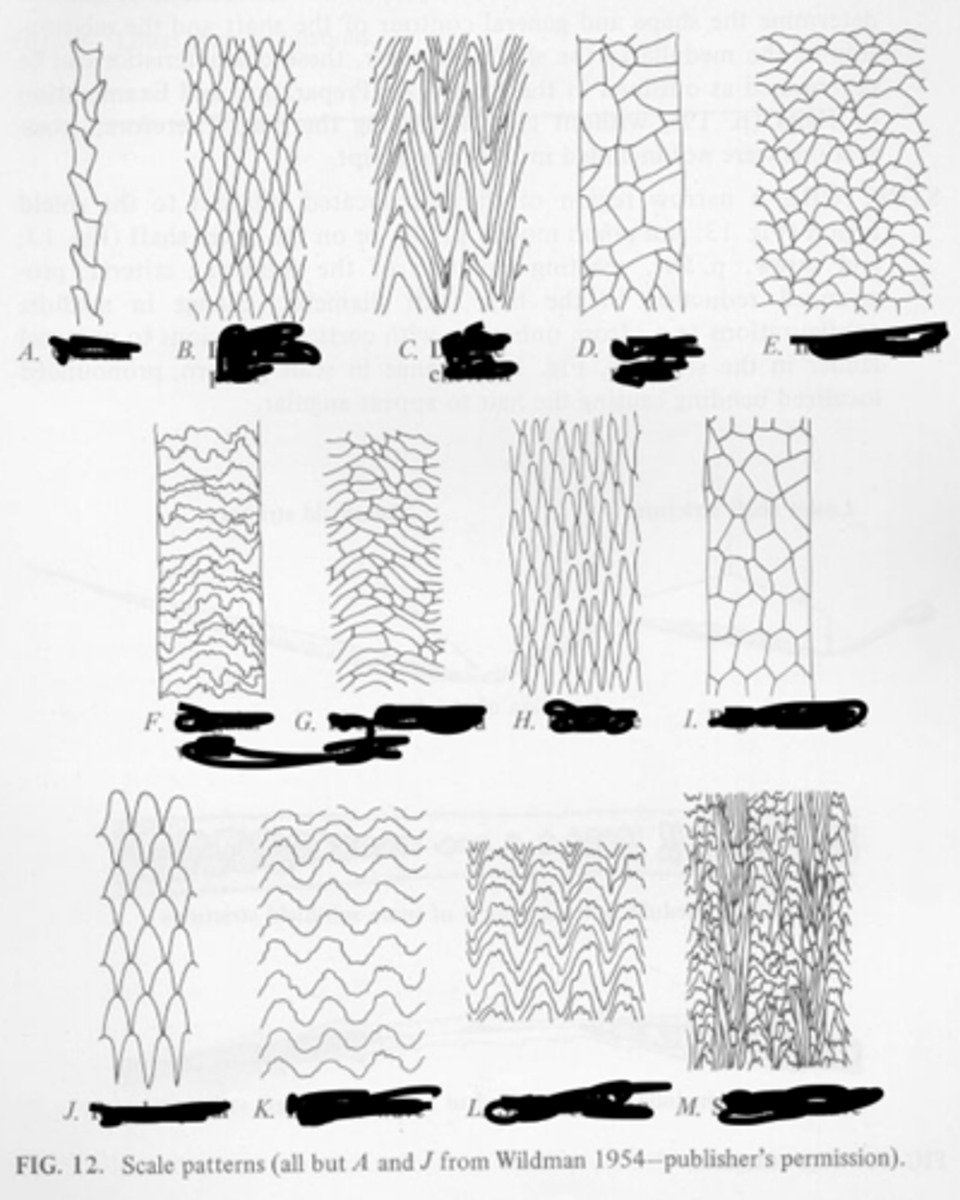
Which one is a pectinate?
H
Medullary Index
Medulla width/ hair width
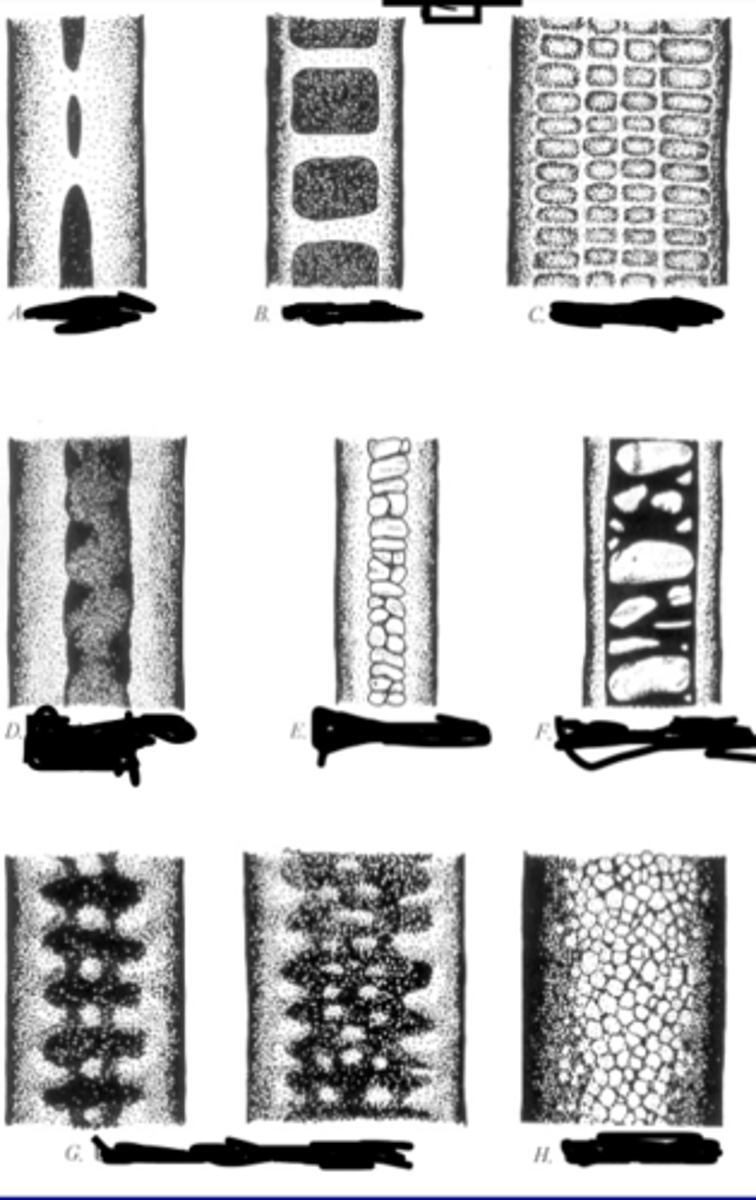
Which one is fragmental?
A
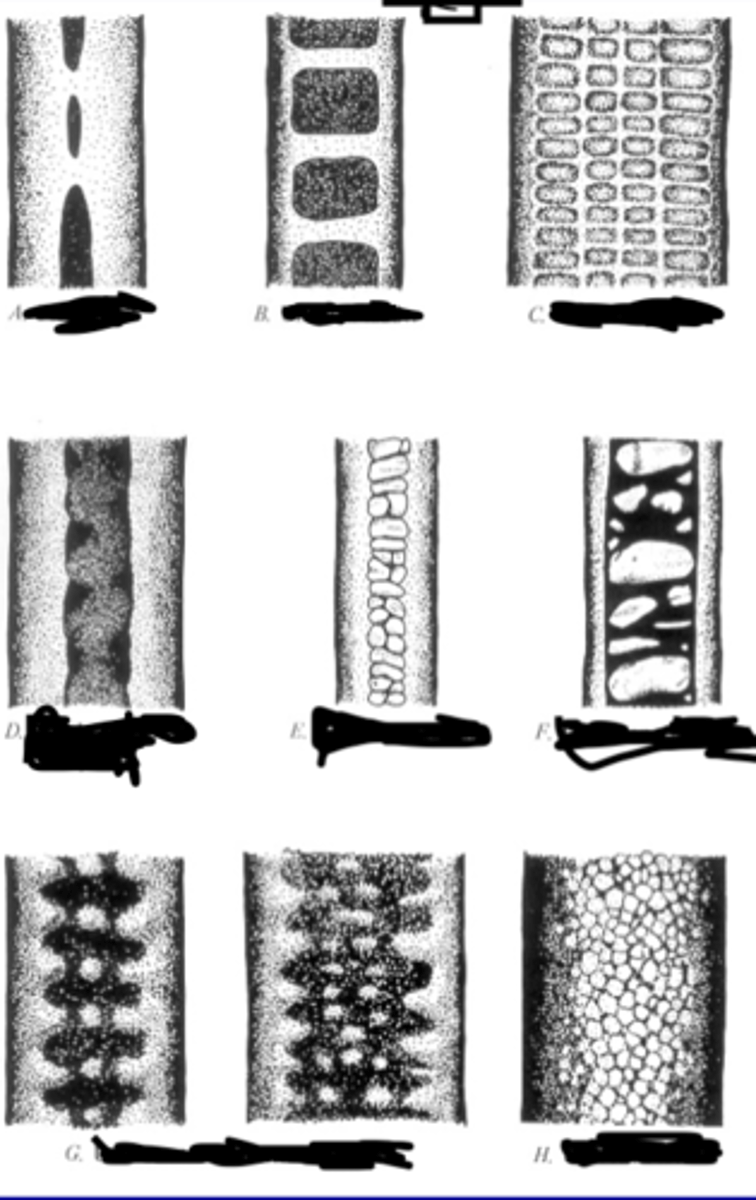
Which one is uniserial ladder?
B
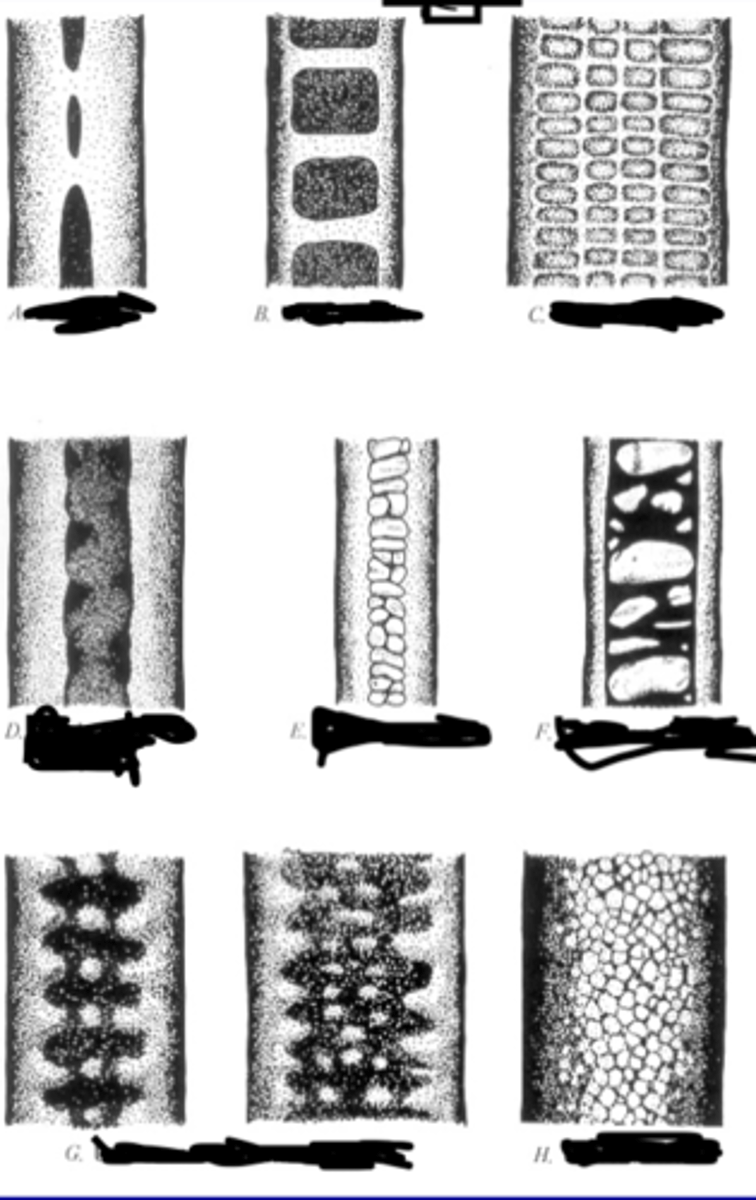
Which one is multiserial ladder?
C
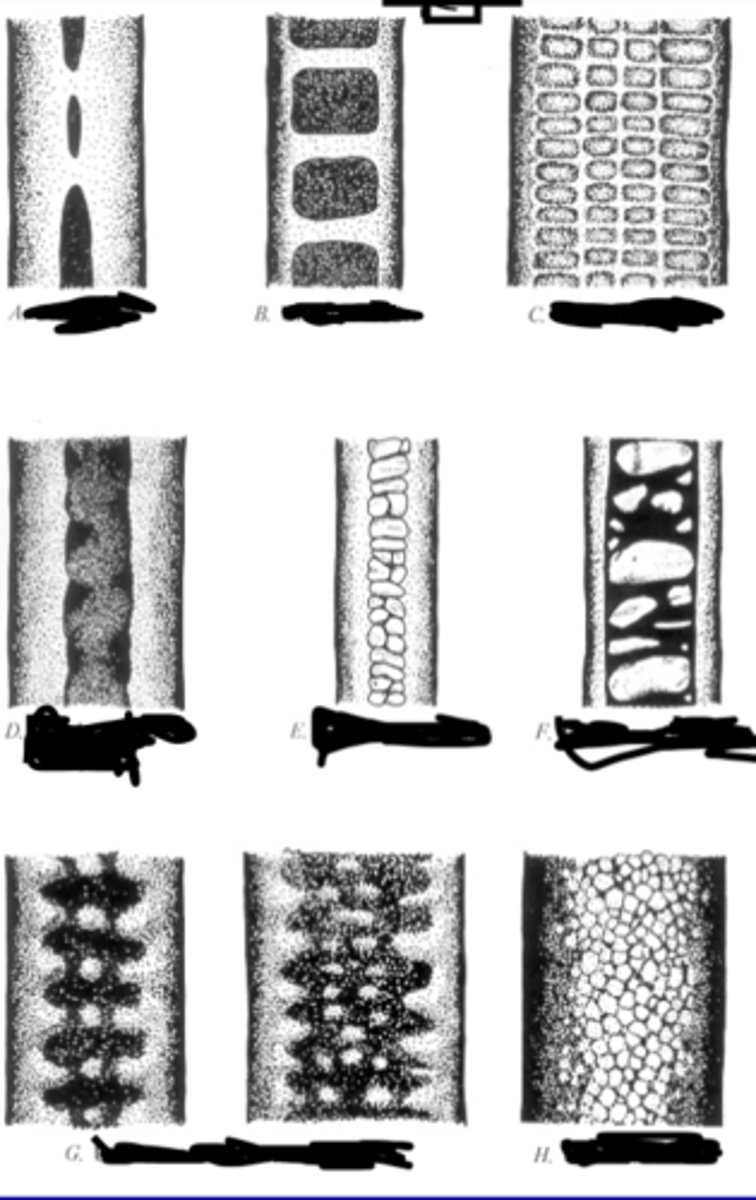
Which one is Simple unbroken amorphous?
D
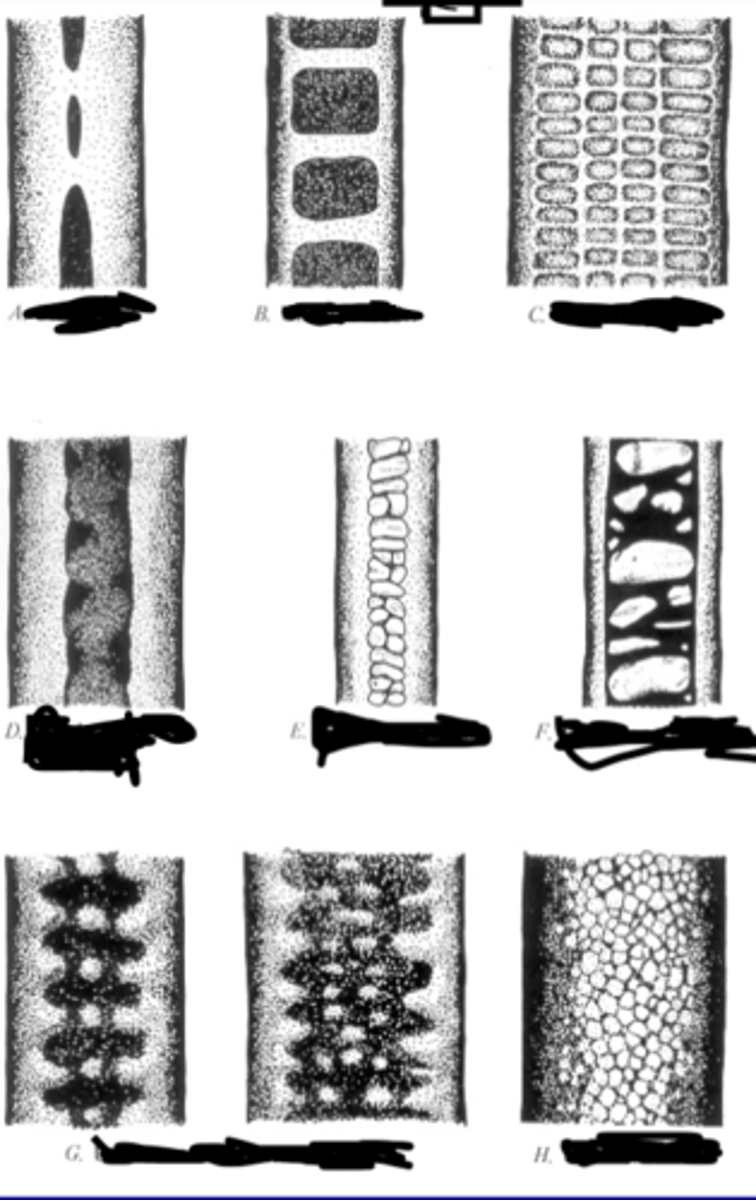
Which one is unbroken cellular?
E
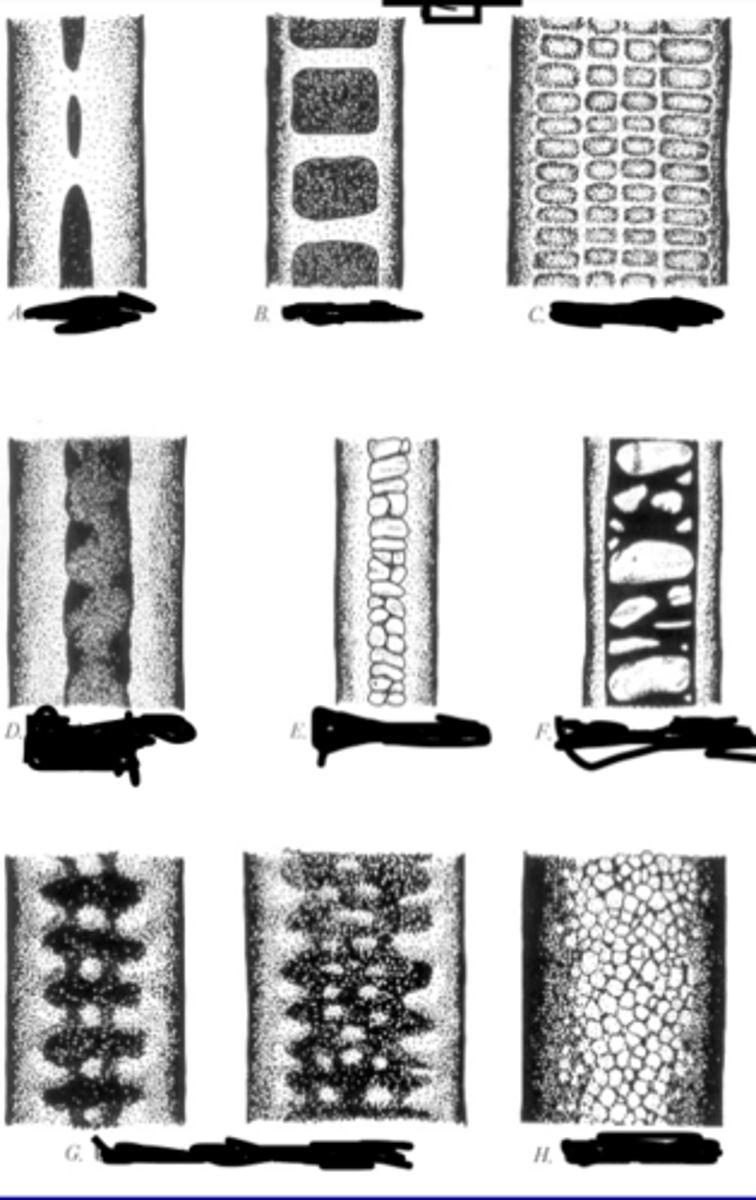
Which one is unbroken vacuolated?
F
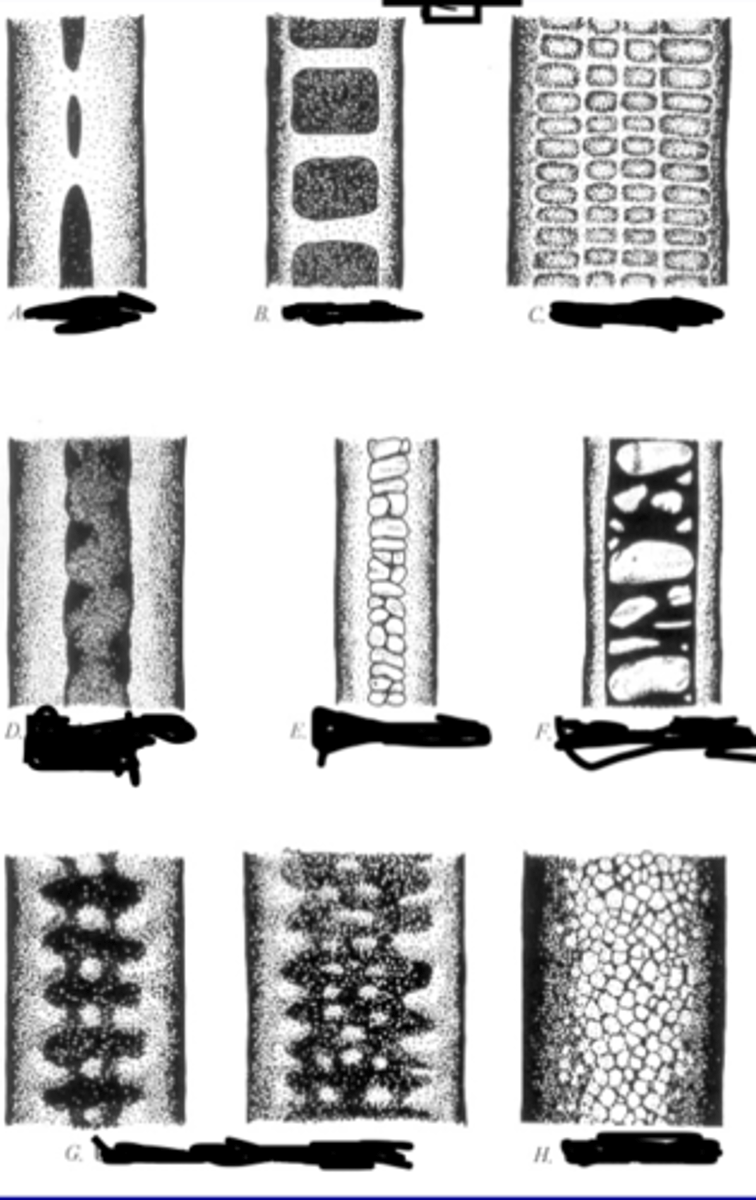
Which one is unbroken with cortical intrusions?
G
Which one is unbroken lattice?
H
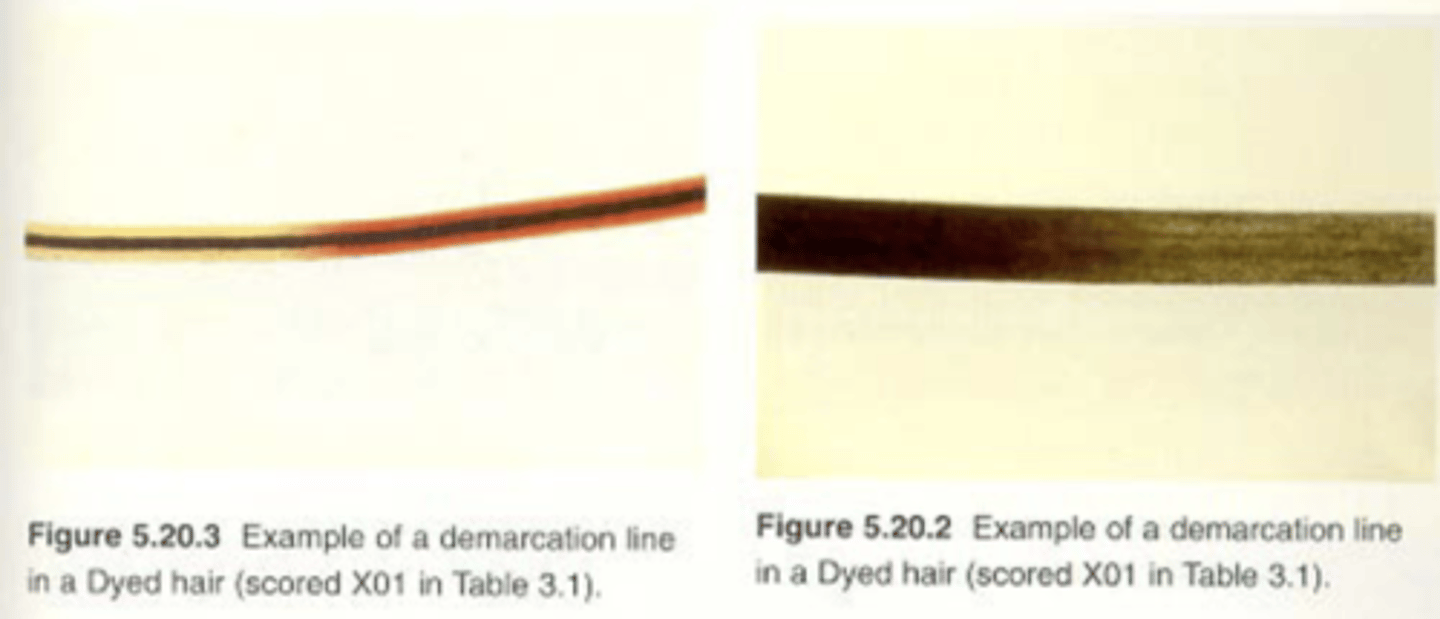
Dyed Hair- Demarcation Line
See picture
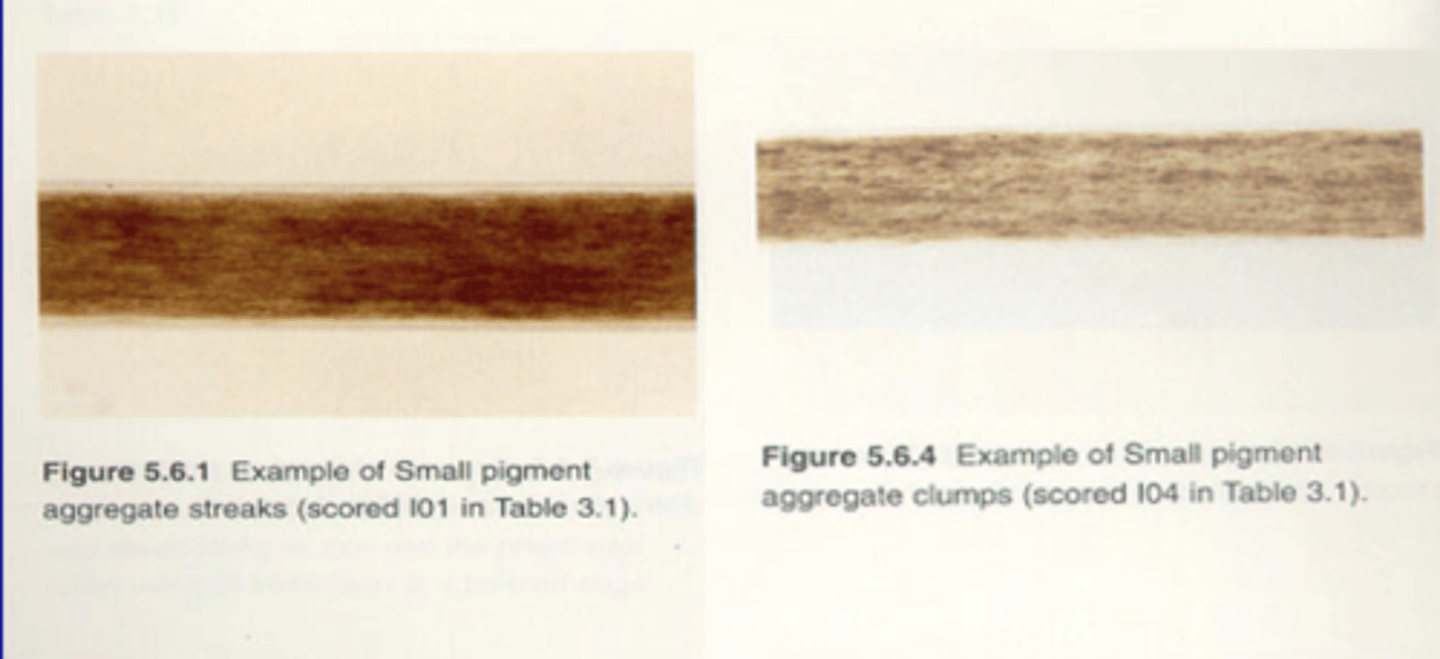
Pigment Aggregates
See picture
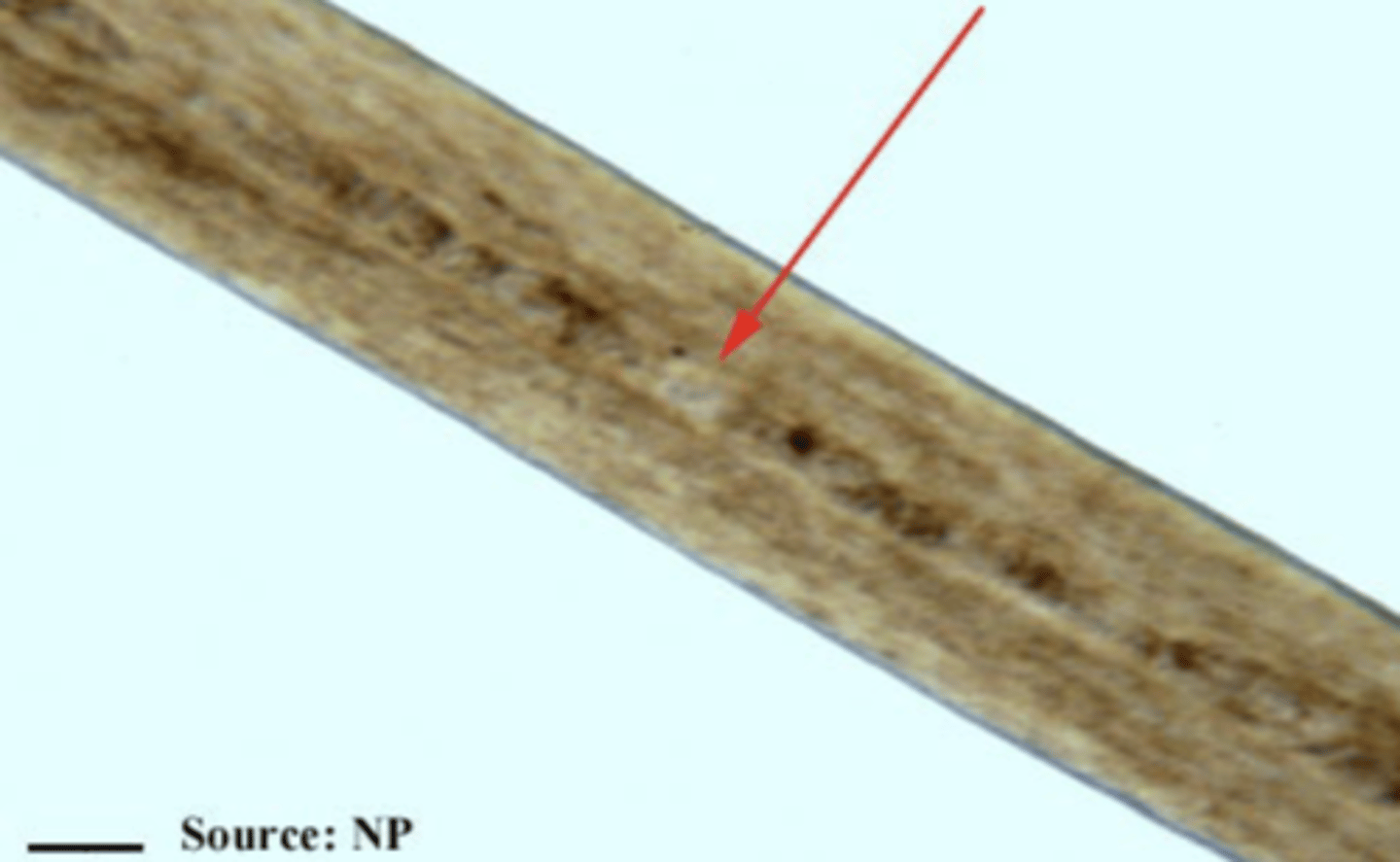
Is it discontinuous, continuous, or translucent?
Discontinuous
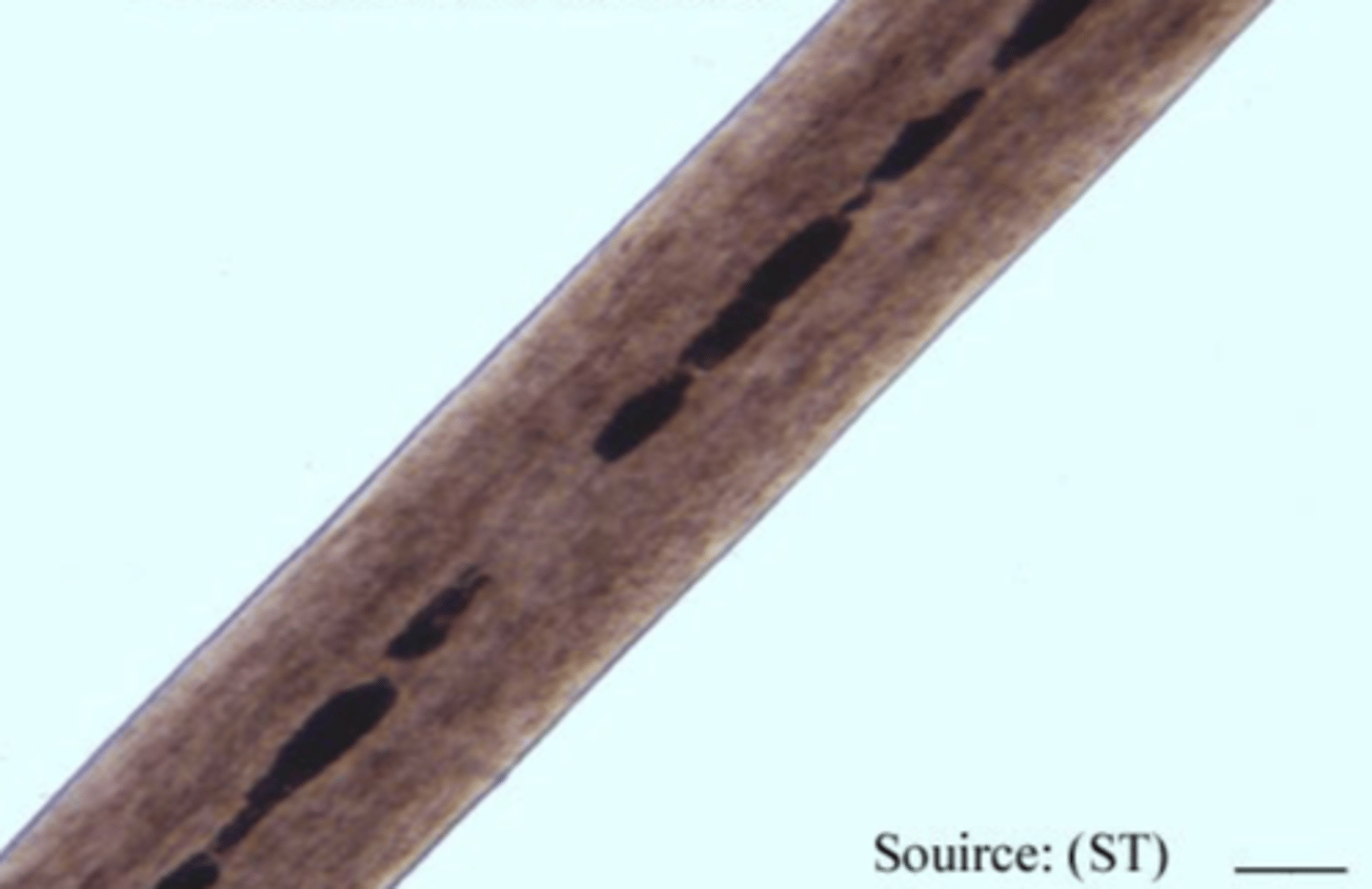
Is it discontinuous, continuous, or translucent??
Translucent
Mitochondrial DNA
Follicular tag- richest source of nuclear DNA. Therefore, anagen and beginning catagen hairs have a higher rate of success for DNA typing.
Control Samples
- Known samples; must be representative (25-100 hairs)
- Alternate known or "anticipated alibi" samples
- "Contamination" concerns
The 4 C's
Carat, Clarity, Color, Cut
Karat
1/24 Pure Gold
1 point equals what in diamonds?
0.01 ct
Specific Gravity
Dry weight/Loss of Weight in Water
Carat
0.2g, 100 points
Single cut has how many facets?
18
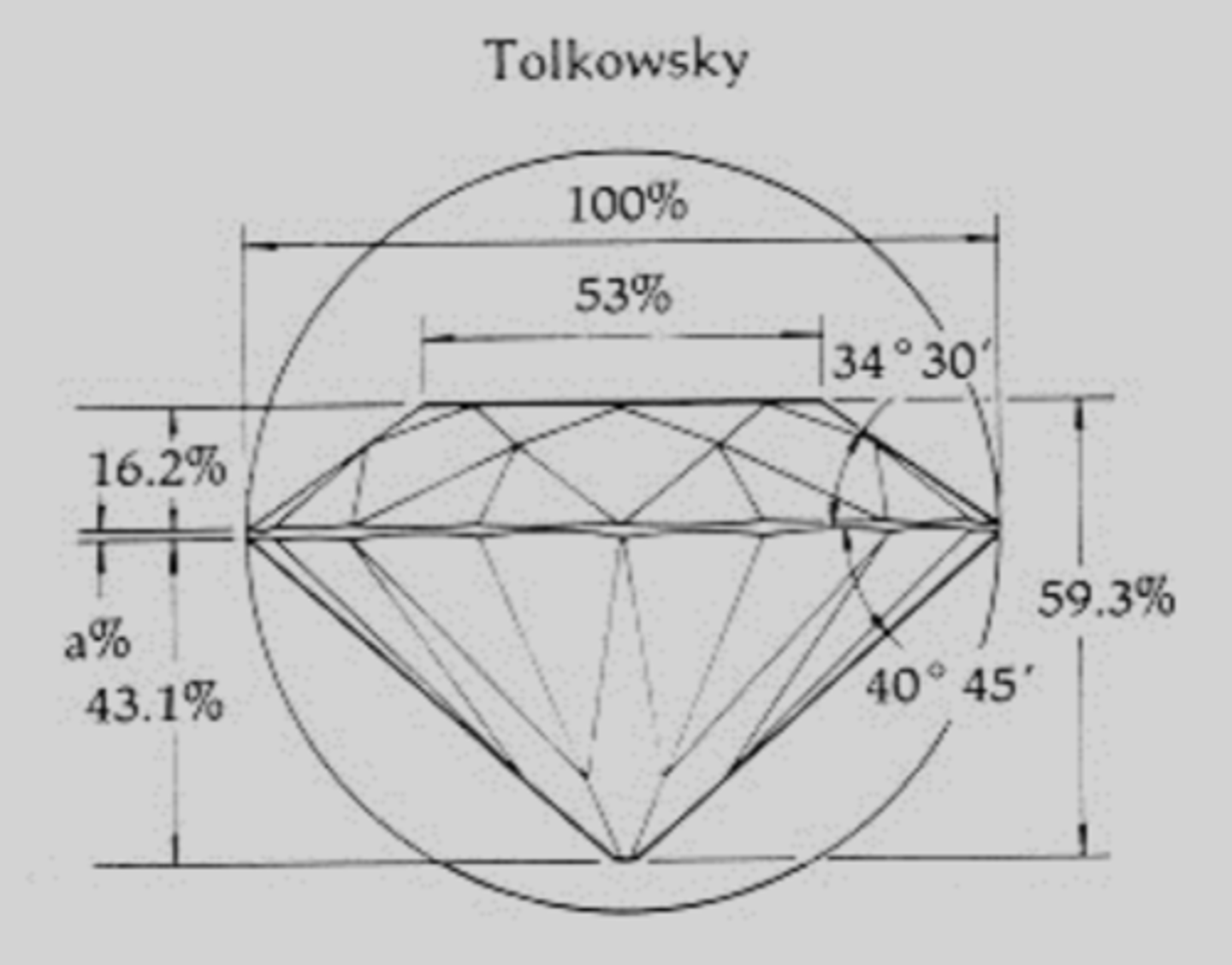
Tolkowsky is also known as a what cut?
American cut
Gemscope
Dark field stereoscope with Fluorescent Incident Light for Color Grading
Which is the acrosome?
C
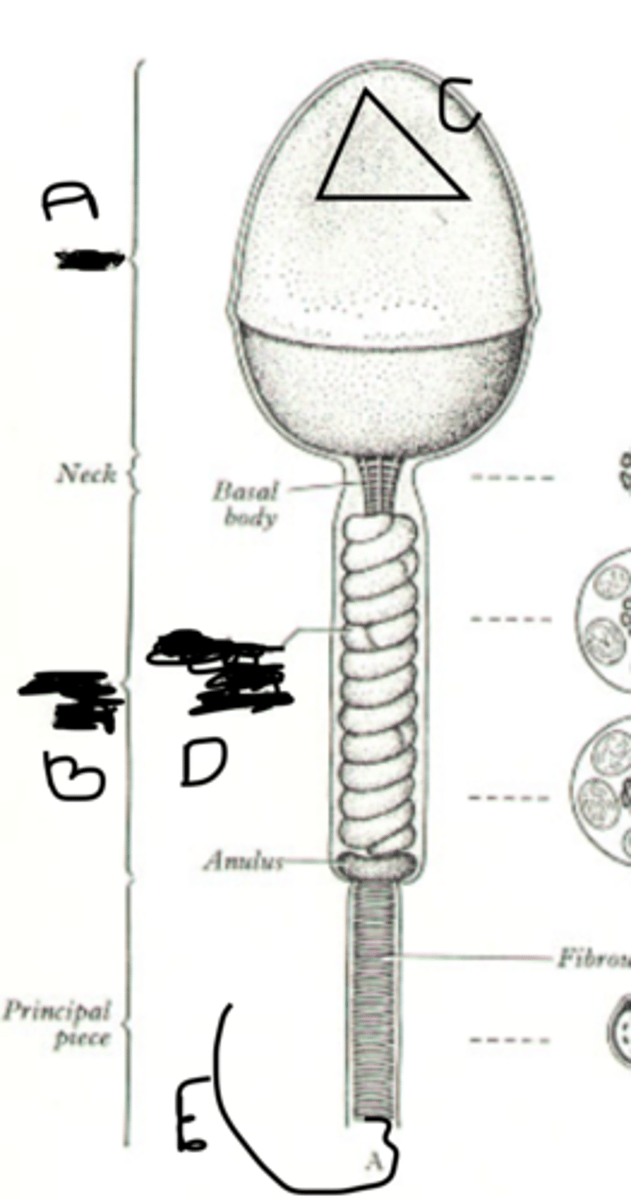
Which one is the head?
A
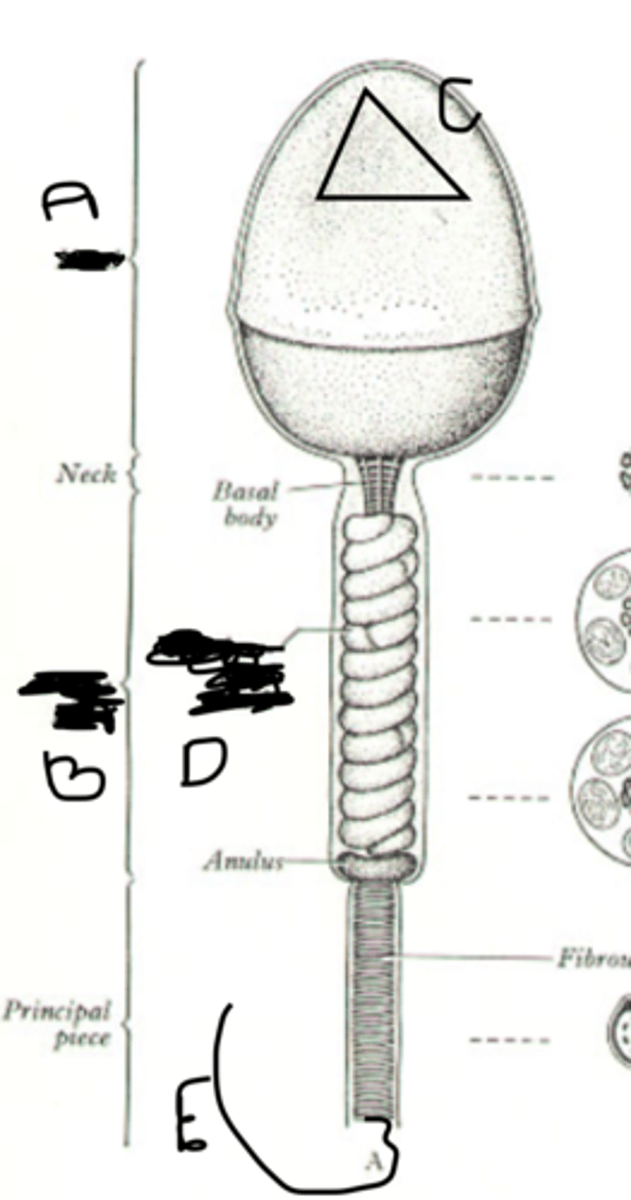
Which one is the middle piece?
B
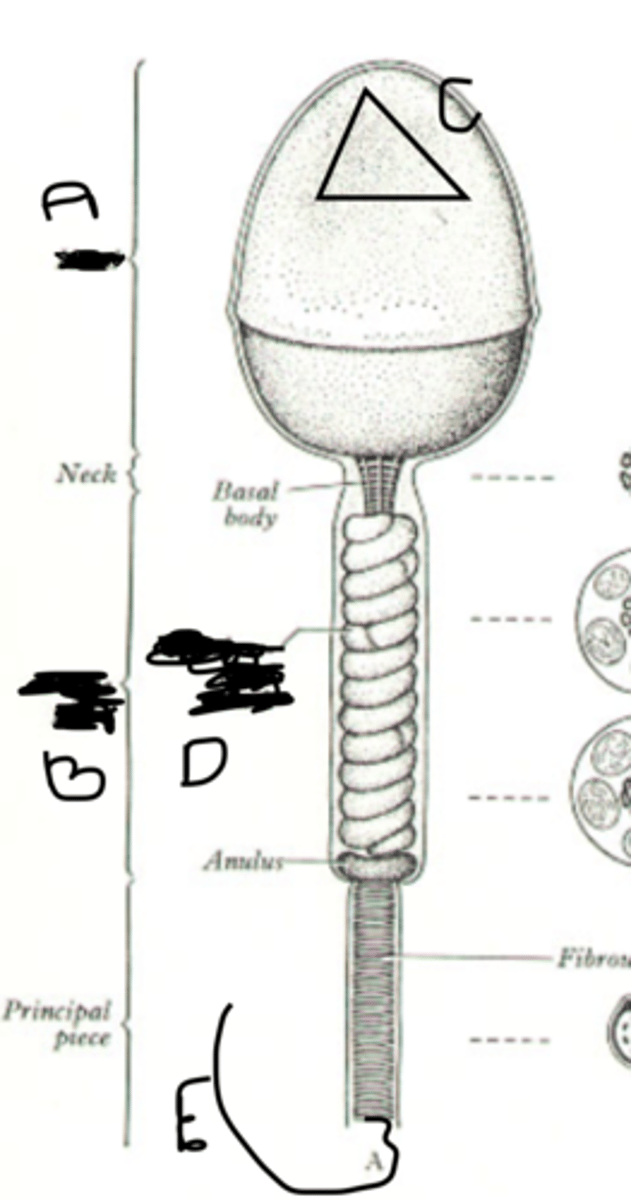
Which one is the Tail?
E
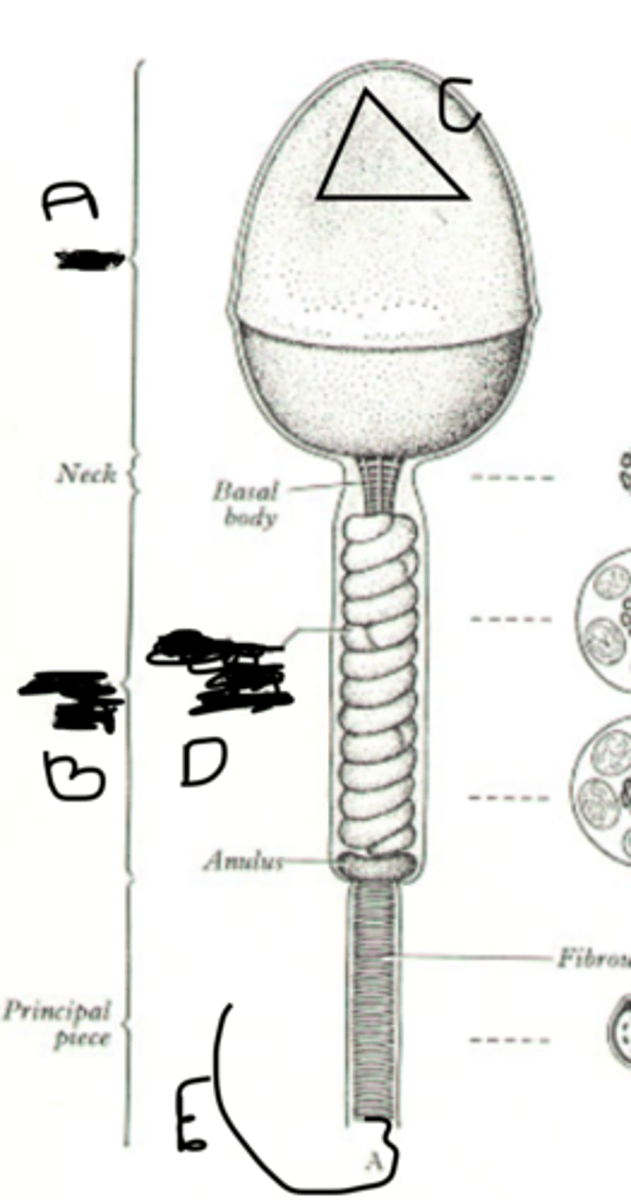
Which one is the mitochondrial sheath?
D
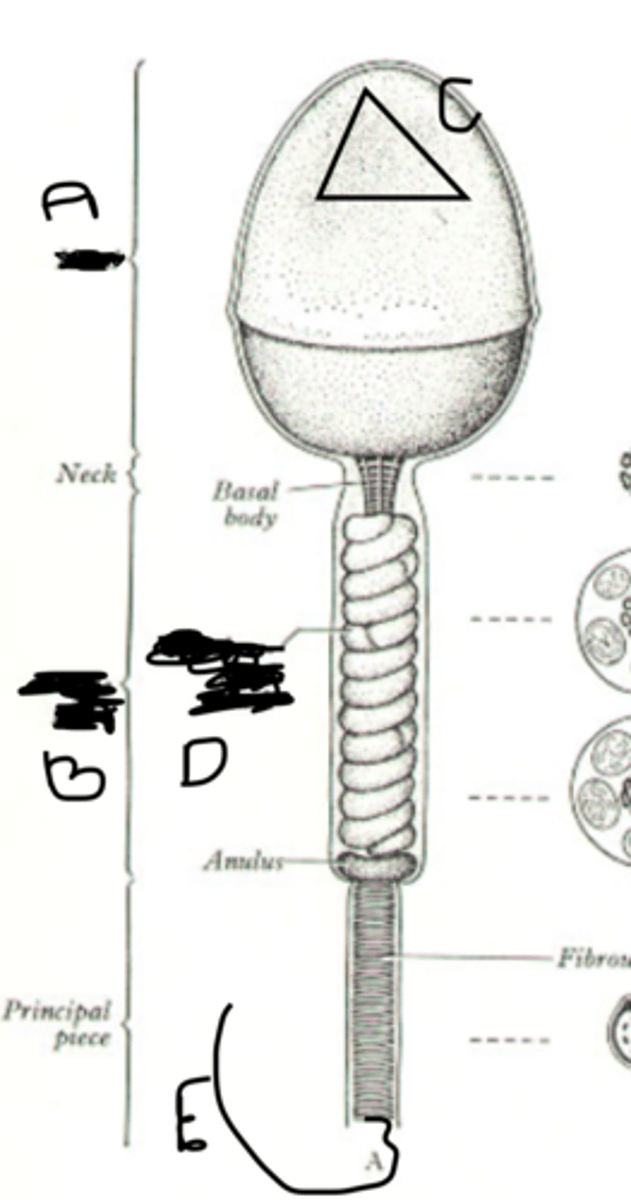
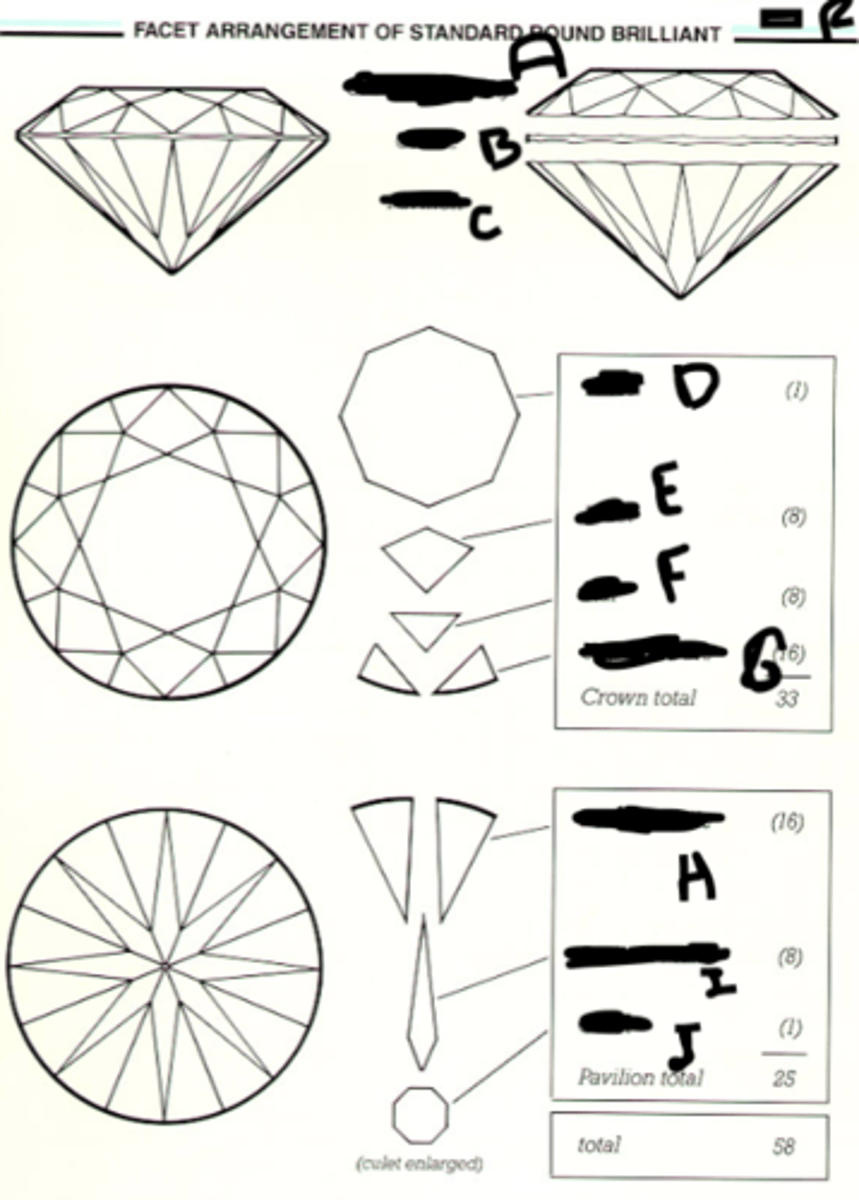
Which one is the girdle?
B
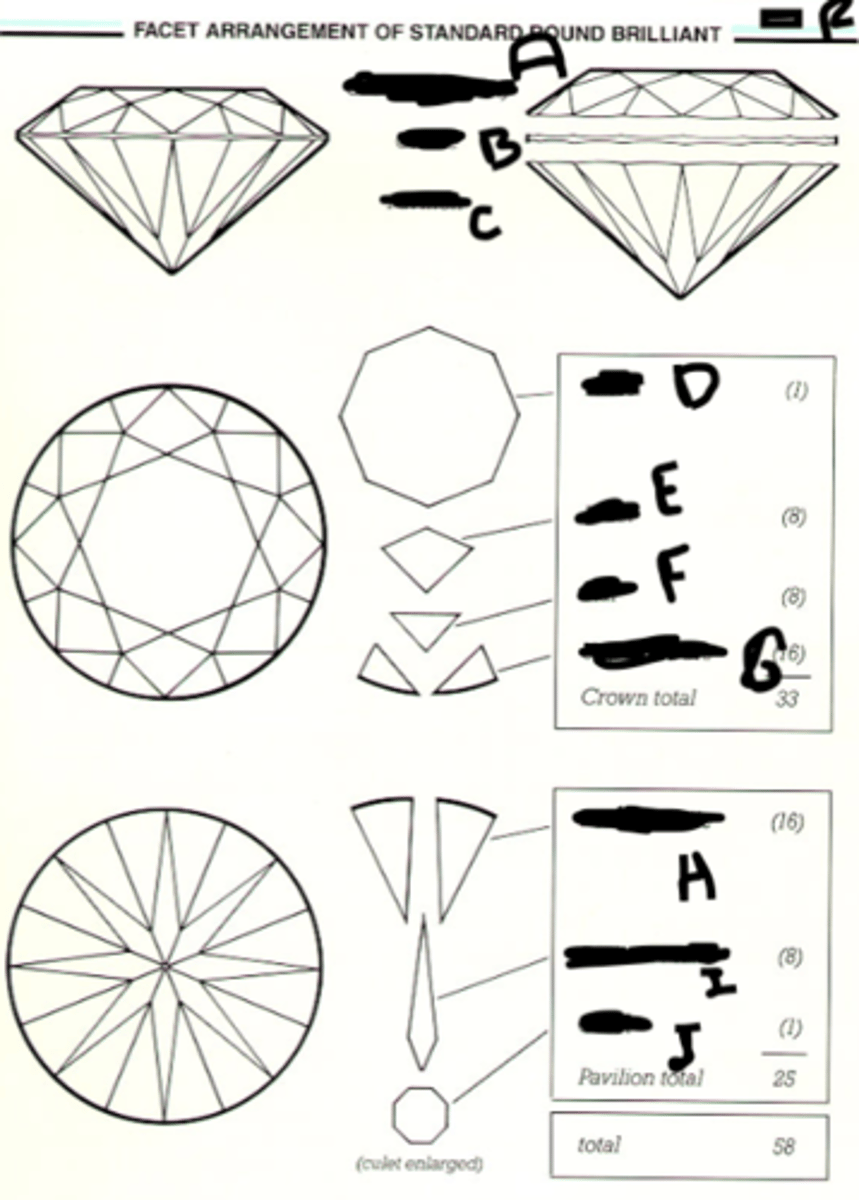
Which one is the pavilion?
C
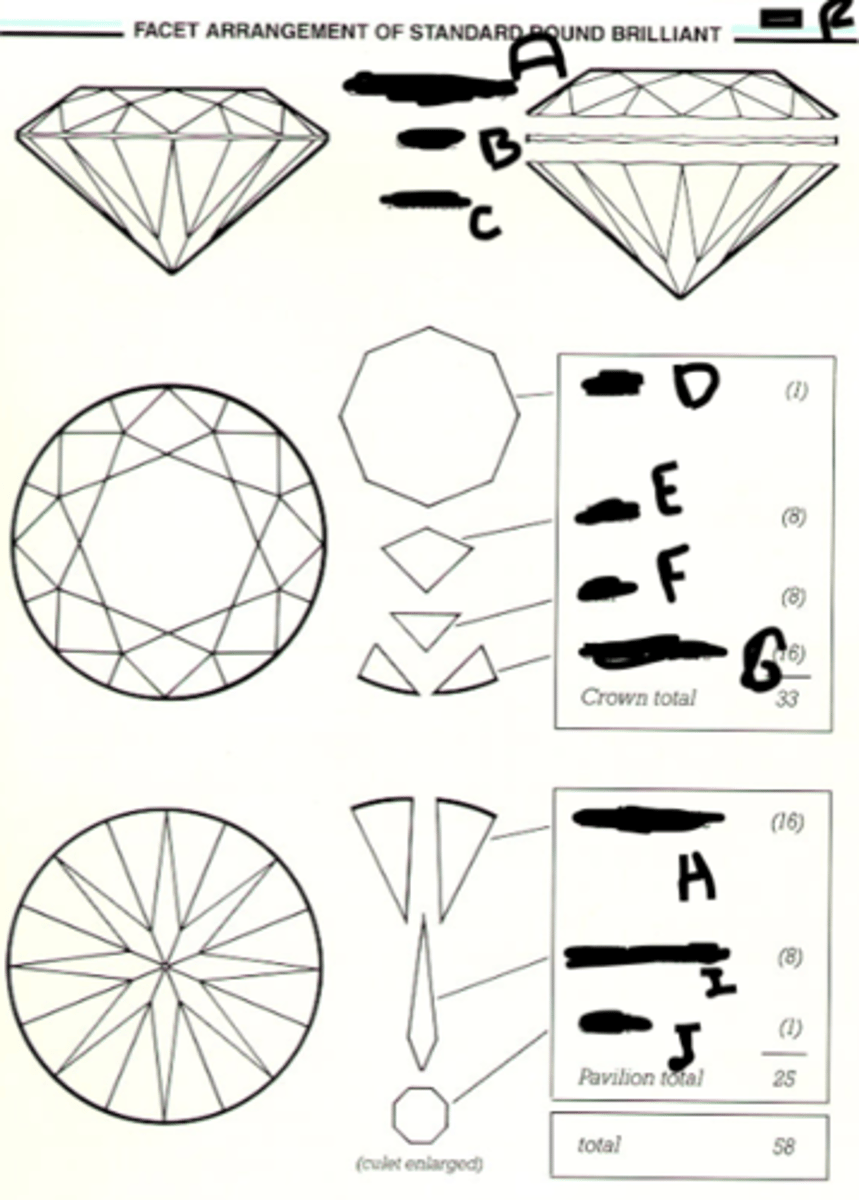
Which one is the crown?
A
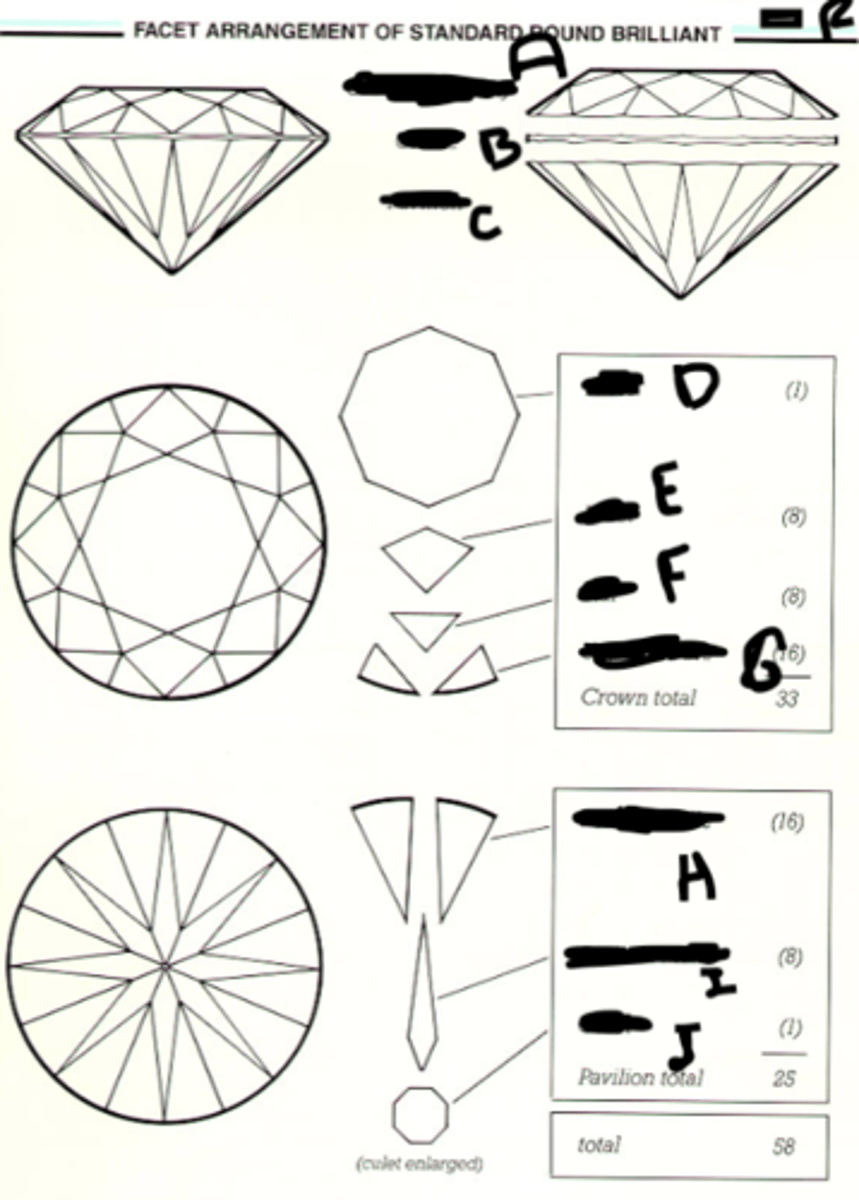
Which one is table?
D
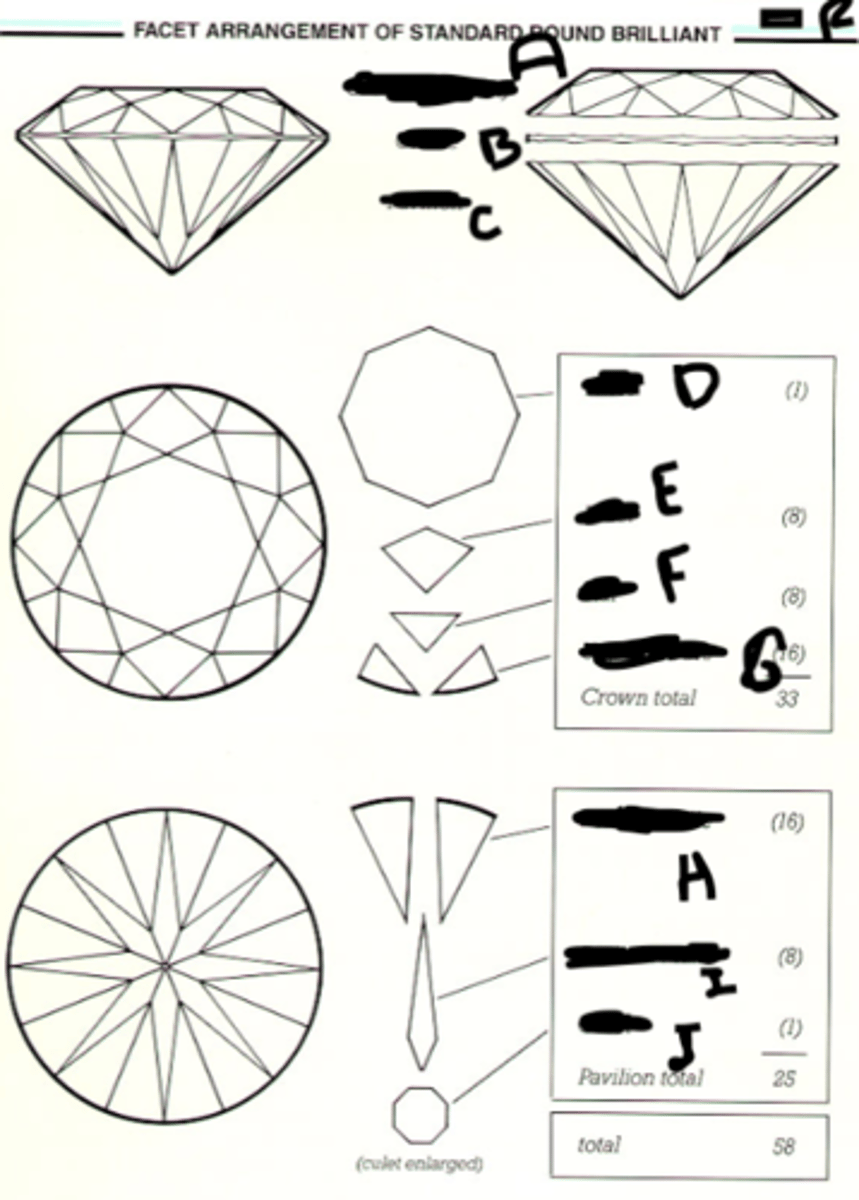
Which one is bezel?
E
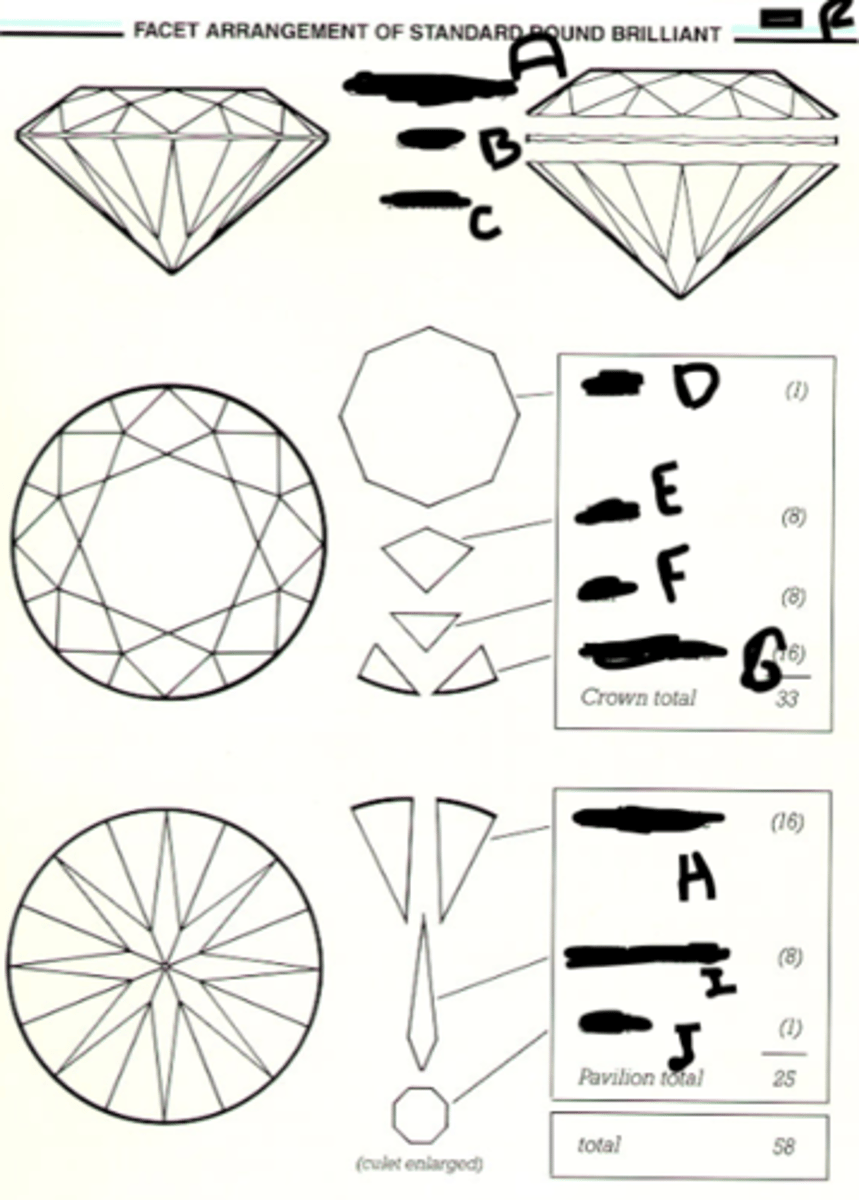
Which one is star?
F
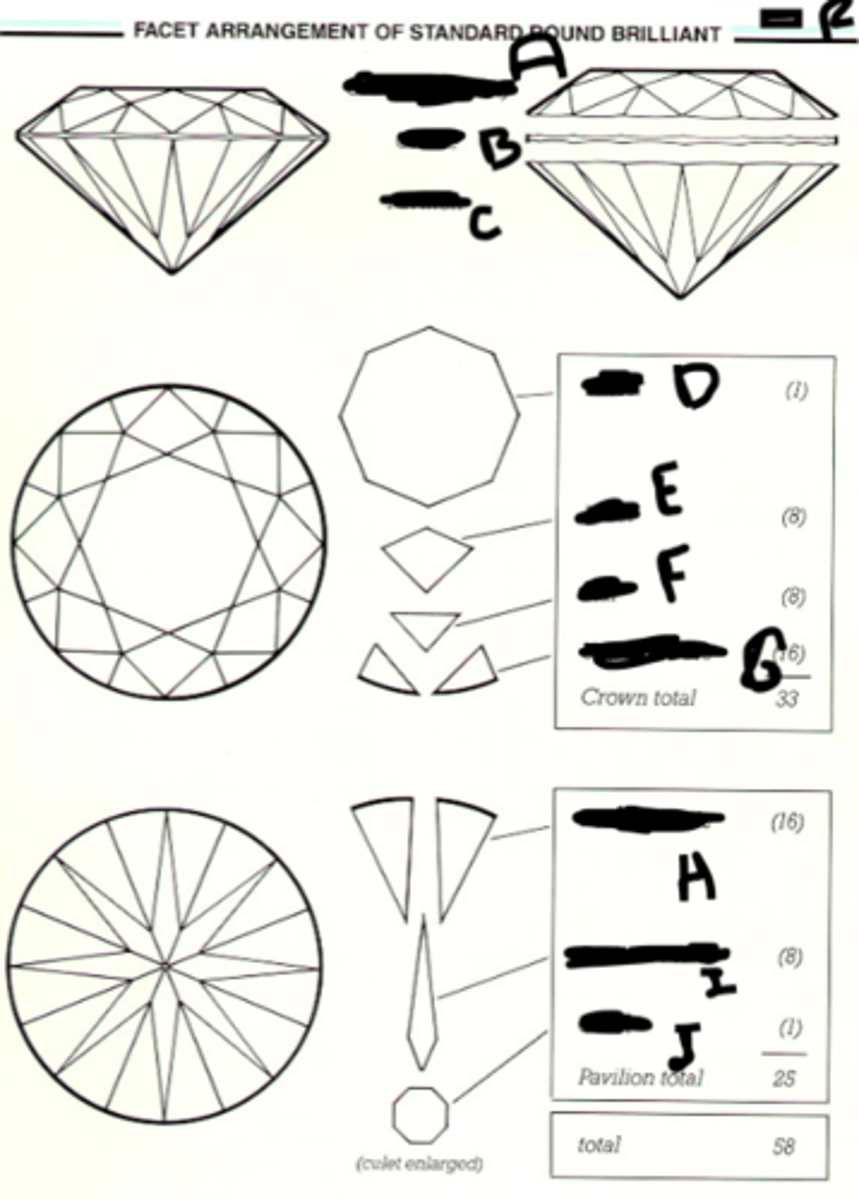
Which one is the upper girdle?
G
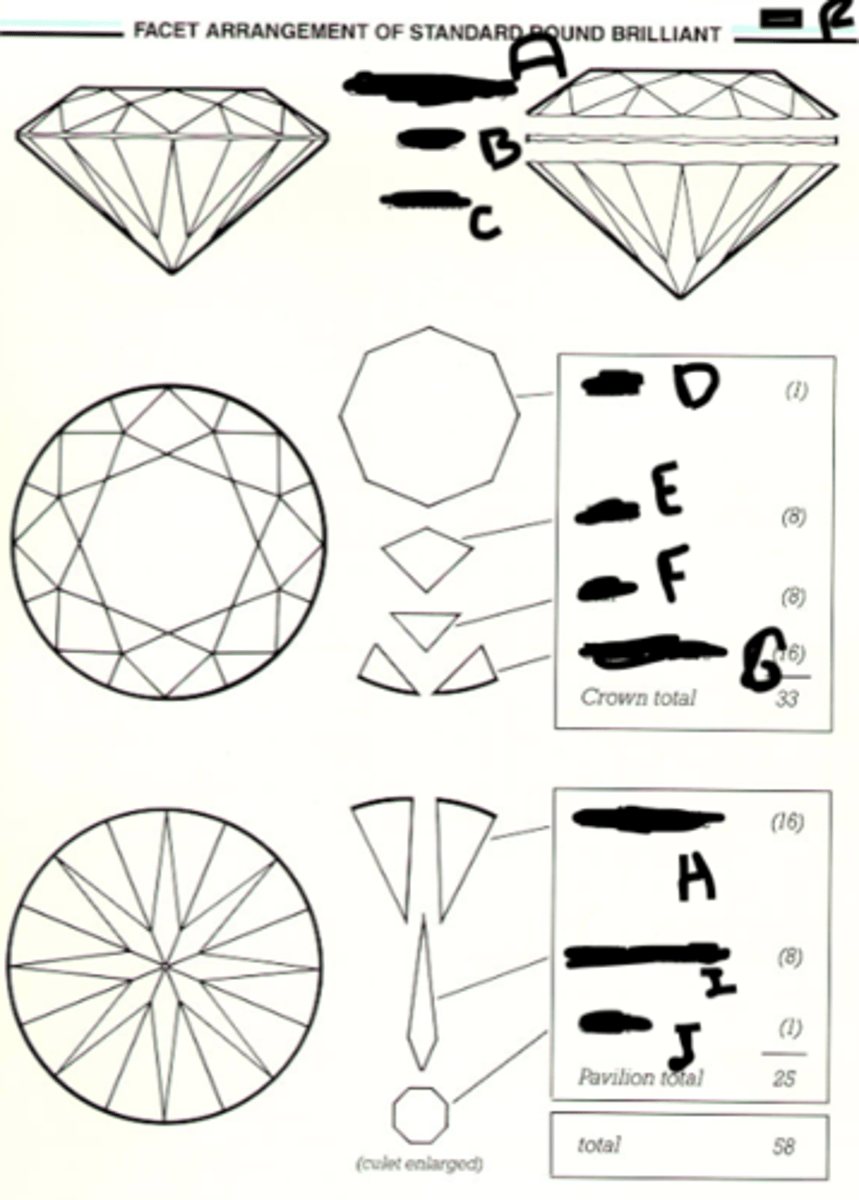
Which one is the lower girdle?
H
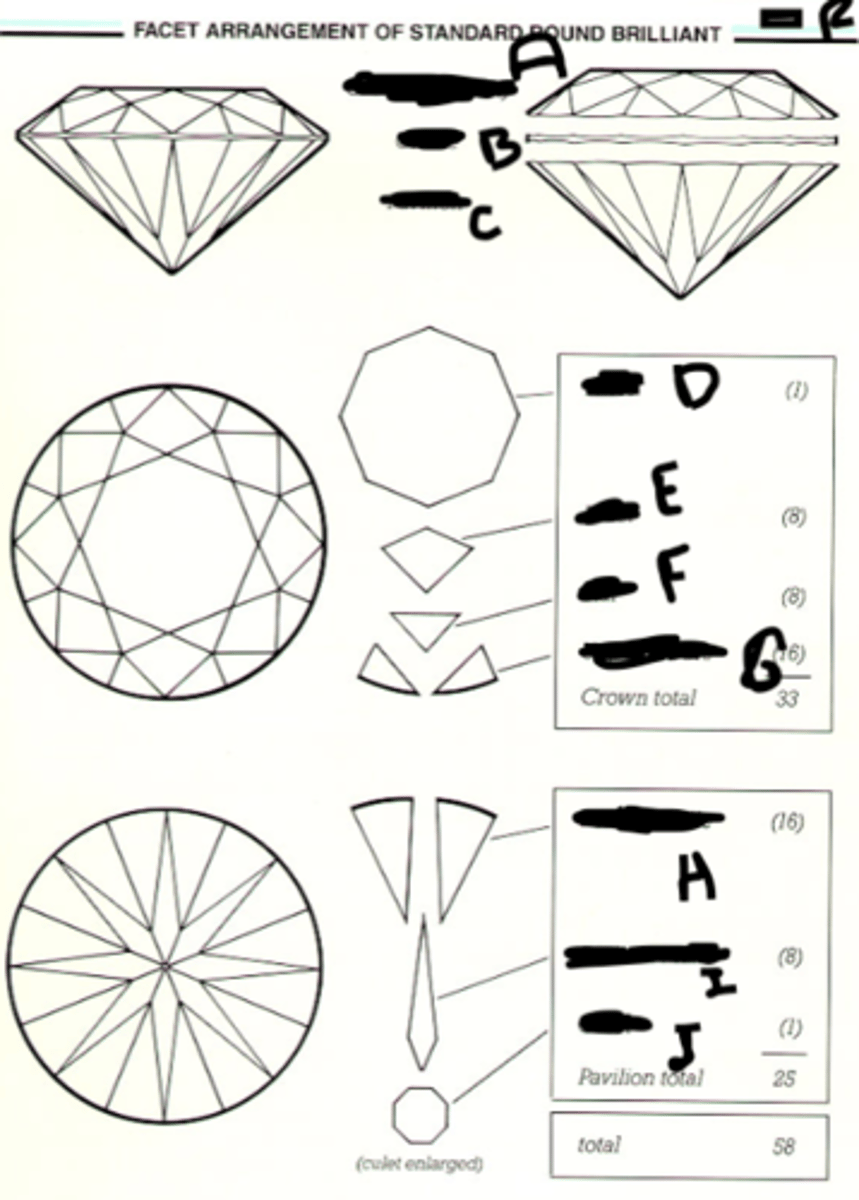
Which one is the pavilion main?
I
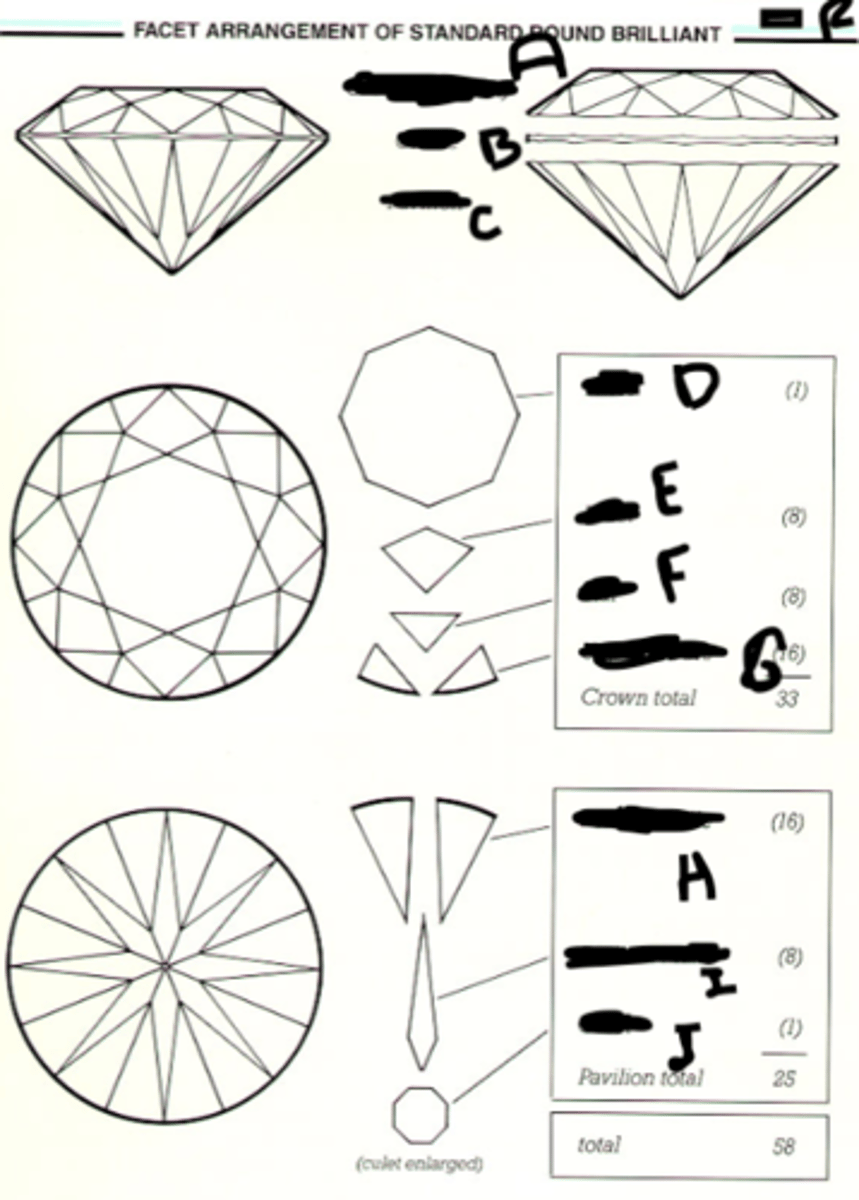
Which one is the culet?
J
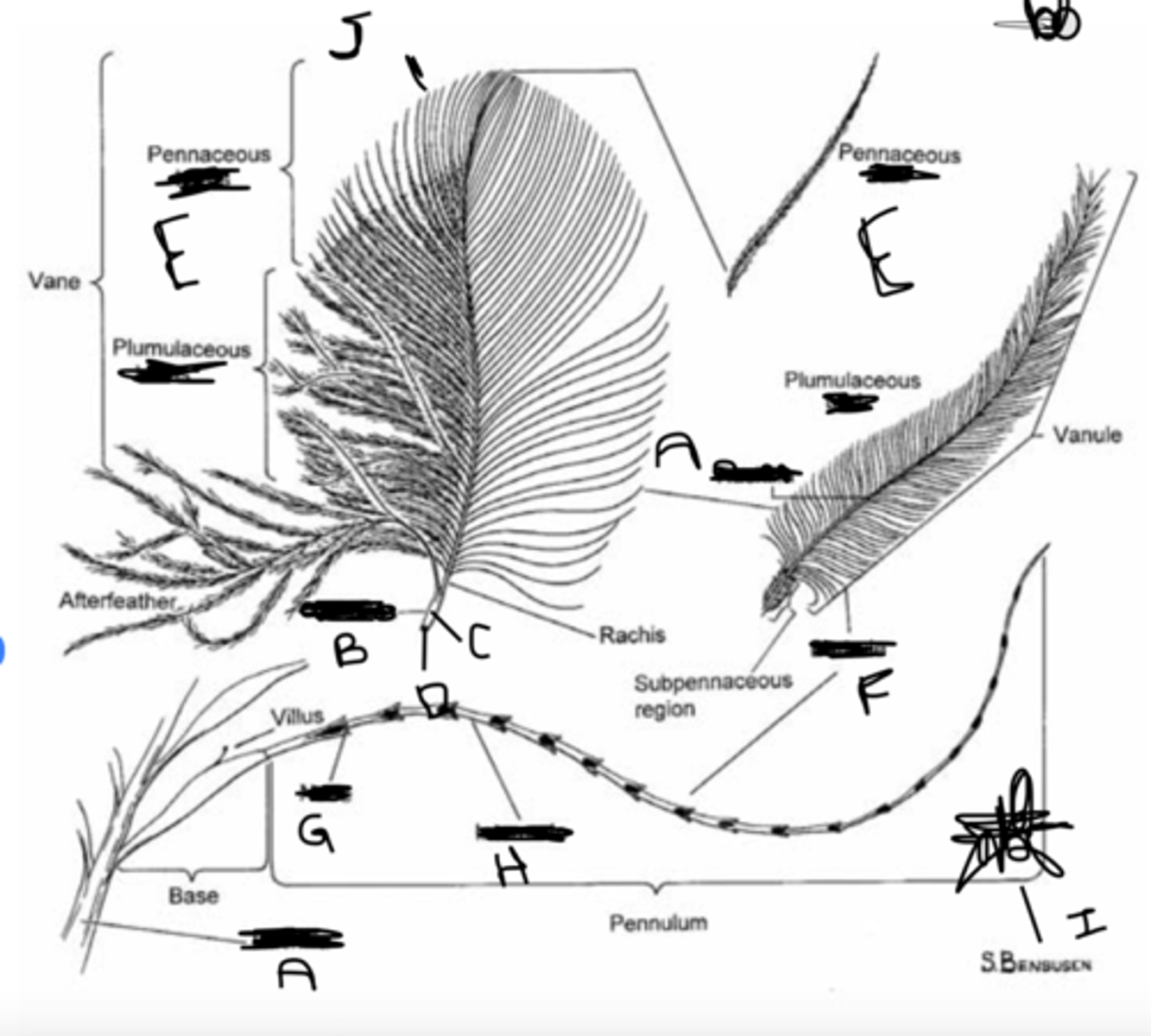
Which one is the rachis?
A
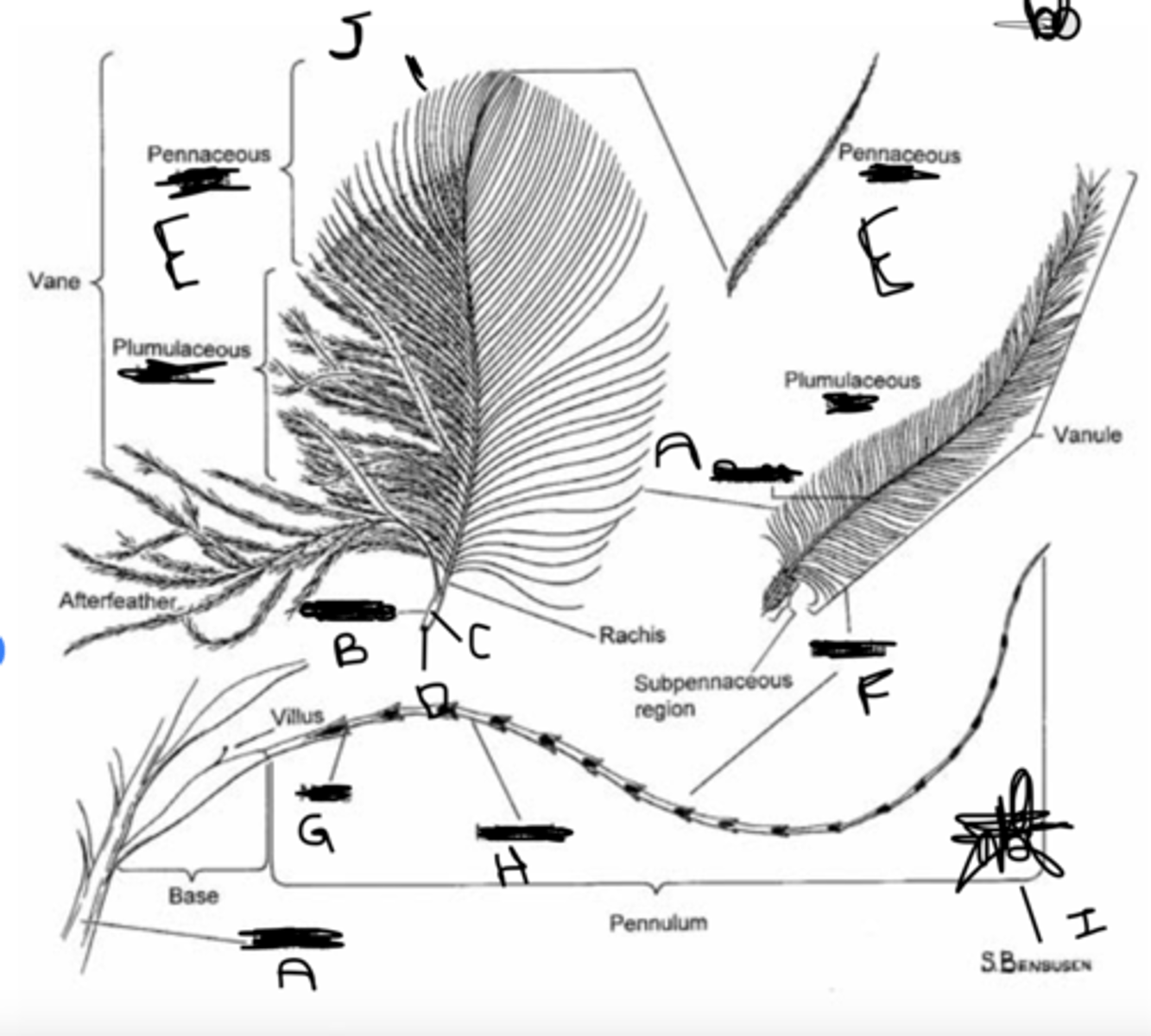
Which one is the calamus?
B
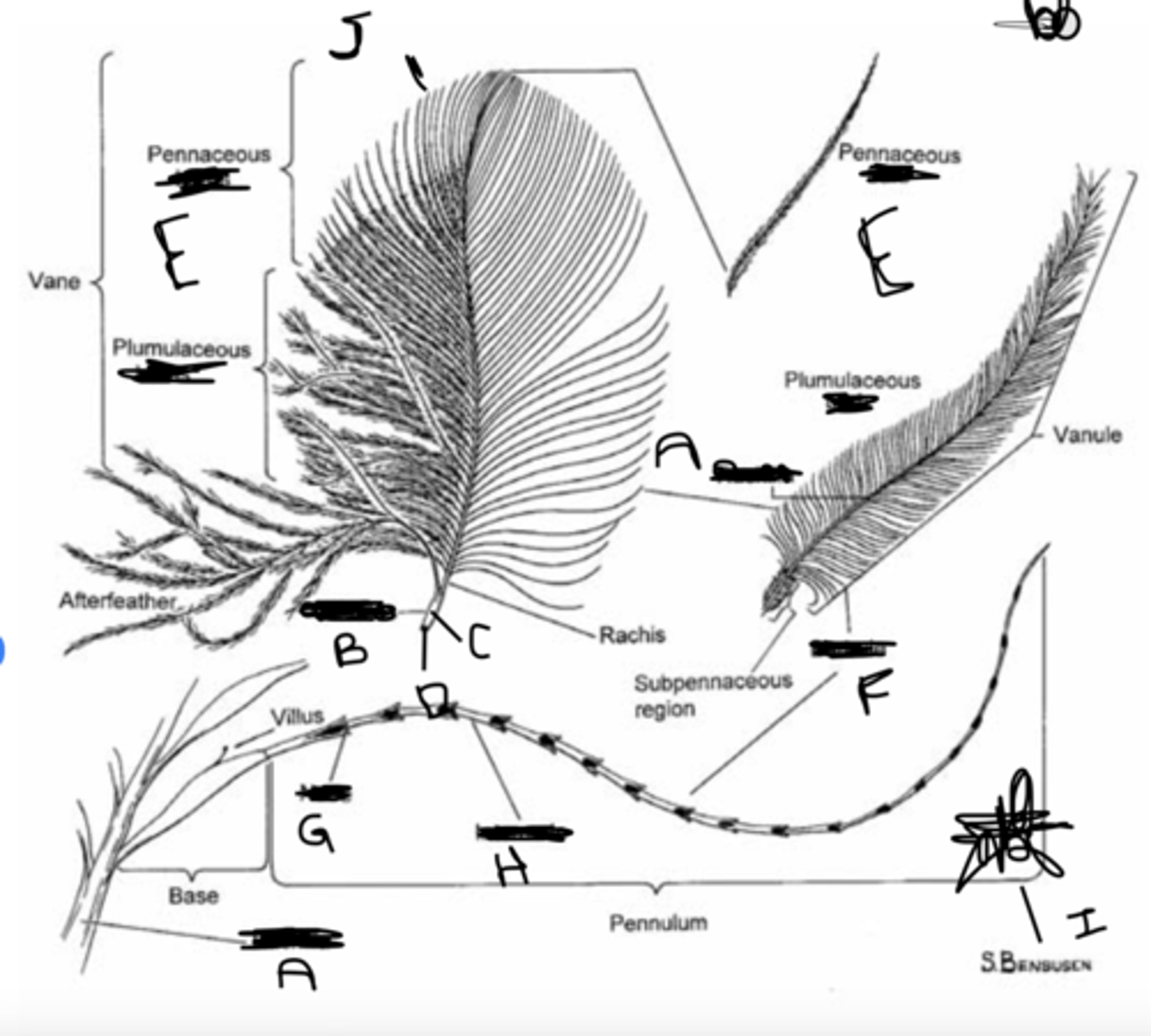
Which one is the quill?
C
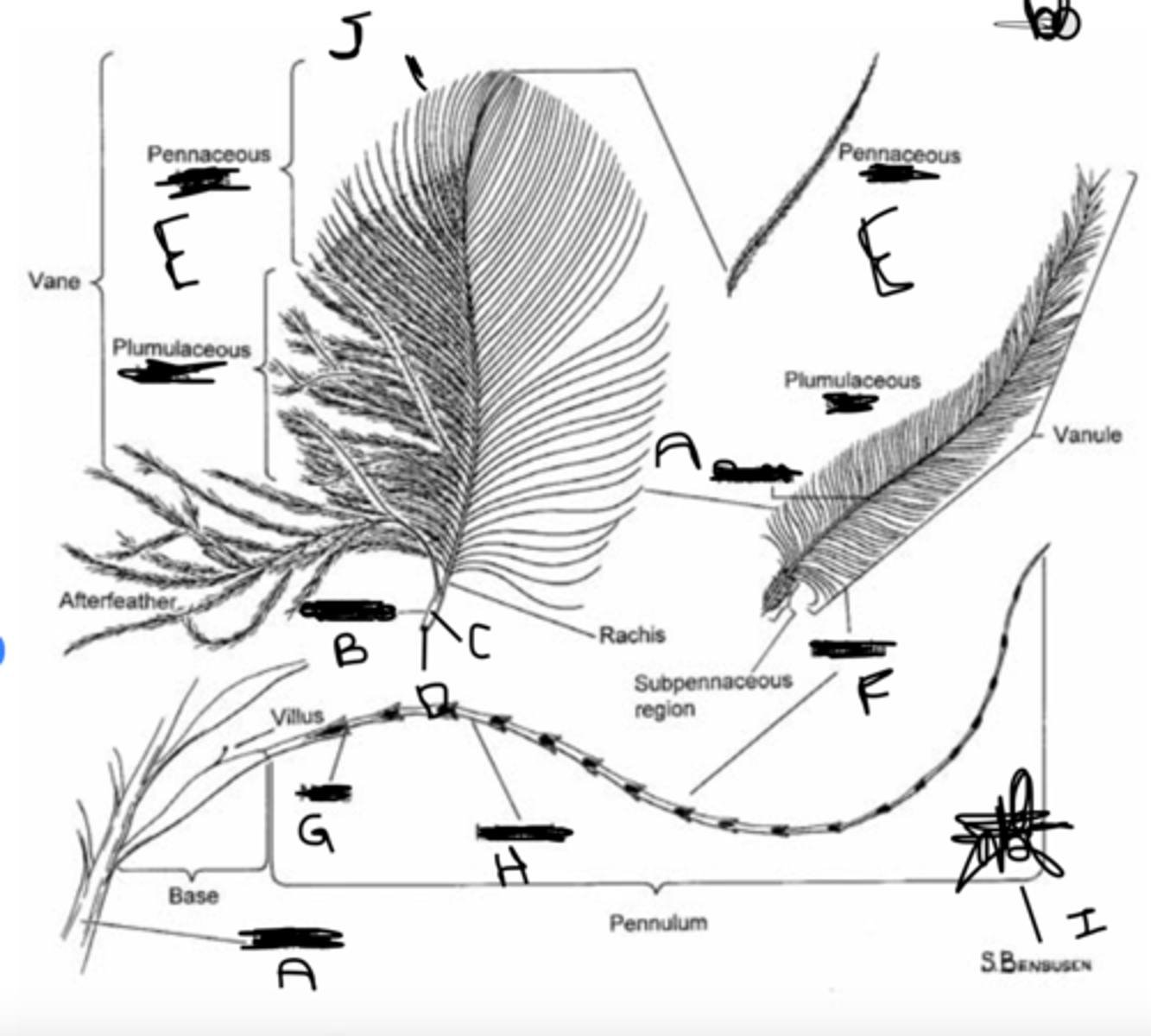
Which one is the quill point?
D
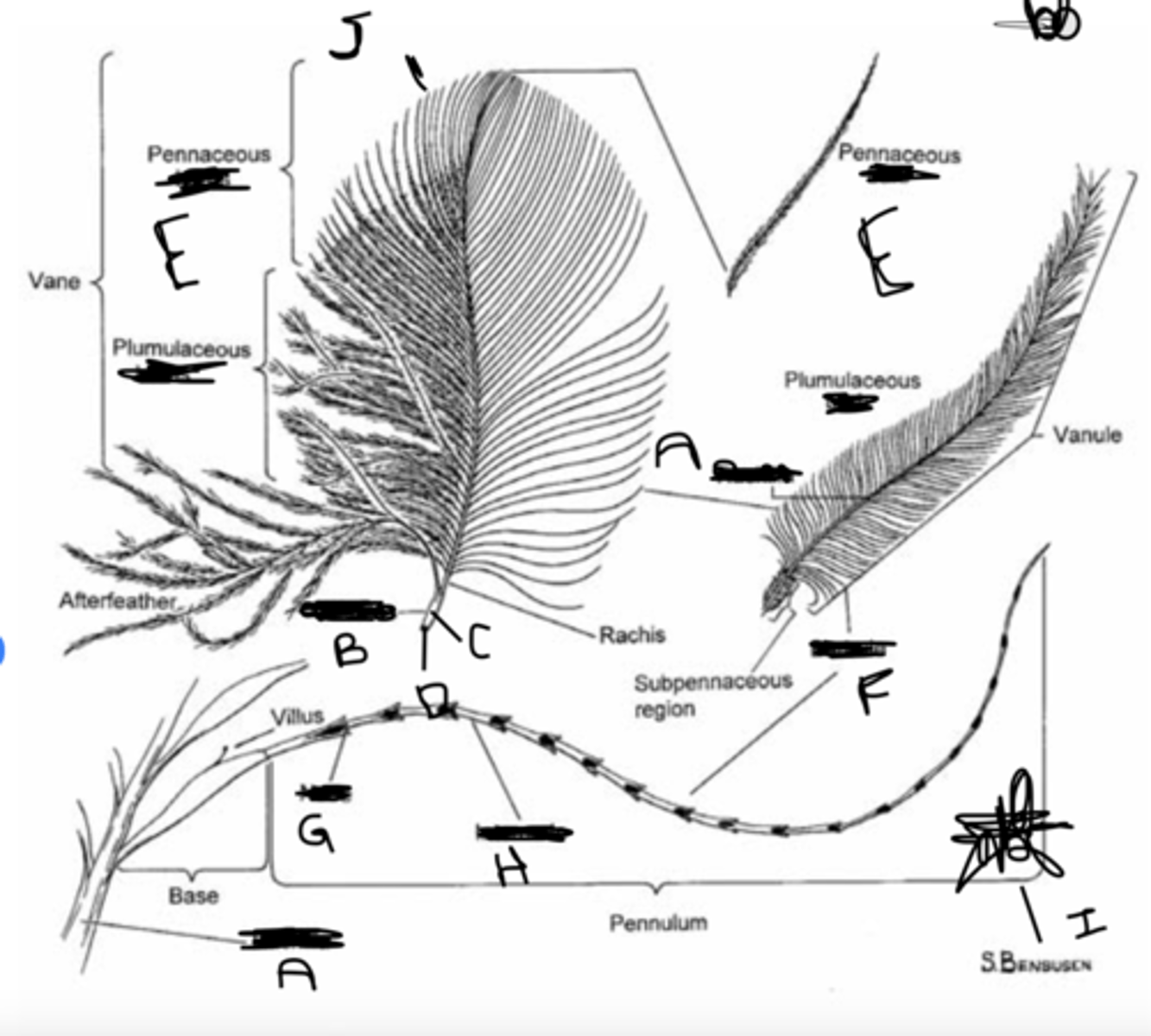
Which one is the down?
I
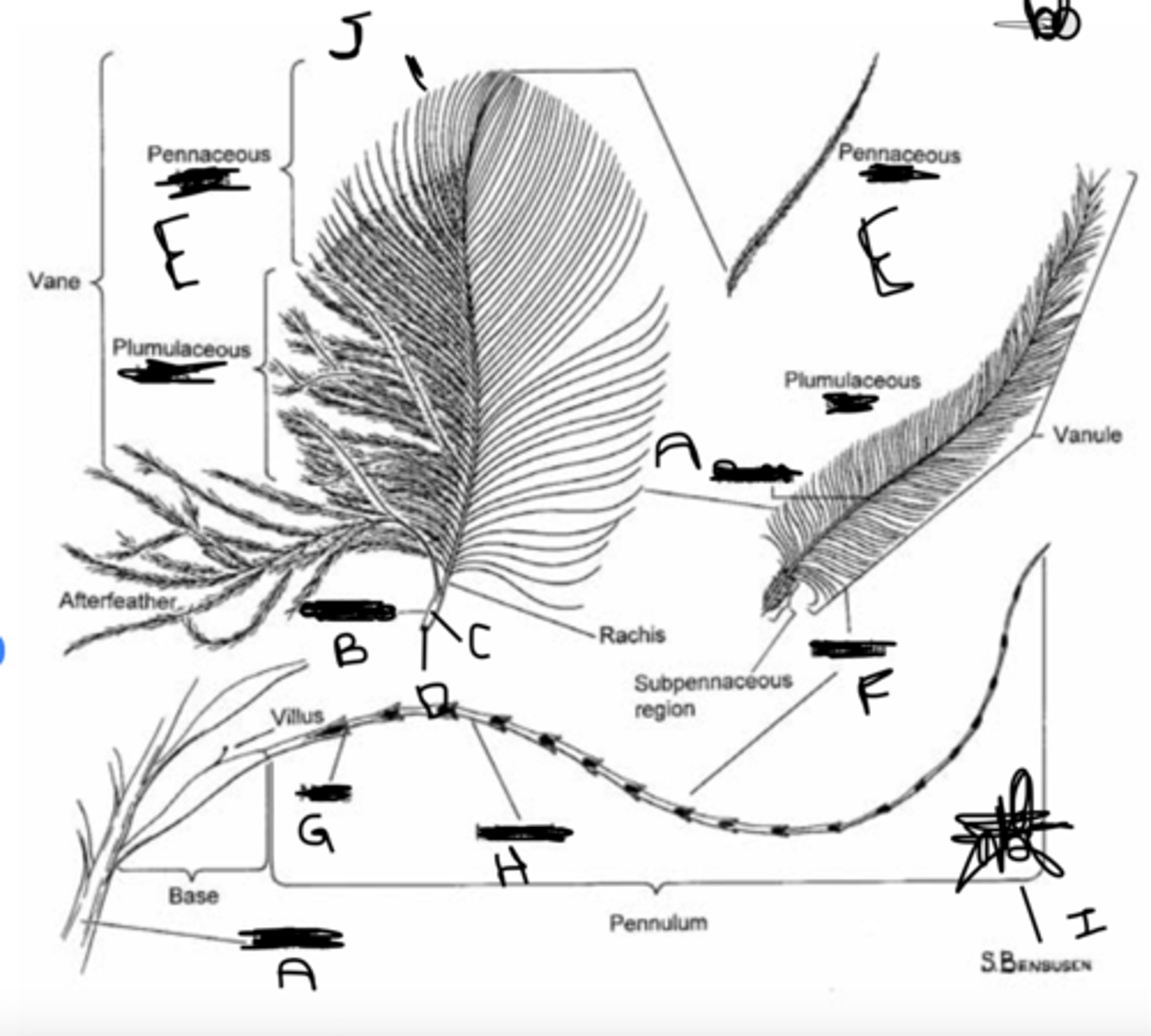
Which one is the feather fiber?
J
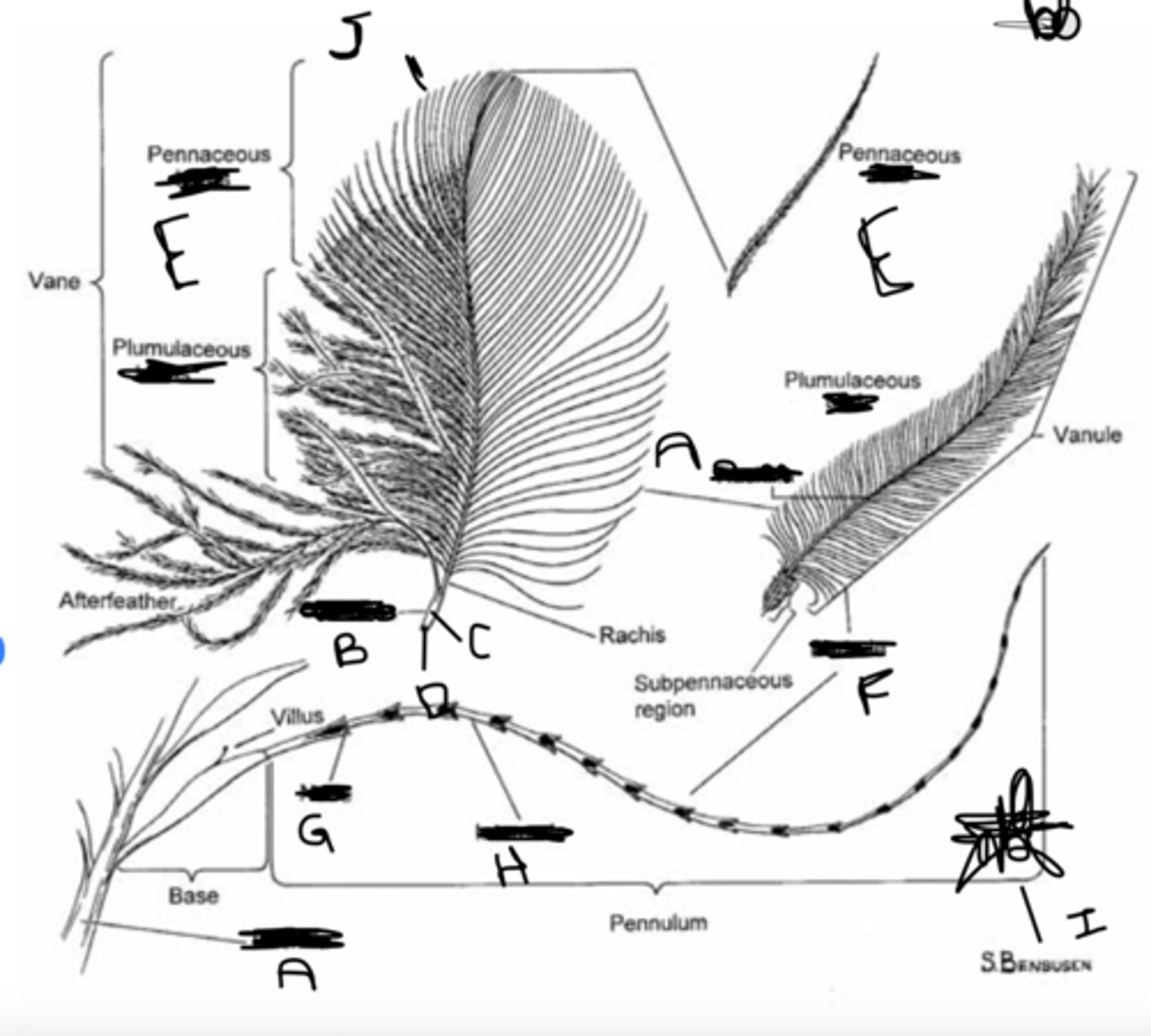
Which one is the barbs?
E
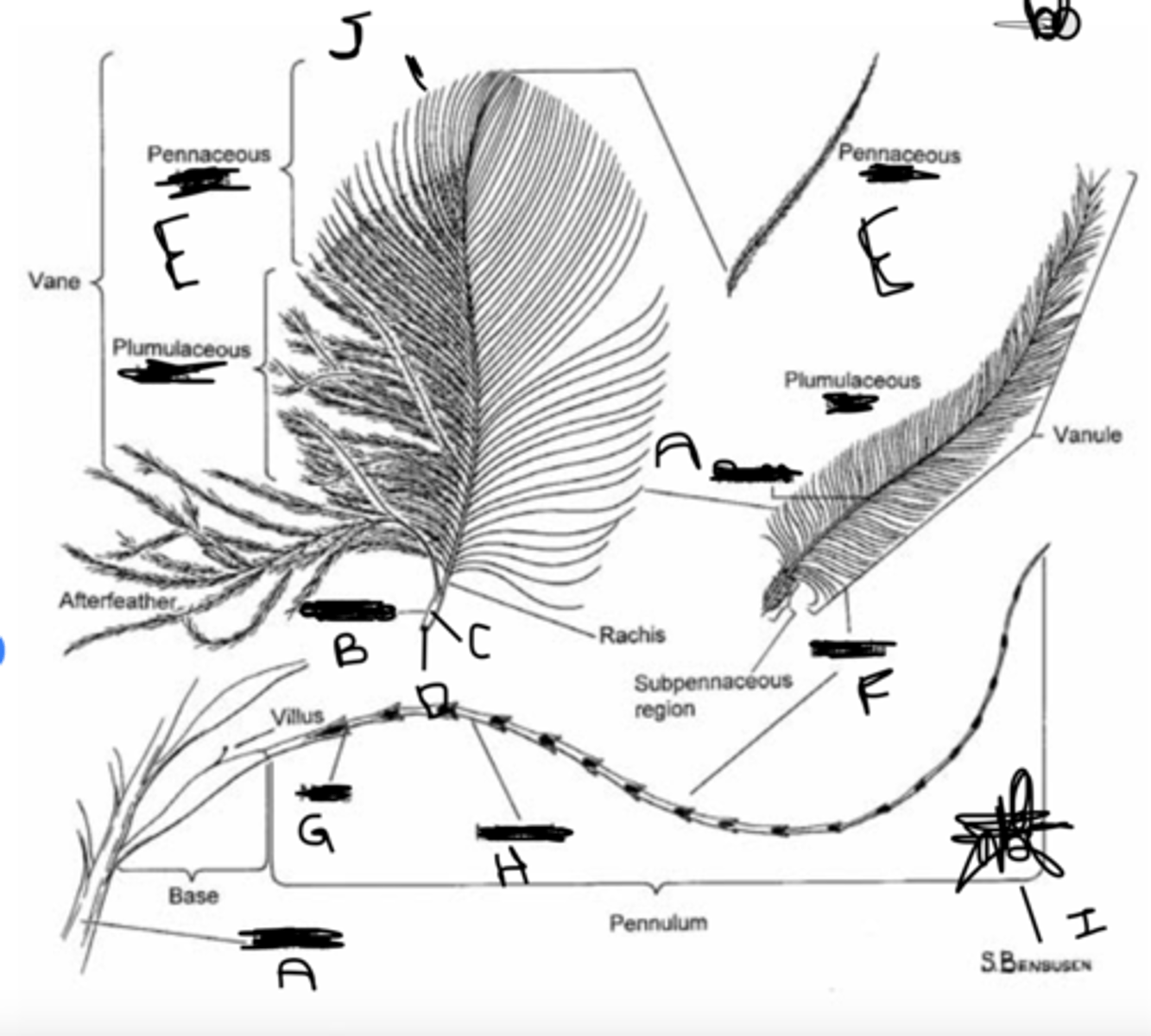
Which one is the barbules?
F
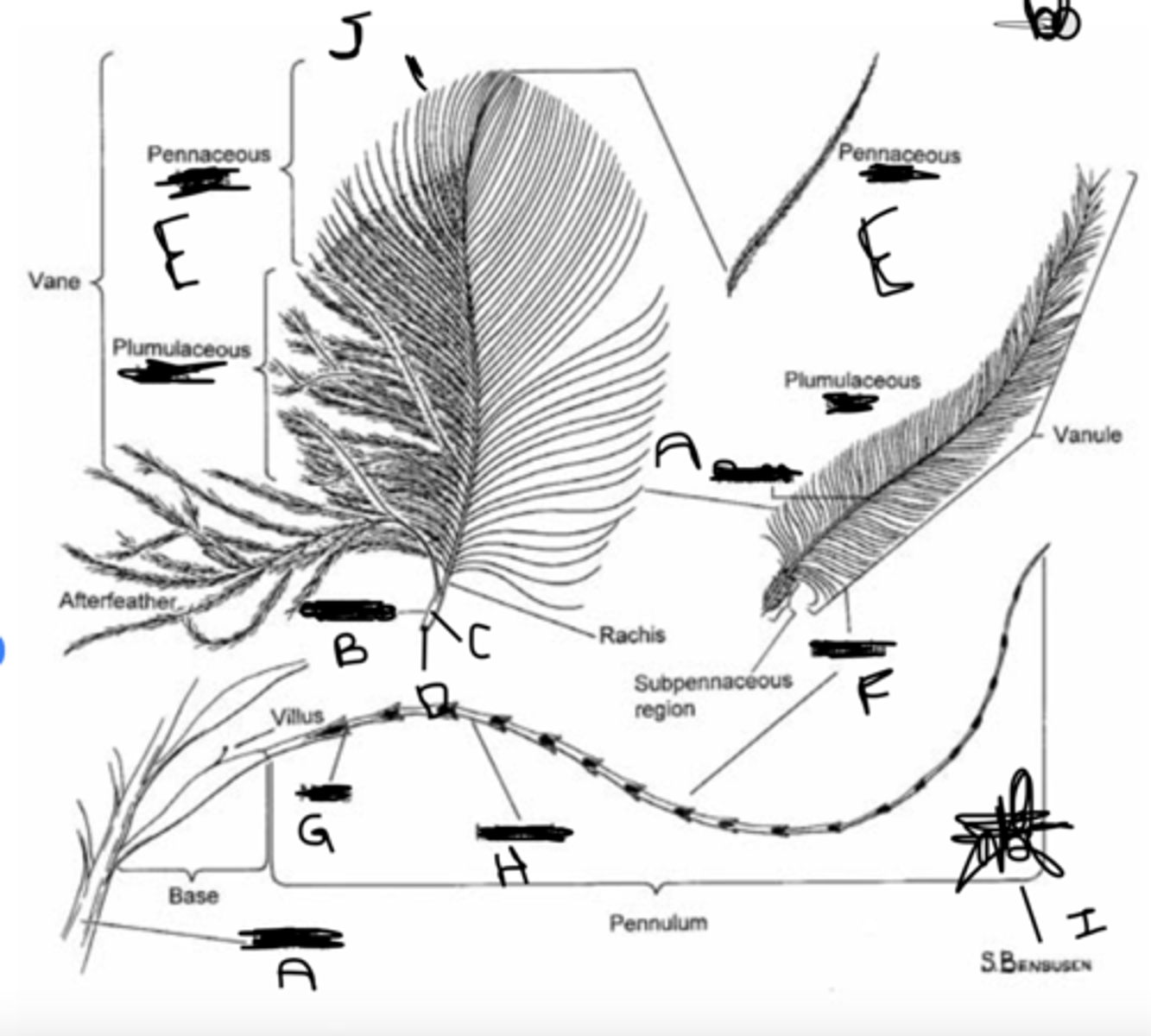
Which one is the nodes?
G
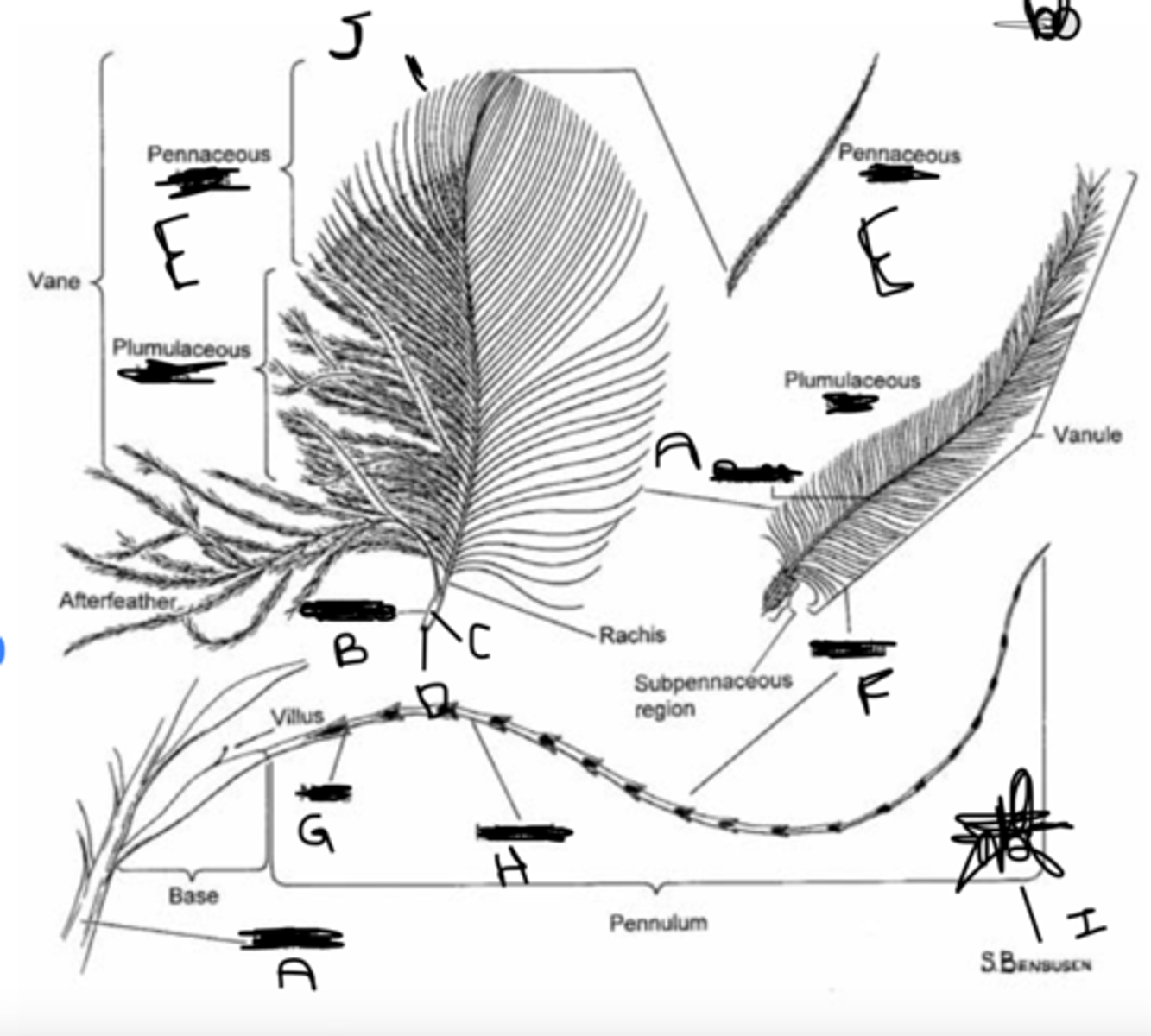
Which one is the specialized nodes?
H
Gymnosperms
exposed seeds
Conifers
needlelike or scalelike foliage, usually evergreen, excurrent form (dominant main stem or trunk with lateral side branches). Includes the largest living plants (sequoias), and the oldest plants (bristlecones pines).
Angiosperms
encapsulated seeds
Monocots
have one initial seed leaf. (grasses, corn, bamboo, palm and rattan)
Dicots
have two initial seed leaves (hardwoods)- dendritic (branching and rebranching) broad-leafed foliage, mainly deciduous (lose their foliage during winter dormacy)
What is the structural planes? What do they do?
Transverse plane (X) is perpendicular to the stem axis
The radial plane (R) passes through the pith
The tangential plane (T) forms a tangent to the cylindrical plane of the growth rings
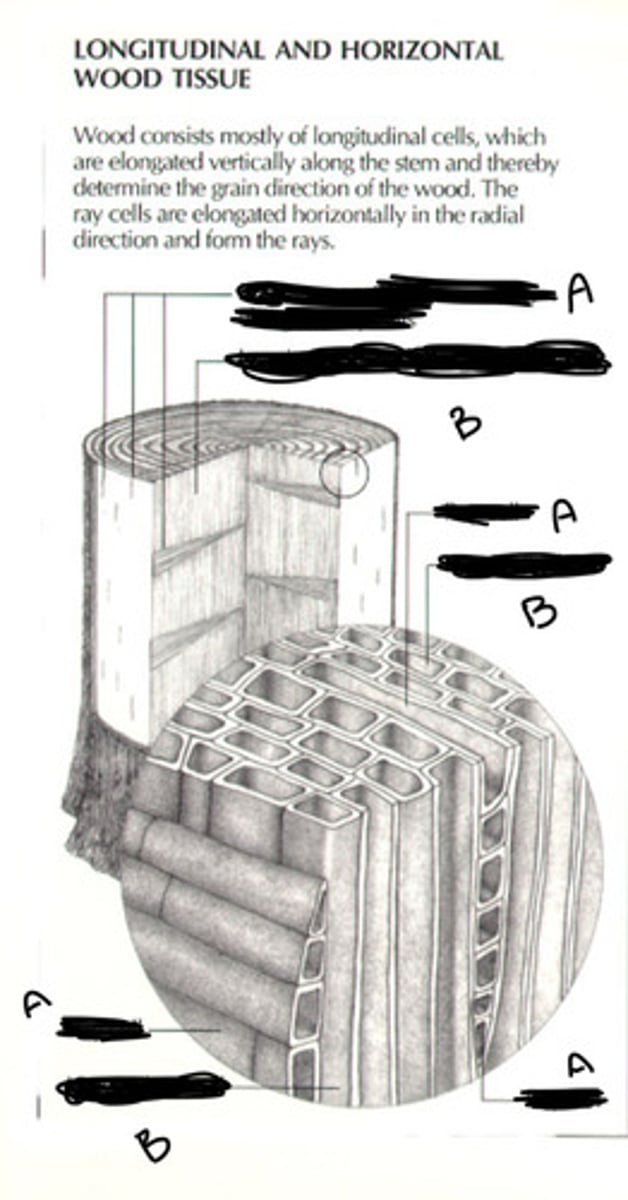
Which one is longitudinal and which one is ray cells?
Longitudinal is B and Ray is B
Rays- 10% of cells elongated, flattened ribbons, perpendicular to the stem.
Vessel elements
largest cells in hardwoods, with thin walls and spacious cell cavities (sap conduction). They always occur end to end. Each end wall has an opening called a perforation. When cut transversely, the opening of a vessel on a cross- sectional surface is called a pore. Pore size and distribution is important for ID.
Simple perforation
oaks, ashes, maples and basswood.