SAT Math: Geometry & Trigonometry Study Guide
 Call Kai
 Learn
Learn Practice Test
 Spaced Repetition
 Match
Match Flashcards
 Knowt Play
1/10

Earn XP
Description and Tags
i made this for the june sat 2026 but if youre from the future hi! solely doing this cus this is like the one thing desmos cant help you with so you gotta study it frs yk
Name | Mastery | Learn | Test | Matching | Spaced | Call with Kai |
|---|
No analytics yet
Send a link to your students to track their progress
11 Terms
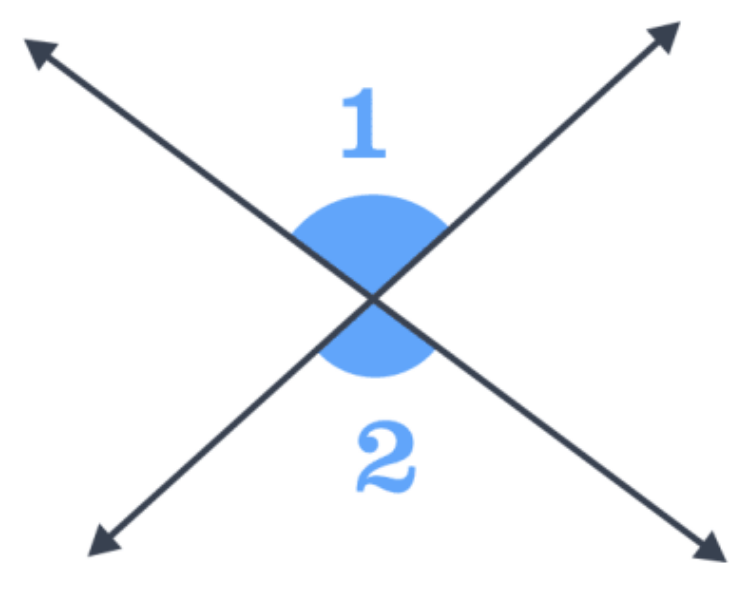
Vertical Angles
Angles which are directly across from one another and share the same vertex will also share the same angle measure.
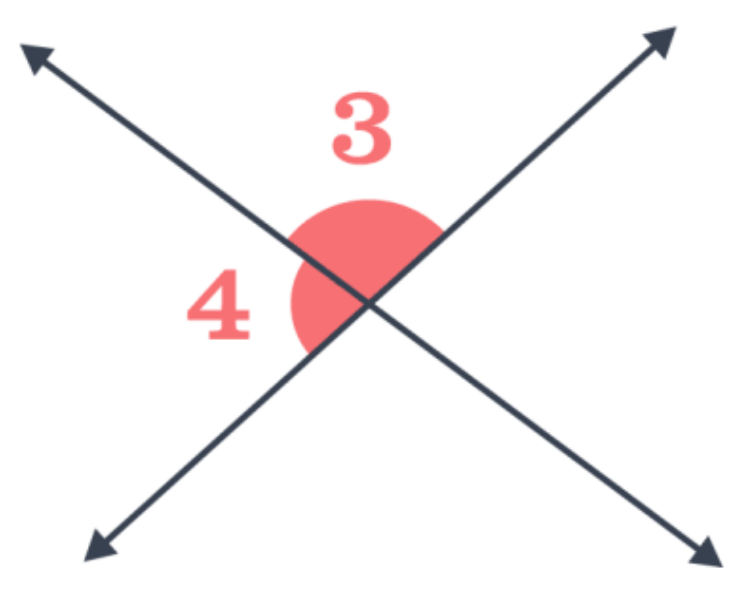
Adjacent Angles
Angles which are directly next to each other side-by-side and share one of their rays will have angle measures which add up to 180°.
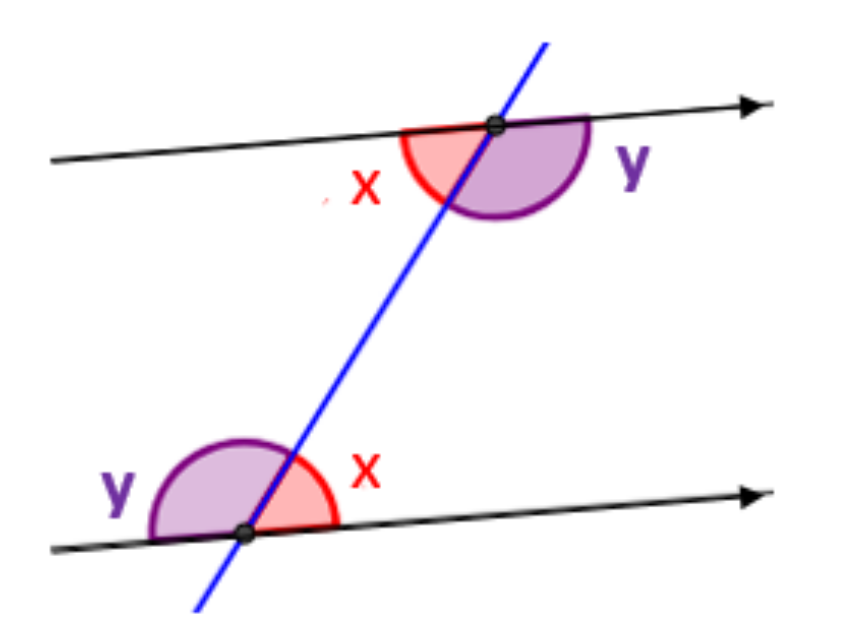
Alternate Interior Angles Theorem
When a line passes through two other parallel lines to form angles, an angle formed by the line and one of the parallels will share the same measure as the corresponding angle which is formed by the other side of the line and the other parallel.
Total Interior Angles
The sum of all angle measures within a polygon can be calculated by using the formula 180(n-2), where n is the number of sides the polygon has (assuming n > 2).
Exterior Angle Theorem
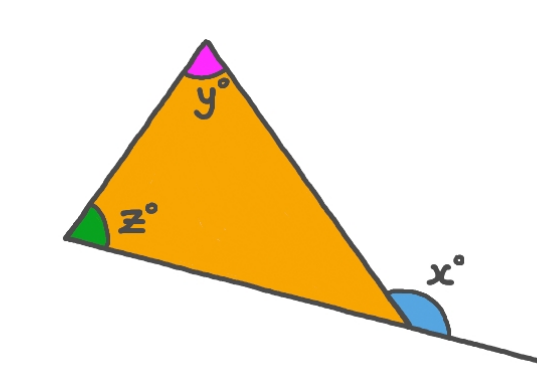
An angle which shares rays that make up a triangle but is not located within the triangle has a measurement equal to the sum of the two angles within the triangle it is opposite to.
Relations of Triangle Side Lengths
In any triangle, a larger interior angle will yield a larger opposite side length. Additionally, the side length of any side in the triangle must be both less than the sum of the other two sides and greater than the (positive) difference of the other two sides.
Pythagorean Theorem
In a right triangle with side lengths a, b, and c (where c is the hypotenuse), a²+b²=c². This is the reason behind Pythagorean triples, which are triangles with side lengths of 5, 12, and 13, or side lengths of 3, 4, and 5.
Complementary Angle Theorem
This theorem states that for any right triangle, the sin of any of the acute angles a°, is equal to cos(90°-a). Similarly, the cos of this angle a would be sin(90°-a).
Side-Angle-Side (SAS)
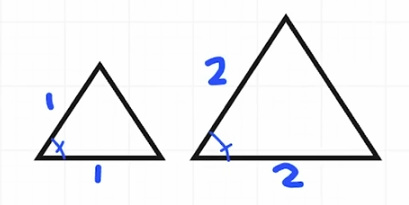
Two triangles are similar when two sides of one triangle are proportionate to the corresponding sides of the other, and the angle between these sides in both triangles share the same measurement.
Angle-Angle (AA)
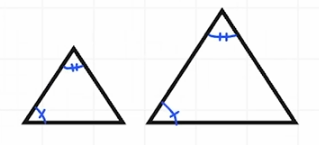
Two triangles are similar when two angles which correspond to one another on both triangles share the same measurement.
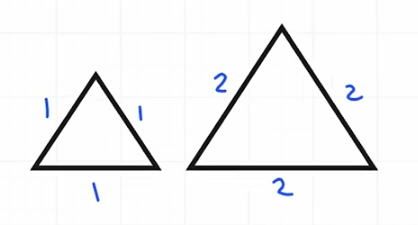
Side-Side-Side (SSS)
Two triangles are similar when all three sides of one triangle are proportionate to the corresponding side lengths of the other.