Early Medieval Art Images
 Call Kai
 Learn
Learn Practice Test
 Spaced Repetition
 Match
Match Flashcards
 Knowt Play
1/13

There's no tags or description
Looks like no tags are added yet.
Name | Mastery | Learn | Test | Matching | Spaced | Call with Kai |
|---|
No analytics yet
Send a link to your students to track their progress
14 Terms
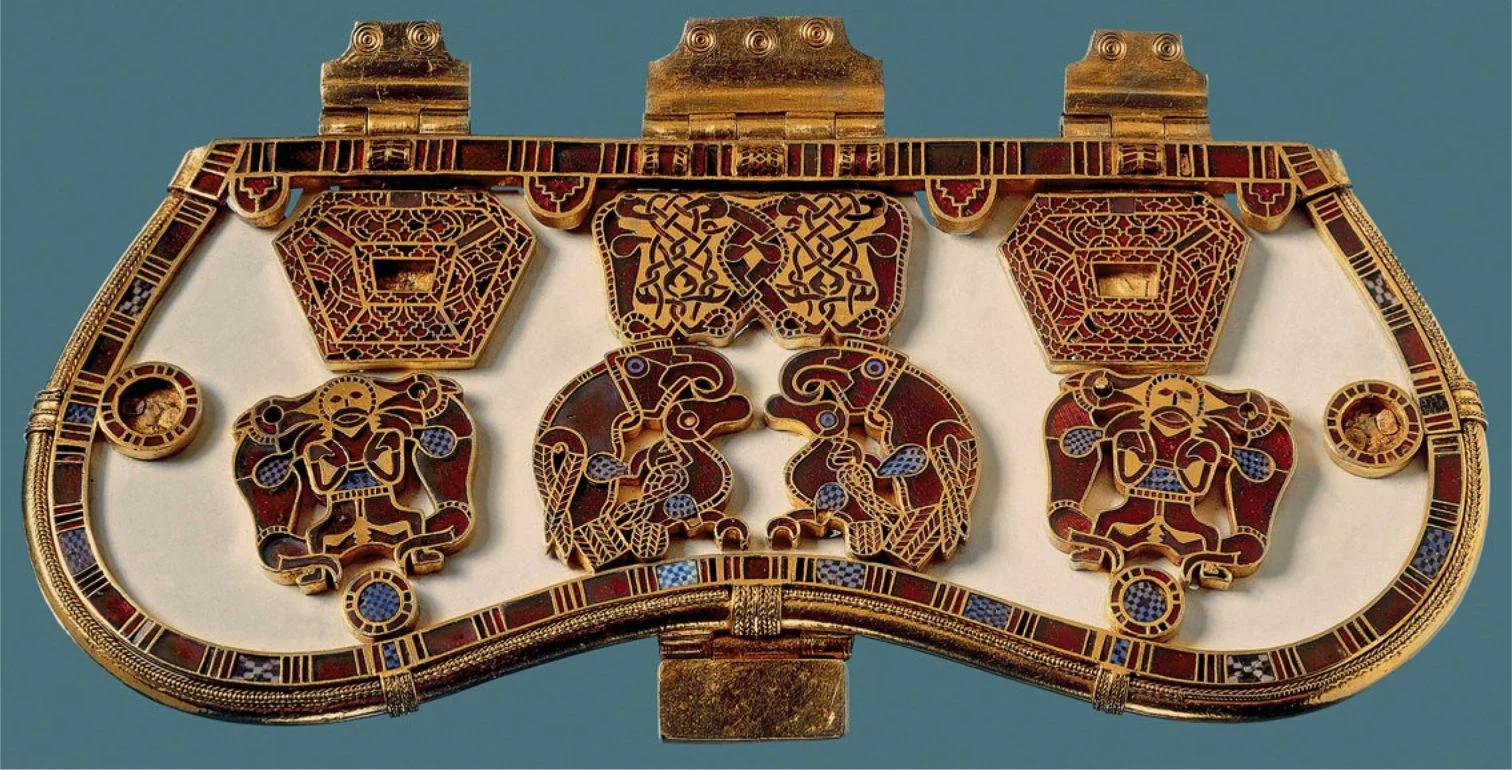
Purse cover, from the Sutton Hoo ship burial. First half of 7th century. Gold with garnets and enamels. Likely belonged to a leather purse. Anglo-Saxon. Whole arrangement reminiscent of the sporran (Celtic purse) that Scots wear in front of their kilts. Standing man between animals is a near eastern motive.
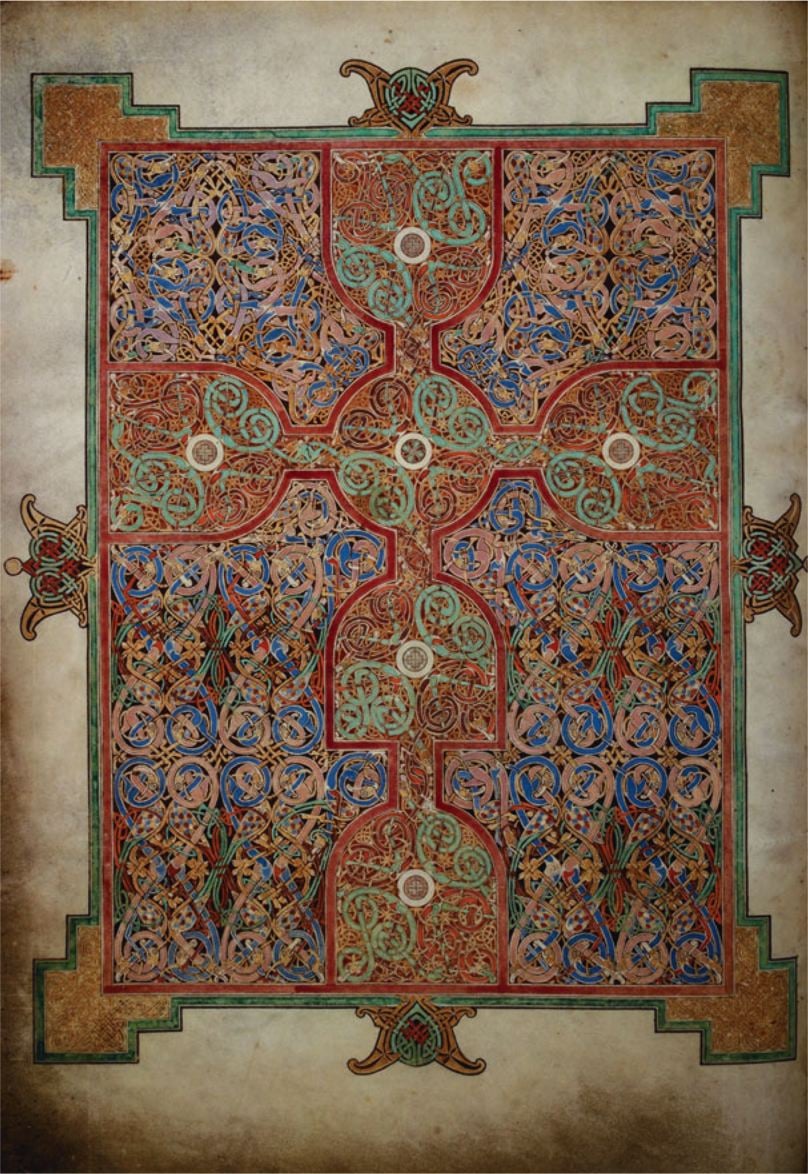
Cross page, from the Lindisfarne Gospels. ca. 700. Tempera on vellum. Hiberno-Saxon Art. Interlacing motif more is complex in this piece of art. First drawn on, then painted over.
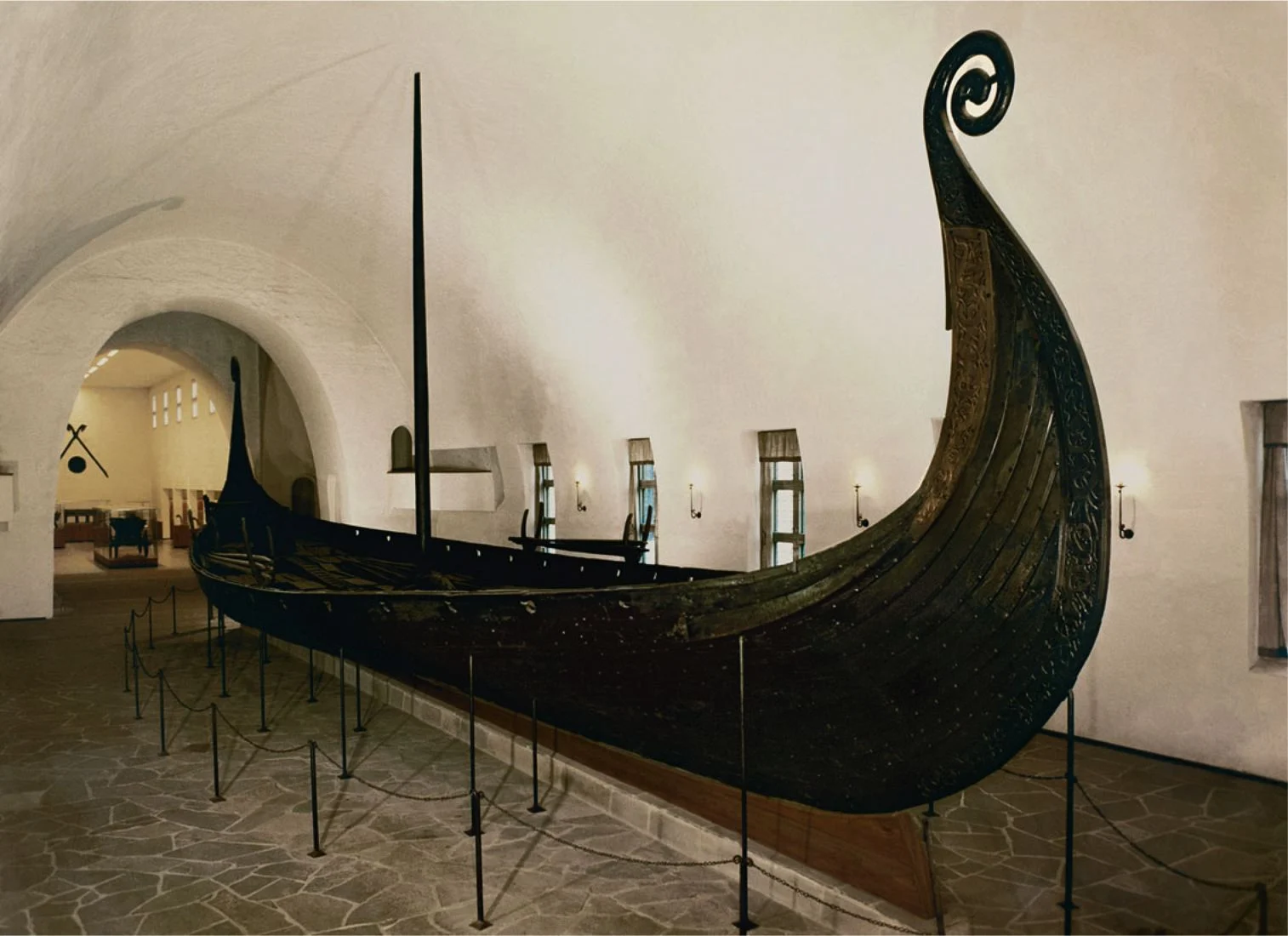
Burial ship, from Oseberg, Norway. ca. 834. Wood. Viking art. A boat for sailing calm waters (pleasure craft). Was buried with two women, oars, a ramp, an elaborately carved cart, sleds, and the skeletons of at least ten horses. Some consider it a royal burial. Reminiscent of Beowulf’s poem, “ring-whorled prow.”
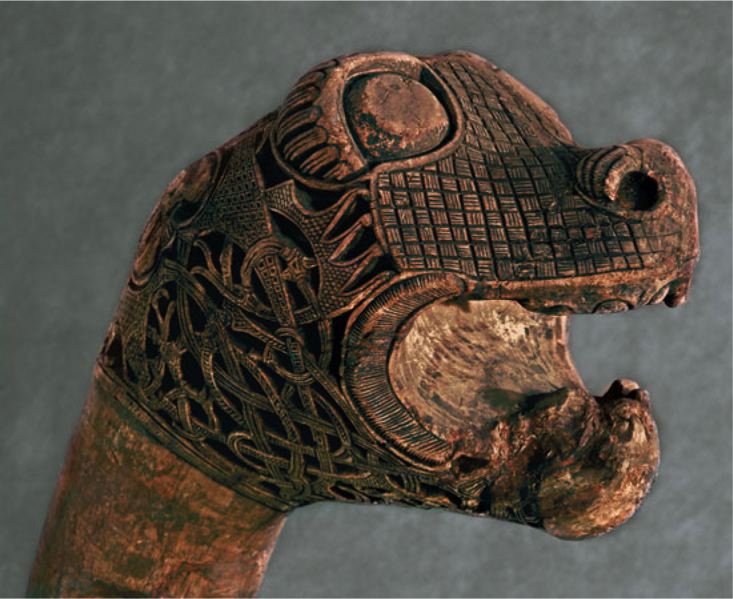
Animal Head, from the Oseberg burial ship. ca. 834. Viking art. Wood. Show the early medieval motif of interlacing around the head.
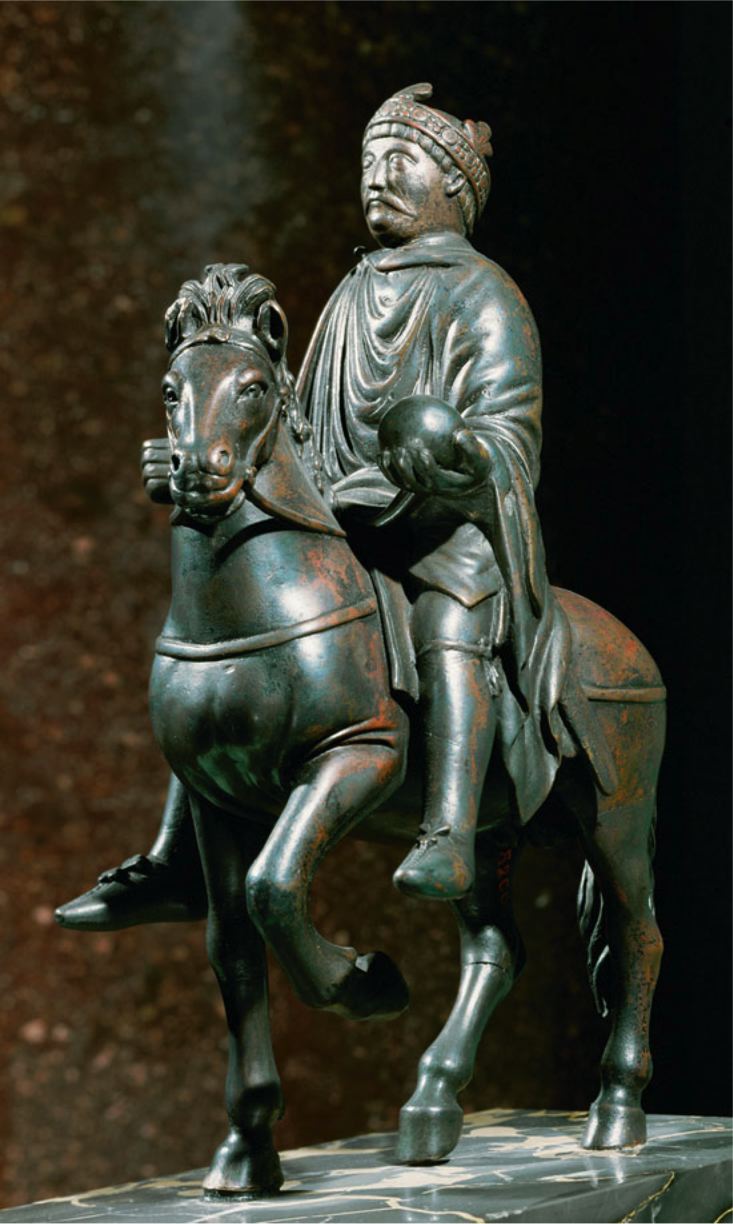
Equestrian Statue of a Carolingian Ruler (Charles the Bald?). 9th century. Bronze. Once thought to be of Charlemagne himself but now generally said to be of his grandson Charles the Bald. Conveys the political objectives of the Carolingian dynasty. In his hand is an orb signifying his domination of the world. Though to be a model of a roman statue.
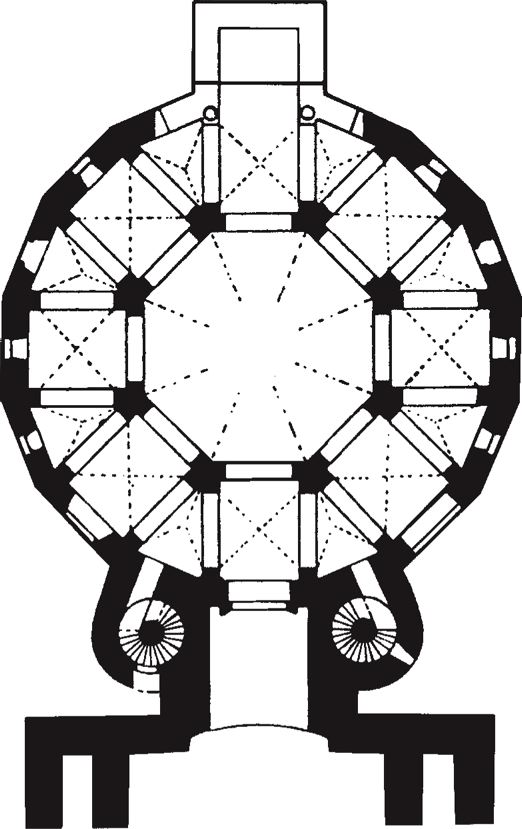
Odo of Metz. Plan of Palace Chapel of Charlemagne, Aachen, Germany. 792–805. Carlingian. Probably inspired by the church of San Vitale in Ravenna which Charlemagne saw first hand.
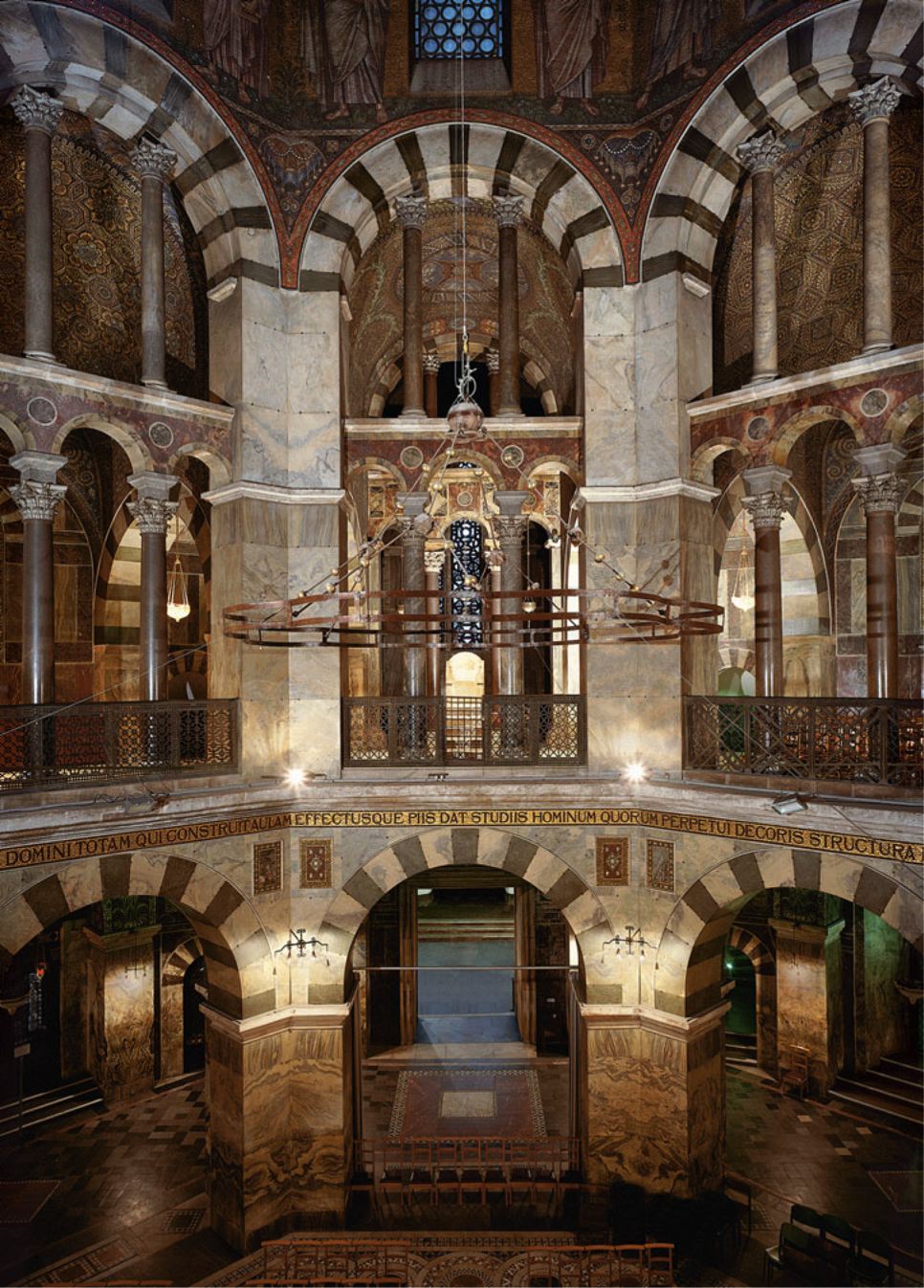
Odo of Metz. Interior of the Palace Chapel of Charlemagne, Aachen, Germany. The design is sturdier and soberer than San Vitale.
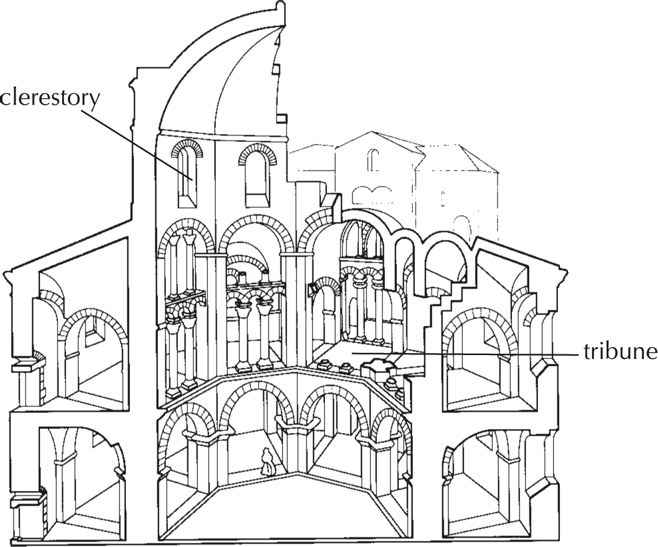
Odo of Metz. Section of the Palace Chapel of Charlemagne, Aachen, Germany (after Kubach). The tribune was where his throne was kept.
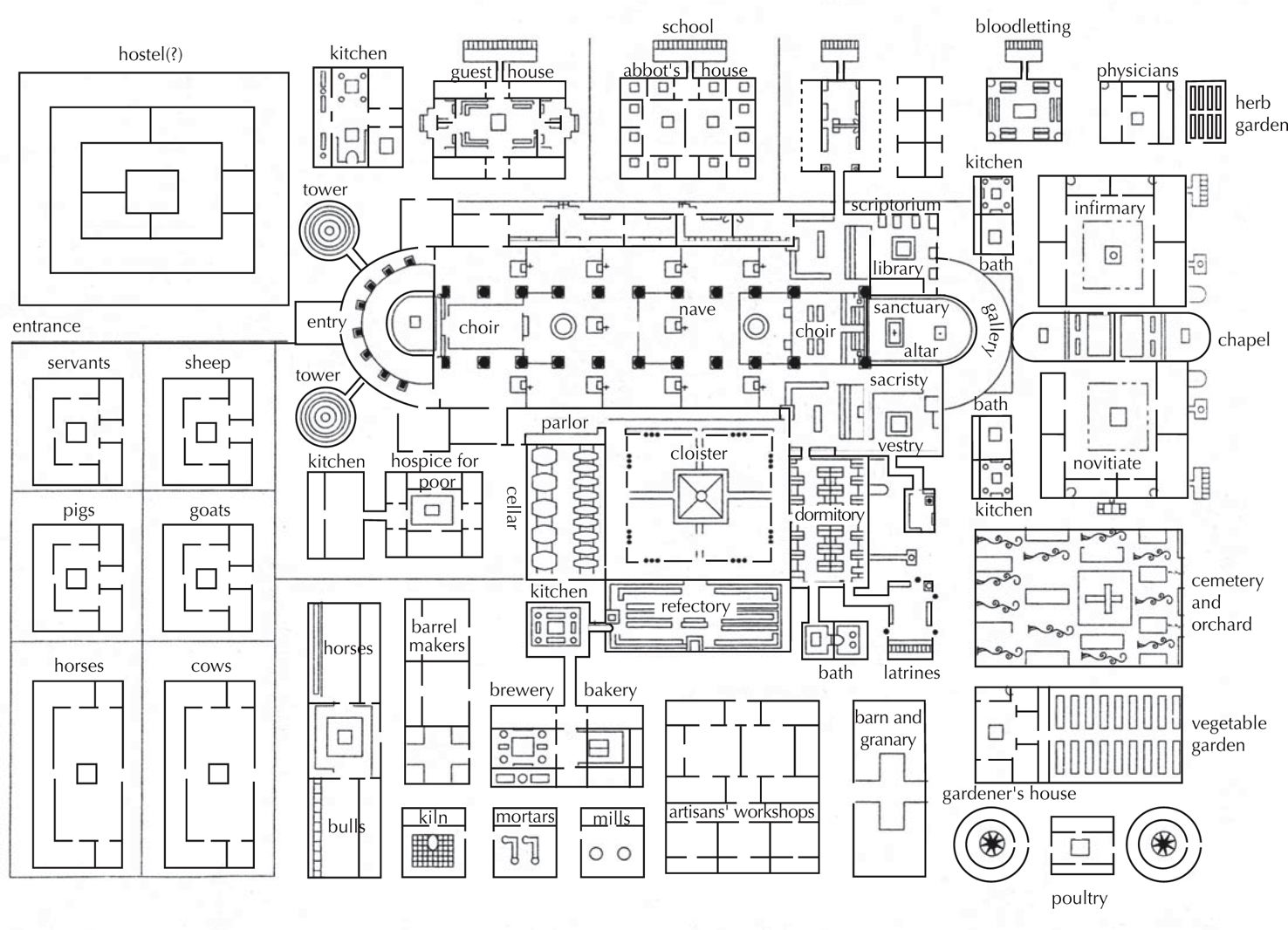
Plan of a monastery. Redrawn, with inscriptions translated into English from the Latin, from the original of ca. 820. Red ink on parchment. Shows the importance of monasteries in the culture of the early medieval period and their close link with the imperial court. May be regarded as a model or ideal plan, to be modified to meet local needs. Emphasizes the church as the centre of the monastic community. Traditional basilica is shown.
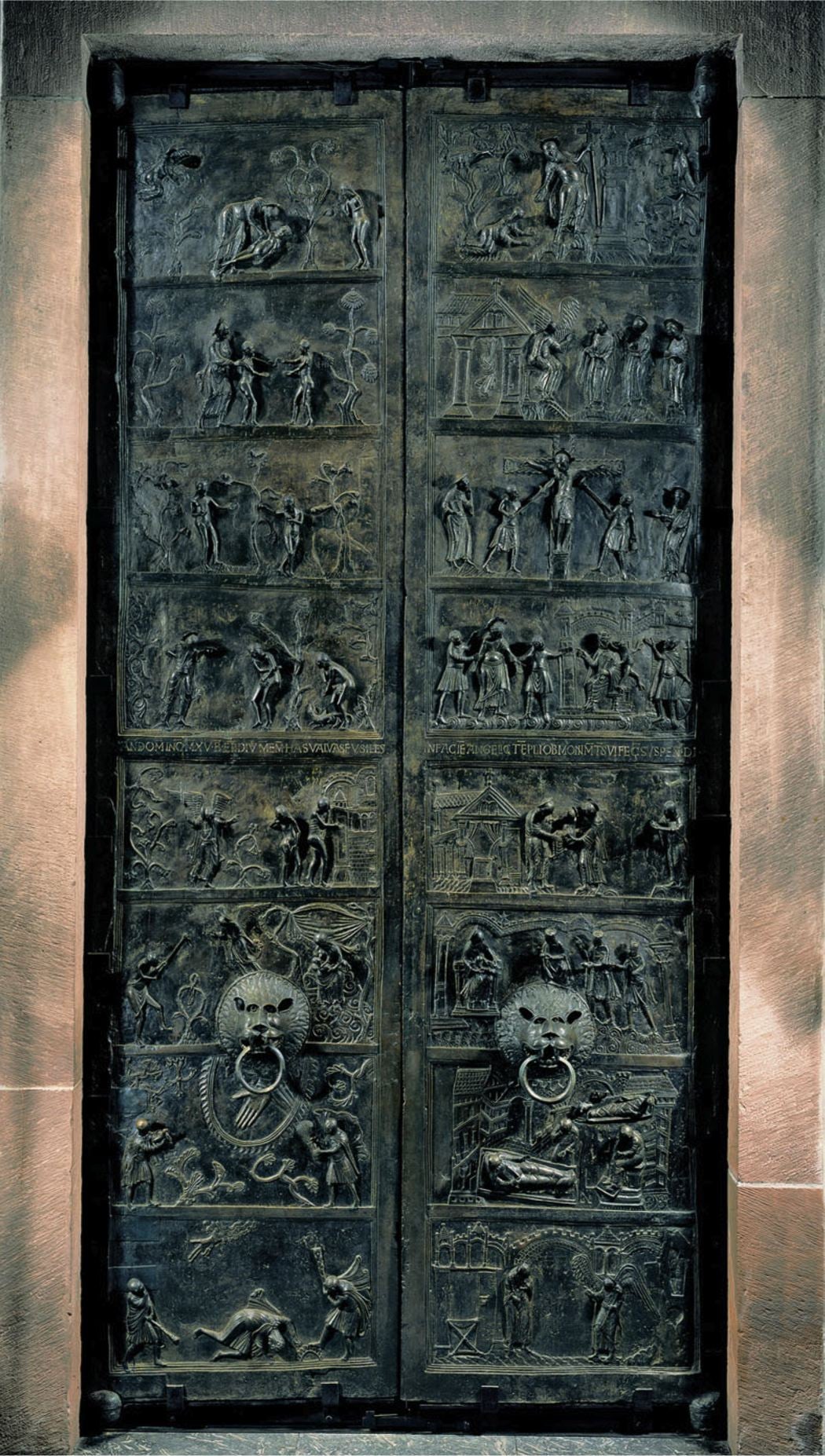
Doors of Bishop Bernward, Hildesheim cathedral (originally made for abbey church of St. Michael’s, Hildesheim), Germany. 1015. Bronze. Ottonian Art. Likely inspired by Roman and Byzantine doors of bronze and wood. Shows typology. e.g. the fall with the crucifix
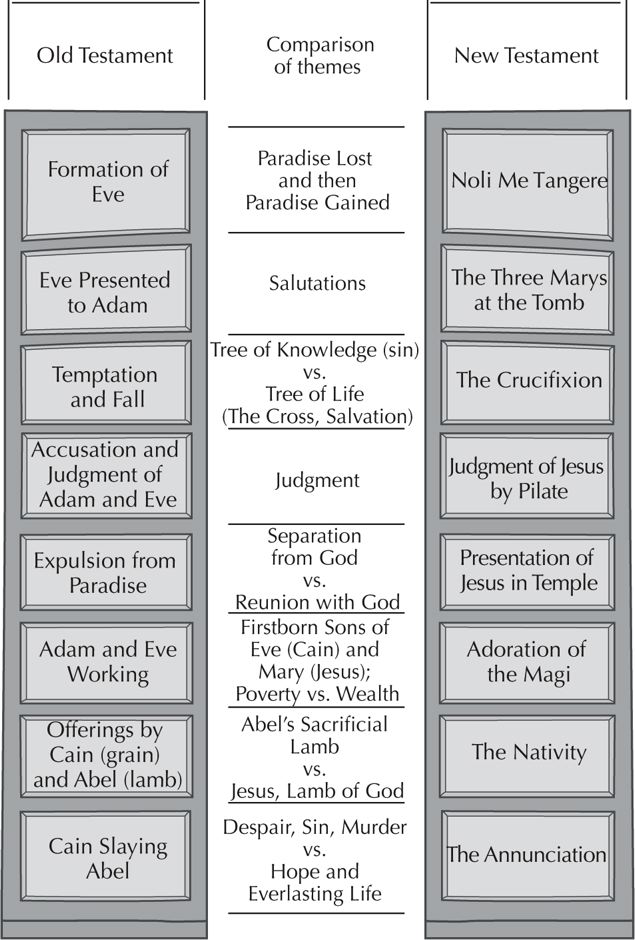
Schematic diagram of the scenes in the Doors of Bishop Bernward. Formation of Even is first, not Adam, placing the fault of the original sin on her.
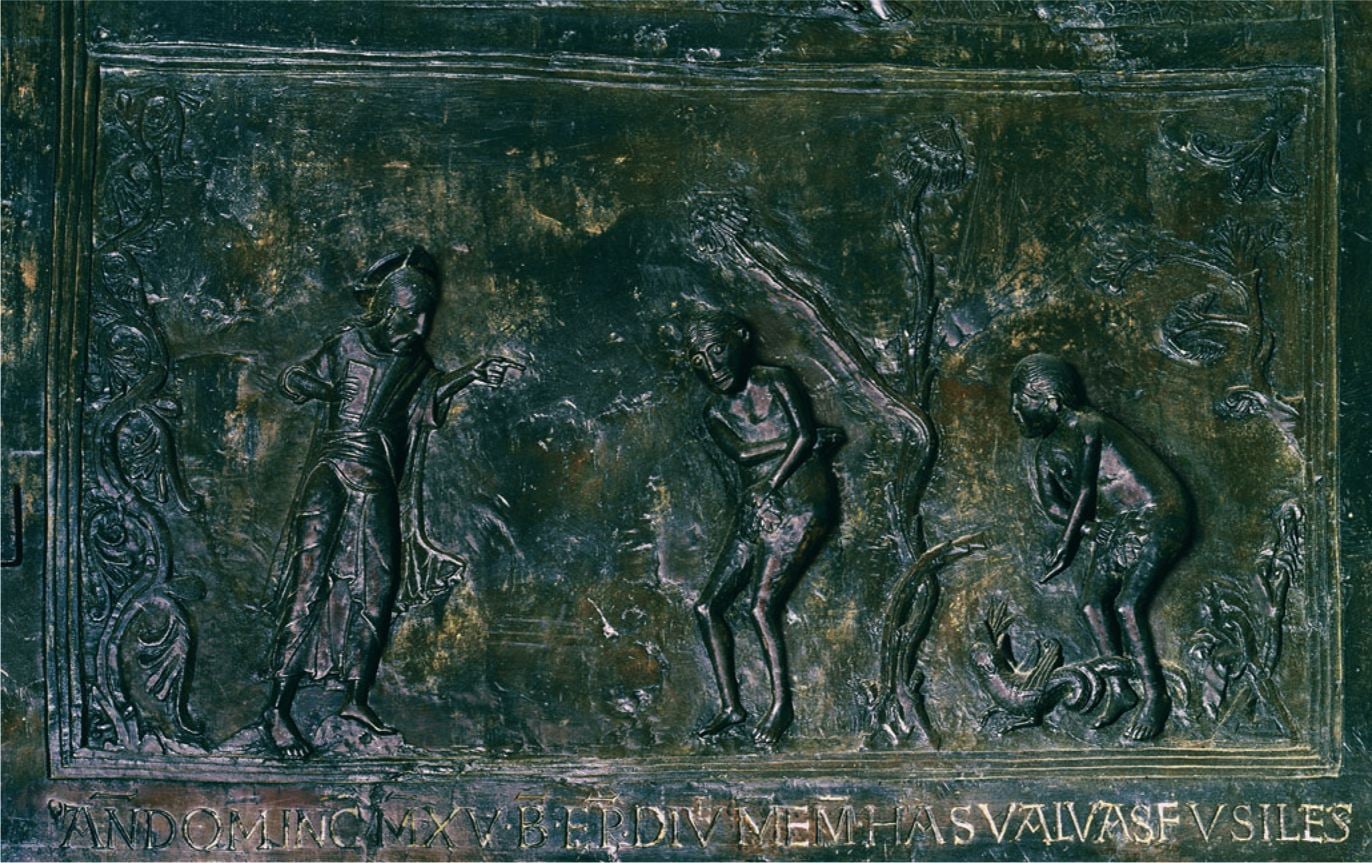
Accusation and Judgment of Adam and Eve, from the Doors of Bishop Bernward, Hildesheim, Germany. Bronze. Below it, in inlaid letters notable for their classical Roman character, is part of an inscription, with the date and Bernward’s name added around 1035
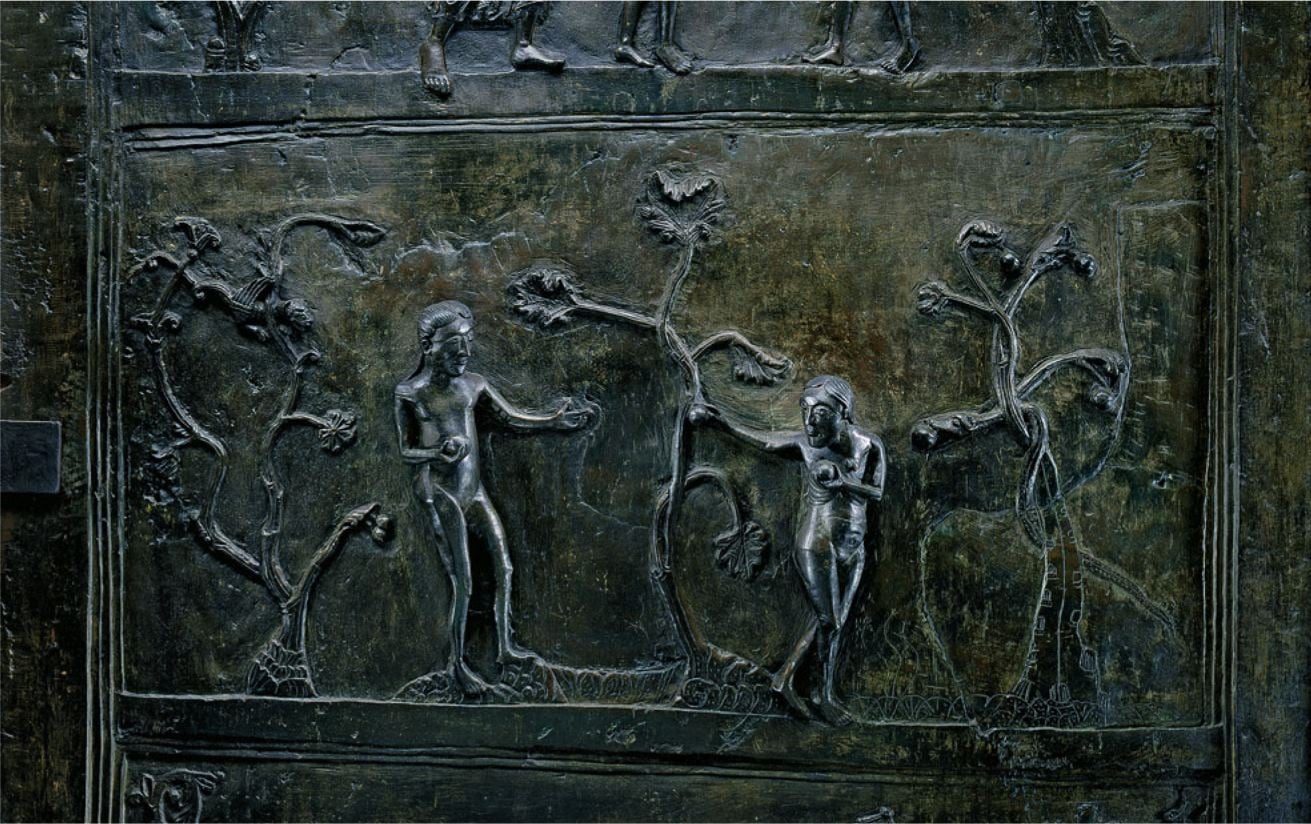
Temptation and Fall, from the Doors of Bishop Bernward, Hildesheim, Germany. Bronze. Eve’s role as seductress is made explicit. How she clutches the apple makes it seem like she is clutching her breast. This representation of Eve may have been a tactic to encourage celibacy among the monks.
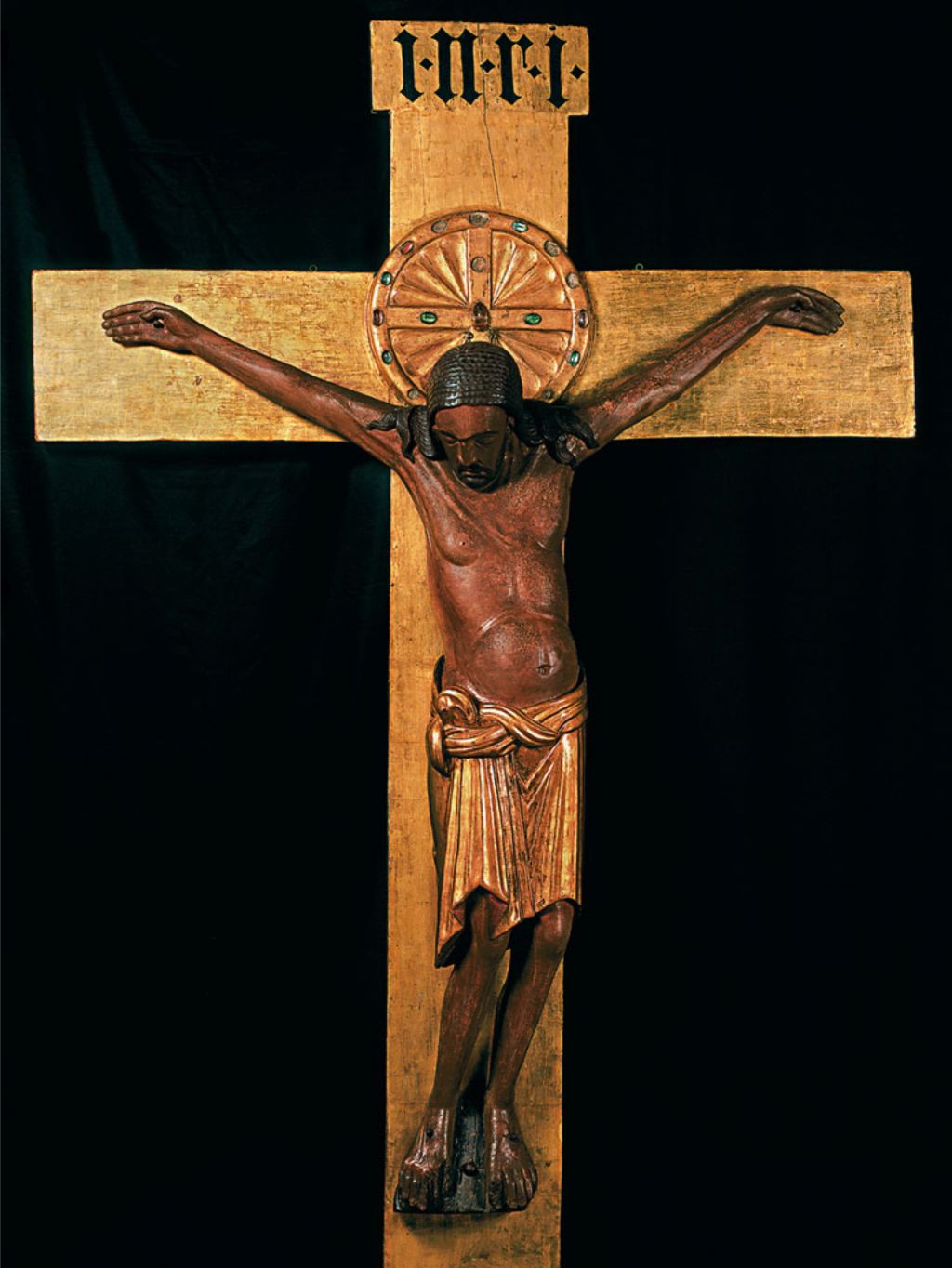
Gero Crucifix. ca. 970. Painted and gilded wood. Named for Archbishop Gero of Cologne, who commissioned it. First representation in western art of Christ dead on the cross. The image is filled with deep feeling for Christ’s suffering. The leaning forward head emphasizes the physical strain on the arms.