Head & Neck VII: Larynx
 Call Kai
 Learn
Learn Practice Test
 Spaced Repetition
 Match
Match Flashcards
 Knowt Play
1/23

There's no tags or description
Looks like no tags are added yet.
Name | Mastery | Learn | Test | Matching | Spaced | Call with Kai |
|---|
No analytics yet
Send a link to your students to track their progress
24 Terms
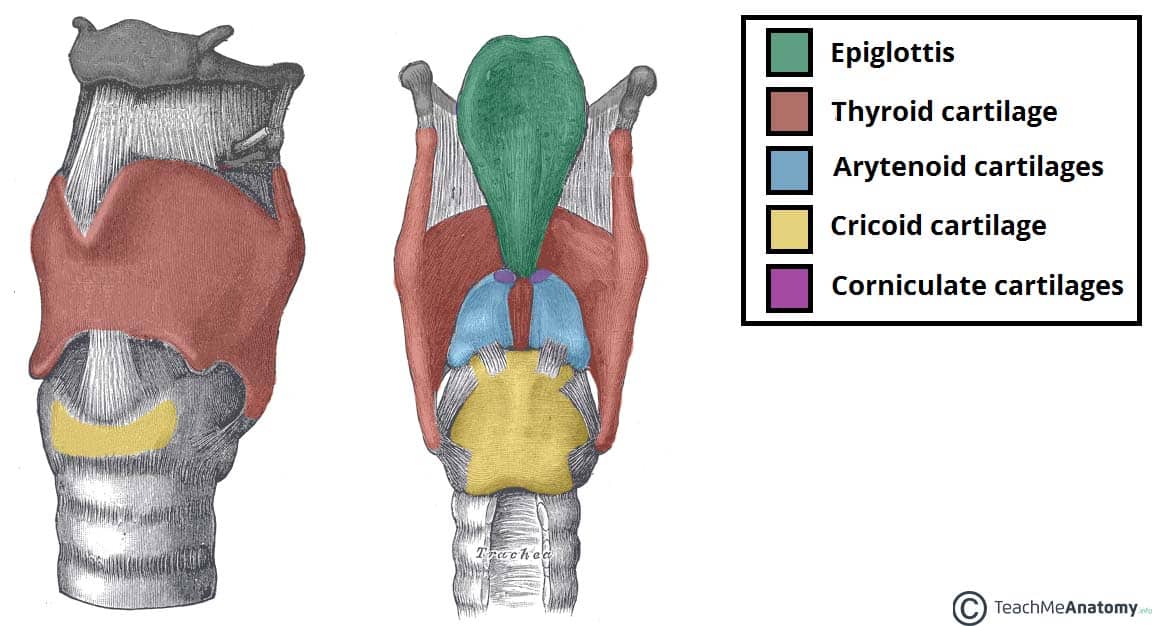
cricoid: articulations
lateral surface: inferior horn of thyroid cartilage; upper surface: base of arytenoid cartilage
arytenoid: attachments
vocal process that gives attachment to vocal ligament and cricoarytenoid muscles
thyrohyoid membrane: actions + innervation
suspends larynx from hyoid bone; pierced by superior laryngeal artery and vein, and internal laryngeal nerve
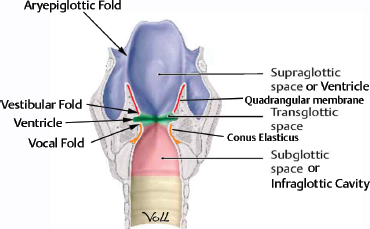
quadrangular membrane: function
forms paired vestibular ligaments which form the vestibular (false) vocal folds. also forms aryepiglottic folds
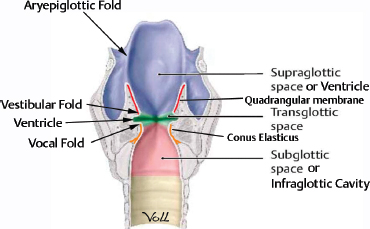
conus elasticus: function
connects the cricoid and thyroid cartilages. forms vocal ligament.
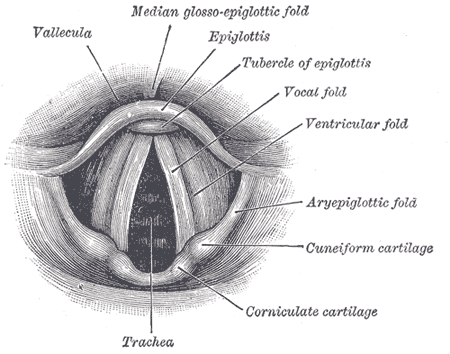
what structure is responsible for producing sound?
vocal folds
what adjusts the tension and degree of approximation of the vocal folds?
laryngeal muscles
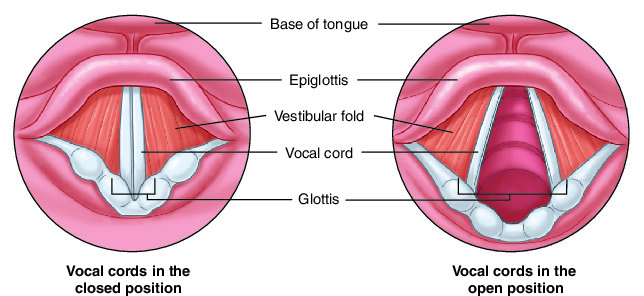
function of vestibular folds
protection
what are the elevators of extrinsic laryngeal muscles?
suprahyoid muscles, stylopharyngeus, salpingopharyngeus, palatopharyngeus
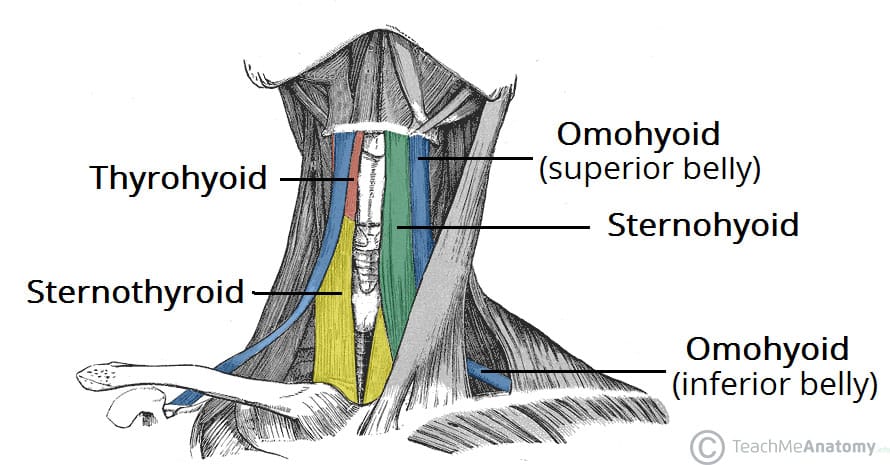
what are the depressors of extrinsic laryngeal muscles?
infrahyoid (strap) muscles
oblique arytenoid: actions
ADduction; facilitates food going into piriform recesses and into esophagus
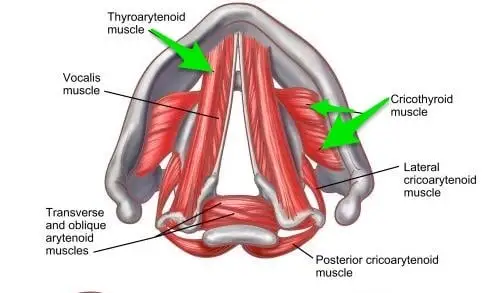
transverse arytenoid: actions
ADduction; close vocal folds during complete closure of airway
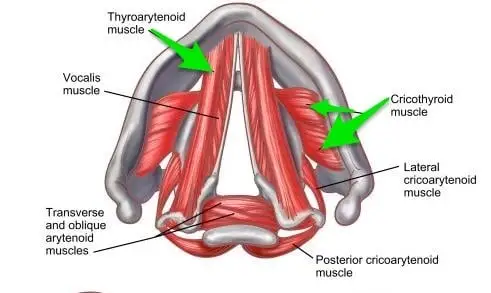
lateral (intrinsic) cricoarytenoid: actions
ADduct vocal folds
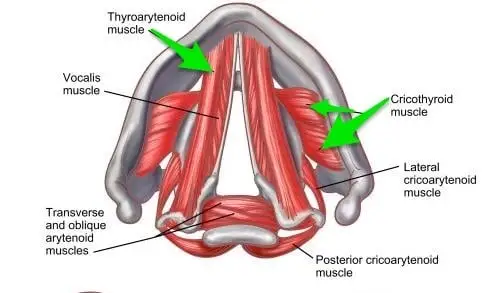
posterior (intrinsic) cricoarytenoid: actions
ABduct vocal fold and arytenoid cartilage
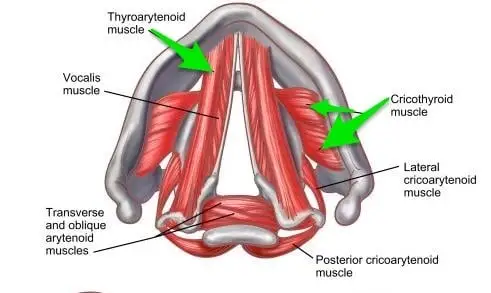
cricothyroid (intrinsic) muscles: actions
stretch vocal ligament to raise pitch of voice
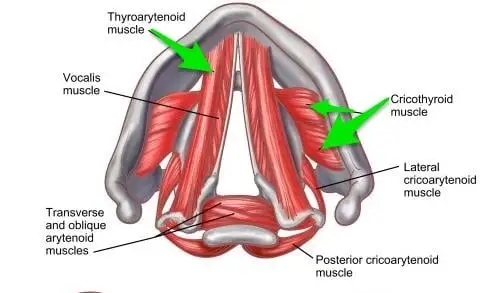
thyroarytenoid: actions
stiffen vocal ligament to produce loud sounds
what muscle makes minute adjustments in tension during speech?
vocalis muscle
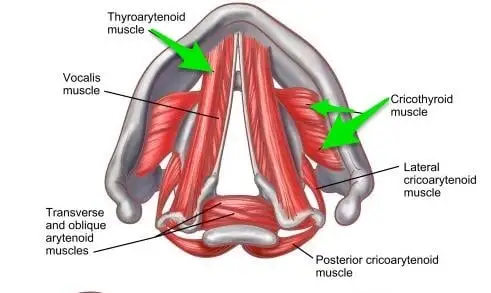
motor innervation of intrinsic laryngeal muscles; cricothyroid is innervated by what nerve?
recurrent inferior laryngeal nerve; cricothyroid is innervated by external laryngeal nerve
sensory innervation of mucosa from the vocal folds upwards and below the vocal folds
upwards vocal folds is innervated by internal laryngeal nerve; below vocal folds is innervated by recurrent laryngeal nerve
blood supply of larynx
superior laryngeal artery and inferior laryngeal artery (from respective thyroid arteries)
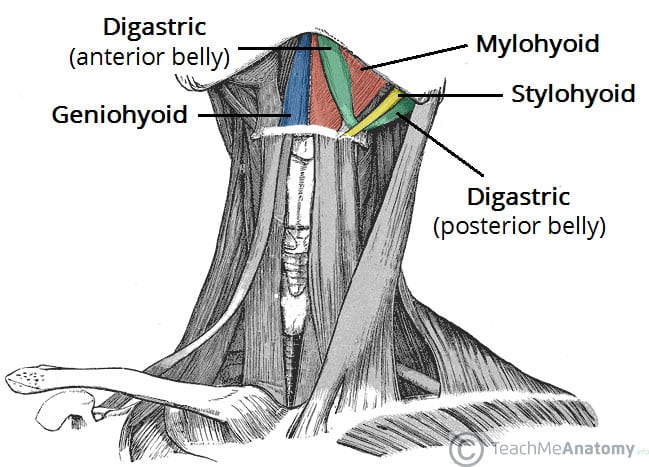
what function: larynx is elevated by the suprahyoid muscles and other elevators. The inlet is narrowed by the oblique arytenoid and aryepiglottic muscles.
swallowing
what function: rima glottidis is closed by the sphincters. expiratory muscles are contracted.
coughing/sneezing
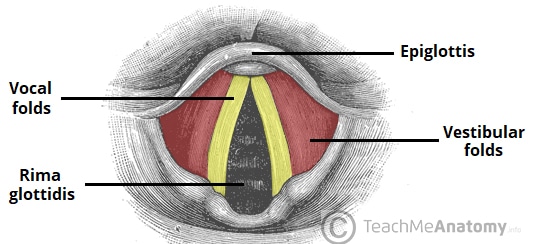
what action: rima glottidis is closed after deep breath. Air trapped in lungs → diaphragm can’t move upwards when abdominal muscles are contracted → pressure transmitted to pelvis and abdomen
micturition (urination), defecation, parturition (childbirth)
what action: vocal ligaments ADducted. entire larynx is either elevated or depressed
voice production: high-pitch, low-pitch