Materials
 Call Kai
 Learn
Learn Practice Test
 Spaced Repetition
 Match
Match Flashcards
 Knowt Play
1/37

Earn XP
Description and Tags
Name | Mastery | Learn | Test | Matching | Spaced | Call with Kai |
|---|
No analytics yet
Send a link to your students to track their progress
38 Terms
What is the force constant?
Force per unit extension
Unit is Nm-1
It is called the constant of proportionality (k) in Hooke's law
A measure of the stiffness of a spring
What is the the limit of proportionality?
The value of force or stress beyond which an object doesn’t obey Hooke’s law and stress is no longer directly proportional to strain
What is a yield point?
A point on a stress-strain graph at which the material starts to extend rapidly as stress increases.
Define stiffness
The ability of an object to resist deformation
What is a polymeric material?
A material comprising of long-chain moleules (polymers) that does not obey Hooke’s law
May show large strains
Polyethene and Rubber are examples.
Define stress
The force per unit cross sectional area, measured in pascals (Pa)
Define strain
The ratio of extension to original length.
What is the unit of strain?
Strain does not have a unit as it is a ratio.
What is the unit of young’s modulus?
Pa or Nm-2
What is the equation for young’s modulus?
E = σ/ε
Young’s modulus = tensile stress / tensile strain
What is the equation for tensile strain?
ε = x/L
Tensile strain = extension / original length
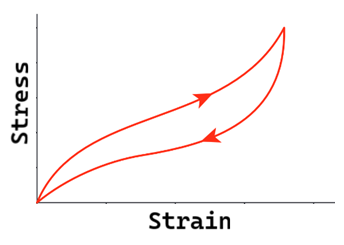
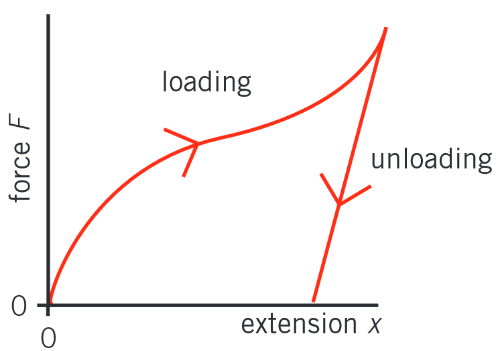
What must be true about a material for hysteresis loop to be produced?
The loading and unloading curves must be different
What does the area of a hysteris loop represent on a force-extension graph?
The energy transferred to the material over one cycle
This energy is dissipated as heat to the surroundings.
What does the area of a hysteris loop represent on a stress-strain graph?
The energy absorbed by the material per unit volume
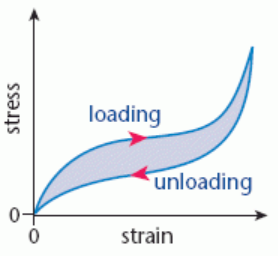
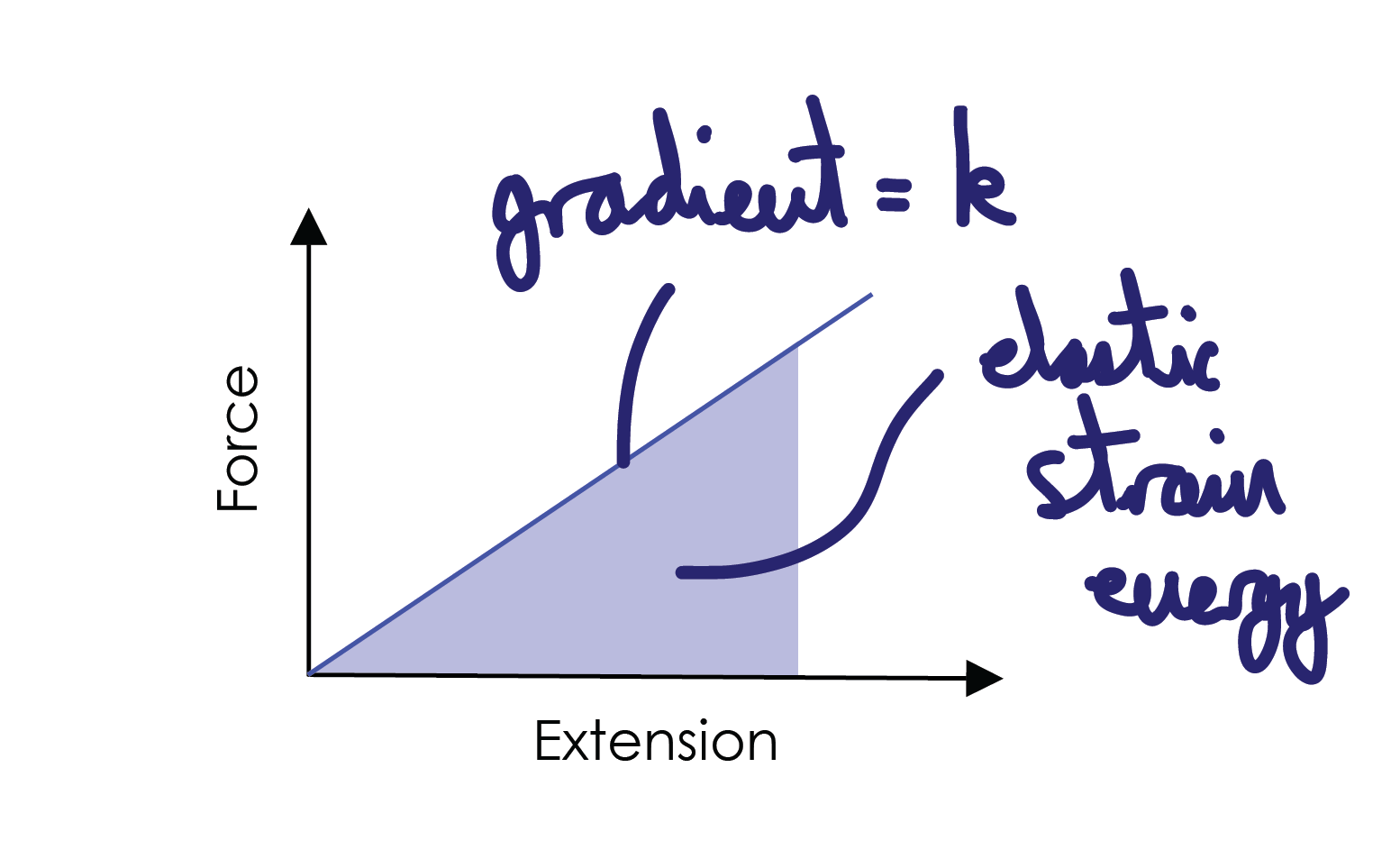
What does the area under a loading curve on a force-extension graph represent?
The energy absorbed by the object during loading
What does the area under a unloading curve on a force-extension graph represent?
The energy released by the object during unloading
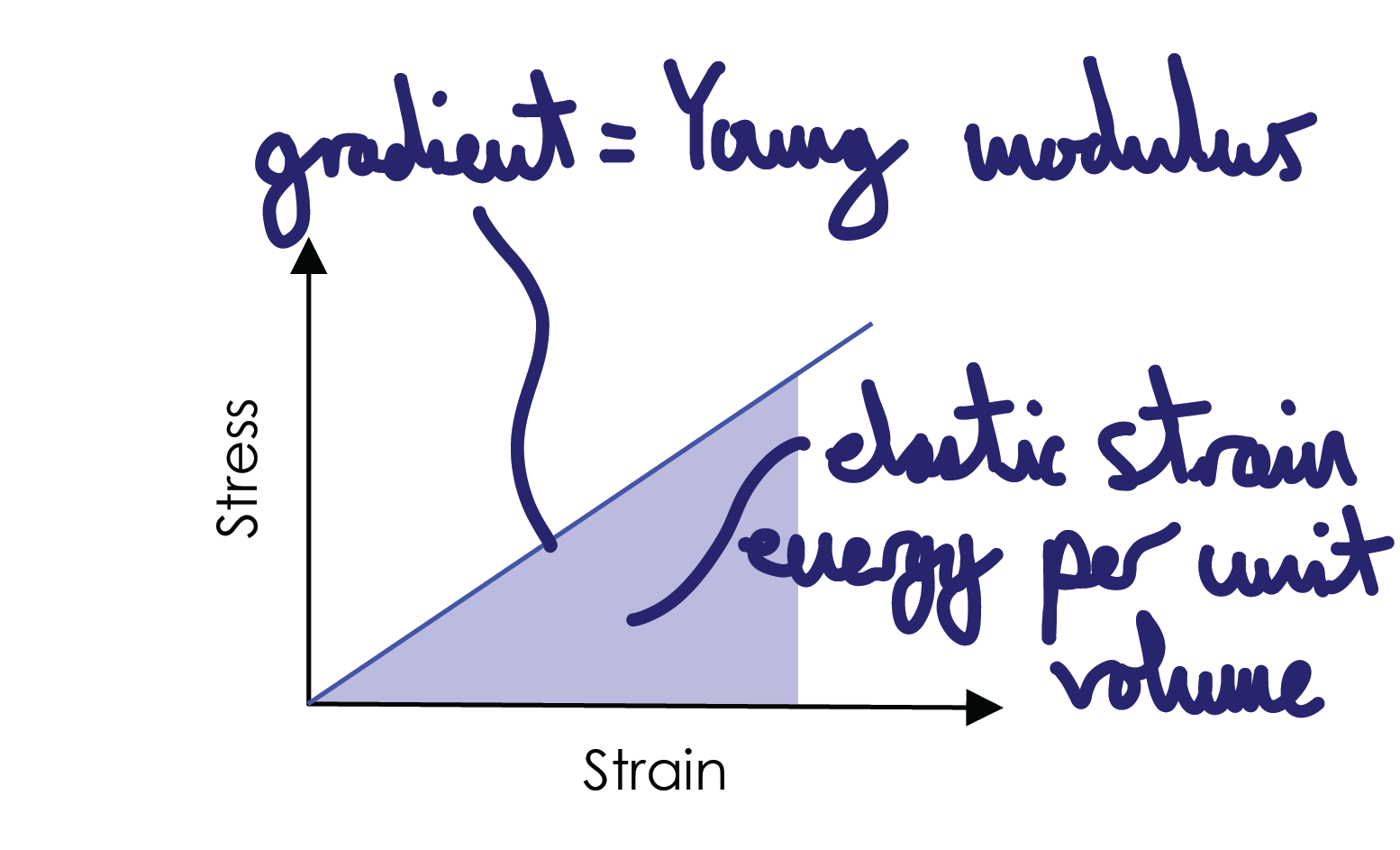
What does the area under a loading curve on a stress-strain graph represent?
The energy absorbed per unit volume by the object during loading
What does the area under a unloading curve on a stress-strain graph represent?
The energy released per unit volume by the object during unloading
Hooke’s law
Force is proportional to extension provided the limit of proportionality is not exceeded
Hooke’s law equation, including meaning and unit of each term
F= kx
F Is force in N
k is the spring constant in Nm-1
x is the extension in m
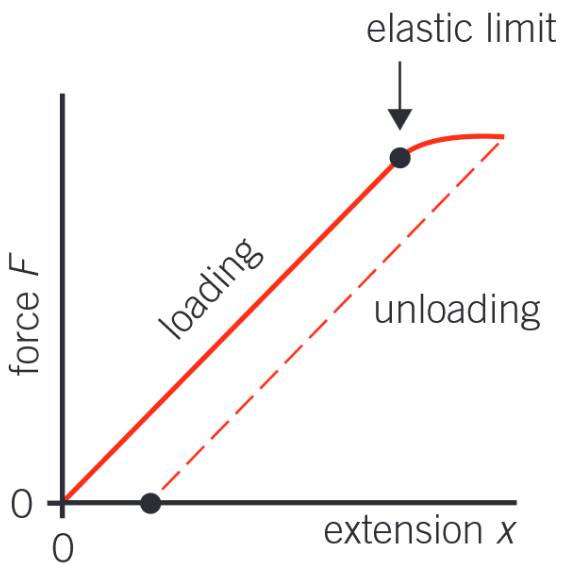
Elastic limit
The maximum value of force or stress for which the object returns to its original shape after unloading.
Equation for tensile stress
σ = F / A
Where σ is tensile stress in Pa
F is the force acting through the object in N
A is the cross-sectional area in m2
Define Young’s modulus
The ratio of tensile stress to tensile strain within the material's elastic limit
Elastic potential energy
Energy stored when an object is stretched elastically
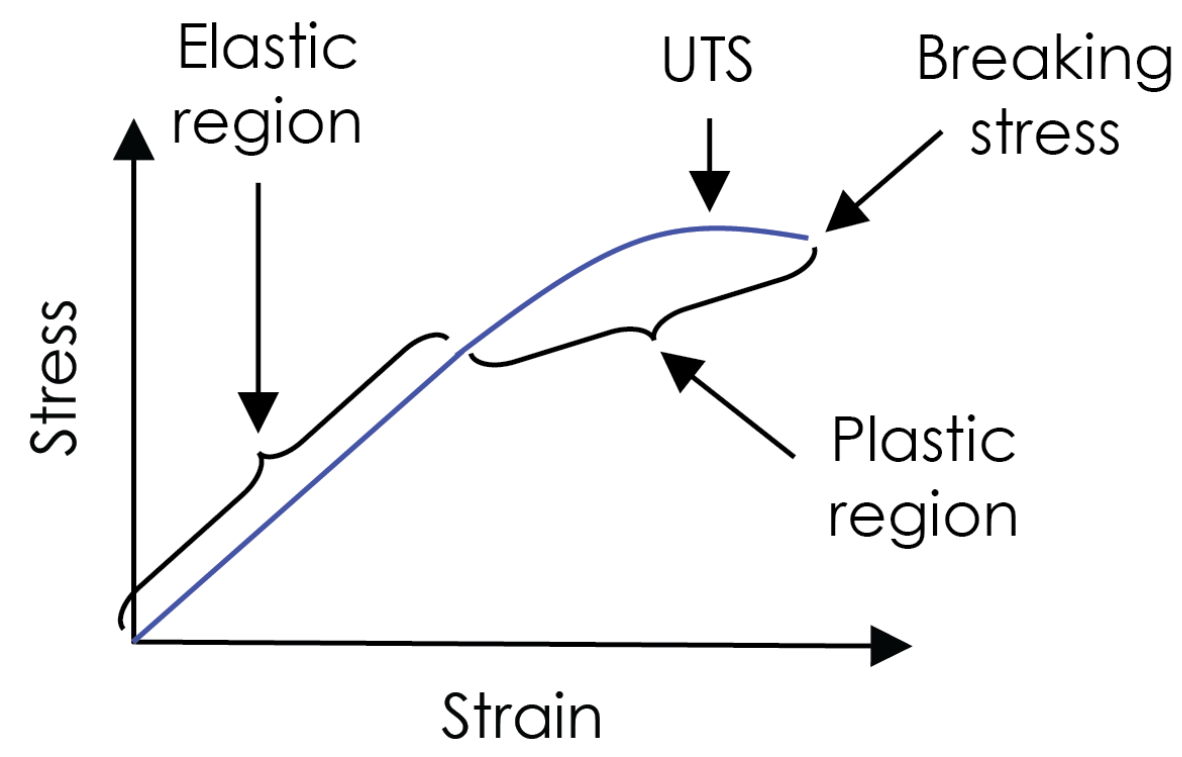
Breaking stress
The value of stress just before fracture.
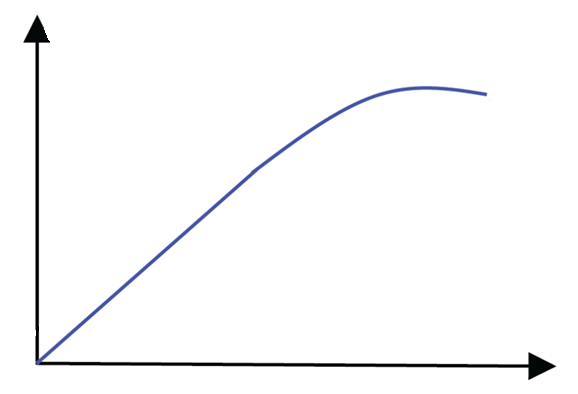
Label this stress–strain graph with stress, strain, elastic and plastic region, UTS and breaking stress
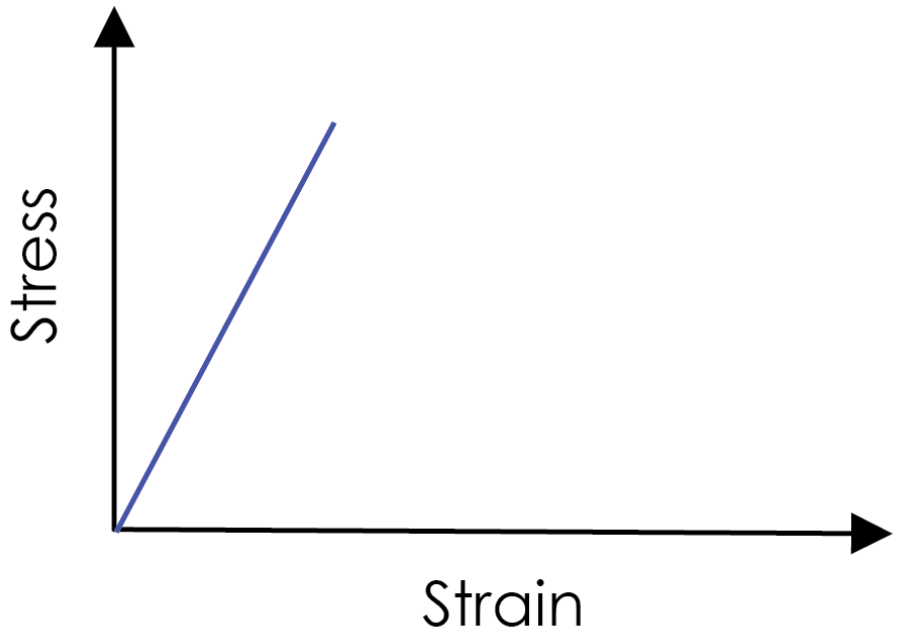
Brittle behaviour (description + graph)
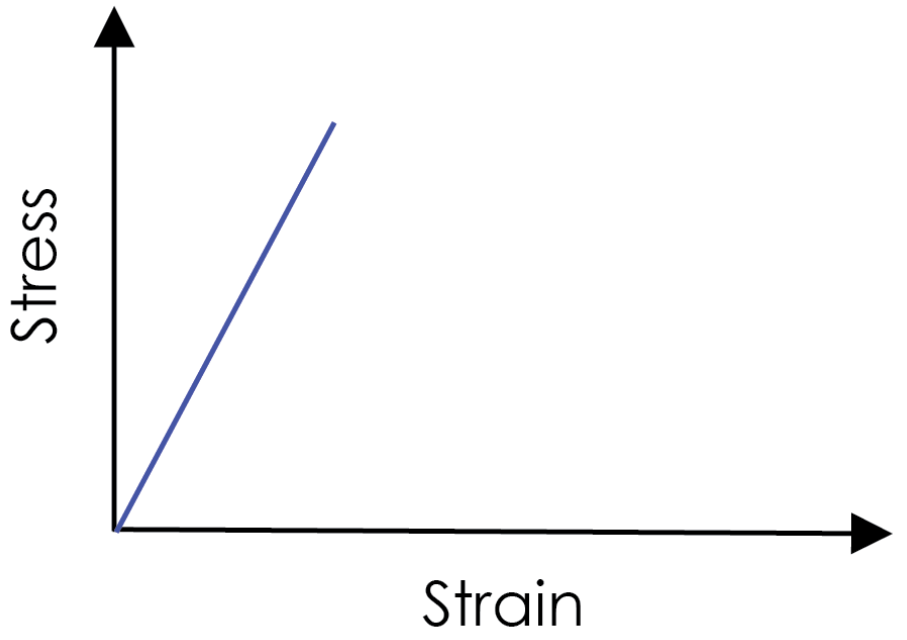
When a material shows little or no plastic deformation before it brakes
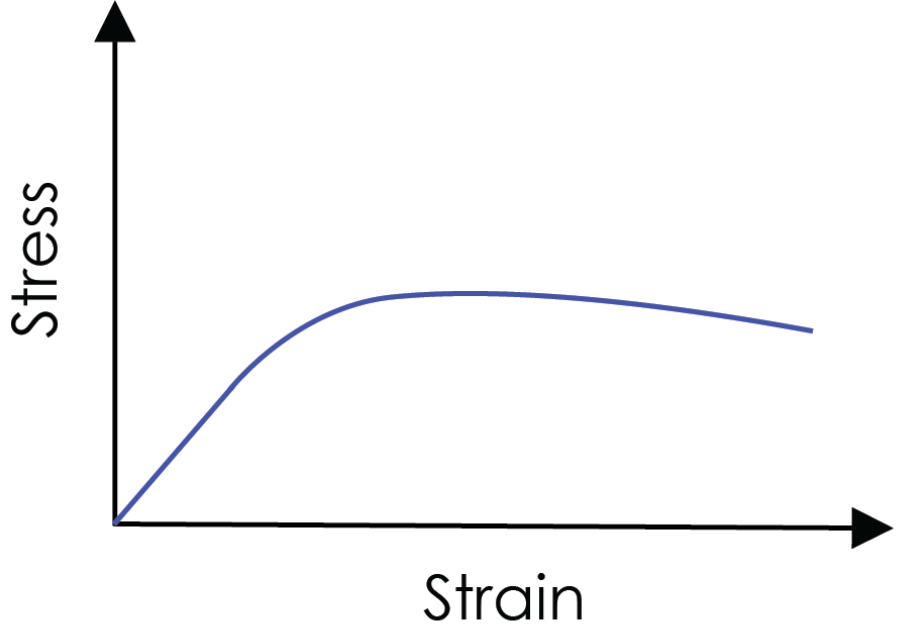
Ductile behaviour (description + graph)
When a material undergoes a large plastic deformation before it breaks ∴ has a large plastic region in a stress-strain graph.
Ultimate Tensile Strength
The maximum tensile stress an object can withstand before it breaks
What does the gradient of a force-extension graph equal?
Force constant k
What does the gradient of a stress-strain graph equal?
Young’s modulus E when below the elastic limit
Elastic deformation
The object returns to its original shape once the load has been removed.
The elastic limit has not been exceeded.
Plastic deformation
The object does not return fo its original shape once the load has been removed.
The elastic limit has been exceeded.
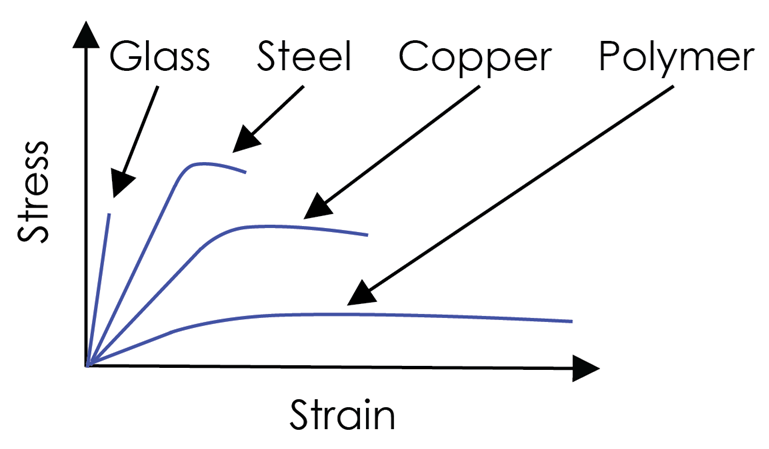
Stress-strain curves of glass, steel, copper and polymer on one plot
Stress-strain curve of glass
Glass is brittle
Force-extension graph of polyphene (loading and unloading curves)
Force-extension graph of metal wire where max force > elastic limit (loading and unloading curves + elastic limit)
Stress strain graph of rubber