Network Topologies
0.0(0)
Studied by 11 people Call Kai
 Learn
 Practice Test
 Spaced Repetition
 Match
 Flashcards
Card Sorting
1/22

Earn XP
23 Terms
1
New cards
**network topology**
The description of the arrangement of nodes (e.g. networking switches and routers) and connections in a network, often represented as a graph.
2
New cards
logical network topology
A conceptual representation of how devices operate at particular layers of abstraction.
3
New cards
physical topology
Displays how devices are physically connected.
4
New cards
network topology map
a representation of a physical network layout of connected devices that can include details about each node or device connected
5
New cards
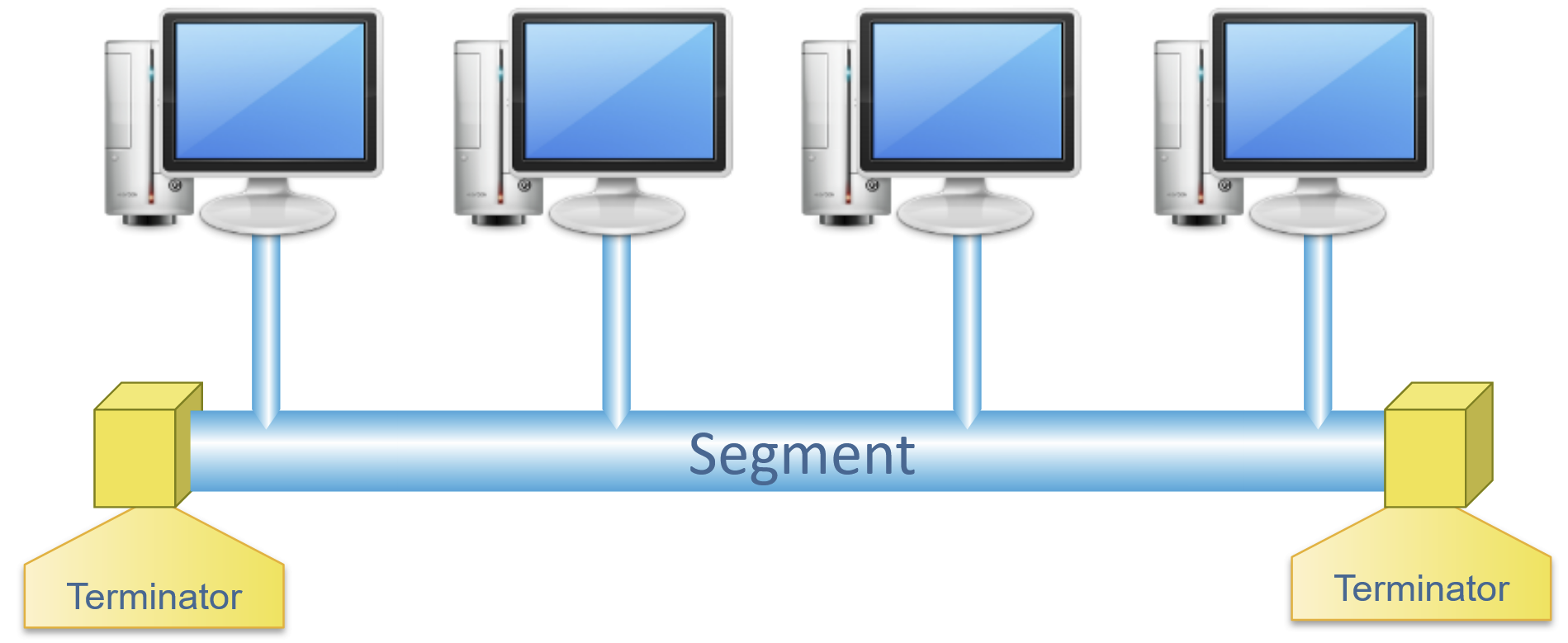
Bus Topology
Simple layout and cheap but vulnerable to failure and only suitable for low traffic volumes.
6
New cards
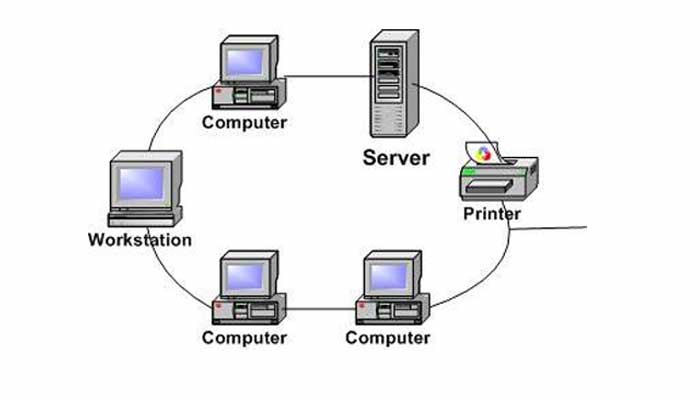
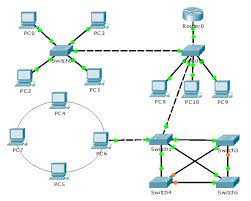
Ring Topology
Easy to manage and with a low risk of collision but reliant on all nodes being powered up and in full working order.
7
New cards
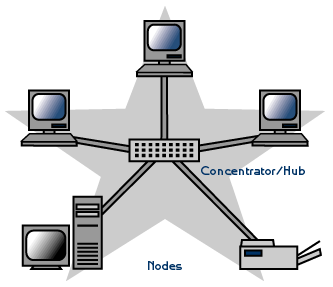
Star Topology
All devices are connected to a central switch.
8
New cards
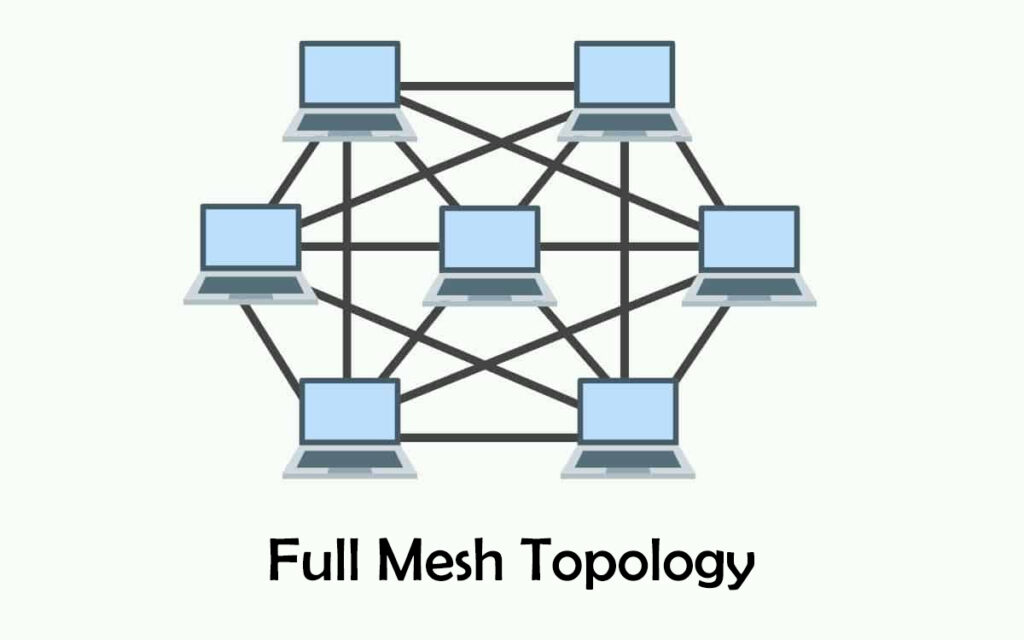
Mesh Topology
Each node is connected to every other mode with a direct link.
9
New cards
Hybrid Topology
Combines two or more of the standard topologies
10
New cards
LAN
Local Area Network
Contained in one office or building
Organizations often have several LANS
Contained in one office or building
Organizations often have several LANS
11
New cards
WAN
Wide Area Networks
Two or more LANs connected
Over a large geographic area
Typically use public or leased lines
Phone lines
Satellite
The Internet is a WAN
Two or more LANs connected
Over a large geographic area
Typically use public or leased lines
Phone lines
Satellite
The Internet is a WAN
12
New cards
CAN
Campus Area Networks
A LAN in one large geographic area
Resources related to the same organization (PPS has one of these)
Each department shares the LAN
A LAN in one large geographic area
Resources related to the same organization (PPS has one of these)
Each department shares the LAN
13
New cards
PAN
Personal Area Network
Very small scale network Range is less than 2 meters
Cell phones (e.g. AirDrop, wireless headphones) usually bluetooth
Very small scale network Range is less than 2 meters
Cell phones (e.g. AirDrop, wireless headphones) usually bluetooth
14
New cards
Client/Server network
Nodes and servers share data roles
Nodes are called clients
Servers are used to control access
This is like you ‘logging in’ to the PPS network at school
Nodes are called clients
Servers are used to control access
This is like you ‘logging in’ to the PPS network at school
15
New cards
Peer to peer networks
All nodes are equal Nodes access resources on other nodes
Each node controls its own resources
Most modern OS allow P2PN (warpinator, LAN games)
Distributing computing is possible
Each node controls its own resources
Most modern OS allow P2PN (warpinator, LAN games)
Distributing computing is possible
16
New cards
Server based network
Servers control what the node accesses
Users gain access by logging in
Server is the most important computer
Users gain access by logging in
Server is the most important computer
17
New cards
Hubs
Layer 1-
All nodes receive transmitted packets
All nodes receive transmitted packets
18
New cards
Network interface cards
Layer 2-
Connects node to the media
Unique Machine/Media Access Code (MAC)
Connects node to the media
Unique Machine/Media Access Code (MAC)
19
New cards
Switches
Layer 2-
Only intended node receives transmission
Only intended node receives transmission
20
New cards
Bridge
Layer 2-
Connects two or more LANs together
Segments the network on MAC addresses
Connects two or more LANs together
Segments the network on MAC addresses
21
New cards
Router
Layer 3-
Connects two or more LANs together
Segments the network on IP addresses
Connect internal networks to the Internet
Connects two or more LANs together
Segments the network on IP addresses
Connect internal networks to the Internet
22
New cards
Gateway
Connects two dissimilar networks
Connects coax to twisted pair
Connects coax to twisted pair
23
New cards
Modem
Modulator-Demodulator is a device that modulates an analog carrier signal to encode digital information