Problem solving and decision making - Chapter 8
 Call Kai
 Learn
Learn Practice Test
 Spaced Repetition
 Match
Match Flashcards
 Knowt Play
1/18

There's no tags or description
Looks like no tags are added yet.
Name | Mastery | Learn | Test | Matching | Spaced | Call with Kai |
|---|
No analytics yet
Send a link to your students to track their progress
19 Terms
What are the two types of representations
WHAT
WHAT
What are the two types of representations
Analogical
Symbolic
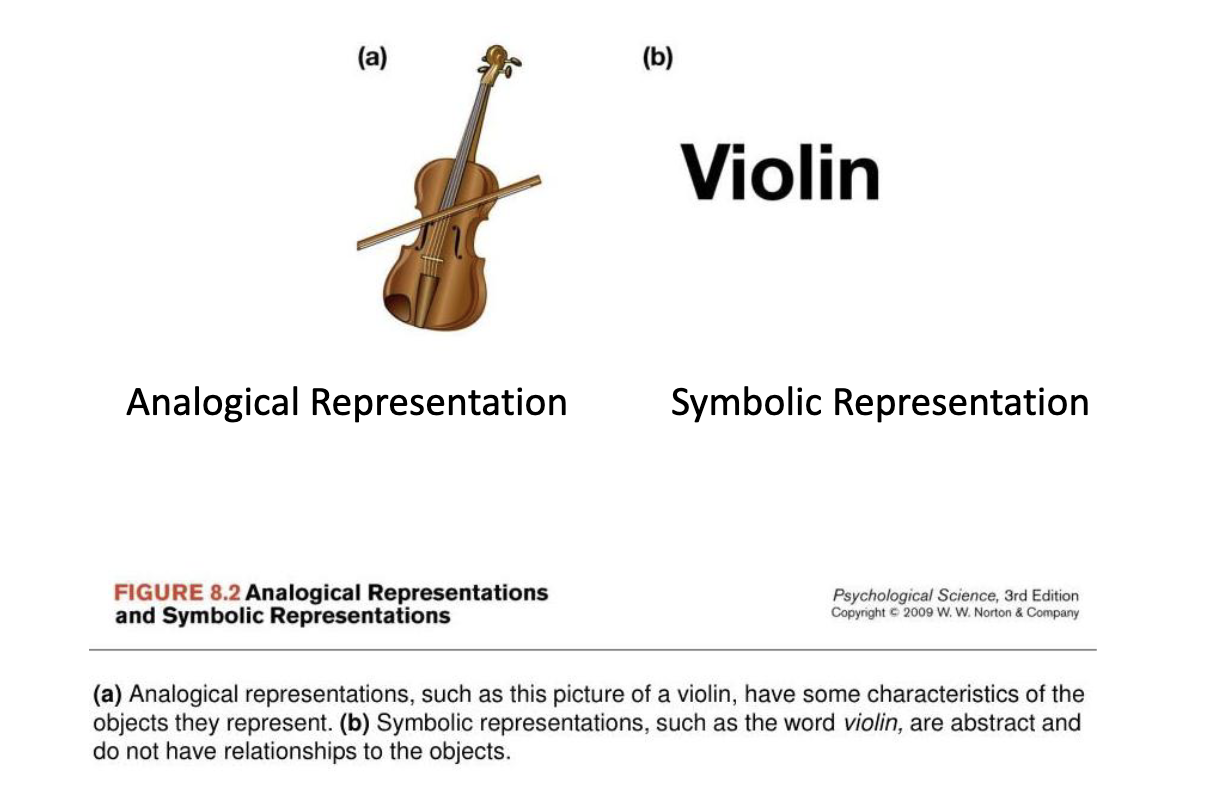
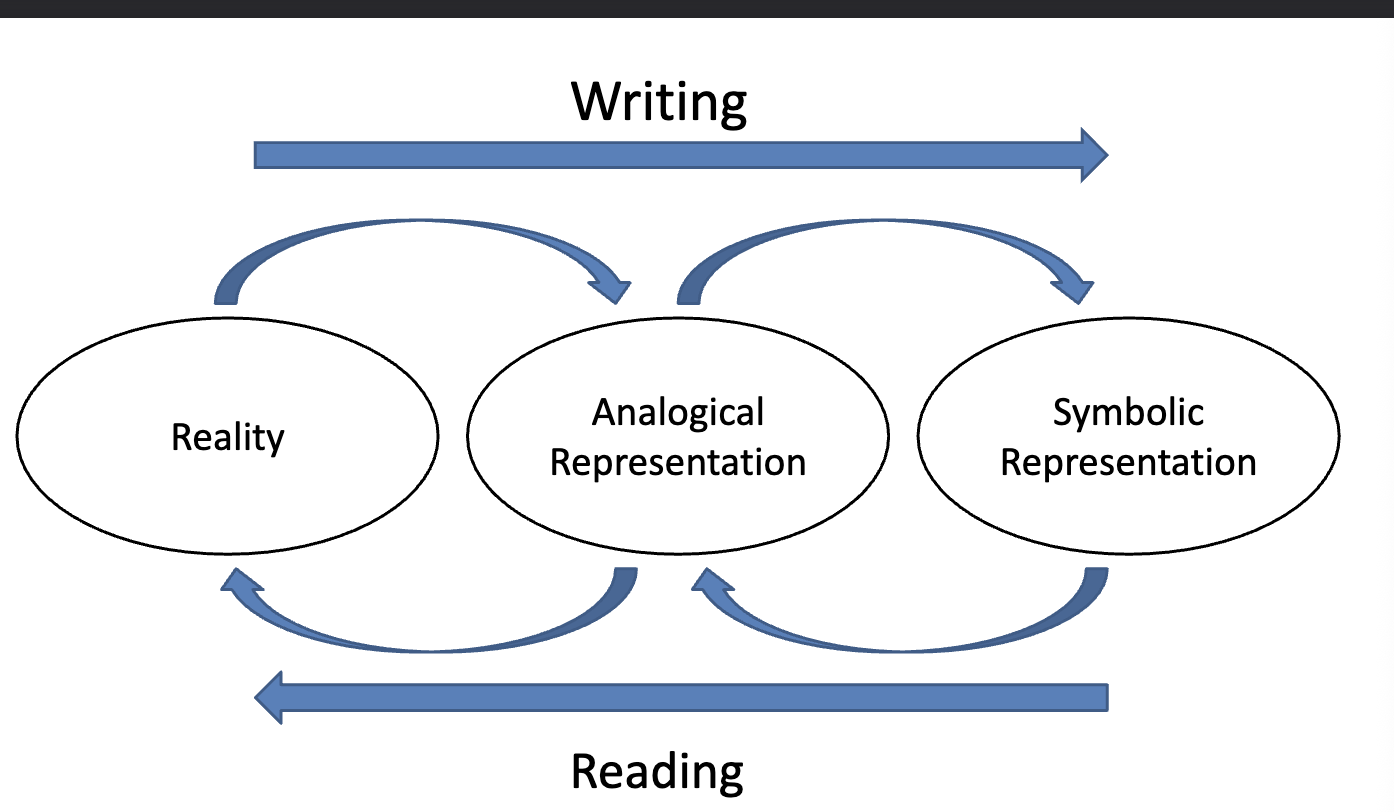
Analogical representation
Have some characteristics of the objects they represent
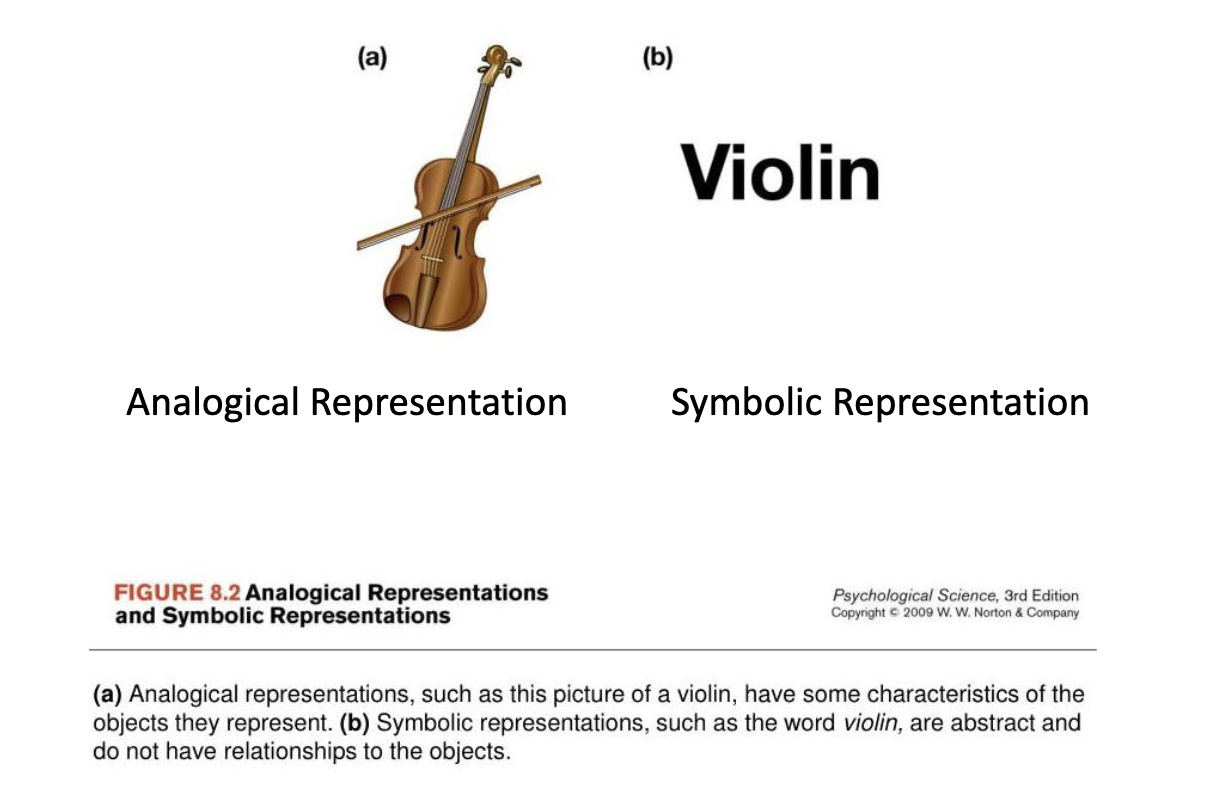
Symbolic representations
Abstract and do not have relationships to the objects
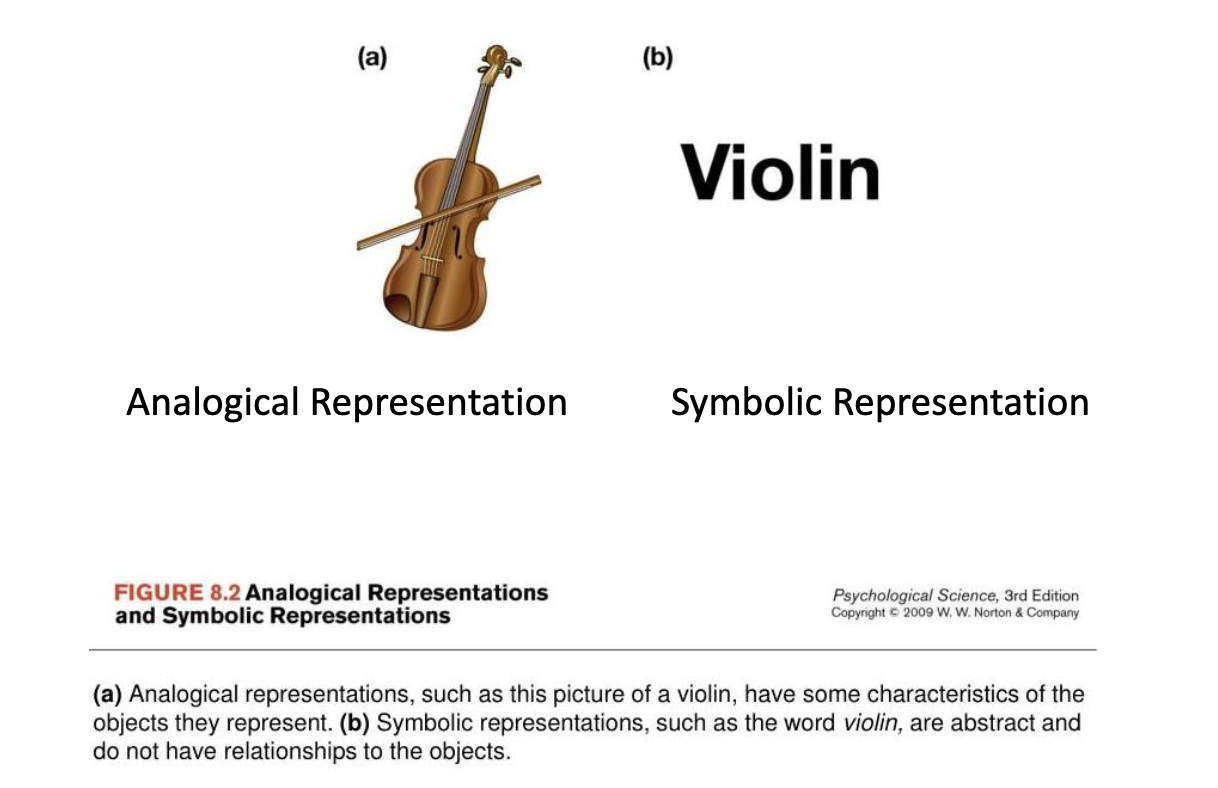
What way does writing go
Reality → Analogical → symbolic
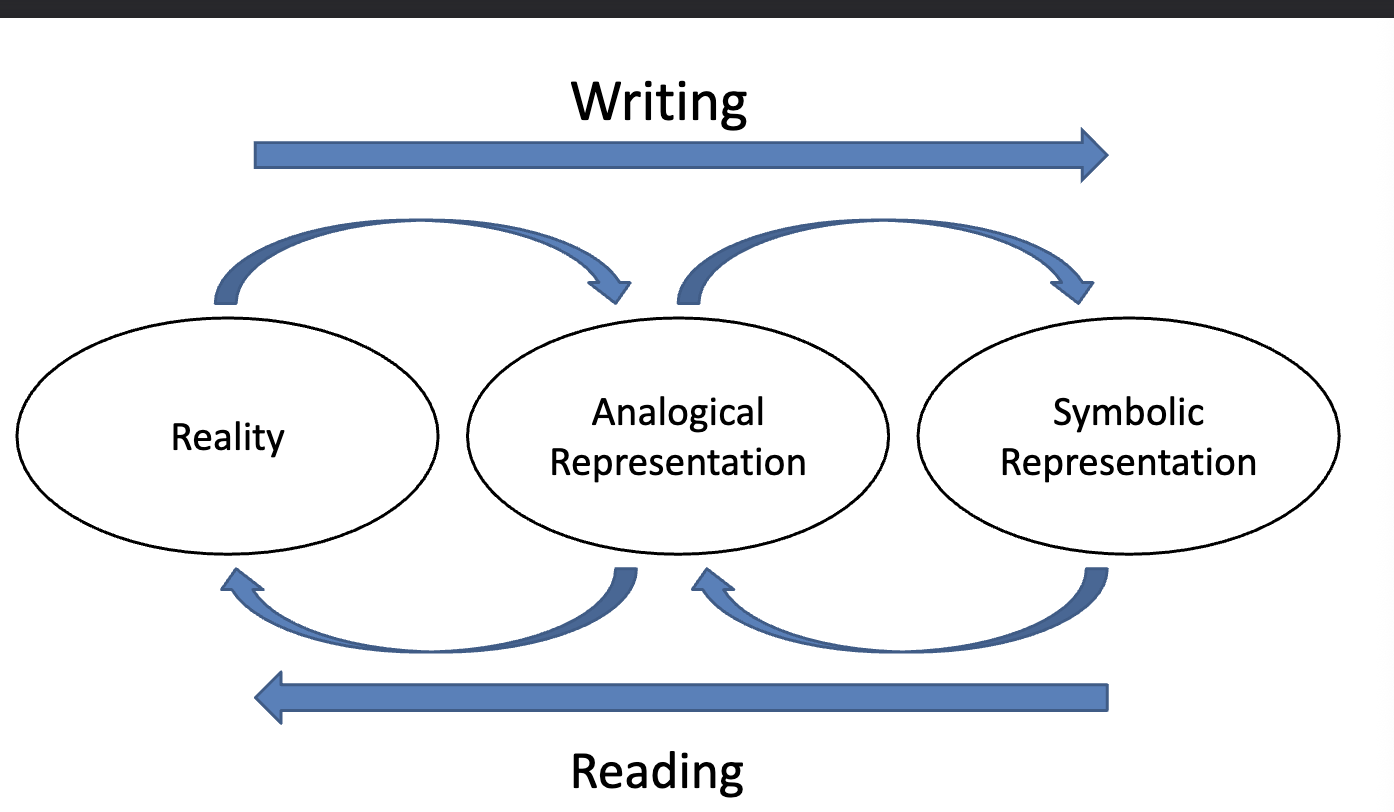
What way does reading go
Symbolic → Analogical → reality
Problem solving
Find a way WHAT an obstacle to reach a goal
Building an WHAT representation of a problem is the first step to effectively solve the problem
Problem solving
Find a way AROUND an obstacle to reach a goal
Building an ANALOGICAL representation of a problem is the first step to effectively solve the problem
Decision making
A WHAT process that results in the selection of a course of action or belief from several OPTIONS
Decision making
A COGNITIVE process that results in the selection of a course of action or belief from several OPTIONS
How problem representation facilitates problem solving
WHAT
WHAT
How problem representation facilitates problem solving
Unproductive representations
Productive representations
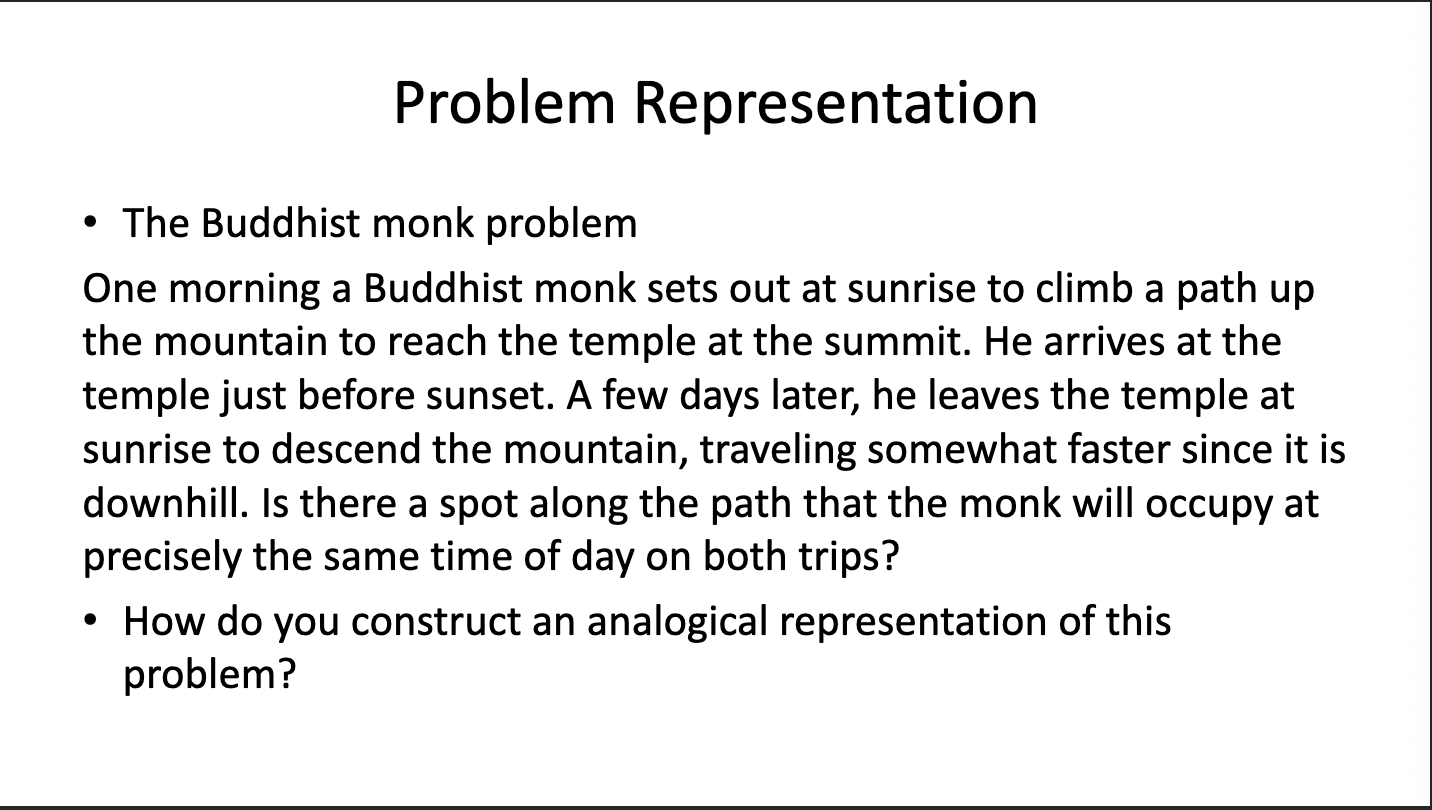
Unproductive representations
Thinking in terms of distance and speed
Trying to locate that spot as if solving math or physics problem - it is not this complicated
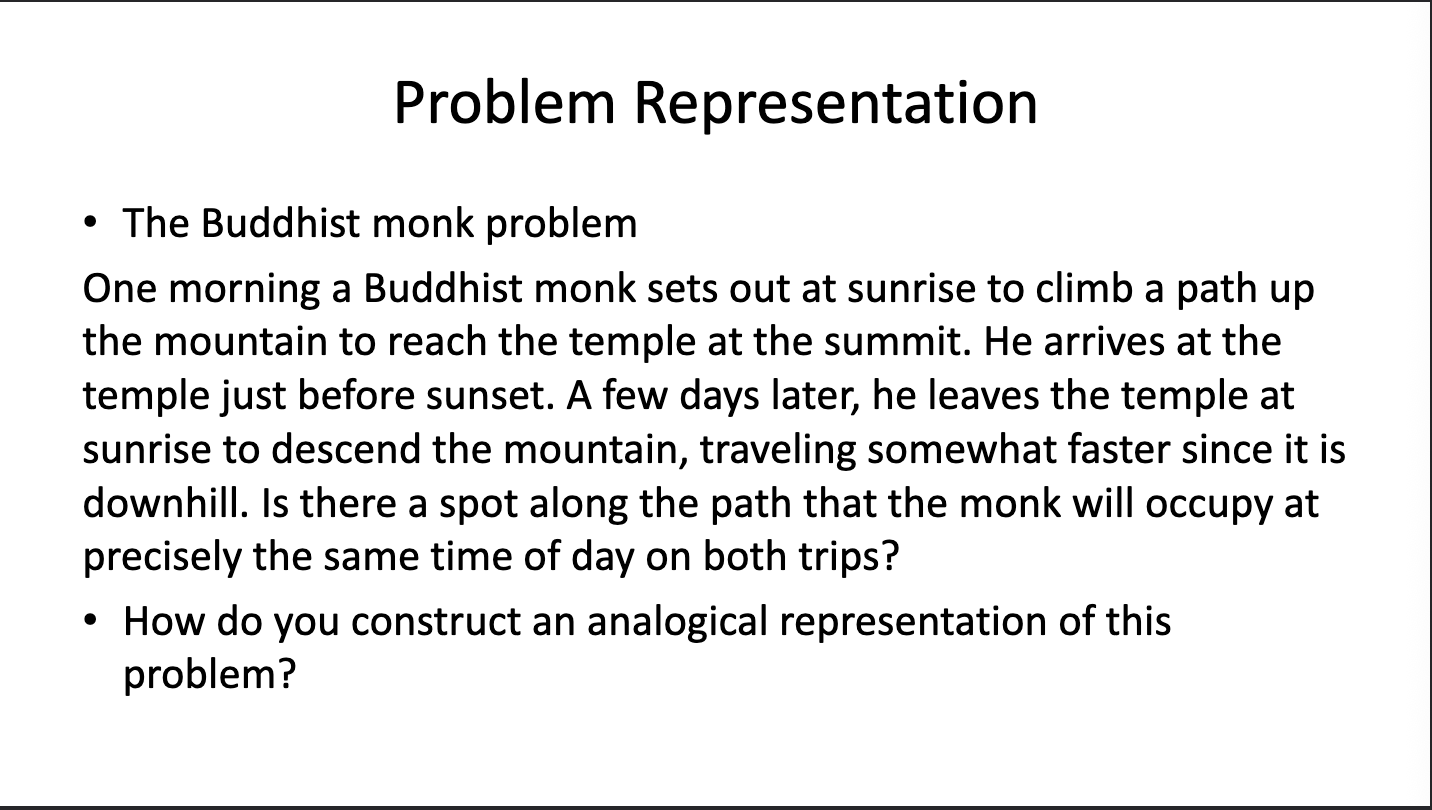
Productive representation
Visualize the path of the monk ascending and descending the mountain.
The paths start at opposite ends and proceed in opposite direction.
Think of two monks walking in opposite directions along the same path on the same day.
Chi, Feltovich, & Glaser (1981).- Background
The quality of problem representation influences the WHAT with which the problem can be solved.
Experts possess WHAT knowledge (or problem schemata) with which solutions to the problems are easily arrived.
“...much of expert power lies in the expert’s ability to quickly establish correspondence between externally presented events and internal models for these events” (p. 123)
Experts represent problem by WHAT (i.e., perceptual chunking)
Chi, Feltovich, & Glaser (1981).- Background
The quality of problem representation influences the EASE with which the problem can be solved.
Experts possess DOMAIN SPECIFIC knowledge (or problem schemata) with which solutions to the problems are easily arrived.
“...much of expert power lies in the expert’s ability to quickly establish correspondence between externally presented events and internal models for these events” (p. 123)
Experts represent problem by CATEGORY (i.e., perceptual chunking)
Chi, Feltovich, & Glaser (1981) - Purpose
To investigate the WHAT differences between the representations of physics problems by experts and novices.
To understand the role of WHAT in expert problem solving.
Chi, Feltovich, & Glaser (1981) - Purpose
To investigate the QUALITATIVE differences between the representations of physics problems by experts and novices.
To understand the role of CATEGORIZATION in expert problem solving.
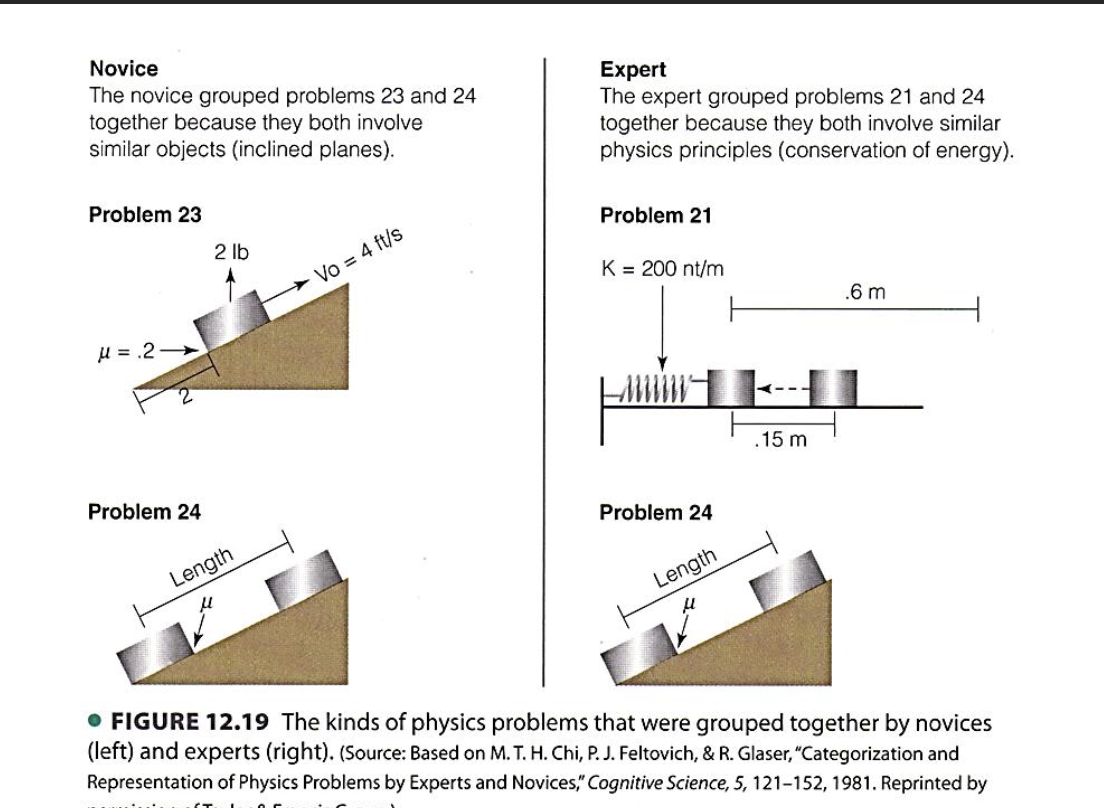
Chi, Feltovich, & Glaser (1981) - Results
Novices sorted the problems based on WHAT structures: the objects (e.g., inclined plane) referred to in the problems, the literal physics terms mentioned in the problems (e.g., friction), the physical configuration described in the problems (e.g., a block on an inclined plane).
Experts sorted the problems based on WHAT structures: physics principles governing the solutions of the problems (e.g., Newton’s second law, conservation of energy)
Experts were slower in WHAT the problems.
Experts spent more time WHAT the problems; they tried to WHAT the problems before solving the problems.
Expertise is only an advantage in the WHAT (recall that the chess master was not better than the novice in memorizing random chess positions)
Chi, Feltovich, & Glaser (1981) - Results
Novices sorted the problems based on SURFACE structures: the objects (e.g., inclined plane) referred to in the problems, the literal physics terms mentioned in the problems (e.g., friction), the physical configuration described in the problems (e.g., a block on an inclined plane).
Experts sorted the problems based on DEEP structures: physics principles governing the solutions of the problems (e.g., Newton’s second law, conservation of energy)
Experts were slower in SORTING the problems.
Experts spent more time ANALYZING the problems; they tried to UNDERSTAND the problems before solving the problems.
Expertise is only an advantage in the EXPERT’S SPECIALITY (recall that the chess master was not better than the novice in memorizing random chess positions)
We are often overly influenced by the WHAT knowledge stored in our memories when making judgments
We are often overly influenced by the GENERAL WORLD knowledge stored in our memories when making judgments
We are more capable in thinking WHAT ways than in WHAT ways
We are more capable in thinking CONCRETE ways than in ABSTRACT ways
We tend to search for evidence that WHAT our decisions, beliefs and hypothesis
We tend to search for evidence that CONFIRMS our decisions, beliefs and hypothesis
Research generally suggests that people are poor at solving these problems when the problems are presented in WHAT form
Research generally suggests that people are poor at solving these problems when the problems are presented in ABSTRACT form
When the problems are re-presented in terms of WHAT and WHAT concepts, people are better at seeing the solutions
When the problems are re-presented in terms of CONCRETE and REAL-WORLD concepts, people are better at seeing the solutions
Our world knowledge sometimes has prevented us from seeing the pure WHAT and sometimes enables us to see it
Our world knowledge sometimes has prevented us from seeing the pure LOGIC and sometimes enables us to see it