MARINE MACROALGAE AND PLANTS
 Call Kai
 Learn
Learn Practice Test
 Spaced Repetition
 Match
Match Flashcards
 Knowt Play
1/54

There's no tags or description
Looks like no tags are added yet.
Name | Mastery | Learn | Test | Matching | Spaced | Call with Kai |
|---|
No analytics yet
Send a link to your students to track their progress
55 Terms
Marine
macrophytes
• Refers to large primary
producers in habitats
substantially affected by salt
water from the sea
• Marine macroalgae
(seaweeds)
• Seagrass
• Mangroves
SEAWEEDS
Also called marine macroalgae
• “Plant-like” organisms
• Photosynthetic, all contain chlorophyll
• Multicellular or coenocytic
• From a few millimeters or centimeters to 30 m–50 m
ATTACH TO A SUBSTRATE OR OTHER ORGANISMS
can be found in splash zone down to the subtidal, drifting or floating
whee light is available for photosynthesis
Thallus
the entire body of a
seaweed
Holdfast
for attachment,
resembles roots
Stipe
stalk of a seaweed
between holdfast and blade;
resembles a stem
Blade
the flattened or
leaf-like portion of the
seaweed
Pneumatocysts
Gas-filled bladders that keep the blades close to
the sea surface – more photosynthesis can take
place here.
Chemical analysis
seaweeds all have chlorophyll and differ in accessory pigments. They are best identified by _____ because their natural color doesn’t always match their name.
Green seaweeds
• Green, chlorophyll
• Most are unicellular or small multicellular
filaments, tubes or sheets
• Some are calcified
• Exhibit diverse morphologies
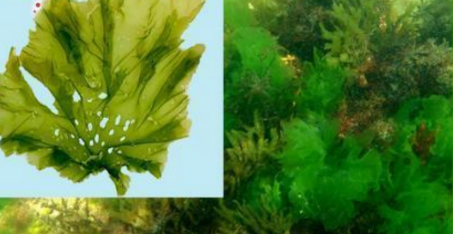
Ulva lactuca
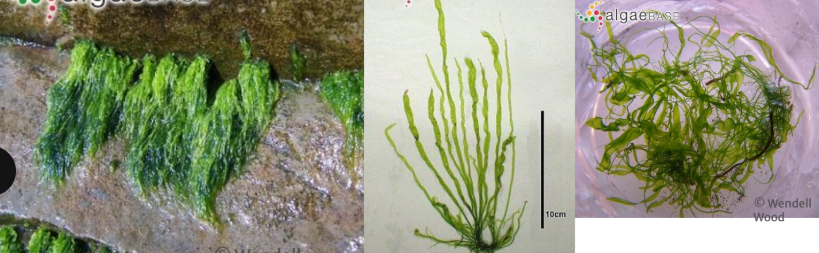
Ulva intestinalis
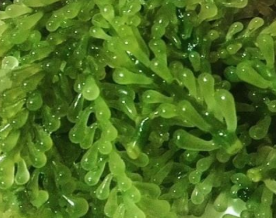
Caulerpa racemosa
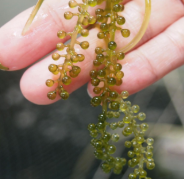
Caulerpa lentillifera
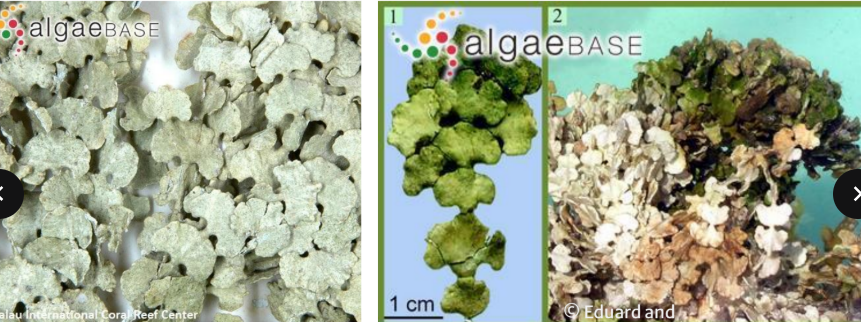
Halimeda opuntia
Brown Seaweed
• Multicellular
• Colors can vary from olive green to dark brown.
• Yellow-brown pigments (particularly fucoxanthin) which
masks the green chlorophyll.
• Vary in morphology – may be filamentous, branching,
fan-shaped, with long stalks, fleshy or leathery, etc.
• Are often the dominant primary producers on temperate
and polar rocky coasts.
• some are tropical
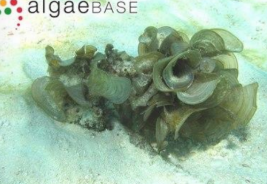
Padina australis
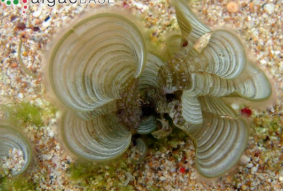
Padina boryana
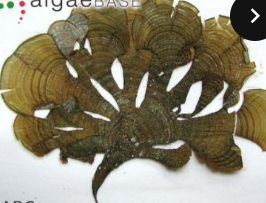
Padina antillarum
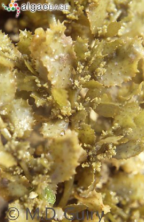
Sargassum cristaefolium
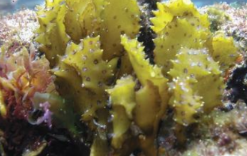
Sargassum crassifolium
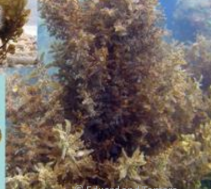
Sargassum polycystum
Red Seaweed
• Multicellular • Very large group of organisms (more species than green and
brown seaweeds).
• Chlorophyll and phycobilins
• Most are soft bodies (fleshy), but some are
calcified (coralline algae)
Eucheuma and
Kappaphycus
- tropical
- mostly farmed
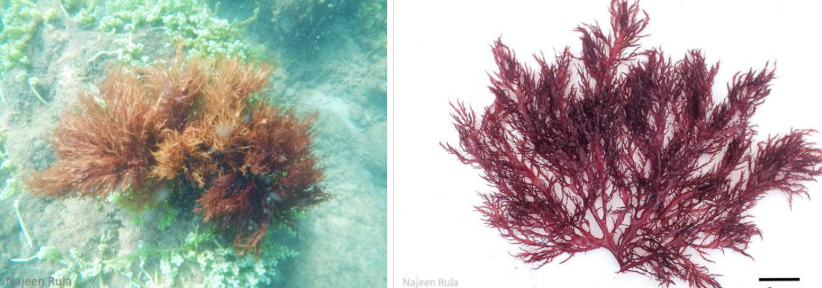
Halymenia durvillei
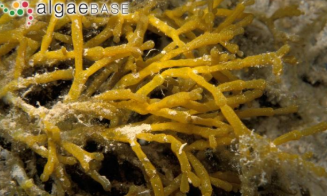
Gracilaria salicornia
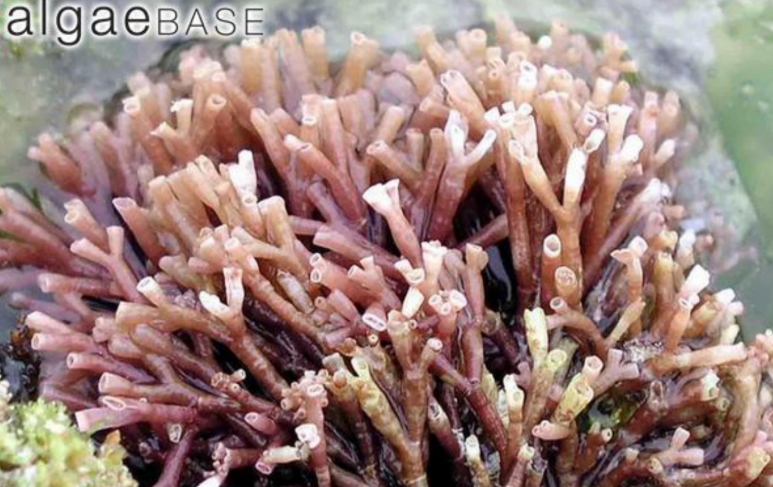
Tricleocarpa fragilis
Marine flowering plants
•Angiosperms
• plants along the shores and shallow
ocean waters evolved from terrestrial ancestors.
• Versus seaweeds that are originally
aquatic
Seagrasses
True plants
• Most species have long green, grass-like leaves
• Photosynthetic
• Multicellular
rhizomes
Horizontal stems called —- that
grow beneath sediment
INTERNODES
Stems look somewhat like bamboo, with
cylindrical sections called _____
separated by rings (nodes).
Flowers
very small and inconspicuous
(no need to attract insects for
pollination)
lacunae
provide a continuous
system for gas transport through
the plant. Because water carries
much less oxygen than air and
sediment is devoid of oxygen,
the leaves must be a source of
oxygen for the rest of the body.
Salty and brackish waters
• Mostly sandy or muddy
• Tropical to temperate
• Coastal oceans except polar seas
• Intertidal to the subtidal
Where can you find seagrass?
Sediment stabilization
and carbon
sequestration
eCOLOGICAL IMPORTANCE OF SEAGRASS
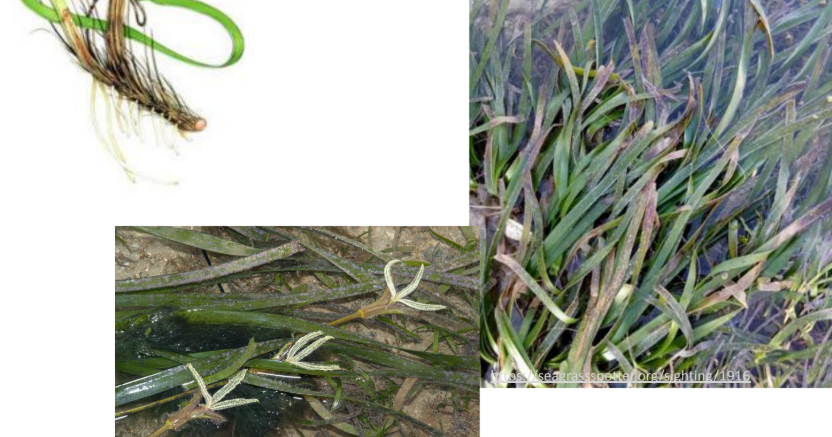
Enhalus acoroides
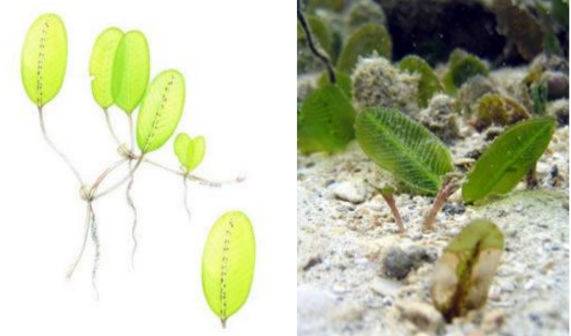
Halophila ovalis
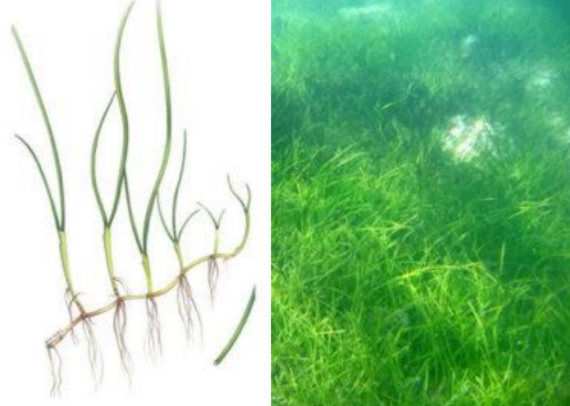
Syringodium isoetifolium
Mangrooves
halophytic (salt
loving) trees, shrubs
and other plants
• adapted to life in wet
soils, saline habitats,
and periodic tidal
submergence.
tropical and subtropical shores
brackish to saline tidal waves
whaere can you find mangroves?
salt pores
salt exclusion
viviparity
adaptations to salt water
Salt pores
– located
on leaves, root and
branches. Excess
salt absorbed from
soil secreted
Salt exclusion
roots of some
mangroves exclude
salt
Viviparity
seeds
germinate while
attached. Fully
developed seedlings
drop from tree.
prop roots
pneumatophores
lenticels
Some adaptations
to Low Oxygen in
Soil
Prop roots
roots exposed to air
Pneumatophores
pencil-lke roots sticks up from the substrate
Lenticels
slits in the bark and roots
Habitats, nurseries, and
nesting sites.
Food
Contribute to higher water
quality.
Protect shorelines from
erosion
natural buffers against waves,
tsunami, storm surge
Ecological importance
Food
edible fruits and honey from flowers
of some species.
Medicines-
Treatment of skin disorders and
sores including leprosy. Headaches,
rheumatism, snakebites, boils, ulcers,
diarrhea, and many more conditions are
traditionally treated with mangrove plants.
Hard wood
used for boat building and
cabinet timber.
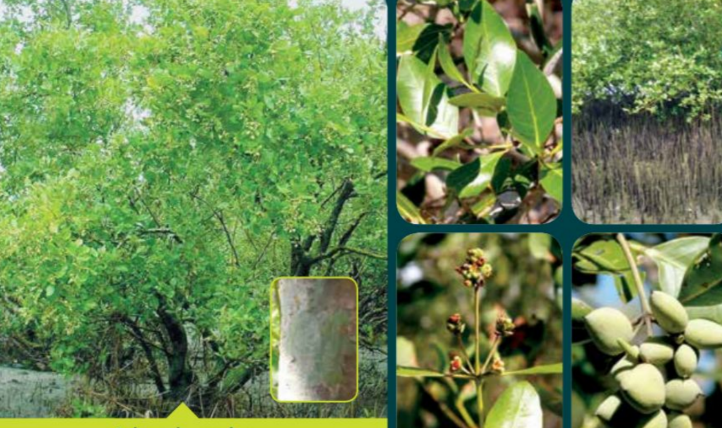
Avicennia marina
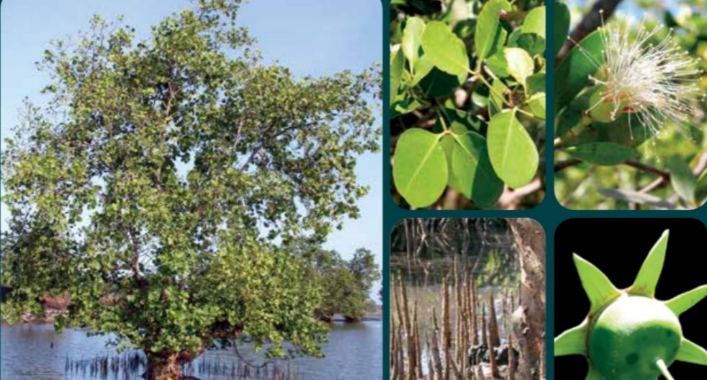
Sonneratia alba
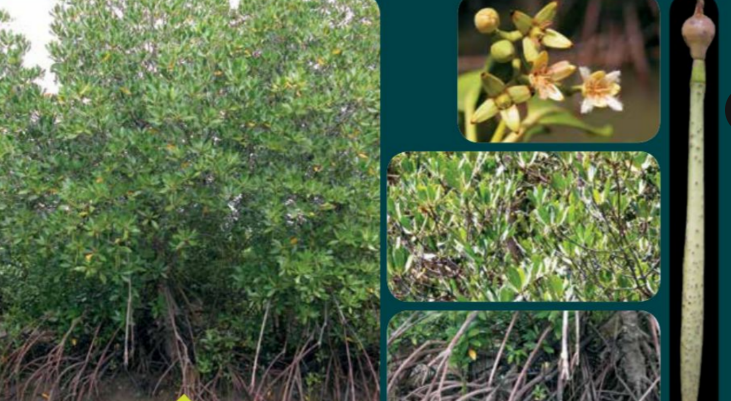
Rhizophora stylosa