ID 300 Midterm
 Call Kai
 Learn
Learn Practice Test
 Spaced Repetition
 Match
Match Flashcards
 Knowt Play
1/40

There's no tags or description
Looks like no tags are added yet.
Name | Mastery | Learn | Test | Matching | Spaced | Call with Kai | Chat |
|---|
No analytics yet
Send a link to your students to track their progress
41 Terms
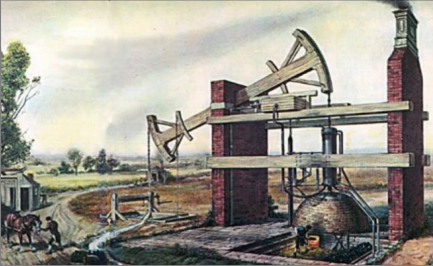
1.Steam Engine
2. 1712
3. Thomas Newcomen
4. Early Industrial Design
5. Design Significance: • First Source Of Reliable Power • “Mobile” And Consistent • Exponential Increase In Power Compared To Previous Forms • Scalable • Affected Multiple Industries (I.E. Textiles, Printing, Farming, Etc)
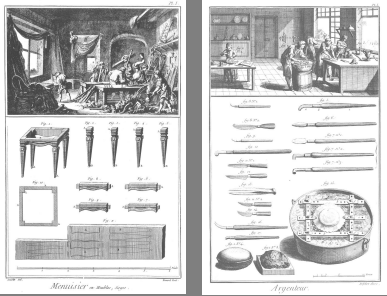
1. Pages From The Encyclopedie
2. 1751
3. Denis Diderot
4. Early Industrial Design
5. Design Significance: • Dangerous To Royalty And The Wealthy • The Printing Of Knowledge Allowed People To Be Educated • Influenced The Spread Of Information In America • More Artisans And Crafts People Could Work
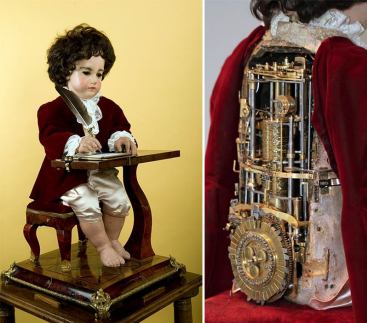
1. Automaton
2. 1772
3. Pierre Jaquet Droz
4. Early Industrial Design
5. Design Significance: • Supported By The Royalty And The Wealthy, • Artisans Had The Ability To Design Complex, Intricate, Singular Pieces Of Extravagant Products For Entertainment • This Created Highly Skilled, Exclusive Craftspeople But Made Reproduction Unsustainable. • Caused dissent amongst the poor as it was seen as wasteful.
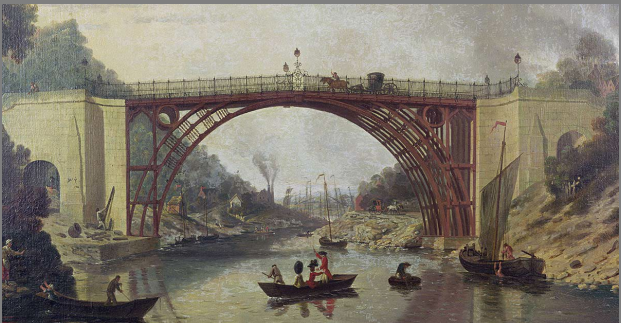
1. Iron Bridge
2. 1779
3. Abraham Darby III
4. Early Industrial Design
5. Design Significance: • 1st Cast iron truss style bridge connecting industrial towns • Engineering marvel taking into consideration terrain and ship passage • Integration of beauty and function • Quaker philosophy of design worthy of God • At the cost of urbanization
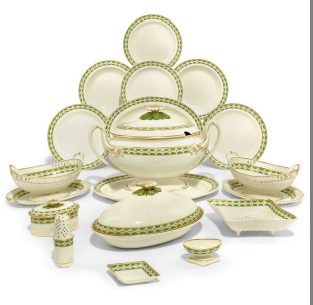
1. Queensware
2. 1790
3. Josiah Wedgewood
4. Early Industrial Design
5. Design Significance: • Pioneer in ceramic development especially with simulating porcelain • Commercial appeal to the masses • Using psychology of owning something the queen would have to create prestige
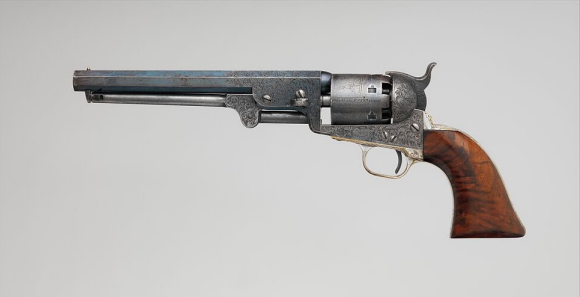
1. 32 Colt Navy
2. 1851
3. Samuel Colt
4. Early Industrial Revolution
5. Design Significance: • Example of A.S.M. • Gov’t sponsored production • Use of gauges and jigs to create uniform parts. • Interchangeable, modular, could be built anywhere
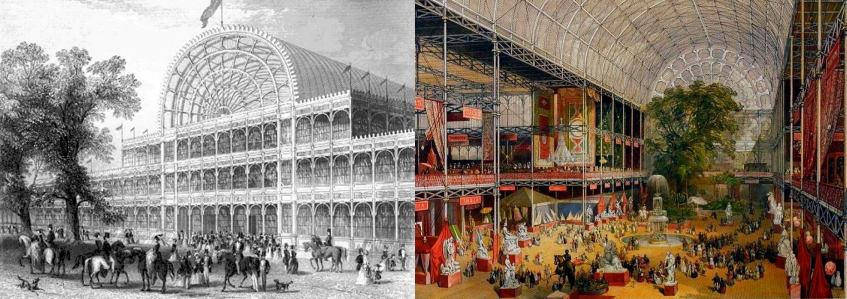
1. Crystal Palace
2. 1851
3. Joseph Paxton
4. High Victorian Era
5. Design Significance: • Modern Use Of Glass And Iron. • Modular Green House Structure Built With Nature • 1st Time Global Exposition To Showcase Industry Around The World. • Showcased American Innovation an A.S.M
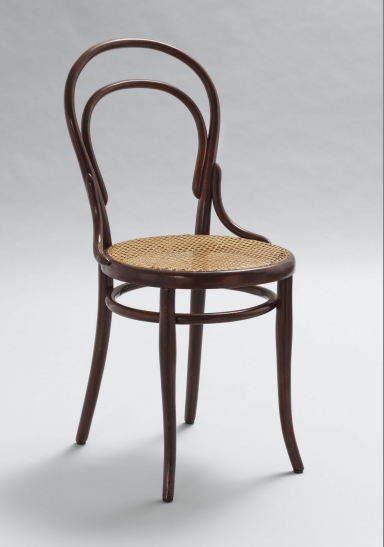
1. Chair #14
2. 1881
3. Michael Thonet
4. High Victorian Era
5. Design Significance: • Direct influence of A.S.M. • Featuring steamed bend wooden rods • Using the natural form as beauty instead of ornamentation • Made from modular components • Designed for consumer assembly • Designed for distribution
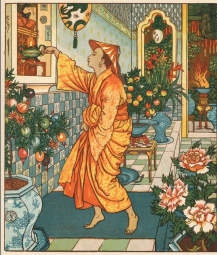
1. Alladan Illustration
2. 1874
3. Walter Crane
4. Aesthetic Movement
5. Design Significance: • Celebrating the artisan’s skill • Embracing imperfections in the artwork • Bold color and composition and inspiration from nature • Inspires A&C movement and even Art Nouveau
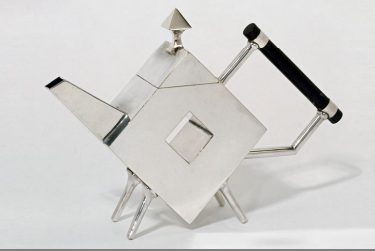
1. Teapot
2. 1879
3. Christopher Dresser
4. Aesthetic Movement
5. Design Significance: • Rejection of High Victorian design • Electroplating technique for cost and beauty • Efficient in form and function • Dresser’s interpretation of nature
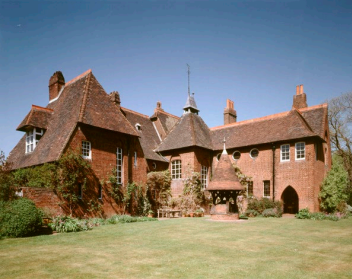
1. The Red House
2. 1859
3. Phillip Webb
4. British A&C
5. Design Significance: • Outside of the city; rejection of urbanization • Handmade furniture / décor with Gothic revival designs • Built for William Morris, the pioneer of British A&C
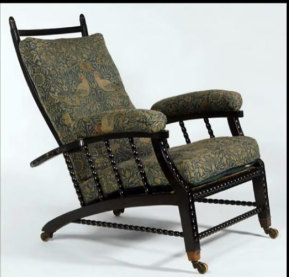
1. Adjustable Back Chair
2. 1870
3. William Morris / Phillip Webb
4. British A&C
5. Design Significance: • Example of signature Morris Pattern • British A&C example interpretation of nature • Focus on handcraft and looking to the past • Exemplifies Ruskin’s philosophy of giving people dignity in an age of industrialization
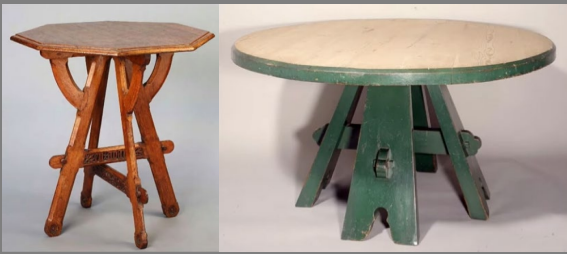
1. Wooden Tables
2. 1850
3. Augustus Welby Pugin
4. British A&C
5. Design Significance: • A parallel philosophy of British A&C of removing decoration and letting the natural material and construction methods be the aesthetics
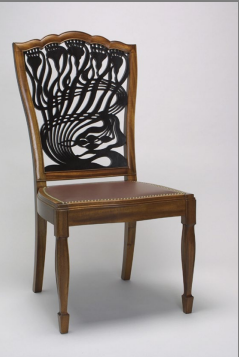
1. Carved Chair Back
2. 1883
3. Arthur Heygate Mackmurdo
4. British A&C
5. Design Significance: • Inspired the development of Art Nouveau • Follower of Ruskin and Morris Philosophies regarding handcraft and fair working conditions
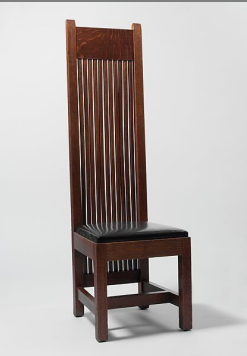
1. Side Chair
2. 1901
3. Frank Lloyd Wright
4. American A&C
5. Design Significance: • Use of wood in its natural form • Tall verticals and horizontal of “Mission Style” • Interpretation of nature through geometry • Creation of warmth and beauty but not comfortable
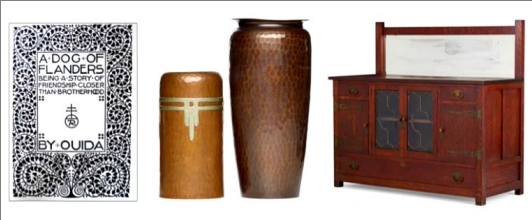
1. Roycroft Artisan Community Pieces
2. 1899-1915
3. Elbert Hubbard
4. American A&C
5. Design Significance: • NY school teaching American A&C. • Utopian philosophy of handcraft goods • Simplicity and natural forms instead of ornamentation
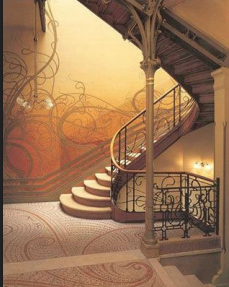
1. Tassel House Detail
2. 1892
3. Victor Horta
4. Art Nouveau
5. Design Significance: • Pioneer in the Art Nouveau style • Created entire environments • Design elements also structural • Worked with Henri Van De Velde who debated for “FORM” against the Deutscher Werkbund
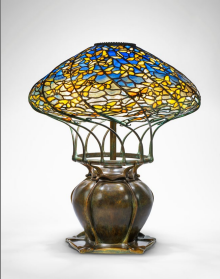
1. Butterfly Lamp
2. 1900
3. Louis Comfort Tiffany
4. Art Nouveau
5. Design Significance: • Beginning of electricity and lamps • Applied Art Nouveau to a new product • Signature stained glass design • Son of Tiffany & Co. Luxury Goods
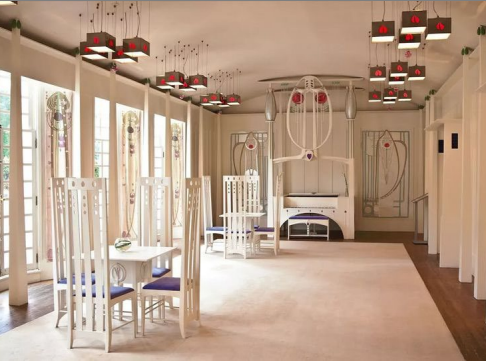
1. House For An Art Lover
2. 1901
3. Charles Rennie Mackintosh & Margaret Macdonald
4. Glasgow Style
5. Design Significance: • Evolution of Art Nouveau in Scotland • A blend of American A&C + Art Nouveau • A complete environment showcasing the style • Individual pieces couldn’t live on their own though
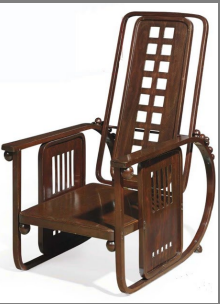
1. Recliner
2. 1904
3. Josef Hoffman
4. Vienna Secession
5. Design Significance: • Rejection of industrialization in a radical way • Example of “Gesamtkunstwerk” (Total Work of Art) • Not looking to any example from the past or nature
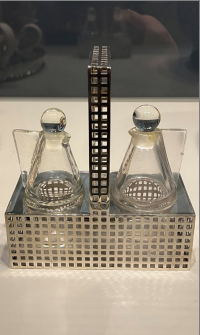
1. Sheet metal salt and pepper caddy
2. 1905
3. Josef Hoffman
4. Vienna secession
5. Design significance: • New mechanical aesthetic using handcraft with machine made materials • Short lived style as it was too expensive to be sustainable
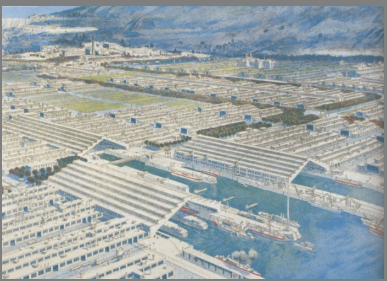
1. Une Cite Industrielle
2. 1907
3. Tony Garnier
4. Turn Of The Century
5. Design Significance: • A time of excitement of what the future could be • A new utopian city to solve the problems of industrialization • Consideration of zoning, sewage, lighting, waste disposal, infrastructure, etc.
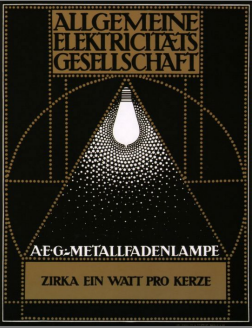
1. AEG BROCHURE
2. 1907
3. Peter Behrens
4. German Werkbund
5. Design Significance: • A rational and clear design language • The integration of electricity • Standardization (Teapots had 3 body styles, 3 handles, and 3 finishes = 27 combinations) • A balance of the familiar with the future • Designed for the masses
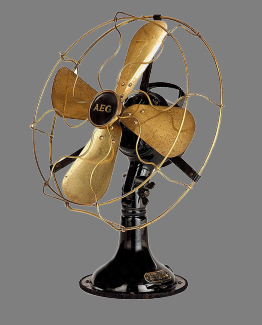
1. AEG ELECTRIC FAN
2. 1908
3. Peter Behrens
4. German Werkbund
5. Design Significance: • A rational and clear design language • The integration of electricity • Standardization (Teapots had 3 body styles, 3 handles, and 3 finishes = 27 combinations) • A balance of the familiar with the future • Designed for the masses
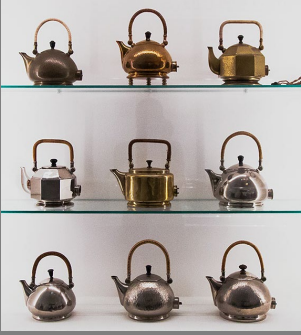
1. AEG ELECTRIC KETTLES
2. 1909
3. Peter Behrens
4. German Werkbund
5. Design Significance: • A rational and clear design language • The integration of electricity • Standardization (Teapots had 3 body styles, 3 handles, and 3 finishes = 27 combinations) • A balance of the familiar with the future • Designed for the masses
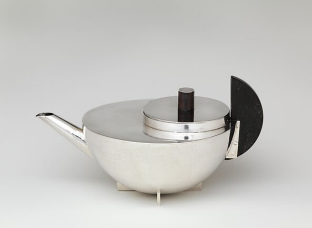
1. Teapot
2. 1924
3. Marianne Brandt
4. Bauhaus
5. Design Significance: • Expression Of The Bauhaus Ideals • Women In Design, Pioneering And Excelling In Metalwork • Use Of Geometric Forms, Simplicity, And Rational Design
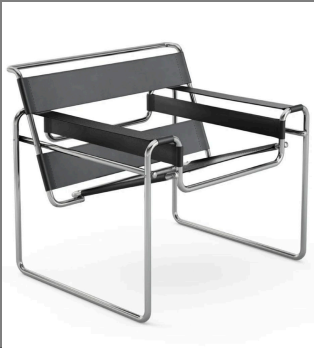
1. Wassily Chair
2. 1925
3. Marcel Breuer
4. Bauhaus
5. Design Significance: • Introduction Of Steel Tube Furniture • Expressed The Ideals Of The Bauhaus • Designed For Manufacturing • Enduring Aesthetic That Was Widely Used
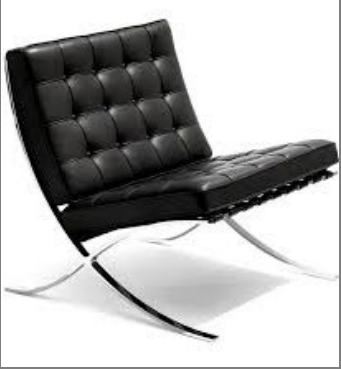
1. Barcelona Chair
2. 1929
3. Lilly Reich & Ludwig Mies Van Der Rohe
4. Bauhaus
5. Design Significance: • Example of Women designers being overlooked for thier contributions • Designed for the Spanish king and queen. • It was meant to be a "monumental" and "elegant" chair. • Logical “Grid” pattern and basic forms, signature of the Bauhaus philosophy • Iconic Chair still used widely today. An example of timeless design
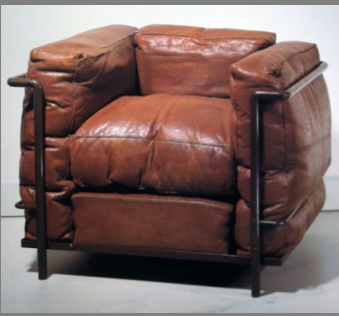
1. Grand Confort Chair
2. 1929
3. Charlotte Perriand and Le Corbusier
4. Bauhaus
5. Design Significance: • Took The Ideals Of Bauhaus Standardization And Evolved It To Add Human Factors. • Used prototypes to test comfort • Influenced Le Corbusier’s Work To Include Comfort In Design • Female Pioneer That Continued To Express Her Style Throughout Her Career
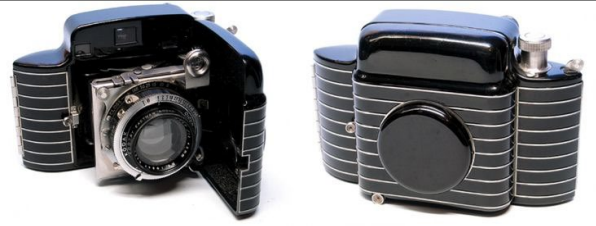
1. Kodak Bantam
2. 1936
3. Walter Dorwin Teague
4. Art Deco
5. Design Significance: • Use Of Modern Materials (Lacquer, Stainless Steel) • Unified Art Deco Style And Function • Believed That Modernism Is Accepted By The Consumer If It’s Useful
EARLY INDUSTRIAL REVOLUTION
1770 - 1850
A period of early design marked dramatic changes in social structure, commerce and mobility. Increase in population meant increase in demand, aesthetic choices, jobs, and commercialism. Much of the revolutionary technology needed a new language.
HIGH VICTORIAN ERA
1837 - 1901
A period marked by the duration of Queen Elizabeth life and death. During this time, artisans looked to the royal past for direction. A desire for the average person to live like royalty. Design was marked by an extreme amount of decoration and opulence. The challenge was how to take unique, costly, and time-consuming designs and make them more efficient to produce and sell.
THE AESTHETIC MOVEMENT
1860 - 1890
An attempt to resist industrialization and its perceived ugliness. “Art for Arts sake” attitude to raise decorative arts to fine art.
BRITISH ARTS AND CRAFT MOVEMENT
1860 - 1910
Sharing similar viewpoints as the Aesthetic movement, the A&C movement strived to create designs for the masses. “Art for the people by the people”. A return to traditional craft processes and style. Celebrating handcraftsmanship and reflecting the values of the past
AMERICAN ARTS AND CRAFT MOVEMENT
1880 - 1920
A natural influence and evolution from England, the American A&C movement shared ideals, but developed in a dramatically different way forming what we call the American System of Manufacturing
ART NOUVEOU
1890 - 1902
A style of fluid serpentine lines. Ornamental and decorative but unlike Victorian designs, these elements were often functional and part of a holistic approach to the environment
GLASGOW STYLE
1892-1912
Influenced by American Mission Style but blended with Art Nouveou, Celtic and Japanese influences.
VIENNA SECESSION
1900 - 1905
A rejection of industrialization and a desire to combine the decorative arts with fine arts to make “complete” designs that should be available to all people.
TURN OF THE CENTURY (ERA)
1889-1914
A second wave of industrialization marked by innovations in power, technology, mobility and education. The rise of electricity, combustion engine and steel in addition to previous advancements
BAUHAUS
1919-1933
A formalizing of design in Germany through education focusing on universality and equality which became the basis for modern day foundation programs in schools today.
ART DECO
1919-1939
A style of speed and luxury using bold geometric forms originating in France. Expression of modern decoration with new technologies and materials.