RADT 146 C - Unit 1: X-Ray Tube Construction
 Call Kai
 Learn
Learn Practice Test
 Spaced Repetition
 Match
Match Flashcards
 Knowt Play
1/40

There's no tags or description
Looks like no tags are added yet.
Name | Mastery | Learn | Test | Matching | Spaced | Call with Kai |
|---|
No analytics yet
Send a link to your students to track their progress
41 Terms
cathode
negative side of the x-ray tube
anode
positive side of the x-ray tube
thermionic emission
the process of the filament wires heating up to glow and releasing ("boiling off") electrons
cathode ray
a flow of electrons emanating from the cathode in a vacuum tube and focused into a narrow beam
x-ray production
when electrons strike the target on the anode
milliampere (mA)
controls the amount of electrons emitted at the filament by process of thermionic emissioin
more mA applied
more electrons
less mA applied
less electrons
factor(s) that control quantity and density of an x-ray
milliampere (mA) and time (s)
mAs
determines the number of electrons emitted from the filament and the rate in which these electrons (-) are attracted to the anode (+)
quantity
the amount of x-rays produced
density
overall degree of darkness of an image
kilovoltage (kV)
controls the energy (penetrating power/"force") of the x-ray beam, sending electrons from the cathode to the anode
factor(s) that control the quality and density of an x-ray
kilovoltage (kV)
contrast
difference between the darkness and brightness of an image
more kV applied
stronger x-rays
less kV applied
weaker x-rays
methods of x-ray tube support
ceiling, floor-to-ceiling, c-arm
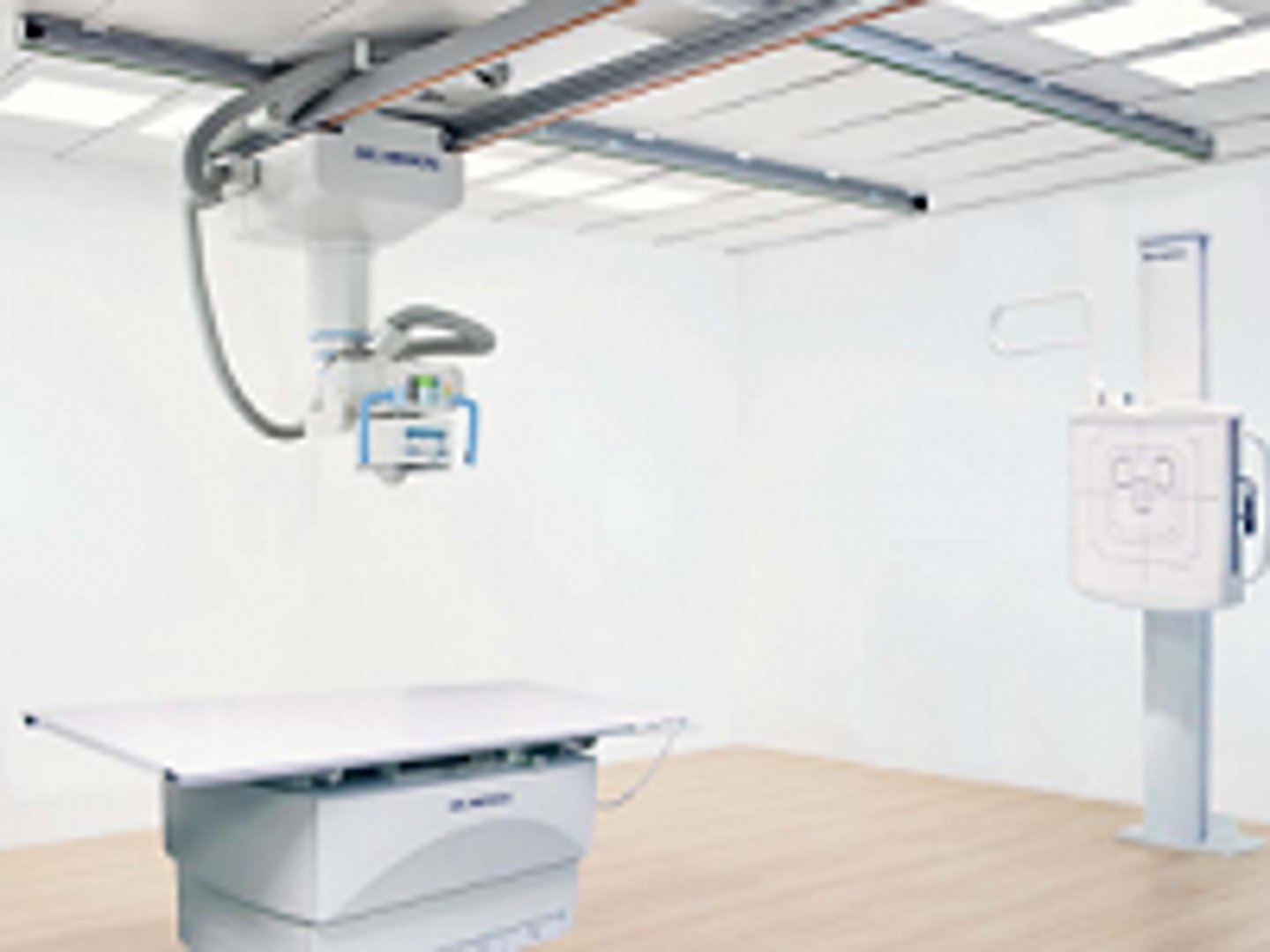
ceiling
-most common form of external support
-freely moves in all directions: transverse, longitudinal, up, and down
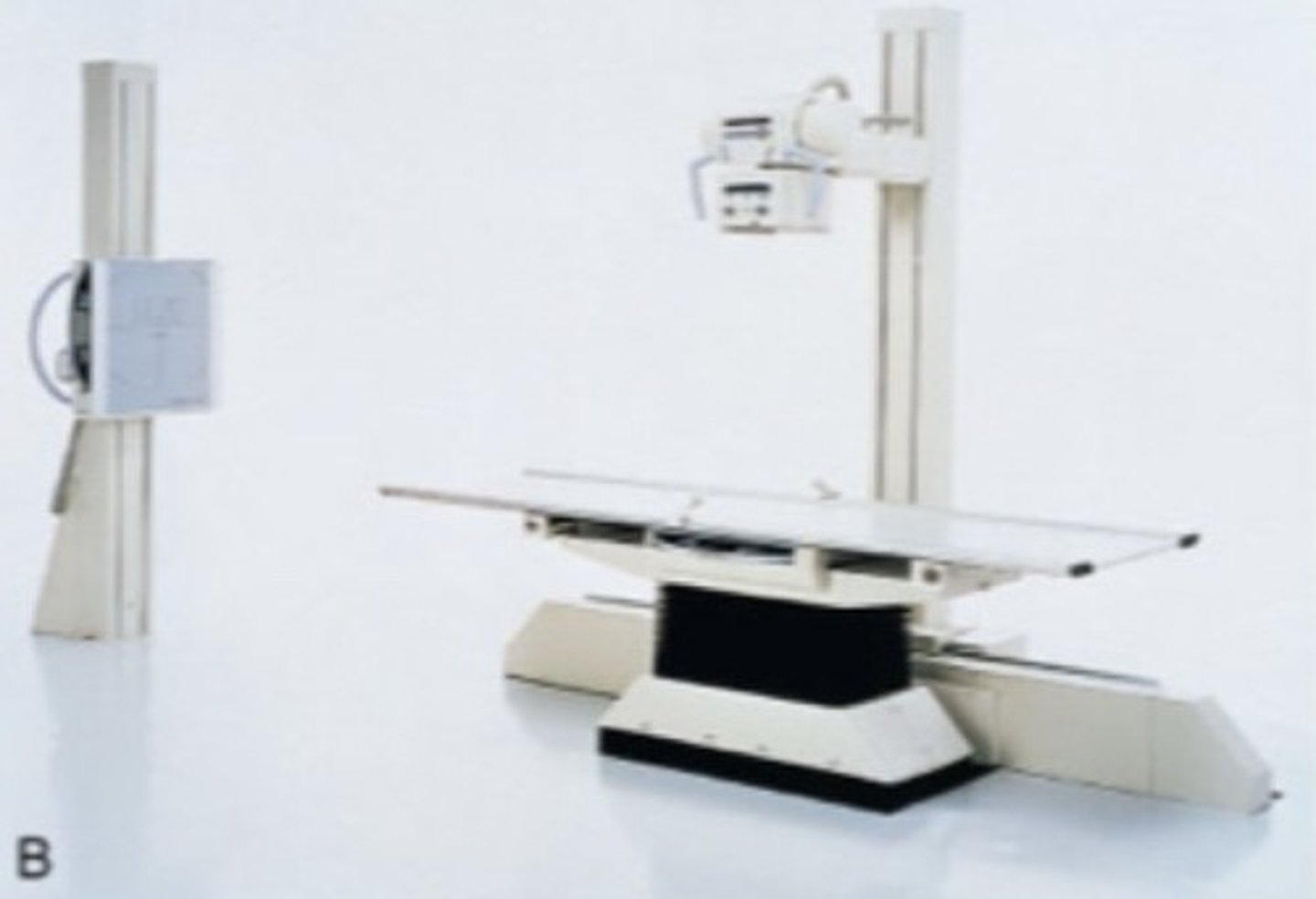
floor-to-ceiling
-requires more effort to move
-multi-directional
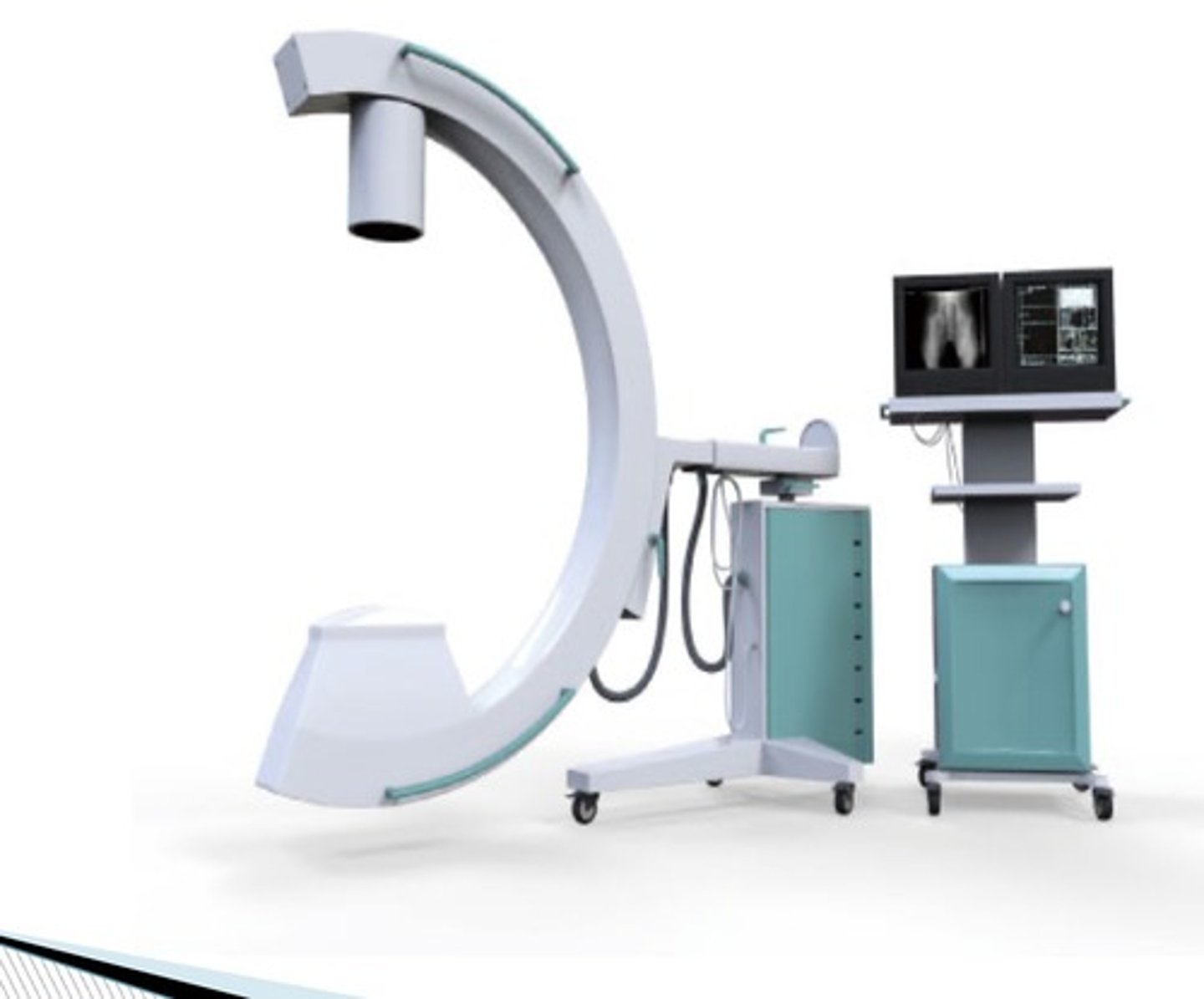
C-arm
-nearly limitless in tube position
-robotic and fluid in motion
-angiography, fluoroscopic capabilities
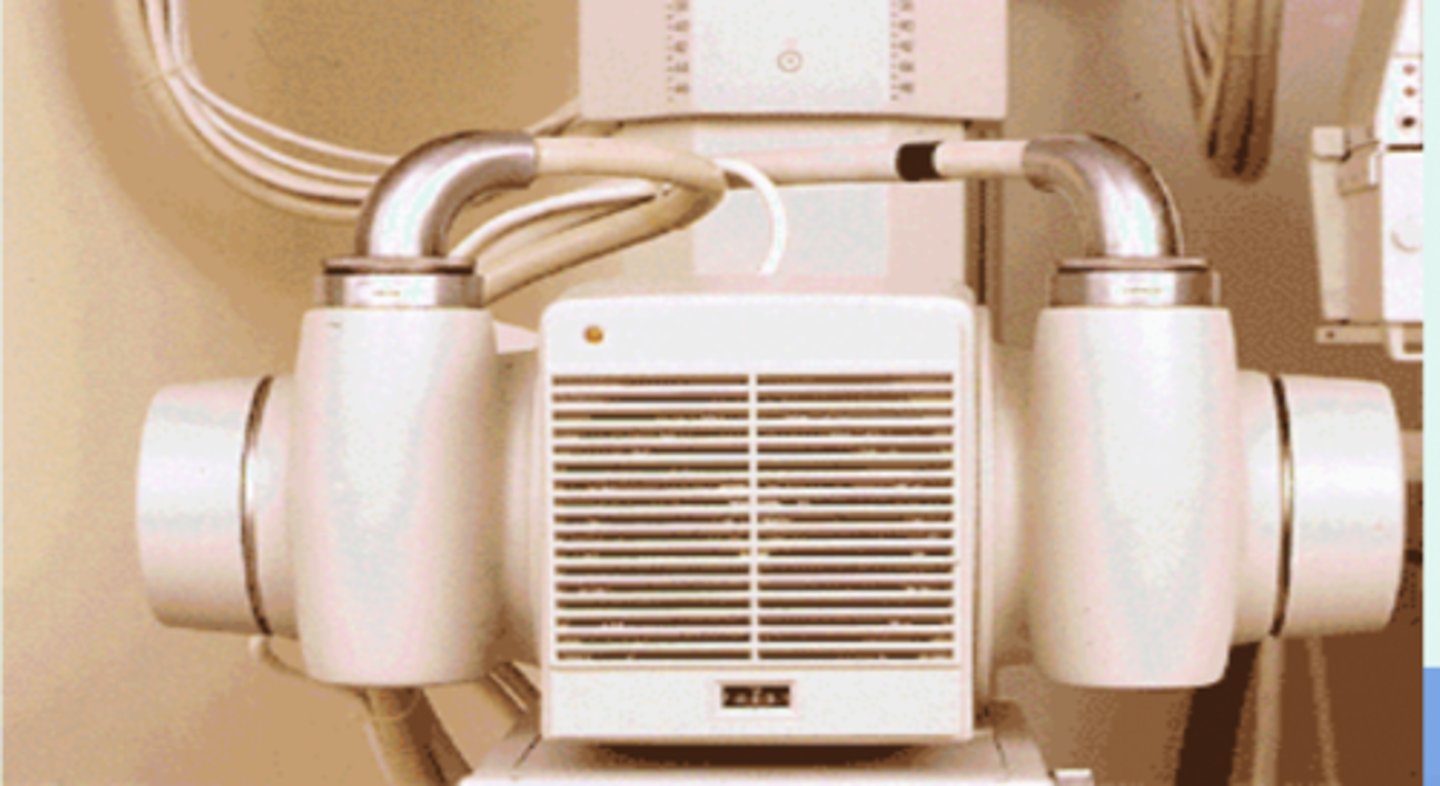
protective housing
-provides mechanical support
-protects from damage caused by rough handling
-contains oil to insulate from shock and dissipate heat
-reduces leakage radiation
leakage radiation
-anything that escapes the protective housing
-non-diagnostic
-unnecessary exposure to both patient and technologist
6 ft
safe distance from x-ray tube
primary beam
also known as the "useful beam"; the 1% of rays emitted through the window and used to project the diagnostic image (x-ray)
secondary beam
99% of all the other rays scattering inside the protective housing and dissipating into heat
benefits of pyrex glass envelope
withstands large amounts of heat
benefits of metal envelope
more efficient, prevents tube arcing and tube life is better
benefits of pyrex glass or metal envelopes
vacuum creates longer tube life: less collision of electrons with gas molecules, increase x-ray production, less heat generated
parts of cathode
negative electrode, filament (2 coils of wire), dual focus, focusing cup
features of small filament
-200 mA or less
-better details
-smaller body parts
features of large filament
-300 mA or more
-larger body parts
-can withstand more heat
focusing cup
confines the electron beam to a small area of the anode
space-charge effect
prevents more electrons from being boiled off due to electrostatic repulsion; results in a cloud of electrons
parts of anode
positive electrode, target (track)
types of anodes
stationary and rotating
features of stationary anode
-does not require high tube current or high power
-can be found in dental and portable x-ray units
-composed of copper anode and tungsten target
features of rotating anode
-produce high-intensity x-ray beams in shorter time periods
-better for heat dissipation
-rotates at 3,600 to 10,000 RPM
-composed of copper anode and target track
target (track)
area that the electrons strike and are converted to x-rays
layers on rotating anode
-tungsten-rhenium
-molybdenum
-graphite
properties of tungsten
-high atomic number (74)
-better at heat dissipation
-high melting point (3410 degrees C or 6170 degrees F)