Biology (yuk)
 Call Kai
 Learn
Learn Practice Test
 Spaced Repetition
 Match
Match Flashcards
 Knowt Play
1/37

There's no tags or description
Looks like no tags are added yet.
Name | Mastery | Learn | Test | Matching | Spaced | Call with Kai |
|---|
No analytics yet
Send a link to your students to track their progress
38 Terms
Homeostasis
The maintenance of a relatively stable internal environment within the body, despite changes occurring within the internal and external environments of the body.
The Stimulus-Response Model
How a system responds to a stimulus to maintain homeostasis.
Positive and Negative Feedback Loops:
(pos) where the response increases the stimulus or (neg) where the response decreases the stimulus.
Stages of stimulus response model
stimulus, receptor, modulator, effector, response
Positive feedback loop
where the response increases the initial stimulus. These are rare.
Negative Feedback Loops
where the response counters the initial stimulus
Glucose
must be maintained within a narrow range for the body to function correctly (homeostasis).
Glucose From Body Stores
•glucose can be stored in the form of glycogen.
Gluconeogenesis
the process that breaks glycogen into useable glucose to enter cells and then form ATP via respiration.
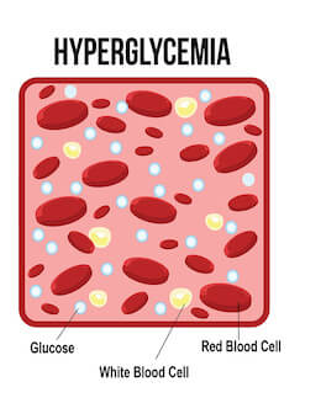
Hyperglycaemic
Blood glucose levels are too high
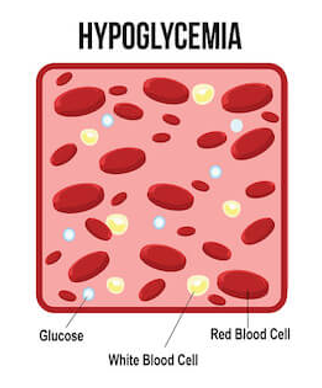
Hypoglycaemic
Blood glucose levels are too low
Homeostasis maintains contrast blood glucose levels by negative feedback processes through
•Releasing insulin (hormone – beta cells in the pancreas) to lower blood glucose levels
•Releasing glucagon (hormone – alpha cells in the pancreas) to increase blood glucose levels. This process occurs via negative feedback.
Stimulus: hyperglycemia
Change in blood glucose above approx. 5mmol/L
Receptor hyperglycemia
Beta Cells in in the islet of Langerhans detect the increase in blood glucose.
Modulator hyerglycemia
Beta Cells in in the islet of Langerhans (in the Pancreas) release insulin via exocytosis from vesicles.
Effector hyperglycemia
Insulin travels through the bloodstream to stimulate skeletal muscle and fat cells
to uptake glucose from the blood via facilitated diffusion (glucose transporters).
Stored this as glycogen.
Response hyperglycemia
Decrease in blood glucose levels to normal.
Stimulus hypoglycemia
Change in blood glucose below approx. 5mmol/L
receptor hypoglycemia
Alpha Cells in the islet of Langerhans (in the Pancreas) detect the decrease in blood glucose.
modulator hypoglycemia
Alpha Cells in the islet of Langerhans (in the Pancreas) release glucagon.
effector hypoglycemia
Glucagon travels through the bloodstream to liver cells. Stimulates the break down of glycogen to glucose.
response hypoglycemia
Glucose released and increase in blood glucose levels to normal
Insulin
the protein hormone that regulated blood glucose by allowing glucose to be stored as glycogen in body cells
Insulin structure
Chain A with 21 amino acids and Chain B with 30 amino acids.
Two disulfide bridges covalently connect the chains, and chain A contains an internal disulfide bridge.
Plasmid
small, circular loop of DNA separate from the circular chromosome, typically found in bacteria.
Recombinant Plasmid
a circular DNA vector that is ligated to incorporate a gene of interest.
Endonuclease - scissors
An enzyme that breaks the phosphodiester bond between two nucleotides in a polynucleotide chain
DNA Ligase - glue
An enzyme that joins DNA base pairs/fragments, together by catalysing the formation of phosphodiester bonds
DNA Polymerase - copy/clone
An enzyme that synthesises a polymer (DNA strand) from monomers (nucleic acids) to multiply.
I³
1.Derive the DNA sequence by using restriction endonucleases to isolate (cut) the insulin gene in a human cell and remove the introns (non-coding DNA).
C
Engineer a plasmid by using the same restriction endonuclease to cut/cleave a plasmid
L
Ligate the insulin gene using DNA ligase, to join the DNA sequence of insulin to the plasmid.
O
Transform bacteria (organism) through exposing the recombinant plasmid and treat it (heat shock) to encourage uptake
N
Bacteria nurtured in a rich agar plate. Bacteria with insulin gene grows.
E²
Induce protein synthesis by promoting the production of insulin using the transcription and translation (expression) processes. Rupture cells and extract Insulin A peptide.
advantages of plasmids
Small sequences of DNA, replicate independently, can be added to bacteria without affecting survival
gene
short sequence of DNA that usually codes for a protein product.
gene expression
the process of reading information stored within a gene to create a protein