Lower Limb 2 - Muscles, Nerves & Vessels

0.0(0)
Studied by 0 people
call kaiCall Kai
learnLearn
examPractice Test
spaced repetitionSpaced Repetition
heart puzzleMatch
flashcardsFlashcards
GameKnowt Play
Card Sorting

1/52

encourage image

There's no tags or description

Looks like no tags are added yet.

Last updated 2:00 PM on 5/2/26
Name
Mastery
Learn
Test
Matching
Spaced
Call with Kai

No analytics yet

Send a link to your students to track their progress

53 Terms

1
New cards

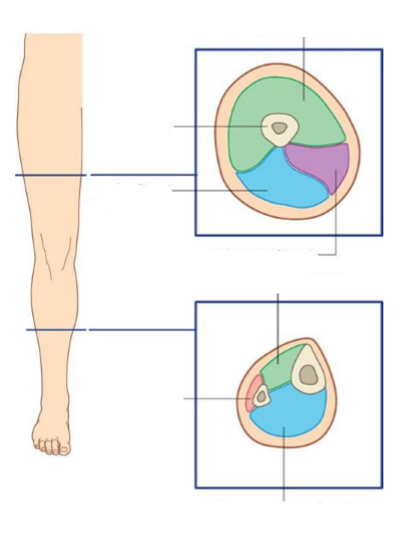
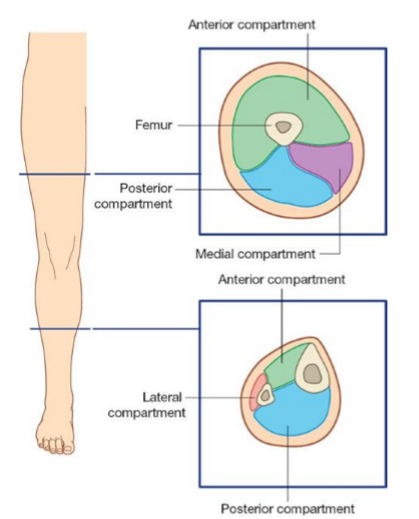
What are the 3 compartments of the lower limb?

  1. Anterior

  2. Posterior

  3. Medial (thigh) OR lateral (leg)

2
New cards
<p>Label the following diagram</p>

Label the following diagram

knowt flashcard image
3
New cards

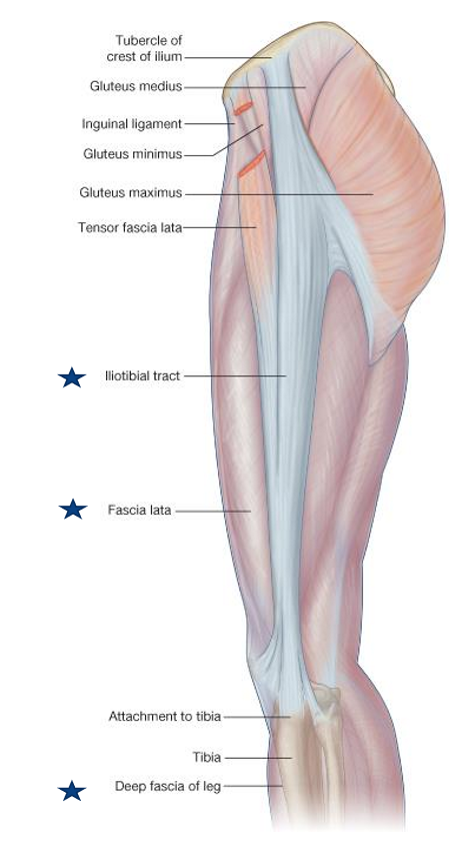
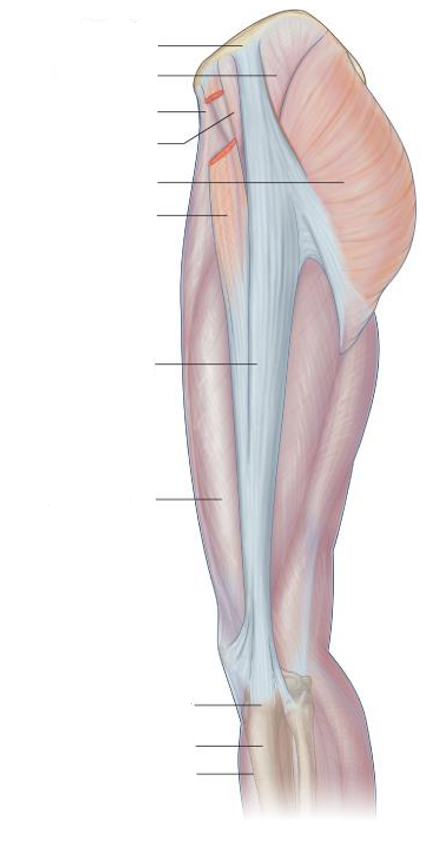
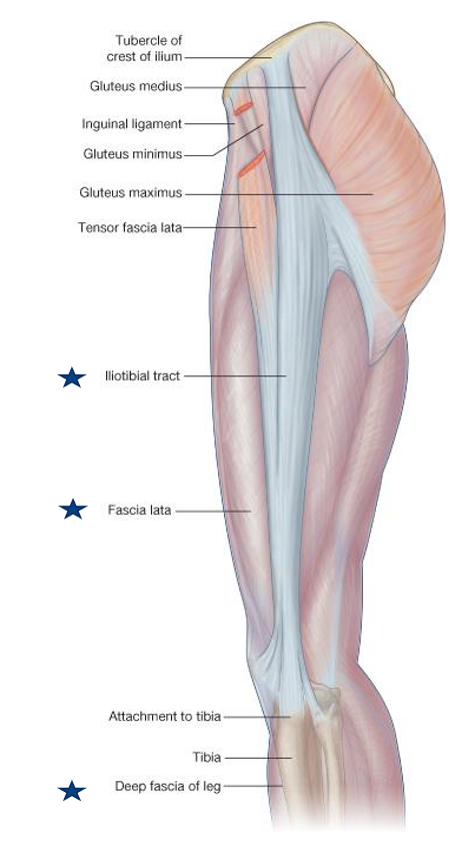
Name 3 regions of continuous fascial tissue

  • Iliotibial tract

  • Fascia lata

  • Deep fascia of leg

<ul><li><p>Iliotibial tract</p></li><li><p>Fascia lata</p></li><li><p>Deep fascia of leg</p></li></ul><p></p>
4
New cards
<p>Label the following diagram</p>

Label the following diagram

knowt flashcard image
5
New cards

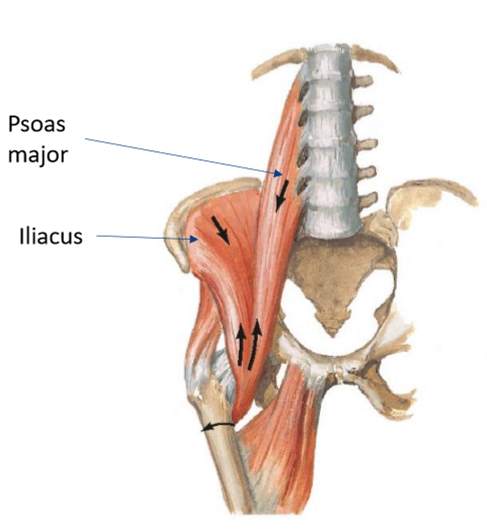
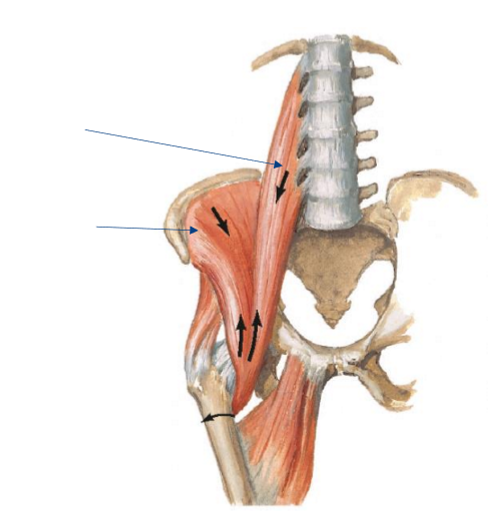
What are the 2 key anterior muscles of the pelvic girdle & where do they attach?

  • Iliacus + psoas major → iliopsoas

  • Combined attachment onto lesser trochanter of the femur
6
New cards
<p>Label the following diagram</p>

Label the following diagram

knowt flashcard image
7
New cards

What is the role of the iliopsoas muscle?

  • Main hip flexors

  • Deep; come from inside the abdomen & converge towards the femur

  • Any thigh muscles which cross vertically over the hip & attach to the pelvic bone produce flexion

8
New cards

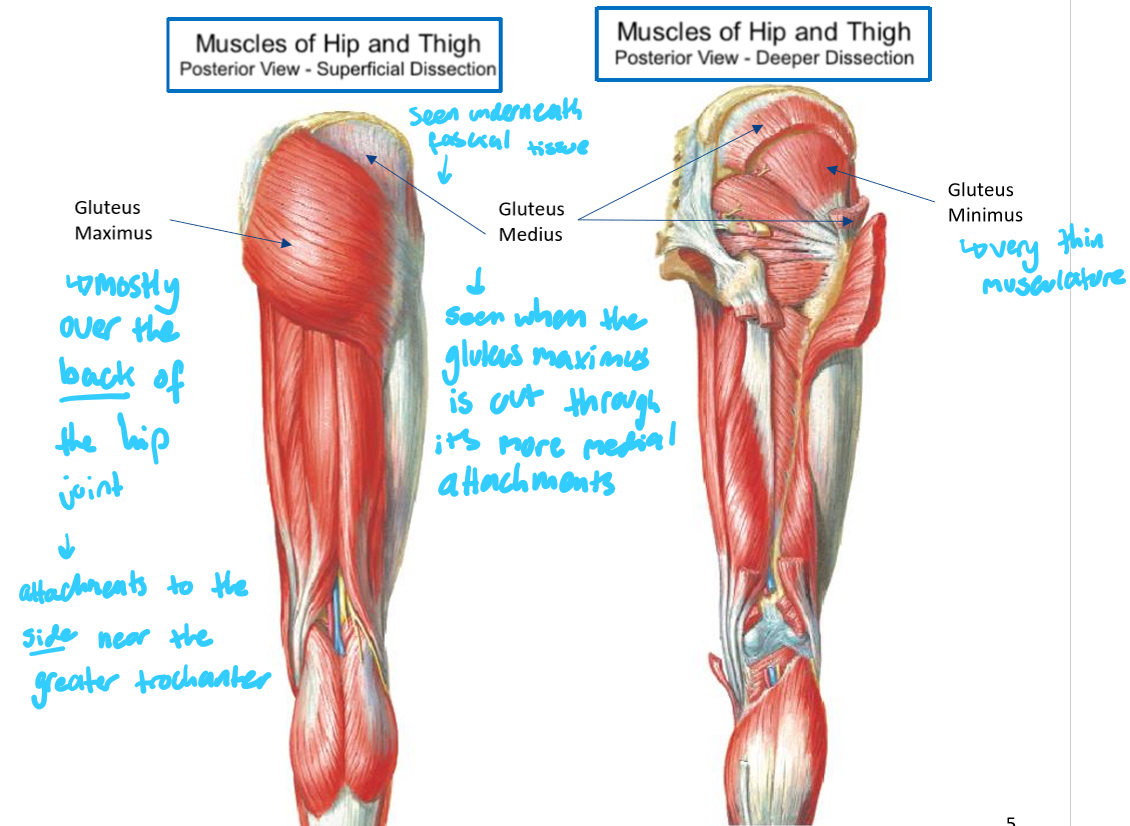
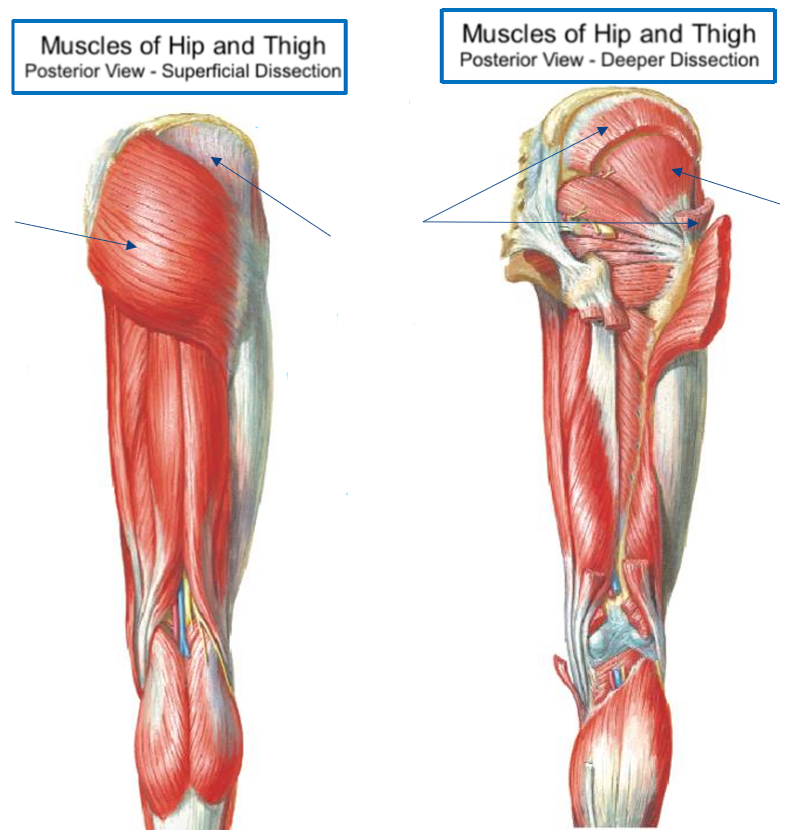
What are the 3 key posterior muscles of the pelvic girdle & what is their role?

  • Gluteus maximus: hip extensor

  • Gluteus medius & gluteus minimus: hip abductors

9
New cards

Where does the gluteus maximus attach?

To the side near the greater trochanter

10
New cards

What happens when the gluteus minimus & gluteus medius contract?

  • Prevention of excessive pelvic tilt during swing phase on opposite side

  • Gives a relatively neutral pelvis during gait
11
New cards
<p>Label the following diagram</p>

Label the following diagram

knowt flashcard image
12
New cards
13
New cards

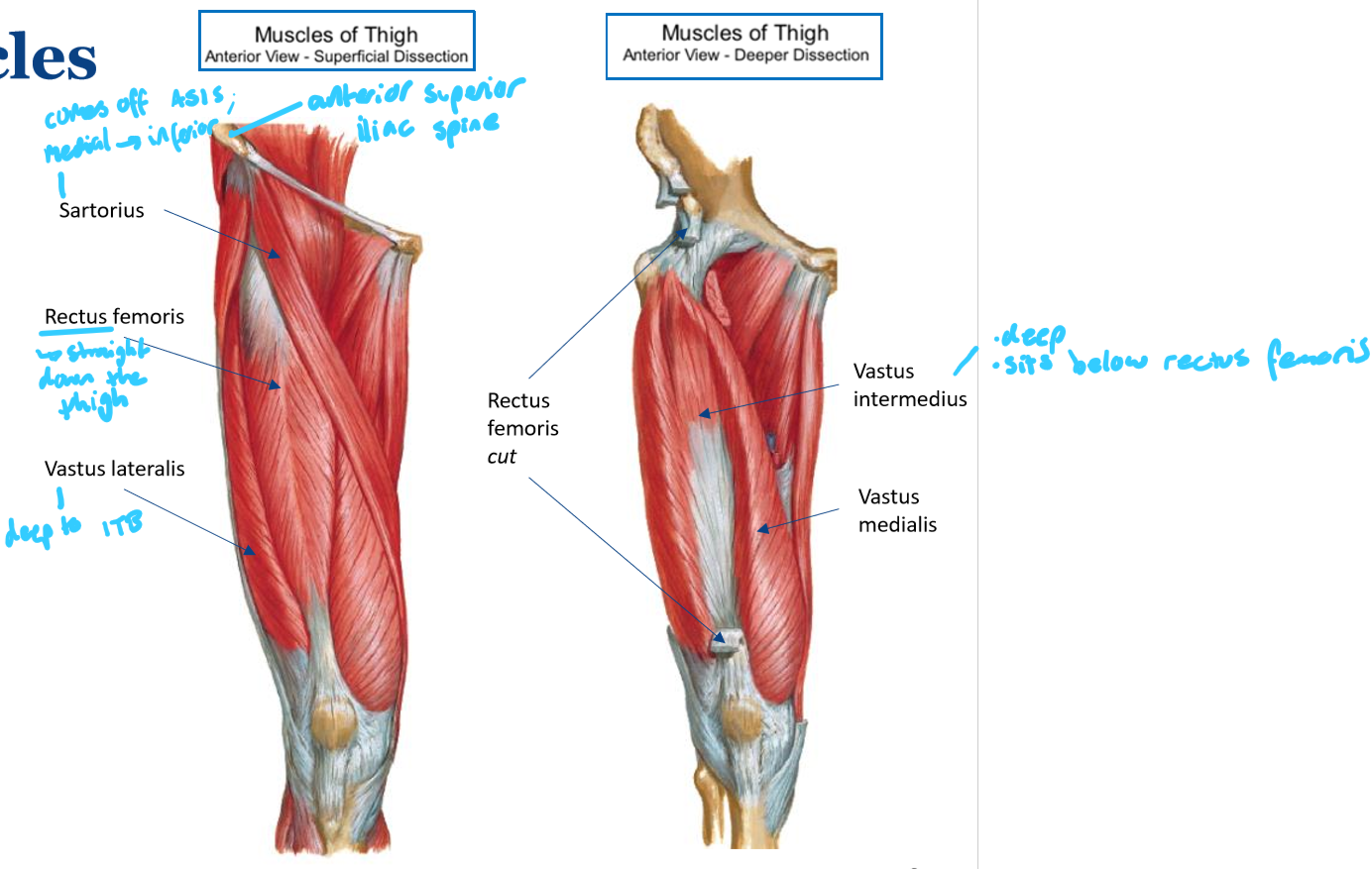
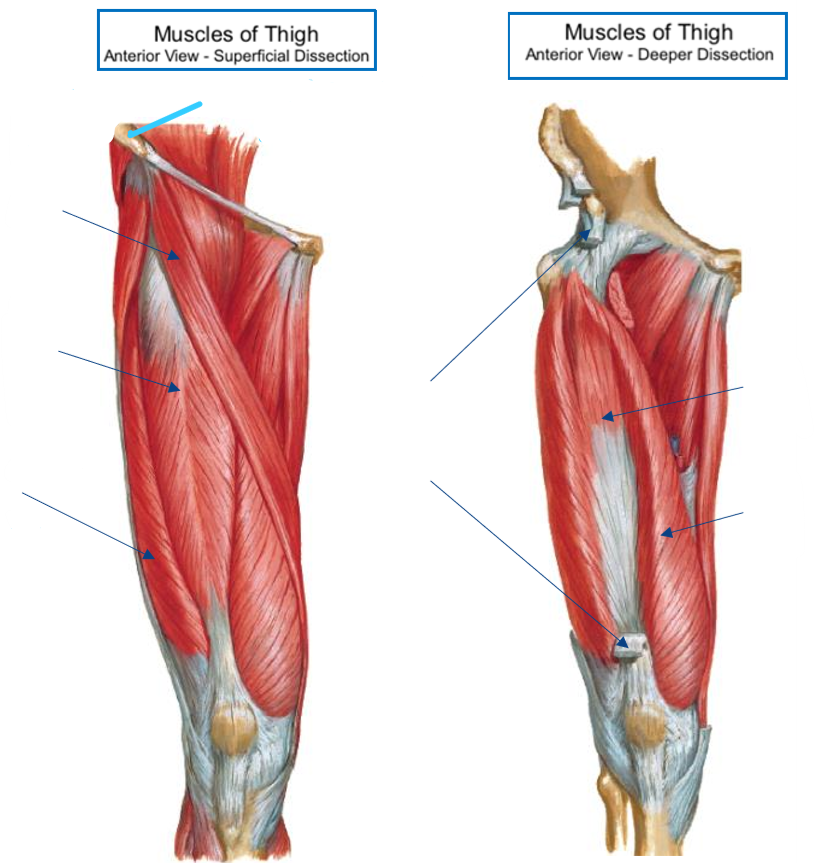
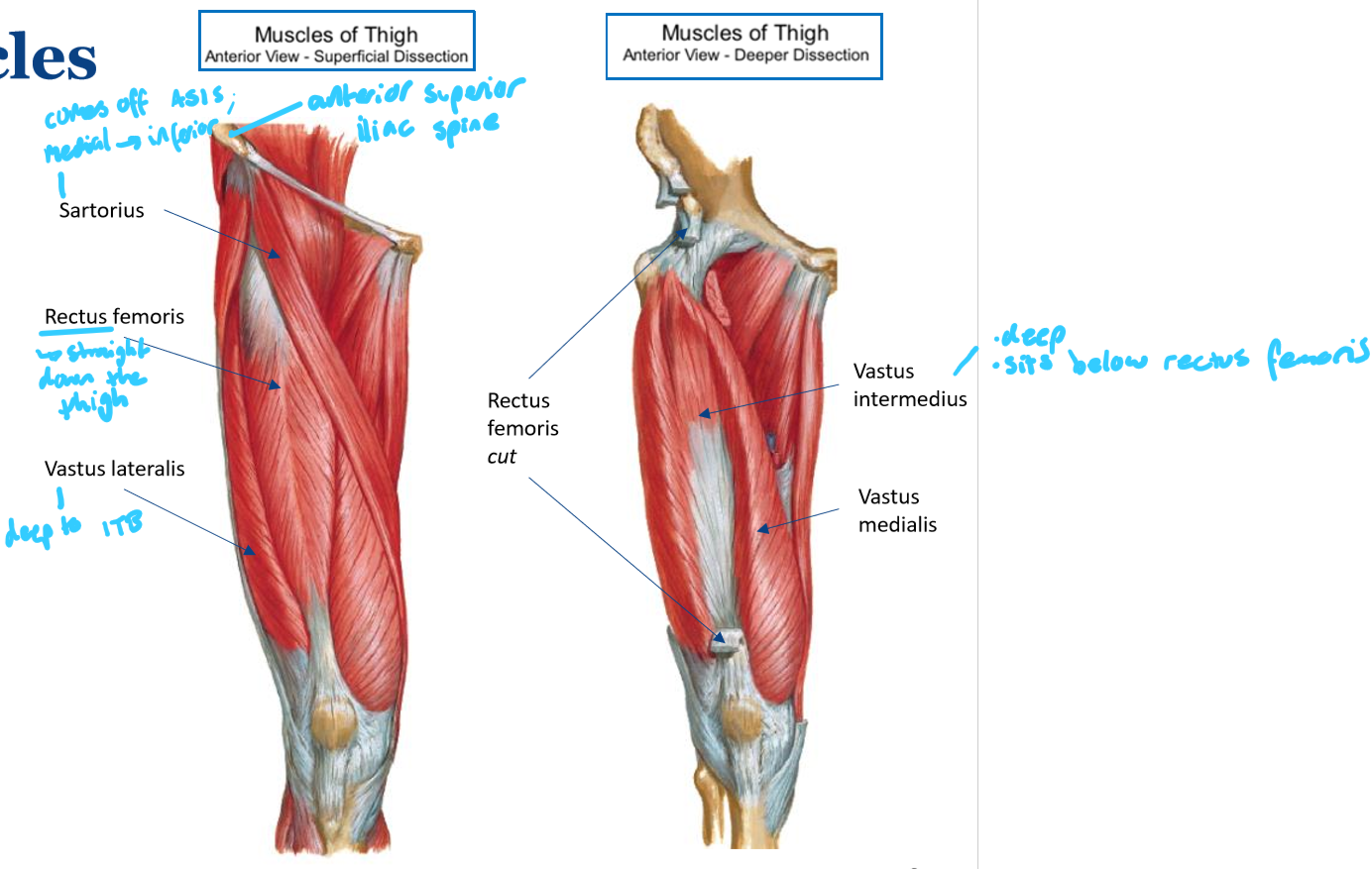
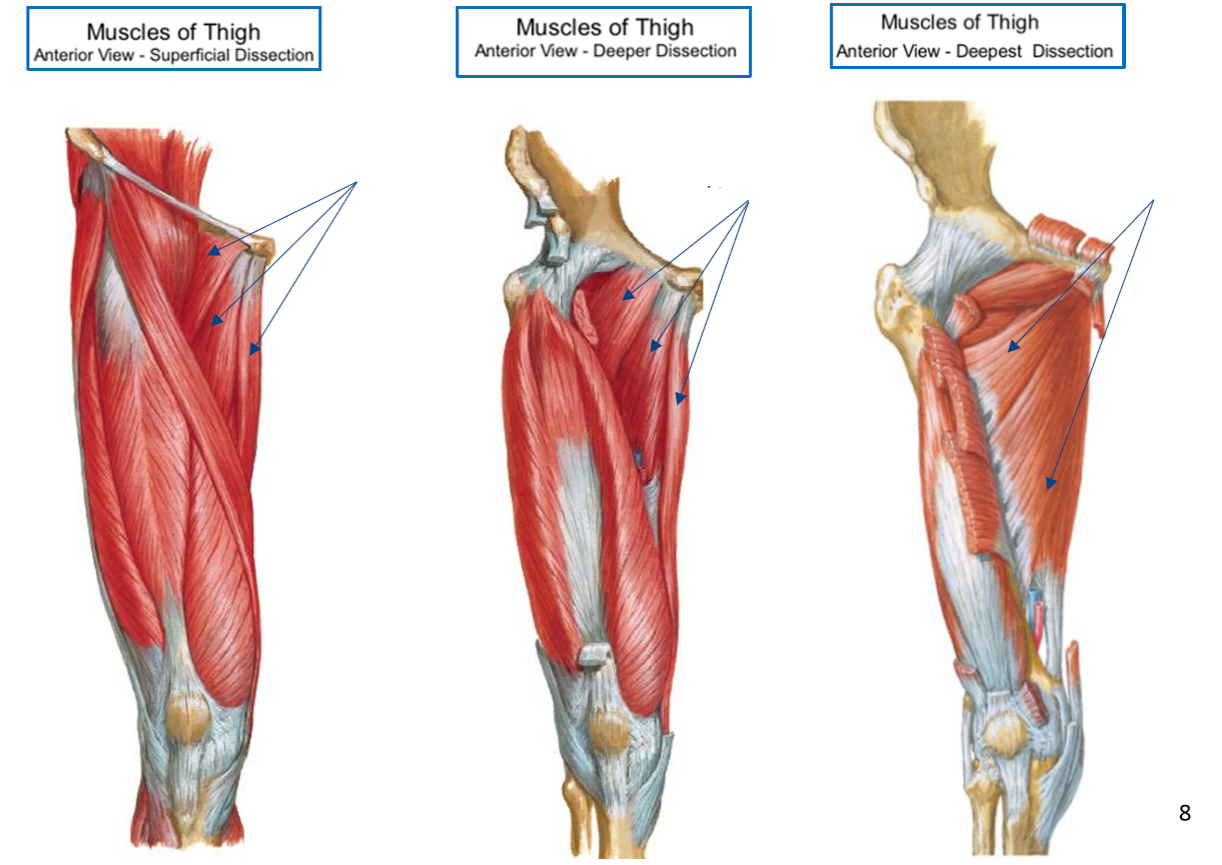
What are the anterior thigh muscles?

  • Sartorius: comes off anterior superior iliac spine

  • Quadriceps (distally converge into 1 - blend @ the patella)

    • Vastus medialis: doesn’t cross over pelvis → NOT Involved in thigh flexion

    • Vastus lateralis: doesn’t cross over pelvis → NOT involved in thigh flexion

      • deep to ITB

    • Vastus intermedius

    • Rectus femoris: thigh flexion

<ul><li><p><strong>Sartorius</strong>: comes off anterior superior iliac spine</p></li><li><p><strong>Quadriceps</strong> (distally converge into 1 - blend @ the patella)</p><ul><li><p><strong>Vastus medialis</strong>: doesn’t cross over pelvis → NOT Involved in thigh flexion</p></li><li><p><strong>Vastus lateralis</strong>: doesn’t cross over pelvis → NOT involved in thigh flexion</p><ul><li><p>deep to ITB</p></li></ul></li><li><p><strong>Vastus intermedius</strong></p></li><li><p><strong>Rectus femoris</strong>: thigh flexion</p></li></ul></li></ul><p></p>
14
New cards
<p>Label the following diagram</p>

Label the following diagram

knowt flashcard image
15
New cards

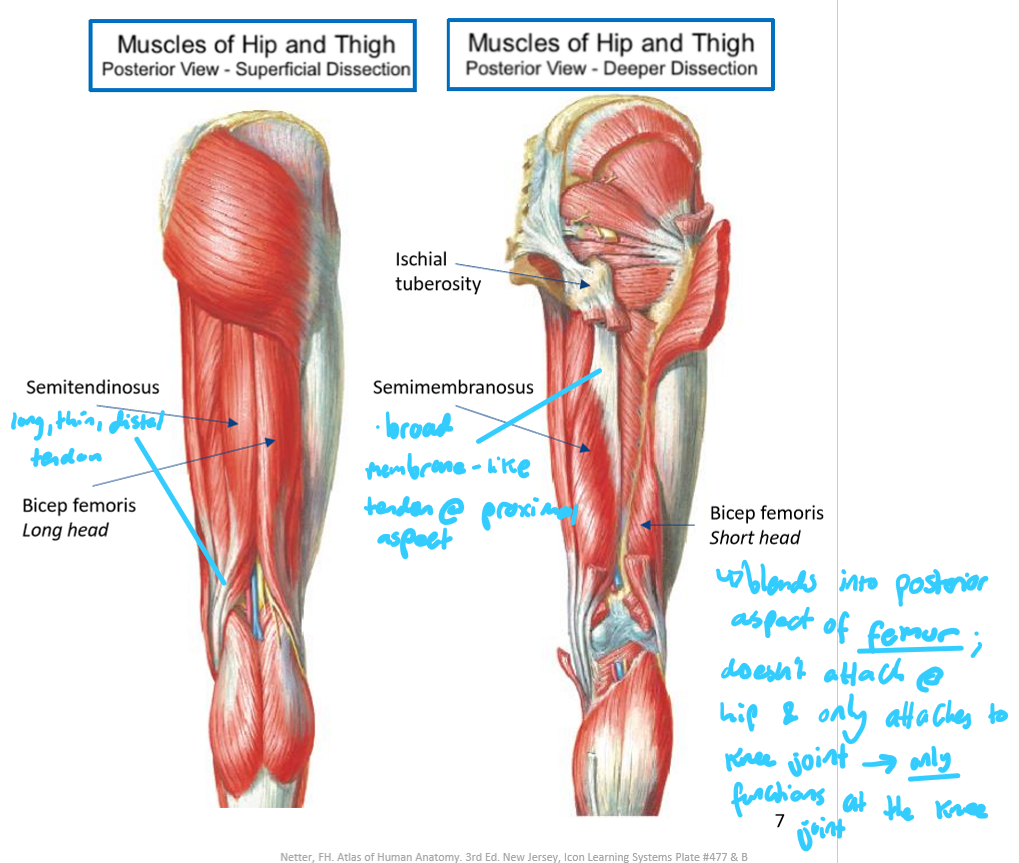
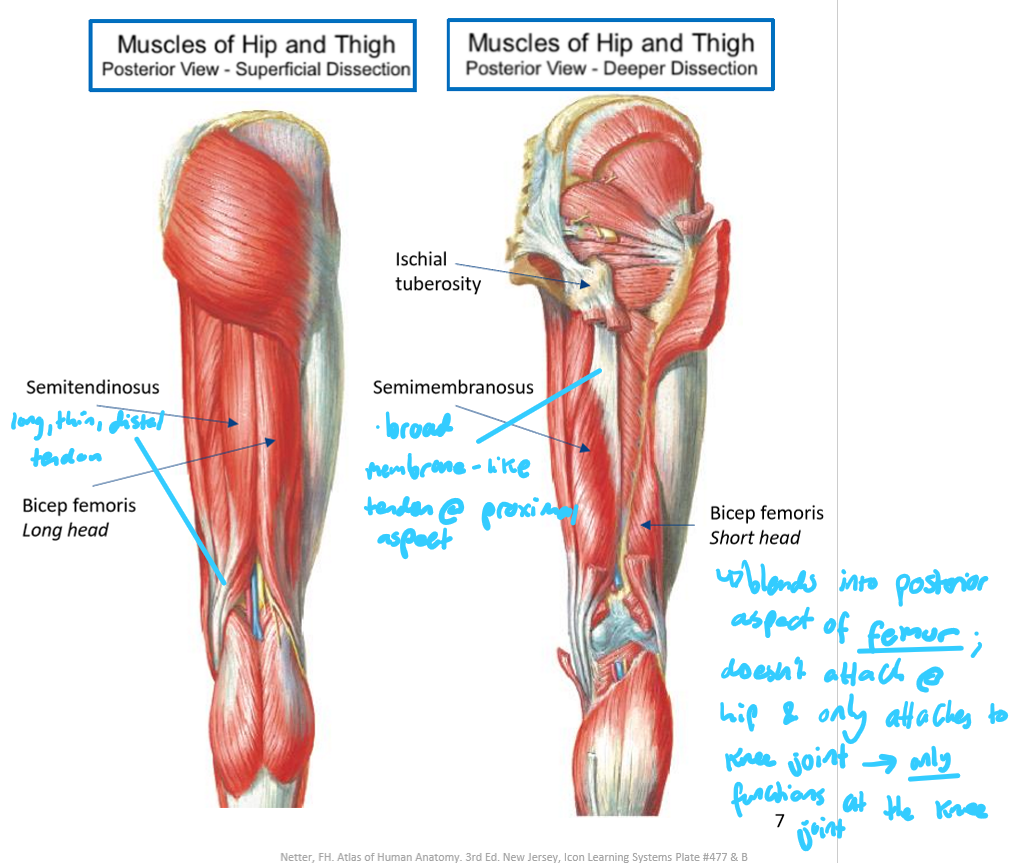
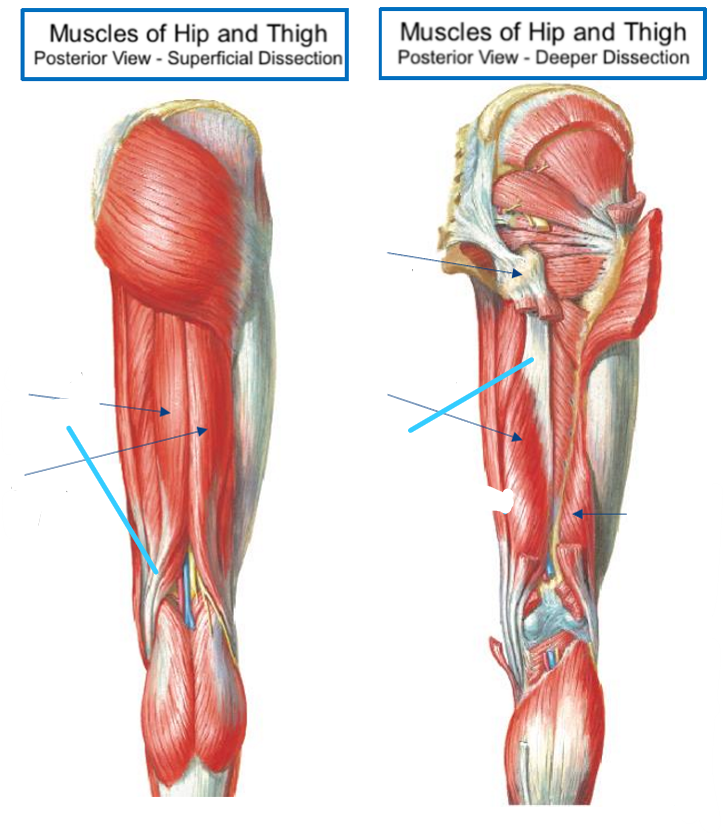
What muscles make up the posterior thigh compartment?

Hamstrings:

  • Semitendinous

    • Medial

    • Blends fibres as a long, thick tendon

  • Semimembranous

    • Medial

      • Blends fibres as a broad membrane

  • Biceps femoris (long & short heads)

    • Lateral

<p><u>Hamstrings</u>:</p><ul><li><p><strong>Semitendinous</strong></p><ul><li><p>Medial</p></li><li><p>Blends fibres as a long, thick tendon</p></li></ul></li><li><p><strong>Semimembranous</strong></p><ul><li><p>Medial</p><ul><li><p>Blends fibres as a broad membrane</p></li></ul></li></ul></li><li><p><strong>Biceps femoris</strong> (<em>long</em> &amp; <em>short</em> heads)</p><ul><li><p>Lateral</p></li></ul></li></ul><p></p>
16
New cards

What is the role of the hamstrings?

  • Crosses the posterior aspect of the hip & knee joints → hip extension & knee flexion

  • Knee rotation

17
New cards

Which component of the hamstrings will only function at the knee?

Biceps femoris short head
18
New cards
<p>Label the following diagram</p>

Label the following diagram

knowt flashcard image
19
New cards

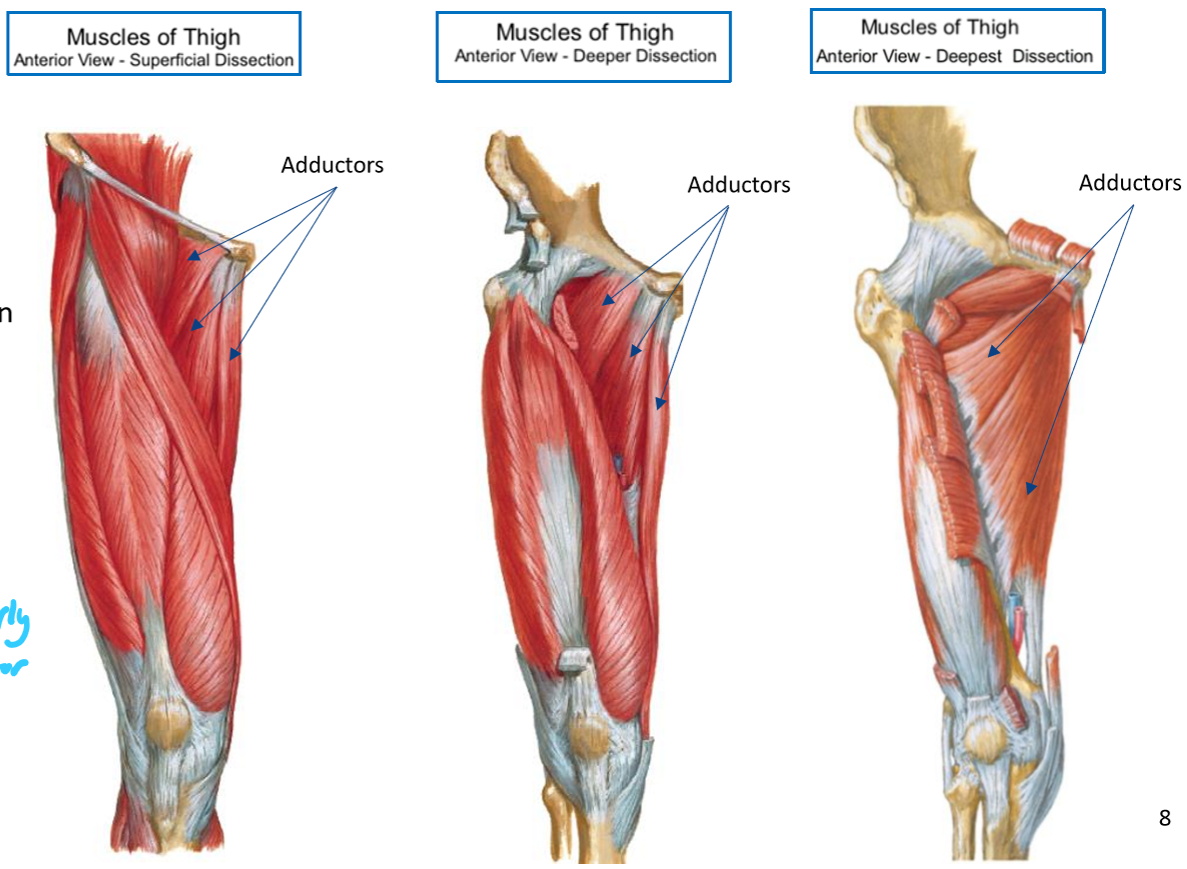
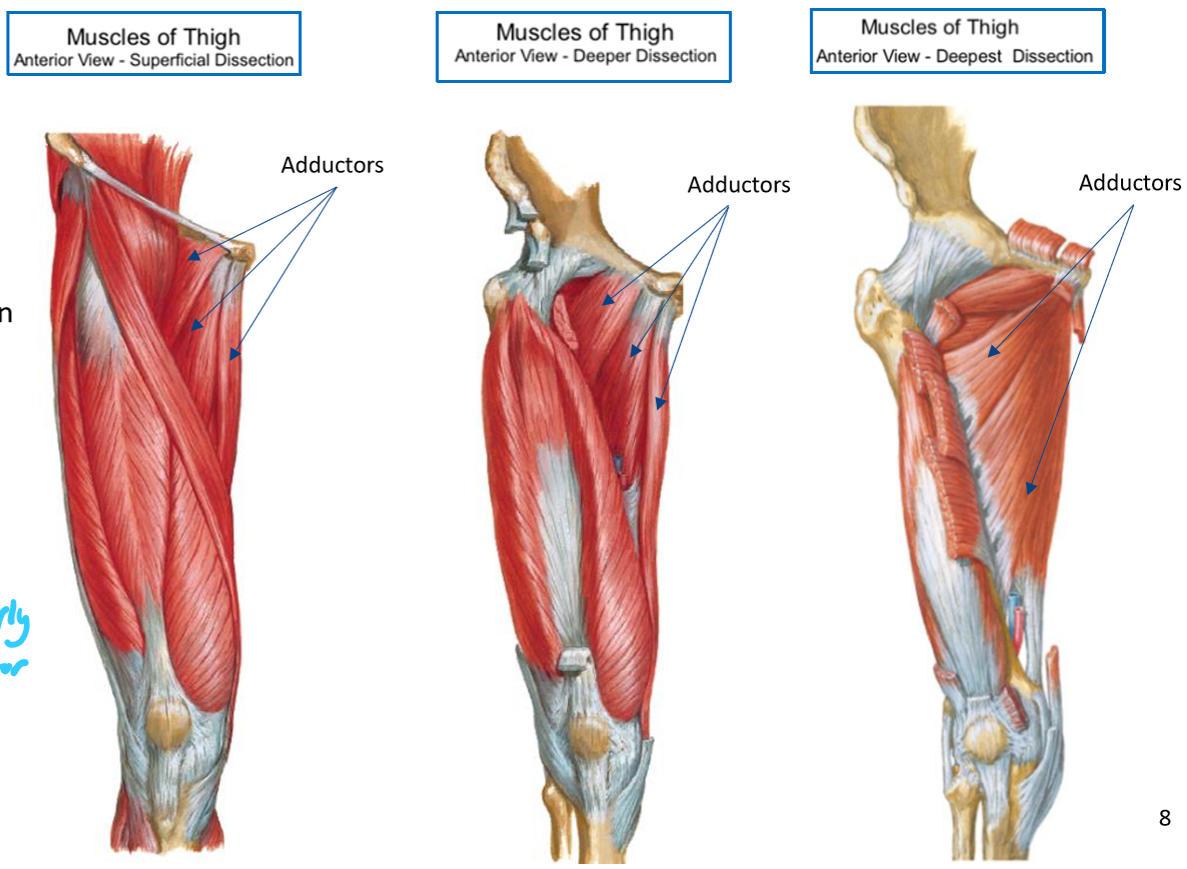
What muscles make up the medial compartment of the thigh & where do they attach?

  • Adductor muscles

  • Anchor to the pubic & ischial bones

<ul><li><p><strong>Adductor muscles</strong></p></li><li><p>Anchor to the pubic &amp; ischial bones</p></li></ul><p></p>
20
New cards

What type of structures pass through adductor muscles?

Major artery & vein (travel posteriorly through adductor muscles

  • Important for staying on the flexor side of joints

  • Located posteriorly by the time they are at the knee (supply blood to the muscles facilitating these movements)
21
New cards
<p>Label the following diagram</p>

Label the following diagram

knowt flashcard image
22
New cards

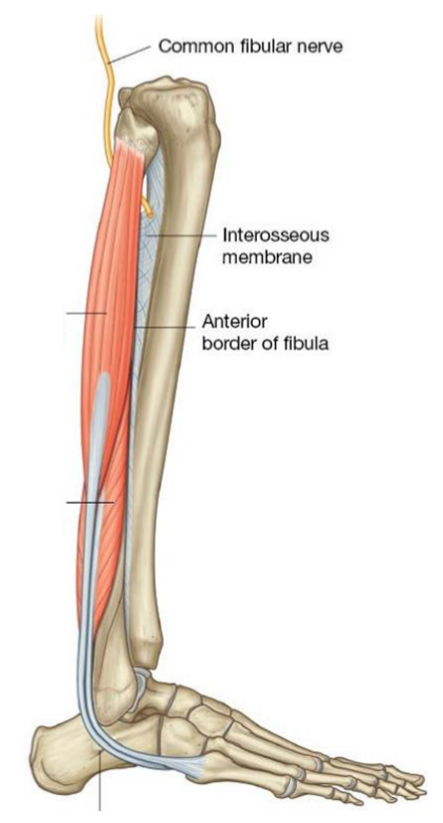
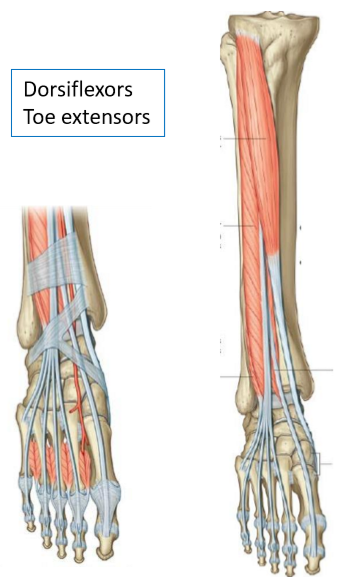
What types of muscles make up the anterior compartment of the leg & what do they all have in common?

  • Dorsiflexors & toe extensors

  • All cross anteriorly → all involved in dorsiflexion
<ul><li><p><strong>Dorsiflexors</strong> &amp; <strong>toe extensors</strong></p></li><li><p>All cross anteriorly → all involved in dorsiflexion</p></li></ul><p></p>
23
New cards

What types of muscles make up the lateral compartment of the leg & what do they all have in common at the ankle?

  • Evertors

  • All cross posterior to the joints

    • Very week in plantar flexion

    • Strongly pull foot into eversion

<ul><li><p><strong>Evertors</strong></p></li><li><p>All cross posterior to the joints</p><ul><li><p>Very week in plantar flexion</p></li><li><p>Strongly pull foot into eversion</p></li></ul></li></ul><p></p>
24
New cards

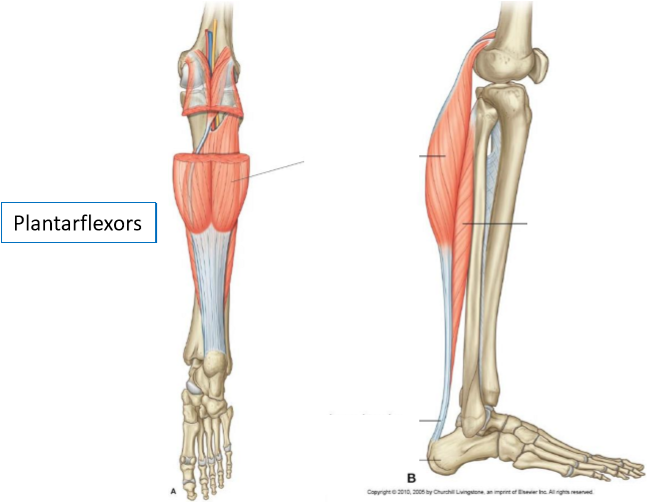
What types of muscles make up the superficial posterior compartment of the leg & what do they all have in common at their distal attachment?

  • Plantar flexors

  • Important for long & short distances (have fast & slow twitch fibres)

  • All converge into calcaneal tendon/Achilles’ heel

    • Far away from joint → strong & powerful movement
<ul><li><p><strong>Plantar flexors</strong></p></li><li><p>Important for long &amp; short distances (have fast &amp; slow twitch fibres)</p></li><li><p>All converge into <strong>calcaneal tendon</strong>/<strong>Achilles’ heel</strong></p><ul><li><p>Far away from joint → strong &amp; powerful movement</p></li></ul></li></ul><p></p>
25
New cards

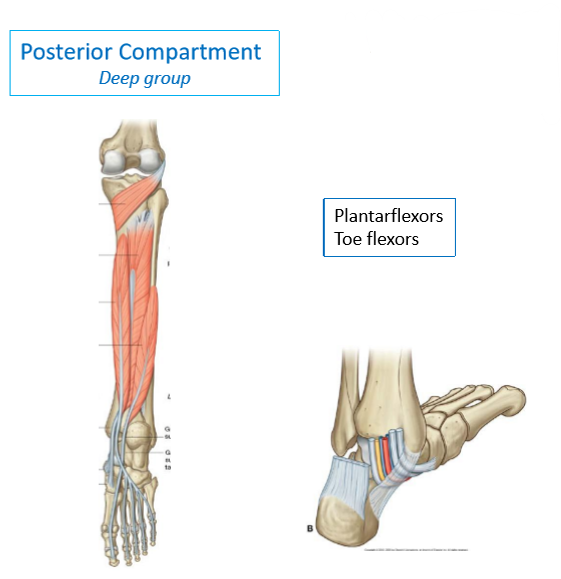
What types of muscles make up the deep posterior compartment of the leg & where do they cross?

  • Plantar flexors & toe flexors

  • Cross posterior to the joint

    • Much closer to the bones

    • Some blend to tarsals & some blend to toes

    • Very close to medial malleolus

<ul><li><p><strong>Plantar flexors</strong> &amp; <strong>toe flexors</strong></p></li><li><p>Cross <strong>posterior</strong> to the joint</p><ul><li><p>Much closer to the bones</p></li><li><p>Some blend to tarsals &amp; some blend to toes</p></li><li><p>Very close to <strong>medial malleolus</strong></p></li></ul></li></ul><p></p>
26
New cards

Where are intrinsic foot muscles found & what are the 3 major groups?

  • Found primarily on the plantar side of the foot

  • Major groups:

    • Hallucis muscles: 1st digit

    • Digiti minimi muscles: 5th digit

    • Central muscles: varied attachments & functions
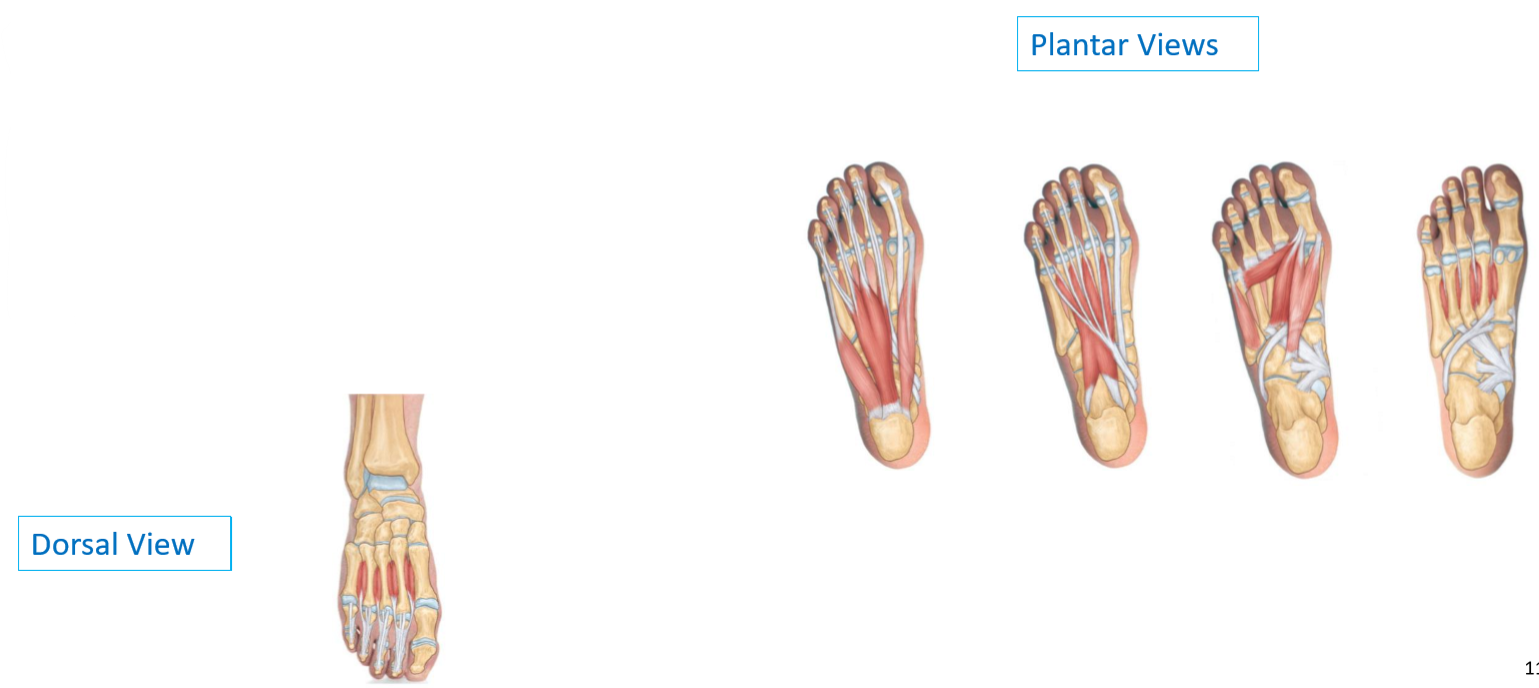
<ul><li><p>Found primarily on the <strong>plantar</strong> side of the foot</p></li><li><p><u>Major groups</u>:</p><ul><li><p><strong>Hallucis muscles</strong>: 1st digit</p></li><li><p><strong>Digiti minimi muscles</strong>: 5th digit</p></li><li><p><strong>Central muscles</strong>: varied attachments &amp; functions</p></li></ul></li></ul><p></p>
27
New cards
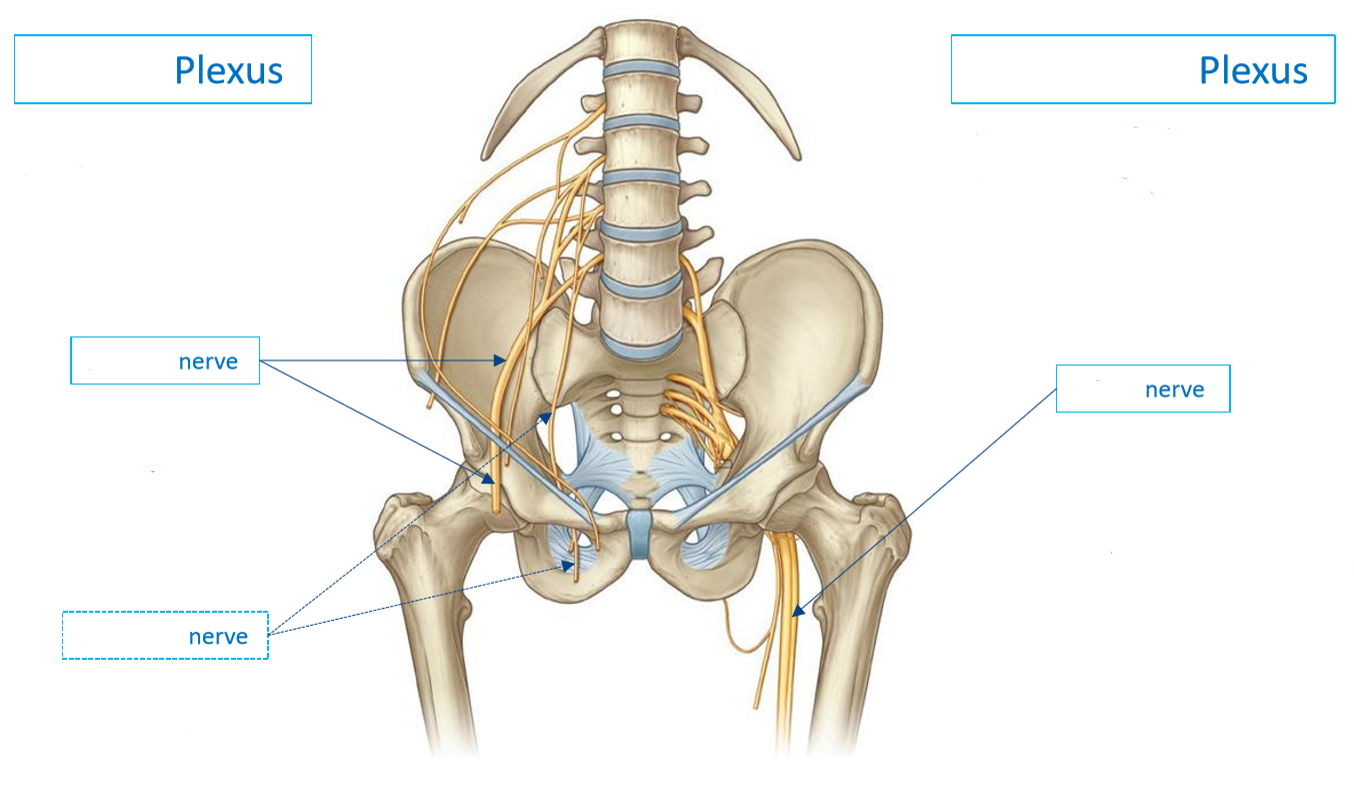
<p>Label the following diagram of the <strong>lower limb neural overview</strong></p>

Label the following diagram of the lower limb neural overview
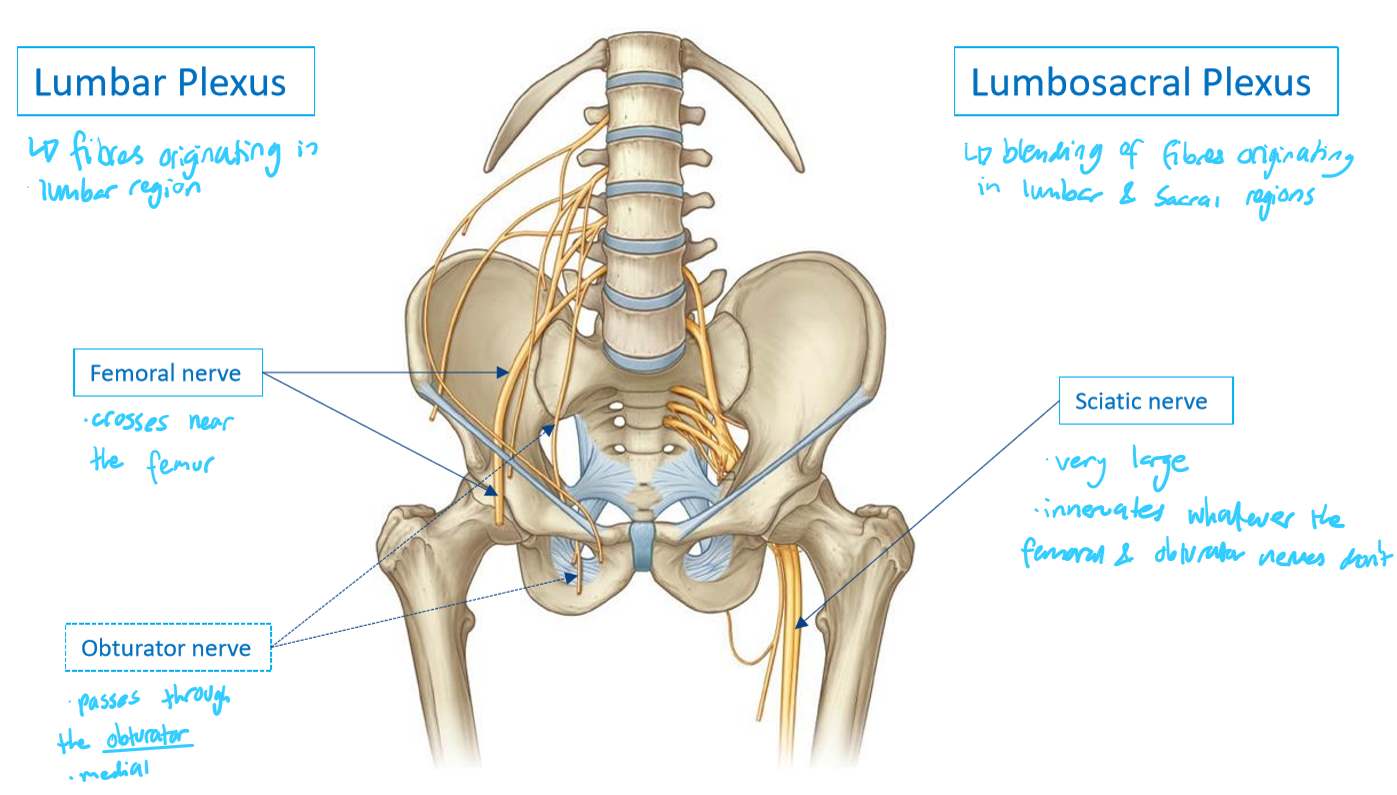
knowt flashcard image
28
New cards

What do the lumar & lumbarsacral plexi supply?

The lower limb, in addition to compartments of the pelvis & lower abdomen

29
New cards

For the obturator nerve, state:

  • Where it receives input from

  • Where it travels

  • Where it leaves

  • What it splits into & where it supplies

  • Receives input from L2-L4 anterior rami

  • Travels medial to psoas major

  • Leaves pelvis via obturator canal

  • Splits into 2 branches → supply medial compartment of thigh
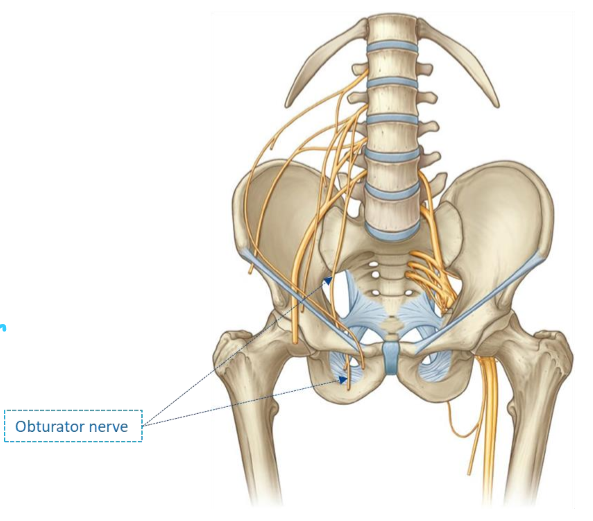
<ul><li><p>Receives input from <strong>L2-L4 anterior rami</strong></p></li><li><p>Travels <strong>medial</strong> to <strong>psoas major</strong></p></li><li><p>Leaves <strong>pelvis</strong> via <strong>obturator canal</strong></p></li><li><p>Splits into 2 branches → supply <strong>medial compartment</strong> of <strong>thigh</strong></p></li></ul><p></p>
30
New cards

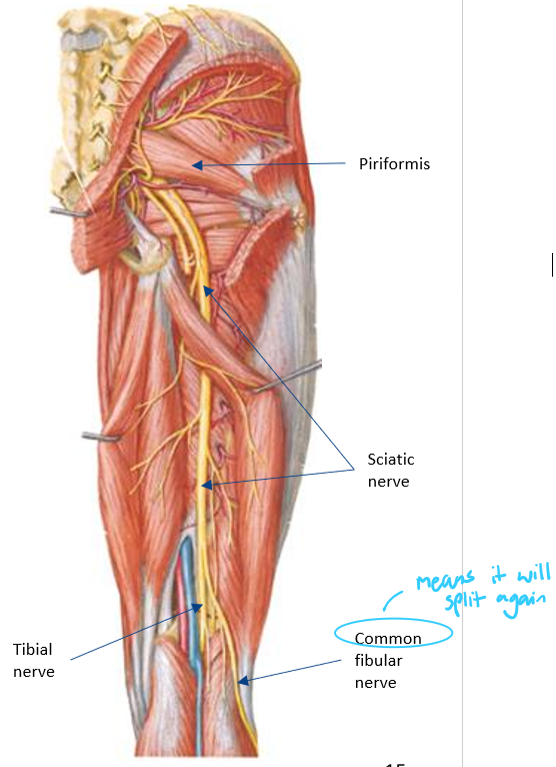
For the sciatic nerve, state:

  • Where it receives input from

  • Where it forms

  • Where it leaves

  • What is supplies

  • What it splits into

  • Receives input from L4-S3 anterior rami

  • Forms within pelvis

  • Leaves posteriorly via greater sciatic foramen

    • Inferior to piriformis

  • Supplies the lower limb muscles

    • Posterior compartments of the thigh

    • All leg compartments

    • All foot muscles

  • Splits into 2 nerves in a common sheath;

    • Tibial nerve

    • Common fibular nerve

<ul><li><p>Receives input from <strong>L4-S3 anterior rami</strong></p></li><li><p>Forms within <strong>pelvis</strong> </p></li><li><p>Leaves <strong>posteriorly</strong> via <strong>greater sciatic foramen</strong></p><ul><li><p><strong>Inferior</strong> to <strong>piriformis</strong></p></li></ul></li><li><p>Supplies the <strong>lower limb muscles</strong></p><ul><li><p>Posterior compartments of the thigh</p></li><li><p>All leg compartments</p></li><li><p>All foot muscles</p></li></ul></li><li><p>Splits into 2 nerves in a common sheath;</p><ul><li><p><strong>Tibial nerve</strong></p></li><li><p><strong>Common fibular nerve</strong></p></li></ul></li></ul><p></p>
31
New cards
32
New cards
33
New cards
34
New cards
35
New cards
36
New cards
37
New cards
38
New cards
39
New cards
40
New cards
41
New cards
42
New cards
43
New cards
44
New cards
45
New cards
46
New cards
47
New cards
48
New cards
49
New cards
50
New cards
51
New cards
52
New cards
53
New cards