Hypotension and Hypertension
 Call Kai
 Learn
Learn Practice Test
 Spaced Repetition
 Match
Match Flashcards
 Knowt Play
1/17

There's no tags or description
Looks like no tags are added yet.
Name | Mastery | Learn | Test | Matching | Spaced | Call with Kai |
|---|
No analytics yet
Send a link to your students to track their progress
18 Terms
Types of hypovolemic shock
Inflammation - mediators, dilation, and increased permeability
Trauma - rupture and third spaces sequestration
Hemorrhagic loses - lower intravascular volume
Non-hemorrhagic loses - lower intravascular volume
Integration and pathophysiology of hypotension
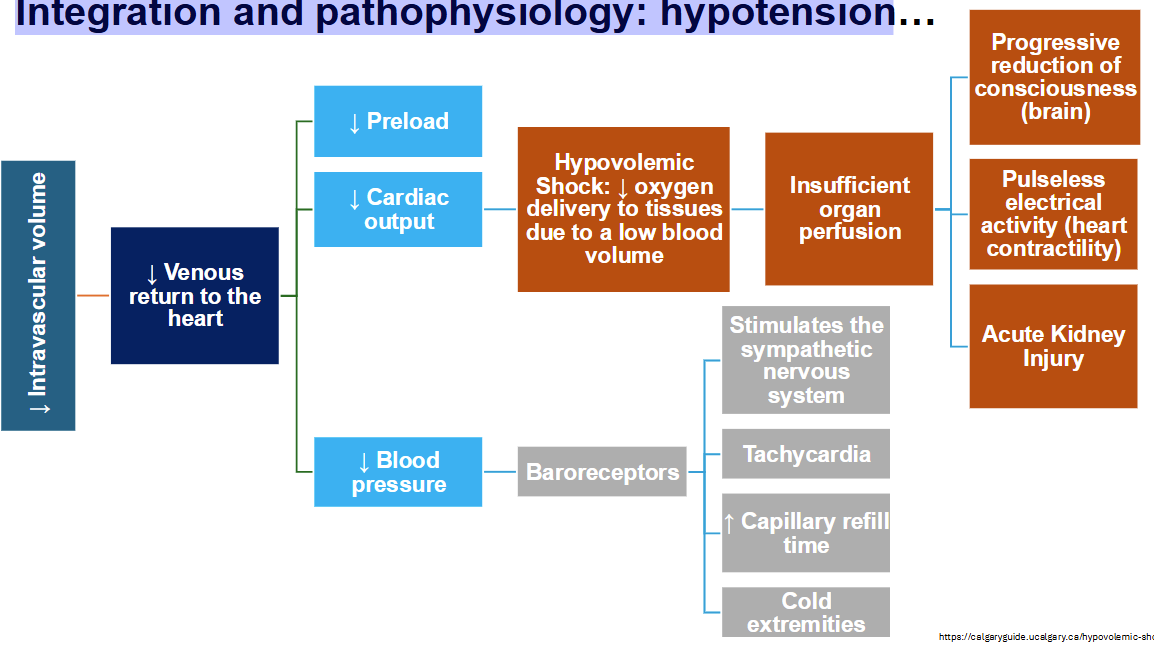
Hypovolemic shock:
precipitous fall in cardiac output due to decreased blood volume due to hemorrhage, fluid loss, or fluid sequestration
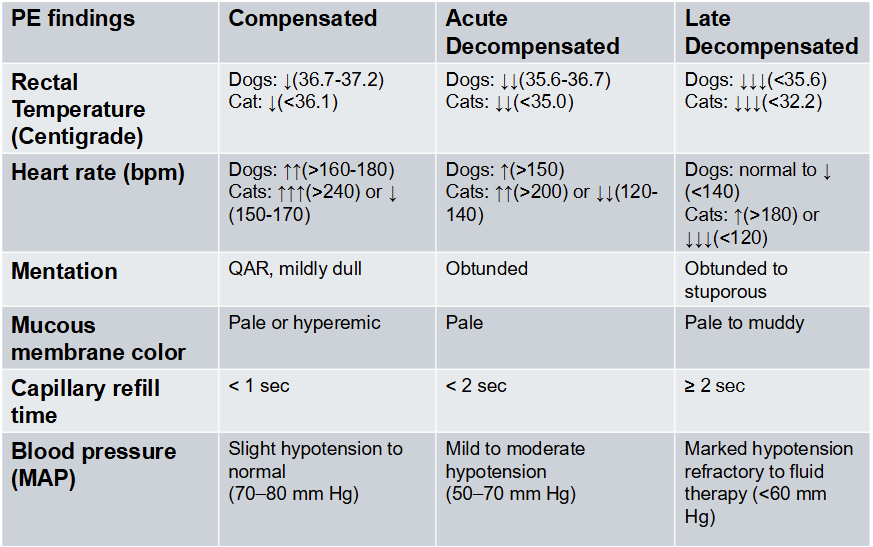
Physical examination (PE) findings during shock states
Circulatory collapse due to venous pooling of blood and peripheral vasodilatation:
Neurogenic: trauma CNS.
Anaphylactic: systemic allergic response.
Anesthetic: overdose of general anesthetics
Stage I: compensated: Hypotension is presented
Neurohumoral responses maintain adequate tissue perfusion to vital organs to avoid hypoxia.
Mechanisms included baroreceptors, renin/angiotensin/aldosterone, and antidiuretic hormone
Bodies response to Stage I
increased sympathetic activity(tachycardia, peripheral vasoconstriction, increased ventricular contractility), oliguria, and renal retention of salt and water.
Stage II: progressive
Compensatory mechanisms now fail to maintain the arterial blood pressure, hypotension is
sustained, and tissue perfusion falls
Cellular hypoxia and organ dysfunction will predominate
Appropriate treatment(intravenous fluid and transfusion therapy) will restore cardiovascular functions
Stage III: irreversible
Cellular injury due to hypoxia damages the vascular smooth muscle, endothelial cells, and the ventricular myocardium.
This leads to loss of vascular tone, extravasation of fluid to the intestinal lumen, and blood stasis in vascular beds.
Blood stasis activates the clotting system, and disseminated intravascular coagulation develops, Ultimately superimposing different forms of shock at the same time.
When systolic blood pressure is below what number you are cooked?
50 mmHg, a compensatory response is unable to restore the blood pressure
Systemic Hypertension: dogs and cats
Persistently elevated systemic arterial blood pressure
Idiopathic hypertension
the cause is not recognized (human beings)
Secondary hypertension:
known cause (dogs and cats)
Systemic hypertension
Associated with complications, such as:
Progressive renal disease.
Retinal and choroidal injury.
Heart failure.
Hypertensive encephalopathy.
Clinical signs of systemic hypertension
initially asymptomatic.
Unrecognized for months until lesions are almost irreversible
Systemic Hypertension: dogs and cat Causes
Chronic kidney disease: kidney and hypertension, Hyperthyroidism, Hyperaldosteronism, Diabetes mellitus.
Hyperadrenocorticism, or Cushing's syndrome.
Pheochromocytoma (adrenal gland tumor).
Xenobiotics.
Salt consumption: dogs and cats are less sensitive than humans.
Systemic Hypertension: dogs and cats Consequences
Ocular clinical signs: retinal detachment.
Cardiovascular: heart
Left ventricular hypertrophy, Increase afterload, Pulmonary congestion
Ventricular stiffness and reduced diastolic filling (reduce ventricular COMPLIANCE).
Rise in ventricular diastolic pressure.
HYPERTENSION IN CATS:
the therapeutic goal is to keep the systolic blood pressure below 160 mmHg