part 2
 Call Kai
 Learn
Learn Practice Test
 Spaced Repetition
 Match
Match Flashcards
 Knowt Play
1/34

There's no tags or description
Looks like no tags are added yet.
Name | Mastery | Learn | Test | Matching | Spaced | Call with Kai |
|---|
No analytics yet
Send a link to your students to track their progress
35 Terms
elements of habitat
resources
food
cover (including reproductive sites)
water
environmental conditions
abiotic
predators
competitors
= vegetation, abiotics, other animals
“components” of vegetation
species composition (= floristics)
vegetation structure (= physiognomy)
biomass
temporal changes in any/all of the above
veg sampling questions to answer
a. What variables will allow you to quantify important “vegetation components”?
b. What spatial scale is relevant to your animal?
c. How should the data be measured & analyzed?
frequency =
percentage of sample units in which a plant species occurs
frequency components
easy
good for floristic component
clumped plant distributions can skew data
plot size is critical
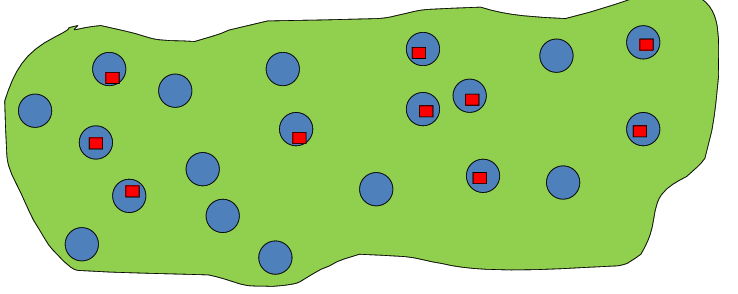
frequency ?
= 10/20 plots = 50%
density =
total number of items (individual plants, stems etc.) per unit area
density components
labor intensive
good for physiognomy
coupled with frequency, height, and cover provides excellent measures of veg
cover =
vertical projection of the crown or stem of a plant onto the ground surface
cover components
useful indicator of relative dominance, often expressed as %
crown cover useful for describing forest physiognomy (canopy cover) and grassland forage (grass cover)
stem cover useful for estimating timber (basal area)
height =
from ground to top of plant
height components
easy
sheds some light on physiognomy component but most useful when combined with other measures
tree height =
(% angle to top - % angle to bottom) * baseline distance
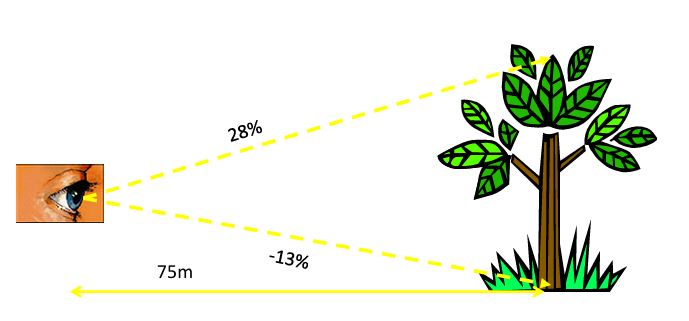
tree height = (28%-- 13%)*75 m = 41%*75= 30.75m
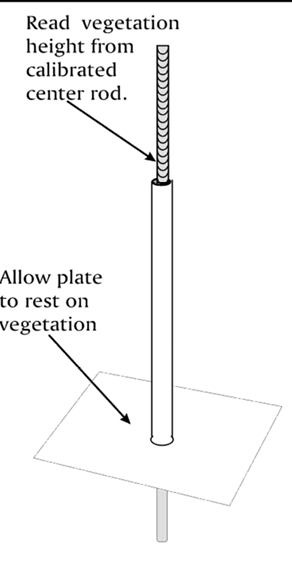
sward stick
for measuring grassland “height/cover/density”
plate of known & reported weight (Styrofoam)
plot vs plotless sampling pro/con
choice of plot size & shape dependent on plant distribution
usually less precise but also less time consuming
plot sampling
count # plant spp
know size of plot
calculate # indiv./plot = density
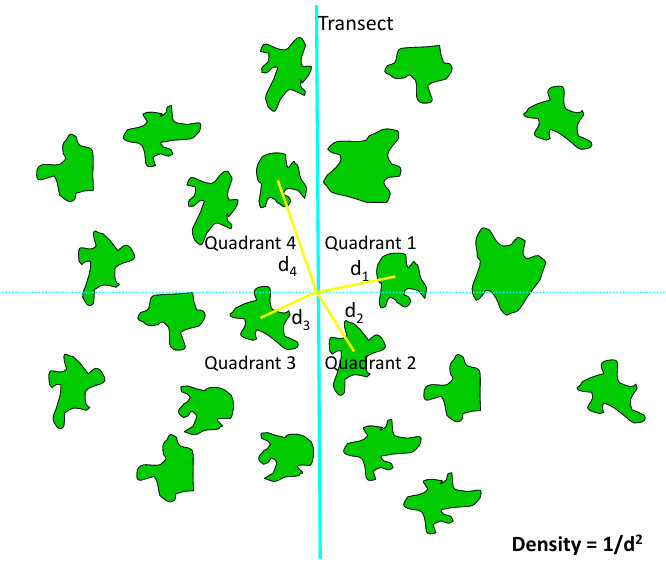
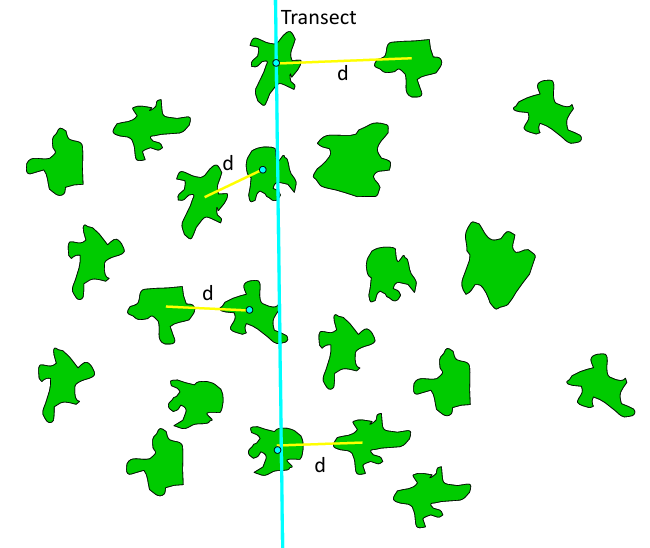
plotless sampling
dense = small distance between neighbors and/or random points
sparse = large distances neighbors and/or random points
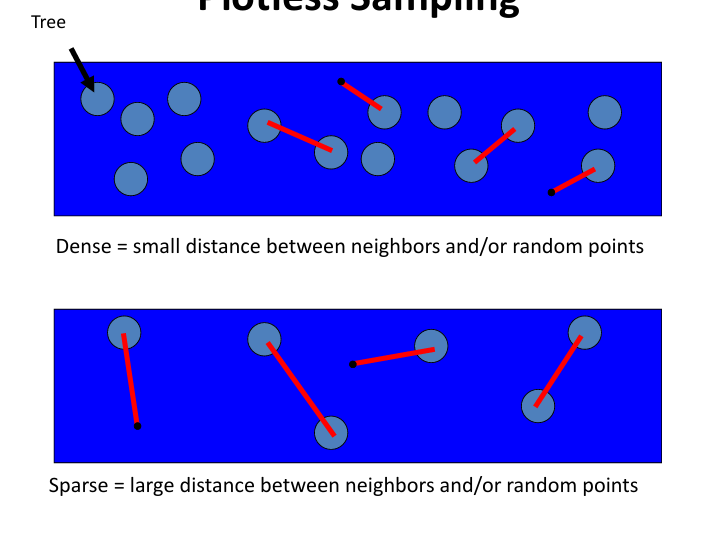
point center quarter method
nearest neighbor method
techniques for measuring cover
quadrat charting
ocular estimates
line intercept
point intercept
bitterlich variable radius
ocular estimates
grassland - frames e.g., Daubenmire
canopy - densiometer
easy, subject to observe bias
line intercept
can be used in grasslands, shrublands, or forests
very commonly used
quite accurate, somewhat tedious
point intercept
presence / absence at numerous points
presence in frames (grasslands) & sighting tubes
bitterlich variable radius
stem cover in forests or shrublands
eg cruz-all
relascope / bitterlich angle gauge
good for forests w many trees
no need to measure a fixed plot
weighting by tree size give ecologically meaningful estimates
biomass =
dry weight of plants in community
biomass components
useful indicator of food availability for herbivores
usually expressed as mass per unit area
techniques for measuring biomass
clipping
direct estimation
dimension analysis
clipping
clip dry and weigh veg
clip within various “frames”
direct estimation
for experienced range biologists
calibration with clipping
dimension analysis
estimate volume of tree/shrub
convert to biomass with average density value
miscellaneous vegetation measures
visual obscurity
trunk measures
tree age - rings
fruits
visual obscurity
importance to wldf for nesting cover and thermal cover
weight “density board”
robel pole
trunk measures
DBH - 4.5 ft (1.37m) on uphill side (varies)
basal area - trunk cross-sectional area
fruits (hard and soft mast)
traps
transect counts of fallen mast
visual counts of suspended mast