Cancer
 Call Kai
 Learn
Learn Practice Test
 Spaced Repetition
 Match
Match Flashcards
 Knowt Play
1/31

There's no tags or description
Looks like no tags are added yet.
Name | Mastery | Learn | Test | Matching | Spaced | Call with Kai |
|---|
No analytics yet
Send a link to your students to track their progress
32 Terms
What is the difference between benign and malignant tumors?
malignant cells spread faster compared to benign
cancer cells are malignant tumors
What does cancer result from?
cancer results from an accumulation of mutations which induced uncontrolled cell growth
these mutations are present in oncogens and tumor supressor genes, which are usually responsible in control of cancer cells
What are environmental factors that can be a risk of cancer development?
mutagenic compounds: asbestos, cigarette smoke
mutagenic radiation: UV radiation, X-ray and radioactive radiation
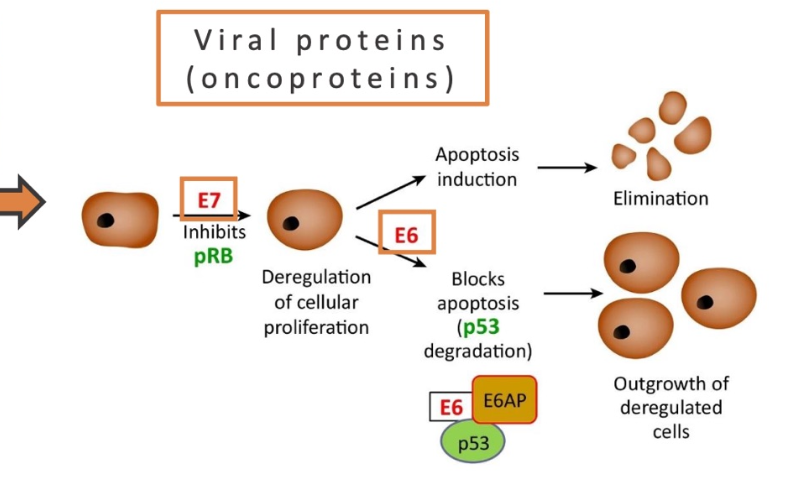
Why are viral infections risk factors for cancer development?
oncolytic virusus can make you more prone to cancer
some proteins from these viruses will become oncoproteins → their behaviour will block apoptosis and the cells doesnt die and eventually can become a cancer cell.
How does the spread of cancer work?
Cancer cells can spread from primary tumors to metastize
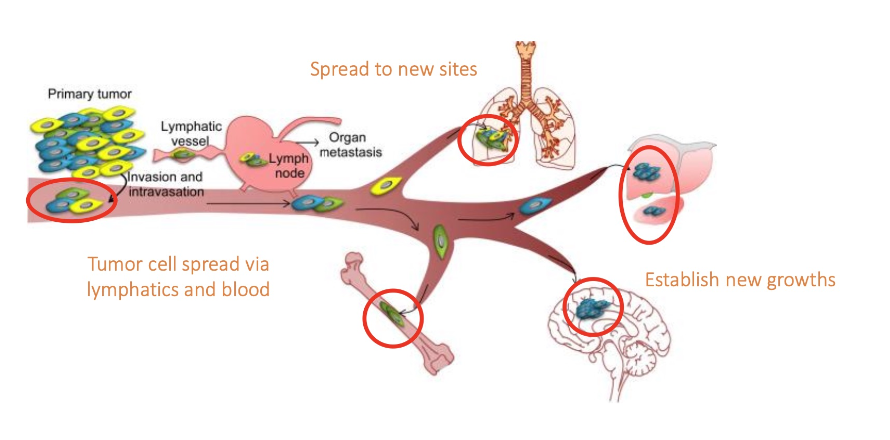
Start in lymphatics and blood → spread to new sites → establish new growth
What is immunosurveillance?
when the immune system can recognize & eliminate tumor cells prior to disease
and this comes from cancer immunity by mimicing the response against a viral infection by activation of NK cells and cytotoxic T cells.
How does tumor self-recognition work with tumor antigens?
Tumor cells present tumor antigens to CTLs via MHC I molecules for antigen presentation and activation
The antigens presented will be tumor specific (non-self) such as viral antigens or mutated proteins or tumor associated antigens (self) which have an embryonic origin or over expressed self peptides by tumor cell which increases more self-peptide presentation.
How is the adaptive immune system activated by tumor antigens?
Tumor antigen release via tumor cell death for uptake & presentation by dendritic cells for adaptive immune response
When cancer cell dies → antigen released → activation of T-cells → movement of T-cells to tumor and infiltration in tumor → killing of tumor cells
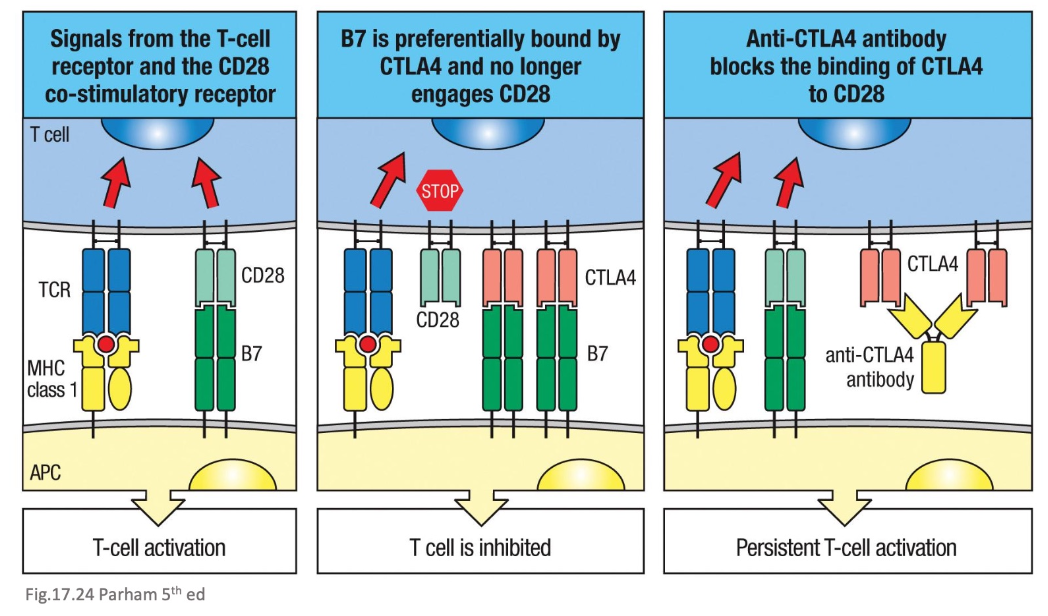
What are immune checkpoints?
T-cell inhibition to maintain a balance in activation and inhibition of T-cells to ensure controlled immunity
The checkpoints are CTLA-4 and PD-1
Activated when T-cell exhausted or pathogen load drops
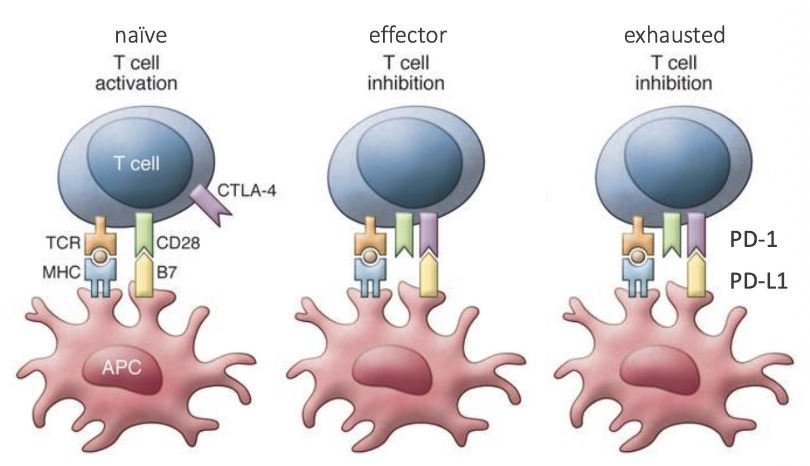
Where are the immune checkpoints expressed?
expressed by effector T-cells and highly by exhausted T-cells
expressed by dendritic cells to inhibit T-cell response
What are regulatory T-cells?
Delicate balance in immune activation and inhibition for controlled immunity
Activated by dendritic cells via anti-inflammatory cytokines (TGFbeta).
What gives tumor cells evading abilities?
Tumor cells have genetic variation which gives them the ability to mutate and develop immune evading strategies.
The first evading detection is lymphocyte inhibition, explain it.
cells have a stress protein receptor which attracts the T cells and NK cells for killing damaged cells.
tumor cells have the ability to cleave these receptors so the NK cells cannot detect them as danger
this way the immune system will not recognise them and the tumor cell can continue to proliferate and develop into cancer
Second is downregulation of MHC I molecules, explain?
cytotoxic T cells can be inhibited by downregulating their MHC I molecules
if the tumor cell manages to downregulate the MHC I the CTL cannot lyse the tumor → tumor becomes metastatic
How is the expresion of NK cells altered and what effect does that have?
together with cytotoxic T cells an increased expression of HLA-E will inhibit NK cells.
How do tumor cells undergo immune regulation for escape?
by secretion of anti-inflammatory TGFbeta → activation of regulatory T cells + release of anti-inflammatory cytokines (IL10) → inhibition of all incoming CLT & T-helper cells → survival of tumor cell
How can tumors use immune checkpoints for escape?
more CTLA4 expression → inhibition of APC activation
inhibition of T cells by checkpoints PD1-PDL1
How can anergy of T-cells occur?
when antigen presentation of tumor specific antigens when there is no inflammation, can cause anergy of the T-cell
No expression of co-stimulation occurs
What is immunotherapy?
using our immune system to fight the cancer
What are prophylactic vaccines?
Vaccination prior to disease
To prevent virally transmitted cancers such as cervical canver (HPV)
What are vaccinations for cancer and what do they aim to target?
vaccination strategies to prevent and cure cancer
aim is to induce humoral and cellular response → induce immunological memory
example is prophylactic vaccines
Why can prophylactic vaccines not be used in all cancer types like melanoma?
we cant use prophylactic on melenoma because we dont know the antigens of the tumor and therefor cannot inject ppl with random antigen.
What are therapeutic vaccines?
vaccines used when the cancer is established
its when dendritic cells are used to activate T-cells (naive and effector)
in vivo would be directly injecting the tumor antigen into the patient
ex vivo would be via adoptive DC transfer
Describe in vivo vaccination.
mobilising dendritic cells in the tissue of patients
injecting adjuvant and antigen + antigen uptake in DCs + adjuvant activates DC → antigen presentation to tumor specific T-cells → CTL kill tumor cells
Describe ex vivo vaccinations.
DCs are activated outside the body and then injected after
monocytes mature into immature DCs → activate tumor specific T cells → mature DCs + adjuvant → injection (vaccine)
→ note: would not work for tumor with high mutational load
Summary of what a therapeutic vaccine contains?
tumor antigens for CD4 and CD8
adjuvant for DC maturation
Why is it important for vaccines to have epitopes of both CD4 and CD8 cells to enhance immunity?
A cancer vaccine must include antigen epitopes for both CD4⁺ and CD8⁺ T cells, because CD4⁺ T helper cells (via IL-2 and CD40L) are essential for licensing the DC and fuelling CD8⁺ T cells to become powerful, long-lasting tumour-killing CTLs.
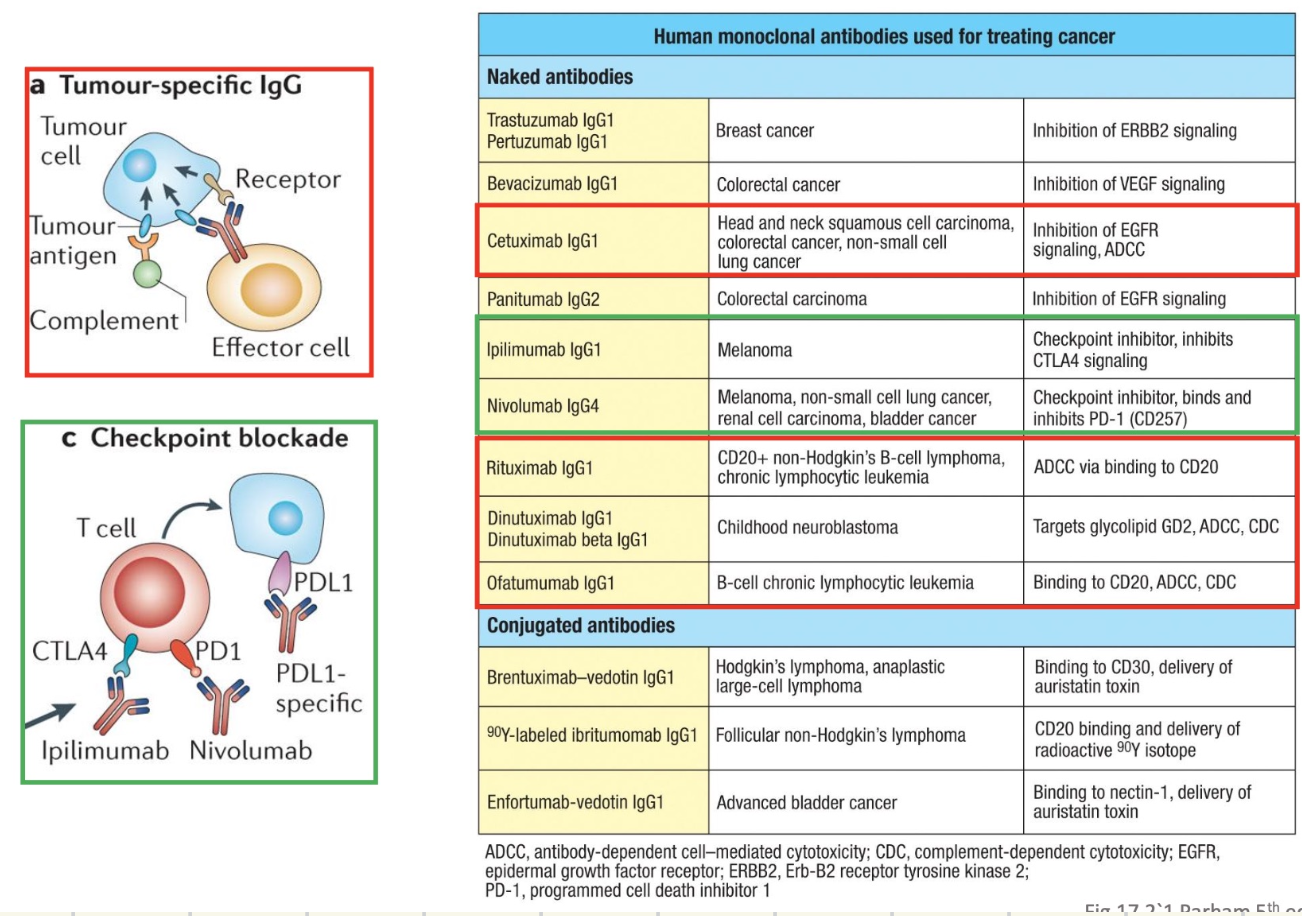
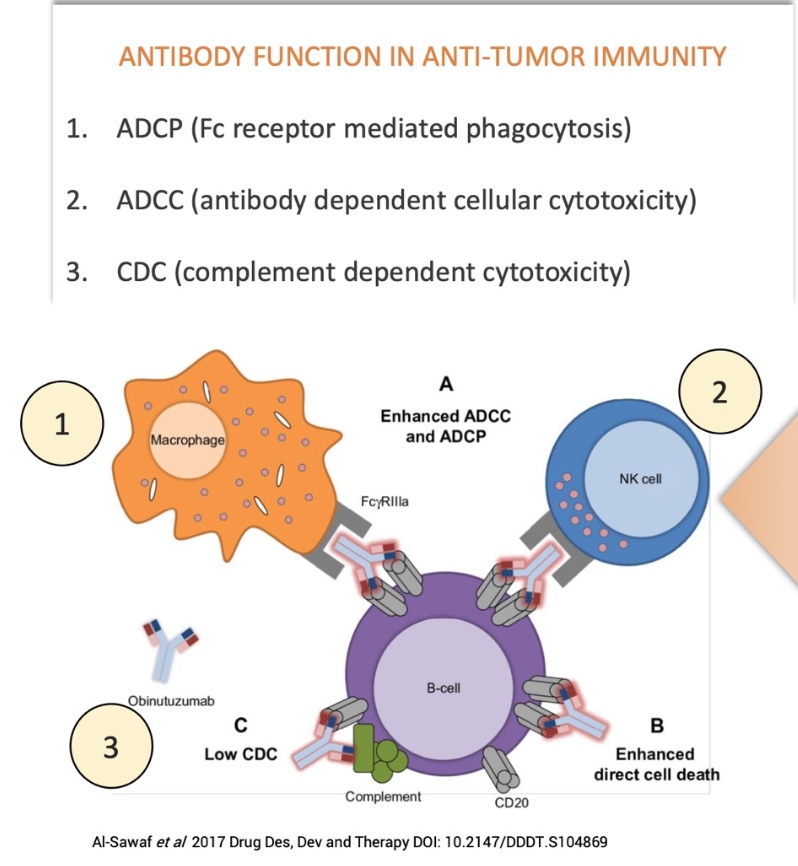
What is the aim of using antibodies to enhance anti-tumor immunity?
use antibody functions to aid immunity
antibodie are very multifunctional for immunotherapy
How can antibodies be used with regard to the checkpoints?
antibodies can bind to the checkpoint molecules that would inhibit the T-cells activation
this way blockade is removed and T-cells can normally function
How can antibodies induce the innate immune system?

How can toxic compounds be used?
Simply be delivered for the induction of tumor cell death.
No info just know that many antibodies are already being used in clinics to treat patients and have been very effective!!