Lecture 3 - Analytical Techniques and Intrumentation
 Call Kai
 Learn
Learn Practice Test
 Spaced Repetition
 Match
Match Flashcards
 Knowt Play
1/42

Earn XP
Description and Tags
General Disciplines and Clinical Applications
Name | Mastery | Learn | Test | Matching | Spaced | Call with Kai |
|---|
No analytics yet
Send a link to your students to track their progress
43 Terms
Four basic disciplines of clinical chemistry:
Spectrometry
Luminescence
Electroanalytic methods
Chromatography
Spectrometry - Measurement:
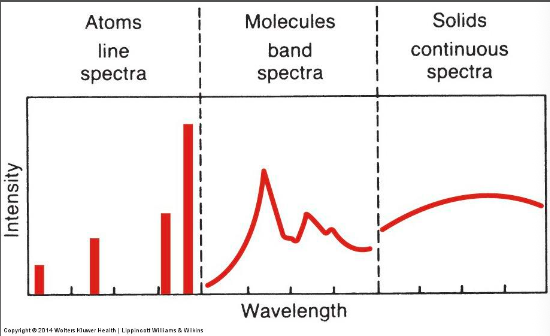
Instruments measure either absorption or emission of radiant energy to determine concentration of atoms or molecules
Characteristics of absorption/emission on spectra:
Line (atoms)
Band (molecules)
Continuous (solids)
Spectrophotometer:
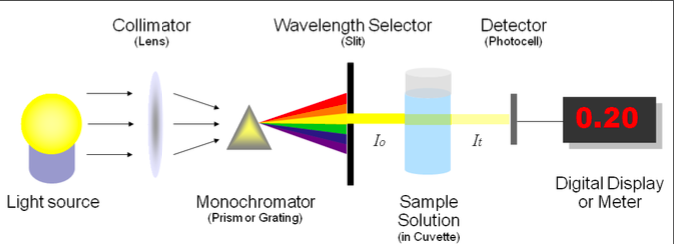
Used to measure the light transmitted by a solution to determine the concentration of the light-absorbing substance in the solution
Luminescence:
Process of emitting light from a substance
Bioluminescence is the emission of light by living organisms (example: fireflies)
Chemiluminescence is a result of a chemical reaction (example: luminol test gives a blue glow in detecting blood)
Fluorescence:
Can be detected by an array detector, to detect compounds using HPLC (High performacne Liquid Chromatography)
TLC (Thin Layer Chromatography) plates can be visualized under UV if the compounds or a coloring reagent is fluorescent
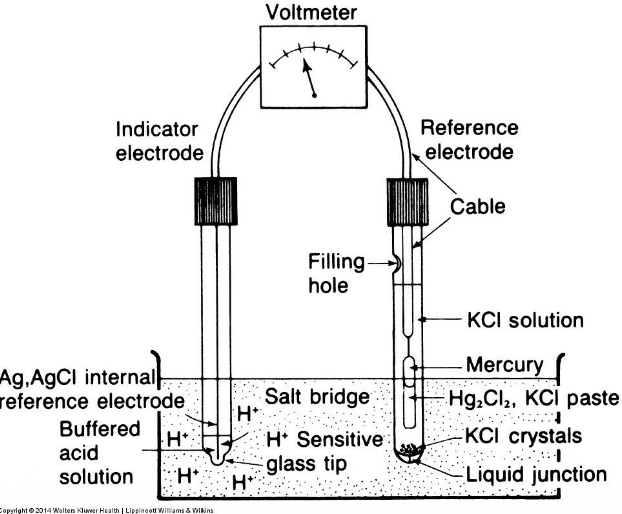
Electroanalytic Methods: pH Meter:
Ion selective electrodes measures the hydrogen ion concentration to indicate its acidity or alkalinity
Acidosis and alkalosis describe the abnormal conditions that result from an imbalance in the pH of the blood
Excess acid or alkali in the blood is typically caused by an underlying condition or disease
Any disease or condition that affects the lungs, kidneys, metabolism, or breathing has the potential to cause acidosis or alkalosis
Body balances between incoming acids and bases (faucet on) and elimination of acids and bases (drain on)
Lungs and kidneys are major organs that regulate the blood pH
Acidosis:
Occurs when blood pH falls below 7.35 (untreated diabetes)
Alkalosis:
Occurs when blood pH rises above 7.45 (severe case of vomiting)
Urinalysis pH:
Indicates metabolic acidosis (acid production)
Indicates metabolic alkalosis (acid loss)
Precipitation of crystals
Treatment of urinary tract infections
ex. Formation of various types of kidney stones is strongly influenced by urinary pH
By modifying urine pH through diet or medications, the formation of these crystals can be reduced or eliminated
Chromatography:
Involves a group of techniques used to separate complex mixtures on the basis of different physical interactions between the individual compounds and the stationary phase of the system
Chromatography: Mobile phase:
Gas or liquid
Chromatography: Stationary phase:
Solid or liquid; column holds the stationary phase
Chromatography: Complex mixture:
Sample
Chromatography: Separated components:
Eluate
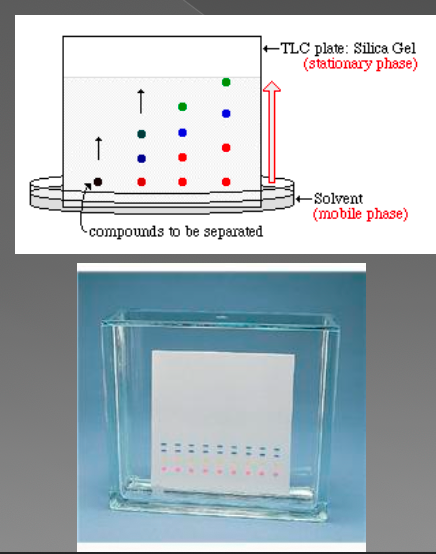
Thin Layer Chromatography:
Variant of column chromatography
Thin layer of sorbent like silica gel is coated on glass
Sample is applied on the spot and the mobile phase (solvent) separates the sample into molecules
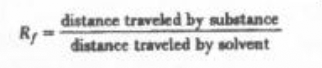
Retention factor (Rf) is compared to a standard (known) Rf
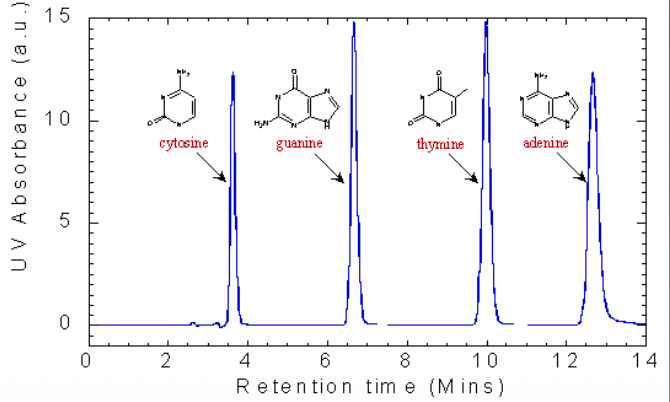
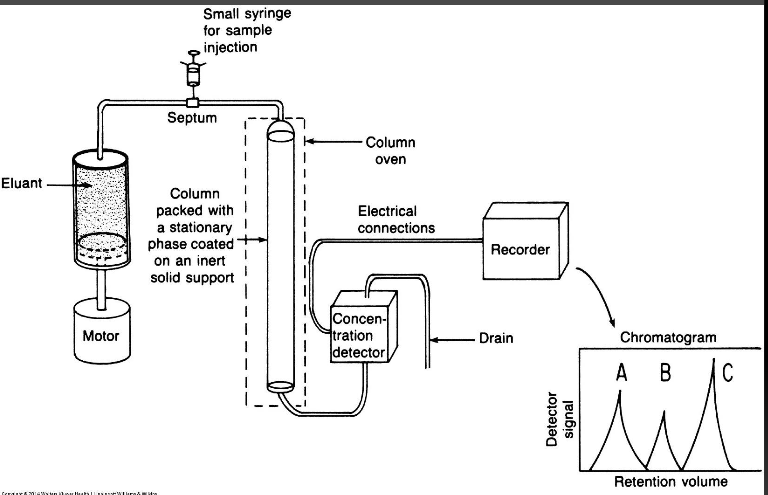
Basic Components of High Performance Liquid Chromatography (HPLC):
Separation and analysis of mixed compounds
Mobile phase is liquid
Thermally unstable compounds can be analyzed
Qualitative and quantitative analysis can be performed
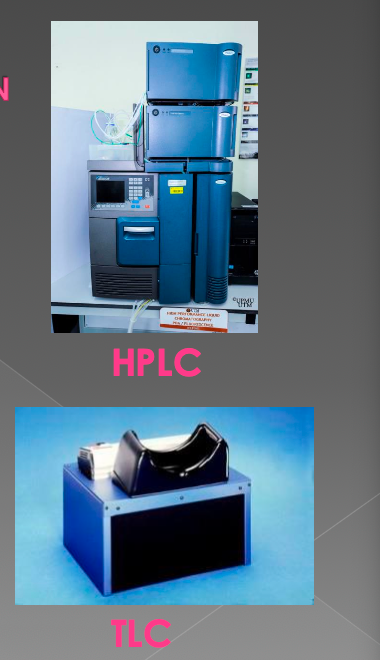
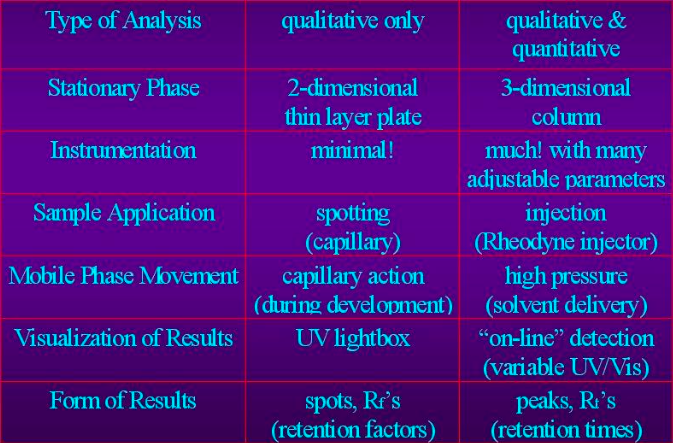
Chromatography: TLC vs. HPLC:
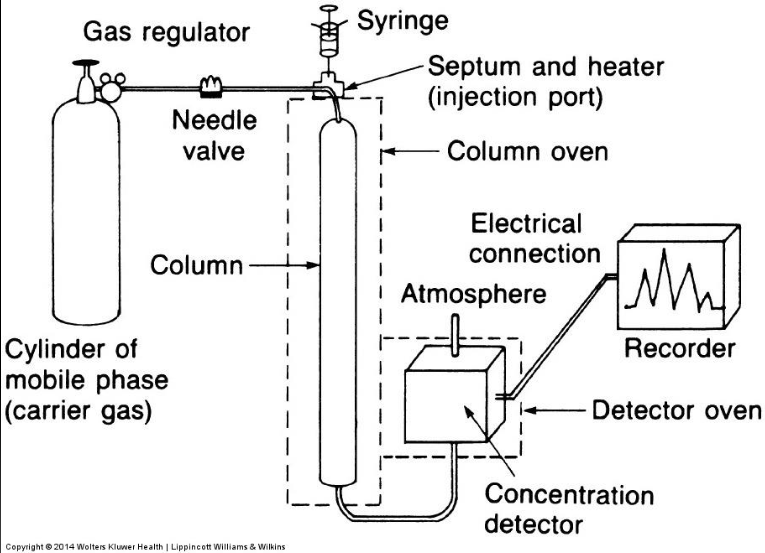
Basic Components of Gas Chromatography:
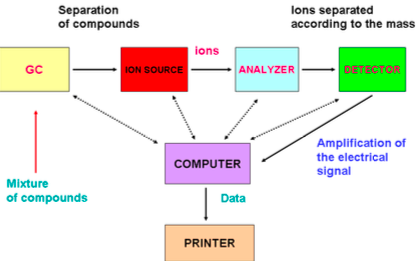
Gas Chromatography Mass Spectrometry (GCMS):
Mobile phase is gas
Complex samples are separated in the column
Example: A mixture of Caffeine, Cocaine, and Lidocaine will separate and three peaks will be observed
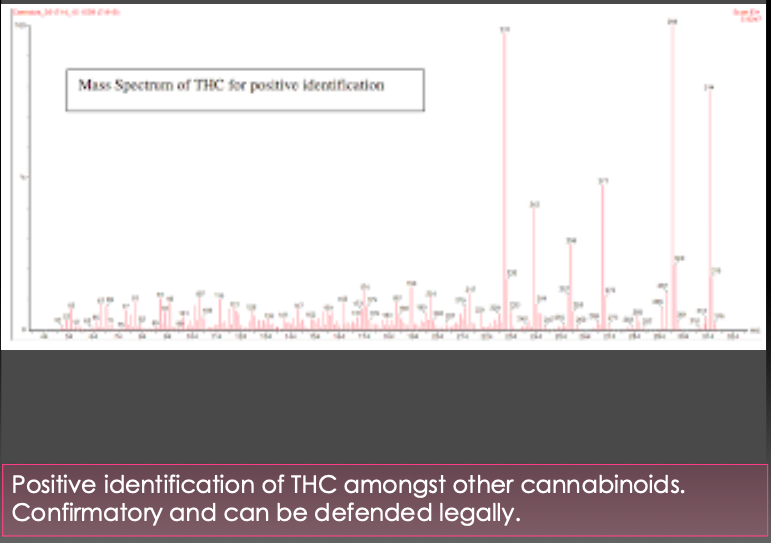
Each component enters the mass analyzer where it is fragmented into a unique and repeatable pattern
Mass Spectrometry:
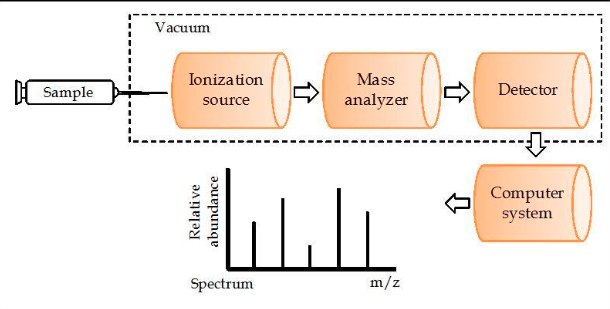
An analytical technique that sorts ions according to their mass to charge ratio
Mass Spectrometry: Ionization Source:
A small sample is ionized, usually to cations by loss of an electron
Mass Spectrometry: Mass Analyzer:
The ions are sorted and separated according to their mass and charge
Mass Spectrometry: Detector:
The separated ions are measured and the results displayed on a chart as a spectrum (the fragmentation pattern)
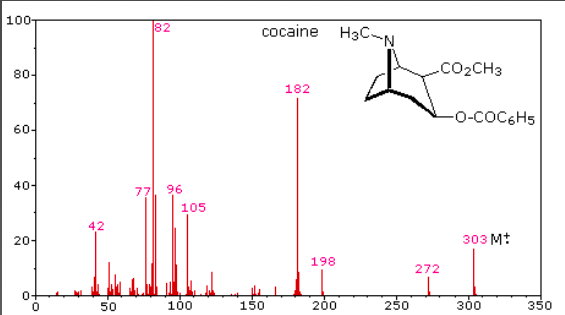
Mass Spectrometry: Cocaine
The fragment pattern is considered to be the fingerprint of the compound
The more abundant ions (82, 182, 303) can be rationalized by certain cleavages and eliminations occurring to the structure of cocaine
Presumptive (Screening):
Test indicates the sample probably is the substance
Confirmatory testing:
Verify the substance’s identity, or to measure the percentage purity or other quantitative analysis
Confirms or indetifies a substance has a confidence level attached to it
High specificity
High sensitivity
Qualitative and Quantitative
Legally defensible results
Avoids false positives and false negative
Presumptove Kastle-Meyer test:
Shows that a sample is not blood, or that the sample is probably blood
Chemical indicator is phenolphtalein is used to detect the possible presence of hemoglobin
Positive: Swab turns pink
Conrimatory Kasle-Meyer test:
Further chemical testing required to prove that the substance is blood
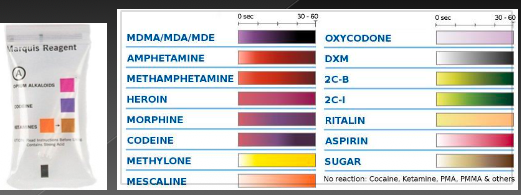
Presumptive: Marquis reagent:
Used as a simple spot test to presumptively identify alkaloids (drugs and posions fall into this category) as well as other compounds
Different compounds produce different color reactions
Confirmatory: Marquis reagent:
Further testing using GCMS or HPLC is necessary to confirm the substance is an illicit drug
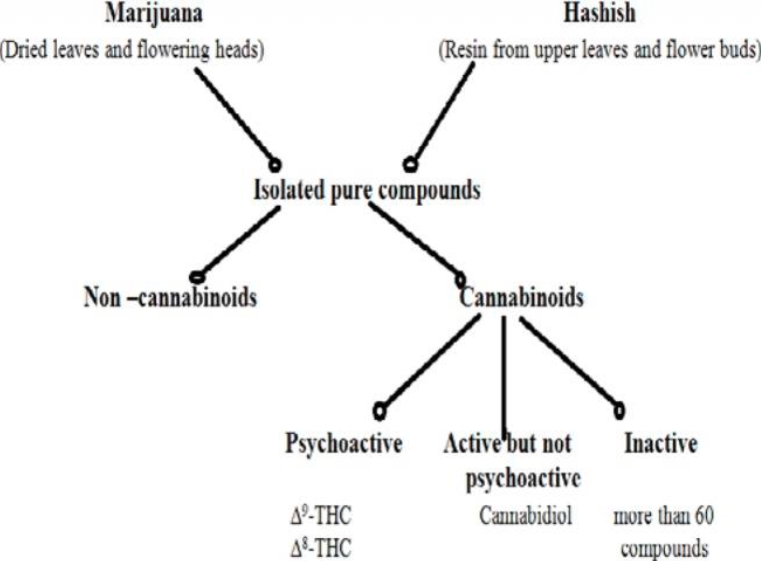
Marijuana:
Hemp plant: Cannabis sativa
Plant contains the mind altering chemical delta-9-tetrahydrocannabinol (THC)
Marijuana analysis:
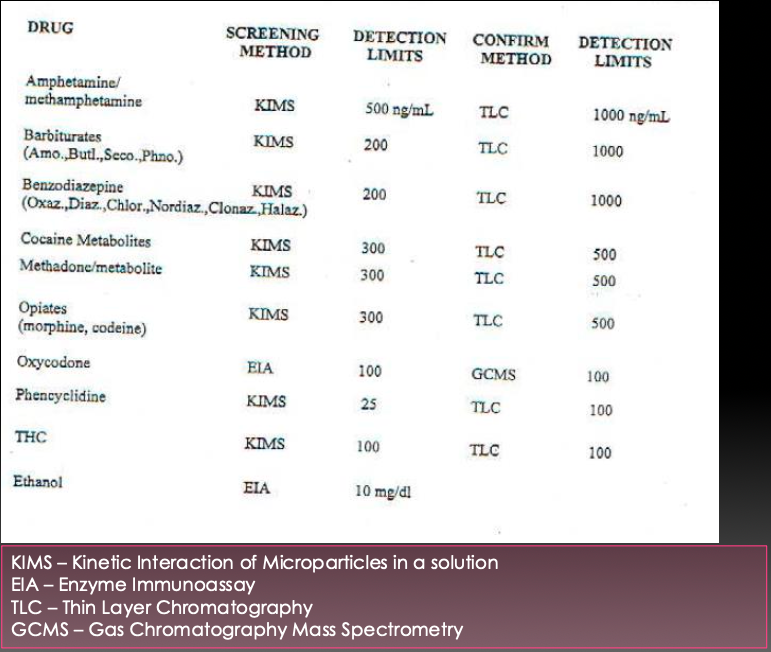
Via color test, urinalysis, hair analysis, saliva test, comprises of presumptive testing and necessary confirmatory tests are required for identification
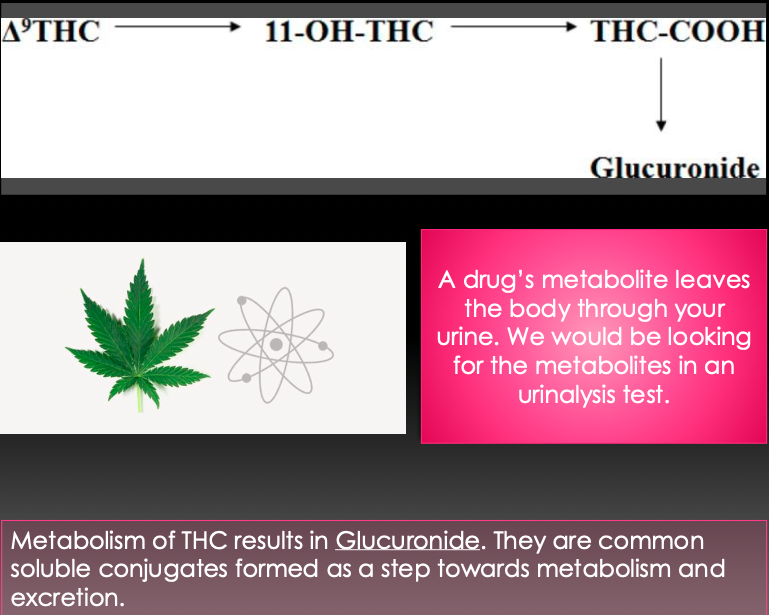
Major metabolite is 11-nor-9-carboy-delta-9-tetrrahydrocannabino (THC-COOH). Not psychoactive
Marijuana Urinalysis:
Screening Test
Can provide info to past exposure, but does not necessarily differentiate between exposure to second hand smoke and actually smoking marijuana
False positives are common
Duqenois-Levine Color Test:
Screening Test
Marijuana as well as a variety of other plant substances becomes purple with addition of this reagent and hydrochloric acid
Upon addition of the organic solvent, the purple color transfers to the organic layer, indicating that cannabinoids may be present
Gives two layers: Purple (top layer) and Purple/Violet (bottom layer)
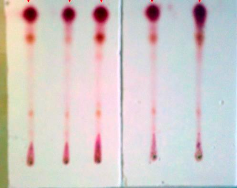
Marijuana Analysis: TLC:
Confirmatory Test
Components spread out in plate as the solvent travels
Chromatography occurs and visualizing agent along the THC standard is used for confirmation
Rf calculated
Marijuana Analysis: GC:
Components separate
Peaks are identified by their retention times (time of elution)
Chemical Components of Marijuana:
Cannabinoids are a class of diverse chemical compounds that act on cannabinoid receptors in cells that repress neurotransmitter release in the brain
Marijuna Analysis: GCMS:
Metabolite of Marijuana:
Drugs of abuse in urine
Clinical Toxicology: Screening and confirmation of the most commonly abused OTC Meds and DOAs:
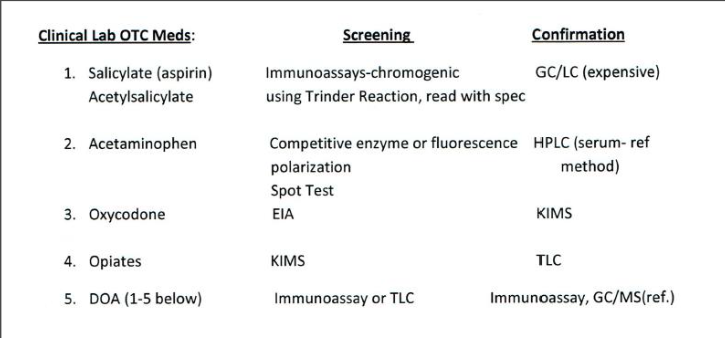
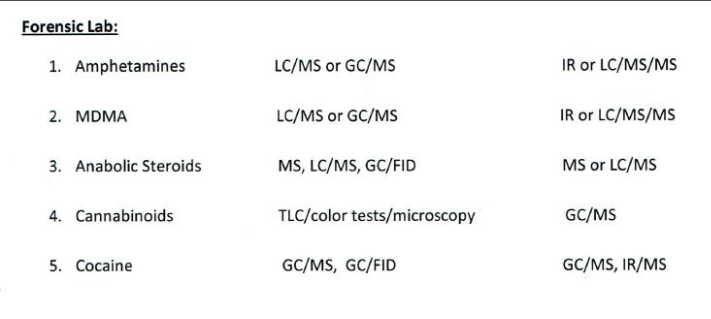
Forensic Toxicology Labs: Screening and conformation of the most commonly abused OTC meds and DOAs: