2. Growth
 Call Kai
 Learn
Learn Practice Test
 Spaced Repetition
 Match
Match Flashcards
 Knowt Play
1/55

There's no tags or description
Looks like no tags are added yet.
Name | Mastery | Learn | Test | Matching | Spaced | Call with Kai |
|---|
No analytics yet
Send a link to your students to track their progress
56 Terms
What is the Solow Growth Model?
A model of long-run economic performance in which output is produced using capital and labour, capital accumulates through investment, and capital depreciates over time.
What is the resource constraint in the Solow model?
Output must be allocated either to consumption or investment:
Yt=Ct+It
Define the depreciation rate.
The fraction of the capital stock that wears out each period.
If depreciation rate is d, then depreciated capital equals dKt
What is a steady state?
A situation where capital remains constant over time because investment exactly equals depreciation: sY=dK
At the steady state: ΔK=0
State the general Cobb-Douglas production function used in the Solow model.
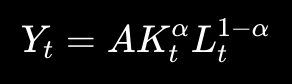
What property of the production function generates diminishing returns?
The exponent on capital is less than 1 so additional units of capital increase output by progressively smaller amounts
Why does the Solow model converge to a steady state?
Investment exhibits diminishing returns
Depreciation increases proportionally with capital.
State and interpret the capital accumulation equation.
Next period's capital equals surviving capital plus new investment.

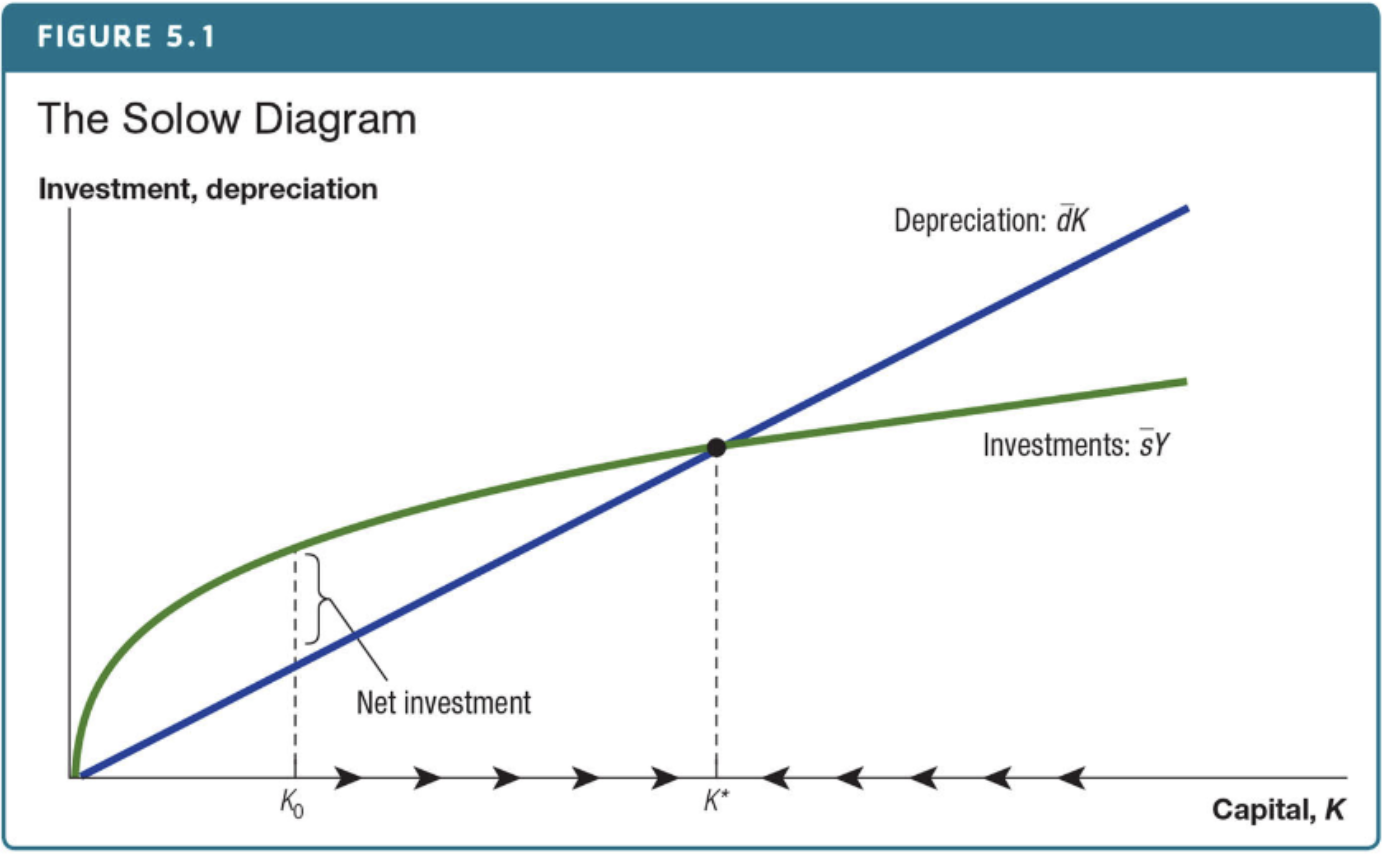
Why is the investment curve concave in the Solow diagram?
Because capital has diminishing marginal productivity. As capital rises, output rises more slowly, causing investment to rise at a decreasing rate.
Why is the depreciation curve a straight line?
Because a constant fraction of capital depreciates every period: dK
Depreciation therefore rises proportionally with capital.
In the Solow diagram, how is consumption represented?
Consumption equals the vertical distance between the output curve and investment curve.
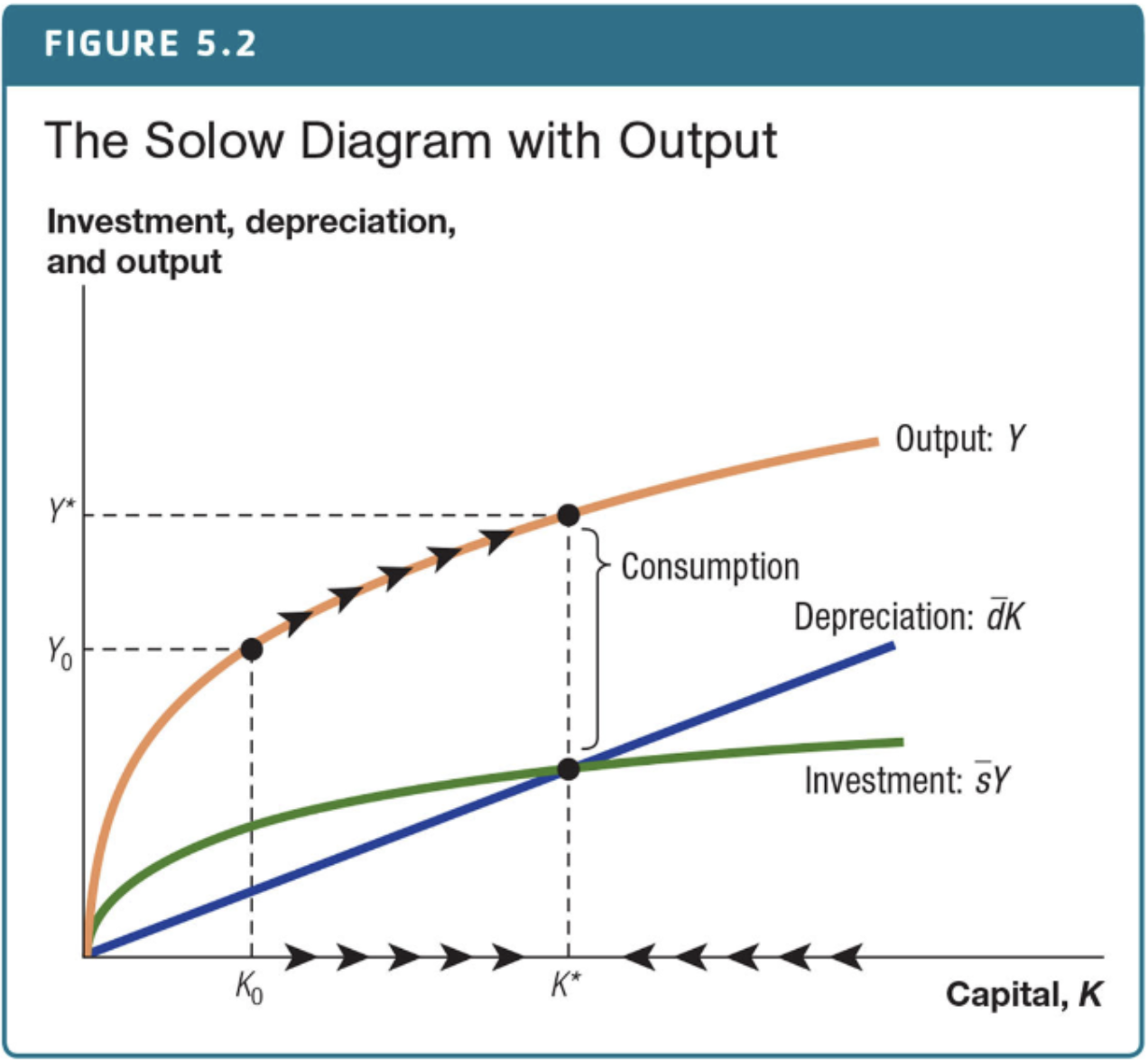
What condition characterises steady-state capital?
sY*=dK* Investment exactly replaces depreciated capital.
State the formula for steady-state capital.
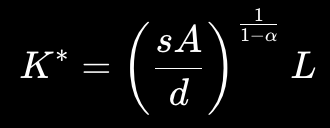
Does the basic Solow model generate long-run growth?
No. In steady state:
capital is constant,
output is constant,
output per worker is constant.
Capital accumulation alone cannot sustain long-run growth because of diminishing returns.
In the Solow diagram, how is net investment represented?
The difference between the investment curve and the depreciation curve
State the Principle of Transition Dynamics.
Following a shock that changes the steady state, growth is initially fast and then slows as the economy approaches the new steady state.
What is the Golden Rule level of capital?
The steady-state capital stock that maximises steady-state consumption.
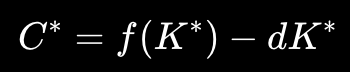
What is the steady-state consumption equation in steady state?
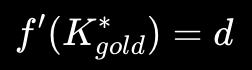
What condition characterises the Golden Rule capital stock?
The marginal product of capital equals the depreciation rate.
State the law of motion for capital per worker with population growth.
Interpretation:
first term = actual investment,
second term = break-even investment.

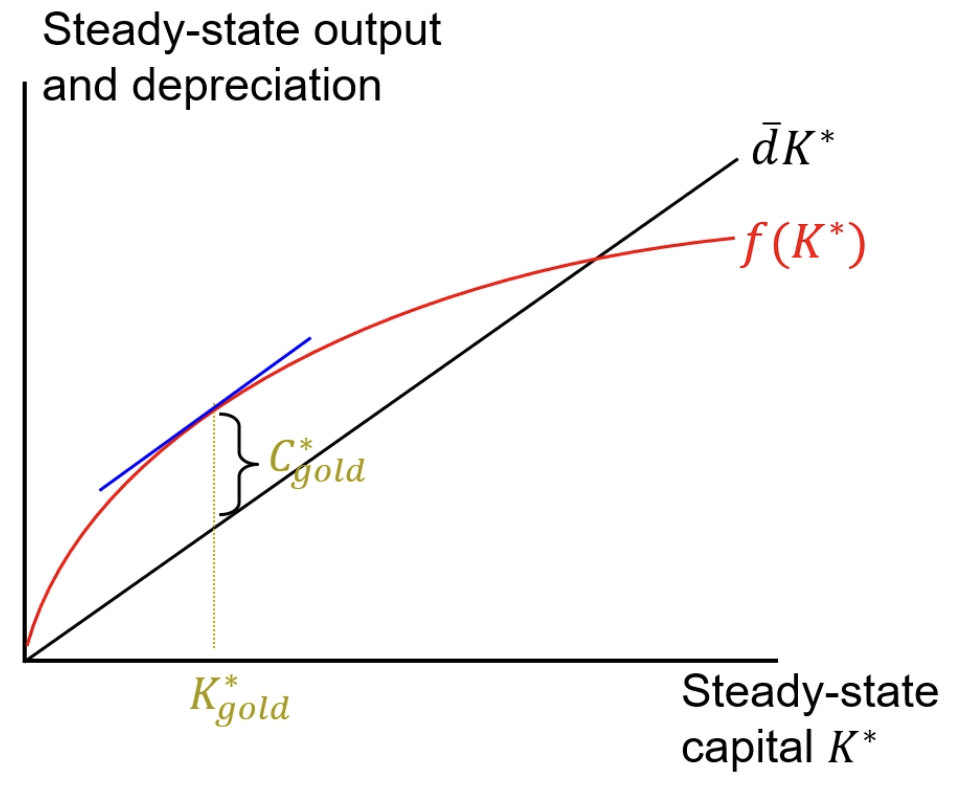
State the diagrammatic condition for the golden rule of consumption
C* is where the slope of the production function equals the depreciation rate
What is break-even investment?
The investment required to keep capital per worker constant.
Because capital must:
replace depreciation,
equip new workers.
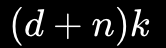
Why does population growth increase break-even investment?
New workers require capital. Additional investment nk is needed to maintain capital per worker.
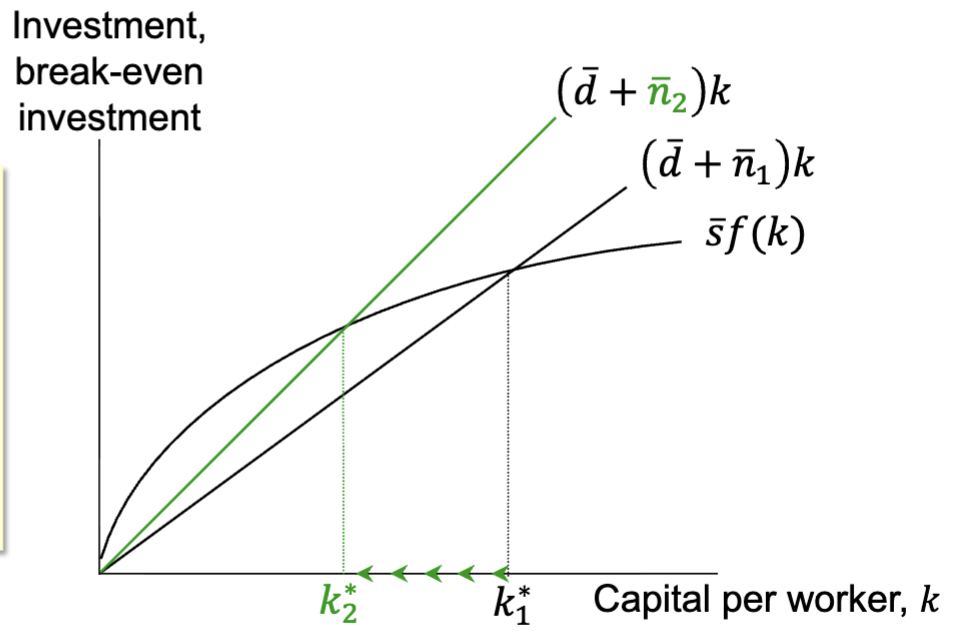
Population-growth Solow diagram: what happens when population growth rises?
Key points:
Break-even investment line rotates upward.
Steady-state capital per worker falls.
Steady-state output per worker falls.
In the Solow model with population growth, what grows in the long run?
Total output and total capital increase at the rate of population growth
What is Total Factor Productivity (TFP)?
TFP is the efficiency with which capital and labour are combined in production. In the production function A is TFP
In growth accounting, what does TFP growth measure?
The part of output growth that cannot be explained by growth in capital or labour.
Sometimes called the "Solow residual."
What is a major limitation of growth accounting?
It only identifies immediate sources of growth, it does not explain their deeper causes.
For example, it can measure capital accumulation but not explain why capital accumulation occurred.
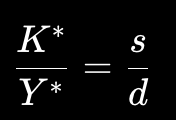
According to the Solow model, why do countries with higher saving rates tend to have higher capital-output ratios?
Holding depreciation constant, a higher saving rate raises the steady-state capital stock relative to output.
What is convergence?
The idea that poorer economies should grow faster than richer economies, causing income levels to become more similar over time
Why does the Solow model predict convergence?
Because countries far below their steady state have strong incentives for capital accumulation and therefore grow faster
What is conditional convergence?
Countries converge toward their own steady states rather than a common world steady state.
According to the Solow model, what is the main explanation for large differences in income per worker across countries?
Differences in Total Factor Productivity (TFP).
What is the difference between objects and ideas?
Objects are Rivalrous and Finite
Ideas are nonrival and potentially infinite
Why are ideas crucial for long-run growth?
Because ideas are non-rivalrous.
Unlike capital, ideas can be used simultaneously in production and in creating further ideas, preventing diminishing returns from halting growth.
Does the Romer model exhibit IRS?
Yes. Doubling capital, labour, and ideas more than doubles output because ideas are non-rivalrous.
Why is perfect competition problematic for innovation?
Under perfect competition, firms cannot recover fixed research costs. Without profits, firms have little incentive to create new ideas.
How do patents encourage innovation?
They grant temporary monopoly power, which creates profits that compensate firms for research expenditure
Total labour in the Romer model?
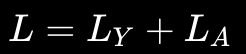
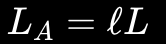
What fraction of labour produces ideas?
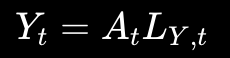
State the output production function in the simple Romer model.
State the idea production function in the Romer model.

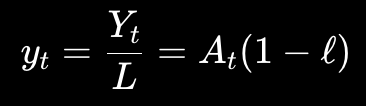
What is output per worker in the Romer model?
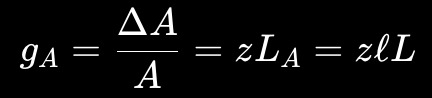
What is the growth rate of knowledge in the Romer model?
What is the evolution of the stock of ideas?
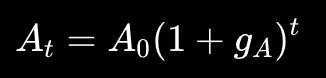
State output per worker in the Romer model as a function of parameters.

What is a balanced growth path?
A path where all endogenous variables grow at constant rates.

How does the Romer model differ from the Solow model regarding growth?
Solow: Transition dynamics, Growth eventually stops
Romer: Balanced growth path, Growth continues forever
What happens when population L increases in the Romer model?
Higher population:
Raises idea creation
Permanently increases growth rate
Permanently increases growth of output per worker
Romer diagram: increase in population.
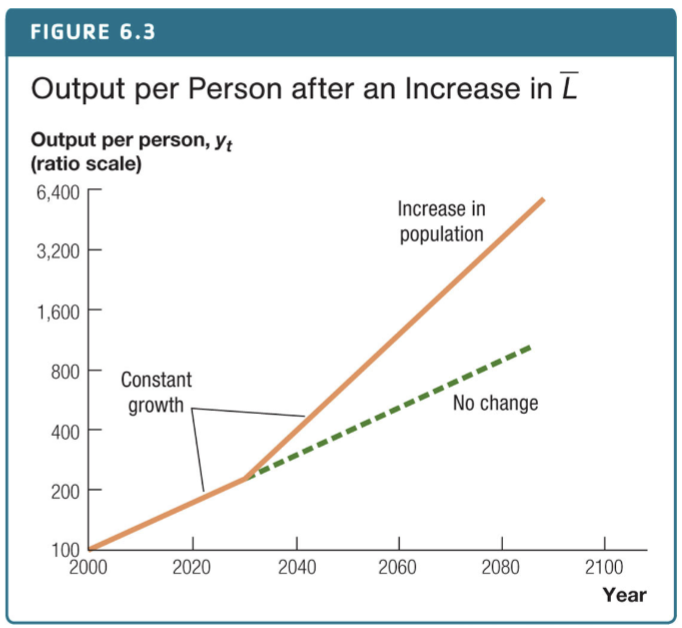
Why does output initially fall when the research share rises?
More workers enter research and fewer workers produce goods. Output falls immediately but grows faster thereafter.
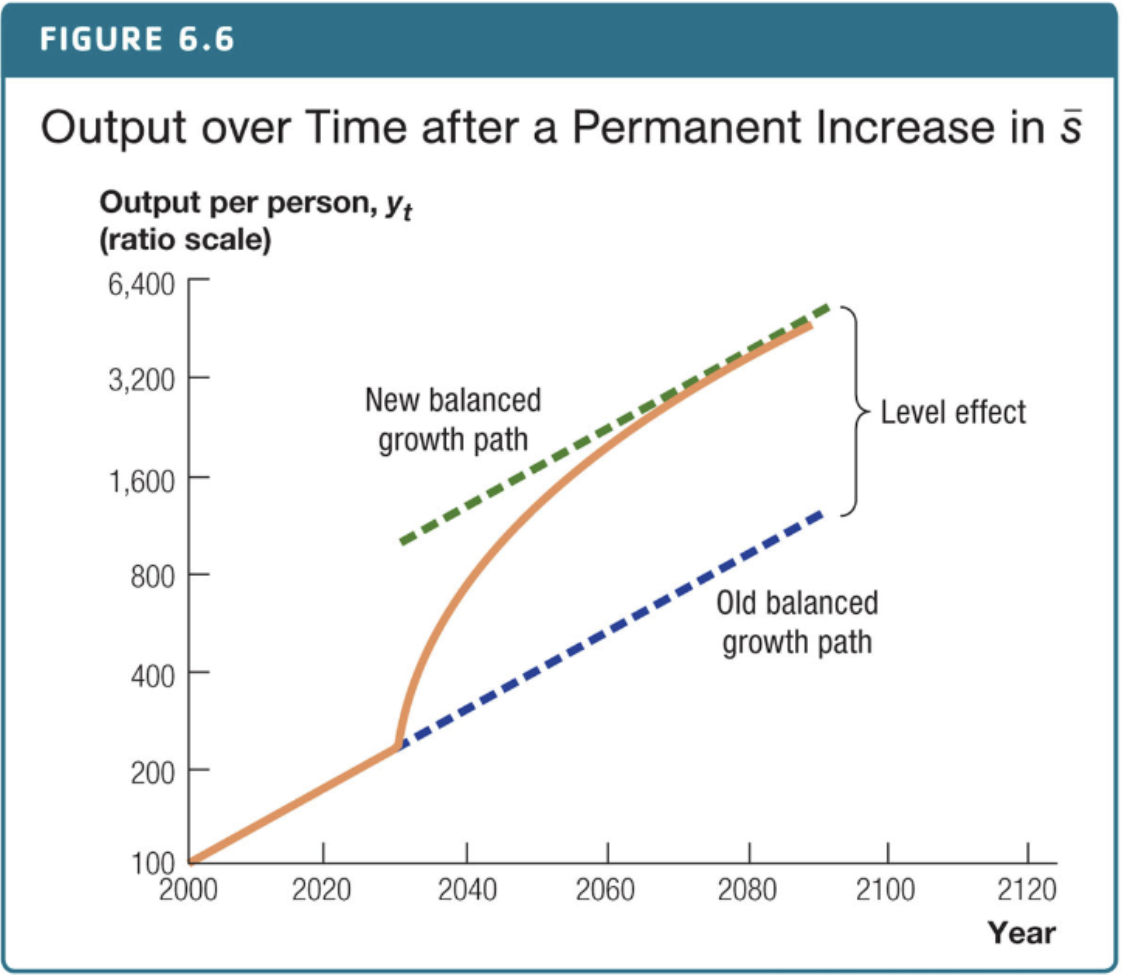
Distinguish between a growth effect and a level effect.
Growth effect: Permanent change in growth rate.
Level effect: Permanent change in income level. Long-run growth rate unchanged.
State the general production function in the combined Solow-Romer model.
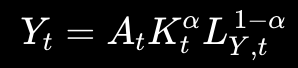
State the general growth-accounting equation for the combined model.

Why must Y/K be constant on a balanced growth path?
A constant capital growth rate therefore requires Y/K to be constant.
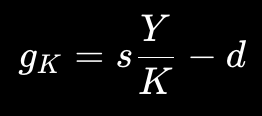
Combined Solow-Romer diagram: increase in saving rate.