Resp. Sys. Structures + Functions
 Call Kai
 Learn
Learn Practice Test
 Spaced Repetition
 Match
Match Flashcards
 Knowt Play
1/24

There's no tags or description
Looks like no tags are added yet.
Name | Mastery | Learn | Test | Matching | Spaced | Call with Kai |
|---|
No analytics yet
Send a link to your students to track their progress
25 Terms
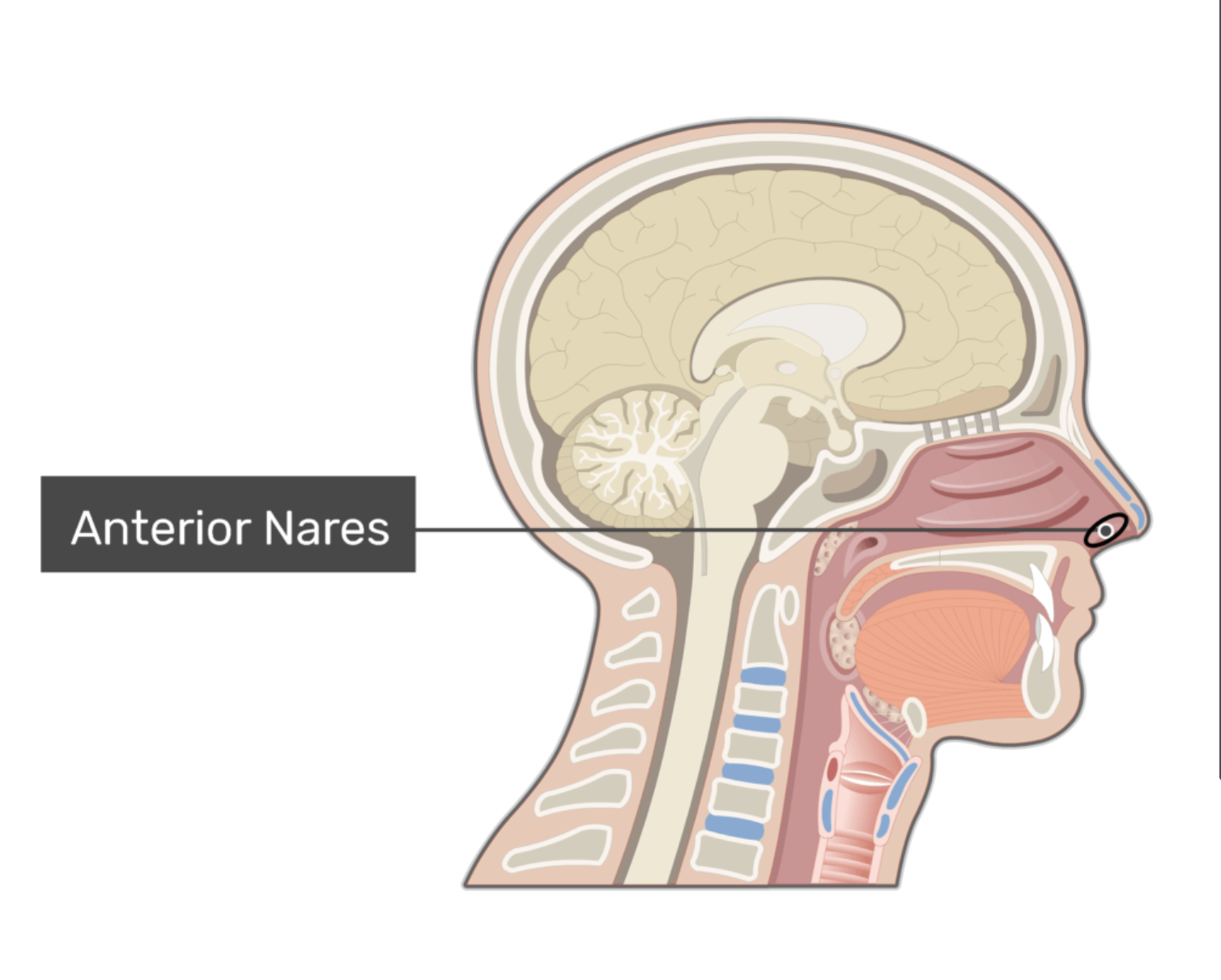
External Nares
Openings of the nose (nostrils); allow air to enter the respiratory system.
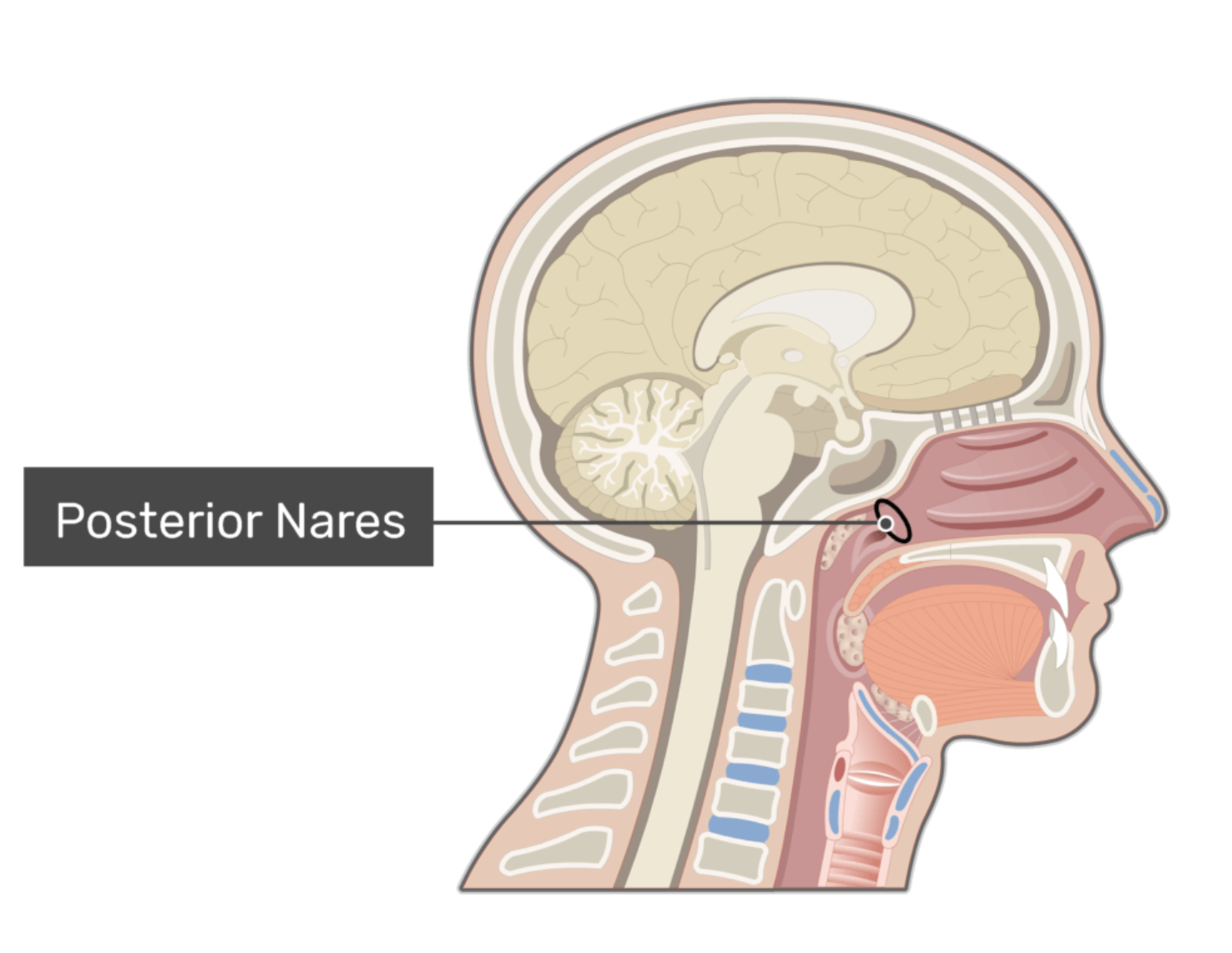
Internal nares (choanae)
Openings connecting the nasal cavity to the nasopharynx; passageway for airflow toward the throat.
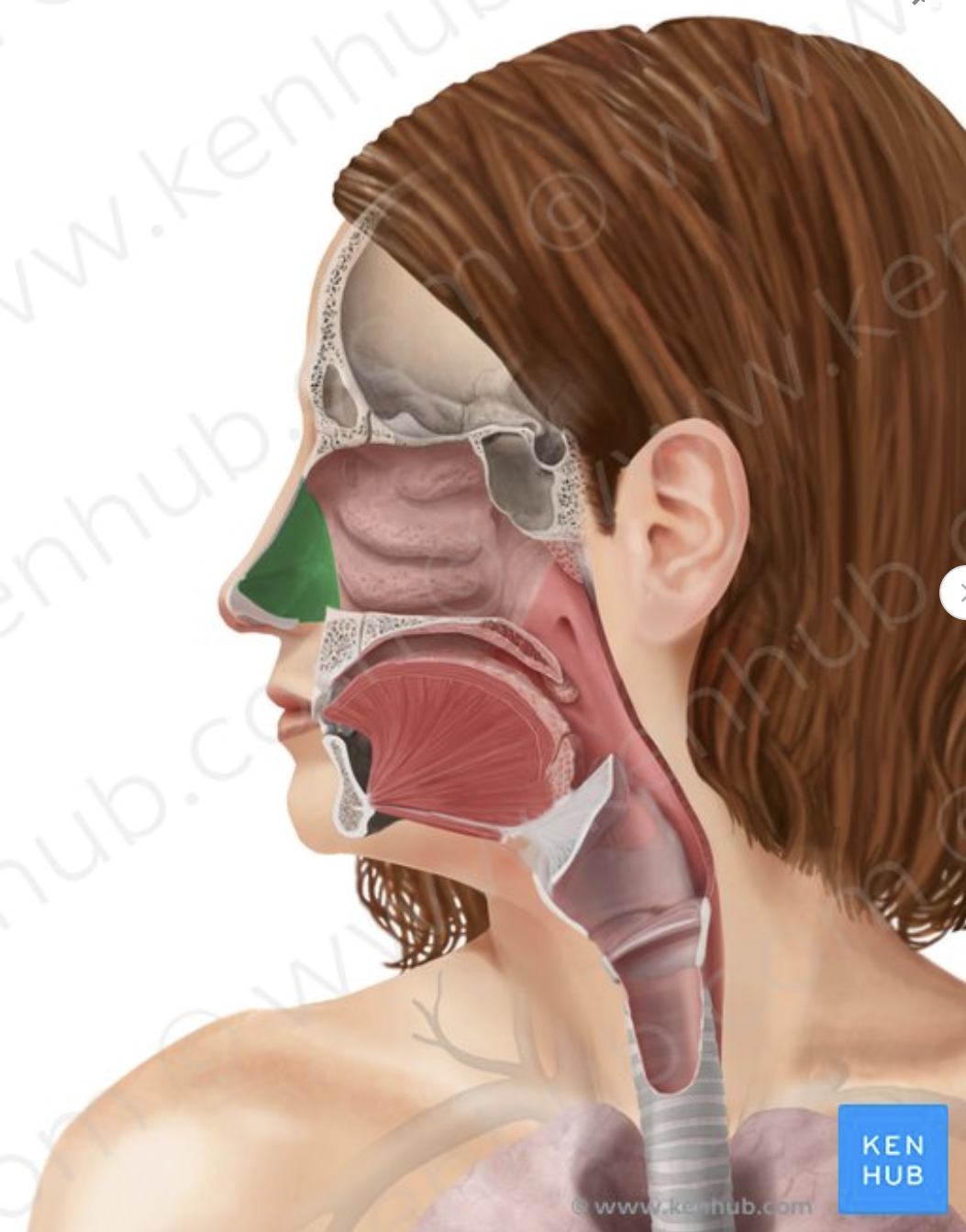
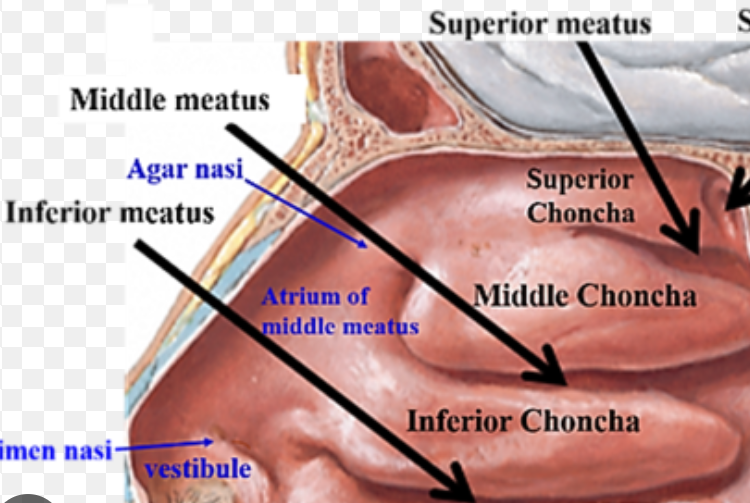
Nasal vestibule
Anterior part of nasal cavity lined with hairs; filters large particles from inhaled air.
Nasal conchae (superior, middle, inferior)
Curved bony shelves that:
Increase surface area
Warm, humidify, and filter air
Create air turbulence for better conditioning
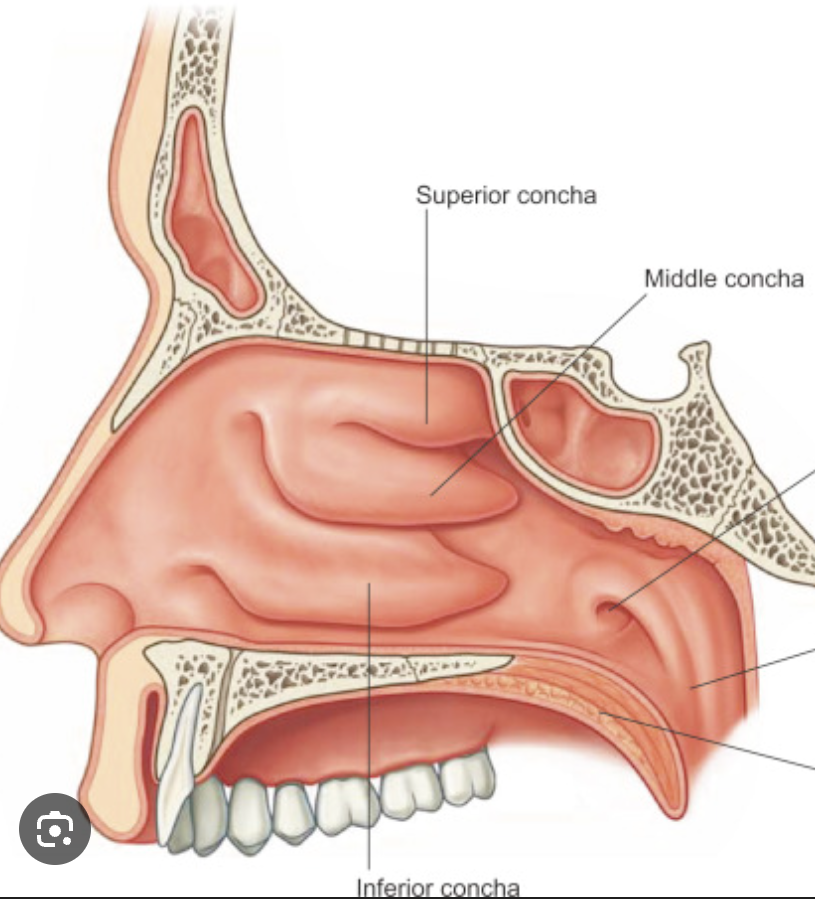
Meatus (superior, middle, inferior)
Air passages beneath each concha; allow airflow and drainage of sinuses and tear ducts.
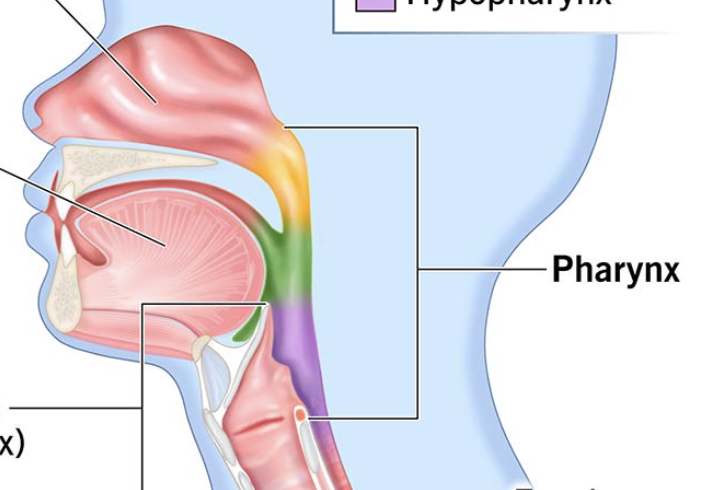
Pharynx
Muscular tube serving as a shared passageway for air and food.
Nasopharynx
Behind nasal cavity
Air passage only
Contains openings of auditory tubes.
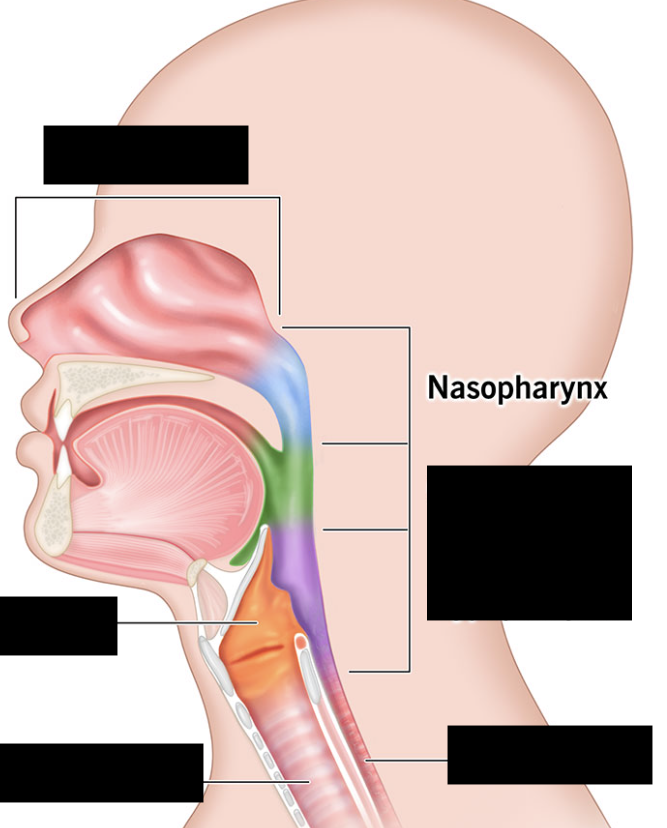
Oropharynx
Behind oral cavity
Passageway for air AND food.
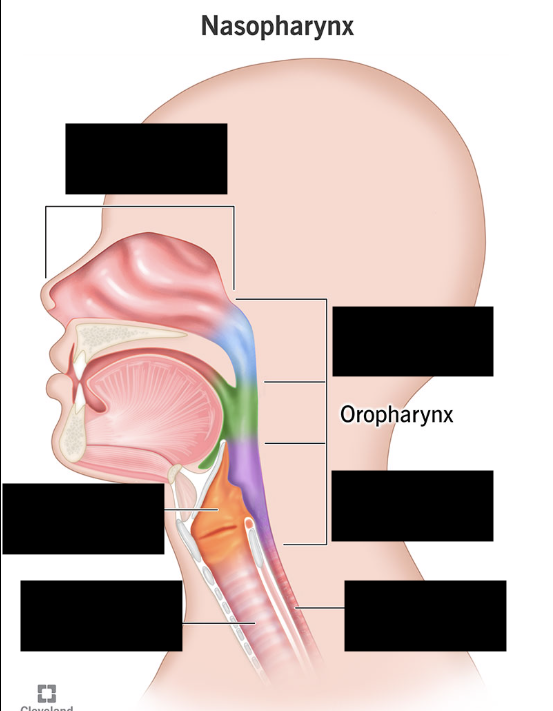
Laryngopharynx
Inferior portion of pharynx
Directs air to larynx and food to esophagus.
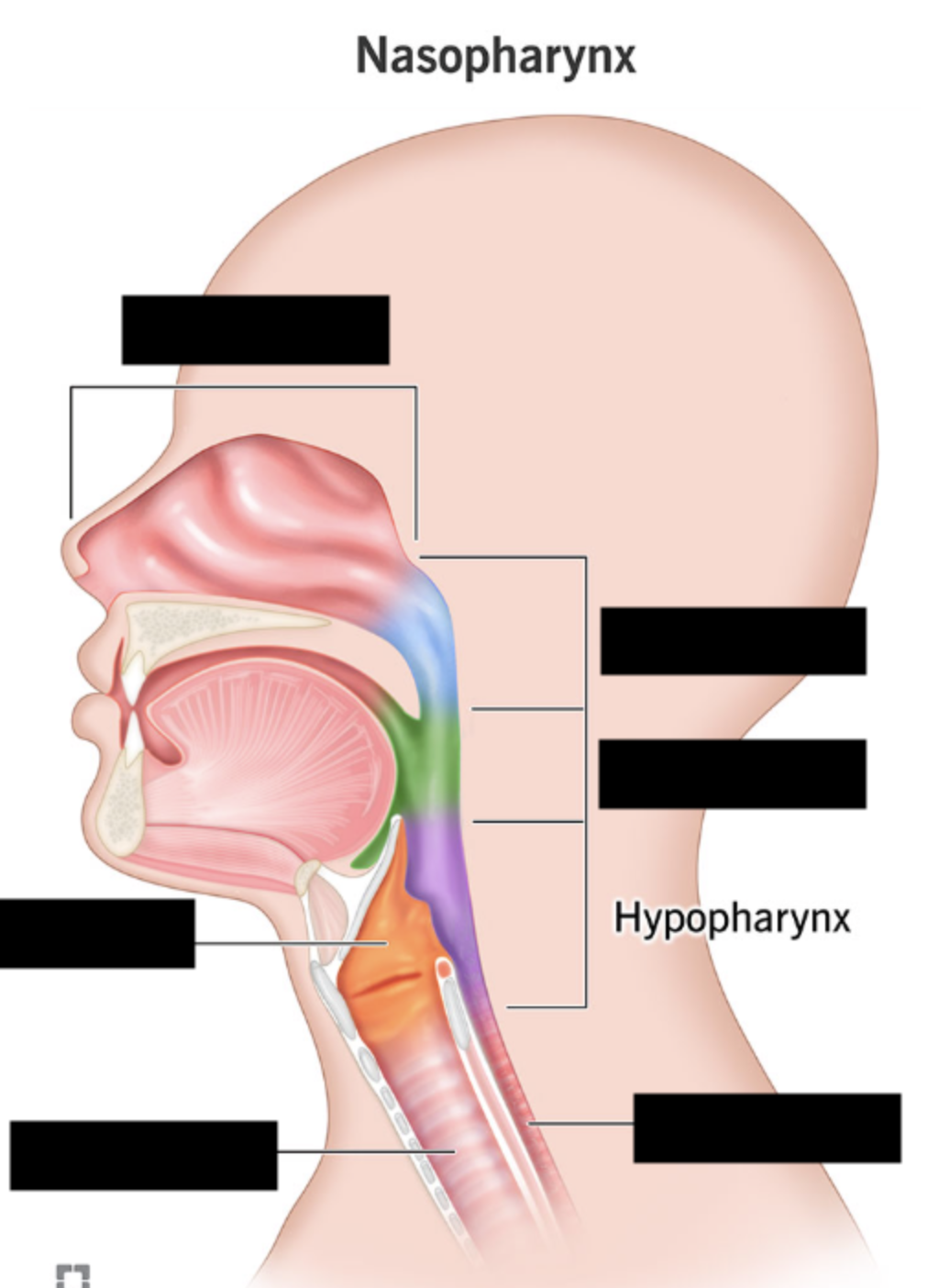
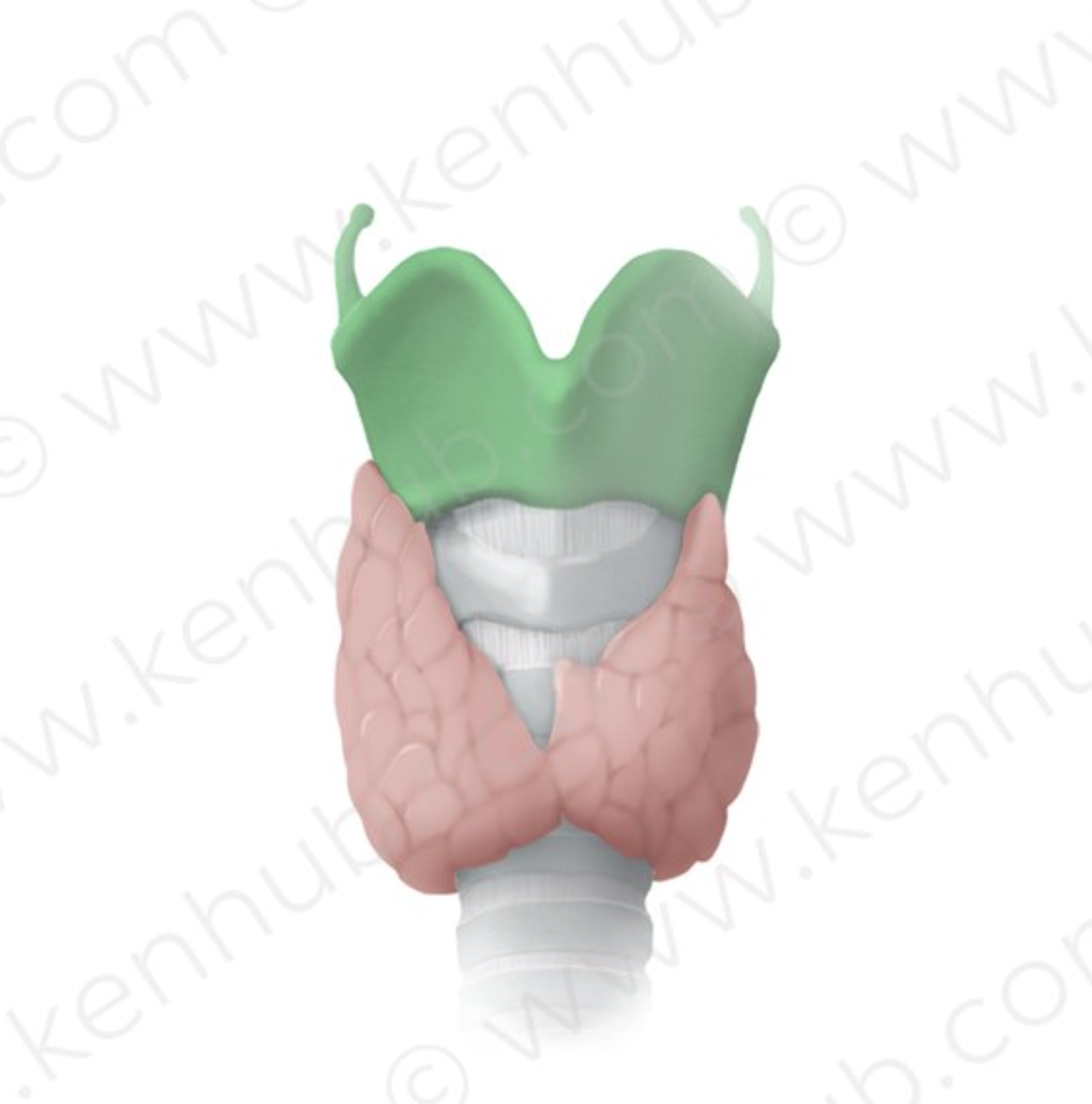
Thyroid cartilage
Largest laryngeal cartilage; forms the Adam’s apple; protects vocal cords.
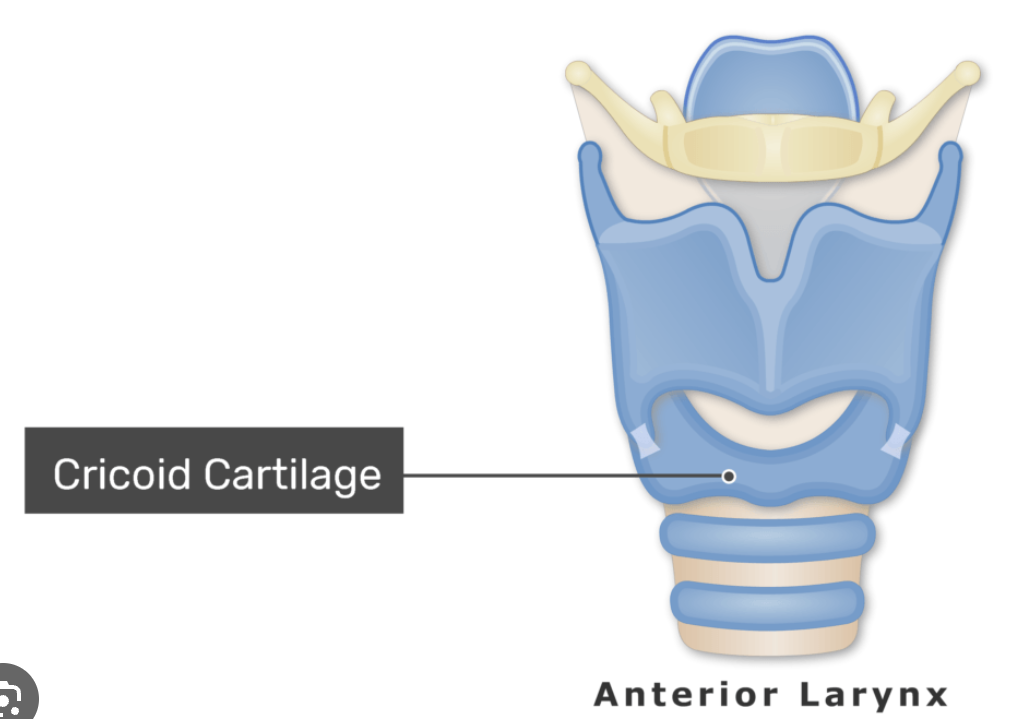
Cricoid cartilage
Ring-shaped cartilage inferior to thyroid cartilage; maintains airway openness.
Epiglottis
Elastic cartilage flap that closes over the larynx during swallowing to prevent food entering airway.
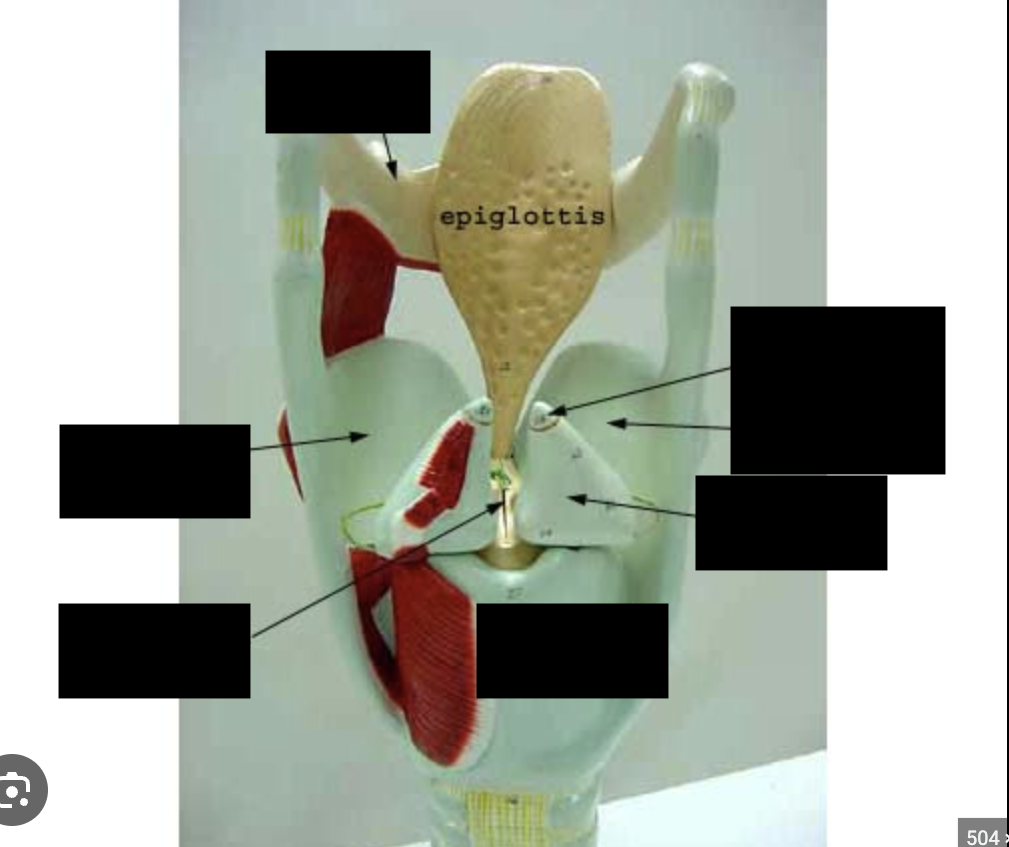
Arytenoid cartilages
Paired cartilages that anchor and move vocal cords; essential for speech production.
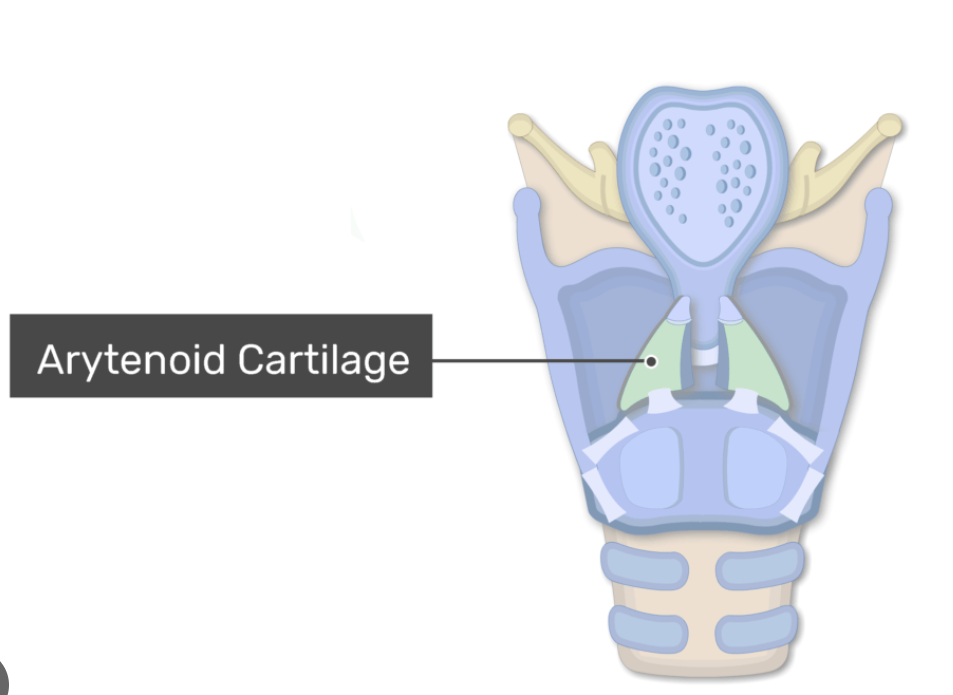
Corniculate cartilages
Small cartilages atop arytenoids; help support and stabilize vocal folds.
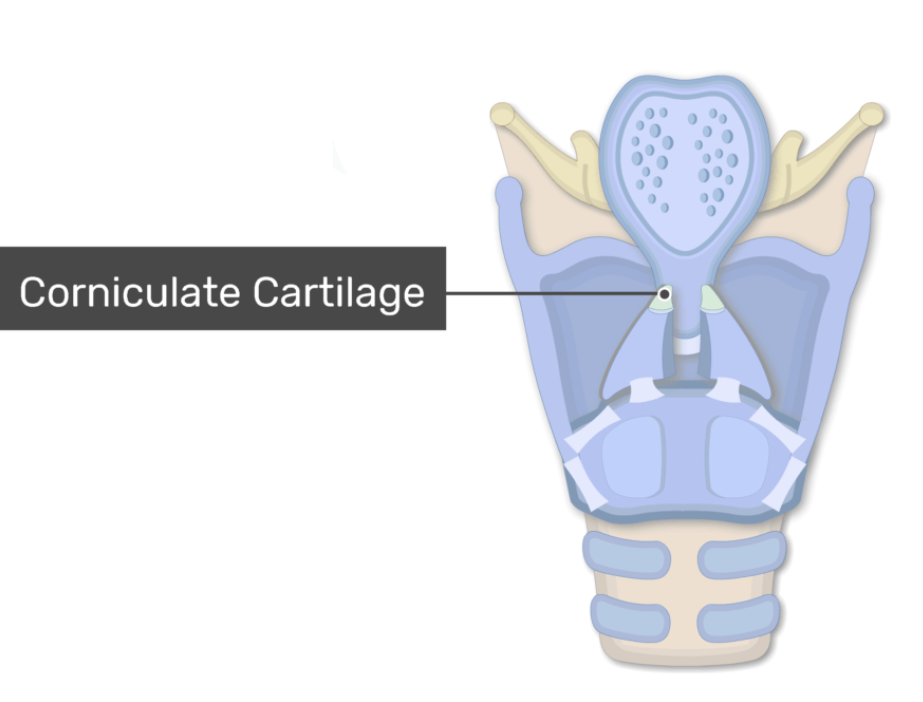
Trachea
Windpipe conducting air from larynx to bronchi.
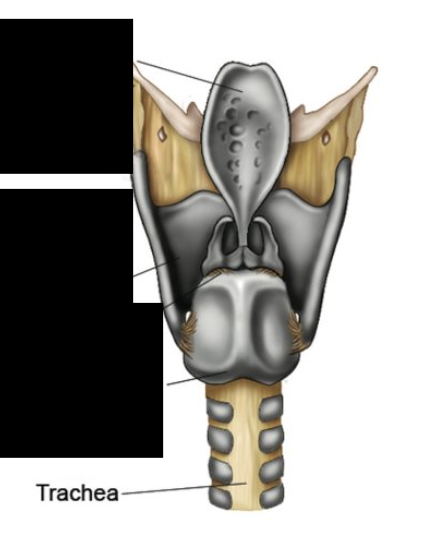
Tracheal cartilages
C-shaped hyaline cartilage rings that:
Prevent airway collapse
Allow esophagus expansion during swallowing.
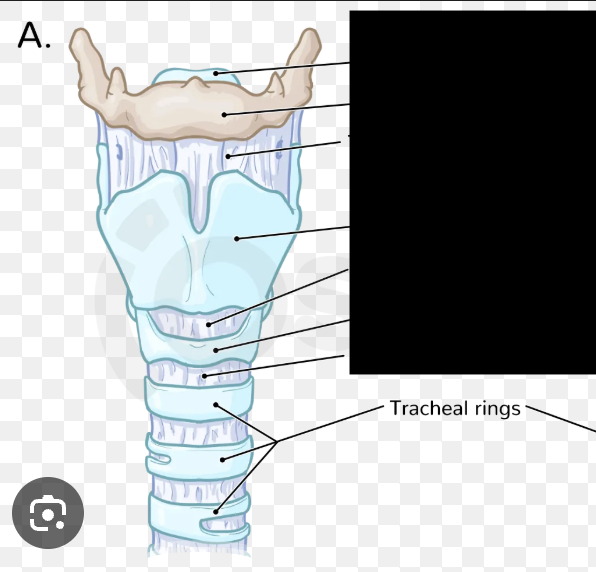
Tracheal membrane
Posterior smooth muscle wall; allows flexibility and diameter adjustment during coughing.
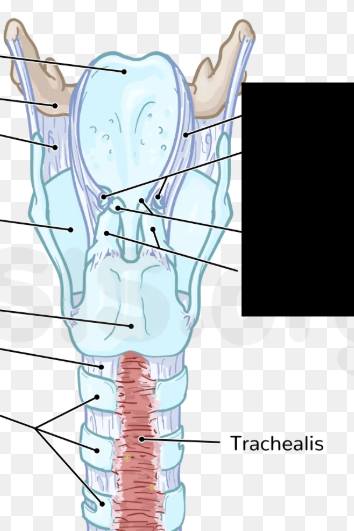
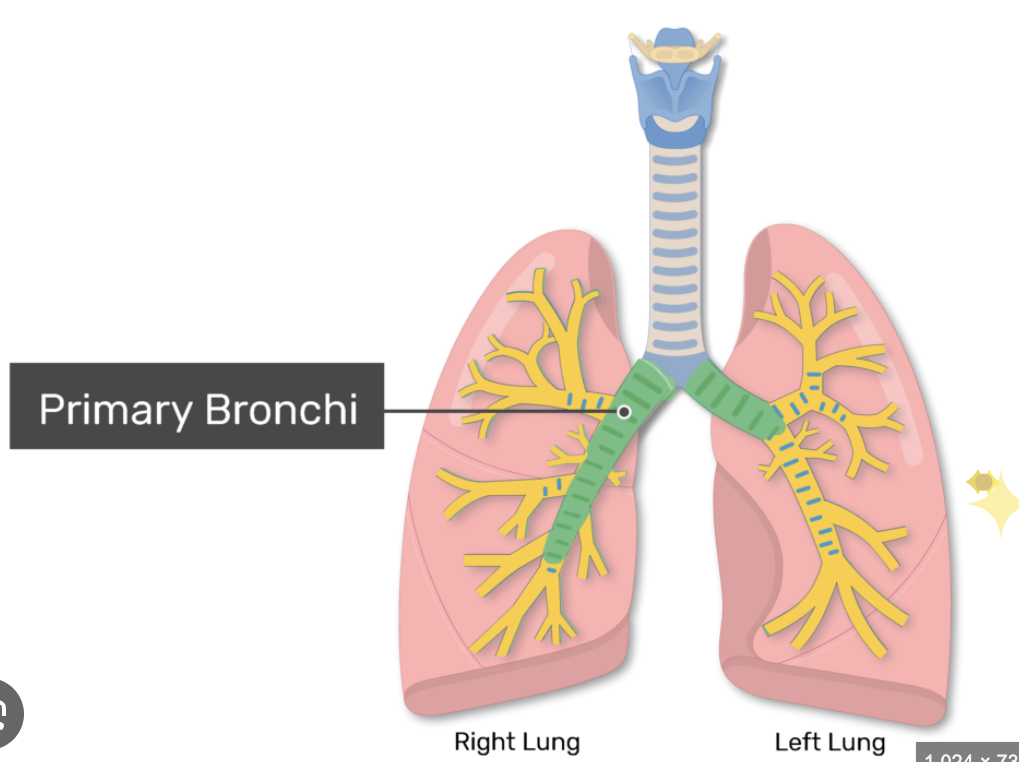
Primary bronchi
First branches of trachea entering each lung.
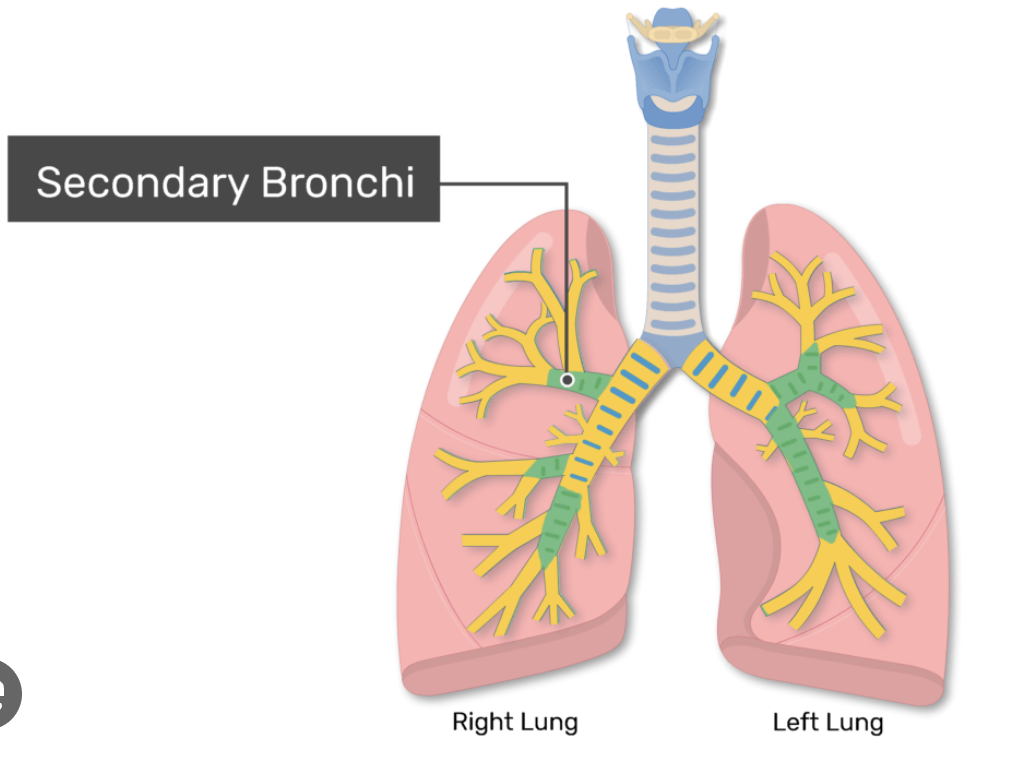
Secondary bronchi (lobar bronchi)
Branch from primary bronchi; supply each lung lobe.
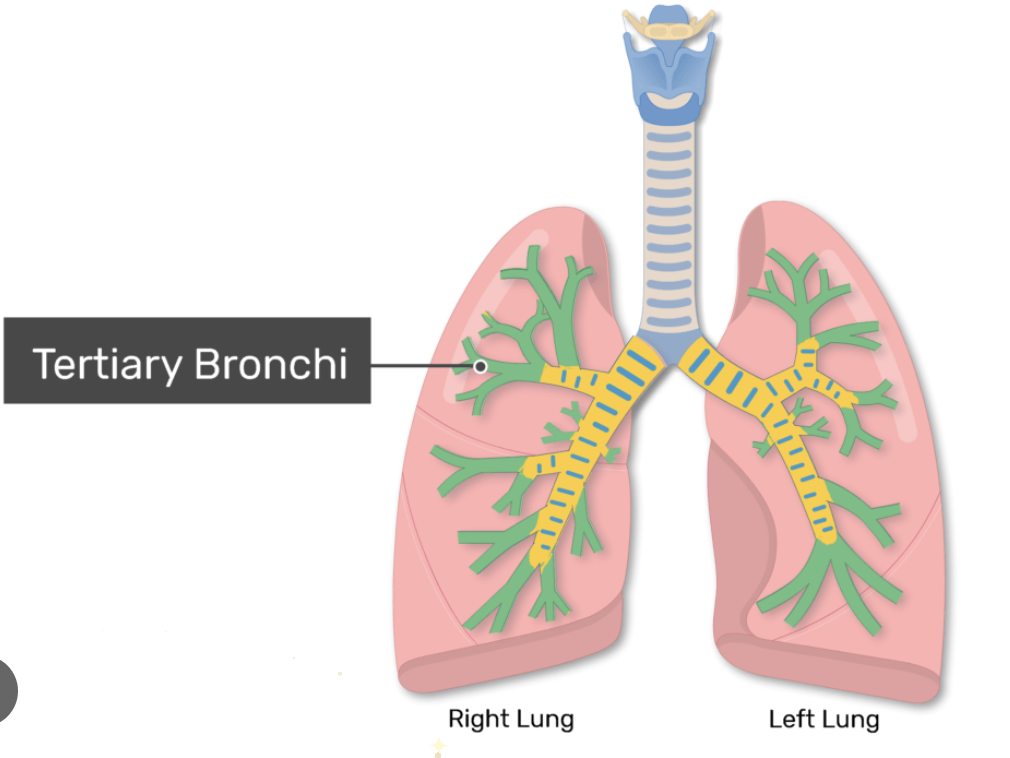
Tertiary bronchi (segmental bronchi)
Smaller branches supplying bronchopulmonary segments.
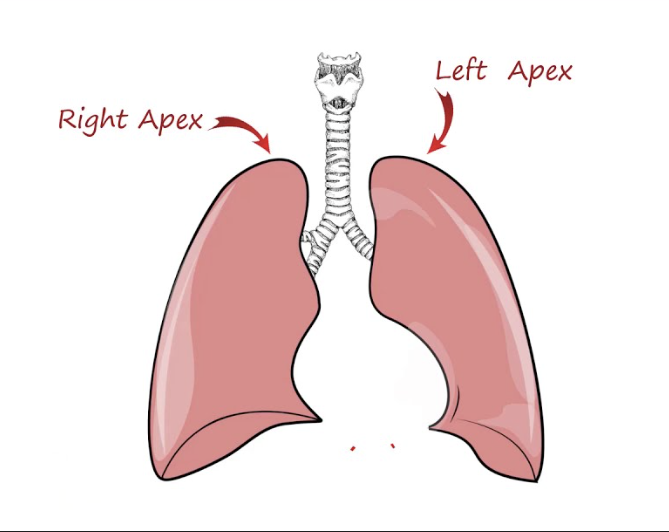
Apex of lungs
Superior pointed portion extending above the clavicle.
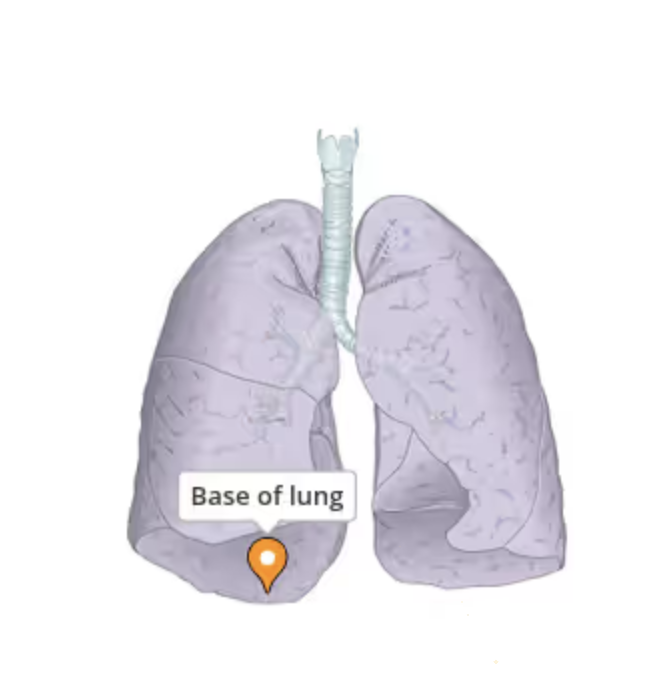
Base of lungs
Inferior surface resting on the diaphragm.
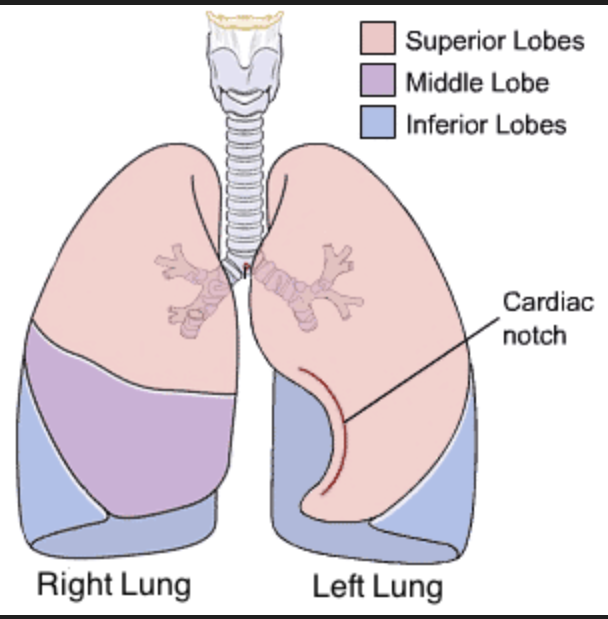
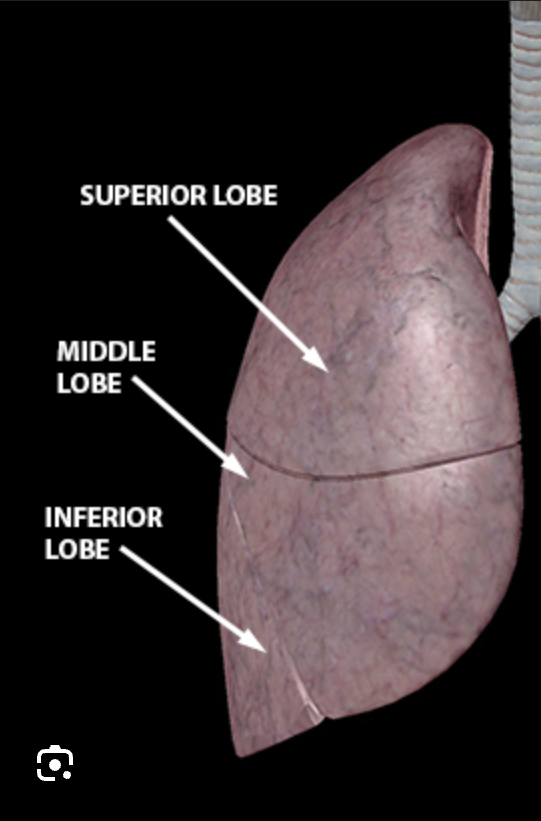
Right lung
Larger lung
3 lobes (superior, middle, inferior)
2 fissures (horizontal & oblique).
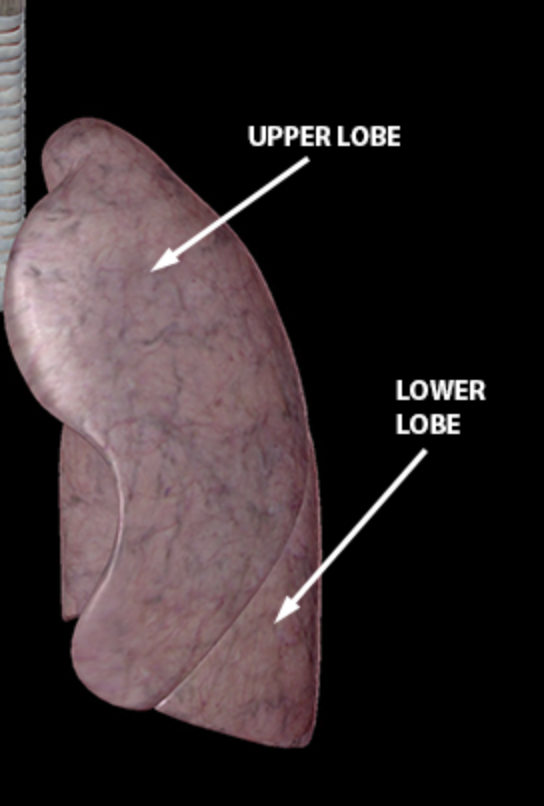
Left lung
Smaller (space for heart)
2 lobes (superior & inferior)
1 oblique fissure.
Cardiac notch
Indentation in the left lung that accommodates the heart.