Structures 2 Quiz Questions
 Call Kai
 Learn
Learn Practice Test
 Spaced Repetition
 Match
Match Flashcards
 Knowt Play
1/89

There's no tags or description
Looks like no tags are added yet.
Name | Mastery | Learn | Test | Matching | Spaced | Call with Kai |
|---|
No analytics yet
Send a link to your students to track their progress
90 Terms
What is the structural function of rebar lugs?
to improve the bonding between concrete and steel
What is the structural function of the longitudinal rebars in RC beams?
to resist tension stress
What type of cement is appropriate for construction of a wastewater treatment plant?
Type V
In concrete construction, what does the cylinder test measure?
concrete compressive strength
Which of the following design codes and standards is used in the U.S. for designing reinforced concrete structures?
ACI 318
in a building structure, how can you tell whether a column is a slender column or a short column?
when the column’s compressive strength is higher than its buckling strength, it’s a slender column.
What is the primary structural function of a hold-down in a wood shear wall?
to resist uplift from the over-turning moment
In accordance with the current IBC building code, what is the minimum distance between the grade and top of slab?
8”
For a 2×6 stud wall, which of the following section property numbers would you use to calculate the stud’s buckling capacity?
20.80
While the platform framing is typically preferred in wood building construction, in which of the following areas is balloon framing necessary?
exterior walls adjacent to atrium
structural steel currently cost $5000 per ton (1 ton=2000 lbs). We need to order a 40-foot long W18X60 steel beam. How much do we expect to pay for it?
$6,000
What is the purpose of a ‘long lead” package in steel construction?
To order steel ahead of final design completion
What is the most common type of steel used in building structures?
carbon steel
If you see A7 steel listed in the record drawings of an existing multi-story office building in downtown Los Angeles, what kind of structure is it?
A historic building structure
A multi-story commercial building structure in downtown Los Angeles, why is the ground floor floor-to-floor height typically much larger than the upper floors?
Because the ground floor can be used for commercial purpose to generate more rent.
which of the following does NOT affect the load capacity of a column?
the design live load
Which of the following measures can reduce a wood beam’s mid span deflection?
increase the width of the beam section
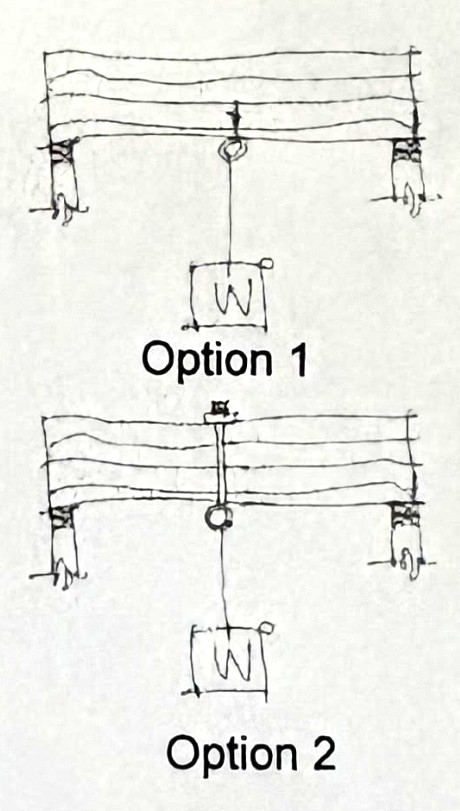
In order to hang a lighting fixture from a wood ceiling beam, your contractor suggested two options. Option 1 is to hang the fixture with a steel wire attached to an eyebolt screwed into the bottom of the beam. Option 2 is to use a thru eyebolt with the nut bearing on top of the beam. Which option should you approve?
option 2
what is the most common spacing of wood roof joists?
24”
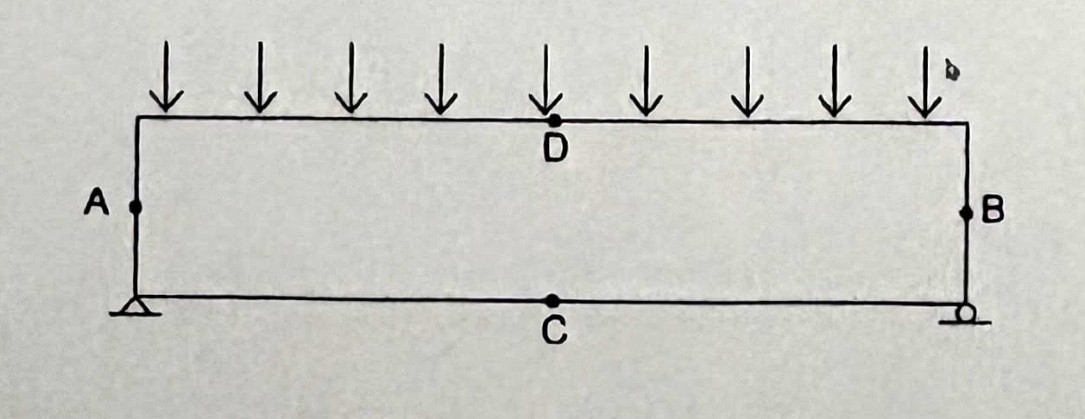
where does the maximum compressive bending occur on this beam?
D
wood construction PROS
1. Largest building inventory
2. only renewable resource
3. lightest structural material (25~50 #/ft³)
4. tolerant of human errors (cut, trim replace)
wood construction CONS
fire risk, combustible (ok for small jobs)
wood types
1. natural “sawn” lumber
2. engineered wood (truss joist, PSL/LVL, plywood/OSB)
soft wood
needle leaf, evergreen, abundant, cheaper, structures
Hard wood
broad leaf, deciduous, architectural
nominal size - wood
used price
(2×8) → 1 1/2” x 7 1/2”
actual size - wood
used for design
2×8 → (1 1/2” x 7 1/2”)
WWPA
Western Wood Product Association
creates grade rules
IBC
International Building Code
governs design behavior
wood design capacities
tension, compression, bending, shear
T/F: wood can sustain parallel stress in tension
true
T/F: wood can sustain perpendicular stress in compression, but is weaker than parallel stress in compression
true
T/F: only shear tension can cause cracking in wood
true
tensile stress
ft = W (#) / A(M²)
strain
=Δ/L
“Box” system
bearing wall/shear wall system
Horizontal Diaphragm and Vertical Diaphragm
most common system
Platform Framing
double top plate
west USA
stressed skin structure
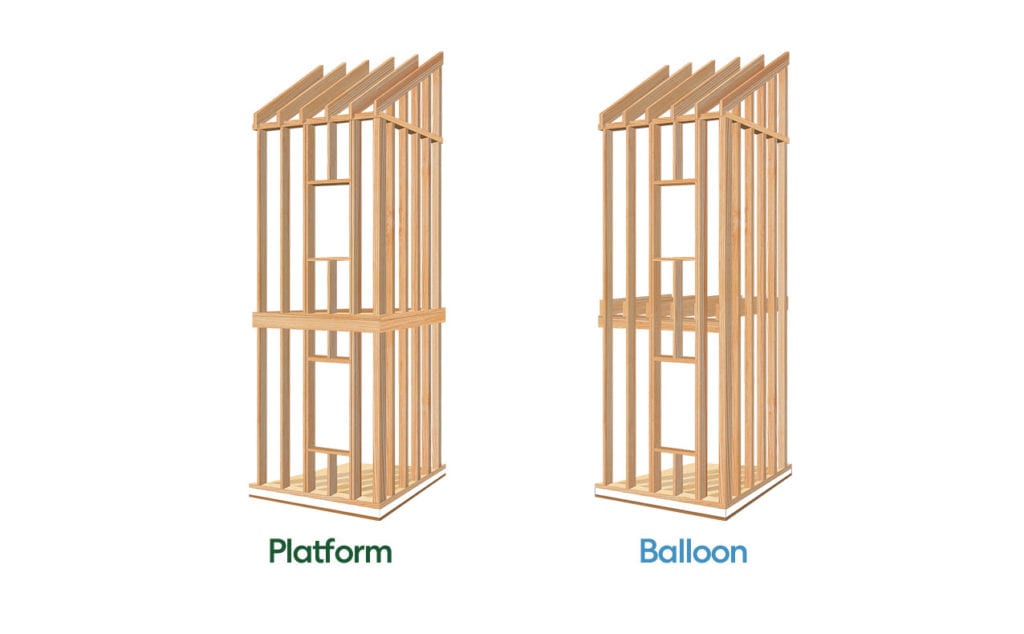
balloon framing
continuous stud
temporary bracing/shoring
east USA
member size rule of thumb (wood beam)
d = L/20 ±
lamellas
short wood pieces for long spans
member size rule of thumb (wood column)
thickness = height/10 ±
member size rule of thumb (wood wall)
thickness = L/15 ~L/30 ±
dry construction
steel and wood
steel is made of
Iron (Fe) + Carbon (C)
steel manufacturing
Iron ore → blast furnace → steel
produces (bar) billet, boom, slab
slag (recycled for concrete)
impurity from steel manufacturing process
recycled for concrete
steel slab
cold form, light gauge metal steel (LGS) stud
steel bar/boom
reheat and fed into teeming ladle and hot rolled into shape
shop drawing
by fabricator, for cut and drill holes
carbon steel
most common
mild steel
normal strength
High Strength Low Alloy Steel
carbon + allow
improves bonding
higher strength
Alloy Steel
carbon + alloy + heat
used for bolts/connectors
steel corrosion solutions
stainless (carbon steel + chromium)
paint primer
galvanizing (steel + zinc coat) - only needed when exposed to the elements
steel fire protection
concrete confinement
spray-on fireproofing - fiber particle
drywall confinement
intumescent paint ($$$)
T/F: Steel is non-combustible and not fire resistant
true
Building structural systems (steel)
bearing wall/shear wall
braced frame systems (BF)
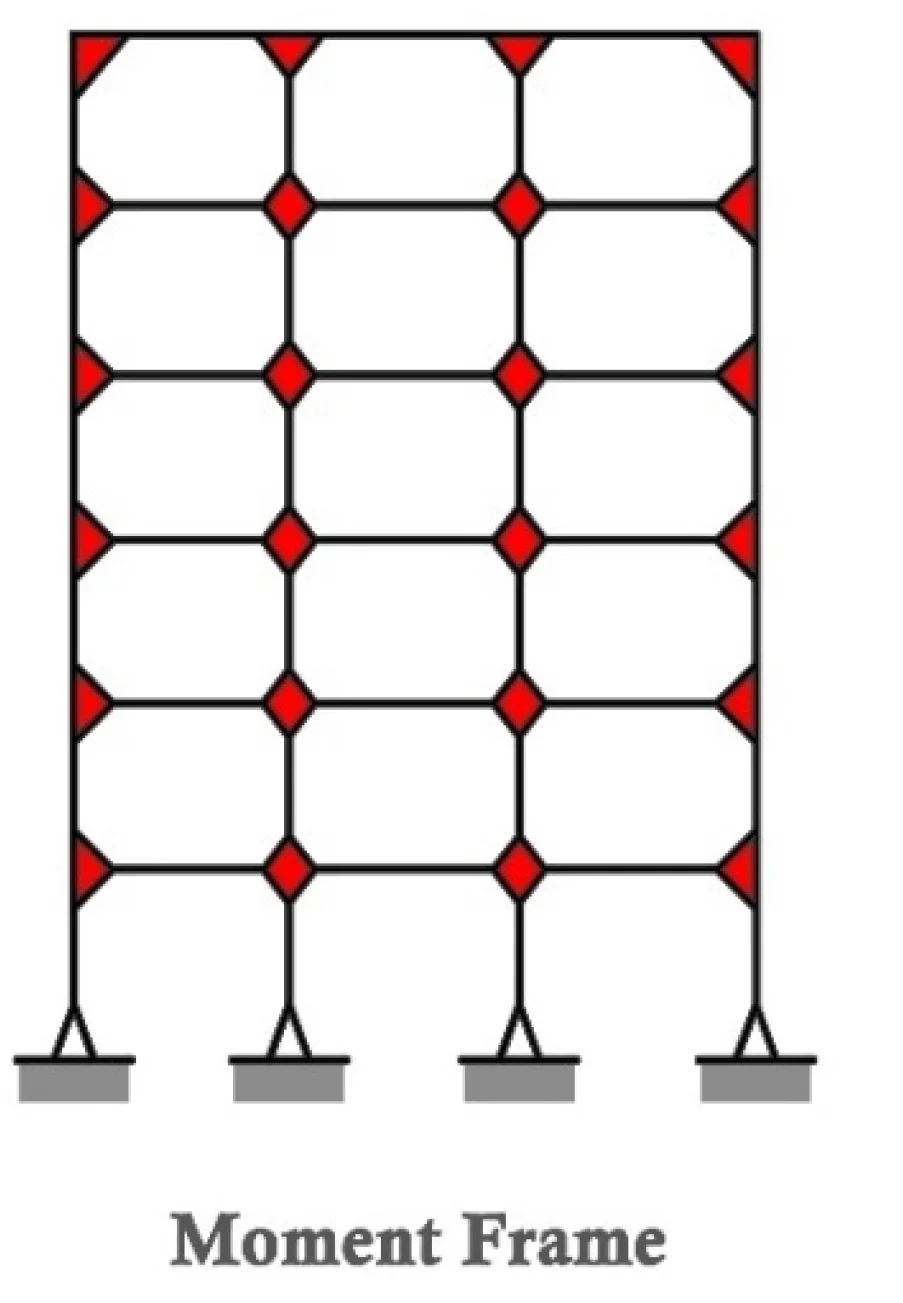
moment frame (MF)
dual system
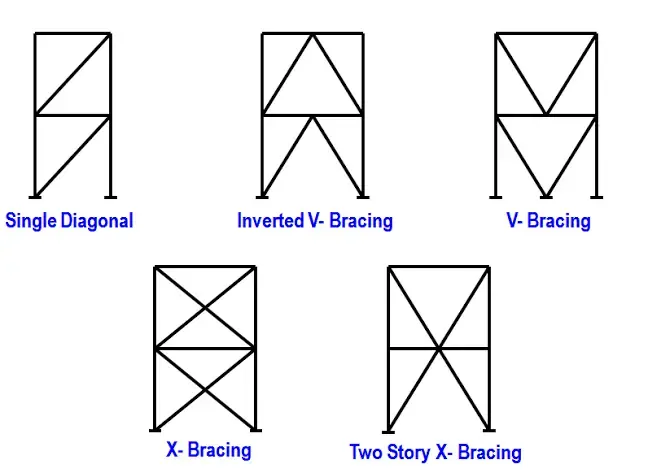
Brace Frame systems
provides strength/stiffness
shapes: chevron, x - bracing, diagonal, v - brace
Moment Frame
rigid joint
more ductile
more $$$, bigger members
Dual System
required for high rise
bearing/shear wall + moment frame OR braced frame system + moment frame
Eccentric Braced Frame
combines the elastic stiffness of a CBF with the ductility of a MF.
Creates a link beam by offsetting braces, link will dissipate energy
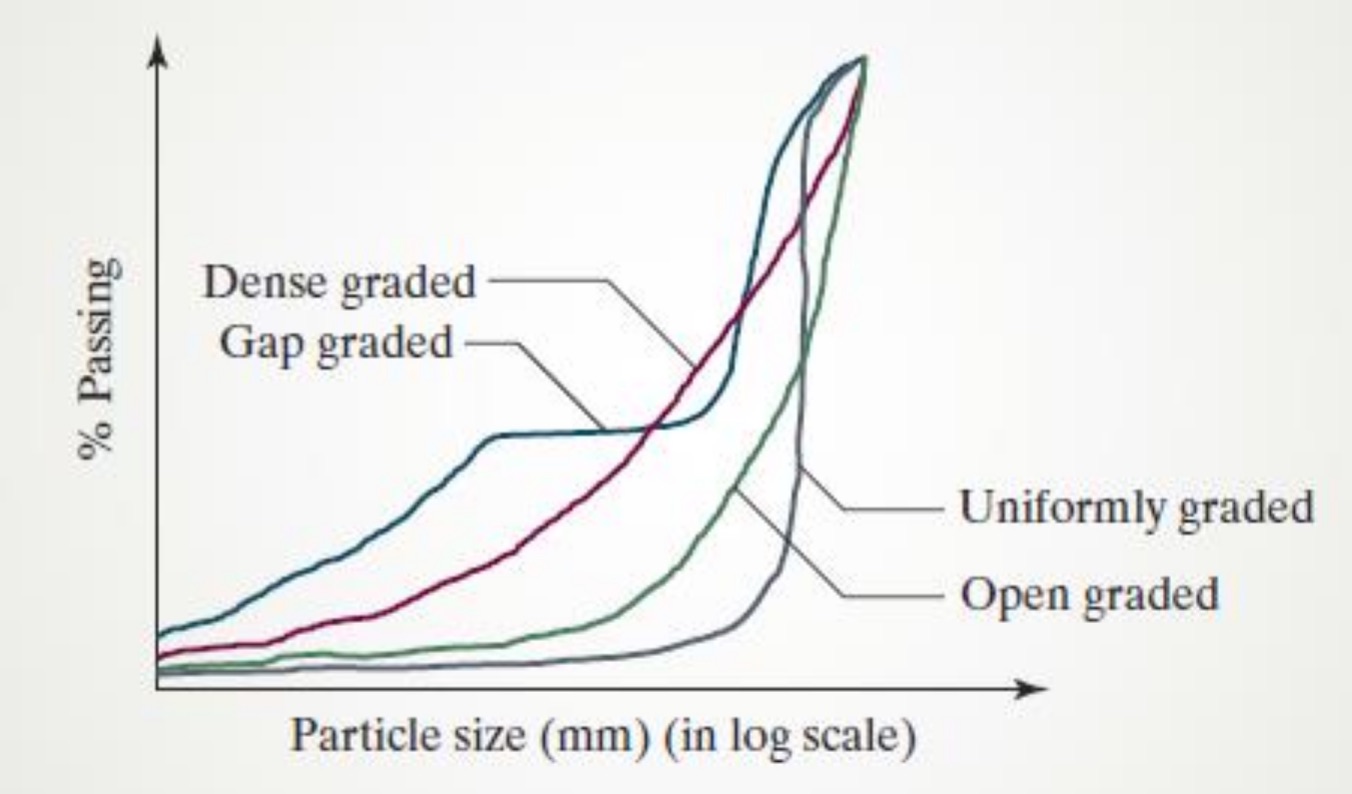
concrete aggregate grading
uniformly graded, well graded, gap graded
concrete grading goal
minimum voids
minimum cracks
minimum need for cement
hydraulic cement (portland cement)
cement + H20 → bonding agent (paste)
invented by Joseph Aspdin in 1824
Portland cement manufacturing
limestone (crushed and blended) → heated in kiln → fused limestone (ground into power) → cement
*Damaging to environment
I (Types of Cement)
Regular - used for general construction and considered standard utility cement
II (Types of Cement)
Moderate Heat & Sulfate Resistant - used for foundations when cement comes into contact with soil or groundwater, generates less heat during curing
III (Types of Cement)
High Early Strength - hardens and gains strength much faster than Type I. Formwork can be removed quickly.
IV (Types of Cement)
Low Heat - used in mass concrete structures like damn. Produces less heat while curing, prevents cracks
V (Types of Cement)
High Sulfate Resistant - used for things close to ocean water or wastewater. Resists sulfate attacks from soil or water.
concrete curing process
initial harden in 2-4 hrs
7-14 days to strip formwork
design strength (fc’) reached in 28 days, but will continue to strengthen over time
water cement ratio (w/c)
lower w/c ratio the higher the strength
higher w/c ratio the better the workability
admixtures
chemicals to improve conc. quality (high early strength, air entraining agent, water reducing admixture)
T/F: concrete is bad in compression but good in tension
false
T/F: rebar sizes are 1/8” of their number
true (#3 → 3/8”)
cylinder test
measures the compressive design strength (fc’) of concrete
slump test
ideal slump = 3”-6”
most common = 3” (foundation) - 4” (column/beam)
high slump = better
ASD
Allowable Stress Design
USD
Ultimate Strength Design
more logical, dead and live load treated differently, produce smaller members
LRFD
Load Resistance Factored Design - steel
ACI 318 Code
American Concrete Institute’s standard