Acne: the Chemical Basis
 Call Kai
 Learn
Learn Practice Test
 Spaced Repetition
 Match
Match Flashcards
 Knowt Play
1/32

Earn XP
Description and Tags
SKIN
Name | Mastery | Learn | Test | Matching | Spaced | Call with Kai |
|---|
No analytics yet
Send a link to your students to track their progress
33 Terms
To understand the mode of action of common ACNE treatments
To understand the chemical basis of the side-effects of common ACNE treatments
To be able to identify patient at risk of phototoxicity
To be able to offer appropriate advice to patients using common ACNE treatments
Learning Outcomes: 4
Whiteheads – closed pore clogged with sebum + dead skin
Blackheads – open pore with oxidised oil
Papules – small red tender bumps
Pimples (pustules) – pus-filled papules
Nodules – large painful lumps under skin
Cystic lesions – pus-filled nodules
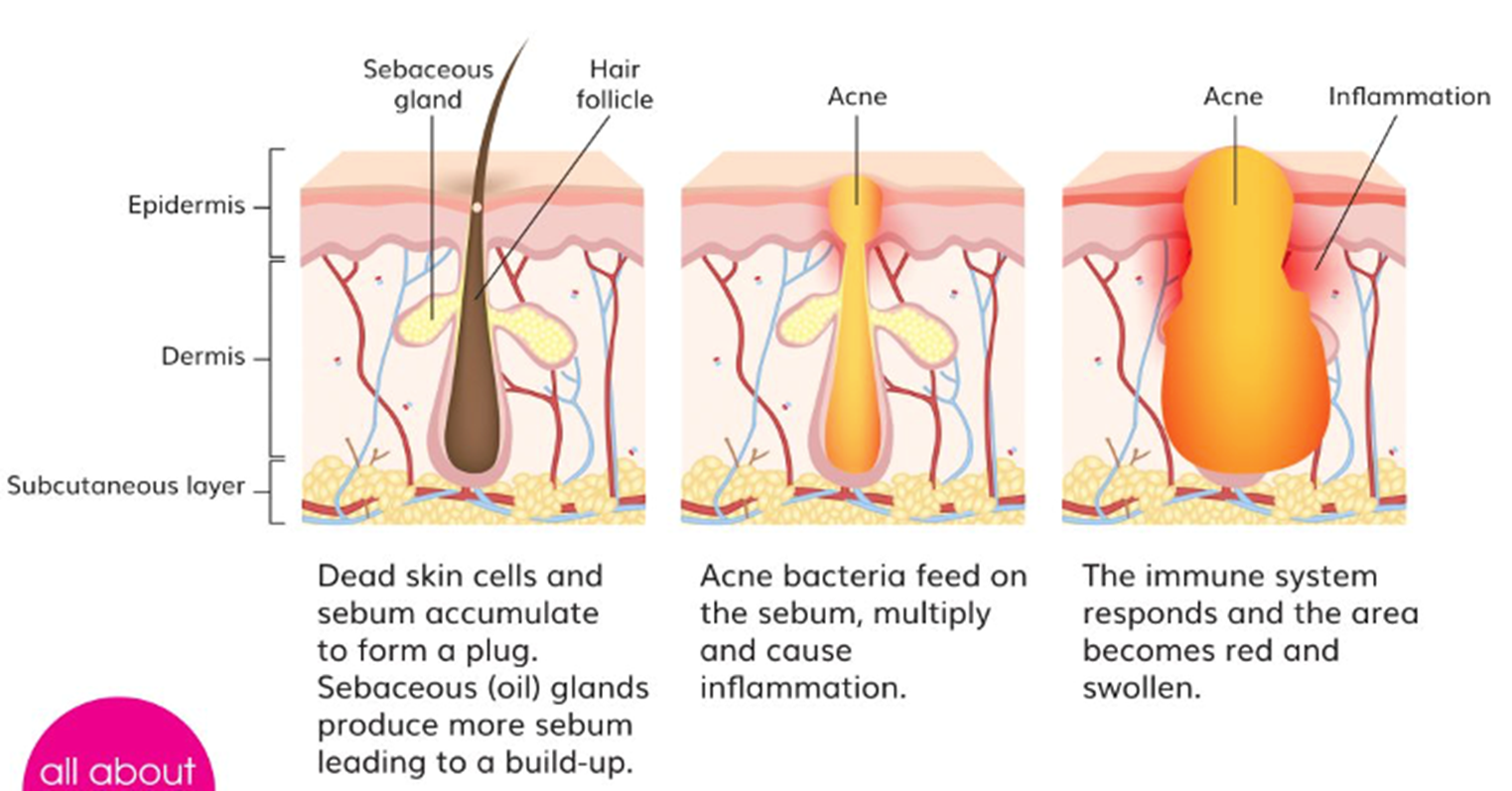
What causes acne lesions? (6 points)
Benzoyl peroxide
Azelaic acid
Tetracyclines (e.g., doxycycline)
Macrolides (e.g., erythromycin), , Usually for those who cannot take tetracyclines e.g., pregnant women, breastfeeding women and children under 8 years old
Antibacterial treatments for acne (4 points)
When tetracyclines cannot be used
In pregnancy
In breastfeeding or children under 8
When are macrolides used? (3 points)
Breaks into benzoic acid free radicals
Free radicals react with bacterial components
Damages proteins, lipids, DNA
Kills bacteria without resistance

Benzoyl peroxide mechanism of action (4 points)
UV light breaks peroxide bond
Free radicals react with skin → damage
Why is benzoyl peroxide phototoxic? (2 points)
Inhibits thioredoxin reductase, which is part of the cellular antioxidant system
Disrupts antioxidant system
Causes ROS formation
Leads to bacterial DNA damage ( Gram +)
the acid functional group is a skin irritant

Azelaic acid mechanism (4 points)
Redness, itching, burning
Caused by acidic irritation
Side effects of azelaic acid (2 points)
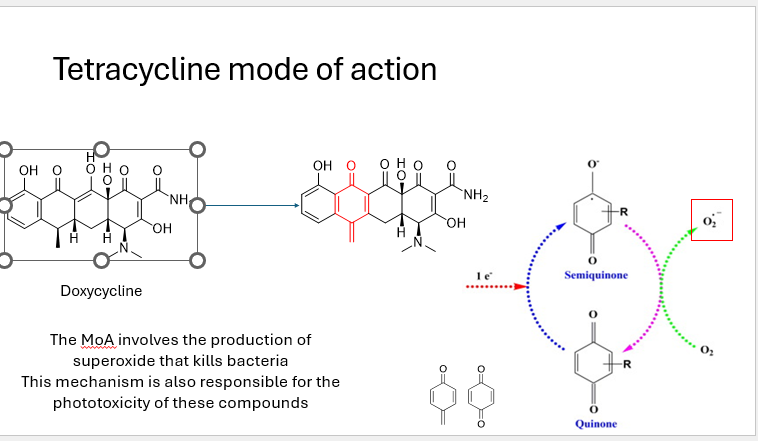
Produces superoxide radicals
Kills bacteria
They are phototoxic as superoxide production increases UV damage
Tetracycline mechanism (2 points) and why are they phototoxic?
Damages DNA, proteins, lipids
Acute → sunburn
Chronic → skin cancer
Effects of UV exposure (3 points)
Fair skin / freckles
High UV exposure (sunbeds)
Use of phototoxic drugs
Phototoxicity risk factors (3 points)
Warn about sunburn risk
Explainsome medicines increase UV damage: for acne, these are benzoyl peroxides and tetracyclines
Advise sun protection
Advice for phototoxic drugs (3 points)
Both phototoxicity & sunburn produce ROS
ROS causes cellular damage
phototoxic medicines amplify the effect of the sun and sunburn
Why is this advice important? (2 points)
Topical retinoids
Oral retinoids
Azelaic acid
Exfoliating acne treatments (3 points)
Tretinoin (topical)
Adapalene (topical)
Isotretinoin (oral)
Types of retinoids (3 points)
Contraindicated in pregnancy
Contraindicated in breastfeeding
Isotretinoin requires specialist prescribing
Retinoid safety considerations (3 points)
Activate retinoic acid receptors, a nuclear receptor that promotes cell proliferation
Increase in epithelial turnover
hence explains contraindication in pregnancy and lactation
Retinoid mechanism of action (3 points)
Combined oral contraceptive pill ( •oestrogen and progestin)
Co-cyprindiol (ethinylestradiol and cyproterone acetate)
Hormonal regulation therapy
Hormonal treatments for acne (3 points)
Androgens increase sebum ( sebum is the primary cause of acne)
Oestrogen/progestin reduce testosterone
Reduced sebum production
How hormonal therapy works (3 points)
Irritant → physical damage
Sensitiser → immune response
Often similar symptoms
Skin irritation vs contact dermatitis (3 points)
Patch testing
How to identify contact dermatitis (1)
Chemicals reacting with skin proteins
Triggers immune response
Sensitisation is lifelong
Avoidance is only cure
Causes of contact dermatitis (4 points)
Nickel
Hair dye (PPD)
Fragrance aldehydes
Preservatives
What are 4 examples of sensitising chemicals?
It generates highly reactive free radicals that damage bacterial structures
Why can’t bacteria develop resistance to benzoyl peroxide?
UV light cleaves the peroxide bond, producing reactive radicals
What mechanism explains the phototoxicity of benzoyl peroxide?
Inhibition of thioredoxin reductase leading to ROS formation
Azelaic acid’s antibacterial effect is mainly due to:
Skin irritation due to acidity
Which side effect of azelaic acid directly relates to its chemical structure?
Doxycycline
Which acne drug is most associated with phototoxicity due to superoxide formation?
Patients with fair skin or who use sunbeds
Which patients are at highest risk of phototoxicity from benzoyl peroxide or tetracyclines?
They activate nuclear receptors altering cell proliferation
Why are retinoids contraindicated in pregnancy?
It has severe teratogenic risks
Why is isotretinoin specialist‑prescribing only?
Reduce androgen levels, lowering sebum production
How do combined oral contraceptives improve acne symptoms?
Sensitisers cause immune‑mediated reactions and lifelong sensitivity
What distinguishes a skin sensitiser from a simple irritant?