Lab 3 ppt
 Call Kai
 Learn
Learn Practice Test
 Spaced Repetition
 Match
Match Flashcards
 Knowt Play
1/24

There's no tags or description
Looks like no tags are added yet.
Name | Mastery | Learn | Test | Matching | Spaced | Call with Kai |
|---|
No analytics yet
Send a link to your students to track their progress
25 Terms
subclass Prototheria
platypus
monotremata: order
• Epipubis present
• Pectoral girdle with procoracoid, coracoid, and
interclavicle
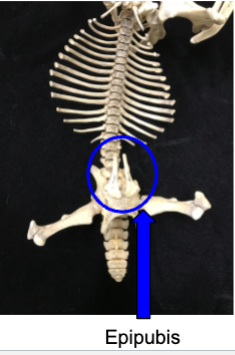
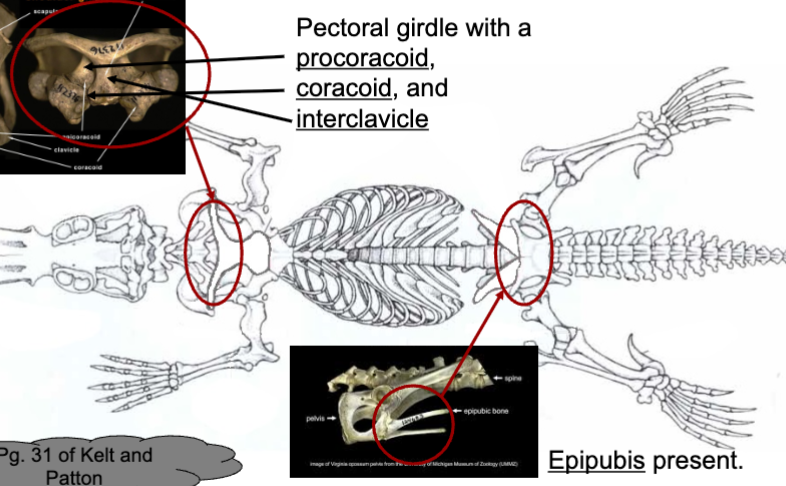
what order and subclass will have the interclavicle, coracoid, and procoracoid with epipubis present
Subclass Prototheria, Order Monotremata
Subclass Prototheria
Order Monotremata
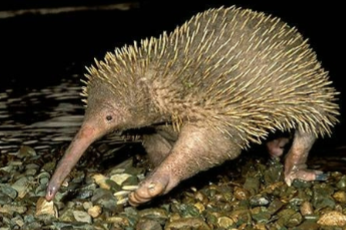
Family Tachyglossidae (fast-tongue)
Pelage: coarse hair and hollow spines.
no teeth
no auditory bullae
range Australia & New Guinea
Family Ornithorhynchidae
Subclass Prototheria
Order Monotremata
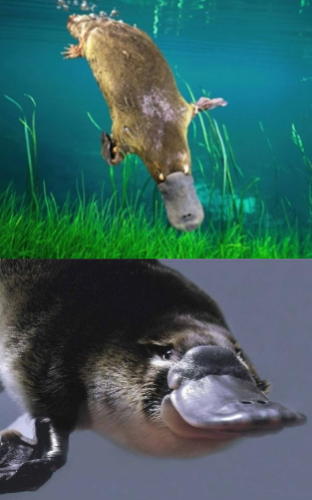
Family Ornithorhynchidae (bird-bill)
range Australia
Subclass Prototheria, Order
Monotremata List families
2 Families: Ornithorhynchidae (Platypus) and Tachyglossidae
(Echidna - look like hedgehog and ant eater hybrid)
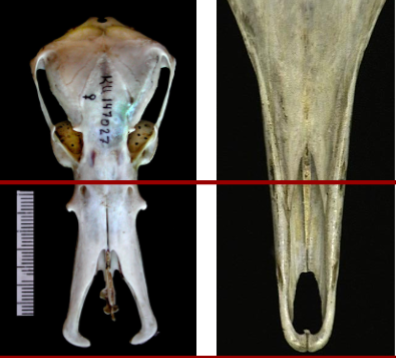
n both, the premaxilla is separated anteriorly.
In the platypus, the premaxilla expands
laterally. In the echidna it reconnects at the
anterior end
Subclass Theria
Infraclass Metatheria
• Marsupials
Infraclass Metatheria
Marsupials
• Epipubic bones present.
• Pouch usu. present.
• Braincase small; jugal contributes to mandibular
fossa;
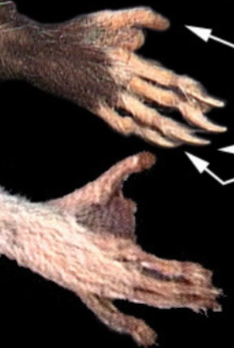
polydactyly
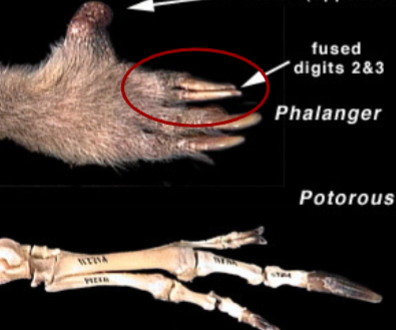
Syndactyly
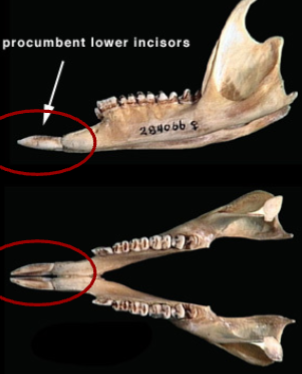
Diprotodont
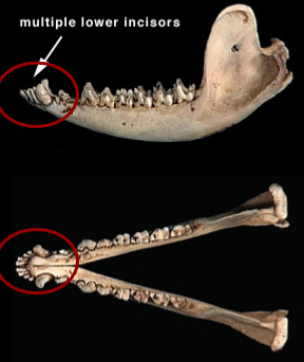
Polyprotodont
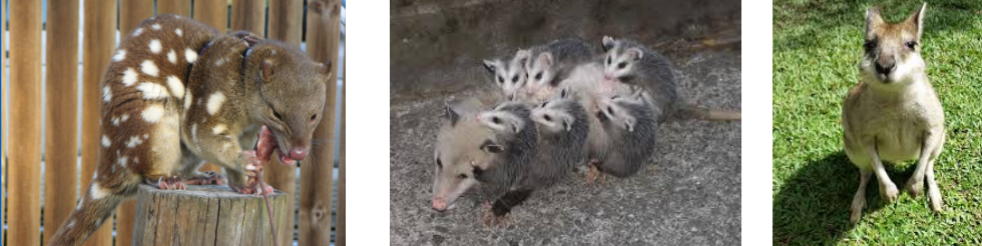
Order Didelphimorphia what type of digits and how many incisors
Polyprotodont
Polydactylous
Dasyuromorphia what type of digits and how many incisors
Polyprotodont
Polydactylous
Peramelemorphia what type of digits and how many incisors
Polyprotodont
Syndactylous
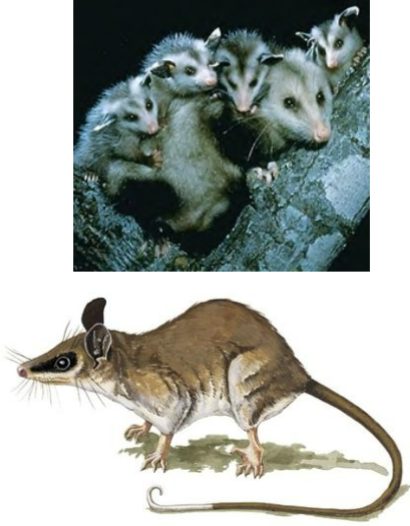
Marsupials
Subclass Theria; Infraclass Metatheria
Cohort Ameridelphia
Order Didelphimorphia
Family Didelphidae (2-womb)
range North and South America.
Polydactyly.
• Polyprotodont with 5I/4i; lower incisors
subequal in size, not procumbent.
• Canines well developed.
• Tribosphenic molars.
• Bullae small, uninflated.
• Cranium long and slender.
• Sagittal crest often well developed,
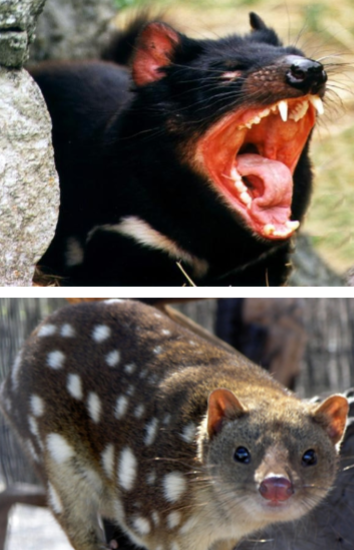
Marsupials
Subclass Theria; Infraclass Metatheria
Cohort Australidelphia
Order Dasyuromorphia
Family Dasyuridae (hairy-tail)
range Australia & New Guinea
• Tasmanian devil, quoll . . .
• Many lack the pouch; when present, opens
anteriorly (as in didelphids).
• Tail usu. long, well haired.
• Canines well developed.
• Molars tribosphenic.
• Polydactyly; hallux (“big toe”) weakly
opposable or absent.
• Sagittal crest usually absent;
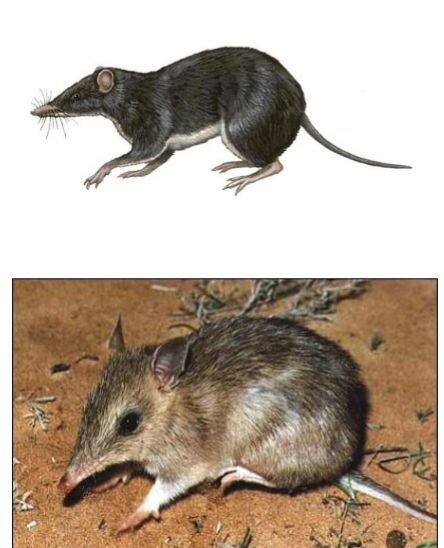
Marsupials
Subclass Theria; Infraclass Metatheria
Cohort Australidelphia
Order Peramelemorphia
Family Peramelidae
range New Guinea
Canines reduced.
Cranium very long and narrow; No
sagittal crest; Narrow zygomatic arch
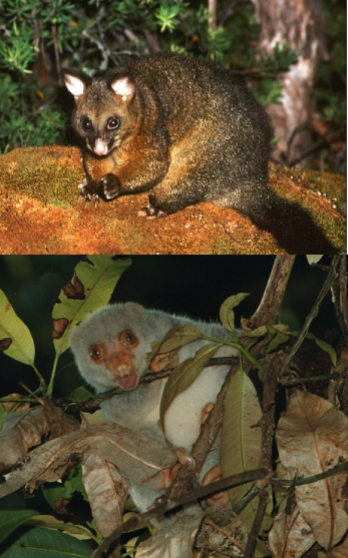
Subclass Theria; Infraclass Metatheria
Cohort Australidelphia
Order Diprotodontia (2 first teeth)
Family Phalangeridae (toe-bone)
diprotodont and syndactylous
Cranium broad, Sagittal crest often present,
Zygomatic arch robust.
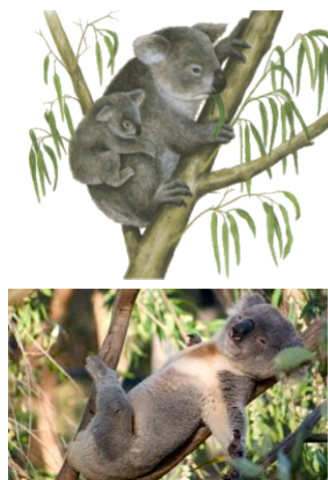
Subclass Theria; Infraclass Metatheria
Cohort Australidelphia
Order Diprotodontia (two first teeth)
Family Phascolarctidae (pouch bears!)
No sagittal crest.
• Zygomatic arch robust, wide.
• Paroccipital process large.
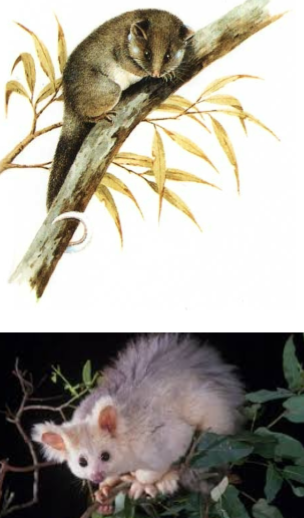
Marsupials
Subclass Theria; Infraclass Metatheria
Cohort Australidelphia
Order Diprotodontia (2 first teeth)
Family Pseudocheiridae
range Australia/New Guinea, forests/shrublands.
• Gliding membrane extends from ankle to
elbow.
• Small canine.
• Wide zygomatic arch.
Diprodont
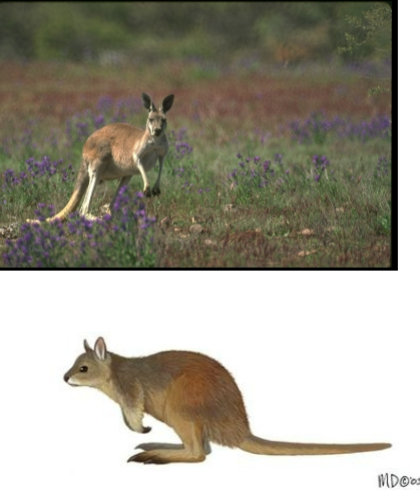
kangaroos
Marsupials
Subclass Theria; Infraclass Metatheria
Cohort Australidelphia
Order Diprotodontia (2 first teeth)
Family Macropodidae (big feet)
Australia & New Guinea
Hindlimbs longer than forelimbs.
• Cranium elongated; No sagittal crest.
• Upper canine lacking or small.
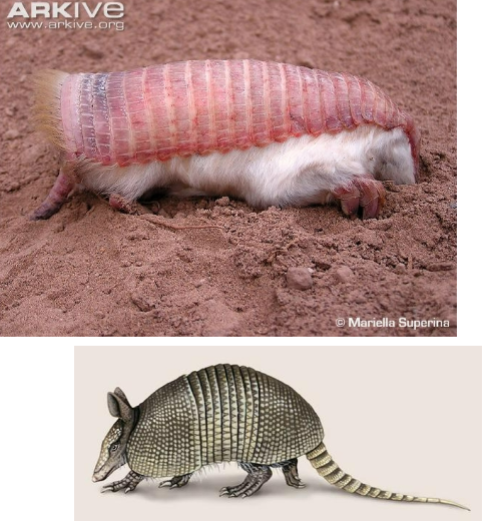
Placentals
Subclass Theria; Infraclass Eutheria
[Magnorder Xenarthra]
Order Cingulata
Family Dasypodidae (hairy-feet)
range S. America to southern N. America
• Body covered with keratin scutes
overlaying bony plates
• Skull elongated and flattened
• Zygomatic arch complete
• Cheek teeth are homodont
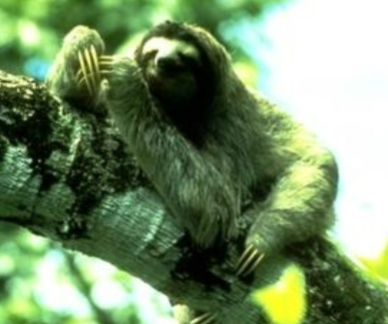
Placentals
Subclass Theria; Infraclass Eutheria
[Magnorder Xenarthra]
Order Pilosa [Suborder Folivora – leaf eaters]
Family Bradypodidae (slow feet)
range C & S. America
No incisors, canines; peg-like cheek
teeth
3-toed (forefeet) sloths
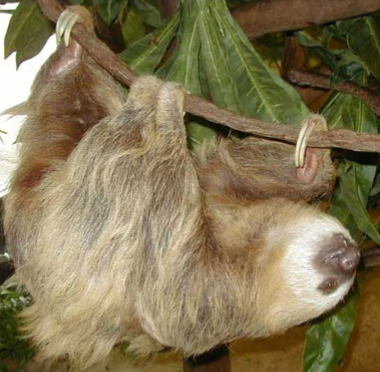
placentals
Subclass Theria; Infraclass Eutheria
[Magnorder Xenarthra]
Order Pilosa [Suborder Folivora – leaf eaters]
Family Choloepodidae (chol- (G), lame; -pod (G), foot;
reflects slow nature and presence of only 2 claws on foot)
range C & northern S. America
2-toed sloths (forelimbs)
No incisors, canines, 1st premolar
canine-like
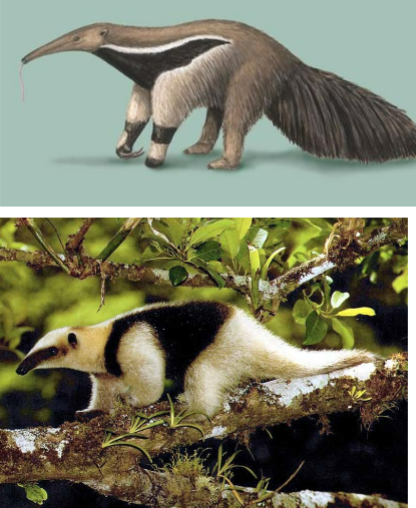
placentals
Subclass Theria; Infraclass Eutheria
[Magnorder Xenarthra]
Order Pilosa [Suborder Vermilingua – worm-tongue)
Family Myrmecophagidae (ant-eating)
range C & S. America
No teeth (edentulous)
• Tongue very long, protrusible, wormlike
• Skull elongate, long & down-curving
rostrum