Tides and currents
 Call Kai
 Learn
Learn Practice Test
 Spaced Repetition
 Match
Match Flashcards
 Knowt Play
1/9

There's no tags or description
Looks like no tags are added yet.
Name | Mastery | Learn | Test | Matching | Spaced | Call with Kai |
|---|
No analytics yet
Send a link to your students to track their progress
10 Terms
What are tides
Changes in water levels of seas and oceans
When sea surface at its highest point high tide and when sea surface at lowest point low tide
Difference between two points is tidal range
How do tides work
Gravitational pull from Sun and Moon
Moon pulls on Earth’s ocean causing water to bulge out towards moon
Hight tide on side of Earth facing Moon and on opposite side as pulled slightly more strongly than the water on the far side
Low tide in areas between bulges
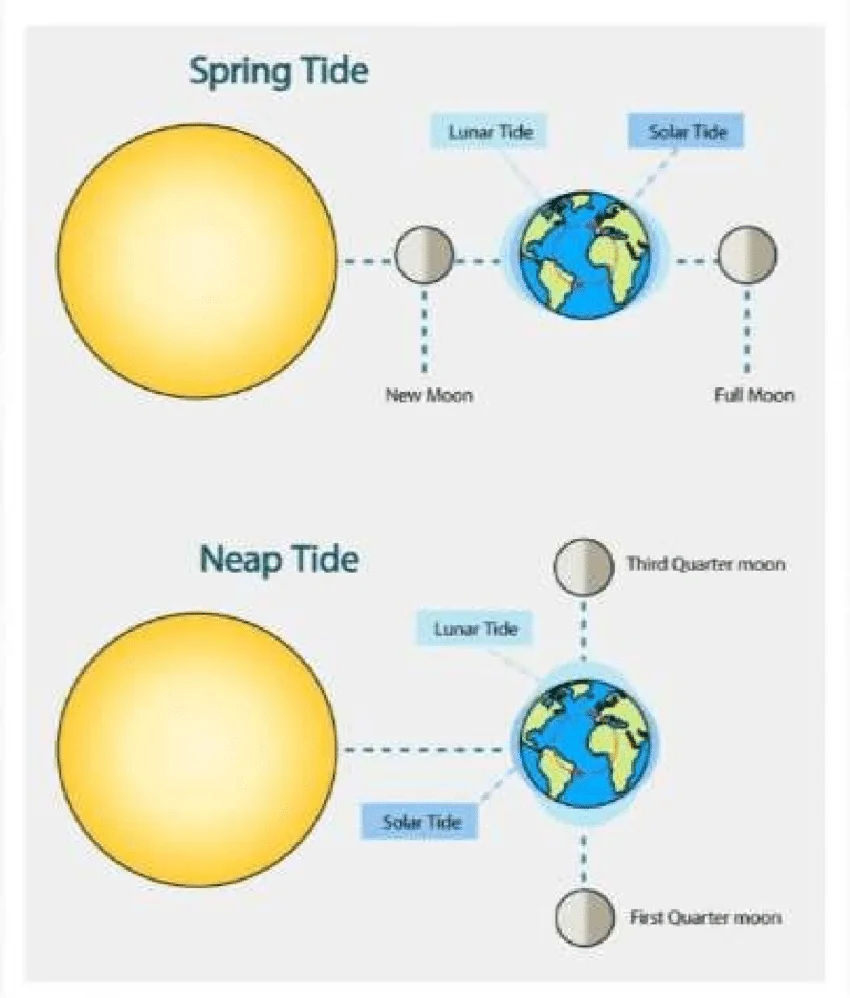
What are spring and neap tides
Spring tide: Moon, earth and sun in alignment so stronger gravitational pull creating high spring tide
Neap tide: Sun and moon at right angle to earth so gravitational pull has reduced impact so lower than normal tides
How do tides cause erosion
Large tidal range → means waves attack wider area of coast
Small tidal range → erosion is concentrated in a narrower zone
What are tidal surges
Meteorological conditions create stronger winds which can produce higher water levels than those at high tide
What are tidal bores
When tide comes back in and water is funnelled up an estuary causing big waves
What are ocean currents
They are continuous movement of water in a particular direction
Located at sea level and below 300 metres of ocean
Move vertically and horizontally occurring at a local and global scale
Caused by wind, Earth’s rotation, differences in temp and salinity and gravity
What are longshore currents
When waves hit coastline at an angle to shoreline which generates a flow of water running parallel to shoreline . Creates a zig-zag movement of sediment called longshore drift
What are rip currents
These are strong currents moving away from shoreline which develop when seawater piles up on along coastline by incoming waves excess water then flows back out to sea through gaps in sandbars or weaker points in the breaker zone
What is upwelling
Movement of cold water, from deep in the ocean, towards the surface