Empires in global history
 Call Kai
 Learn
Learn Practice Test
 Spaced Repetition
 Match
Match Flashcards
 Knowt Play
1/28

Earn XP
Description and Tags
ALL primary sources from empires in global history
Name | Mastery | Learn | Test | Matching | Spaced | Call with Kai |
|---|
No analytics yet
Send a link to your students to track their progress
29 Terms
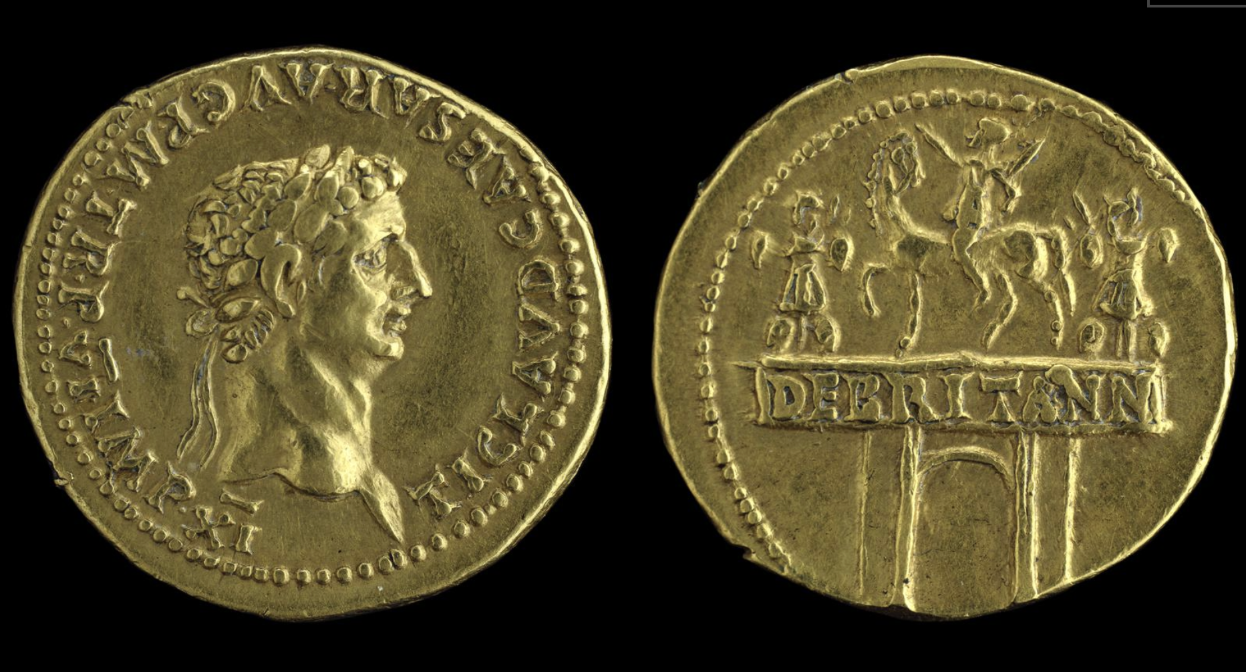
AUREUS OF CLAUDIUS I AD 46–49
DE BRITANN
Pater Patriae - father of the country
Circulated empire-wide- mass propaganda
conquered other" legitimises Roman superiority through visual othering
Claudius portrayed as victorious military emperor despite minimal direct battlefield involvement
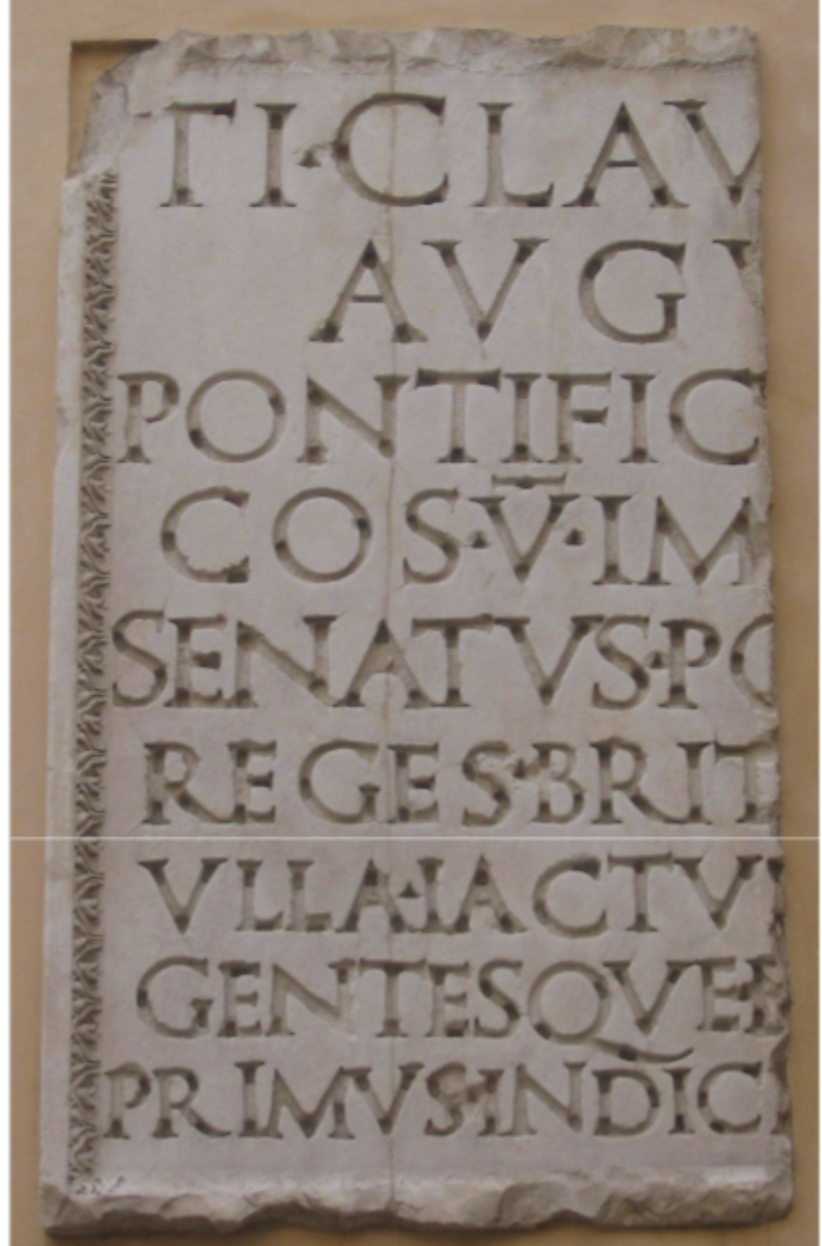
ARCH OF CLAUDIUS, ROME AD 51–52
Built over Via Flaminia (main northern road into Rome) constant reminder of imperial power
Inscription claims Claudius conquered Britain "without loss" explicit exaggeration
Claims eleven British kings surrendered frames conquest as total and absolute
"barbarians across the Ocean"
State-commissioned monument omits casualties, distorts scale of victory
Imperial self-glorification
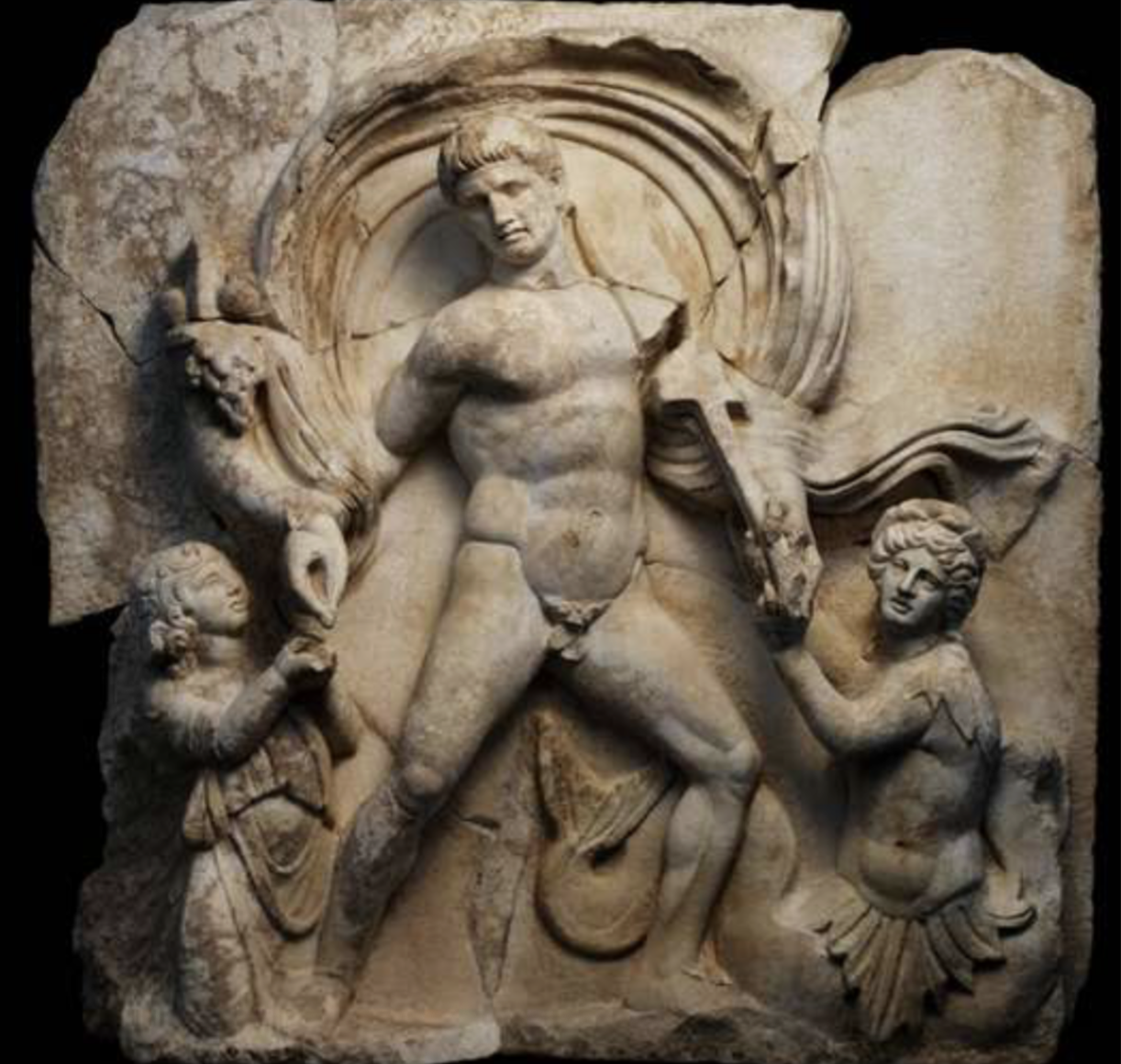
'CLAUDIUS, MASTER OF LAND AND SEA' SEBASTEION RELIEF 1st century AD
Claudius in "heroic nudity" superhuman physique implies divine status despite his known physical disabilities
Receives cornucopia from earth figure steering oar from tritoness
Imagery tied to imperium sine fine "empire without end" Roman expansion as cosmic destiny
Compensates for Claudius's political fragility: frail emperor needing to project divine authority
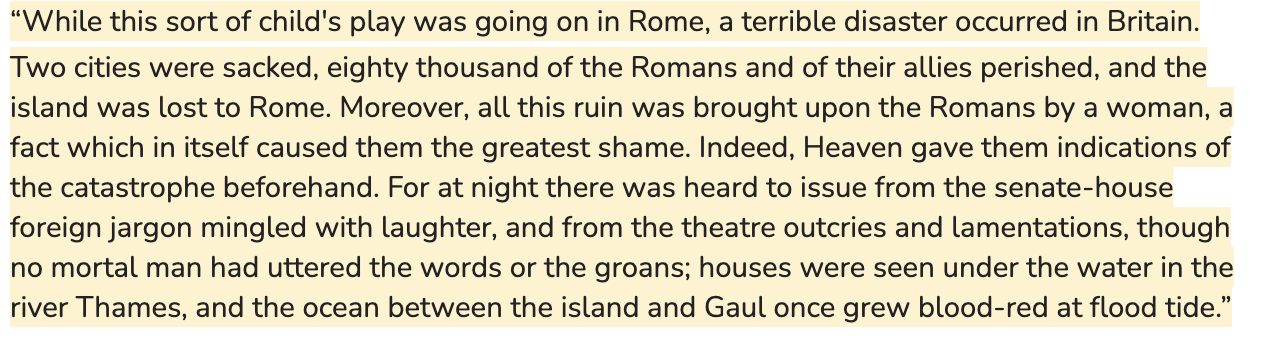
CASSIUS DIO ROMAN HISTORY BOUDICA'S REVOLT (historiography) AD 155–235 ·
A 150-year gap between events and writing
Dio never visited Britain
Boudica praised with backhanded compliment: "greater intelligence than often belongs to women" reveals Roman gender norms
Attributes revolt to Roman financial exploitation forced loan repayments
Graphic British atrocities against Roman women likely propagandistic designed to justify Roman suppression
TACITUS, AGRICOLA biographical encomium Written c. AD 98
Entire text is an encomium for Tacitus's father-in-law Agricola
Calgacus speech almost certainly invented: "they make a desert and call it peace"
Tacitus uses Calgacus to voice genuine critiques of Roman imperialism
Romanisation policy: Britons called it "civilisation" Tacitus adds it was "part of their enslavement"
Britons framed as "noble savages" brave and freedom-loving but ultimately primitive and disunited
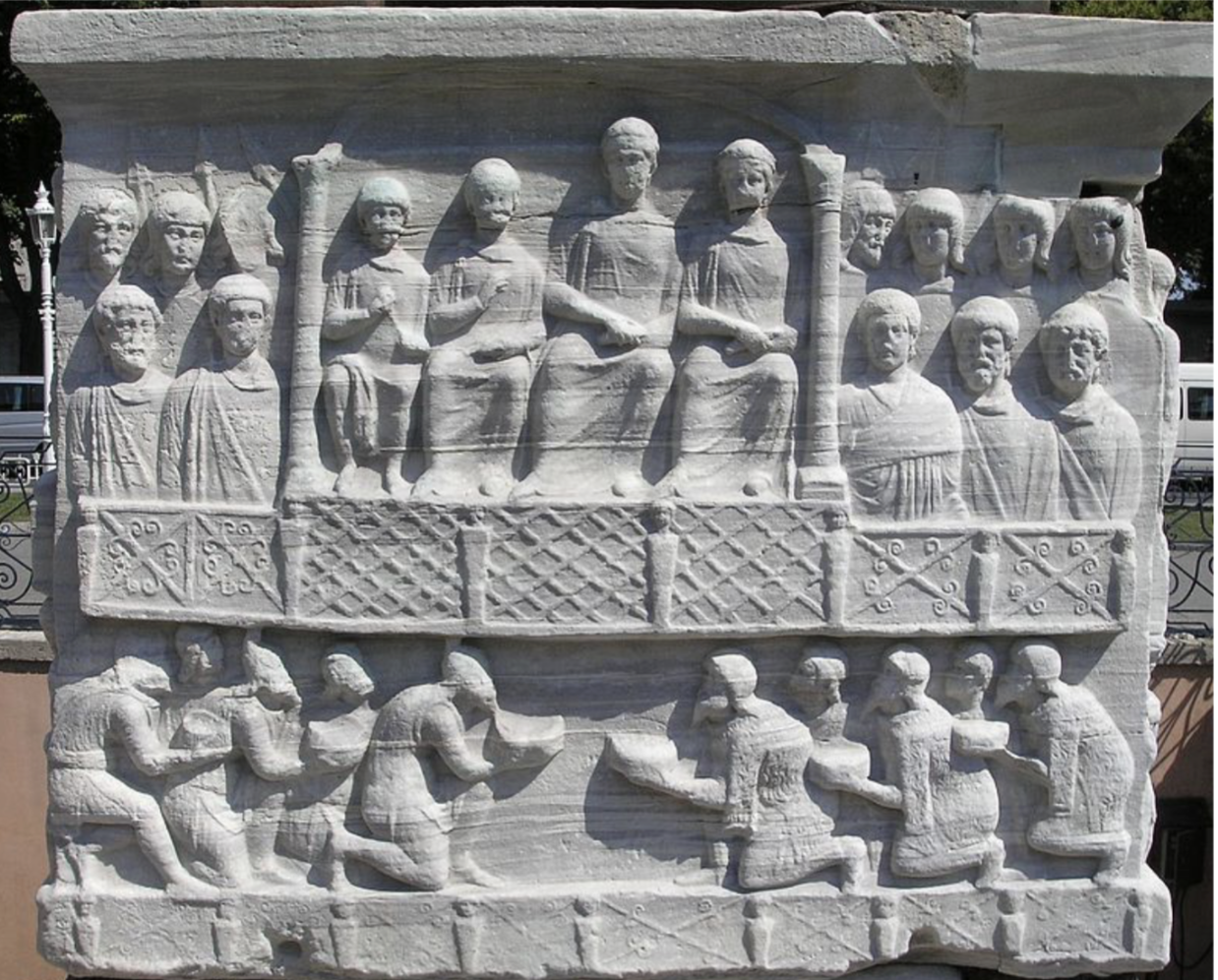
THEODOSIAN OBELISK CONSTANTINOPLE AD 390
Base depicts Theodosius in an imperial box barbarian ambassadors offering tribute asserts universal imperial dominance over foreign peoples, Chariot race scenes link emperor to public spectacle Hippodrome as political theatre. Raised in 30/32 days the logistical feat itself becomes propaganda: Roman mastery on display Located in the Hippodrome, political heart of Constantinople
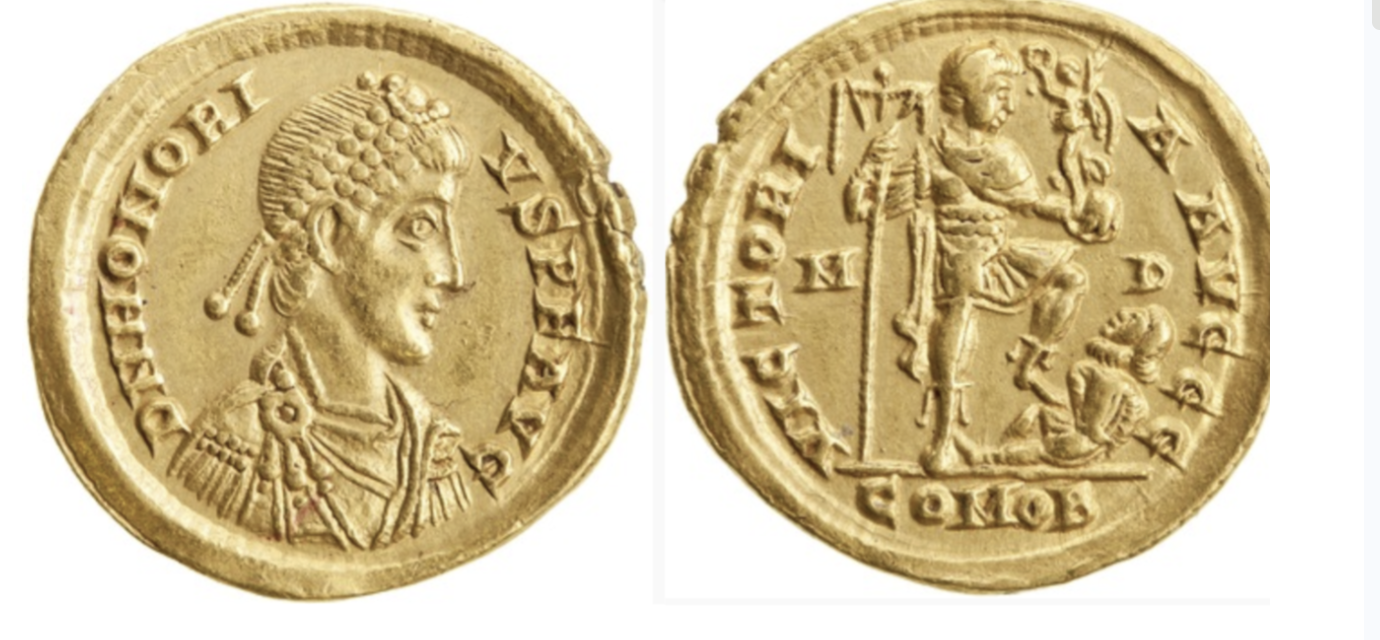
GOLD COINAGE OF EMPEROR HONORIUS AD 395–423 ·
Depicts Honorius in military dress trampling a submissive figure projects martial dominance
Circulated empire-wide coins project strength the empire lacked visually encodes Roman superiority over perceived threats, shows continuity of imperial visual language
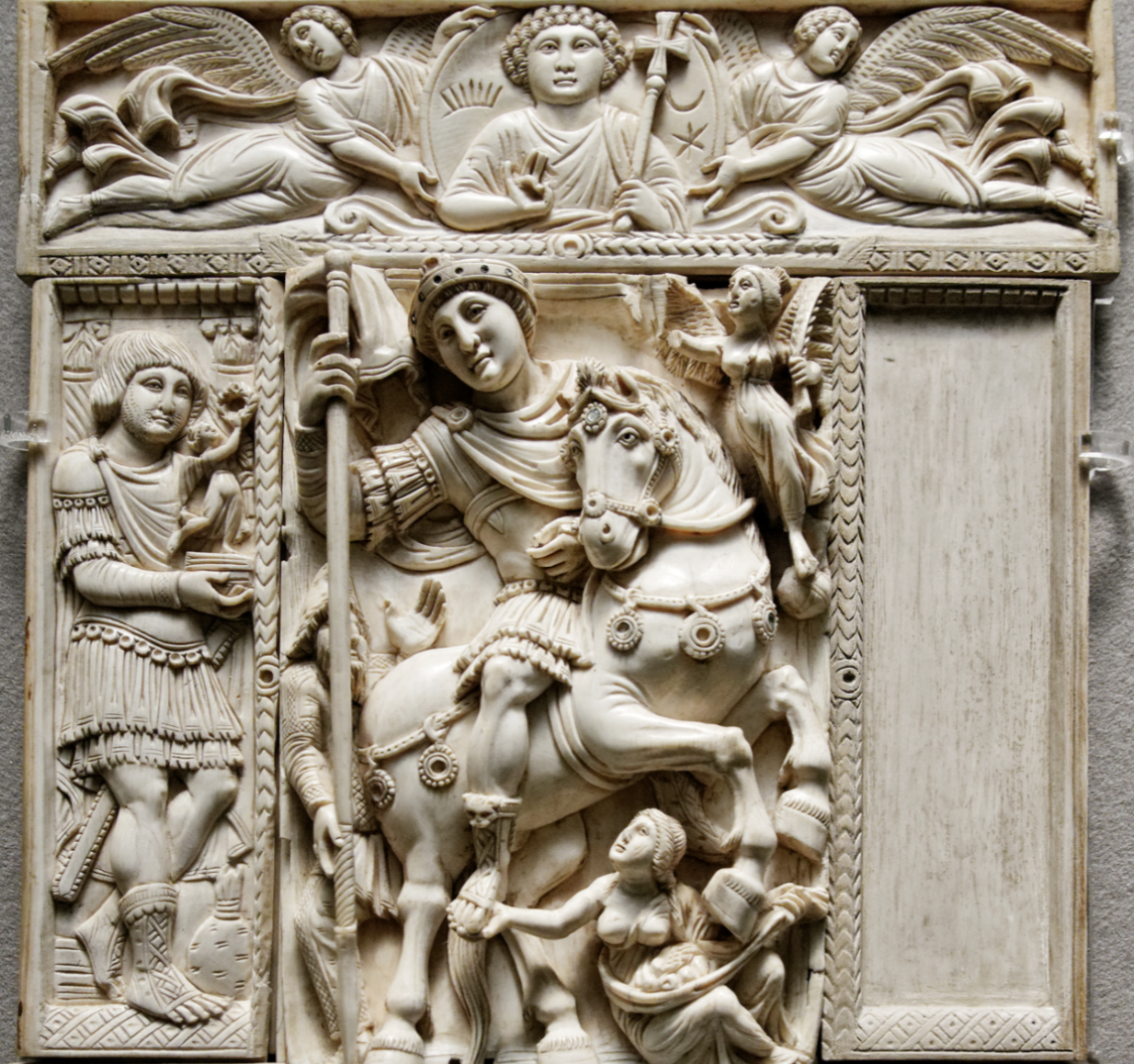
BARBERINI IVORY First half of 6th century CE
Shows emperor on horseback in triumphal pose Roman iconography updated for Christian era
Christ blesses from above; Earth goddess supports the horse fuses pagan cosmic imagery with Christian divine mandate
Eastern and Western figures offer tribute projects universal, imperial authority
Luxury medium (elephant ivory) signals elite audience not mass propaganda but court self-representation Connects to Justinian's reconquest ideology: reclaiming the Western empire as divinely ordained
AMMIANUS MARCELLINUS, RES GESTAE 23.6 AD 390s
Ammianus explicitly admits his sources on Persia are unreliable probably never visited Persia himself Despite limitations, reveals Roman perceptions and anxieties about Persia as a rival civilisation Treats Persia as a worthy adversary more complex than typical "barbarian" rhetoric
Roman soldier writing for Roman readership
AMMIANUS MARCELLINUS, RES GESTAE 31.2 AD 390s
Portrays Huns as barely human nomadic, bestial, the origin of "all ruin" extreme othering
Ammianus almost certainly had no direct contact with Huns relies on rumour and ethnographic stereotype Framing Huns as source of all ruin signals rhetorical purpose: explaining Roman collapse through monstrous causation Reveals Roman identity-construction through dehumanisation more than anything about actual Hunnic peoples
PRISCUS OF PANIUM, (diplomatic memoir) 13.1 Mid-5th century CE
Priscus personally travelled to Attila's court as part of an official Eastern Roman embassy only surviving eyewitness account describes court, food, customs, social dynamics with genuine curiosity Records a Greek-speaking Roman at Attila's court who preferred Hun life to Roman taxation Humanising detail unlikely to be fabricated adds credibility as genuine observationAs a diplomat he had political motivations the embassy aimed to manage, not understand, the Hunnic court Could only observe surface events: inner political dynamics remain largely inaccessible
PROCOPIUS, WARS 2.9.1–16 AD 550
Procopius served directly under Belisarius gives privileged insider access to Justinian's reconquest campaigns Celebrates revival of the Roman triumph after six centuries frames Belisarius's victory in a 600-year chain of Roman history Explicit propagandistic purpose: linking Justinianic victories to ancient Roman imperial tradition Critical tension: Procopius also wrote the secret Anekdota bitterly criticising both Justinian and BelisariusThe admiring tone in Wars must be read against his private condemnation in the Secret History
SIMA QIAN, SHI JI 28 Written c. 90 BCE
Sima Qian was Grand Historian (Taishi) of the Han court highest official historical authority Personally accompanied Emperor Wu on his Feng and Shan sacrificial tours partial eyewitness Suffered judicial castration under Wu's order creates personal reason for hostility toward the emperor Account of Wu's rituals subtly frames them as credulous excess critique embedded in official record
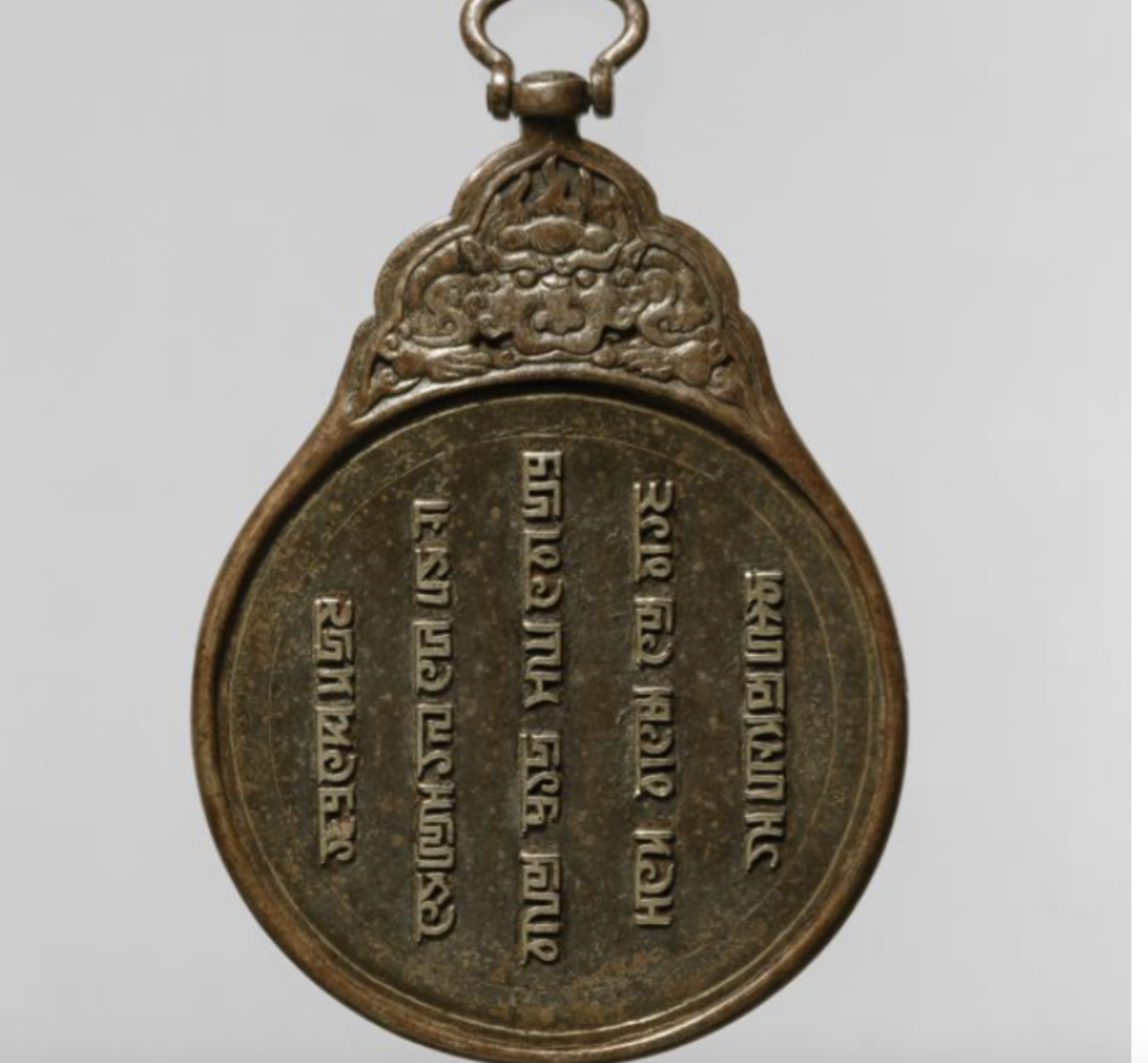
PAIZA (MONGOL IMPERIAL PASSPORT) Late 13th century CE ·
Metal tablet issued by Mongol court granting bearer safe passage and authority across the empire Inscription: "By the strength of Eternal Heaven, an edict of the Emperor [Khan]" fuses cosmic and political authority Incorporates Tibetan Buddhist iconography reflects Khubilai's court syncretism of religious traditions Demonstrates sophisticated Mongol bureaucratic administration

ATA-MALIK JUVAYNI GENGHIS KHAN: THE HISTORY OF THE WORLD-CONQUEROR 1250 CE
Juvayni was a Persian administrator serving in the Mongol government family held senior positions since Chinggis Khan Describes devastating destruction of Persian cities while simultaneously praising Mongol rule Fundamental insider-outsider paradox: victim of conquest writing for and under the conquerors Must glorify rulers whose armies destroyed his own civilisation constant tension between description and endorsement

EDMUND BURKE,'ON THE IMPEACHMENT OF WARREN HASTINGS' (parliamentary speech) 1788
Burke prosecutes Hastings for violating natural law applicable to all peoples —argues imperial rule must be universally accountable Treats Indian law and governance with genuine respect
Fundamental contradiction: condemns Company abuses while legitimising the Company's presence in India altogether Insistence on universal natural rights co-exists with acceptance of imperial hierarchy Enlightenment universalism has limits, not a balanced assessment of Hastings or British rule

WILLIAM JONES, 'A DISCOURSE ON THE INSTITUTION OF A SOCIETY' (1784) (founding address)
Proposes systematic study of Asian languages Founded the Asiatic Society of Bengal to institutionalise this scholarship Society staffed entirely by Company servants and operated under Company patronage knowledge serves administration Constitutionally limited to European members excludes the very people whose civilisations are being studied scholarly reverence for Indian civilisation coexisted with using that knowledge to govern India more effectively
THOMAS BABINGTON MACAULAY, 'MINUTE ON INDIAN EDUCATION' 1835 (government policy document)
Argues English-medium education should replace Sanskrit/Arabic instruction Anglicism defeats Orientalism Claims a single shelf of European books is worth all the literature of India and Arabia Argument is not racial inferiority but Enlightenment universalism created the class of English-educated Indians who articulated nationalist critiques of British rule Dismisses Indian intellectual traditions without reading them.
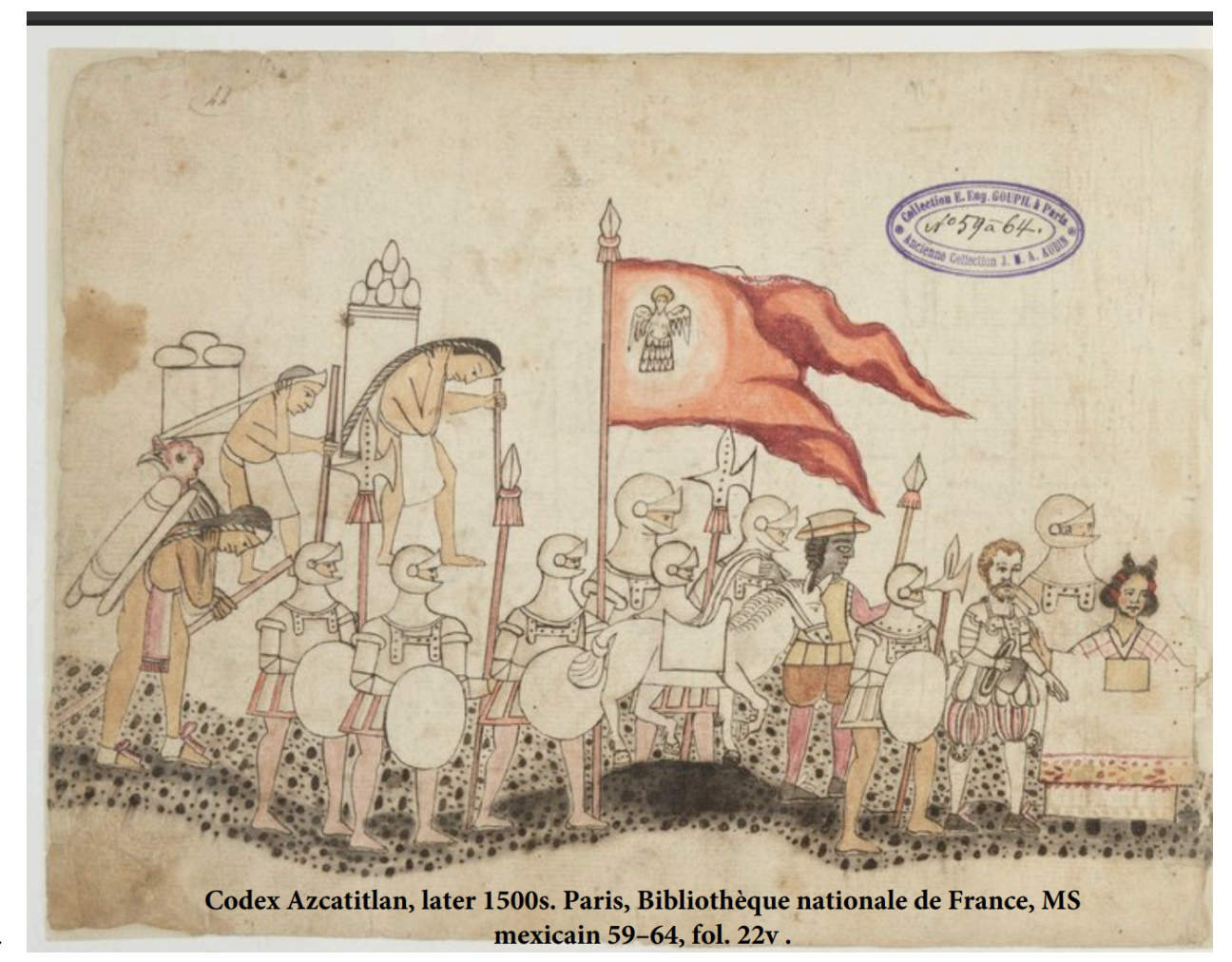
CODEX AZCATITLAN Mid-16th century CE
Pictorial manuscript produced by Nahua artists depicting Aztec migration history and Spanish conquest Selectively elevates Tlatelolco's historical role while undermining Tenochca (Tenochtitlan) supremacy Demonstrates indigenous agency in shaping historical memory even under colonial rule Whether Spanish authorities understood or overlooked its subtle subversions remains debated by scholars Produced by a specific Nahua community with political rivalries against Tenochtitlan not a neutral indigenous voice.
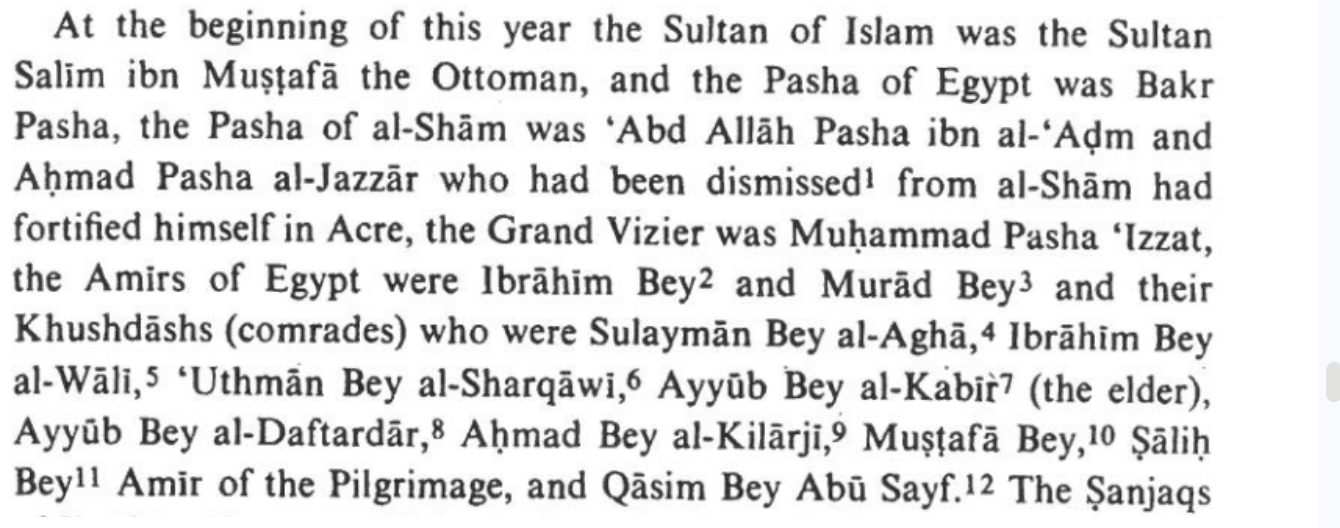
AL-JABARTI'S CHRONICLE OF THE FRENCH OCCUPATION 1798–1801
Al-Jabarti an Egyptian scholar inside Cairo during the French occupation
refutation of Napoleon's Proclamation exposes poor Arabic translation and false Islamic claimsTreats Napoleon's text as both political manipulation and theological deception
Details of Egyptian defeat are generally credible, though al-Jabarti was not present at all events
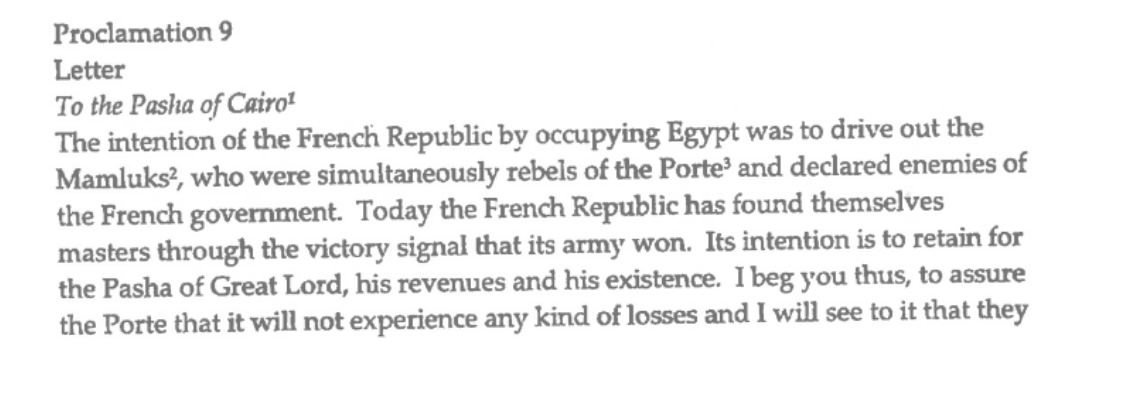
NAPOLEON BONAPARTE'S PROCLAMATION TO THE EGYPTIANS 1798 ·
Claims to respect Islam and positions France as aligned with the Ottoman Sultan both claims are false Frames French invasion as liberation from Mamluk oppression rather than conquestArabic translation was notoriously poor Deploys entirely different rhetoric for French vs Egyptian audiences rhetorical flexibility reveals cynicism Contradicts French Revolutionary secular principles by invoking Islamic legitimacy Tries to be liberator and conqueror simultaneously the contradiction is the historical insight
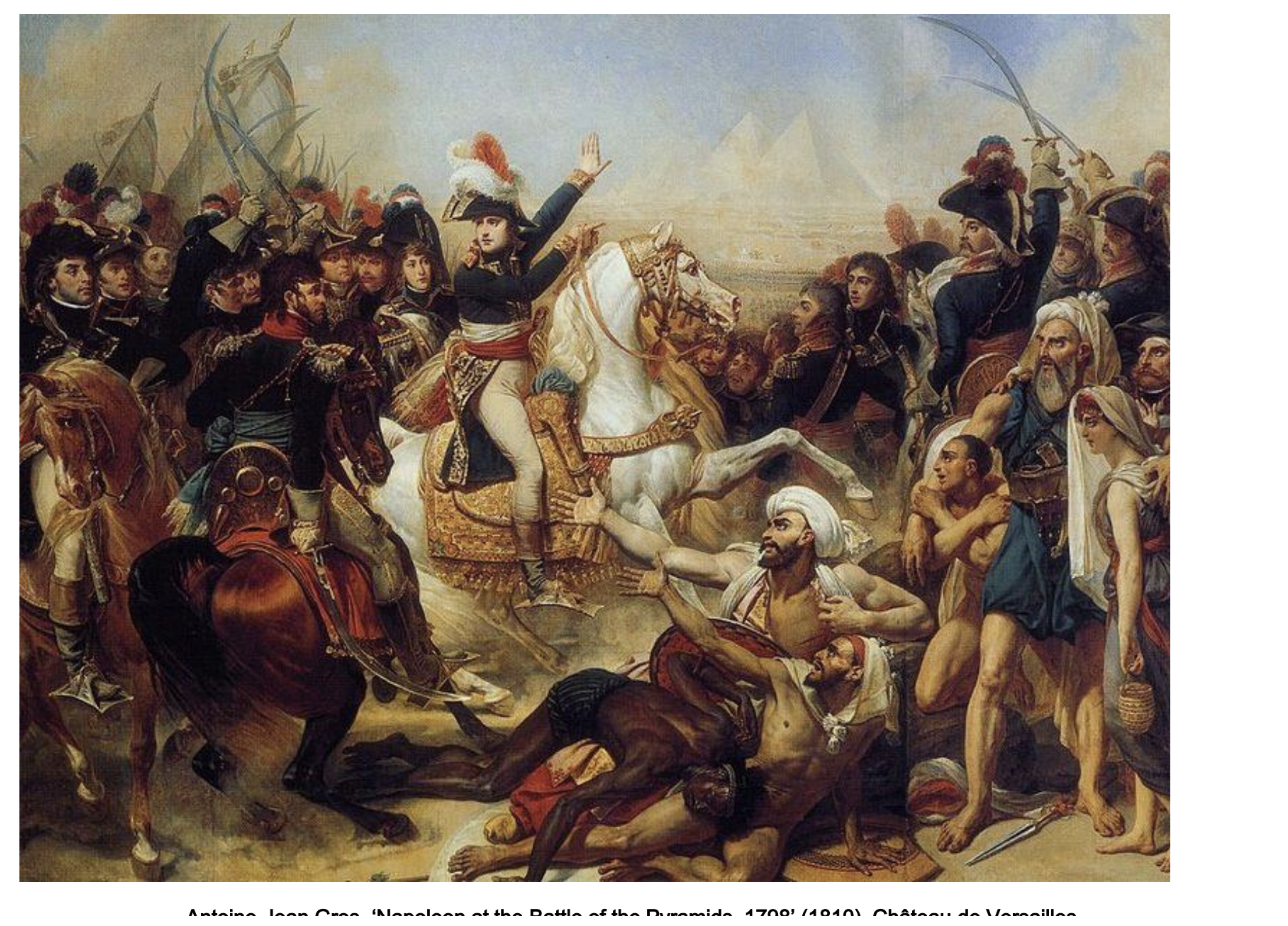
ANTOINE-JEAN GROS, NAPOLEON AT THE BATTLE OF THE PYRAMIDS 1810
Painted 12 years after the battle myth-making, not documentation Napoleon on horseback gesturing at the pyramids: ancient grandeur legitimises his imperial project
Pyramids visual argument that Napoleon commands civilisations as old as time itself Egyptian campaign had already been mythologised as a founding moment of Napoleonic identity before Gros painted it Mamluk casualties were substantial and the victory was real but the image aestheticises and glorifies the violence State-commissioned painter
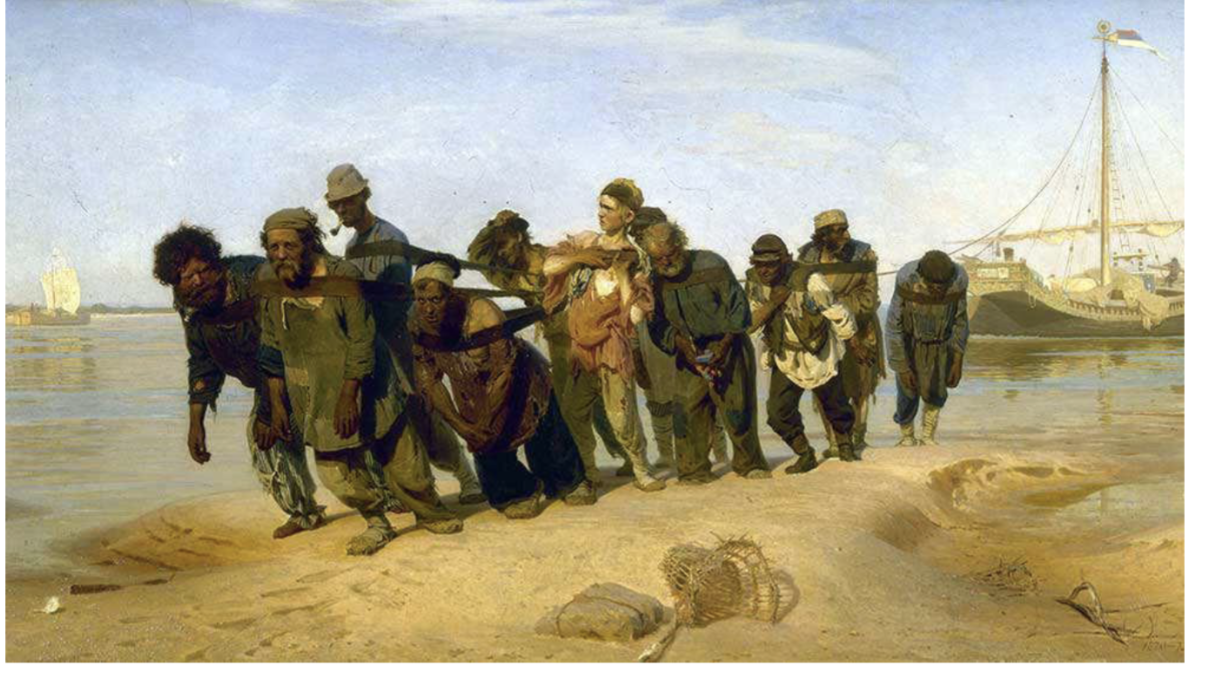
REPIN, BARGE HAULERS OF THE VOLGA 1870–1873
Depicts eleven i (barge haulers) on the Volga in degrading labour social indictment of post-emancipation Russia Steam vessel in background deliberately contrasts with human labour: modernisation produced new forms of exploitation alongside old ones Repin based figures on direct research trips to the Volga Central figure Kanka: young, seemingly unbroken — symbolises potential crushed by social condition Subsequently adopted as icon by both Populist and Soviet propaganda image could serve multiple political projects
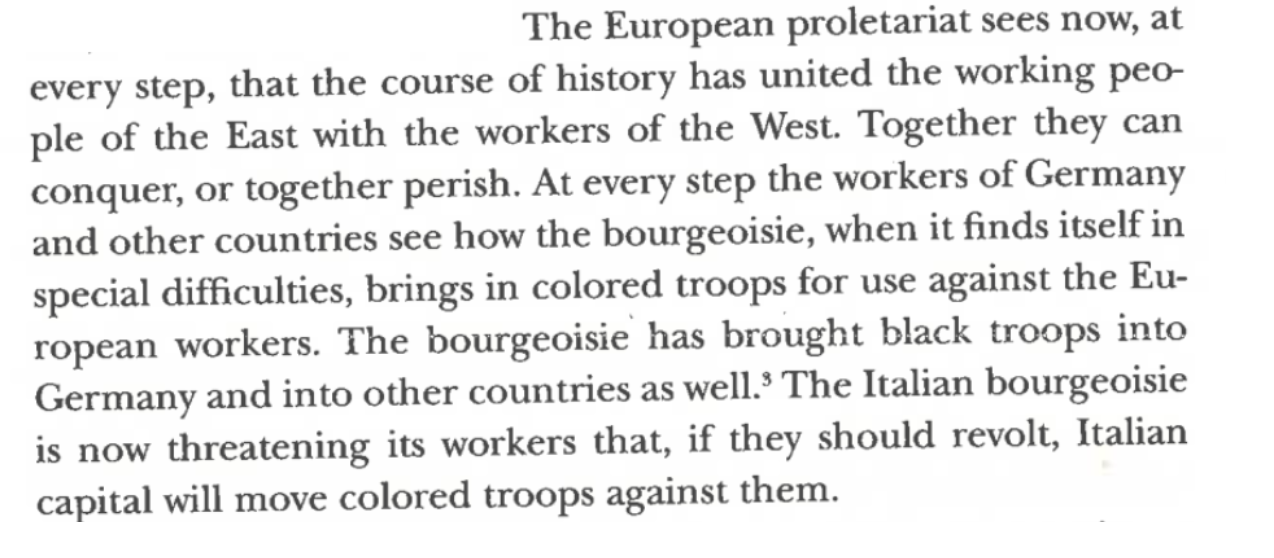
ZINOVIEV, 'SPEECH TO BAKU CONGRESS' 1920
Delivered to ~1,891 delegates from across the Muslim world at the First Congress of the Peoples of the East, Baku Strategic pivot: European revolution had failed (Hungary 1919, Poland 1920) Bolsheviks redirect energy to the colonial world Calls for "holy war" against British and French imperialism deliberately appropriates Islamic religious language for secular purpose Simultaneously describes Eastern peoples as "backward" and "illiterate" paternalism embedded in anti-imperialism Reveals the "Piedmont Principle": Soviet state uses treatment of domestic Muslim minorities as advertisement for anti-imperial governance Zinoviev was purged and executed by Stalin in 1936 the speech comes from a figure whose legacy was erased by the state he championed
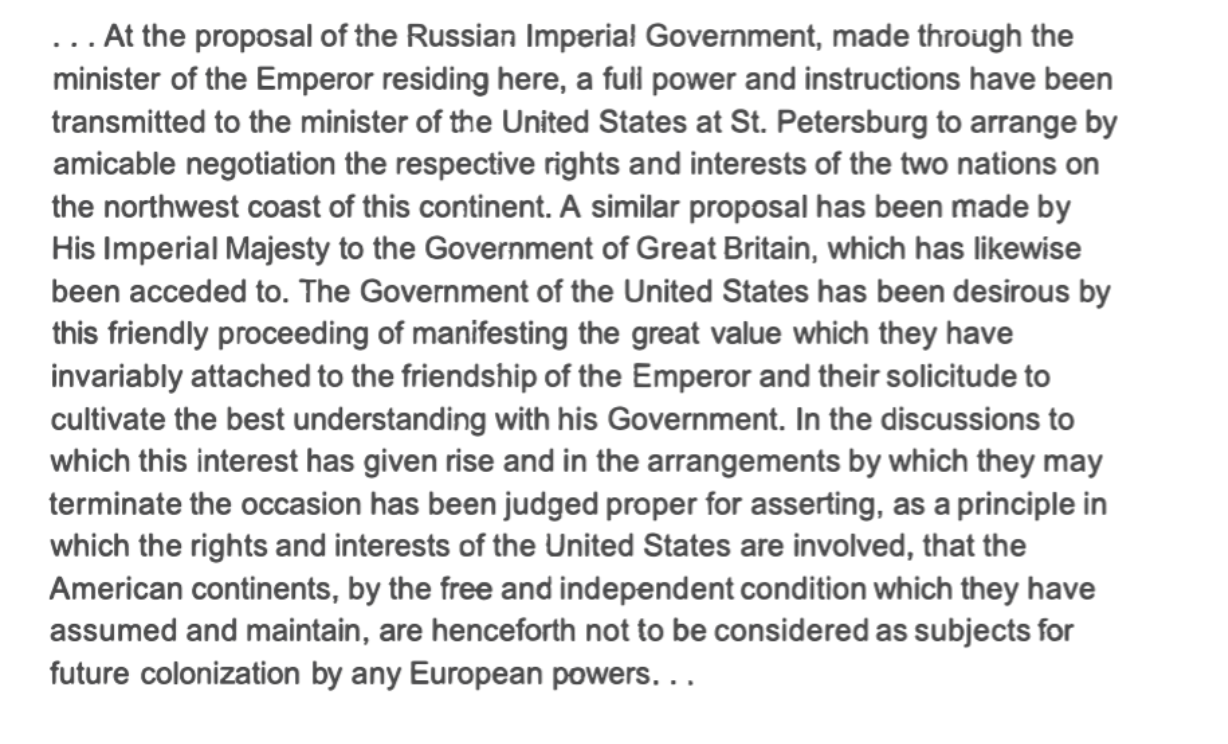
MONROE DOCTRINE 1823 (presidential address)
Declares Western Hemisphere closed to future European colonisation framed as defence of hemispheric freedom Internal contradiction: asserts Latin American sovereignty while reserving the US the right to define threats to it US lacked military power to enforce claims in 1823 Latin American republics were not consulted rhetoric of protecting "southern brethren" is self-serving Foundation on which the Platt Amendment and Roosevelt Corollary build their logic
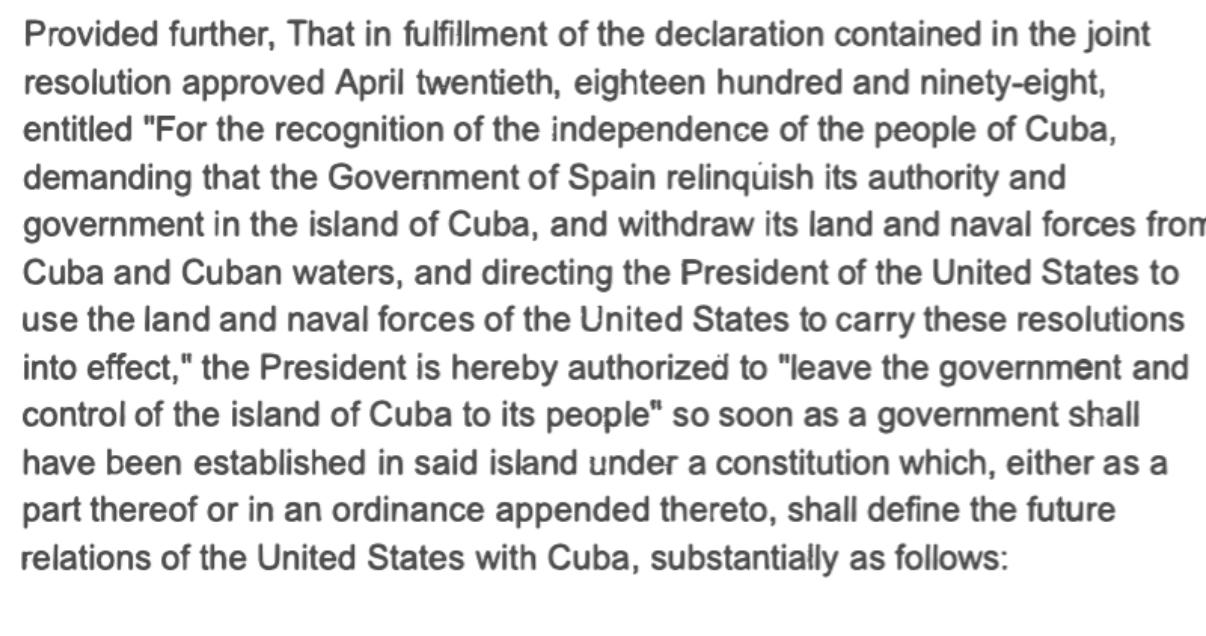
PLATT AMENDMENT 1903 (treaty) Legislative/treaty text
Eight clauses collectively make Cuba a US protectorate in everything but name open-ended US right of intervention Cuba required to lease naval bases to the US Cuba only accepted terms under explicit US threat not to withdraw its military occupation coercive context invisible in the document itself Cuba incorporated these terms into its own constitution makes Cuba formally responsible for its own subjugation
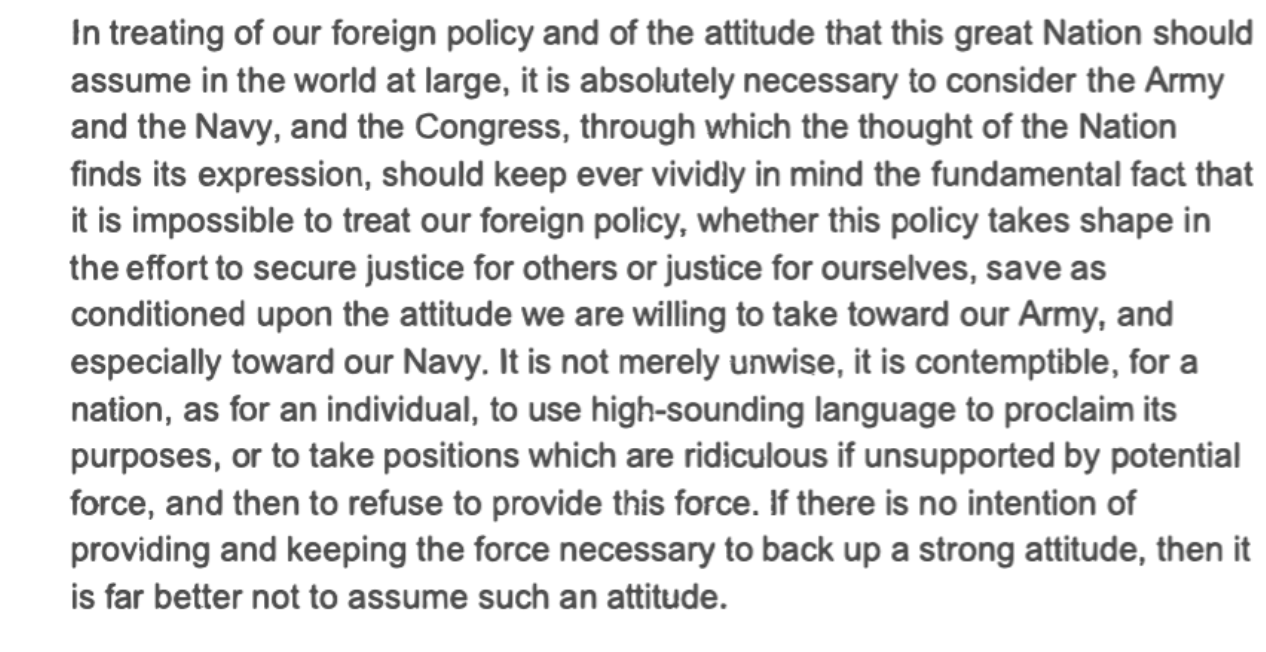
THEODORE ROOSEVELT'S COROLLARY TO THE MONROE DOCTRINE 1904 Presidential address
Transforms Monroe Doctrine from defensive to offensive Language of civilisation vs barbarism throughout racial/developmental hierarchy encoding the US as guardian Claims US has "no land hunger" immediately qualified by asserting duty to exercise "international police power" Roosevelt cites Cuba under the Platt Amendment as the model of successful US-managed hemispheric stability Anticipates Cold War intervention justifications humanitarian/civilisational rationale for force projection Opening emphasis on Army and Navy reveals the realist logic beneath the moralistic rhetoric
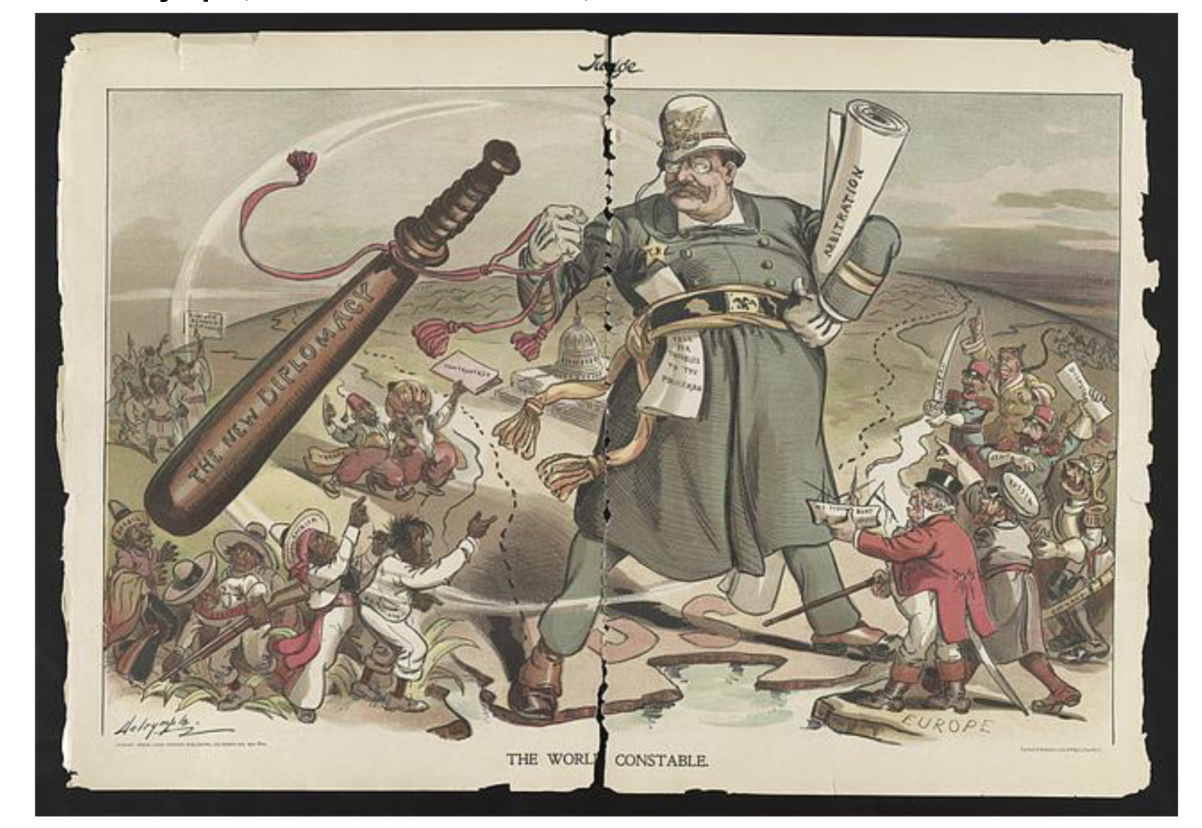
LOUIS DALRYMPLE, 'THE WORLD'S CONSTABLE' 1905 ·Political cartoon Depicts Roosevelt as a giant constable striding the globe, wielding "The New Diplomacy" club and an "Arbitration" scroll Racially caricatured Latin Americans shown as disorderly Europeans shown as scheming but kept at bay constable not conqueror Scale contrast between Roosevelt and surrounding figures literalises the power asymmetry Confirms "world's constable" framing had genuine popular cultural resonance, not just Roosevelt's private self-understanding Racial caricature is ideological artefact evidence of racialised assumptions structuring American imperialism
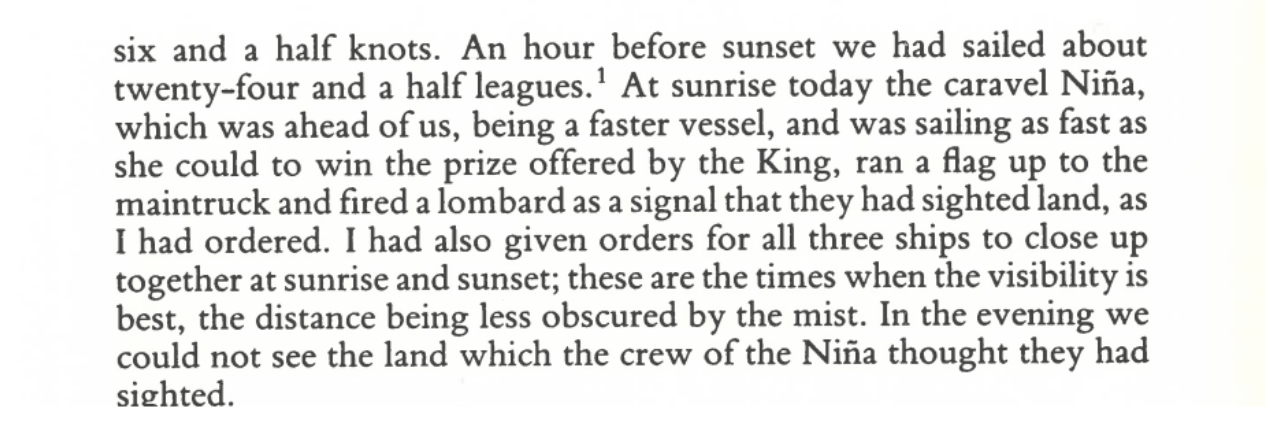
Voyage of Christopher Columbus 1492
daily ship log, journal addressed directly to Ferdinand and Isabella. meant to report the voyage’s result as successful to encourage continued funding, understanding filtered through personal assumptions. reflects the noble savage framework, which simultaneously idealizes and diminishes the native population.