HATCHING EGG INVENTORY MANAGEMENT
 Call Kai
 Learn
Learn Practice Test
 Spaced Repetition
 Match
Match Flashcards
 Knowt Play
1/34

There's no tags or description
Looks like no tags are added yet.
Name | Mastery | Learn | Test | Matching | Spaced | Call with Kai |
|---|
No analytics yet
Send a link to your students to track their progress
35 Terms
packaging (trolleys or crates), flock age and health status, daily production capacity, egg van capacity, farm location or distance
hatching egg pickup scheduling factors to consider
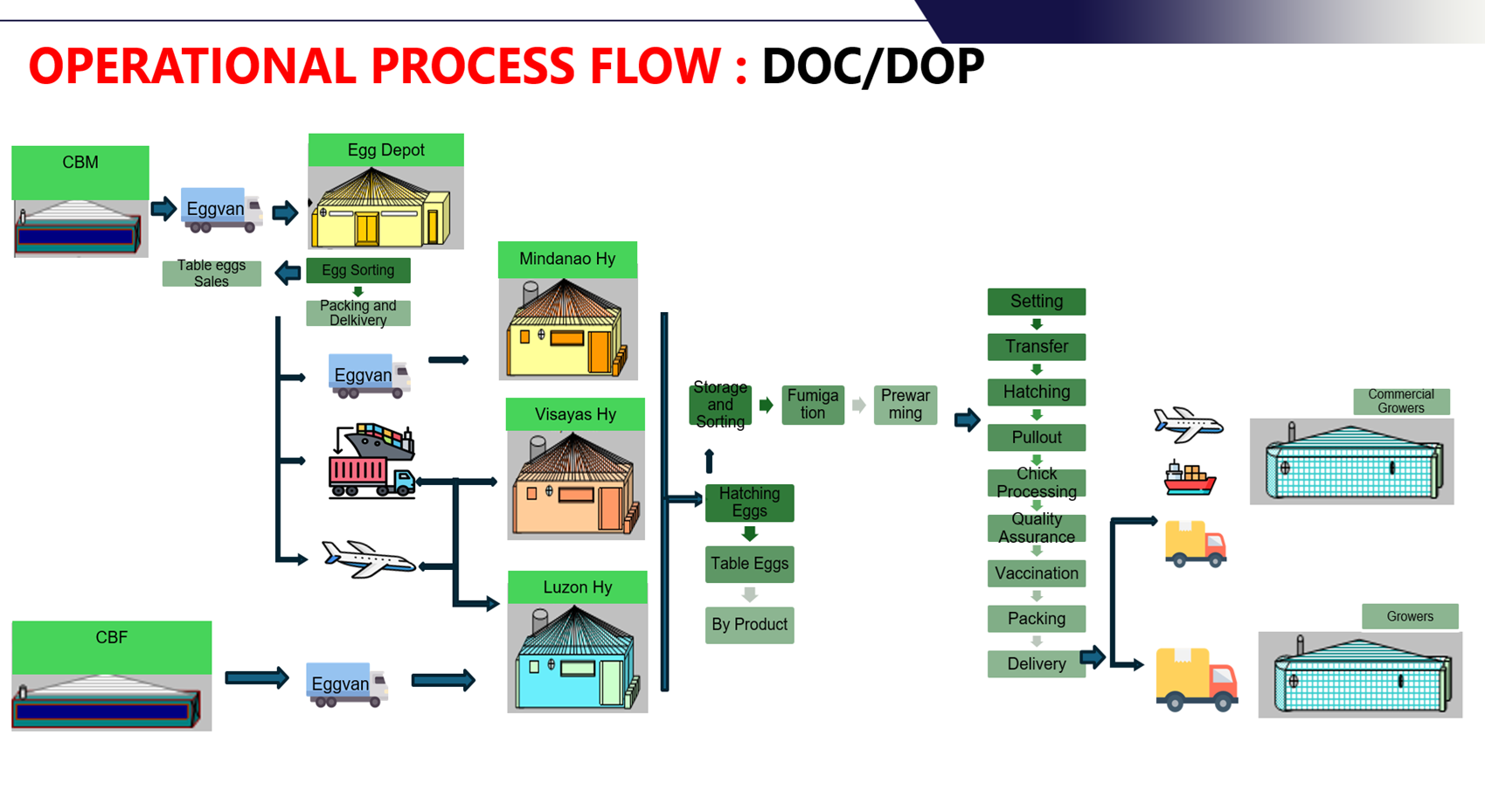
i-recite ang operational process flow for DOC/DOP
Hatching Egg Transport
refers to the transition phase from the farm to the hatchery egg room. Maintaining optimal climatic conditions and ensuring the eggs remain intact during this process is crucial
daily to at least twice a week
Hatching egg pickups range from ___ . These pickups are planned and monitored by the hatchery manager
—> not recommended na tho since max 3 days
one (exclusive lang sa farm na yon)
number of egg van assigned to one breeder farm
Assign egg van to pickup separately red-flagged farms
For green-flagged farms, younger flocks should be prioritized for pickup over older ones
in case of egg van breakdown
three-day downtime
Ideally, a ____ is required before the egg van can be reassigned to a different breeder farm
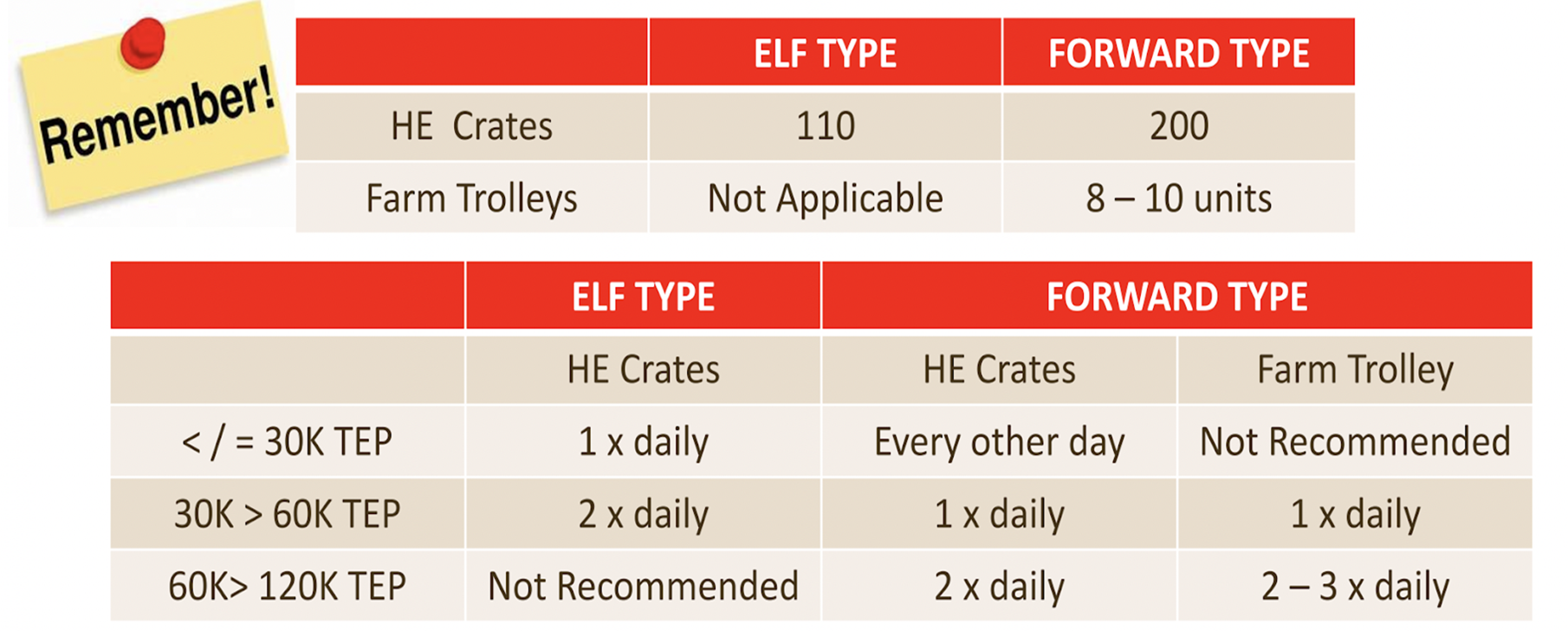
paki-memorize nakch
20-21C
Farm Egg Room with good insulation and with maintaining temperature of
notes
Maintain cleanliness ; flock man not allow to enter, egg man follows correct biosecurity measures
kapag 15 lang eggs sa isang tray- malaki kasi egg dahil matanda na ang flock; para din maiwasan ang breakage
10,800 - isang palette ng itlog
✔STS (Stock Transfer Slip)
✔BEDR (Breeder Egg Delivery Report)
✔MTS (Material Transfer Slip)
✔EDMS (Egg Delivery Monitoring Sheet)
✔EVCC (Egg van Compliance Checklist)
Documents needed for hatching egg delivery
STS (Stock Transfer Slip) - BOS generated
Summary of total egg produced with partial classification of farm and is recorded by production date.
EVCC (Egg van Compliance Checklist)
QR generated checklist which includes details on checking egg van prior to loading at the farm and before receiving at Egg Depot or Hatchery.
Check BFFI seal if not tampered. Check all documents
Checking of Eggvan temperature ( should be 18-20 C)
Follow recommended unloading time
AVOID SWEATING !!!
hatching egg receiving key points:
Hatching Eggs
•Ideally 48-68 grams
•Clean and intact shell
•Defined shape (round and pointed)
•Fertile
Table Eggs
eggs with the inferior quality, not capable of hatching or producing top quality DOC
Delayed loading of Hatching Eggs due to uncontrollable situations such as typhoon or disease outbreak'
Delayed arrival of delivery at Hatchery recipients because of natural phenomenon leading to port congestion and slow movements of delivery trucks
Drastic reduction and increase of hatching egg setting requirement of an area
Insufficient information and feedback from supplier (Breeder Farms) or customer (Hatchery)
Critical Points in Hatching Egg Shipment
•HE Inventory (Hatchery)
•Vessel Availability
•Hatch Commitment
•Breeder Farm Hatch Performance
•Storage Days
•Egg Room Capacity
FACTORS TO CONSIDER (shipment allocation)
HATCH COMMITMENT
✔ Hatch commitment are considered in assigning specific farm sources to be delivered in a particular hatchery
BREEDER HATCH PERFORMANCE
✔ Latest hatch performance of breeder farms are used in assigning farm sources to be send to the hatchery that will supply their hatch commitment.
All farm sources allocated are still subject for change base on its running hatch performance.
STORAGE DAYS
✔ computed ahead to decide on the production date to be delivered in a particular hatchery. This is also use to even out storage period–National.
EGG ROOM CAPACITY
✔ considered in computing the quantity of the hatching eggs to be delivered in the hatchery
Breeder Farms Daily Production
Hatching Egg Forecast (per farm source)
Hatching Egg Rolling Inventory
Hatching Egg Monthly Forecast
Hatching egg forecasting
young (25 - 35), mid (36-45), mature (46-55), old (56-65)
stages of flock (hatchery)
Vessel Availability
✔ Vessel schedule are considered to decide when to load the hatching egg and what vessel to use.
magload lang ng egg depot kapag may schedule sa cargo kinemberlu
HATCHING EGG MONTHLY FORECAST
✔ Monthly forecast of Breeder farms are forecasted to compute available hatching eggs.
✔National Setting requirement are considered
BREEDER FARMS DAILY PRODUCTION
✔Daily production of Breeder farms per age category are computed and monitored as basis in forecasting Hatching Egg allocation per hatchery.
HATCHING EGG FORECAST PER FARM SOURCE
✔ Running Production of each farm from start of lay up to culling are forecasted. Variances based on actual Egg production are computed as basis for Hatching Egg Distribution
HATCHING EGG ROLLING INVENTORY
✔ Rolling Hatching eggs inventory in monthly basis considering national setting requirement is computed as forrecast maximum storage period that will be achieved.
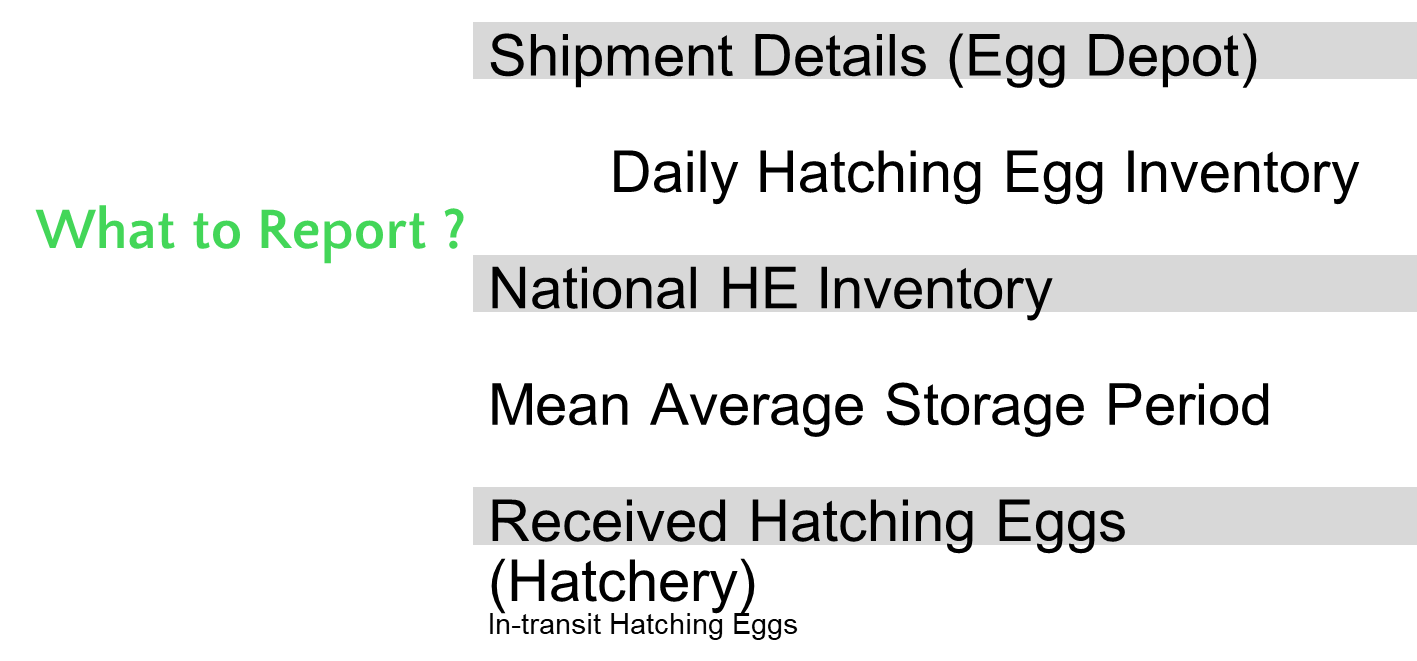
what to report?
Hatching Egg Shipment Detail (Egg Depot)
✔ Shipment details are posted daily to inform the hatchery recipient of their incoming delivery
✔Detail includes farm sources with production date, quantity and breedevage; reefer van number, seal and packaging information.
Daily Hatching Egg Inventory
✔ Daily Ending Inventory (after setting) of every hatchery is posted with complete details of quantity per production date and the corresponding storage period.
National Hatching Egg Inventory
✔ National Hatching Egg Inventory are consolidated every Monday- Wednesday- Friday to monitor trend of actual inventory (National versus forecasted Hatching egg)
EGG ROOM UTILIZATION
✔Egg room utilization are posted daily as basis in planning out hatching egg delivery either from Egg Depot or direct from breeder farm.
IN-TRANSIT HATCHING EGGS
✔Hatching Eggs at in-transit with corresponding storage period are monitored. Data will be used in addition to Hatchery inventory to compute the Total National Inventory.