NSG 3320: Neurodevelopmental Disorders
 Call Kai
 Learn
Learn Practice Test
 Spaced Repetition
 Match
Match Flashcards
 Knowt Play
1/40

There's no tags or description
Looks like no tags are added yet.
Name | Mastery | Learn | Test | Matching | Spaced | Call with Kai |
|---|
No analytics yet
Send a link to your students to track their progress
41 Terms
Developmental disability (aka neurodevelopmental disorder)
Umbrella term for mental and/or physical disabilities that cause impairments in various aspects of a person's life and originate prior to 18 years of age
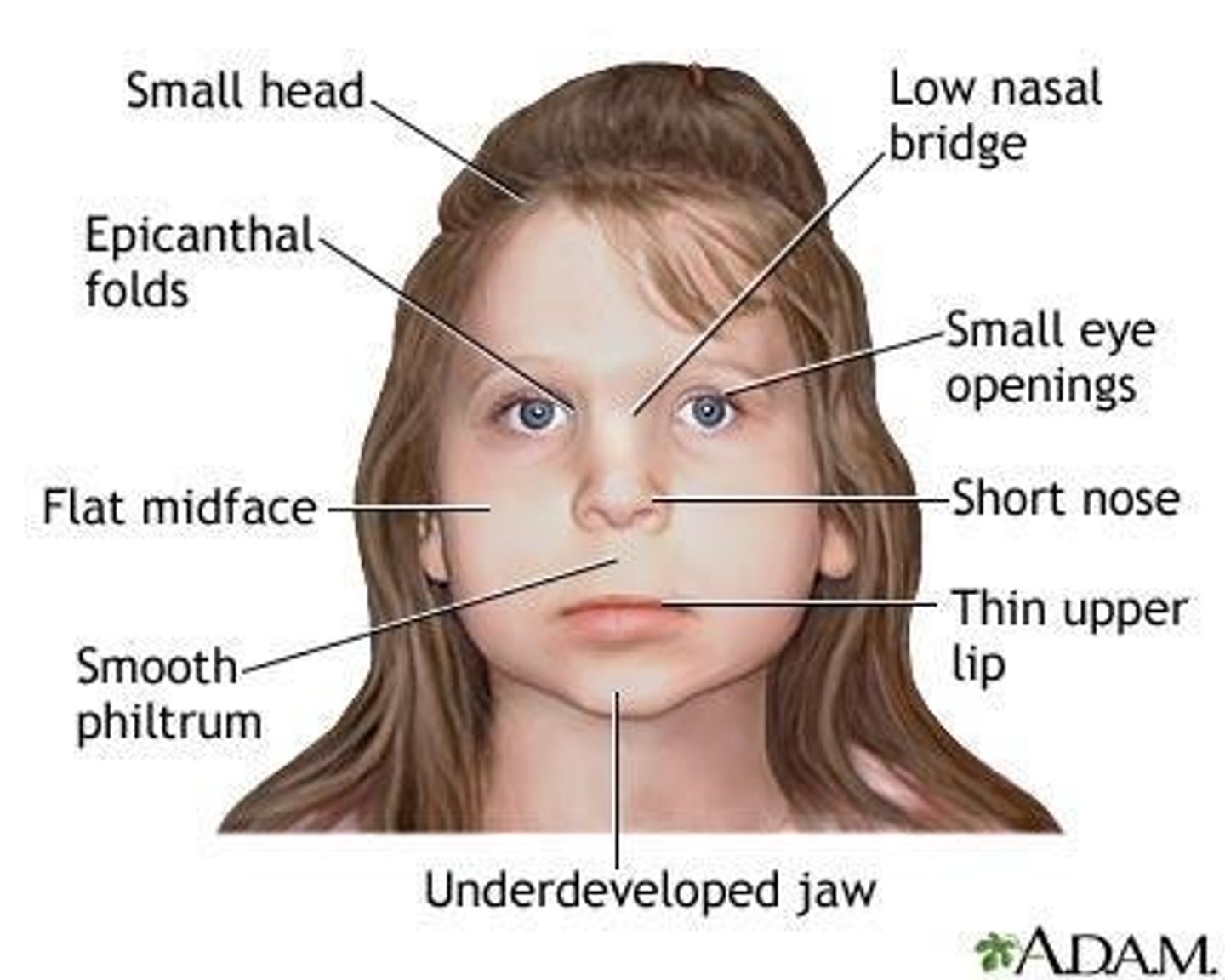
Fetal alcohol spectrum disorder
Disorder affecting people whose mothers consumed large amounts of alcohol while they were pregnant; results in impaired neurocognitive functioning, impaired self-regulation, impairment in adaptive functioning
True
True or false? FASD does not always include characteristic facial features
Confabulation
Occurs when brain unconsciously takes pieces on info from day and weaves them together to form a new memory; can sound like lying, fabrication or stories, but to pt with FASD it is a real and true memory
Information processing deficit
Occurs when information is recorded, interpreted, stored, or retrieved; person with FASD may take longer to process information/cannot process it at all; other's may perceive this as the person being a "poor listener"
Sensory overload
Amount of noise, light, smells, or touch makes someone fell so uncomfortable that they are overwhelmed, cannot focus, and "shut down"; becomes difficult for them to calm down and other may perceive them as inattentive
Dysmature
Characteristic of people with FASD; difficulty meeting a developmental milestone and outsiders may view them as immature and not acting their age; chronological age is 12 but age their brain functions at is 7
Cause and effect
People with FASD struggle with this; it means they cannot connect their actions to the possible consequences; may be labeled "impulsive" by outsiders
Abstract vs Concrete
Concepts such as time, money, sarcasm, and metaphors are considered abstract and are sometimes confusing or difficult for people with FASD to understand; best to explain things using plain language and concrete examples
Everyone!!!
Which pregnant persons should the universal alcohol screening be used with?
Strengths based (identify what the patient enjoys, is good at, times they have been successful)
What kind of approach should be used with FASD patients?
Intellectual disability
Developmental disorder with:
1. Deficit in cognitive functioning
2. Deficit in 1+ domain of adaptive functioning (conceptual, social, practical domains)
3. Onset during development (before 18-21 y/o)
Cognitive functioning
Reasoning, judgement, academic and experiential learning; evaluated clinically and by IQ testing (must be below 70 to qualify as ID)
Conceptual domain
Communication/language, reading, writing, math
Social domain
Social judgement, friendship making abilities, empathy
Practical domain
Independence in ADLs and role function
SLP, OT, PT, developmental stimulation
What are some early intervention services for people with IDs?
STOMP campaign
Stopping overmedication of people with developmental disabilities
Autism spectrum disorder
Disorder that appears in childhood and is marked by significant deficiencies in communication and social interaction, and by rigidly fixated interests and repetitive behaviors
Deficits in social reciprocity, nonverbal behavior, and relationship development, maintenance, and function
What are some example of impaired social communication and social interaction seen in ASD?
Repetitive movements, insistence on sameness, restricted interests, hyper/hypo-reactivity to sensory input
What are some restrictive/repetitive patterns of behavior, interest, or activities seen in ASD?
50%
What percentage of people diagnosed with ASD have a concurring intellectual disability?
False (3x more prevalent in boys, underrecognized in girls)
True or false? ASD is more prevalent in girls yet continues to be underrecognized in them
Applied behavioral analysis
Intensive treatment for autism, based on operant conditioning; involves analyzing antecedent (what happened before they engaged in the behavior), specific behavior, and the consequence (how does the child respond, how does the family respond)
Disability discrimination related traumas
Bullying/exclusion, service navigational barriers, exclusion/discrimination from mainstream health and social services, denial of autonomy and person directed care
Assumed
As nurses, we should be shifting our mindset from a trauma informed approach to a trauma ____________ approach.
Reasonable adjustment
Making services accessible and effective in advance to a person using the service when possible
Health passport
A collection of information that allows people to express biopsychosocial needs and preferences in an easy-to-share format; shares a photo, likes/dislikes, supports needed, medical hx, current medication, how the person copes with procedures/stressors
Aspiration, bowel obstruction, dehydration, seizures, sepsis
Fatal five preventable prevalent causes of death in patients with IDD
False
True or false? Paid caregivers are legally permitted to be SDM or to provide consent for treatment
Examples of nonverbal communication
Vocalizations, facial expressions, gesturing, postural movements, sign language, augmentative communication strategies, technical tools
True
True or false? You should avoid saying "no" and "don't" with patients with IDDs
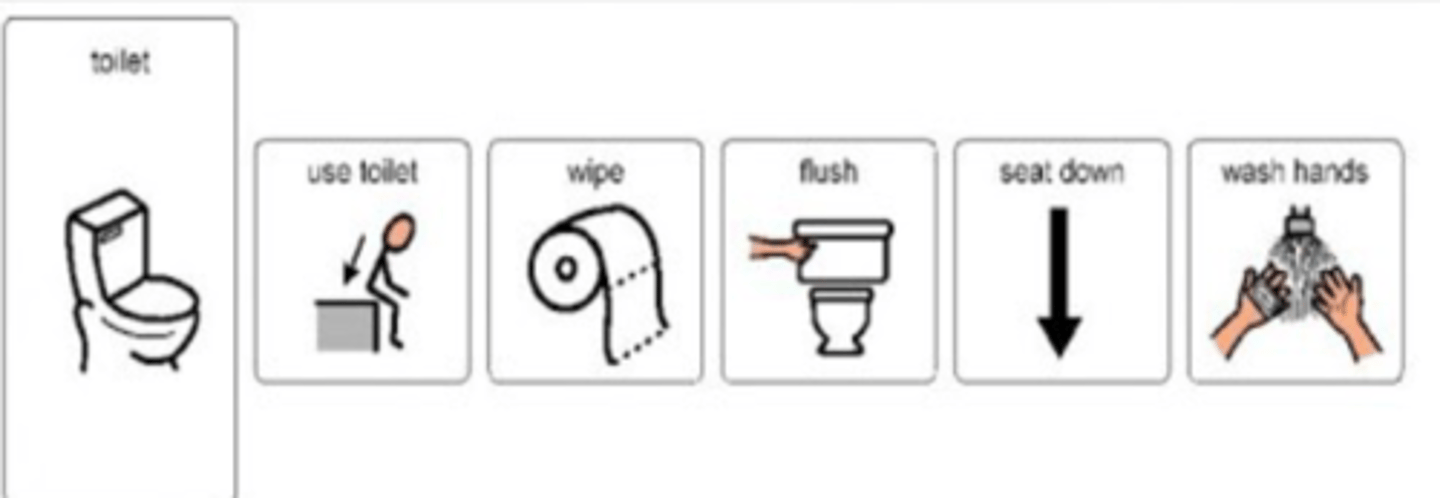
Visual schedule
A sequence of events depicted by visual media. These events occur during portion of a day, a day, a week, month, etc.
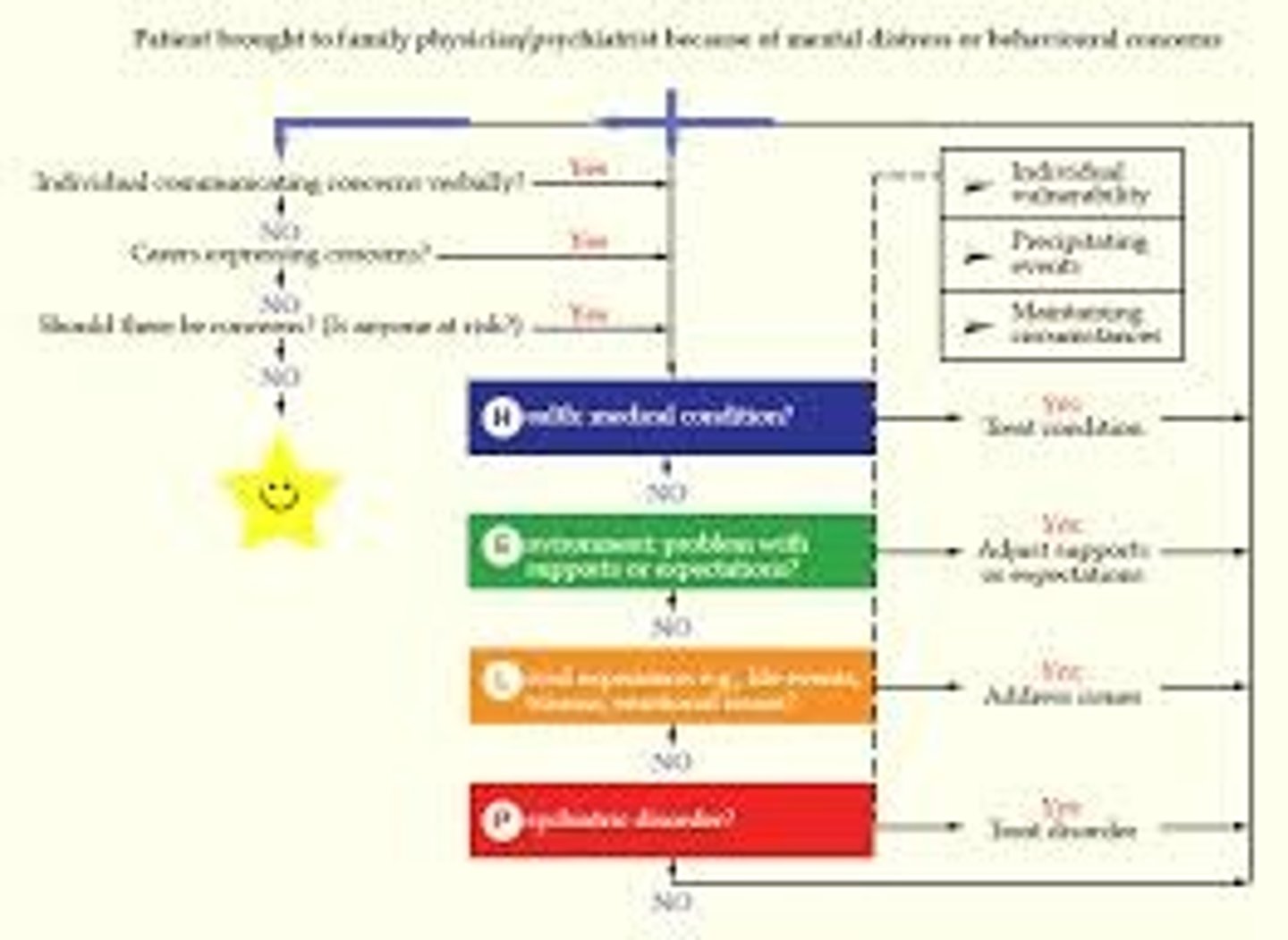
HELP framework
Health: head to toe assessment, pain
Environment: assess adaptive skills, necessary supports
Live experience and emotional wellbeing: identify traumas and vulnerabilities
Psychiatric disorder: systemic eval
Attention-deficit/hyperactivity disorder (ADHD)
Persistent pattern of inattention, hyperactivity, and impulsivity that is inappropriate for developmental level; inattentive, hyperactive/impulsive, combined
Consistency of problematic behavior
What is a key feature of ADHD?
Methylphenidate, amphetamine
Pharmacological options for ADHD
Oppositional defiant disorder
Persistent pattern of disobedience, argumentative/angry outbursts, low frustration tolerance, and blaming others; treated with behavioral management
Difficulty making friends, low confidence, difficulty with authoritative figures, academic problems, angry/irritable mood, actively defies/refuses to comply with requests
Signs and symptoms of oppositional defiant disorder
Conduct disorder
Repetitive and persistent pattern of behavior in which the basic rights of other or major society rules are violated
Diagnostic criteria: aggression to people/animals, destruction of property, deceitfulness/theft, serious violations of rules
Limit setting, time out, daily schedule
Accept the child not the behavior, diary for reflection of emotions, practice problem solving skills
Teach appropriate social skills, provide positive feedback for acceptable behavior
Nursing interventions for conduct disorder