M5 Systemic Contributors to Maltreatment in Sport
 Call Kai
 Learn
Learn Practice Test
 Spaced Repetition
 Match
Match Flashcards
 Knowt Play
1/21

There's no tags or description
Looks like no tags are added yet.
Name | Mastery | Learn | Test | Matching | Spaced | Call with Kai | Chat |
|---|
No analytics yet
Send a link to your students to track their progress
22 Terms
Evidence of Systemic Maltreatment
Prevalence Studies
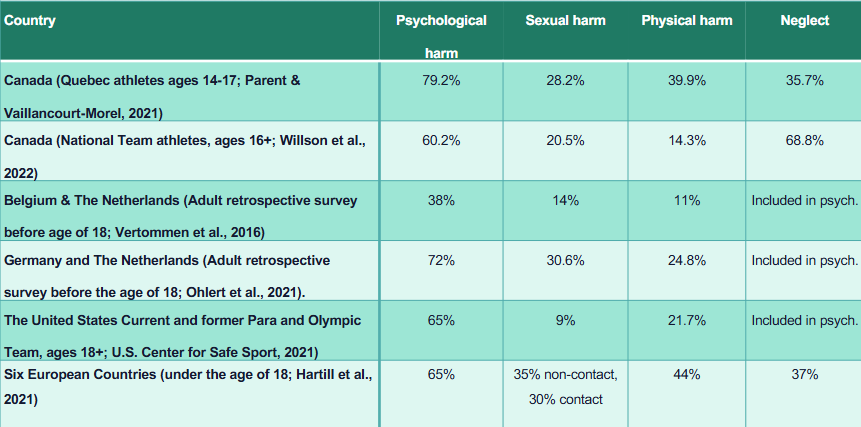
Key Findings Across Studies
Rates of harm are relatively consistent globally
Psychological harm is most frequently reported
Neglect was sometimes grouped w/ psychological harm in earlier studies, lacking distinct numbers
Early studies lacked standardized surveys, leading to variations in categorization (e.g. one Quebec study categorized “exercise as punishment” as psychological harm)
Shift in Narrative
Not “Bad Apples”: The prevalence (e.g. 70% emotional abuse, 28% sexual harm, 30-33% physical harm) indicates it’s not isolated “evil” individuals, but a systemic problem
Multiple Victims and Perpetrators: Athletes can be victims; coaches are not the sole perpetrators (for instance, sexual harm is often reported from peers)
Cross-Discipline/Sport: Maltreatment is not specific to one sport (e.g. gymnastics, bobsled, diving, soccer, rugby) or country
Core Issue: Questions the culture of sport (Canadian and global) that tolerates and enables such environments
Systemic Contributors (Roberts, Sojo, and Grant 2019)
Structural Factors
Social Factors
Organizational Factors
Structural Factors
Formal and informal parameters in an organization
Power Imbalance
Winner-Takes-All / Own the Podium
Isolation
Power Imbalance
Gap between athlete’s voice and coach’s authority
Normalization: Athletes feel unable to speak up or refuse harmful treatment due to normalized power dynamics
Lost Opportunities: Fear of losing scholarships, team sports, or career prospects
Coach Success: Successful coaches (e.g. Olympic athletes, high win rates) are often excused, their methods deemed correct despite internal harm
Winner-Take-All Format
Winning brings benefits: honours, sponsorships, recognition, prize money
Canadian Sport Funding Historical Context:
Majority of national-level sports funded by Sport Canada (federal government)
Budget Stagnation: Budgets remained constant for ~20 years (late 2000s until recently), while costs increased
Recent Investment: Secretary of Sport van Koeverden, announced an increase of $168 million in funding (historic, first since late 2000s)
Athlete Funding: Increased 2 years ago, but still around $20,000/year (often sole income for full-time athletes), leading to reliance on sponsors, parents, or going into debt
Own the Podium
Mandate: Provides additional funding for organizations with Olympic/Paralympic medal potential
Impact: Created a “win at all costs” mentality
Organizations (esp smaller ones reliant on scarce funding) need OTP money to sustain themselves
Pressure to demonstrate medal potential means pressuring coaches to produce winning athletes
Belief that “harder push = better performance” (though debunked)
Diminishes other aspects of sport enjoyment
Isolation
Particularly in winter sports, athletes may spend extended periods away from home (half the year) for training/competition
Closed Circuits: There’s limited oversight
Rule of Two Limitation: Two coaches collaborating against one athlete can put the athlete at further risk
Social Factors
Conformity of Dominant Values
Belief in Instrumental Effects of Maltreatment
Organizational Norms
Conformity of Dominant Values
Sport Ethic
Belief in specific athlete behaviours (e.g. self-sacrifice for sport, commitment)
Athletes internalize that they must do anything to be an athlete
Masculinity
Strong link between sports and demonstrated masculinity (e.g. hockey, football)
Aggression, dominance, heteronormativity are common descriptions
Relates to hegemonic masculinity and cultural norms turning a blind eye to certain behaviours (e.g. “triangle” of sexual maltreatment lecture)
Research on hockey players persona and its link to cultures of sexual violence
Historical Success
Coaches who consistently win are often given “leeway,” involving turning a blind eye towards their problematic behaviours
Belief in Instrumental Effects of Maltreatment
Rationalization of behaviours as “necessary or useful” for performance
Organizational Norms
Bystander Inaction: Lack of intervention from those aware of maltreatment
Preventing Close Relationships:
Policies like the Rule of Two aim to prevent one-on-one communication, but coaches expressed concerns about impacting athlete relationships
Evidence suggests coaches can maintain close relationships while respecting boundaries
Role Ambiguity
Depersonalization of the Athlete: Treating athletes as machines, warriors, invincible, or tools for performance, rather than as humans with needs and limits
Brofenbrenner’s Ecological Systems Theory
Model that examines individual factors, different types of relationships, and their dynamic interactions across five environmental systems
Microsystem
Mesosystem
Exosystem
Macro System
Chronosystem
Microsystem
Deals with the individual person
Examples of impacting factors
Demographics (age, gender, race/ethnicity, sexual identity)
Health and status
Psychological (e.g. personality, confidence levels, mental health)
History (past history w abuse, history of violence)
Sport Experience (previous positive or negative experiences in sport
Vulnerability: These factors can increase or deccrease an individual’s vulnerability to maltreatment
Mesosystem
Interactions between a person and their immediate surroundings; individual development impacted by direct relationships
Examples: Family, school, church, peers, coaches, teammates
Dynamics:
Authority: Power dynamics within these relationships (e.g. coach’s authority)
Parental Role: parents’ behaviours (supportive, turning a blind eye, yelling, giving wrong messages, consenting to coach behaviours)
Critical vs Non-Critical Relationships: Differences in closeness and impact
Exosystem
Interactions between different microsystems, influencing the individual indirectly (e.g. interactions between family and peers; what the individual sees and the messages they receive)
Examples:
physio and coach witnessing harm and interacting (or not) about it
Parents consenting to or justifying coach’s behaviours
Expectations and Tolerance:
parents socialized to tolerate behavoiurs, turning a blind eye
justifying coaches’ actions (“coach knows best”)
Example:
Tampa Bay Lightning coach making misogynistic comments; previously tolerated, now criticized due to evolving social norms leading to apology
Macrosystem
Larger systems at play such as policies, media, and industries, not necessarily individual interactions
Examples:
Policies and procedures regarding background screenings, reference checks, police checks
UCCMS (prior to this, no widespread policies existed before for maltreatment, especially for emotional abuse)
Duty to Report: Legal obligation to report suspected child abuse
Onboarding and Education (gaps between research and practice/coach education)
Reporting system availability and accessibility
Chronosystem
Ideologies, culture, cultural values, socioeconomic conditions, and the recognition of cultural changes over time
Examples:
Mass media and how maltreatment is portrayed (e.g. “exercise as punishment” in movies)
Sport Exceptionalism: belief that sport is unique and should be self-regulated, often circumventing broader legal systems (e.g. Sport Dispute and Resolution Centre of Canada, faster appeals for athletes). This can lead to reliance on sport norms over general social norms
Masculinity and Sport Ethic
Performance Outcomes: Cultural focus on winning
Proto-System
Cultural changes over time
Things acceptable 10-15 years ago are less so now (Me Too movement, Gymnast Alliance, social media, increased media coverage)
e.g. emotional abuse was not recognized in sport discourse previously
Stirling and Kerr Diagram (adapted from Brofenbrenner)
Individual Level: Unrealistic performance expectations, poor management skills, other life events
Microsystem: Close coach-athlete relationships, “more is better” belief
Mesosystem: Isolation, lack of monitoring
Macrosystem: Cultural acceptance of violence/aggression, media messages not condemning abuse, performance-based culture
All these factors combine to create a unhealthy environment
Mini Presentations
Various mini presentations occur from here on