Cell Organelles 3.2.1
 Call Kai
 Learn
Learn Practice Test
 Spaced Repetition
 Match
Match Flashcards
 Knowt Play
1/15

Earn XP
Description and Tags
Name | Mastery | Learn | Test | Matching | Spaced | Call with Kai | Chat |
|---|
No analytics yet
Send a link to your students to track their progress
16 Terms
Name the (eukaryotic) animal cell organelles
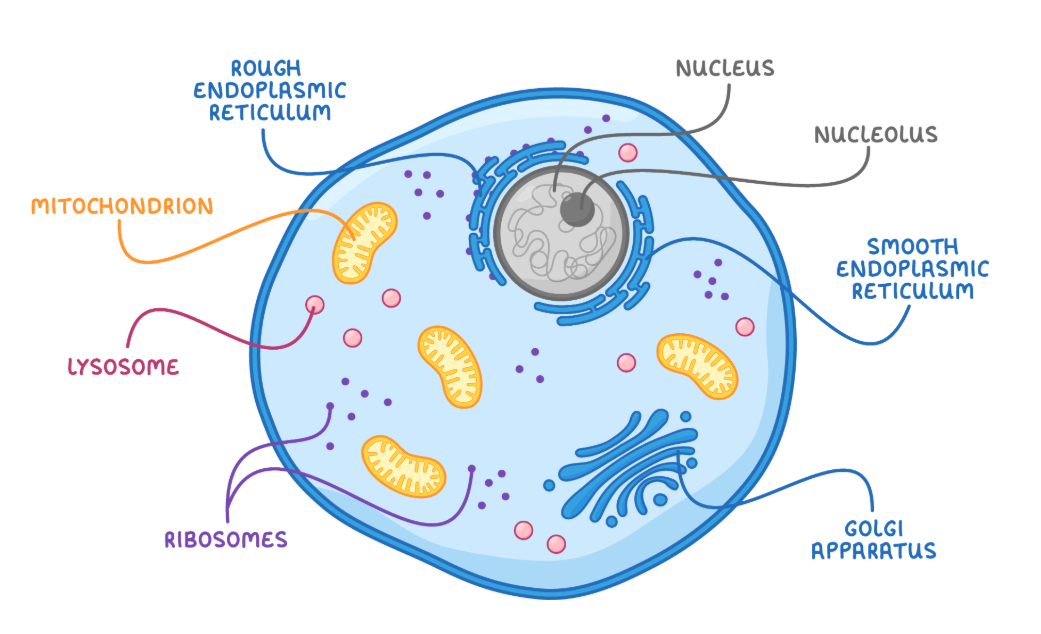
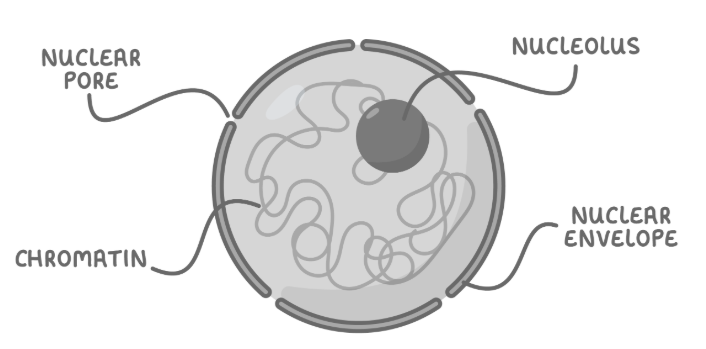
Nucleus
Contains genetic information and nucleolus, surrounded by a nuclear membrane containing pores.
Controls the cells activities, contains (DNA) instructions to produce proteins. Synthesis of ribosomes. Substances can enter/leave the nucleus via pores.
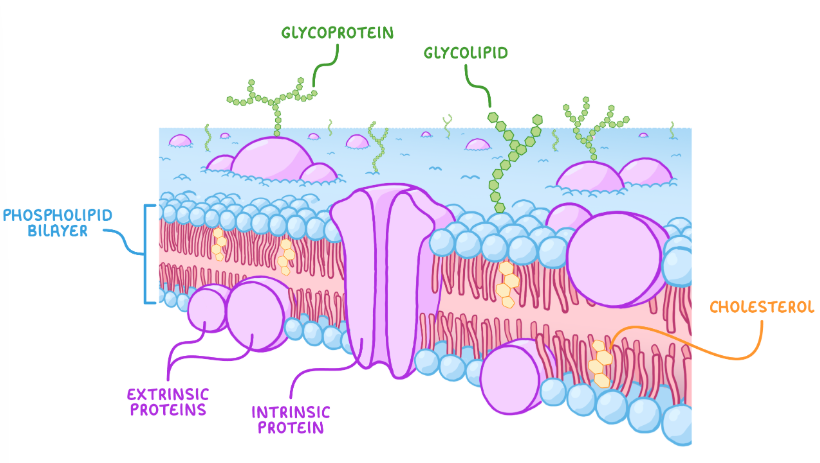
Cell-surface membrane
Made of a phospholipid bilayer, containing cholesterol, glycoproteins, glycolipids, channel proteins and carrier proteins.
Controls movement of substances into/out of the cell (is partially permeable) and is involved in cell signalling.
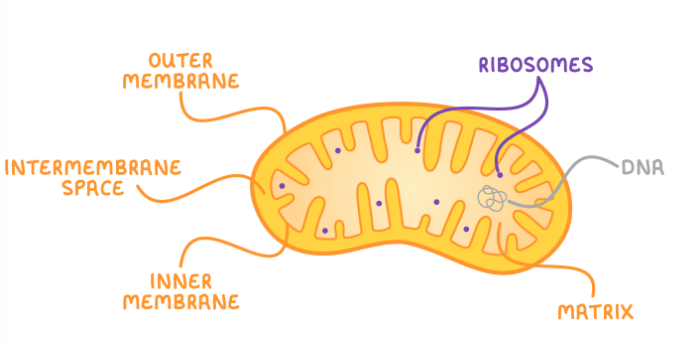
Mitrochondria
A double membrane, with the inner membrane folding to form cristae. Contains a liquid called matrix. Contain their own DNA and ribosomes (endosymbiotic theory).
Site of aerobic respiration, produces ATP.
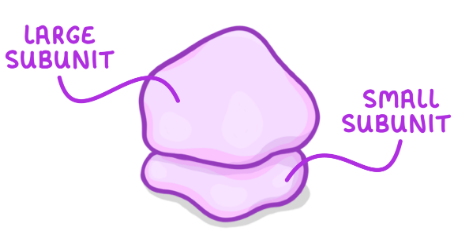
Ribosomes
80S ribosomes in eukaryotic cells. Made up of proteins and rRNA. No membrane, large and small subunits.
Site of protein synthesis (translation).
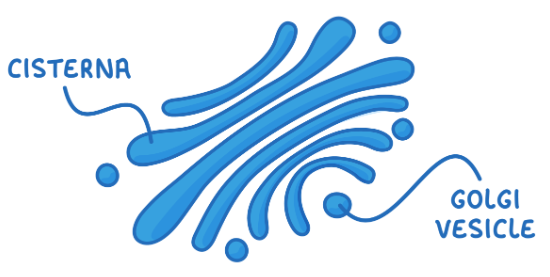
Golgi apparatus/body
Contain fluid-filled, membrane-bound sacs called cisternae. Contain vesicles.
Cisternae process and package lipids and proteins. Vesicles store and transport lipids and proteins. Some vesicles synthesise lysosomes.
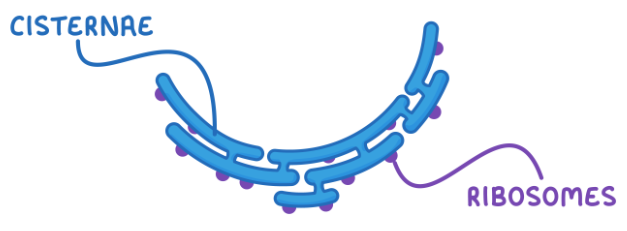
Rough endoplasmic reticulum
A network of cisternae (membranes enclosing fluid-filled space) covered with ribosomes.
Synthesise and transport proteins (that are made by the ribosomes).
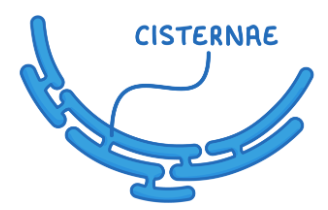
Smooth endoplasmic reticulum
A network of cisternae (membranes enclosing fluid-filled space).
Synthesise, store and transport lipids and carbohydrates.
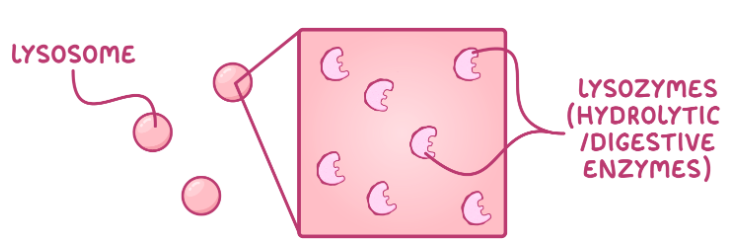
Lysosomes
Hydrolytic enzymes, surrounded by a membrane.
Digest pathogens (during phagocytosis) and break down waste material.
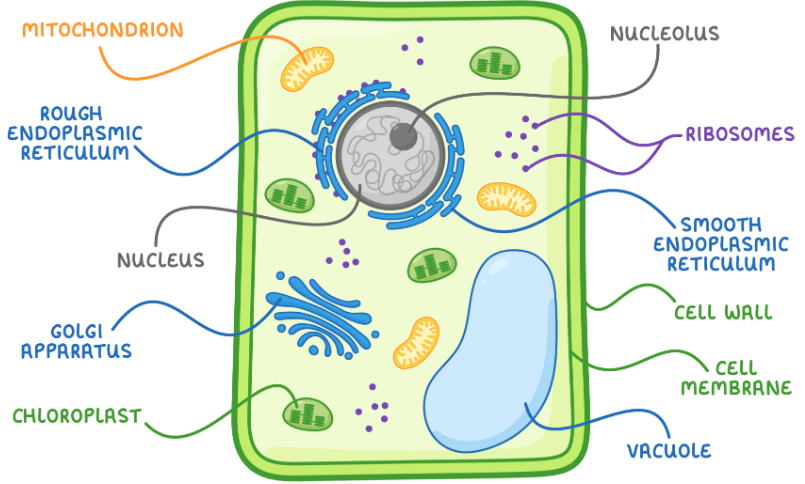
Name the (eukaryotic) plant cell organelles
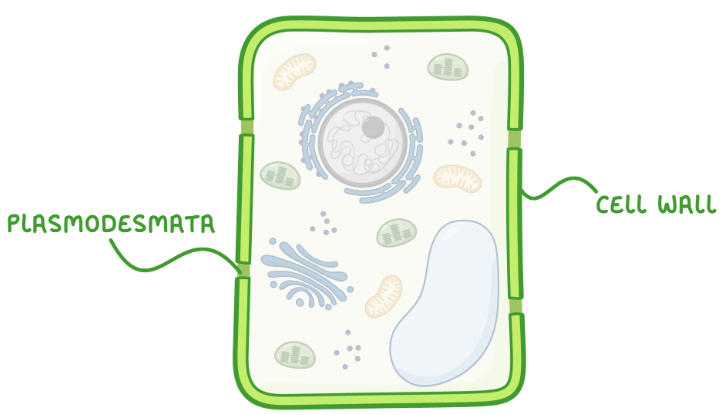
Cell wall (plants)
Made up of cellulose. Contains plasmodesmata (channels/gaps).
Provides structure and support, prevents cell from bursting (can withstand high osmotic pressure). Allows exchange of substances.
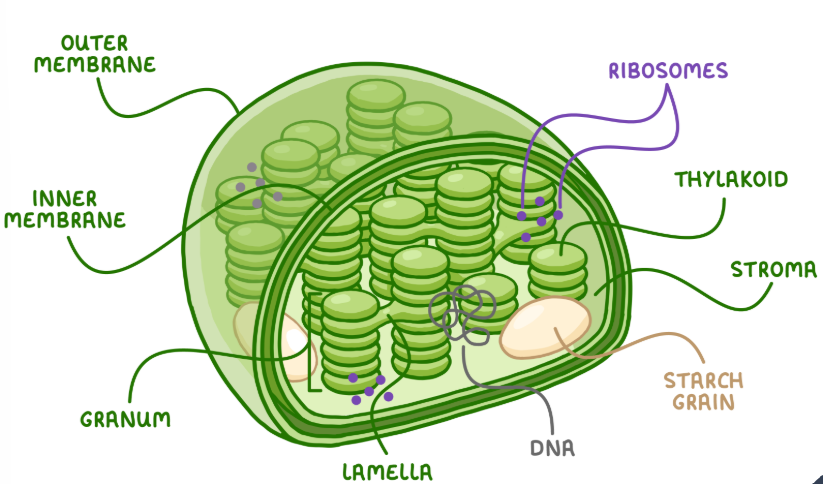
Chloroplasts (plants)
Surrounded by a double membrane enclosing stroma (fluid), thylakoids (fluid-filled stacks) which stack to form grana. Chloroplasts contain their own DNA and ribosomes (endosymbiotic theory).
Site of photosynthesis.
Vacuole (plants)
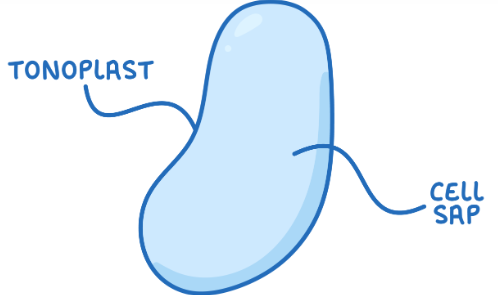
Contains cell-sap and is surrounded by a selectively permeable membrane known as tonoplast.
Maintains pressure within the cell which stops the plant from wilting.
Name the prokaryotic organelles
Features in all prokaryotes
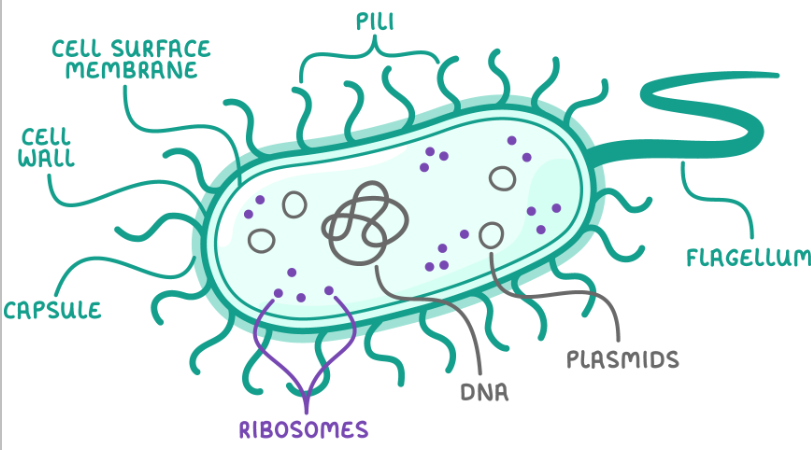
A cell wall made of murein.
Smaller 70S ribosomes.
Genetic material found in large circular strands of DNA and plasmids.
Additional/optional prokaryotic organelles
Capsule - an extra layer around the cell wall made of polysaccharides to protect the cell from antibiotics or WBCs.
Flagellum - a long hair-like structure which rotates to allow the cell to move.
Pili - short hair-like structures on the cell surface which attach to other cells/surfaces.