lectures 1-5
 Call Kai
 Learn
Learn Practice Test
 Spaced Repetition
 Match
Match Flashcards
 Knowt Play
1/84

There's no tags or description
Looks like no tags are added yet.
Name | Mastery | Learn | Test | Matching | Spaced | Call with Kai |
|---|
No analytics yet
Send a link to your students to track their progress
85 Terms
What was the first advancement in biomaterials?
The spare parts man
However, materials were very hydrophobic and rigid
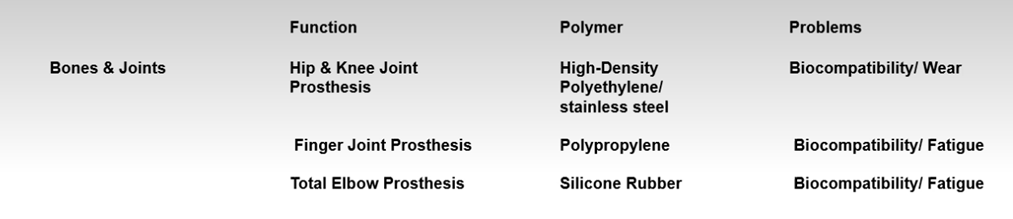
Name some examples of biomedical applications for polymers in bones and joints
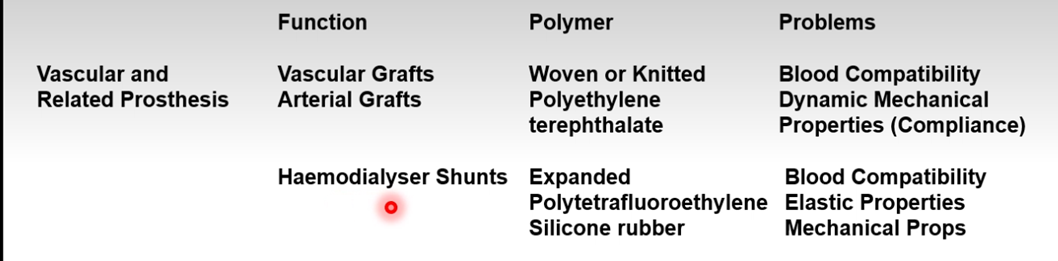
Name some examples of biomedical applications for polymers in vascular prosthesis
Name some examples of biomedical applications for polymers in soft tissue

Name some examples of biomedical applications for polymers in ducts and canals

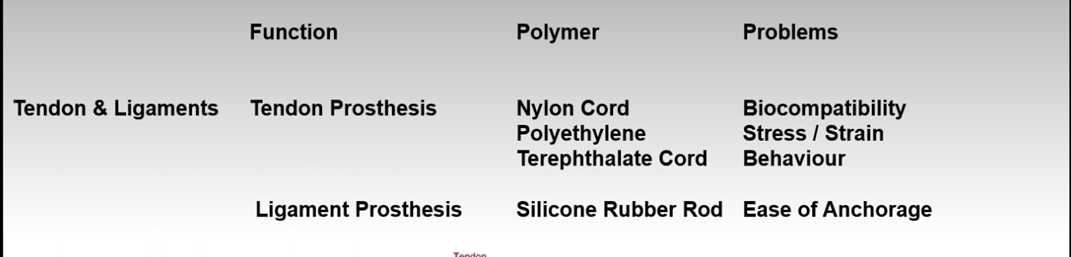
Name some examples of biomedical applications for polymers in tendons and ligaments
Sketch and label a hip joint prosthesis
Why is there a wire wrapped around the plastic cup of a hip joint prosthesis
so it can be located on an x-ray
What materials are use to make hip joint prothesis and why?
Polyethylene is the main polymer used for the acetabular cup.
Ultra high molecular weight polyethylene is used because it has an excellent combination of water resistance and low friction
Why isnt LDPE used?
It is highly branched and very difficult to pack together
How is methyl methacrylate polymerised using redox reactions?
With the use of fentons reagent
Fe2+ catalyses the breaking of the O-O bond of hydrogen peroxide
Fe2+ + H2O2 —> Fe3+ + OH. + OH-
What is fentons reagent used for
It is used to produce PMMA cement in situ
A mixture of PMMA and methyl methacrylate monomer makes a paste
It is divided into 2 parts with one containing DMPT and another containing benzoyl peroxide
When these are mixed together, they generate radicals and the monomer polymerises
What are the major ways in which a hip joint prosthesis fails?
Femoral stem shifts and loosens: This is vey painful. it also introduces a site for bacterial to grow and cause infections. infections in this region of the body are very difficult to treat
PMMA cement comes out of alignment: PMMA cement becomes polished due to abrasion against bone and results in a release of cement debris
Wear of polyethylene cup
What else can polyethylene be used for?
It can be used in dentistry for fake teeth
Draw the different structured of polyethylene
What were dumbetons studies
He examined 40+ polymers to see if any of them wear better than polyethylene
He applied a load ontop of a polymer and slid it across a smooth stainless steel substrate
He did this under wet and dry conditions
What were the outcomes of dumbletoms studies
Under dry conditions, many polymers were superior to polyethylene
Under wet conditions, the wear resistance of polyethylene was superior to others
this is because polyethylene does not have many polar groups for water to bond to
What did duncan dowson do?
He developed a hip joint simulator
What equation enabled lab wear to be compared with clinical tests
V= kWx
V= volume of material removed by wear (mm3)
k= wear factor(mm3/Nm)
W= applied load (N)
x= sliding distance (m)
Why did the explanted acetabular cups show more wear than lab experiments predicted?
because of the effect of surface roughness on wear
Sketch a graph of wear factor vs counterface roughness for wet and dry conditions
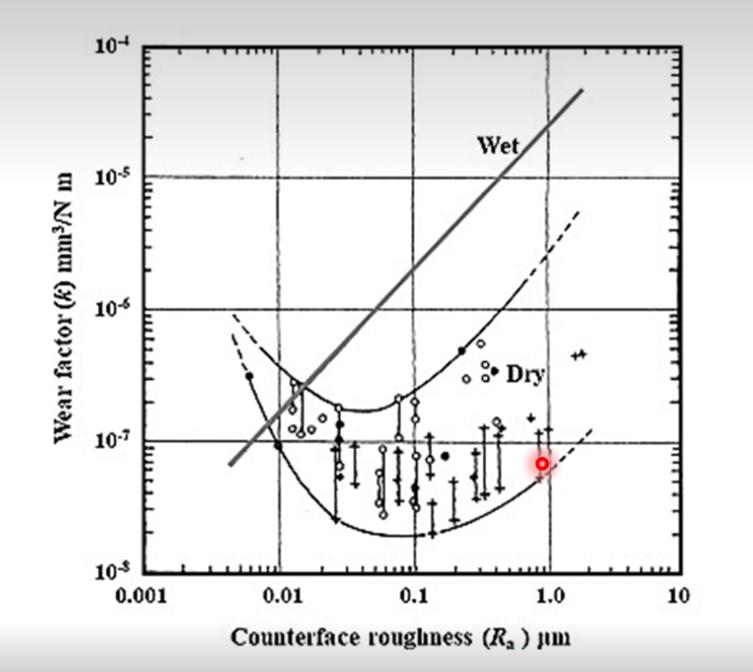
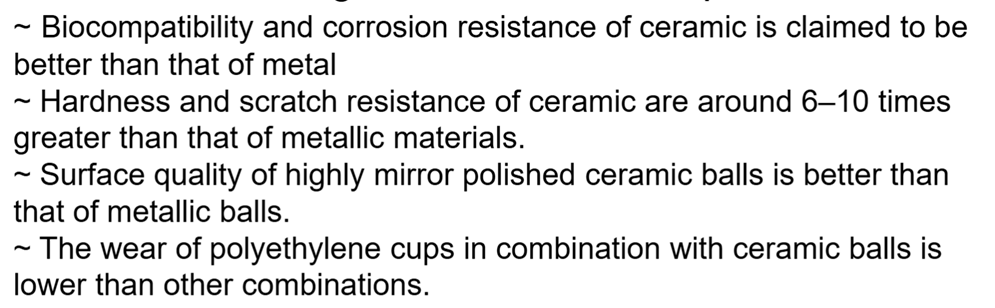
What are the advantages of using ceramic components in hip joint prosthesis
What are hydrogels?
A unique family of polymers that contain water as a part of its structure.
They are lightly crosslinked, water-swollen polymer networks of either natural or synthetic origin
What is the old definition of biocompatibility
the device should not adversely affect the environment in which it is placed, and should not itself be adversely affected by that environment
What is the new definition of biocompatibility
the device shall perform in the environment in which it is placed, with an appropriate host response.
This definition allows for biointegration and biodegradability
What are the desired properties of a biomaterial
Exposed hydrophilic groups
low interfacial tension
reversible and weakly bound
this forms a native protein layer (mainly adsorbed alubumin)
What are the undesired properties of a biomaterial
Exposed hydrophobic groups
High interfacial tension
irriversible and strongly bound
this forms a denatured protien layer(mainly adsorbed fibrinogen)
What are the response steps when a biomaterial interacts with blood
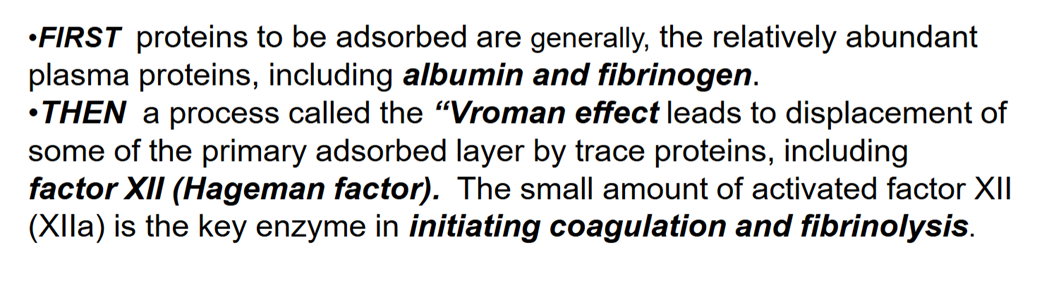
Describe how fibrinogen is used for clotting
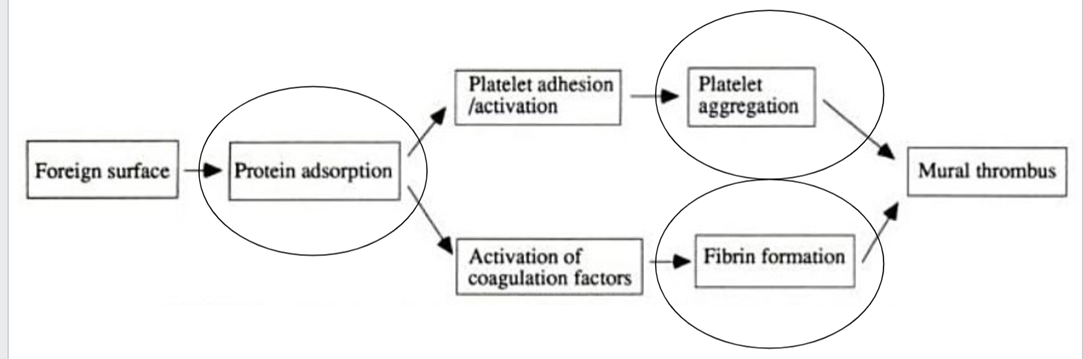
The flowchart is a schematic picture of thrombus formation
Fibrinogen is converted to a fibrin monomer in the presence of thrombin.
Then a fibrin dimer
Then a fibrin polymer for clotting
How are platelets involved in fibrin formation?
When there is a vascular lesion on smooth muscle cells, there is an adhesion of platelets
platelets begin to aggregate and form fibrin
How can we make blood compatible materials
Choose or design polymers with minimum platelet aggregation
Attach thrombin inhibitors to surface
Choose or design polymers with minimal protein (esp fibrinogen) adsorption
How can we minimise fibrinogen deposition when making biomaterials
we need biomaterials with low interfacial tension in biological fluids
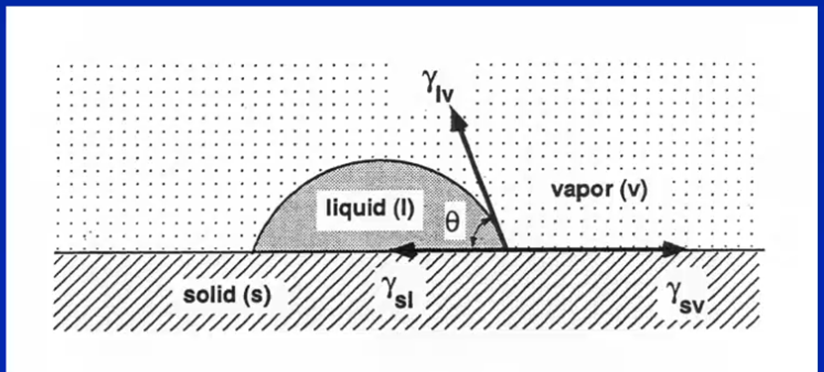
Draw and label a droplet of liquid on a solid surface
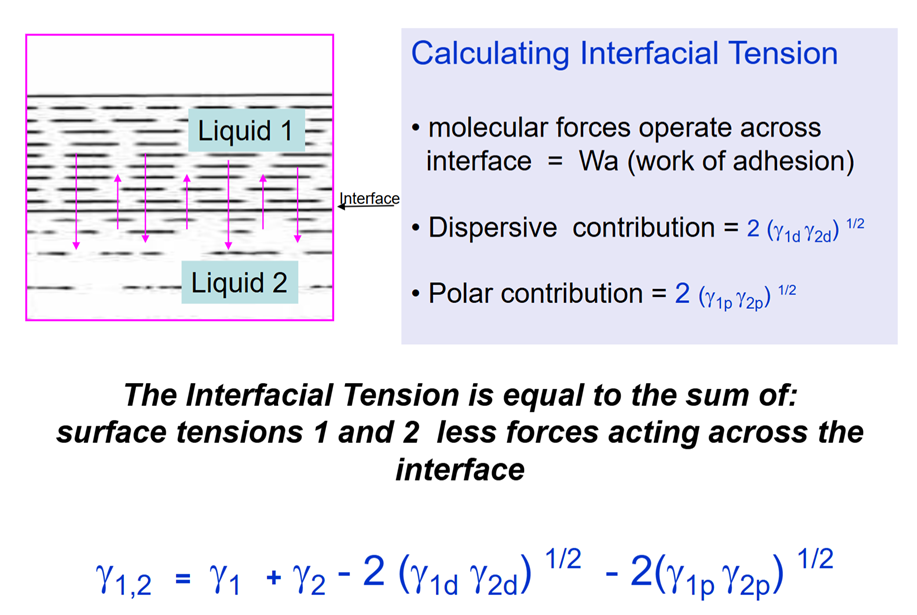
How do you calculate interfacial tension?
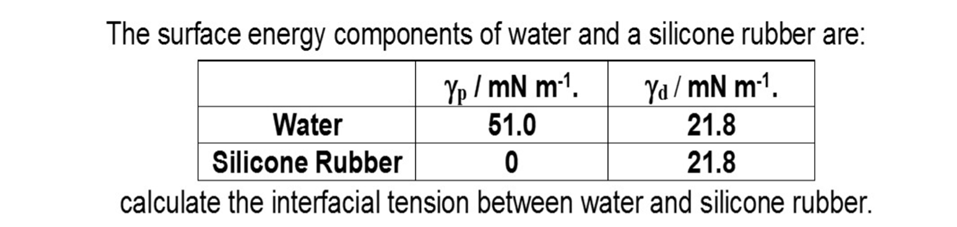
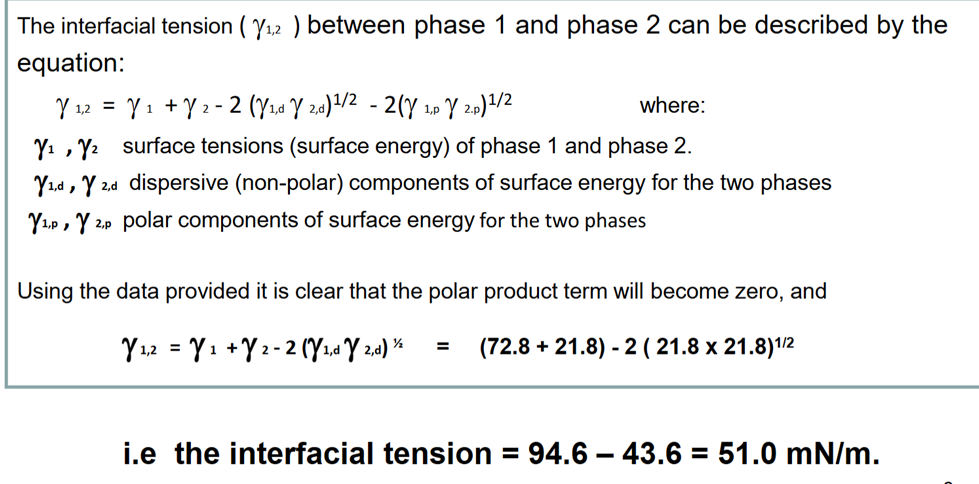
3 key points to remember about interfacial tension
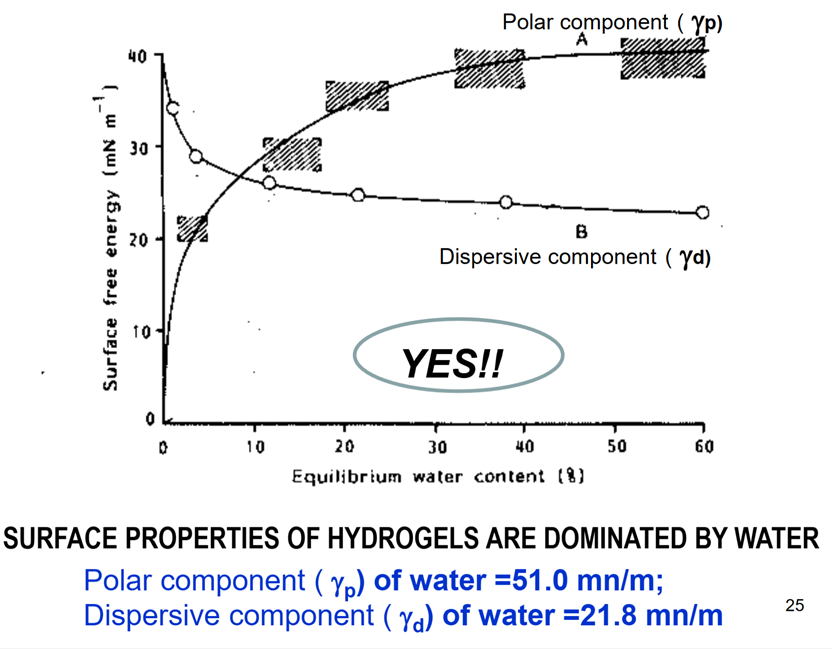
Surface Tensions γ are the sum of polar and dispersive components
Lowest values of Interfacial Tension arise when polar and dispersive
components of the two phases match (i.e. are equal)
If polar component of one phase is zero the whole polar product term
2 (γ1p γ2p) ½ becomes zero leading to a high interfacial tension
Who invented hydrogels?
Otto wichterle
What is the most important hydrogel to remember?
2-hydroxyethyl methacrylate (HEMA)
PolyHEMA hydrogel has an equilibrium water content (EWC) of 40% AND IS STABLE
What is the equilibrium water content (EWC)
The amount of water in hydrogels

Why is the equilibrium water content (EWC): such an important property ?
WATER IN HYDROGELS Acts as:
- A transport medium for dissolved species
- A surface energy 'bridge' between the polymer and the body
- A plasticiser-giving the materials flexibility
- A lubricant-reducing the coefficient of friction at the surface
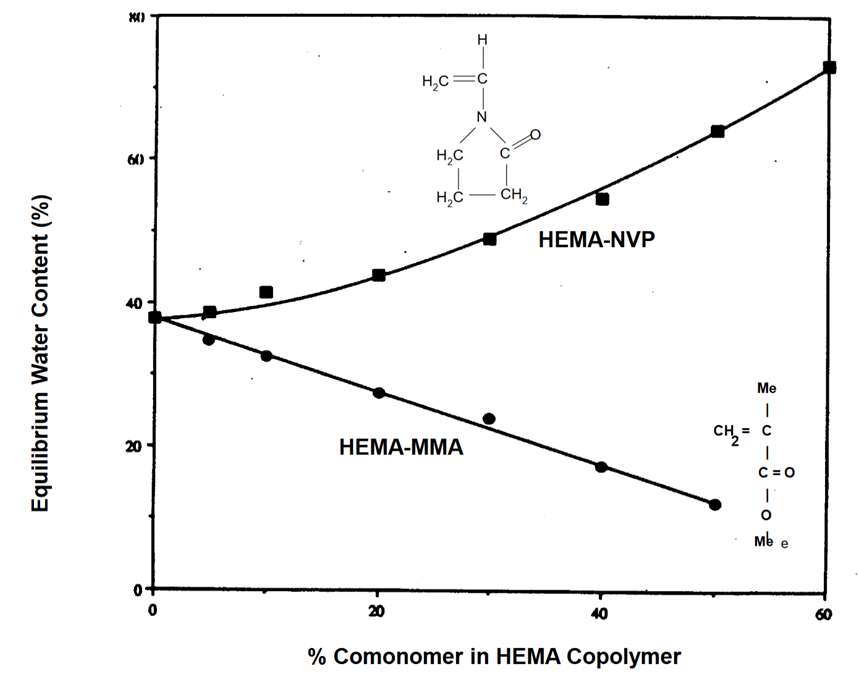
How can we control the water content of hydrogels ?
We see a progressive increase in water content as we move from methyl methacrylate through 2-hydroxyethyl methacrylate to N-vinyl pyrrolidone
sketch a graph to show the water content of HEMA-MMA, and HEMA-NVP
does the water have the desired effect on the polar component of surface energy ? Sketch a graph to show this
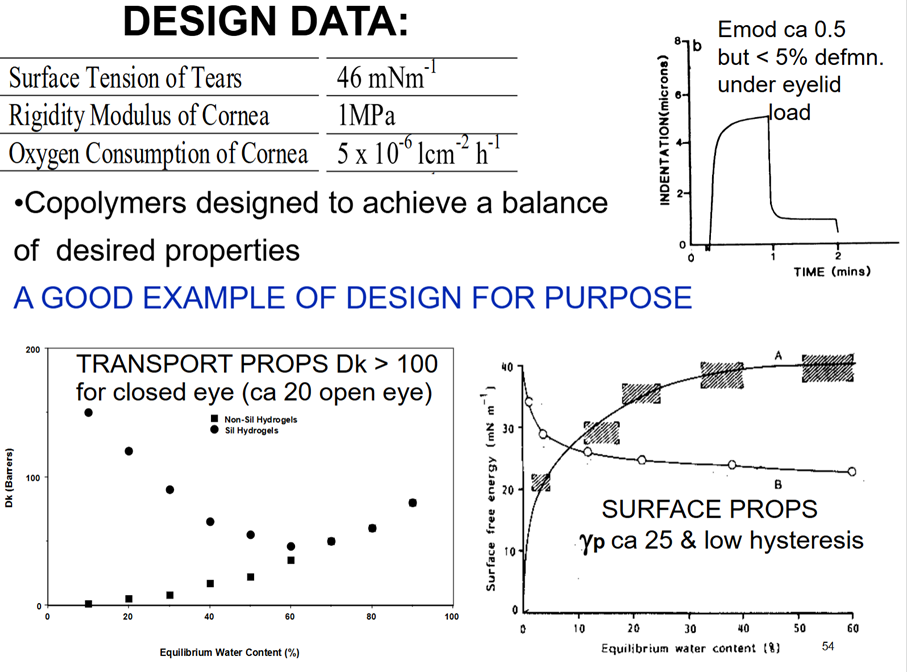
What did wichterle say ocular biomaterials should have?
• match the mechanical properties of the eye,
• allow diffusion of metabolites and oxygen
• be wettable by tears like natural tissue
• have compatibility with the host structure
What is biomimesis
1) examine the natural system
2) attempt to build a synthetic analogue
What soft tissues do we have that need to be kept hydrated?
eyes, mouth, lungs, joints
To what extent to hydrogels resemble natures molecules?
How is oxygen permeability affected as a function of water content?
as EWC increases, oxygen permeability increases. It also increases with temperature
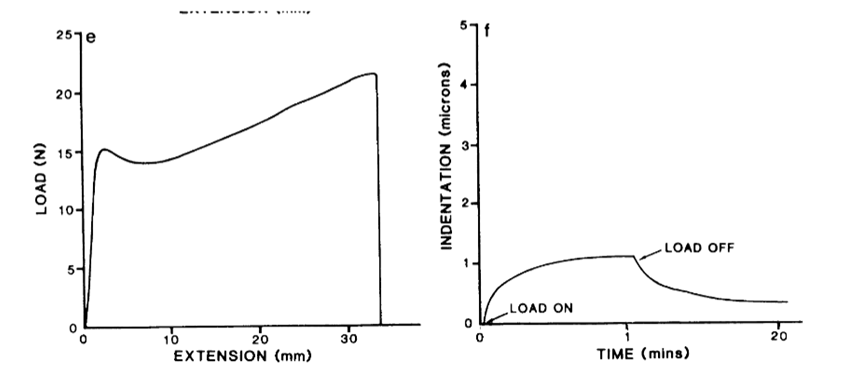
What are the mechanical properties of hydrogels in tension and compression with an EWC of 40%
They have elastic behaviour and rapid recovery
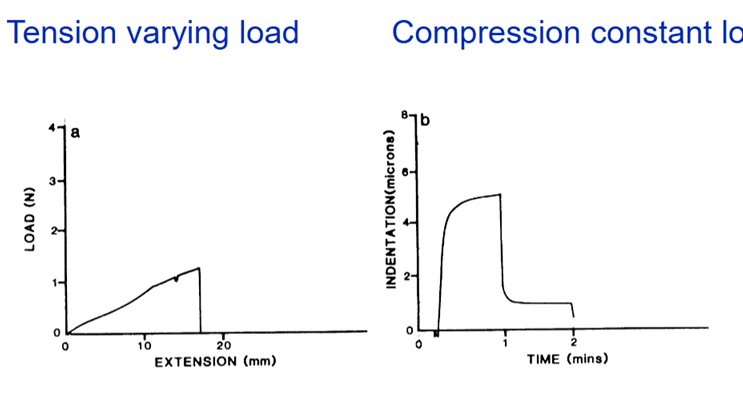
What are the mechanical properties of hydrogels in tension and compression with an EWC of 20%
They have plastic behaviour and a slow recovery
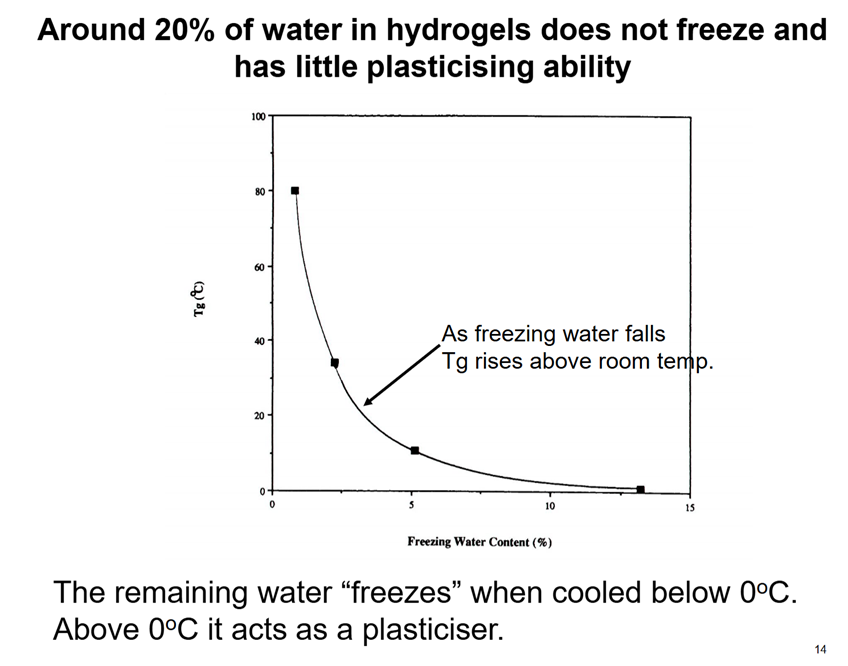
How do hydrogels freeze
What are interpenetrating networks?
usually consist of a linear reinforcing polymer and an entwined cross-linked hydrogel copolymer.
A similar principle governs the function of collagen which reinforces the hydrophilic matrix of natural hydrogels
This technology allows polymers to be synthesised which have
water contents similar to conventional hydrogels but which are
mechanically tougher and stronger
Why are N-vinyl pyrrolidone (NVP), N,N-Dimethyl acrylamide (N,N-DMA), and N-acryloyl morpholine good nitrogen containing monomers?
monomers have a double bond
in the presence of radicals they form an end chain
conjugation increases the rate of polymerisation and can give alternative sequences
What other type of polymers are good for hydrogels
Polyurethanes are an important nitrogen containing monomer
Name a monomer that can be added for additional solvent power
THFMA. It is a hydrophobic monomer used for additional solvent power
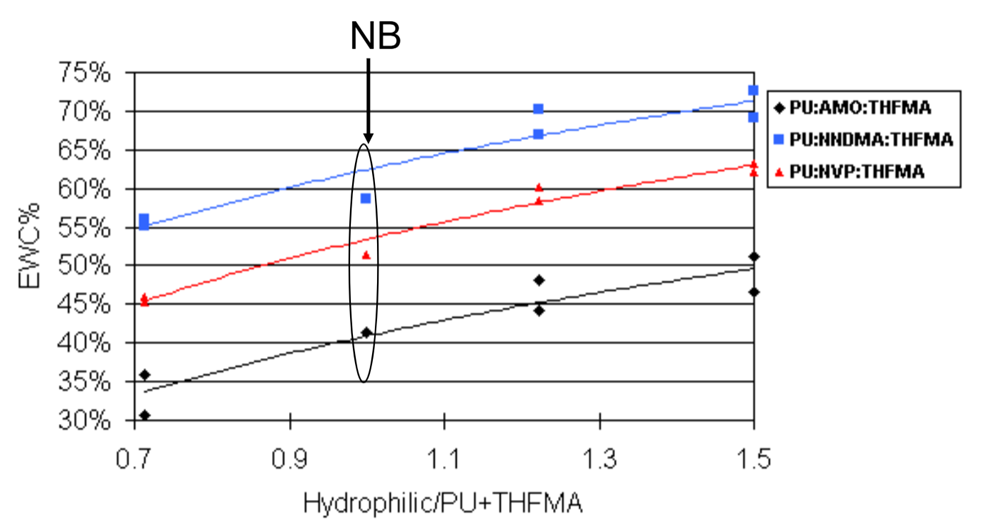
What is the effect of ratio of hydrophilic monomer to hydrophobic (polyurethane plus methacrylate) components on EWC
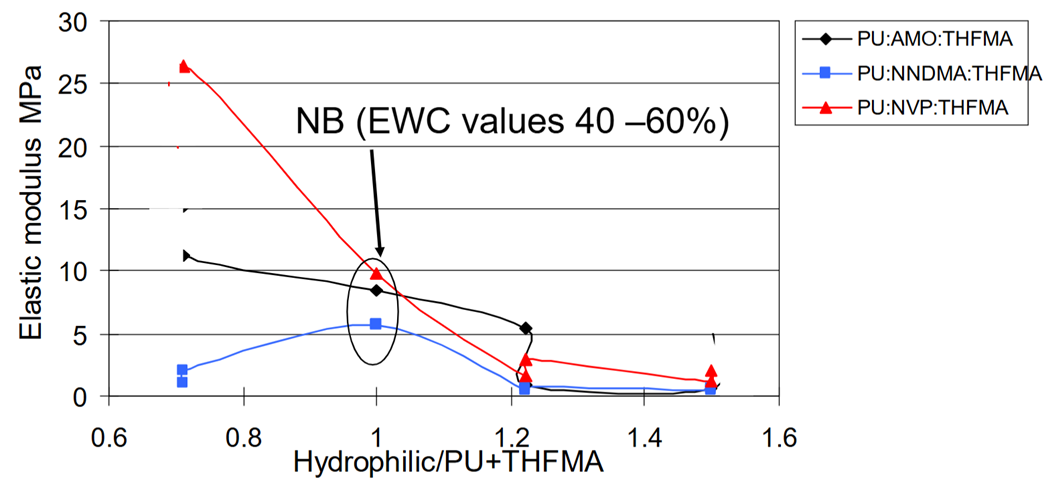
Effect of ratio of hydrophilic monomer to hydrophobic (polyurethane plus methacrylate) components on Elastic Modulus
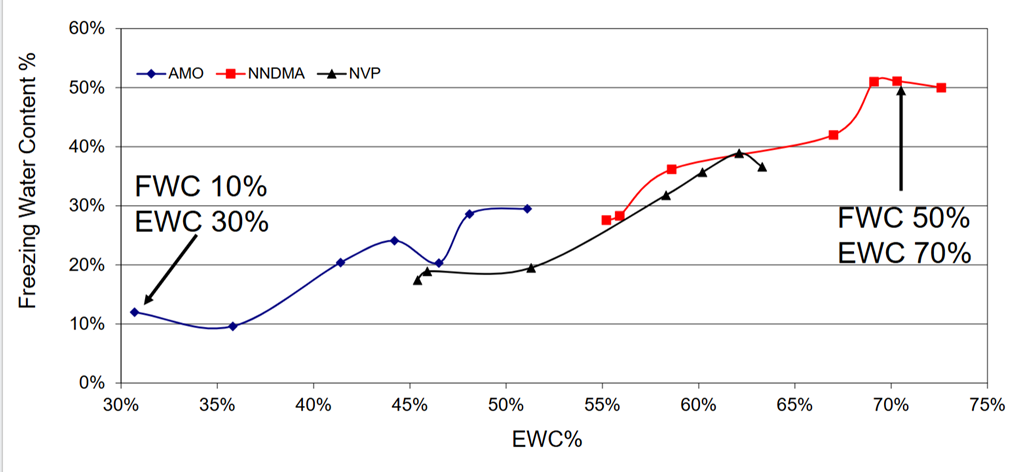
Effect of Hydrophilic Monomer on EWC and Freezing Water Content
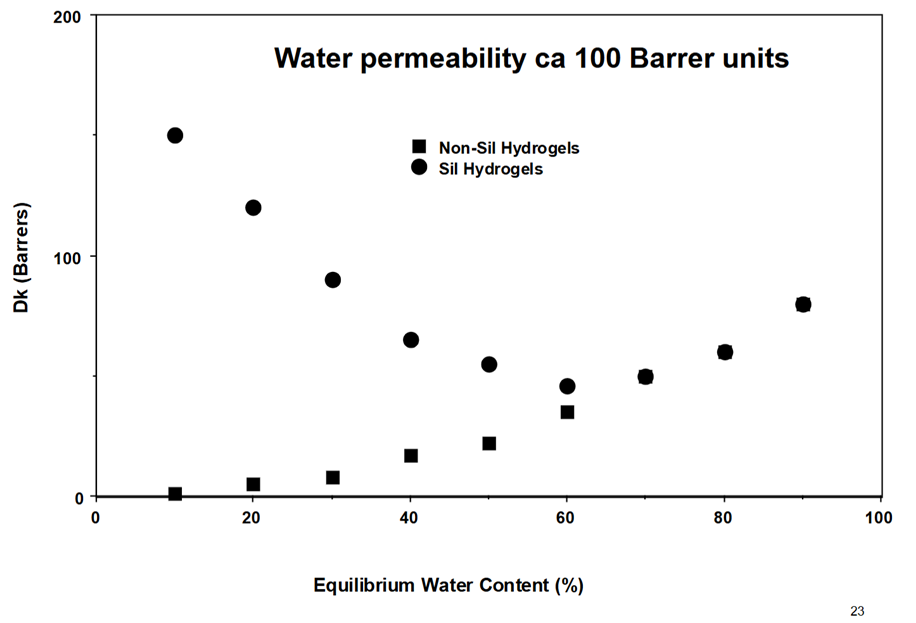
Compare oxygen permeabilities of conventional hydrogel copolymers and silicone hydrogel copolymers
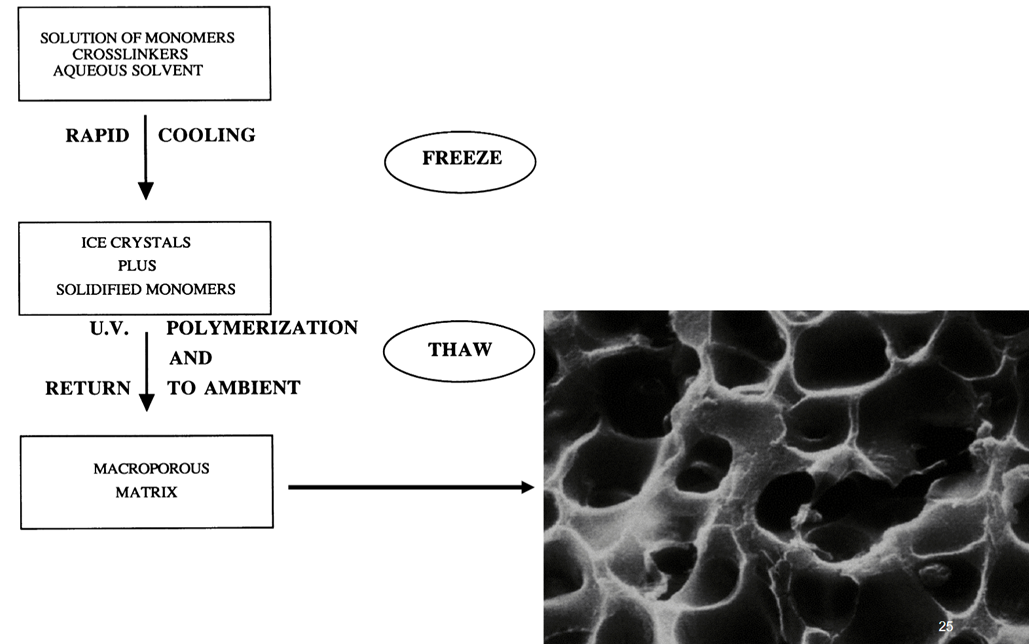
How are macroporous hydrogels made?
They can be made by polymerising around ice crystals
Describe the structure of the eye
THE CORNEA IS AVASCULAR & TRANSPARENT - ca 80% WATER
The Front Surface Of The Cornea Is Covered By The Tear Film (composed of proteins, lipids, mucins and electrolytes)
The aqueous flow arises from the lachrymal gland
Several glands are located in and around the eyelids, which give rise predominantly to lipids (meibomium glands) and mucinc (goblet cells)
Describe the structure of the tear film
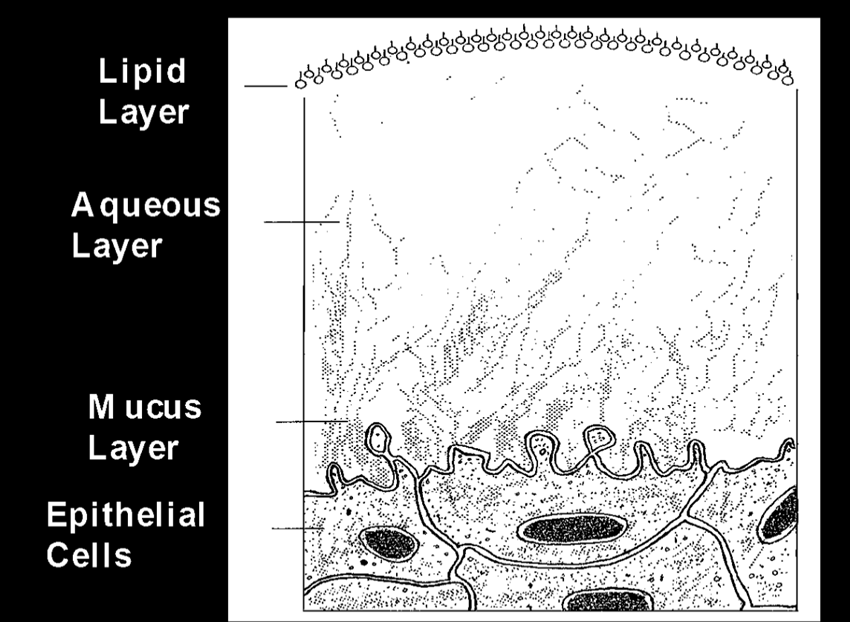
What happens when you open and close your eye
WHEN YOU CLOSE YOUR EYELID IT COMPRESSES THE OILY LIPID
LAYER (such as fatty acid, triglyceride, or cholesterol)
WHEN YOU OPEN YOUR EYE THE LIPID RACES ACROSS THE SURFACE
TO STOP THE TEARS EVAPORATING
Four Major Types Of Ophthalmic Biomaterial
Intra-ocular lens
total artificial cornea
contact lens
synthetic tears
create a good design for contact lenses