Pyruvate Oxidation and CAC - BIO 183
 Call Kai
 Learn
Learn Practice Test
 Spaced Repetition
 Match
Match Flashcards
 Knowt Play
1/4

There's no tags or description
Looks like no tags are added yet.
Name | Mastery | Learn | Test | Matching | Spaced | Call with Kai |
|---|
No analytics yet
Send a link to your students to track their progress
5 Terms
chemiosmosis
requires ATP synthase and a proton (H+) gradient
protons diffuse down concentration gradient, powers ATP synthase embedded in mitochondrial inner membrane
chemiosmosis accounts for 90% of ATP produced during aerobic cellular respiration
occurs across from the inner membrane space across the inner membrane of mitochondria
occurs across thylakoid membrane of chloroplasts during photosynthesis
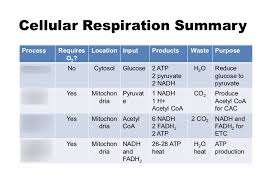
Preparatory Step: Oxidation of pyruvate
in euk cells, if oxygen is present, the 2 pyruvate molecules enter mitochondria
pyruvate goes through the 2 membranes of mitochondria; the 1st through a non specific channel, then a pyruvate specific channel to reach the matrix
oxydation of pyruvate
pyruvate is converted to Acetyl CoA befor entering CAC
→ CO2 is released
→ pyruvate is oxidized
→ transferring an electron to NADH (NAD+ is reduced)
Acetyl group from former pyruvate molecule is attached to CoA
INPUTS
2 pyruvate, 2 NAD+
2 coenzyme A
OUTPUTS
2Co2
2NADH
2 acetyl CoA
Citric Acid Cycle occurs in mitochondrial matrix
Step 1 - acetyl group from acetyl CoA is transferred to oxaloacetate to form citrate
through series of reactions (1 cycle):
→ citrate is oxidized
→ 2 Co2 released
→1 GTP or ATP produced
The final product of Citric Acid Cycle is oxaloacetate
Outputs per glucose from Glycolysis, Pyruvate Oxidation, & CAC