Form and Functions -- Carbohydrates, Lipids, Proteins, Membrane Transport, Compartmentalization, Specialization
 Call Kai
 Learn
Learn Practice Test
 Spaced Repetition
 Match
Match Flashcards
 Knowt Play
1/387

There's no tags or description
Looks like no tags are added yet.
Name | Mastery | Learn | Test | Matching | Spaced | Call with Kai |
|---|
No analytics yet
Send a link to your students to track their progress
388 Terms
cell differentiation
the process by which a cell develops certain structures so that it can carry out certain functions
undifferentiated cells
cells that cannot carry out any specific function as they lack the structures to do so
embryonic cells
cells that are undifferentiated and therefore cannot carry out specific functions
genes in the cell are turned on or off
how cells become specialized
gene expression
process by which a gene produces its product and the product carries out its function
cellular environment
controls which genes are turned on or off in an undifferentiated cell
multicellularity
trait of eukaryotes that evolved repeatedly over time
fungi, plants, algae, animals
types of organisms that are multicellular
specialized
what being multicellular allows cells to become
larger
body size of multicellular organisms in relation to unicellular organisms
allows organisms to more easily adapt to changes in their environment
advantage of being multicellular and having specialized cells
cell specialization
allows cells to perform functions with increased efficiency
zygote
fertilized egg
fertilization
fusion of an egg and sperm cell to form a zygote
mitosis
a process by which cells replicate so that they each have identical genetic information
differential gene expression
turning different genes on or off
chemical gradients of signaling gradients
why the position of a cell in the embryo determines how it differentiates
morphogens
signaling chemicals
its varying concentrations lead genes to be expressed or not expressed
how morphogens affect cell differentiation
can divide infinitely, capable of differentiating along different pathways
properties of stem cells
totipotent stem cell
stem cell that can differentiate into any type of specialized cell and can give rise to a whole organism
pluripotent stem cell
type of stem cell which has the ability to differentiate into almost any cell type in the body and therefore cannot give rise to a whole organism
multipotent stem cell
a stem cell only able to develop into a few related types of cell
unipotent stem cell
stem cell that can only differentiate into one type of cell
first eight cells of the morula
example of totipotent stem cells
embryonic stem cells
example of pluripotent stem cells
umbilical cord stem cells
example of multipotent stem cells
liver cells
example of unipotent stem cells
bone marrow, skin, liver
examples of where stem cells are present in the adult body
allows tissues to repair
why stem cells are in bone marrow, skin, and liver in adults
stem cell niche
an area of a tissue that provides a specific microenvironment in which stem cells are present in an undifferentiated and self-renewable state while also allowing them to rapidly differentiate when needed
grow stem cells
by recreating a stem cell niche, scientists are able to
sperm cell
pretty long with a length of 50 micrometers which gives it less resistance when swimming and exists to deliver DNA to egg cell
egg cell
largest cell at 110 micrometers which allows for nutrition storage for development of the embryo
white blood cell
10 micrometers when unused but 30 micrometers when used due to more rough endoplasmic reticulum and golgi body
cerebellar granular cell
very small which allows the cerebellum to accommodate around 50 billion of them
sa/v
surface area to volume ration
mm squared
what is surface area measured in
mm cubed
what is volume measured in
volume of the cell
the rate of reactions inside a cell is proportional to the
substances for the reactions must be moved inside the cell, waste products are removed
required for efficient cell reactions
surface area
affects the rate that substances can travel across the cell membrane
the more efficient cells are
the bigger the sa/v ratio
small
for cells to have a large sa/v ratio, they must be
6 to 8 micrometers
size of red blood cells
so they can fit through capillaries
why red blood cells are small
biconcave
shape of red blood cells
maximizes sa/v ratio
why does the red blood cell have a biconcave shape
high rates of diffusion, unloading of oxygen
why the red blood cell has a high sa/v ratio
red blood cell
proximal convoluted tubule
skeletal muscle
proximal convoluted tubule
a tube part of the nephron that has many foldings giving it increased surface area that allow increased diffusion, bettering its ability to regain beneficial molecules filtered out of the blood
nephron
functional unit of the kidney
alveoli
air sacs that the lungs house many of that have a high surface area so as to improve diffusion of gases
1 cell
thickness of the wall of the alveoli
pneumocytes I and pneumocytes II
parts of the alveoli
pneumocytes I
part of alveoli designed for gas exchange that is very thin at about 0.15 nanometers and since the capillary is also very thin there is only about 0.5 nanometers of space between the alveoli and blood
pneumocytes I
red arrow
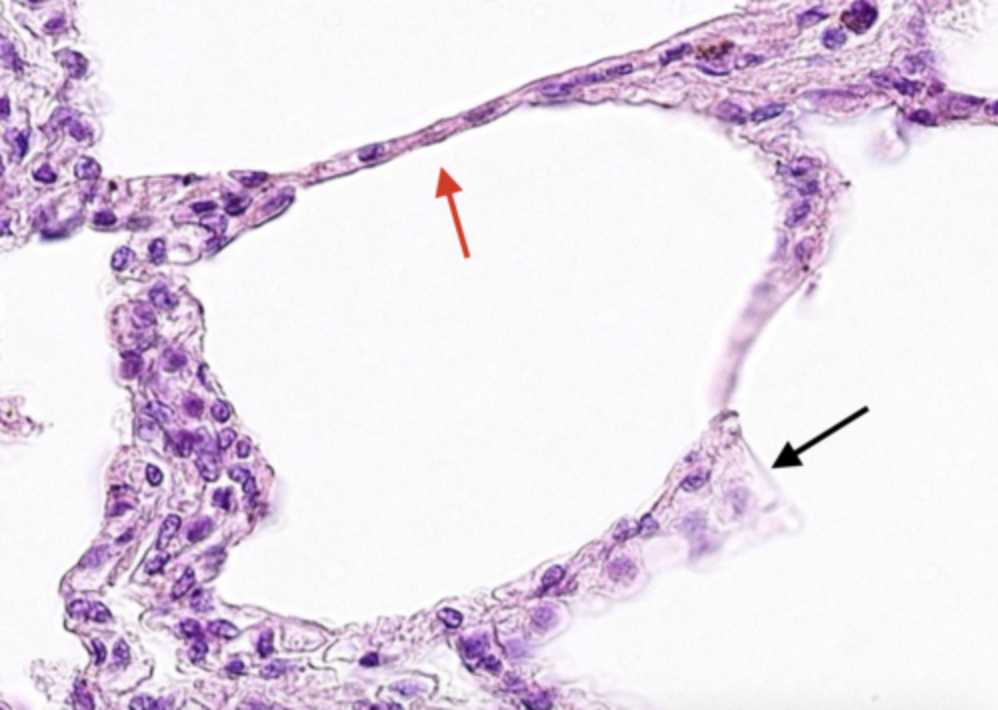
pneumocytes II
the more numerous type of alveoli that has a lot of cytoplasm, and secretory vesicles which emit a surfactant that decreases surface tension therefore preventing collapsing as well as keeping the alveoli moist which allows gases to dissolve and diffuse more easily
pneumocytes II
myofibril
long protein filaments in muscles responsible for contraction and relaxation of muscles
striated muscles and cardiac muscle cells
types of muscles
striated muscle
muscles made of cylindrical fibers formed from fusing individual cells that have a sarcolemma and therefore are multinucleate that connect to the bones of the skeleton and cause voluntary movement
striated muscle
cardiac muscle cell
myogenic muscle cells high in mitochondria found within heart tissue that cause the heart to beat and are branched so that electrical signals can spread through the heart wall and are connected with gap junctions at intercalated discs
cardiac muscle cell
cardiac muscle cell
sarcolemma
continuous plasma membrane in striated muscle
muscle bundle
bundles of fibers enclosed in connective tissue in striated muscle
allow for greater length of contraction
why striated muscles are long and narrow
intercalated discs
longer period of reset between contraction and refraction, does not become fatigued, interconnected cells can work separately as they are separated by atria and ventricles
unique properties of cardiac muscle cells
gamete
sex cell
head, acrosome cap, centrioles
parts of the head region of the sperm
head
part of sperm that contains the paternal DNA and one copy of every chromosome
acrosome cap
part of sperm that contains hydrolytic enzymes which allow the sperm to break through the egg
centrioles
part of sperm that help the zygote divide
mid-piece
part of sperm containing the mitochondria needed to move the tail of the sperm
flagellum
bends to facilitate movement in the sperm
flagellum
sperm tail
zona pellucida
glycoprotein matrix that is the barrier to sperm entry in the egg
corona radiata
external layer of follicular cells that nourish the egg
it is fertilized by the sperm
the egg cell stays in metaphase II until
gas exchange
exchange that is vital for organisms
their environment
where organisms absorb gas from
their environment
where organisms release gas to
diffusion
how gases are absorbed and released in organisms
diffusion
a slow process where molecule move from high to low concentration
large surface areas or small distances
only areas where gas exchange is rapid enough to take place
large surface area, permeability, made of thin tissue layer, moist surface, maintain their concentration gradient
properties of gas exchange surfaces
more surface available for gases to diffuse across,
why gas exchange surfaces have a large surface area
must have openings that allow gases to be exchanged
how gas exchange surfaces must be permeable
shorter distance to diffuse across
why gas exchange surfaces are made of thin tissue layers
helps dissolve gases before they diffuse
why gas exchange surfaces have a moist surface
for diffusion to occur there must be a difference in concentration between two areas
why gas exchange surfaces must maintain their concentration gradient
dense networks of blood vessels, continuous blood flow, ventilation
how concentration gradients are maintained
air
ventilation in lungs
water
ventilation in gils
blood and water flow in opposite direction allowing oxygen in the water to diffuse into the blood
how concentration gradient is maintained in gills