Comprehensive Guide to Birth Control Methods, Risks, and Side Effects
 Call Kai
 Learn
Learn Practice Test
 Spaced Repetition
 Match
Match Flashcards
 Knowt Play
1/44

There's no tags or description
Looks like no tags are added yet.
Name | Mastery | Learn | Test | Matching | Spaced | Call with Kai |
|---|
No analytics yet
Send a link to your students to track their progress
45 Terms
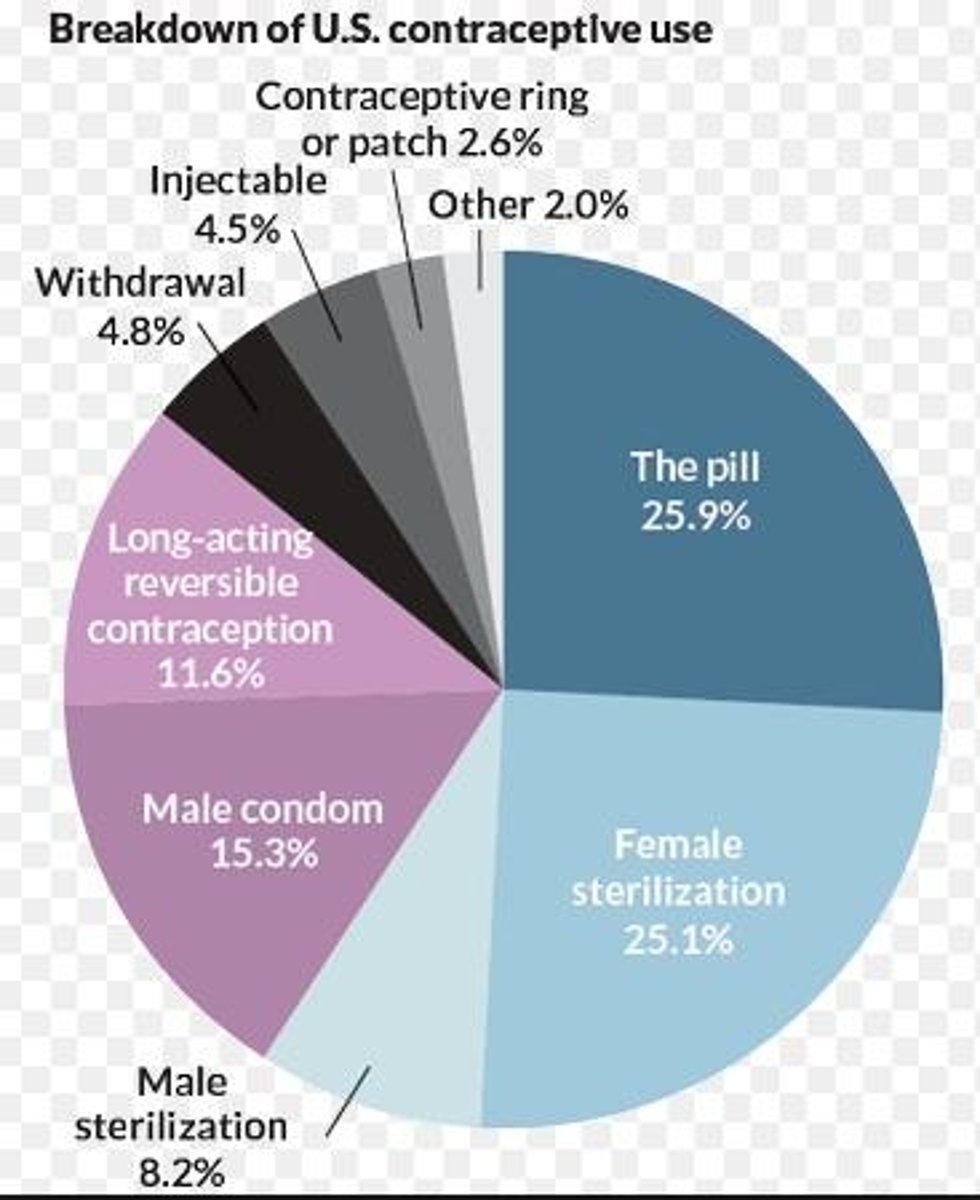
What is the most commonly used birth control method in the United States?
The Pill (Oral Contraceptive Pill)
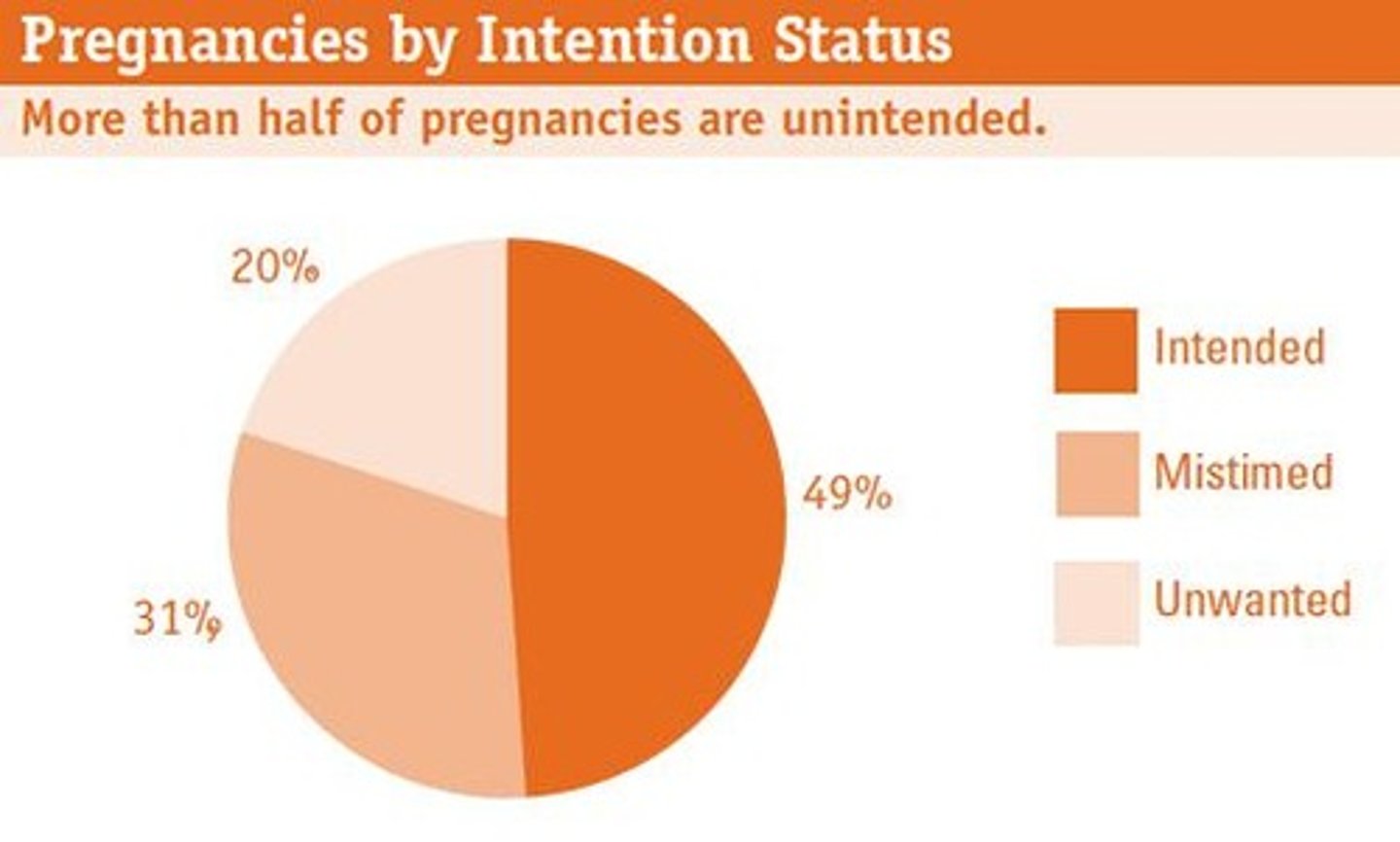
What percentage of pregnancies in the United States are unintended?
Approximately 30%
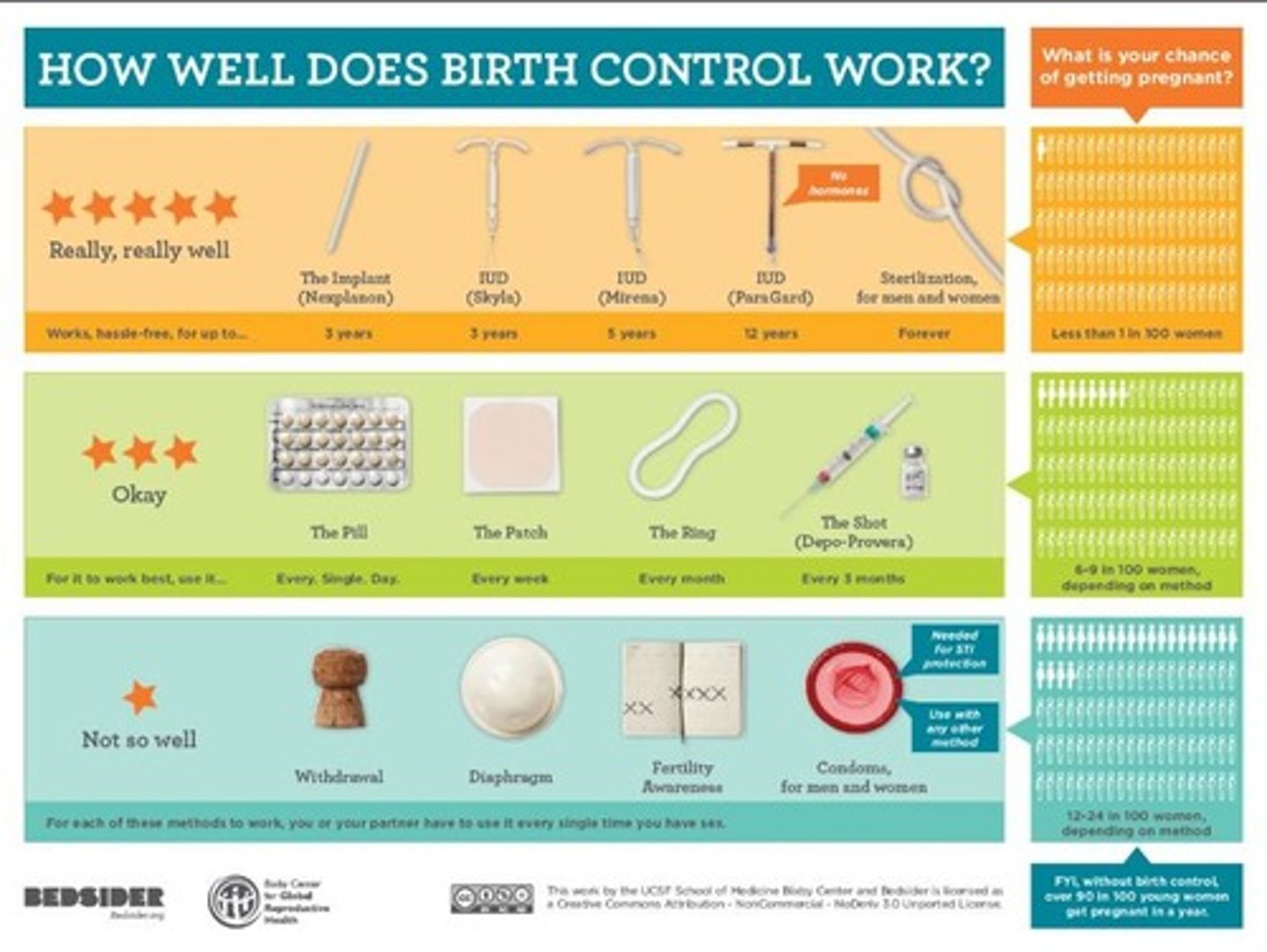
What is the failure rate of the Oral Contraceptive Pill during typical use?
8%
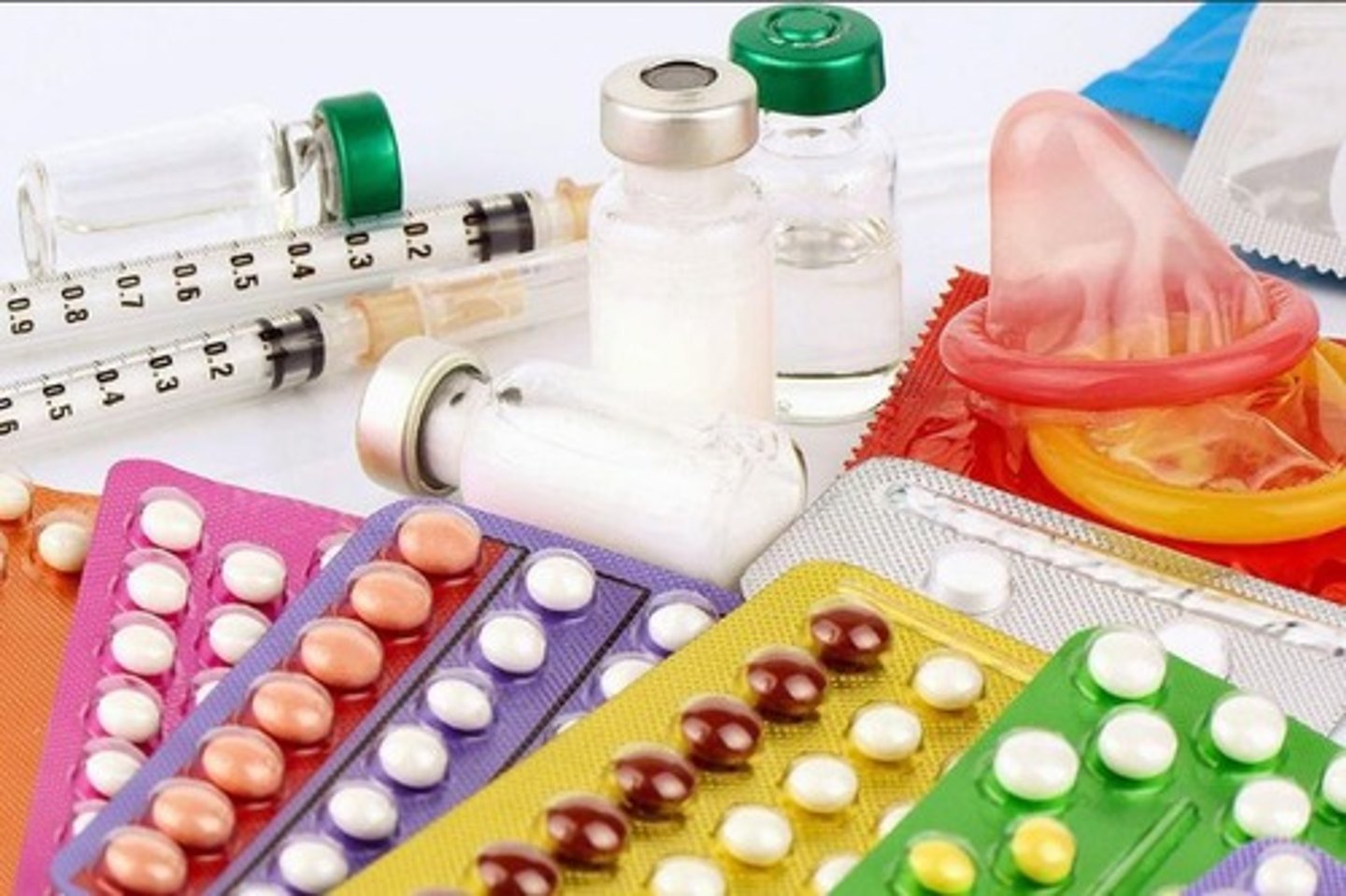
What are the two main categories of hormonal contraceptives?
Combined contraception (estrogen/progesterone) and Progestin-only
What are some examples of combined hormonal contraceptives?
Oral Contraceptive Pill, Ortho Evra Patch, Vaginal Ring
What is the purpose of progestin in hormonal contraception?
To inhibit ovulation and thicken cervical mucus
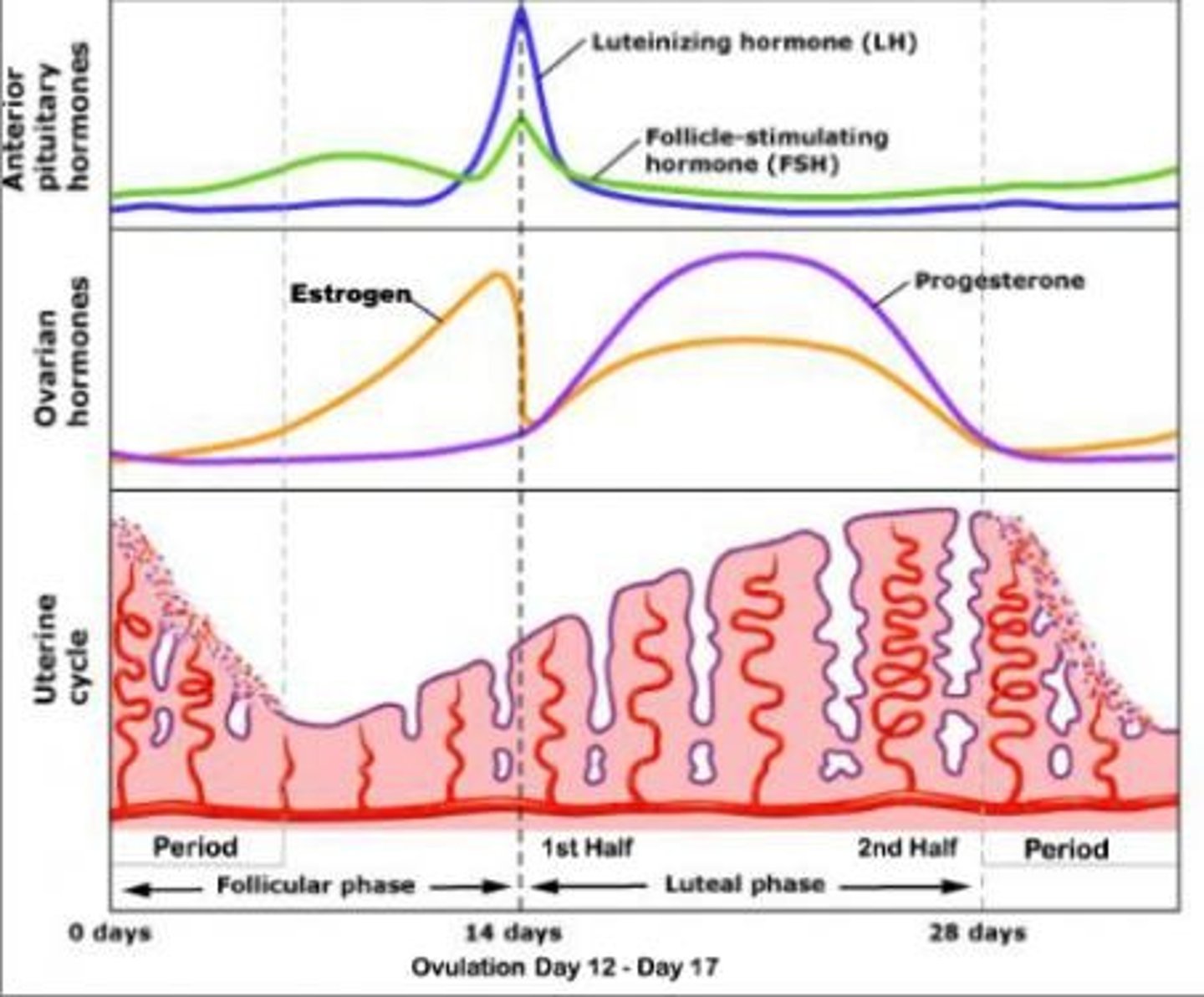
What are the benefits of the Oral Contraceptive Pill?
Reduces irregular menses, dysmenorrhea, and incidence of various cancers
What are some risks associated with combined hormonal contraception?
Increased risk of stroke, myocardial infarction, and venous thromboembolism
What factors increase the risk of stroke in women using OCPs?
Tobacco use, obesity, history of thrombotic events, and hypertension
What is a contraindication for using OCPs?
Unexplained venous thromboembolism or being over 35 and smoking
What is the function of the contraceptive patch?
An alternate delivery method for combined hormonal contraception
How often should the contraceptive patch be applied?
Once a week for three weeks, followed by a patch-free week
What is the risk associated with the contraceptive patch compared to OCPs?
A two-fold increase in the risk of non-fatal venous thromboembolism
What is the purpose of a medical history before prescribing contraception?
To assess risks and contraindications for contraceptive methods
What are the potential side effects of hormonal contraceptives?
Nausea, weight gain, mood changes, and increased risk of certain cancers
What is the significance of the FDA approval date for the first OCP?
June 23, 1960, marks the introduction of hormonal birth control
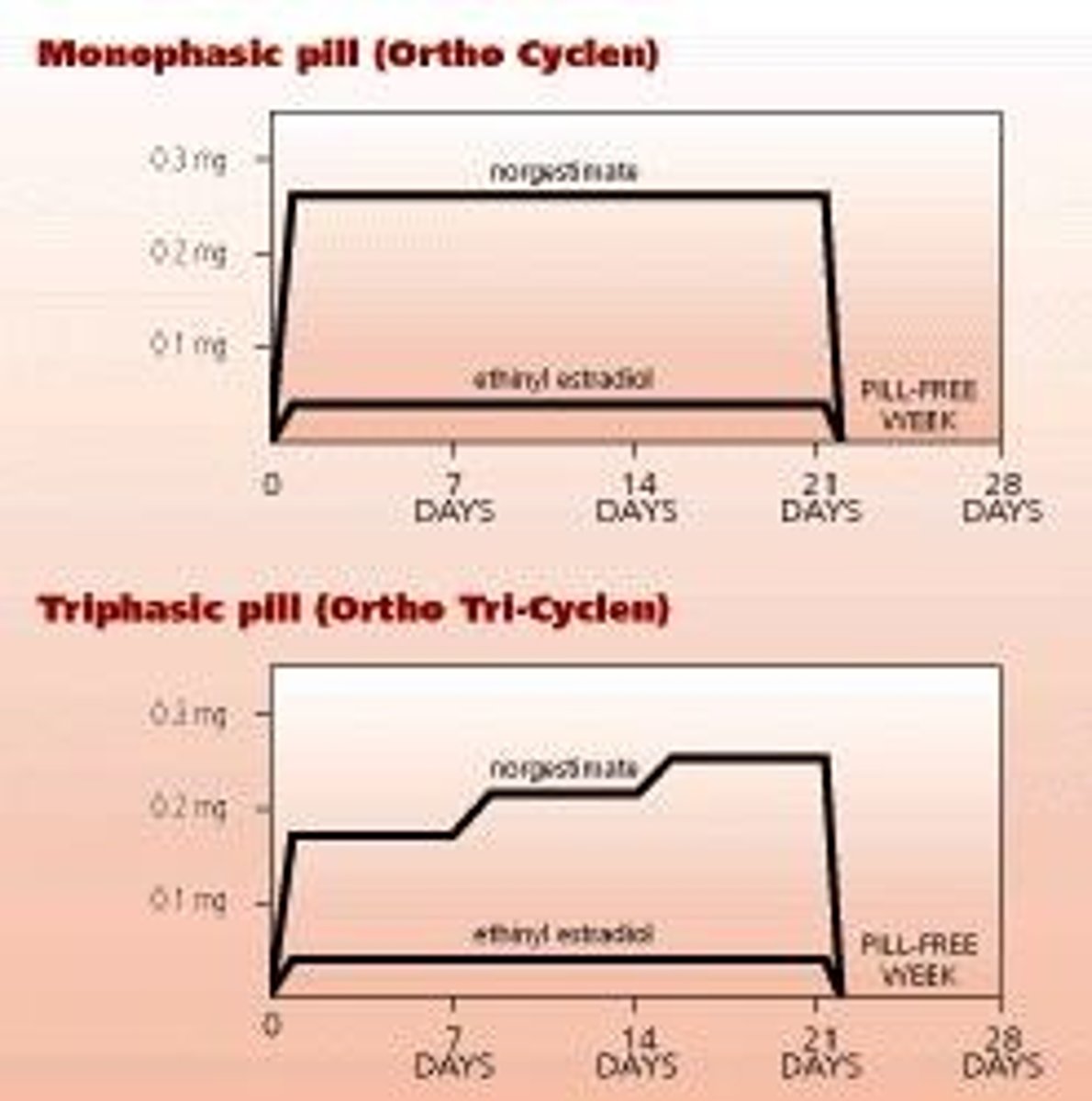
What are monophasic and triphasic options in OCPs?
Different dosing regimens of hormones in oral contraceptives
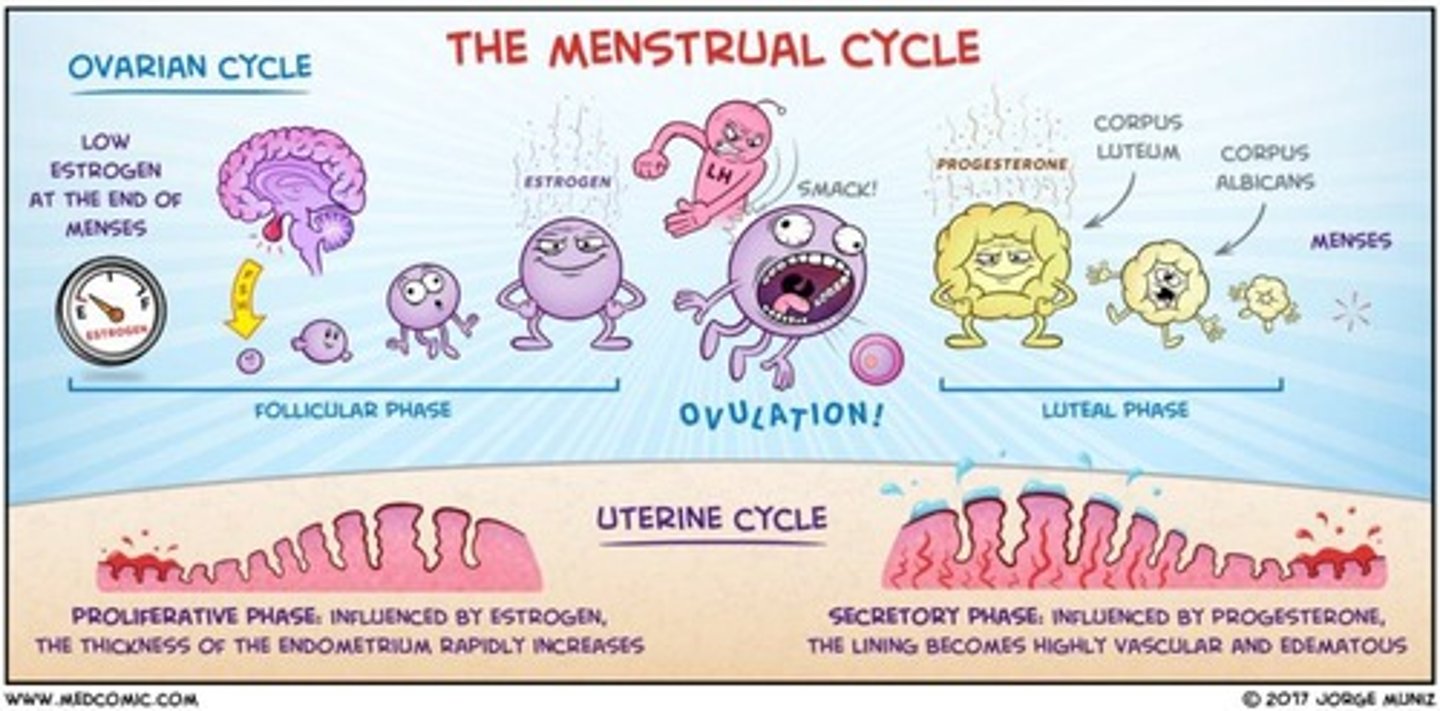
What is the role of estrogen in combined hormonal contraceptives?
To inhibit pituitary gonadotropin secretion and regulate the menstrual cycle
What is the recommended action for women who smoke and are over 35?
They should avoid using combined hormonal contraceptives
What is the impact of successful family planning on society?
It has a positive impact on women, couples, families, and society
What is the relationship between unintended pregnancies and contraceptive use?
Approximately 30% of pregnancies are unplanned, highlighting the need for effective contraception
What is the importance of understanding contraceptive options?
To make informed decisions about family planning and reproductive health
How often is the vaginal ring used?
Every 3 weeks, followed by a ring-free week.
What is the failure rate of the vaginal ring compared to OCPs?
Similar failure rate of 8%, with a backup method needed in the first week.
What is Annovera?
A contraceptive ring containing Segesterone acetate and ethinyl estradiol, used once a year.
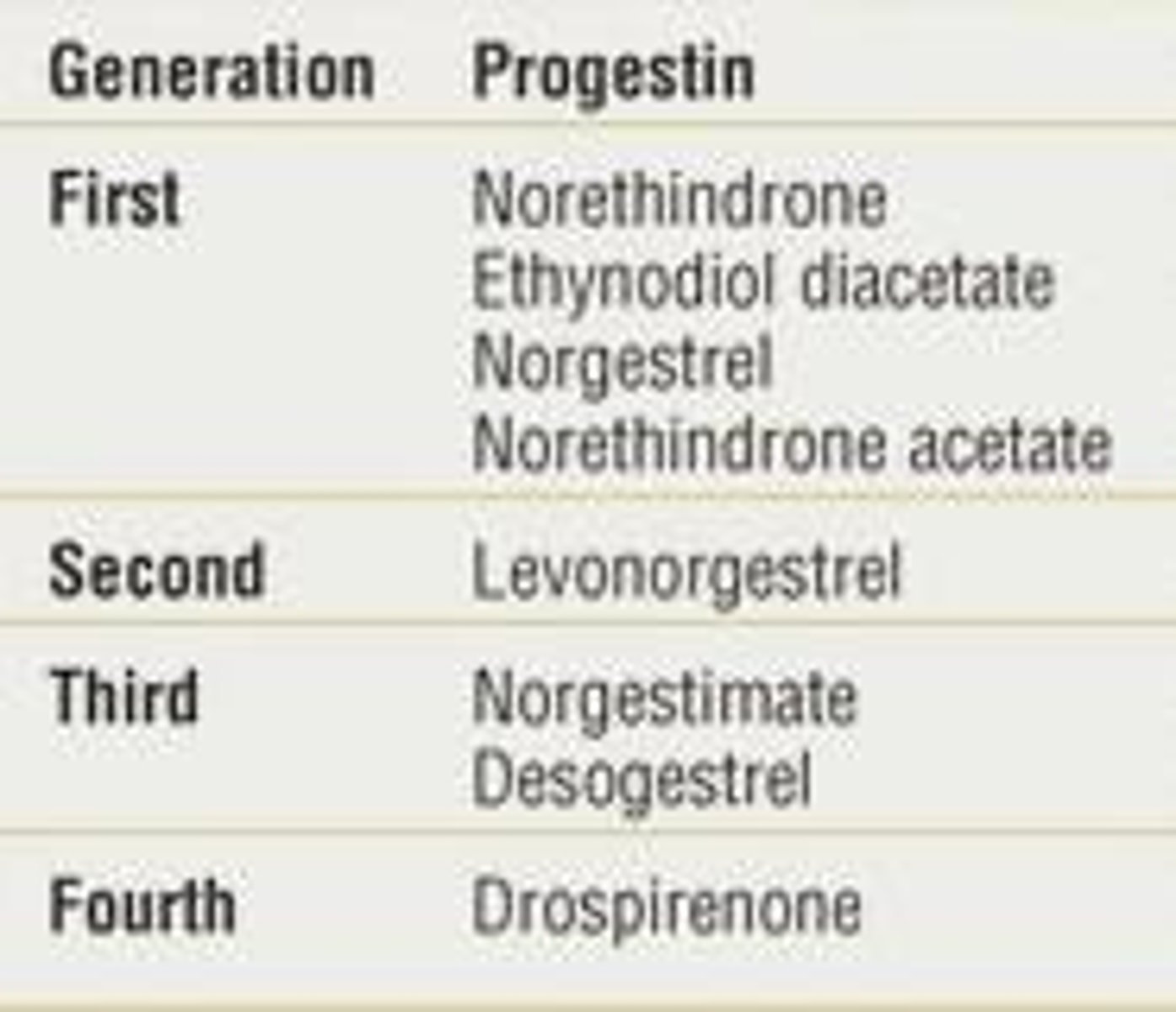
What is the active ingredient in the Progestin-only Pill?
Norethindrone 0.35mg.
Who is the Progestin-only Pill ideal for?
Lactating breastfeeding mothers and patients with a history of DVT/VTE.
What is the failure rate of Depo-Provera (DMPA) with typical use?
3% failure rate with typical use, and 0.3% with consistent use.
What is a notable side effect of DMPA?
Longer return of fertility, up to 18 months.
What is the failure rate of the Etonogestrel implant?
0.38%.
How long does the Etonogestrel implant last?
Up to 3 years.
What are the types of Levonorgestrel-releasing IUDs?
Mirena, Skyla, Kyleena, and Liletta.
What is the typical duration of effectiveness for the Mirena IUD?
Good for 5 years.
What is the failure rate of the Copper T 380A IUD?
Highly effective, good for 10 years.
What is the primary mechanism of action for Copper IUD?
Interferes with sperm movement and egg fertilization.
What is the typical failure rate of male condoms?
10-15% with typical use.
What is a disadvantage of female condoms compared to male condoms?
More expensive and higher failure rate of 21% with typical use.
What is the failure rate of the diaphragm with typical use?
16%.
What is the failure rate of spermicide with typical use?
29%.
What is Plan B and its primary function?
Levonorgestrel 0.75mg x 2 tablets used as emergency contraception.
What is the failure rate of the Paraguard IUD when used for emergency contraception?
1% if inserted within 7 days after unprotected intercourse.
What are the unique contraceptive needs of adolescents?
Adolescents and young adult women have specific contraceptive needs due to their developmental stage.
What is the impact of obesity on contraceptive methods?
Obesity can affect safety and efficacy, but no methods are restricted for obese women.
What does U.S. MEC stand for?
U.S. Medical Eligibility Criteria for Contraceptive Use.
What is the significance of the 2016 U.S. MEC and SPR App?
It provides updated guidelines for contraceptive use based on medical conditions.